


 Announcements
Electric Ford Fathom to Be Priced From $29,945
The much-anticipated midsize truck on Ford's new Universal Electric Vehicle platform now has a name — Fathom — and a price tag under $30,000.
Sam Abuelsamid4 min read

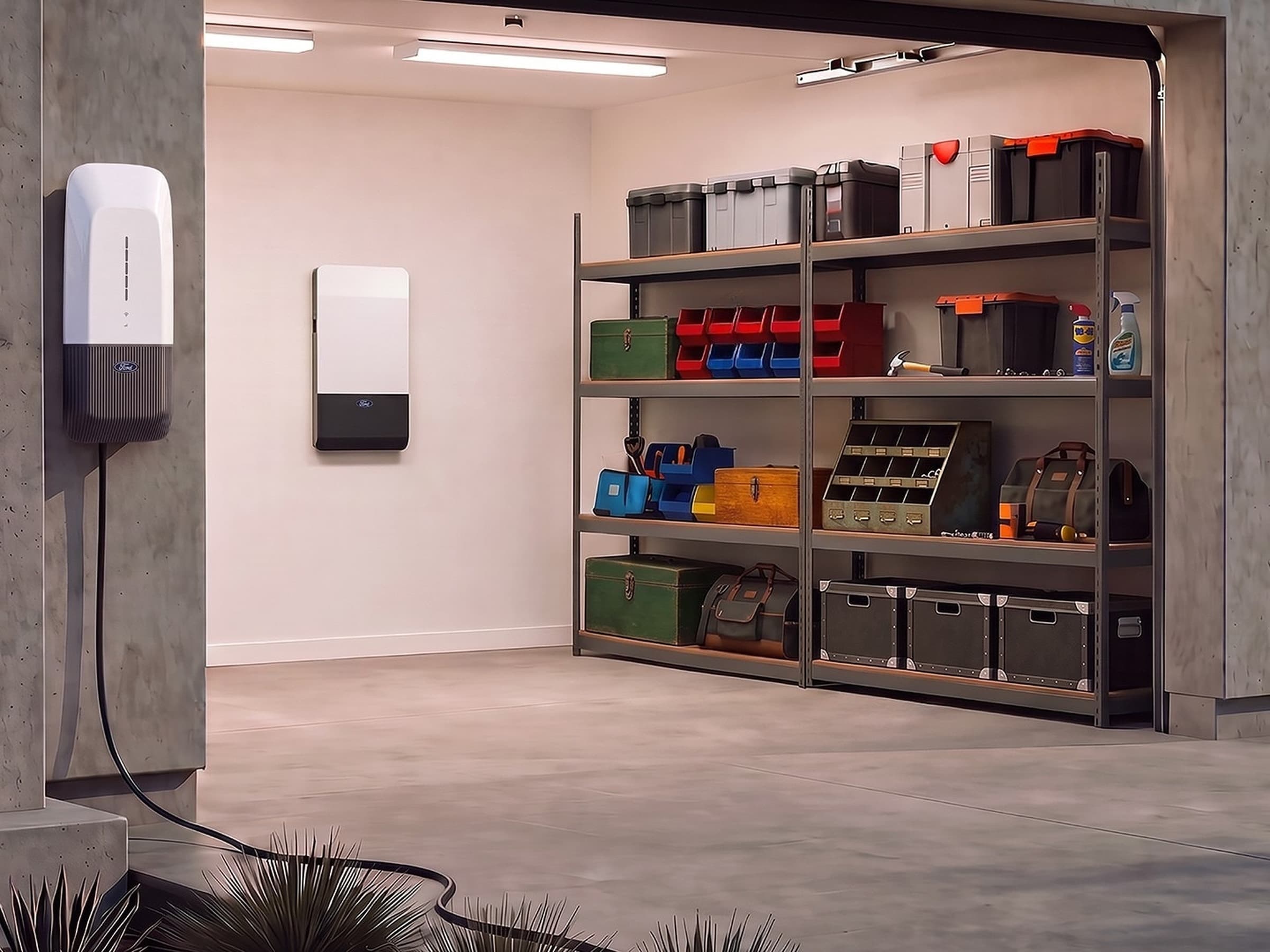
Ford's upcoming Fathom pickup promises to power your home during an outage for a fraction of what the F-150 Lightning's backup system cost.
When Ford launched the F-150 Lightning back in 2022, one of its more intriguing options was whole-home backup power. If your utility had a power disruption, a plugged-in F-150 Lightning could fully power a typical American home for about three days, or up to 10 days if you minimized electricity use. The problem was that the system was expensive, and many users found it to be finicky.
The F-150 Lightning is now discontinued, and Ford's promised $30,000 compact Fathom pickup is still nearly a year away. But the automaker says the Fathom will offer bidirectional charging too, and at a much lower cost.
The F-150 Lightning's bidirectional system sent power out from the battery through its CCS charging port. It required a special charger that cost about $1,300, as well as an integration kit to connect it to the home’s wiring.
Vehicle-to-home is only one form of two-way energy flow, so see how V2H, V2G, V2L, and other forms of bidirectional charging work ➜
However, the battery puts out direct current (DC), but utilities deliver alternating current (AC), and that’s what homes run on. So the integration kit required an inverter that cost several thousand dollars, plus a transfer switch. Depending on the home's configuration and where the truck was parked, the installed price ran anywhere from $6,000 to nearly $20,000.
For the Fathom, Ford has completely reengineered its approach to the system. The truck has what Ford calls the E-Box, a control module that combines the on-board charger, power electronics, and battery-management system. The E-Box converts incoming AC from the wall charger into DC for the battery, and it can also flip that DC back into AC and send it out through the NACS charging port. That means no pricey external DC-to-AC inverter is required for the new system.
The built-in inverter is part of a much larger rethink of the truck’s electronics and manufacturing, so go inside Ford’s Universal EV program and the architecture underneath Fathom ➜
You'll still need a bidirectional charger, but the new Home Power Station should cost about $650, roughly half of what the old Charge Station Pro went for. You'll also need a Backup Power Panel, which contains the transfer switch and manages the whole system. The whole system, including the charger, should cost about $2,000.
According to Ford, the Fathom will put out more than 10 kilowatts, a bit more than the F-150 Lightning's 9.6 kW. Ford is expected to offer the Fathom with two battery sizes, and the smaller unit should be between 50 and 60 kilowatt-hours. That's less than half the size of the F-150 Lightning's extended-range battery.
The typical American home uses about 29 kWh a day, so that smaller battery could probably run a house for about a day and a half and still leave enough juice to drive the truck somewhere else and charge up. That’s likely plenty for most outages that run a few hours. If you prioritize the fridge and some lights, you could stretch it to a few days.
I’s great to see Ford lowering hardware costs, but installation could still get expensive, depending on where you park and where your main circuit breaker panel is. At my house, the main electrical feed comes into the side of the garage, and the breaker panel is on the the wall between the garage from the house. An electrician could probably do my installation for $1,000 and to $1,500.
But if you have an older home with only 100-amp service, a detached garage, and the breaker panel on the opposite side of the home, you could require trenching, conduit around the house, and a panel replacement. That could run 10 times as much.
Over time, as more older homes upgrade to 150- or 200-amp service and already have chargers installed, the cost of adding home backup will go down substantially. For now, though, using your EV as backup power is still living on the bleeding edge. The edge isn’t quite as sharp as it was for F-150 Lightning owners, but you’ll still want to do your homework.
Electric Ford Fathom to Be Priced From $29,945
See what Ford has already confirmed about Fathom’s price, launch timing, technology, and place in its new EV lineup.
Read More ➜
Your EV Can Power Your Home. But Here’s What That Really Means
Bidirectional charging can provide meaningful outage protection, but battery capacity, household loads, wiring, and installation all determine what it can actually do.
Read More ➜
Ford Retools the Lightning Into a 700-Mile Extended-Range Electric Truck
The battery-electric Lightning that introduced Ford’s home-backup system is giving way to a very different next-generation truck strategy.
Read More ➜
Get vehicle reviews, practical tips, and the latest GreenCars news.
AnnouncementsThe much-anticipated midsize truck on Ford's new Universal Electric Vehicle platform now has a name — Fathom — and a price tag under $30,000.
 Industry Updates
On the latest episode of Green Cars The Podcast, Ford's Alan Clarke explains how a startup-style team is building the automaker's most disruptive EV yet.
 Industry Updates
Your EV can keep key home circuits running during outages, but bidirectional charging isn’t plug-and-play. Here’s the real capability and setup needed.