
Fast Facts | EV Backup Power Reality Check
🔋 Household Use: Typical U.S. home uses about 25 to 30 kWh per day
🚗 EV Storage: Many EV batteries land in the 60 to 100 kWh range
💡 Best Use Case: Power essentials like fridge, lights, internet, and key circuits
🧰 Not Plug-and-Play: Bidirectional requires compatible hardware and electrical integration
🧑🔧 Install Complexity: Some homes may need panel work or additional equipment
🌪️ Who Benefits Most: Outage-prone regions like hurricane, wildfire, and storm corridors
🏠 Bigger Shift: EVs are becoming part of a home energy ecosystem, not just transportation
When the Grid Drops, What Your EV Can Actually Do
The idea is easy to like.
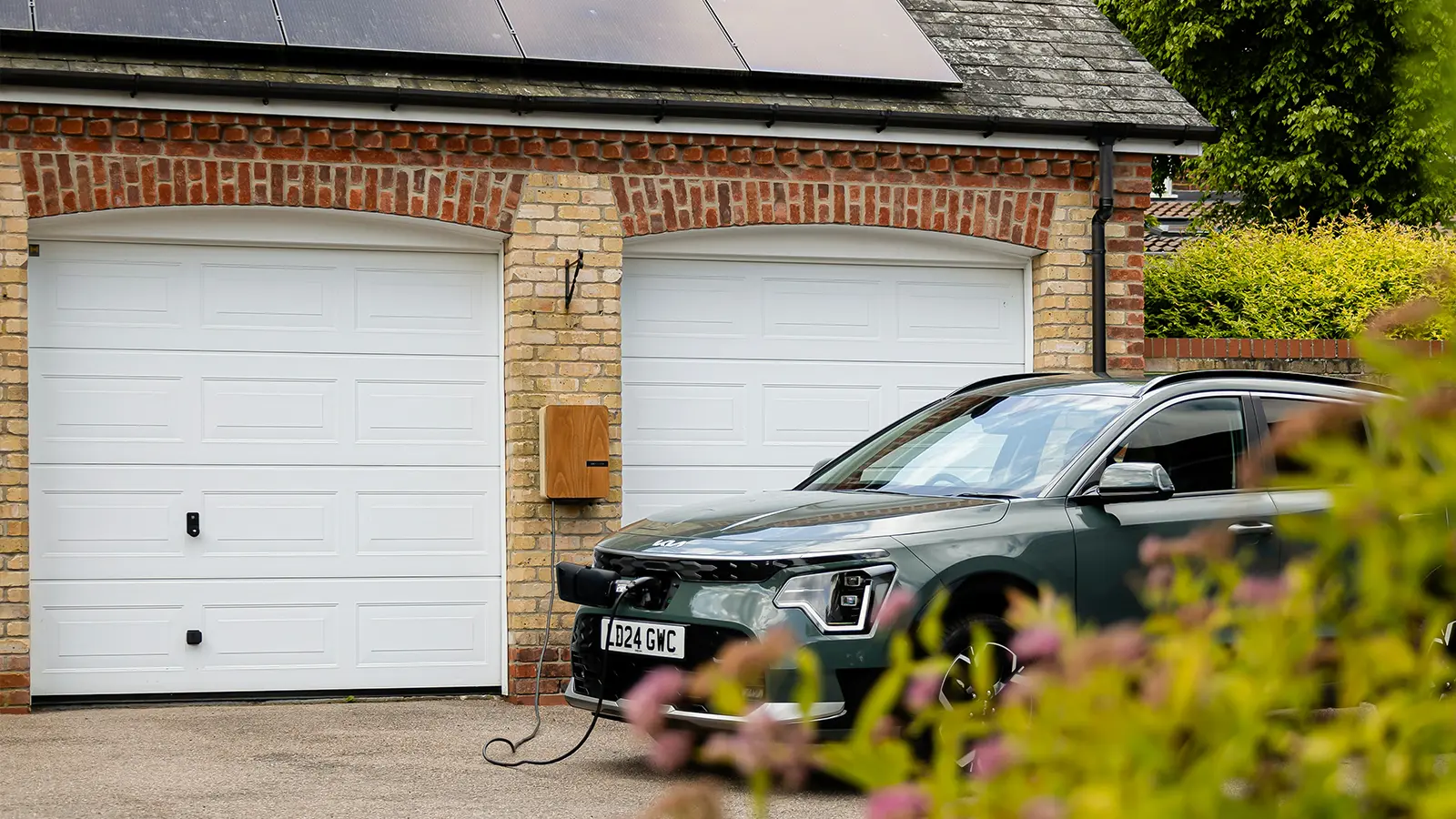
Your vehicle sits in the driveway with a large battery. A storm knocks out the power. Instead of scrambling for a generator, your car keeps the lights on.
Several automakers now support this through bidirectional charging, allowing electricity to flow from the vehicle back into a home. Bloomberg recently highlighted models capable of providing backup power during outages.
The capability is real. But the nuance matters.
How Much Backup Are We Actually Talking About?
The average U.S. household consumes roughly 25 to 30 kilowatt-hours of electricity per day, based on federal energy data from the U.S. Energy Information Administration.
Many modern EV batteries store between 60 and 100 kilowatt-hours.
If you want the clean baseline on how it works, start with Introduction to bidirectional charging ➜
In theory, that means a fully charged EV could power essential systems for a day or more. In practice, most homeowners would prioritize refrigeration, lighting, internet access, and a few key circuits rather than running the entire house as usual.
This is meaningful resilience. It is not unlimited power.
The Practical Layer
Bidirectional capability requires more than simply owning the vehicle.
It typically involves compatible charging hardware and professional electrical integration. Some homes may require panel upgrades or additional equipment. Costs vary, and installation complexity depends on the property.
For households in hurricane-prone coastal regions, wildfire corridors, or storm-heavy climates, that added resilience may justify the investment.
For others with stable grid infrastructure, it may remain a secondary feature rather than a deciding factor.
Understanding how home charging works, what equipment is required, and how installation unfolds should be part of the evaluation.
What This Means for Buyers
Bidirectional charging should not be the sole reason you choose an EV.
But it does expand the ownership conversation.
Electric vehicles are gradually becoming part of a broader home energy ecosystem that includes rooftop solar, stationary battery storage, and smart energy management.
If you live in an area where outages are frequent, this feature may meaningfully change your calculus. If not, it may simply offer reassurance that your vehicle has capabilities beyond transportation.
Either way, it signals something important.
EVs are no longer just about how far you can drive. They are increasingly about how intelligently energy can be stored, managed, and used.
And that evolution is likely just beginning.
EV Charging Setup and Real-World Costs
EV Home Charger Installation Tool
A practical next step for understanding equipment, installation needs, and what a real home setup looks like
Read More ➜
Charging Electric Cars at Home
A simple guide to how home charging actually works day to day, which is the foundation for any backup power plan
Read More ➜
Costs to Charge an Electric Car
A clear way to think about energy use and cost, which helps make backup power expectations more grounded
Read More ➜