
Fast Facts | Mitsubishi Outlander PHEV
⚙️ Powertrain: 2.4-liter four-cylinder engine with front and rear electric motors, combined output of 297 horsepower
⛽ EPA-Estimated Fuel Efficiency: 45 miles of electric-only range; 27 mpg combined once the battery is depleted
🖥️ Tech: 12.3-inch instrument cluster, USB-C charging ports, standard eight-speaker Yamaha audio system (12-speaker available with personal sound pods)
💰MSRP: Starts at $44,990, including a $1,795 destination fee
Mitsubishi Gives Its PHEV More of What Matters
Back in 2013, Mitsubishi became the first automaker to introduce a plug-in hybrid SUV, based on the third-generation Outlander. That model remained in production until 2022, when the current fourth-generation Outlander took over. Now that fourth-generation model is getting a mid-cycle refresh, and it brings some notable upgrades to the plug-in hybrid drivetrain.
I recently had the chance to drive the updated Outlander at an event near Seattle, where we put it to the test.
A Familiar Face
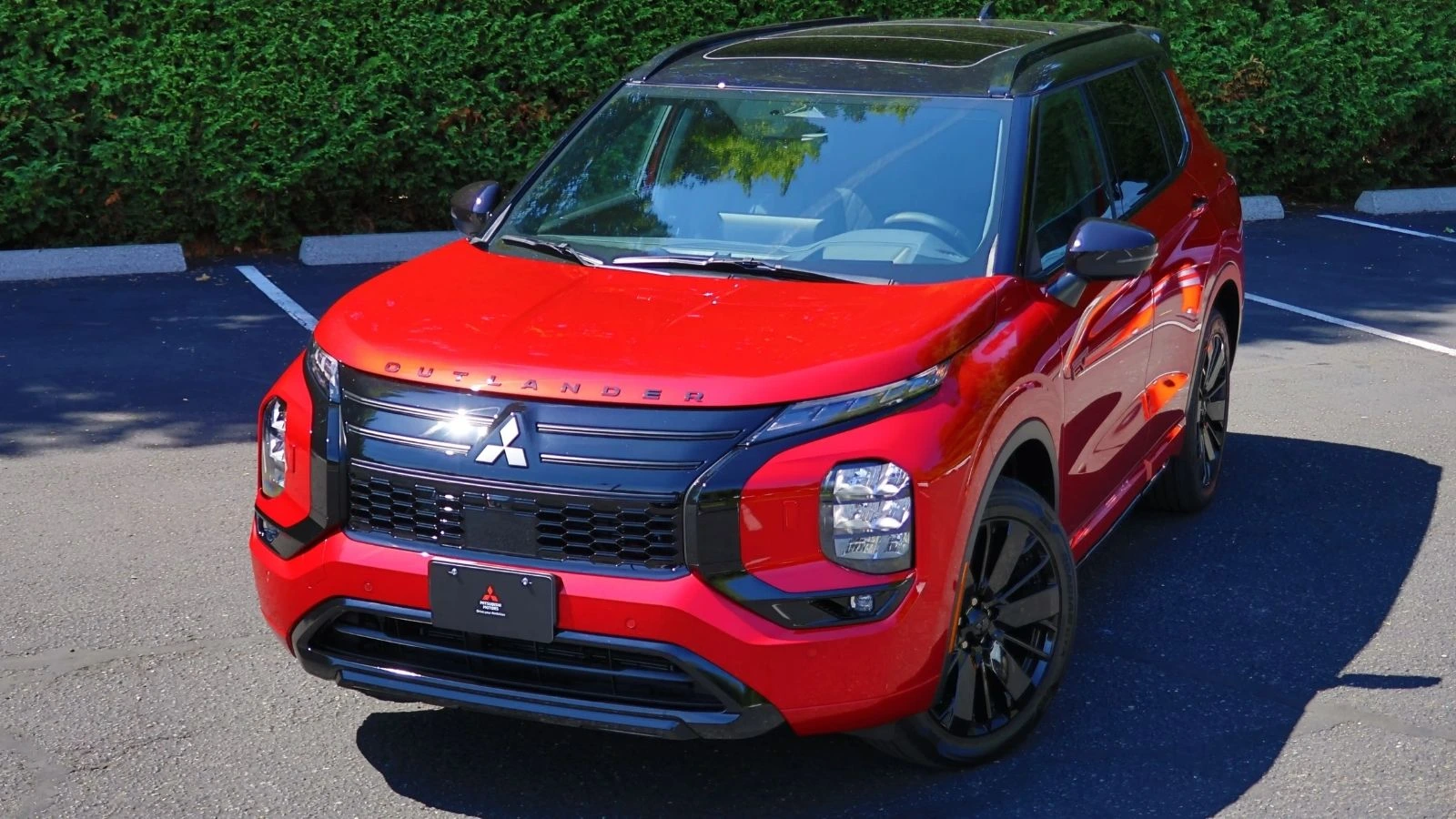
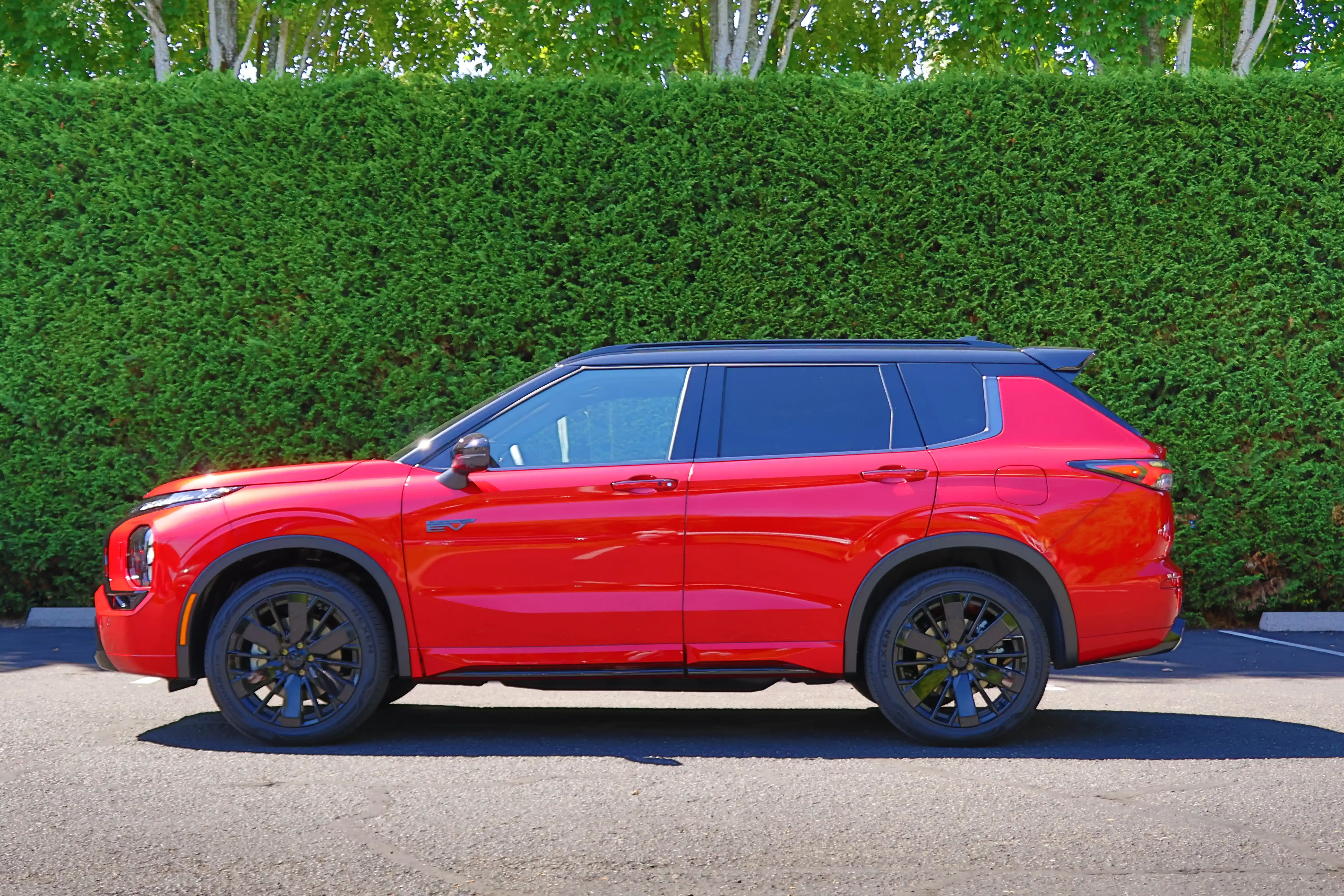
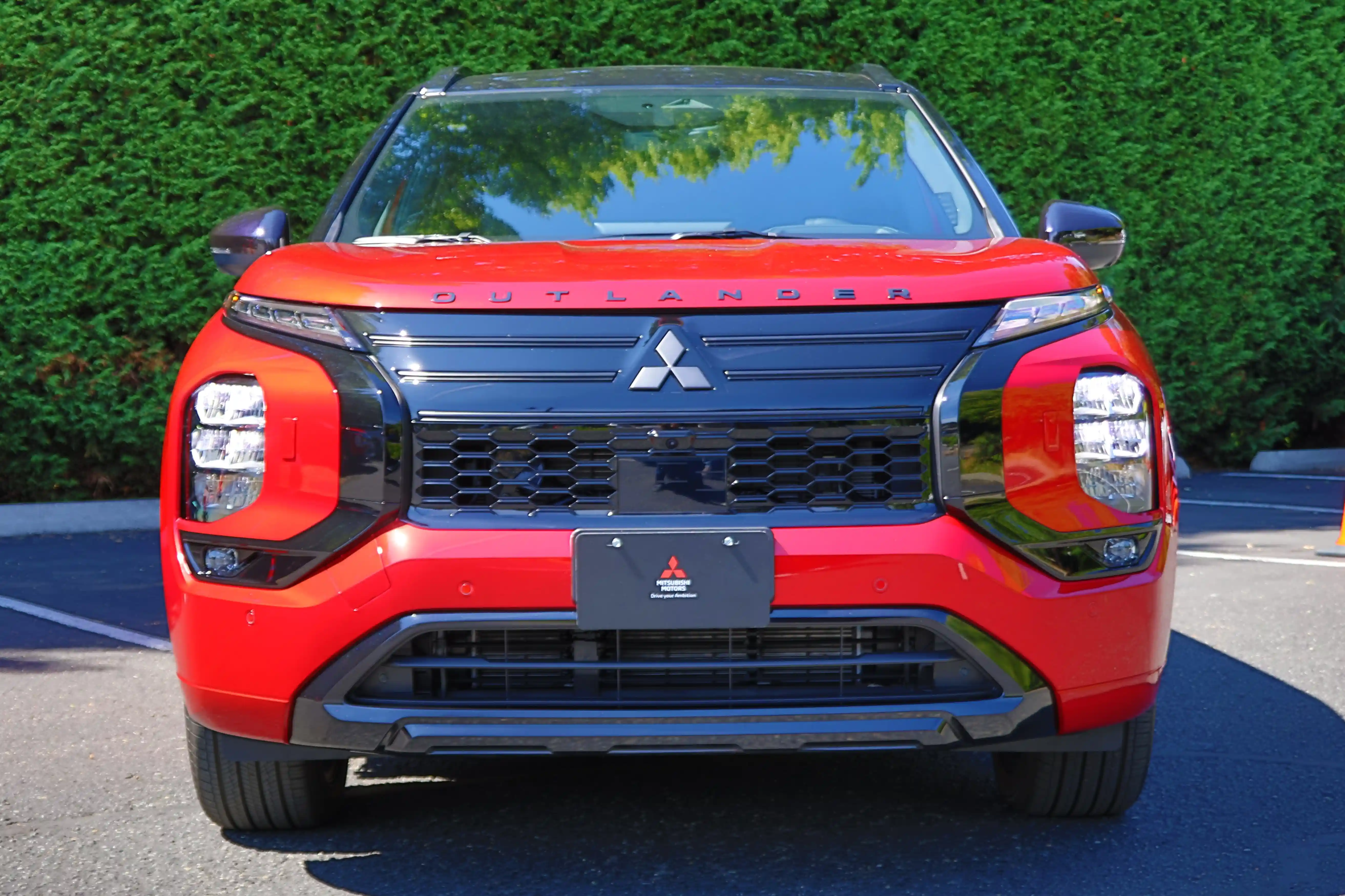
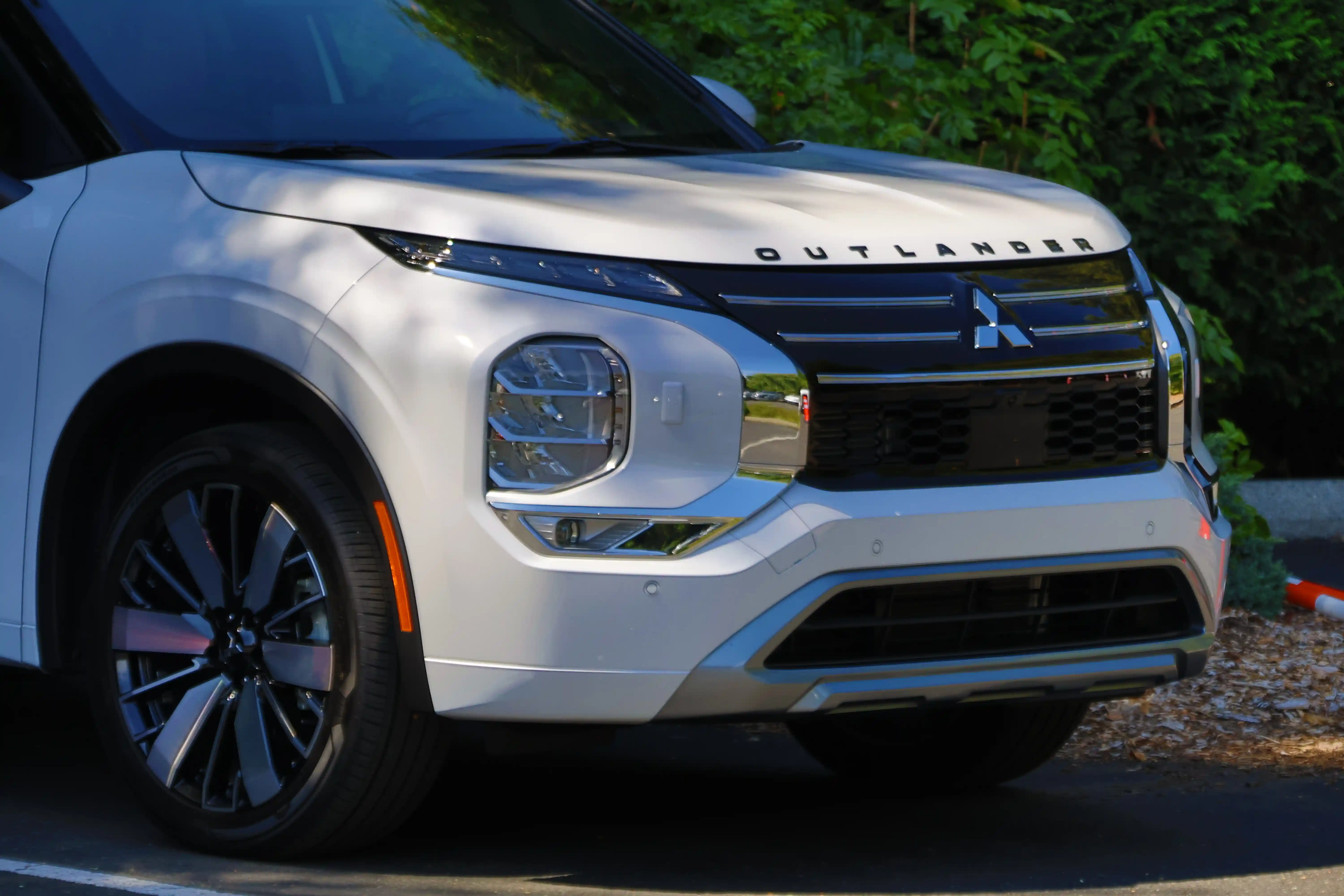
For anyone who has seen an Outlander in the last four years, this one will look familiar. It’s still based on the same platform as the latest Nissan Rogue, with a 106.5-inch wheelbase and 185.8 inches overall length. That makes it 1 inch longer than a Honda CR-V and 4.8 inches longer than a Toyota RAV4, the two bestselling models in the segment. Exterior changes are subtle: reshaped lower front and rear bumpers, standard LED lighting at both ends, and new texturing in the upper grille.
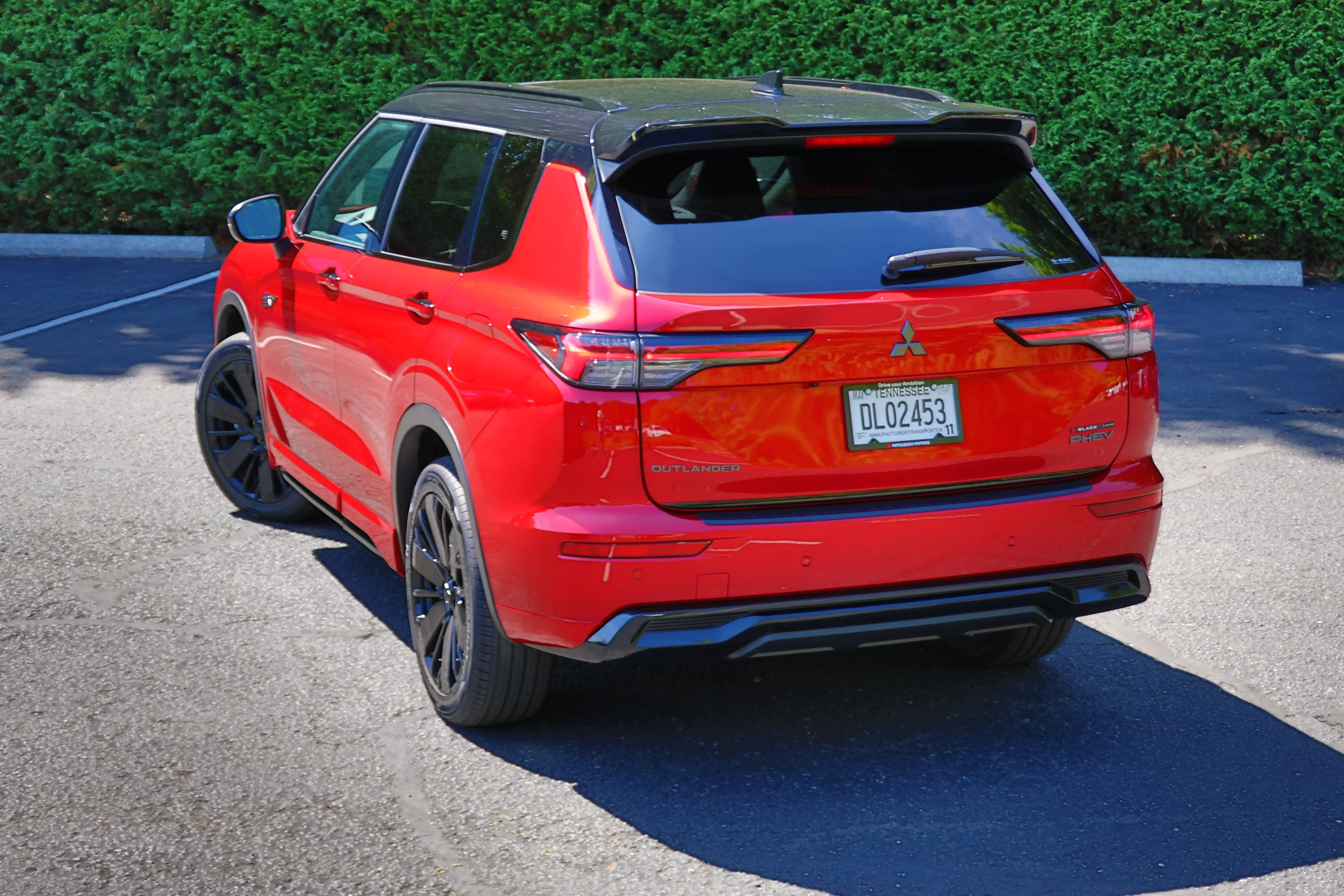
You'd probably never spot the difference between a 2025 model and a 2026 unless they were parked next to each other, but that’s not really a problem, since it's a handsome design. New for 2026 is the Black Edition package, which replaces all exterior chrome, badges, and wheels with black equivalents. It also brings a black leather interior and numerous interior options, including a 12-speaker Yamaha audio system, a digital rearview mirror, and front massaging, ventilated, and heated seats. The Black Edition looks especially striking against the available Red Diamond paint.
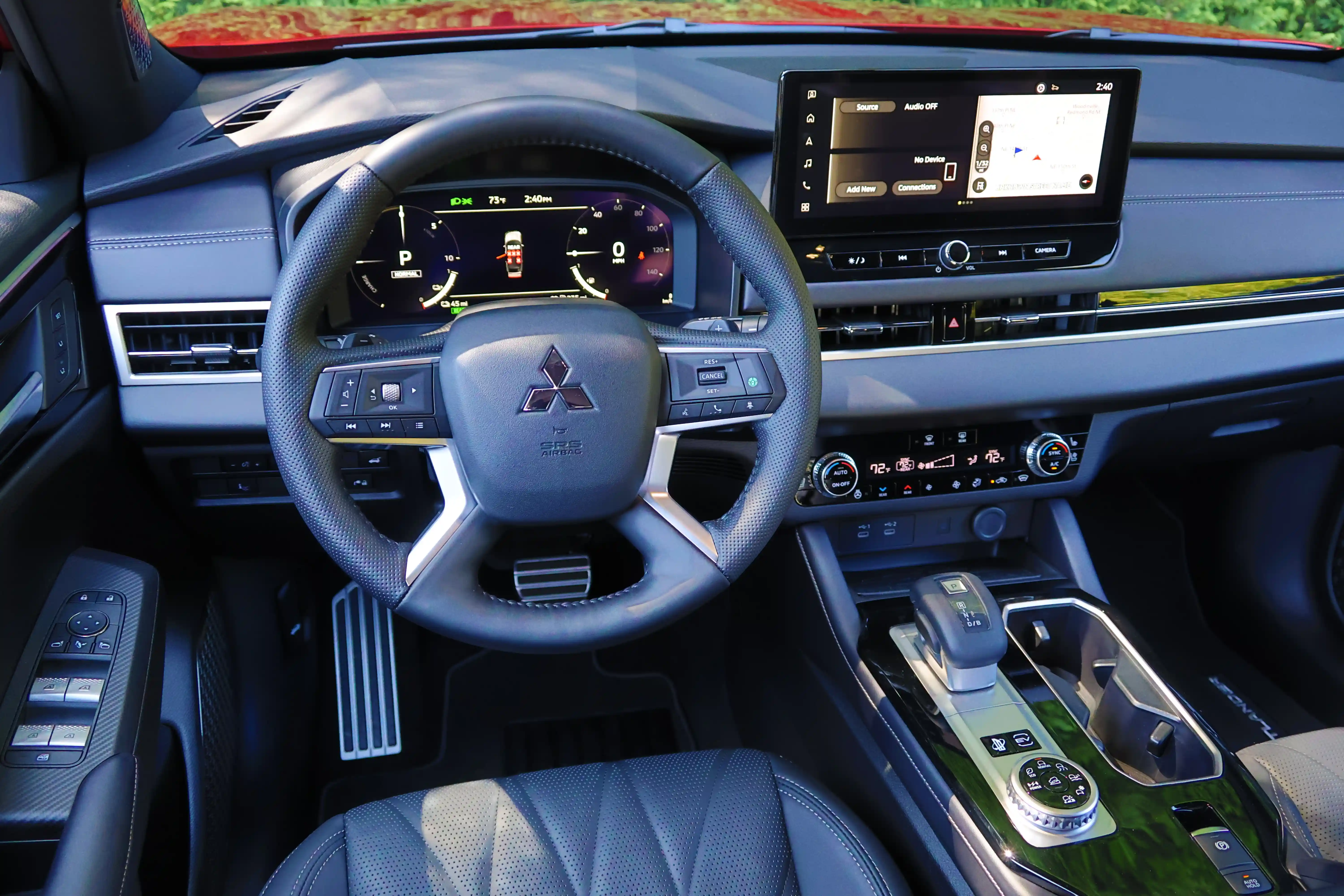
Inside, the changes are more extensive, with upgraded materials, new textures, and some added features. The cabin now has LED lighting, a redesigned 12.3-inch instrument cluster display, USB-C charging ports (two in the front and two in the second row), and a standard eight-speaker Yamaha audio system. The audio system can also be upgraded to a 12-speaker layout, with four speakers in the front headrests that create personal sound pods for the driver and front passenger. The driver can take a call only they can hear, without disturbing other passengers. The doors also get reinforcements that reduce noise and vibration, which in turn improves the sound quality throughout the cabin.
A Whole New Battery
The most important change to the 2026 Outlander PHEV is the propulsion system performance. Every Outlander PHEV comes standard with all-wheel drive, with electric motors on both the front and rear axles. Mitsubishi's 2.4-liter four-cylinder engine carries over from 2025, and it’s connected to a generator with a clutch that can send engine power to the front wheels when needed. The front and rear motors haven’t been changed this year. In fact, the only different part of the propulsion system is the battery pack under the floor, but that one change has a significant impact.
The previous battery pack used pouch-type lithium-ion cells with a nickel-manganese-cobalt cathode chemistry optimized for electric vehicles, meaning they prioritized storage capacity over power output. The result was a 20-kilowatt-hour capacity and 38 miles of electric range. The new pack switches to prismatic can cells with a different NMC formulation better suited to hybrid use. While the pack is the same overall size, it now has 33 percent less internal resistance, a capacity of 22.7 kWh, and power output that's up 60 percent.
Even with the same motors, that extra power bumps electric-only output to 248 horsepower — the same as the combined output of the motors and engine last year. Total blended output is now 297 horsepower.
The arrangement of the propulsion components is also rather unique. It’s designed to behave like an EV first, with the engine acting either as a range extender or kicking in for blended mode for maximum output. The updated Outlander now goes 45 miles on a charge, which should cover most people’s daily driving with a nightly charge. In addition to EV-only mode, the system can operate in three other modes.
- Series hybrid: The engine acts as a generator to charge the battery, but the motors provide all the drive power
- Parallel hybrid: The clutch engages to send some engine power to the front wheels, mostly for higher-speed driving
- Automatic mode: Once the battery is depleted, the system selects the best combination of power sources based on acceleration demand, load, terrain, and other factors.
The Outlander can switch among electric, series-hybrid, and parallel-hybrid operation depending on speed and power demand, so see how plug-in hybrids decide when to use the battery, motors, and gasoline engine ➜
How Does It Drive?
With 248 horsepower on tap from the motors and a slight rear-biased setup thanks to the stronger motor at the rear axle, the Outlander PHEV drives like most modern electric crossovers. There's more than enough electric power to stay in EV mode without having to be gentle on the accelerator. I didn’t time the Outlander, but it feels as quick as anyone needs for daily driving without using any gas.
I drove it on some twisting rural roads in Washington state, and it had no issue accelerating strongly uphill. Like other electrified Japanese vehicles, you can select a One-Pedal driving mode, but it won’t bring the car to a complete stop. At lower speeds, it coasts, and you’ll need to press the brake pedal. Personally, I prefer bringing the car to a full stop with just the accelerator, while still being able to switch to a more traditional feel if I want. Unfortunately, Toyota, Nissan, and Mitsubishi haven't given us that choice yet. You can switch off One-Pedal mode and select a degree of regenerative braking with the steering wheel paddles, ranging from Level 0 (regen only when you press the brake) to a moderately strong Level 5.
The added reinforcements make the Outlander feel serene inside, and combined with its hybrid architecture, it comes across as significantly quieter than plug-in hybrids from Toyota, Kia, and Hyundai.
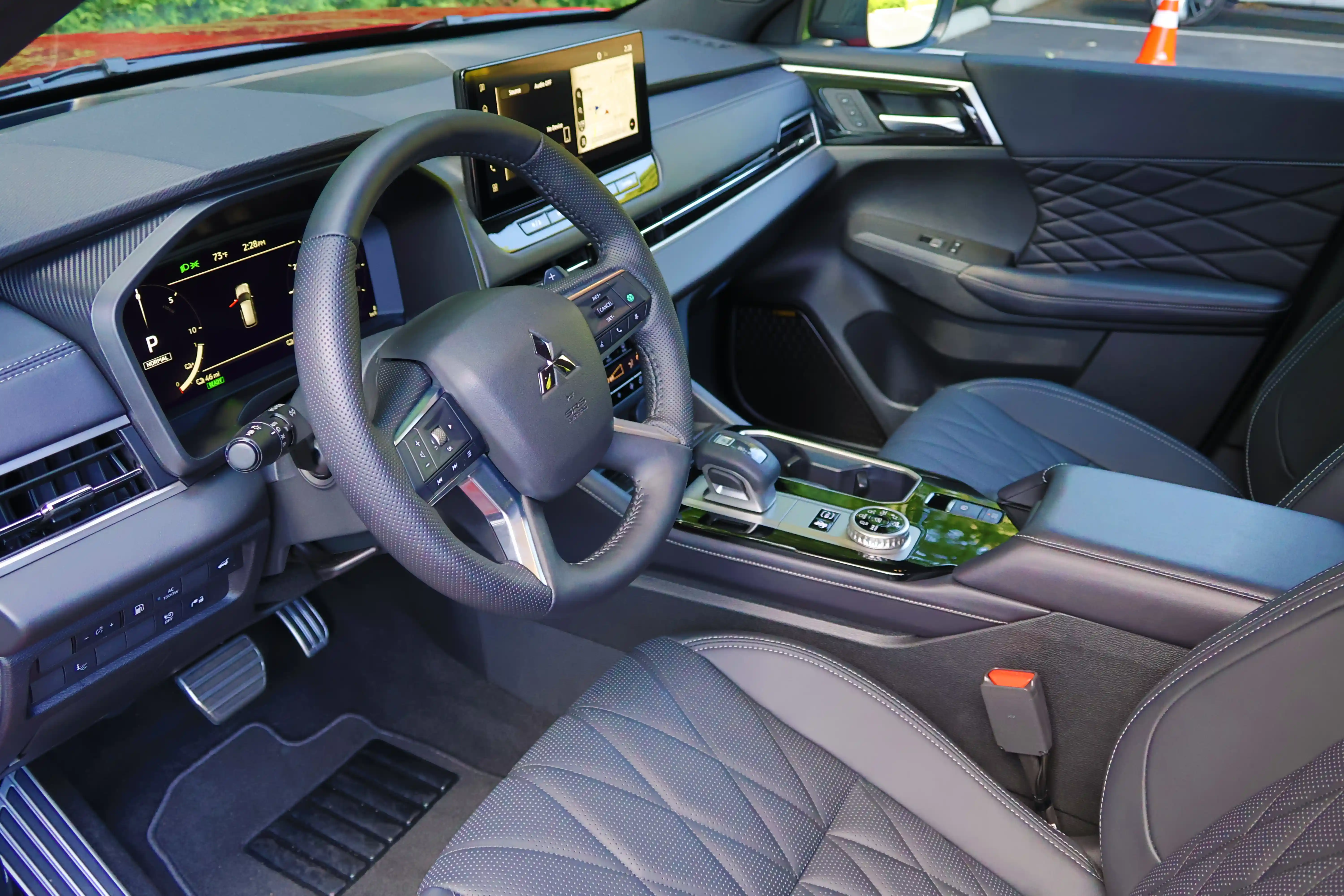
Handling and ride quality are also surprisingly good. Over rougher pavement, the Outlander felt very compliant with little road noise, and it stayed relatively flat through curves. The thick-rimmed steering wheel provided good grip, and the steering was nicely weighted with a bit of feedback. The Outlander PHEV isn’t a sports car by any means, but it goes where you point it, and the slight rear power bias helps minimize understeer.
Cabin Comfort and Cargo
Compared to the rather lumpy seats in the new Jeep Cherokee I drove the prior week, the Outlander's front seats were very comfortable and supportive. The second row provides plenty of room, too. The Outlander is the only crossover in this segment with a third row, and once you fold it into place, it becomes obvious why. The second-row seats can slide forward and back, but even all the way forward, third-row legroom isn’t sufficient for anyone taller than about four feet, if that.
Seven seats are unusual in this part of the electrified crossover market, but passenger room is only one part of the family-car equation, so compare more efficient vehicles built around real household needs ➜
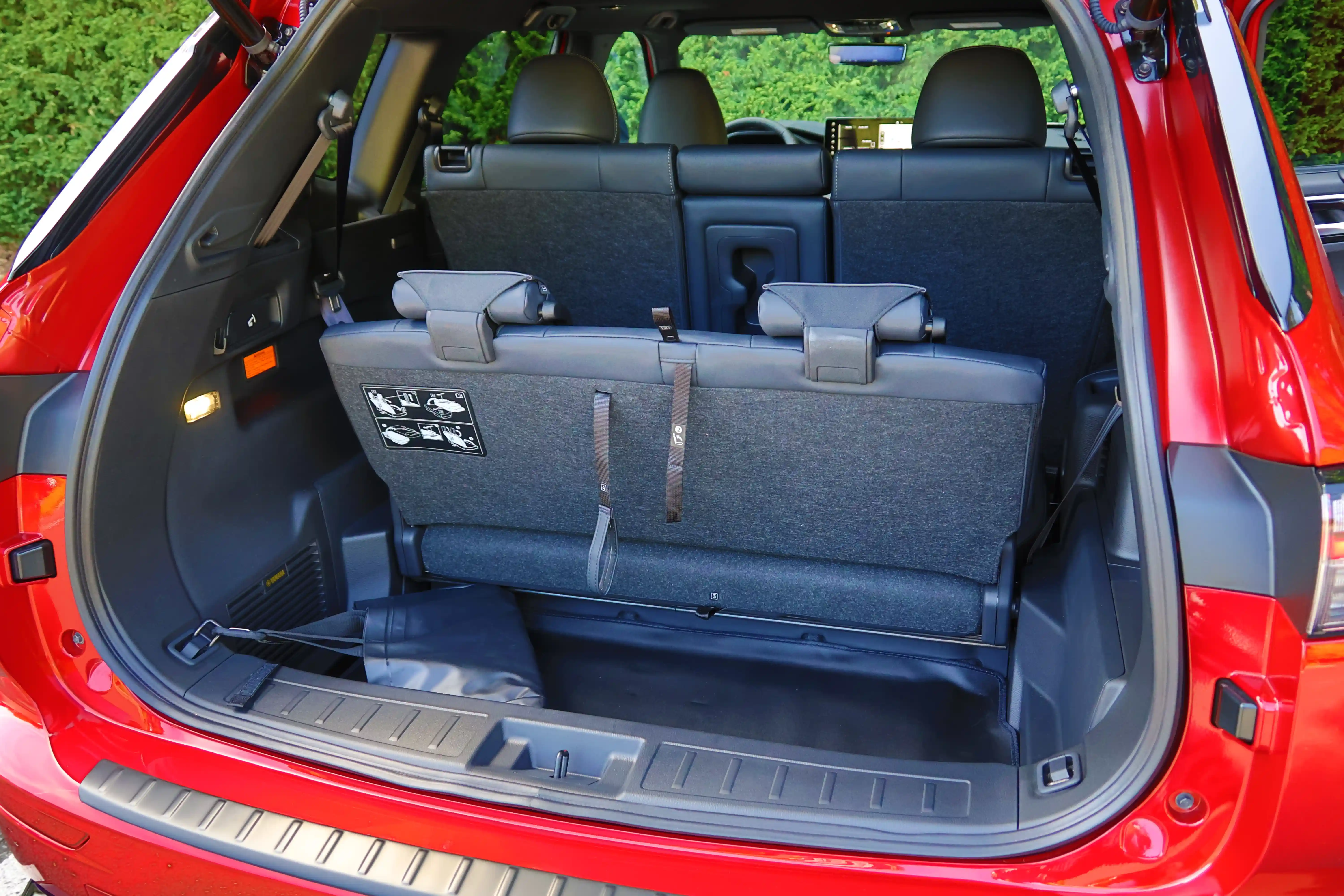
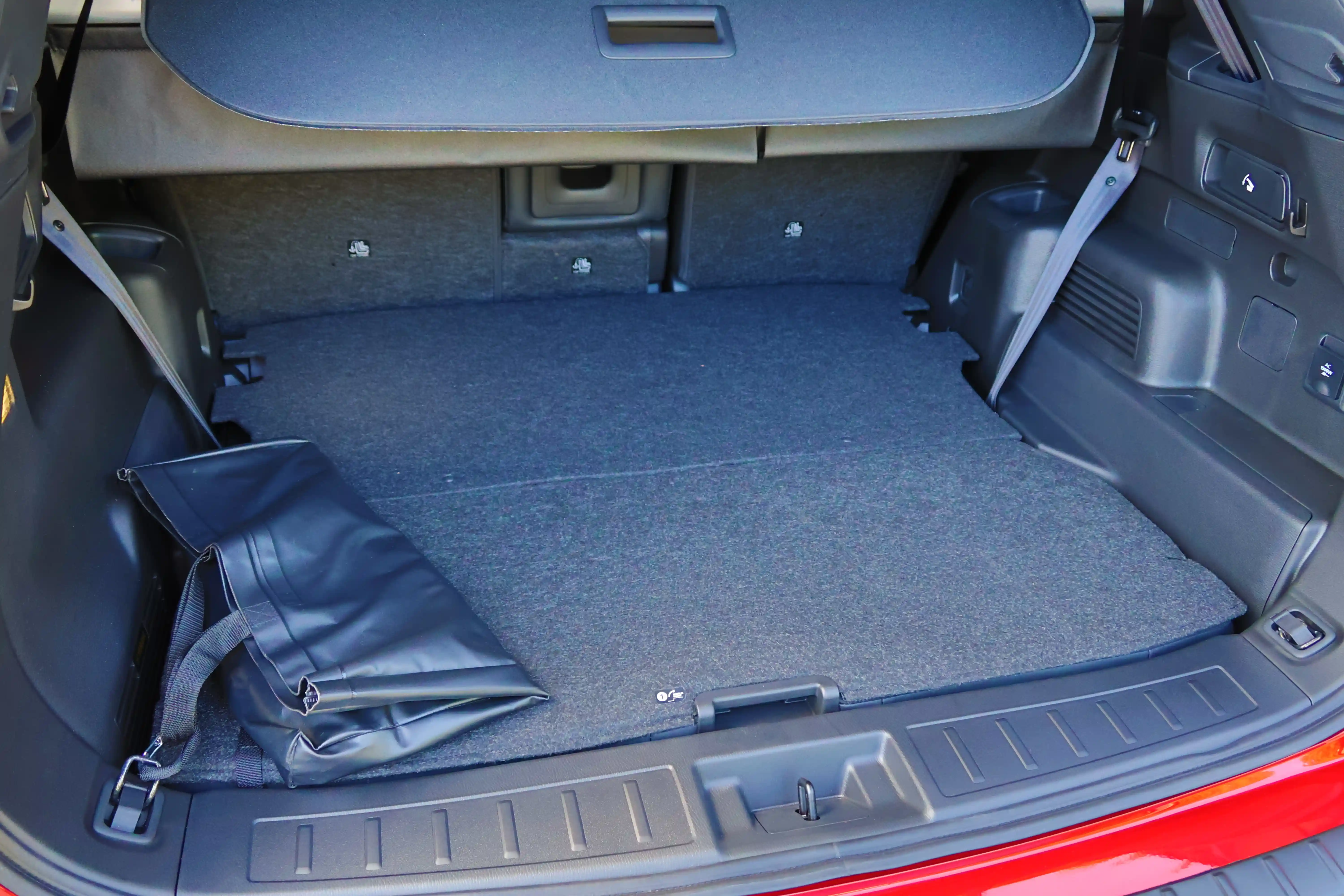
However, Mitsubishi Director of Product Strategy Travis Wattles told me he can fit a child seat in the third row for his three-year-old daughter while still leaving room for his mother-in-law in the second row, so there are scenarios where the extra seats might be useful. I suspect most owners will just leave that third row folded into the cargo well, which opens up a nice, large, flat load floor.
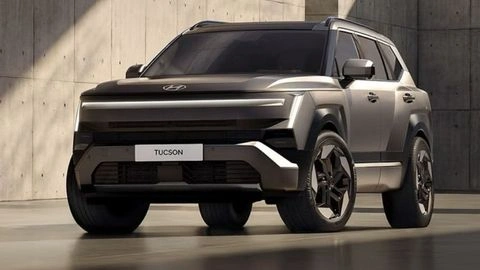
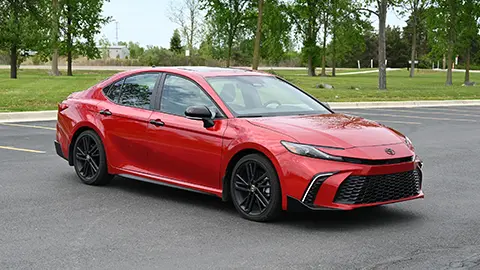
The Outlander PHEV's other main downside: while it offers good electric range, it’s not the most efficient plug-in hybrid in the segment. In Electric mode, it will deliver about 2 miles/kWh (most EVs of this size manage about 3 to 4 miles/kWh), and once the battery's depleted, Hybrid mode is rated at an EPA-estimated 27 mpg. That’s a slight improvement over the previous model’s 26 mpg, but the Hyundai Tucson and Kia Sportage deliver 35 to 36 mpg in Hybrid mode, and the RAV4 gets as much as 40 mpg. The Mitsubishi is more biased toward electric driving, but it would be nice to get a bit more hybrid efficiency.
The efficiency equation changes dramatically depending on how often the battery gets replenished, so see whether a plug-in hybrid fits your commute and charging routine ➜
Charging and Pricing
All Outlander PHEVs come with a J1722 charging port, and the battery charges in about 6.5 hours on a Level 2 charger. The SEL and Black Edition trims also get a CHAdeMO fast-charging port. The outgoing Outlander was limited to 22 kilowatts on CHAdeMO, while the 2026 model improves to 50 kW and charges to 80 percent in about 29 minutes. Mitsubishi’s explanation for sticking with CHAdeMO instead of switching to CCS or NACS: of the nearly 22,000 Outlander PHEVs sold globally in 2025, only about 6,300 went to US buyers, with Japan being the largest market. With only a fraction of sales even including the CHAdeMO port, it's tough to justify the engineering expense of switching ports for the US market.
The 2026 Mitsubishi Outlander PHEV starts at an MSRP of $44,990, including a $1,795 destination fee. The SE trim bumps the sticker price to $47,349, the SEL comes in at $50,740, and the Black Edition tops the range at $55,490. Those prices aren’t inexpensive, though most trims still land below the average new-car price today, which is now over $50,000. It’s also in the ballpark of many similarly sized EVs, while providing the flexibility of a gas engine for longer trips. The Outlander is worth a look, but depending on your needs, there might be better value options elsewhere in this segment.
More Electrified SUVs Worth Cross-Shopping
2026 Nissan Rogue Plug-In Hybrid Review
The closely related Rogue PHEV gives Nissan buyers 38 miles of electric range, standard AWD, and seven seats, making it the most revealing alternative to the updated Mitsubishi.
Read More ➜
2026 Kia Sportage Offers ICE, Hybrid, and Plug-In Hybrid Options
Kia’s compact PHEV trades some electric range for substantially better gasoline efficiency once its battery is depleted.
Read More ➜
Best Plug-In Hybrid Crossover SUVs
Compare more PHEVs by electric range, efficiency, space, price, and everyday usability before deciding whether the Outlander’s seven-seat layout is worth the tradeoffs.
Read More ➜