
Fast Facts | 2026 Nissan Rogue PHEV Review
⚡ Powertrain: Dual electric motors with a 2.4L four-cylinder acting primarily as a generator
🔋 Battery: Plug-in hybrid system shared with Mitsubishi Outlander PHEV
📡 Electric Range: Up to 38 miles of EV-only driving
🔌 Charging: 3.5 kW AC charging via J1772, about 7.5 hours on Level 2
🚀 Performance: Smooth electric-first acceleration with seamless engine engagement
📏 Weight: Over 1,100 lbs heavier than the gas Rogue due to battery and motors
🛋️ Interior Tech: 9-inch touchscreen, digital cluster, HUD, older Nissan infotainment software
Nissan has had an interesting history with electrification over the past two decades. The company offered an Altima with a Toyota hybrid system for a few years, starting in 2007, and then launched the first modern mainstream EV with the Leaf in 2010.
There was also a brief stint with an in-house developed hybrid system in the Pathfinder and Rogue in the mid-2010s. But none of those hybrids were particularly successful. Fast forward to late 2025, and compact crossovers are some of the bestselling vehicles in the U.S. market, with hybrids taking an ever-larger share.
Nissan has a completely redesigned Rogue coming in 2026 with its third-generation e-Power series hybrid system (which you can read more about in this review), but before that one arrives, there's now a plug-in hybrid version, and we just got a chance to drive it.
An Outlander in Rogue Clothing
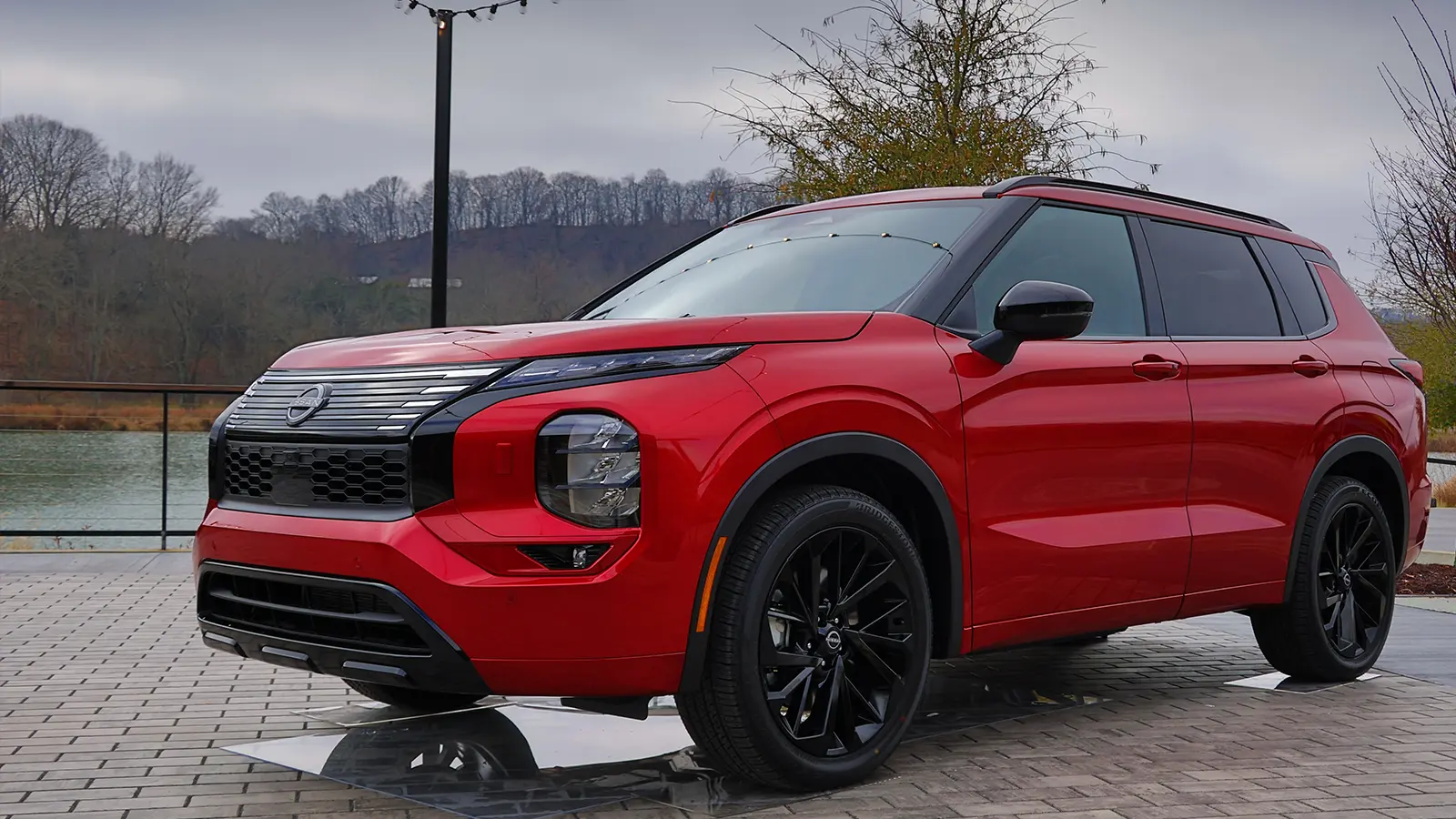
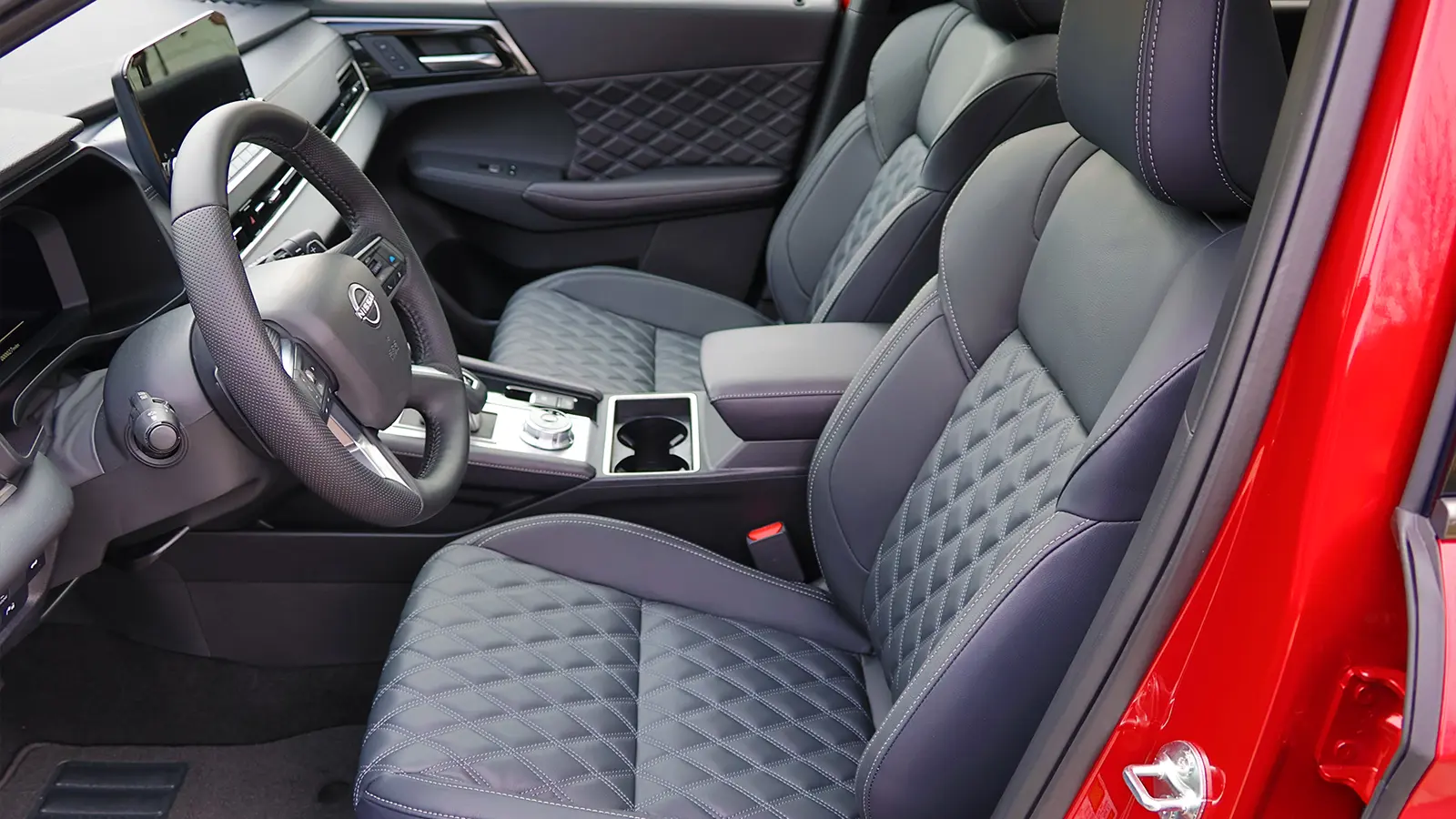
The Rogue has been Nissan’s bestselling vehicle for many years, so there’s a good chance you’ve seen many of them. But compare this version to any third-generation Rogue built since 2021, and you'd probably never guess it’s the same vehicle. That’s because this one sort of isn’t: it’s actually a Mitsubishi Outlander. But it's also mostly a Rogue, too. Confused? Let me explain.
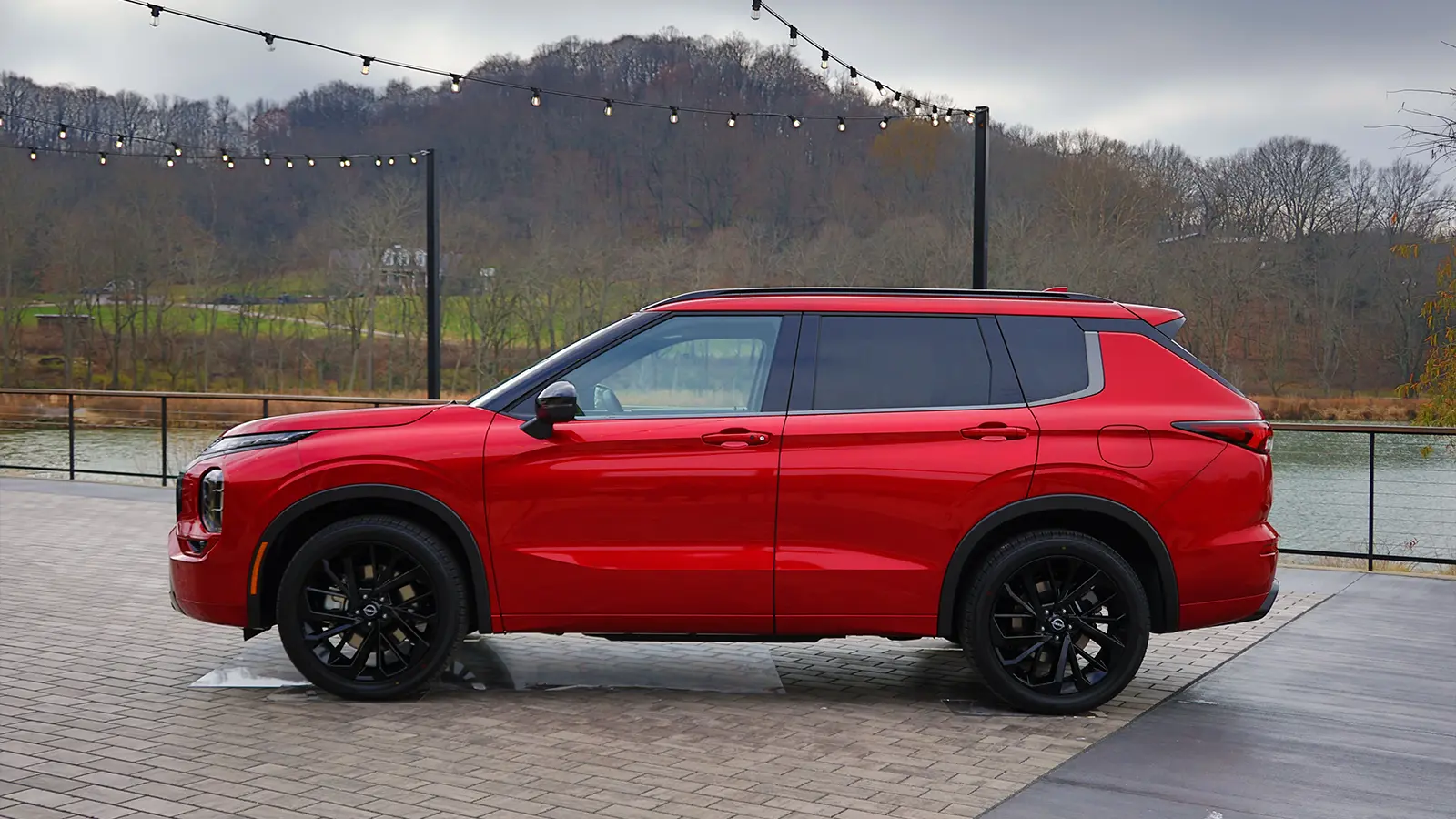
Back in 2016, Mitsubishi joined the Renault-Nissan Alliance and began sharing platforms with its new partners. The current generation Outlander uses the same architecture as the Rogue — the same 106.5-inch wheelbase, and the body is just 2.4 inches longer. The suspension, brakes, structural hardpoints, and most other under-the-skin components are shared. The differences lie in the styling. The gas-powered Rogue has sharper creases, while the Outlander's look is slightly softer.
The Rogue is currently built in Smyrna, Tennessee, while the Outlander is assembled in Okazaki, Japan. With the redesigned Rogue set to arrive from Smyrna sometime in 2026, Nissan decided it would be easier to get a PHEV to market now by simply modifying the Outlander and building it on the same line in Japan. And when I say "modify," I'm almost overstating it.
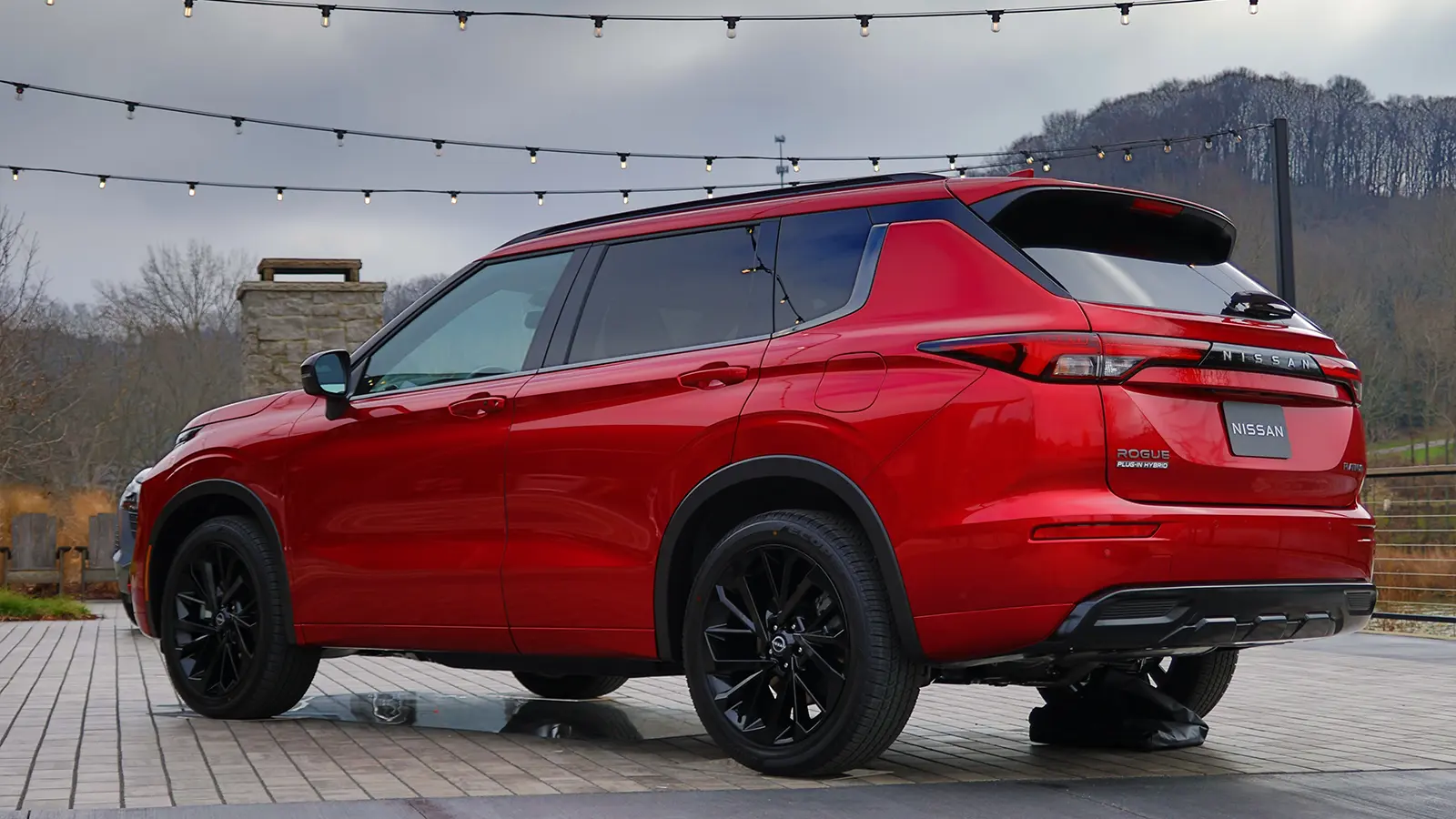
On the front, the upper grille between the daytime running lamps is changed to add Nissan's stacked horizontal light bars, a design cue that's becoming a signature across their SUV lineup. On the back, a black strip emblazoned with the Nissan badge connects the taillights for a full-width appearance. That’s it for exterior changes. Inside, the commonality continues with the same controls in the same places, though you'll notice some different trim pieces and colors between the two.
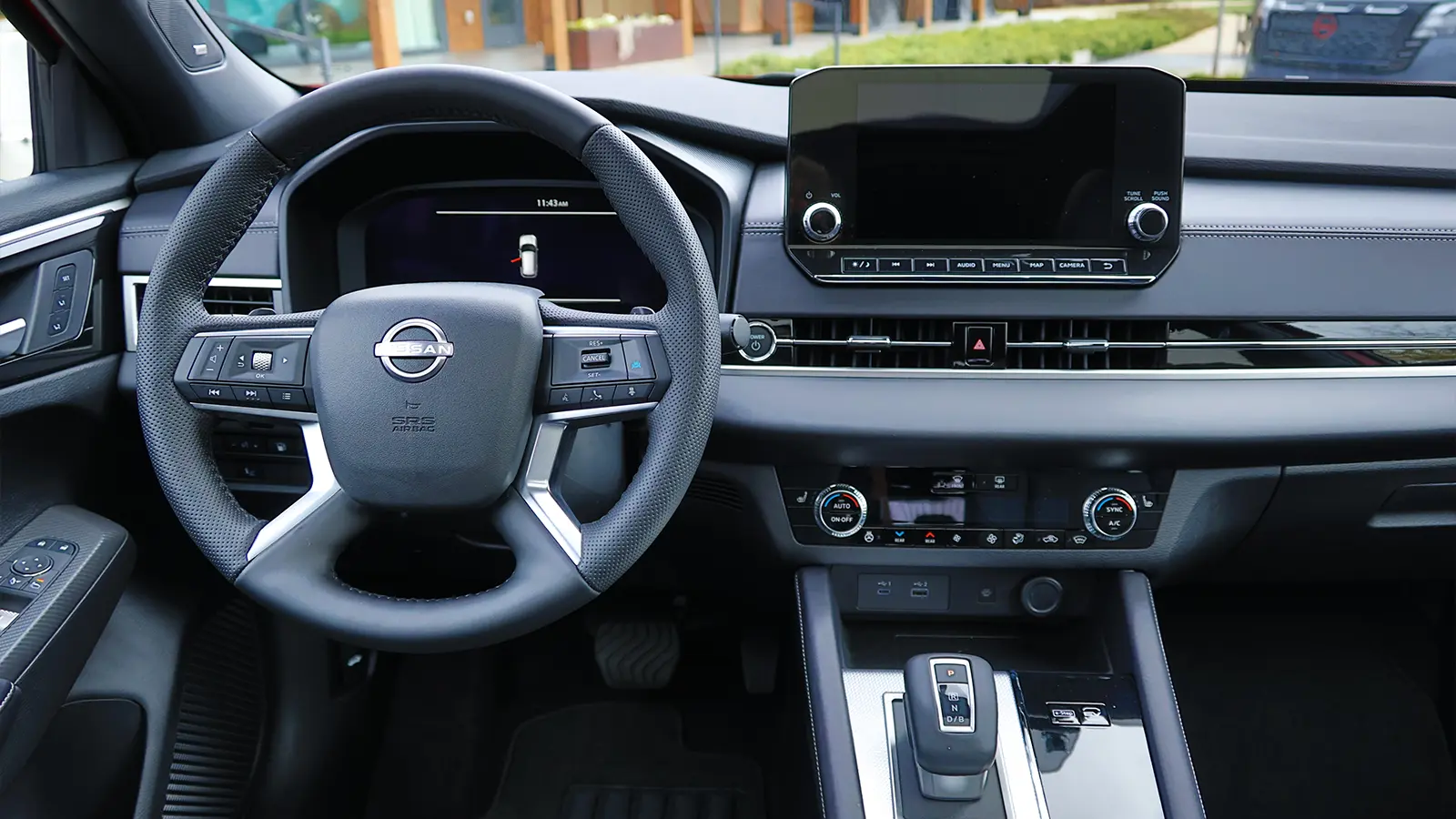
The Rogue PHEV still has the same 9.0-inch center touchscreen that was used prior to the gas model’s 2024 refresh. It also uses the older Nissan infotainment software instead of the new Android-based system with Google services that the higher trim gas models now have.
It’s not a bad system, but the interface looks a bit dated by 2025 standards. If you connect your phone, though, that's not really an issue. And fortunately, Android Auto and Apple CarPlay are both supported, although only iPhones get wireless connectivity. In front of the driver, you'll find a 12.3-inch digital instrument cluster and a 10.8-inch head-up display.
The Powertrain
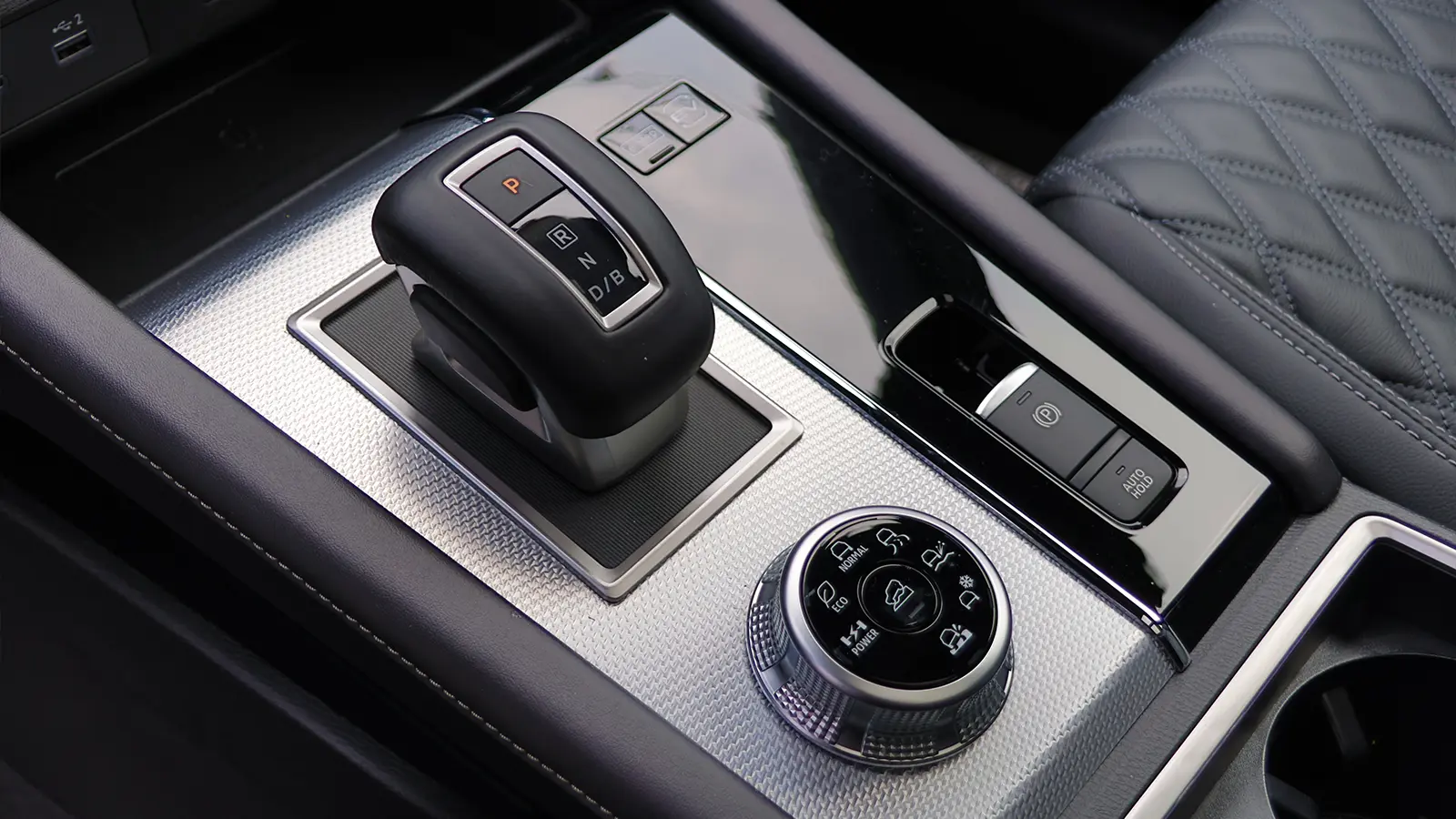
The Mitsubishi PHEV powertrain features two electric drive motors with 114 horsepower at the front axle and 134 horsepower at the rear. There’s also a naturally aspirated 2.4-liter four-cylinder engine that produces a modest 131 horsepower and 144 pound-feet of torque, which is coupled to a generator and a clutch that can link it to the front wheels.
The system functions in three distinct modes: electric, series hybrid, and parallel hybrid. With a full charge, the Rogue is EPA-estimated for 38 miles of electric driving range, and since the motors provide most of the power, it’s as easy to drive around as an EV.
Wondering why plug-in hybrids can feel so EV-like around town? How electric motors power PHEVs
Once the battery is depleted, the system switches to one of the hybrid modes. Most of the time, it operates as a series hybrid, with the engine and generator producing electricity to feed the battery, which then powers the motors for electric-only driving. But for harder acceleration or highway cruising, a clutch connects the engine to the final drive gears on the front axle to feed some torque directly to the wheels.
While the Outlander is available with a DC fast charging option using a CHAdeMO connector, it only charges at up to 22 kilowatts and takes up to 40 minutes. Plus, CHAdeMO is becoming less common as the industry switches to NACS, so Nissan has opted not to include this feature on the Rogue, which isn’t really much of a loss. For AC charging, the included J1772 charge port is limited to just 3.5 kW. While this slow charging will replenish the battery overnight in about 7.5 hours, it won’t help very much if you want to top off the battery while out running errands.
On the Road
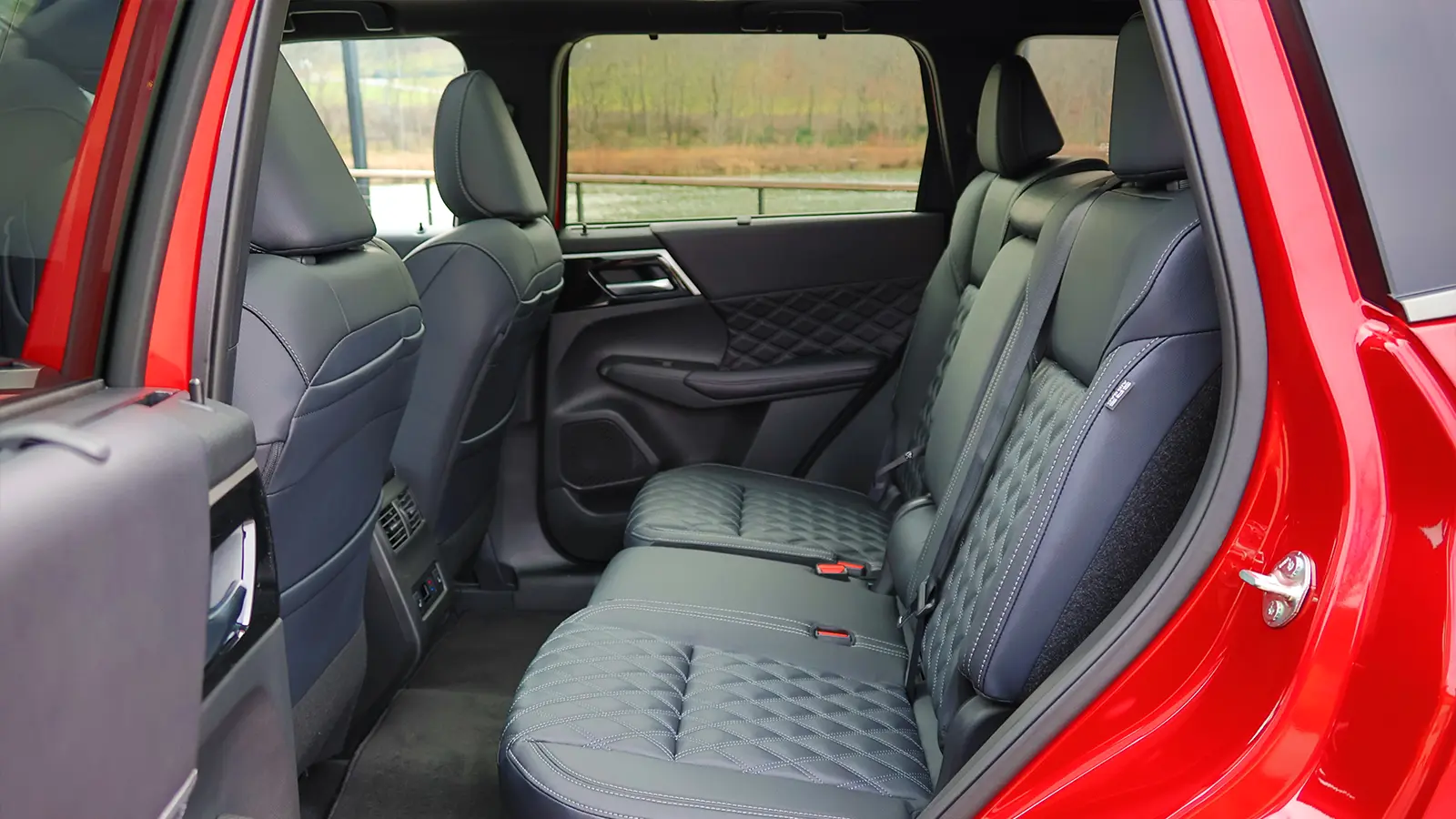
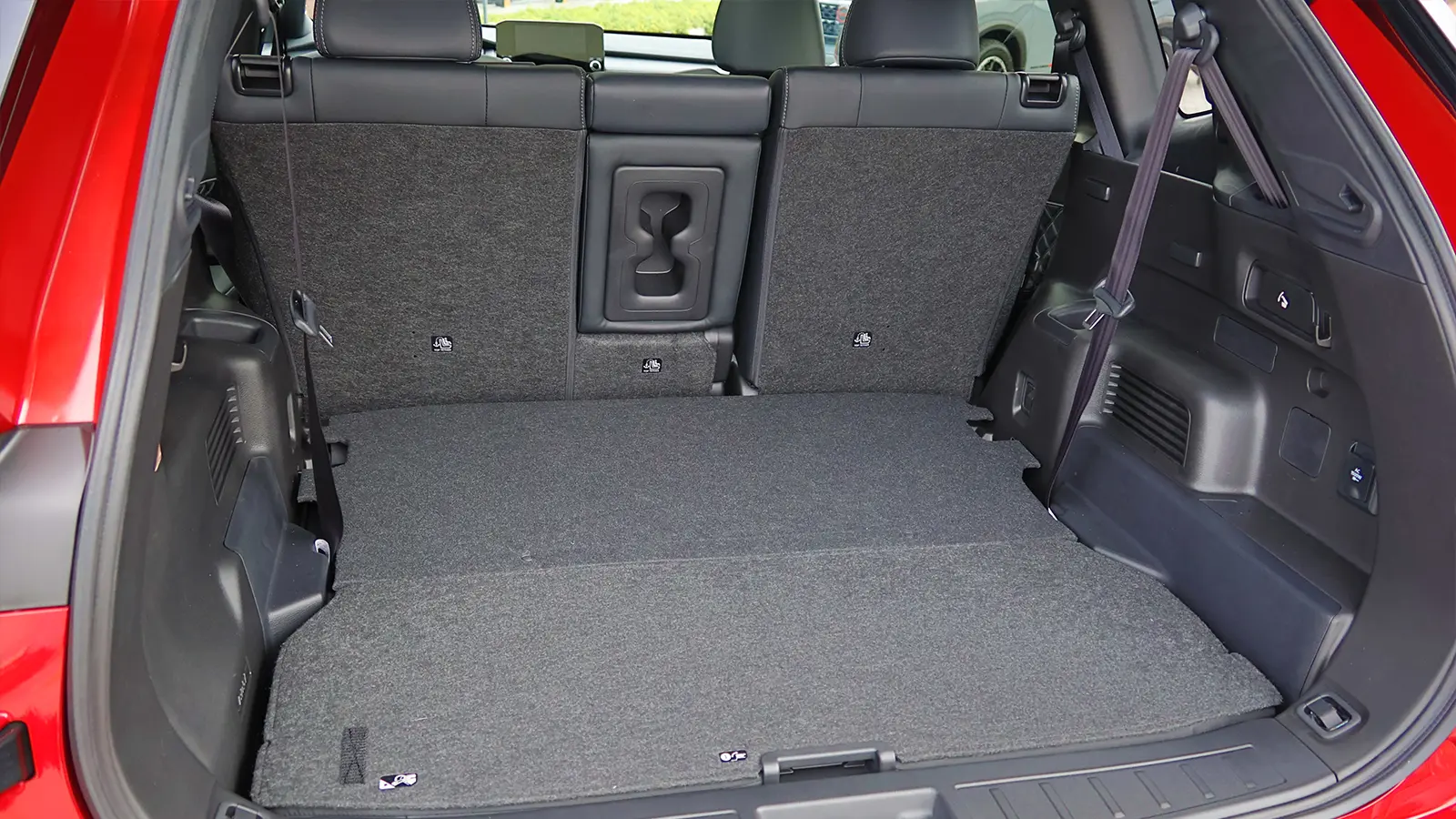
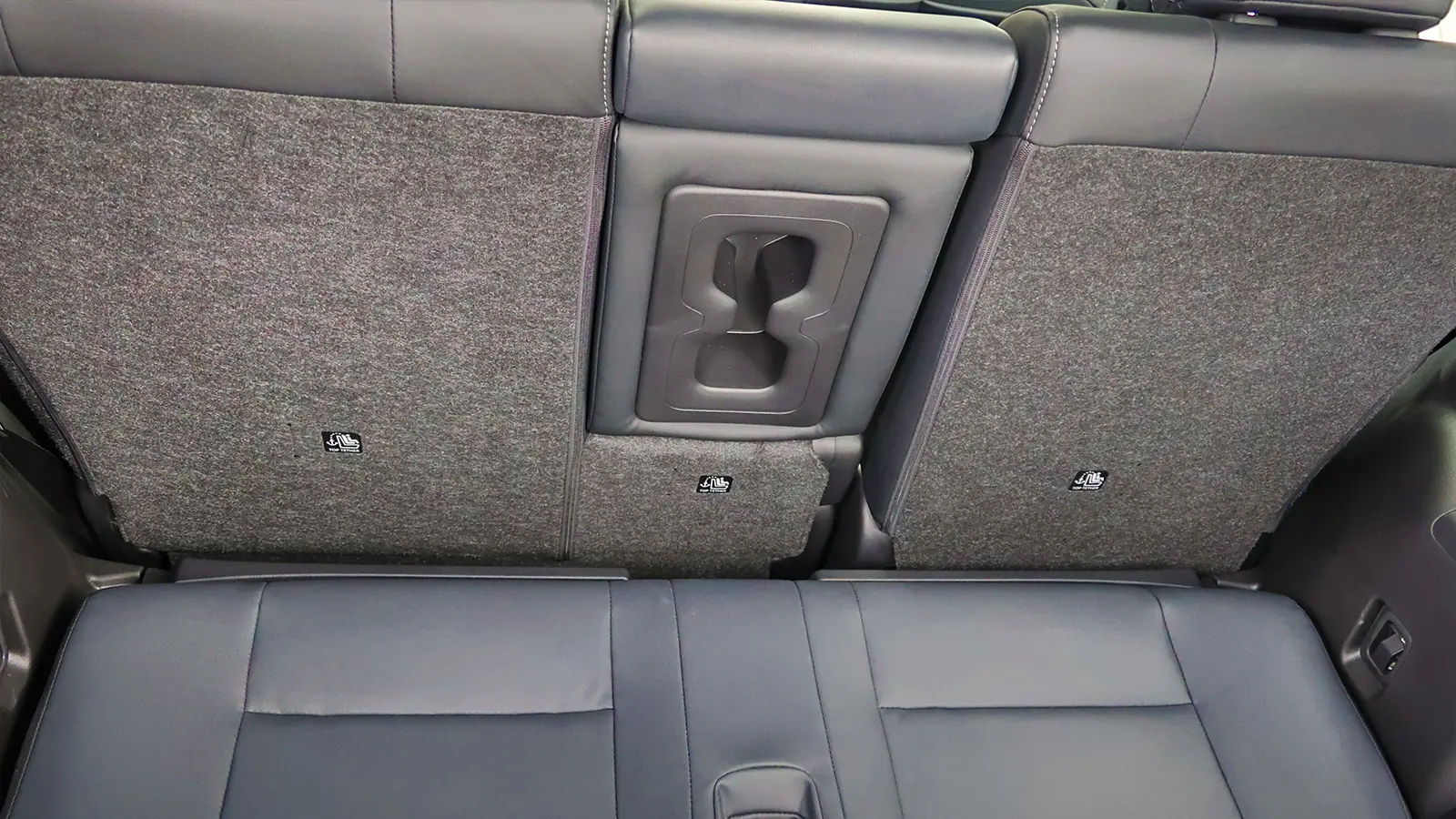
The PHEV drives a lot like any other gas-fueled Rogue, though the added weight does take a toll. The Platinum PHEV is over 1,100 pounds heavier than the equivalent gas model, thanks to the battery, two motors, generator, slightly longer body, and third row seat. As a result, it did feel a bit less nimble. The suspension tuning was also a bit softer than the gas model, so it wasn't quite as precise when going through the curving country roads near Franklin, Tennessee, where we drove. That said, one of the reasons to opt for PHEV is for electric driving on your daily commute, so that softer setup will probably feel welcoming when driving around town.
If you’re considering a PHEV, nightly charging is key to seeing real benefits. Here’s what happens when you don’t plug in regularly, explained in Charging a Plug-In Hybrid: What to Know Before You Buy
You can toggle through multiple display options in the instrument cluster, including a power-flow meter. Checking that display while driving, you’ll notice power rarely ever flows from the engine to the wheels; it’s just feeding the battery. The Rogue PHEV wasn't fast, but the electric drive meant it responded nicely off the line. When the engine toggled on and off, it felt quite seamless with no noticeable shuddering. Even under maximum acceleration, it wasn't as noisy as a Toyota hybrid.
Why Bother?
Nissan sees the Rogue PHEV as a bridge until the new e-Power hybrid Rogue arrives next year. Given that this model may only be offered for one model year, the obvious question is: why bother? With so many competitors offering hybrid variants, it turns out many consumers are searching for “most efficient compact crossover” or “hybrid crossover” when they're researching.
Those customers don’t all end up buying a hybrid, and many opt for a cheaper gas version instead, but without a hybrid option, they'd never even find the Rogue. So, Nissan felt it was better to offer this until the new model is available rather than lose sales. With essentially no development cost, it’s not a terrible strategy. If the PHEV does well, Nissan may opt to keep it around longer, but they'll decide that later.
Nissan hasn’t announced pricing yet but expect something close to the $45,000 MSRP mark. For someone who likes the idea of an EV but isn’t quite ready to make the full jump to electric, the Rogue PHEV does provide a decent bridge. It'll meet most driving needs without gas.
Nissan also has about three times as many U.S. dealers as Mitsubishi, so service will be easier. But as with any PHEV, only buy this if you have somewhere to charge nightly and you'll actually plug it in. Otherwise, the Rogue PHEV actually gets worse fuel economy at just an EPA-estimated 26 mpg combined compared to the AWD gas Rogue's EPA-estimated 31 mpg.
🔋 More Electrified Picks
2026 Toyota Corolla Cross Hybrid
Toyota’s compact hybrid crossover focuses on efficiency, practicality, and everyday usability.
Read More ➜
2026 Genesis Electrified GV70
A luxury electric SUV that blends performance, refinement, and upscale interior design.
Read More ➜
2026 Toyota RAV4 Hybrid: Everyday Practicality Meets Smarter Electrification
One of the most popular hybrid SUVs combines strong fuel economy with real-world versatility.
Read More ➜