



 Reviews
2026 Toyota Tundra TRD Pro Review
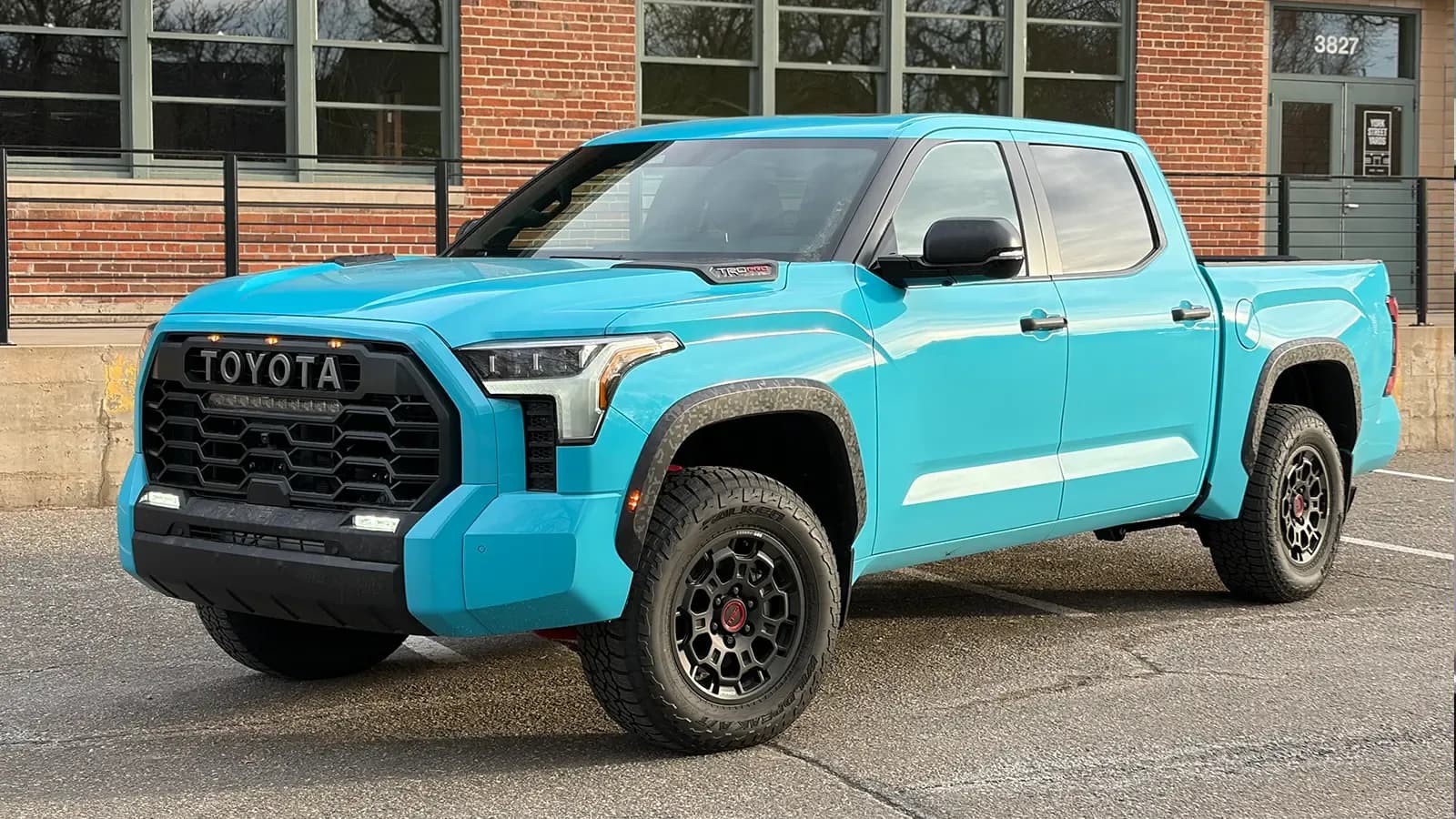
If you don’t think that serious off-road prowess and a hybrid powertrain belong together, the 2026 Toyota Tundra TRD Pro would like to have a word with you.
Andrew Ganz6 min read

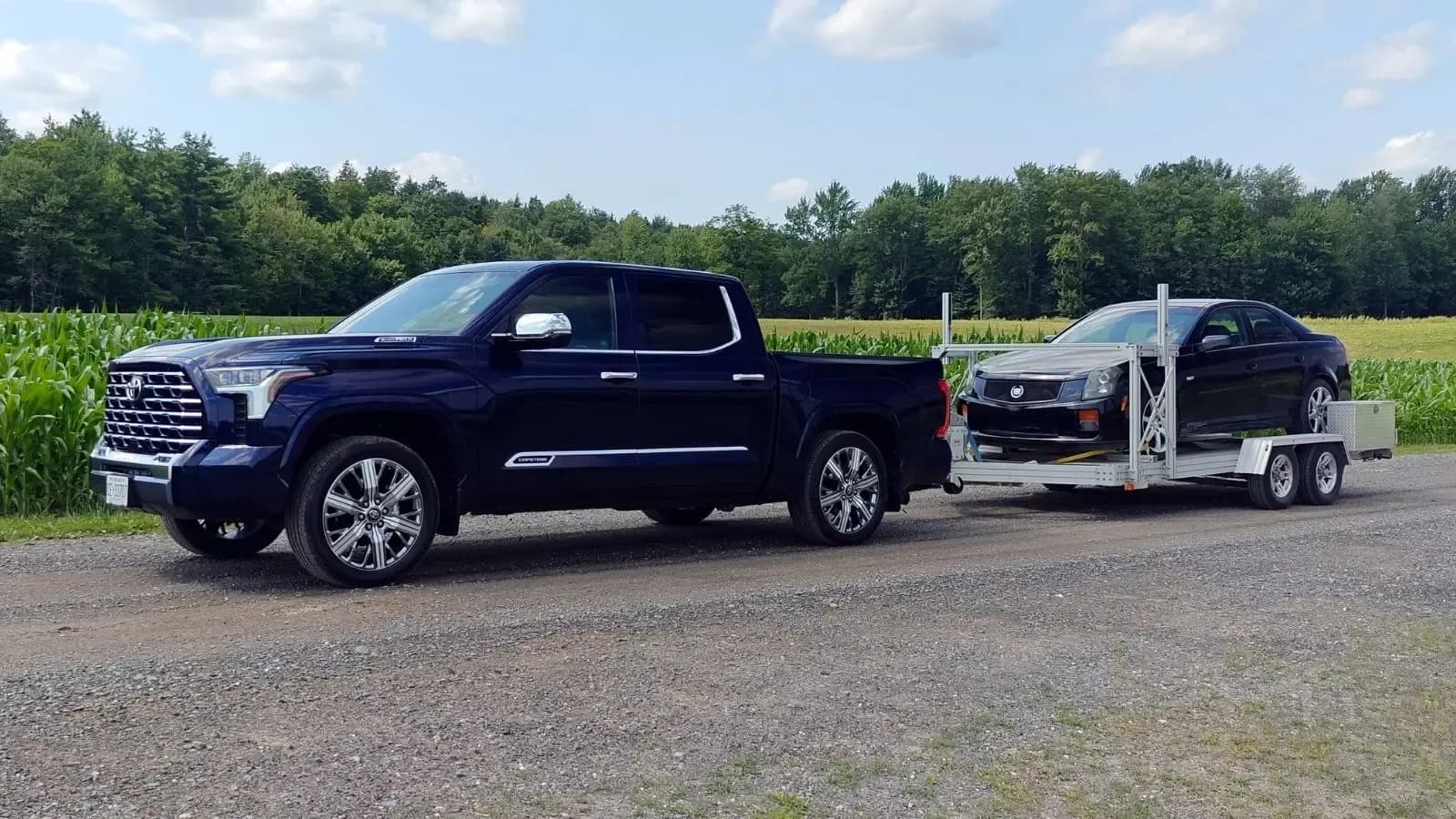
The Toyota Tundra Capstone provides hybrid power for customers seeking the pinnacle of luxury and capability in its flagship truck.
Automakers use electrification for more than just excellent EPA fuel mileage ratings. Increasingly, it's also a way to leverage the instant torque of an electric motor in applications where thirsty gas engines typically rule the roost.
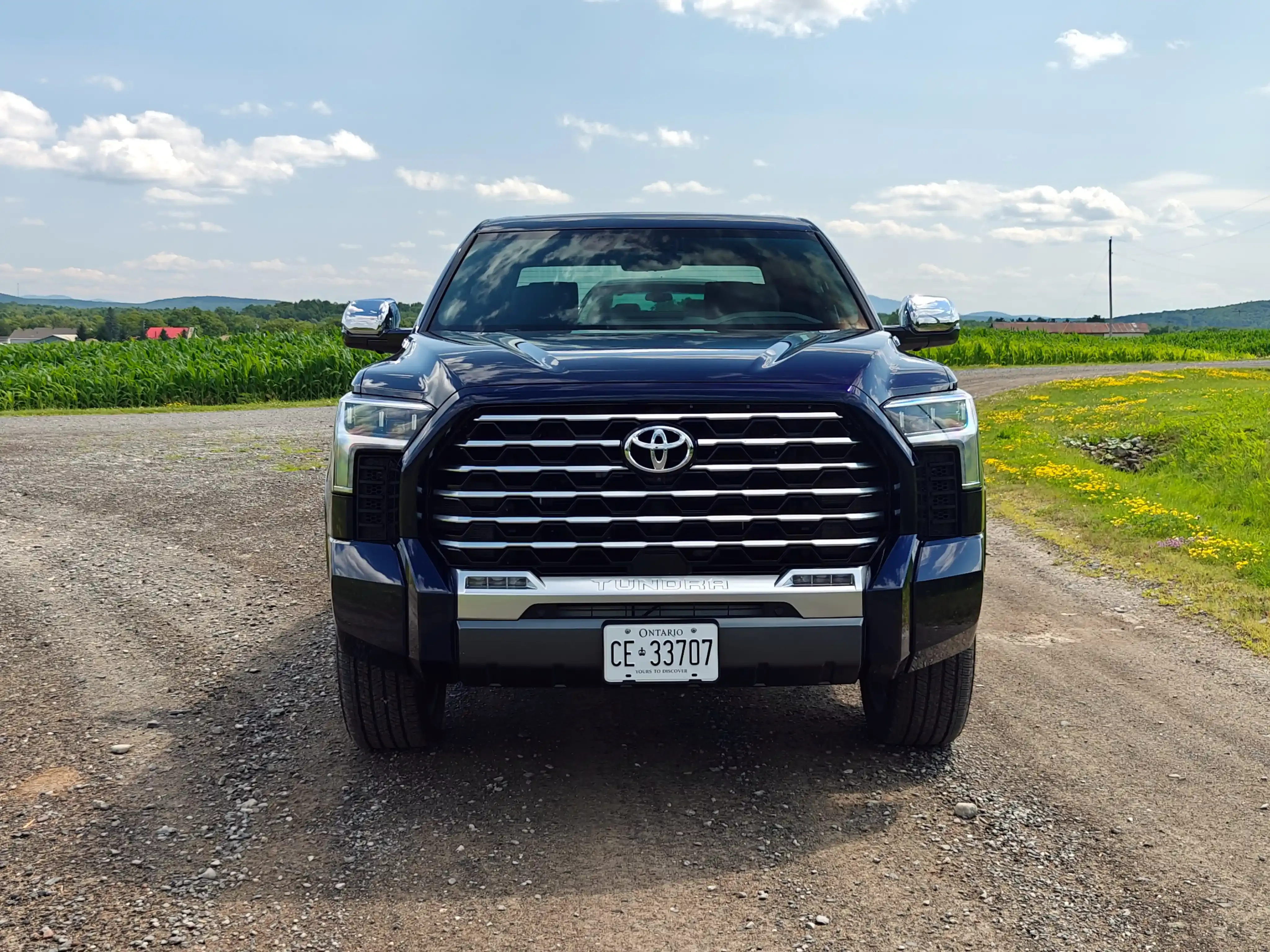
Pickups are a perfect example. V8 engines are still dominant among major players like Chevrolet and GMC, but Toyota has turned its back on eight cylinders entirely, swapping in a turbocharged V6 across its full-size Tundra lineup. Not only that, but the top trim pairs that V6 with a hybrid system to deliver truly enormous amounts of horsepower and torque.
The Tundra is part of a growing group proving that electrification can improve truck capability without going fully electric, so compare the strongest hybrid and electric pickups available today ➜
I wanted to see what that hybrid system could do when tackling a task like towing, which can put even the buffest of big trucks to the test. The results proved that hybrid towing is a win-win for full-size owners, but perhaps not in the ways you'd expect.
If you’ve got a hefty trailer to haul, there’s a lot to like on the Tundra Capstone’s spec sheet. This version pairs the standard turbocharged 3.4-liter V6 engine with an electric motor and a 1.87 kilowatt-hour nickel-metal hydride battery. Together, they produce 437 horsepower and 583 lb-ft of torque, a big step up over the gas-only Tundra, and one of the mightiest drivetrains available outside the heavy-duty segment.
Hauling an empty trailer made no difference to how the Toyota handled itself. Adding a 3,750-pound Cadillac to the almost 1,000-pound trailer changed the acceleration, but only slightly. The Capstone trim is rated to tow just over 10,000 pounds, so a load of roughly 4,650 pounds shouldn’t have presented a challenge to the Tundra, and in practice it didn’t. With the Tow/Haul mode selected, I was impressed by how well the pickup accelerated to highway speeds, even with the trailer attached, and I had no issues passing slower traffic on the two-lane roads that snake through the mountain region I call home.
Could I have done without the fake V8 sounds piped into the cabin when you hit the gas? Sure, but they didn’t detract from the Tundra’s muscle when lugging its load. The only area where it lagged behind nonhybrid rivals from Ford and Ram was pulling away from a stop, which was puzzling given the instant assist from the electric motor. But it was a minor blemish on an otherwise spotless performance.
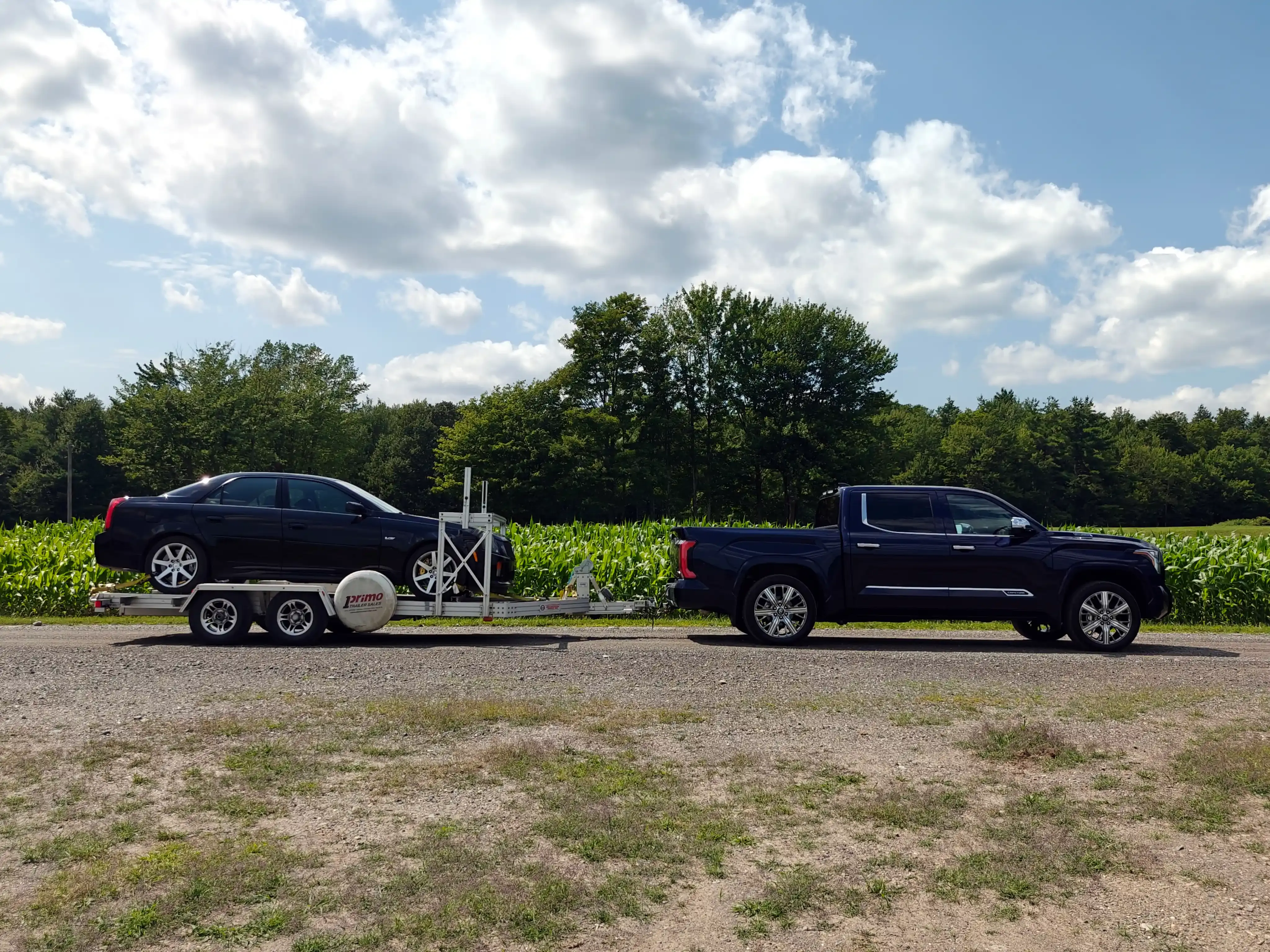
Most people link hybrids with strong fuel efficiency, but Tundra shoppers will have to be comfortable with more average numbers at the pump. That's true even when the Tundra is unloaded: its 20-mpg rating from the EPA is only about 15 percent better than the largest V8 offered by Chevrolet, and about 15 percent behind Ford’s hybrid.
EPA ratings are useful for comparing trucks, but payload, aerodynamics, terrain, and towing can radically change real-world results, so see what fuel-economy ratings actually tell you and where they fall short ➜
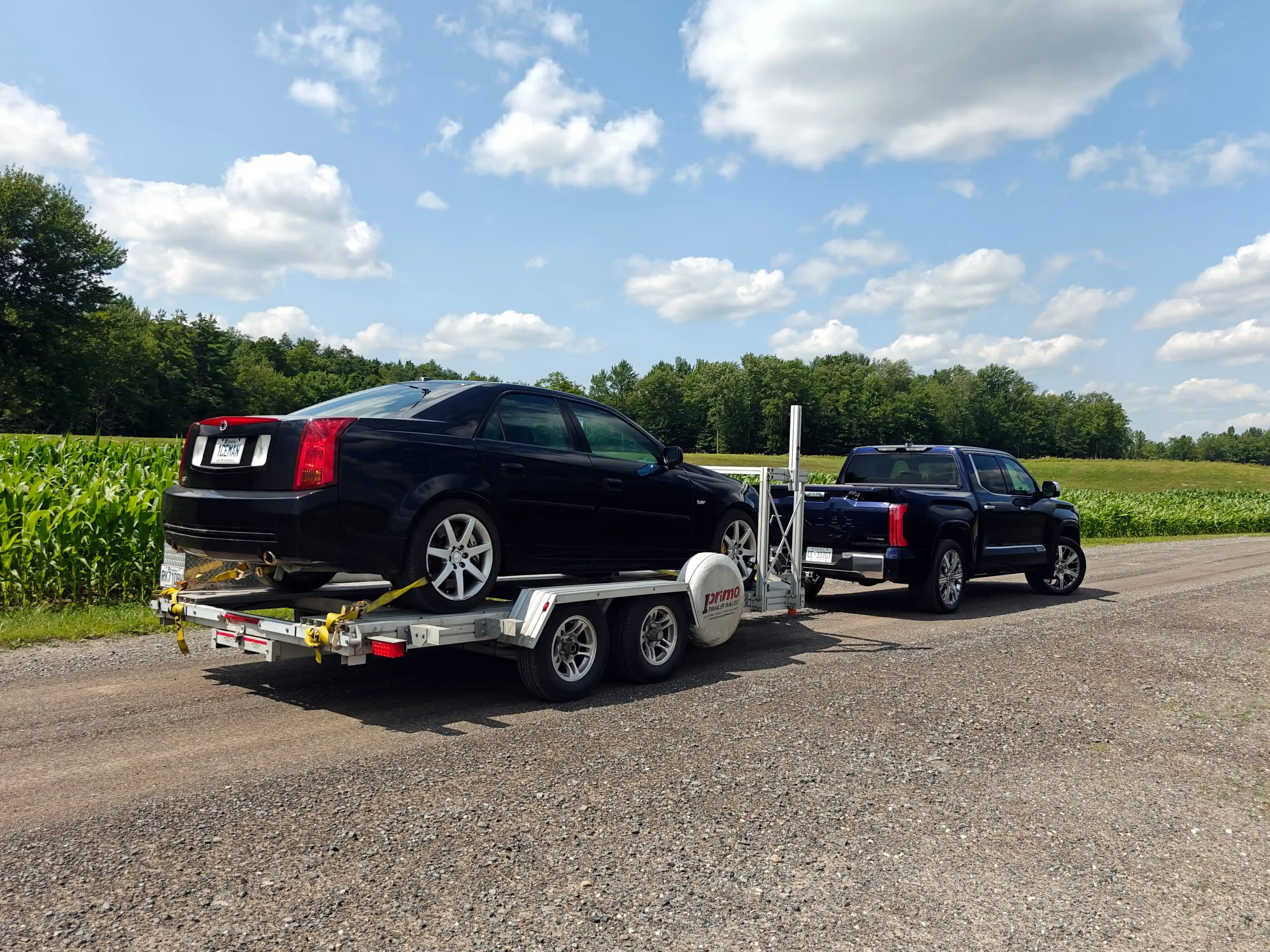
With the trailer hitched up, the Tundra fared considerably worse, returning 10 mpg over a 50-mile route of mostly rural two-lane roads at around 55 mph. This kind of efficiency setback isn’t unique to the Toyota — all trucks see sharp efficiency drops when towing — but it does illustrate that the Tundra’s hybrid drivetrain is intended to add power rather than save fuel.
Towing affects every powertrain differently, and battery-electric pickups face their own energy penalty, so see how hauling heavy loads changes the usable range of an electric truck ➜
A safe, predictable, and comfortable towing experience requires more than just power, and the Toyota Tundra Capstone’s trailer tech and well-tuned chassis provided a compelling overall package.
You can add your trailer type and its braking details, then save the profile so you can easily choose it the next time you hitch up. The truck identified my trailer automatically each time I connected it, which was definitely handy. It also extended its blind-spot monitoring to cover the full length of the trailer and shut off rear-collision warning.
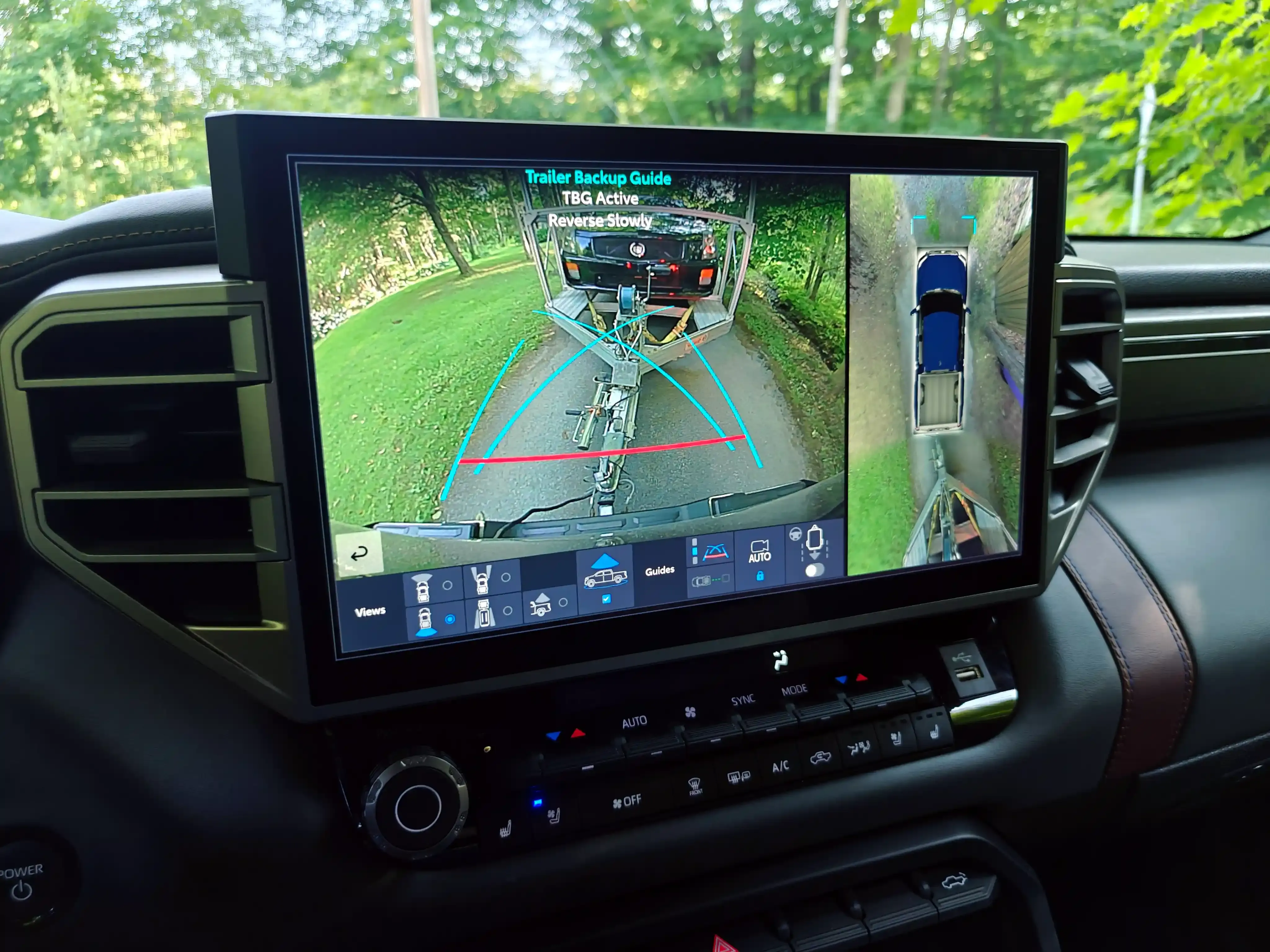
Along with a built-in trailer brake controller, the Tundra includes a system designed to assist with reversing when a trailer is attached. It takes a few minutes to calibrate, and you’ll need a big, open area to drive the truck forward, turn it, and straighten it out, but once it's set, you get arrows overlaid on the rearview and top-down camera views to guide you while backing up. There’s also a self-steering feature that keeps the trailer pointed straight when reversing at low speeds, which was quite helpful when I had to maneuver between obstacles at a construction site.
My one wish would be the ability to set all of this up through the Tundra’s giant center touchscreen. Instead, Toyota runs nearly every feature and setting through its digital gauge cluster, so you're stuck parsing through small menus with steering-wheel controls while that big display sits unused.
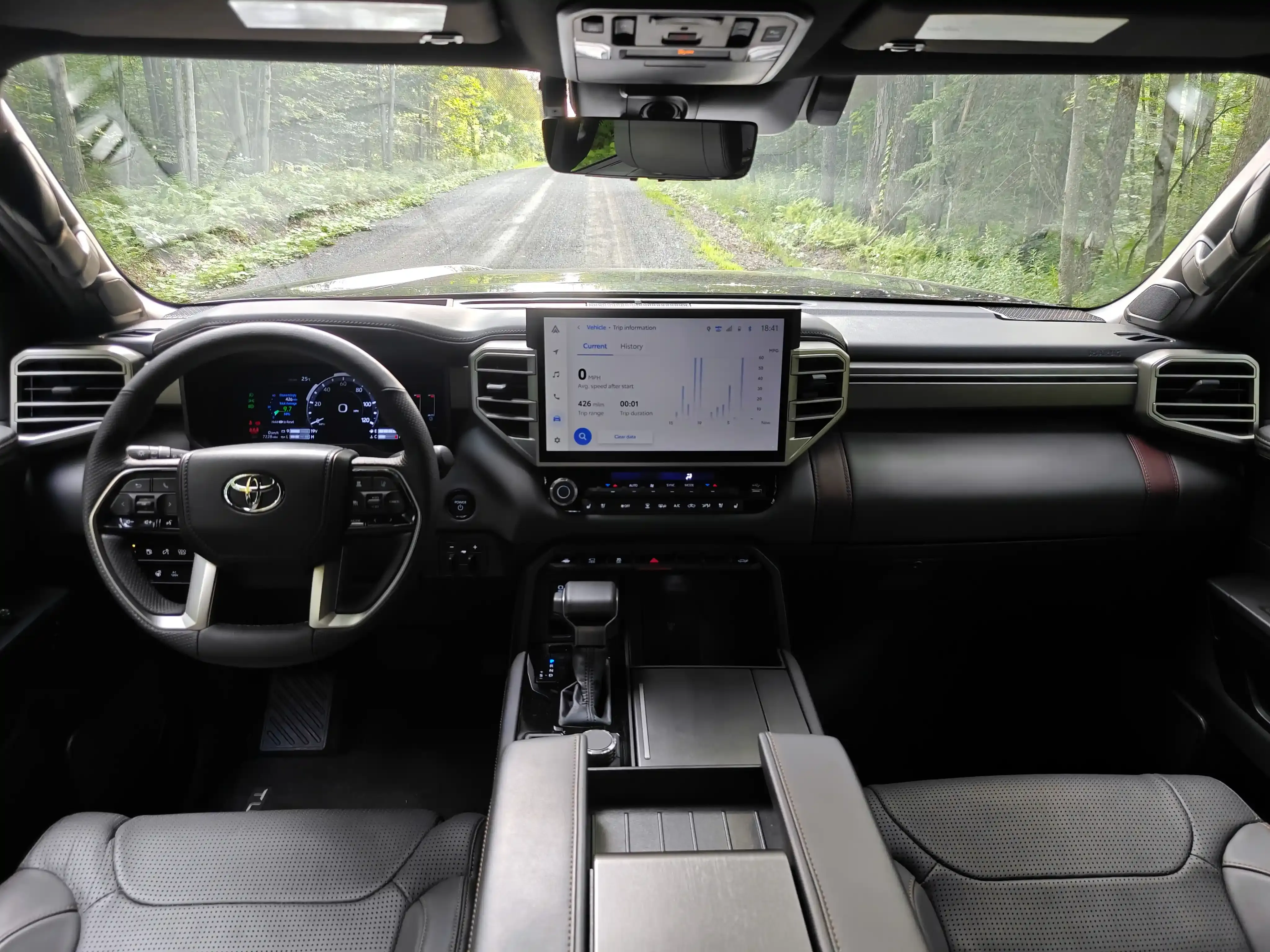
On the suspension side, the Capstone trim offers an optional rear load-leveling air suspension. My tester didn't have it installed, but the trailer never upset the Toyota’s stability or pushed its handling limits. It remained smooth and surprisingly nimble at all times.
As a towing platform, the 2026 Toyota Tundra Capstone shines. It offers excellent power, its towing tech all works flawlessly, and its chassis is more than up to the task of dealing with a near-5,000-pound trailer load without breaking a sweat or impacting the vehicle’s handling and braking.
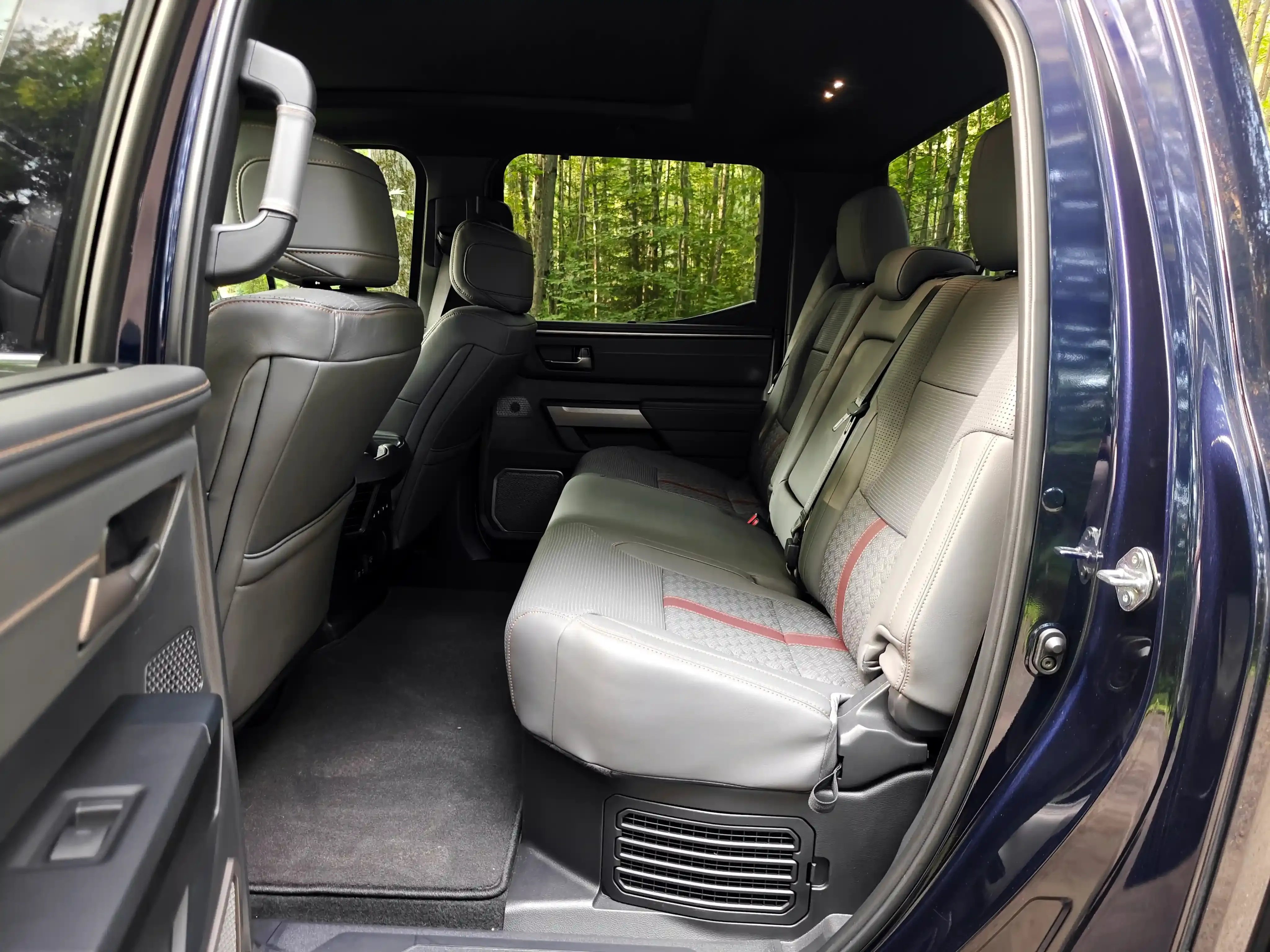
The Tundra hybrid is one of the better full-size trucks I’ve towed with in recent years. It may not offer the same level of luxury as rivals from GMC or Ram, but it’s near the top of the class when it comes to pulling a trailer.
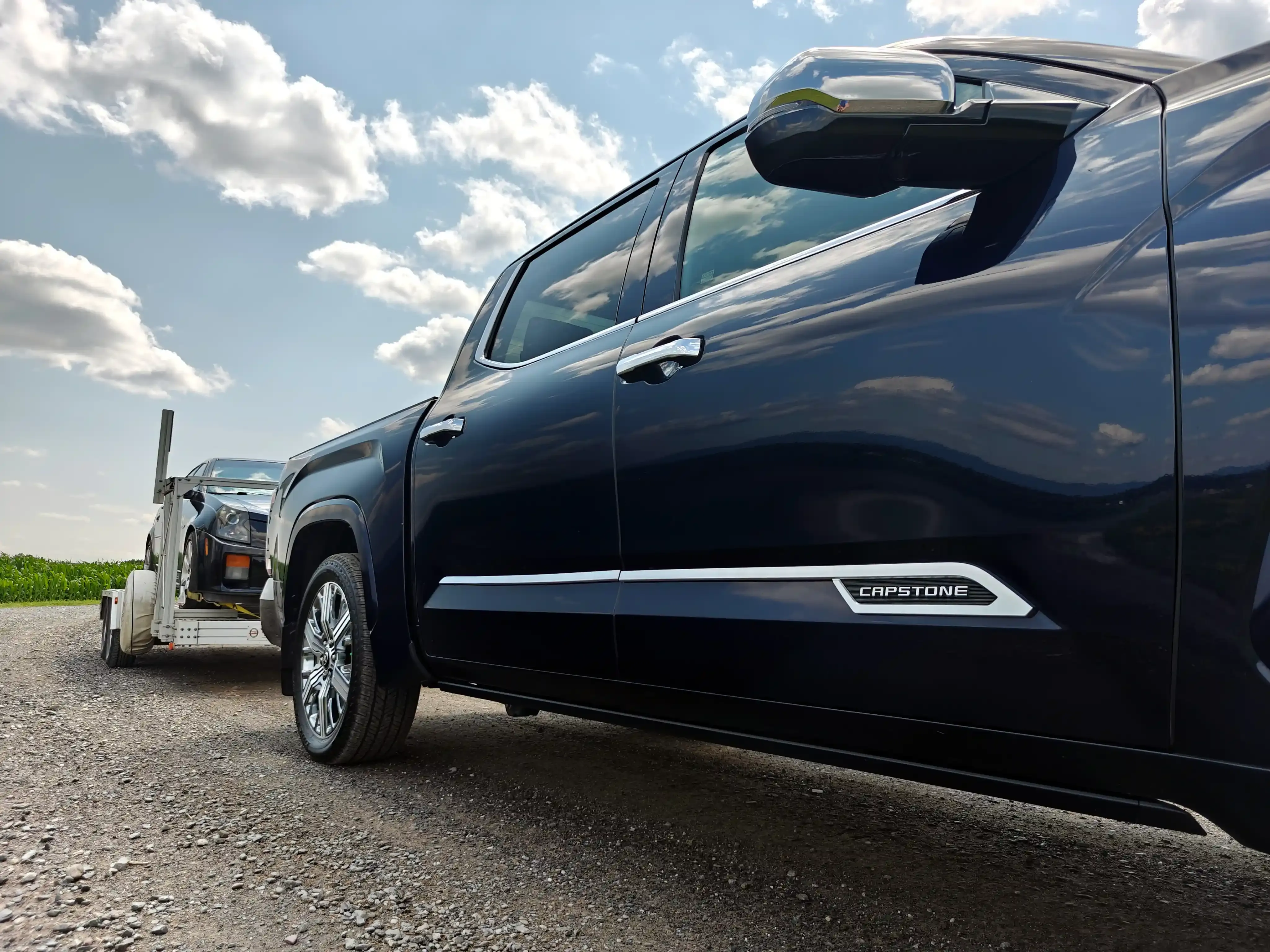
If the Capstone's MSRP of $83,195 makes you blanch, the hybrid drivetrain is also available on the more affordable Limited, Platinum, and 1794 Edition trims, as well as the off-road-oriented TRD Pro.
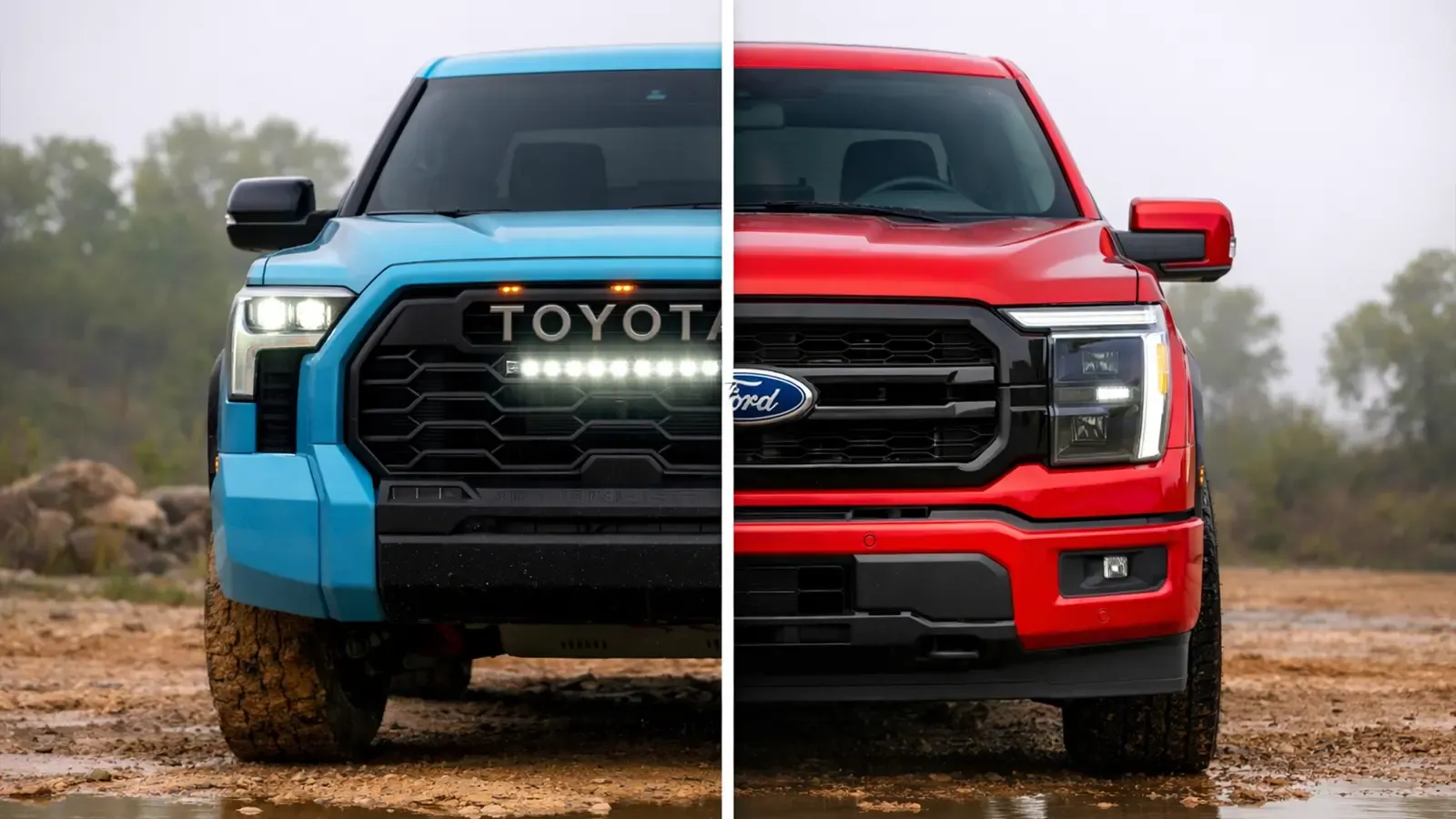
2026 Toyota Tundra Hybrid vs. 2026 Ford F-150 Hybrid Review
Toyota and Ford take different approaches to full-size hybrid pickups, with meaningful differences in towing, fuel economy, power, and everyday usability.
Read More ➜
2026 Toyota Sequoia Hybrid Capstone Review
Toyota uses the same 437-horsepower i-FORCE MAX philosophy in its flagship full-size SUV, providing a useful look at the powertrain outside a pickup.
Read More ➜
2026 Silverado EV Trail Boss With Max Range: Big Battery, Big Capability
The Silverado EV shows how a battery-electric full-size truck tackles towing, off-road capability, and long-distance range without a gasoline engine.
Read More ➜
GreenCars Contributor
Benjamin is an automotive journalist with nearly 20 years of experience, known for his hands-on approach and passion for project cars. His writing has appeared in outlets like Motor Trend, Car and Driver, Hagerty, Roadkill Magazine, The Drive, Autoblog, and Business Insider. He also co-hosts the Unnamed Automotive Podcast.
Get vehicle reviews, practical tips, and the latest GreenCars news.
ReviewsIf you don’t think that serious off-road prowess and a hybrid powertrain belong together, the 2026 Toyota Tundra TRD Pro would like to have a word with you.
 Comparisons
They're both powerful, capable, and burn less gas than their nonhybrid counterparts. So which hybrid full-sizer should you be driving home?
 Reviews
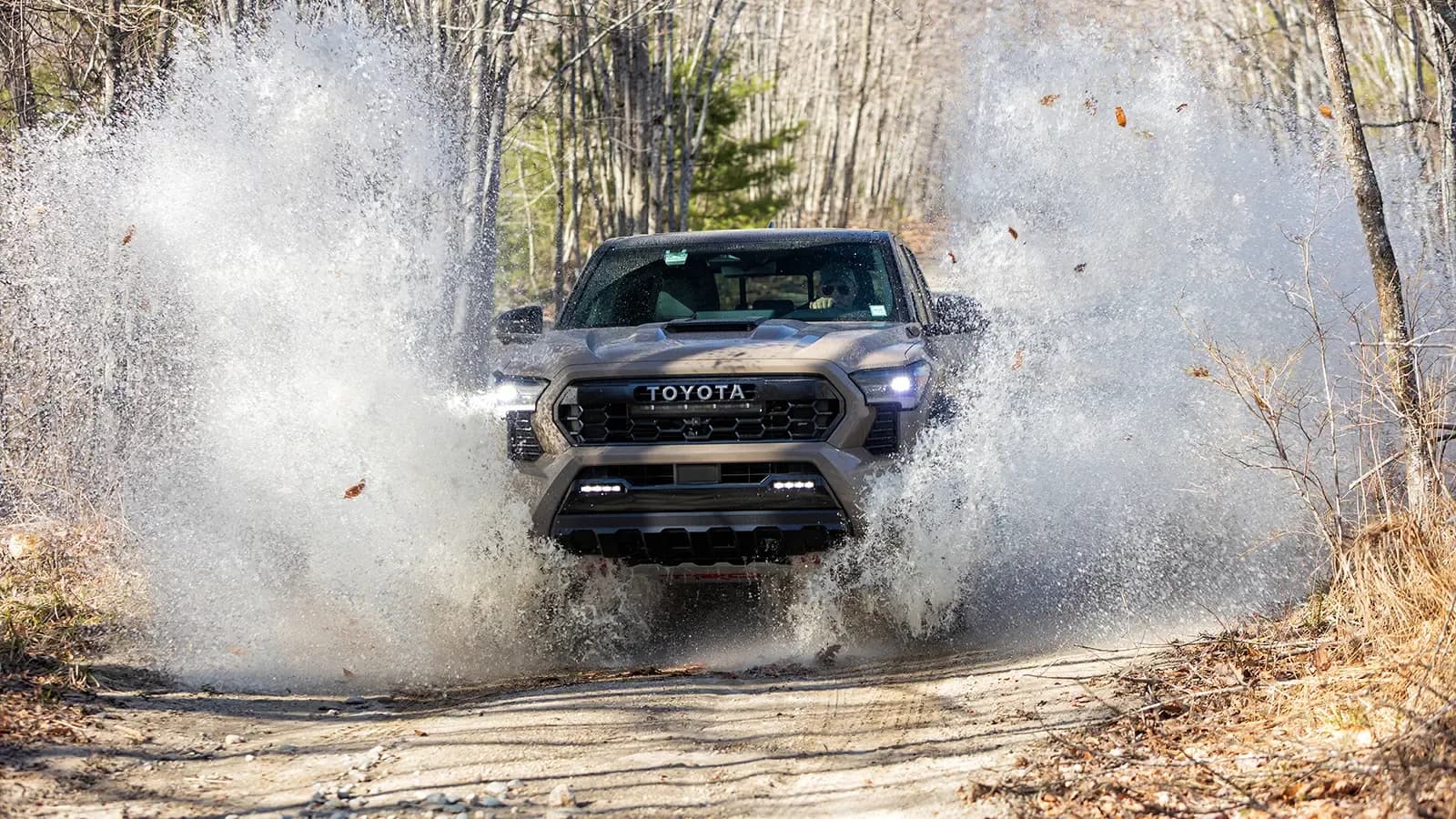
The new Tacoma delivers the refinement the nameplate needed, thanks to its trail-ready hybrid powertrain which provides fantastic torque.