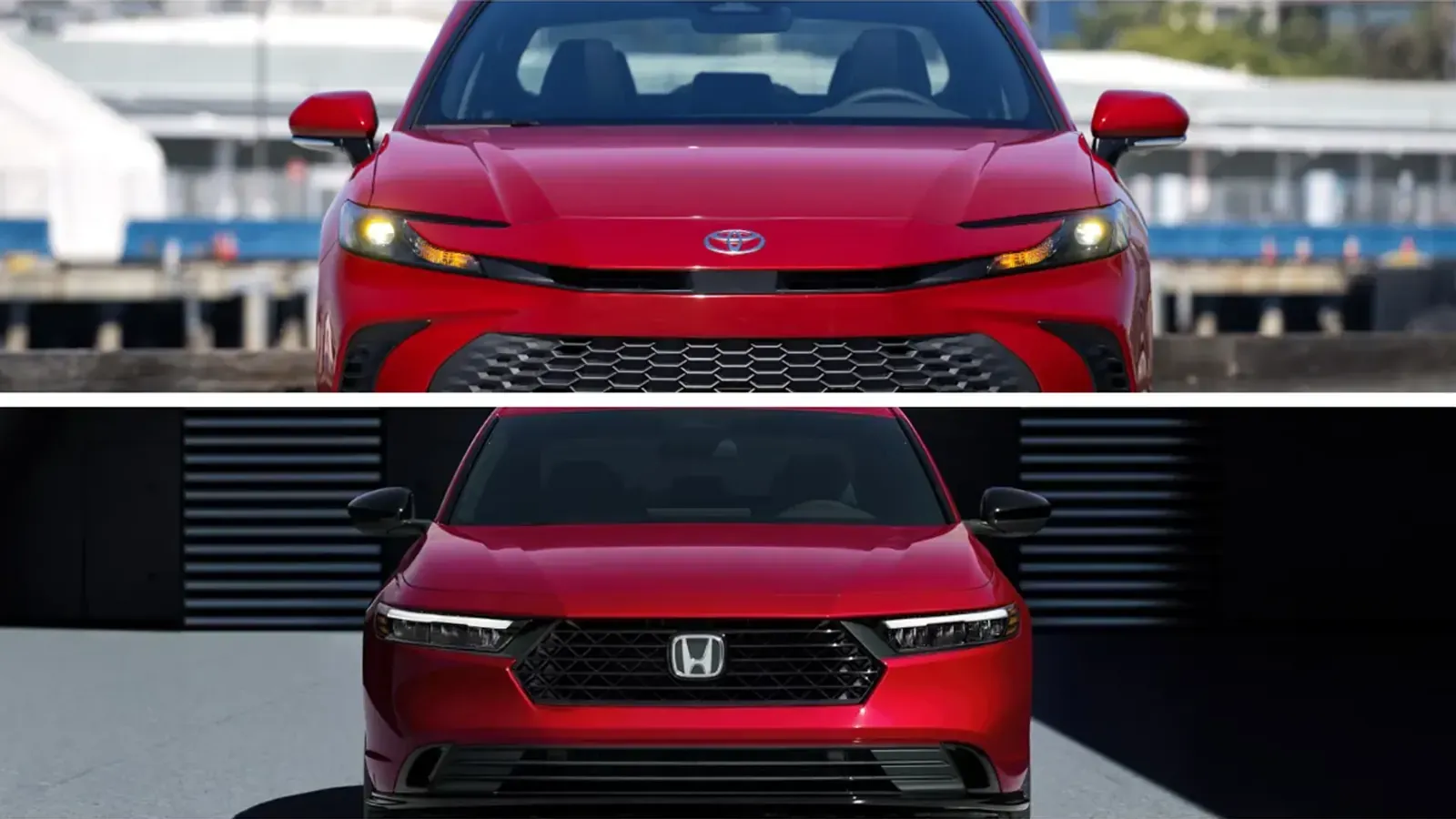
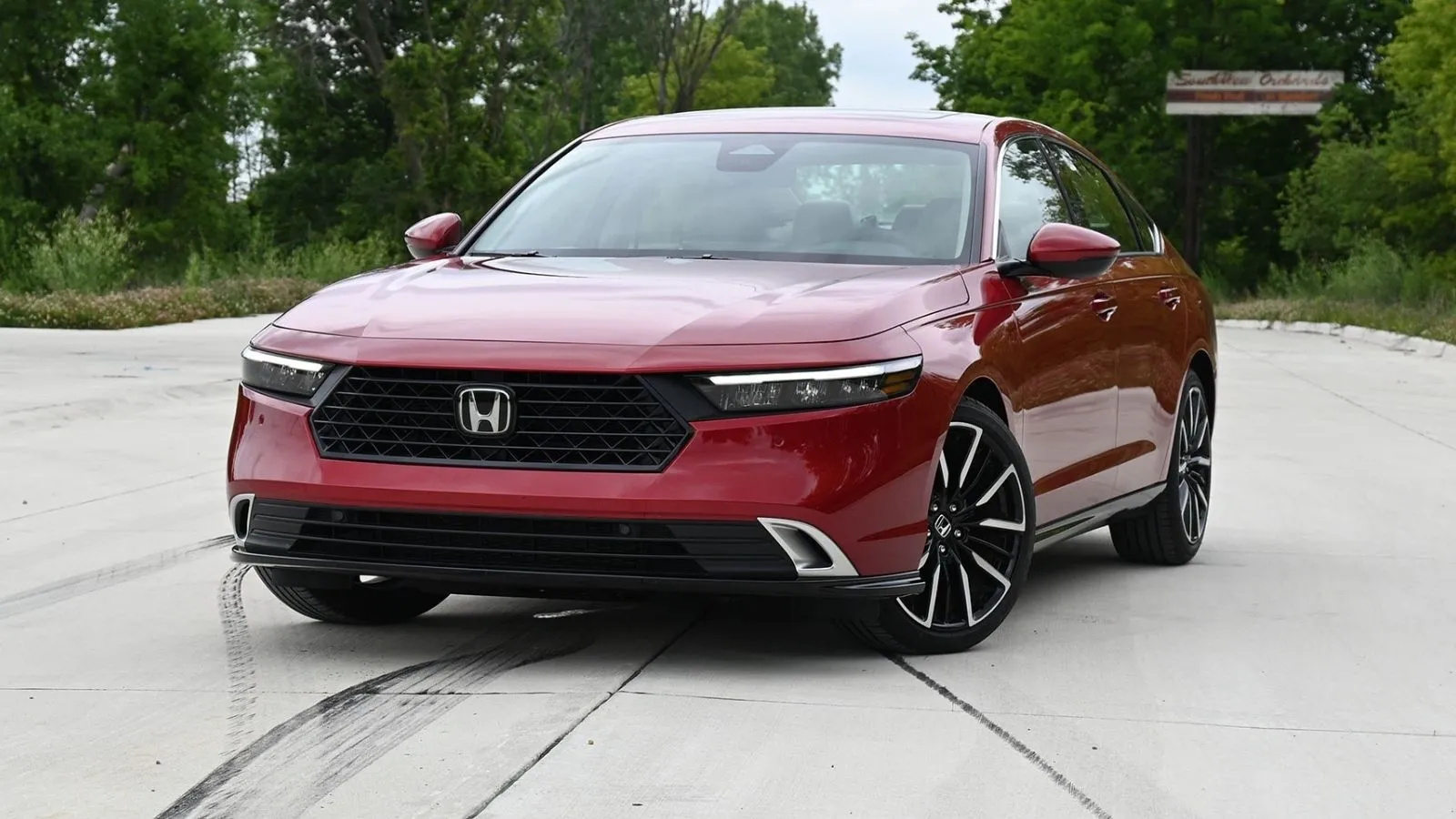
Fast Facts | Honda Accord Hybrid vs.Hyundai Sonata Hybrid
- Horsepower: The Honda Accord Hybrid has 204 horsepower, while the Hyundai Sonata Hybrid has up to 192 horsepower
- EPA-Estimated Fuel Economy: The Honda Accord Hybrid gets 48 mpg combined, while the Hyundai Sonata Hybrid gets up to 51 mpg combined
- Cargo Room: The Honda Accord Hybrid has 16.7 cubic feet of trunk space, while the Hyundai Sonata Hybrid has up to 15.6 cubic feet
- Tech: Both come standard with a 12.3-inch touchscreen. The Honda Accord Hybrid also comes standard with a 10.2-inch digital gauge cluster, while the Hyundai Sonata Hybrid comes standard with a 4.2-inch cluster.
- Starting MSRP: The Honda Accord Hybrid starts at $35,090, while the Hyundai Sonata Hybrid starts at $30,495
Honda Chases Refinement. Hyundai Chases Value.
Look around certain brands' dealerships today, and you might assume sedans are extinct. They're not. Midsize hybrid sedans like the Honda Accord Hybrid and Hyundai Sonata Hybrid are a compelling alternative to an SUV: they're roomy enough for a small family, and their hybrid powertrains make them remarkably efficient commuters. Here's how they compare.
Exterior Design and Dimensions
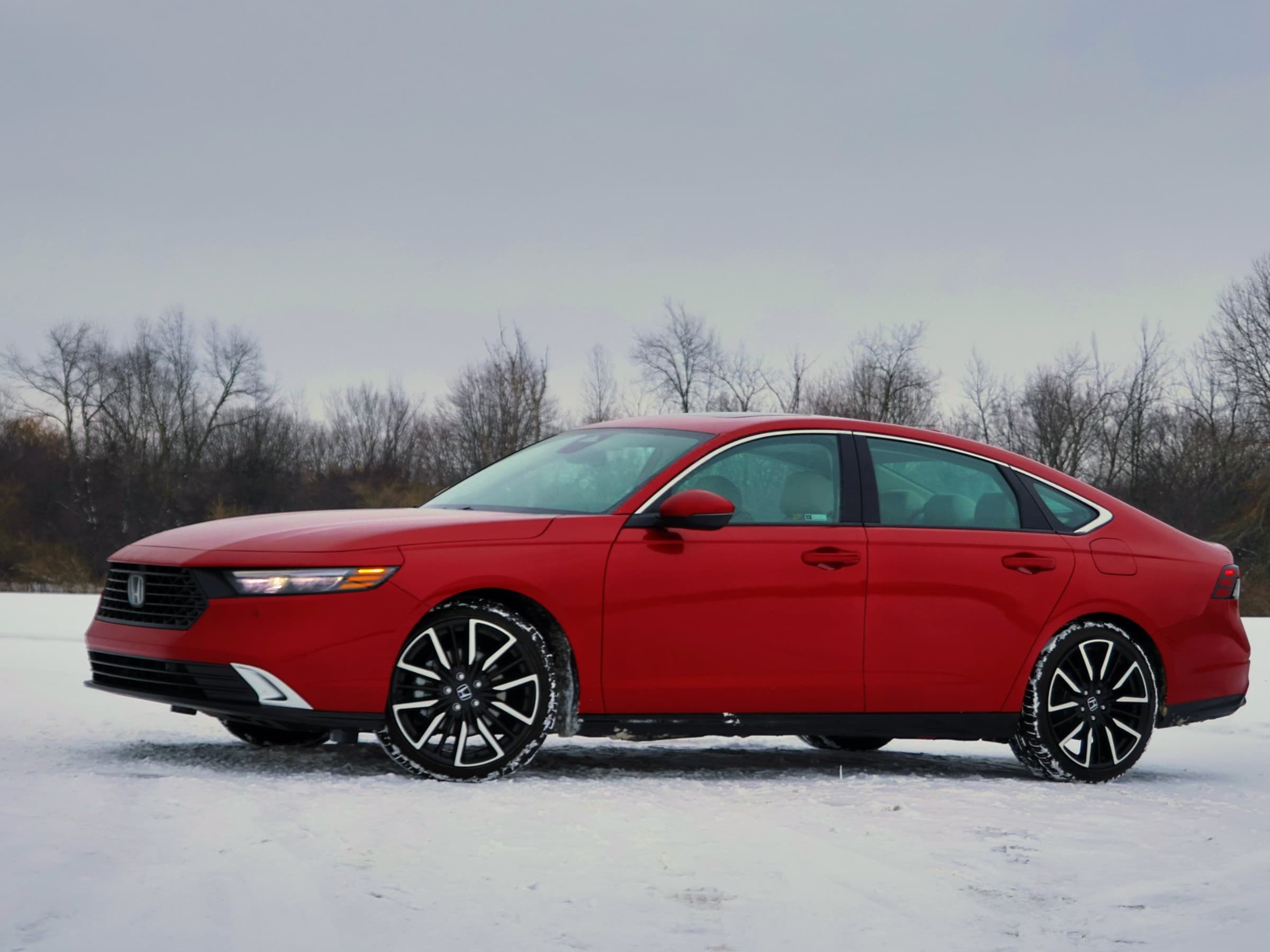
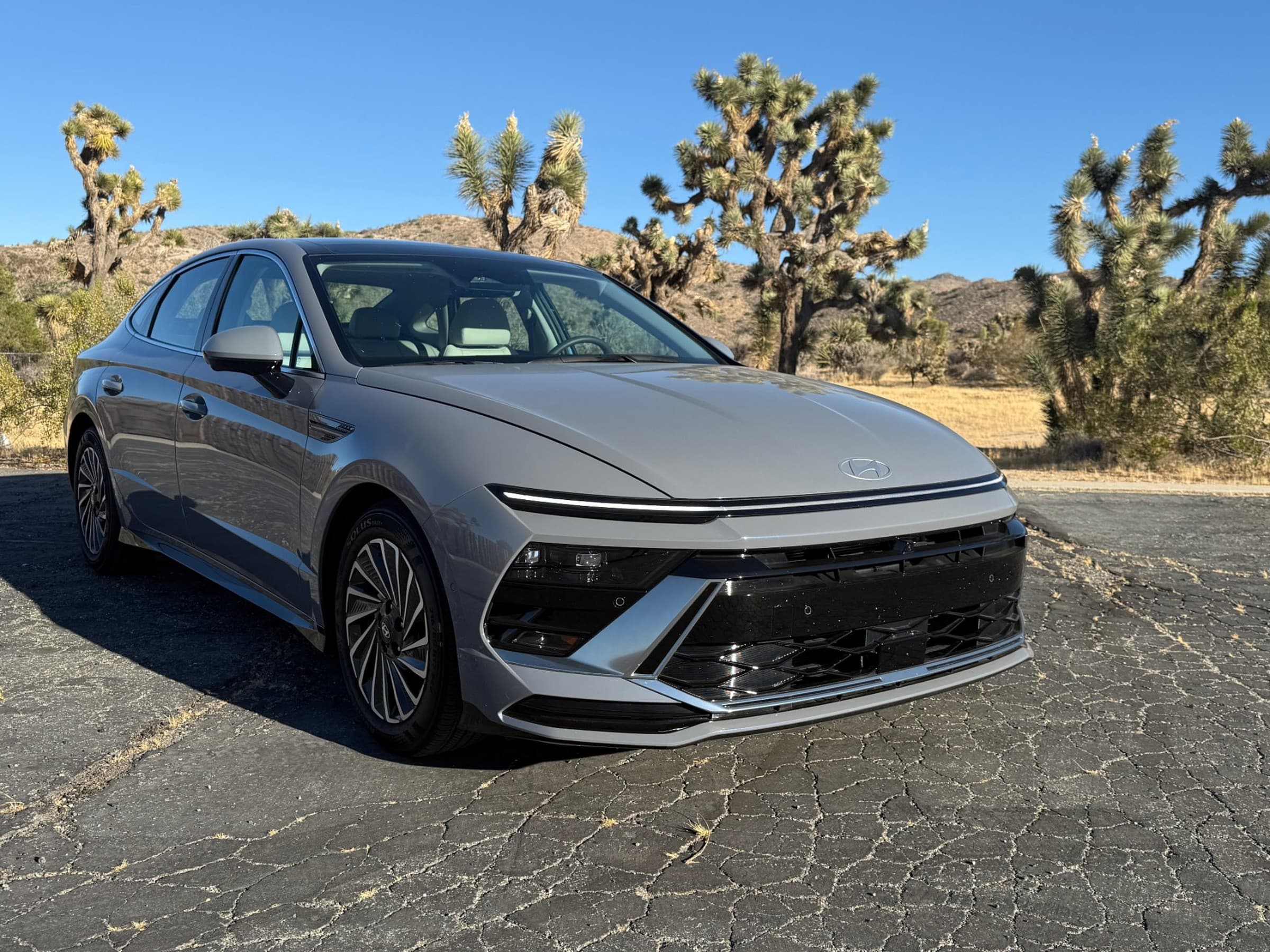
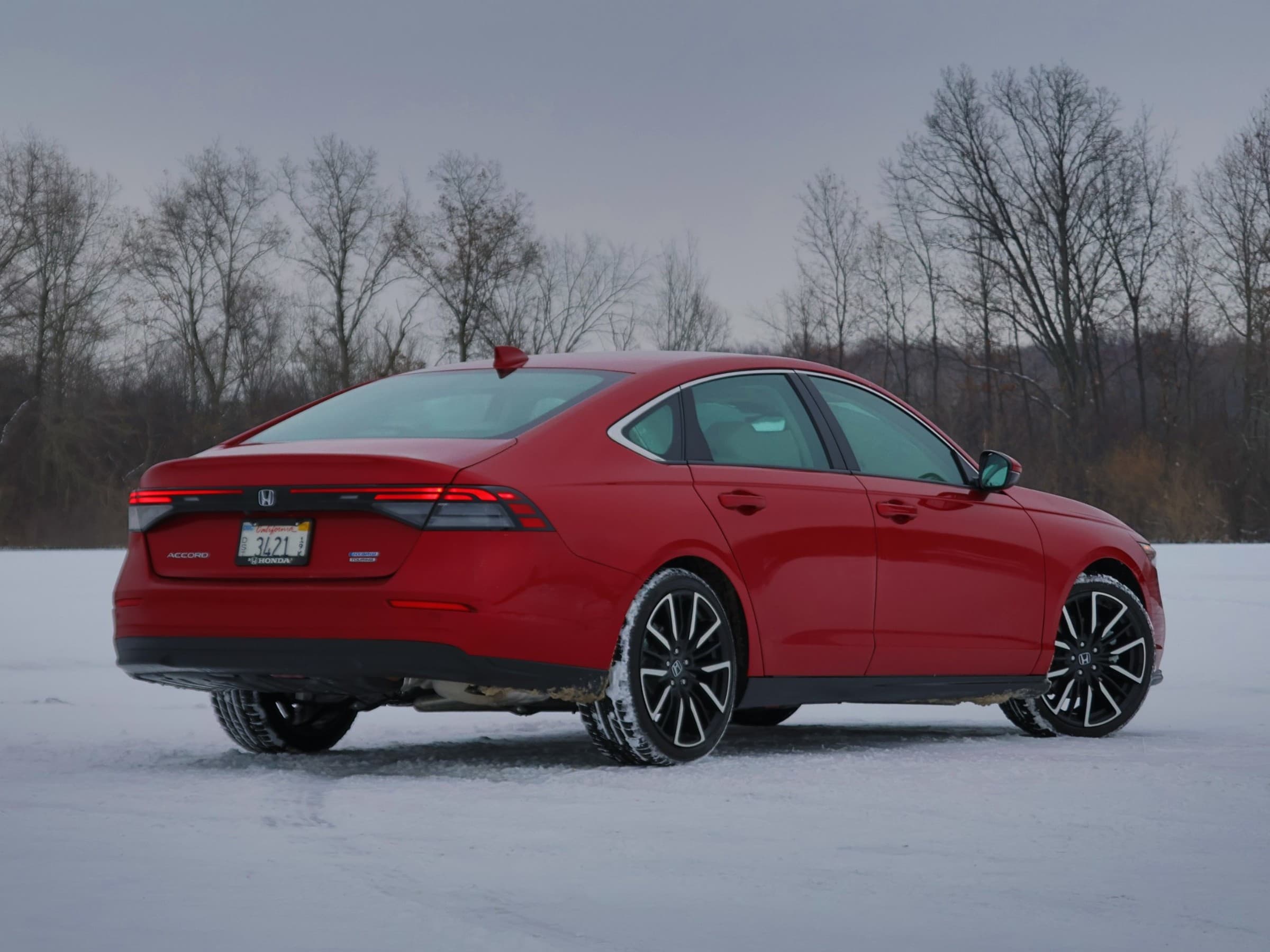
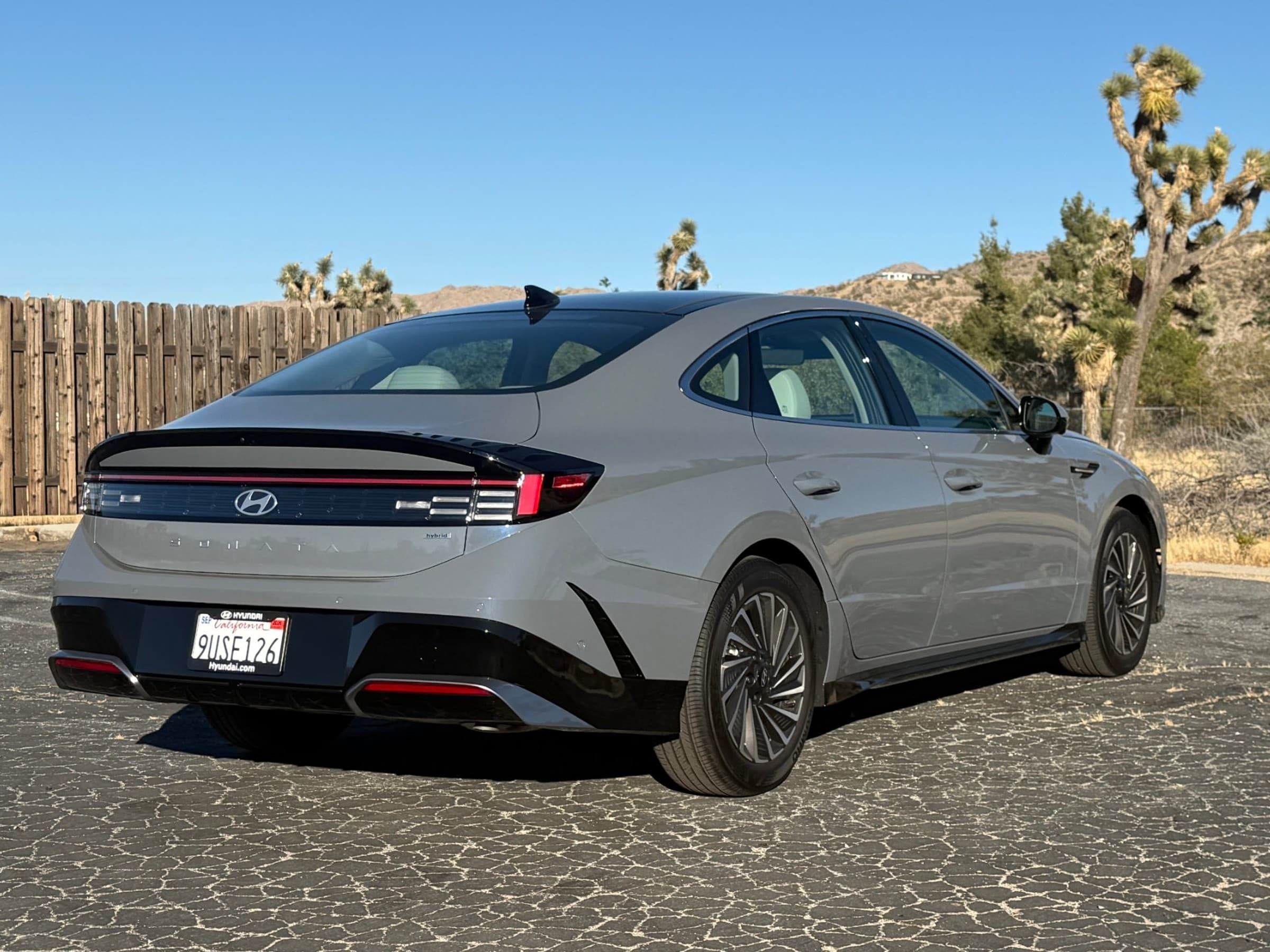
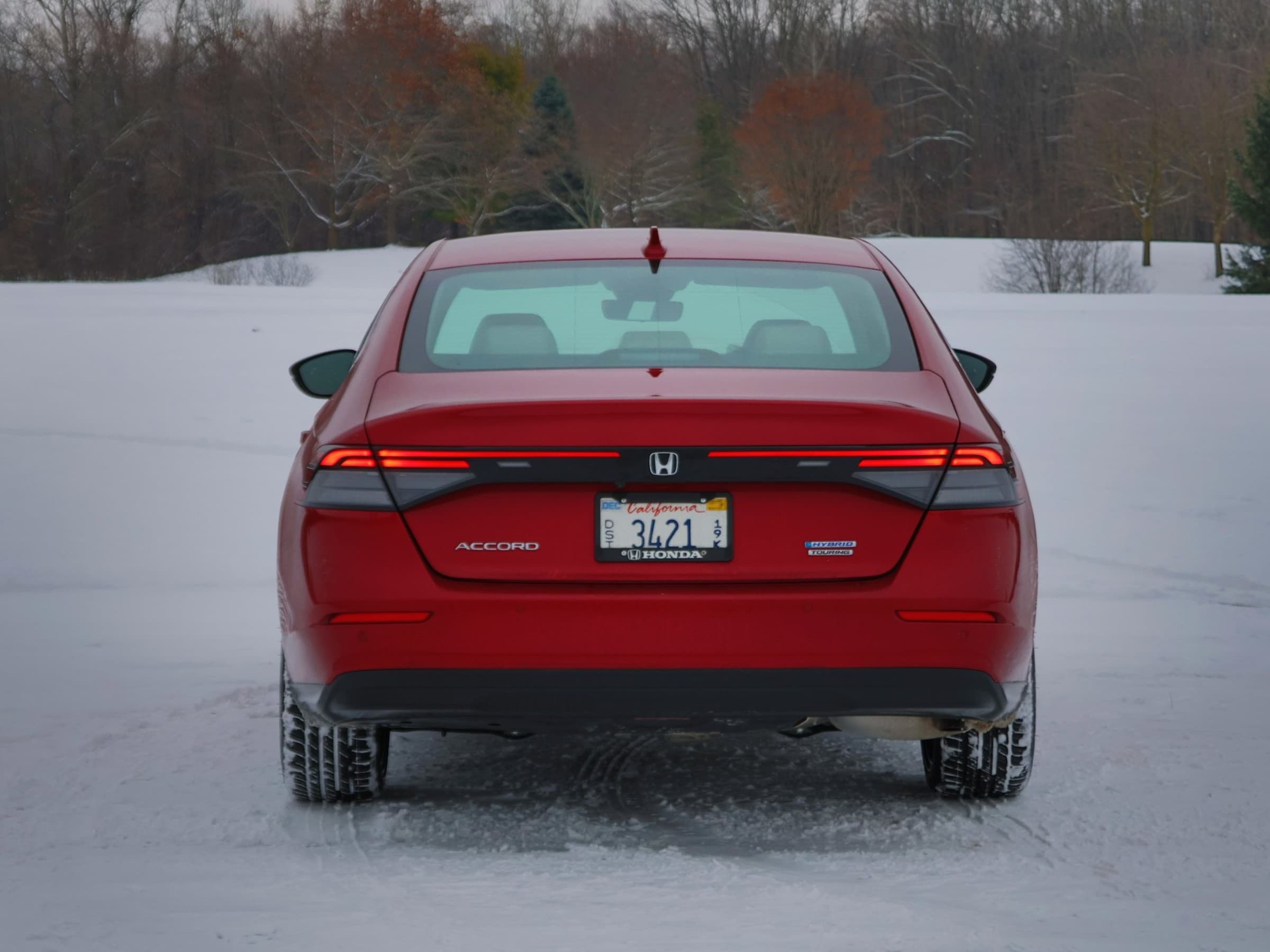
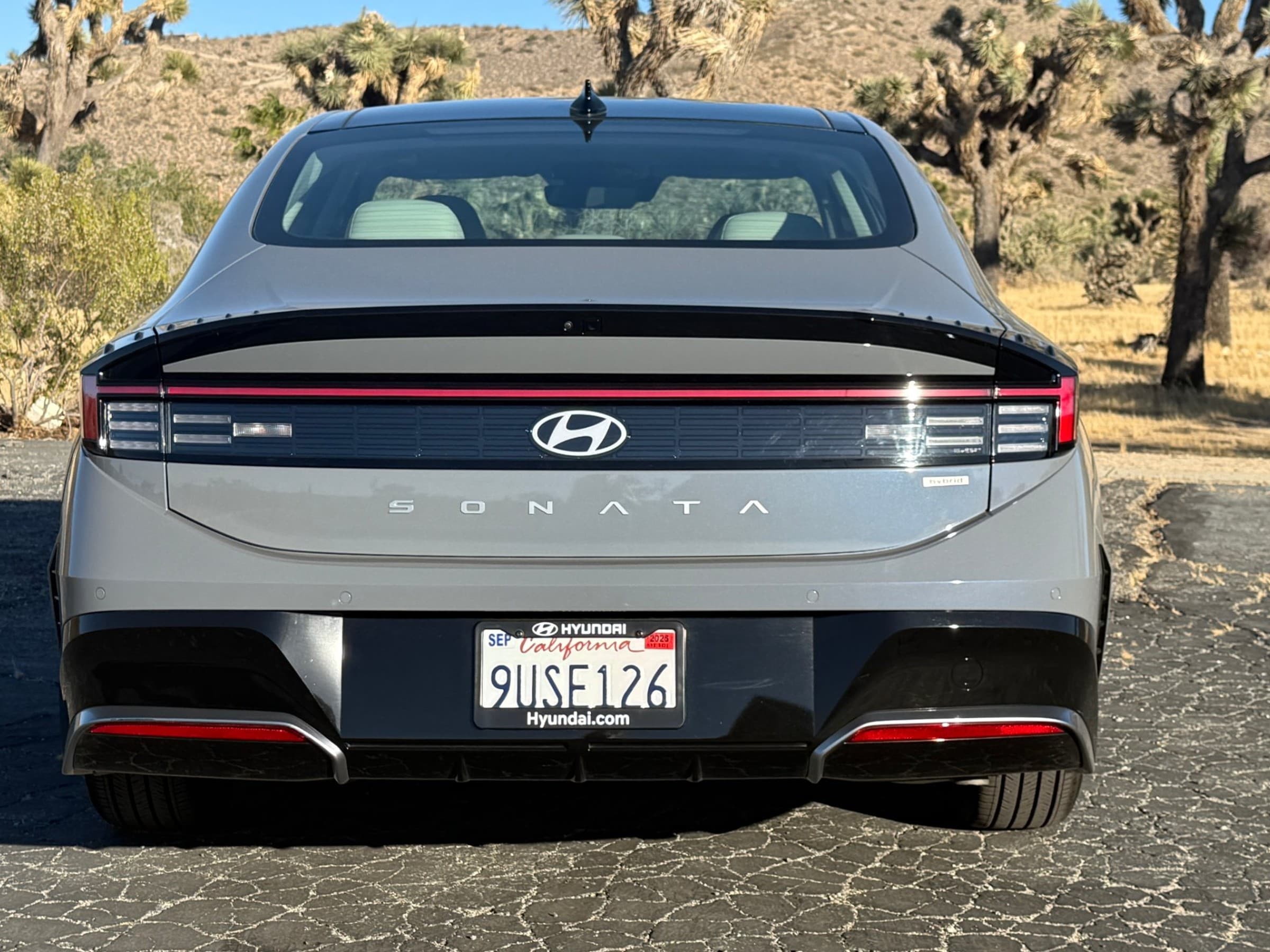
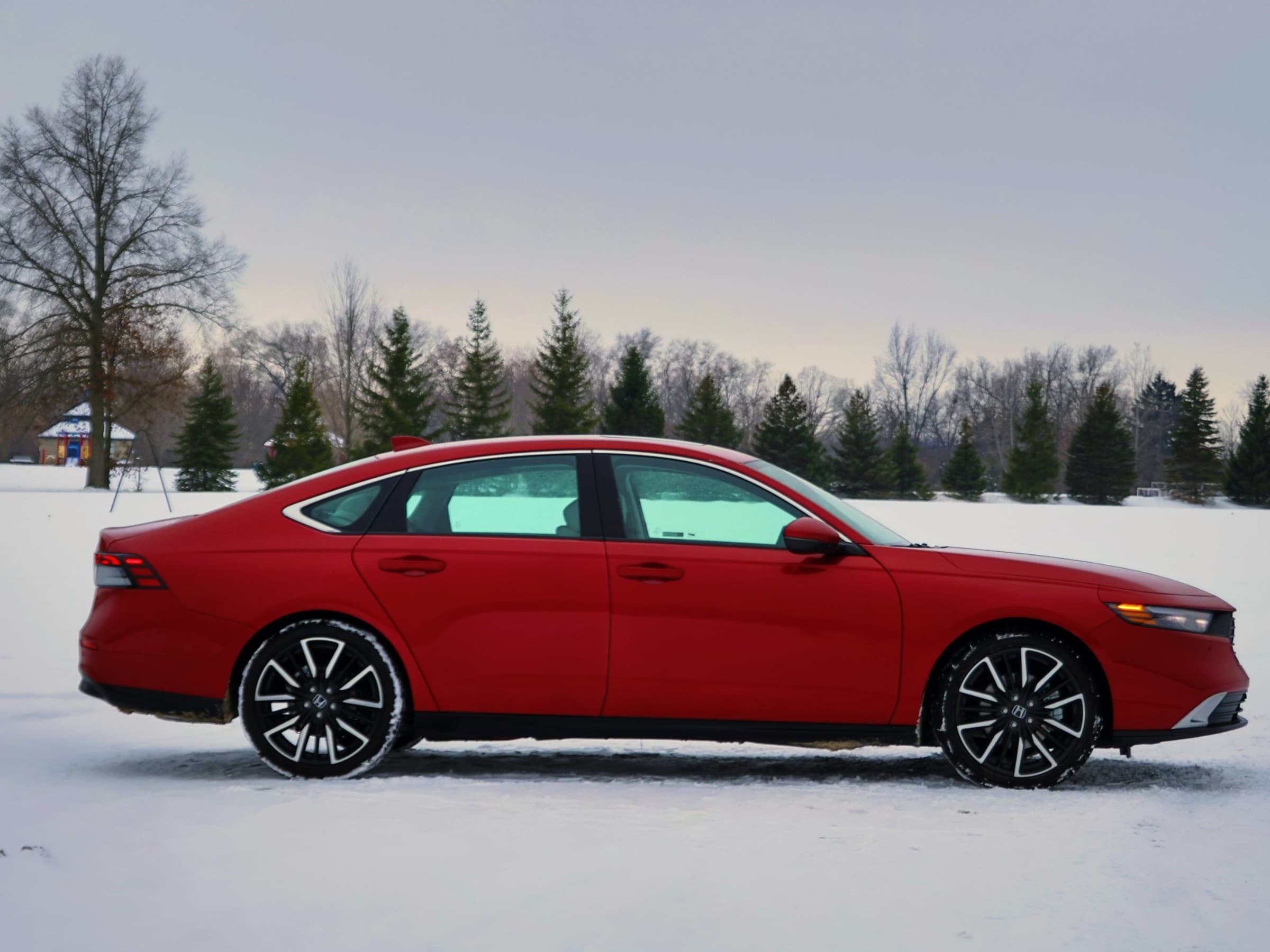
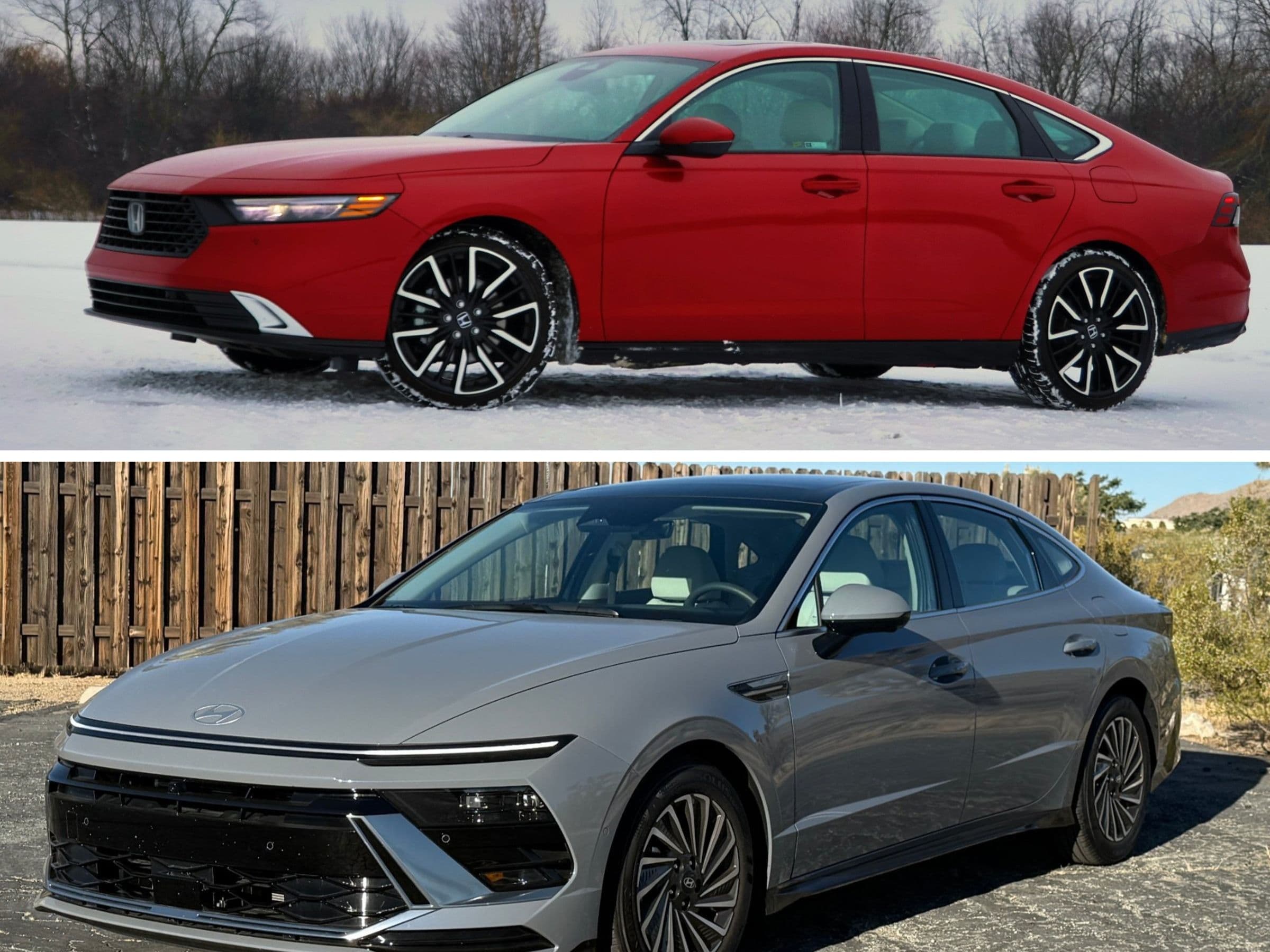
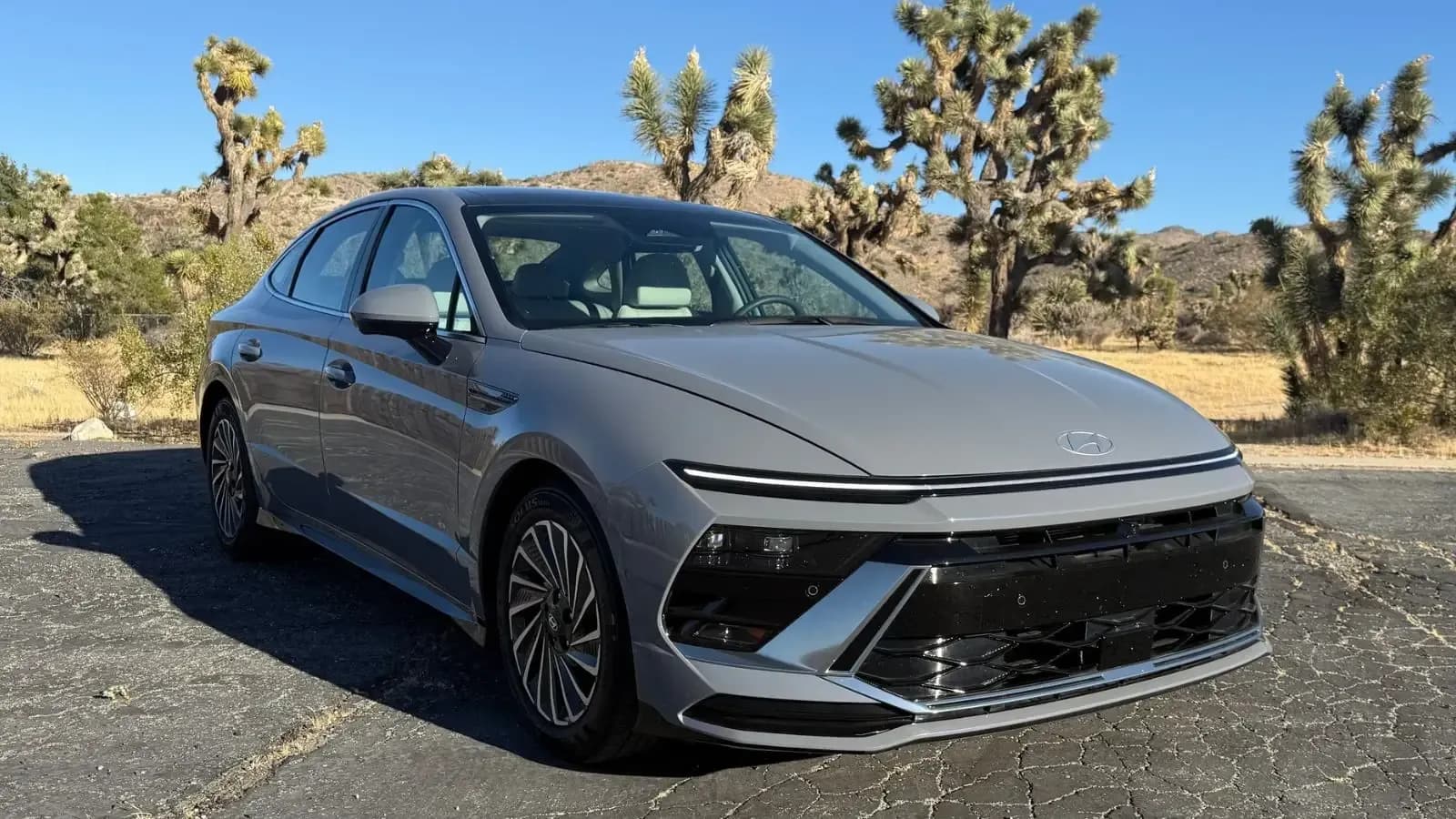
Both look the part of a modern midsize sedan, but they take different approaches to the details. Each has a sleek fastback, aerodynamic profile with an almost coupe-like appearance. The Sonata Hybrid's ultra-slim headlights almost disappear into a surprisingly aggressive nose, while the Accord Hybrid sticks a more traditional face into the wind. The Accord Hybrid is also slightly bigger: it's 2.4 inches longer, 0.1 inch wider, and 0.2 inch taller than the Sonata Hybrid.
Interior Space and Tech
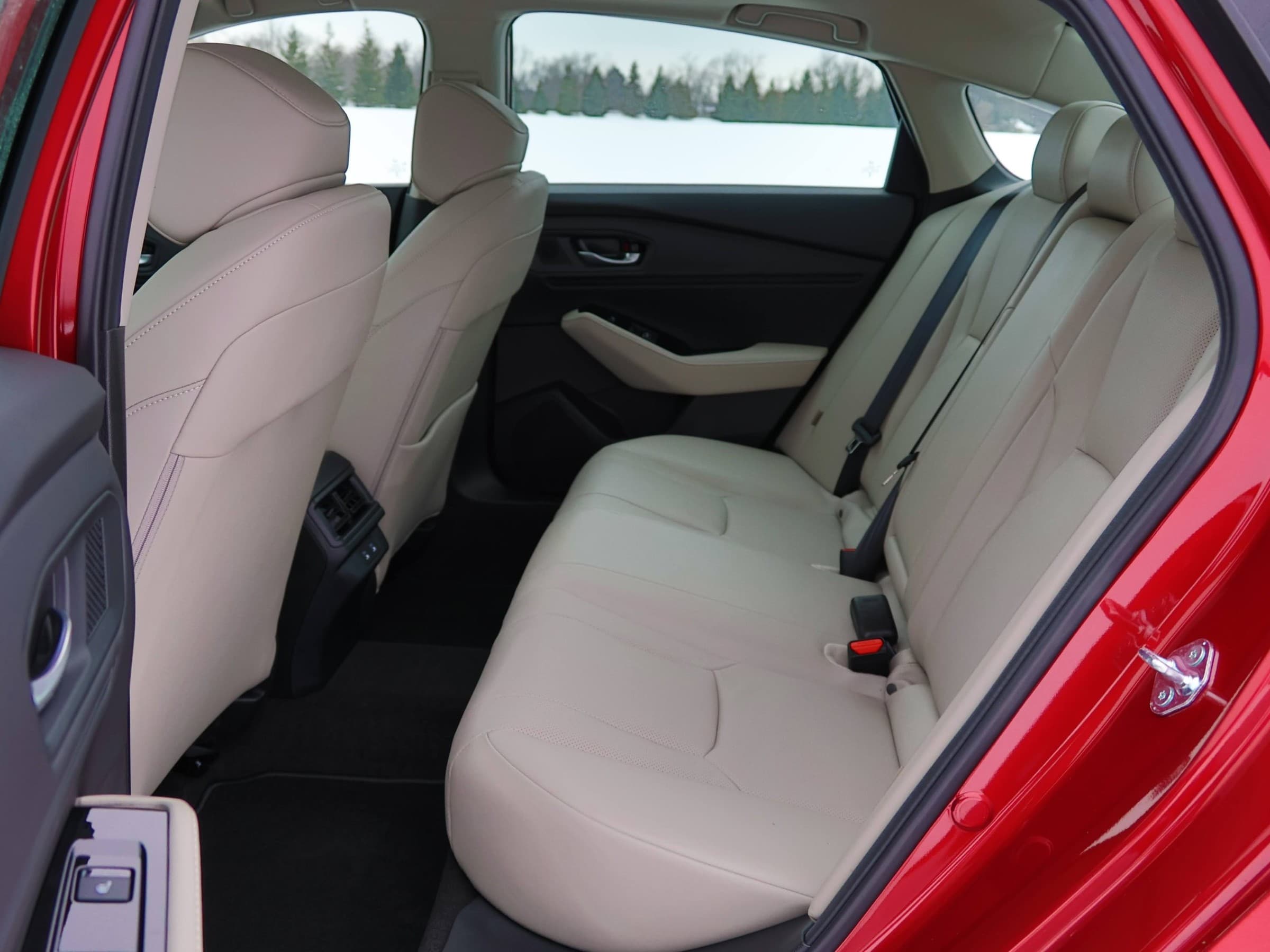
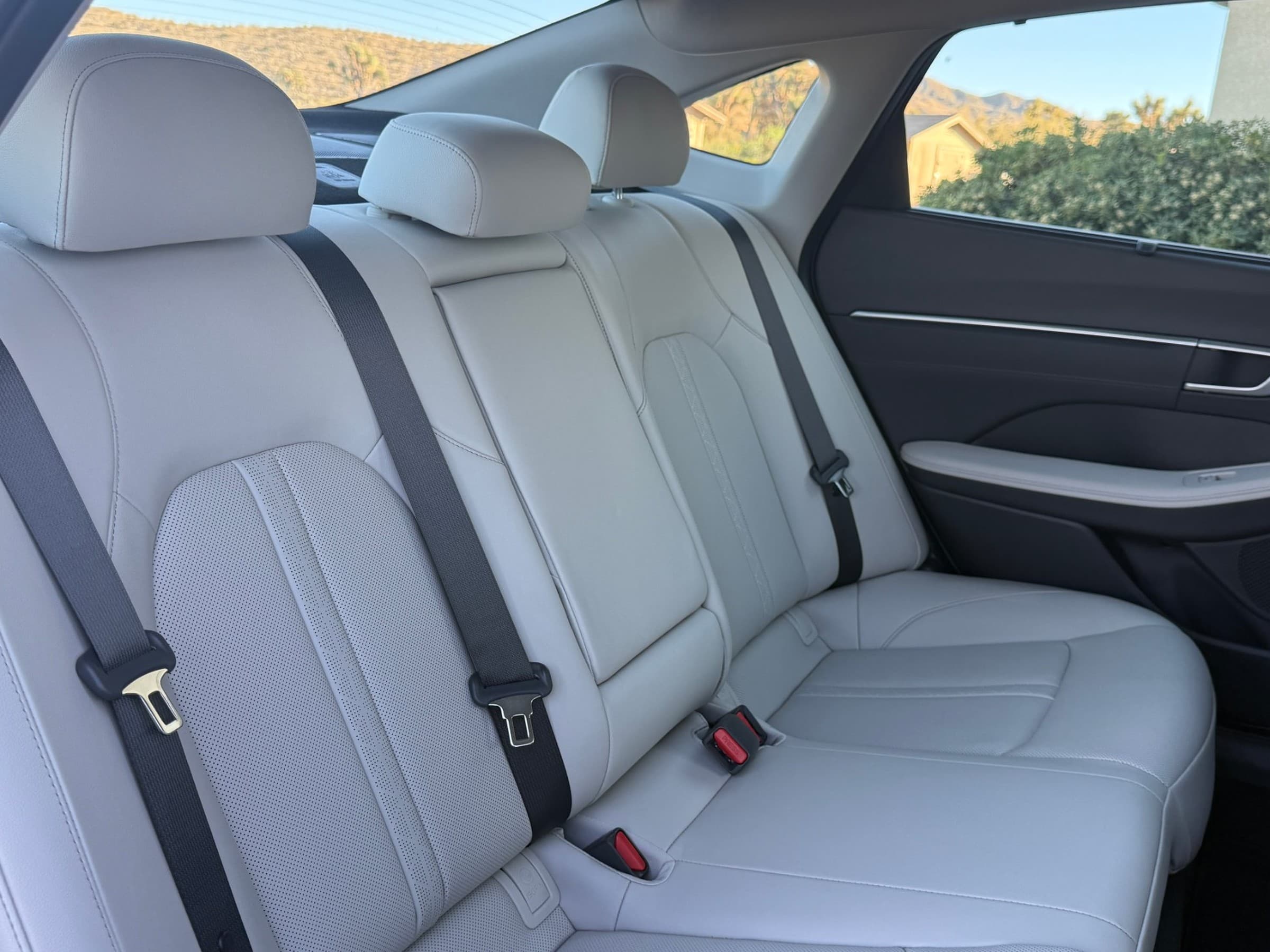
There's no clear winner on interior space. The Sonata Hybrid has 3.8 inches more front legroom and 0.1 to 0.5 inch more rear headroom. Its front headroom depends on the sunroof: up to 0.5 inch more than the Accord Hybrid without one, and up to 1.1 inches less with it. The Accord Hybrid counters with 0.4 inch more rear shoulder room, 6.0 inches more rear legroom, and 1.1 cubic feet more trunk space. These last two are among the specs that matter most in a sedan, which gives the Accord Hybrid a slight edge.
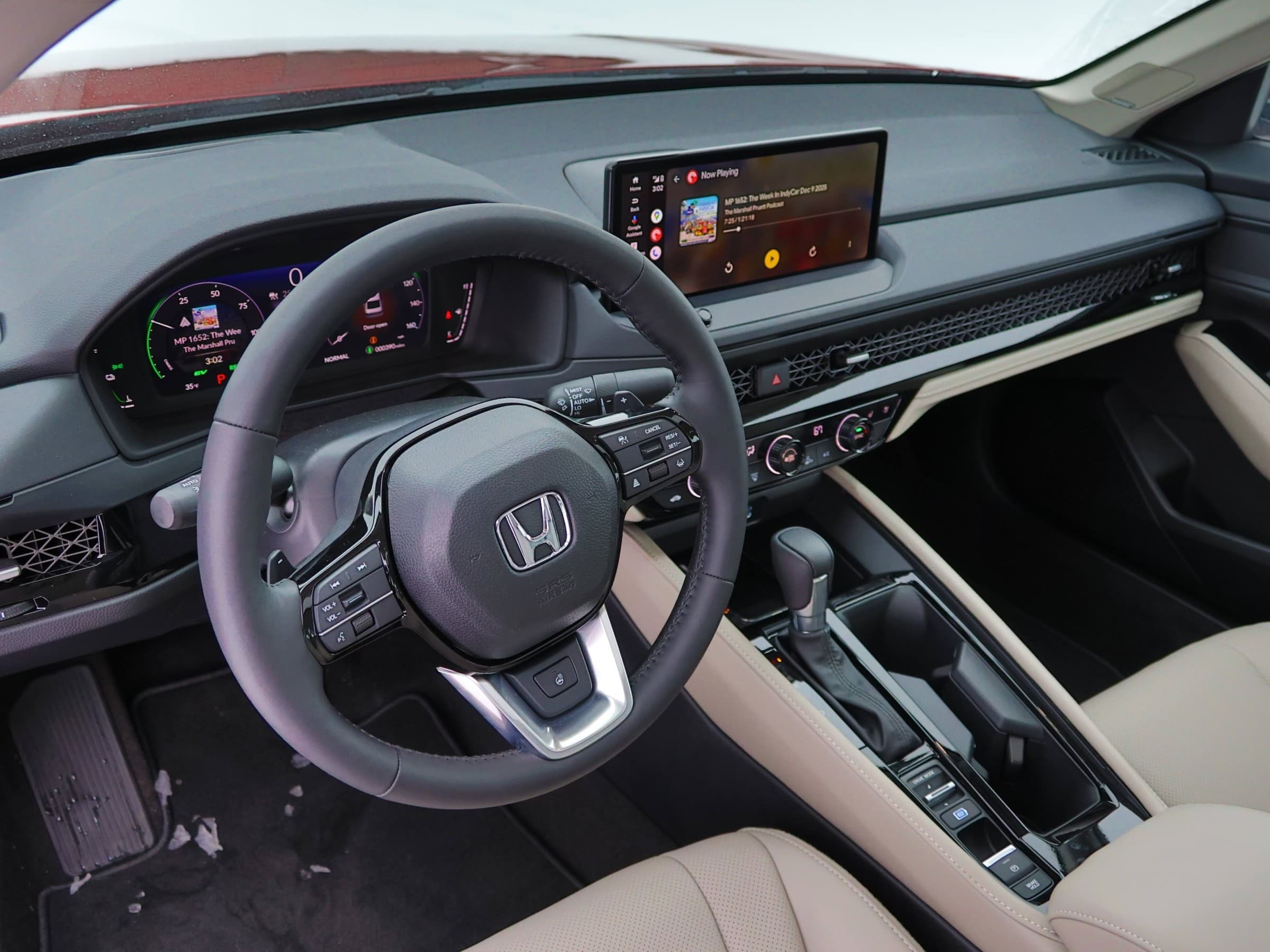
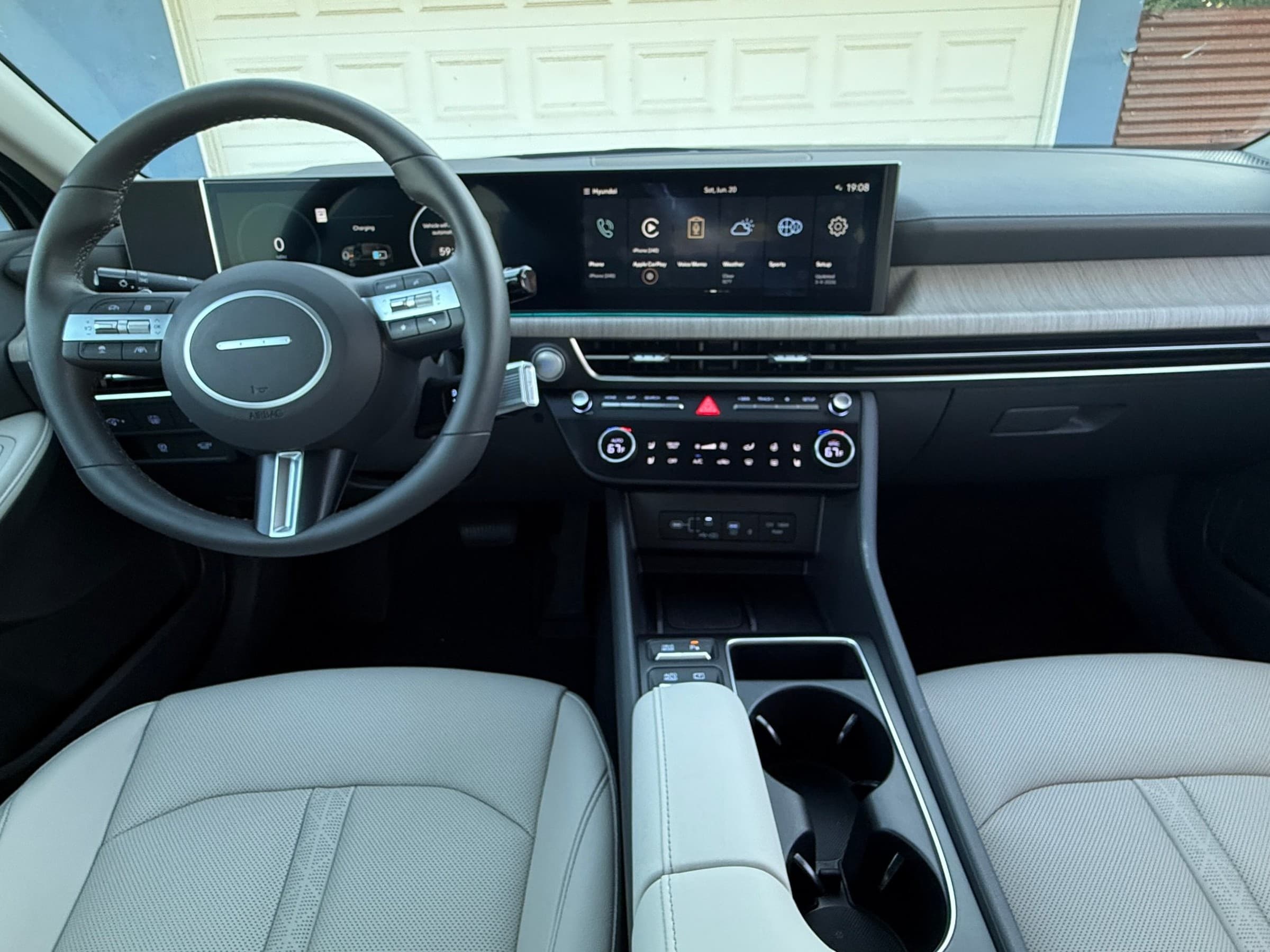
Both come standard with push-button start, keyless entry, a remote trunk release, a 12.3-inch touchscreen, Apple CarPlay and Android Auto, USB ports, a 60/40 split-folding rear seat, and dual-zone automatic climate control.
The Accord Hybrid also comes standard with heated front seats, a leather-wrapped steering wheel, wireless device charging, a power-adjustable driver's seat, and a sunroof. All of these are available on the Sonata Hybrid. The Accord Hybrid gets a standard 10.2-inch digital gauge cluster, while the Sonata Hybrid starts with a 4.2-inch gauge cluster and offers a 12-inch digital gauge cluster as an upgrade.
Both offer a heated steering wheel, ventilated front seats, leather upholstery, a four-way power-adjustable passenger seat, rain-sensing windshield wipers, an auto-dimming rearview mirror, and a 12-speaker Bose audio system. Only the Accord Hybrid is available with a head-up display, Google built-in, heated rear seats, and driver's seat memory. Only the Sonata Hybrid is available with a digital key and ambient interior lighting.
For safety, both come standard with automatic emergency braking, forward-collision warning, lane-keeping assist, adaptive cruise control, automatic high beams, driver-attention monitoring, a rear-seat reminder, and blind-spot monitoring with rear cross-traffic alert.
The Accord Hybrid has the longer standard list, adding road-departure mitigation, traffic-sign recognition, and traffic-jam assist. The Sonata Hybrid's standard suite instead adds pedestrian, cyclist, and junction-turning detection, lane-following assist, and safe-exit warning. It also has a more interesting options list, including Highway Driving Assist, a blind-spot view monitor, a surround-view monitor, remote smart parking assist, and side parking sensors.
Front and rear parking sensors are available on both.
Powertrain and Fuel Economy
The two sedans are close in power output, though the Accord Hybrid makes 12 more horsepower. Their torque comes from different places: the Accord Hybrid's electric motor produces 96 lb-ft more torque than the Sonata Hybrid's, while the Sonata Hybrid's engine produces 47 lb-ft more torque than the Accord Hybrid's.
Overall, the Sonata Hybrid gets better fuel economy, except in the city, where the Accord Hybrid shines. In their most efficient trims, the Sonata Hybrid Blue gets 3 mpg better combined and 12 mpg better on the highway, while the Accord Hybrid gets 4 mpg better in the city. Comparing the other trims, the Sonata Hybrid gets 3 mpg better combined and 10 mpg better on the highway, and the Accord Hybrid gets 2 mpg better in the city.
The headline MPG winner changes depending on trim and whether your driving is mostly city or highway, so see how EPA fuel-economy ratings should be used when comparing cars ➜
Price
The Sonata Hybrid costs less than the Accord Hybrid across the board. The base Sonata Hybrid Blue is $4,595 less than the base Accord Hybrid Sport. The Sonata Hybrid SEL is $1,345 less than the Accord Hybrid Sport. And at the top of each lineup, the Sonata Hybrid Limited is $1,245 less than the Accord Hybrid Touring.
Behind the Wheel
While these two have a lot in common, their hybrid systems work in surprisingly different ways, which gives each one a distinct feel.
Honda and Hyundai use fundamentally different approaches to blending gasoline and electric power, so see how the major hybrid configurations work and why they feel different behind the wheel ➜
In the Sonata Hybrid, a belt-starter generator (BSG) replaces the engine's traditional alternator. It starts and stops the engine, recovers a bit of energy when coasting, and provides a small electric boost. The motor-generator unit (MGU) does most of the electric boosting, but only adds 51 horsepower. A six-speed automatic transmission and a clutch between the engine and MGU make the Sonata Hybrid feel much more like a traditional nonhybrid car with its conventional shifts.
The Accord Hybrid feels more like driving an electric vehicle most of the time. Its hybrid drive unit has two MGUs. The main one makes 181 horsepower, nearly as much as the Sonata Hybrid's total output, and it does most of the work of turning the wheels and regenerative braking. The other MGU is attached to the engine and mainly charges the battery and provides electricity to the main MGU. At higher speeds, a clutch connects the engine directly to the wheels to help the main MGU and improve efficiency.
The result is that the Sonata Hybrid is a bit more efficient in some circumstances and feels like a nonhybrid car. The Accord Hybrid feels more refined and quieter overall, as you'd expect from an EV. Like most Hondas, it also has slightly sportier handling and steering, so if you like taking the occasional detour down a country road, the Accord Hybrid might be your preferred choice.
Which One's Right for You
If you’re looking for the most bang for your buck in functionality and efficiency, the Sonata Hybrid is probably the better choice. It costs less across the lineup and gets better highway and combined fuel economy. Its six-speed automatic transmission also makes it feel more traditional to drive. And its styling is more daring than the Accord Hybrid, which got a more toned-down appearance in its latest generation.
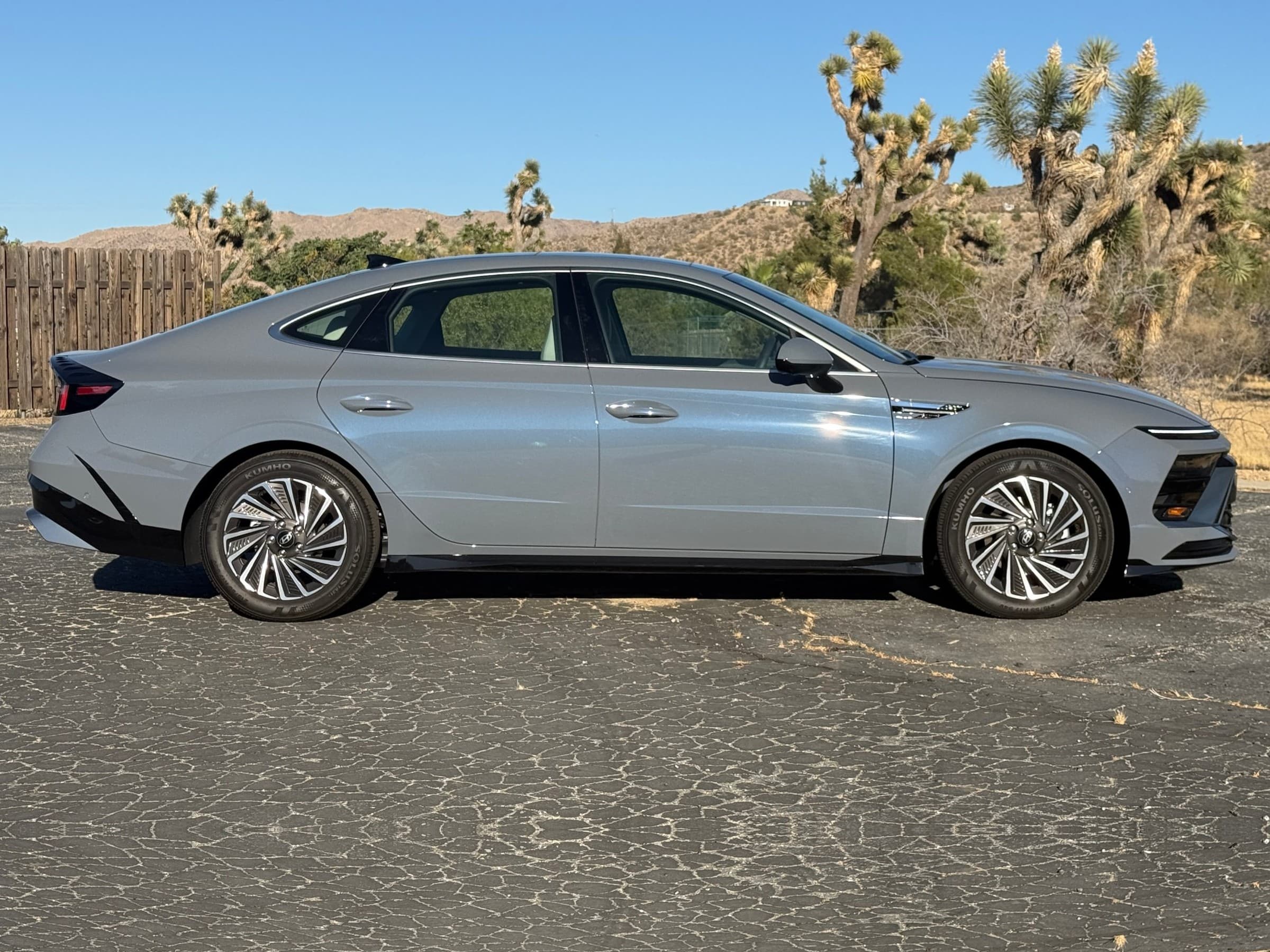
But if you're craving something that feels more like an EV but you’re not quite ready to take the full plunge into leaving pumping gas behind, the Accord Hybrid is the choice. It costs a bit more, but it also has more rear-seat room. That's a plus if you have youngsters fond of kicking the back of your seat, or growing teenagers heading to basketball tryouts.
Both are prime examples of what a modern midsize sedan can be when manufacturers take the job seriously.
The right hybrid comes down to more than the biggest MPG number, so see what else to consider when choosing a hybrid for your budget and driving habits ➜
More Hybrid Sedans Worth Comparing
2026 Honda Accord Hybrid Touring Review: Another Knockout
Go deeper on Honda’s 204-hp hybrid system, interior, technology, road manners, and Touring trim.
Read More ➜
2026 Hyundai Sonata Hybrid Drive Review: Don’t Skip the Sedan
See how the Sonata performs in real-world driving, including its ride quality, observed fuel economy, technology, and value proposition.
Read More ➜
2026 Honda Accord Hybrid vs. 2026 Toyota Camry Hybrid
The Camry remains the other major player in this segment, with lower pricing, available AWD, and up to 51 mpg combined.
Read More ➜







 Reviews