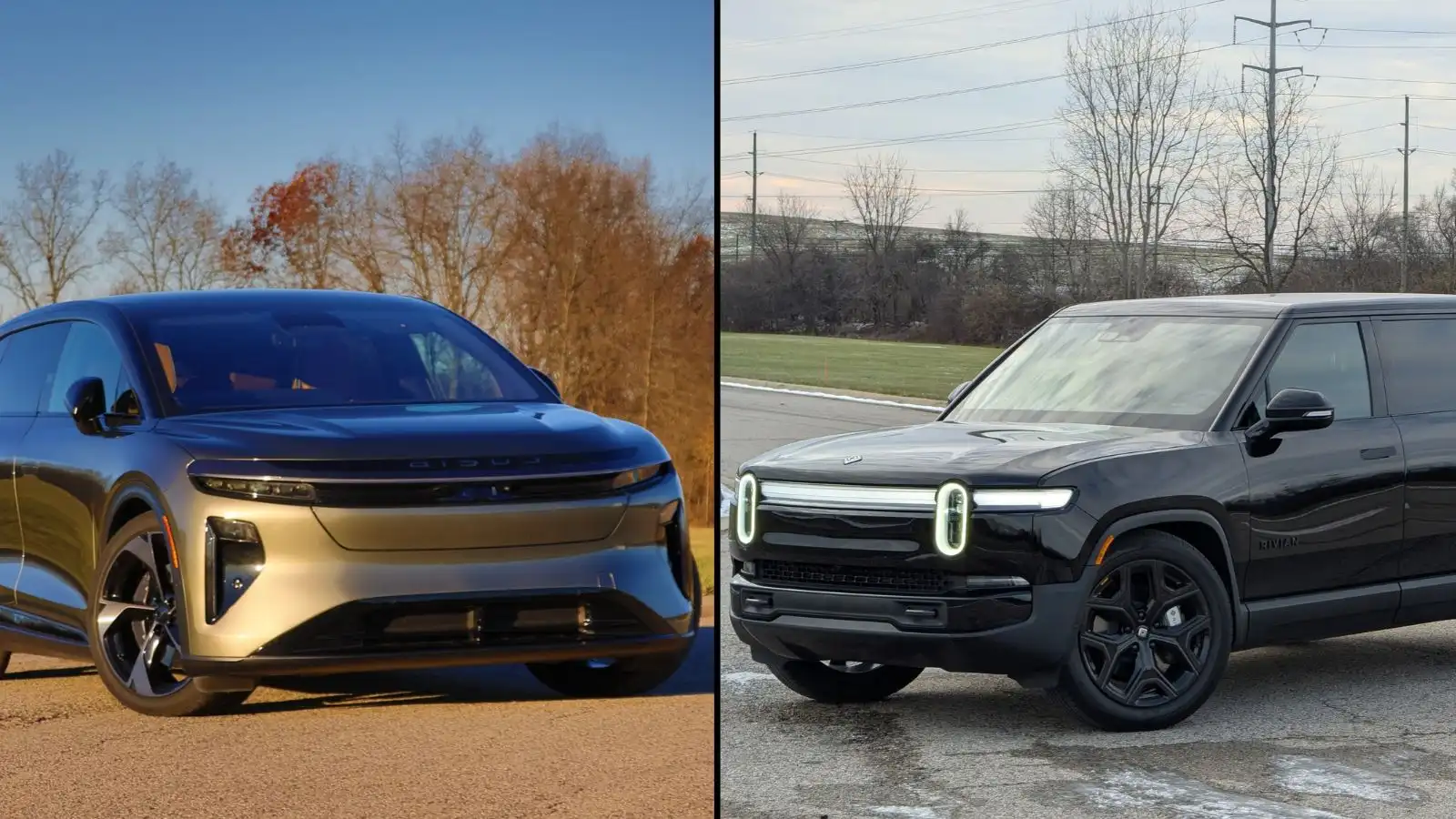

Fast Facts | Rivian R1S vs. Lucid Gravity
⚙️Horsepower: The Rivian R1S has up to 1,025 horsepower in Quad configuration, while the Lucid Gravity has up to 1,070 horsepower in GT-S configuration
🏁 Zero to 60 mph: The Rivian R1S can hit 60 mph in as little as 2.6 seconds, while the Lucid Gravity can do it in 3.1 seconds
🔋EPA-Estimated Range: The Rivian R1S offers up to 410 miles of EPA-estimated range, while the Lucid Gravity offers up to 450 miles of EPA-estimated range
🧳Cargo Space: The Rivian R1S has up to 90.7 cubic feet of space with the rear seats folded, while the Lucid Gravity has up to 111.9 cubic feet of space with the rear seats folded
💰MSRP: The Rivian R1S starts at $85,885, while the Lucid Gravity starts at $79,900
Two Three-Row EVs With Opposite Personalities
Lucid and Rivian are two of the newer automakers on the road. Both were founded in the late 2000s, and both of their SUVs have arrived within the last five years. They share a similar mission of building a premium all-electric lineup, though Rivian leans toward adventure while Lucid leans towards luxury. Don't let Rivian's outdoorsy marketing fool you, though: this isn't a base Jeep Wrangler. With both starting around the $80,000 mark, these are luxury vehicles, and their feature lists read more like wish lists. Let's dig in and figure out which one works better for you.
For current R1S specifications, pricing, and GreenCars coverage, explore the Rivian R1S model hub ➜
Exterior Design and Dimensions
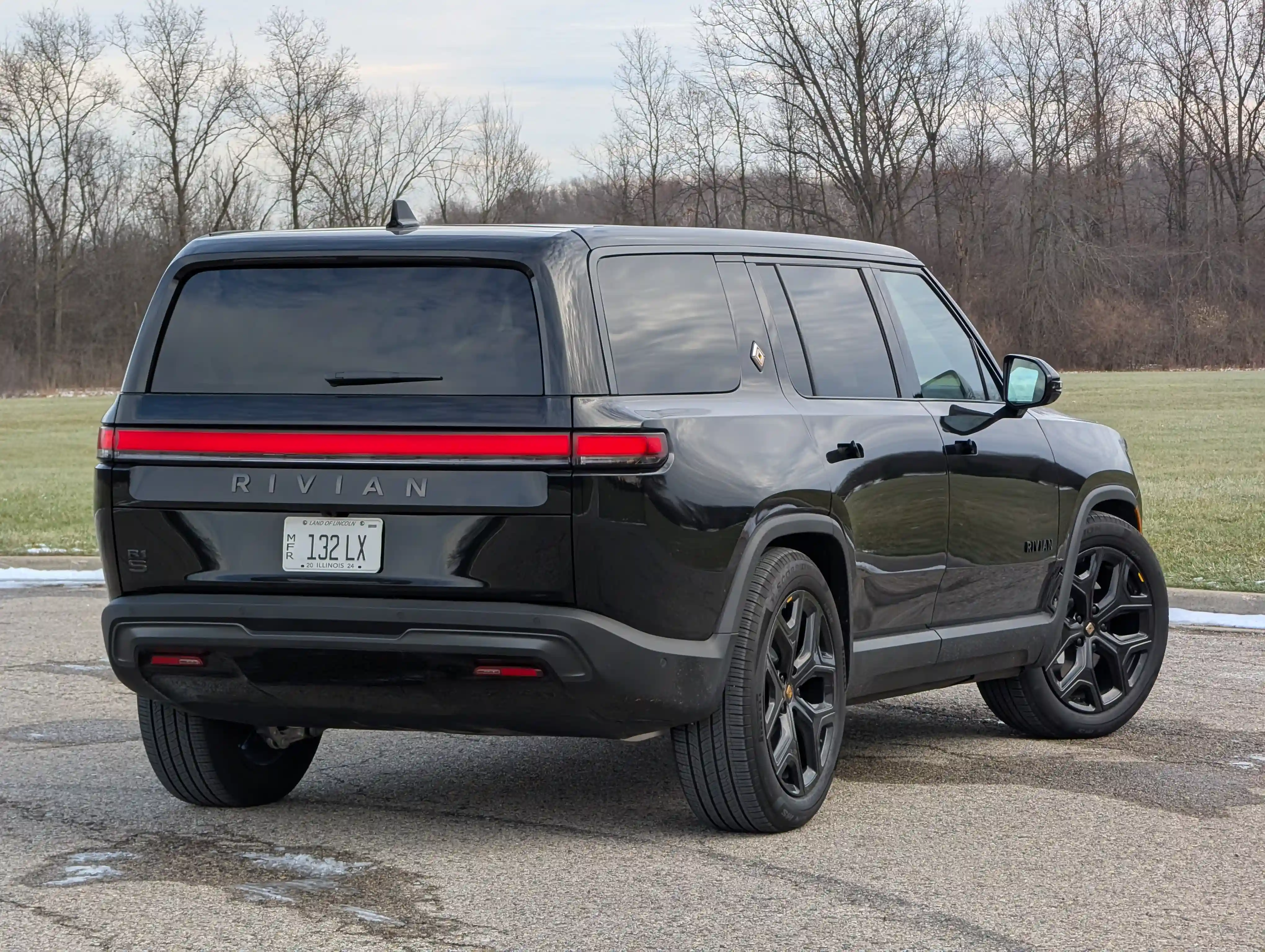
The R1S is the bigger vehicle in most measurements. It's 2.6 inches longer than the Gravity, rides on a wheelbase that's 1.6 inches longer, and stands at least 6.6 inches taller. At its highest setting, the R1S has up to 14.9 inches of ground clearance, compared to 9.3 inches for the Gravity.
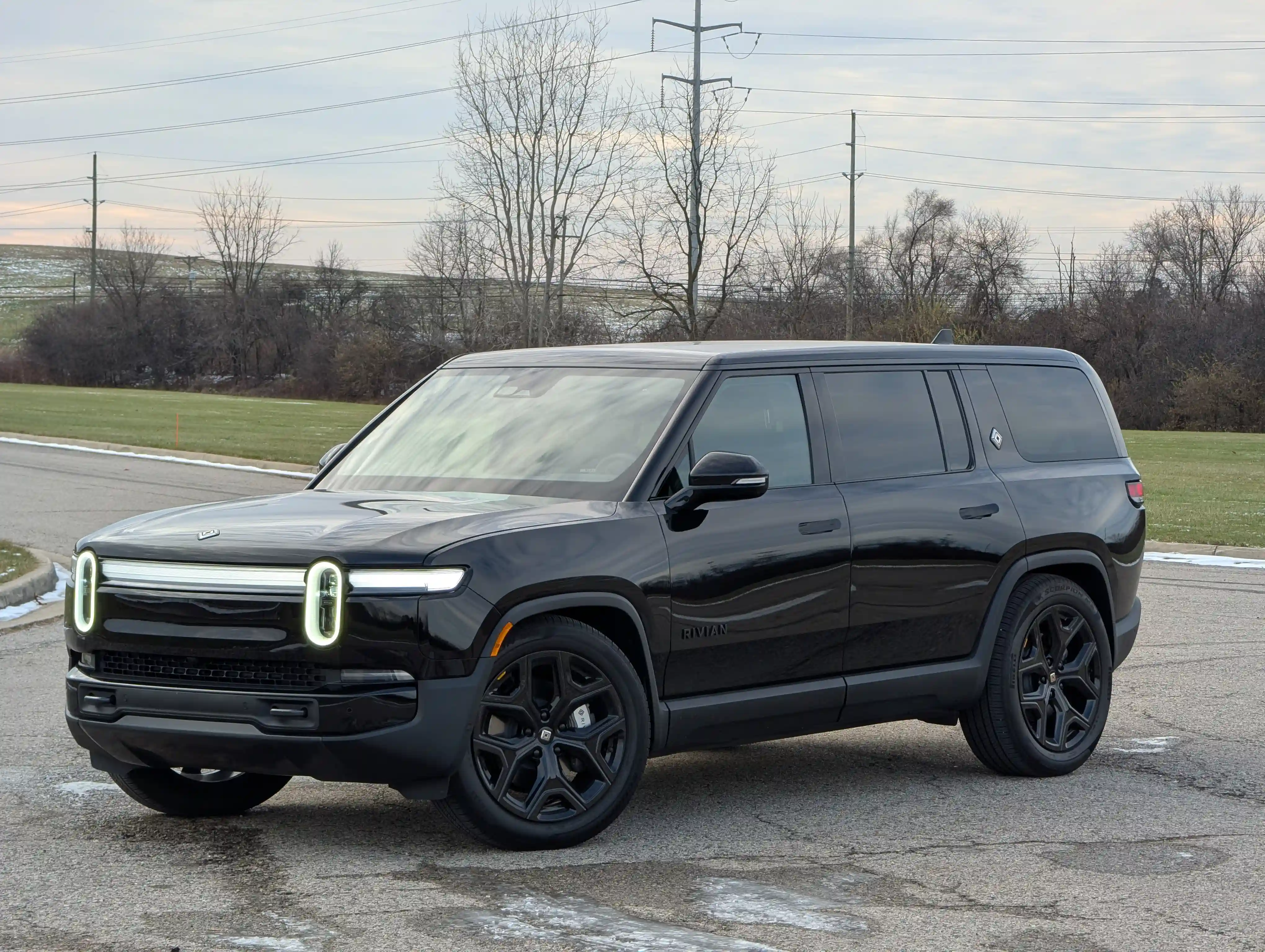
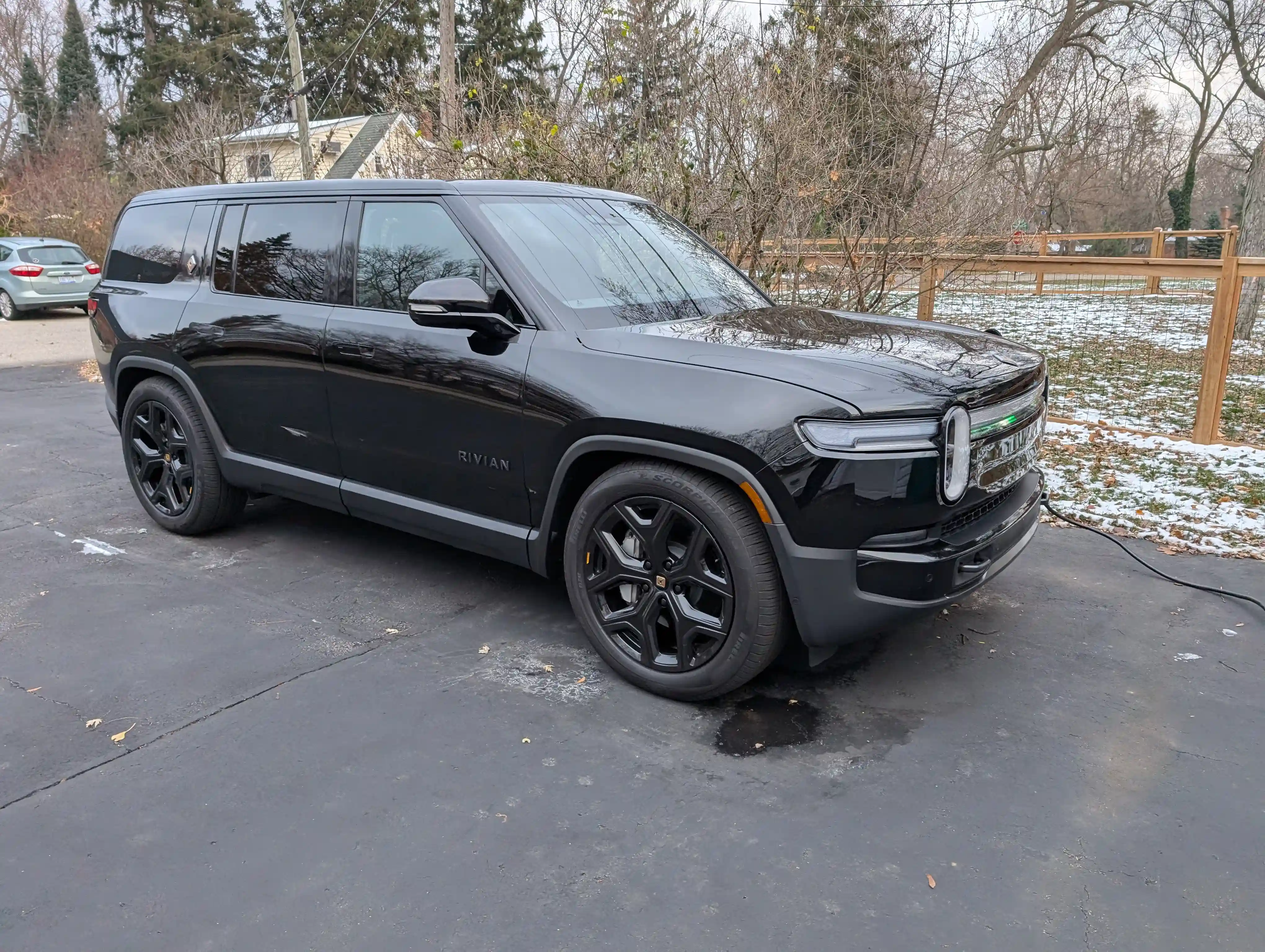
The R1S is unmistakably a Rivian. Its oval headlights have become a familiar sight on the road, and it shares much of its design with its sibling, the R1T pickup. The R1S is shaped much more like a traditional SUV, with a smaller box in the front and a much larger box for the rest. The long, upright body makes it easy to believe it can fit everyone Rivian says it can.
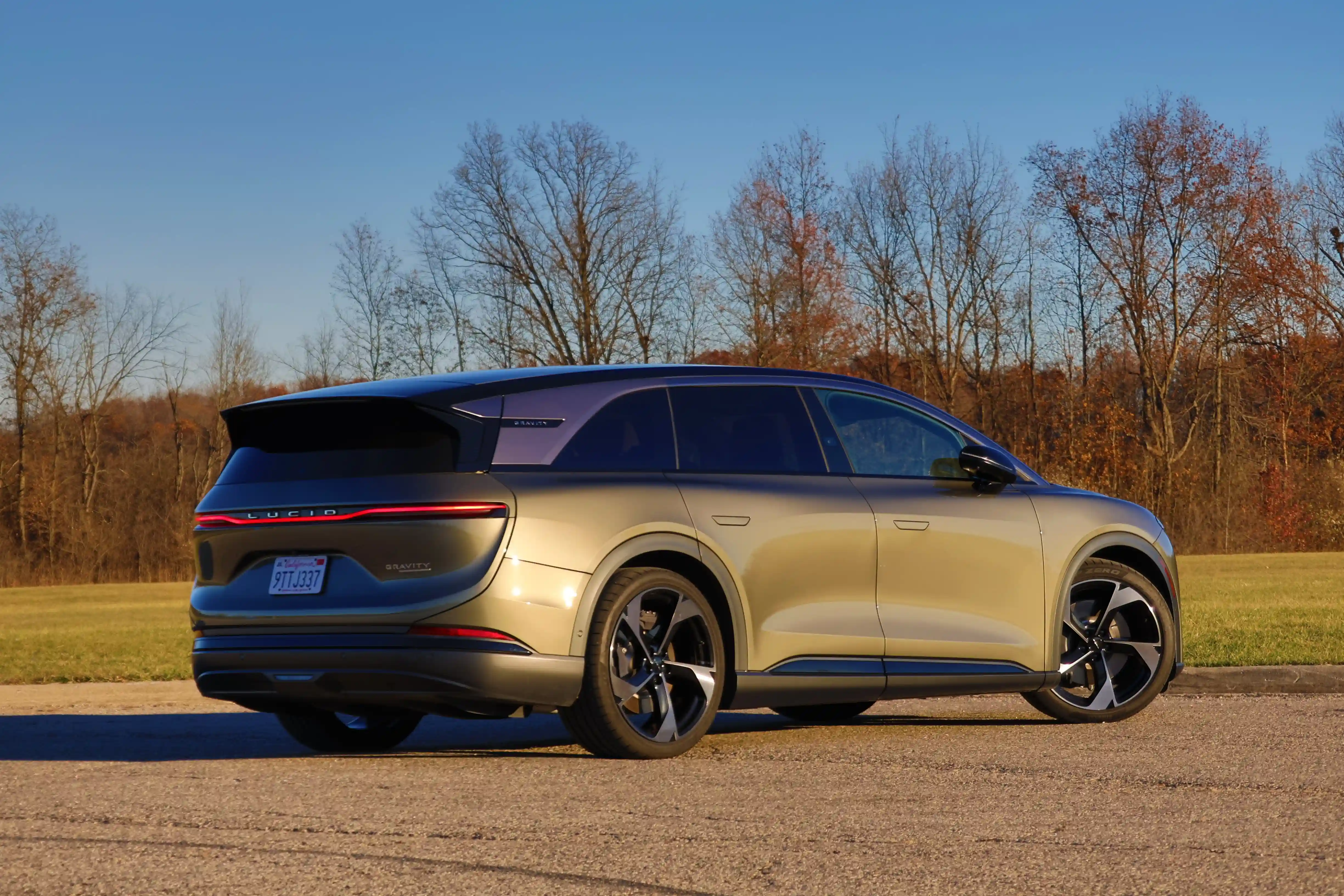
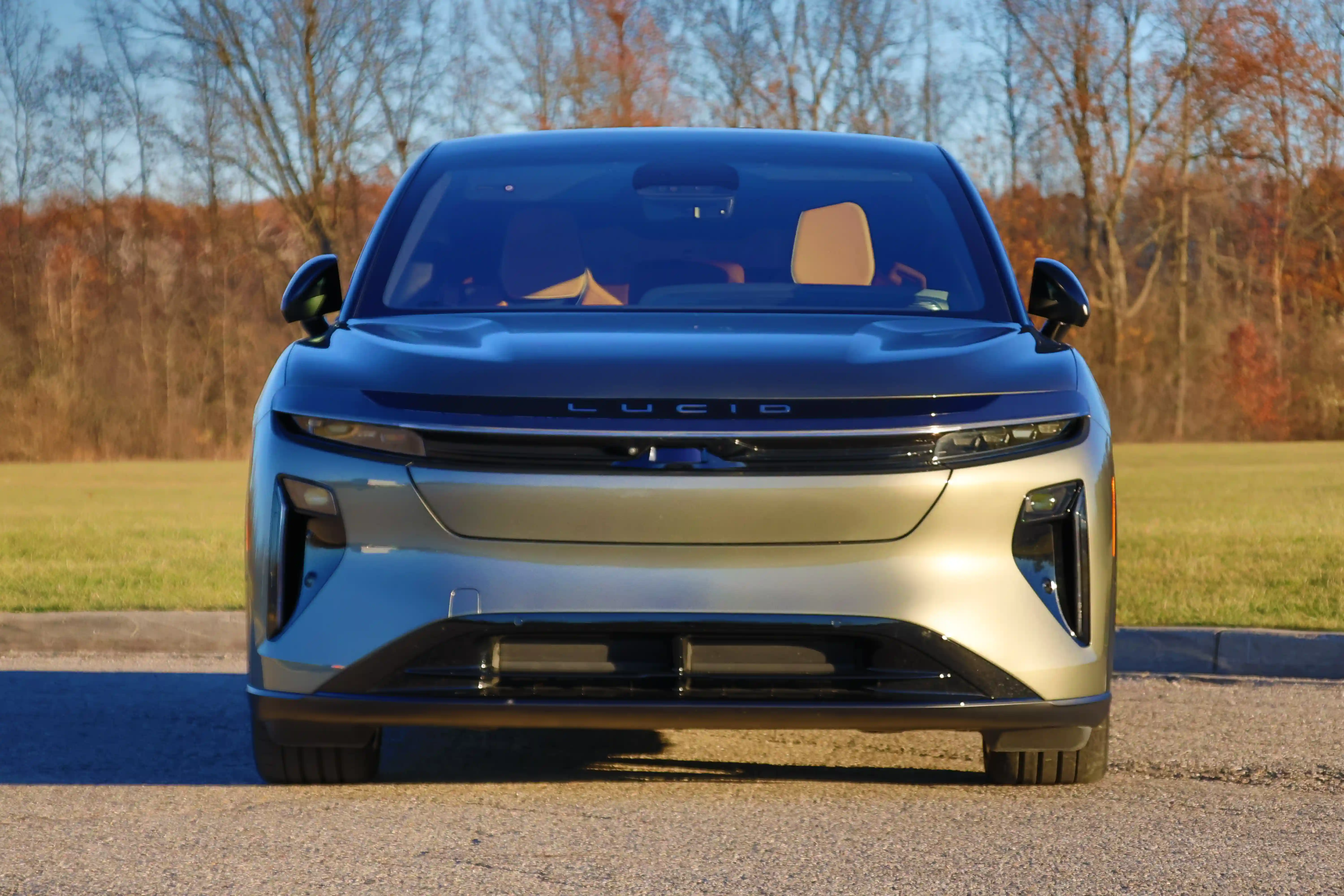
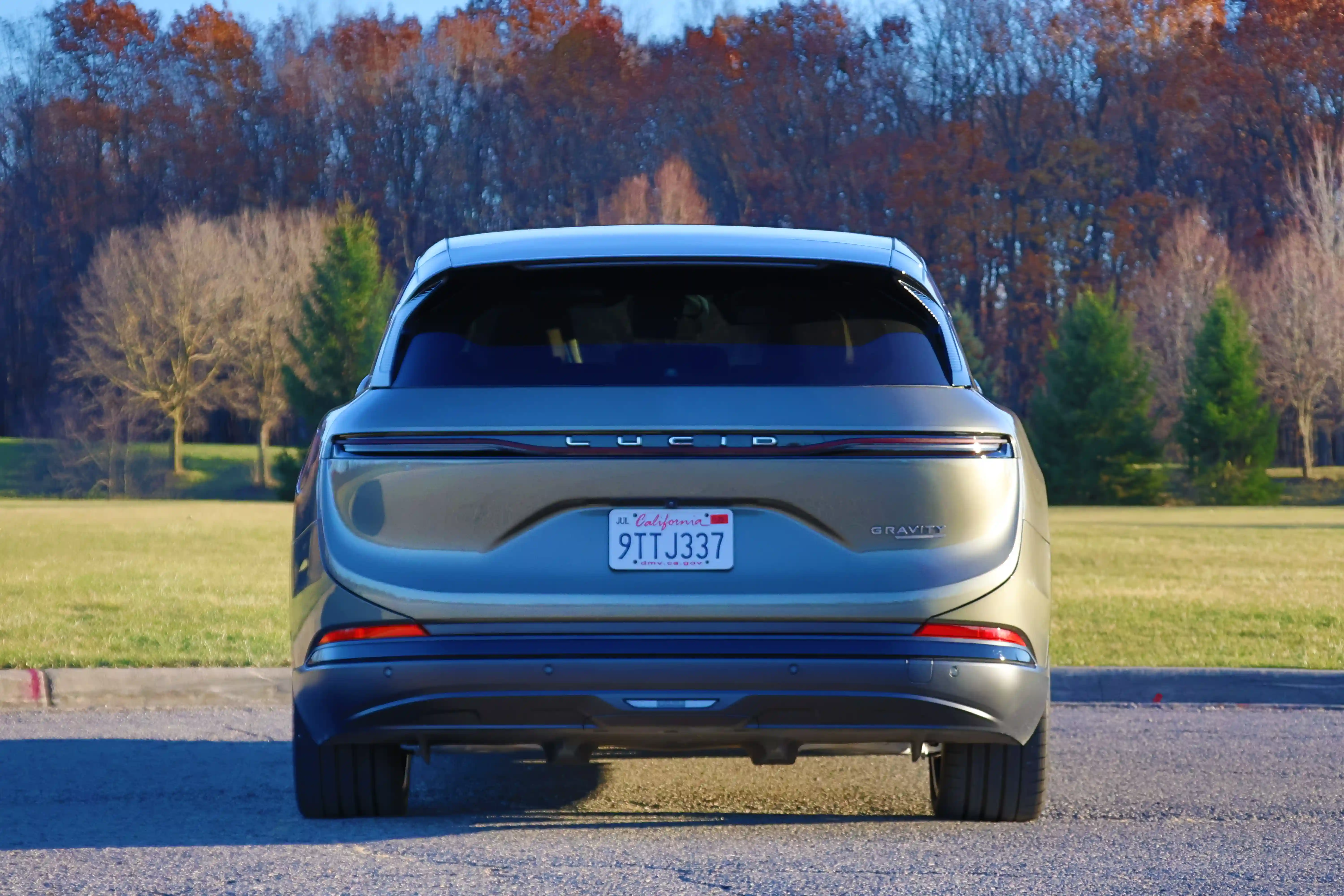
The Gravity looks lower, rounder, and clearly aerodynamic, with a rear end that seems to slice through the air. With its relatively short front end and cab-forward layout, many say it looks more like a minivan than an SUV, but those long proportions mean it can fit a large family.
Interior Space and Tech
The Gravity has the roomier second row, with 6.0 more inches of legroom and 1.3 more inches of headroom than the R1S. It also has 1.1 inches more third-row legroom and 0.6 inch more front headroom. The R1S has more shoulder room in every row (1.5 inches up front, 0.6 inch in the second row, and 1.6 inches in the third), plus 0.5 inch more front legroom and 1.2 more inches of third-row headroom.
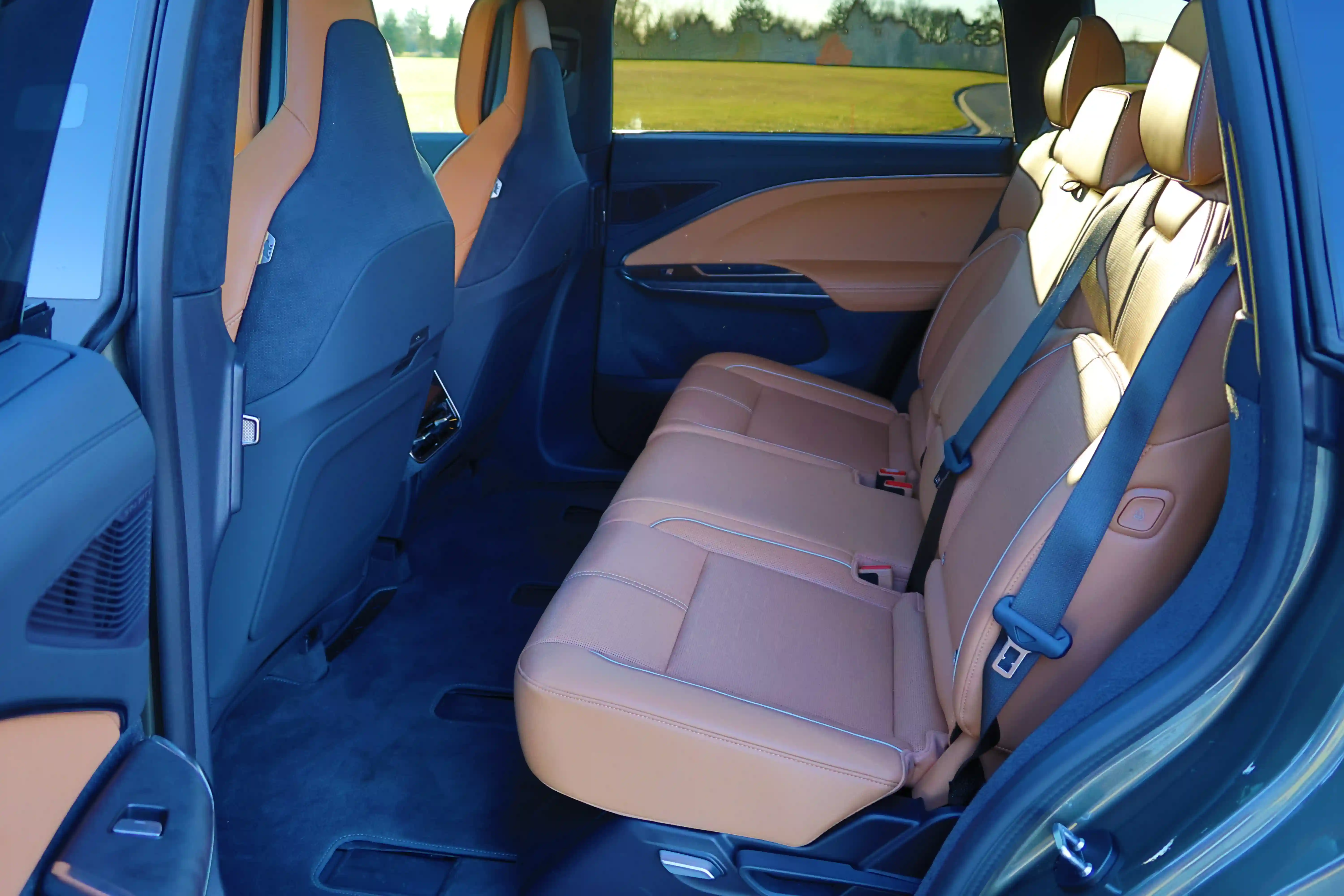
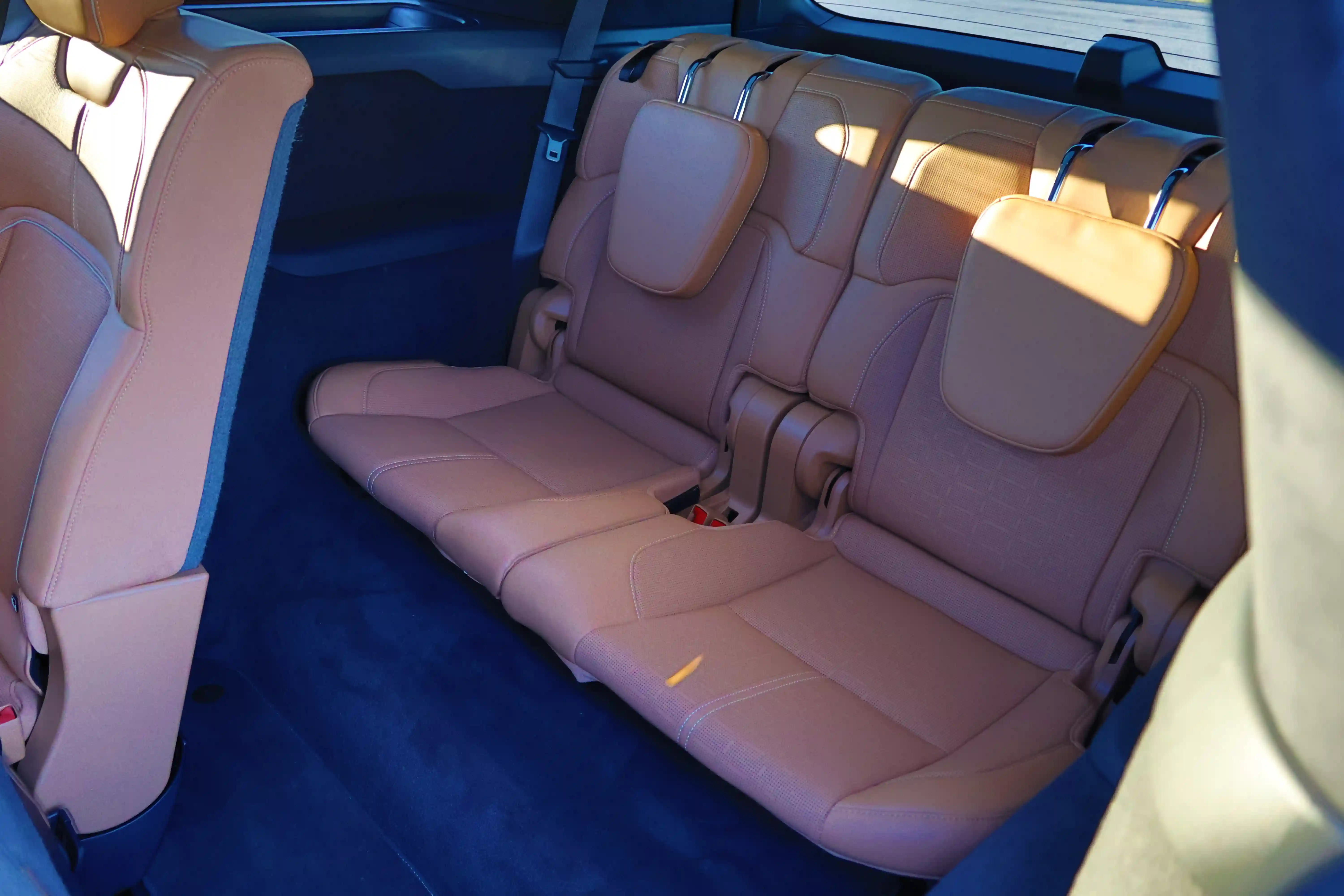
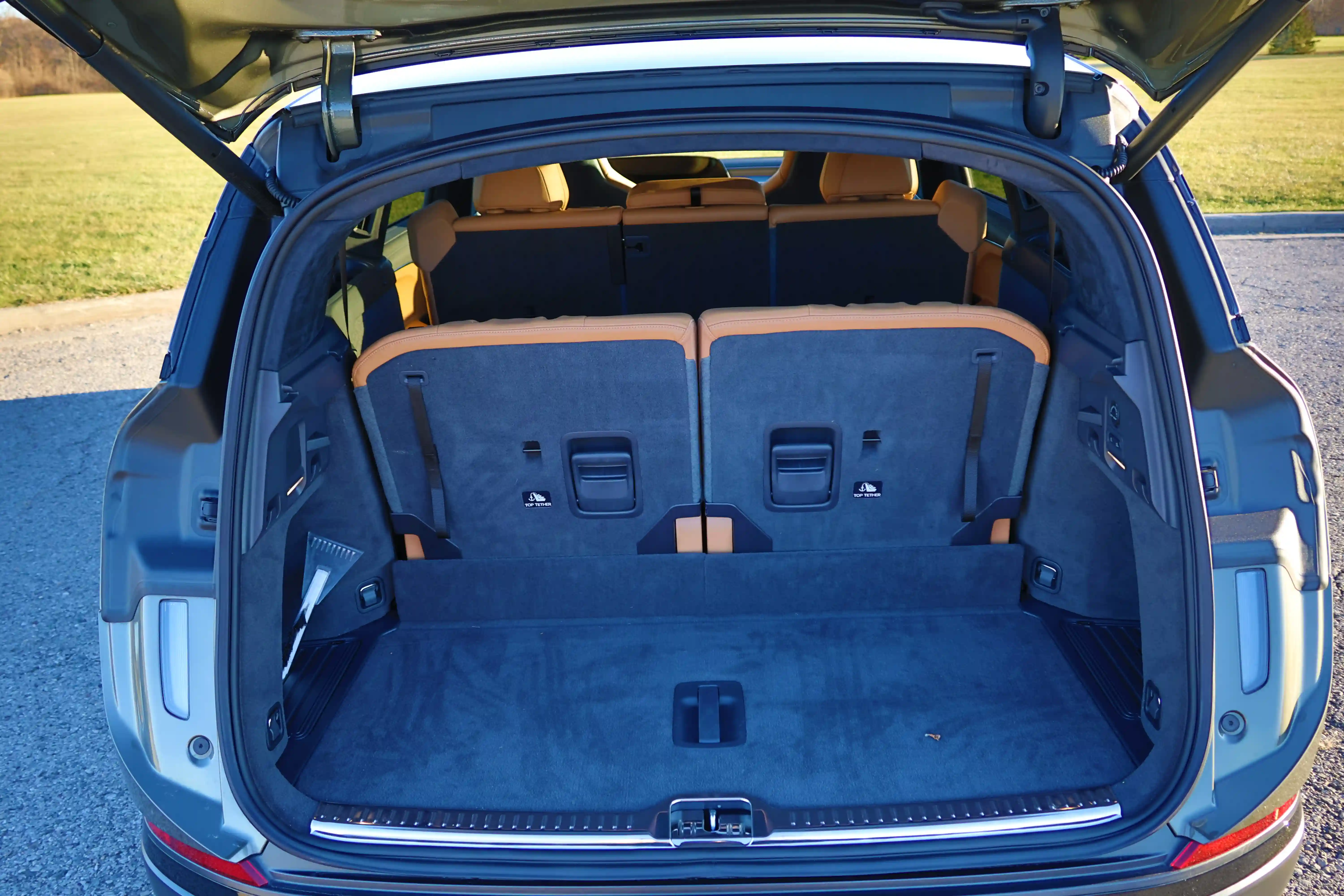
Packaging efficiency has been a hallmark of Lucid’s design philosophy since the original Air sedan, and that carries over to the Gravity. It has 3.7 more cubic feet behind the third row, 7.6 more behind the second row, and 21.2 more with both rows folded. One issue: the R1S comes standard with three rows, while the third is optional on the Gravity.
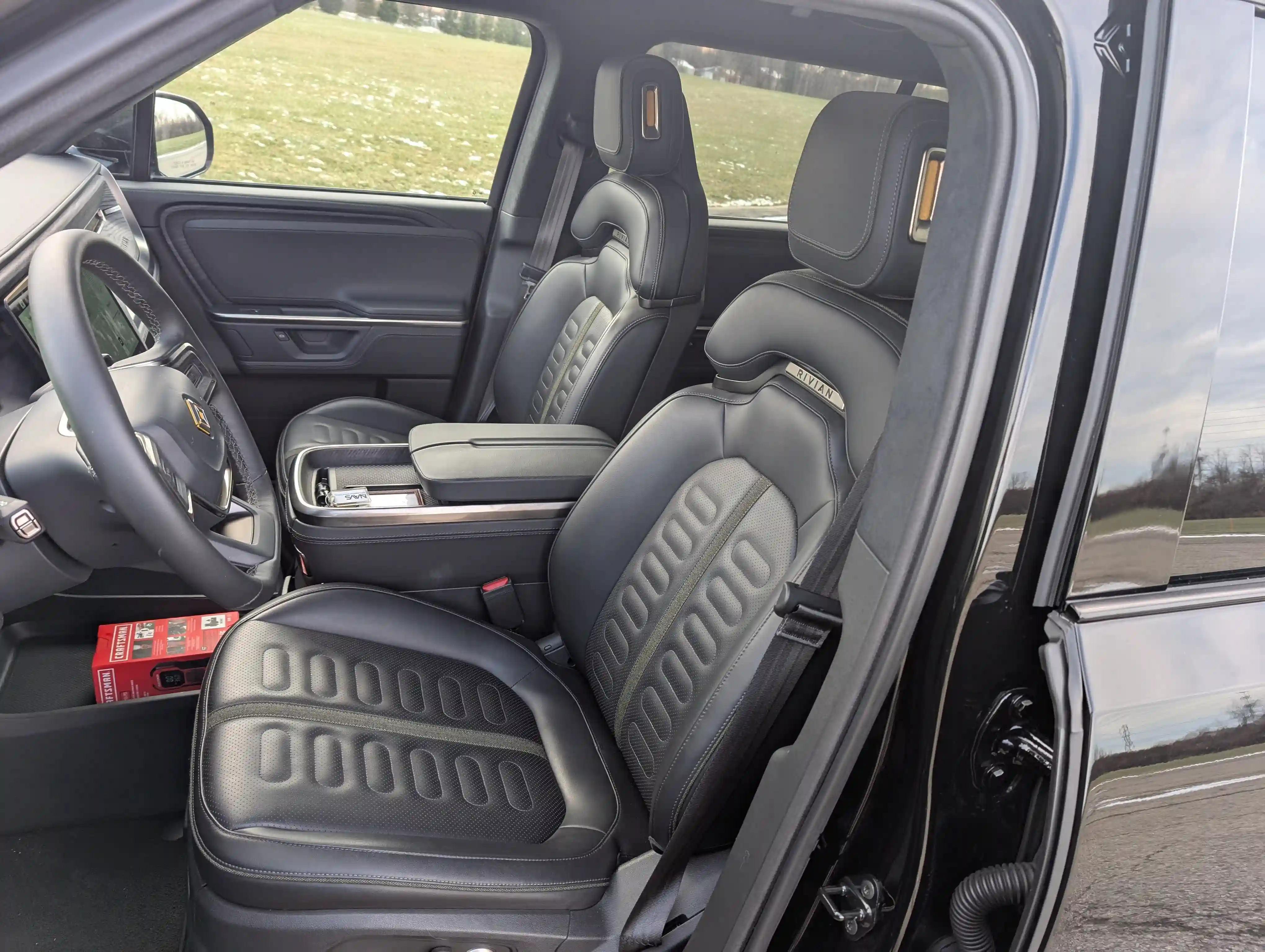
Both SUVs come standard with heated front seats, power-adjustable front seats with memory, built-in navigation, wireless device charging, and USB-C ports.
The R1S gets a 12.3-inch digital gauge cluster and a 15.6-inch infotainment screen, plus a 6.8-inch screen in the second row. The Gravity gets a 34-inch display atop the dashboard that combines the gauge cluster, infotainment display, and some ancillary controls. Below it, in the center, sits a 12.6-inch Pilot Screen with additional information and controls. Both companies embrace the software-defined vehicle approach, with over-the-air updates that can add new features.
Lucid and Rivian both build their infotainment systems on Google's Android Automotive operating system with their own custom interfaces. Neither uses Google Automotive Services, which provides access to the Google Play Store. Instead, each company works with specific developers to bring its Android apps to its respective platforms. Both offer Spotify, Tidal, and TuneIn, while Lucid adds Pocket Casts and Rivian adds Apple Music. Lucid also supports Apple CarPlay and Android Auto for drivers who want to project from their phones. Rivian does not.
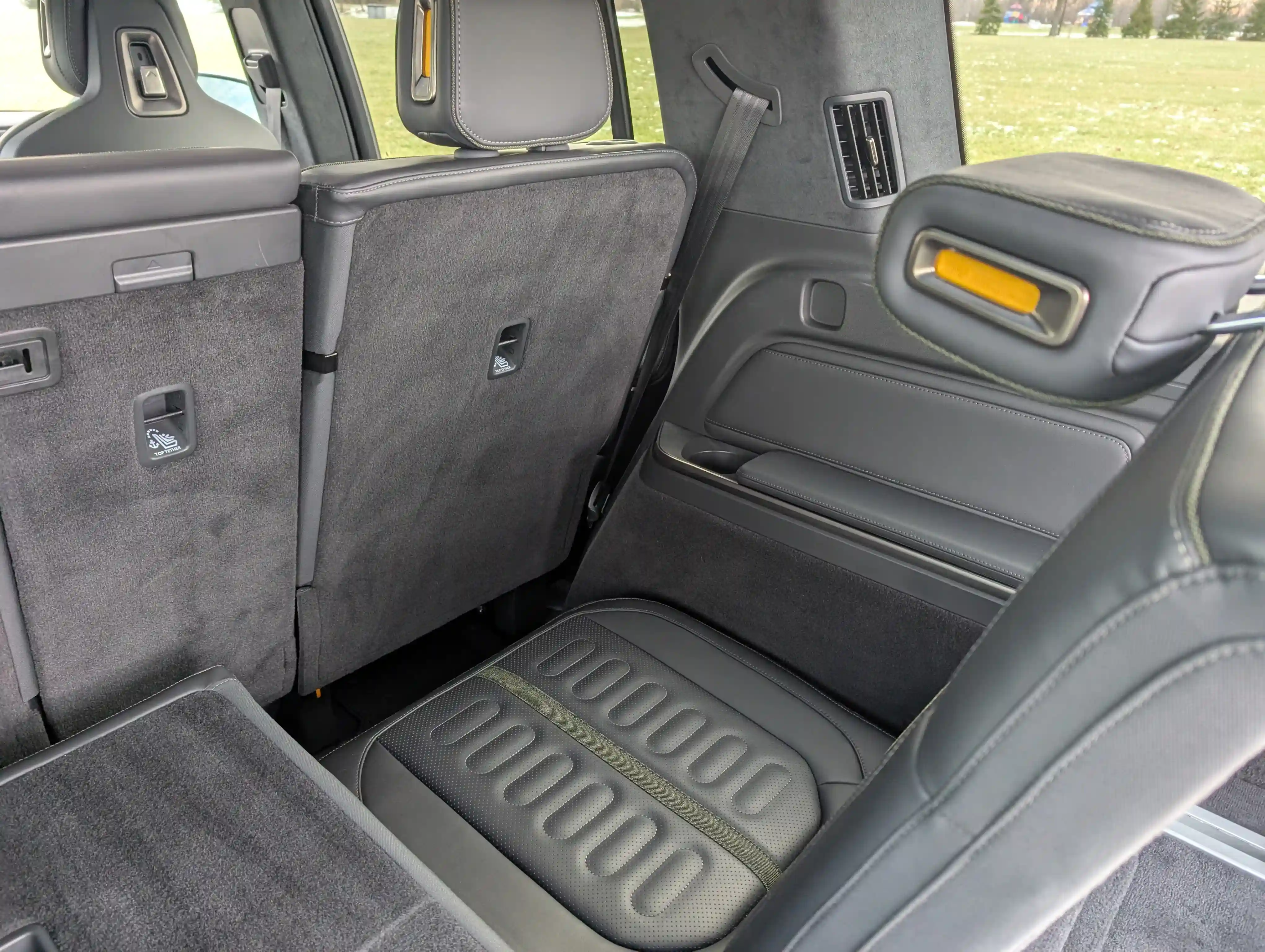
The two also diverge on interior controls. Rivian takes a more Tesla-like approach, with almost everything controlled through the central touchscreen, including the direction the vents blow. Lucid also puts many controls, like the lights, seat, and mirror adjustments, on touch interfaces, but it keeps physical controls for some of the most commonly used functions, like volume, temperatures for each zone, and fan speeds.
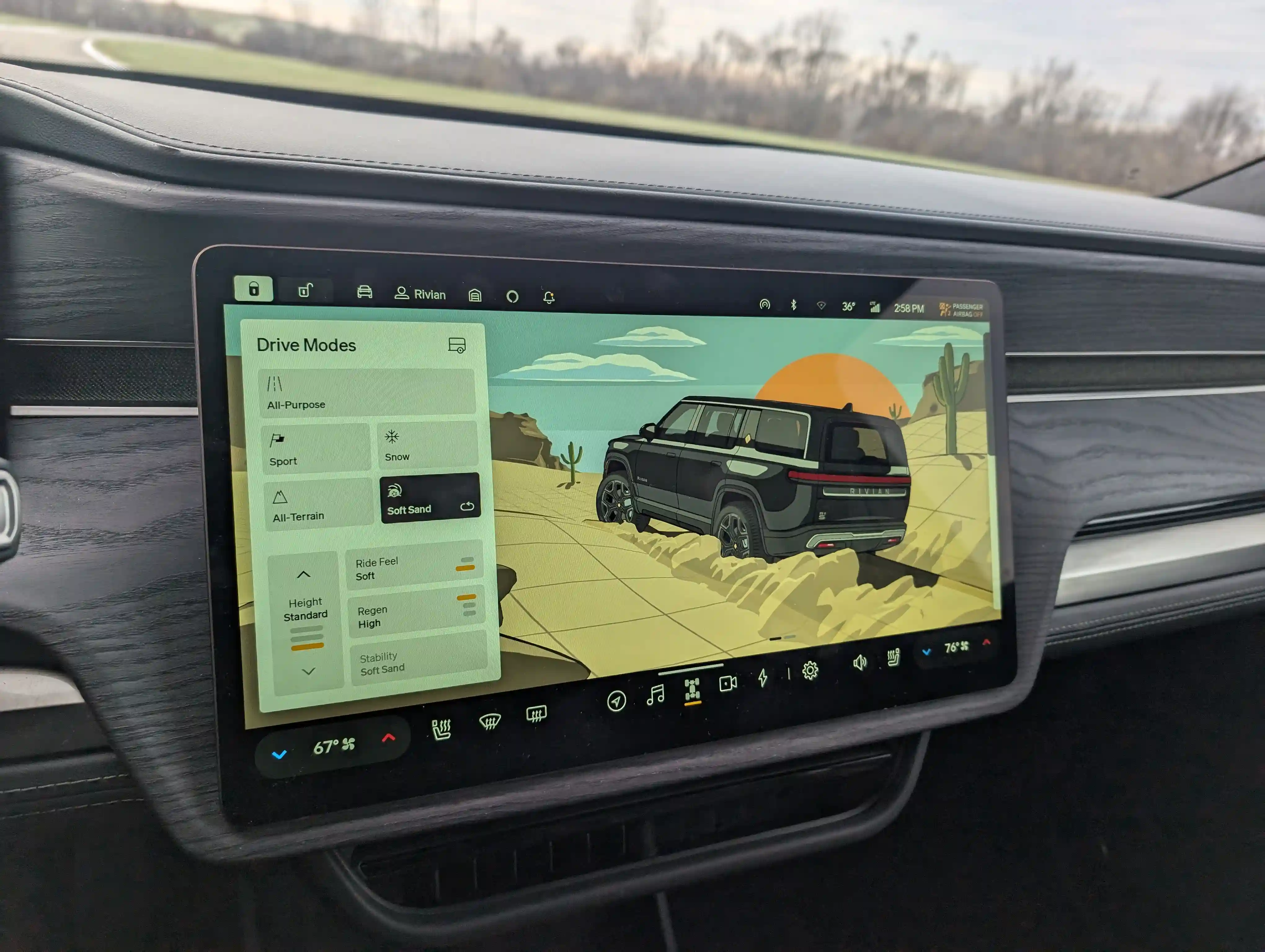
However, the R1S is the better-equipped of the two in base form, outside of Apple CarPlay and Android Auto. It also comes standard with ventilated front seats, a heated steering wheel, dual-zone automatic climate control, and a panoramic glass roof.
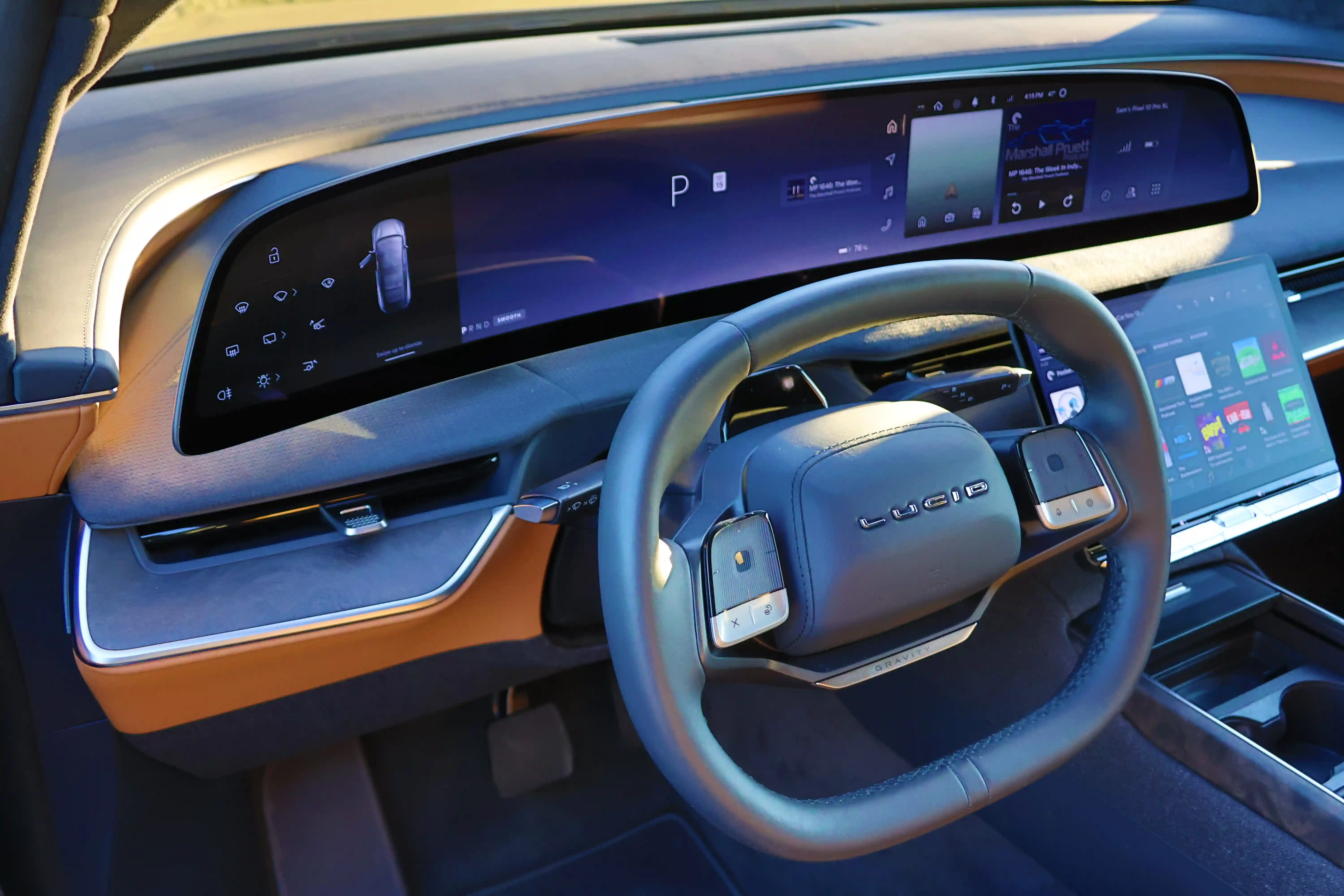
Rivian's options list includes a dynamic glass roof, premium audio, and an air compressor in the rear cargo area. The Lucid, leaning hard into luxury, offers 28-way power-adjustable front seats with memory, ventilation, massage, and rear tray tables, a heated steering wheel, heated rear seats, a 22-speaker Dolby Atmos audio system, power sunshades, soft-close doors, heated windshield wipers, a head-up display, occupant monitoring, and dynamic ambient lighting.
On safety, both come standard with adaptive cruise control, automatic emergency braking, automatic high beams, blind-spot monitoring, lane-departure warning, rear cross-traffic alert, and hands-on highway driving assist. The R1S adds a standard surround-view camera, forward-collision warning, and lane-keeping assist. The Gravity adds speed limit assist, traffic-sign recognition, front cross-traffic alert, rear pedestrian collision detection, park distance warning, distracted driver alert, drowsy driver alert, and safe-exit warning. You can add a surround-view camera, hands-free drive assist, and automatic parking to the Gravity. Rivian also offers its own hands-free driving system, Universal Hands Free and Lucid is expected to add a similar capability to the Gravity in the coming month.
For current Gravity news, specifications, and GreenCars coverage, explore the Lucid Gravity model hub ➜
Powertrain and Fuel Economy
Both lineups are all-wheel drive only. At the top of the lineup, the Gravity GT-S makes 1,070 horsepower, 45 more than the Quad-Motor R1S's 1,025. But the Rivian is quicker, hitting 60 mph in 2.6 seconds, half a second faster than the Gravity's 3.1 seconds. At the entry level, the Gravity Touring's 560 horsepower edges out the Dual-Motor R1S's 533 by 27 horsepower.
The Gravity also has an edge in range. Its Ground Touring trim offers up to 450 miles of EPA-estimated range, 40 more than the R1S's best of 410 miles. At the entry level, the Gravity Touring's 337 miles barely squeaks past the Dual-Motor R1S's 330 miles. However, it's important to note that any electric range over 400 miles is exceptional for an EV, and both Rivian and Lucid models tend to fall about 10 percent short of the official EPA range estimates in real-world testing.
A 410- or 450-mile rating is useful for comparison, but it is not a guarantee of road-trip range, so see how EPA estimates, wheel choice, weather, speed, and battery size should factor into EV shopping ➜
Charging
According to the manufacturer-estimated charging times, the Gravity charges faster. Lucid says it adds about 200 miles in less than 12 minutes, while Rivian says the R1S adds 150 miles in 20 minutes. Both are equipped with J3400/NACS charging ports and can charge at Tesla Superchargers or any CCS charger with an adapter.
Price
The Gravity starts at $5,985 below the R1S ($79,900 vs. $85,885). However, at the top of the lineup, the Gravity GT-S is $2,015 more than the R1S Quad ($125,000 vs. $123,885). Neither of these is particularly affordable, though.
What's It Like to Drive?
The R1S and Gravity drive as differently as their designs suggest. The Rivian is clearly targeted at the crowd that buys Land Rovers and Lexus LXs. These buyers want to look like they're heading out on adventures on the Rubicon Trail or the slickrock of Moab, Utah. In reality, people buying a high-end Defender, Discovery, or LX are far more likely to be crawling through a mall parking lot or the school pickup line than over a boulder. It’s usually the third or fourth owner who outfits those vehicles for adventure. That said, the R1S can be a very capable adventure vehicle when equipped with the available all-terrain tires and its air suspension lifted to its maximum 14.9 inches of ground clearance.
The Gravity makes no pretense of chasing after Wranglers and Broncos. It's very much a street vehicle, though its available air suspension makes it more capable off-road than you might expect, provided it has the right tires.
In their true natural habitat (running the kids to school, picking up bags of mulch at the big-box store, or transporting rescue dogs halfway across the country), the two feel quite different. The second-generation R1S improved things, but it still has a noticeably stiffer ride that some might find off-putting if they live where the pavement is less than pristine. The Gravity's much more compliant ride is great for daily commuting and long-distance road trips.
I generally prefer the Lucid's control layout, with its additional physical controls. However, in either SUV, you'll be digging into the touchscreen to adjust the seats, mirrors, or steering wheel. I also don't like having to use a touchscreen to adjust the airflow in the Rivian. On the other hand, the R1S's new Universal Hands-Free driver assist works very well and functions on almost any road with lane markings, though it won’t navigate you from point to point.
Analyst's Perspective (Which One's Right for You)
Design matters, especially if you're spending more than $80,000 on a new vehicle, and these two project very different images to the world. I’m fond of Lucid's sleek design language, but some shoppers aren’t so fond of the minivan-like proportions, so the Rivian might be your preferred choice.
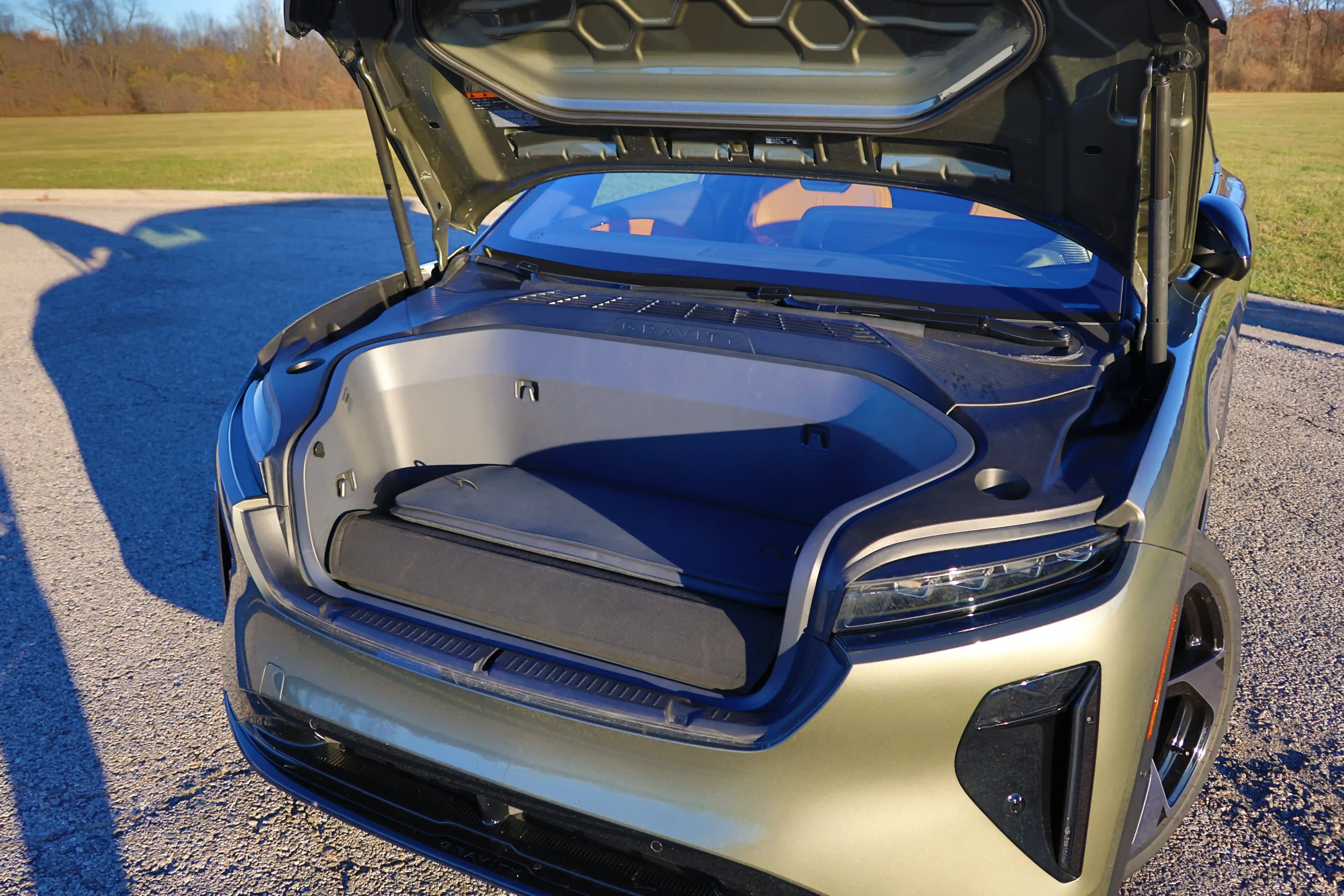
Both SUVs have good-sized frunks, with the Lucid having about 8.1 cubic feet of capacity and the Rivian having just under 10 cubic feet. The Lucid's a bit more convenient to use with its much lower lift-over height. The R1S's front fascia stays in place, much like an internal-combustion SUV, so you have to lift anything over it to load or unload.
The Lucid is definitely more comfortable to drive, and its available four-wheel steering makes it easier to maneuver in tight places. Both companies have had some buggy software updates, but this is much more common on the Lucid, and many owners have experienced the entire infotainment system crashing or locking up.
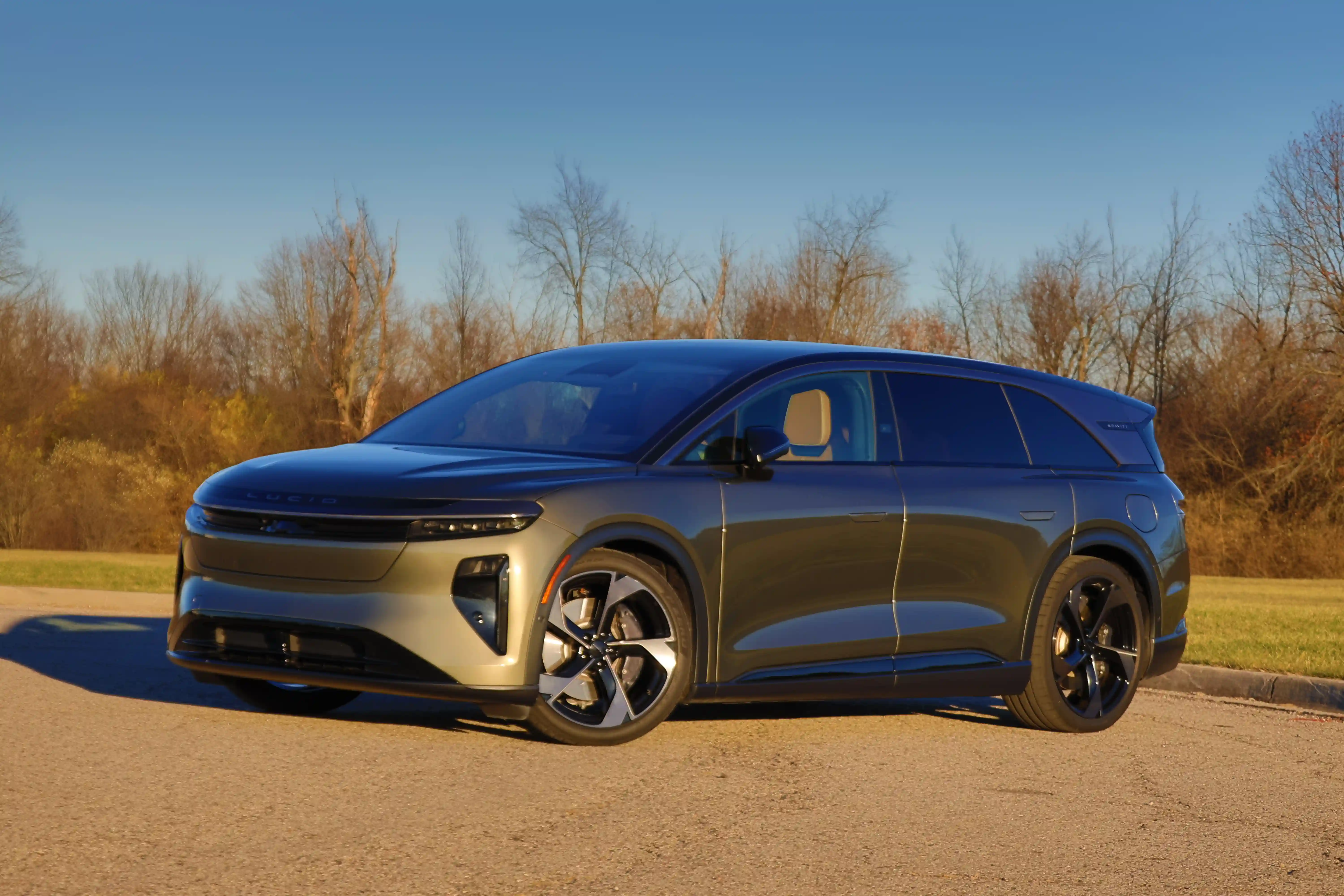
Both vehicles are very quick, whether you opt for a base model or a top-end configuration, and their pricing isn’t radically different. If you’re not averse to digging around on a screen to adjust vents and want to look like you’re getting ready to head out on a Camel Trophy trip, Rivian has you covered. If you prefer a sleek, modern look, plan to stay on the road, and don’t mind occasionally dealing with some recalcitrant software, check out the Lucid Gravity.
More Three-Row Luxury EVs Worth Comparing
2025 Volvo EX90 Review: A Calm, Confident Take on Luxury EVs
Volvo offers another three-row electric SUV with a more understated take on premium design, comfort, and family transportation.
Read More ➜
Driving the 2025 Cadillac Escalade IQ: Cadillac’s Biggest, Boldest EV Yet
The Escalade IQ takes luxury, range, and sheer size even further for buyers who want an electric SUV with maximum road presence.
Read More ➜
Kia EV9 GT-Line Review: Fashion Above Function?
Kia’s three-row EV provides a substantially less expensive counterpoint to the Rivian and Lucid while retaining family-friendly packaging.
Read More ➜