
Fast Facts | Kia EV9 GT-Line
🔋 Range: EV9 GT-Line AWD with 21-inch wheels is EPA-rated at 280 miles per charge
⚡ Real-World Efficiency: The tester averaged 3.0 miles per kWh over a week, equal to roughly 299 miles of range
🚀 Power: AWD models make 379 horsepower, while GT-Line torque rises from 443 to 519 pound-feet
🔌 Charging: EV9 can charge at over 220 kW on high-power non-Tesla NACS chargers and go from 10 to 80 percent in about 24 minutes
🧳 Cargo Space: Offers 20.2 cubic feet behind the third row, plus underfloor storage for the optional cargo cover
🧰 Frunk Space: Rear-wheel-drive models offer up to 3.2 cubic feet, while AWD models offer 1.8 cubic feet
💰 Base Price: Standard-range rear-wheel-drive model starts at $54,900 MSRP plus a $1,645 destination charge
🏷️ Tested Price: GT-Line tester came to $76,670 delivered
In some ways, the auto industry is a lot like the fashion industry. Clothing styles are often chosen for reasons that have little to do with functionality, and car buyers aren't so different. They might claim they need something, but it usually comes down to what they want. That’s why SUVs and crossovers make up about 60 percent of the U.S. market while sedans hover around 25 percent. Most people don’t need an SUV; they just want one. Kia knows this. So instead of building an electric Carnival or big station wagon for its next EV family hauler, Kia created the EV9.
I recently spent some time with an EV9 GT-Line. Here's how it did.
The Fashion of Vehicle Shapes
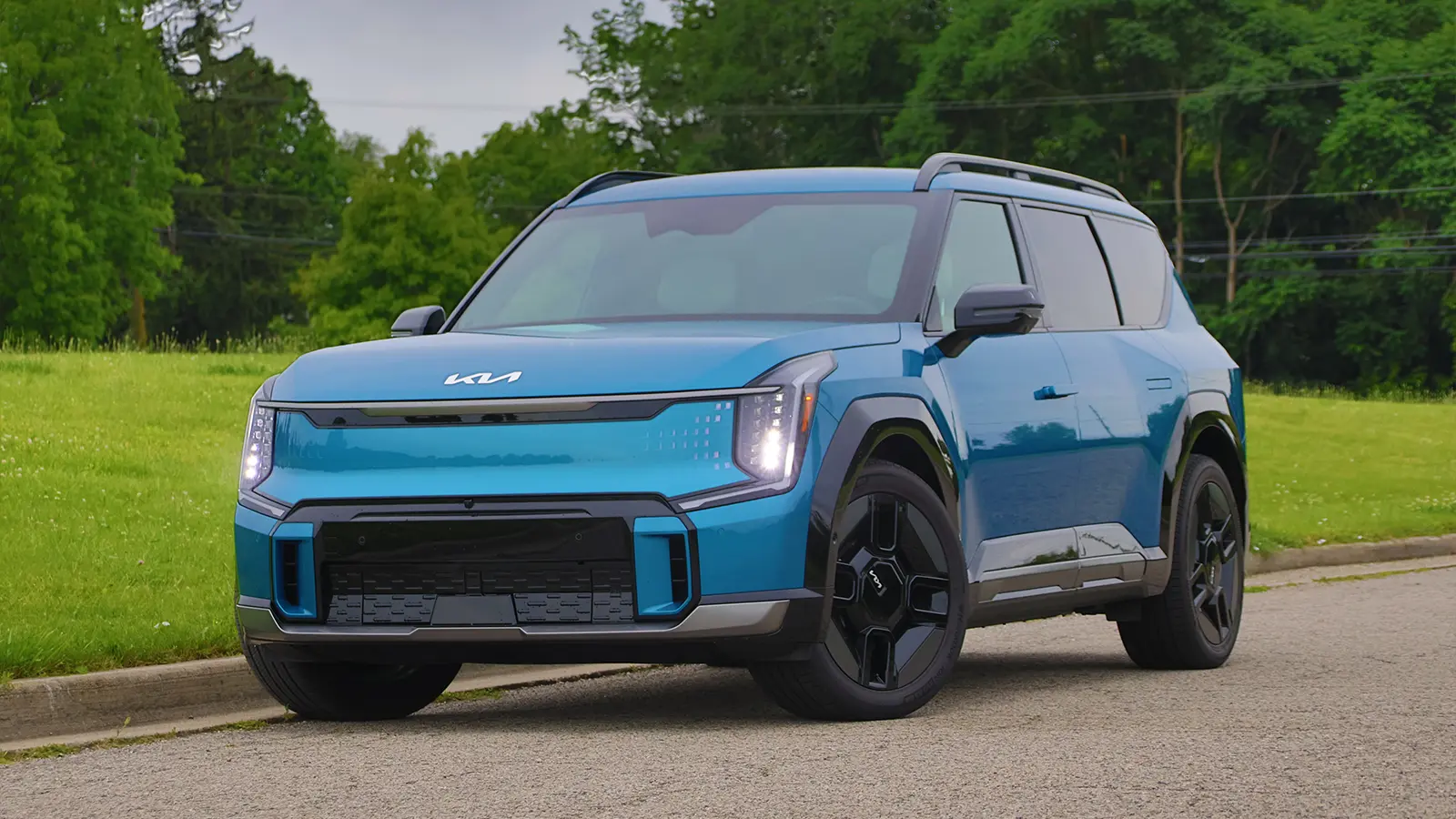
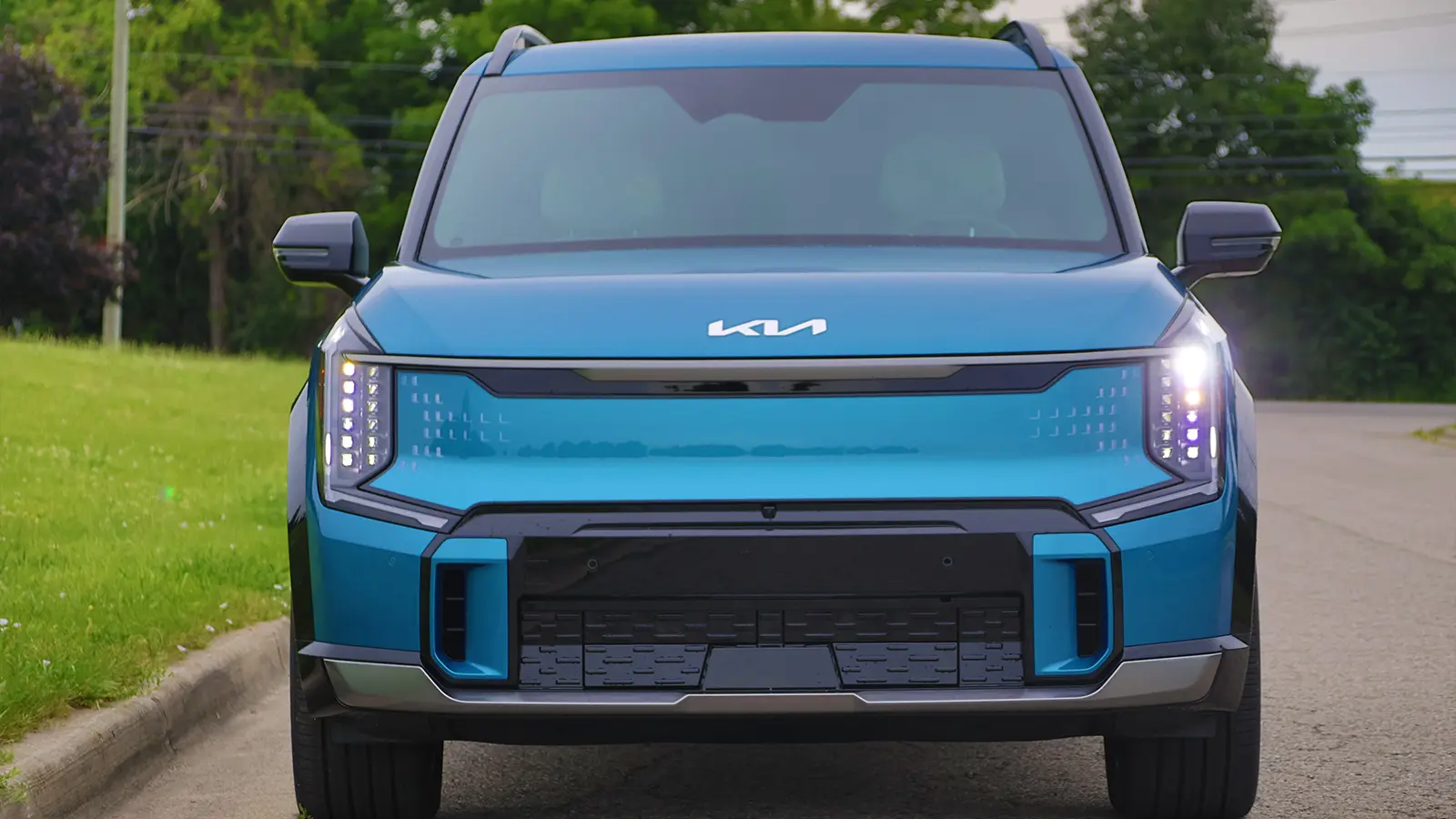
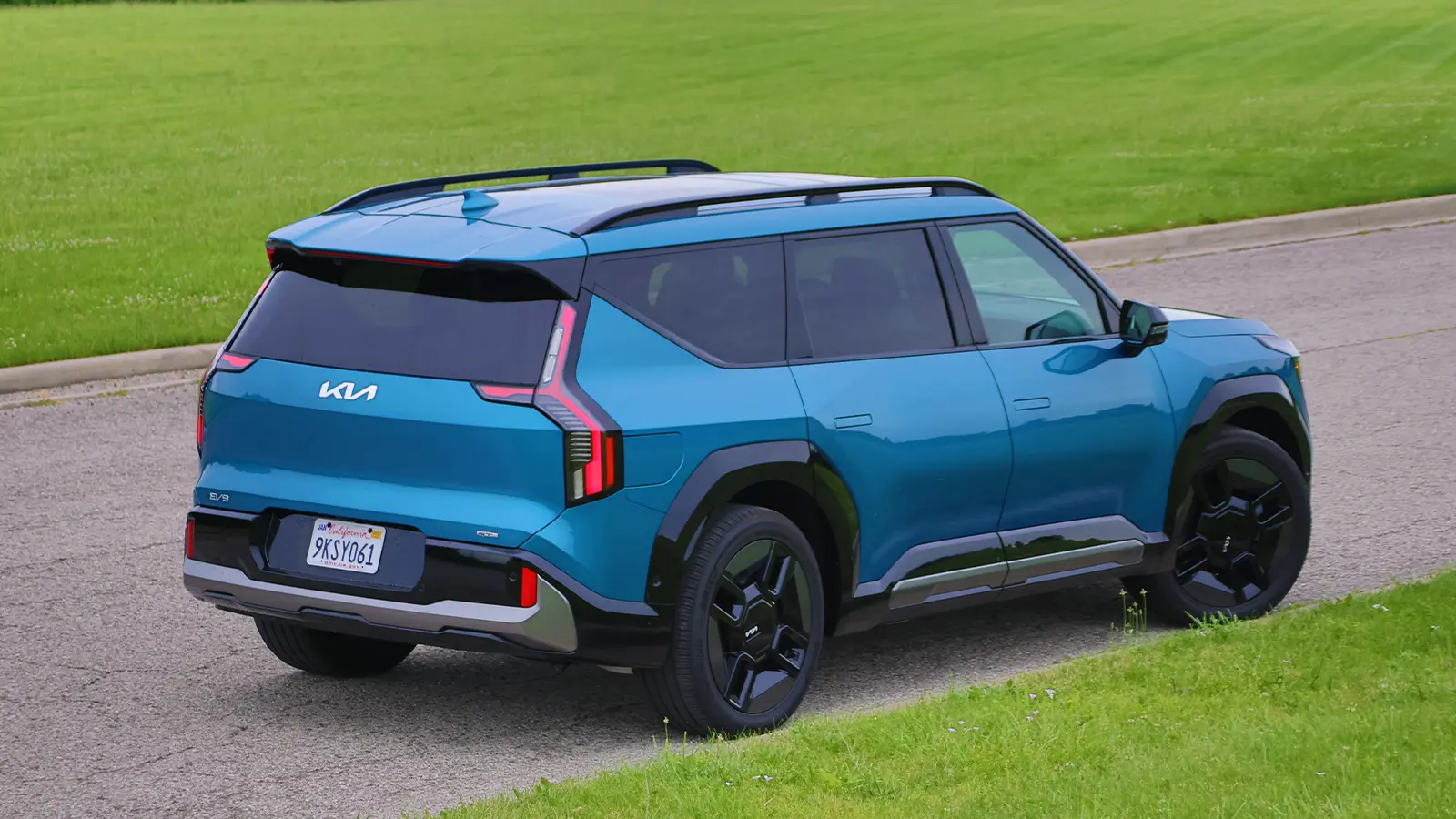
The EV9 brought a distinctive new shape to the Kia lineup when it debuted several years ago, and that character is filtering down to other electric crossovers, like the EV5 (sold in other countries) and the compact EV3 arriving here later this year. It’s funky, but I like it a lot.
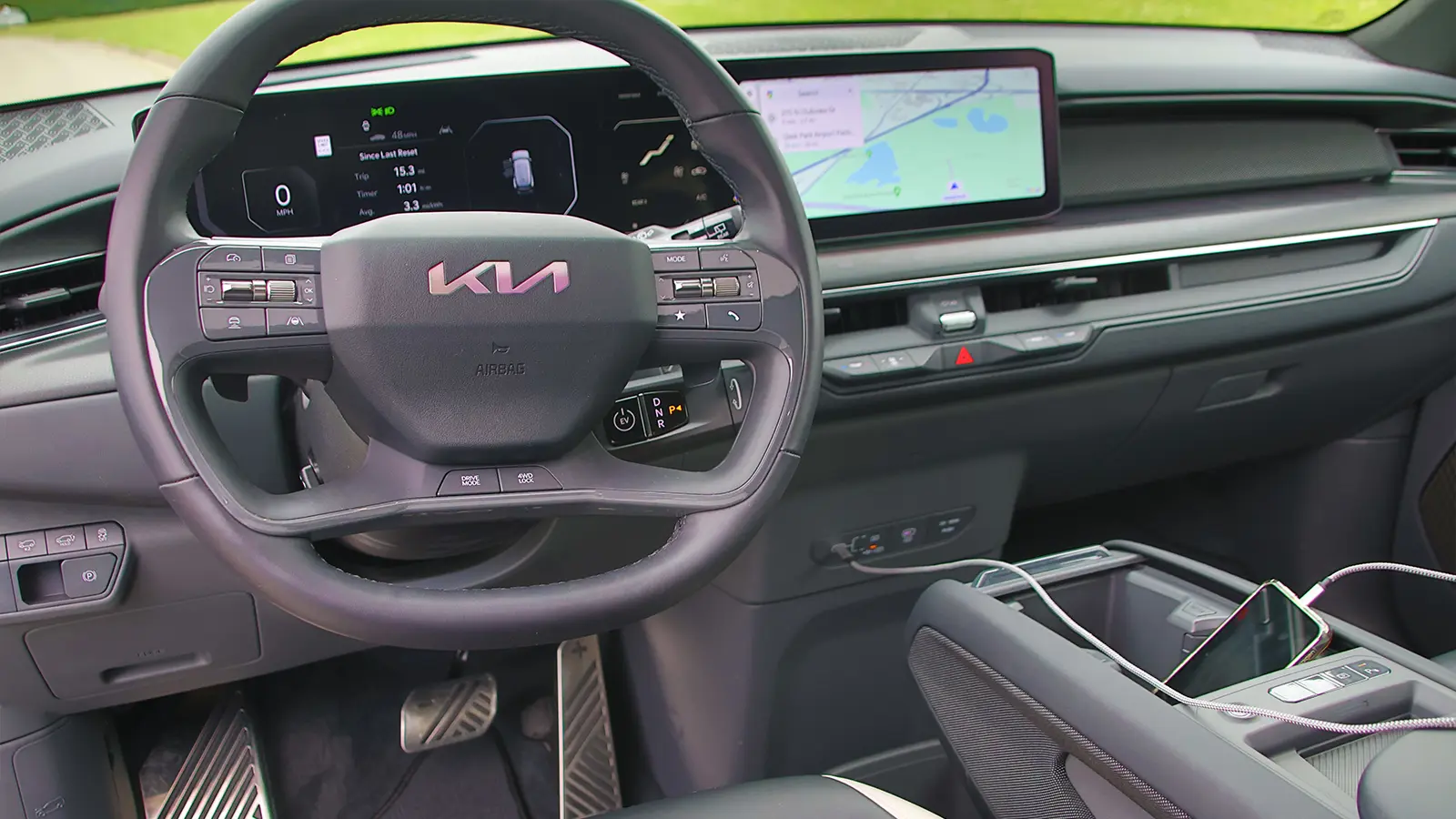
The inside is a bit more modern-conventional. The display panel across the dash has the typical 12.3-inch instrument cluster display plus a 12.3-inch infotainment touchscreen to the right. However, there's a row of touch controls just below the infotainment screen that are easy to accidentally tap when using the screen. There's also a smaller touch panel in between for secondary climate controls. Unfortunately, for almost all driver sizes, the steering wheel cuts right across it, meaning you have to lean right to see and use it.
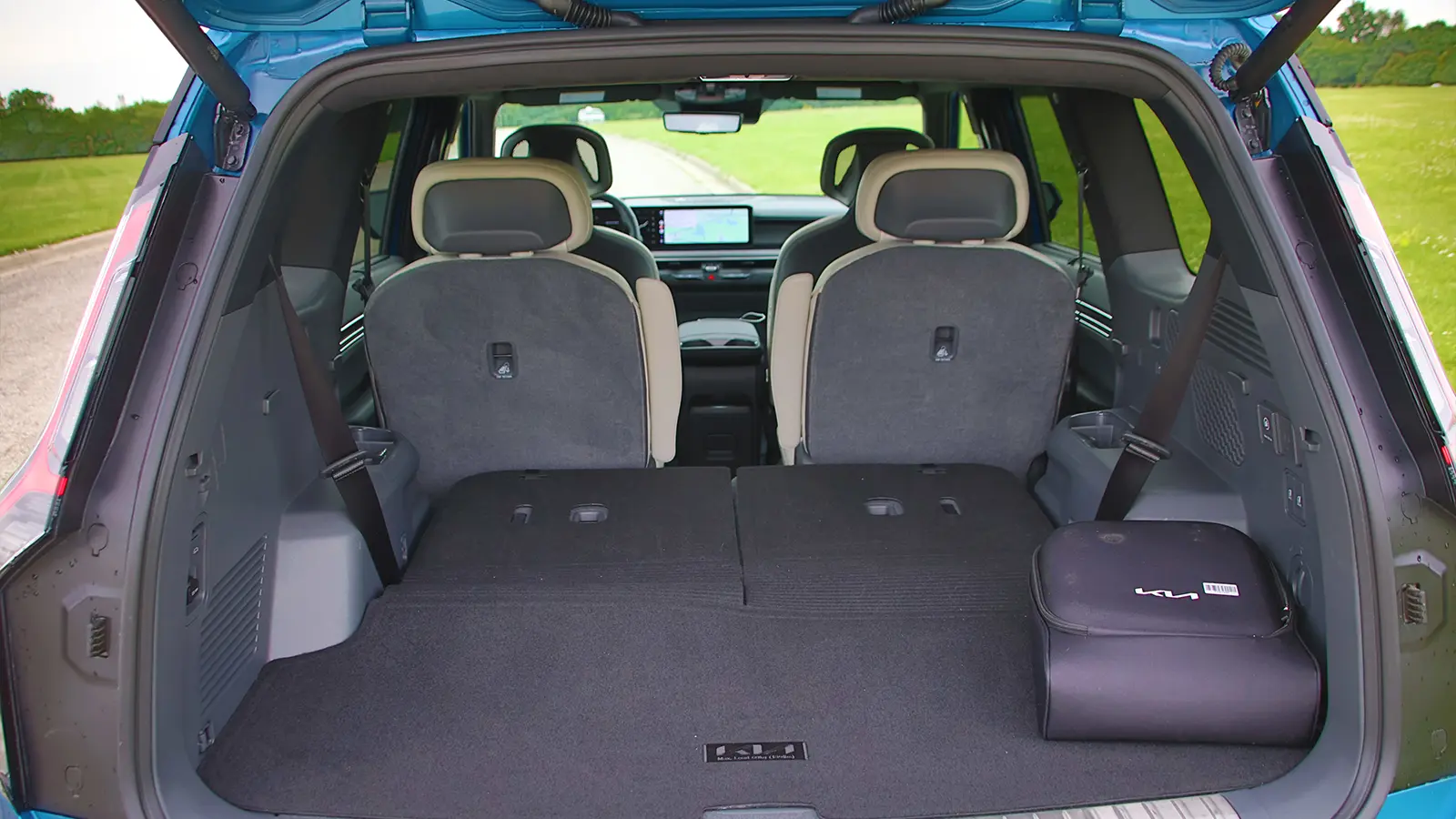
There's a modest frunk under the hood, with up to 3.2 cubic feet available on rear-wheel-drive models and 1.8 cubic feet available on all-wheel drive models, enough to carry a charging cable and adapters. There's also space under the rear cargo floor to store the optional rear cargo cover when you need to carry larger items with the rear seats folded, as I did one day. With the second and third rows folded and the front passenger seat all the way forward, I fit a stack of 2x10x8-foot pressure-treated boards for some rebuilding work on my deck.
How Far Will It Go?
The base standard-range Light trim gets a single 215-horsepower motor on the rear axle. Mid-level all-wheel-drive models get 189.5-horsepower motors at each axle for 379 horsepower total. The GT-Line gets the same power but bumps torque from 443 to 519 pound-feet. The liquid-cooled battery pack in between has a standard-range capacity of 76.1-kilowatt-hours or a bigger 99.8-kWh option.
Depending on which trim level of the EV9 you choose, the official EPA range rating runs anywhere from 230 miles for the standard-range rear-wheel-drive Land trim to 305 miles for the extended-range rear-wheel-drive Land trim. All but the base trim, including the GT-Line all-wheel drive I drove, have the 99.8-kWh extended-range battery, and range varies from there depending on power output and wheel/tire combinations.
The EV9 GT-Line all-wheel drive with the 21-inch wheel package that I had was rated by the EPA-estimated at 280 miles per charge, and based on my experience, including some use of air conditioning on warmer days, it can easily meet or exceed that. Over a week of driving near my home, the EV9 averaged 3.0 miles per kWh, which works out to 299 miles. Local trips at urban and suburban speeds delivered as 3.2 to 3.3 miles/kWh, while highway trips dipped as low as 2.6, depending on how fast traffic was flowing.
Like most of the rest of the Hyundai Motor Group EV family this year, Kia swapped out the original CCS charging port for a new SAE J3400/NACS port. That means it can charge without an adapter at more than 25,000 Tesla Superchargers across North America, along with thousands more of the Level 2 Destination chargers. It won’t charge as fast on Tesla chargers, being limited to about 120 kilowatts there, but like other Kia EVs, it maintains a fast charging speed well past 50 percent state of charge and will go from 10 to 80 percent in a bit over 30 minutes.
There are also now more than 4,000 non-Tesla chargers fitted with NACS cables, including those on the Ionna, Walmart, and Rivian charging networks, among others. Many of those chargers can deliver up to 400 kW, and the EV9 will charge at over 220 kW on those, filling that 10 to 80 percent gap in about 24 minutes. On the more than 14,000 DC fast-chargers with CCS connectors, the same task can be accomplished with an adapter.
Road Tripping with Rescue Dogs
A couple of weeks after driving the EV9 at home, I spent more time with it on a cross-country road trip called Operation Frodo[1] , where we transport rescue dogs from the Midwest to the Pacific Northwest. As good as the EV9 is as a daily driver, it was the weakest for range among our convoy of four EVs (which also included the Cadillac Escalade IQ, Lucid Gravity, and Hyundai Ioniq 9). Each of those competitors had larger batteries than the Kia, with the Cadillac having more than double the capacity.
The high speeds (80 mph on interstates in Wyoming and Idaho) and strong headwinds we dealt with on the road trip meant we were often limited to about 220 to 230 miles of range. Fortunately, the EV9's fast charging helped. At a new 400-kW Walmart charging station in Omaha, Nebraska, the EV9 was still pulling an outstanding 237 kW at 57 percent state of charge. For comparison, the Lucid was barely able to get half that at the same charge level.
Another area Kia has been working to improve is route planning. The latest software revision is definitely better than what I first experienced several years ago, but it’s still not as good as A Better Route Planner and Google Maps at plotting a route with charging stops, and, unlike those apps, it doesn’t tell you how long to stop at each charger to optimize trip length.
On the road, the EV9 is a great vehicle to drive, with precise handling and excellent body control over bumps and through corners, making it a great platform for moving scared dogs. There’s plenty of room for adults up to at least six feet tall in the third row, plus 20.2 cubic feet of cargo space behind those seats. The front seats are comfortable for longer trips, and on the GT-Line, they have adjustable side bolsters that keep you secured behind the wheel. The EV9's interior space was also ample for carrying four dog kennels, supplies, and our bags on the road.
The Bottom Line
When it comes to picking a three-row family hauler, my first choice is always going to be a minivan. Minivans have lower floors, and their sliding side doors help avoid parking-lot dings and generally make loading kids easier. Kia makes an excellent one in the Carnival, especially in hybrid form. I just wish they'd make an electric Carnival.
But if you don't think a minivan is the fashionable choice, a three-row utility like the EV9 is the next best option. It's a real looker, and I like the boxy, creased surfaces and funky lighting. It’s distinct from its corporate cousins, the Hyundai Ioniq 9 and the hybrid Telluride, which gives customers a choice based on visual taste.
The standard-range rear-wheel-drive Land trim starts at an MSRP of $54,900 plus a $1,645 destination charge. The GT-Line I drove starts at an MSRP of $71,900 plus destination, and my tester came to a grand total of $76,670 delivered. Those prices aren't cheap, but neither is a Palisade or Telluride hybrid, which will cost about $1,250 more per year in fuel at current prices. My preference is the EV9. It’s quiet and quick, and its charging performance makes it a great road-trip vehicle, as long as you watch your speed and don't need to tow.
More Family EV and Hybrid Picks
2026 Hyundai Ioniq 9 Calligraphy Review
Hyundai’s three-row EV cousin gives shoppers another big electric family SUV with strong range, fast charging, and a softer luxury angle.
2025 Volvo EX90 Review: A Calm, Confident Take on Luxury EVs
The Volvo EX90 offers a quieter, more premium take on the three-row electric SUV formula, with luxury, safety, and family space at the center.
2026 Kia Carnival Hybrid Review: Minivan Marvel Green
If function matters more than SUV fashion, Kia’s Carnival Hybrid shows why sliding doors, huge cargo space, and hybrid efficiency still make sense.