
Fast Facts | 2027 Rivian R2 Performance
⚙️ Output: 656 horsepower, 0-60 mph in 3.6 seconds (Performance trim, tested here)
🚘 Drivetrain: Dual-motor all-wheel drive (Performance, Premium, and AWD Standard); single-motor rear-wheel drive (base Standard)
🔋 EPA-Estimated Range: 330 miles (Performance, Premium, and AWD Standard); 345 miles on RWD Standard with the larger battery, or 275 miles on the standard battery
🖥️ Tech: 15.6-inch touchscreen, 12.3-inch driver display, haptic halo steering-wheel controls, hands-free driving via Autonomy+
💲 As-Tested MSRP: $59,485, including $1,495 destination (Performance with Launch package)
The Rivian That Has to Change the Math
Rivian made a big splash as America’s newest automaker when it unveiled the electric R1T pickup and R1S SUV at the November 2018 Los Angeles Auto Show. Production started in 2021, but building them proved far more expensive than expected, and the market for electric trucks turned out to be pretty small. Needless to say, Rivian has yet to turn a profit. That’s where the new R2 — and eventually the R3 — come in. Rivian says the R2 costs about half as much to build as the R1, and the pricing reflects that. Deliveries started a few weeks ago, and I just had my first chance to drive it.
For the Adventurers
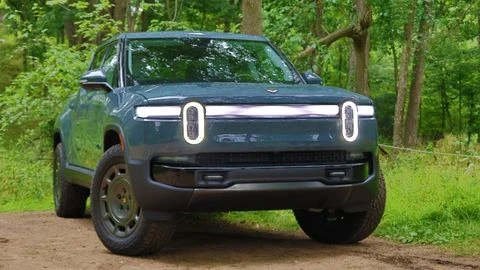
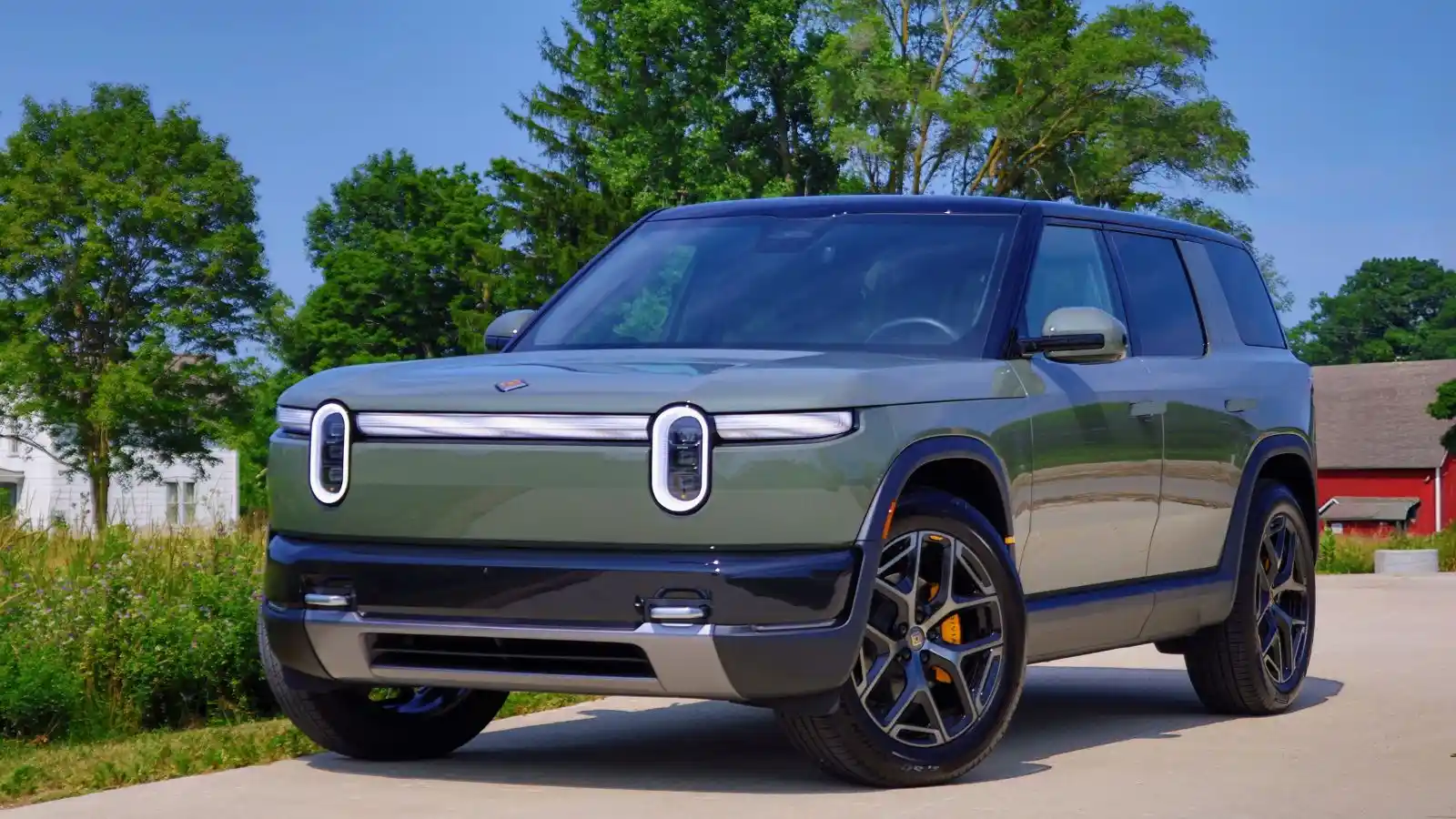
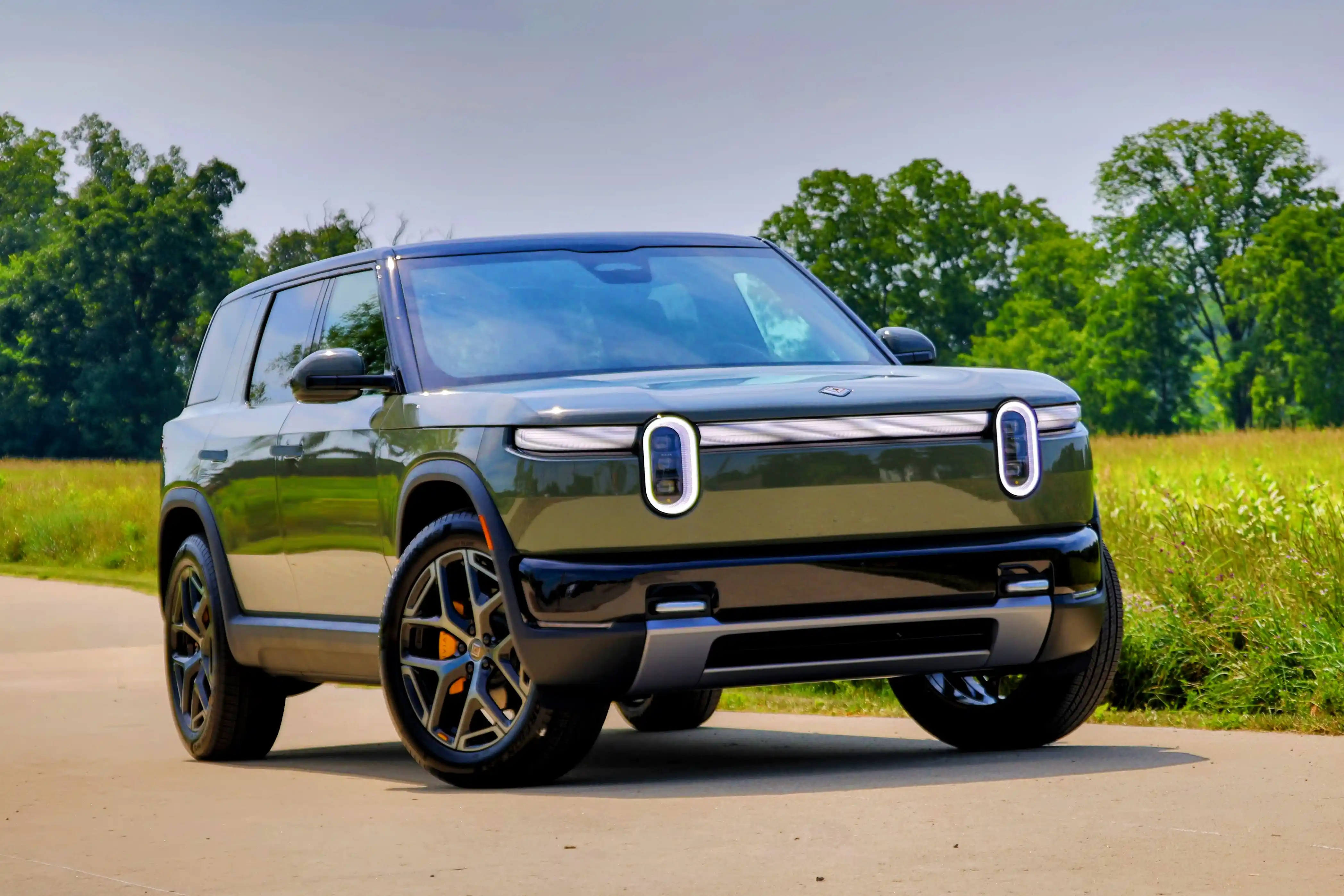
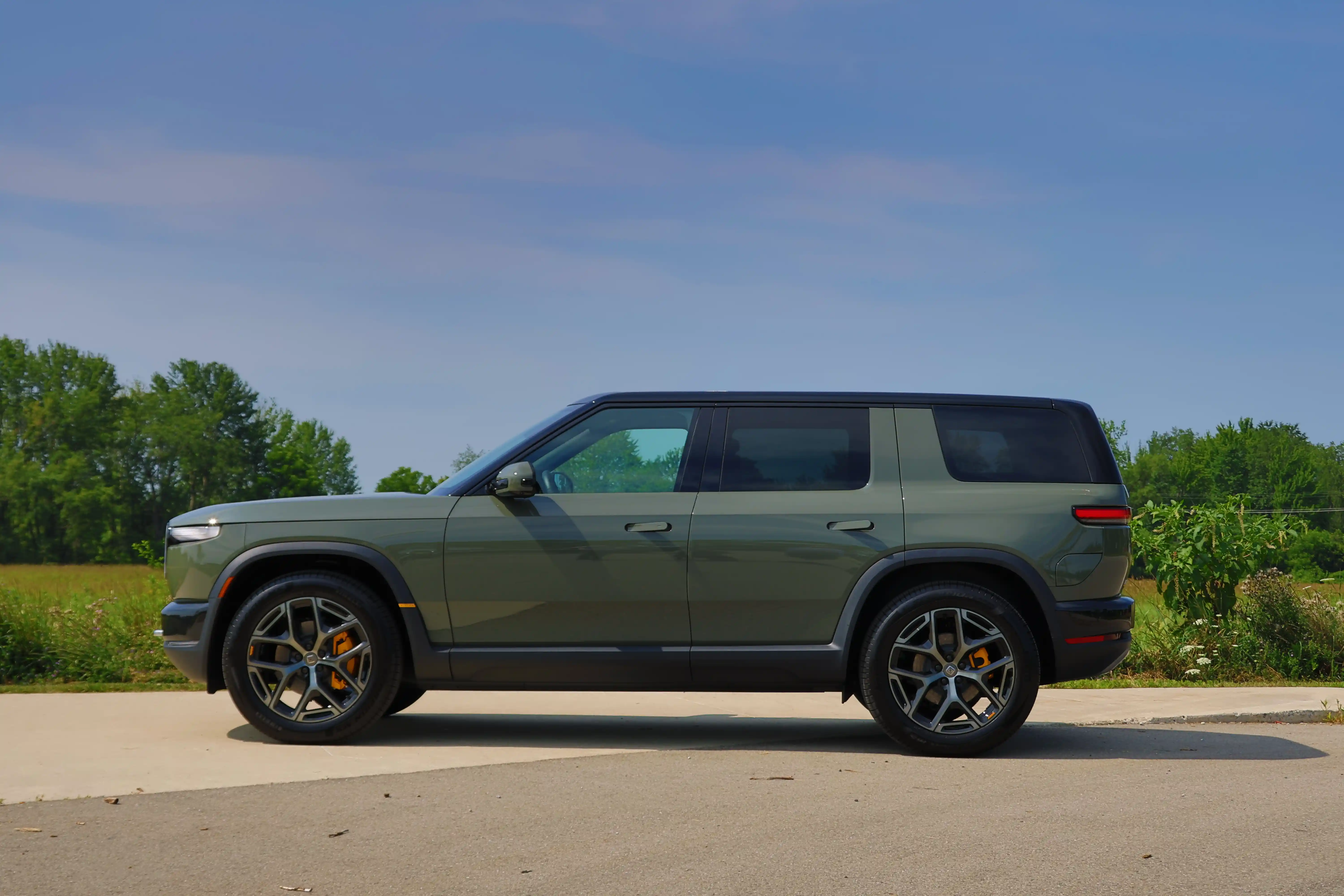
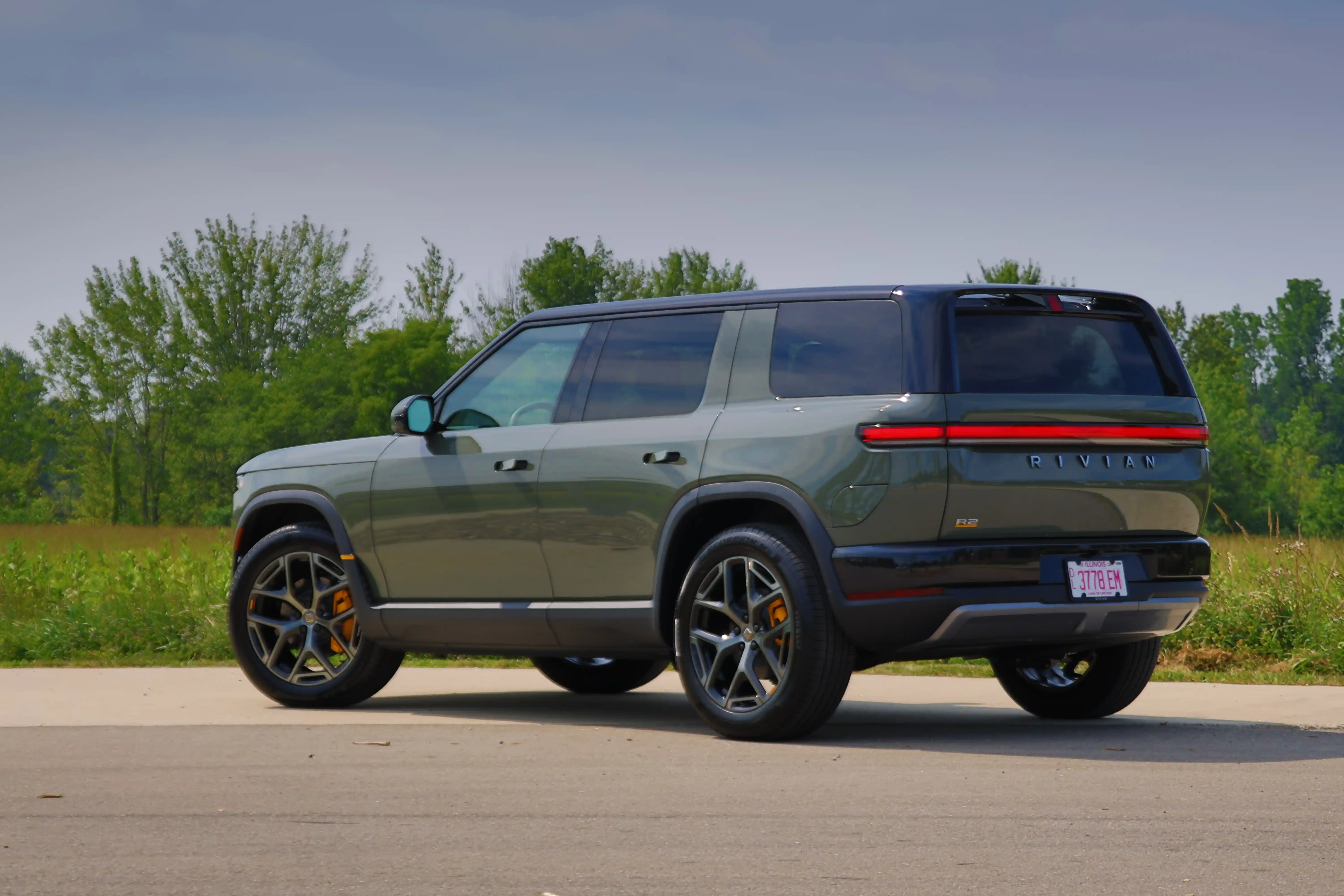
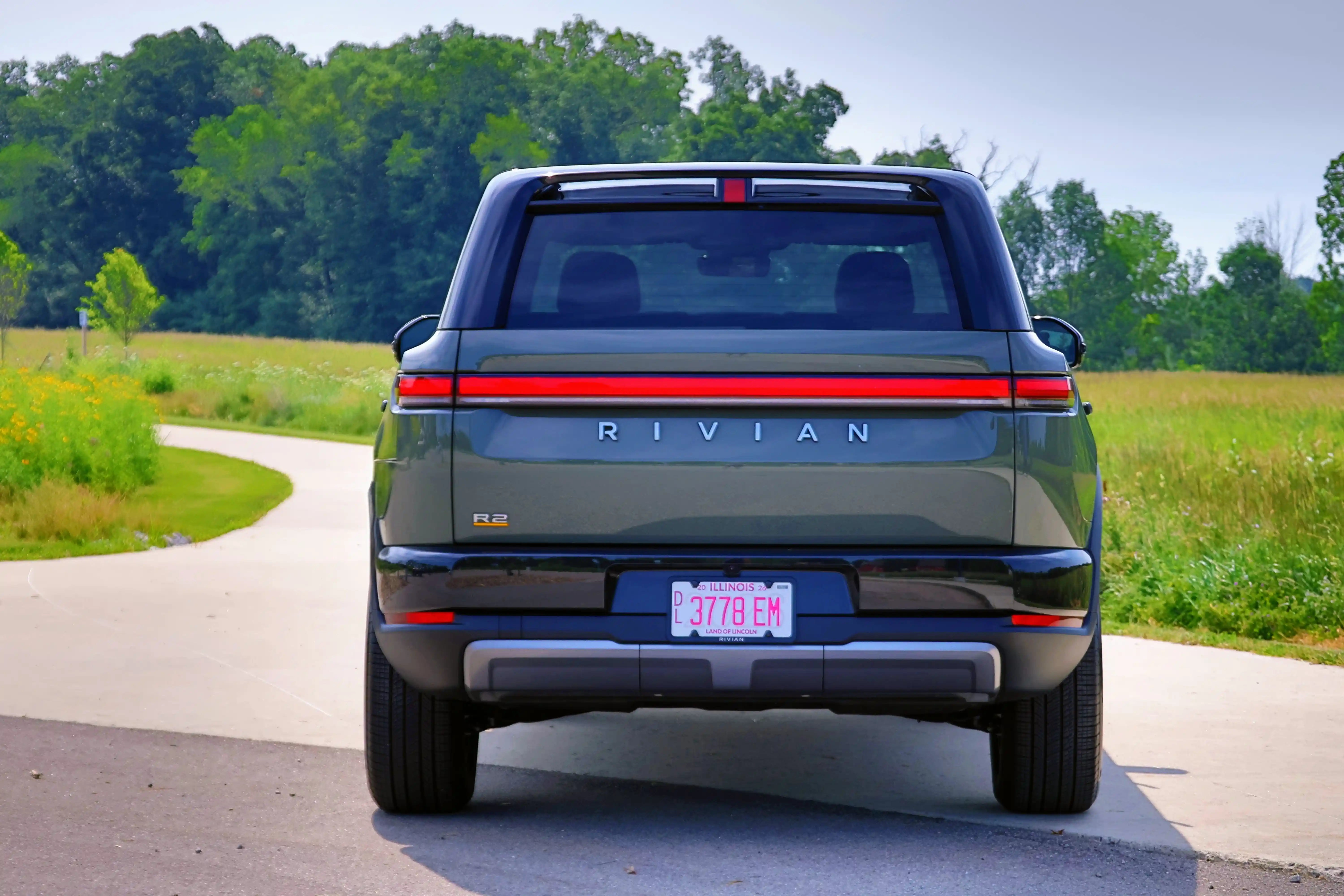
At first glance, the R2, which is only offered as an SUV for now, bears a strong resemblance to the R1S, with its oval-shaped front running lamps and horizontal light bar. But you won't mix the two up if they're parked next to each other. At 185.9 inches long and 78.1 inches wide, it’s 14.9 inches shorter and 3.9 inches narrower than the R1S, and it sits 5.3 inches lower in standard ride height. Unlike the R1, which rides on air springs that raise ground clearance to 15 inches, the R2 sticks to steel coils and a fixed clearance of 9.6 inches. The R2 probably won't be enough for the Rubicon Trail, but it has plenty of ground clearance for what most owners will actually use it for.
The R2 keeps the R1's flip-out door handles that sit flush with the body, which are handy for aerodynamics, but awkward to open with gloves on or after an ice storm. Still, Rivian's design language has held up well nearly eight years after I first saw it in L.A.
Inside: Similar but Different
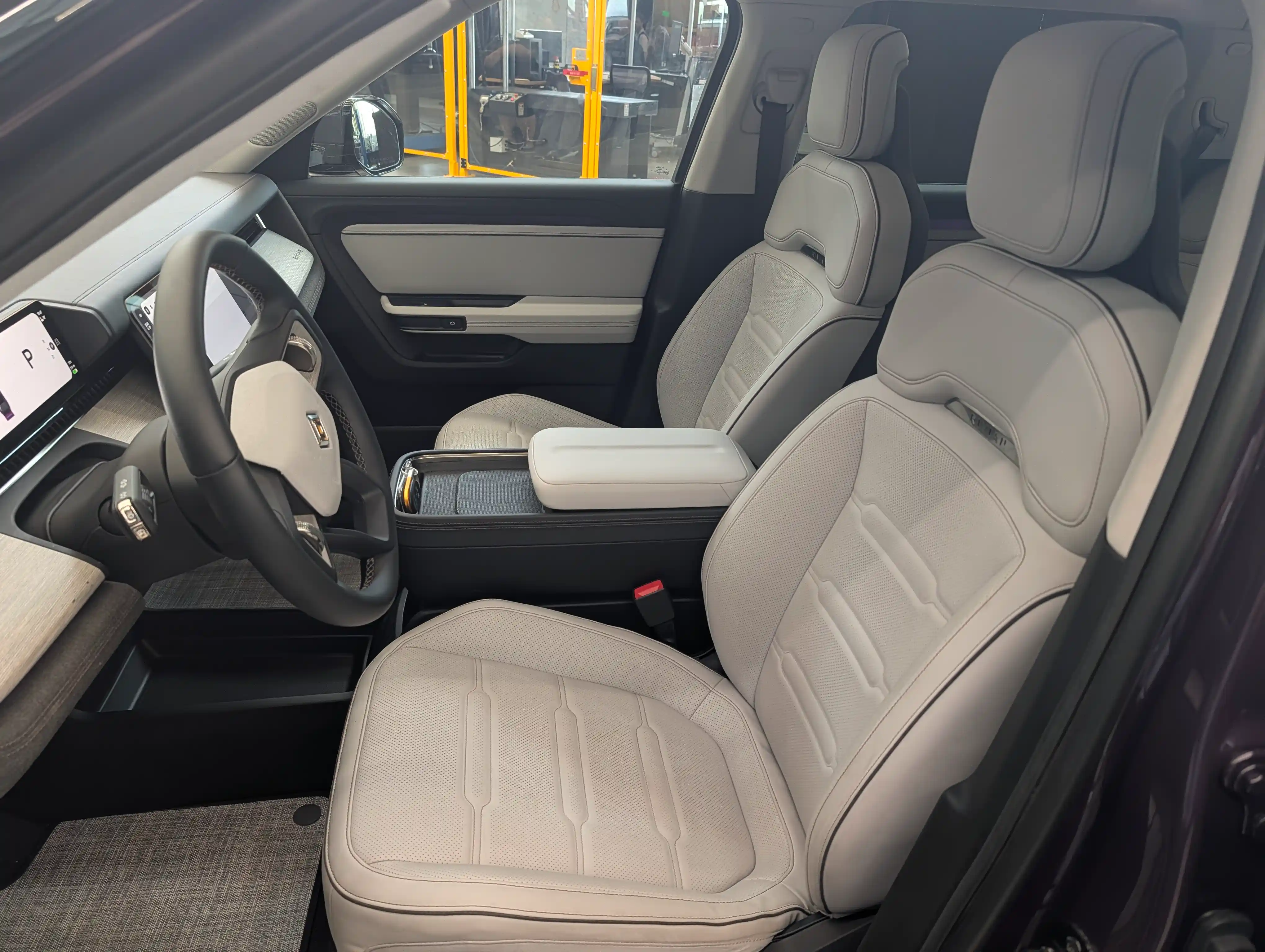
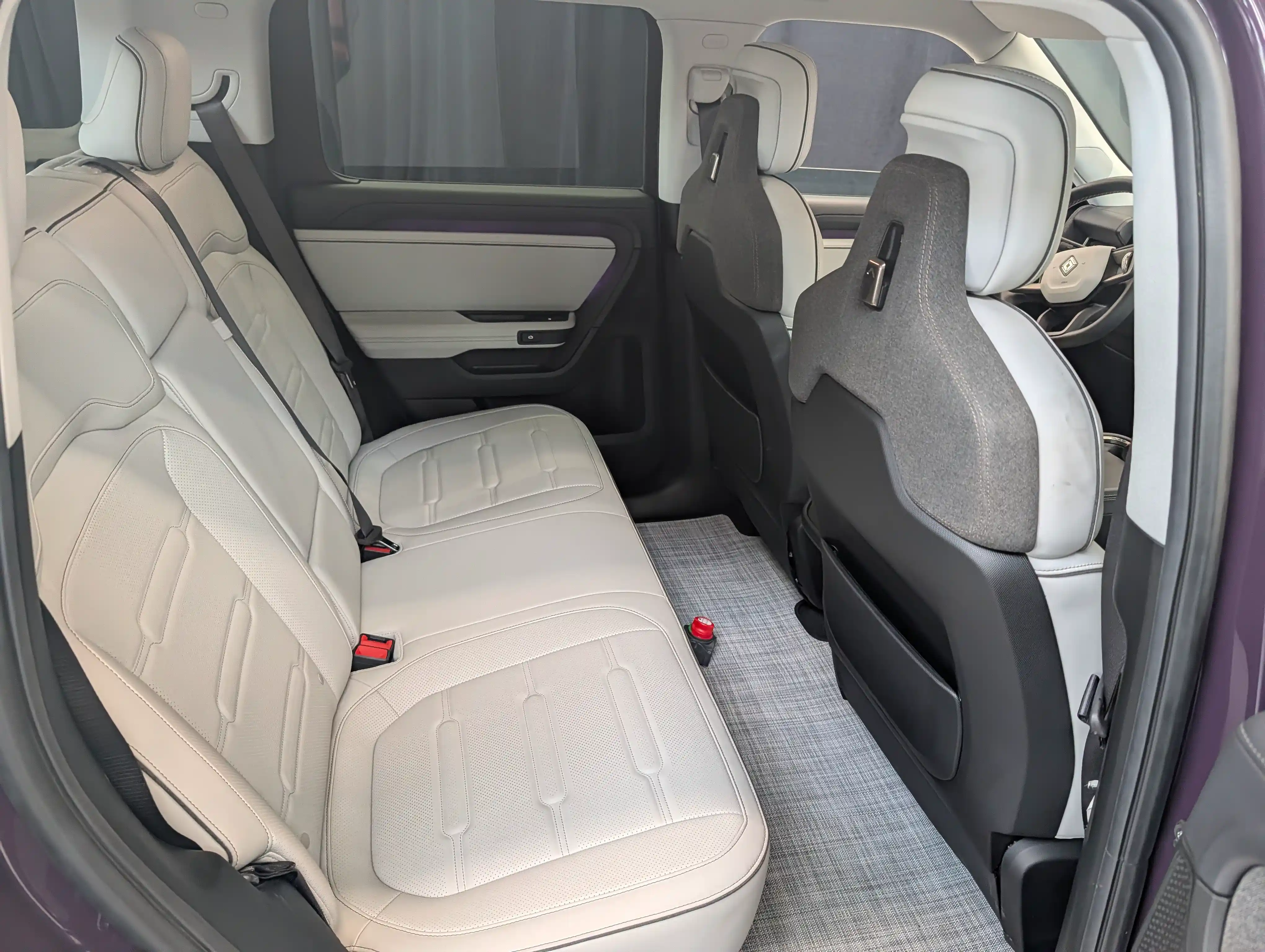
Three R2 trims are planned: Standard, Premium, and Performance, though only the Performance is available at launch. Each trim's interior sticks to the same theme of familiarity — for better and worse. It keeps the R1's clean, uncluttered look and high-quality materials. The surfaces you touch most are covered in a second-generation version of Rivian’s bio-based Adventex faux leather, and it looks and feels premium. The Performance and Premium trims pair Adventex with upcycled birch wood veneers, similar to the R1, while the Standard gets a woven fabric.
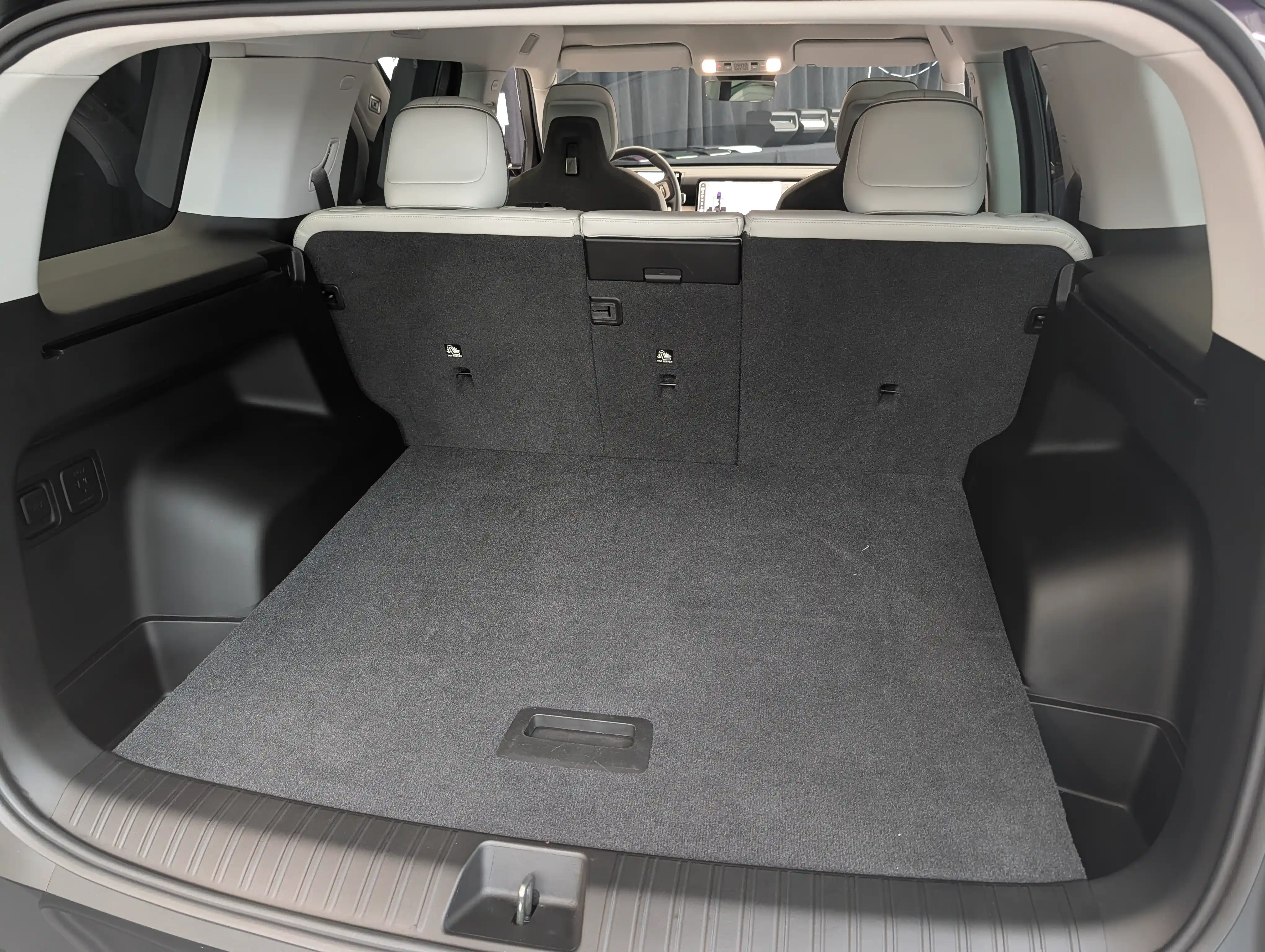
There’s plenty of room for adults in the front and back seats, plus 28.7 cubic feet of cargo space in the back. With the rear seats folded down, that grows to an impressive 79.4 cubic feet, and the frunk adds another 10.7 cubic feet.
The Best New Control Is a Dial
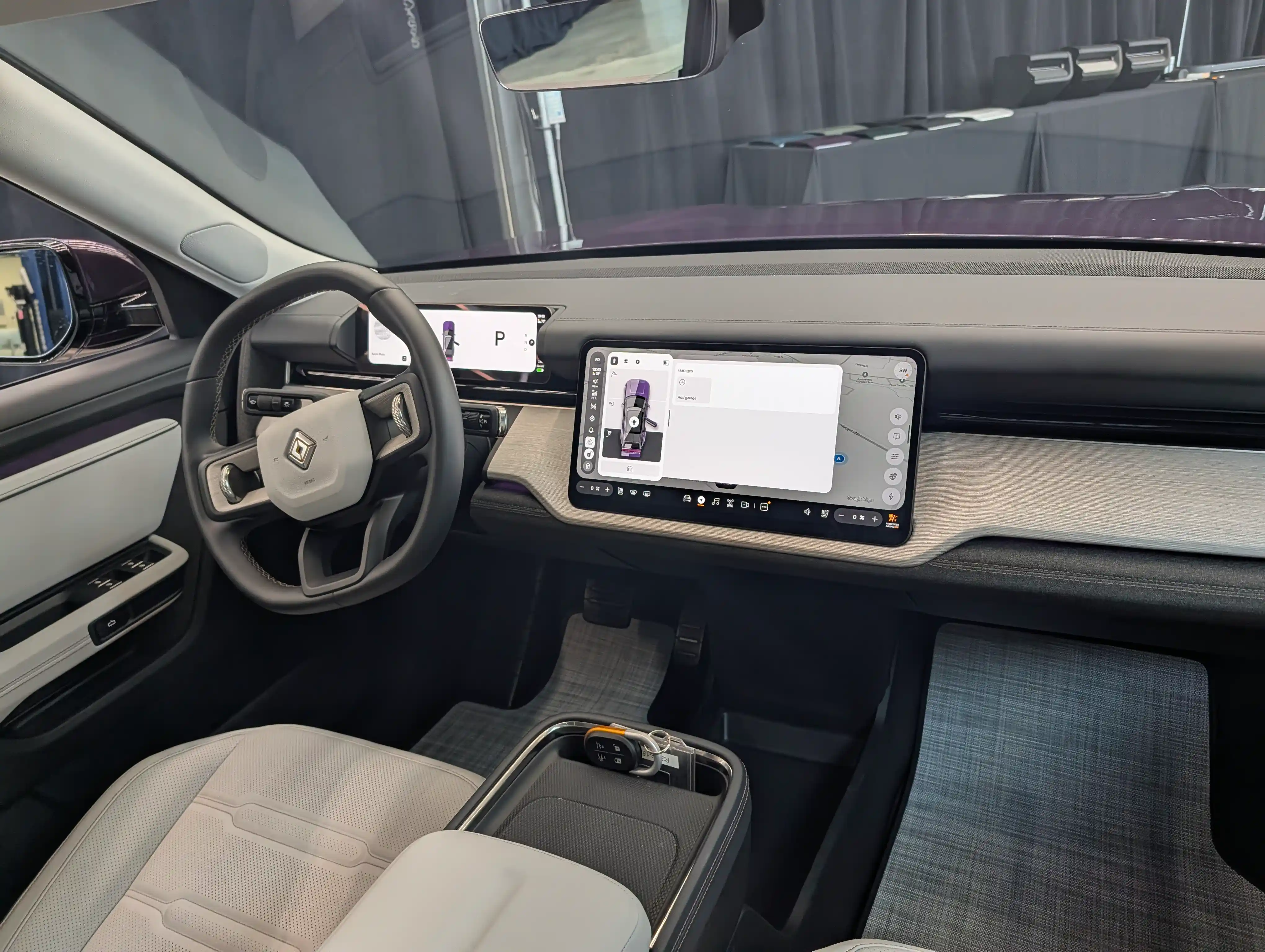
The R2 has a 15.6-inch center touchscreen and a 12.3-inch cluster display in front of the driver, both the same dimensions as in the R1. But the R2 gets different controls on the steering wheel. Where the R1 uses a pair of small rollers with left-right toggle switches that work okay, Rivian developed the haptic halo for the R2.
The halos are knurled-metal dials embedded in the left and right spokes of the steering wheel. Encased within them are actuators and sensors that provide haptic feedback, and their function is context-sensitive to what you're doing. By default, rolling the right dial adjusts cabin temperature. Give it a push, and it changes fan speed. Pull it toward you with your fingertips, like a shift paddle, and it lets you select drive modes.
Push either halo rim toward the wheel's center, or pull it out, and it switches to other modes. For example, if you select mirror adjustment on the touchscreen, the halos actually move the mirrors. Same for the steering wheel position. Having to use the touchscreen to engage those modes is still annoying, but it's only a couple of taps away.
When using the halos, you'll feel them click with each step of adjustment, feedback that feels very natural and intuitive. They're a great upgrade and make it much easier to navigate through information and functions without removing your hands from the wheel.
That said, my biggest gripe with the interior is still the touchscreen-controlled vents. In any Rivian vehicle, adjusting where the vents are blowing requires digging into the touchscreen's interface and dragging the vents across the screen. Rivian says it will tie this to the individual driver profiles and offer a quick toggle between air blowing on you or off you. I'd rather reach out and grab a tab or knob and point the airflow where I want it.
Hands-Free, Eyes Forward
The first thing I noticed when I headed out: the R2 rides more smoothly than the R1, which always felt a bit stiff. It’s still not supple, but it’s much more comfortable. The second: this is a very quick machine. I didn’t have the time or location for formal testing, but the 3.6-second 0-60 claim felt entirely plausible.
A few minutes after leaving the Rivian tech center, I engaged the Universal Hands-Free (UHF) system, which is the latest update to what Rivian calls its Autonomy+ package. Autonomy+ will be available as a $2,500 one-time purchase, but Rivian eventually plans to switch to a subscription model. For now, it’s included as part of the launch package.
UHF provides hands-free driving assistance on 3.5 million miles of roads in the U.S. and Canada, essentially any road with lane markings. That puts it ahead of GM’s Super Cruise. It’s a supervised system, so you need to keep your eyes on the road while using it, and it doesn’t yet respond to traffic signals. That capability should be coming later this year. Next year, Rivian plans to offer new R2s an upgrade that includes lidar that will eventually enable eyes-off capabilities in 2028 and full Level 4 autonomy in 2029.
Universal Hands-Free expands where the R2 can provide assistance, but it remains an eyes-on system rather than autonomous driving, so see where Level 2, eyes-off, and robotaxi technology stand in 2026 ➜
During my hour with the R2, it felt like a much more pleasant vehicle to drive than the R1. If you don’t need the third row, it’s an easier size to park and maneuver, and it’s also far more efficient. In previous stints driving the R1T and R1S, I never managed to get much more than about 2 miles/kWh. But in the R2, I came back having used just 3.1 miles/kWh, even with the air conditioning on a 94-degree day. The R2 has an NACS charging port on the left rear corner, which should make it convenient to charge at Tesla Superchargers, and Rivian has integrated A Better Route Planner into its navigation system for easy charge planning on trips. A charge from 10 to 80 percent should take under 30 minutes.
Rivian’s integration of A Better Routeplanner can make longer trips easier by accounting for range and charging stops, so see how EV navigation and route-planning tools work ➜
How Much Does It Cost?
As of July 2026, only the R2 Performance with the Launch package is shipping, at $59,485 MSRP, including the $1,495 destination charge. The Premium will go for $55,485 MSRP delivered, while the rear-wheel-drive Standard with the smaller battery will go for $46,485 MSRP when it arrives in about a year.
Based on my first drive, I much prefer the R2 to the R1, and if you don’t need that third row, this is the Rivian to look at. If you’re looking for an off-road-capable EV, the R2 is certainly a better option than the Jeep Recon, at a lower cost with a lot more range. If you’re mostly driving on-road, especially doing longer trips, the Hyundai Ioniq 5 is similar in size and charges much faster, though the off-roady XRT has less rated range.
The R2 enters one of the most competitive parts of the EV market, so compare it with other electric crossovers and SUVs by price, range, and everyday usefulness ➜
More Electric SUVs Competing for the R2 Buyer
2026 Jeep Recon Review: Electric and Ready for the Wild
The Recon offers removable doors and more specialized trail hardware, while the R2 counters with a lower launch price and substantially more estimated range.
Read More ➜
2026 Ford Mustang Mach-E vs. 2026 Hyundai Ioniq 5
Two road-focused alternatives show what buyers can gain through lower pricing, faster charging, or established hands-free driving technology.
Read More ➜
2027 Volvo EX60 and EX60 Cross Country First Look
Volvo’s upcoming midsize EV offers a more traditional premium experience, several powertrains, and an adventure-oriented Cross Country version.
Read More ➜