

Fast Facts | Toyota 4Runner Hybrid 4WD Platinum
🏎️ Power: 326 horsepower and 465 pound-feet of torque from a 2.4-liter + hybrid system
🛣️ Fuel Economy: EPA-estimated 23 mpg combined
📦 Cargo: 42.6 cu-ft behind rear seats
🎯 MSRP: Starts at $65,955, including destination
🏆 Safety: Toyota Safety Sense 3.0 standard
🎵 Tech: 14-inch touchscreen, 14-speaker JBL, wireless Android Auto and Apple CarPlay
Toyota Makes the 4Runner Easier to Live With
It's not too often that you find something rugged, all-terrain capable, and hybrid-powered, but that's exactly what Toyota brings to the table in the 2026 4Runner Hybrid. One of the most storied and recognizable machines in the company's lineup, the 4Runner now gets an electrified boost with the addition of the company's iForce MAX motor.
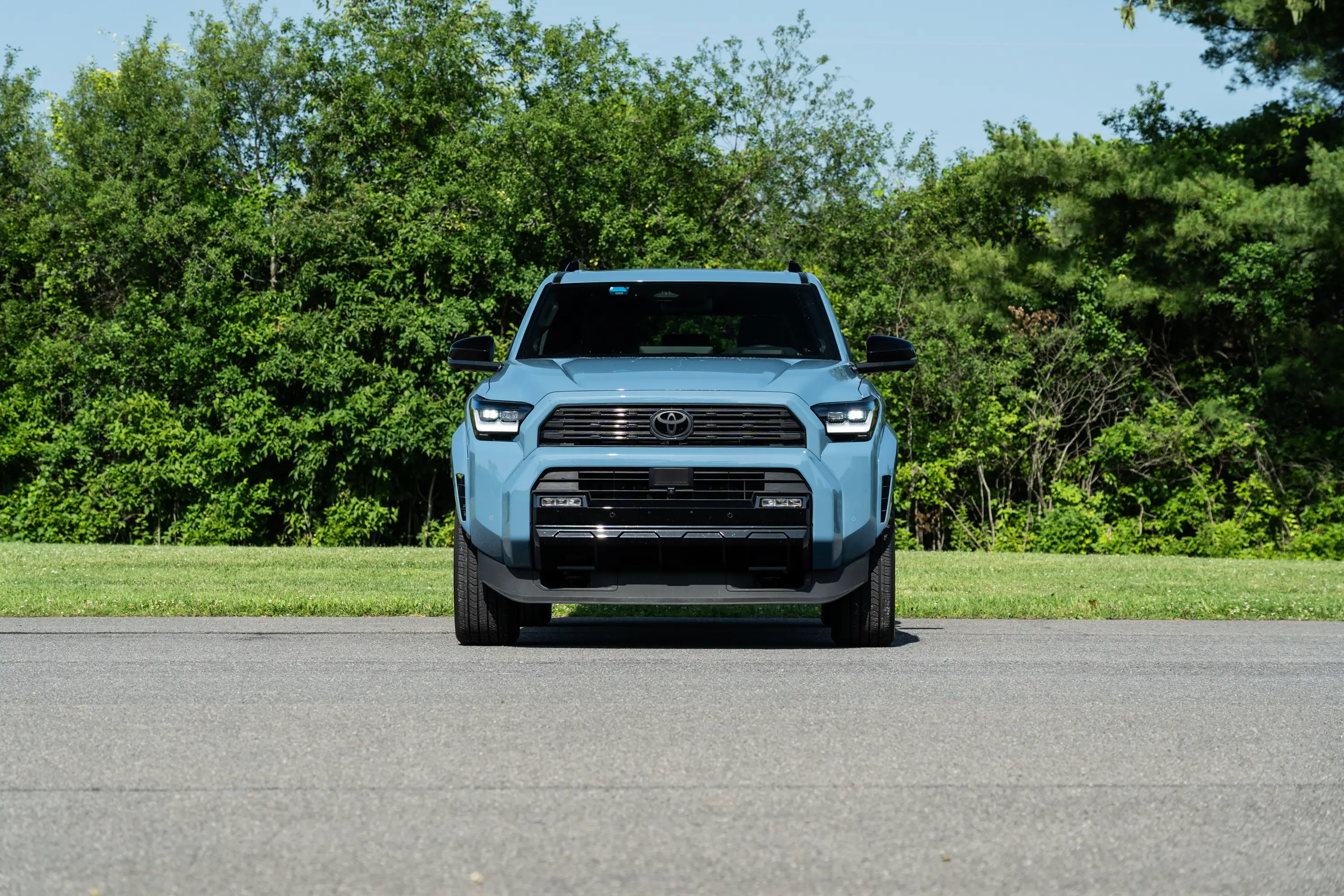
Better mpg isn't exactly the focus in Toyota's recently refreshed, Tacoma-based SUV, but the turbocharged 2.4-liter engine with a hybrid system promises a little extra efficiency on the EPA cycle, mixed with more power and better driving dynamics than the 4Runner's base, purely internal-combustion option. On the road, it delivers. But is it worth the premium?
The same i-FORCE MAX philosophy gives Toyota’s midsize pickup a similar combination of torque and trail capability, so see how the Tacoma TRD Pro Hybrid uses the shared truck architecture off-road ➜
The Model Lineup
If you're just looking for a 4Runner, you can get into a rear-drive SR5 model for as little as $43,865, including the $1,595 destination. For that, you'll get a bare-bones model powered by the base engine, a 278-horsepower, 317-pound-feet of torque inline four-cylinder.
If you want the i-Force MAX-powered 4Runner Hybrid, you'll spend a minimum of $55,085 for a TRD Off-Road trim. That engine bumps output significantly, to 326 horsepower and 465 pound-feet of torque, while also delivering a one-mpg boost on the EPA combined cycle compared to the base, rear-drive SR5.
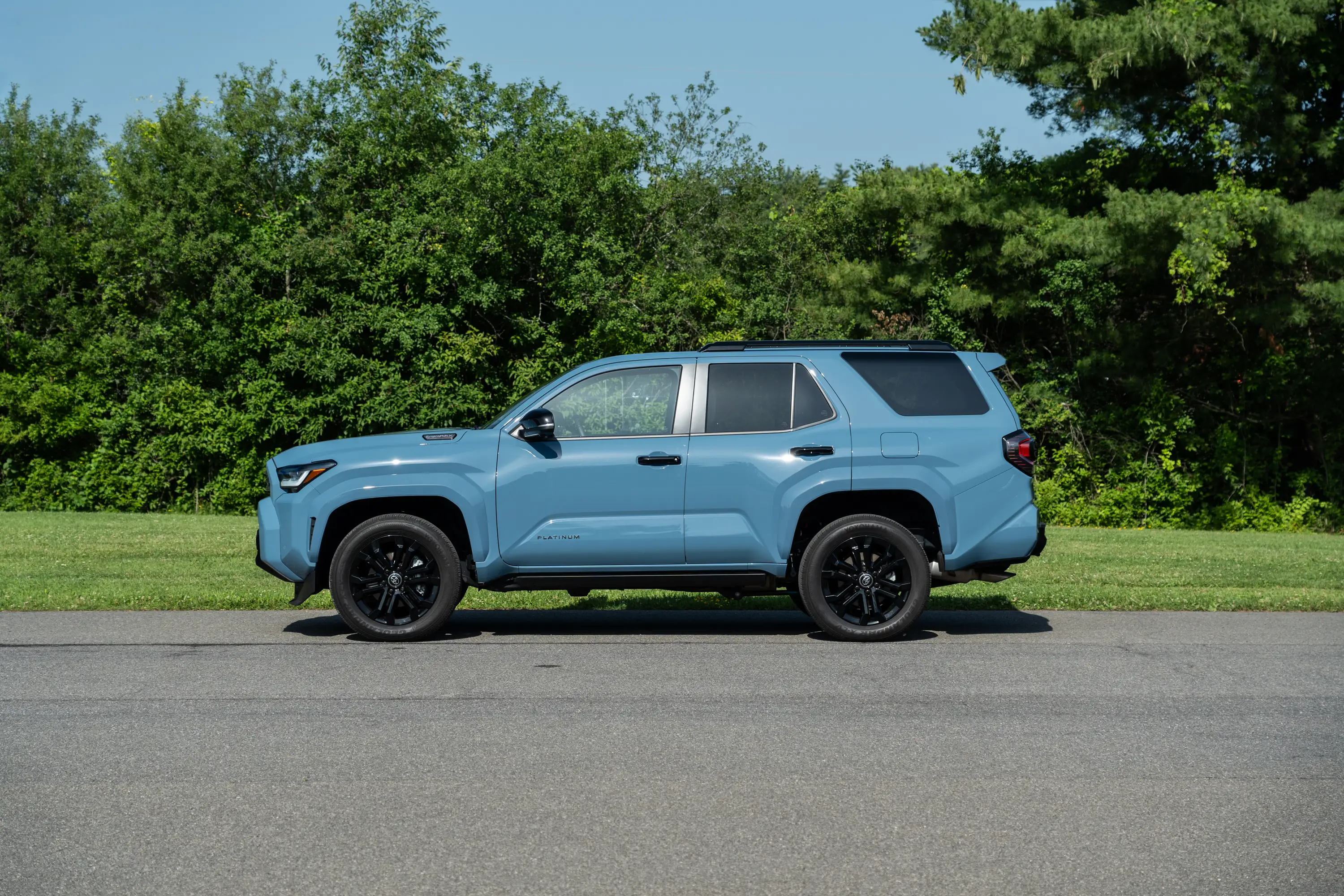
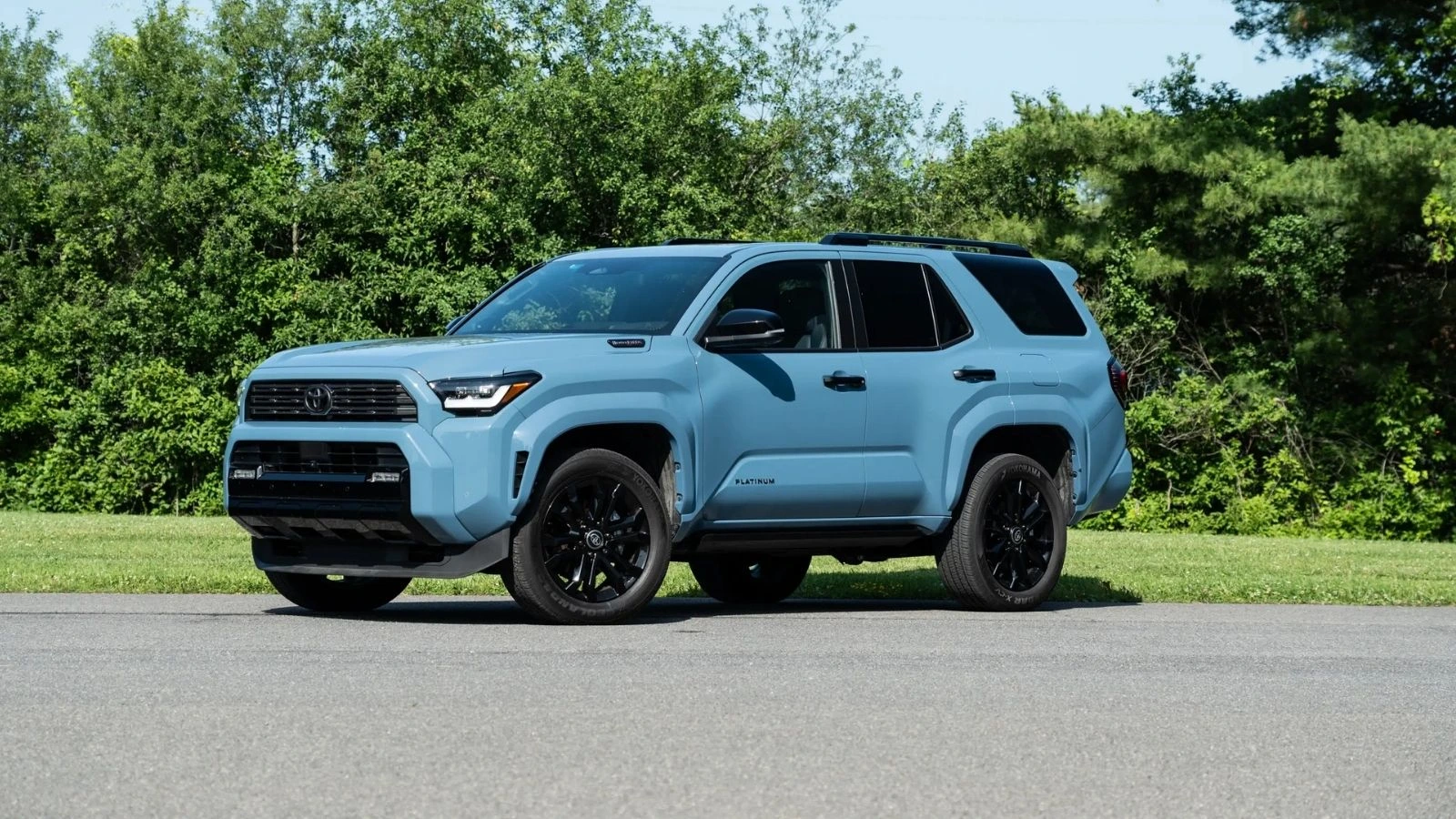
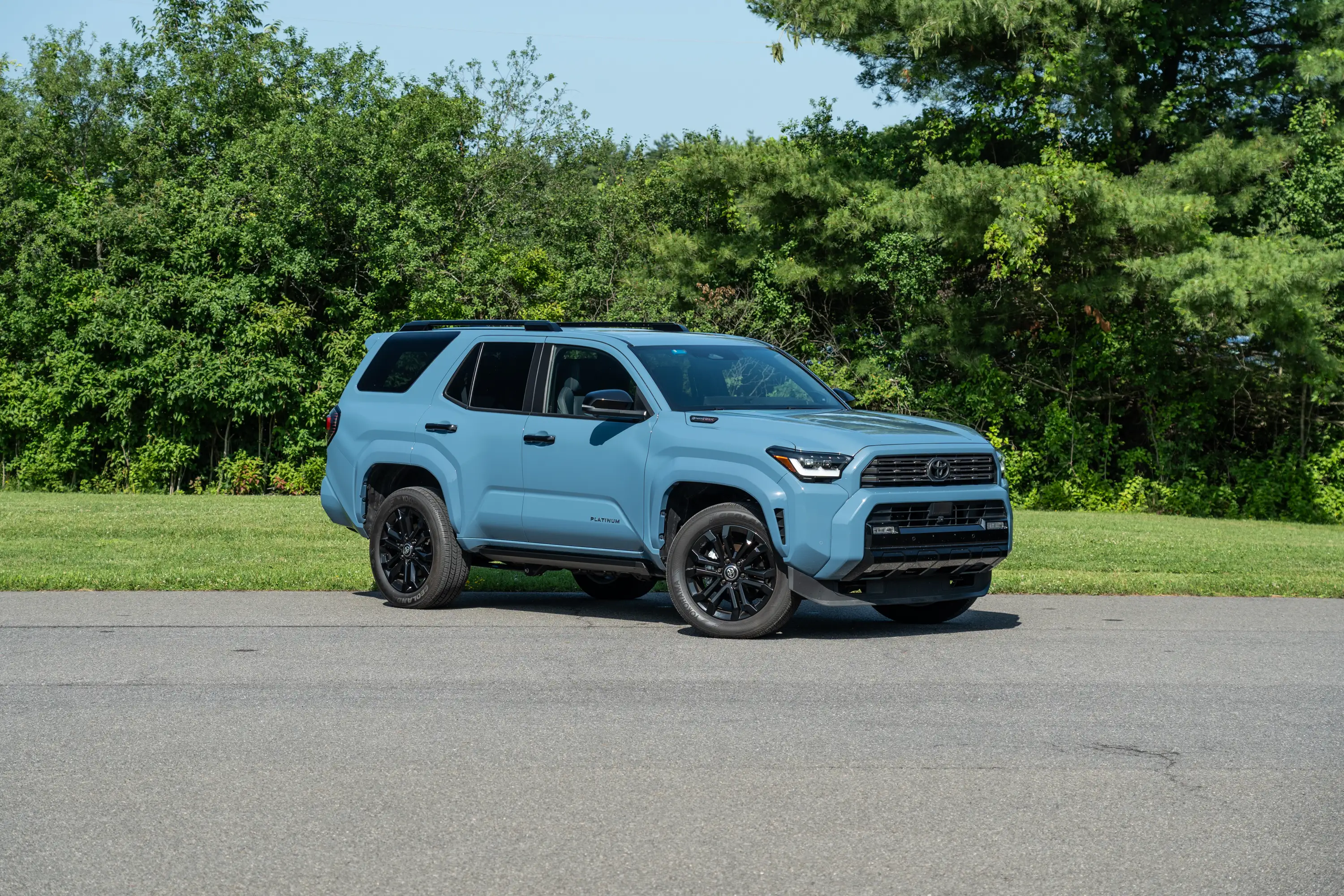
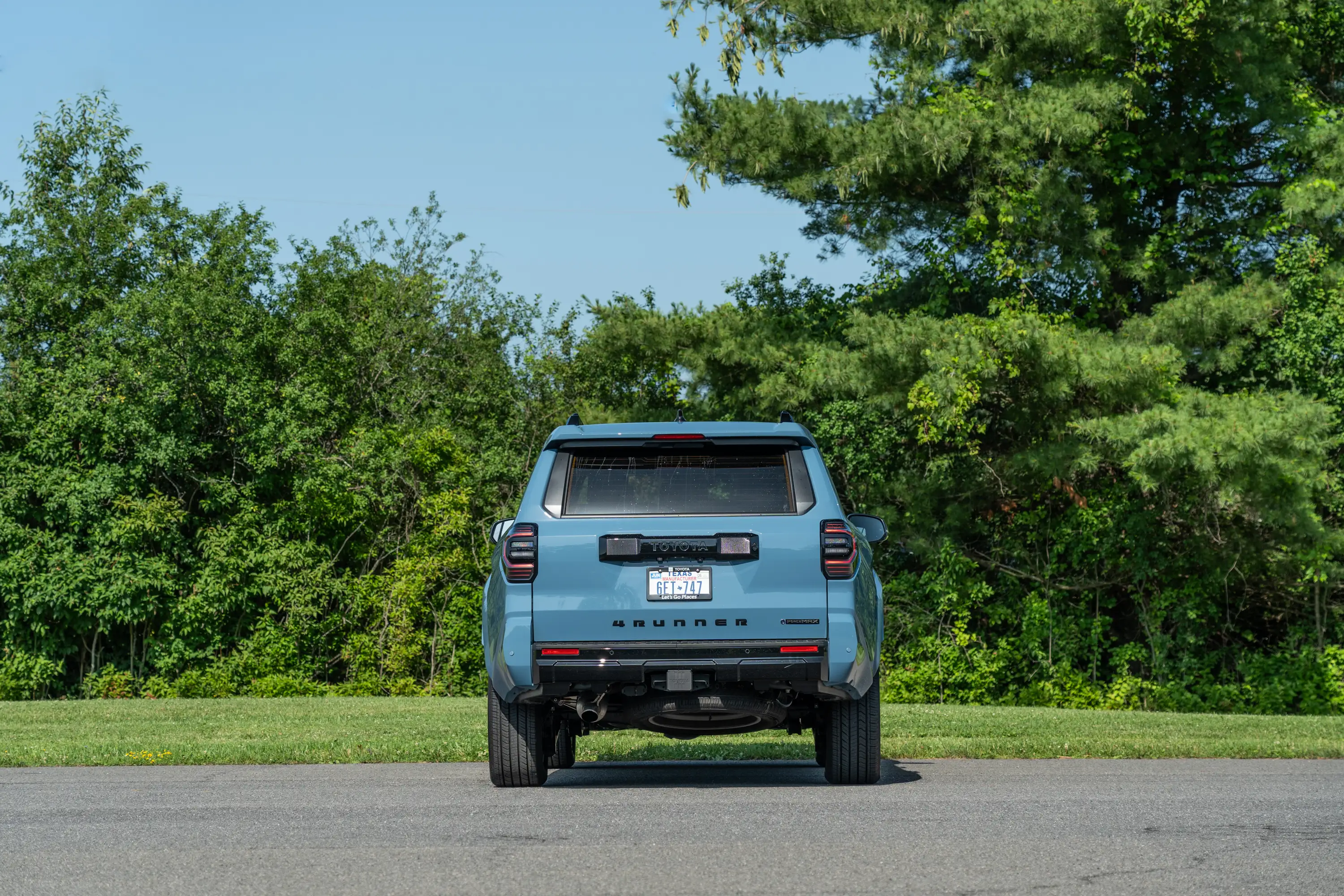
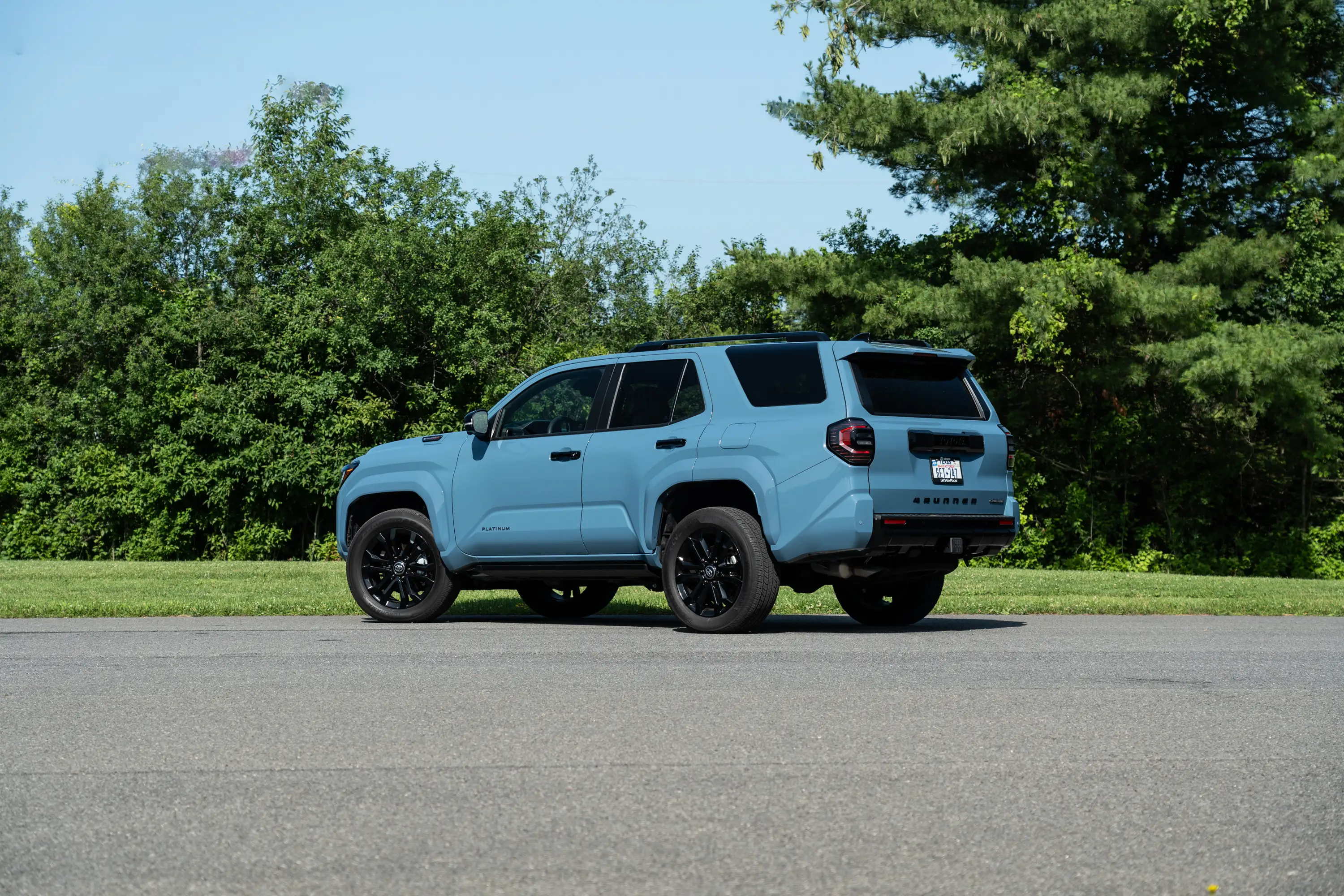
The 4Runner Hybrid is also available in TRD Off-Road Premium and Limited trims, adding more luxuries and niceties as you go, or in the Trailhunter and TRD Pro lines for those who want more off-road capability. The Platinum SUV you see here, painted in Toyota's signature Heritage Blue, carried options like automatic running boards and additional LED lights on the tailgate, and came in at an MSRP of $66,360.
That resulted in an extremely well-equipped SUV with a full suite of active safety systems, plus a top-view camera, digital rearview mirror, and a 14-speaker JBL sound system.
A Busy but Practical Interior
Off-road performance is key in the 4Runner lineup, and its tall, aggressive stance definitely paints that picture. That does, however, make for a machine that can be a bit of a challenge to climb into. The optional powered running boards on the SUV I tested were a big help.
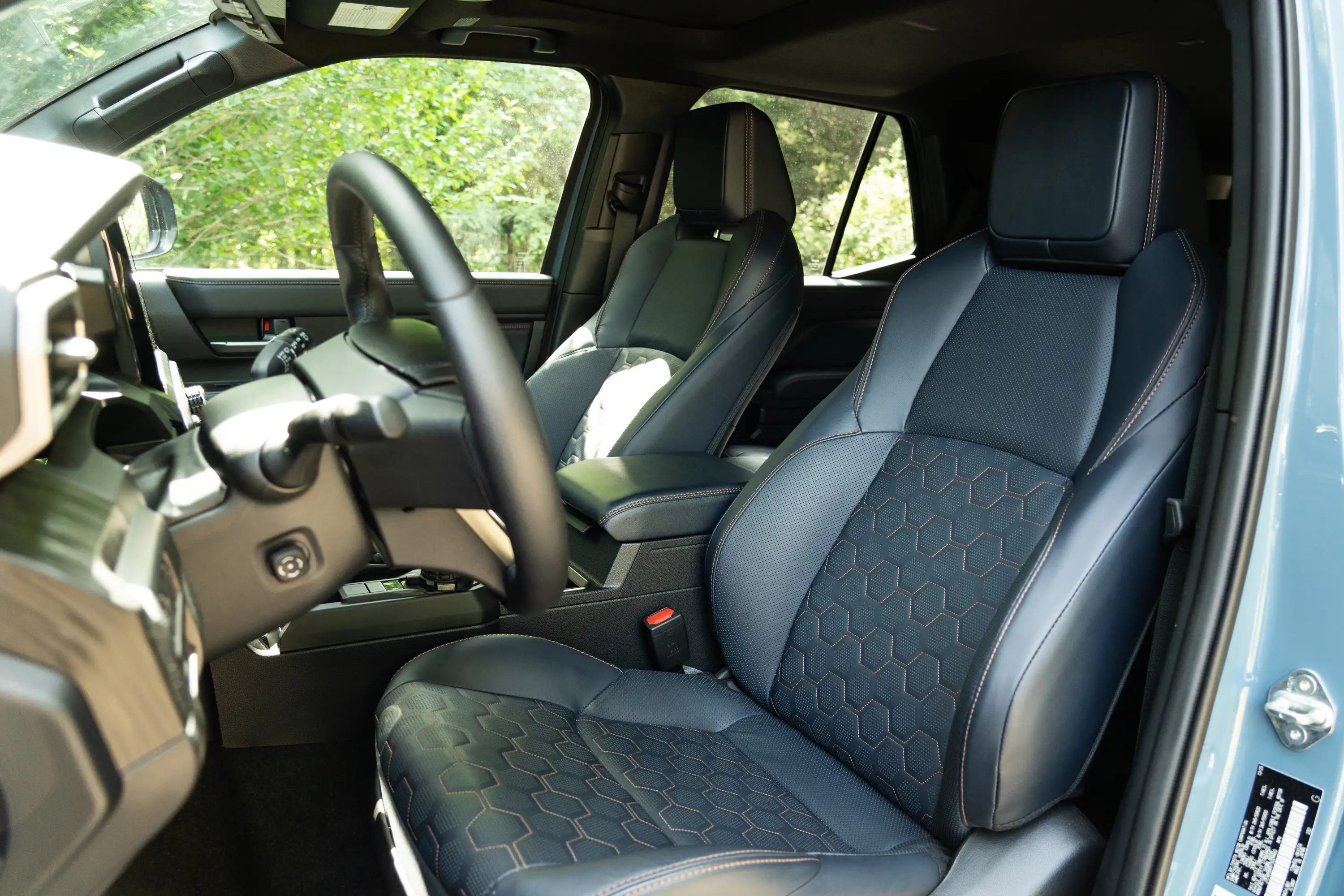
Its attitude carries into an interior design that's full of right angles and blocky shapes. It's a pretty intense space, and I confess I'm not the biggest fan of the blue upholstery paired with the various shades of black and gray, but it's still a practical, well-designed space.
You'll find useful storage compartments and pockets everywhere, many with an open, mesh design. There's a beefy, rubberized grab handle in the center for your passenger to hold on to, plus a bag hook on the side to keep the samosas in your takeout order from escaping on the drive home.
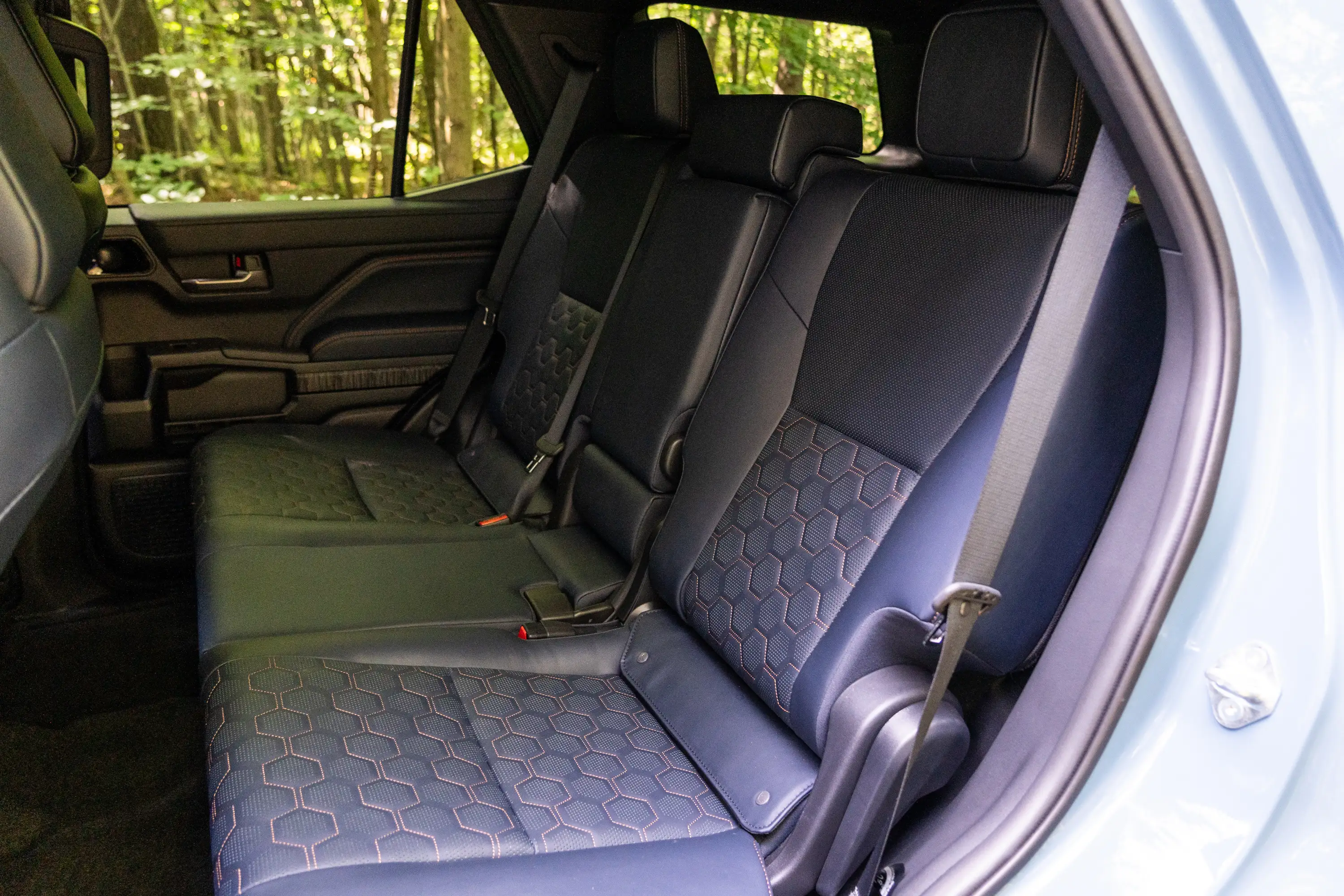
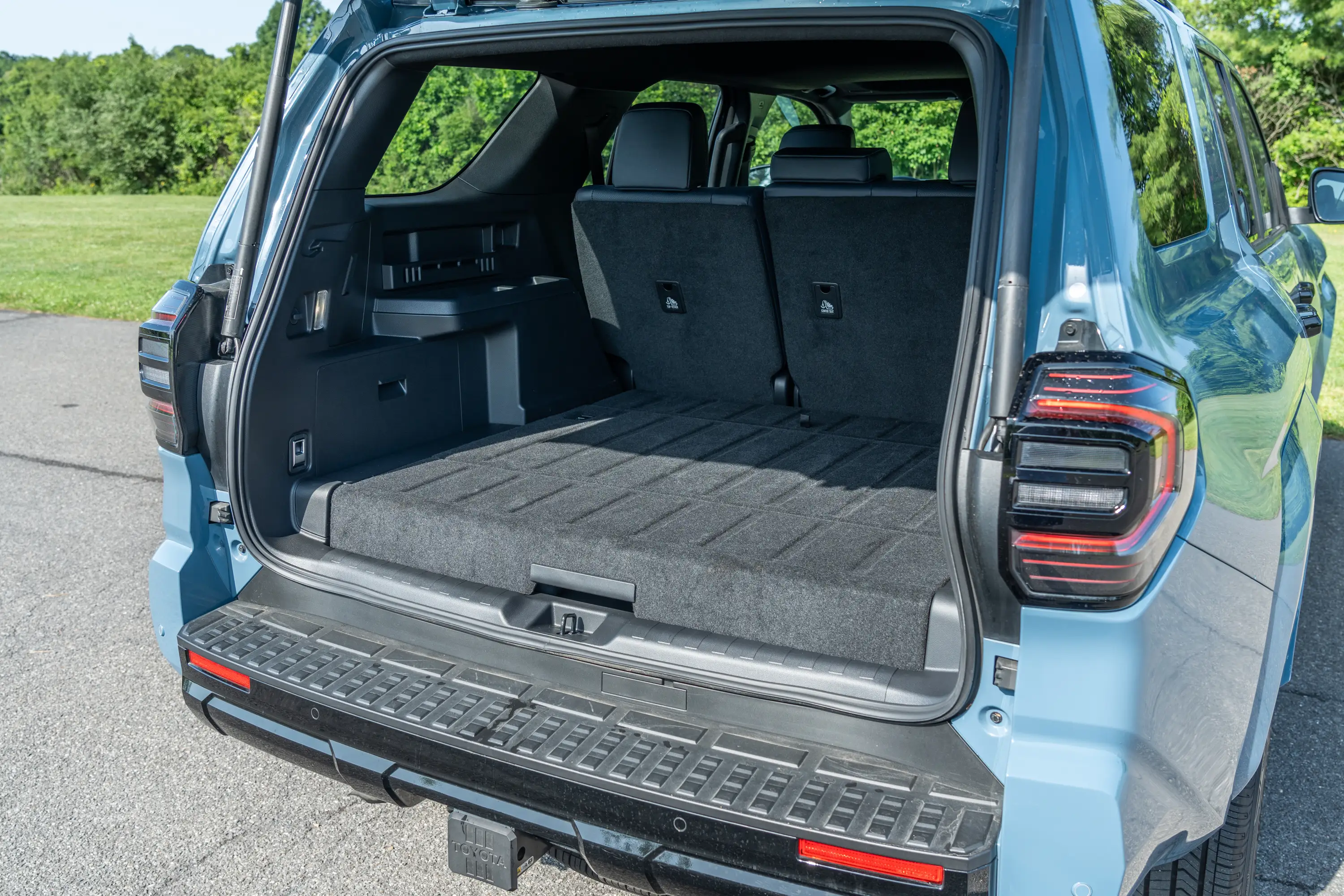
Heating and ventilation up front work quite well, and the rear outboard seats are heated too. There's decent legroom and headroom in back, plus a 60/40 split bench. Fold the seats down, and the 4Runner offers a maximum of 82.6 cubic feet of cargo space, or 42.6 with the seats up.
Infotainment and Safety Tech
The 4Runner Hybrid Platinum comes with an upsized 14-inch display that stands proud of the dashboard and is within easy reach of both driver and passenger. Toyota's software isn't too flashy, but it offers everything you'd want, including a voice assistant that can find restaurants, coffee shops, and even hospitals quickly by voice, only faltering on a few complicated street and city names.
If you prefer to bring your own voice assistant, the 4Runner Hybrid offers wireless Android Auto and Apple CarPlay, plus a wireless charger. There are also three USB-C ports up front and another pair in back for your passengers, plus a three-prong outlet for charging larger devices.
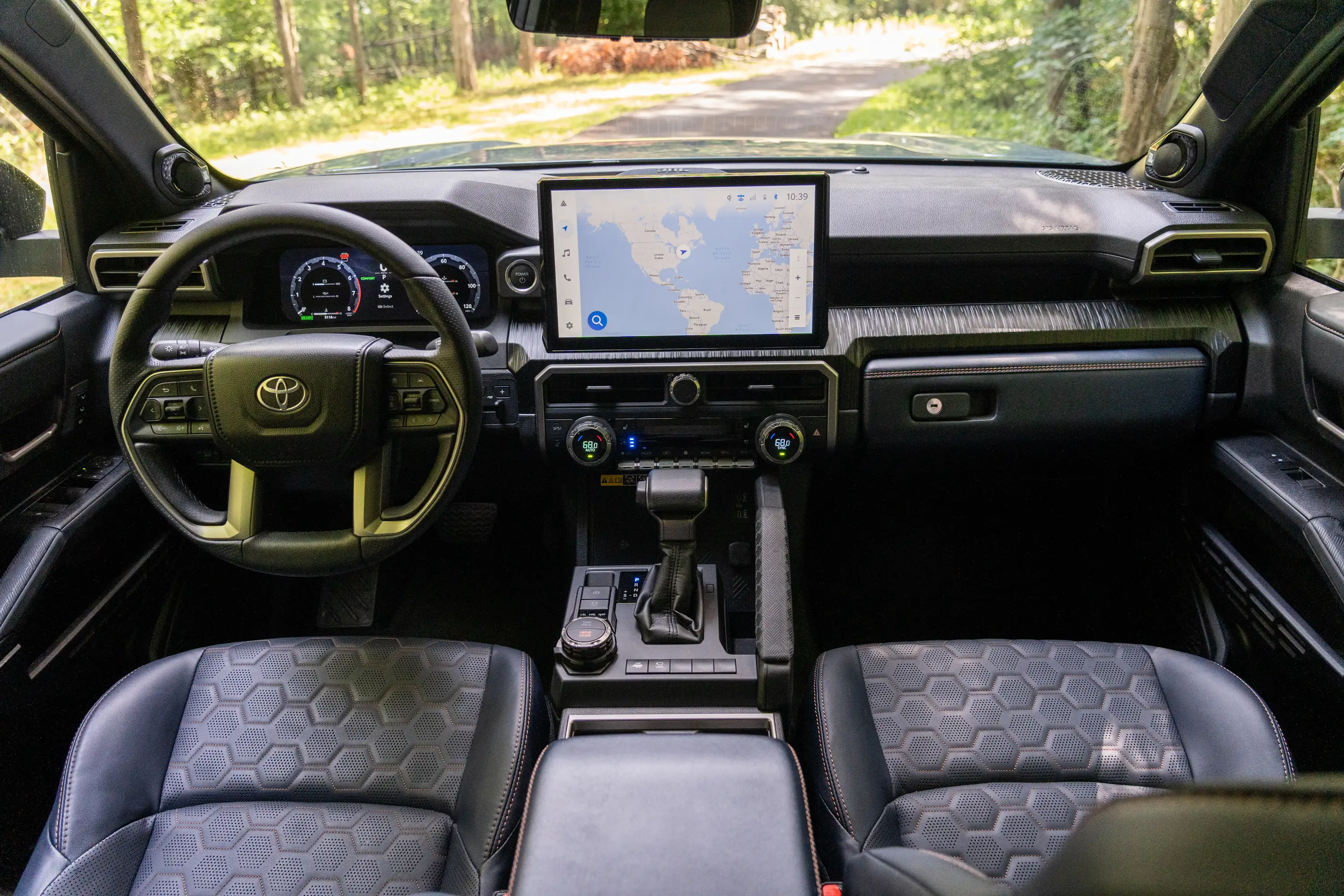
Media is played back through a 14-speaker JBL sound system that didn't quite do justice to the more nuanced tracks in my test playlist, but it more than made up for it with power and bass.
On the active safety side, every 4Runner comes with Toyota Safety Sense 3.0, which includes features like automatic emergency braking with pedestrian detection, adaptive cruise control, automatic high-beams, and lane-centering assistance. My Platinum trim also featured blind-spot monitoring and rear cross-traffic alert.
Given how large the 4Runner has grown in this generation, I was thankful for that overhead-view camera and the parking sensors. The SUV's adaptive cruise control worked flawlessly on every road I crossed, but the active lane-keeping system struggled on secondary roads. The SUV meandered enough between the lanes that it sometimes triggered its own lane-departure warning. It worked perfectly on the highway, at least.
Drive Time
Truck-based SUVs with a decided off-road focus can often be punishing on the road, but the 4Runner immediately impressed me as being pleasant in all conditions, on-road and off. That i-Force MAX system offers smooth, instant power at any speed, making up for any delay by the internal-combustion engine.
You can cycle through drive modes, including Eco, Comfort, Normal, Sport S, Sport S+, and a Custom mode that lets you configure the engine responsiveness, suspension stiffness, and steering feel.
I spent most of my time in Comfort and Normal, and the 4Runner soaked up the worst roads I threw at it, gliding over railroad crossings and potholes without complaint. There's a bit of extra body movement in Comfort mode, but nothing too excessive
In Sport mode, the suspension firms up a bit, but the real adjustment is the engine and the eight-speed transmission, which get far more aggressive to keep power output and throttle response high.
For off-road driving, the 4Runner defaults to 4 High mode, but you can also engage 4 Low and lock the center differential for a little extra traction. Over a mix of highway and secondary-road testing, I averaged 22.4 mpg. That's just fractionally below the official EPA-estimated 23 mpg combined rating.
Toyota’s Land Cruiser pairs the same 326-horsepower hybrid output with full-time four-wheel drive in a more heritage-focused package, so compare the 4Runner with its closely related Toyota sibling ➜
Excellent Performance at a Price
I was really impressed during my week with the 4Runner. I spent much of my time on-road, as most owners will, and it never felt like this was anything other than an SUV perfectly suited for pavement duty. But mix in the capable drivetrain, plus the power and efficiency of that hybrid system, and you have something ready for anything.
About the only real disadvantage here is the price. You'll certainly pay extra for the capability and performance, but you'll also struggle to find another machine that excels like this in every condition.
At nearly $66,000 before options, the Platinum competes well beyond traditional 4Runner territory, so compare more of today’s strongest hybrid SUVs before deciding how much capability you need ➜
More Hybrid SUVs for Different Kinds of Adventure
2025 4Runner Trailhunter: Toyota’s Turbo-Hybrid Off-Road Evolution
The Trailhunter uses the same 326-horsepower hybrid powertrain but shifts the priority from luxury and pavement comfort toward overlanding hardware and serious trail use.
Read More ➜
2026 Toyota Sequoia Hybrid Capstone Review
The much larger Sequoia shows what Toyota’s performance-oriented hybrid philosophy looks like when towing, passenger capacity, and near-luxury comfort matter more than maneuverability.
Read More ➜
Honda CR-V TrailSport Hybrid Off-Road Review
Honda provides the opposite answer, trading the 4Runner’s body-on-frame hardware and low range for dramatically better fuel economy and easier everyday manners.
Read More ➜