Fast Facts | Ford's Apple Maps Integration
1️⃣ What's New: Ford will be the first automaker to integrate Apple Maps right into the vehicle
🚘 Debut: Apple Maps will debut in the compact pickup truck built on the Universal EV platform, launching in 2027
🔋Charger Routing: Apple Maps will be used to help EV drivers identify charging stations on their routes
🖥️ BlueCruise Technology: The next-generation BlueCruise will also run on Apple Maps and launch on the UEV in 2027, with hands-off/eyes-off capability following in 2028
📱No CarPlay Ultra: While Ford will continue supporting Apple CarPlay and Android Auto, it won't adopt Apple's CarPlay Ultra, which takes over all vehicle displays
Apple Maps Moves From the Phone to the Ford Dashboard
Once upon a time, navigating to an unfamiliar destination meant unfolding a giant paper map, flipping through a road atlas, or stopping by the local AAA office for a TripTik. After satellite-based GPS opened up for civilian use in the 1990s, navigation systems started appearing in the dashboards of luxury cars. Over the past decade, navigation has become standard even in entry-level vehicles, often through smartphone projection tools like Apple CarPlay and Android Auto.
Electric vehicles, in particular, lean heavily on navigation to route drivers to charging stations. As Ford continues trickling out details about its upcoming Universal EV (UEV) platform, the automaker has announced that it'll be the first to integrate Apple Maps right into the vehicle.

Charging Is Where the Map Has to Prove Itself
One important question EV drivers will have about this news: Will it route them to chargers well?
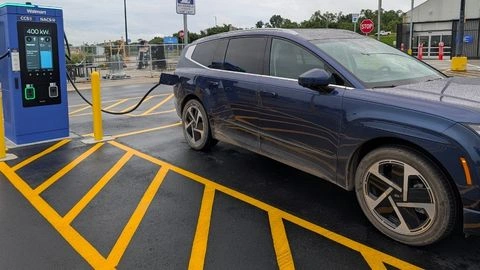
Whatever feelings you may have about Tesla, charge routing is one aspect it's done well, and Ford wants to emulate or surpass the experience. Since launching the Mustang Mach-E in 2021, Ford's been building a database of public charging stations across North America as part of FordPass, its app that includes a charging station locator. I expect Ford will combine this database with Apple Maps and a routing algorithm that takes into account the battery's state of charge, terrain, weather, and driving behavior to recommend where drivers should stop and for how long, whether they want the fastest route, the most convenient, or the most efficient.
State of charge, terrain, weather, charger availability, and battery temperature can all shape the best route, so see how modern EV navigation tools plan charging stops and reduce range anxiety ➜
Hopefully, Ford will copy Rivian in gathering telemetry data from vehicles about actual charging speeds and charger reliability, so drivers get sent to chargers that are most likely to be available and functional when they arrive.
A route is only useful when the charger at the other end is compatible, available, and working, so see how to prepare for public charging and avoid common station problems ➜
What Do Other Automakers Use?
Currently, most vehicles outside of China rely on maps from TomTom, Here, or Google. Google has grabbed a significant chunk of the market in recent years, thanks to its open-source Android Automotive software platform, which plenty of automakers, including Ford, have adopted. On top of that, automakers can license Google's Automotive Services package, which includes Maps, Google Assistant, and the Play Store.
For the UEV program, though, Ford is shifting to a more vertically integrated approach, which includes building its own all-new software platform. Ford's current lineup uses TomTom or Google Maps as navigation and Here to manage the geofencing that keeps the hands-off BlueCruise driver-assist system working within its approved zones.
Building an all-new map platform is no small task, so Ford's UEV team decided to use Apple's MapKit software development kit. It'll provide basic street-level turn-by-turn navigation for the UEVs, and it'll also underpin the next-generation BlueCruise.
Another Step Toward Self-Driving
Earlier this year, Ford announced that the UEV would be the first platform to use the next generation of BlueCruise. The current version was co-developed with outside suppliers, but this next version was developed by Latitude AI, a Ford subsidiary staffed by many engineers who used to work on automated driving at Argo AI before it shut down in late 2022. Latitude's new system will be 30 percent less expensive and will launch on the UEV in 2027, with a hands-off/eyes-off version coming in 2028. The current BlueCruise uses Here to determine where it's allowed to operate, but the new version will use the same Apple Maps powering navigation.
The difference between hands-free assistance and eyes-off automation changes both the driver’s responsibility and the automaker’s safety burden, so see where Level 2, Level 3, and driverless systems stand in 2026 ➜
No CarPlay Ultra
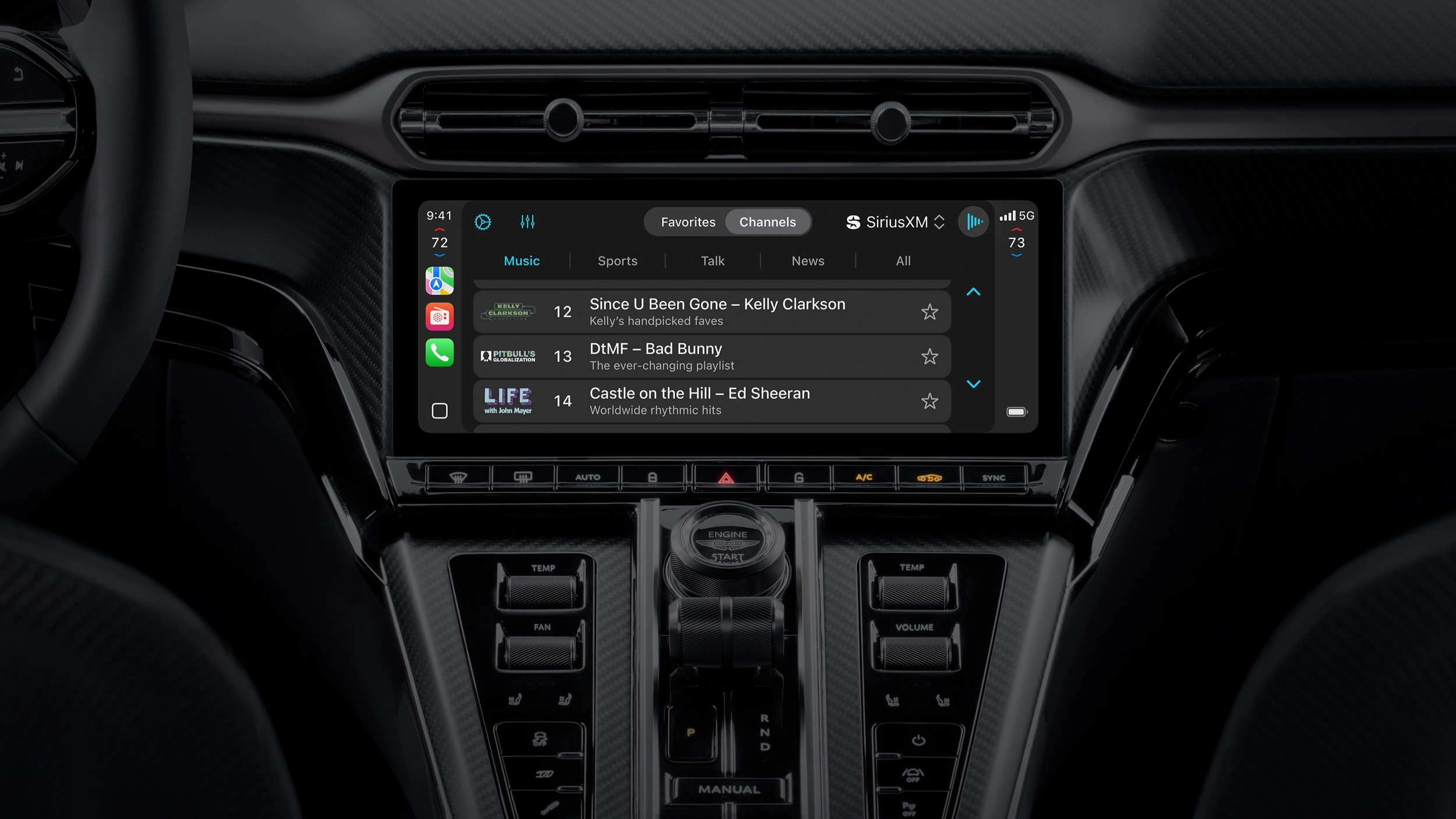
Several years ago, Apple announced a next-generation CarPlay that goes beyond the current systems that display maps and media players on the infotainment screen. This version, later branded as CarPlay Ultra, allows your phone to take over all the displays in the vehicle, including the gauges. So far, only Aston Martin has adopted it, and Ford says it won't be used on the UEV. However, Ford plans to continue supporting both standard CarPlay and Android Auto for drivers who want to use those systems.
Will It Be Any Good?
It’s too early to say how well any of this will work. Apple Maps had a rough debut more than a decade ago, but it's improved steadily and is now generally considered to be equal to or better than Google Maps. However, Google Maps is still considered to have a better point-of-interest database, thanks to pulling in content from Google's search engine.
Hopefully, I'll get my first look at Ford's new system toward the end of 2026 or early 2027. I'll let you know if it was worth the wait.
More on Ford’s Affordable EV Reset
Ford’s Next Model T: Inside the UEV Program
Go inside the affordable EV architecture, zonal electronics, testing labs, and manufacturing strategy that will support Ford’s first Apple Maps-equipped vehicle.
Read More ➜
Ford’s Secret California Outpost Where It’s Rethinking Its EV Strategy
See how Ford’s Long Beach development center is bringing design, engineering, software, fabrication, and prototype work under one roof.
Read More ➜
The State of EV Charging in 2026: What’s Improving and What Still Needs Work
Charging networks are expanding, but reliability, rural coverage, pricing, and home-charging access still determine whether a route works in practice.
Read More ➜