
Fast Facts | Ford’s California EV Outpost
🏭 Location: Ford’s EV Development Center is in Long Beach, California
🧠 Mission: The team is rethinking how Ford develops future electric vehicles
🛠️ Setup: The EVDC includes engineering offices, a visualization room, a design studio, fabrication areas, and a trim shop
🏁 Competitive Lens: Ford’s team studied Tesla, Rivian, Lucid, Xpeng, Xiaomi, and BYD
⚙️ Core Shift: Ford is bringing more design, engineering, and prototyping work in-house
⏱️ Speed Advantage: A seat iteration can take two to three months through traditional supplier channels, but about two weeks at the EVDC
🔋 Range: Ford has not released range figures in this article for the next vehicle tied to this strategy
🚘 Strategy Context: The EVDC supports Ford’s broader effort to build a more profitable EV business

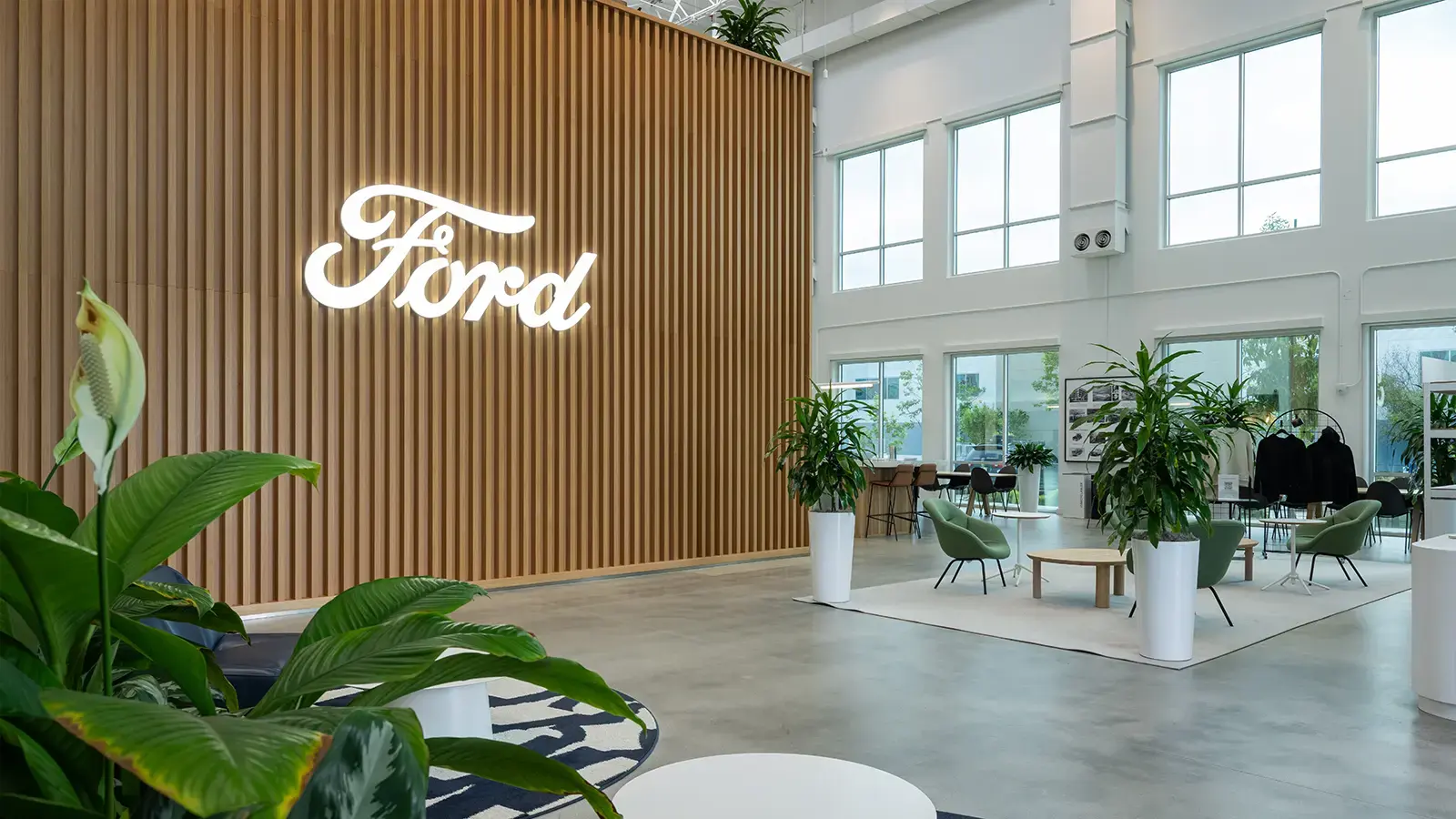
Sitting in a nondescript light industrial area on the north side of Long Beach Airport is a two-building campus that may represent the future of Ford Motor Company. Of course, that all depends on whether Ford can properly execute the plan. Last week, Ford invited me to visit its Electric Vehicle Development Center (EVDC), the home of what's been called its Skunk Works, where a relatively small team, recruited mostly from outside of Ford, is studying the competition and rethinking how Ford develops its vehicles. Here's what I found.
How Ford Got Here
Ford has had a bit of a rocky start in the EV space over the past five years. Back in 2017, former CEO Jim Hackett established a group within Ford called Team Edison, with the goal of figuring out how to build a profitable EV business. That effort quickly produced three vehicles: the Mustang Mach-E, the F-150 Lightning, and the e-Transit. All three were reasonably well-regarded, but they fell short on the profitability front. Combined with a broader slowdown in EV adoption across the U.S., Ford decided it was time to rethink its whole EV strategy.
Several years ago, the Model E business unit, the group that took over responsibility for EVs, software, and services, created a secret outpost in California under the leadership of former Tesla engineer Alan Clarke. It became known as the Skunk Works, named after the legendary Lockheed team led by Kelly Johnson that created planes like the U-2, SR-71, and F-117 stealth fighter.
Clarke’s team studied the leaders in the EV space - Tesla, Rivian, Lucid, and Chinese automakers like Xpeng, Xiaomi, and BYD - to understand what they were doing better, then looked for ways to build on those ideas at Ford.
Lessons From the Competition
A key lesson Clarke's team learned early on was the need for speed. One of the biggest gaps between Chinese automakers and legacy automakers like Ford is how fast they can move from idea to product. In China, automakers are currently launching new generations of vehicles on an 18-to-36-month cadence. In recent years at Ford, that same cycle has stretched to six to 10 years.
For readers trying to understand why battery size now matters so much, this smaller-batteries explainer helps frame the logic behind Ford’s reset ➜
The reason for this comes down to vertical integration. Chinese automakers keep much of their development in-house, so when they want to change something, internal teams can prototype and test ideas quickly, before a finished design ever goes out to a supplier. Legacy automakers like Ford, on the other hand, have grown increasingly dependent on suppliers to handle much of the engineering and prototype manufacturing over the past 50 years. That dependence costs time.

Visiting the Home of the Skunk
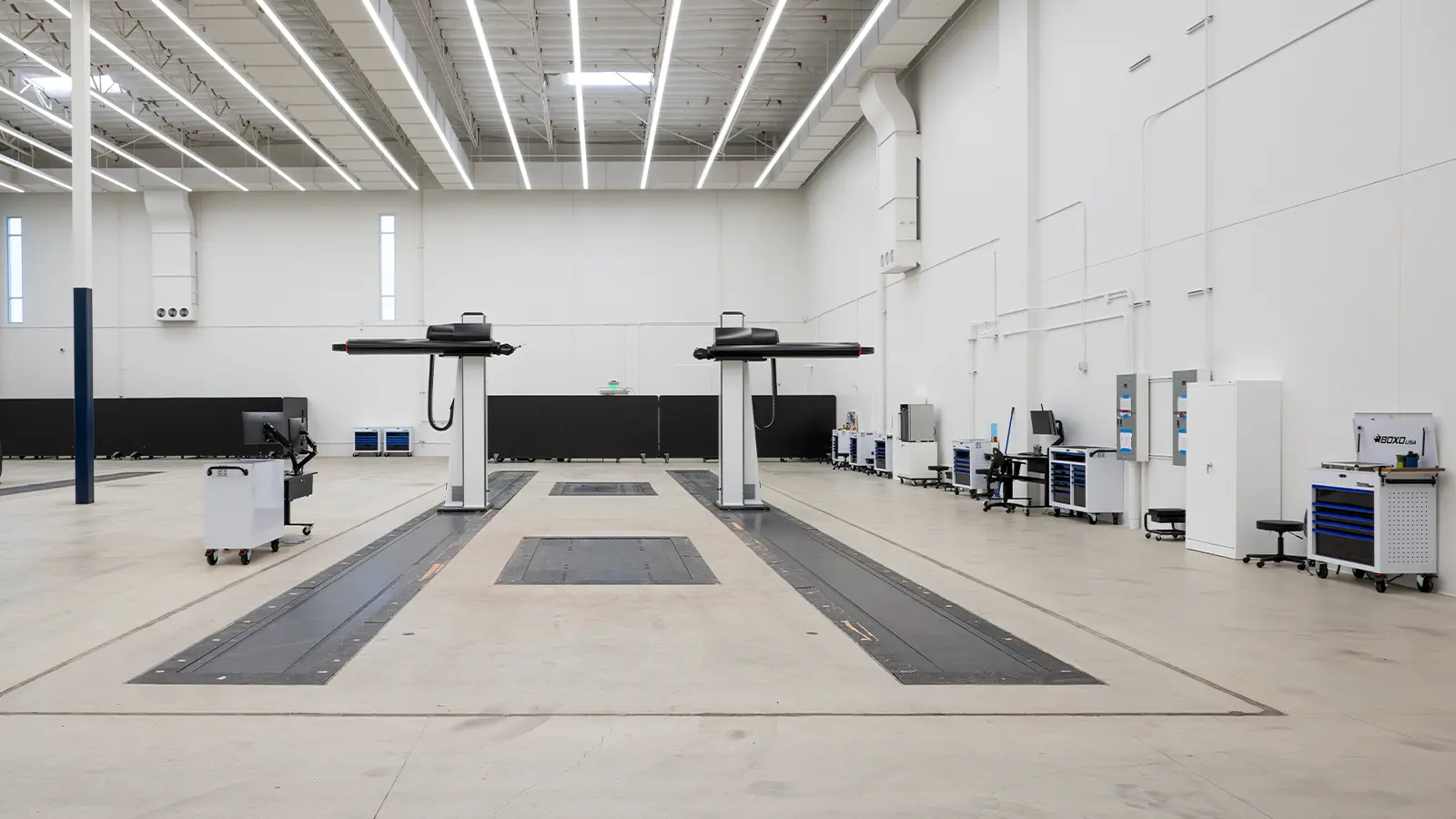
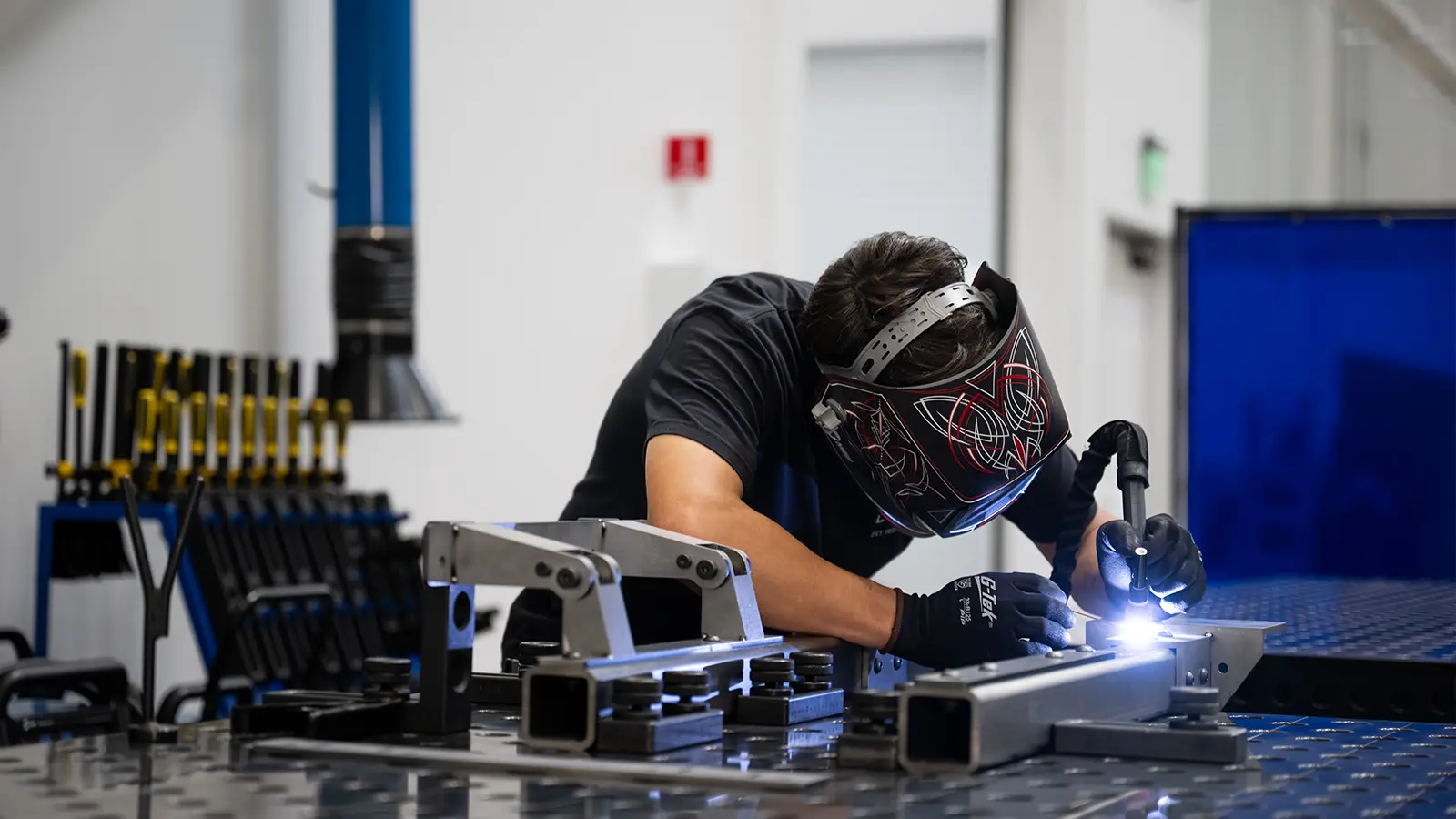
The EVDC is Ford attempting to fix that problem. At this facility, Ford has the capability to design and fabricate much of a vehicle in-house. The first building I entered has engineering offices, a visualization room, a design studio, fabrication areas, and even a trim shop. All under one roof.
Here's an example of how this helps production speed. If the color and materials team and the seat engineers want to try out a new seat design, they can sketch it out, create the design drawings, and send it straight to the fabricators down the hall. Those fabricators have several types of 3D printers and multi-axis milling machines, including a giant five-axis mill that can work with foam, plastic, clay, aluminum, and other materials, and it’s large enough to carve out an entire vehicle body in one shot. Seat cushion foam gets carved out, frames get fabricated, and everything heads over to the trim shop.
There, a dedicated team has access to all the materials needed to make seat coverings. They create the patterns, cut and sew fabrics and vegan leathers, and add other pieces to produce a seat ready for testing. They can walk down the hall and work directly with designers to ensure proper fits around curves, and once the seat has been assembled and tested, everyone can collaborate to make sure seams are in the right places for durability, manufacturability, and comfort. One of their software tools even allows them to arrange all the cut pieces on a roll of fabric like a jigsaw puzzle, minimizing scrap and cutting cost.
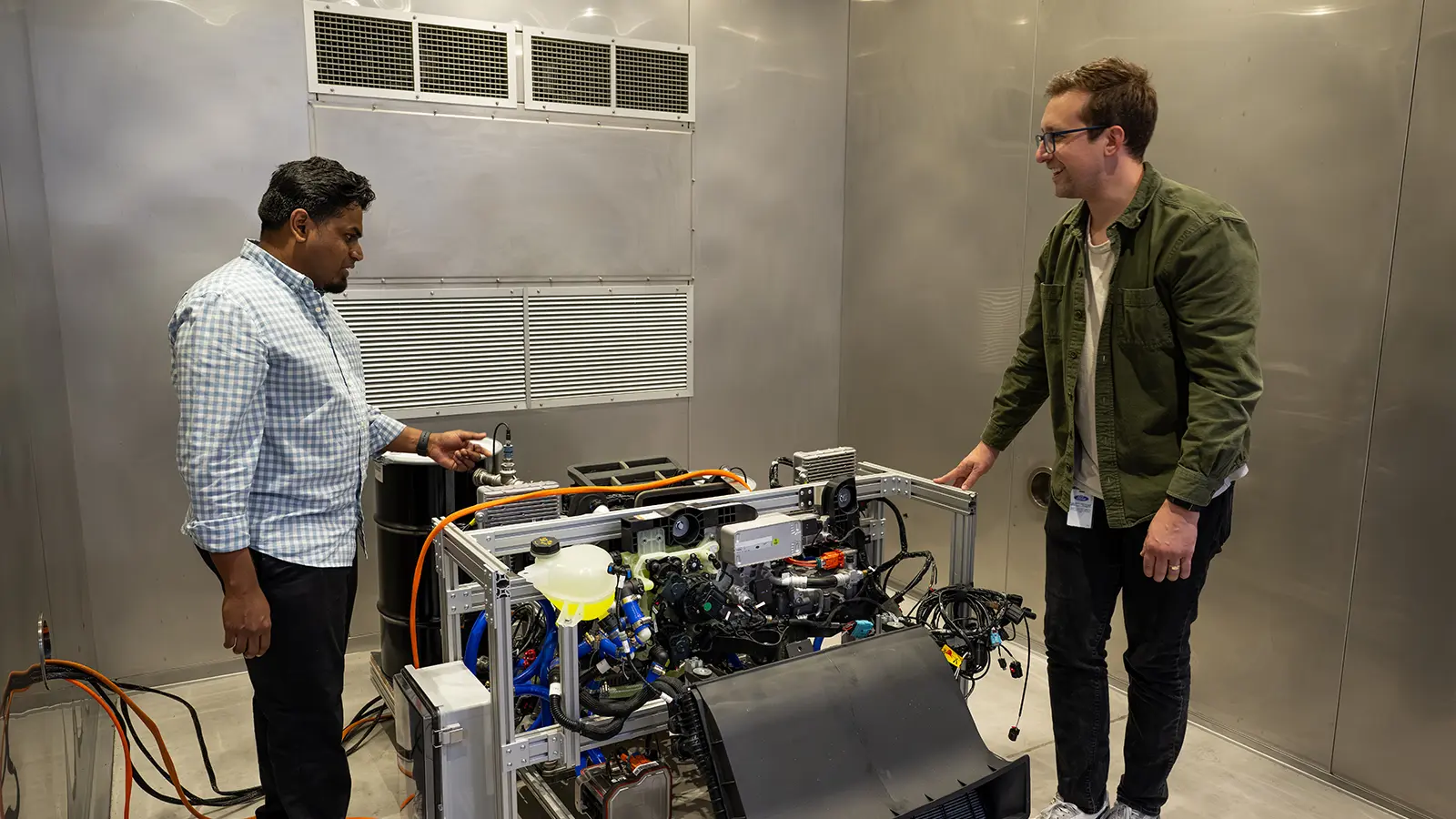
Back at Ford’s product development center in Dearborn, a new seat iteration requires sending designs to suppliers, ordering prototypes, and waiting two to three months for new samples to arrive. In Long Beach, a whole new seat can go from idea to production in two weeks, at a fraction of the cost.
A New Approach?
Most of what Ford is doing at EVDC isn’t new to the industry. We've seen versions of this approach elsewhere, and even within Ford’s own operations in Dearborn and Europe, many of these same activities have been happening for years. What’s new for Ford is the degree of integration and the pace.
So what is all of this actually building toward? Check out Part Two, where we get into the UEV platform itself.
Keep Exploring Ford’s New Electric Strategy
Ford’s $30K EV Pickup Aims for Cost Parity with Gas Vehicles
This is the strongest next read for understanding the affordable truck strategy behind Ford’s new EV development push
Ford Retools the Lightning Into a 700-Mile Extended-Range Electric Truck
A smart follow-up for readers interested in how Ford is expanding beyond traditional EV thinking
Ford’s New Hybrid Plan Signals a Major Strategic Shift
This gives the broader company context, showing how Ford’s EV work fits into a wider powertrain rethink