- Location
- Marshall, Michigan
- Chemistry
- Lithium iron phosphate (LFP) prismatic cells, built with technology licensed from CATL
- Output
- Two cell lines at 40 cells per minute each, or 4,800 cells per hour combined
- Pack
- Ford's first structural pack, with 84 or 108 cells and no modules
- Timing
- Full-volume production and customer deliveries projected for the fourth quarter of 2027
Ford Is Officially in the Battery Business
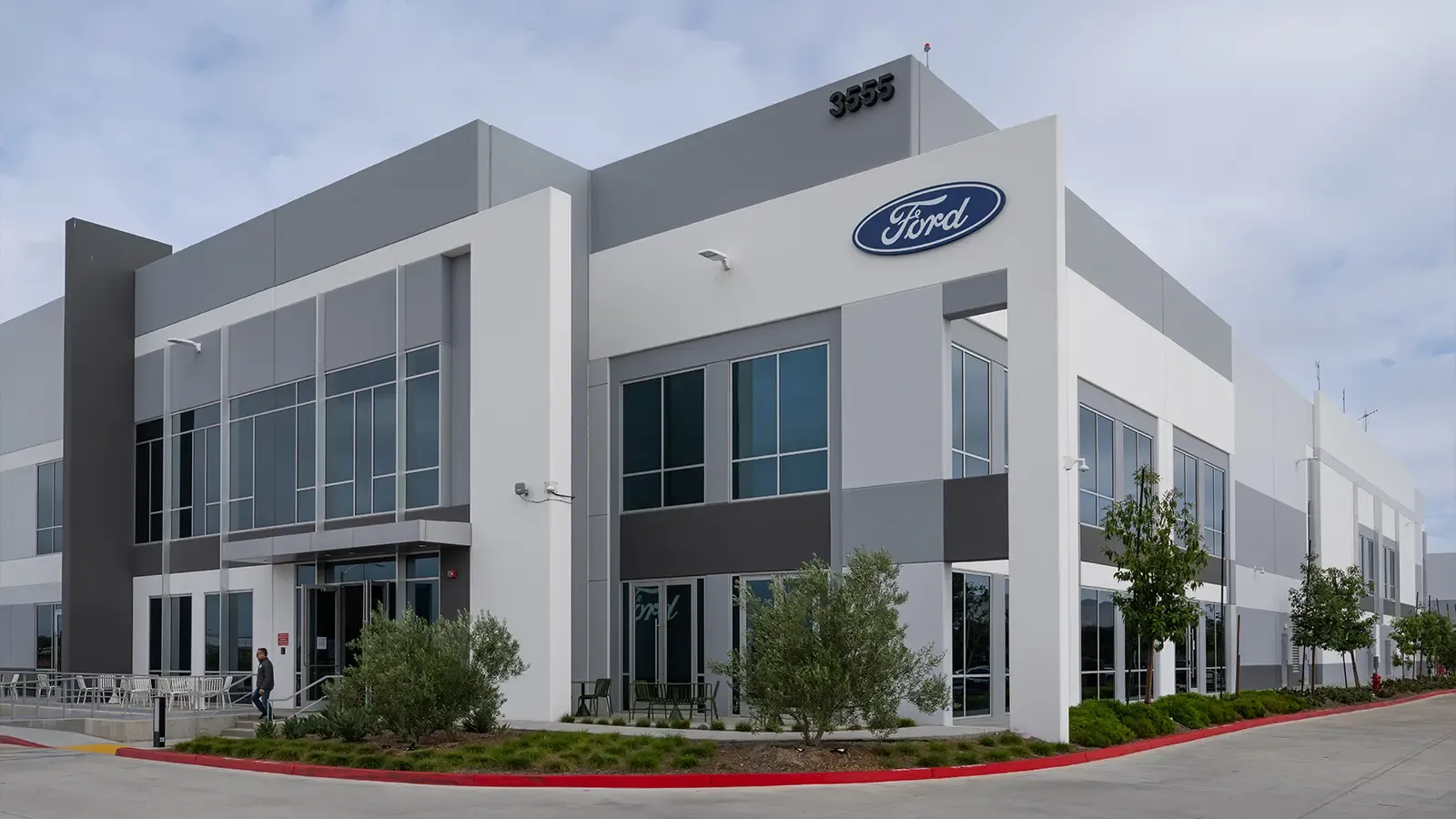
Last week, Ford invited a group of journalists back to its BlueOval Battery Park in Marshall, Michigan, for an update on progress there. Ford announced the plant in February 2023 to manufacture lithium iron phosphate (LFP) cells for its electric vehicles. The project faced plenty of pushback from the local community and some politicians, but as of November 2026, it's up and running. The Marshall plant is building LFP cells and shipping batteries to its Louisville Assembly Plant in Kentucky, where they're installed into validation prototypes of the upcoming Ford Fathom.
LFP trades some energy density for lower cost, strong cycle life, and the elimination of nickel and cobalt from the cathode, so compare LFP with the other battery chemistries used in modern EVs ➜
Ford Got Some Help From the World's Biggest Battery Maker
Ford originally built its other two battery plants in Tennessee and Kentucky as a joint venture with Korea’s SK On, which has since been dissolved, with Ford getting the Kentucky plant and SK On getting the Tennessee facility. The Marshall plant was different, as Ford always planned to own it outright. That doesn’t mean Ford did everything on its own, though. Virtually every large-scale manufacturing facility leans heavily on its equipment suppliers. In this case, Ford decided to license some of its cell technology from China’s CATL, the world’s largest supplier of lithium-ion batteries.
In 2025, CATL sold an estimated 661 gigawatt-hours of lithium batteries of various chemistry types, including LFP and nickel-rich cells. Its involvement caused much of the controversy around the Marshall plant, but CATL holds no equity stake in the plant or its equipment. And CATL cells are already all over the road. The company provides the LFP batteries in most China-built Tesla Model 3s and Model Ys. It also supplied the LFP batteries used in the standard-range Ford Mustang Mach-E for the past few years, and it supplies the current Chevrolet Bolt.
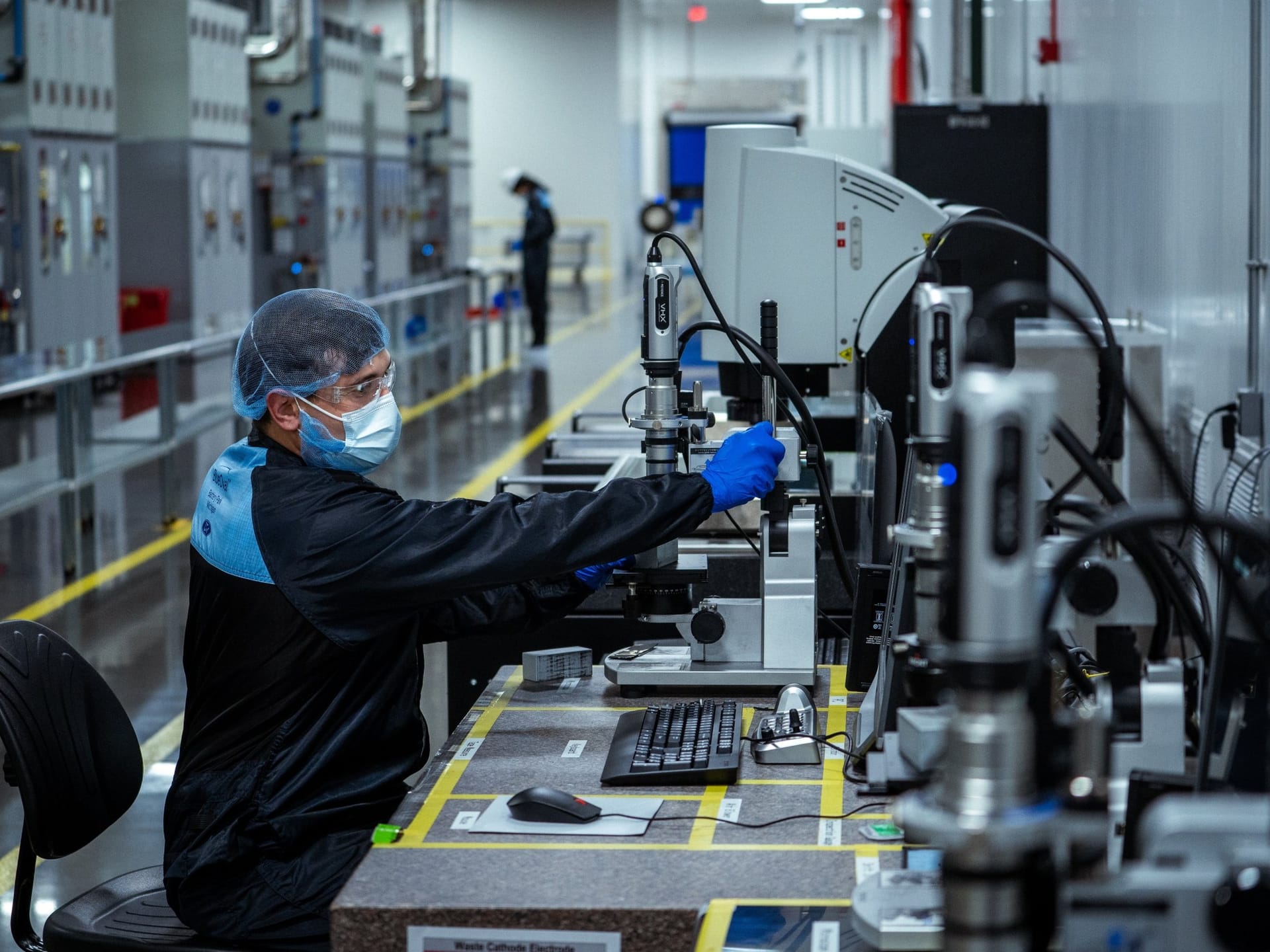
From CATL, Ford gained insight into building LFP prismatic cells at high volume. It also got CATL's cell design and its list of equipment suppliers. Ford bought many of the more than 1,000 pieces of equipment in the Marshall plant from those same suppliers. Right now, the plant is in the commissioning phase, which means crews are running much of that equipment for the first time and testing and calibrating it. Several dozen CATL employees work on-site in three-month stints to help with commissioning and train local staff. By the end of 2026, the plant will employ about 800 people. Ford expects that number to climb to about 1,700 at full production.
Inside a Mile-Long Battery Factory
The plant itself is massive. It stretches about a mile and is actually two buildings joined together. The main part of the factory is the cell manufacturing plant, which contains two production lines. The process is pretty similar to what you’ll find in other facilities: coating, calendering, assembly, and formation.
Coating is where the cell's active materials go onto huge rolls of aluminum and copper foil, each about 3,000 meters long. A machine that works like a sophisticated inkjet printer coats both sides of the aluminum cathode roll with five strips of a mixture of lithium, iron, and phosphate. The copper anode roll gets five layers of graphite. After coating, the rolls go through a heater that dries the slurry, and then they're rolled back up.
Next comes calendering. A series of rollers squeezes the jumbo rolls under 40 tonnes of pressure. That compresses the cathode and anode coatings to a precise thickness and arranges the particles for optimum performance. Each 1,800-pound jumbo roll is then cut into five single-strip "whopper" rolls. Each strip is split again to make two "pancake" rolls. Automated guided vehicles shuttle all these rolls between machines. Ford maintains about four hours of inventory at various stages, so production can keep running if a machine goes down or needs repair.
From Pancake Rolls to Jelly Rolls
The pancake rolls then head to assembly. First, the uncoated foils are cut to form the tabs. Then a machine sandwiches the anode, cathode, and separator together and winds them onto a spool, creating the so-called "jelly" roll. Each jelly roll holds a little over 10 meters. Finally, the jelly roll is pressed flat.
Machine vision systems monitor every step for quality control. A tab that's improperly spaced or folded can lead to safety or performance issues later. When that happens, the bad section gets scrapped and sent to the plant's recycling area. Ford recycles all cuttings and scrap, recovers virtually all of the material, and sends it back through the process.
Battery manufacturing creates valuable scrap long before a vehicle ever reaches the road, so see how the growing battery-recycling industry is working to recover those materials for reuse ➜
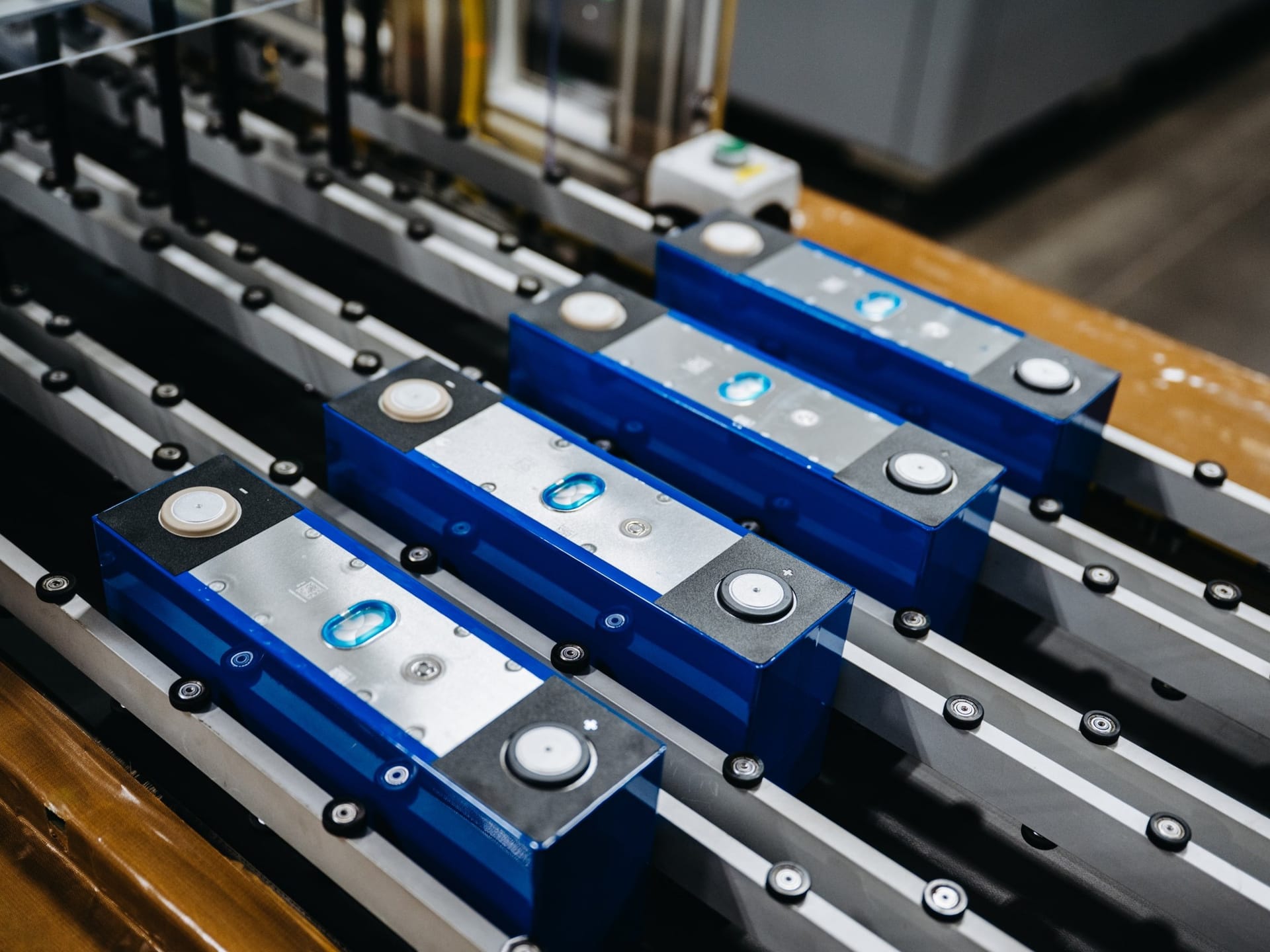
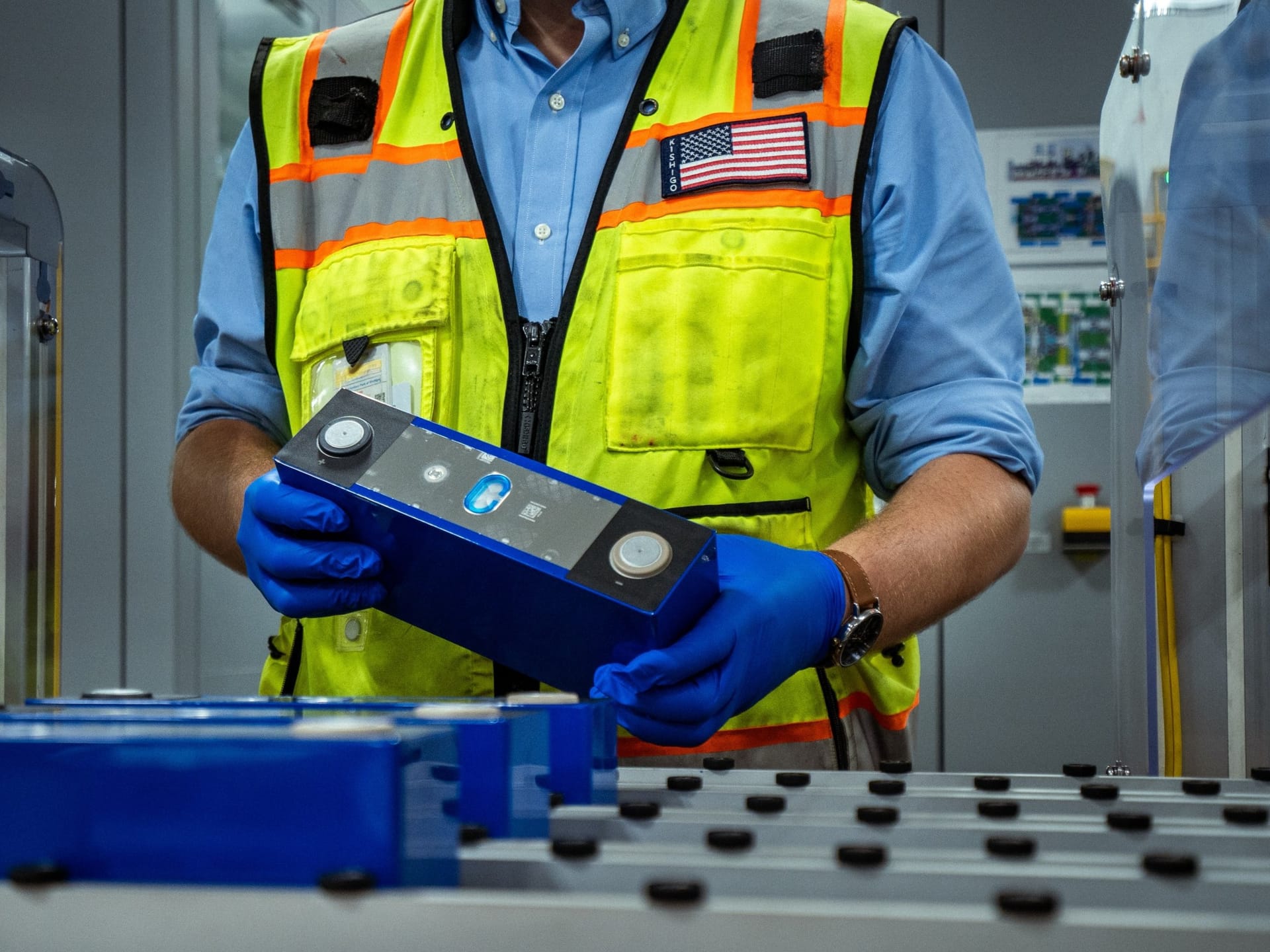
Next, two jelly rolls are friction-welded together with a connector, folded over, and inserted into a rectangular aluminum can. After the bottom of the can is laser-welded shut, the fill hole has two jobs. Before it takes in electrolyte, Ford uses it to inject helium to test for leaks. If the weld leaks, the cell goes to an offline repair station, where the bottom plate is removed and rewelded.
Once a cell passes a leak test, it's filled with electrolyte, sealed, and given an initial charge. Then it sits for 24 hours as part of the formation process. Over five and a half days, the cell is partially discharged and recharged several times to activate the whole cell. Finished cells then go through a doorway into the pack assembly building.
Ford's First Structural Battery Pack
I didn’t get to tour the pack assembly area since it's still being commissioned, but Ford's engineers gave us a presentation and showed us a cutaway pack. The Fathom will have Ford’s first structural battery pack. The case absorbs about 60 percent of the structural load, and the cells absorb about 40 percent. Ford will ship finished packs to Louisville, where the seats, carpet, and much of the interior mount directly on the pack. After that come the front and rear unicastings, then the suspension, brakes, steering, and other systems.
Those Michigan-made cells are central to Ford’s new affordable truck, so see what Ford has already confirmed about the Fathom’s price, platform, technology, and 2027 launch ➜
The pack will come in two sizes, and neither includes any modules. The larger pack will have 108 cells and a likely capacity of about 75 to 80 kilowatt-hours, providing at least 300 miles of range. The smaller pack will probably have 84 cells. The cells have their terminals on top. During assembly, Ford lays a single sheet called a bus-bar module across the top. This sheet contains all the copper bus bars to connect the cells to one another and to the motors and the e-box power electronics module. Once the sheet is laid on top of the cells, every terminal is laser-welded to the module.
Currently, one cell line is running. The second is still being commissioned, and Ford expects it to be ready for production in the coming weeks. Once both lines are fully ramped up, each will produce 40 cells per minute, or 4,800 cells per hour. Ford still projects full-volume production and customer deliveries for the fourth quarter of 2027.
Go Deeper Into EV Batteries and Ford’s New Platform
Ford’s $30K EV Pickup Aims for Cost Parity with Gas Vehicles
See how Ford’s structural battery, simplified electronics, aerodynamics, and Universal EV Platform are designed to make the Fathom cheaper to build.
Read More ➜
Real-World Data Shows Used EV Batteries Are Holding Up
Manufacturing quality matters years after a cell leaves the factory, and new real-world data shows how modern EV batteries are aging in actual vehicles.
Read More ➜
Foxconn Becomes EV Battery Giant
Ford is not alone in betting on LFP manufacturing, as Foxconn expands its own battery-production strategy in the U.S. and overseas.
Read More ➜




 Industry Updates