Fast Facts | Volkswagen's Zwickau Dismantling Line
- Location: Zwickau, Germany, where VW builds six EV models for VW, Audi, and Cupra
- The Line: Eight stations that take vehicles apart so parts can be refurbished and resold
- Volume: About 4,100 vehicles in 2027, growing to about 15,000 by 2030
- Recycling: Cleaner separation of aluminum, steel, and plastics
- Investment: 90 million euros from VW, plus 10.7 million euros from the Free State of Saxony
What If Retired Cars Became Parts Warehouses?
Those of us who love cars and doing things ourselves know scrapyards and pick-and-pull lots well. They're where vehicles often end up when they've reached the end of their useful lives. But until the last of a car's carcass gets crushed, melted down, and made into something new, it can still be an organ donor that keeps other vehicles alive. Now, Volkswagen is bringing that idea to the factory by turning its plant in Zwickau, Germany, into a vehicle organ-donation facility.
EV Pioneer to Circular Economy
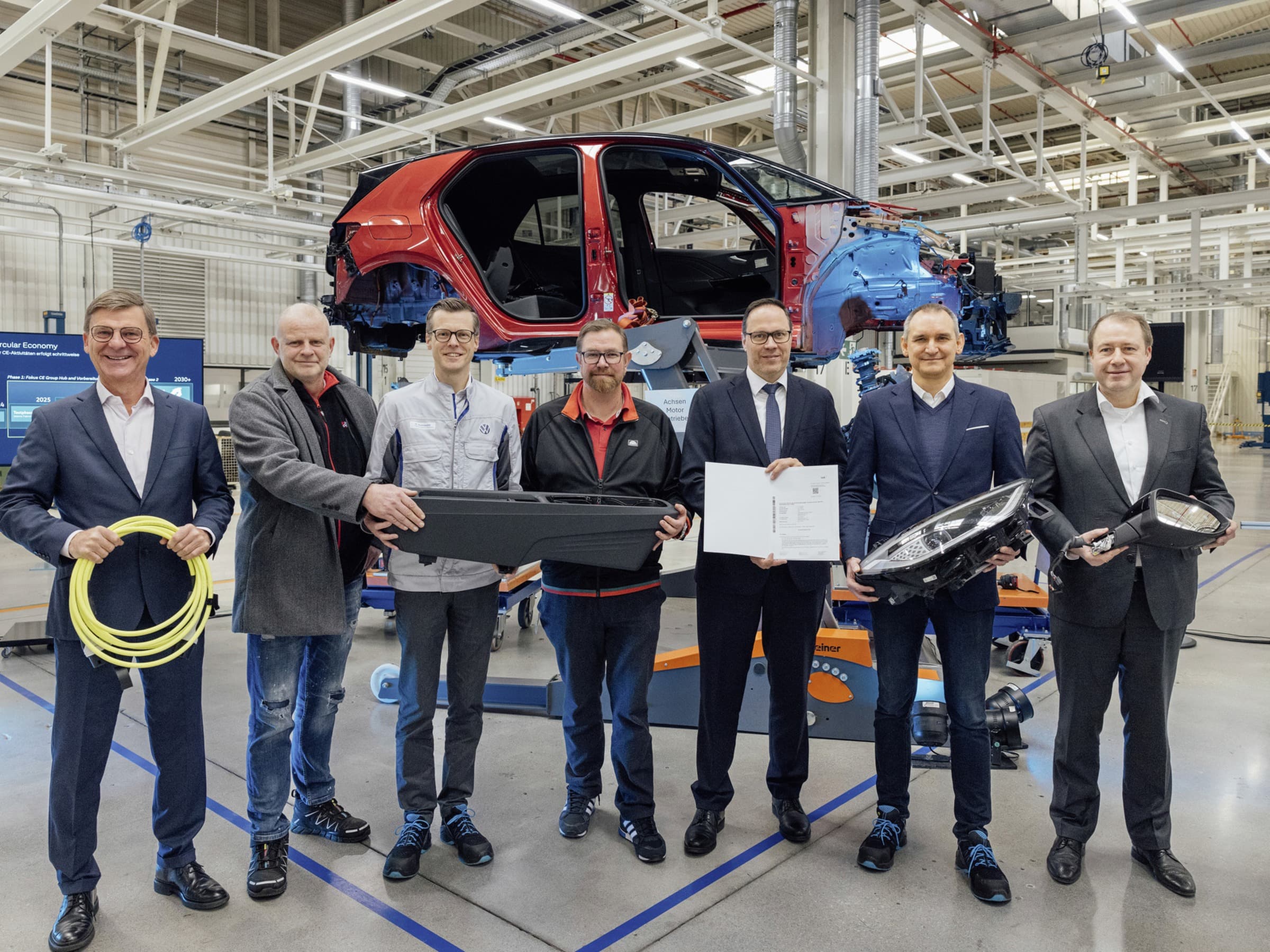
The Zwickau assembly plant in eastern Germany was one of the first in the company to convert to electric vehicle production, starting ID.3 production in 2019. Today, it builds six models for the VW, Audi, and Cupra brands, all based on the company’s MEB electric vehicle architecture.
Earlier this year, VW announced plans to make the plant its center of excellence for the circular economy. The concept is that materials never get completely disposed of. Instead, they keep getting reused, recycled, and repurposed.
Vehicle reuse is only one part of the circular economy, and EV batteries have their own second-life and recycling paths, so see what happens to an EV battery after its automotive life ends ➜
An Assembly Line in Reverse
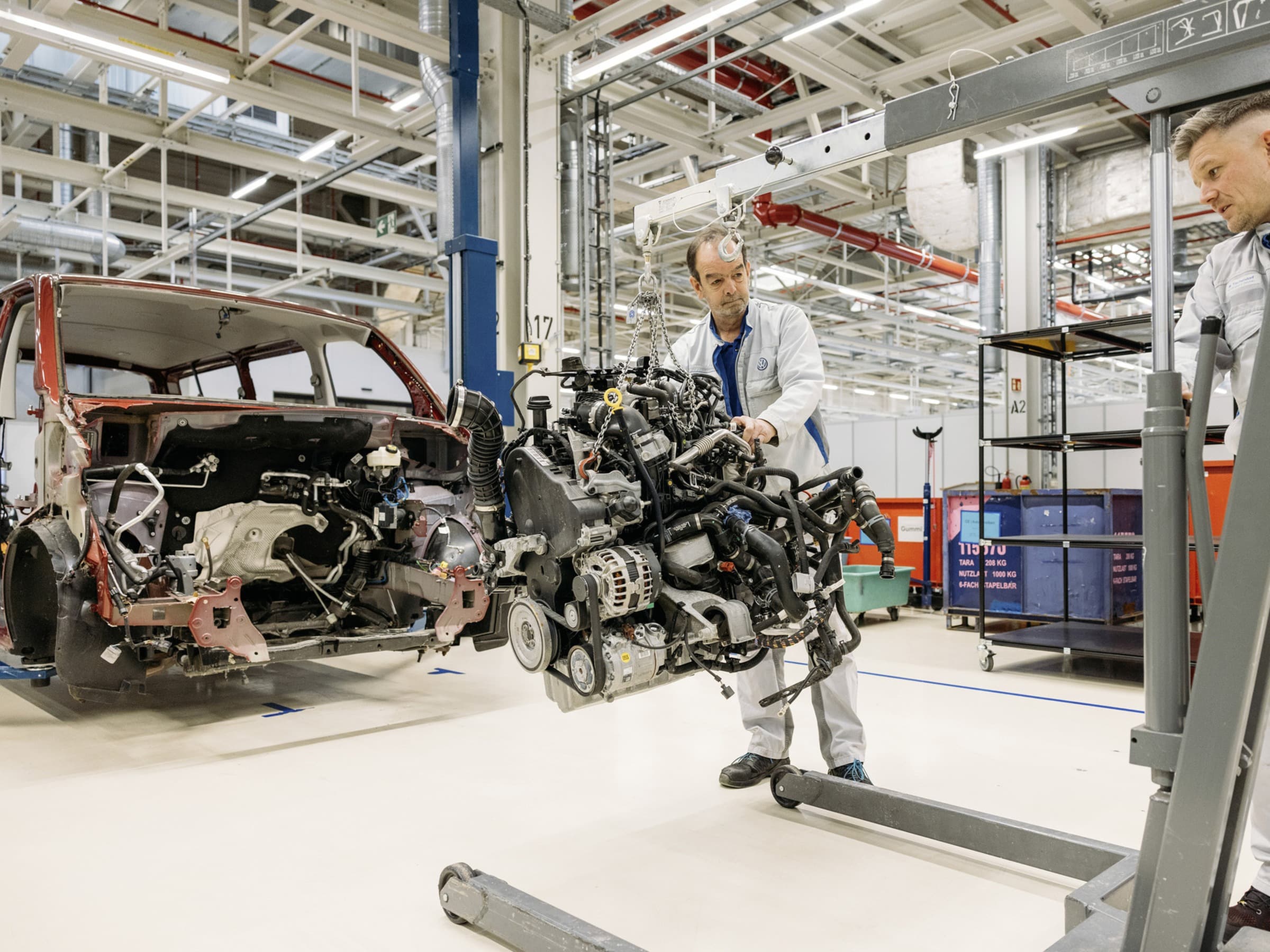
Zwickau's first circular economy effort is a new line that does the opposite of its assembly lines: It takes cars apart. Workers methodically disassemble vehicles across eight stations so parts can be refurbished and resold as service parts. The dismantling line is starting with preproduction vehicles.
As it ramps up to volume production, a manufacturer builds anywhere from dozens to hundreds of preproduction vehicles. Employees typically use them for several months before the manufacturer gets approval to begin customer deliveries.
This phase helps find last-minute issues, solve production problems, and validate the quality of both supplier parts and the finished product. These vehicles represent what customers will get, but they haven’t been fully certified for sale.
After that, they may work as transport and utility vehicles at factories or other company facilities. When they reach the end of their useful life, they get crushed. But they often have a lot of valuable parts that could fix customers' vehicles.
For example, a crash damages a customer's vehicle, and it needs a new door or other bodywork. Instead of brand-new parts, used parts may be available at a much lower cost. That’s where scrapyards are often useful.
Cheaper Repairs, Better Recycling
VW wants to use these vehicles to supply verified used parts to the repair market. It's starting small, with plans to dismantle about 4,100 vehicles in 2027 and grow to about 15,000 by 2030. As volumes ramp up, VW will add end-of-life vehicles from other use cases.
Parts from those vehicles could help keep tens to hundreds of thousands of other vehicles useful for many years to come, and at a much lower cost. Dismantling also helps separate materials such as aluminum, steel, and plastics, so unusable parts can be recycled more effectively. VW plans to invest 90 million euros in dismantling at Zwickau, and the Free State of Saxony is adding another 10.7 million euros.
Battery packs require their own specialized separation and material-recovery process, so see how lithium, nickel, cobalt, copper, aluminum, and other EV battery materials are recovered ➜
More on Vehicle Components and the Future
Real-World Data Shows Used EV Batteries Are Holding Up
Used EV data shows that many batteries retain useful life far longer than shoppers expect, reinforcing the idea that older vehicles and components can retain substantial value.
Read More ➜
The GreenCars Podcast Is Back With New Conversations About the Future of Driving
Volvo sustainability chief Vanessa Butani discusses the full vehicle lifecycle, including recycled materials, battery sourcing, manufacturing, and what happens when a vehicle reaches the end of its life.
Read More ➜
MP Materials Starts Making Permanent Magnets For GM EVs in Texas
Automakers are also rethinking how valuable vehicle materials are sourced, recovered, and reused, including rare-earth magnets that can eventually feed more circular supply chains.
Read More ➜




 Announcements