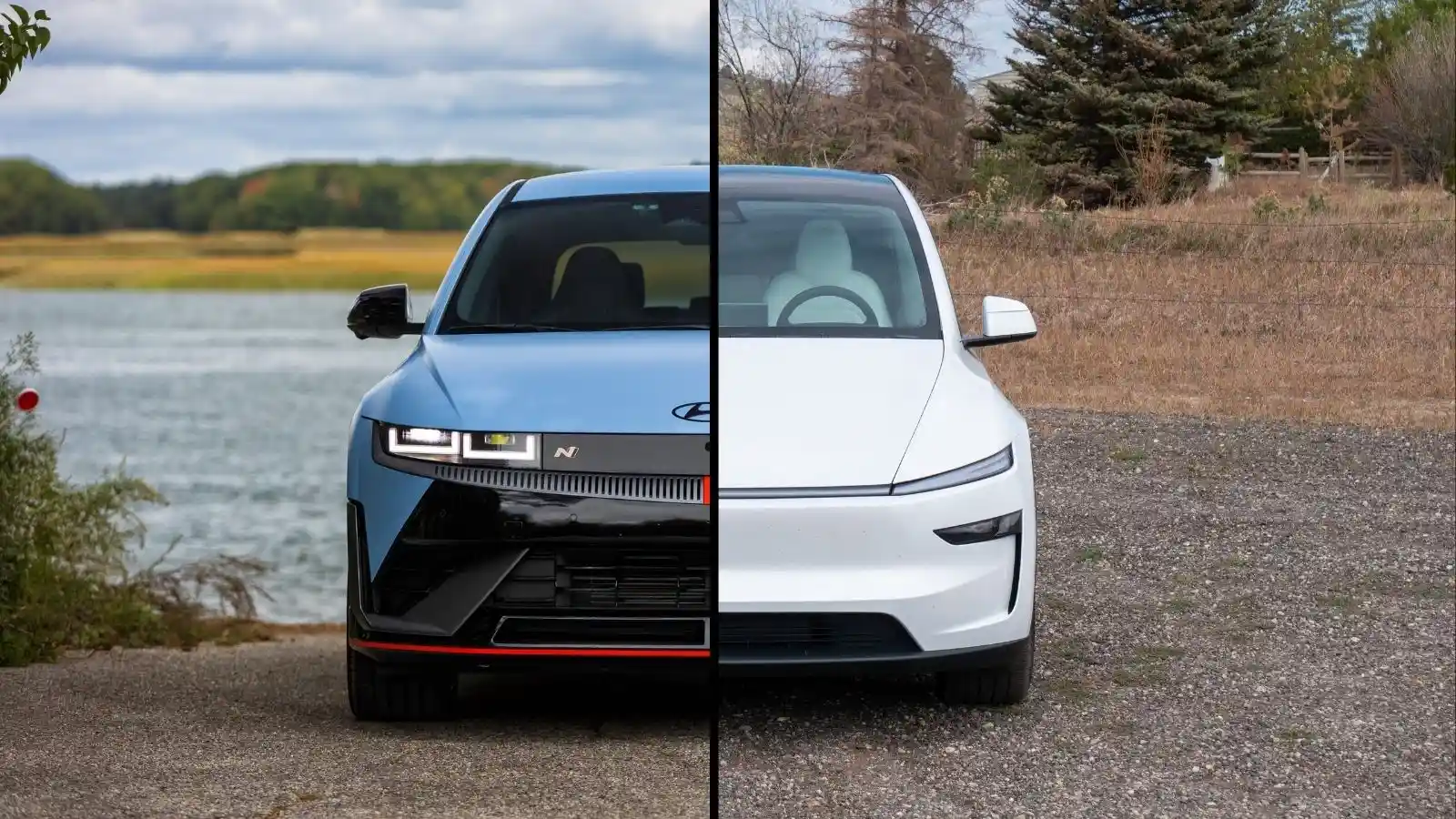

Fast Facts | Hyundai Ioniq 5 N vs. Tesla Model Y Performance
⚙️Horsepower: The Hyundai Ioniq 5 N has up to 641 horsepower in N Grin Boost mode, while the Tesla Model Y Performance has 460 horsepower
🏁 Zero to 60 mph: The Hyundai Ioniq 5 N can sprint to 60 mph in 3.25 seconds, while the Tesla Model Y Performance can do it in 3.3 seconds
🔋EPA-Estimated Range: The Hyundai Ioniq 5 N has an EPA-estimated range of 221 miles, while the Tesla Model Y Performance has an EPA-estimated range of 306 miles
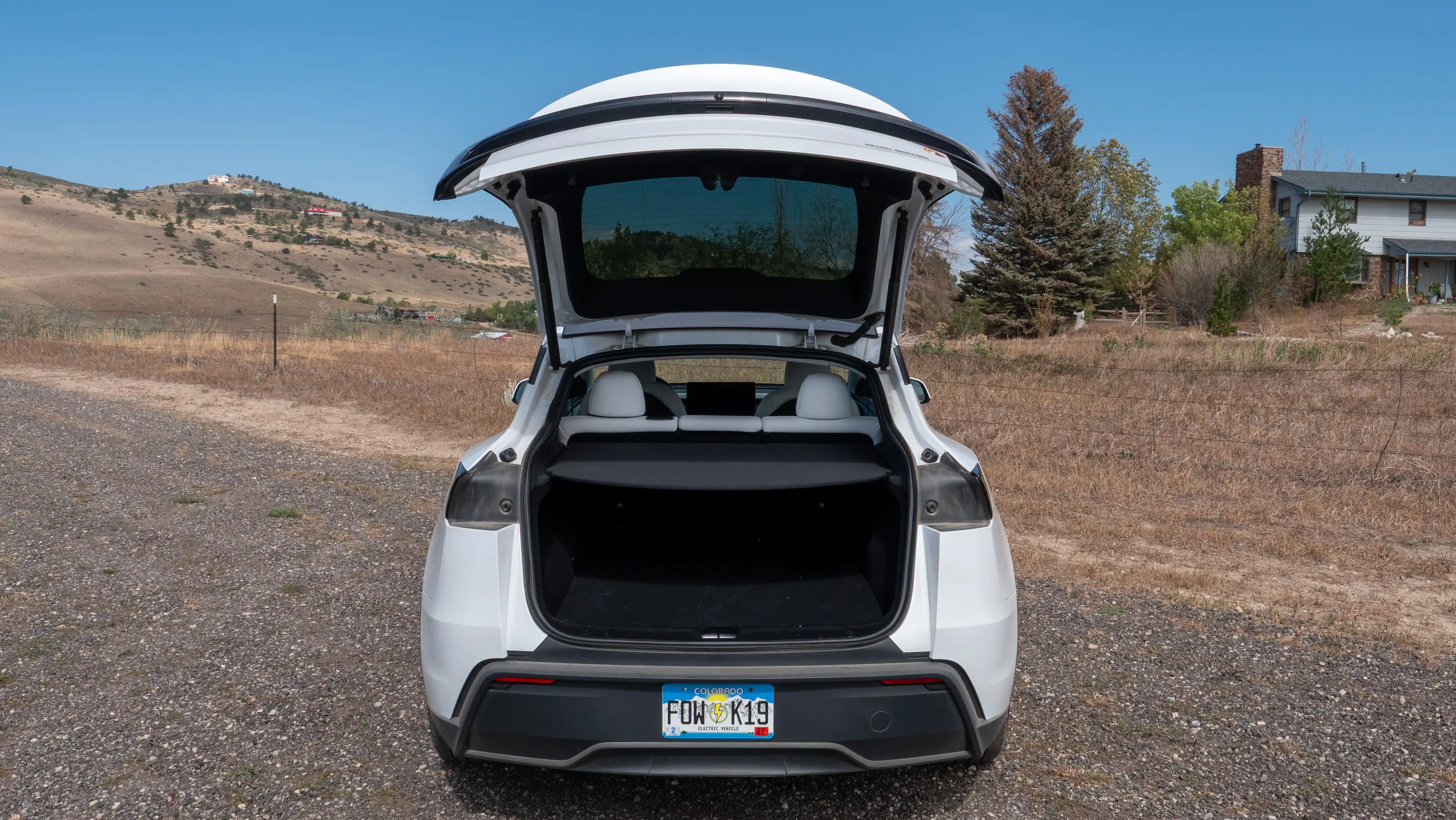
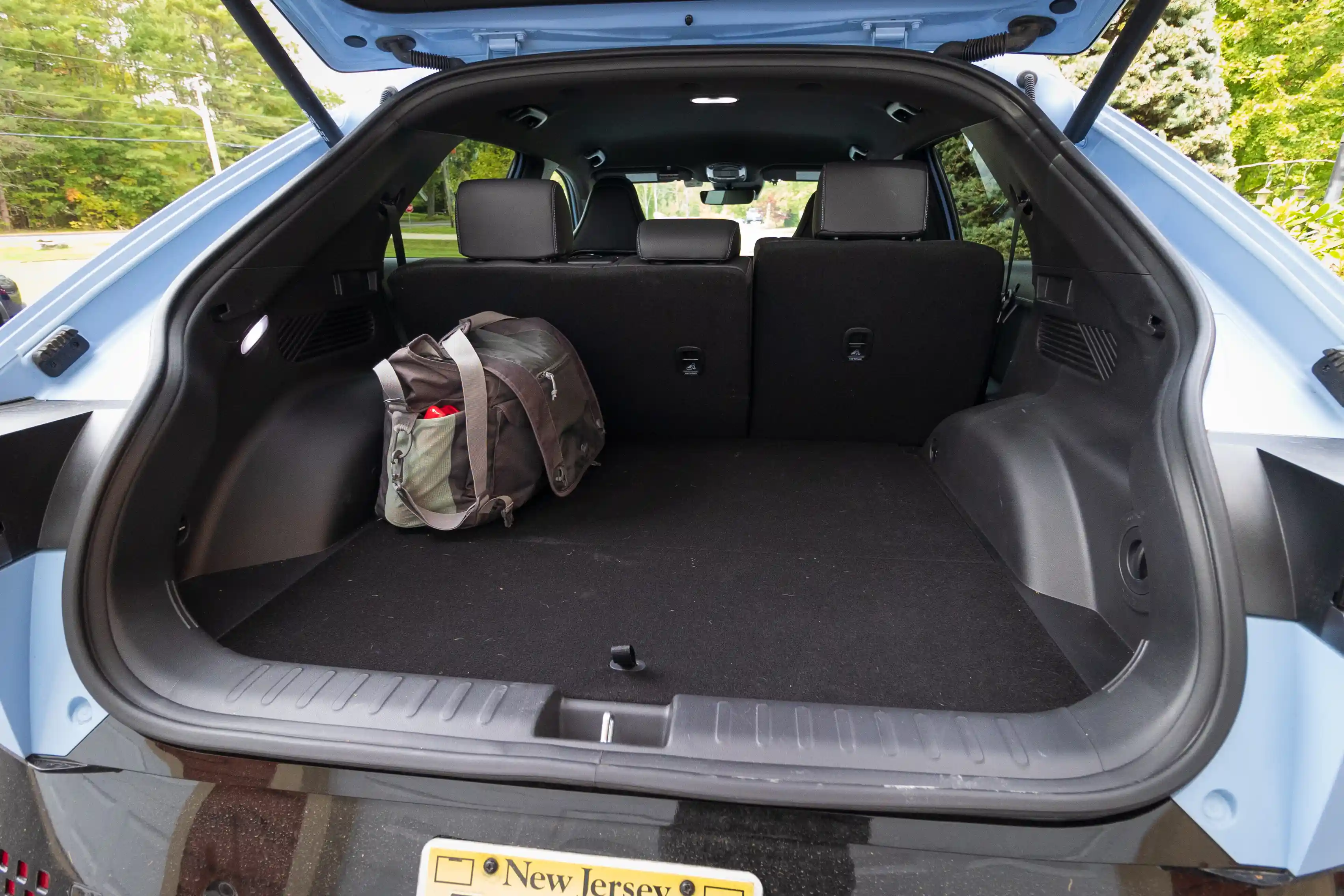
🧳Cargo Space: The Hyundai Ioniq 5 N has up to 59.3 cubic feet of space with the rear seats folded, while the Tesla Model Y Performance has 71.4 cubic feet of space with the rear seats folded
💰MSRP: The Hyundai Ioniq 5 N starts at $62,550, while the Tesla Model Y Performance starts at $59,630
Performance EV Means Something Different to Hyundai and Tesla
We've all heard of a sports car, tuned for performance and built for weekends on the track. But there's a whole new frontier for sports cars now: the all-electric kind. Turns out electrification can work really well for anyone who wants a quick car, since an electric motor's instant torque can send you to 60 mph in a truly mind-blowing sprint. Hyundai and Tesla have each taken their own shot at that decades-old formula of speed and track performance. Let's see how the Ioniq 5 N and the Model Y Performance stack up against each other.
Exterior Design and Dimensions
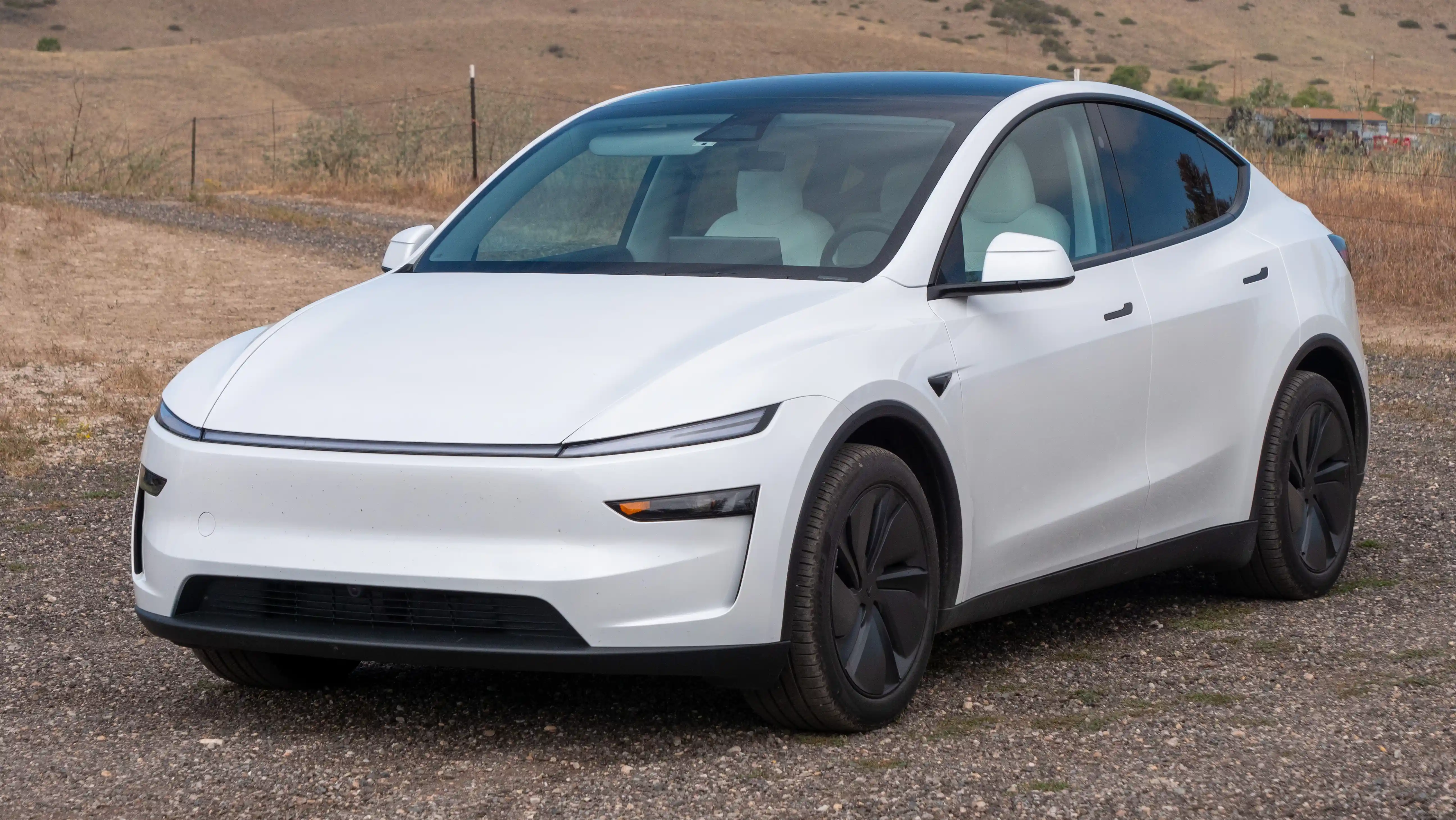
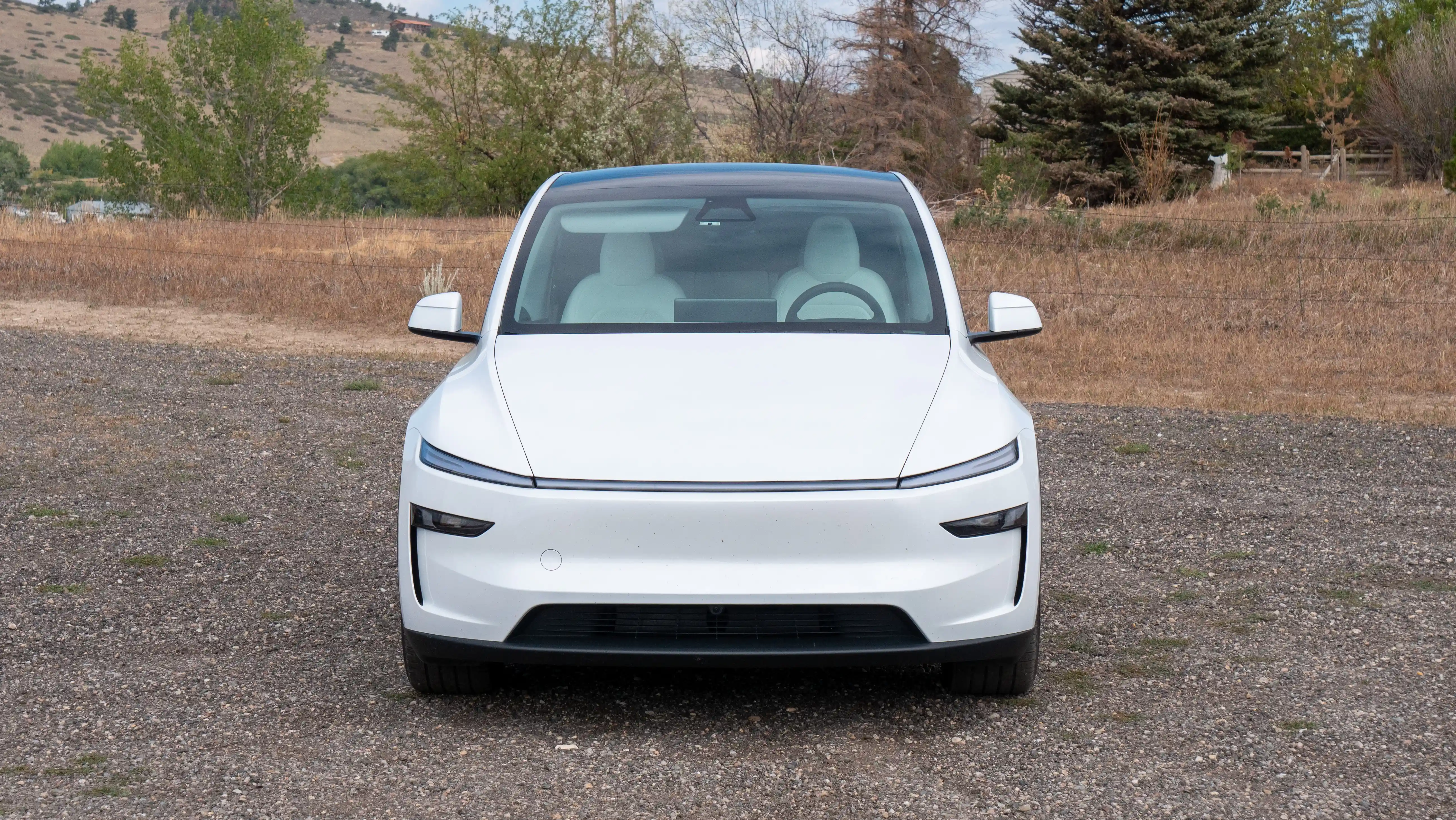
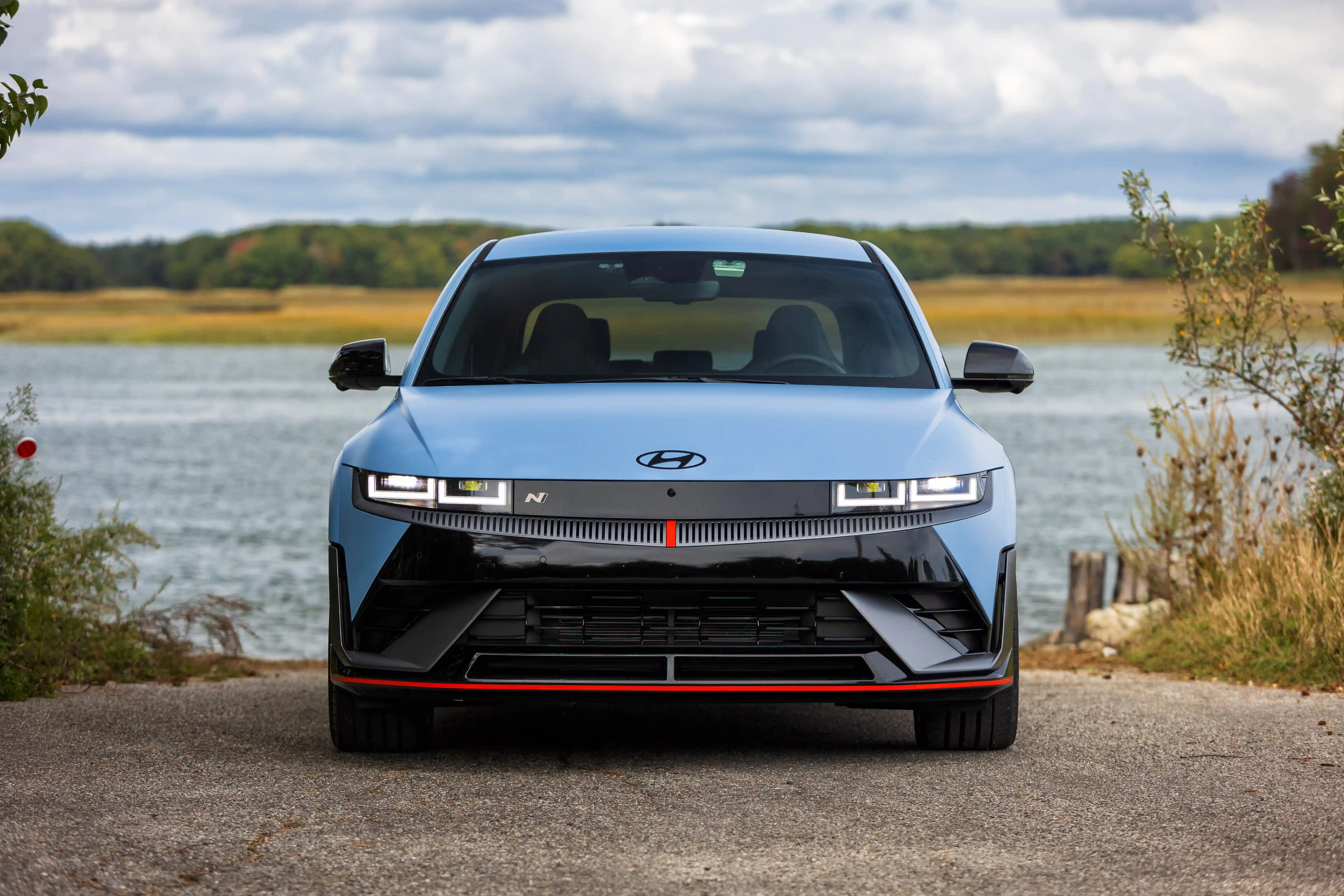
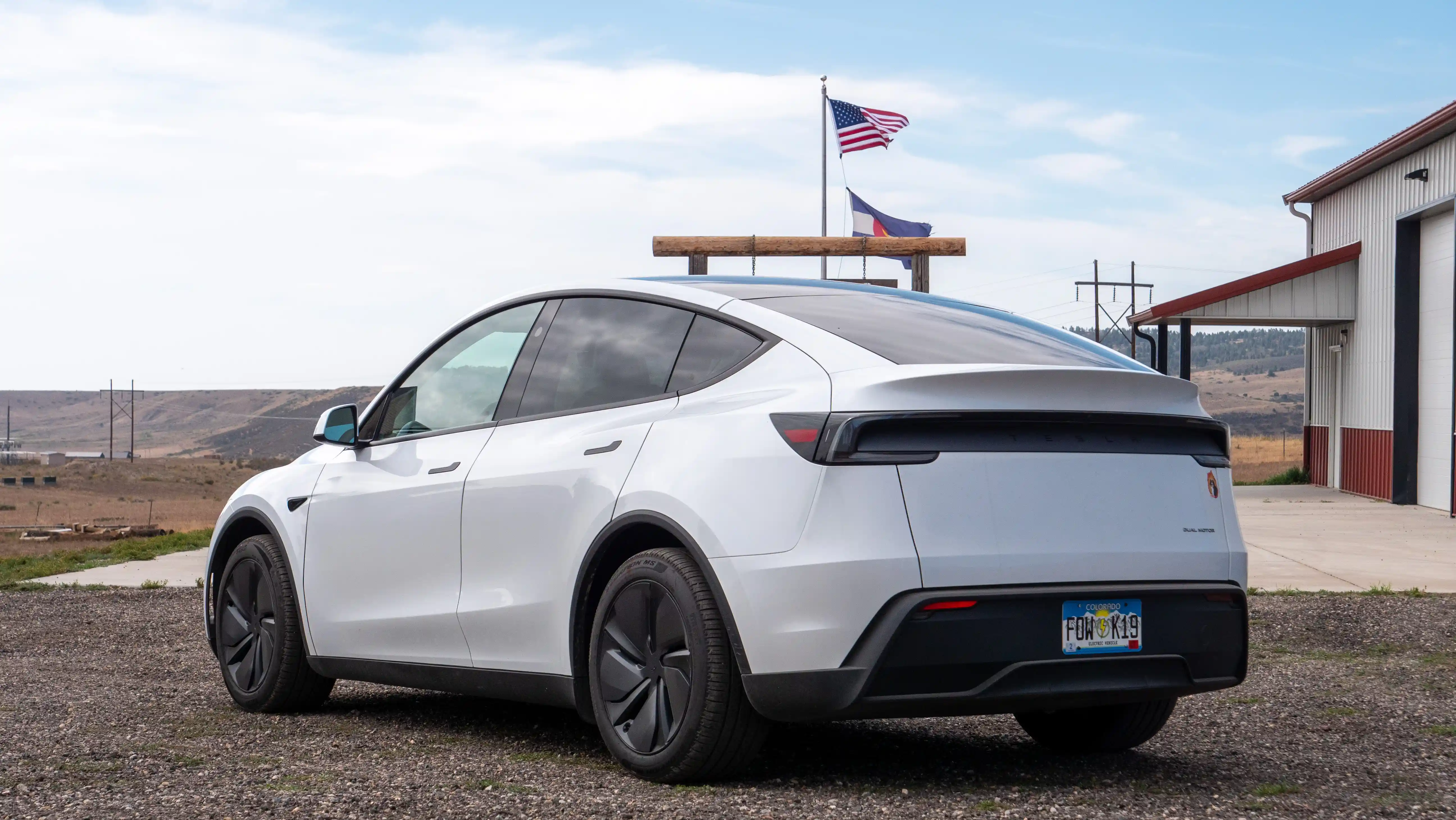
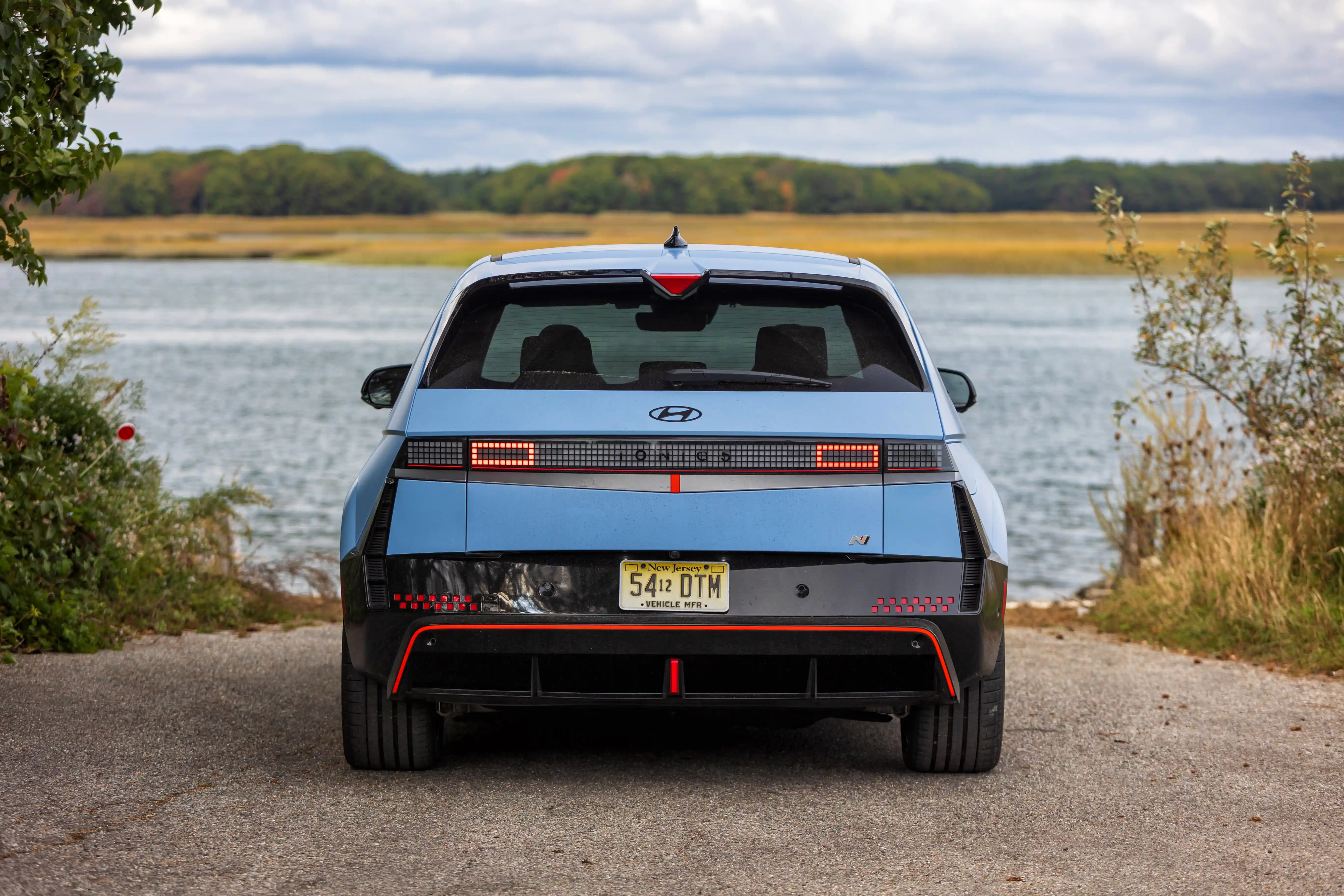
These two are pretty close in size, though the Model Y Performance is slightly taller and longer. They take completely different approaches to styling, however: the Ioniq 5 N combines a 1980s-inspired hot-hatch shape with modern digital detailing and definitely leans into the track persona, while the Model Y Performance keeps things smooth, sleek, and stealthy.
The Ioniq 5 N wears forged N 21-inch alloy wheels wrapped in Pirelli P ZERO performance tires, plus active grille shutters and air flaps that help manage airflow at speed. It's dressed in a ton of N-exclusive styling that sets it apart from the regular Ioniq 5, including an N-exclusive front grille, front and rear bumpers, rear diffuser, side skirts, and a rear spoiler, all set off by Gloss Black and Luminous Orange accents.
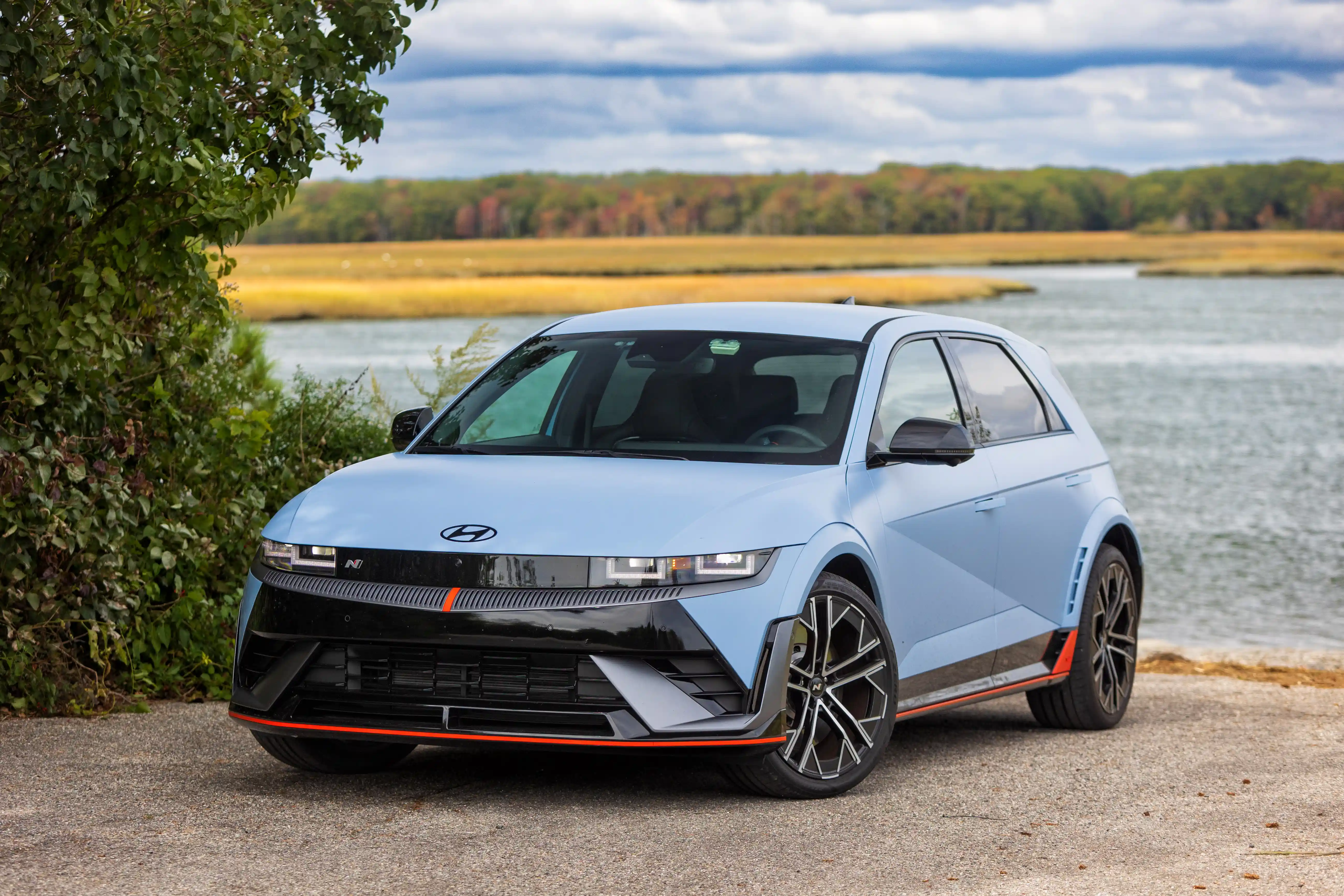
The Model Y Performance's look is more subtle. It gets Performance badging, a carbon-fiber spoiler, and a rear diffuser, but otherwise it looks a lot like a regular Model Y. It rides on 21-inch Arachnid 2.0 wheels, though they're wrapped in all-season rubber instead of dedicated performance tires.
Interior Space and Tech
If cargo space is a priority, the Model Y has roughly 5 to 12 cubic feet more of space depending on the seat position. The Ioniq 5 N counters that with over 3 inches more shoulder room for passengers in the back.
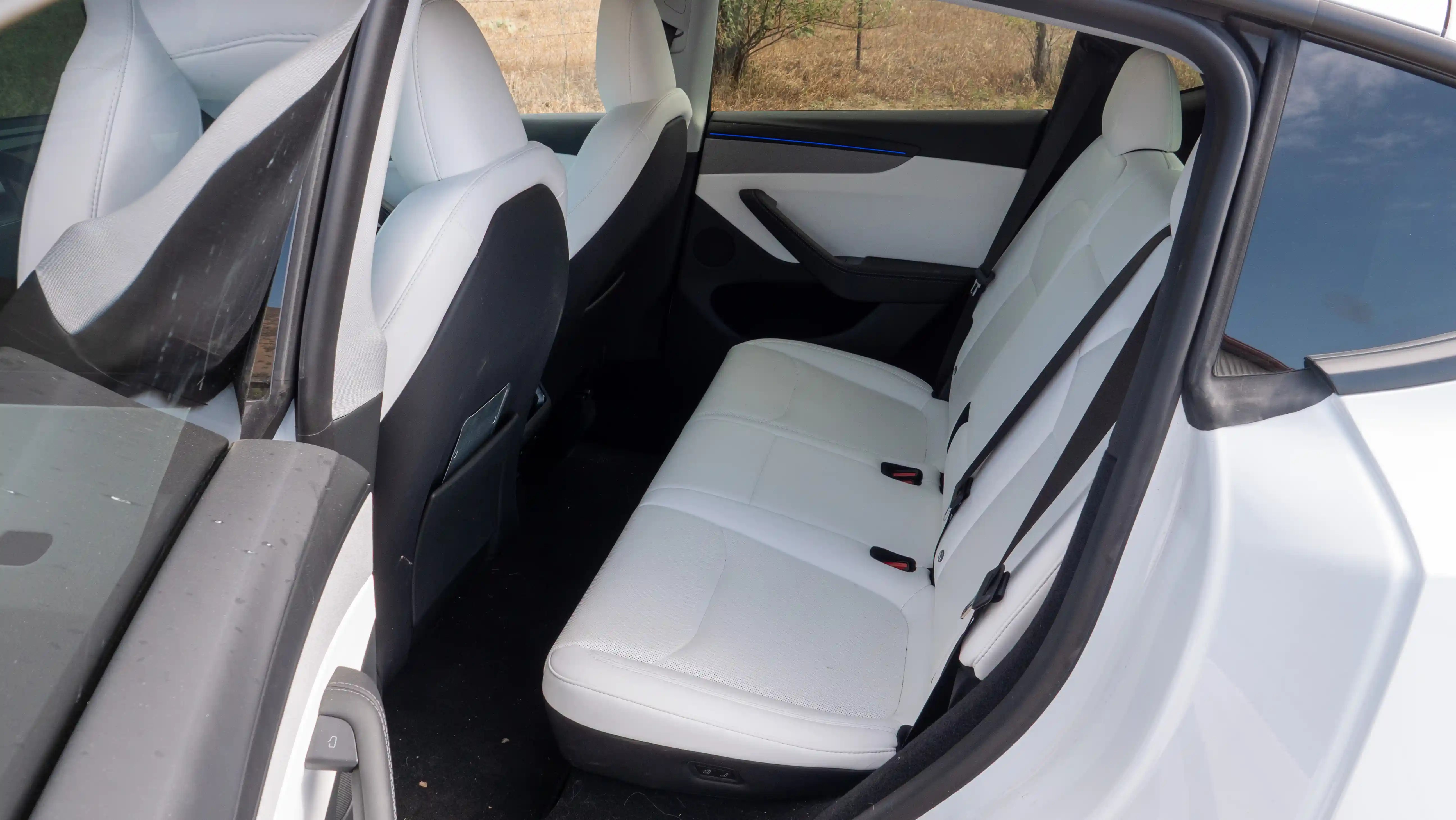
Both come with heated and ventilated front seats, synthetic leather upholstery, a heated steering wheel, customizable ambient interior lighting, folding rear seats with recline, wireless device charging, Wi-Fi connectivity, five USB-C ports, and aluminum pedals.
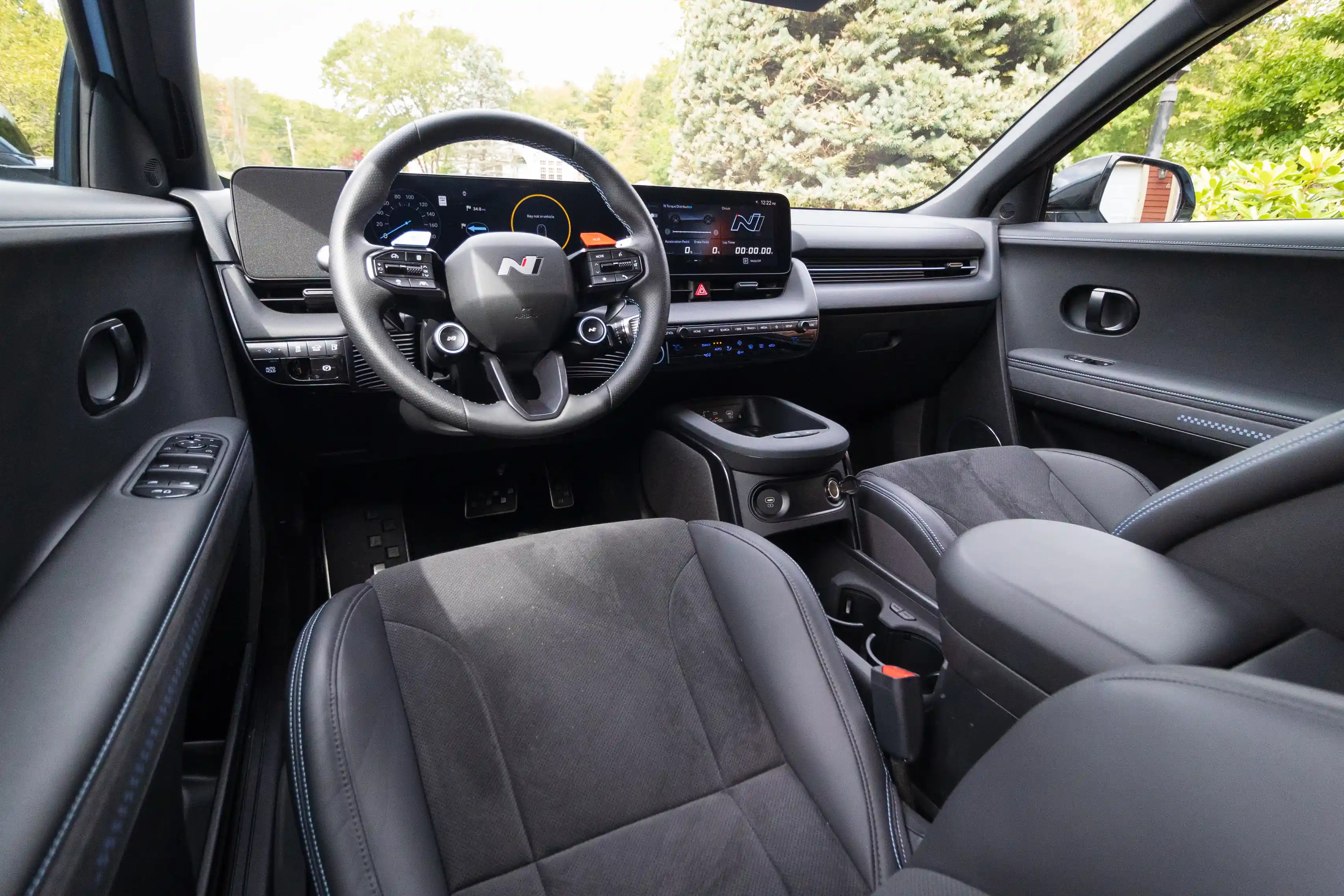
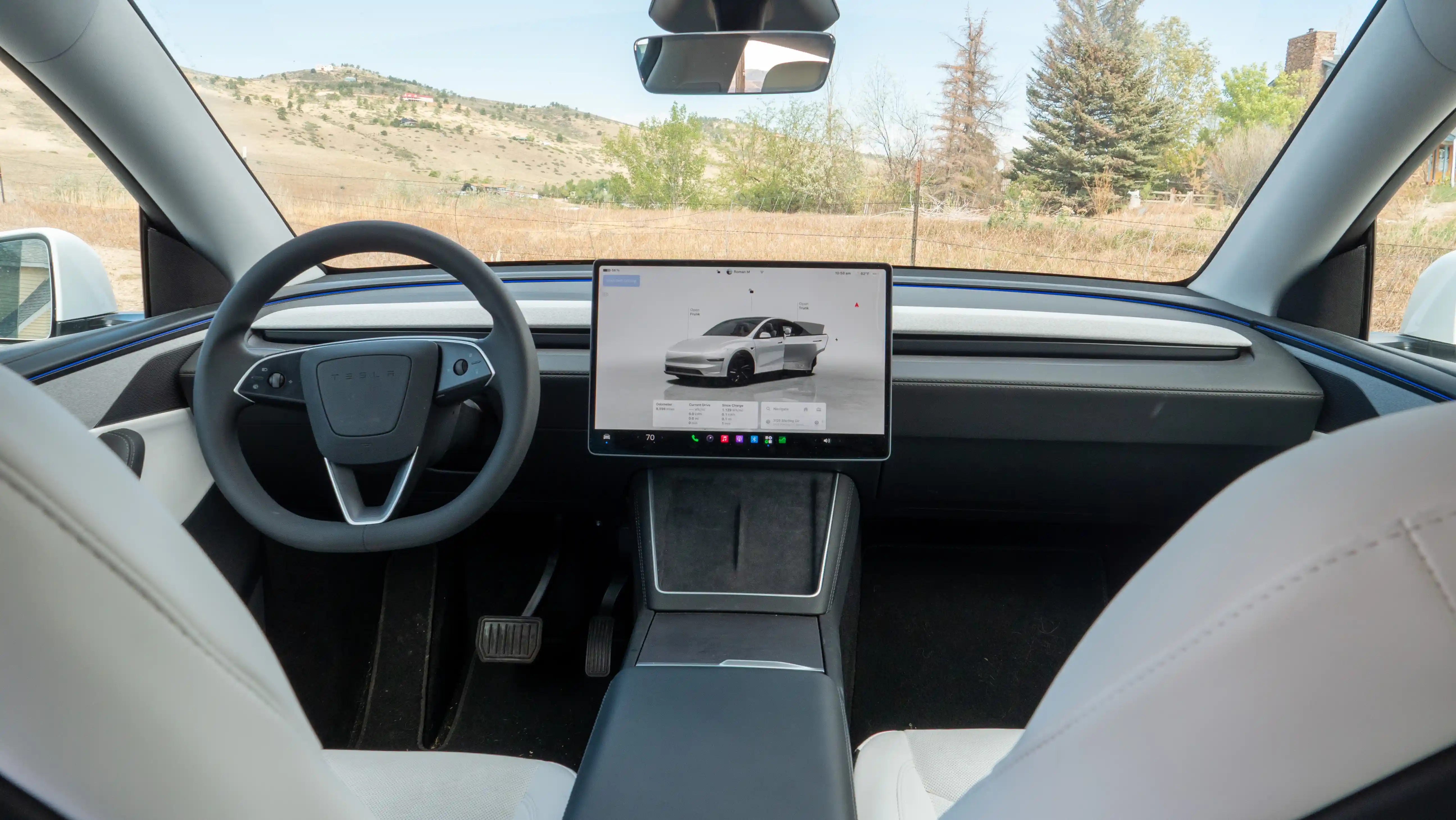
The two brands really part ways in tech. The Ioniq 5 N keeps things more traditional, with a 12.3-inch gauge cluster, a 12.3-inch infotainment screen, and wireless Apple CarPlay and Android Auto. The Model Y Performance takes a minimalist, screen-forward approach instead. It doesn't have a gauge cluster, just a 16-inch central touchscreen that shows everything, including your speed. It also only runs Tesla's own software, so no Apple CarPlay or Android Auto here. Rear-seat passengers get their own 8.0-inch touchscreen, too.
Both SUVs come well-equipped on the safety front, with automatic emergency braking, forward-collision warning, blind-spot monitoring, and lane-keeping assistance standard on each.
The Ioniq 5 goes further with a longer list of standard driver-assistance features, including a surround view monitor, a blind-spot view monitor, rear cross-traffic collision-avoidance assist, parking distance warning for reverse, forward, and side, parking collision-avoidance assist in reverse, driver-attention warning, forward-attention warning, safe-exit assist, and advanced rear occupant alert.
Both offer some help on the highway. The Ioniq 5 N comes with highway driving assist and navigation-based smart cruise control, both of which add comfort to long highway drives. The Model Y Performance can add Full Self-Driving, which lets drivers take their hands off the wheel (though their eyes should stay on the road) and handles non-highway driving. It's not standard, though. It'll cost you $99 a month, for as long as you want to use it.
Powertrain and Fuel Economy
Both cars are quick, with just a tenth of a second between them to 60 mph, with the Ioniq 5 N hitting 3.25 seconds and the Model Y Performance 3.3. Hyundai holds a massive horsepower advantage, though, at 641 horsepower to the Model Y Performance's 460.
The Ioniq 5 packs in a long list of driver-focused tech, including N e-Shift (which fakes the feel and sound of a gas-powered gear change), N Active Sound+ (which pumps out fake engine noises through external and internal speakers), N Launch Control, adjustable N Torque Distribution (which allows you to customize how much torque you want to go to the front or rear wheels), and even track-ready features like N Battery Preconditioning (which sets the battery to the ideal temperature for performance-minded driving) and N Drive Optimizer Pro with 10 stages (which enables instant drift initiation by replicating clutch torque kick action). There's also a rear electronic limited-slip differential and huge 15.7-inch front brake rotors clamped by 4-piston monoblock calipers. It's definitely made for the track.
The N’s simulated transmission and soundtrack sound gimmicky on paper, but they fundamentally change the feedback you get behind the wheel, so see what the Ioniq 5 N is like as an everyday 641-hp performance EV ➜
The Model Y Performance keeps things a little simpler, with an Insane mode for quick acceleration, electronic continuously variable shock absorbers, and adaptive suspension, plus Performance-spec red brake calipers.
Charging
The Model Y Performance shows a substantial EPA-estimated range advantage, rated for about 85 more miles on a full charge. In practice, though, Teslas tend to fall short of their EPA numbers. Most real-world tests land around 290 to 295 miles. The Ioniq 5 N, on the other hand, tends to land closer to 250 miles in mixed driving. Even so, that's still about a 40-mile difference. Much of that gap comes from Hyundai's choice to use high-performance summer tires instead of lower-rolling-resistance all-season tires.
EPA range is useful for comparing EVs, but test procedure, speed, temperature, and tires can make actual highway results very different, so see how EPA-estimated EV range is calculated ➜
The Ioniq 5 N counters with truly impressive charging speeds. At a 350 kW DC fast charger, it can go from 10 to 80 percent in just 18 minutes, adding about 176 miles in that time, versus 144 miles for the Model Y Performance in the same window. The Hyundai also holds its charging speed more consistently: the Tesla peaks around 250 kW at 25 percent but drops below 100 kW by the halfway point, while the Ioniq 5 N's battery cooling keeps it near 150 kW up to 70 percent charge and still around 125 kW at 80 percent.
The 2026 Hyundai’s fastest charging now requires its included CCS adapter even though the car has a native NACS port, so see how NACS, CCS, and EV charging adapters work together ➜
Price
The Model Y Performance undercuts the Ioniq 5 N by just under $2,000, with more standard range to boot. The Ioniq 5 N definitely has more driver-assistance and performance features at its starting price, though.
What's It Like to Drive?
Despite having nominal performance numbers that are surprisingly close, these two cars couldn’t be more different to drive. The Model Y Performance feels pretty much like any other Tesla, just with faster acceleration. It’s relatively quiet, and the refreshed version that debuted in 2025 rides better than earlier models. The EV demeanor means the acceleration can catch you by surprise if you’re not paying close attention.
The Hyundai is more evocative of something like a VW Golf R or Subaru WRX STi. In normal driving mode, it behaves much like any Ioniq 5, just quicker. But engage any of the N modes, and this machine transforms. The gauge cluster switches to a simulated tachometer with a 6,500-rpm redline and gear indicator, alongside motor and battery temperature gauges. The steering-wheel paddles switch from managing regenerative braking to simulating gear shifts, and the audio system pipes in a soundtrack modeled on the Hyundai Elantra N's engine note. Rip down a country road or around a track, and you’ll hear the nonexistent engine rev, and if you don’t upshift, it'll “bounce off a rev limiter.” Tap the right paddle, and you’ll feel a momentary torque dip, just like the lift you'd get shifting a manual transmission, as the "revs” drop and climb back toward redline. Those torque dips make the Ioniq 5 N accelerate slightly more slowly in N mode than it would in Sport mode with boost enabled. But it’s a lot more fun. Hyundai's engineers say it's designed to recreate the feedback you’d get from a combustion sports car, since the standard EV driving experience can feel a bit disconnected, almost like driving in a video game.
It sounded like it might be a gimmick going in, but the Ioniq 5 N turned out to be some of the most fun I've ever had driving an EV. For daily commuting, Normal mode is smoother, but N Grin mode will absolutely have you smiling from one curve to the next.
As for everything else, if you like absolute minimalism, the Tesla delivers it, but I much prefer having physical controls, especially for redirecting the air vents. In the Model Y Performance, you have to tap and drag the vents around on the touchscreen, which gets old fast while you’re driving.
Which One's Right for You
If what you want is a Model Y that drives like the couple million other examples on the road, just quicker, the Model Y Performance is just right for you. If you want a classic hot hatch or road-going TCR race car that happens to be electric, the Ioniq 5 N, especially in its Performance Blue Matte paint, could be right up your alley. A couple of presses on the steering wheel transform it from a mainstream electric car into a canyon carver or track-day machine that will rival some of the best on the road. Neither is cheap, but the price difference between them is modest and the 5 N has personality for miles when you want it.
More Performance EVs Built to Entertain
Track Test: Tesla Model 3 Performance
Tesla’s sedan provides a more dedicated performance experience than the current Model Y Performance and shows what Tesla can do when handling matters as much as acceleration.
Read More ➜
Is the Kia EV6 GT Too Powerful for Its Own Good?
The EV6 GT shares Hyundai Motor Group’s high-performance EV foundations while offering another interpretation of extreme dual-motor speed.
Read More ➜
First Look: 2026 Hyundai Ioniq 6 N Brings Track-Ready Performance
Hyundai’s next N EV builds on the 5 N formula with even more track-focused engineering and a lower sedan body.
Read More ➜