
Fast Facts | Ford Mustang Mach-E vs. Tesla Model Y
⚙️Horsepower: The Ford Mustang Mach-E has up to 480 horsepower in GT and Rally trims, while the Tesla Model Y has up to 460 horsepower in Performance trim
🏁 Zero to 60 mph: Both crossovers can hit 60 mph in as little as 3.3 seconds in their quickest configurations
🔋EPA-Estimated Range: The Ford Mustang Mach-E offers up to 320 miles of EPA-estimated range, while the Tesla Model Y offers up to 357 miles of EPA-estimated range
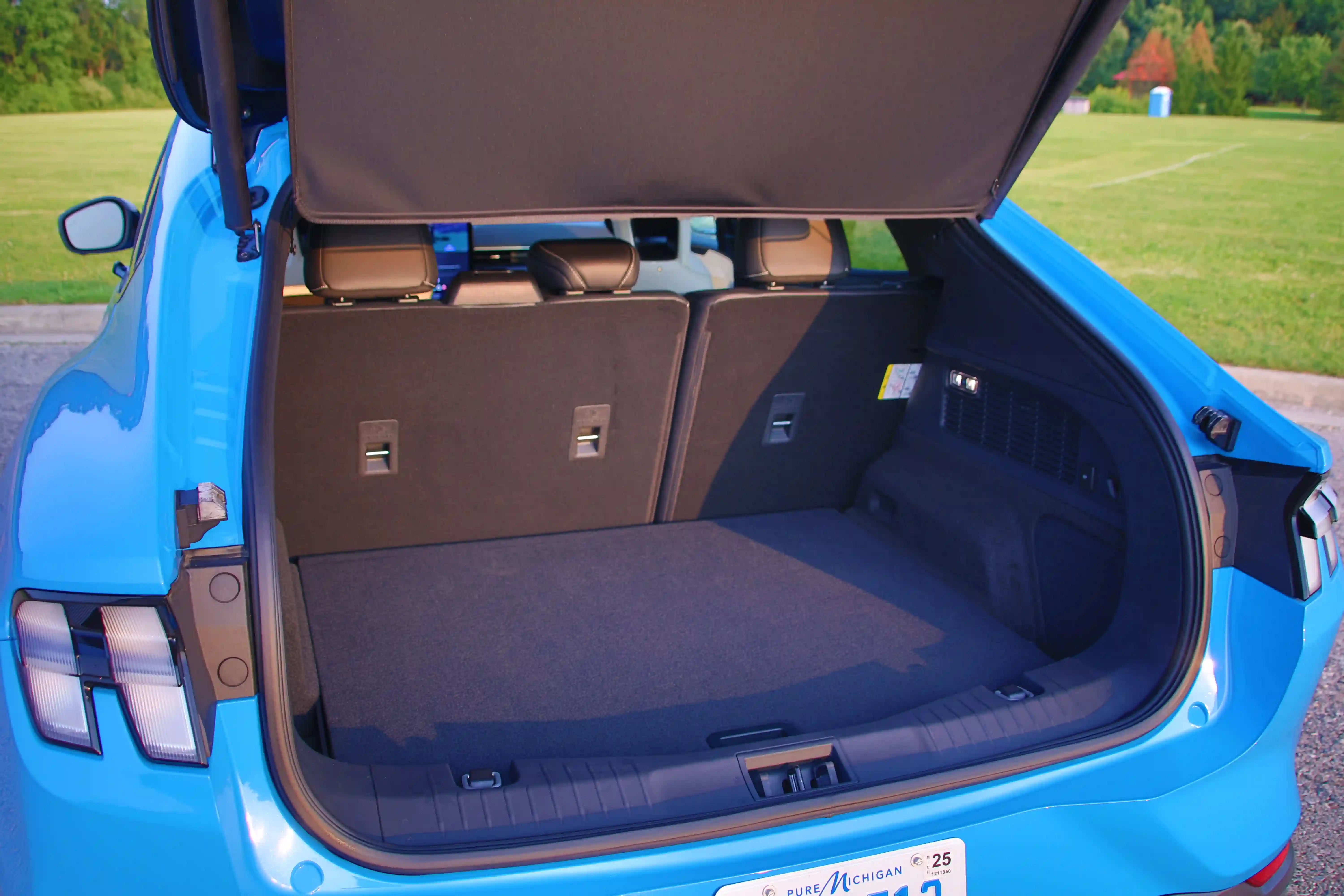
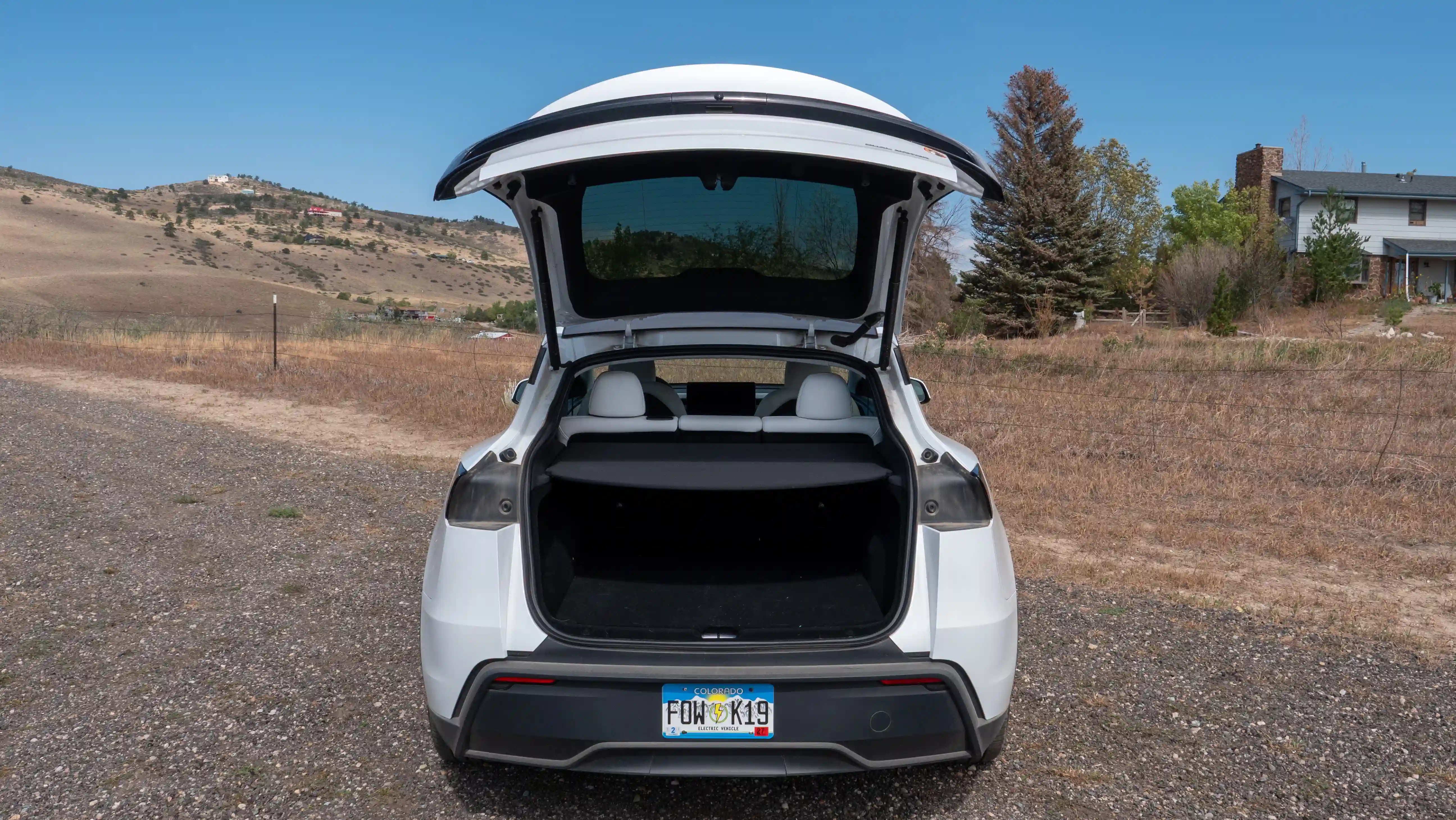
🧳Cargo Space: The Ford Mustang Mach-E has up to 59.7 cubic feet of space with the rear seats folded, while the Tesla Model Y has up to 71.4 cubic feet of space with the rear seats folded
💰MSRP: The Ford Mustang Mach-E starts at $39,840, while the Tesla Model Y starts at $41,630
Two EV Best-Sellers, Two Very Different Philosophies
Could there be two automakers on more opposite ends of the spectrum? Ford is a storied
Automaker with more than a century of history. Tesla is a relative newcomer that helped kick off the modern era of the EV. But maybe they're not so different after all. Both companies have been at the cutting edge of propulsion, whether that's Tesla's electric approach or Ford's engines. However alike or different the automakers themselves are, they've ended up building two very similar EV crossovers: the Ford Mustang Mach-E and the Tesla Model Y. Let's see how they compare.
Exterior Design and Dimensions
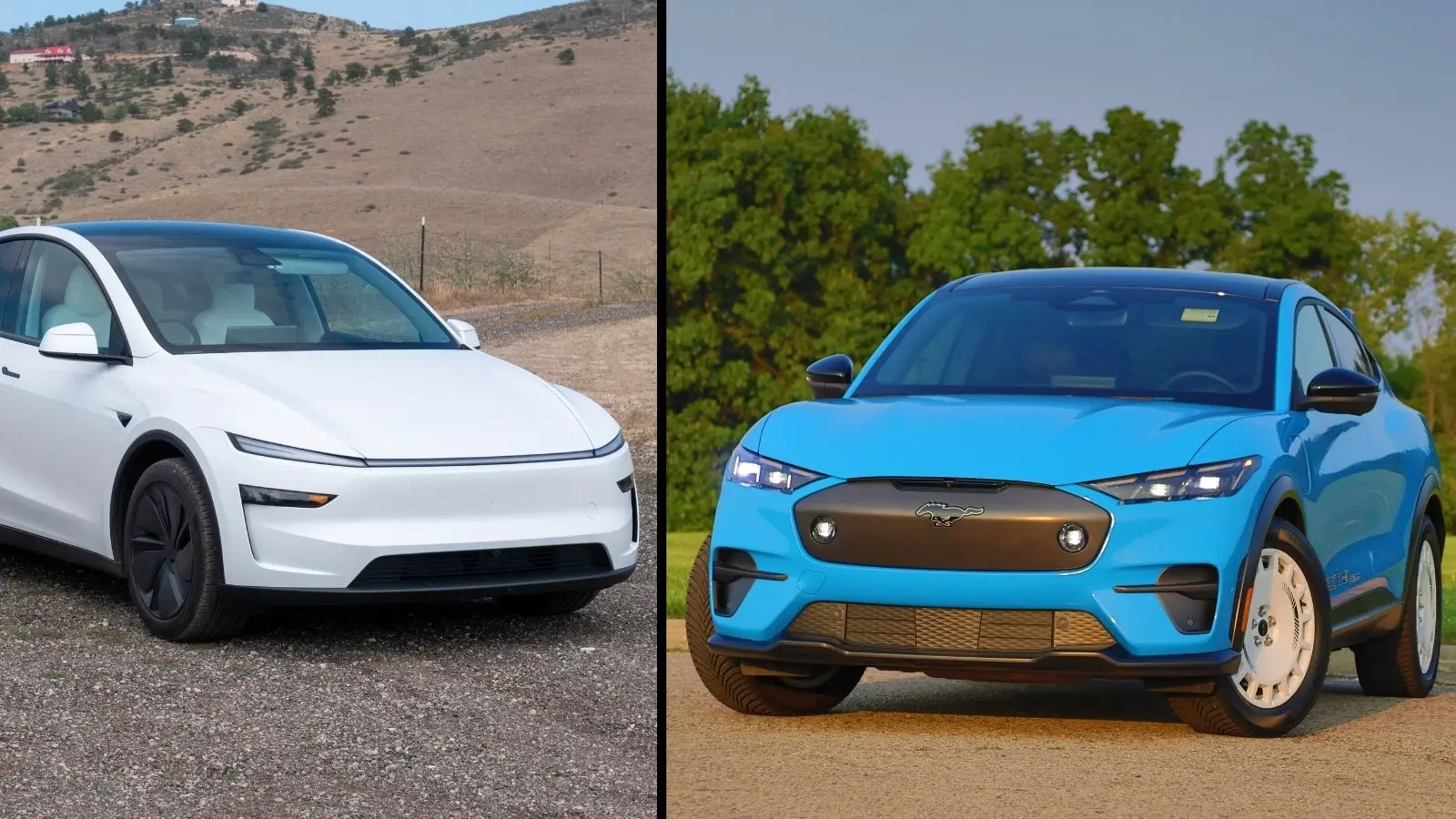
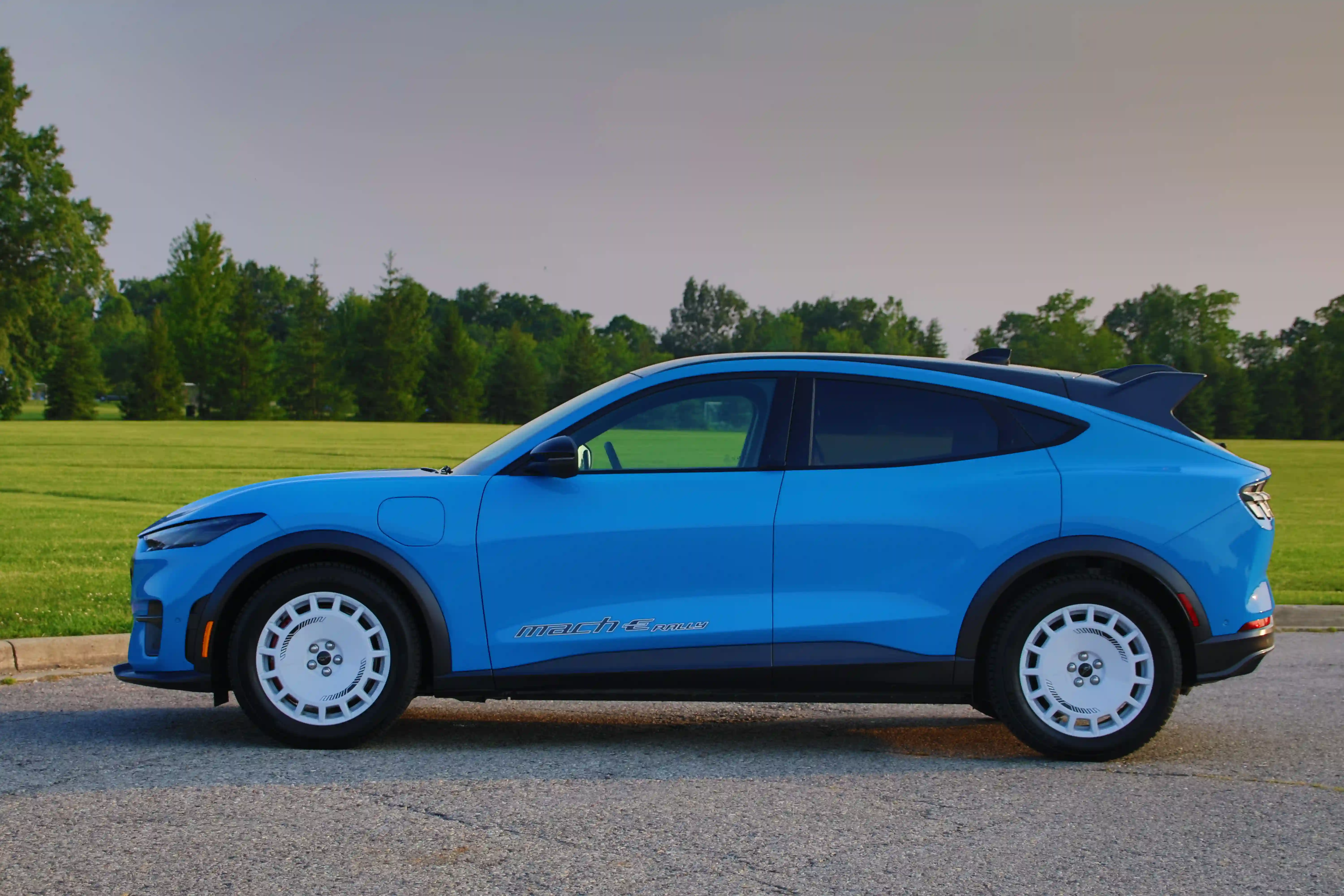
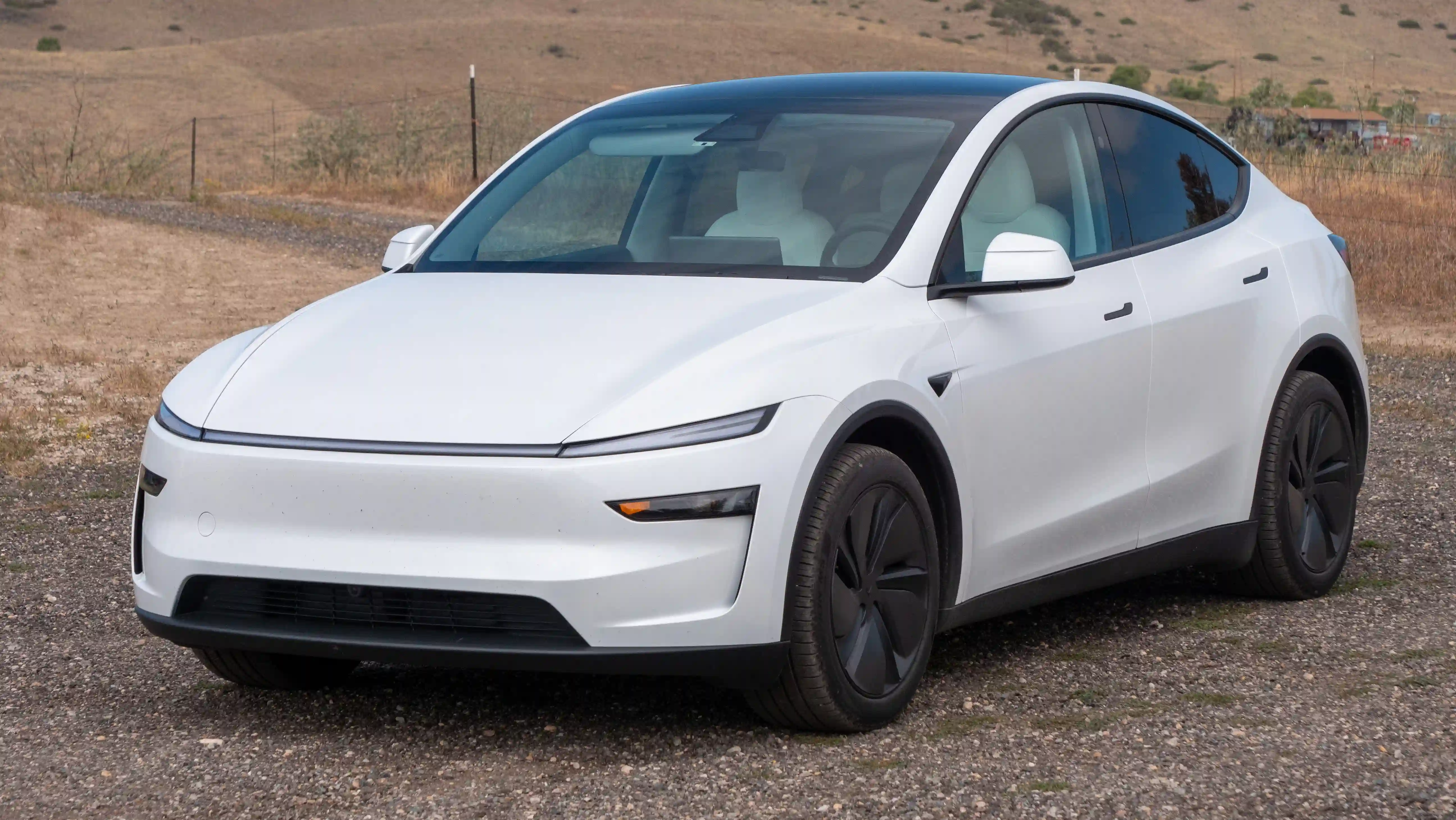
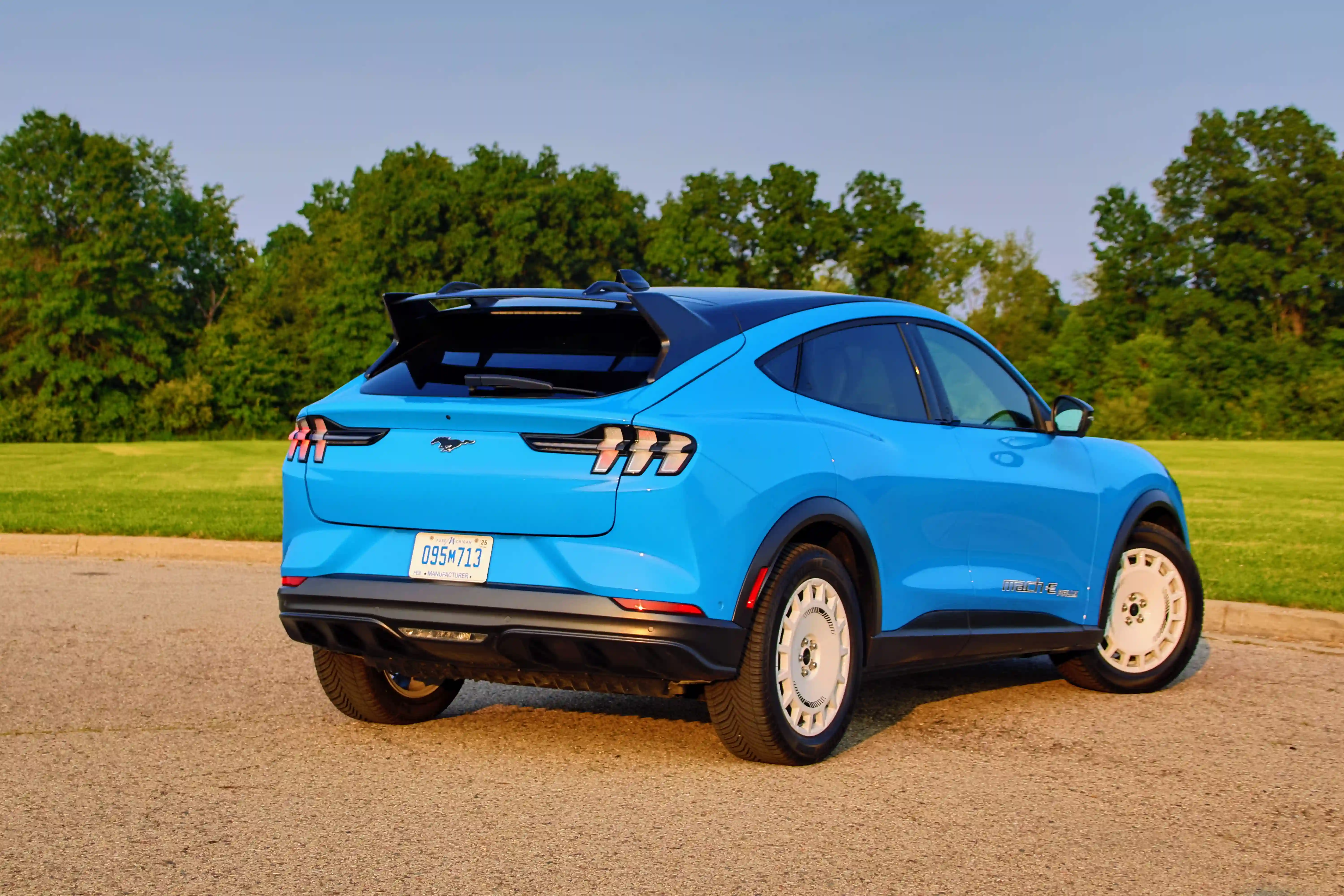
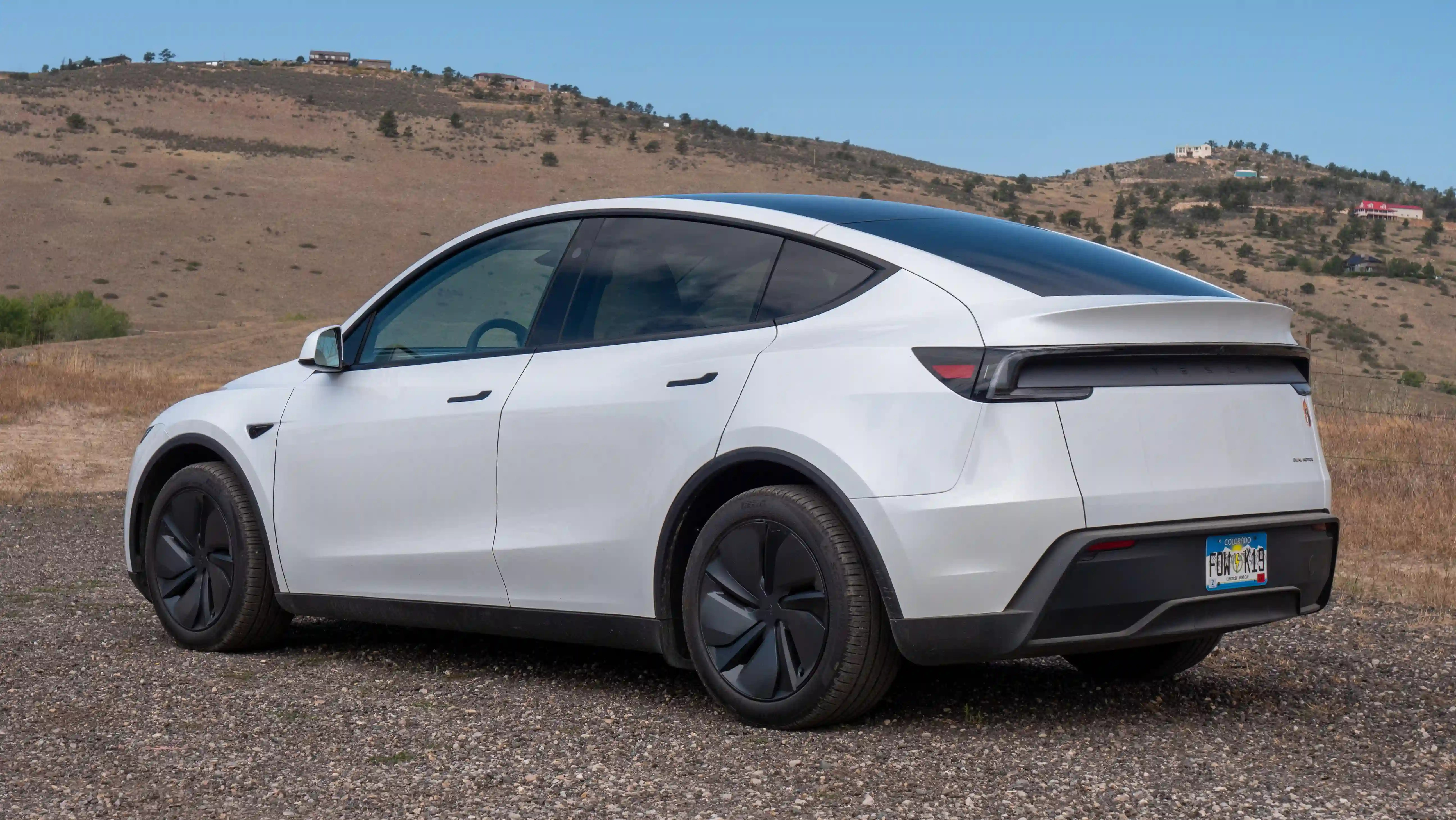
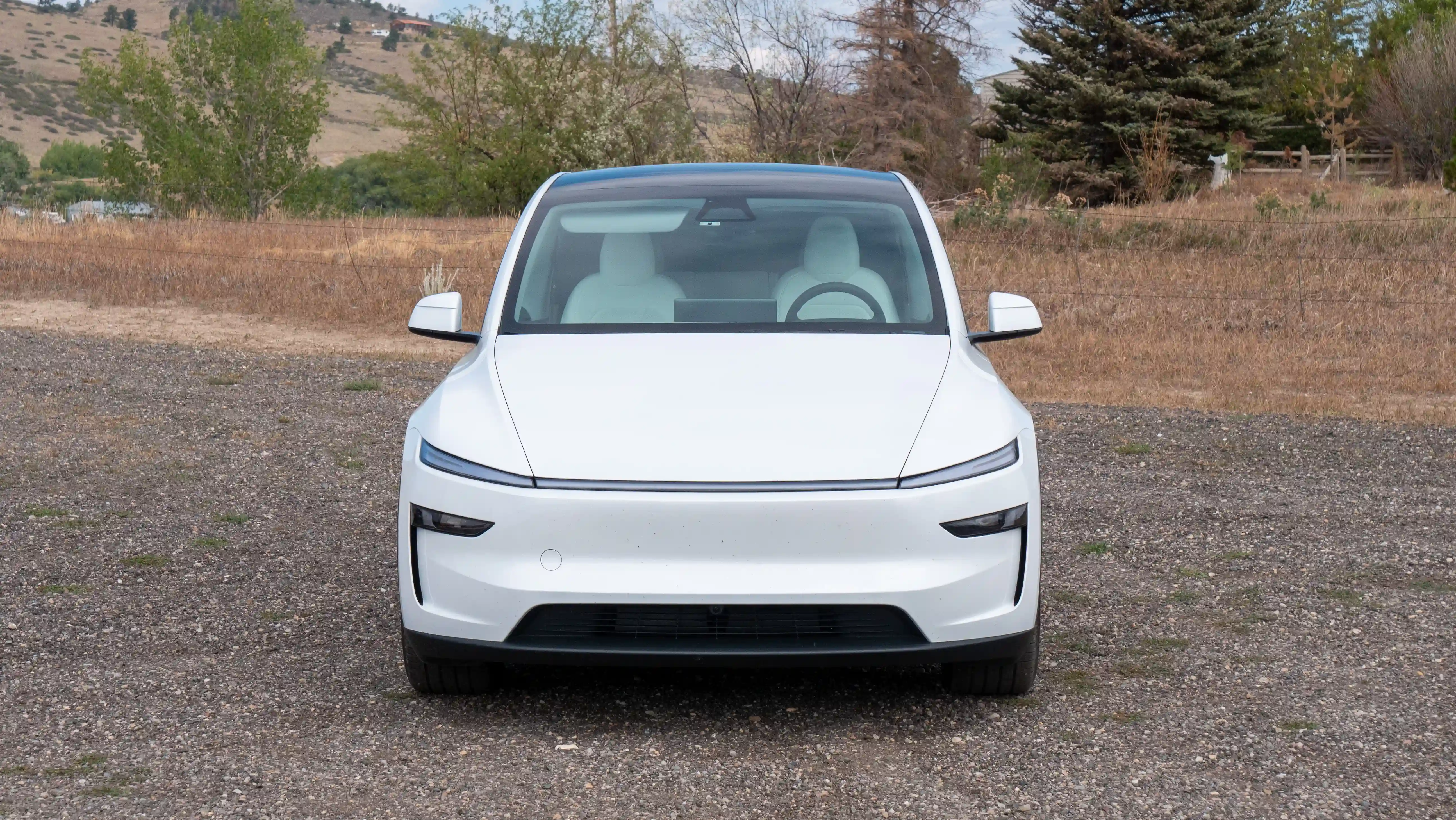
The Model Y is the bigger vehicle overall. It's 1.8 inches longer, 1.5 inches wider, and sits up to half an inch higher off the ground compared to the Mach-E, but these two crossovers look remarkably similar. If it weren't for the blue oval on the Mach-E's big "grille" and the Tesla's slightly narrower nose, you'd be forgiven for mixing them up. Around back, the Mach-E keeps the classic Mustang taillights and a spoiler, while the Model Y's glass roof flows into the rear window. The Model Y's liftgate has a subtle bump under the window that almost makes it look like a sedan's trunk, while the Mach-E clearly looks like an SUV.
Interior Space and Tech
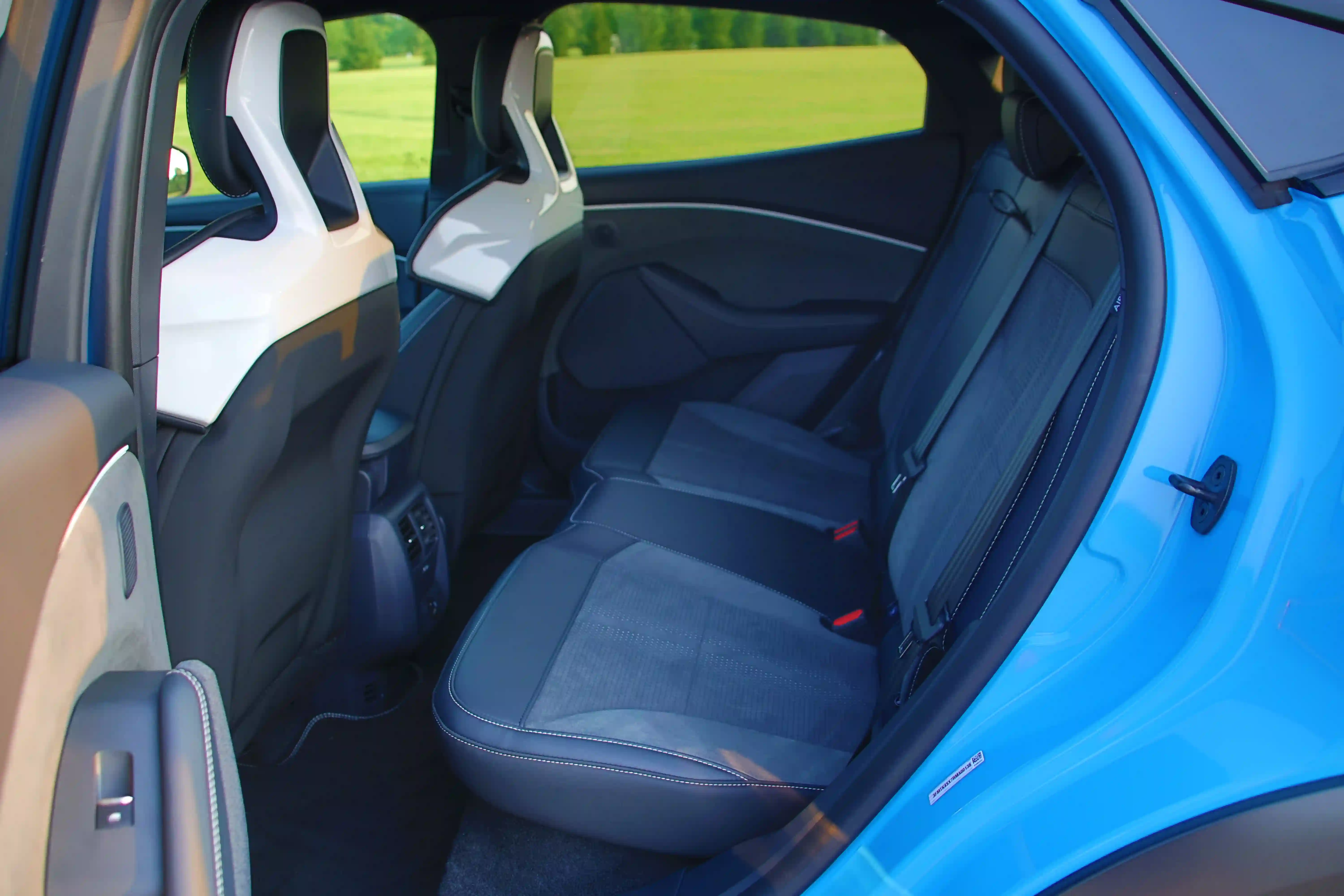
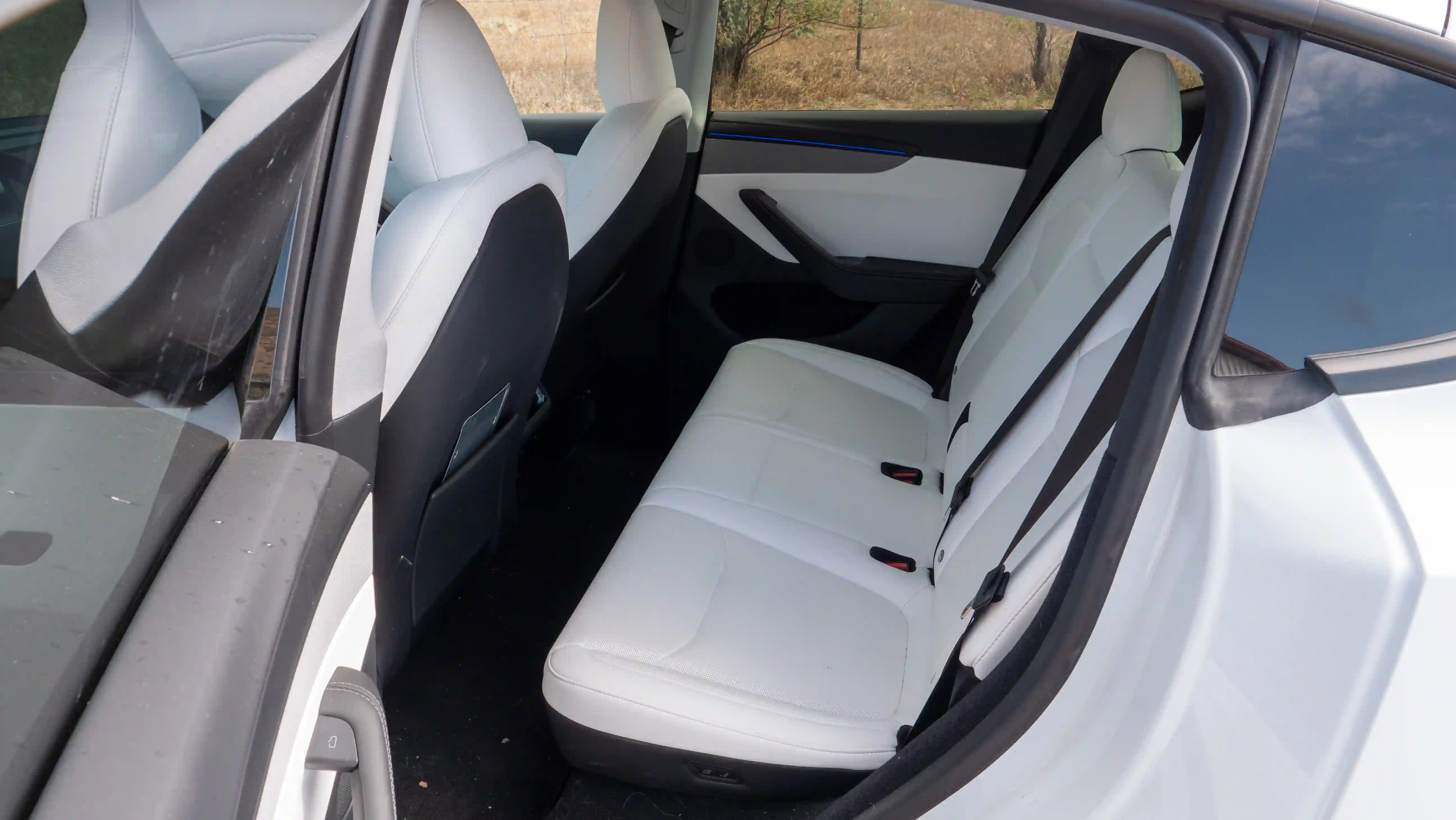
Despite being the smaller vehicle in terms of outside dimensions, the Mach-E wins on front-seat space, with 1.5 inches more of front legroom and roughly an inch more front shoulder room than the Model Y. The Model Y wins in the second row, though, with 2.4 more inches of rear legroom. The Model Y also wins on cargo space. With the rear seats up, the two are nearly identical, but fold them down, and the Model Y pulls ahead by roughly 11 to 12 cubic feet. Plus, as of 2026, the frunk is now optional on the Mach-E, while it's standard on the Model Y.
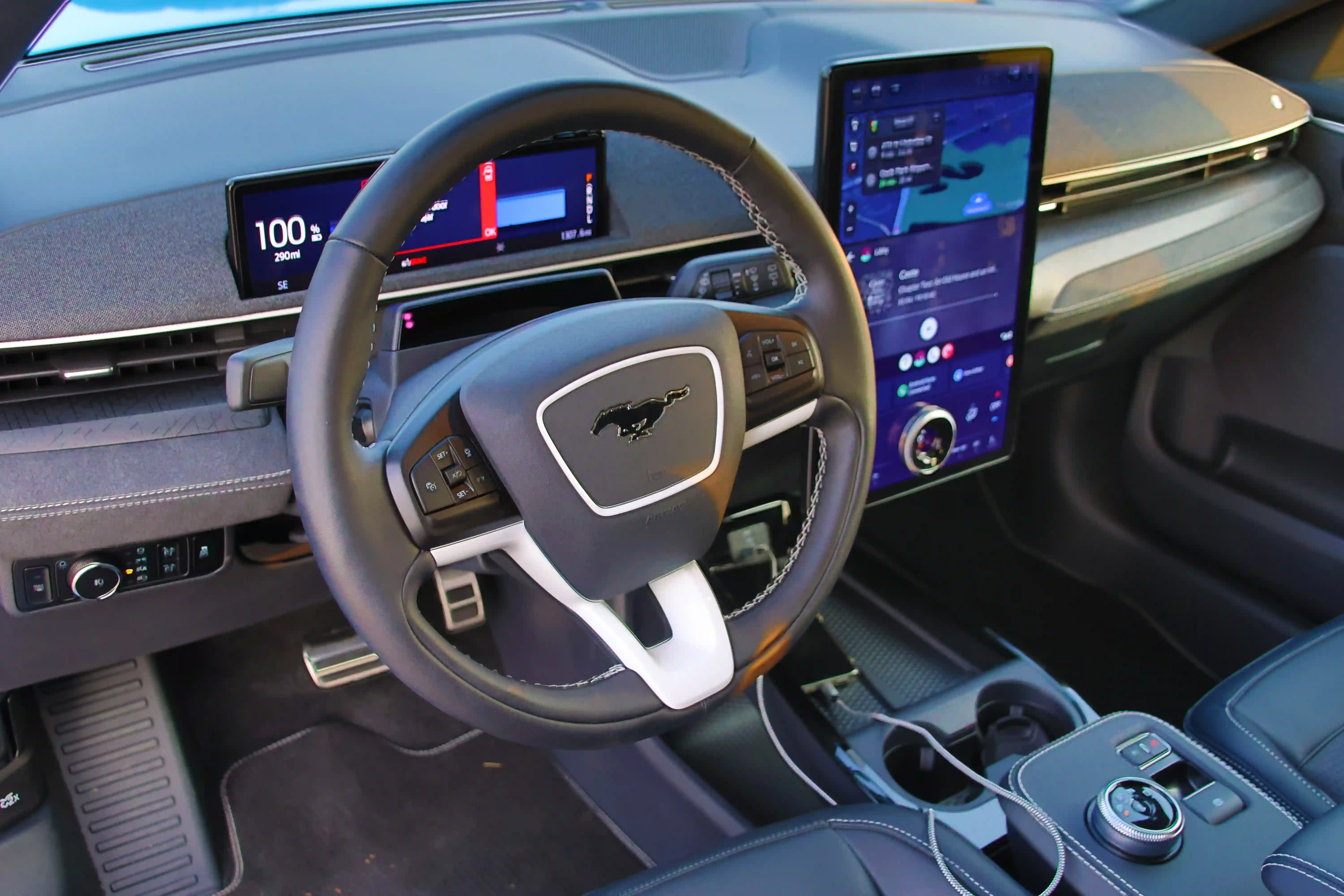
For standard features, the Mach-E comes with an eight-way power-adjustable driver's seat, a four-way manual passenger seat, a 60/40 split-fold-flat second row, a 15.5-inch touchscreen, a 10.2 digital instrument cluster, a wireless charging pad, USB ports in the first and second rows, 12-volt outlets up front and in the cargo area, wireless Apple CarPlay and Android Auto, a six-speaker audio system, and leatherette upholstery. Stepping up gets you a 10-way power-adjustable driver's seat, an eight-way power-adjustable passenger seat, heated front seats, a heated steering wheel, driver's seat memory, ambient interior lighting, a 10-speaker Bang & Olufsen sound system, heated and ventilated front seats, and a power liftgate.
The Model Y comes standard with a heated steering wheel, power-reclining front seats, heated front seats, vegan leather upholstery, a 16-inch touchscreen, a seven-speaker stereo, wireless phone chargers, USB ports, Tesla's Grok voice assistant, and a hands-free liftgate. Available upgrades include a panoramic glass roof, ambient interior lighting, ventilated front seats, power-folding and reclining second-row seats, heated second-row seats, perforated vegan leather, an 8-inch second-row touchscreen, and a 15-speaker audio system.
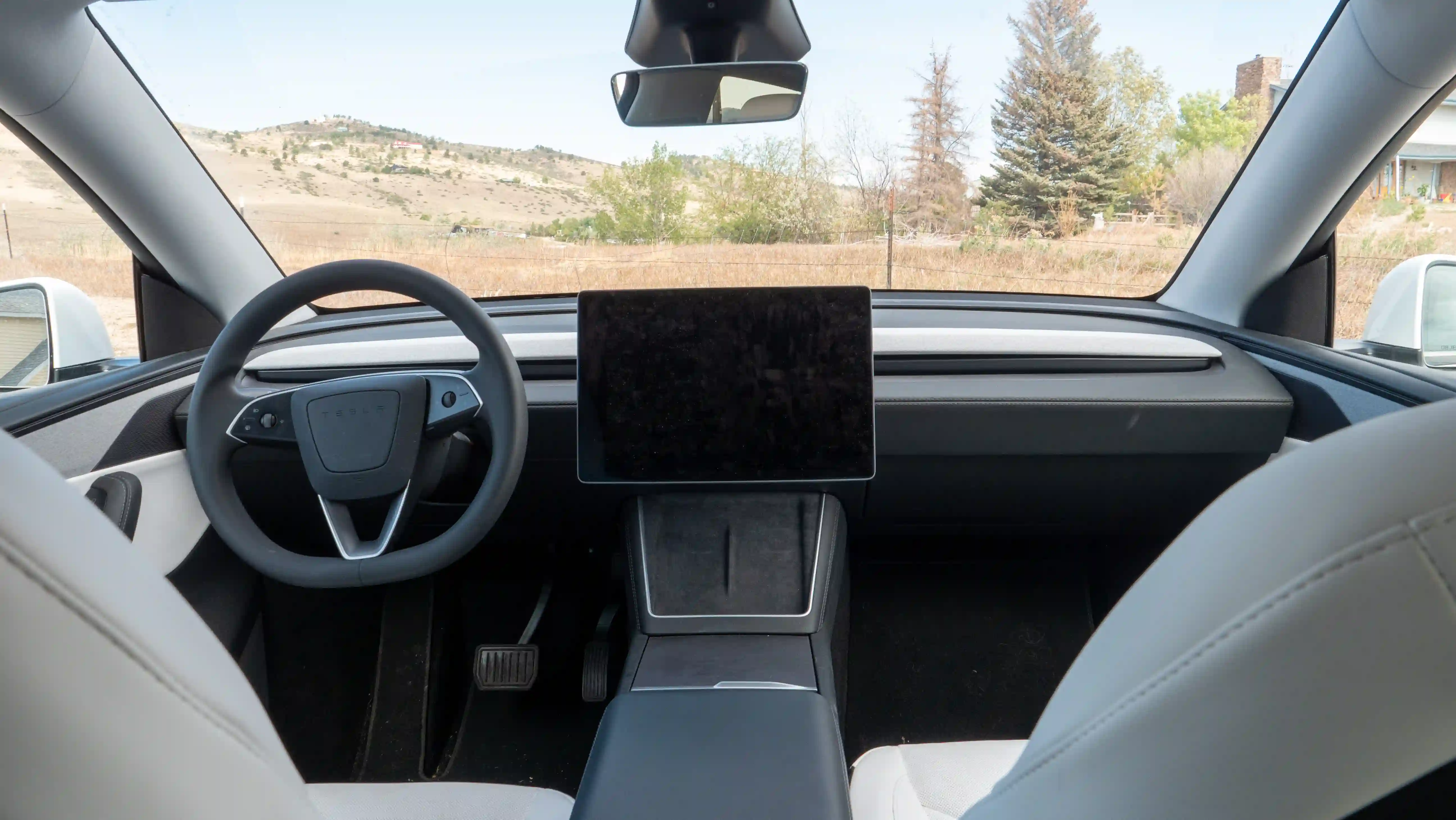
A few things stand out when you line the two lists of standard equipment up side by side. The Model Y's heated steering wheel and hands-free power liftgate are standard equipment, while you'll need to pay extra for both on the Mach-E. The Mach-E, on the other hand, comes with a dedicated 10.2-inch digital instrument cluster, a separate infotainment screen, and wireless Apple CarPlay and Android Auto. That's a more traditional tech setup compared to the Model Y, which relies on its central touchscreen for everything and only runs its own native software.
Both SUVs get standard automatic emergency braking, forward-collision warning, blind-spot monitoring, lane-keeping assist systems and adaptive cruise control. The Mach-E adds rear cross-traffic alert, pre-collision assist with pedestrian detection, parking sensors front and rear, reverse brake assist, and a 360-degree camera.
Both automakers also offer a hands-off, eyes-on driving system. Ford owners can add BlueCruise for $49.99 a month, $495 a year, or a one-time fee of $2,495. Tesla owners will need to pay $99 to enable Full Self-Driving (Supervised) for as long as they want the functionality.
Neither system makes these SUVs autonomous, so see where BlueCruise, FSD (Supervised), and other assisted-driving technologies fit into the current self-driving landscape ➜
Powertrain and Fuel Economy
Both automakers offer rear- and all-wheel drive across most of the lineup, with both extended-range and standard-range configurations. At the top of each lineup, the horsepower numbers are close: the Mach-E's GT and Rally trims make 480 horsepower to the Model Y Performance's 460 horsepower, a 20-horsepower edge for Ford. In these configurations, which are their quickest forms, both crossovers can hit 60 mph in as little as 3.3 seconds. As for lower trims, Tesla doesn't publish as much information as Ford does, so it's difficult to make an apples-to-apples comparison of numbers.
The Mach-E has another strong rival with very different charging hardware, so see how the 2026 Mustang Mach-E compares with the Hyundai Ioniq 5 ➜
The Model Y consistently leads in range numbers compared to the Mach-E. In base rear-drive trims, the Tesla leads with 321 to 303 miles versus 260 for Ford. In the longest-range trims, the Tesla leads with 357, compared to Ford's 320. However, it's worth keeping in mind that Tesla tends to fall short of its EPA-rated range numbers, and the base Mach-E gets a smaller-capacity battery than higher trims.
EPA range is useful for comparison, but it is not a guarantee of what you will see on every trip, so learn how to compare EPA ratings, battery size, weather, and real-world EV range before buying ➜
Charging
The Model Y offers 250 kW of peak charging power, but it hits that peak at about 25 percent state of charge before ramping down for the rest of the charging session. The Mach-E peaks at 150 kW at 10 percent charge, but its charging curve is much flatter until 80 percent. The result: in independent tests, a Model Y charges from 10 to 80 percent in about 31 to 35 minutes, while the Mach-E typically takes 35 to 43 minutes, a difference of only four to eight minutes.
For 2026, Mach-Es no longer come with a NACS adapter included with purchase. It's now a $200 option, but all Mach-Es support Plug & Charge when using Tesla Superchargers with the adapter. Model Ys are outfitted with a native NACS port.
Price
Base pricing is close: the Mach-E Select undercuts the base Model Y by $1,790 ($39,840 vs. $41,630). That gap switches to the Model Y's favor at the top of the lineup, though: the Mach-E runs $59,735, $105 more than the Model Y Performance. But the price gap between the two isn't dramatic.
What's It Like to Drive?
Given the similarities between these two vehicles, they’re not radically different on the road. Performance is close, and the biggest difference comes down to ride quality. The Model Y, like other Teslas, has long had a reputation for a stiff ride that can get uncomfortable on rougher pavement. The 2025 refresh improved things significantly, but the Mach-E is generally a bit more comfortable. But in aggressive driving on curvy roads, the Mach-E can feel a bit less controlled.
Inside the cabin is where these two really diverge. Tesla has always taken a minimalist approach to interiors, minimizing its investment in designing and building switchgear. Some people prefer the cleaner aesthetic, but it means you'll control nearly everything through the central screen, from shifting gears to turning on the wipers to choosing which direction air blows from the hidden dashboard vents.
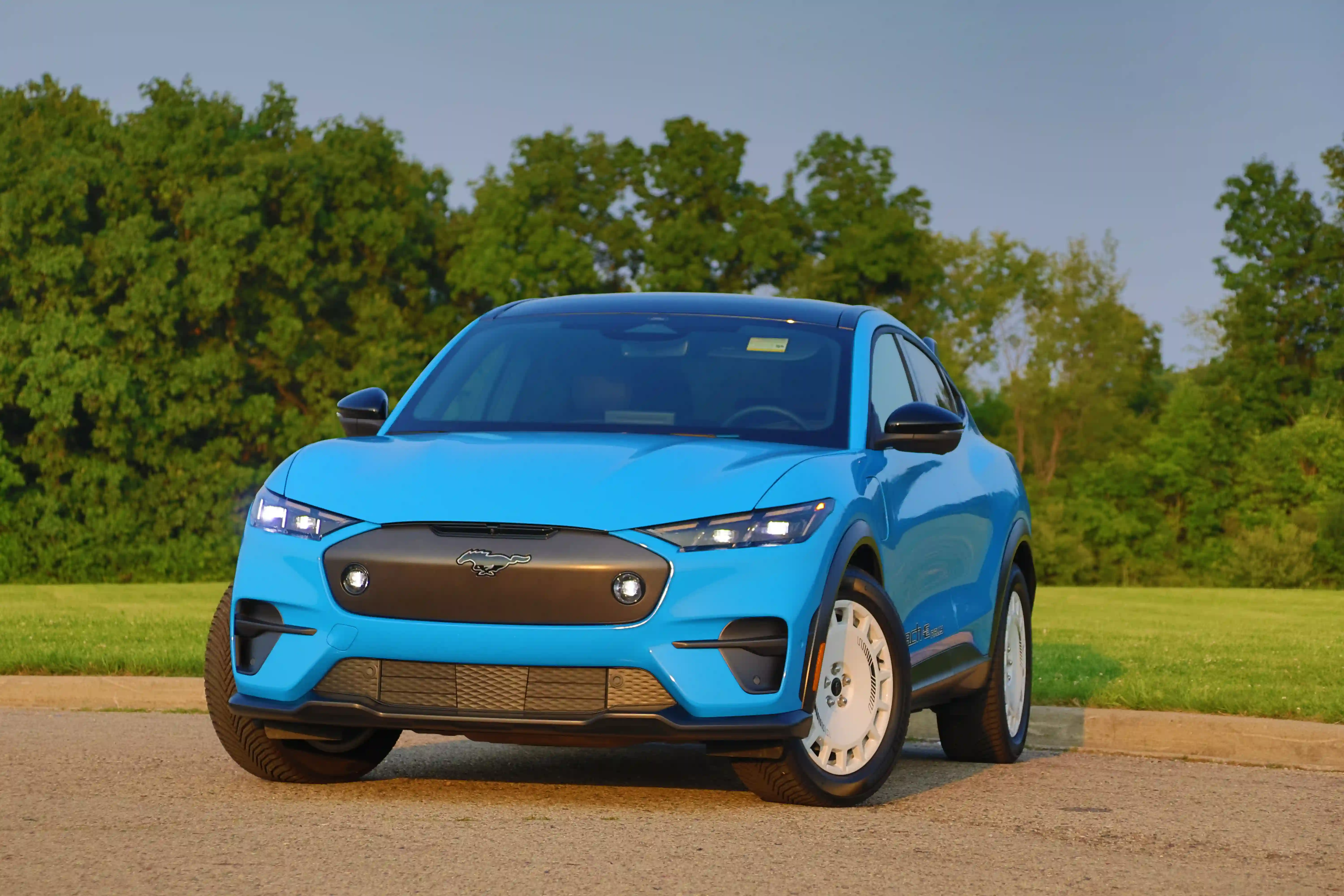
By traditional standards, the Mach-E is fairly minimalist, too, but it still has mechanical vents, a rotary shift knob on the center console, and a stalk on the steering column for the wipers. There’s also a large dial at the bottom of the central screen for volume and fan speed.
Tesla’s Full Self-Driving is the more capable hands-off system. It can control the vehicle on virtually any road, from start to destination. That said, it’s not always reliable and has been involved in numerous crashes over the years, some of them fatal. Ford’s BlueCruise is more limited, working on about 130,000 miles of divided highways. But on roads where it's available, it offers full hands-off capability and automatic lane changes. The driver must still remain attentive and ready to take back control at any time.
Analyst's Perspective (Which One's Right for You)
Choosing between these two comes down to a few key factors. On pure performance, they're closely matched. Except for the base Standard Range Mach-E, real-world range is actually closer than the EPA ratings suggest, though the Model Y usually holds a slight edge in efficiency. Both can use Tesla's Supercharger network plus most other chargers across North America, and the real-world difference in charging time is modest, so charging is a toss-up.
If you want a minimalist approach to interior and exterior design, it’s no contest in favor of the Tesla, though I find its interior really hurts usability. If you want a design with more character and a more traditional feel, go for the Mach-E.
The car-buying process may also impact your decision. Teslas are sold only online through the company's website or app, while Mach-Es are sold through Ford dealers. And once you have the vehicle, if you need service, especially bodywork after a crash, having about 2,800 Ford dealers in the U.S., compared to just 232 Tesla service centers, might give you more peace of mind.
Finally, there’s the elephant in the room: how you feel about Tesla CEO Elon Musk. He’s undoubtedly one of the most controversial figures in recent memory, and that may influence where you want to spend your money, one way or the other.
While I personally prefer the Mach-E's more traditional controls, these are both very capable EVs.
More Electric SUVs Worth Cross-Shopping
Porsche Macan EV vs. Tesla Model Y
See how Tesla’s efficiency, software, and value proposition hold up against a more traditional luxury performance EV.
Read More ➜
Related Article 2
2025 Ford Mustang Mach-E Rally Review: Electrified Rally Racing Thrills
Take a deeper look at the most adventure-oriented Mach-E and how the Rally changes Ford’s electric crossover formula.
Read More ➜
Related Article 3
Best Electric Crossovers and SUVs
Zoom out from Ford and Tesla to compare more of the strongest electric crossover and SUV choices available today.
Read More ➜