



 Comparisons
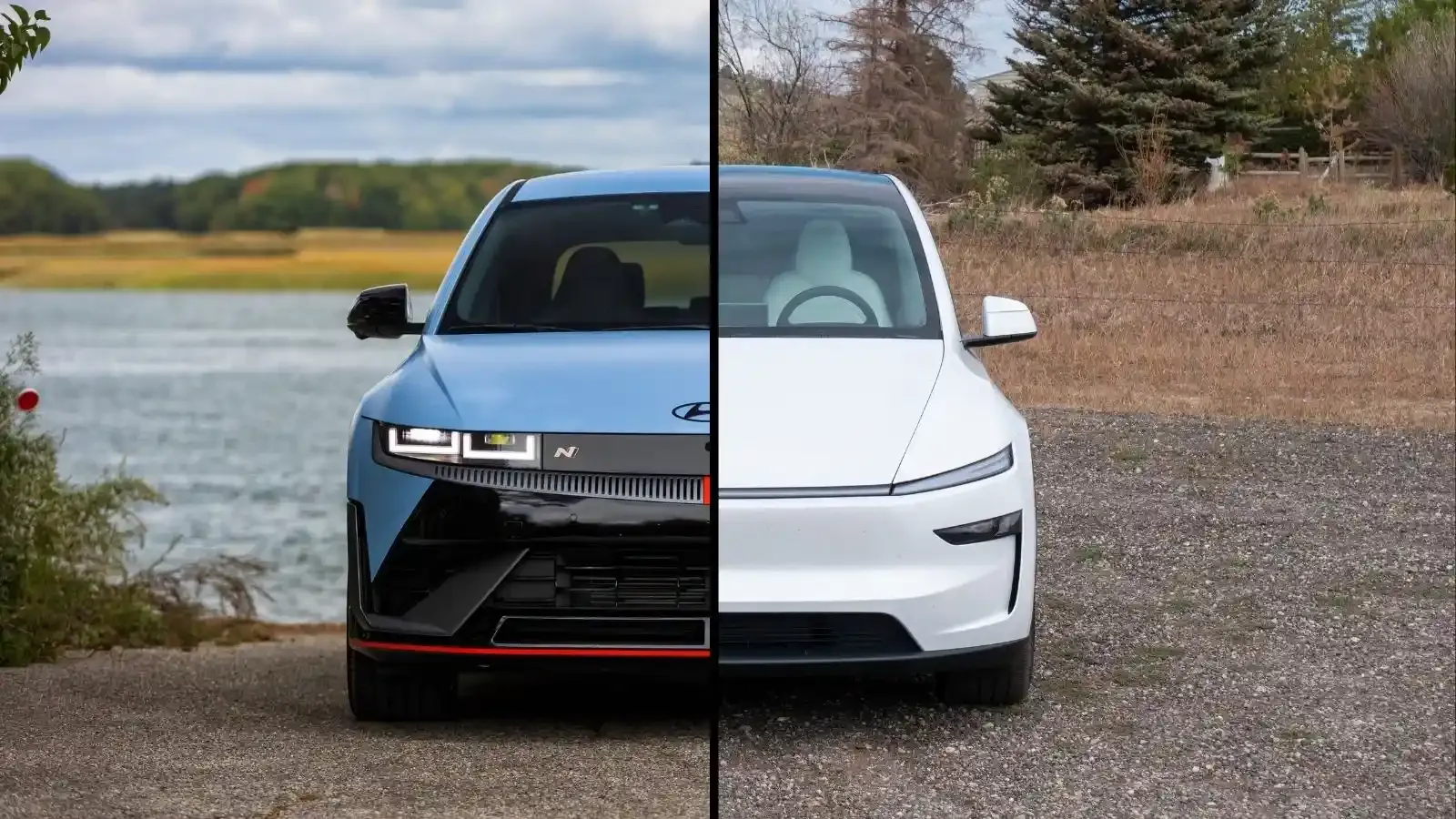
2026 Hyundai Ioniq 5 N vs. Tesla Model Y Performance: Which Is Better?
These two electric performance models take two very different approaches. Here's how the Ioniq 5 N and the Model Y Performance compare.
Sam Abuelsamid9 min read

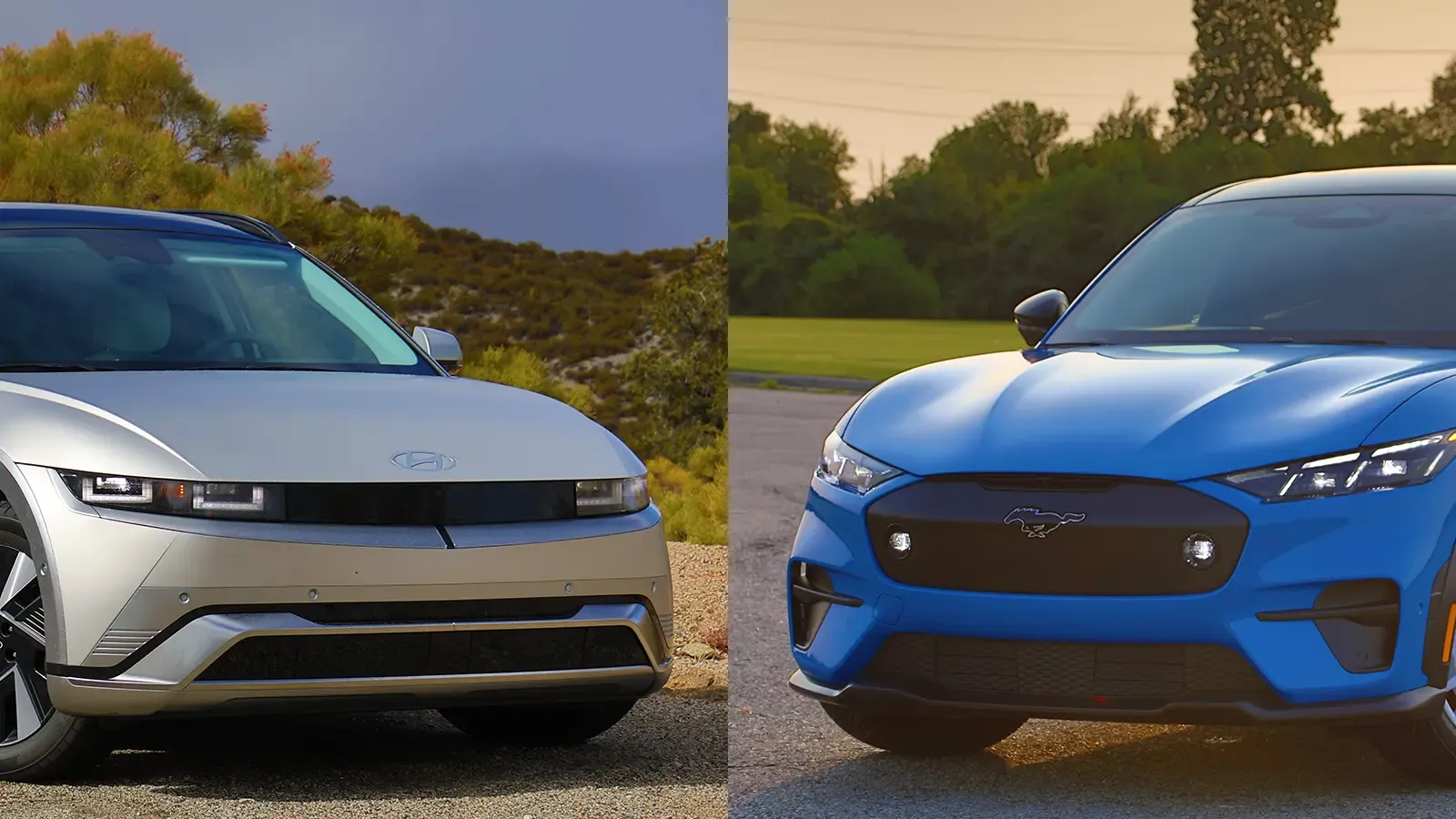
Sporty style or faster charging? The 2026 Mustang Mach-E and Hyundai Ioniq 5 offer distinct strengths, and the better choice depends on how and where you drive.
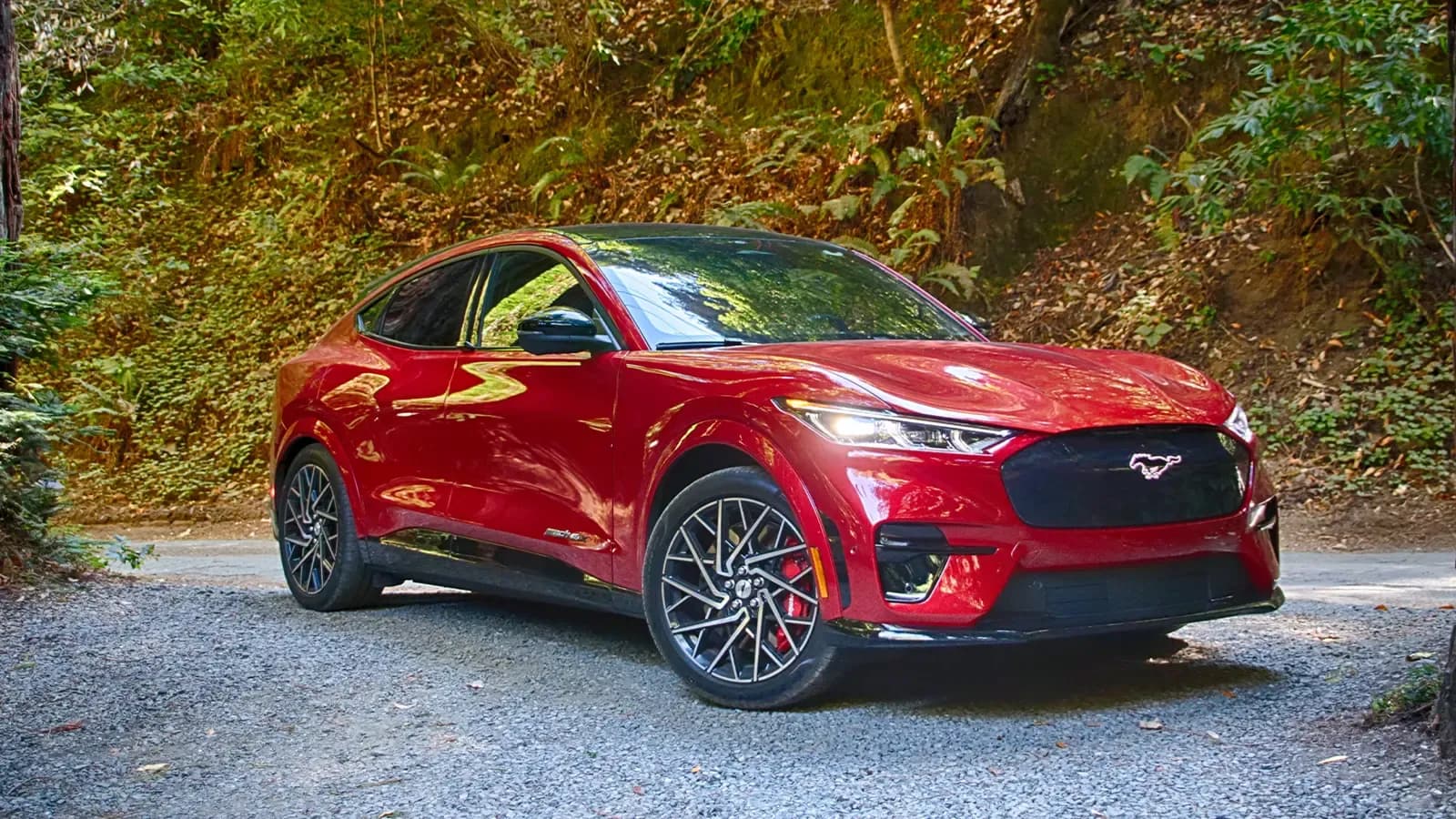
The Mustang Mach-E debuted in 2021 as Ford’s first modern electric vehicle and one of the most controversially named vehicles in the company’s history. When Ford applied the Mustang name to an electric crossover, countless fans of the pony car were upset. Despite that, the Mach-E has consistently outsold the Mustang gas-powered coupes and convertibles for several years.
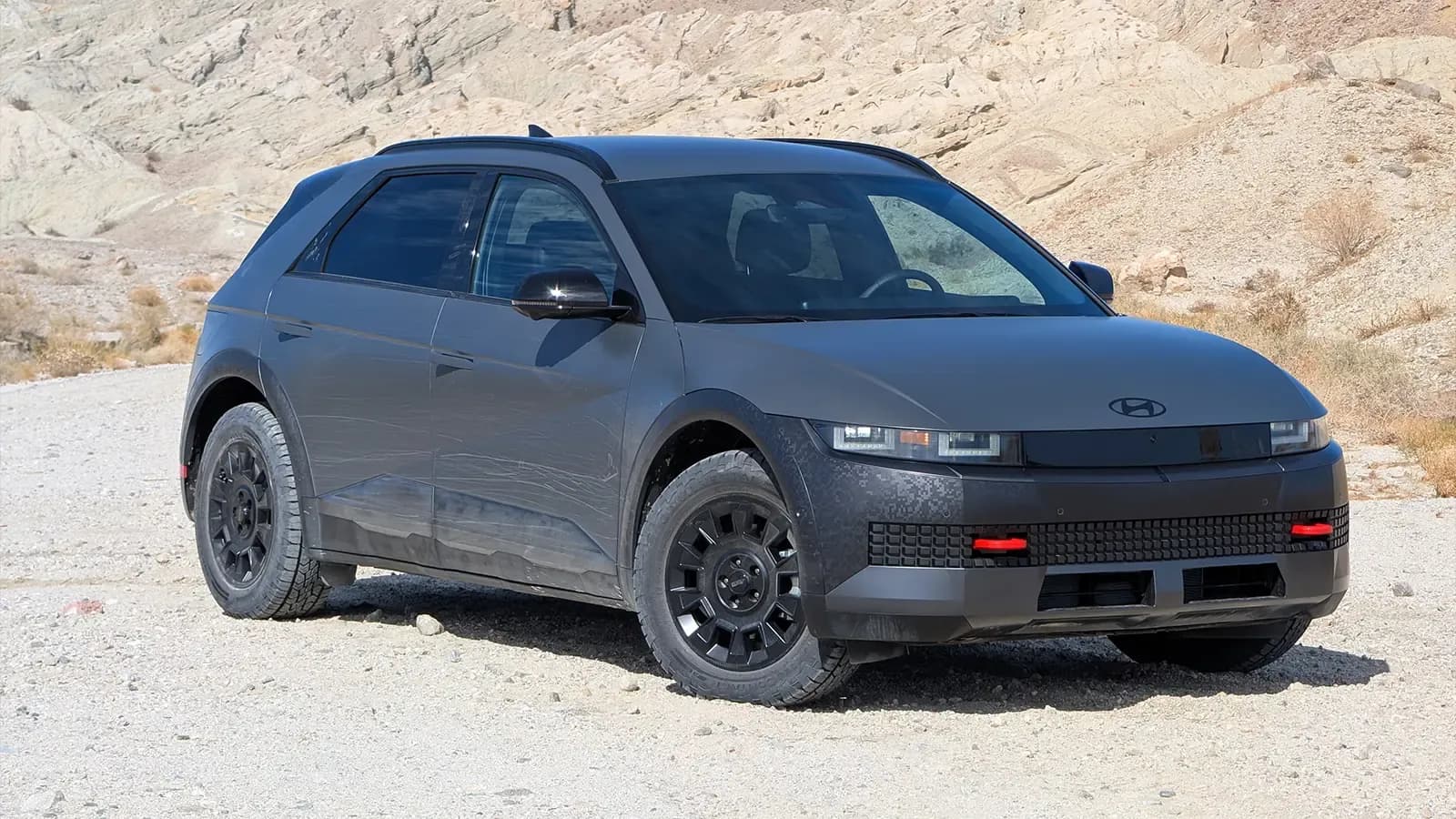
The Ioniq 5 wasn't Hyundai Motor Group's first EV, but it introduced the company's e-GMP architecture with its impressive efficiency and ultra-fast charging capabilities. While Hyundai uses this same platform across several vehicles in different shapes and sizes, the Ioniq 5 is probably the most conventional-looking of the bunch. Unlike the Mach-E's more focused lineup, Hyundai offers everything from the surprisingly affordable SE standard range to the track-ready 5 N.
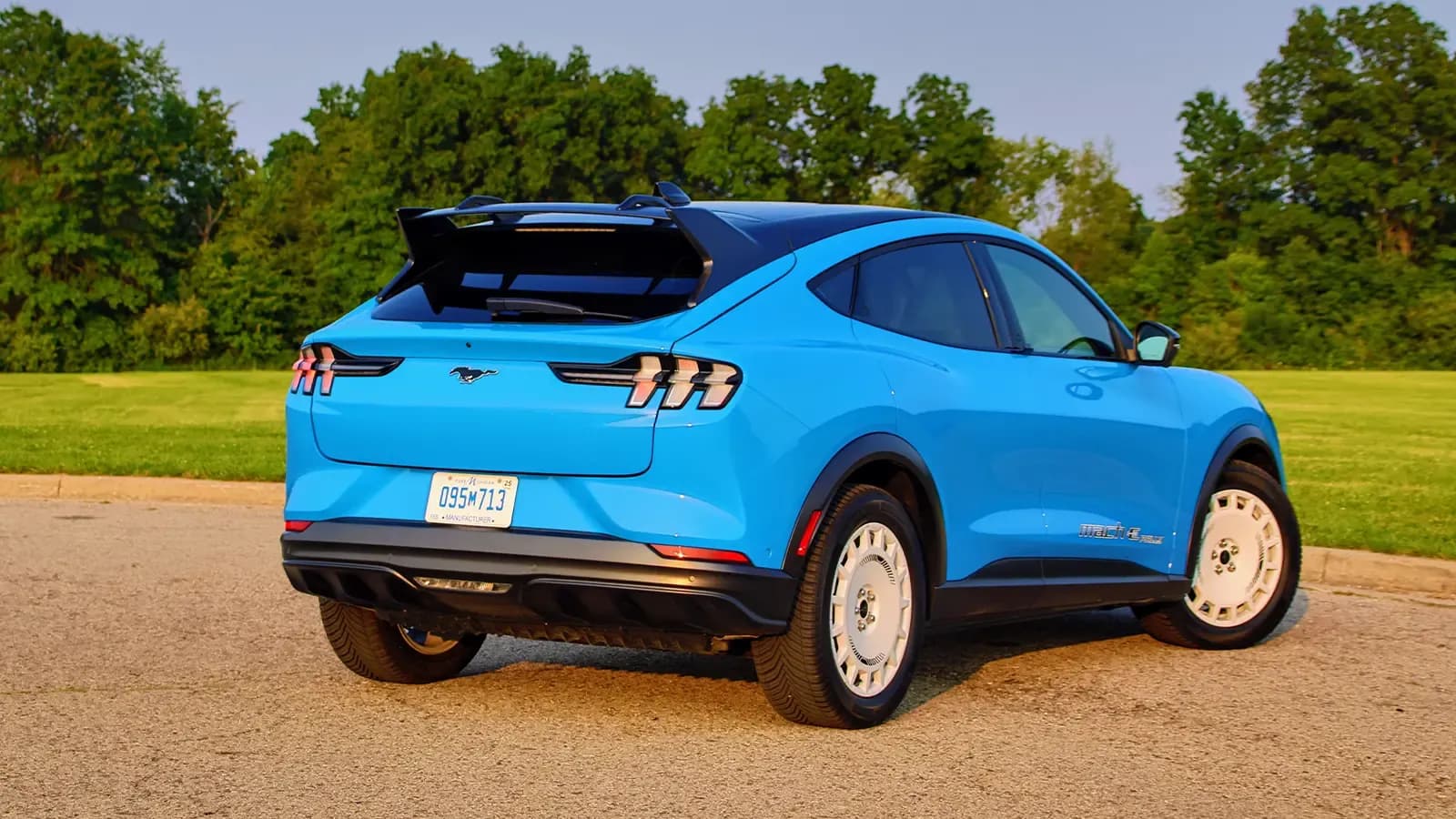
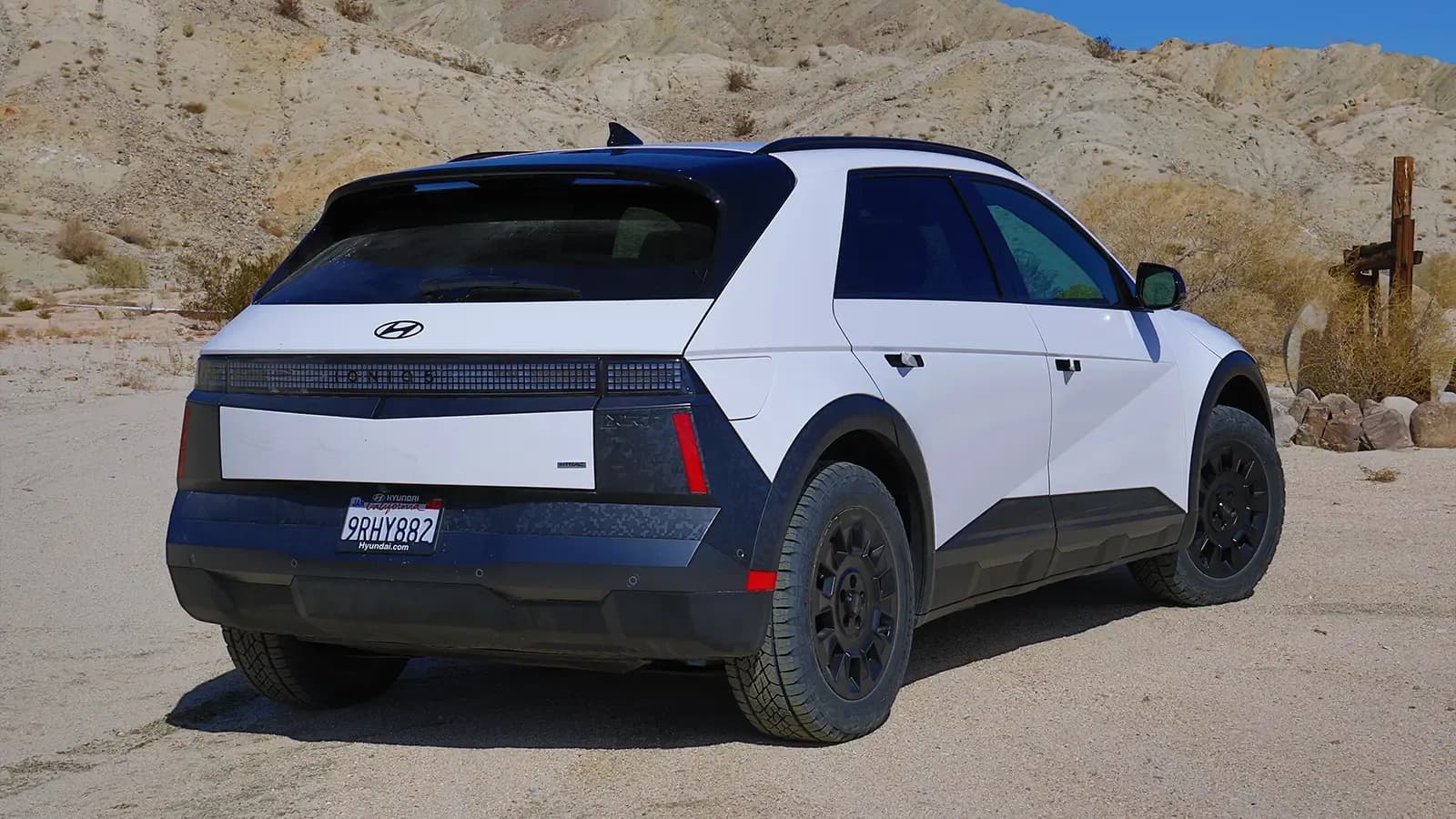
The Mach-E’s Mustang-inspired styling gives it a sleeker, sportier vibe compared to the more practical-looking Ioniq 5. With slightly longer overhangs and a longer front section, the Mach-E echoes the V8-powered Mustangs. Hyundai calls the Ioniq 5 a crossover, but its shape is essentially the classic five-door hatchback that dates back to the original Volkswagen Golf of the 1970s. All of Hyundai's current EVs feature a pixel theme in the lighting and other details. The off-road-oriented Ioniq 5 XRT extends this theme even further with pixelated texturing on the bumper moldings and the wheel arch cladding.
The two vehicles' dimensions are actually pretty close, though. The Mach-E is just 2 inches longer than the standard Ioniq 5, while the Hyundai has 0.6 inch more wheelbase.
The boxier, more practical shape of the Ioniq 5 provides it with some packaging advantages over the Mach-E. Despite similar overall dimensions, Ford dedicated more body volume to the area ahead of the windshield, which gives it a more usable frunk — originally around 4 cubic feet, though that shrank to 2.6 cubic feet when Ford added a new heat pump climate system for 2025. The Ioniq 5's short nose only offers 0.85 cubic feet up front, just enough to store charging adapters and a cable.
Instead of the frunk and sporty design flourishes, Hyundai dedicated more space to passengers, especially in the back seat, which has 1.8 inches more legroom. In total, the Ioniq 5 has 5.9 cubic feet of additional passenger space, with most of that advantage going to the rear seat passengers.
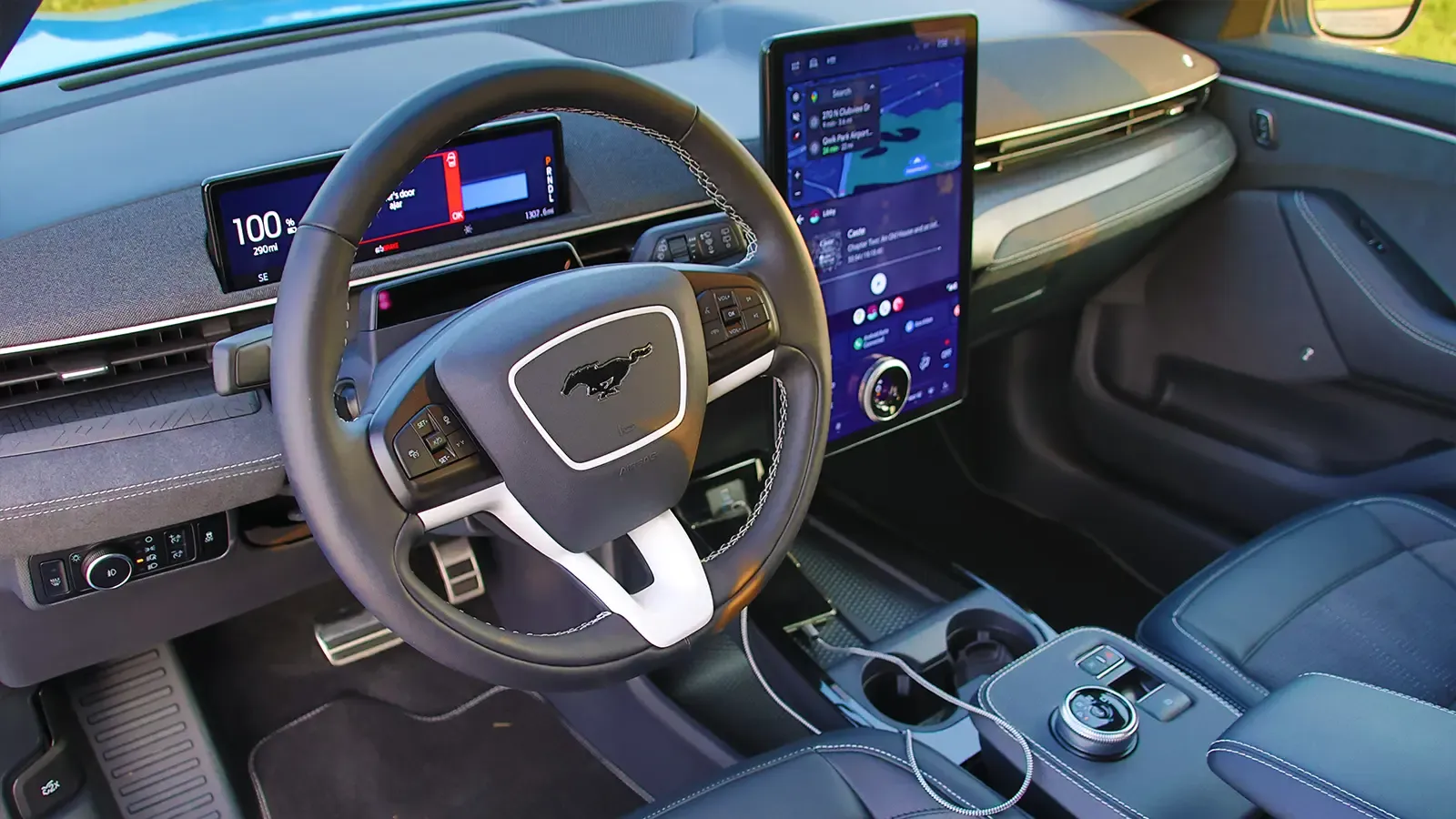
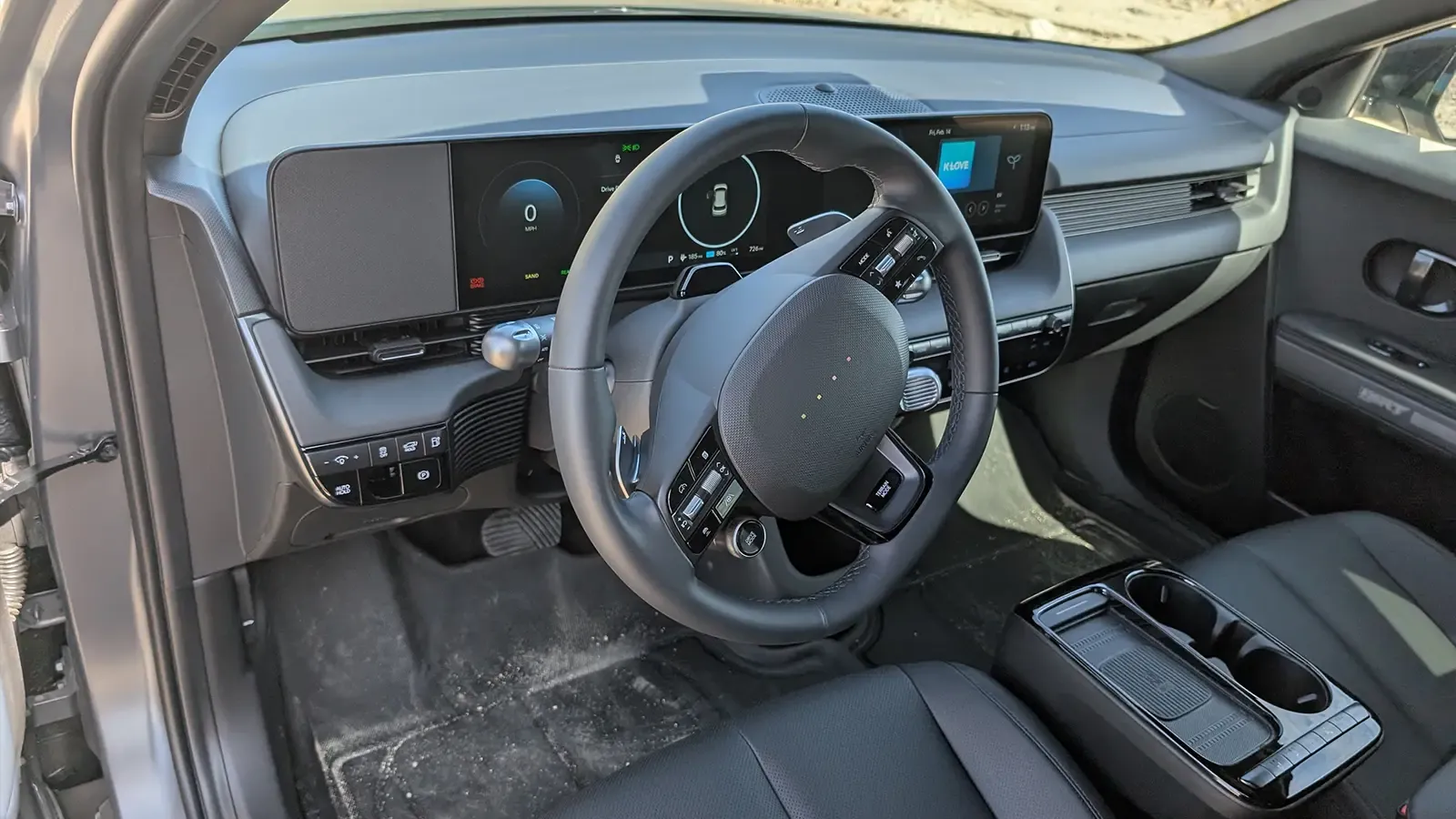
Both vehicles have plenty of USB-C charging ports for all occupants and a wireless charging pad in the front row. Hyundai has a unique charging pad design with an island in the middle. Since most modern smartphones have a large bump of some sort for the cameras, they generally only sit on a couple of points of the rear surface when you set them down, making them more likely to slide around. Hyundai's island provides more surface area, providing more contact area with the phone to help it stay in place when driving.
If you’re actively cross-shopping trims, range, and pricing between these two EVs, the GreenCars Buyer’s Guide lets you compare real-world specs side by side ➜
Both the Ford and Hyundai have manufacturer-developed infotainment software, with the Ford running on a 15.5-inch portrait layout touchscreen with a smaller 10.2-inch instrument display in front of the driver. The Ioniq 5 has dual 12.3-inch landscape displays for both driver information and infotainment. Both cars now support wireless Apple CarPlay and Android Auto.
Each car has a full suite of advanced driver-assistance systems, including blind-spot monitoring, automatic emergency braking, and more. But only the Mach-E has a hands-off assist system called BlueCruise. The highway-drive assist on the Ioniq 5 requires the driver's hands to be kept on the wheel.
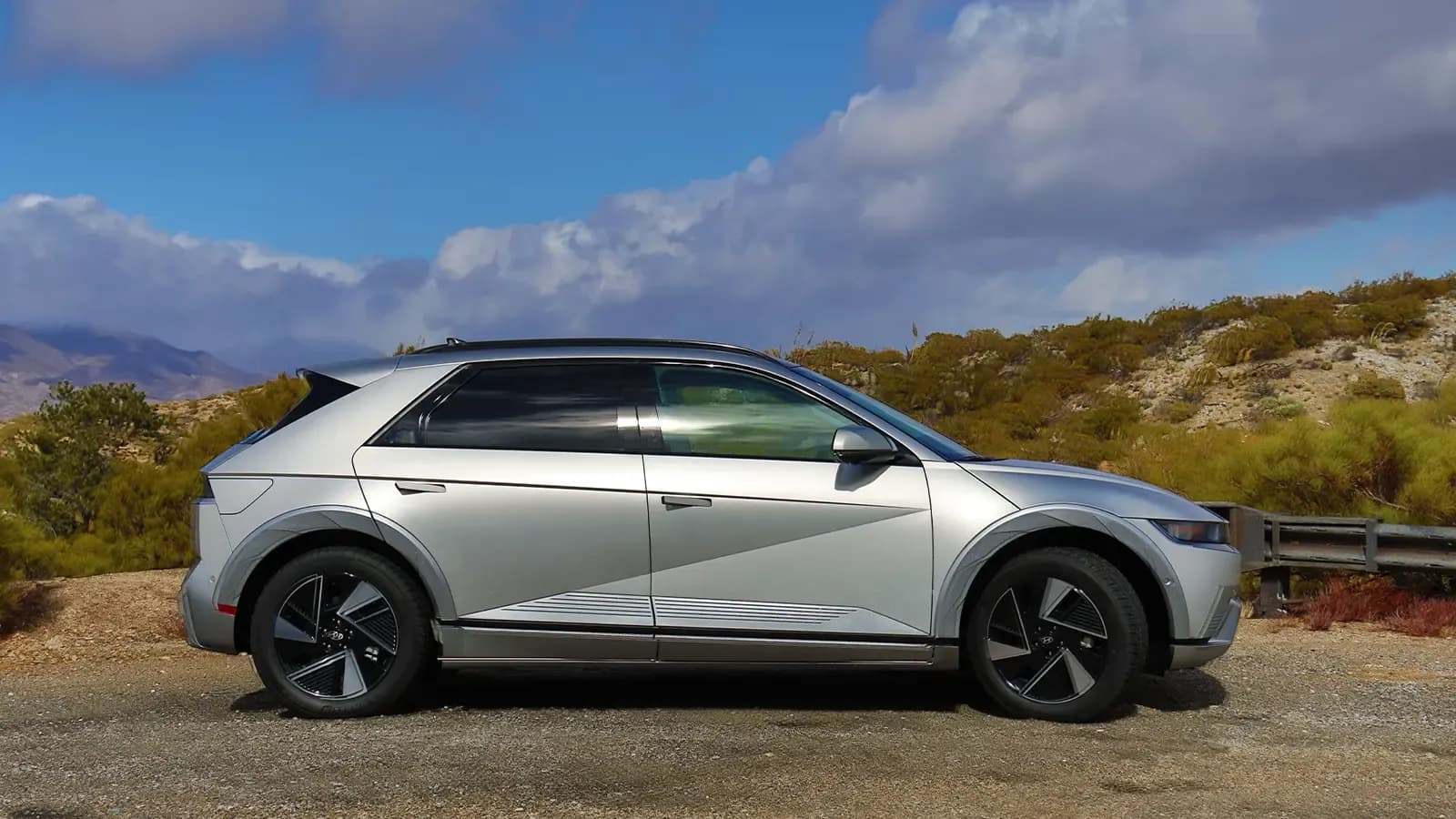
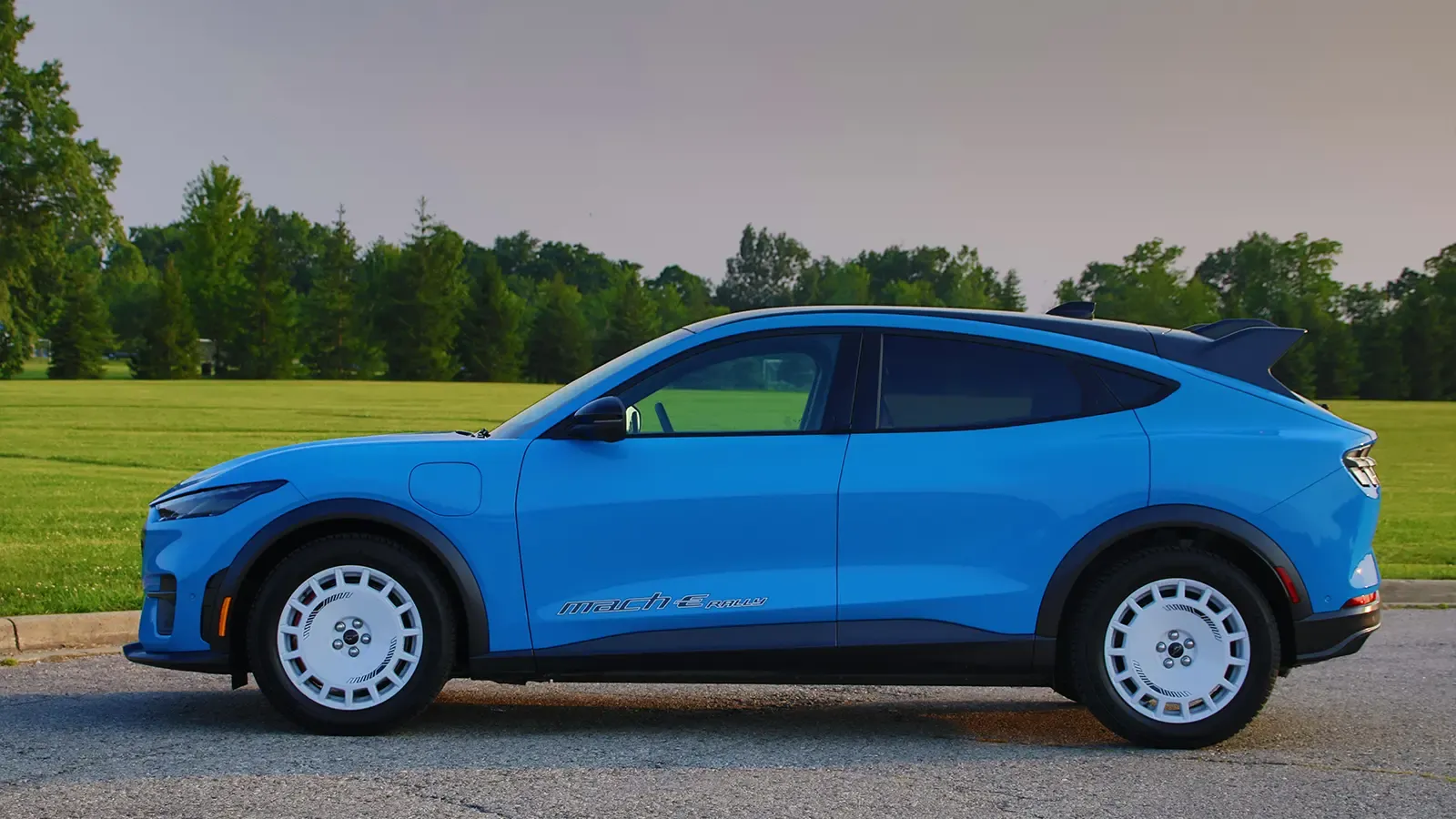
Both EVs offer single-motor rear-wheel drive or dual-motor all-wheel drive, along with two different battery sizes. But the Ioniq 5 covers a much broader range of power options: from the most basic standard range RWD SE with 168 horsepower all the way up to the high-performance 5 N with up to 641 horsepower through all four wheels. The base Mach-E starts with a single 264-horsepower rear motor, while the GT and Rally trims get 480 horsepower through two motors. The Mach-E delivers more torque across the range, with 387 pound-feet for the rear-wheel-drive variants and 700 lb-ft from the GT Performance pack, compared to 568 lb-ft from the 5 N.
Where the Ioniq 5 really shines is in its charging capabilities. The Mach-E still uses a 400-volt electrical architecture, with peak charging rates of just 150 kilowatts, which will boost the battery from 10 to 80 percent charge in about 35 minutes under ideal conditions. Along with its higher voltage, the e-GMP architecture used for EVs across the Hyundai, Kia, and Genesis lineups also has outstanding battery thermal management. The Ioniq 5 will charge at up to 250 kW and maintain charging rates well over 150 kW even past 60 to 70 percent state of charge. The result is a charge of 10 to 80 percent in about 20 minutes.
Both EVs have support for charging at Tesla Superchargers, but only the Hyundai comes from the factory with a NACS charging port. Hyundai includes two adapters for AC and DC charging from J1772 and CCS equipment. Ford charges $200 for its NACS-CCS charging adapter.
Depending on the battery size and motor configuration, the Mach-E will go from 240 miles with the smaller battery and dual motors up to 320 miles with the extended battery and rear drive, with the GT and Rally models falling in between. The Ioniq 5 is generally more energy efficient, with the standard range RWD SE getting 245 miles and the AWD going 390 miles. The high-performance Ioniq 5 N is the outlier at just 221 miles, but that car runs on large, high-performance summer tires that aren’t optimized for efficiency.
The Ioniq 5 currently has the pricing advantage. After federal tax credits expired at the end of September 2025, 2026 models got an average $9,155 price cut. The standard range SE RWD now has a starting MSRP of $36,600 (including $1,600 destination charge). The AWD Limited trim now goes for $50,575, while pricing for the 2026 5 N hasn’t been announced yet. At the time of writing, prices for the 2026 Mustang Mach-E haven't been released either, so we're showing 2025 MSRP pricing below.
When Ford decided in late 2017 that their new electric crossover should be called a Mustang, it fundamentally changed the nature of the vehicle. With that iconic badge, it had to have the looks and performance to back it up. To a large degree, Ford engineers and designers succeeded. It’s generally a fun car to drive, even in its entry-level RWD variations. The instant torque of electric motors makes the Mach-E feel responsive when you step on the accelerator.
The top-end GT versions are among the quickest Mustang-badged vehicles ever produced, although the taller stance and increased weight of an EV mean they don’t handle as well. Nonetheless, they're fun to drive and fairly practical. The Rally edition brings with it some of the look of a 1980s World Rally Championship machine, and it's certainly tuned better for off-pavement performance, but the mere 6-inch ground clearance is going to limit it to gravel roads rather than true off-road trails.
The Ioniq 5 generally comes across as a much more conventional vehicle thanks to its shape, but in reality, it doesn’t really give up much in terms of performance to the Mach-E, except in the standard range RWD model. Its shape makes it more practical, with a fun combination of both 1980s hatchback vibe and more modern pixelated lighting. The larger backseat makes it more suitable for carrying adults or taller teens, and the cargo space and outstanding charging capabilities make it an excellent road tripper.
The XRT model has less power but more than an inch of extra ground clearance relative to the Mach-E Rally, and the recovery hooks will make it easier to extract if you get stuck. At the top of the range, the Ioniq 5 N is arguably one of the most fun EVs to drive right now. With 641 horsepower in N Grin Boost mode and simulated shifting, sound, and a tachometer, it delivers visceral appeal that most EVs lack when you hit a twisting country road or track day. It reverts to a perfectly tame daily driver as well.
Do you want some of the visual DNA and panache of a Mustang? Then the Mach-E is definitely the EV of choice for you. But if you’re less concerned with looks and want to maximize usable space while getting some of the fastest charging available in America for road trips, one of the Ioniq 5s may be better suited to your tastes. The Hyundai e-GMP architecture delivers pretty much everything most people need in a car, including quick acceleration, decent handling, and a surprising array of variants from mild to wild. Perhaps the best part: while this comparison focuses on the Ioniq 5, you can get the same hardware in the Ioniq 9 three-row SUV, Kia EV6 and EV9, and Genesis GV60, so there's probably something from Hyundai Motor Group that will fit your preferences and needs.
2024 Hyundai Ioniq 5 Road Test
A detailed look at how the Ioniq 5 performs in everyday driving, including comfort, charging, and usability
Read More ➜
2024 Ford Mustang Mach-E GT Road Test
How Ford’s performance-oriented Mach-E trims balance speed, handling, and daily livability
Read More ➜
Hyundai Ioniq 5 vs. Kia EV6
A useful sibling comparison that helps frame the Ioniq 5’s strengths in space, charging, and design
Read More ➜
GreenCars Contributor
Sam Abuelsamid is vice president of market research and leads Telemetry Insights' Transportation and Mobility research and advisory practice. Focusing on automated driving, mobility services, telematics, connectivity, cybersecurity, and advanced propulsion systems, Abuelsamid works with clients to help them understand emerging technology trends and shape strategies.
Get vehicle reviews, practical tips, and the latest GreenCars news.
ComparisonsThese two electric performance models take two very different approaches. Here's how the Ioniq 5 N and the Model Y Performance compare.
 Comparisons
The Subaru Solterra and the Hyundai Ioniq 5 are two of the best EV crossovers around. Here's how they compare on range, space, and price.
 Comparisons
Two iconic names, two electric SUVs that look nothing like their roots. Here's how the Mustang Mach-E and Blazer EV compare when put head-to-head.