




 Reviews
2026 Toyota bZ Woodland First Drive
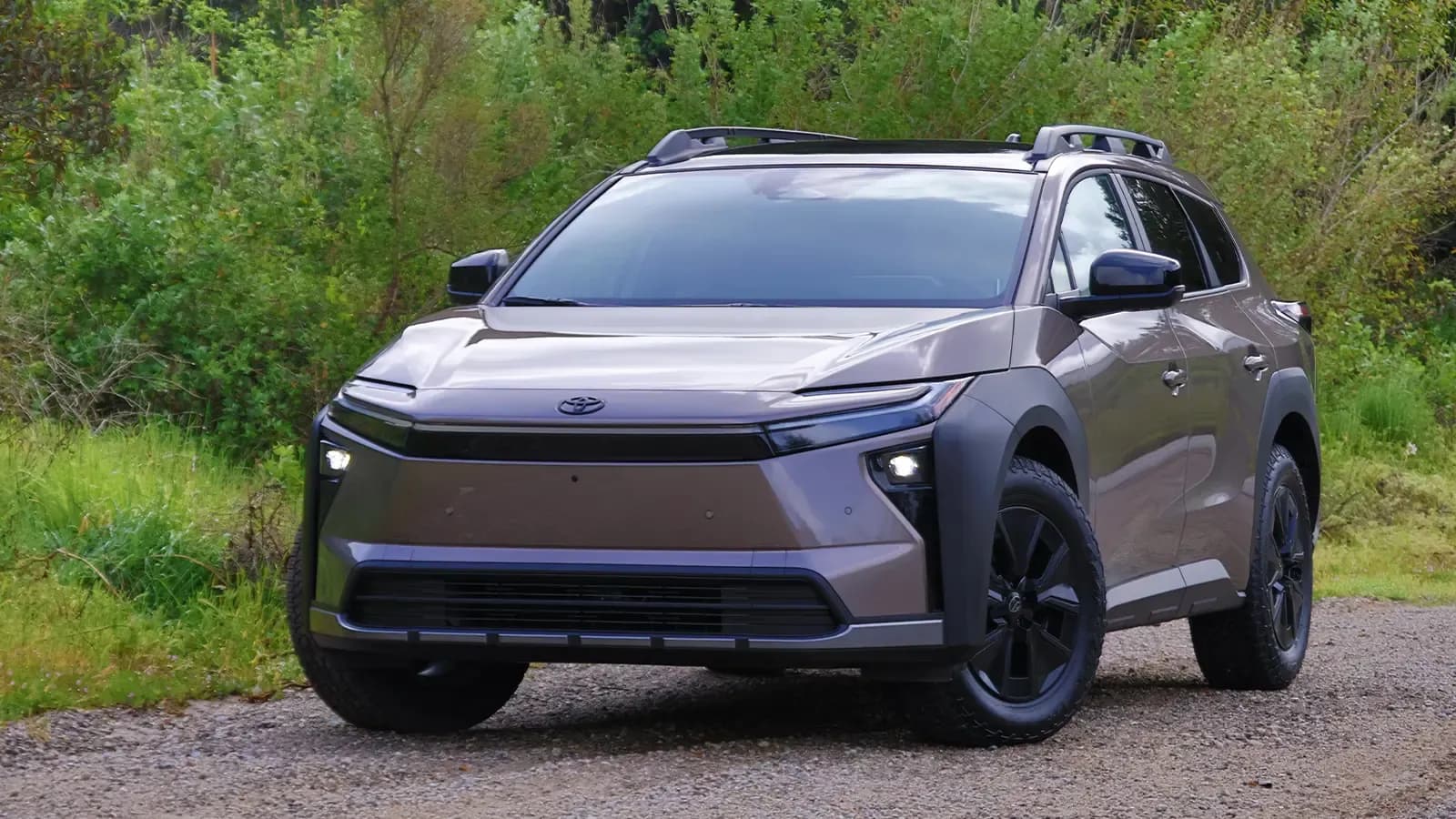
As a big fan of both electric vehicles and station wagons, I'm excited about Toyota's new bZ Woodland, which hits both of these criteria.
Sam Abuelsamid6 min read

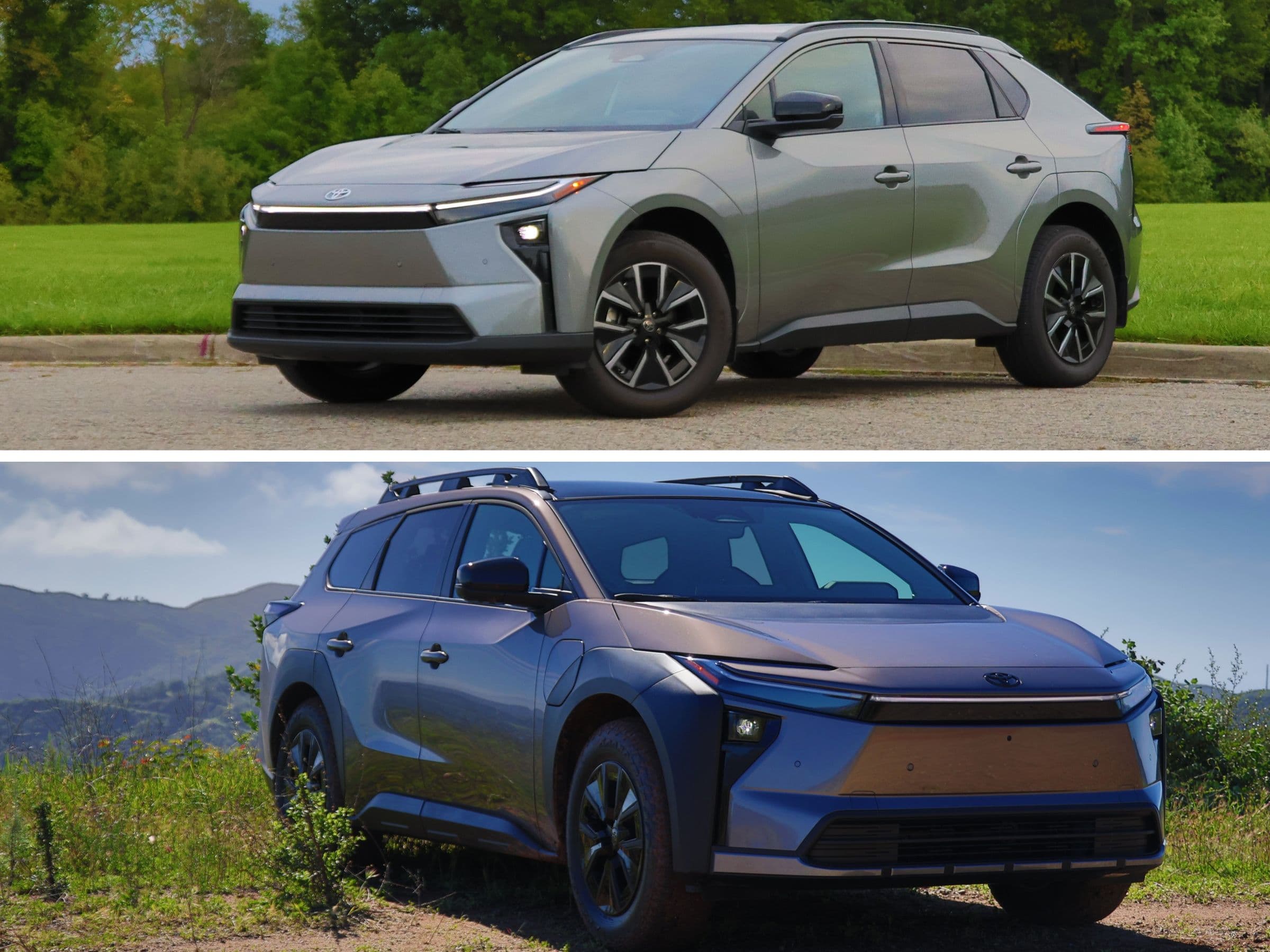
They share a platform, but the bZ Woodland is more than just an off-road trim of the bZ. Here's how these two Toyota electric SUVs compare.
Plenty of SUVs have an off-road-focused trim, and at first glance, that's what the bZ Woodland seems to be: a more rugged bZ. However, it's its own model. Toyota and Subaru co-develop many of their EVs, and Subaru sells its versions of these two as the Solterra and Trailseeker. Subaru's naming makes it clear that they're separate vehicles, while Toyota's makes them sound like trims of the same car. The bZ Woodland also keeps more of the Subaru vibe than the Toyota-like bZ. Both ride on the same platform, but the Woodland is essentially a wagon version of the bZ, with its own design, more interior space, and more power. Let's see how the two compare.
The regular bZ received major range, charging, performance, and interior upgrades before the Woodland arrived, so see what changed when Toyota finally got its mainstream EV formula right ➜
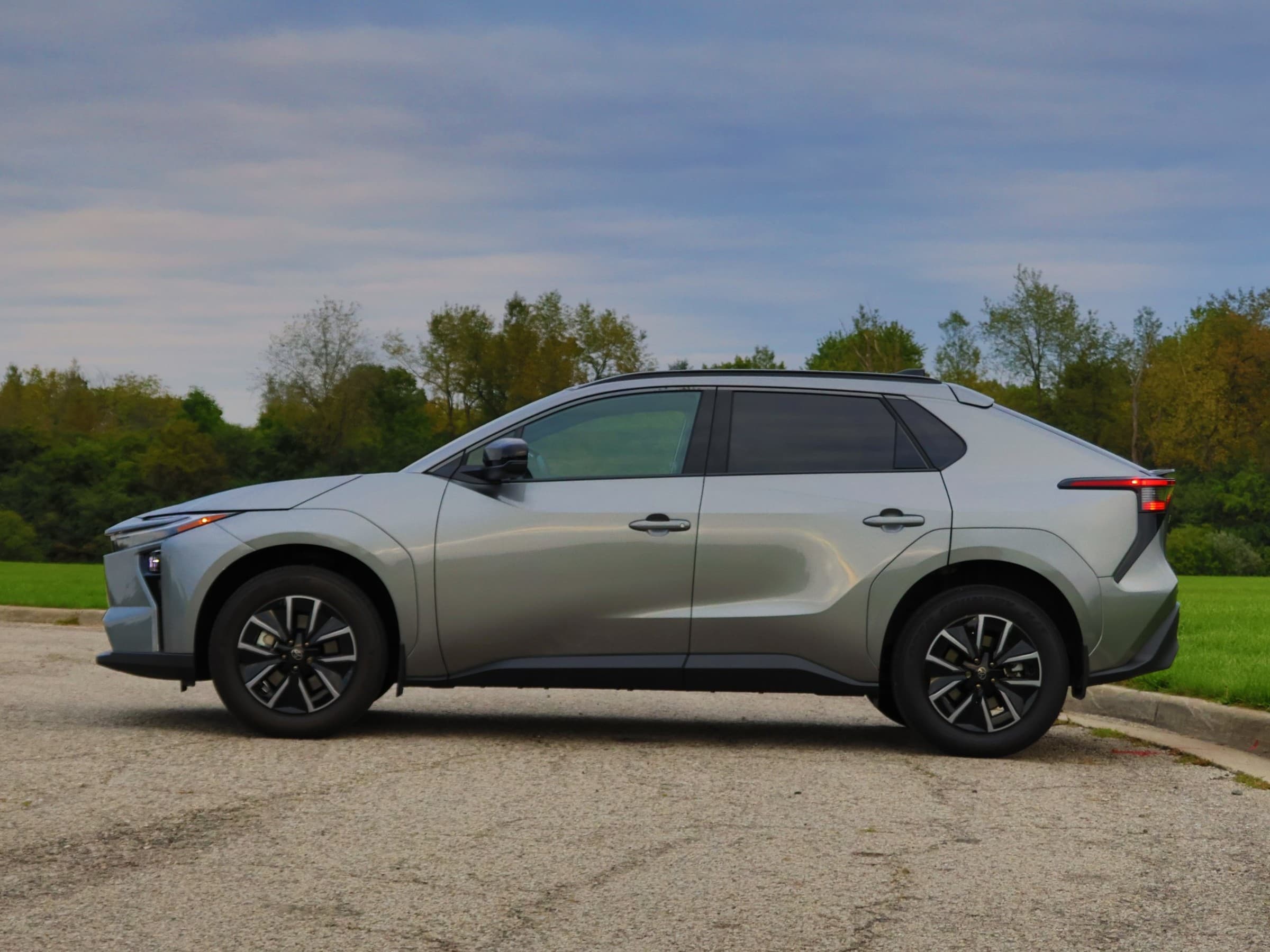
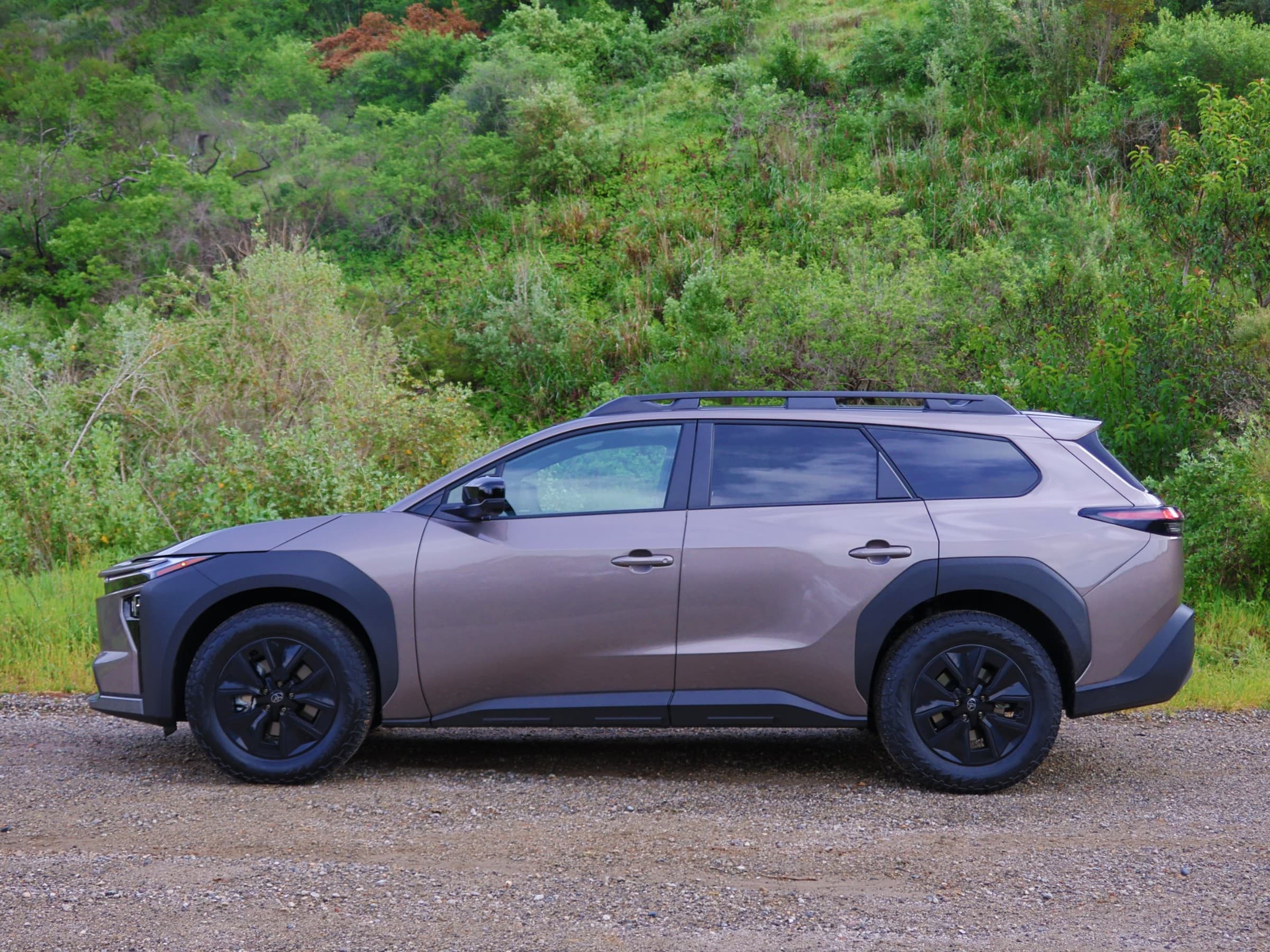
Park these two side by side, and the bZ Woodland's wagon-like profile stands out right away. Its longer rear end gives it a distinctly Subaru Outback feel, while the bZ has the more upright stance that looks like a large hatchback. The bZ Woodland is 5.6 inches longer, 0.9 inch taller, and has 0.3 inches more ground clearance when equipped with the no-extra-cost all-terrain tires, while the two share the same width and wheelbase.
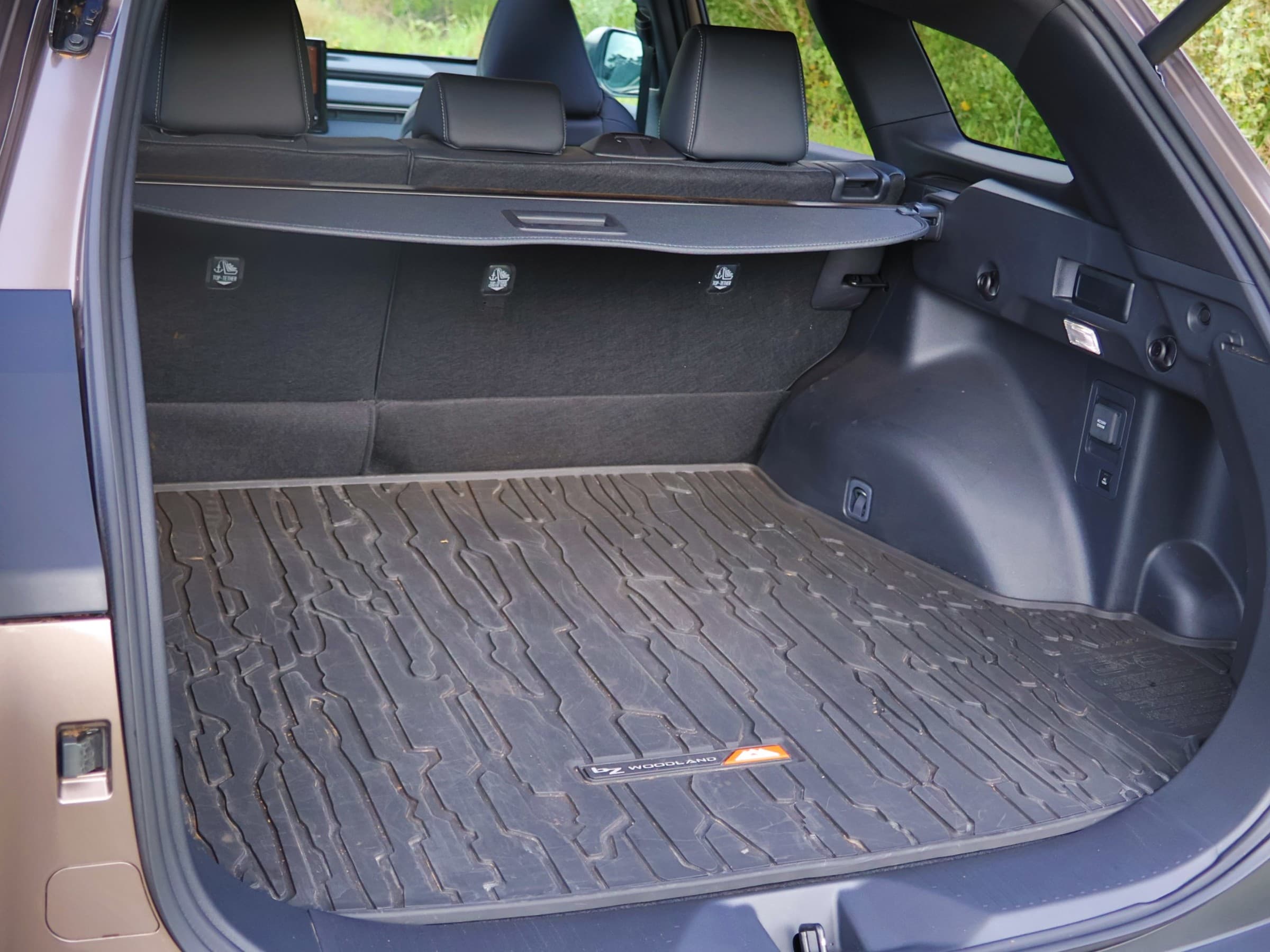
Both vehicles have identical front headroom, front legroom, front shoulder room, and rear legroom. But the bZ Woodland has 0.4 to 1.3 inches more rear headroom thanks to the extended roof and 0.2 inch more rear shoulder room. For cargo, with the rear seats up, the bZ Woodland has 6 to 8 more cubic feet of cargo space; with the rear seats folded, the bZ Woodland has 16 to 18 more cubic feet of cargo space.
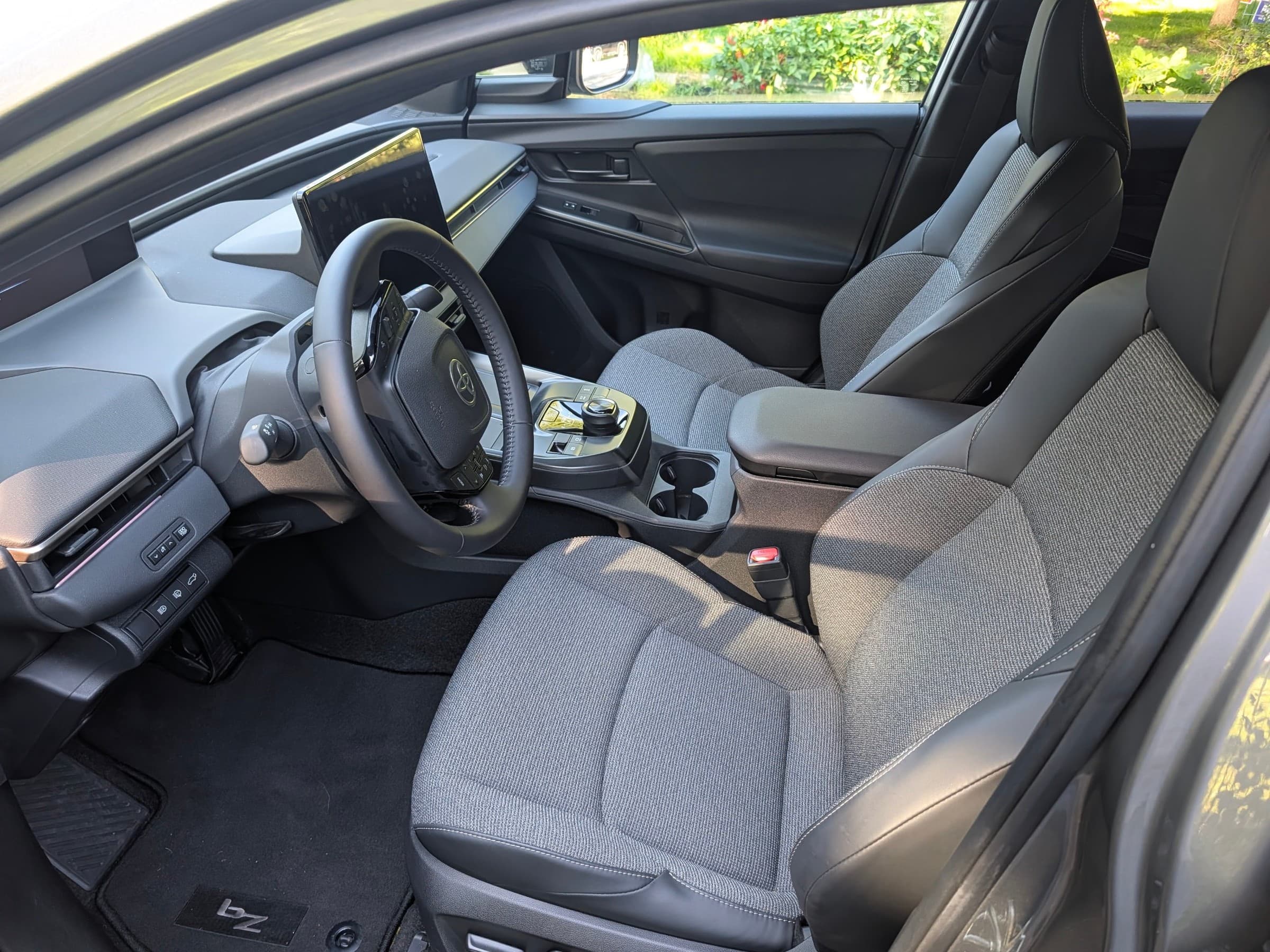
As you can imagine, these two share a lot of standard features. Both have a 7-inch digital gauge cluster, a 14-inch touchscreen, wireless Apple CarPlay and Android Auto, a six-speaker audio system, two wireless device chargers, USB-C ports, a heated steering wheel, heated front seats, an eight-way power-adjustable driver's seat, dual-zone automatic climate control, 64-color ambient interior lighting, a 60/40 split-folding rear seat, an auto-dimming rearview mirror, keyless entry, push-button start, and a digital key.
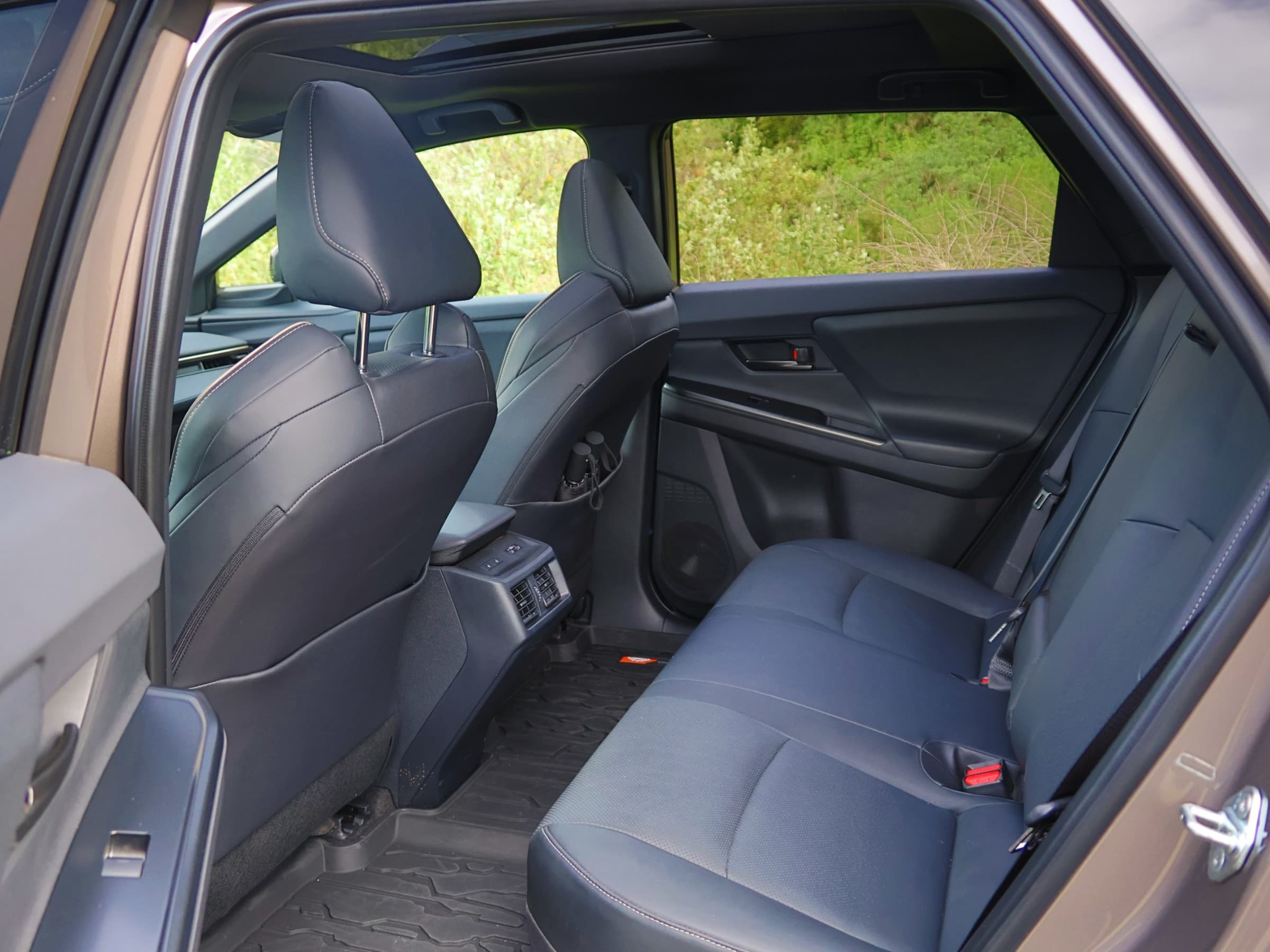
The bZ Woodland comes with a handful of standard features that are upgrades on the bZ, including leatherette upholstery (the bZ gets fabric and leatherette), an eight-way power-adjustable passenger seat, heated rear seats, and a surround-view camera.
Both can be optioned with ventilated front seats, a radiant foot-and-leg heater, a digital rearview mirror, and a nine-speaker JBL audio system. The bZ Woodland is available with driver's seat memory.
The two also share many standard safety features, including a pre-collision system, pedestrian detection, lane-departure alert with steering assist, lane-tracing assist, auto high beams, adaptive cruise control, road-sign assist, proactive driving assist, blind-spot monitoring, rear cross-traffic alert, safe-exit alert, and front and rear parking assist. The bZ Woodland also gets automatic braking for parking assist.
The bZ Woodland doesn't have any available safety features, but the bZ can be optioned with lane-change assist, traffic-jam assist, front cross-traffic alert, and advanced park.
The bZ Woodland makes 37 more horsepower than the all-wheel-drive bZ and 154 to 207 more than the front-wheel-drive bZ. The bZ Woodland comes only with AWD and the larger 74.7-kWh battery, while the bZ offers FWD or AWD and a 57.7- or 74.7-kWh battery. The FWD bZ has up to 33 more miles of EPA-estimated range, though the advantage is only 7 miles when comparing AWD variants with all-season tires.
Wheel choice, drivetrain, battery size, and tires all affect these ratings, so see how to compare EV range beyond the single biggest number on the spec sheet ➜
The two have identical charging specs: 150-kW peak charging and a 10- to 80-percent charging time of about 30 minutes. They both have NACS ports on the right front fender.
Toyota also supplies adapters for older charging standards, so see how NACS, J1772, CCS, and EV charging adapters fit together ➜
The base bZ undercuts the base bZ Woodland by $10,400. However, the base bZ is FWD-only and has a smaller battery, so the cheapest AWD bZ is the XLE, which is $5,460 less than the bZ Woodland. The top bZ, the Limited AWD, costs the same as the base bZ Woodland. The top-trim bZ Woodland Premium costs $2,100 more than the bZ Limited AWD.
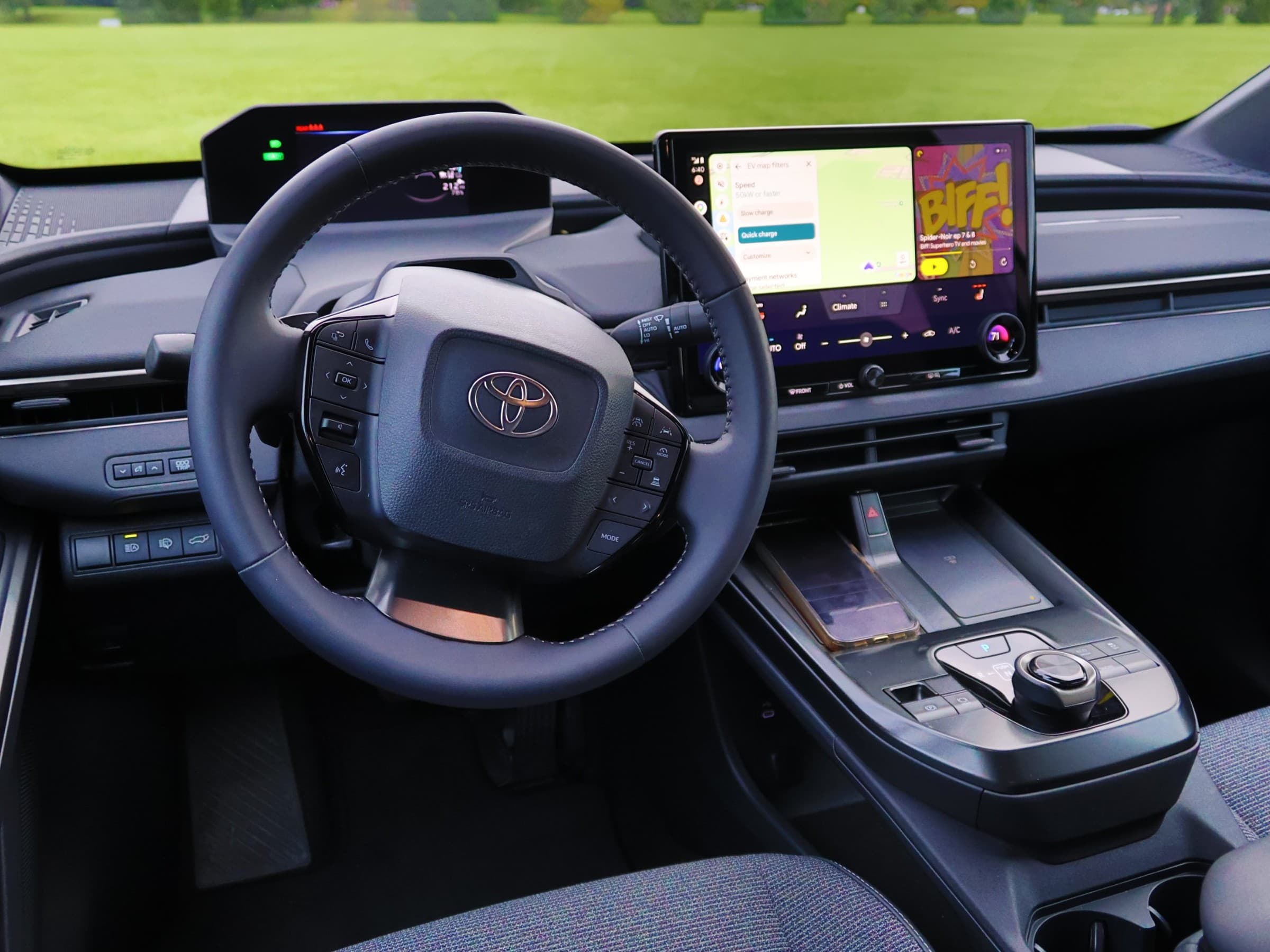
Since the two have the same interior (apart from the bZ's standard fabric-and-leatherette upholstery), you’d be hard-pressed to tell which one you’re in when you first sit down. The controls are exactly the same, and they're a big improvement over the original bZ4X, which ran from the 2023 to 2025 model years. The infotainment screen is larger than before, and while many climate functions are on the touchscreen, there’s a pair of big round dials for the dual-zone temperature control and a smaller volume knob in the center. Two wireless charging pads are standard, so you and your traveling companion each get one.
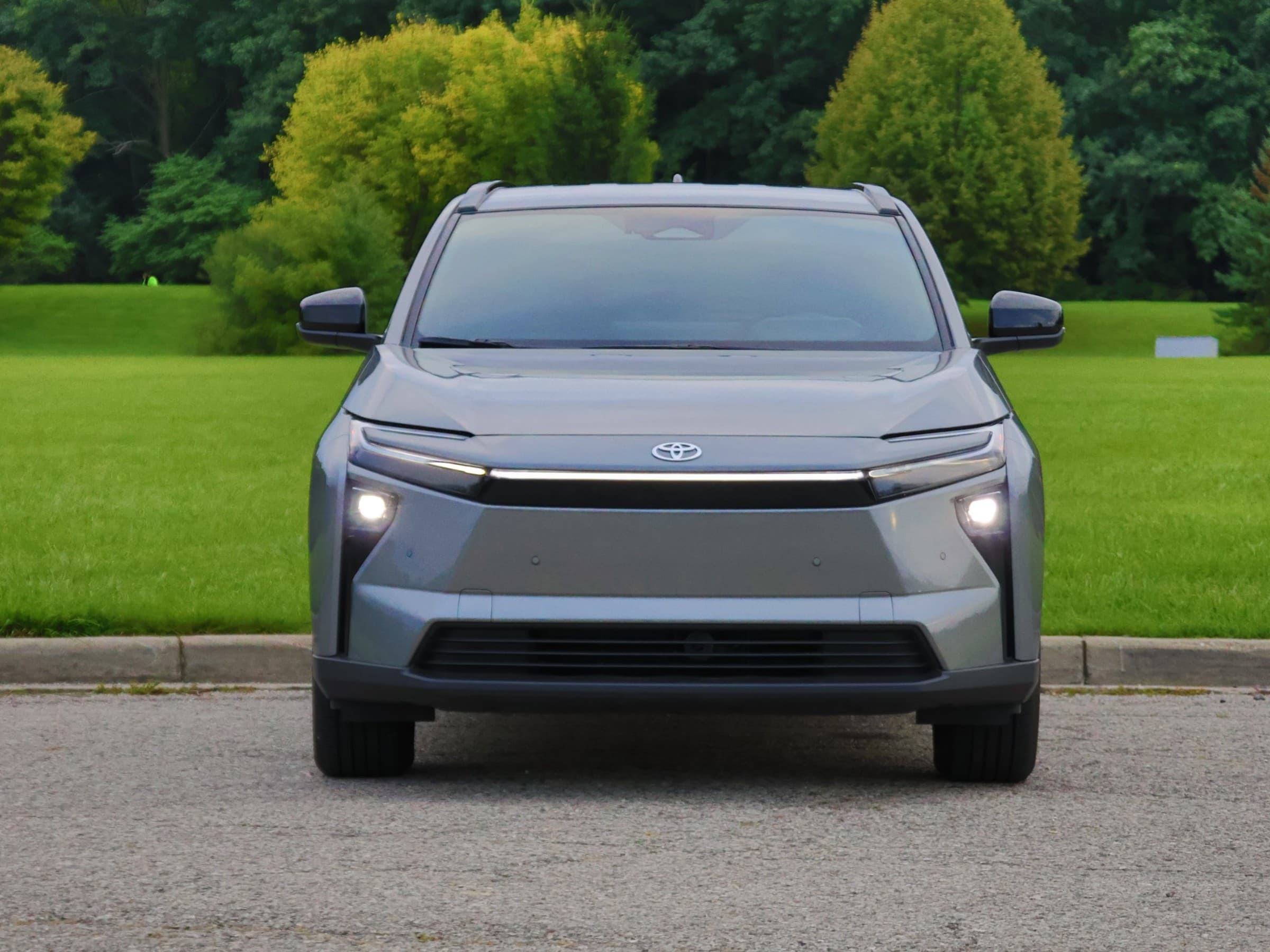
The gear selector dial is a bit funky. You push down and twist on the outer ring to select reverse, neutral, or drive, and press the push button for park. Once you get used to it, it’s no big deal. With the large battery, both are plenty quick, and the Woodland hits 60 mph in a speedy 4.4 seconds. The smaller battery delivers less power, and its 8-second 0-to-60 mph may seem slow compared to some EVs. Still, it’s responsive and has plenty of acceleration for merging on the highway.
Ride quality is good in either car. The Woodland's all-terrain tires are available at no extra cost. They add a bit more road noise, but it's not an annoying amount, and you'd really only notice it in a back-to-back drive.
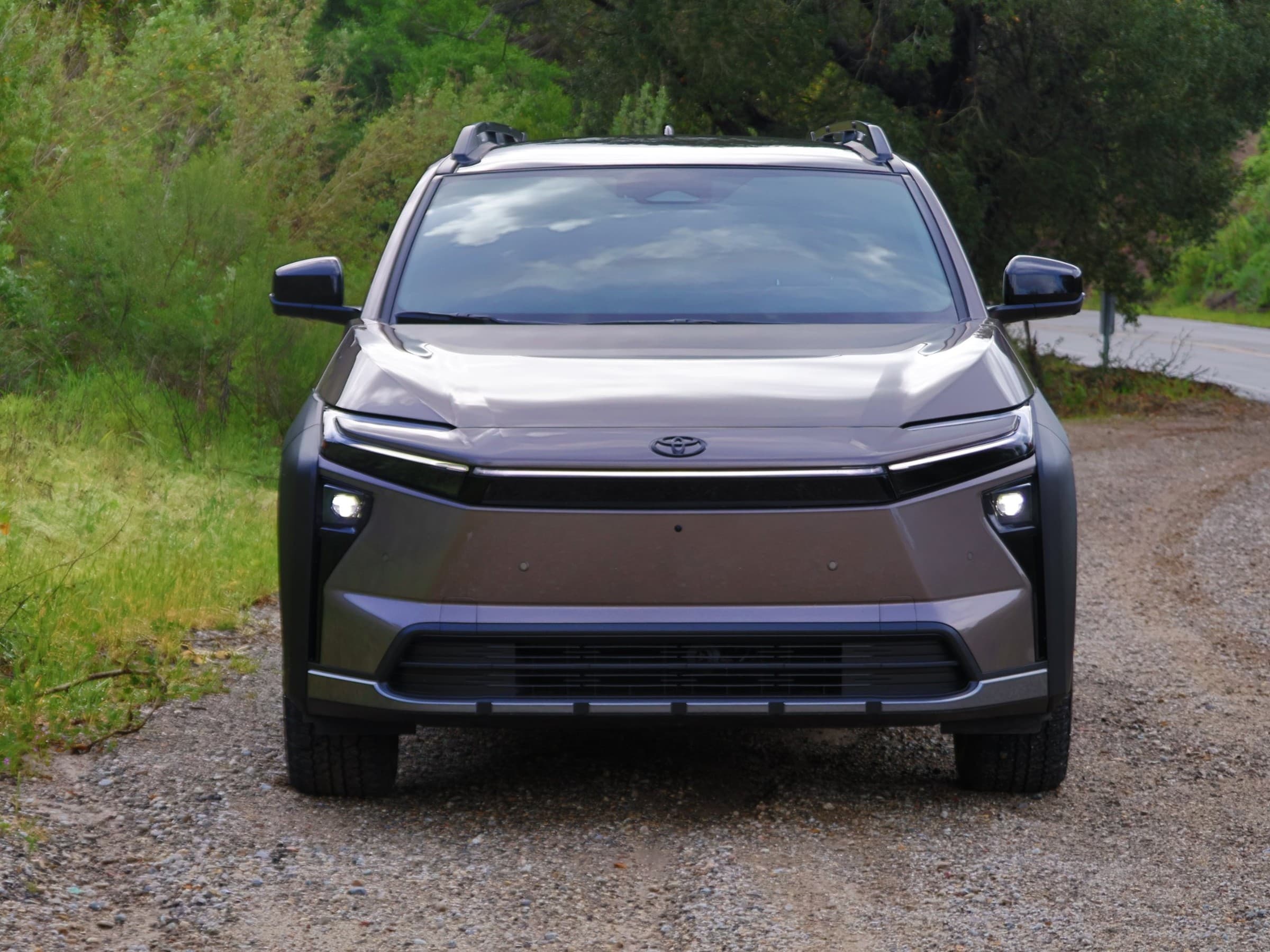
The Woodland's two motors can make more than 375 horsepower, but the battery's output caps the total. Toyota's engineers send slightly more power to the rear axle, which gives the Woodland a nice handling balance. The front-to-rear torque balance adjusts automatically based on available grip.
The standard bZ already has more ground clearance than most competitors in its segment, and the Woodland's taller all-terrain tires lift it a little higher. That makes it a truly useful off-roader on a surprising range of terrain, short of rock crawling.
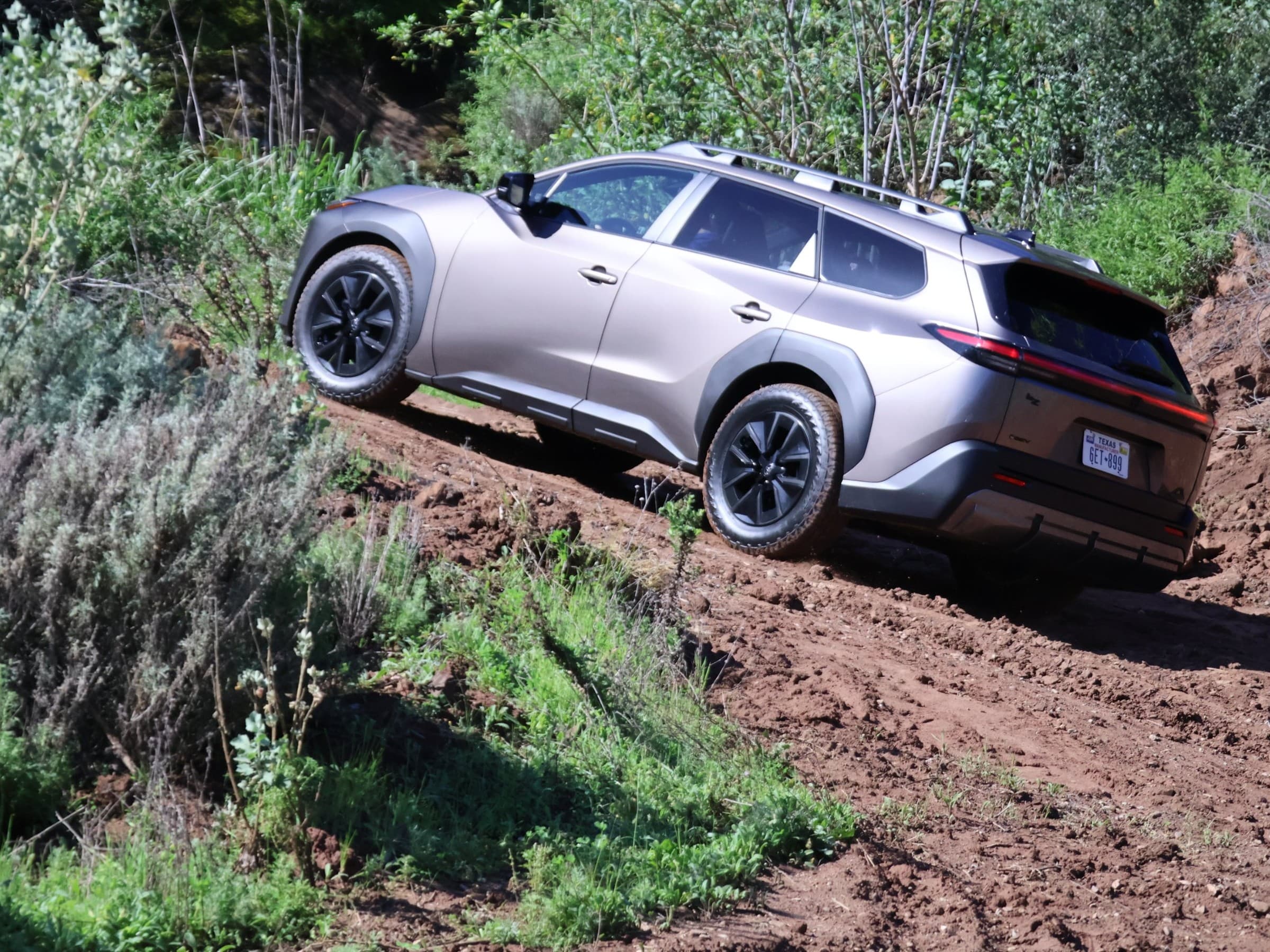
The rear seat is really spacious for adults in both cars, but the Woodland wins on cargo volume, thanks to its elongated roof. It's a real plus if you're into outdoor adventures or hitting weekend estate sales. It also comes with standard roof rails for carrying more gear up top.
The choice between these two fraternal twins really comes down to your lifestyle. With the large battery and AWD, the range difference between the two is minimal. So the question is whether you need an around-town commuter or something to get you to a cabin or trailhead.
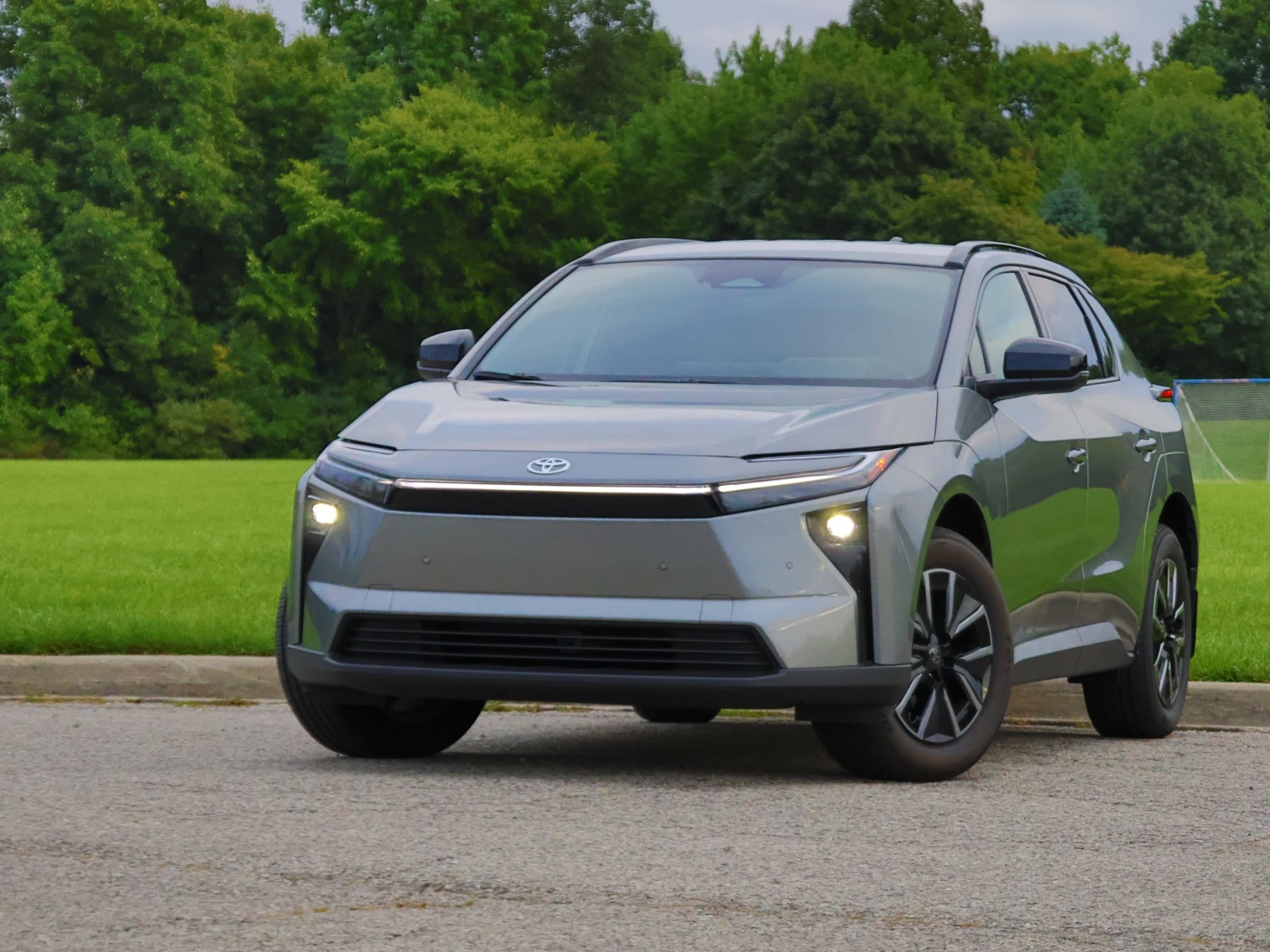
If you don't plan on road-tripping and want a great value, the base bZ is an excellent choice. The bZ with the large battery and a single motor delivers more than 300 miles of range, which makes it a good road trip machine. Its 150kW charging peak may not sound impressive, but its charging curve is better than a Tesla Model Y, and it charges from 10 to 80 percent in about the same time and has a similar range.
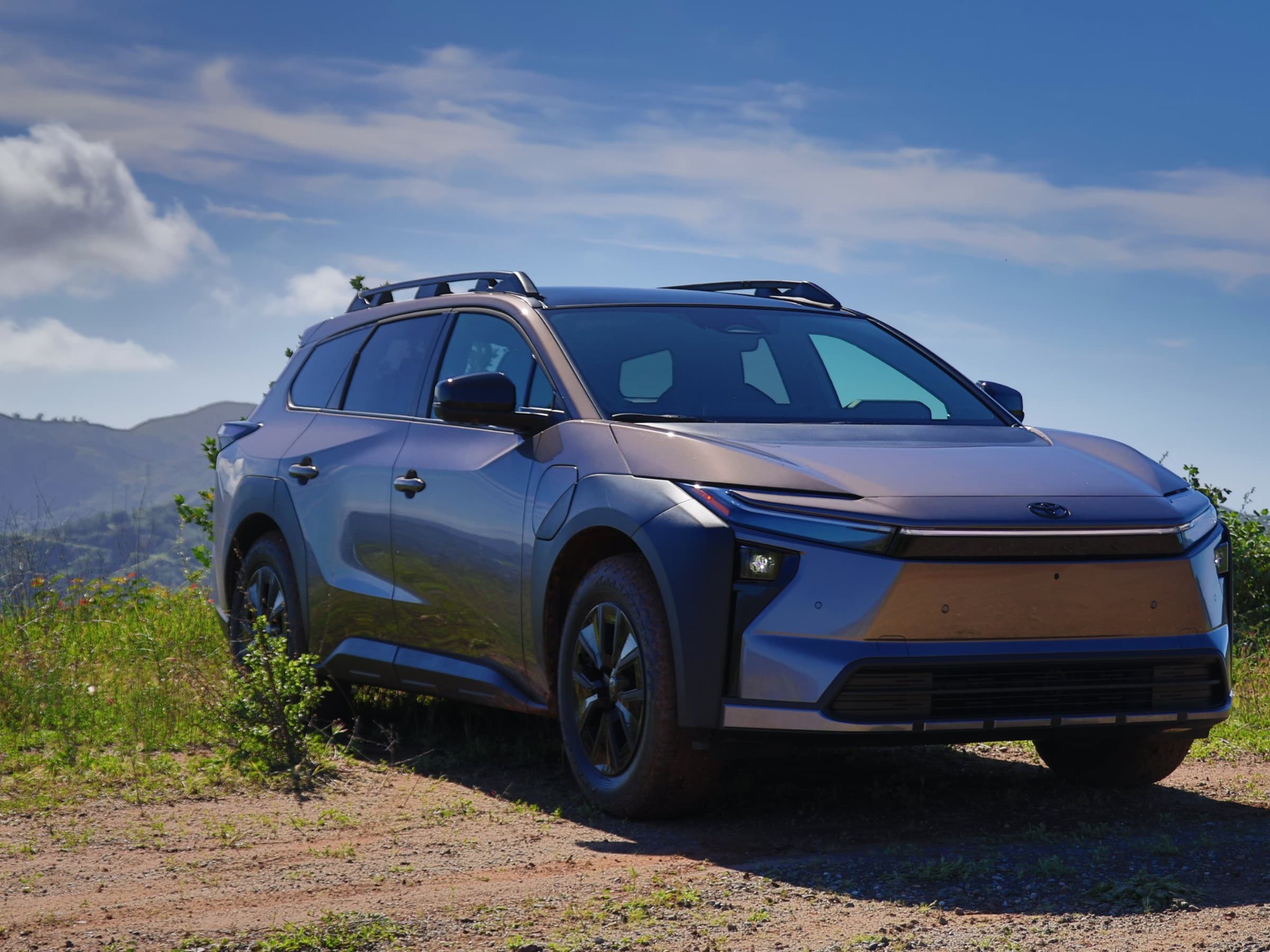
If you have that Subaru adventure spirit but prefer your local Toyota dealer, the Woodland is the way to go. You can pack plenty inside, and it'll get you where you’re going surprisingly quickly. Either way, Toyota’s got you covered.
2026 Subaru Trailseeker Review: Off-Road Adventure and On-Road Utility
The Woodland’s Subaru counterpart shares its 375-hp powertrain and adventure-focused mission, but wraps the formula in a distinctly Subaru package.
Read More ➜
2026 Subaru Solterra Is a Strong Value Play
The standard bZ’s close Subaru relative offers another look at the shared EV architecture, AWD capability, range, charging, and everyday usability.
Read More ➜
2025 Hyundai Ioniq 5 XRT Review: Trail-Ready Without the Trade-Offs
Hyundai’s rugged EV takes a different approach with faster charging, dedicated off-road upgrades, and a lower, more performance-oriented stance.
Read More ➜
GreenCars Contributor
Sam Abuelsamid is vice president of market research and leads Telemetry Insights' Transportation and Mobility research and advisory practice. Focusing on automated driving, mobility services, telematics, connectivity, cybersecurity, and advanced propulsion systems, Abuelsamid works with clients to help them understand emerging technology trends and shape strategies.
Avery Zimmerman is a Senior Editorial Manager at Telemetry, an integrated communications agency at the intersection of mobility and technology.
Get vehicle reviews, practical tips, and the latest GreenCars news.
ReviewsAs a big fan of both electric vehicles and station wagons, I'm excited about Toyota's new bZ Woodland, which hits both of these criteria.
 Comparisons
They both start under $40,000 and offer more than 300 miles of EPA-estimated range, but the Toyota bZ and Chevrolet Equinox EV take different approaches to all-electric driving.
 Reviews
Toyota's revamped electric SUV gets upgrades in performance, charging speeds, and interior design, but still lacks one crucial EV feature.