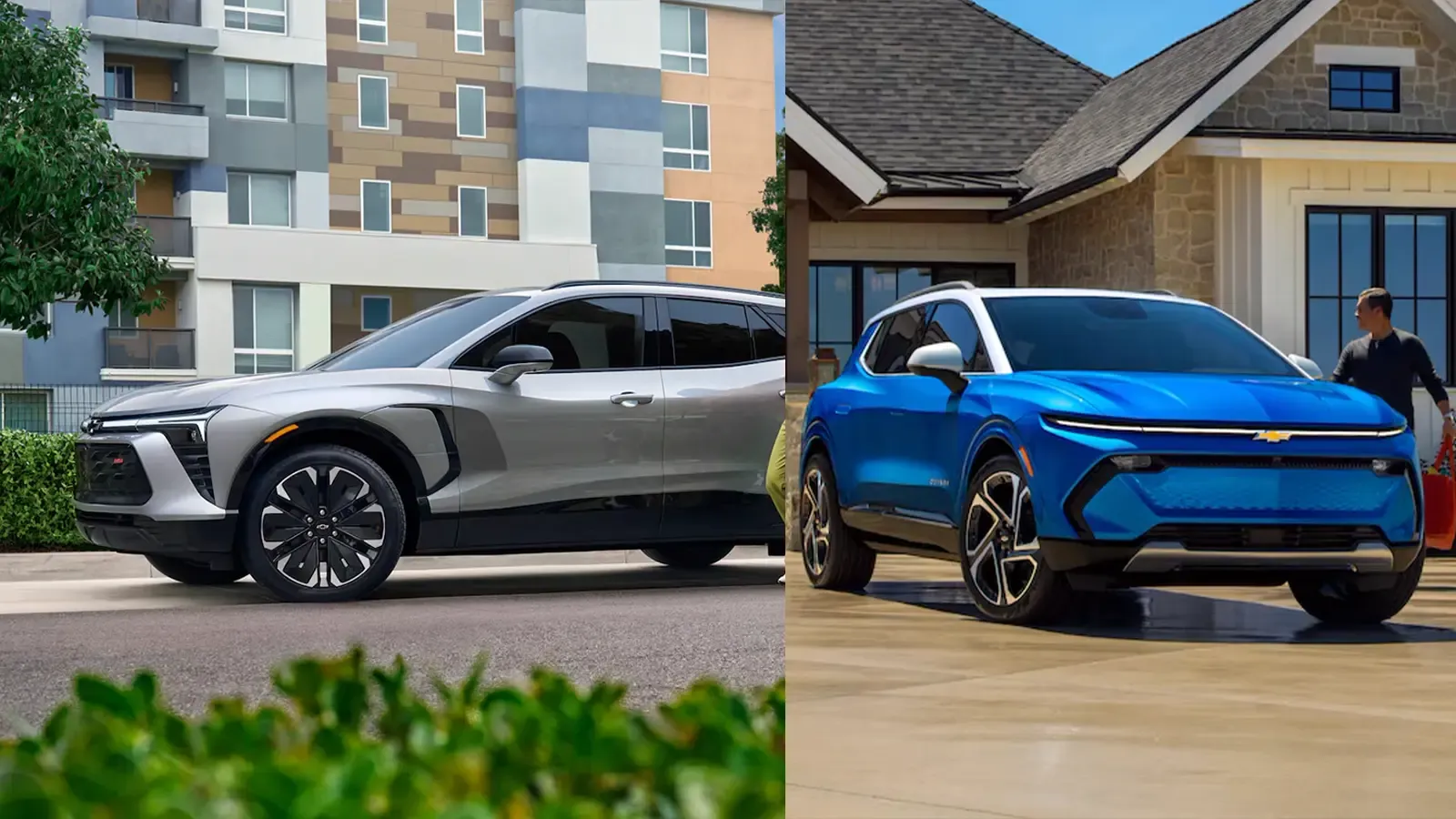
Fast Facts | Toyota bZ vs. Chevrolet Equinox EV
- Horsepower: The Toyota bZ has up to 338 horsepower, while the Chevrolet Equinox EV has up to 300 horsepower
- EPA-Estimated Range: The Toyota bZ offers up to 314 miles of EPA-estimated range, while the Chevrolet Equinox EV offers up to 319 miles of EPA-estimated range
- Cargo Space: The Toyota bZ has up to 56.1 cubic feet of space, while the Chevrolet Equinox EV has up to 57.2 cubic feet of space
- Tech: The Toyota bZ has a 14.0-inch touchscreen, while the Chevrolet Equinox EV has a 17.7-inch touchscreen
- MSRP: The Toyota bZ starts at $36,635, while the Chevrolet Equinox EV starts at $36,795
Toyota Brings Power. Chevy Brings Base-Model Range.
Want to go electric but worried by the headlines about pricey EVs? The Toyota bZ and Chevrolet Equinox EV are two of the most affordable options on the market. Both start under $40,000, which is low for an EV and for a new vehicle in general. Both also offer more than 300 miles of EPA-estimated range. Here's how these two SUVs compare, so you can decide which one fits you better.
Exterior Design and Dimensions
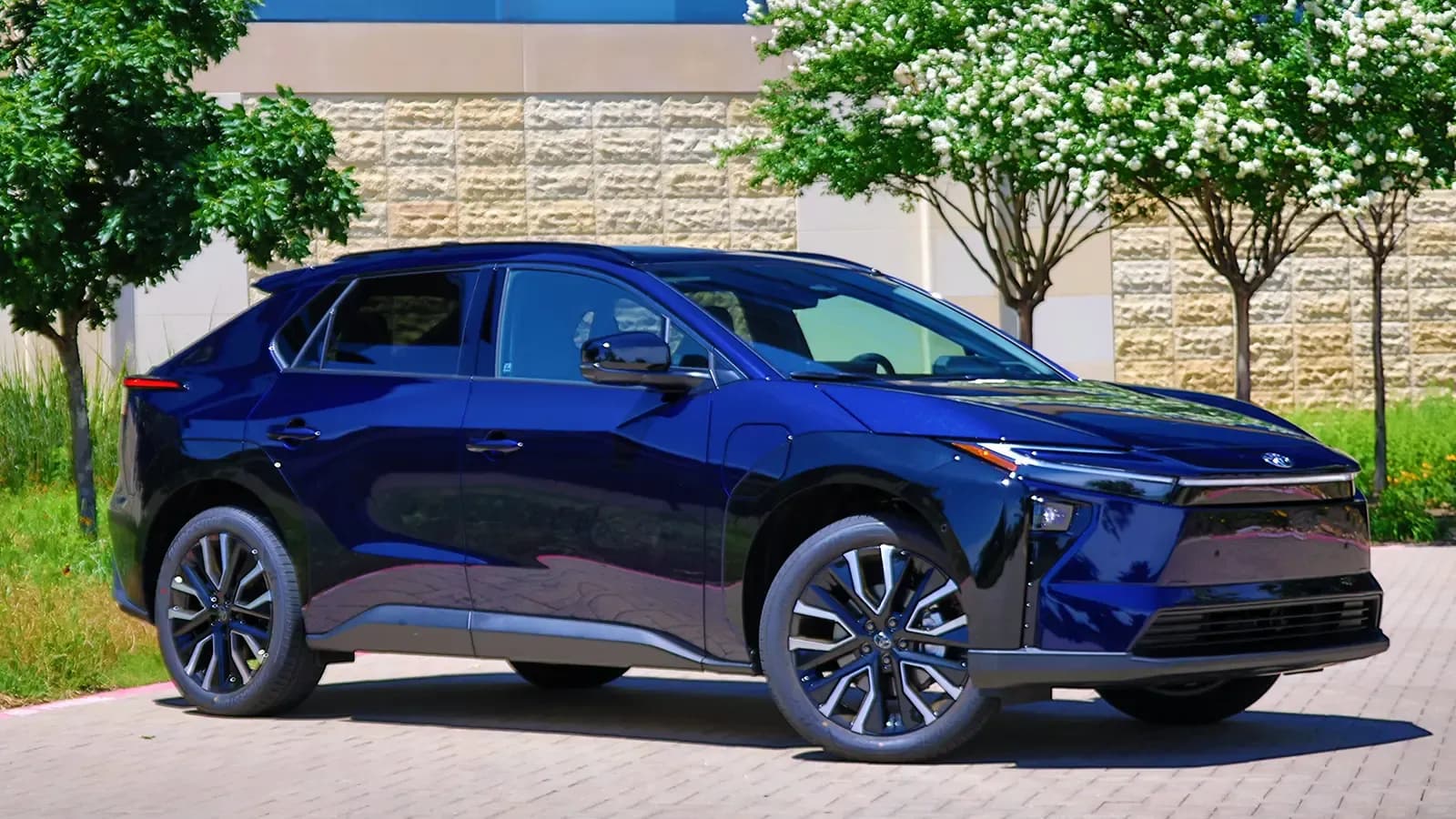
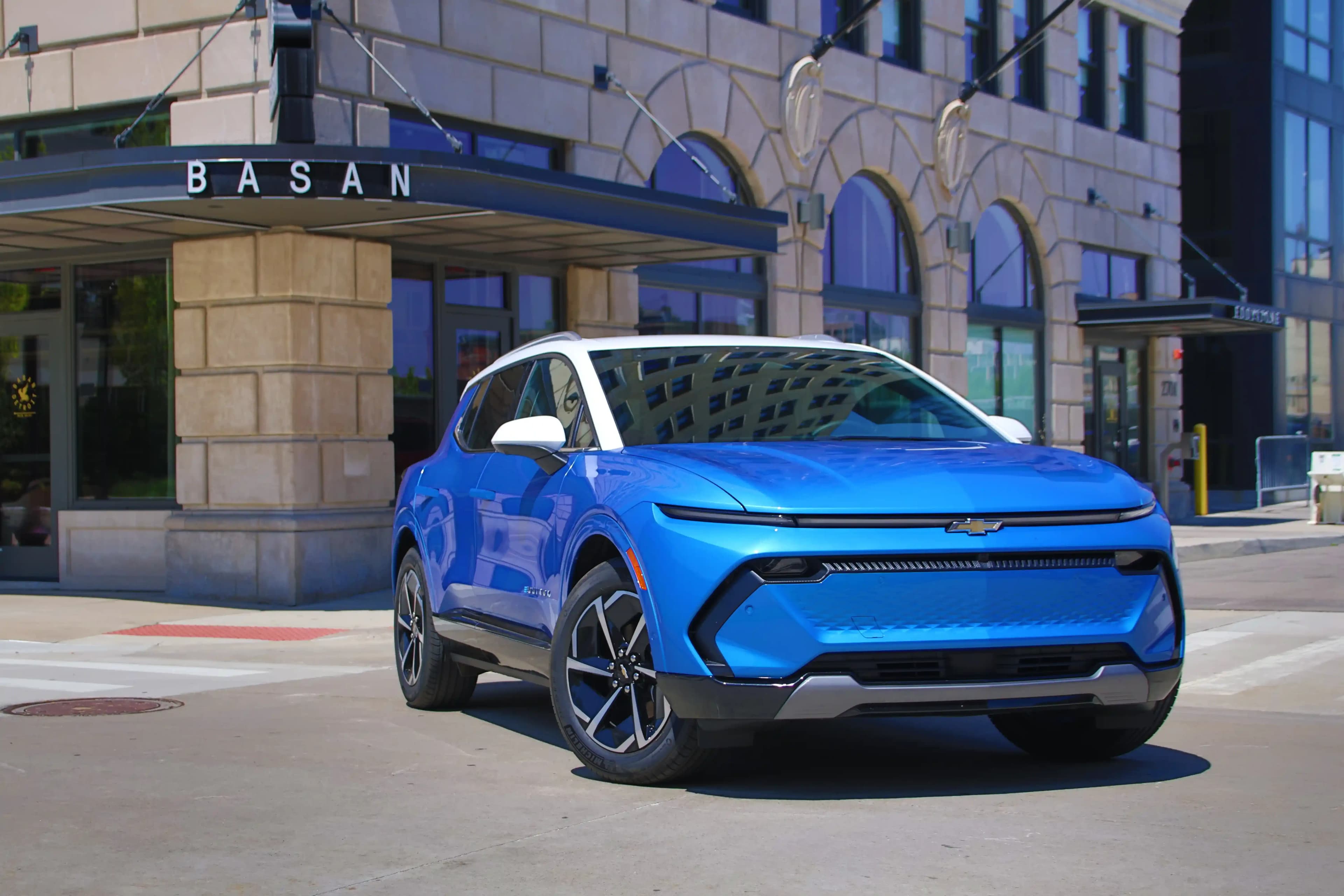
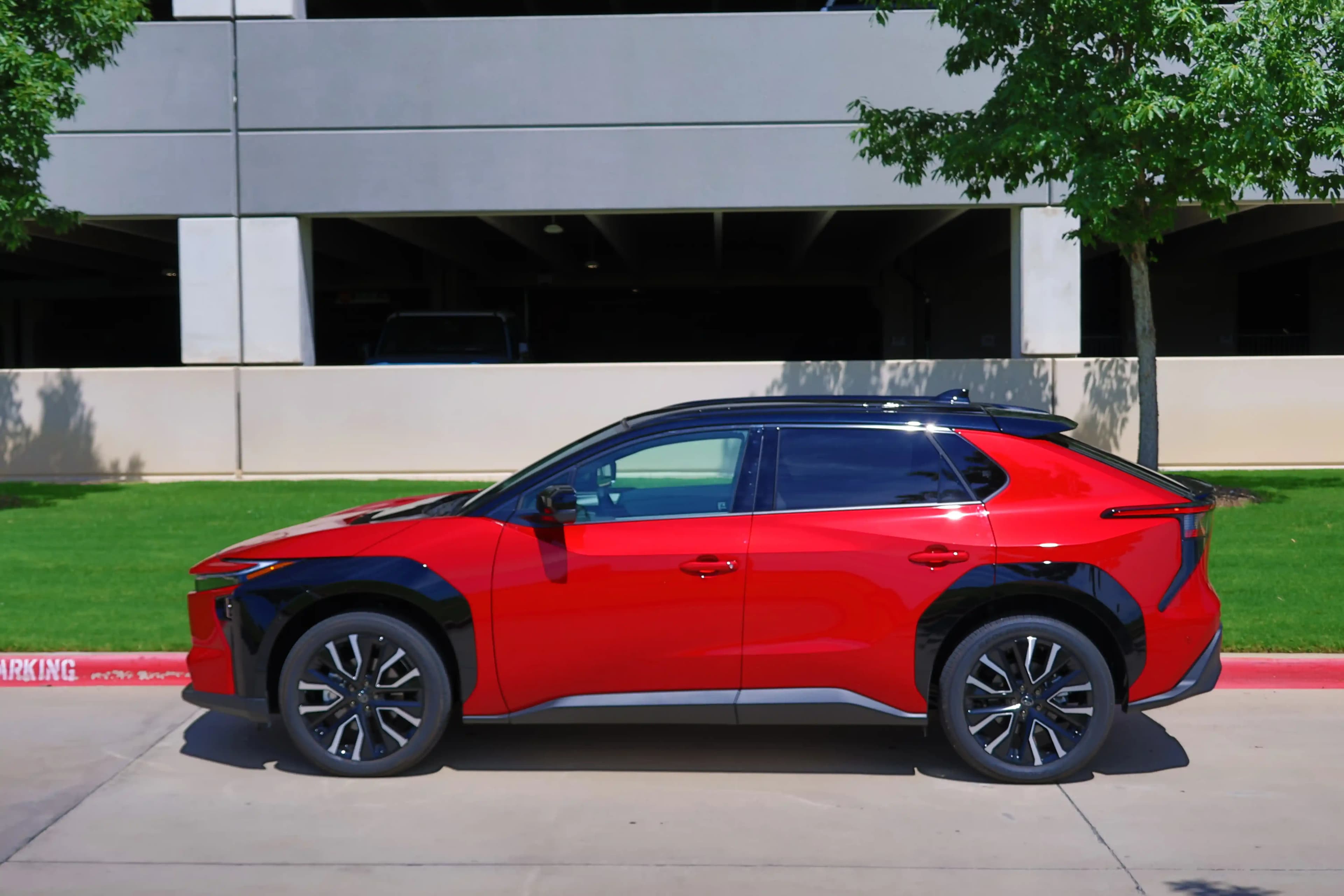
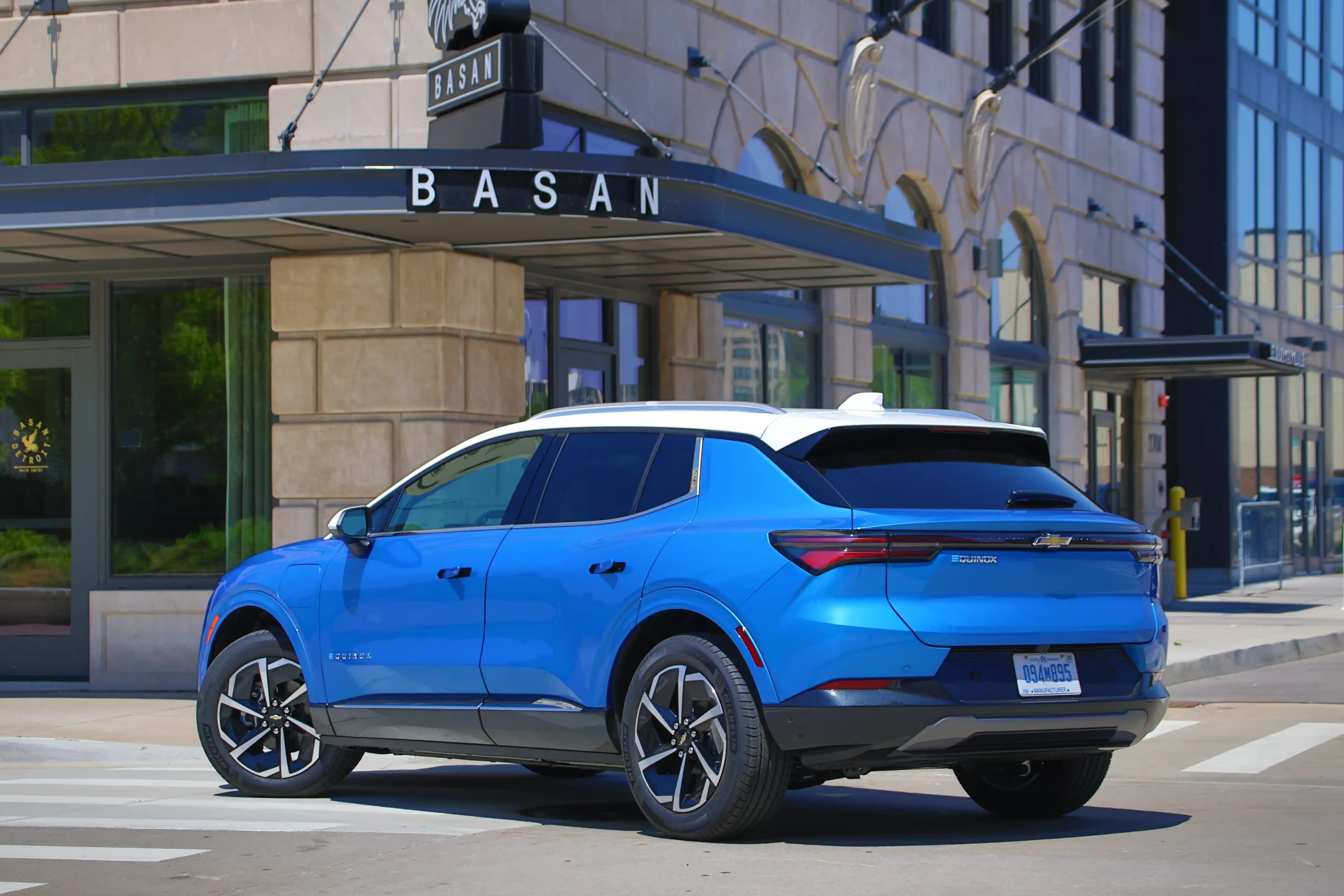
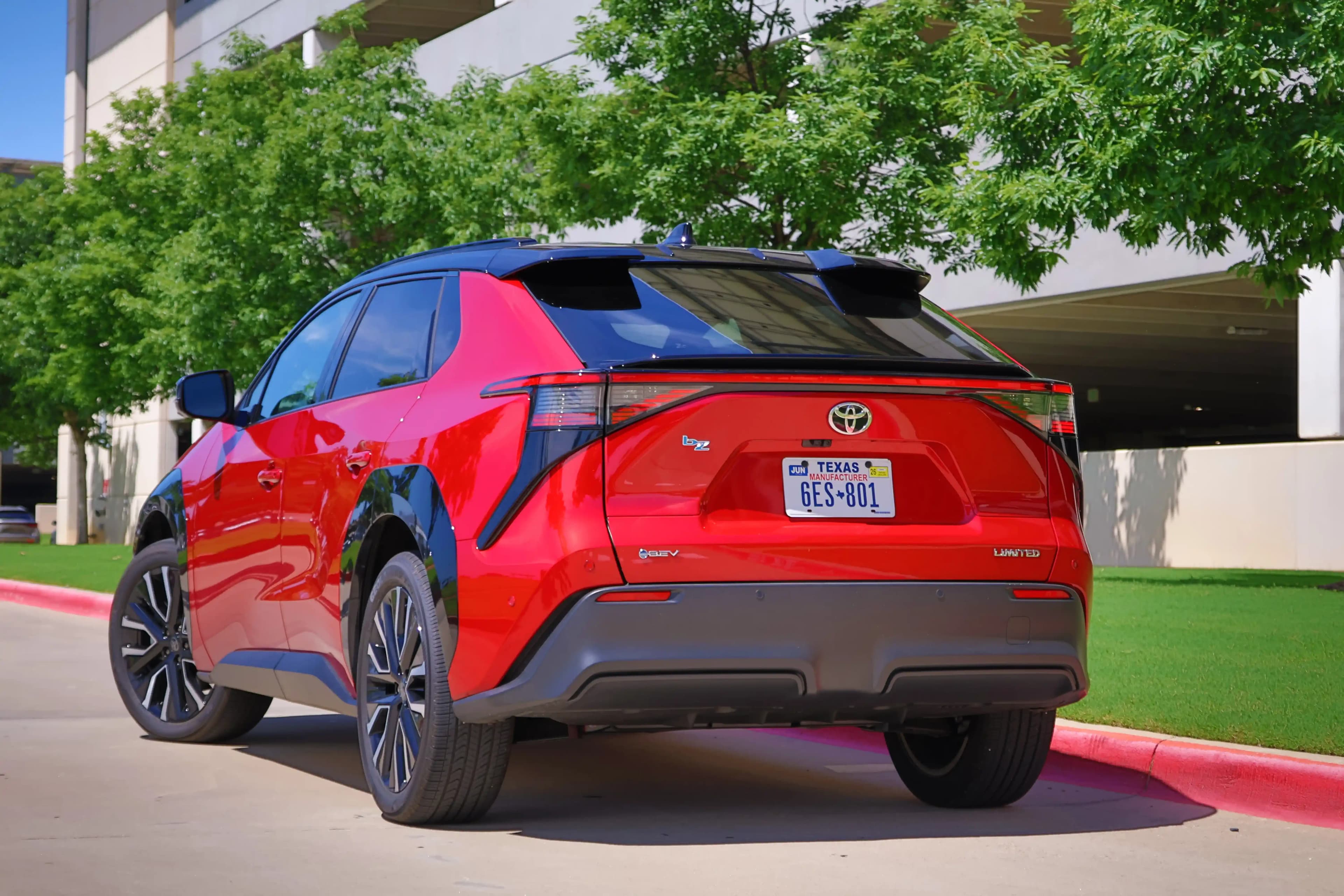
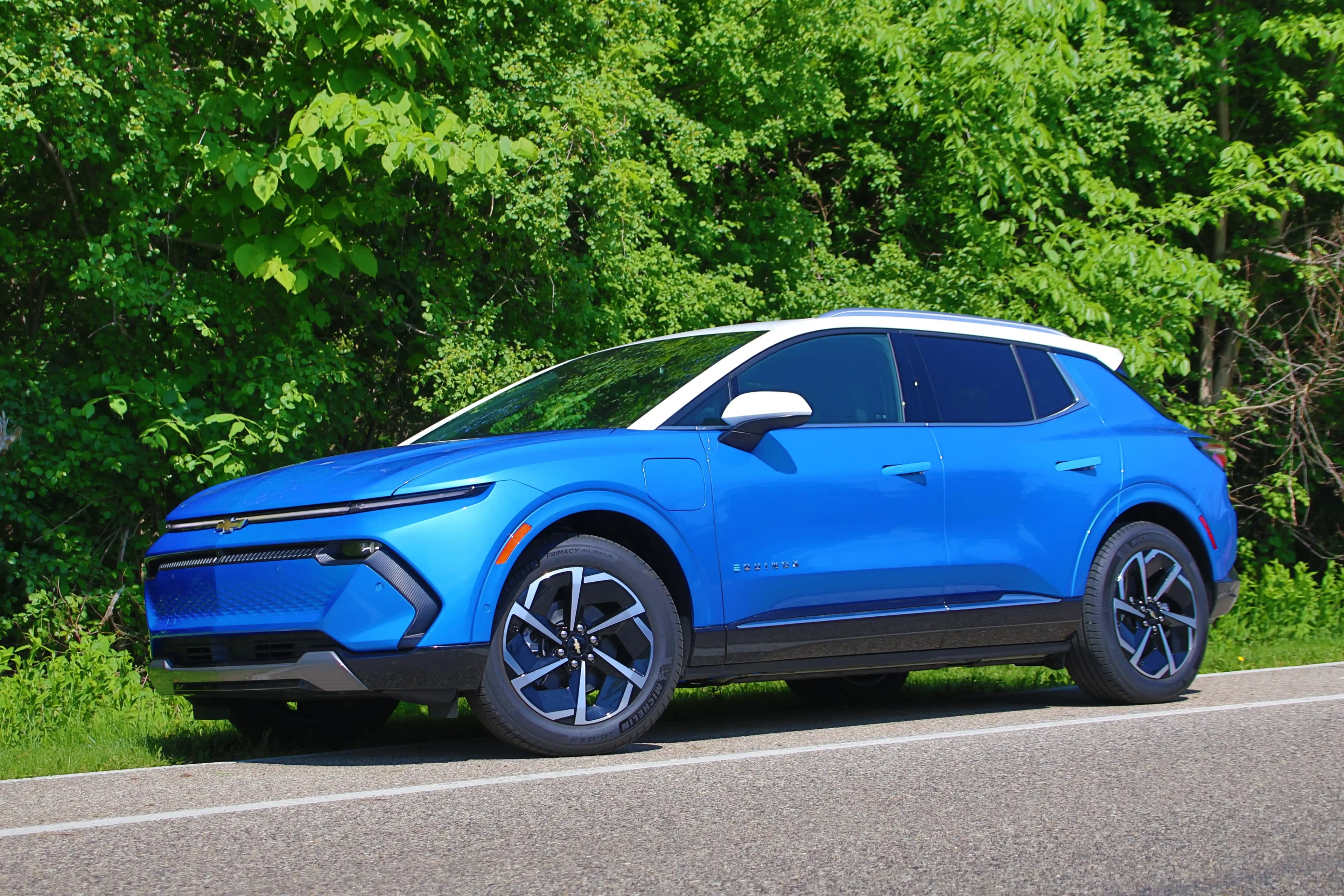
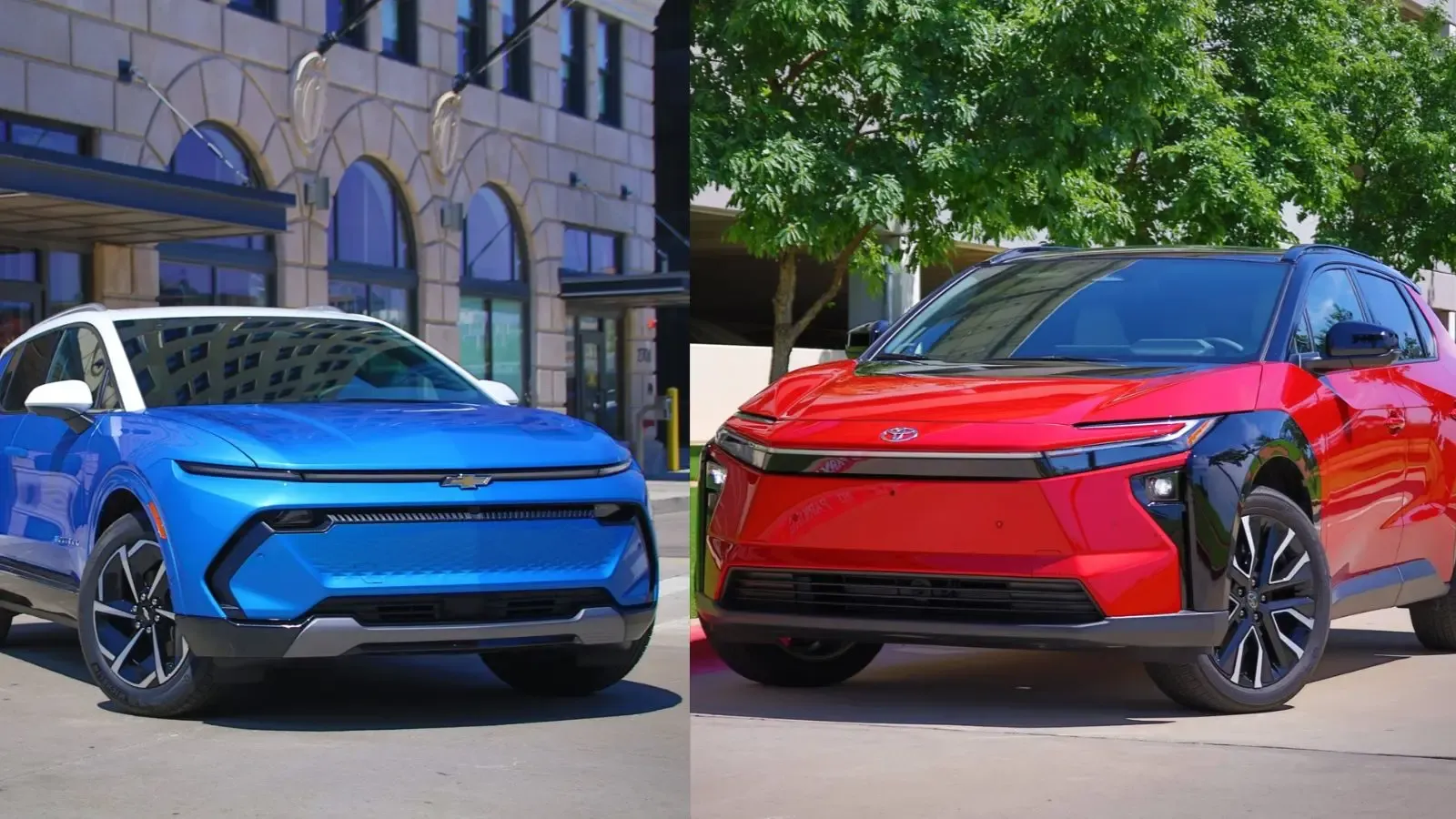
Toyota and Chevrolet took quite different approaches to designing these two vehicles. The Equinox EV is more car-like, with an almost wagon-ish profile. The bZ was co-developed with Subaru, which sells an almost identical version called the Solterra, and some Subaru quirkiness still shines through. Unlike the Equinox EV, the bZ has a more forward-slanted rear hatch, making it look more like a traditional hatchback. When it debuted as the bZ4X in 2022, it featured prominent plastic wheel arches that gave it an off-road Subaru look as well as a rather clunky-looking front end. For 2026, it got a major refresh with a cleaner nose and body-colored fenders if you choose white, black, or gray.
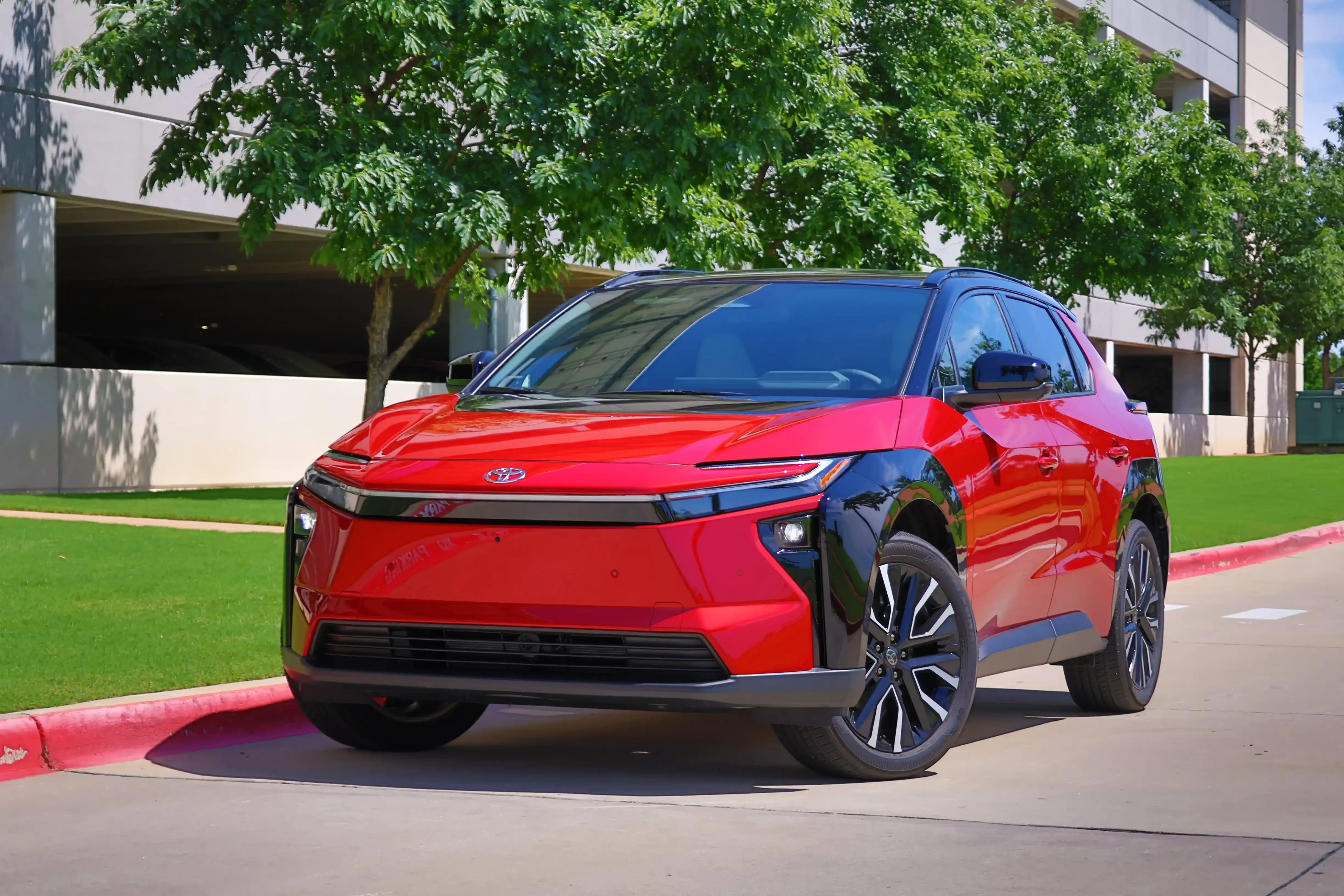
The Toyota has a taller-looking grille and a slightly lower-looking roofline, even though the bZ actually sits 0.2 inch taller and has 1.7 inches more ground clearance. The Chevy is 6 inches longer and offers optional two-tone paint that helps it stand out.
Toyota also sells the bZ Woodland, a more rugged-looking, long-roof wagon version that's the equivalent of the Subaru Trailseeker. Because the Woodland is longer than the regular bZ, I'm treating it as a separate model and leaving it out of this comparison.
Interior Space and Tech
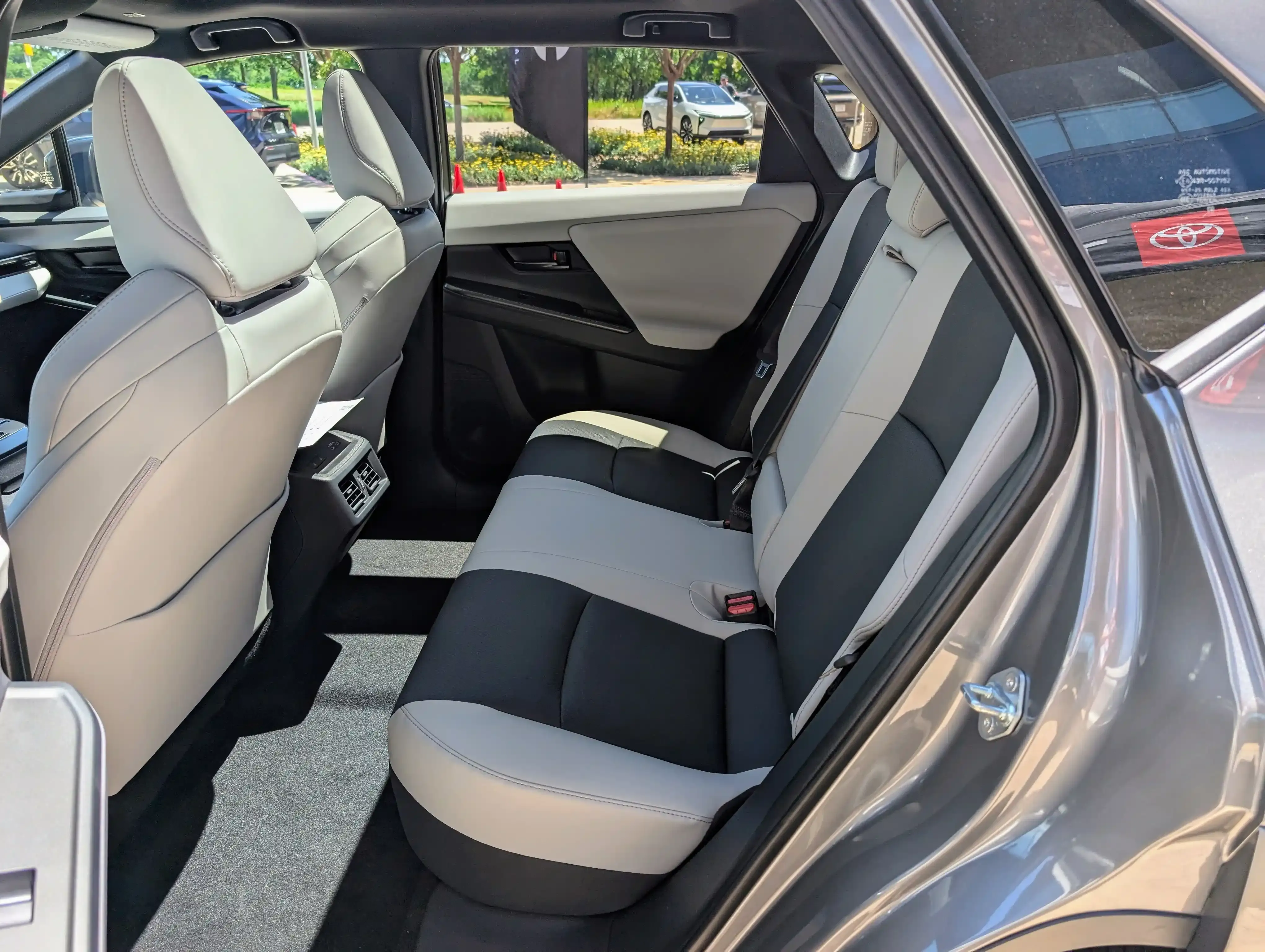
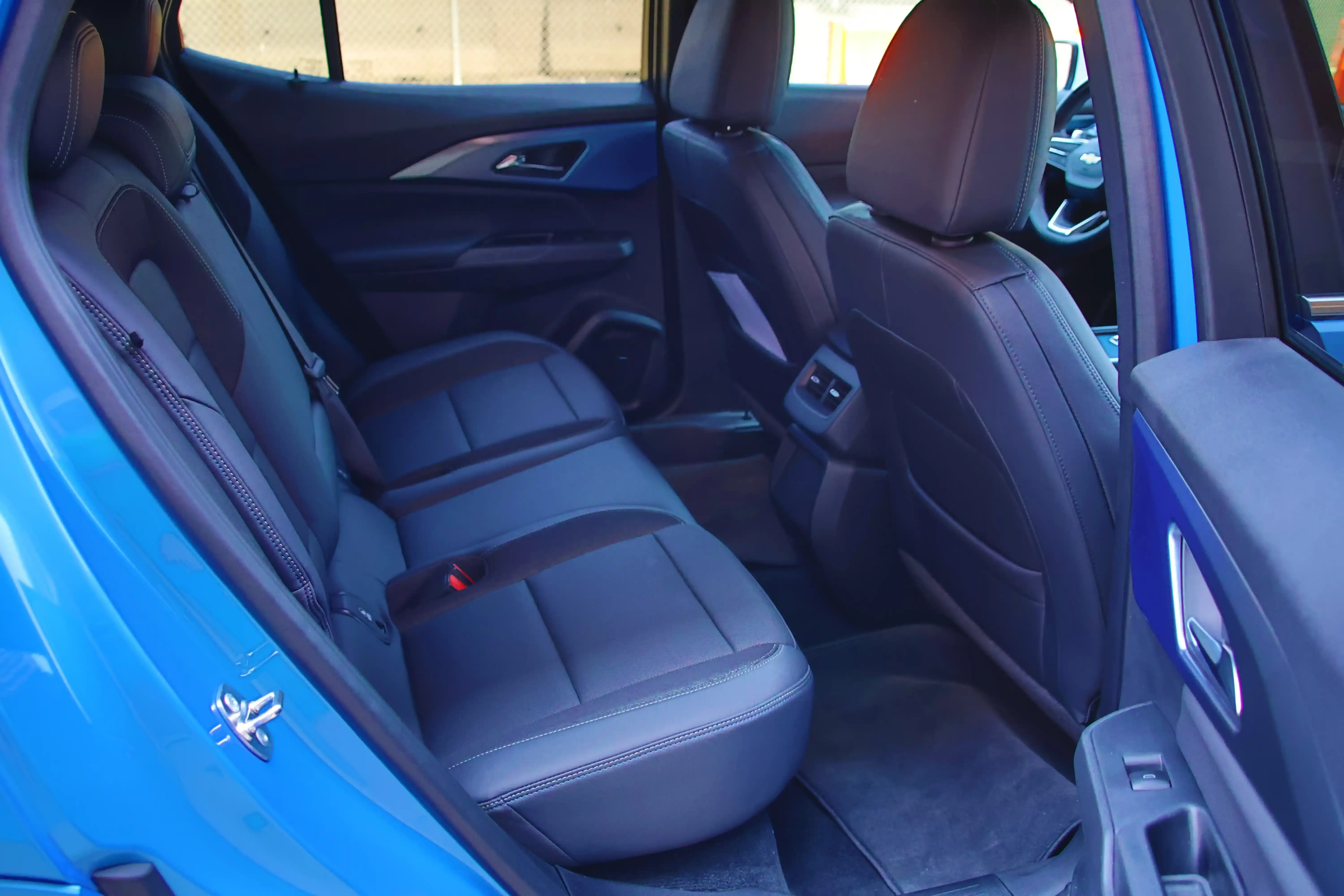
The extra length and wheelbase of the Equinox EV give it a lead in rear headroom and rear legroom, but that doesn’t mean the bZ is lacking in passenger volume. The bZ has the advantage in the front, with more legroom and shoulder room. Cargo space is close. With the rear seats up, the bZ has 0.6 cubic foot less than the Equinox EV if it has the optional JBL audio system, or 1.3 cubic feet more without it. With the seats folded, the Equinox EV has 1.1 cubic feet more.
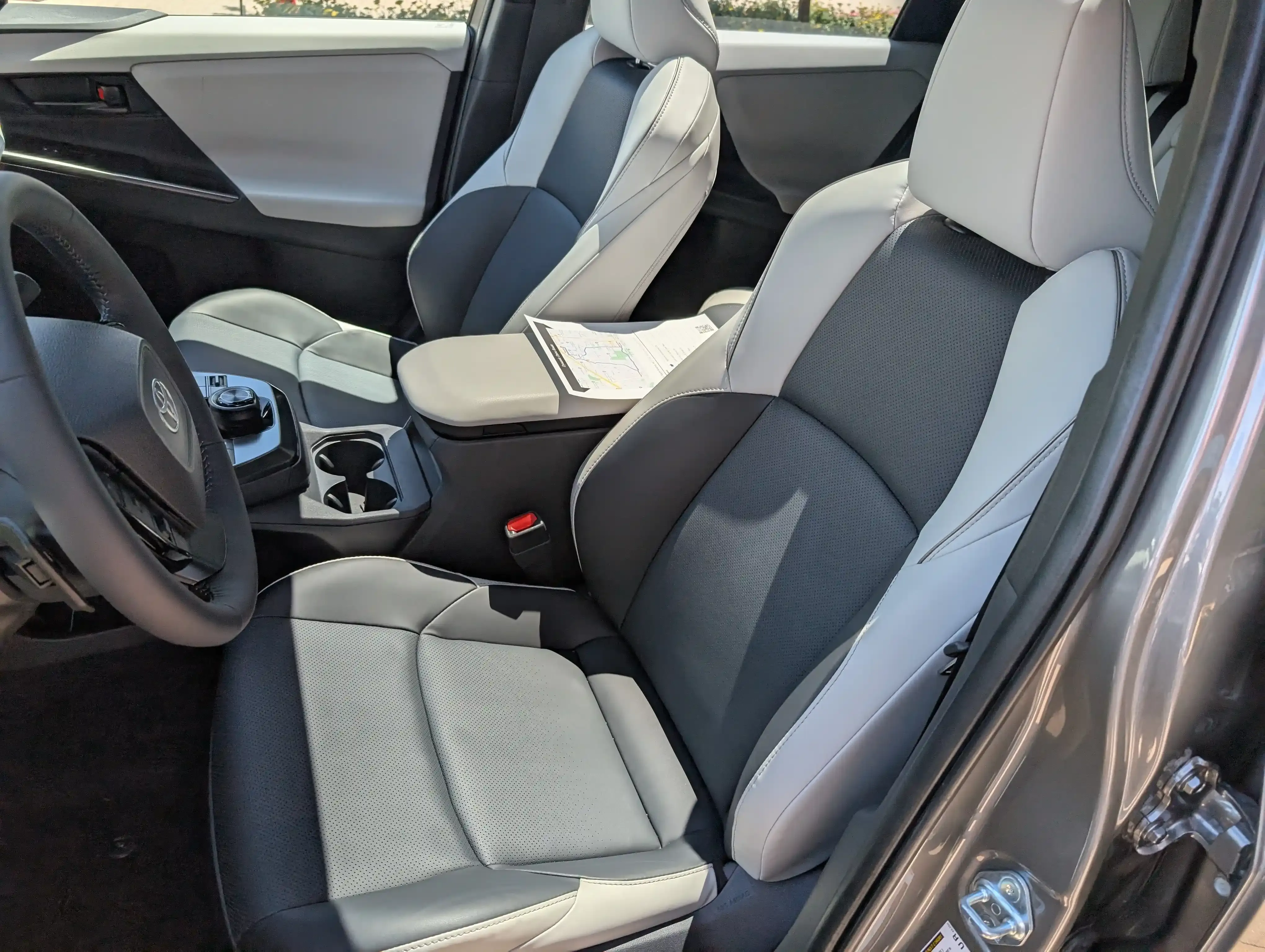
Both SUVs come standard with a 60/40 split-folding rear seat, keyless entry, and USB ports. Beyond that, the bZ has more standard equipment: a heated steering wheel, heated front seats, an eight-way power-adjustable driver's seat, wireless device charging, an auto-dimming rearview mirror, and multicolor ambient interior lighting, all of which are optional on the Equinox EV. The bZ also comes standard with dual-zone automatic climate control and digital key capability, neither of which is available on the Equinox EV.
The Equinox EV has a larger touchscreen, at 17.7 inches compared to the bZ's 14-inch touchscreen, and it comes with Google built in. However, it doesn't support Apple CarPlay or Android Auto, with or without a wire, something GM has dropped from almost all its EVs. The bZ supports both wirelessly. The Equinox EV has an 11.0-inch gauge cluster, while the Toyota has a 7.0-inch unit.
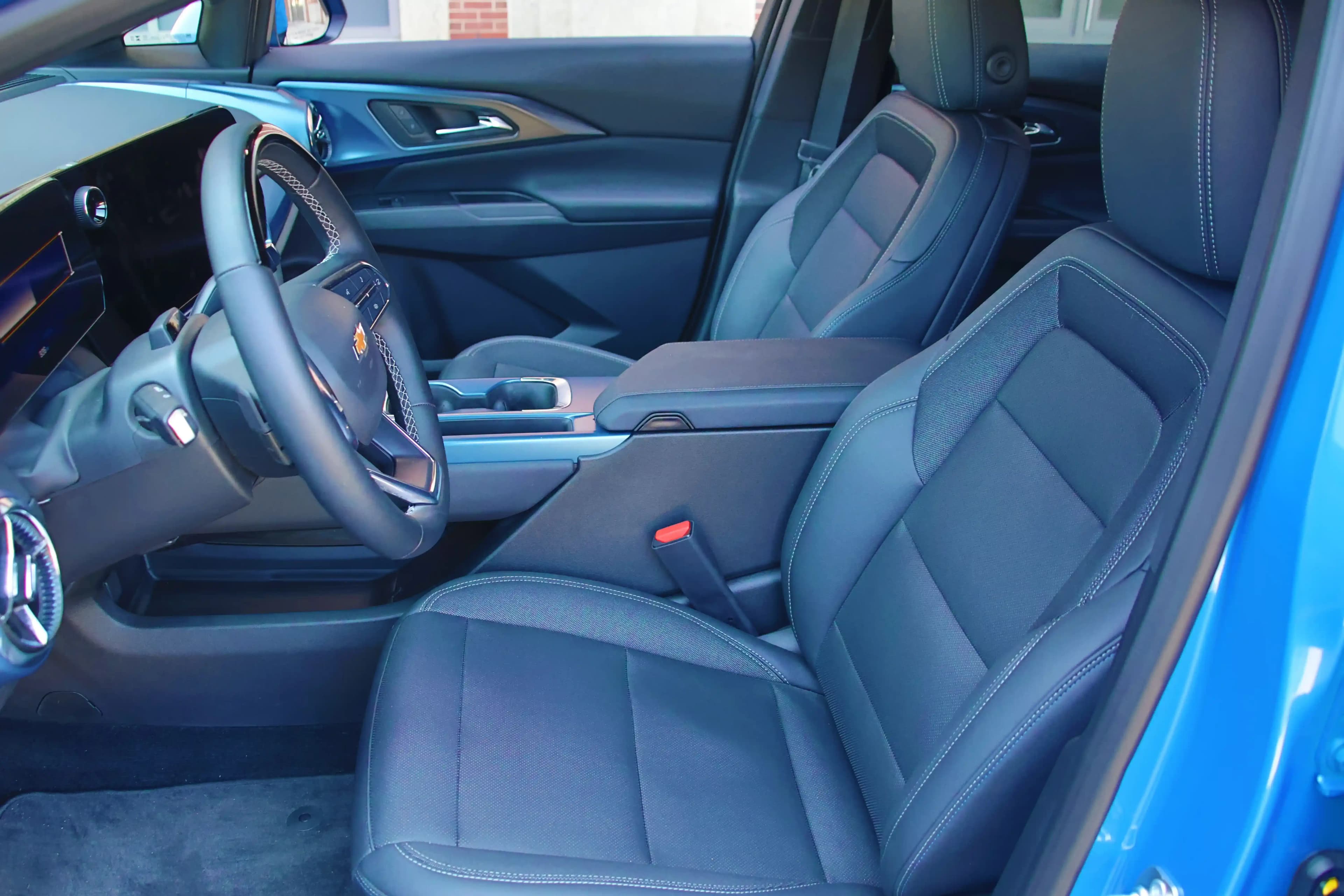
The bZ is available with an eight-way power-adjustable passenger seat, ventilated front seats, heated rear outboard seats, a radiant foot-and-leg heater, a digital rearview mirror, and a nine-speaker JBL audio system. The Equinox EV is available with a power liftgate.
For safety, both come standard with automatic emergency braking, pedestrian detection, lane-departure warning, lane-keeping assist, automatic high beams, adaptive cruise control, blind-spot monitoring, rear cross-traffic alert, and rear parking assist. Both are available with a surround-view camera and traffic-sign recognition.
The bZ also gets standard safe-exit alert, lane-tracing assist, proactive driving assist, and front parking assist, and can be upgraded to include lane-change assist, traffic-jam assist, front cross-traffic alert, and advanced park.
The Equinox EV also gets standard front bicyclist braking, following-distance indicator, intersection automatic emergency braking, rear cross-traffic braking, and blind-zone steering assist. It can be upgraded to include rear pedestrian alert, enhanced automatic emergency braking, side bicyclist alert, and Super Cruise, GM's hands-off, eyes-on driver-assistance system.
Powertrain and Fuel Economy
Which SUV makes more power depends on the drivetrain and battery size. All Equinox EVs get an 85-kWh battery pack, while the bZ offers a 57.5-kWh or 74.7-kWh pack. Both are offered in single-motor FWD or dual-motor AWD variants, but the standard bZ battery is only available with a single motor. With FWD, the Equinox EV makes 220 horsepower. The lower output of the smaller battery limits the base bZ to 168 horsepower, while the larger battery enables 221 horsepower. In AWD form, the bZ makes 38 more horsepower than the 300 available in the Equinox. EPA-estimated range is nearly even: the Equinox EV tops out at 319 miles and the bZ at 314. The small-battery bZ only yields 236 miles.
The maximum range numbers are close, but the trim-by-trim differences are substantial, so (opens in a new tab)see how to compare EPA range when shopping across EV models and configurations ➜ (opens in a new tab)
Charging
The bZ has native NACS ports for Tesla Supercharger access, and the Equinox EV gets one for the 2027 model year. The 2026 Equinox EV still has a CCS charge port but will work on Superchargers and other NACS chargers with an adapter. Both peak at 150 kW for DC fast charging. The bZ charges a bit faster, though. A 10- to 80-percent charge takes about 30 minutes, compared with about 40 minutes for the Equinox EV.
Both 2027 models now use native NACS ports, but public charging still involves multiple connector types and adapters, so (opens in a new tab)see how today’s EV charging adapters and standards fit together ➜ (opens in a new tab)
Price
In base XLE FWD form, the bZ is $160 less than the Equinox EV, but that version has 83 miles less EPA-rated range. The XLE FWD bZ with the large battery and 314-mile range starts at $39,575, $2,780 more than the Equinox EV. If you want AWD, the Equinox EV is $1,540 less. At the top of each lineup, the bZ Limited AWD is $2,460 less than the Equinox EV RS AWD. Overall, pricing is pretty similar.
What's It Like to Drive?
The original bZ4X was underwhelming. Its range was mediocre, its price was high, and its charging was downright lethargic. For 2026, Toyota and Subaru thoroughly re-engineered their EVs and fixed nearly all of our complaints. Performance was never much of a problem with the large-battery FWD models, and that remains the case. With AWD, the bZ is now downright zippy. The ride is surprisingly good, and AWD models get Subaru’s X-Mode traction control, which makes the bZ and its siblings more capable off-road than you might expect. The instrument cluster display is relatively small, but it sits above the steering wheel near the base of the windshield, making it a useful replacement for a head-up display. The bZ is also available with dual wireless device chargers.
The refresh significantly improved the bZ's looks, but I’m still partial to the Equinox EV's shape, especially with a two-tone roof, which comes in black or white. The Equinox EV is also good at spirited driving on curvy roads, but its 6.4 inches of ground clearance is 1.7 inches less than the bZ's, making it much more limited off-road. The Google built-in infotainment system is quite capable and works especially well for road trip route planning. Google Maps suggests where to stop and how long to charge to reach your next waypoint. But if you’re a big fan of Apple CarPlay, you'll feel left out.
Regenerative braking, and specifically one-pedal driving, is another key difference. Japanese automakers generally don’t seem to be fans of one-pedal driving, and none of their current EVs will come to a full stop, even with maximum regen. In the Toyota, you'll have to press the brake pedal to stop once you slow to about 5 mph. GM offers much more adjustability, from traditional coasting when you lift off the accelerator to strong regen that brings the car to a dead halt and holds it there until you press the accelerator.
Somewhat surprisingly, given our experiences with the original bZ4X, the bZ now charges better than the Equinox EV. The Chevy's battery runs at a relatively low voltage and high current of over 500 amps. While the peak charging rate is 150 kW, most 150-kW chargers are limited to about 400 amps, so it will take about 44 minutes to go from 10 to 80 percent, while the bZ can do the same in about 30 minutes. When using a 350-kW charger with higher current output, the Equinox EV's time is cut to just under 40 minutes. These aren’t terrible times, but compared to the bZ or Hyundai and Kia EVs, it’s leisurely.
Analyst's Perspective (Which One's Right for You)
If you’re a Toyota fan coming from a RAV4 or another model in the lineup, the bZ is an excellent choice, and you’ll feel right at home plugging one in in your garage. It’s not necessarily state-of-the-art, and it certainly won’t win any drag races against a Tesla, but it will reliably get you wherever you need to go. If you do have any issues, your local Toyota dealer will likely be able to address them just as rapidly as if you were driving a Corolla.
If you want something a bit more stylish and modern-looking, you might prefer the Equinox EV. Performance and range are comparable with both cars (except for the small-battery bZ), and except for road trip charging, you probably won’t be disappointed with either one. Road tripping in the Equinox EV is actually a bit of a strange contradiction. It's available with GM’s excellent Super Cruise hands-free driving assist, but the extra time required to charge is going to slow down your longer trips, and the absence of Apple CarPlay or Android Auto might add more annoyance. I like the Equinox EV design, and I certainly wouldn’t have said this prior to the 2026 model refresh, but the bZ might actually be the better choice for most customers at this point.
For more detail on Chevrolet’s ride, Super Cruise, infotainment, and charging trade-offs, (opens in a new tab)read our full Equinox EV driving review ➜ (opens in a new tab)
More Affordable EVs Worth Comparing
2026 Subaru Solterra vs. 2026 Hyundai Ioniq 5
The bZ’s close Subaru relative takes on one of the segment’s charging leaders in another useful look at range, performance, charging, and value.
Read More ➜
2026 Nissan Leaf Delivers on What a Modern Affordable EV Should Be
The redesigned Leaf brings another compelling mainstream option for shoppers prioritizing usable range, reasonable pricing, and everyday EV practicality.
Read More ➜
2027 Kia EV3 First Look: Kia’s Most Affordable EV Is Almost Here
Kia’s smaller EV3 enters the same affordability conversation with more than 300 miles of available range and a price aimed squarely at mainstream shoppers.
Read More ➜





 Comparisons