


 Reviews
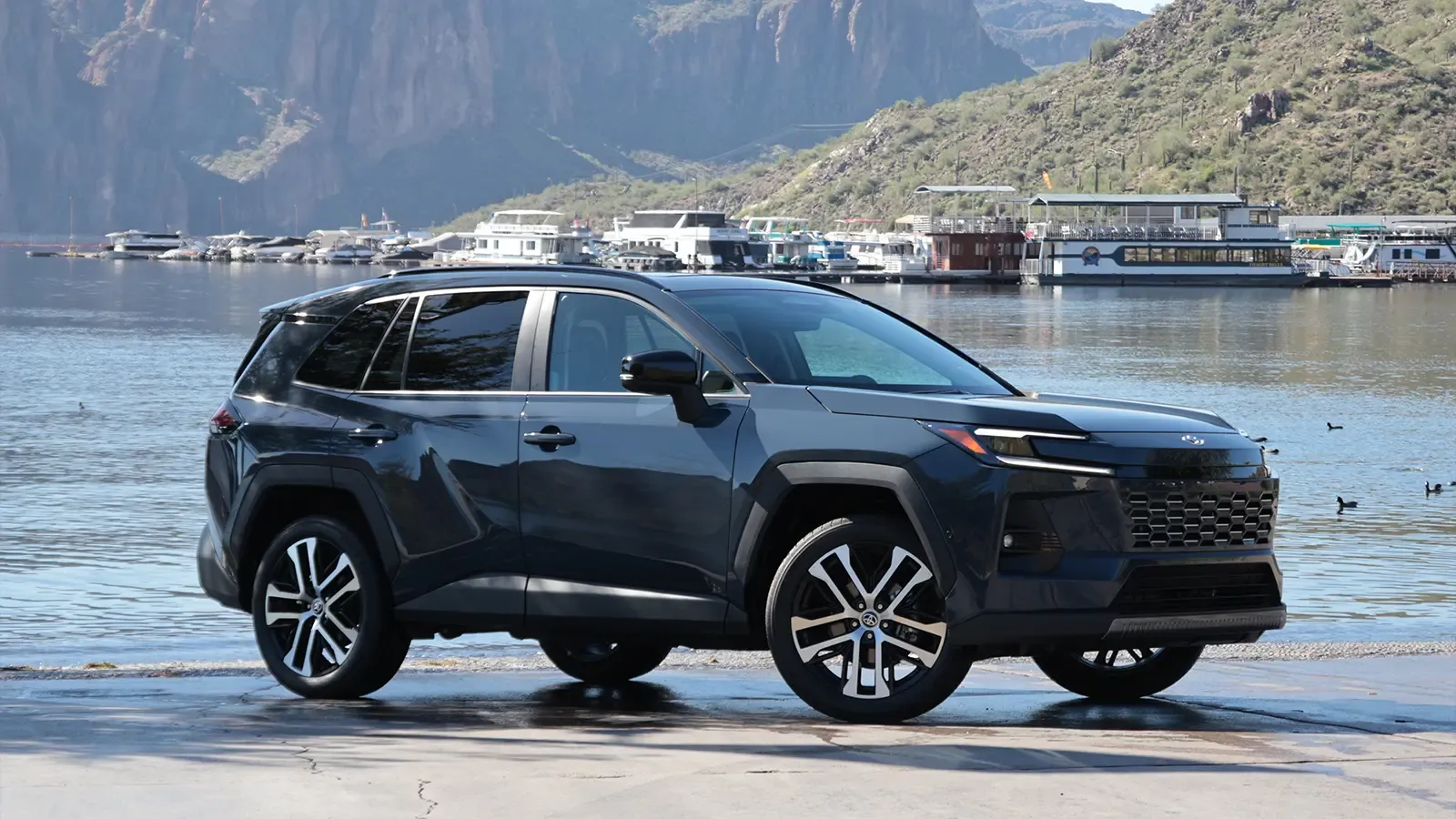
2026 Toyota RAV4 Hybrid: Everyday Practicality Meets Smarter Electrification
The RAV4 goes fully hybrid for 2026, blending Toyota’s proven reliability with sharper design, smoother power, and new plug-in capability.
Sam Abuelsamid6 min read

The RAV4 Woodland plug-in hybrid pairs rugged looks and 324 horsepower with more than 50 miles of real-world electric driving range.
This year marks the 30th anniversary of the Toyota RAV4, one of the original compact crossovers. It has grown steadily more popular over the years, becoming Toyota’s bestselling vehicle in North America. And in 2025, it was the bestselling model overall, ahead of the Ford F-150.
Toyota launched the sixth-generation RAV4 in late 2025. Supply constraints limited sales for several months earlier this year, but the RAV4 is rapidly getting back to its former pace. I just spent a week with the off-road-oriented Woodland trim with a plug-in hybrid powertrain.
Like the Sequoia, Sienna, Prius, and Camry, the new RAV4 comes exclusively with electrified powertrains. The base setup is a 226-horsepower front-wheel-drive hybrid, with a 236-horsepower all-wheel-drive hybrid available. The SE, Woodland, XSE, and GR Sport trims are also available with an upgraded plug-in hybrid (PHEV), which is what I tested.
The RAV4 now gives shoppers a choice between conventional hybrid and plug-in hybrid power, so compare hybrid, plug-in hybrid, and electric ownership trade-offs before deciding which fits your routine ➜
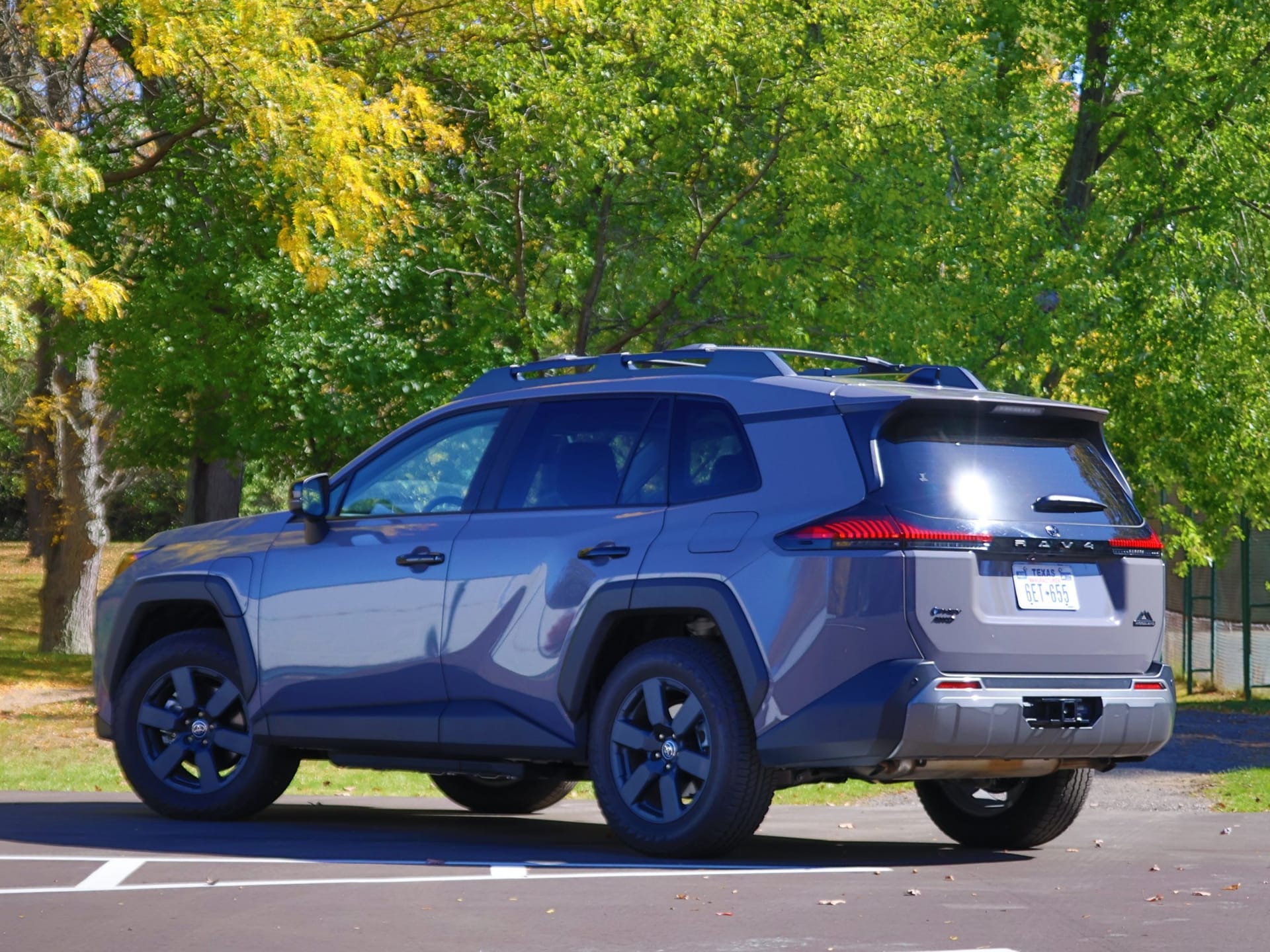
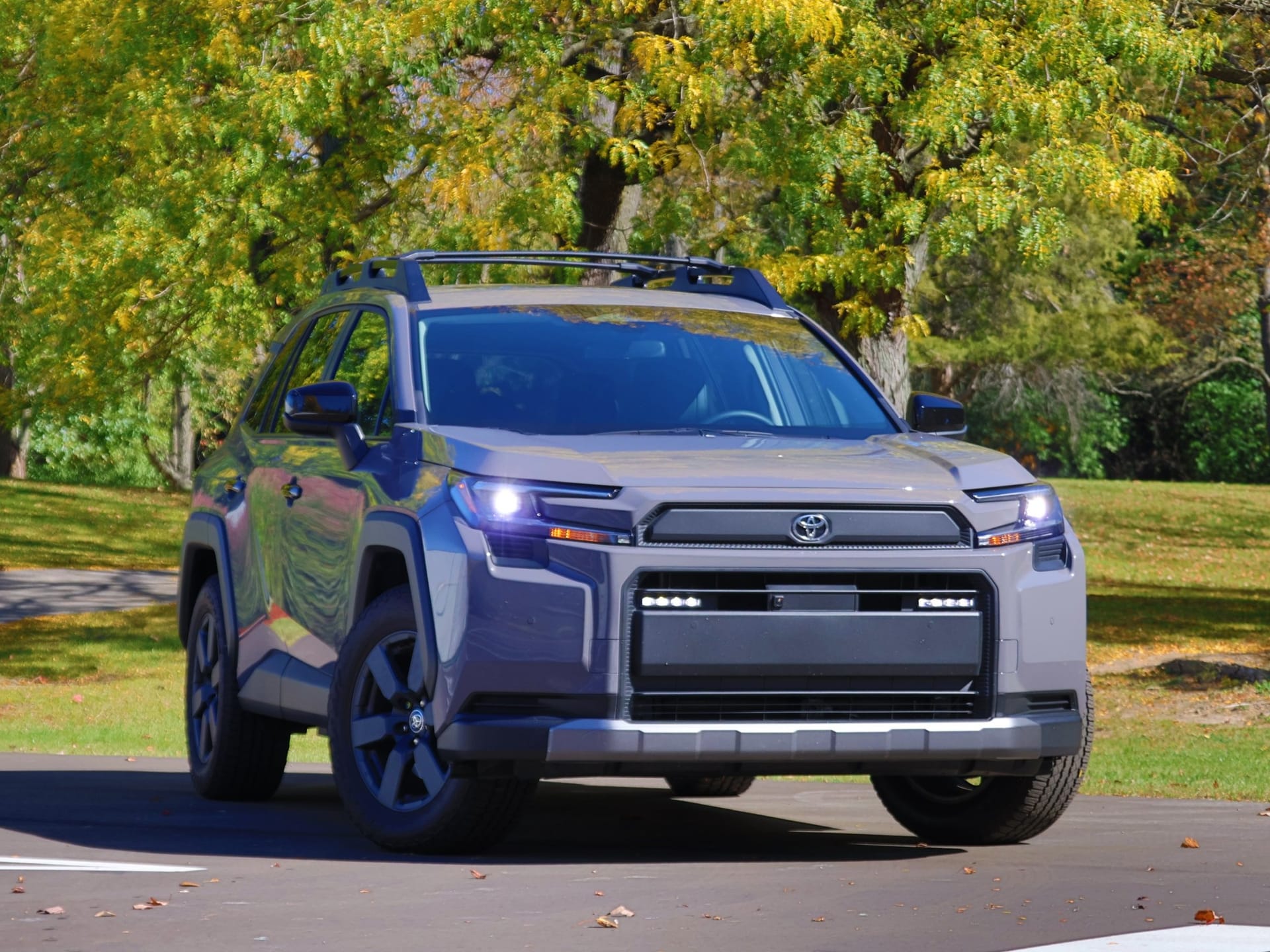
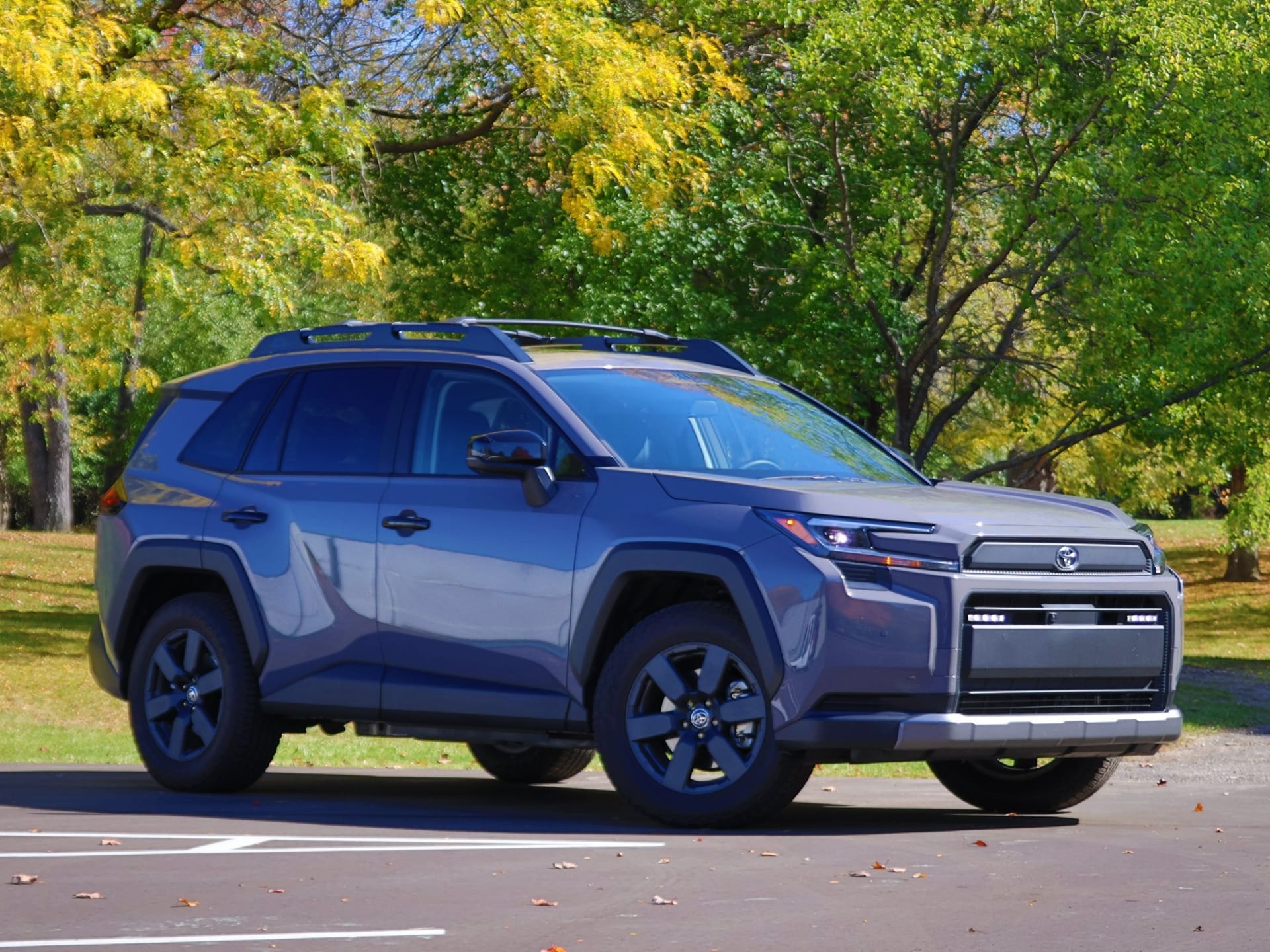
The Woodland is the most rugged-looking and off-road-capable RAV4 variant. It gets a blockier front fascia with integrated Rigid LED fog lights and rolls on matte metallic gray 18-inch alloy wheels with all-terrain tires. Those taller 235/65R18 tires add 0.4 inch of ground clearance over other RAV4s, for a total of 8.5 inches. While that extra clearance is helpful, Toyota doesn’t include skid plates on the Woodland. You’ll want to watch out for big rocks on any trails you traverse.
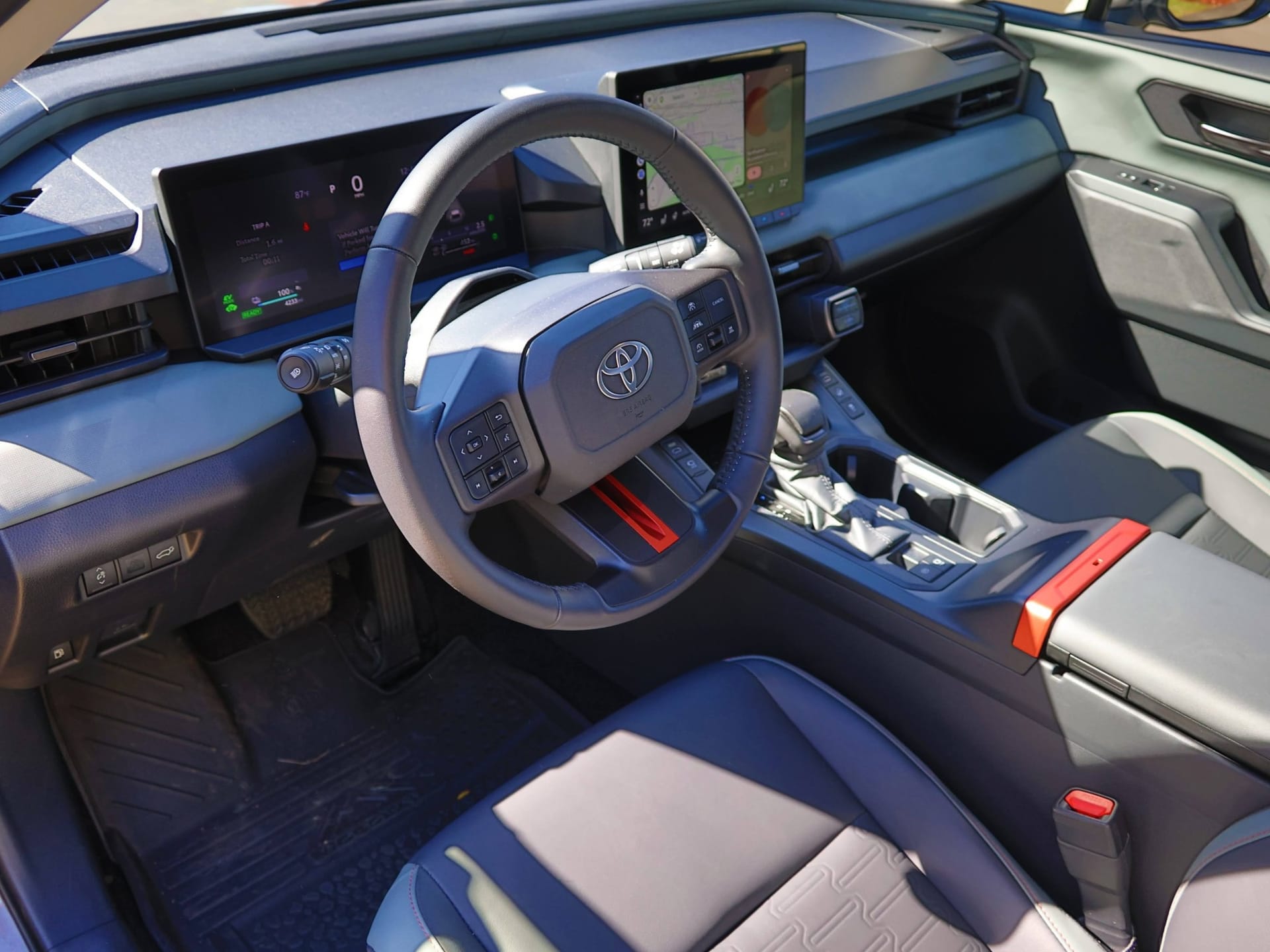
Inside, the RAV4's blockier theme continues with lots of horizontal lines that make the cabin feel wider. A 12.3-inch digital cluster sits directly in front of the driver, and a 10.5-inch infotainment touchscreen sits in the center. The 2026 RAV4 is the first Toyota to get the automaker's next-generation infotainment software, developed by its Arene division.
The new software builds on the last generation's enhancements and updates its biggest shortcomings. The biggest drawback of the old system was that it could show the navigation map, the media player, or settings, but only one at a time. If you were using the map, you had to tap over to media to play, pause, or change a track, then tap back to return to the map. Wireless Android Auto and Apple CarPlay could show multiple windows at once, but the native system couldn't. The new system can display two windows side by side or a set of widgets.
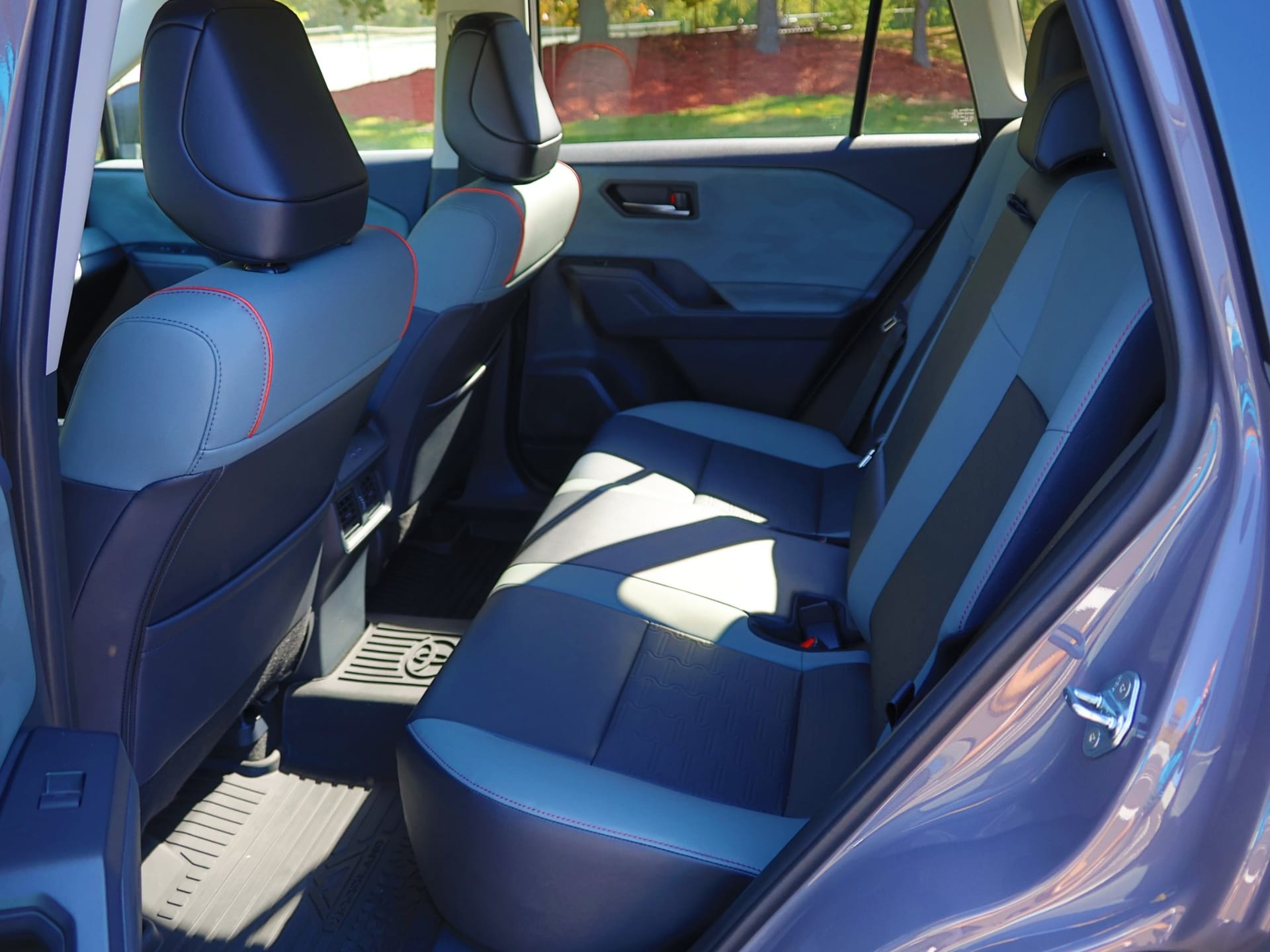
Overall, the interior layout is good, but the colors and materials are less than ideal. The Woodland's seats are covered in Toyota’s SofTex synthetic leather, which looks fine and should be durable and easy to clean. However, both interior color combinations are dominated by blacks and grays, broken up only by two splashes of red on the lower steering wheel spoke and just ahead of the center armrest. Speaking of the armrest, it’s double-hinged, so it opens to either the left or the right. That gives both the driver and front passenger easy access to the storage underneath.
My biggest complaint is the predominance of smooth, untextured hard plastic. Frankly, it looks a bit cheap for a vehicle priced in the mid-$40,000 range. The Ford Maverick, which was designed to be affordable, also uses hard plastic, but its colors and textures make it look more appealing.
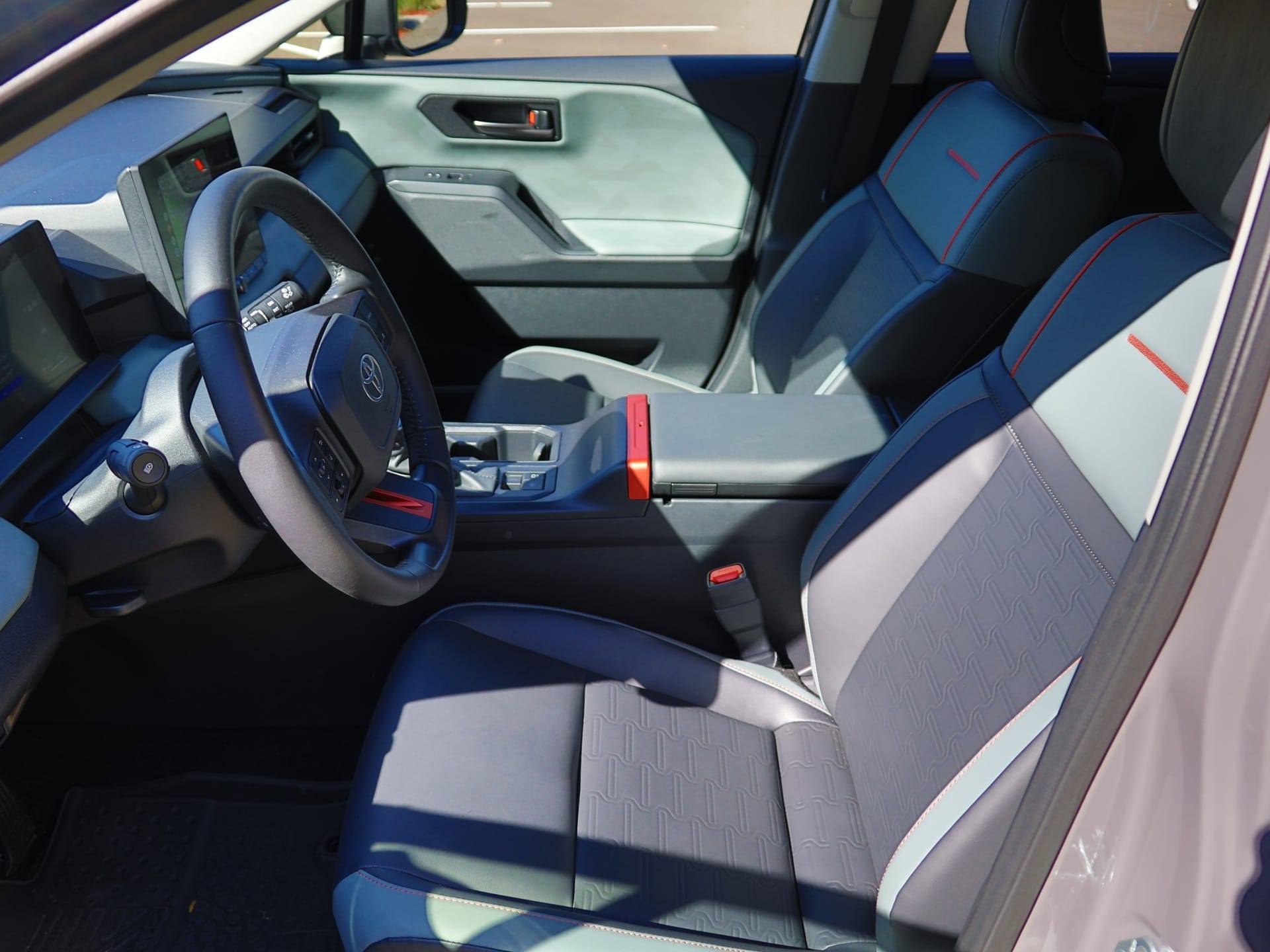
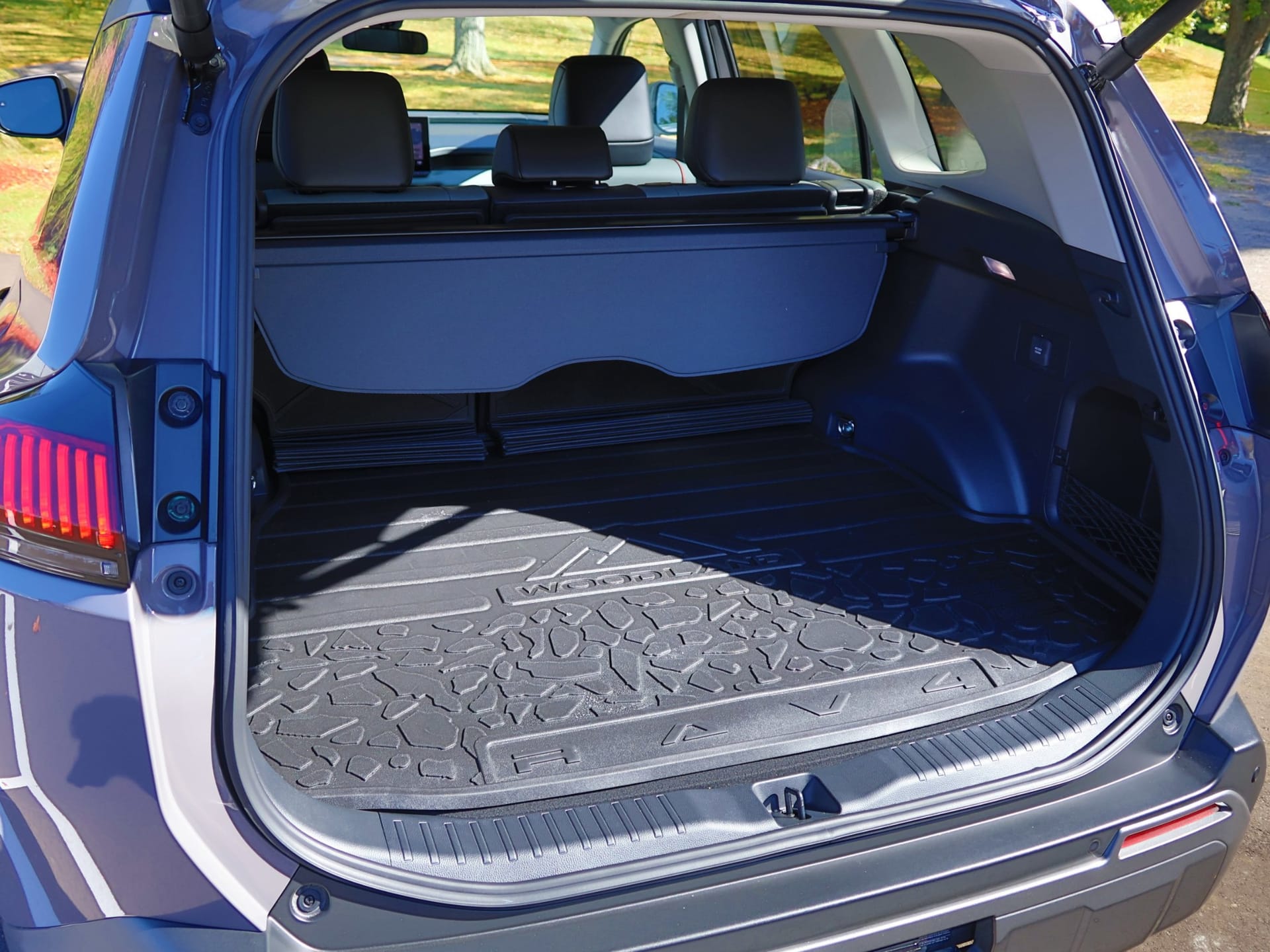
The new RAV4 is built on an updated version of the fifth-generation platform and is the same size as before, so interior room is similar. There’s plenty of space up front, and the back seat comfortably holds a couple of adults, as long as they aren’t sized for the NBA. Cargo space is impressive, with 33.6 cubic feet behind the rear seats and 64.6 cubic feet with them folded. The Woodland also comes with weatherproof rubber floor liners for both the seating area and cargo hold.
Styling aside, the most noteworthy update to the RAV4 PHEV this year is to Toyota’s sixth-generation hybrid system. The lithium-ion battery pack grows from 18.1 kilowatt-hours to 22.7 kWh, and it now supports DC fast charging through a CCS connector. Toyota doesn't publish a peak charging rate, but it claims a 10 to 80 percent charge in about 35 minutes. That's enough time to top off the battery while having lunch on a road trip. After my electric range test, I took the RAV4 to three new DC fast-charging stations near my house, and it consistently charged at about 20 kilowatts.
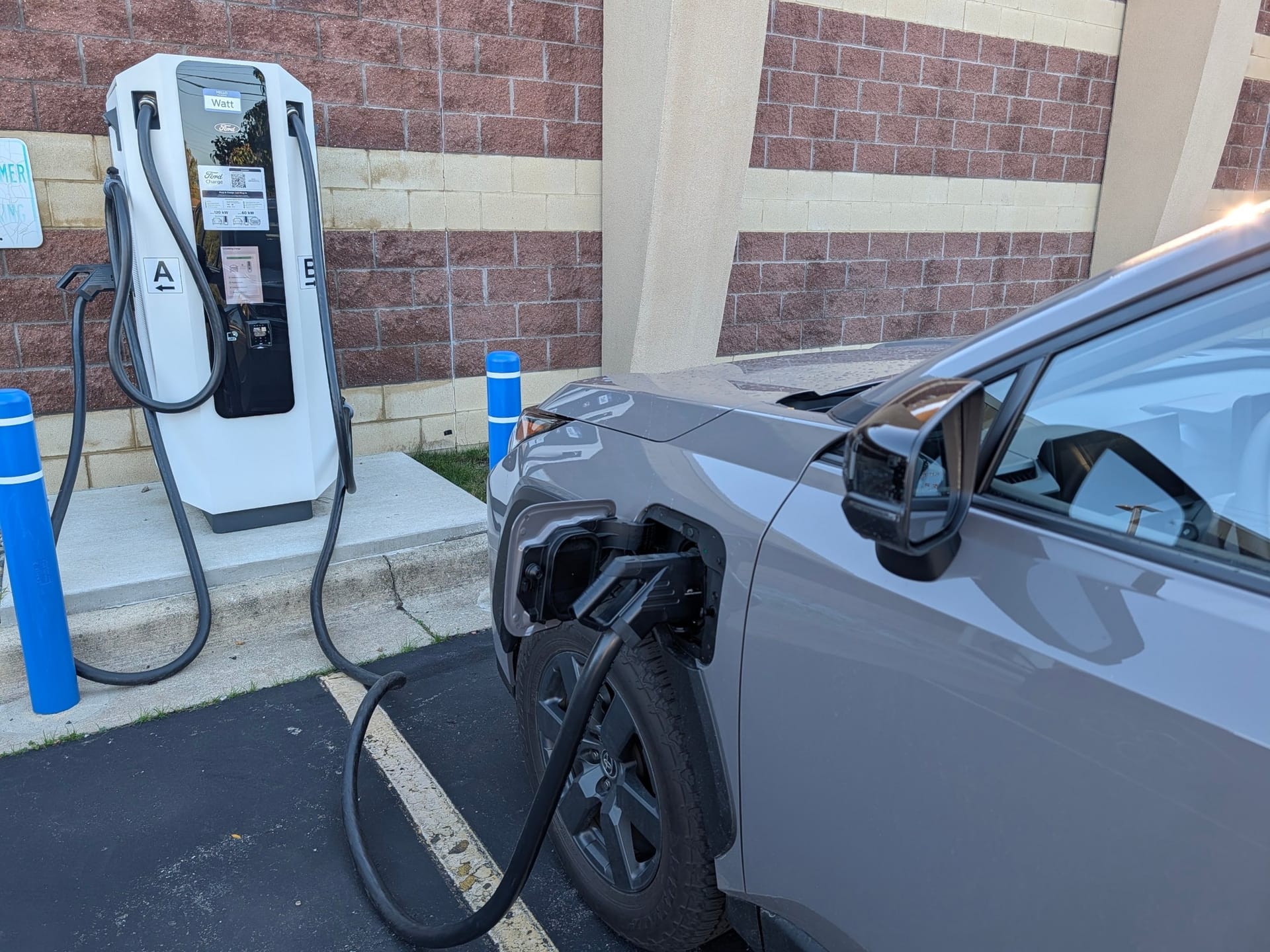
At home on a Level 2 charger, the SE and GR Sport accept up to 7 kW, while the XSE and Woodland get an 11-kW onboard charger. On my 9.6-kW home charger, the RAV4 pulled about 8.1 kW, which would provide a full charge from empty in 2.5 to 3 hours. That's easily accomplished overnight or during a workday at a site with workplace charging.
For a PHEV to be useful for electric driving, it needs plenty of power from its electric drive motors so it doesn’t have to run the engine most of the time. Toyota took care of that. The front drive motor now makes 203 horsepower and 201 pound-feet of torque. All-wheel drive is standard, with an electrically driven rear axle. Toyota doesn’t specify a power figure for the rear motor, just 91 lb-ft of torque. But the system has plenty of electric power to drive without the engine and merge onto highways.
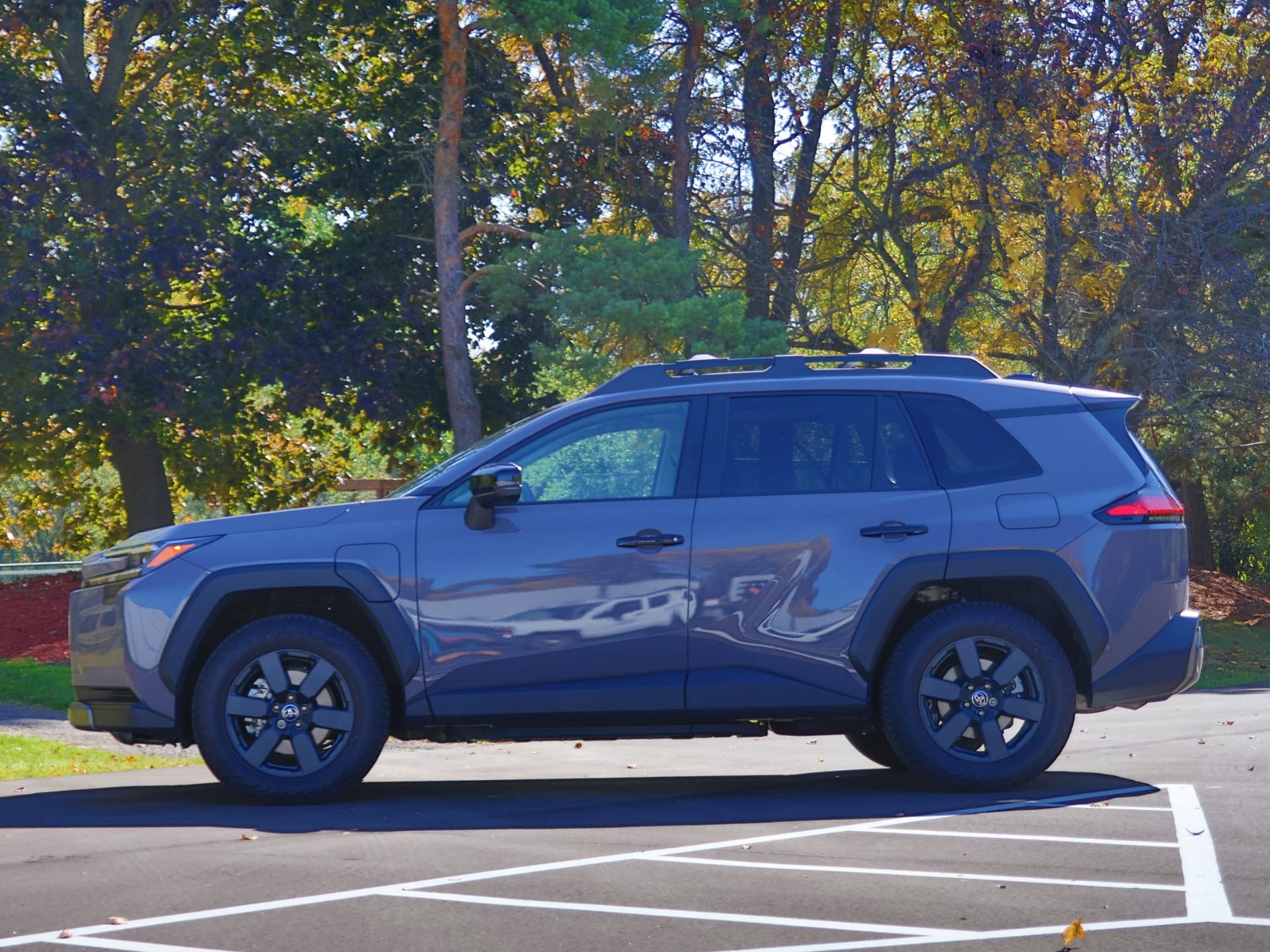
Other RAV4 PHEV trims have an EPA-estimated electric driving range of up to 52 miles, while the Woodland's all-terrain tires drop its range to 49 miles. On my usual test loop, a mix of highway, rural secondary roads, and urban and suburban driving, I went 56.2 miles before the engine finally fired up. That makes the Woodland a genuinely useful electric daily driver for the vast majority of people, as long as you charge it nightly. Once the battery is depleted, the Woodland PHEV will get about 37 mpg combined.
When the engine does run, the blended powertrain delivers 324 total horsepower. That's enough for the RAV4 to sprint to 60 mph in about 4.5 seconds, which is plenty quick for a vehicle that'll mostly haul kids, dogs, groceries, and the occasional load of camping gear. Those taller tires also smooth out rougher pavement and better resist pothole damage.
Toyota hybrids have always offered great fuel efficiency and durability, but their four-cylinder engines aren’t the most refined-sounding. When accelerating, the e-CVT in the hybrid drive unit lets the engine spin up to about 4,000 rpm, and it makes quite a racket. For the new PHEVs, Toyota redesigned the engine block to make it stiffer, so it transmits less noise. The difference in sound quality between the standard hybrid and the PHEV is dramatic.
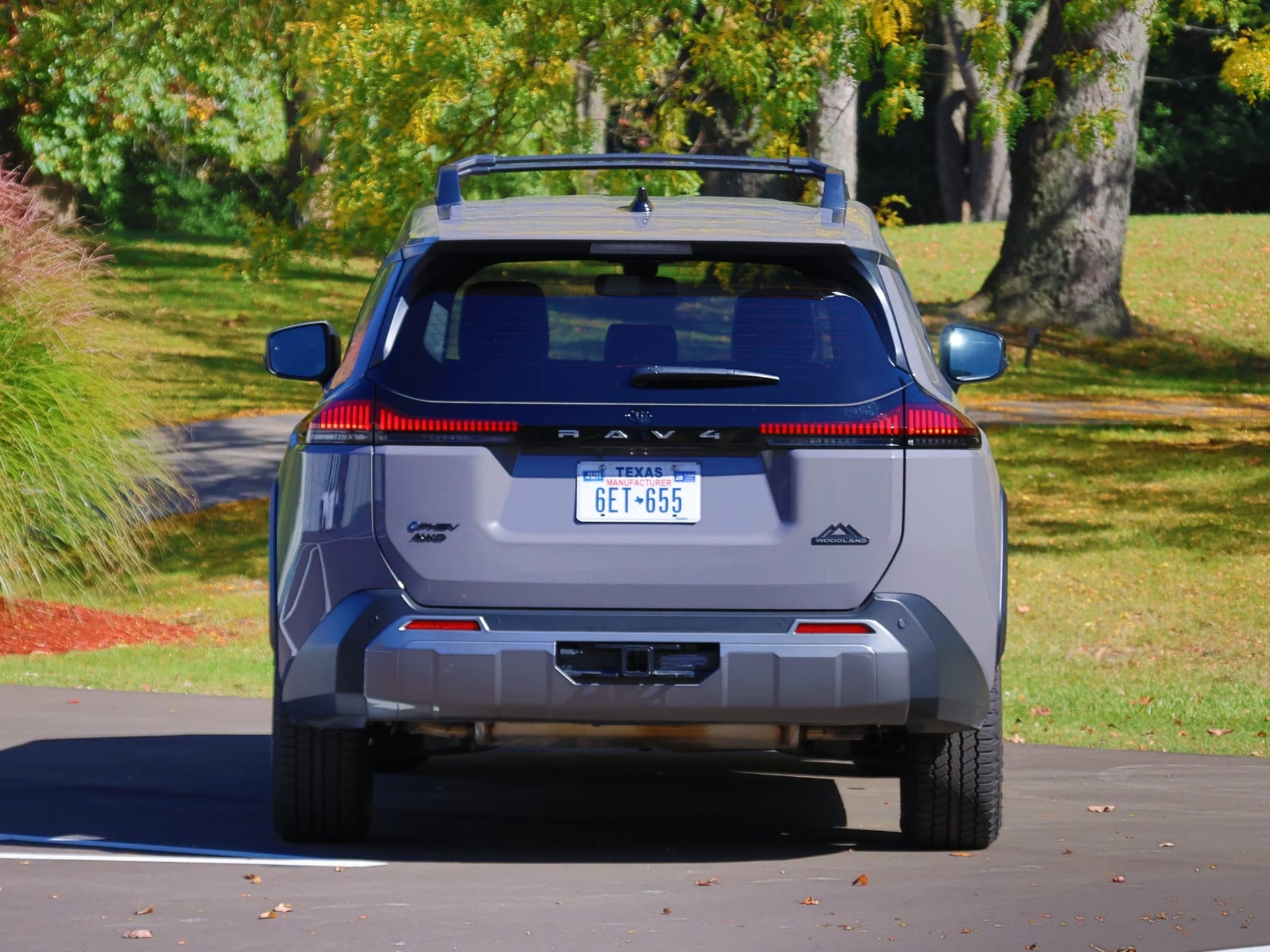
If you're interested in going electric but still make occasional long trips and aren’t quite comfortable with charging on the road, the 2026 Toyota RAV4 PHEV is a great stepping stone. With the 56 miles of real-world electric range I got, it meets the daily driving needs of almost every American driver on electricity alone, as long as they plug in daily, and it handles everything else on gas.
That's an important caveat. If plugging in daily isn’t a viable option where you live yet, skip this or any other PHEV. The plug-in Woodland costs about $5,400 more than the regular hybrid and gets 1 mpg less combined.
The Woodland only delivers its biggest efficiency advantage when it is charged regularly, so see whether a plug-in hybrid actually fits your commute, charging access, and driving habits ➜
With a few options and the $1,450 destination charge, my tester came to $47,850.That puts it in the same neighborhood as the all-electric bZ Woodland. Personally, I’d go all-electric with the bZ Woodland, but it’s good to have options, and the RAV4 Woodland PHEV is a really good one.
2026 Toyota RAV4 Limited Hybrid Review: 41 MPG and Hard to Fault
The regular RAV4 Hybrid costs less, requires no plugging in, and provides the clearest answer to whether the Woodland PHEV’s extra electric capability is worth the premium.
Read More ➜
2026 Toyota bZ Woodland First Drive
Toyota’s electric Woodland offers a similar adventure-oriented mission without a gasoline engine, making it the most natural alternative for shoppers ready to go fully electric.
Read More ➜
2026 Mitsubishi Outlander PHEV First Drive: More Range, More Power
Mitsubishi’s three-row plug-in hybrid provides another way to combine daily electric driving with gasoline road-trip flexibility.
Read More ➜
GreenCars Contributor
Sam Abuelsamid is vice president of market research and leads Telemetry Insights' Transportation and Mobility research and advisory practice. Focusing on automated driving, mobility services, telematics, connectivity, cybersecurity, and advanced propulsion systems, Abuelsamid works with clients to help them understand emerging technology trends and shape strategies.
Get vehicle reviews, practical tips, and the latest GreenCars news.
ReviewsThe RAV4 goes fully hybrid for 2026, blending Toyota’s proven reliability with sharper design, smoother power, and new plug-in capability.
 Reviews
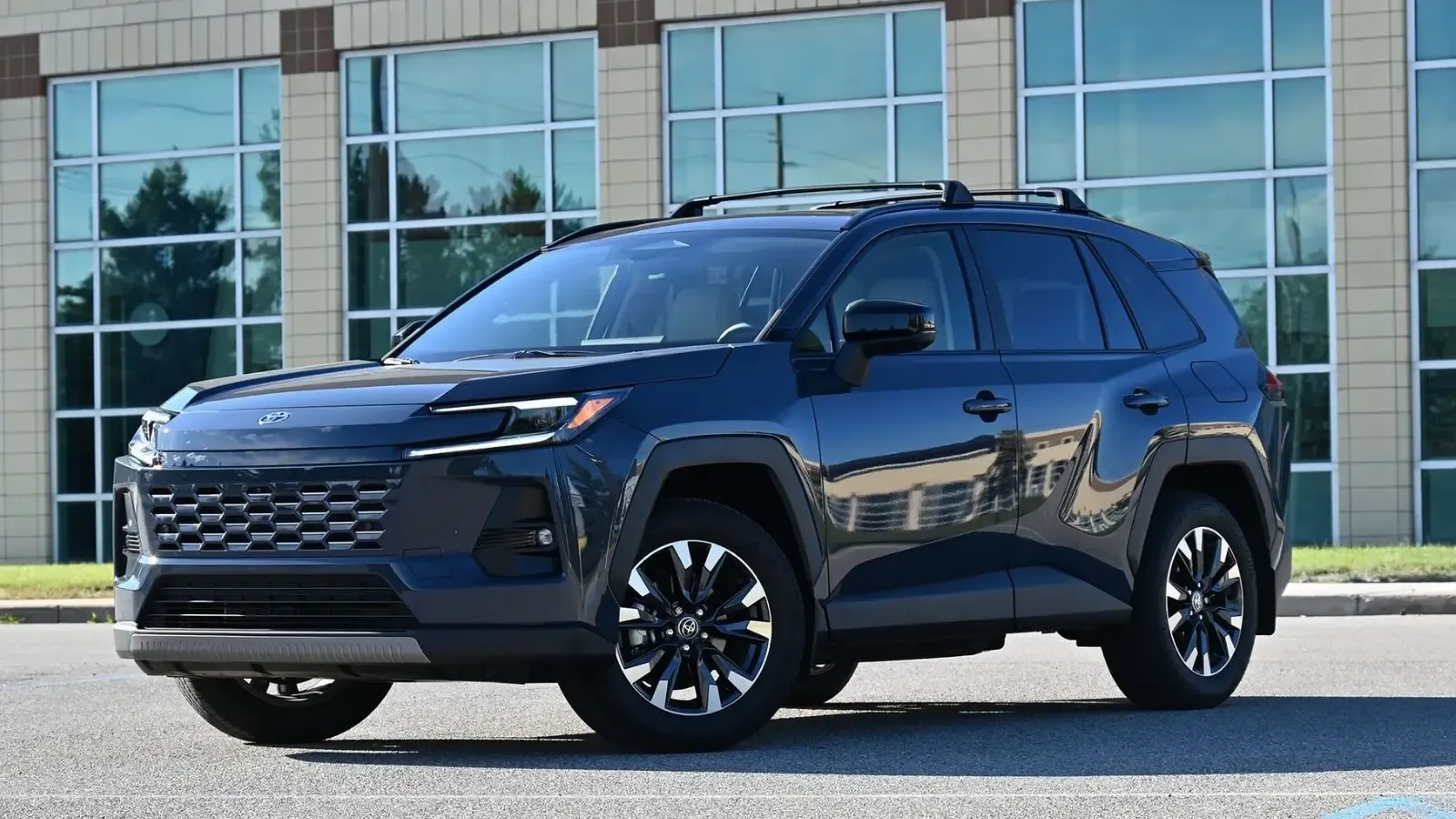
The RAV4 has always been a smart buy, but the redesigned 2026 model is better than ever, offering more power and efficiency along with better looks and plenty of exciting new features.
 Reviews
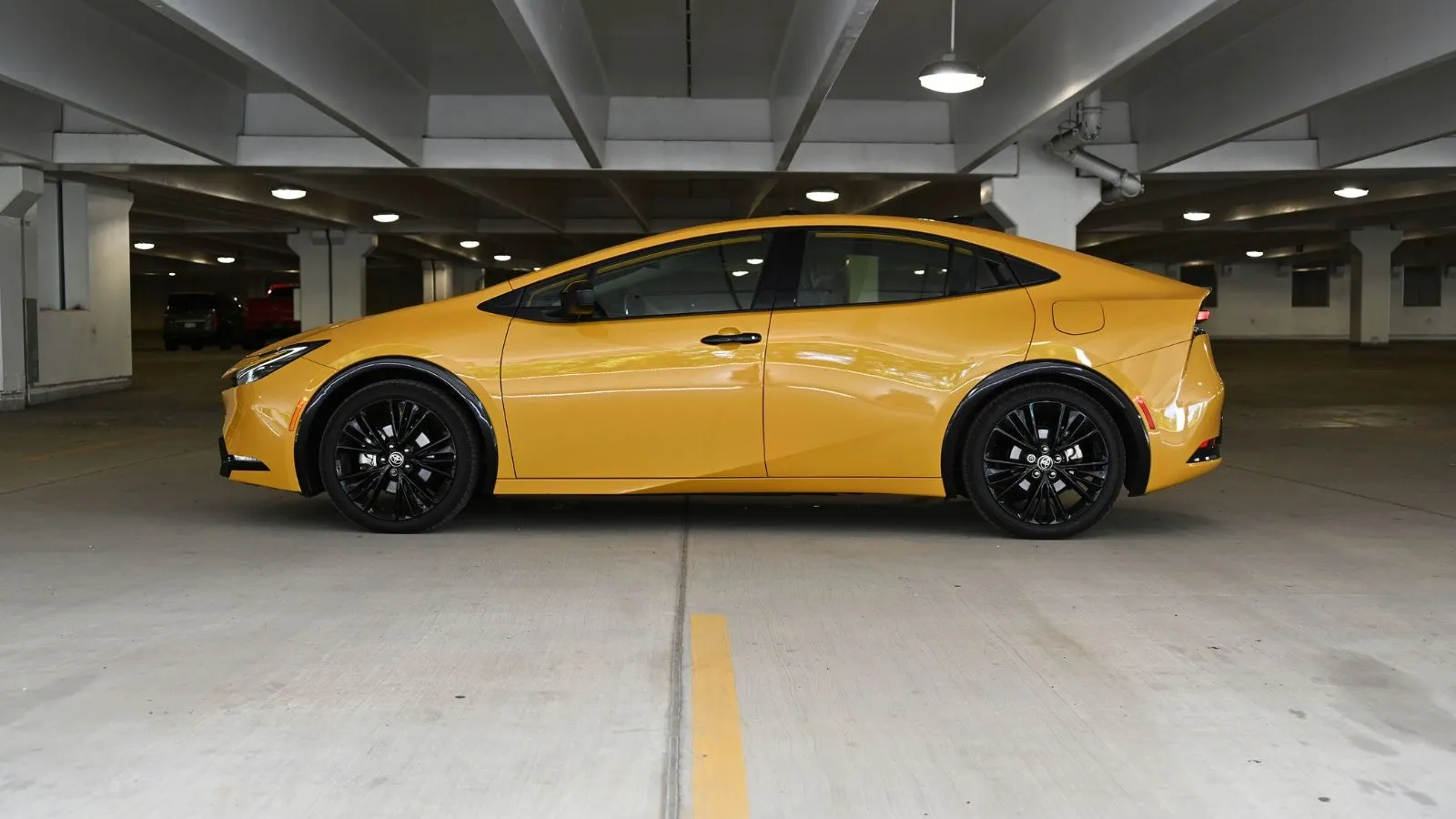
The plug-in Prius offers excellent all-electric range and fuel economy in an absolutely gorgeous package, but this Toyota is not without its quirks.