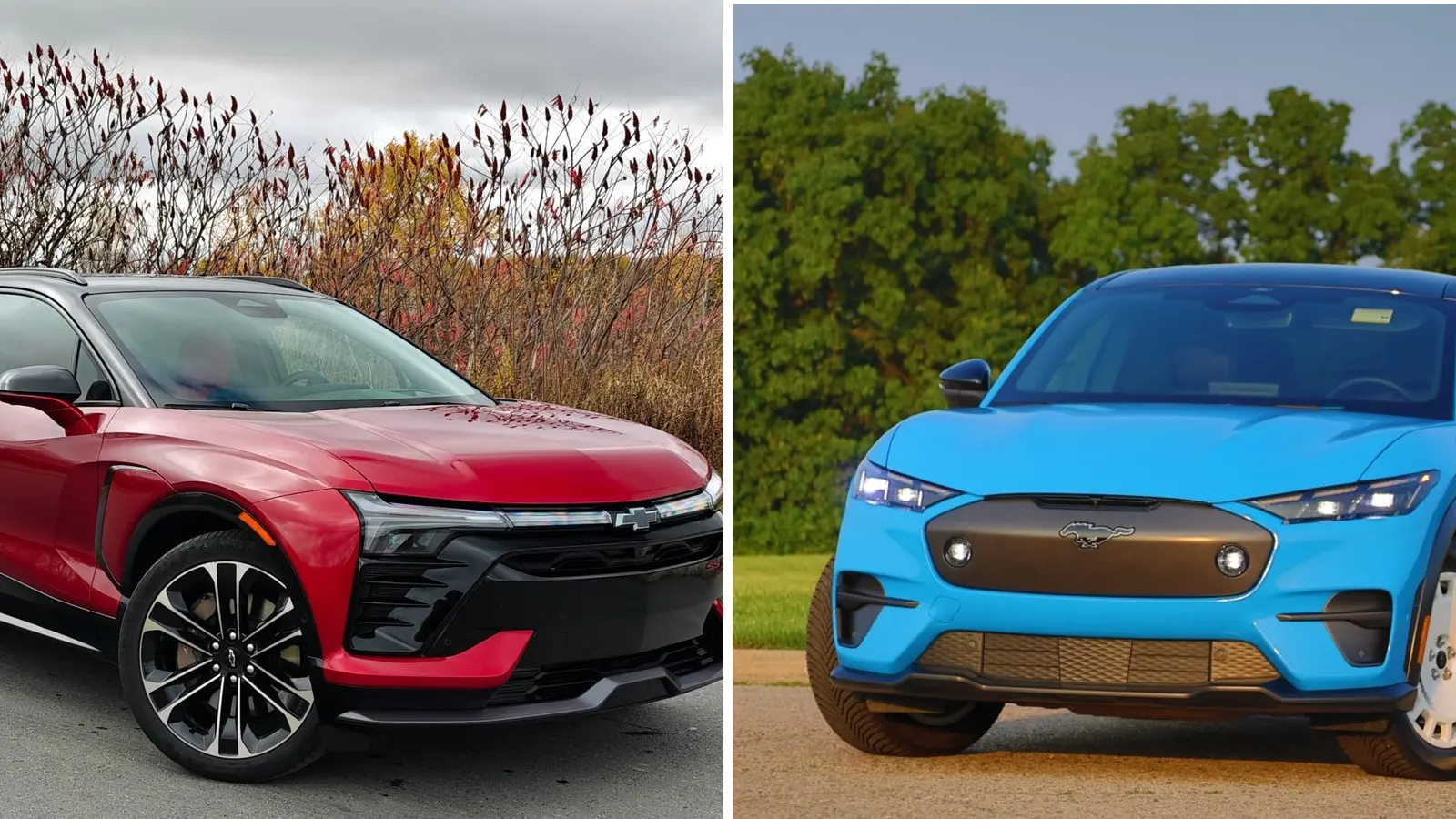

Fast Facts | Ford Mustang Mach-E vs. Chevrolet Blazer EV
⚡ Power: The Mustang Mach-E ranges from 264 to 480 horsepower, while the Blazer EV ranges from 220 to 615 horsepower
🔋 Range: The Mach-E is EPA-estimated at 240 to 260 miles without the extended-range battery, while the Blazer EV ranges from 283 to 312 miles
📱 Screens: The Blazer EV has a 17.7-inch touchscreen and 11-inch digital cluster, while the Mach-E has a 15.5-inch touchscreen and 10.2-inch digital cluster
⚡ Charging: The Mach-E can charge at up to 150 kW, while the Blazer EV can charge at up to 190 kW
💰 Price: The entry-level Mach-E costs $6,655 less than the base Blazer EV, though comparable extended-range and AWD versions are less than $300 apart
The Ford Mustang Mach-E and Chevrolet Blazer EV are two electric vehicles that, if you’re familiar with the history of their nameplates, might surprise you at first glance. The Mustang Mach-E looks nothing like a Mustang, namely because it’s an SUV, not a sports car. Likewise, you’d have to squint to find similarities between the Chevy EV and its two-door, truck-like SUV ancestor. But both brands chose to use their popular nameplates for these electrified SUVs, and now the two face off.
Exterior Design and Dimensions
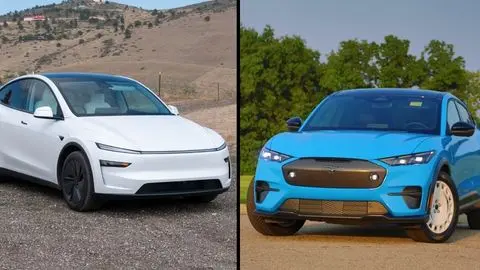
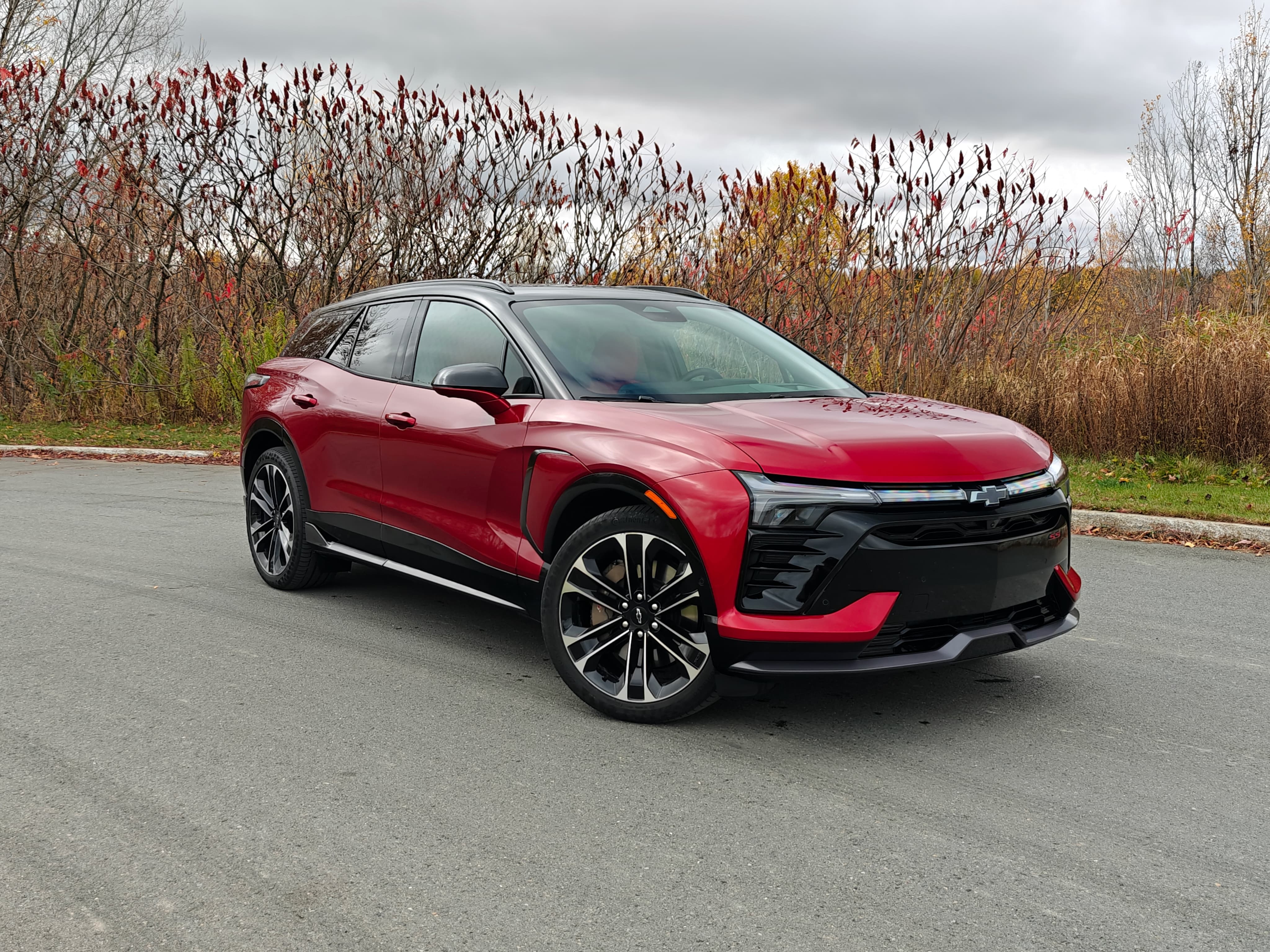
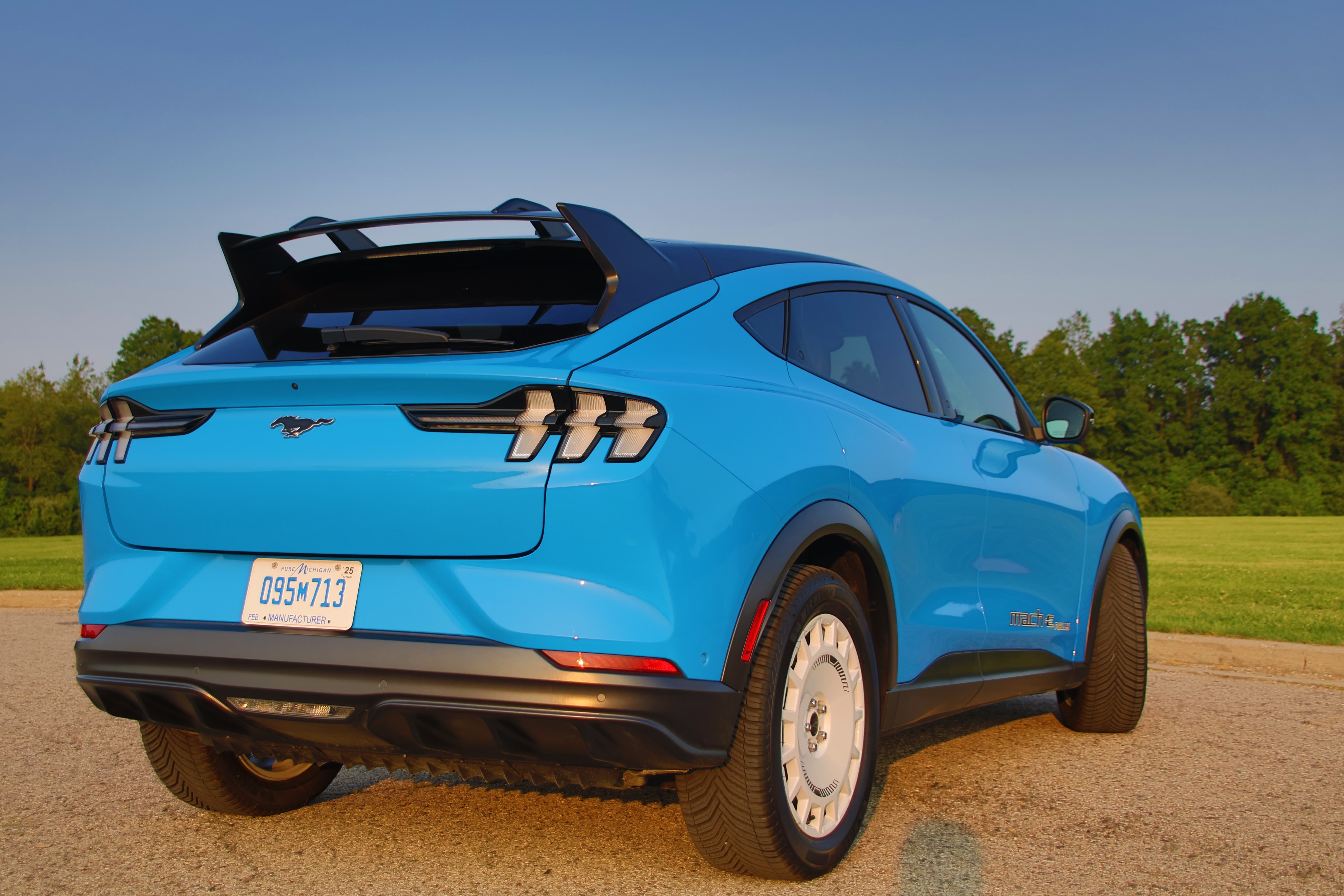
The Mustang Mach-E has a sleek, coupe-like body style, while the Blazer EV sticks with a more traditional, upright SUV shape. The Blazer EV has a longer wheelbase and runs more than 5 inches longer than the Mach-E overall. It also sits higher off the ground in every trim. That gives the Chevy a more spacious interior, but it also adds weight.
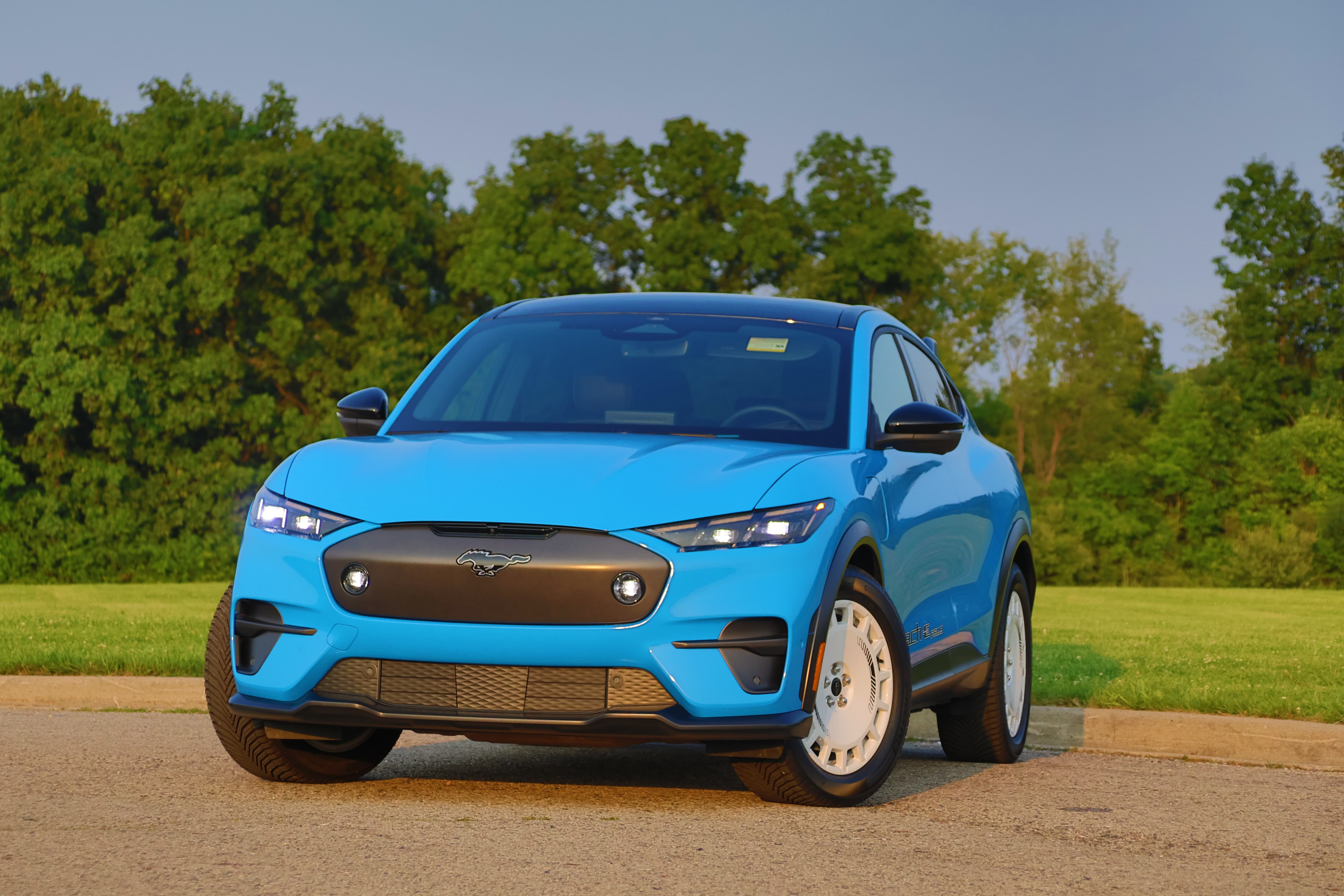
For exterior options, the Mach-E can be had with a panoramic glass roof — something the Blazer EV doesn’t offer. The Blazer EV counters with a thin LED light bar across the front, while the Mach-E sticks to more traditional headlamps.
Interior Space and Tech
Inside the cabin, the differences between the Blazer EV and Mach-E come down to mere fractions of an inch, but those small differences add up in the Chevy’s favor for a roomier interior. The biggest gap shows up in cargo: fold the rear seats down and the Mach-E offers 4.2 more cubic feet than the Blazer EV, but with those seats up, the two are nearly identical.
If you option the frunk on the Mach-E, you get a handy bit of cargo space for grocery trips or luggage, but it's a $495 option, not standard. The Blazer EV doesn't offer an equivalent frunk option.
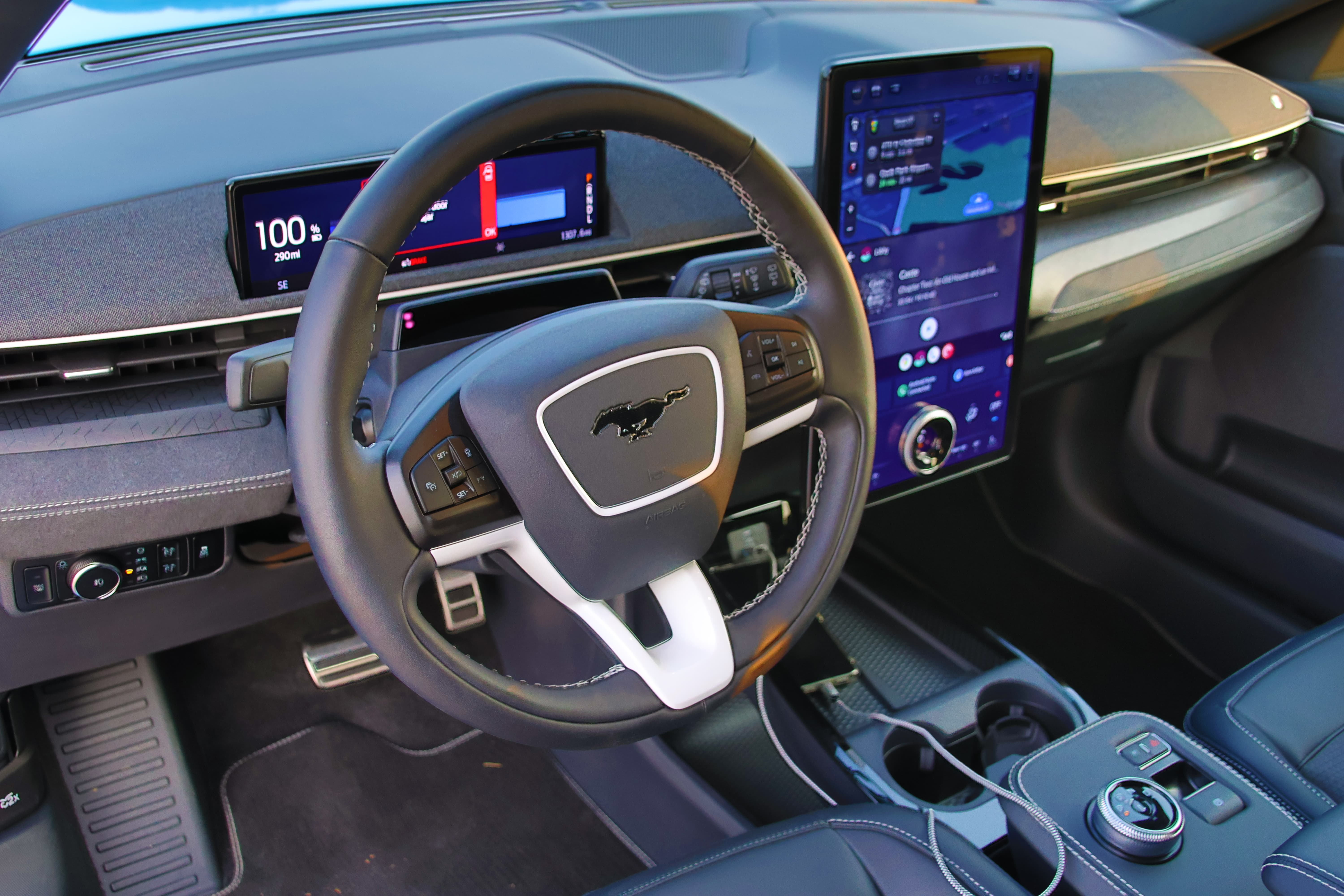
On tech, the Blazer EV boasts a 17.7-inch touchscreen with Google Built-in and an 11-inch digital instrument cluster. The Ford features a smaller, vertically-oriented 15.5-inch touchscreen and a 10.2-inch digital gauge cluster. The Mach-E comes standard with wireless Apple CarPlay and Android Auto, something you’ll have to do without on the Chevrolet.
Both come well-equipped with safety tech, too. The Blazer EV comes standard with Chevy Safety Assist, which includes automatic emergency braking, rear cross-traffic alert, a surround-view camera, pedestrian alerts, blind-zone steering assist, lane-keeping assist, and lane-departure alert. The Mach-E comes standard with Ford’s Co-Pilot 360 suite, which includes pre-collision assist, blind-spot assist, reverse brake assist, adaptive cruise control, and a surround-view camera.

Both models can be had with Level 2+ hands-free driver-assist: the Chevy with Super Cruise and Ford with BlueCruise. Super Cruise is a more capable system, usable on about 750,000 miles of roads in North America, compared to about 130,000 miles of divided highways for BlueCruise.
Powertrain and Range
The Mustang Mach-E comes in several configurations: rear-wheel drive (RWD) or all-wheel drive with either standard or extended range batteries. The GT and Rally trims are only offered with all-wheel drive and the extended range battery. At its most modest, the Mach-E can reach 264 horsepower, climbing to 480 ponies in its most powerful GT trim. The Blazer's base specs are more modest but still respectable, reaching between 220 and 300 horsepower depending on the drivetrain, while the high-performance SS trim delivers 615 horsepower.
Without the extended range battery, the Mach-E’s range is less than the Blazer’s at an EPA-estimated 260 miles for RWD and 240 miles for AWD. The Blazer EV’s range varies from an EPA-estimated 283 to 312 miles. The Mach-E with the extended-range package can meet or exceed an EPA-estimated 300 miles.

Charging
The Mach-E can charge up to 150 kW, while the Blazer EV can absorb up to 190 kW. The Ford reaches a full charge in about 8 hours with an 11.5-kWh, 48-amp charger. The Blazer EV takes 9 hours to reach a full charge on its larger battery with the same power supply.
Price
The entry-level Ford Mach-E costs $6,655 less than the base Blazer EV; however, when you compare the base extended-range package on the Mach-E to the base AWD package on the Blazer EV, the two come down to a difference of less than $300.
What's It Like to Drive?
These two vehicles are similar in many ways, but they also have some very notable differences. The Blazer is quite a bit larger than the Mach-E, particularly in width, and you really feel that on a twisting country road, where you have to be more careful about where you place the vehicle on the pavement.

Even more important is the weight difference. Depending on the trim, the Blazer weighs about 400 pounds more than the base Mach-E and nearly 800 pounds more than the Mach-E GT in SS form. Much of that mass sits down low, thanks to the under-floor battery, which mitigates some of the handling impact, but you can absolutely feel the difference.
Though the Mach-E definitely feels lighter than the Blazer, it's never going to be mistaken for its sports car namesake. At its limit, the Mach-E can feel a bit sloppy, though the overall ride quality is as good, or a bit better, than the Blazer's.
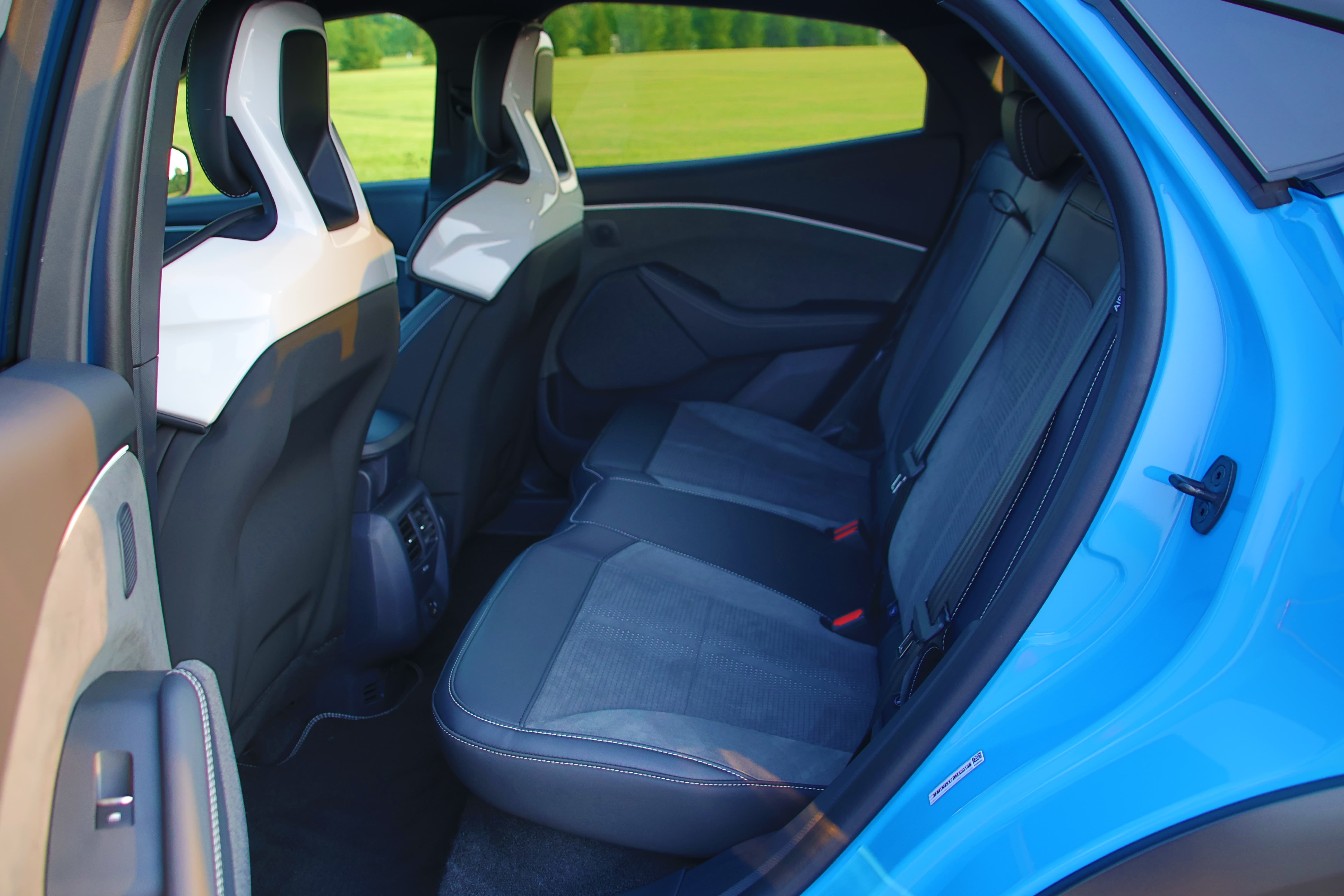
By the numbers, the interior of these two doesn’t seem all that different, but the Blazer makes better use of the space it has, particularly in the rear seat, which feels roomier than the Ford's. The biggest downside to the Blazer is actually the front seats, which feel flatter and less supportive.
Analyst's Perspective (Which One's Right for You)
Both are overall very good vehicles to drive, with plenty of range and practicality. If you’re looking for an electric two-row crossover with a sporty flair that evokes the DNA of the bestselling sports car of all time, go for the Mustang Mach-E. Those who want a more traditional, utilitarian shape that still carries a performance vibe will probably like the Blazer.
While neither can be accused of being an off-roader, the Chevy's added ground clearance will also help if you ever need to follow a dirt trail to a cabin. With its impressive, hands-off Super Cruise system, the Blazer is arguably a better road tripper as well.
Personally, I like smaller and lighter. But contrary to the old saying, your mileage won’t actually vary that much whichever you choose.
More Electric SUV Comparisons
2026 Ford Mustang Mach-E Vs. 2026 Hyundai Ioniq 5
The Mach-E faces another major electric crossover rival, this time against Hyundai’s fast-charging, practical Ioniq 5.
Chevrolet Blazer EV vs. Equinox EV
Chevy’s two electric SUVs take different approaches to price, size, range, and everyday usability.
Best Electric Crossovers and SUVs
A broader look at the electric crossovers and SUVs worth shopping if the Mach-E and Blazer EV are already on your list.