


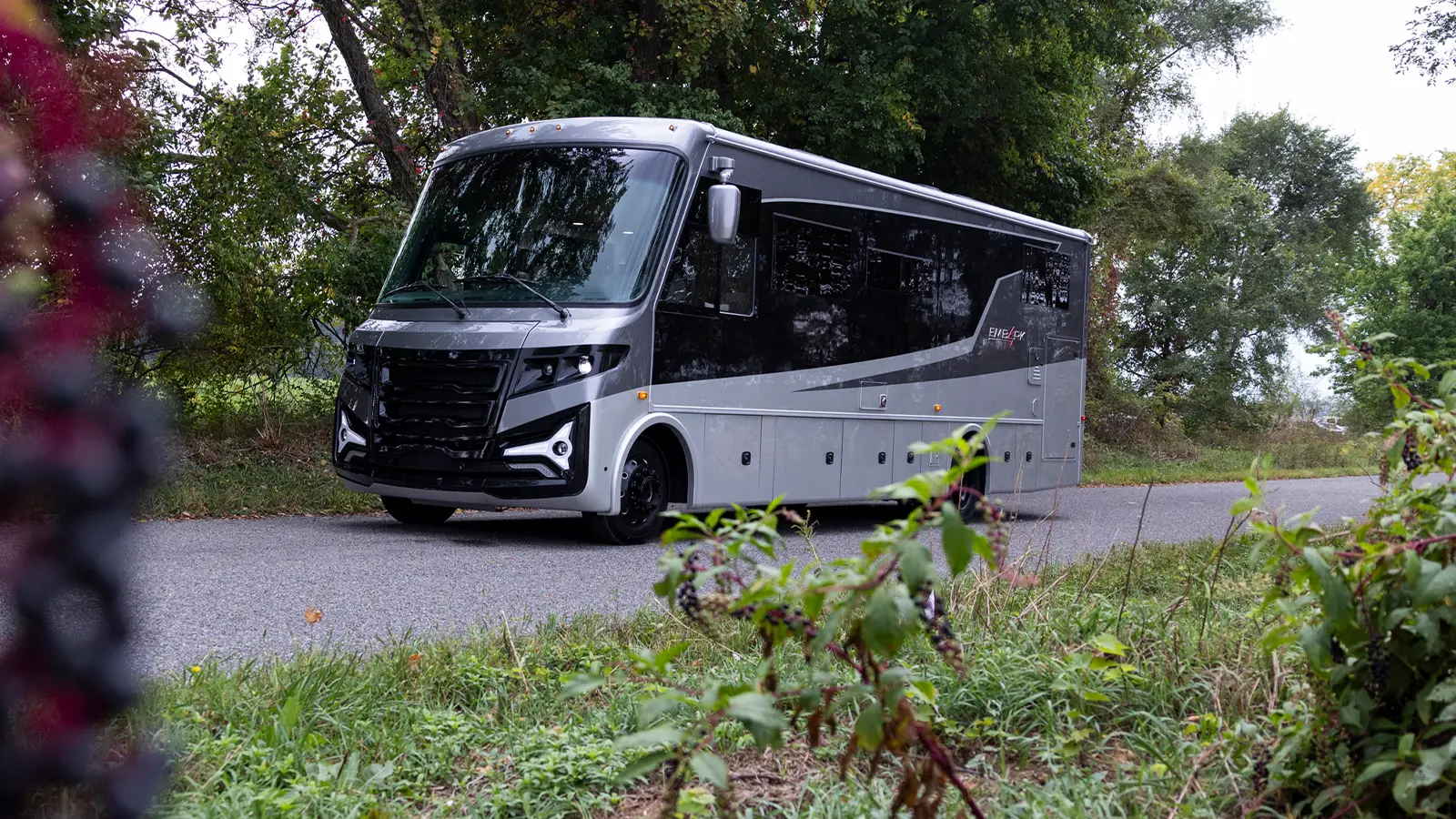

Fast Facts | Entegra Coach Embark (EREV Motorhome)
🔋 Battery: 140 kWh pack with 800-volt architecture
⚡ EV Range: About 105 miles on battery power alone
⛽ Range Extender: 1.9-liter four-cylinder generator system for an estimated 345 additional miles
🧭 Total Range: Estimated 450 miles per tank plus charge
🏕️ Power Management: Built to handle charging, shore power, and exporting power while camping
🚐 Platform: Harbinger Motors EREV Class A chassis on a 202-inch wheelbase
📏 Size: Just under 31 feet long with a rear “garage” storage area
💰 Price Expectation: Estimated $300,000 to $450,000 MSRP depending on configuration
🗓️ Timeline: 12-unit rental fleet in 2026, production targeted for 2027
An EREV Motorhome That Makes RV Range Feel Normal
Until recently, I’d never driven a motorhome, and I hadn’t even ridden in one in more than 40 years. So, when Thor Industries invited me to their annual open house in Elkhart, Indiana, I wasn't sure what to expect. But they had something special to show off: the Entegra Coach Embark. What makes the Embark special, you might ask? It’s the first recreational vehicle (RV) with an extended range electric vehicle (EREV) powertrain.
I don’t usually cover RVs, but the Embark is electrified, and Elkhart is only about two and a half hours from my home, so I figured it was worth taking a day trip.
Meet Thor Industries
Most people probably aren’t familiar with Thor Industries, but you've likely heard of at least a few of its brands, most notably Airstream, which became Thor's first acquisition back in 1980. Thor now has 15 brands that sell motorized and towable RVs, including Entegra Coach.
Before driving the Embark, I spent some time exploring Thor's products, from more basic travel trailers to full-on luxury motorcoaches that can cost more than $1 million. I even realized at least two families in my neighborhood have motorhomes from Thor companies.
Here's a quick primer: Motorized RVs or motorhomes generally fall into three classes. Class A vehicles are the largest, built on commercial chassis (Thor uses several Ford heavy-duty chassis for many of its Class A RVs). Class Bs are van-based and the smallest but most affordable. Class Cs are built on cutaway chassis similar to airport shuttle buses but with much nicer interiors.
RVs 101
The Embark is a brand-new Class A machine built on a 202-inch wheelbase from Harbinger Motors. Harbinger is a Garden Grove, California-based startup that emerged about three years ago with a battery-electric chassis for medium-duty commercial vehicles. Its target market includes step vans for package delivery, beverage trucks, and utility trucks for tradespeople, but Class A motorhomes conveniently fall into this range as well.
Thor had been investigating fully battery-electric RVs as well, but the reality is that, for many people who want a motor home of this type, the limited range of a battery-powered RV just wasn’t going to cut it. Harbinger had just the solution for an RV, though: an EREV version.
The team at Entegra developed a new RV body to fit on the Harbinger EREV chassis, and the Embark was born. The chassis has a 140-kilowatt-hour battery pack and an 800-volt electrical architecture, enough for about 105 miles of range. As the battery is depleted, a 1.9-liter four-cylinder gas engine from Getec fires up to drive a generator, which continues to provide electricity to the battery for another estimated 345 miles per tank of fuel for a total range of an estimated 450 miles, a pretty decent day of RV driving.
Design and Layout
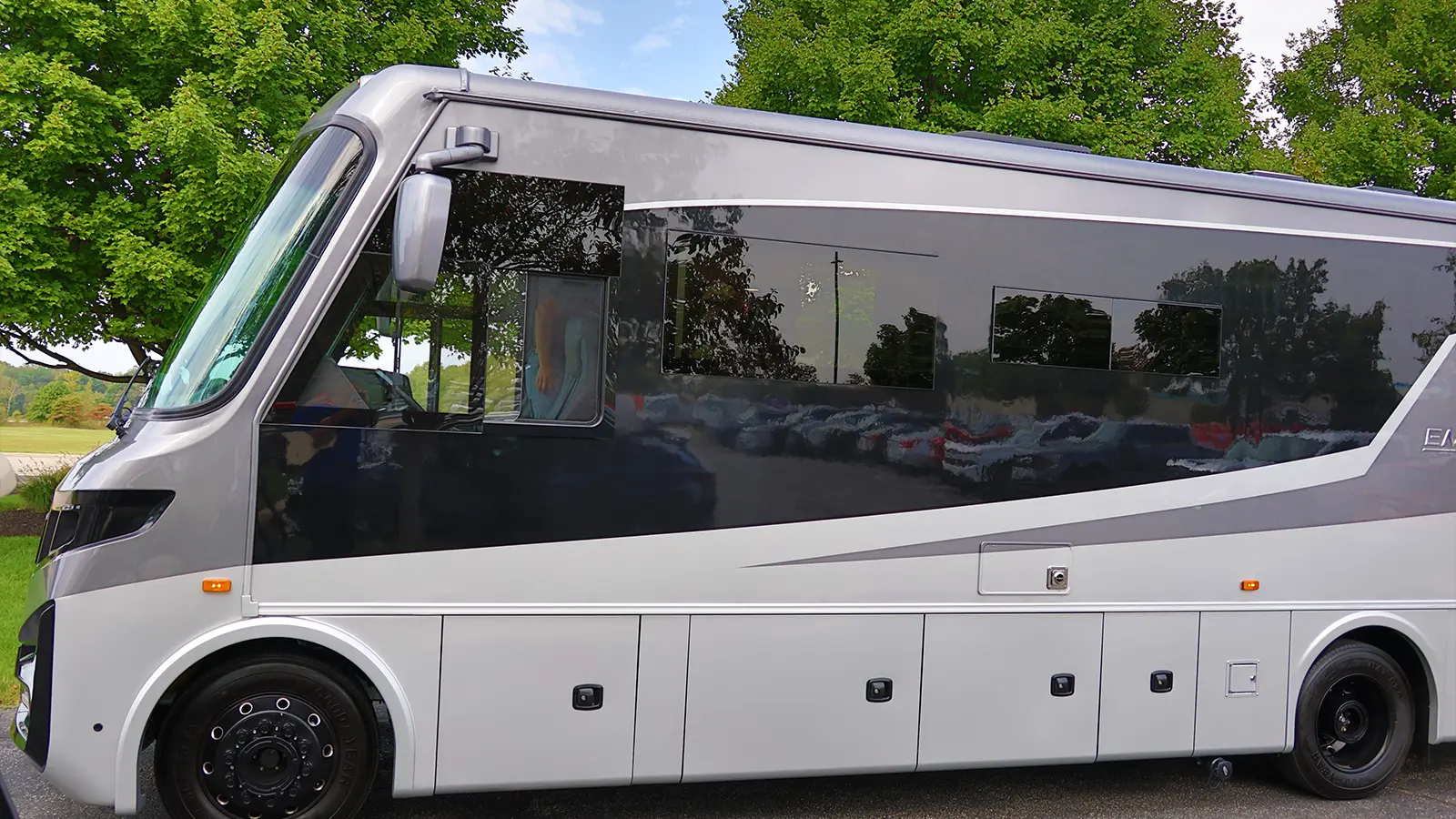
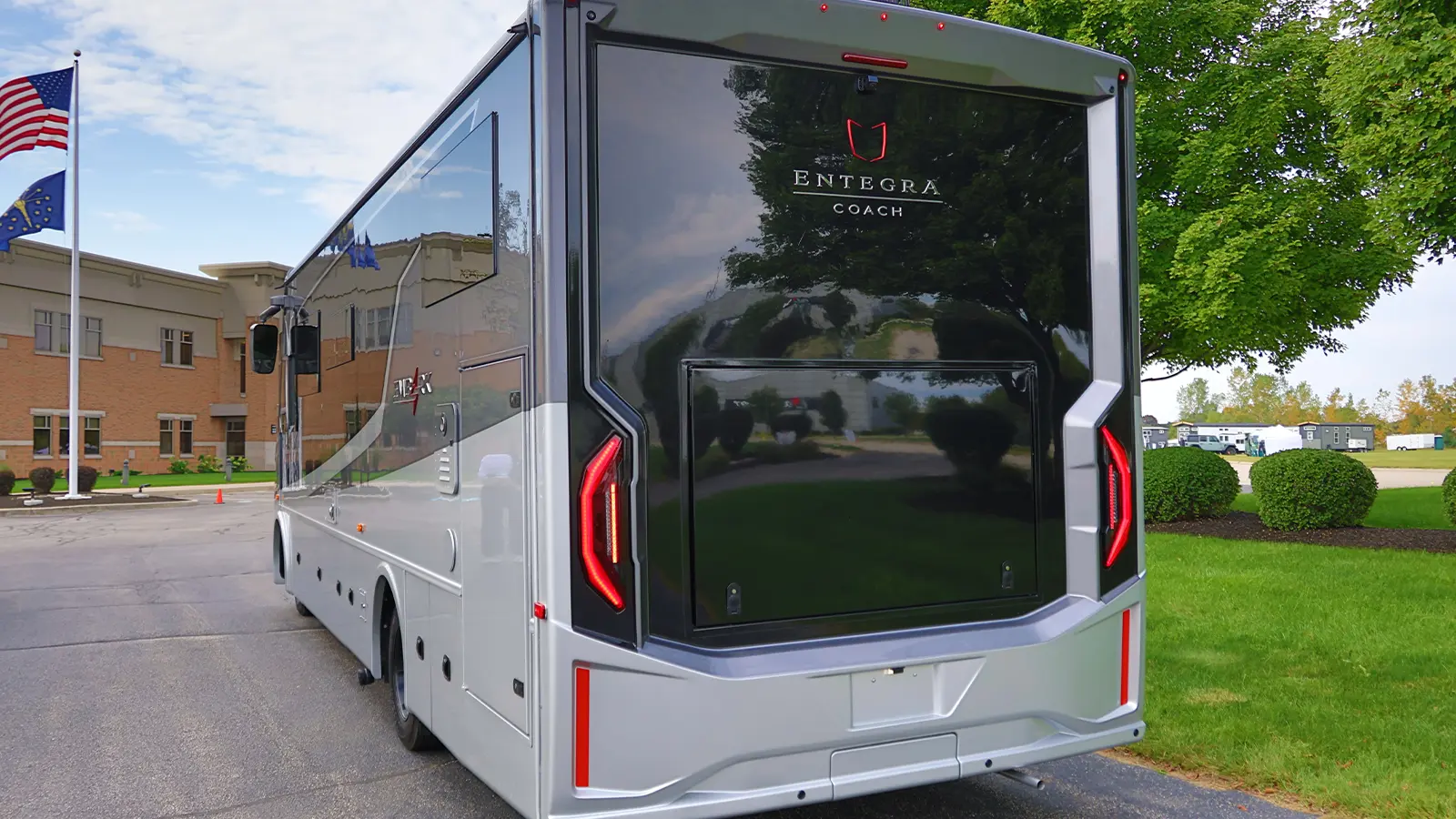
The Embark has a more European-style design with a laid-back windshield and measures just under 31 feet in length. Like many RVs, it has a “garage" in the back for storing larger items like bikes and scooters, with access panels from the sides and rear. The range extender sits in a box in the garage, and there's a surprisingly small exhaust pipe extending out from under the rear bumper. Since the batteries are contained inside frame rails, there are also storage compartments along the sides that you can access from outside.
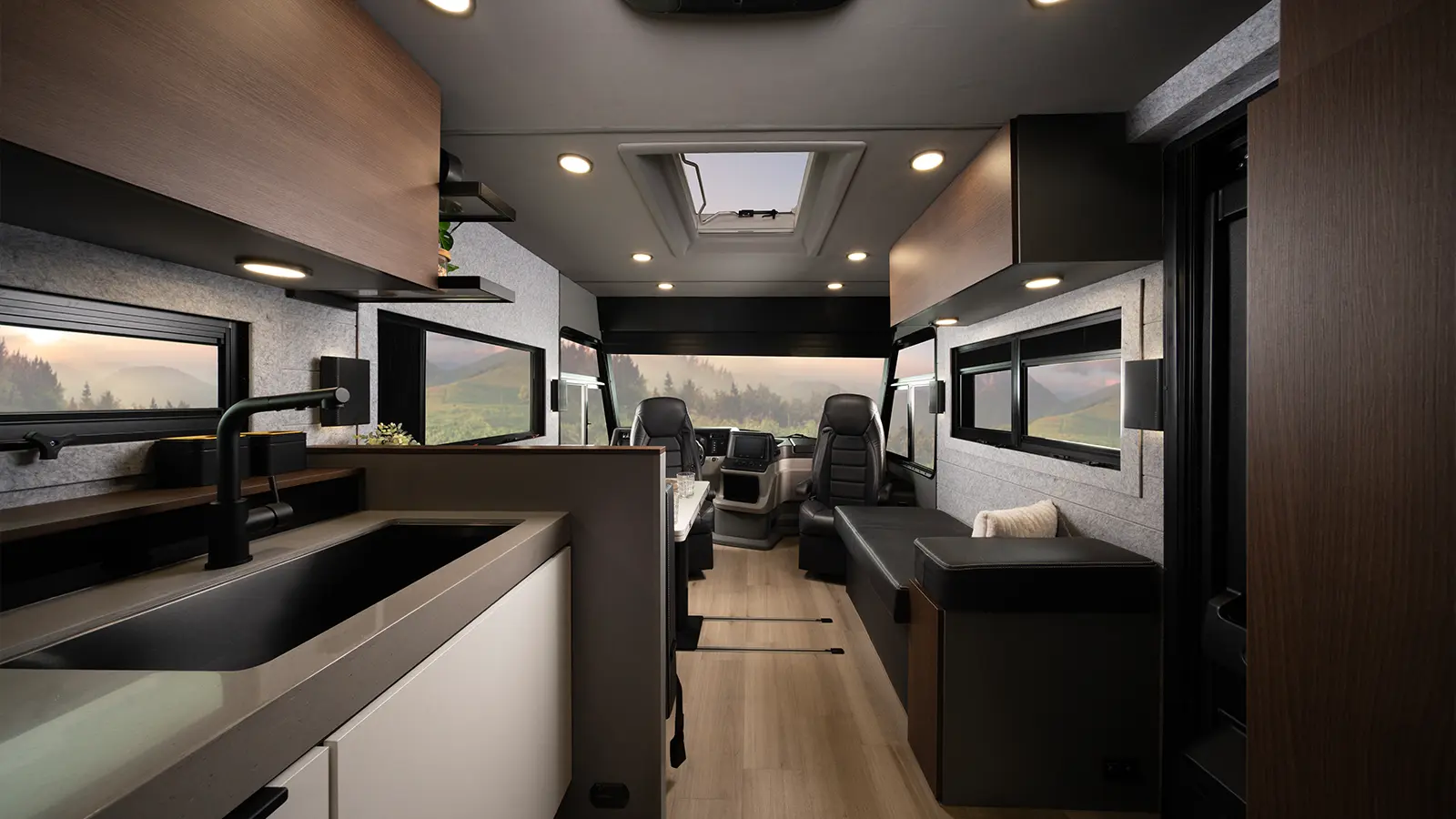
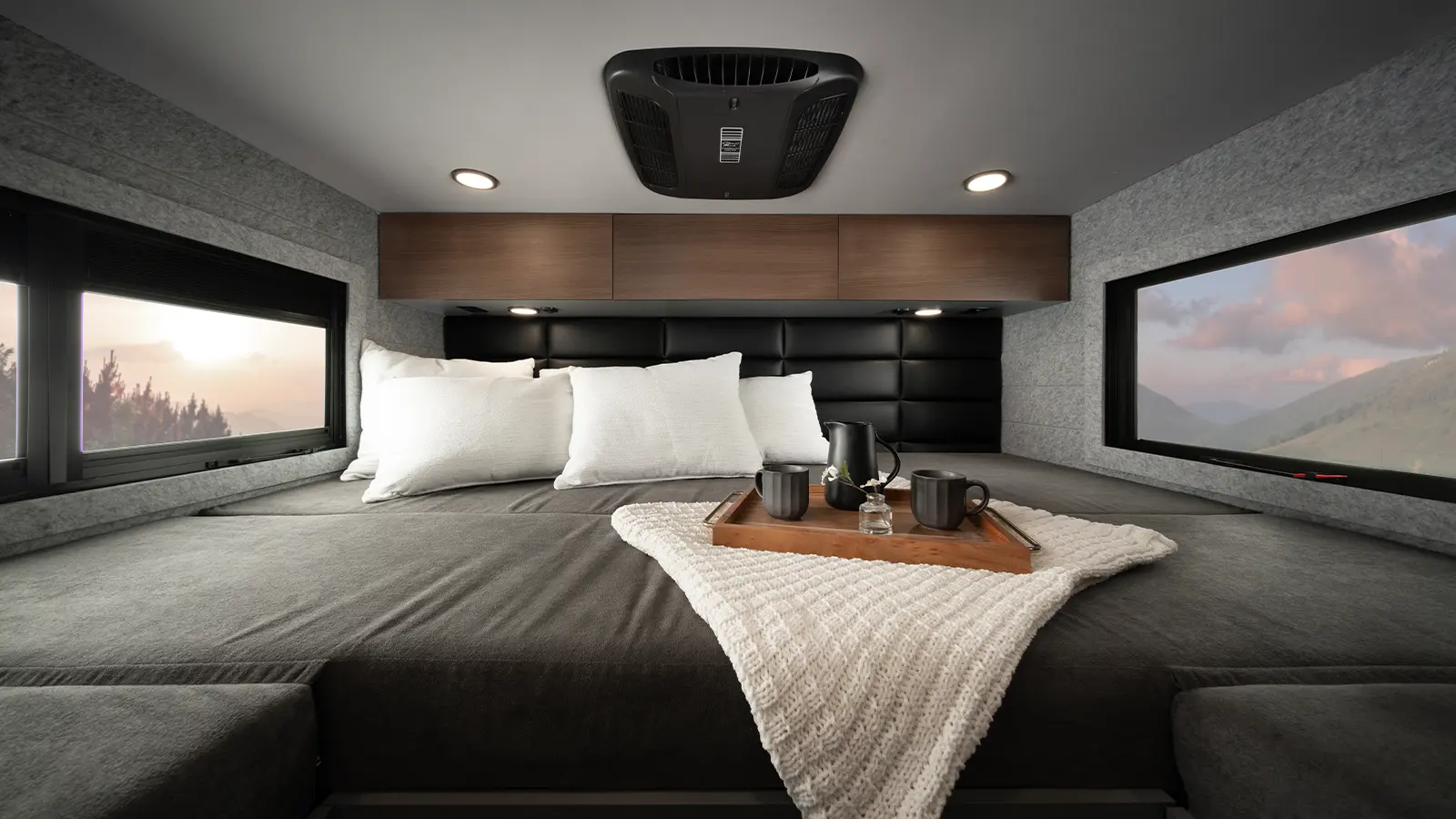
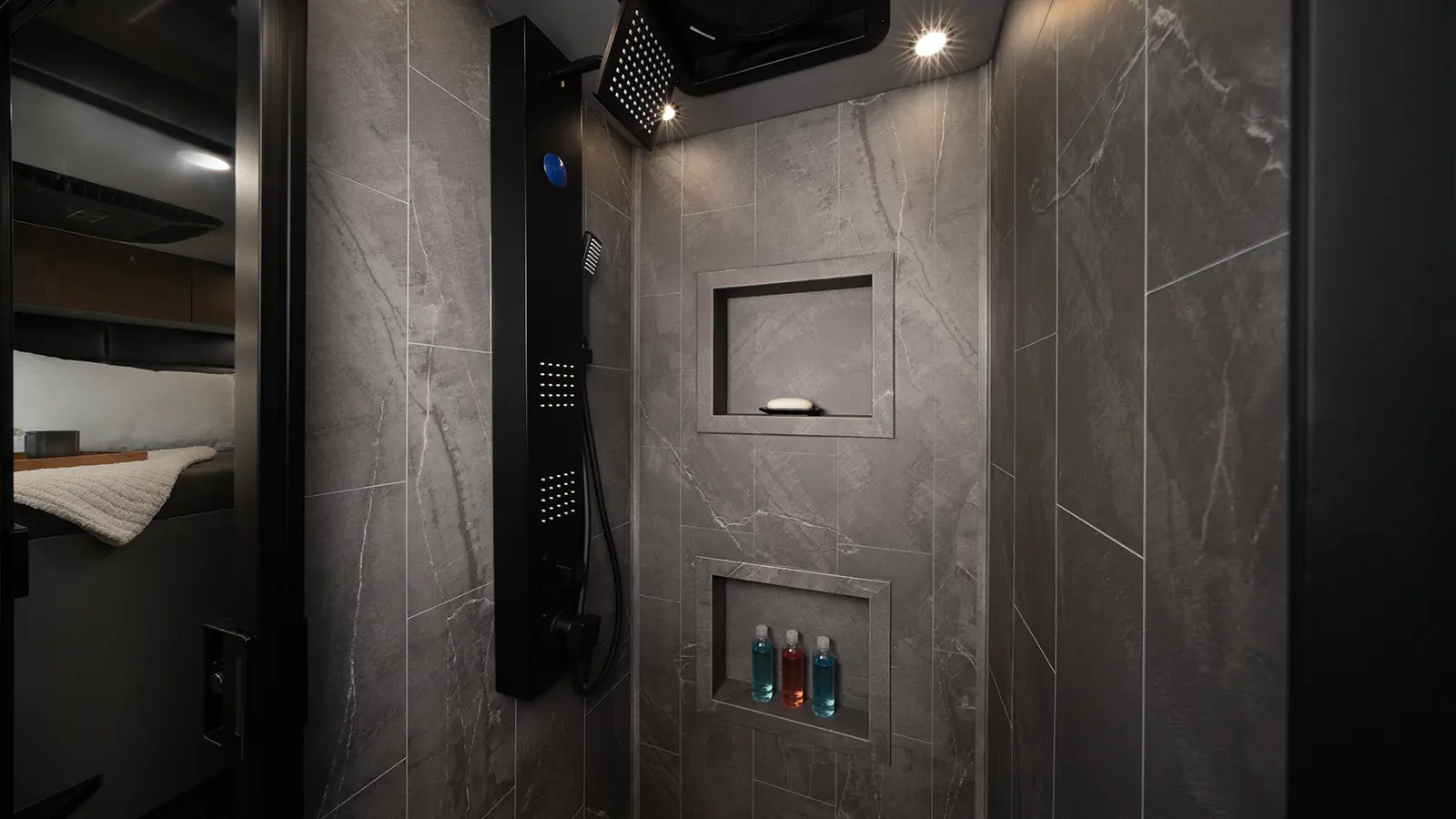
Inside, the Embark has a modern design with a dinette area directly behind the driver. The table swivels out of the way while driving, and the bench seat has seatbelts for two passengers. The kitchen has a sink and an induction cooktop with plenty of storage compartments, plus a refrigerator and microwave in the cabinets. There’s a full bathroom with a stand-up shower and a bedroom for two in the rear. The prototype I drove only had the rear sleeping area, although Entegra has designed a bunk area above the cockpit for two more people to sleep.
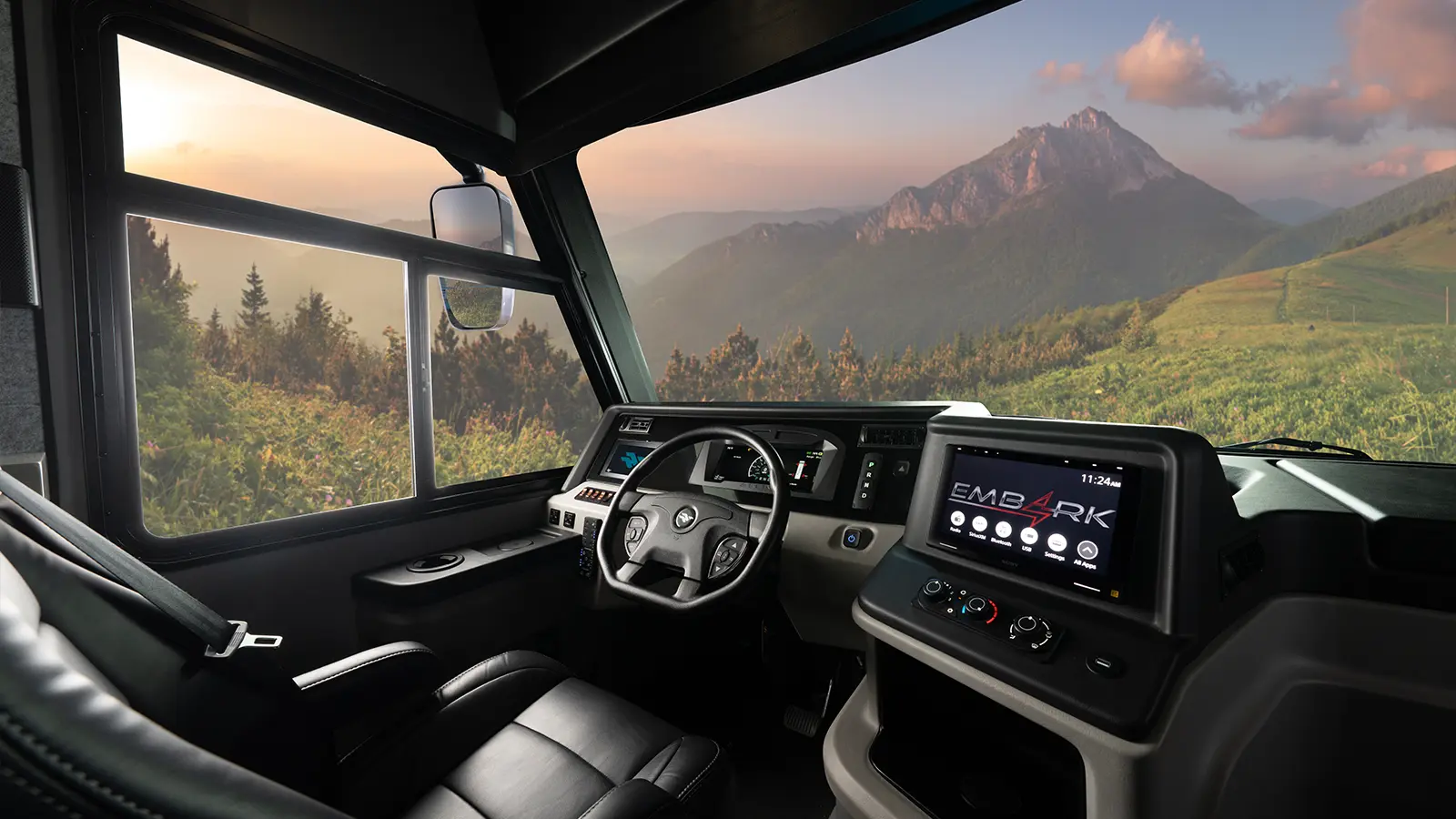
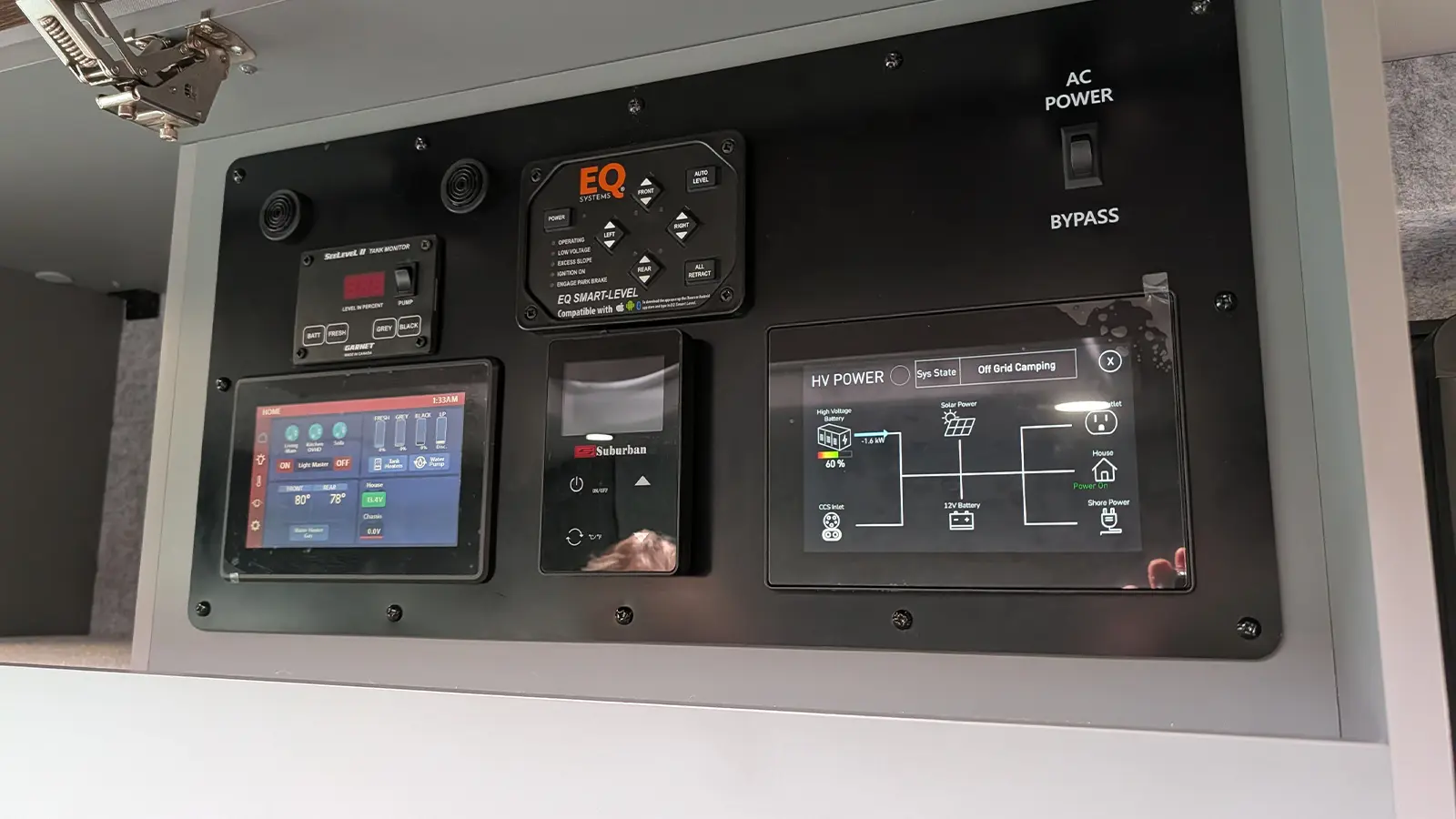
The driver’s cockpit sits down from the main floor, and the huge windshield and side glass provide excellent visibility to the front and sides. There are acoustic walls throughout to keep the ride quiet, especially in EV mode. There’s a control panel across from the dinette to manage all the power flow between charging, shore power, and exporting power from the battery for items you're using outside while camping.
The cockpit features a digital instrument cluster and touchscreens on either side for infotainment, navigation, and other functions. Below the center touchscreen are easy-to-use knobs for climate control, and to the right of the steering wheel, there’s an on/off button and pushbutton gear selection for park, reverse, neutral, and drive. Like most EVs, starting was as simple as hitting the main button and selecting a gear with the brake applied.
Behind the Wheel
I pulled out of the parking lot at Thor and was surprised at how quiet and refined the Embark was. This would be in stark contrast to what I'd experience later in a conventional gas-powered RV.
Once I got used to maneuvering a 31-foot-long house on wheels, it was surprisingly easy to control. I drove around on a mix of rural roads and highways for about 30 minutes, and while a 31-foot-long machine is no sports car, handling on a curvy road was easy once I learned where the corners of the vehicle were. The ride quality was quite smooth.
After we'd been on the move for a while, the engineer sitting in the passenger seat manually engaged the range extender, something that'll generally happen automatically based on the battery's state of charge. With the engine hidden way in the back and those acoustic walls doing their job, its operation was barely noticeable. At 65 mph, that estimated 450-mile total range translates to about seven hours of driving, and frankly, I can see that being easy in the Embark.
The Gas-Powered Comparison
When we returned, we hopped into another similarly sized Embark RV, this one built on a Ford F53 chassis powered by a 7.3-liter gas V8, basically the engine from a Ford Super Duty pickup. The F53 has the engine mounted up front, driving the rear wheels. That means the cockpit sits further back and visibility right up front isn't as good.
But the real difference comes in the driving experience. There’s never any doubt when that front-mounted V8 is running, especially when you're accelerating to get up to highway speed or climb a hill. While I haven’t spent a lot of time in vehicles like this, I can definitely imagine that after a few hours, it'd get very tiresome. If I were going to take a long trip in an RV, I'd absolutely choose the EREV Embark over an internal-combustion unit.
The Price Is Huge, but So Is the Efficiency Gap
Motor homes like this aren’t inexpensive, ranging from about $100,000 MSRP at the lower end to upwards of $1 million for top-end luxury coaches. They also consume enormous amounts of fuel. A neighbor had a similarly sized RV that got about 5 to 6 mpg.
The Embark is expected to cost about $300,000 to $450,000 MSRP, depending on specific configuration. Thor's assembling an initial fleet of 12 Embarks that'll go into West Coast rental fleets in 2026 to get more customer feedback and real-world experience before starting full-scale production targeted for 2027.
Even in my limited time with it, the vastly superior experience of driving the EREV Embark - along with the fuel savings, would probably justify paying a premium for the Embark. It's an impressive glimpse into the future of RV travel.
The Future of Range and Charging, Explained
2025 Ram 1500 Ramcharger: Innovative EV Pickup With On-Board Gasoline Generator
A mainstream EREV example that makes the Embark concept click fast: electric driving, gasoline backup, and less range stress
Read More ➜
Introduction to Bidirectional Charging
A clear explainer on exporting power, which is part of the Embark’s broader “energy system” story while traveling and camping
Read More ➜
How Charging Access Affects Your Real-World Range
A practical guide that reinforces your core point: range is not just a number, it’s a plan that depends on where you can charge
Read More ➜


