.webp)

Fast Facts | CR-V Hybrid vs. Tucson Hybrid
⚙️ Output: The CR-V Hybrid makes 204 horsepower, while the Tucson Hybrid makes 231 horsepower
🚗 Drivetrain: Both the CR-V Hybrid and Tucson Hybrid offer front- or all-wheel drive
⛽ Fuel Economy (EPA estimated): The CR-V Hybrid gets up to 40 mpg combined, while the Tucson Hybrid gets up to 38 mpg combined
🖥️ Tech: The CR-V Hybrid gets a 9.0-inch touchscreen, while the Tucson Hybrid gets a 12.3-inch touchscreen
🧳 Cargo: The CR-V Hybrid holds 36.3 cu ft behind the second row, while the Tucson Hybrid holds 41.2 cu ft
💰MSRP: The CR-V Hybrid starts at an MSRP of $37,080, while the Tucson Hybrid starts at an MSRP of $32,950
Honda Wins at the Pump. Hyundai Wins at the Starting Line.
The small SUV market typically isn’t the most exciting segment to talk about, but it's the one Americans are most likely to gravitate toward. These smaller utilities account for 19 percent of the market so far in 2026, with 37 percent more sales than full-size pickups. In 2025, Honda sold more than 200,000 CR-V Hybrids, making it one of the bestselling small hybrid SUVs on the market. The Hyundai Tucson Hybrid’s sales figures are quite a bit smaller than that, but they've grown considerably over the past few years. Honda offers the CR-V in both hybrid and nonhybrid powertrains, while Hyundai adds a plug-in variant to the Tucson lineup.
Exterior Design and Dimensions
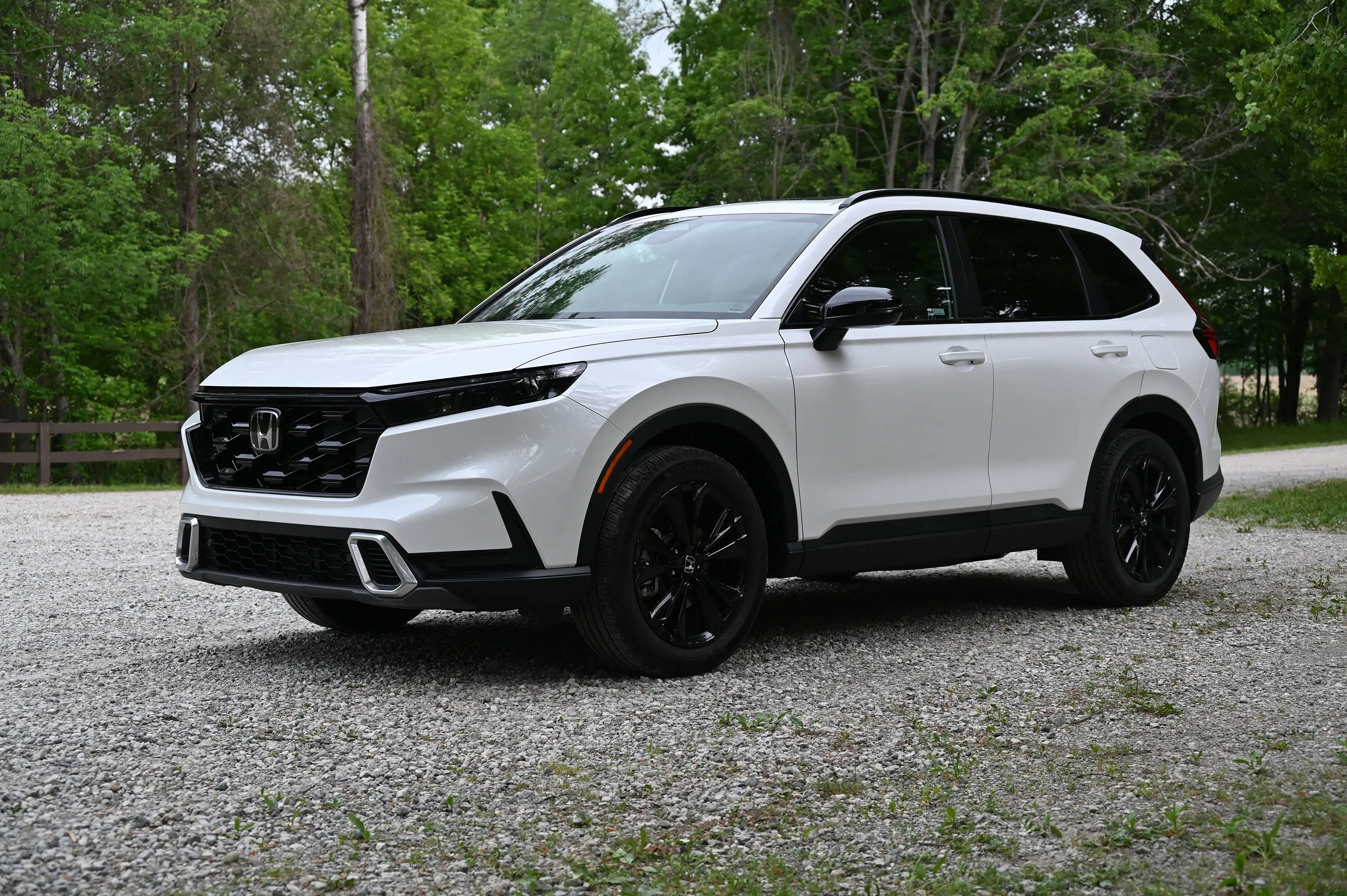
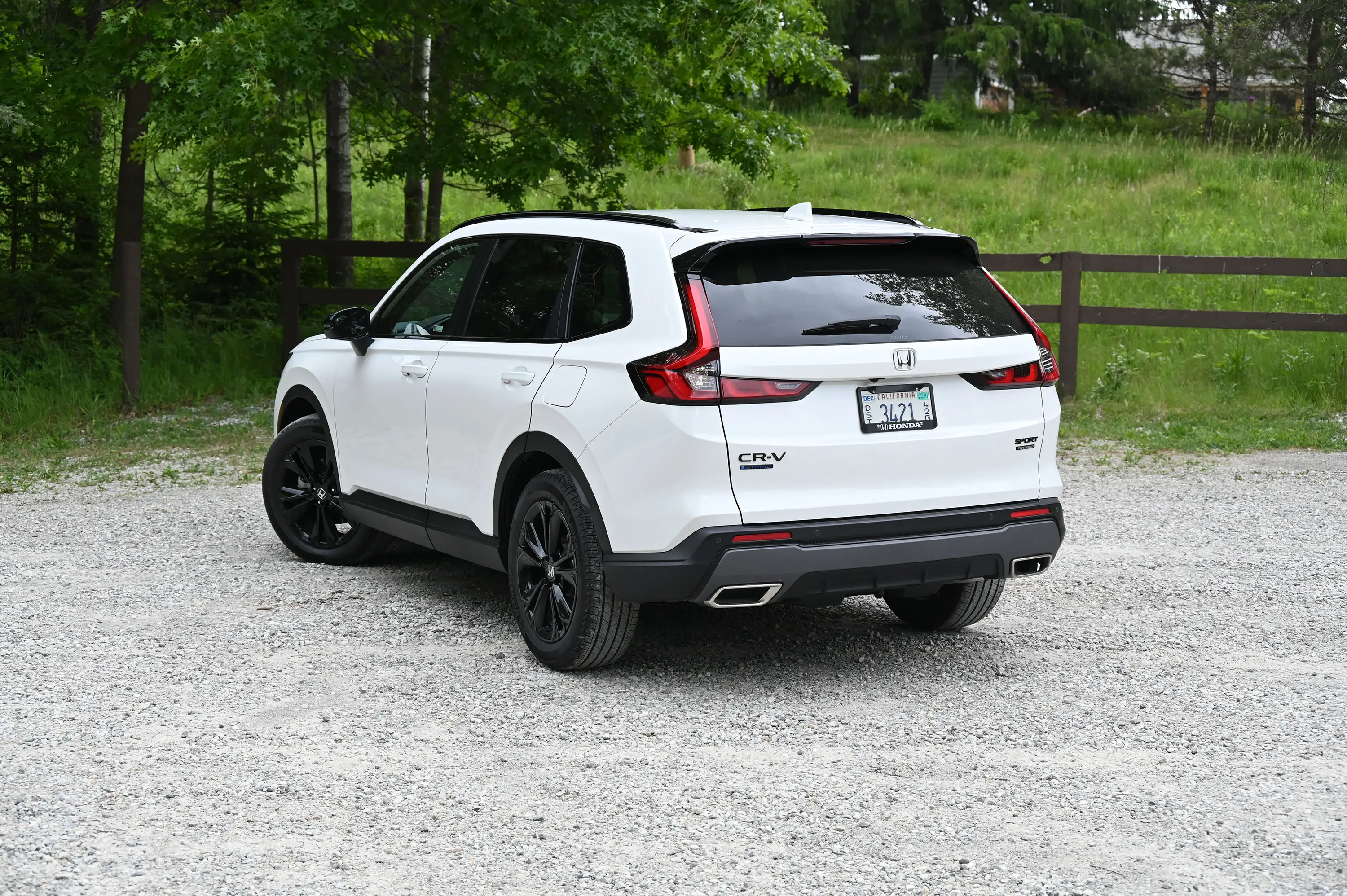
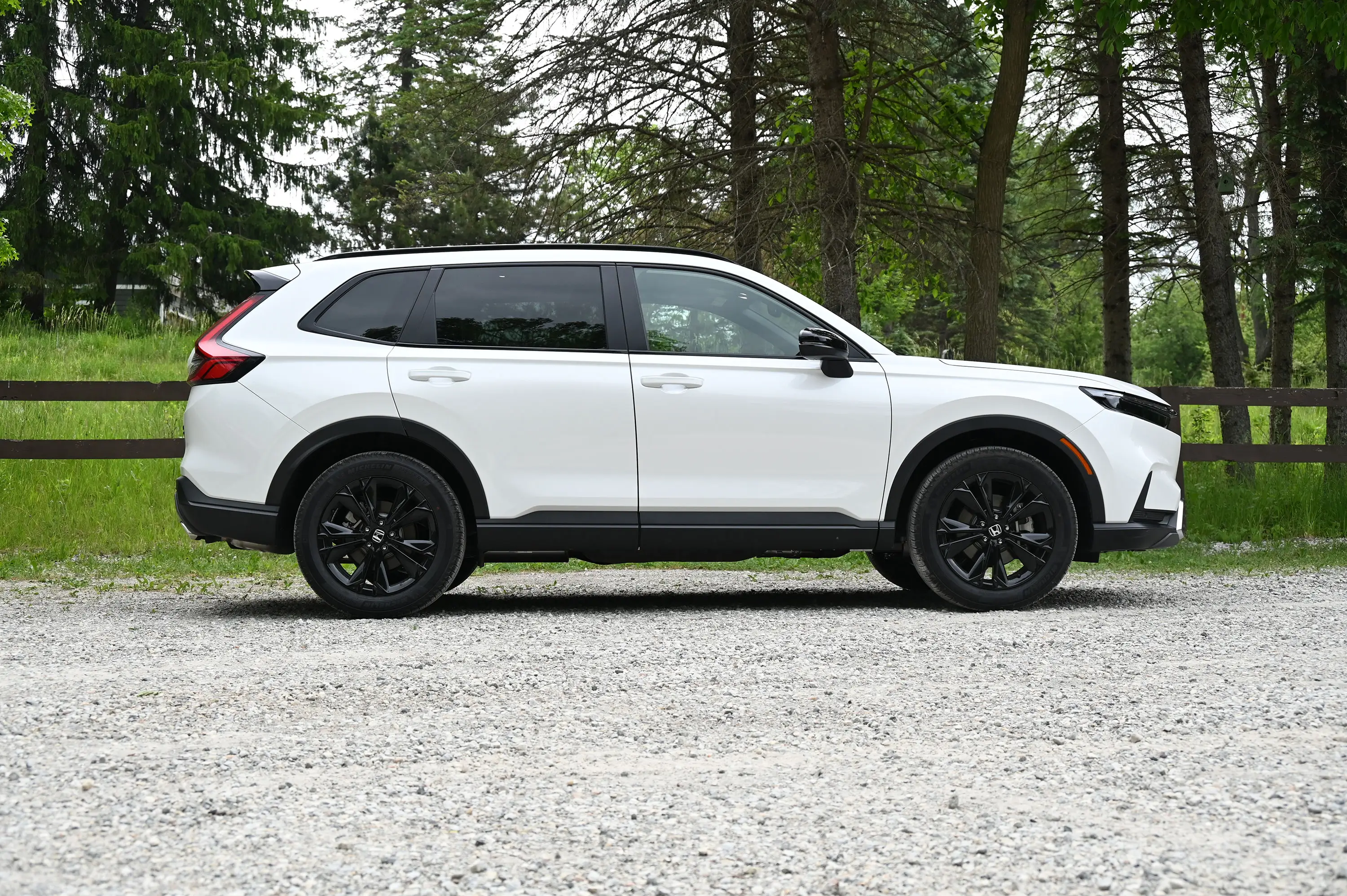
The Honda CR-V Hybrid's last redesign was in 2023. It’s not an old design, but with so many sales, it’s a pretty familiar sight almost anywhere you go. Honda really wants to emphasize the “s” in SUV, as all four of its hybrid trim levels tout “sport” in one way or another. All jokes aside, it’s a stylish vehicle with a design that leans more toward classic and timeless than trendy and bold.
For a deeper look at Honda’s comfort, efficiency, and everyday driving experience, see how the top-spec CR-V Hybrid performs in a full road test ➜
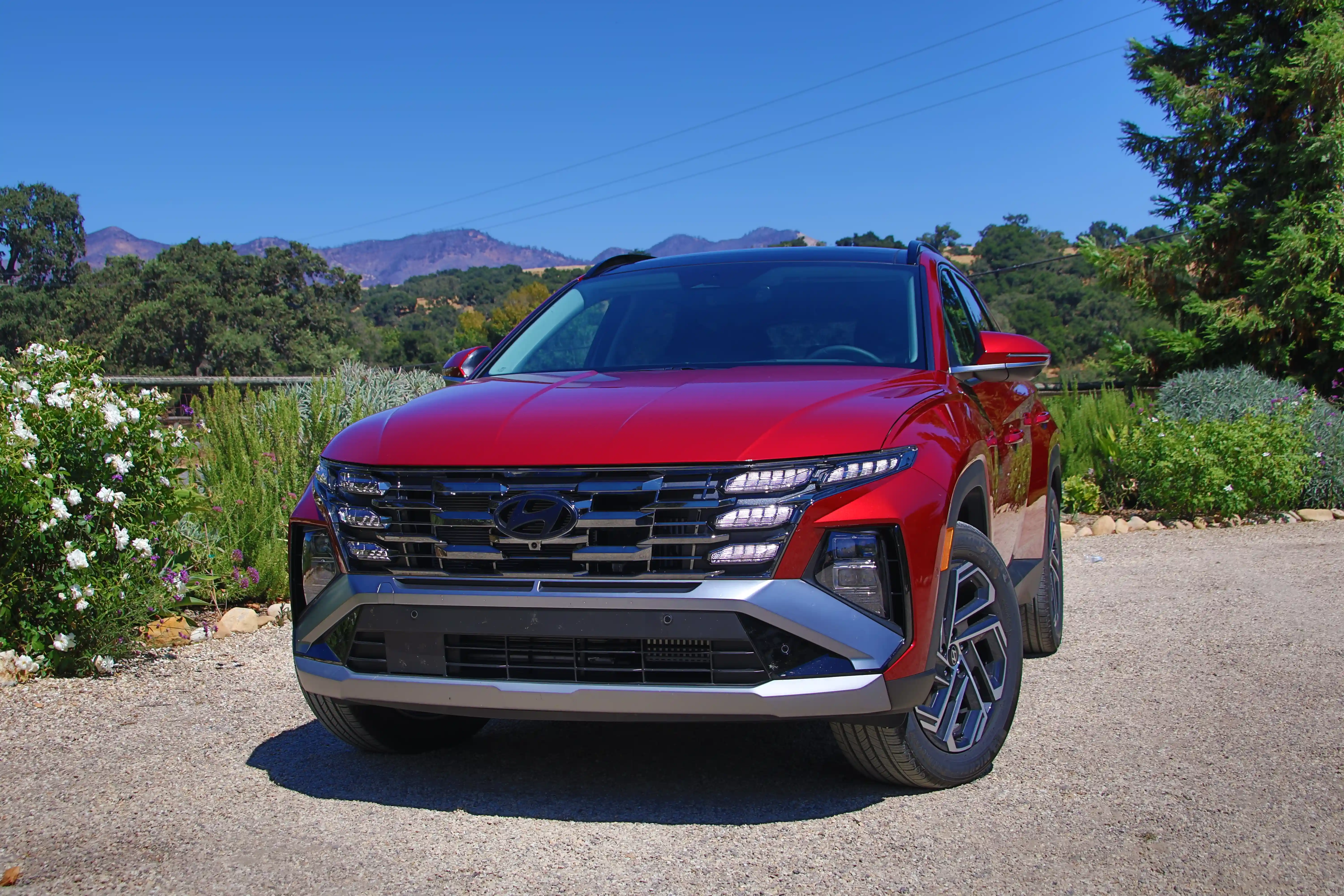
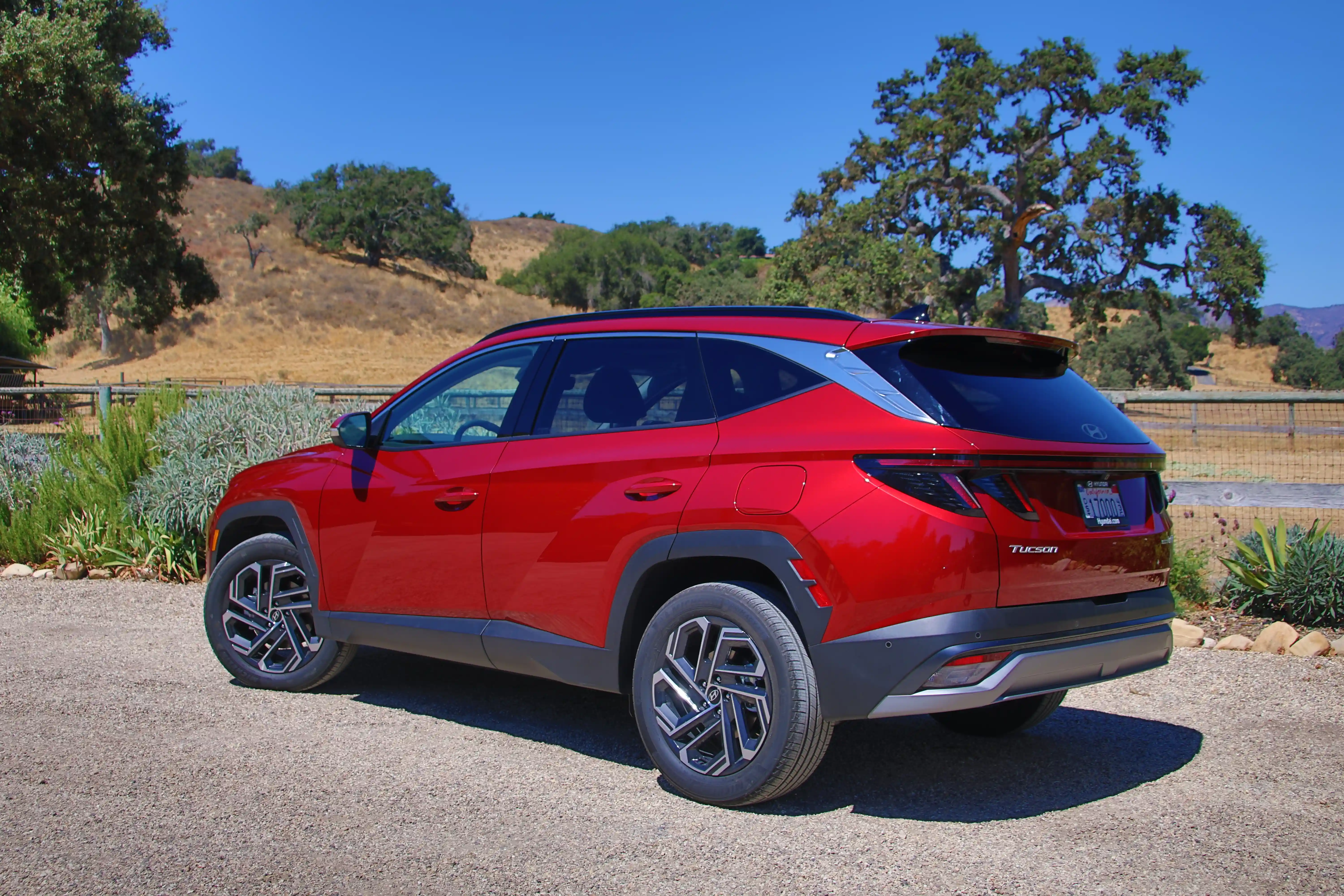
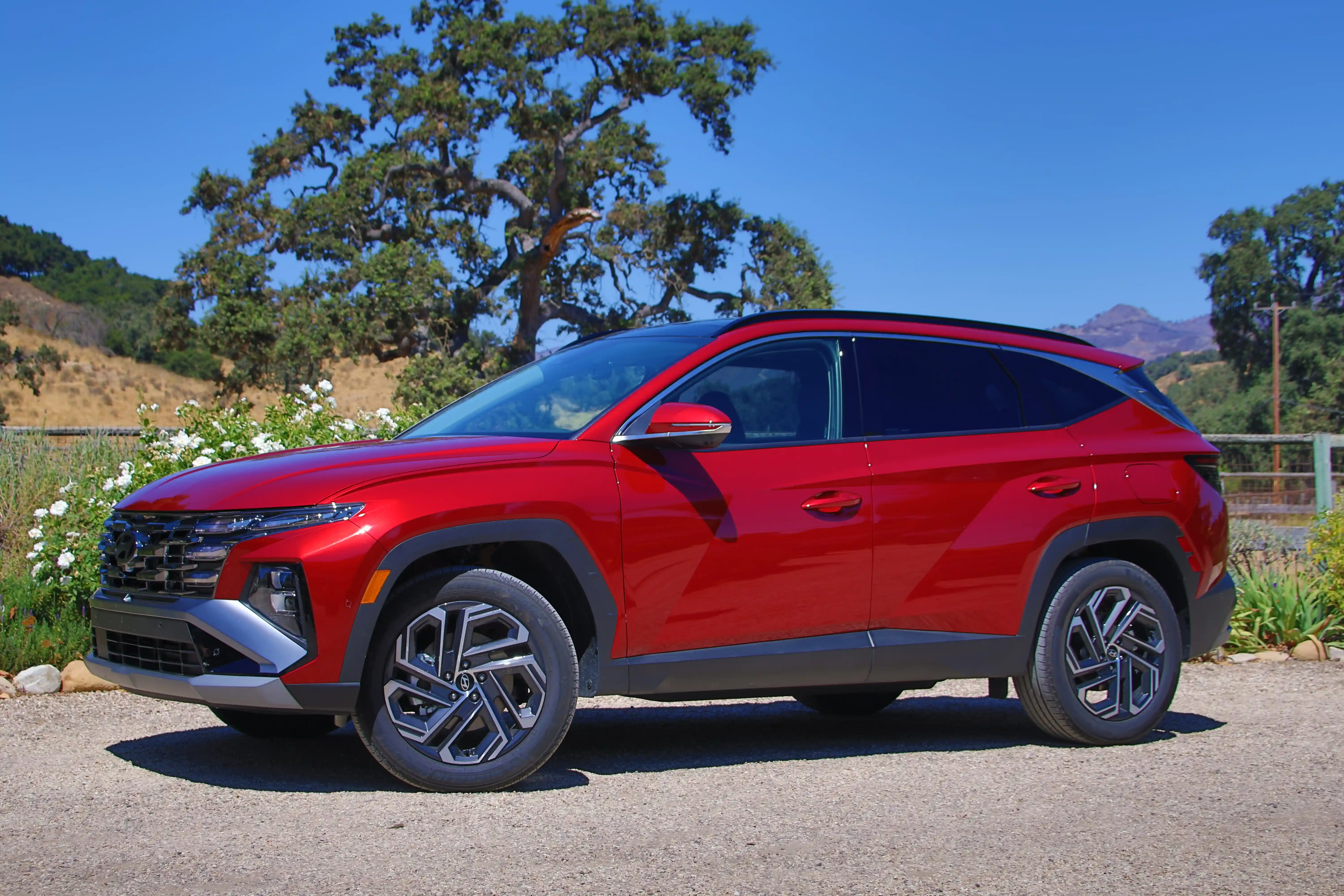
The Tucson Hybrid’s design is quite different and leans toward the latter of that description. It takes on a rounded shape, a large front grille, and sharp lines and dimensional carvings down the side of the vehicle. It's without a doubt sportier than its predecessor, but its design might be a little bold for some drivers.
Interior Space and Tech
These two small hybrid SUVs are pretty competitive in size. You’ll only find an inch of difference or less between most of their measurements. The only notable gap comes in the cargo hold, where the Tucson Hybrid has slightly more space than the CR-V Hybrid. So if you’re packing a double stroller or you're a regular visitor to your local big box store, you might find the Tucson Hybrid a bit more flexible.
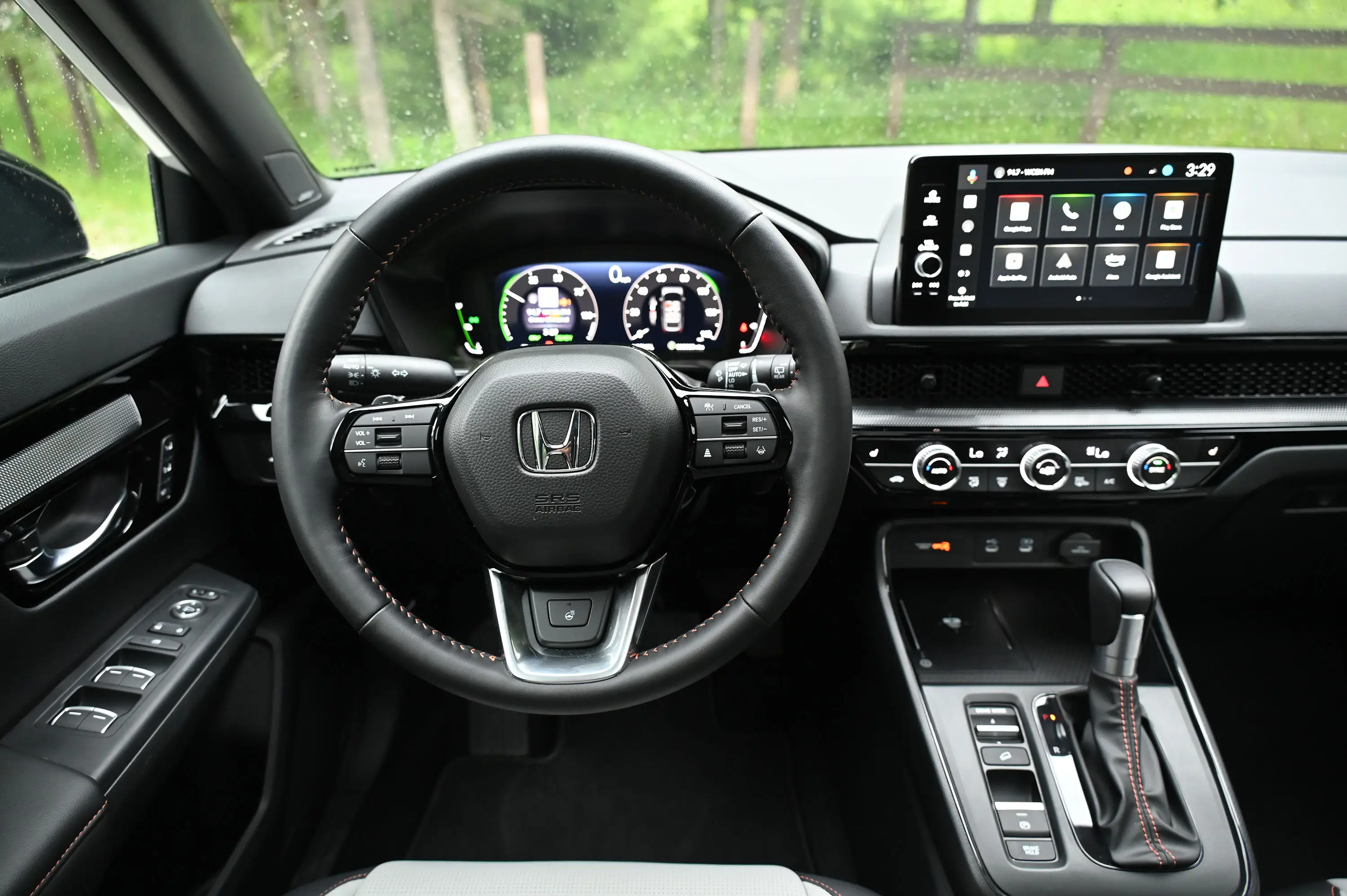
Both vehicles come standard with cloth upholstery, dual climate controls, USB-C charging ports, and wireless Apple CarPlay and Android Auto. The Tucson Hybrid’s 12.3-inch touchscreen dwarfs the Honda’s 9.0-inch.
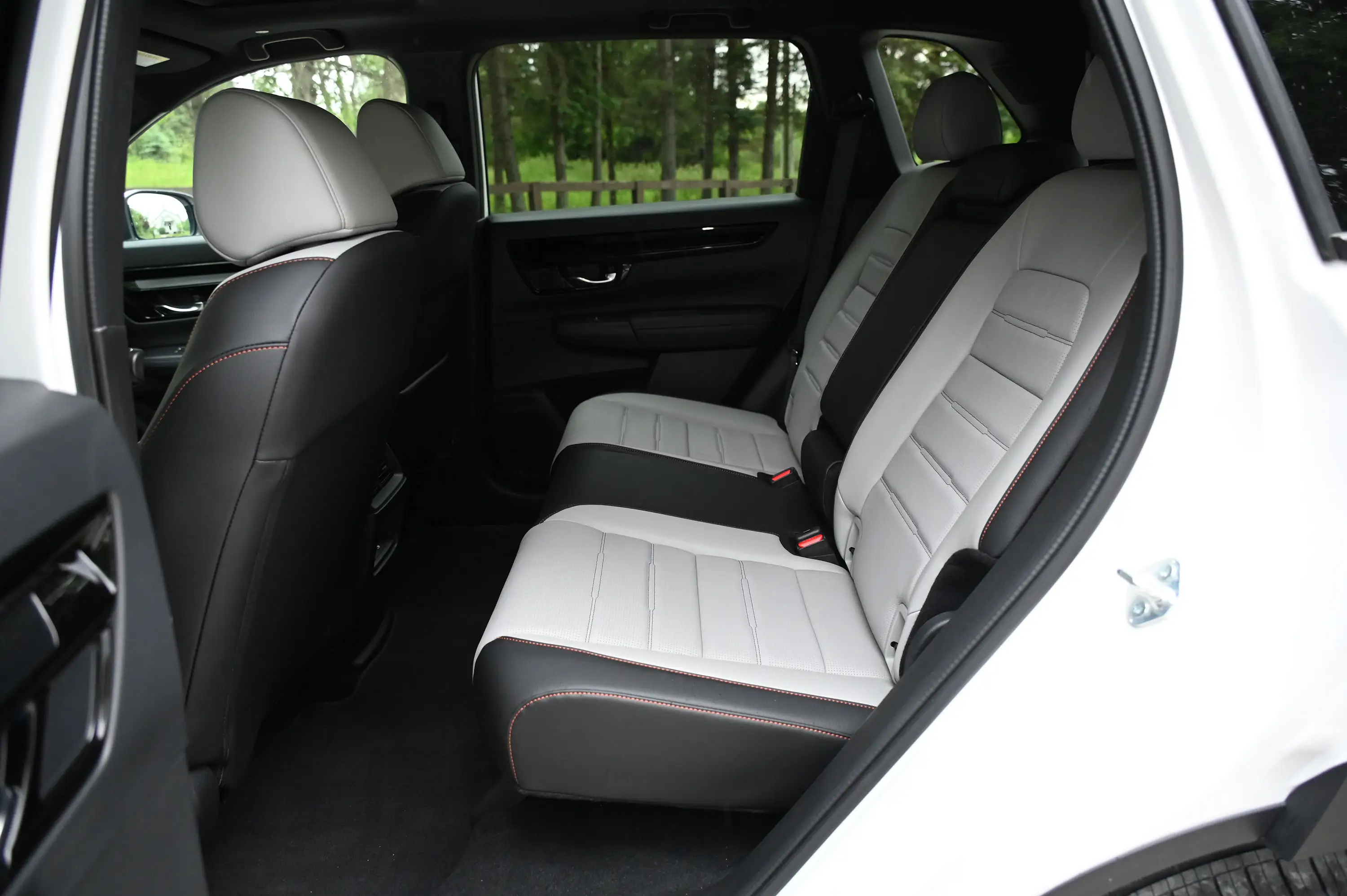
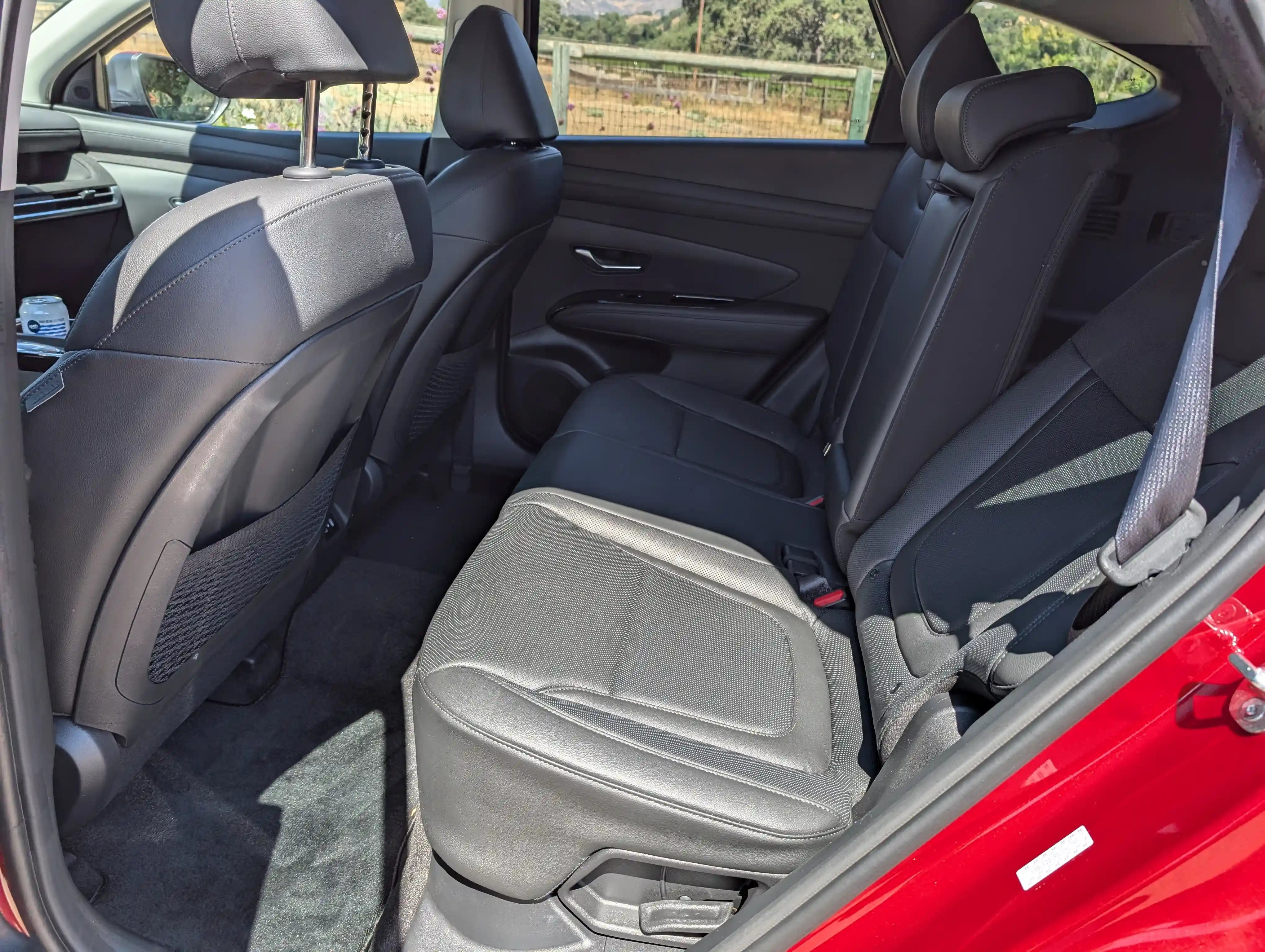
Heated front seats, a power moonroof, and a power driver’s seat are standard on the CR-V Hybrid but are upgrades on the Tucson Hybrid. Both can be had with leather upholstery, a wireless charging pad, a Bose premium sound system, a heated steering wheel, a power liftgate, and driver's seat memory settings.
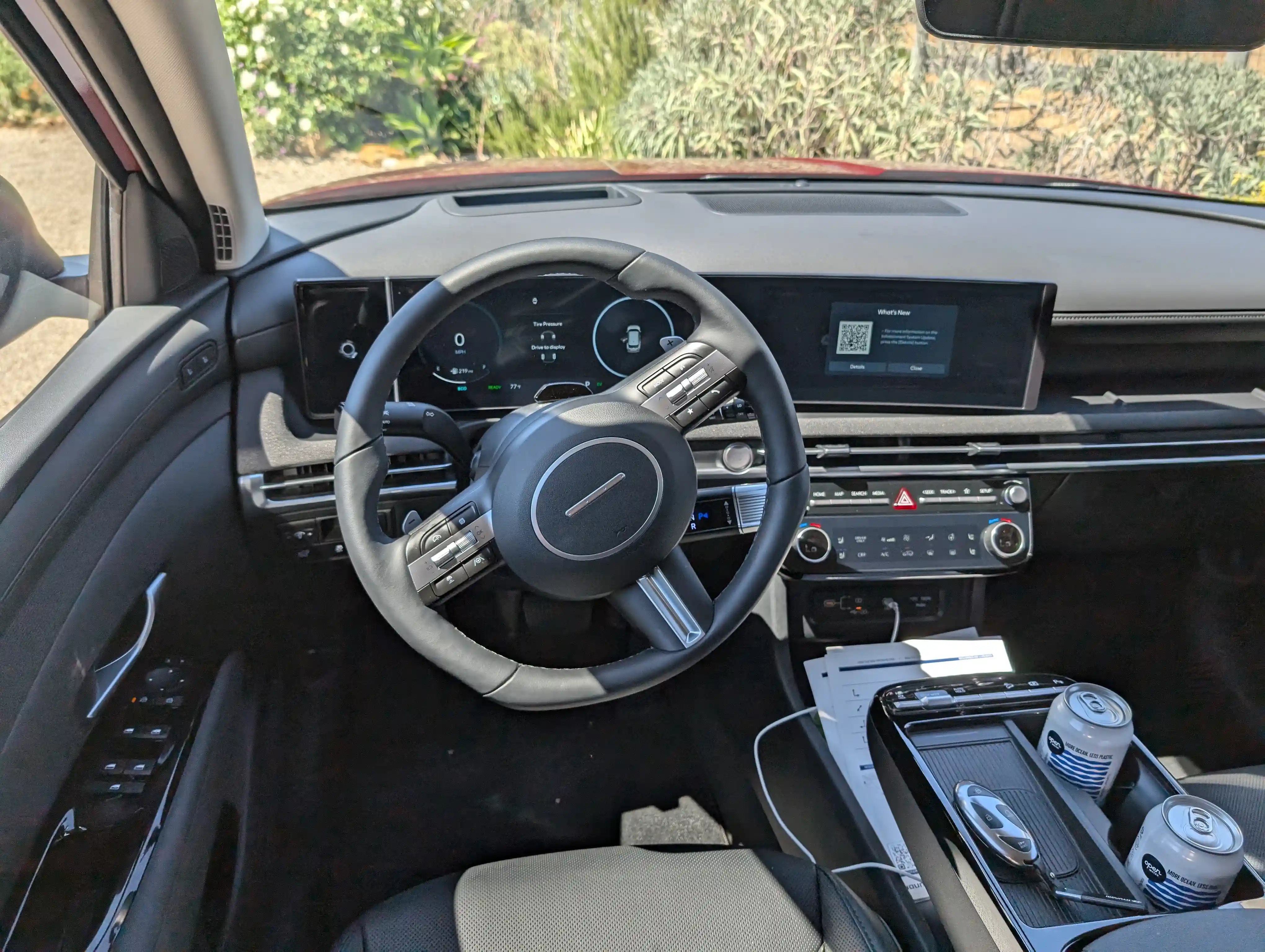
If ventilated front seats or heated rear seats are on your must-have list, you won’t find them on the CR-V Hybrid’s list of available features. The Tucson Hybrid offers those, plus some other niceties like a 12.3-inch digital instrument cluster and a 12-inch head-up display. The Honda also offers an upgraded 10.2-inch digital instrument cluster, but overall, its list of available features is shorter than what’s offered in the Hyundai.
As far as safety suites go, both have a standard driver-assist suite that includes adaptive cruise control, blind-spot monitoring, automatic emergency braking, lane-keeping assist, lane-following assist, driver-attention warning, rear-occupant alert, and rear cross-traffic alert. The Tucson Hybrid’s standard suite also includes safe-exit assist, while the CR-V Hybrid's includes traffic-sign recognition.
The Tucson Hybrid can be had with forward-attention warning, a blind-spot view monitor, navigation-based cruise control, parking collision-avoidance assist, parking sensors, remote smart parking assist, a surround-view monitor, highway-driving assist, and an advanced rear-occupant alert with an in-cabin radar sensor that can detect children or animals accidentally left in the vehicle — though don’t expect that last one to stick around, since Hyundai has already dropped it from 2027 models. Parking sensors are available on upper CR-V Hybrid trims.
Powertrain and Fuel Economy
Both the CR-V Hybrid and Tucson Hybrid offer a choice between front- and all-wheel drive. On fuel economy, the CR-V Hybrid offers the most impressive figures, earning up to 43 mpg in city driving and 40 mpg combined for the front-drive model. The best the Tucson Hybrid can manage is 38 mpg combined. If saving money at the pump is your top priority, the Honda wins all day long.
A two-mpg headline difference does not always translate directly to the same real-world fuel savings, so see what EPA city, highway, and combined fuel-economy ratings actually mean ➜
Price
When it comes to price, the Hyundai Tucson Hybrid beats the Honda CR-V Hybrid. Every trim except its top level is more affordable than the least expensive CR-V Hybrid. Both models top out in the lower $40,000s, but if features matter more to you than fuel economy, the Tucson Hybrid is your best bet.
What's It Like to Drive?
Both of these vehicles are pleasant to drive, with comfortable ride quality and handling that's capable, if not sports-car-like. However, the driving experience differs quite a bit due to their different hybrid architectures.
The Honda's hybrid system is configured to run mostly as a series hybrid and packs nearly three times the electric motor output of the Tucson Hybrid's. During most driving, only the electric motor drives the wheels, with the engine only turning a generator to provide electricity. A clutch engages to send some engine power to the wheels at highway speeds. The result is a quiet overall ride that feels more like driving an EV.
The Hyundai's hybrid system uses a smaller motor sandwiched between the engine and a conventional six-speed automatic transmission. That makes it feel much more like a traditional gas-only vehicle, albeit generally quieter. It doesn’t have the overall refinement of the Honda, however.
For more time behind the wheel of Hyundai’s turbo-hybrid setup, see how the Tucson Hybrid balances power, refinement, space, and family usability ➜
Either way, you get a surprisingly roomy crossover that delivers excellent fuel efficiency and a long feature list. The Hyundai feels a bit more modern inside, with larger screens and a bolder exterior design, while the Honda goes a bit more traditional all around. Functionality, though, is pretty similar between the two.
Analyst's Perspective (Which One's Right for You)
Choosing between the CR-V Hybrid and Tucson Hybrid really comes down to personal preference. If you want a design that stands out from the crowd, the Tucson Hybrid is absolutely your winner. The front-wheel-drive CR-V Hybrid will yield you a couple of extra mpg, but those fuel savings aren’t quite enough to overcome the price gap of over $3,000 more upfront on base trims. If you want the most EV-like driving experience without a plug, get the CR-V Hybrid. Otherwise, the Tucson Hybrid is probably the smarter value.
More Compact Hybrids Worth Cross-Shopping
2026 Toyota RAV4 Hybrid: Everyday Practicality Meets Smarter Electrification
Toyota’s newly hybrid-focused RAV4 is the obvious third benchmark for shoppers comparing efficiency, cargo room, technology, and everyday practicality.
Read More ➜
2026 Kia Sportage Hybrid Review
The Sportage Hybrid brings another value-focused alternative with strong efficiency, generous rear-seat space, and a technology-heavy cabin.
Read More ➜
Best Green Family Vehicles
Compare the CR-V Hybrid with other efficient family vehicles using safety, passenger space, car-seat usability, and cargo capacity as the deciding factors.
Read More ➜