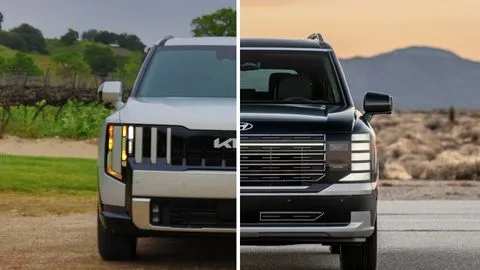


Fast Facts | 2026 Tucson Hybrid vs. 2026 Sportage Hybrid
⚡ Powertrain: Shared 1.6L turbo hybrid with six-speed automatic
🔋 Battery: 1.49 kWh lithium-ion pack
🛞 Drivetrain: Tucson AWD only; Sportage offers FWD or AWD
⛽ Efficiency: EPA-estimated 36–38 mpg combined AWD; Sportage FWD up to 41 mpg
📦 Cargo: Tucson up to 80 cu ft; Sportage up to 73.7 cu ft
🖥️ Tech: Dual 12.3-inch displays in both
💰 Price Edge: Sportage LX undercuts Tucson by over $2,000
Hyundai and Kia’s Closest Rivalry
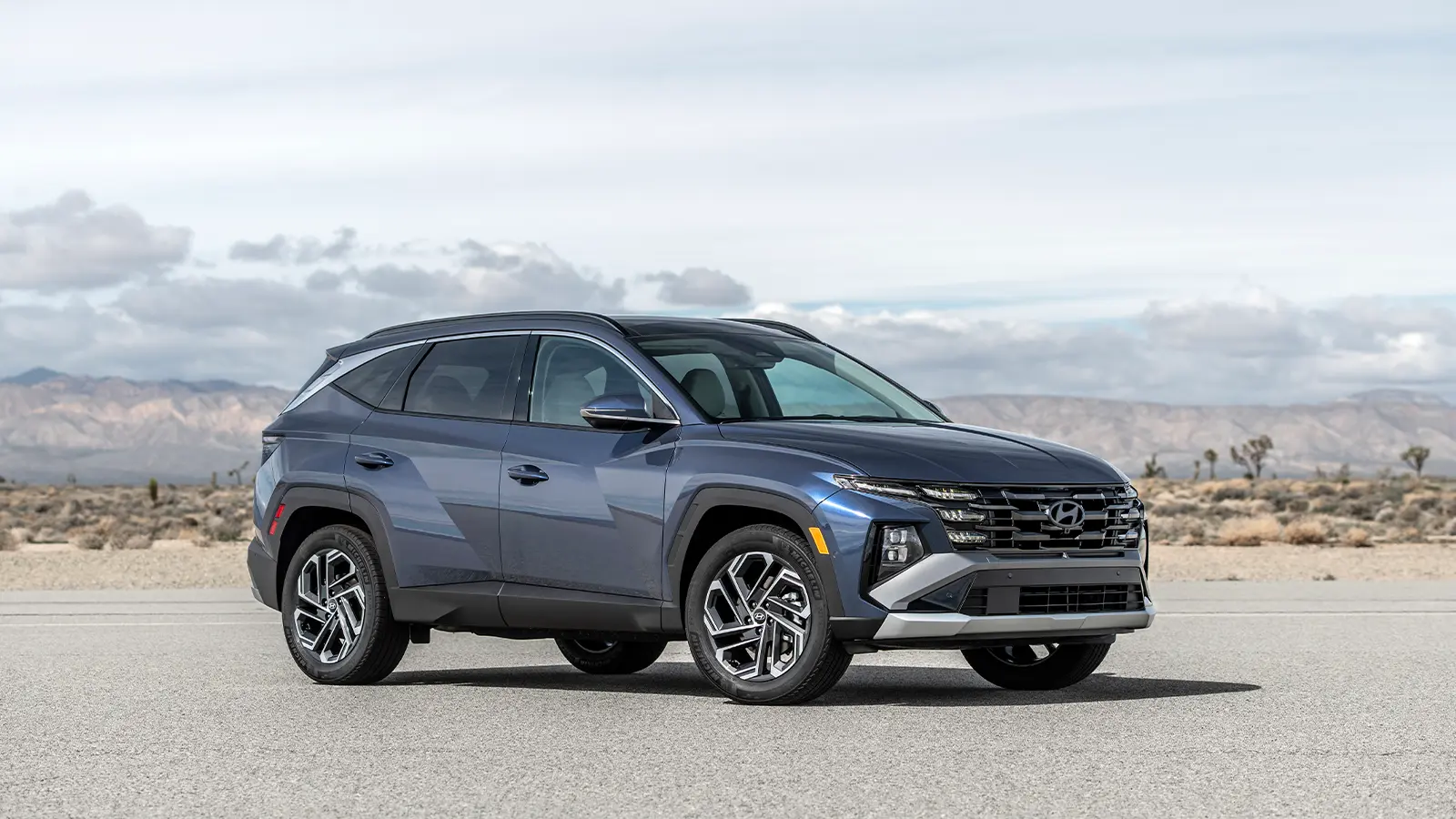
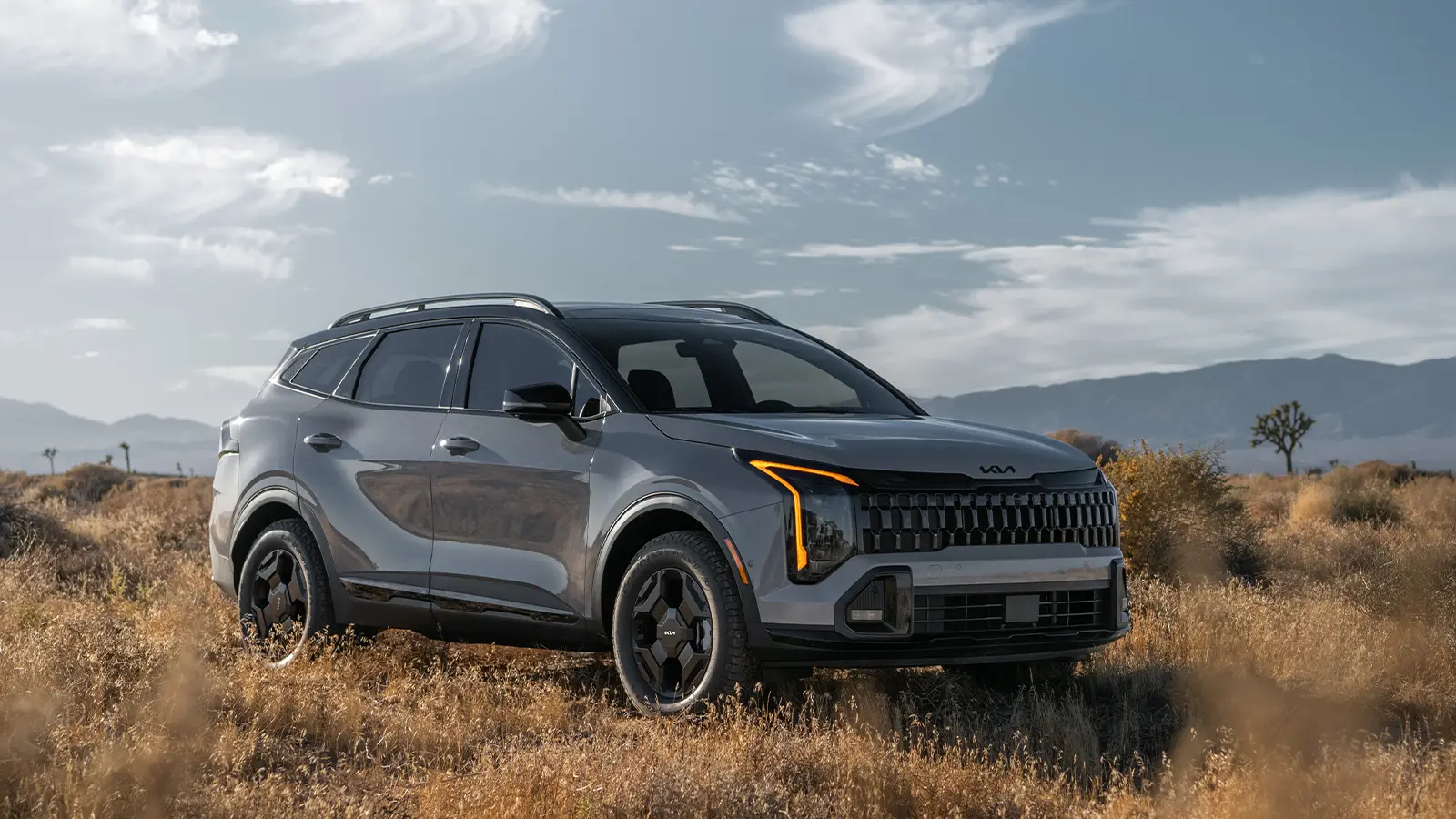
Out of all the possible comparisons in the compact crossover segment, the 2026 Hyundai Tucson and Kia Sportage hybrids are unique, since they're basically the same vehicle. Both brands are part of the South Korean Hyundai Motor Group (HMG) and are both collaborators and, in most ways, direct competitors. Each brand has its own product planning and marketing groups, but most of the key engineering is done by a core HMG group.
For the average consumer, the key differences between these are styling and some of the feature packaging. Kia generally favors a slightly sportier attitude with its vehicles, while Hyundai goes for mainstream appeal, but aside from some tuning variations, the parts under the hood are largely identical.
Exterior Design and Dimensions
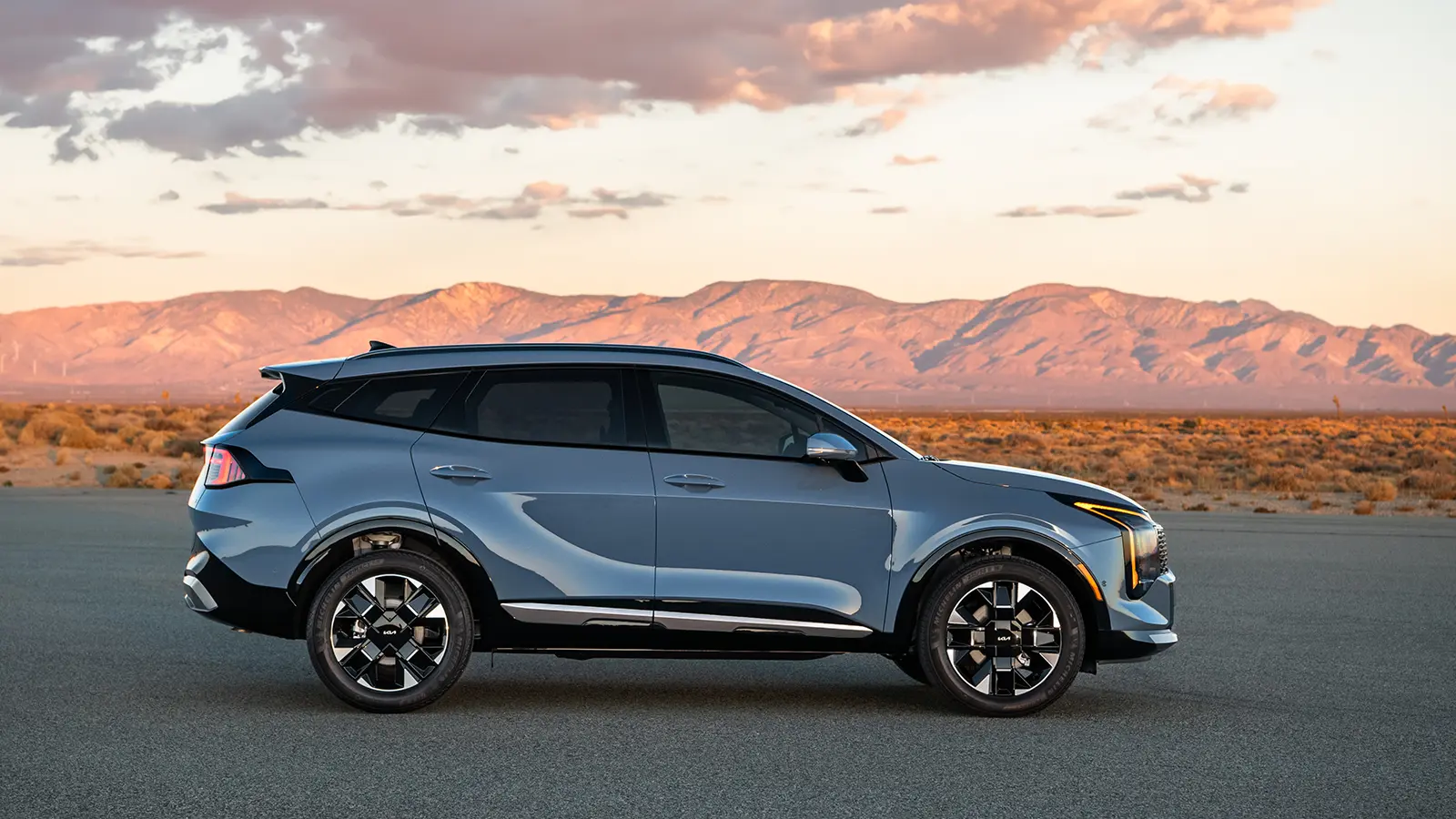
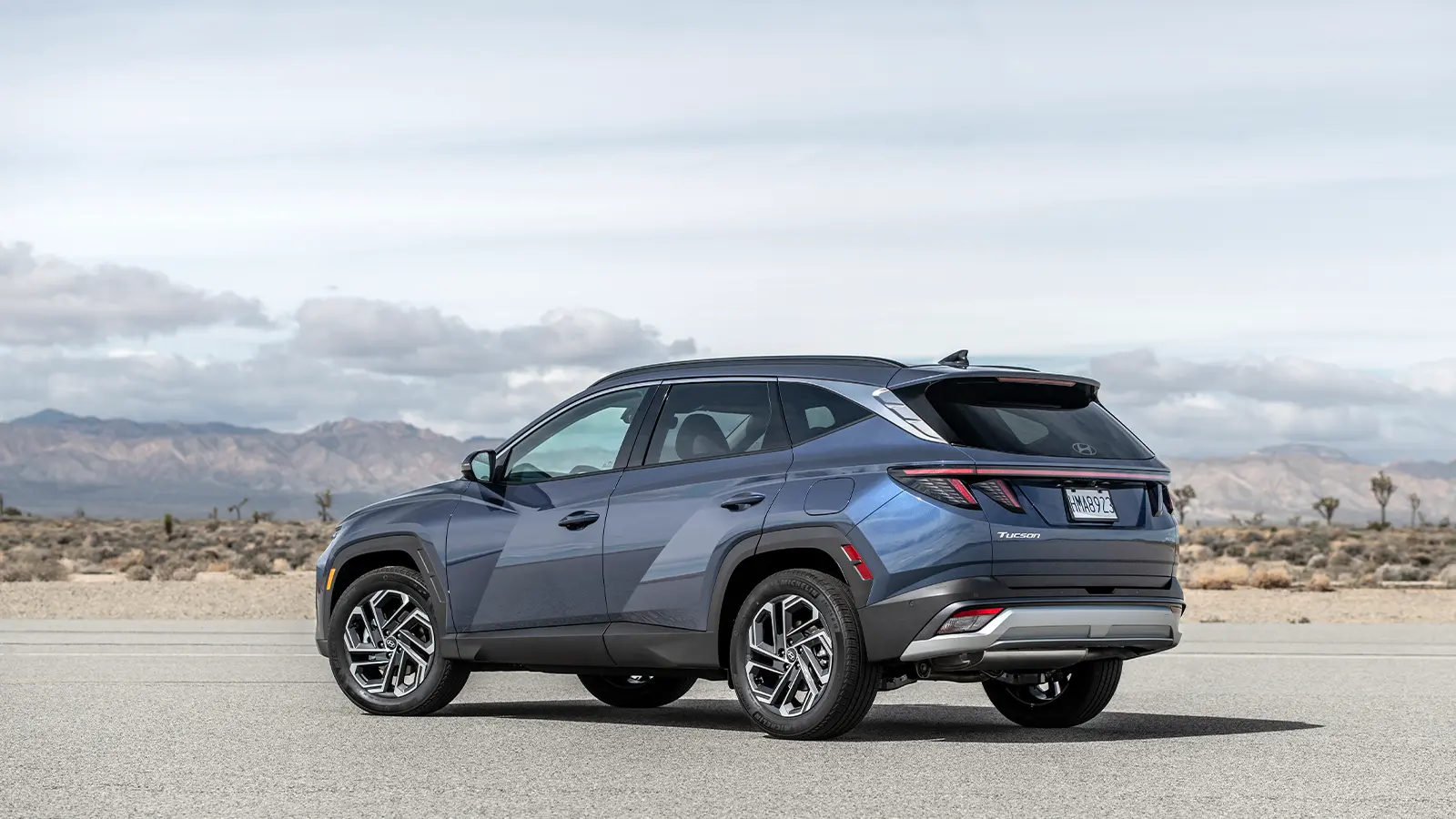
Like most HMG products, the Tucson and Sportage are on roughly the same generational cadence, typically getting redesigns and refreshes within a few months of each other. Going into 2025, both crossovers got a mid-cycle refresh with updated exterior styling and a variety of feature updates. The biggest changes were updated front fascias that give them a more rugged, truck-like appearance. Both moved away from a sleeker, car-like profile to a boxier look that calls to mind a more traditional SUV.
Apart from overall length, all major exterior dimensions of the two Korean crossovers are identical, including a 108.5-inch wheelbase. The Kia has a bit more overhang, which gives it 1.7 inches more in overall length, but that doesn't translate to more room inside the cabin.
Interior Space and Tech
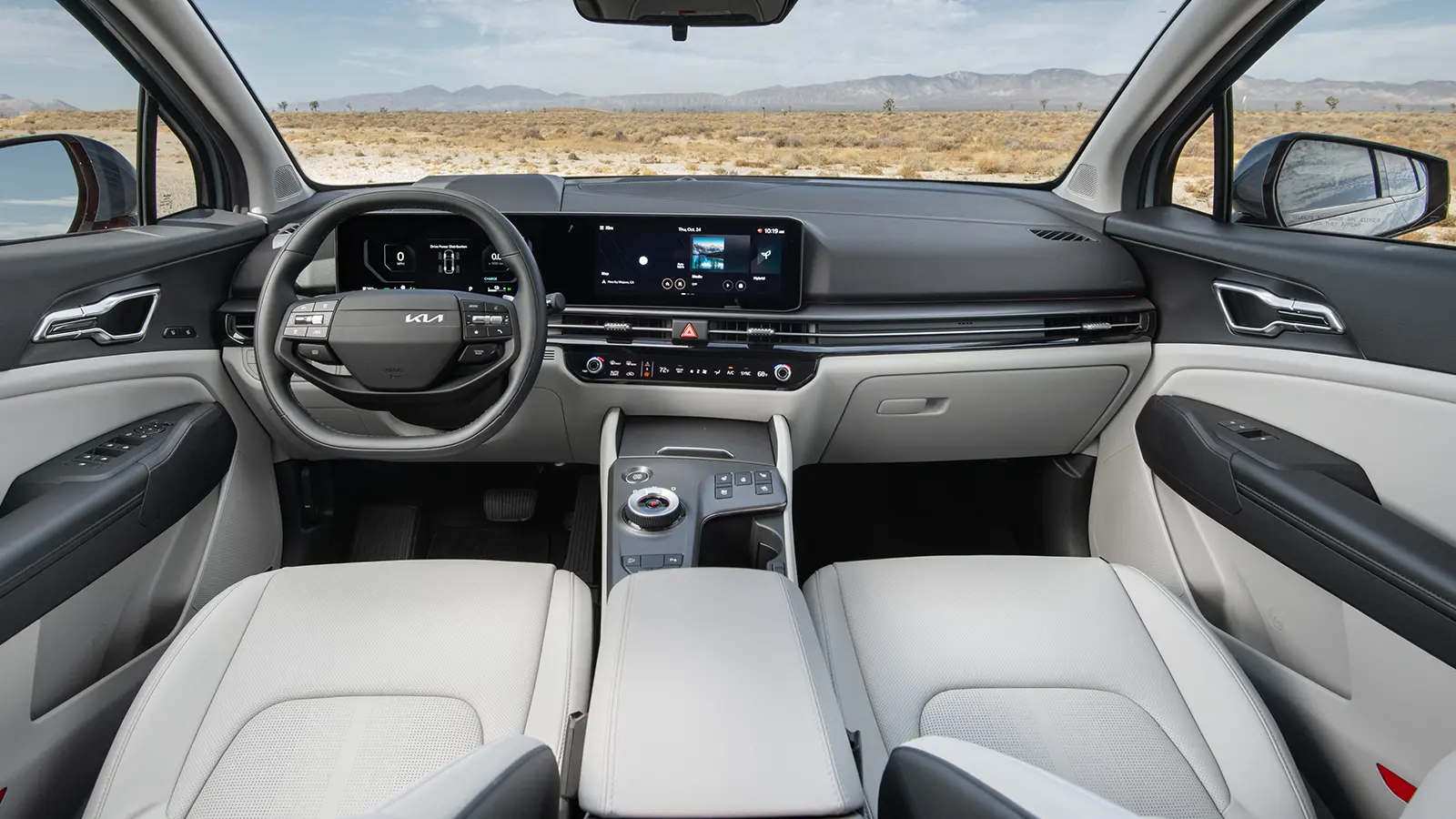
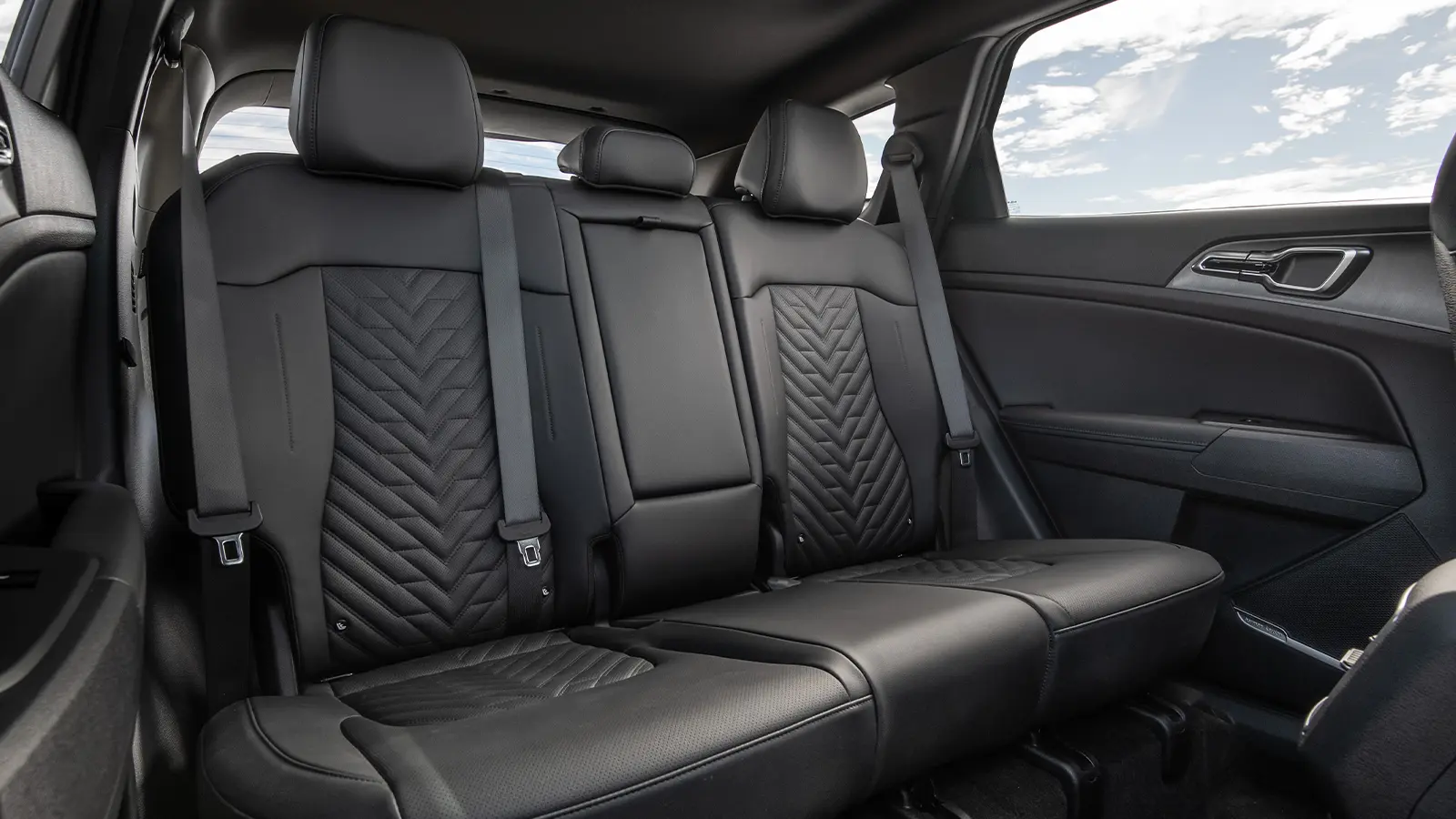
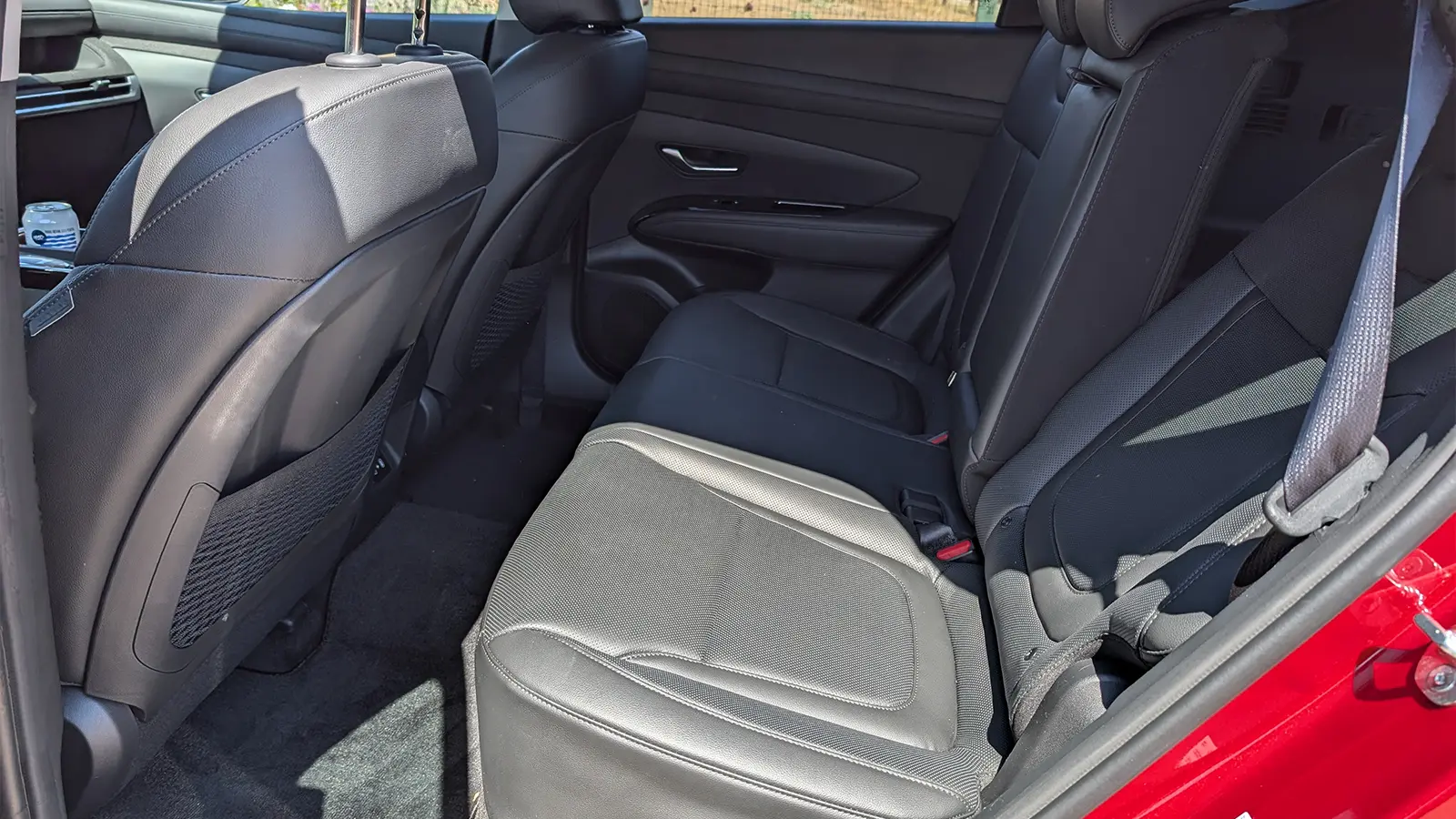
Despite the slight edge in length, Kia’s designers seem to have taken up a bit more of the interior volume of the Sportage with the panels on the doors and roof, meaning a bit less passenger space. With an identical 108.5-inch wheelbase and the same floorpan, both models have the same legroom.
However, the Tucson has an edge of about half an inch in headroom on variants without a sunroof and nearly an inch in the rear when equipped with a sunroof. The Tucson also has a 0.4-inch advantage in rear shoulder room. The Hyundai has 107.9 cubic feet of total passenger volume, and while Kia doesn’t state the Sportage volume, it’s likely slightly less, probably between 105 and 106 cubic feet.
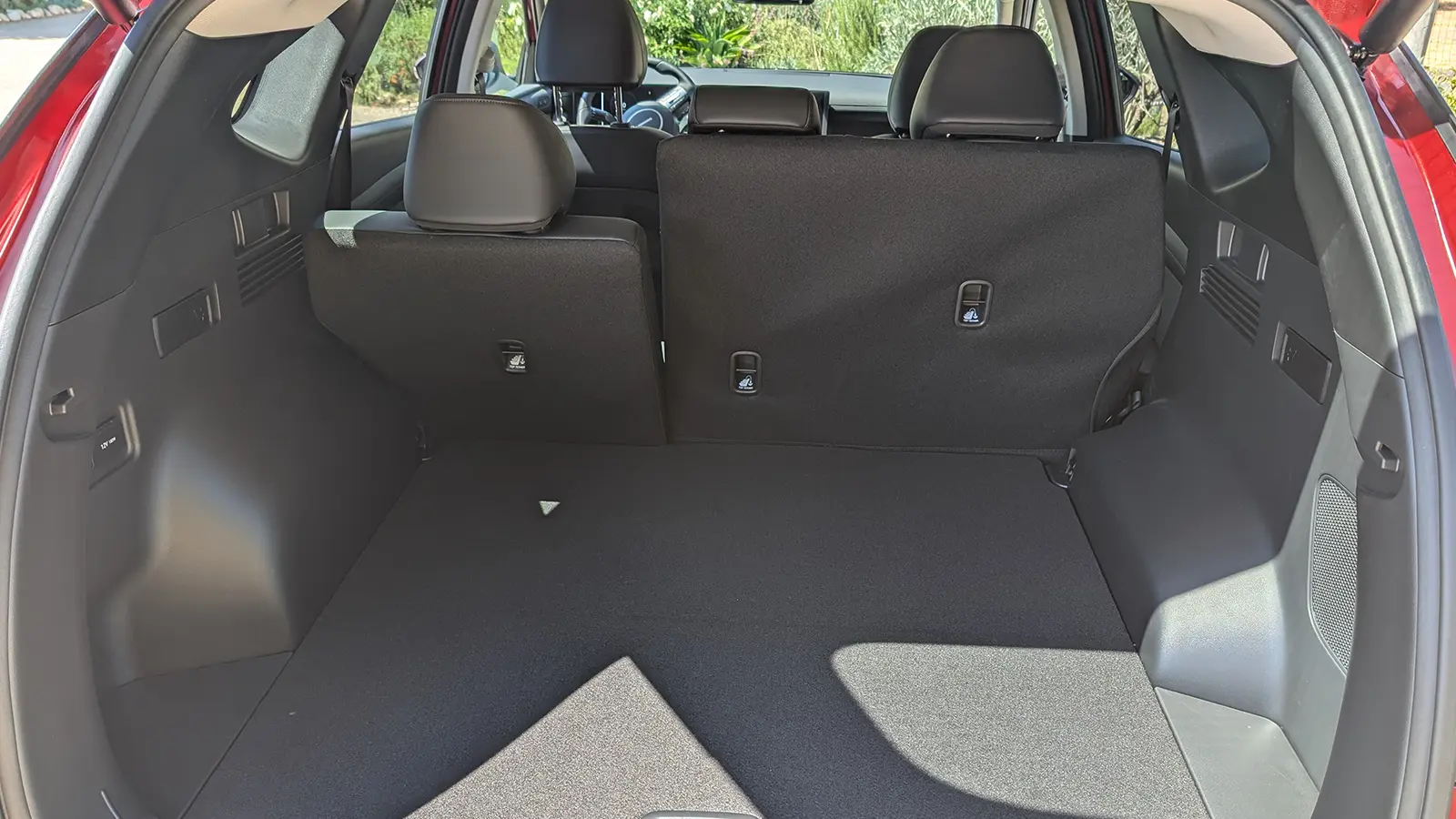
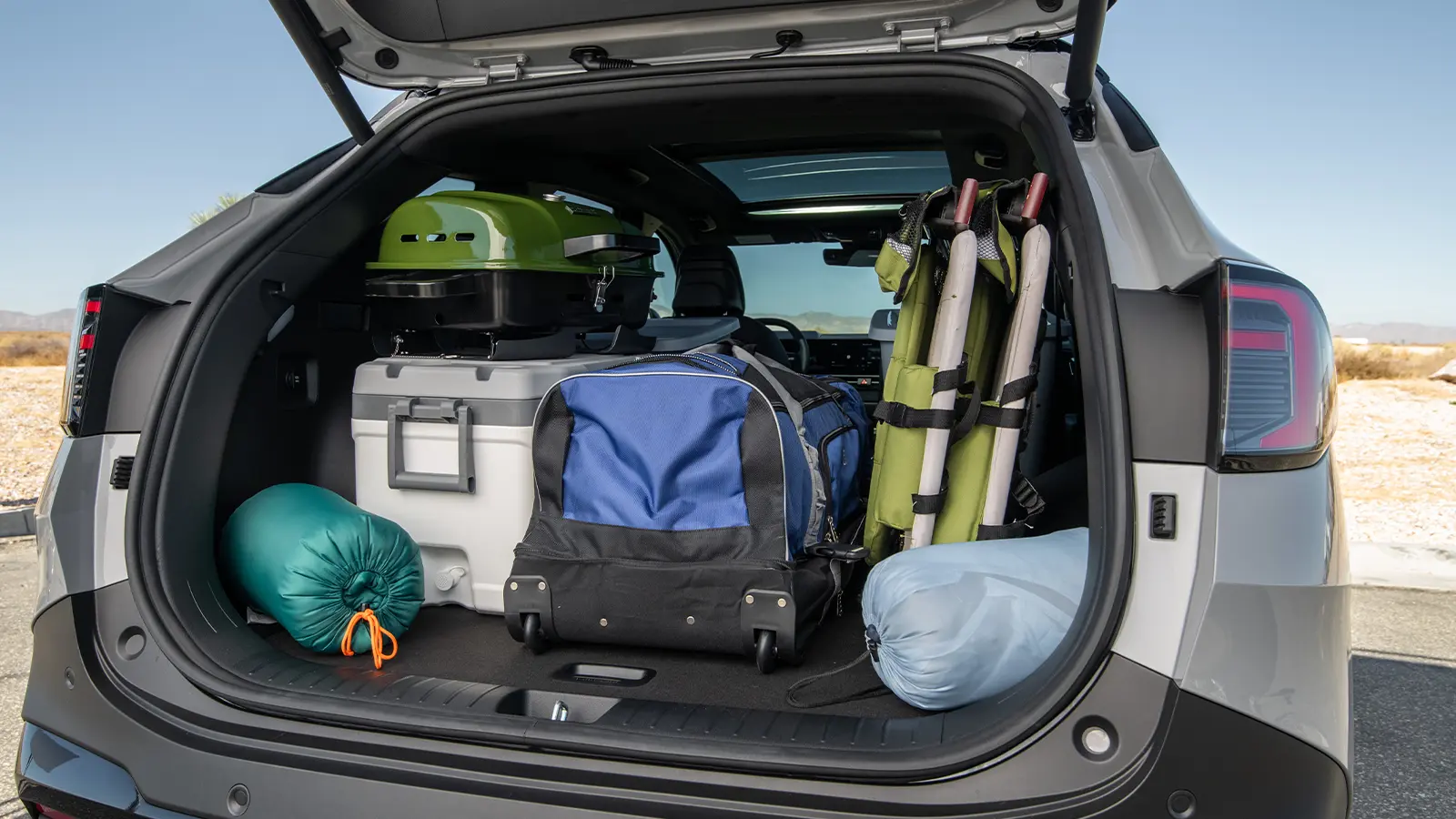
The Hyundai also has the advantage when it comes to cargo volume, with a maximum of 80 cubic feet when the rear seats are folded, compared to a still very ample 73.7 cubic feet in the Kia. Both models have a clever dual-level rear cargo floor that provides a flat load floor with the rear seats folded. If maximum volume is needed, you can drop the floor panel in a lower slot that gives you an extra 5 to 8 cubic feet. Leave it up, and you get storage space underneath that's hidden from passersby. It's a smart setup.
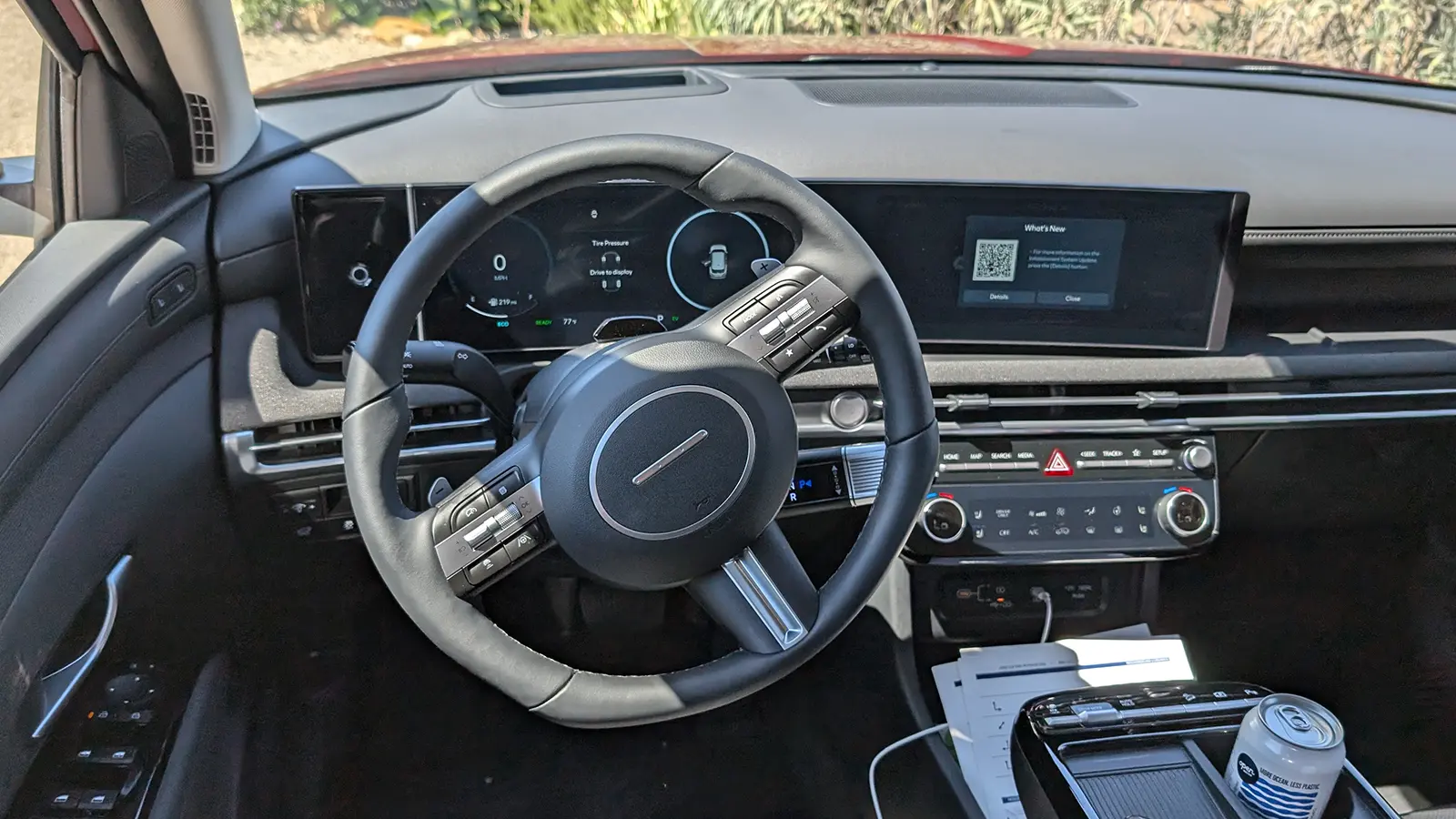
The mid-cycle update of the Tucson brought a fully redesigned dashboard that includes two 12.3-inch displays behind a single curved sheet of glass. This redesign came after negative feedback to the previous design, which had capacitive touch controls for climate and audio controls. The new layout has a panel below the infotainment screen with a mix of physical controls for the most used functions like volume, temperature, tuning, and mode selection. Much better.
The Sportage has a similar display arrangement, but the central control panel is common to recent Kia models, featuring a pair of multi-mode rotary knobs and a row of touch controls. Unfortunately, this setup requires toggling between climate and media controls by tapping one of the virtual buttons. In climate mode, the knobs adjust temperature; tap a button, and they switch to volume and tuning. Fortunately, there are redundant audio controls on the steering wheel. The Kia has a traditional transmission selector lever on the console, while the Tucson gets a column-mounted gear selector similar to the one used on the Ioniq 5.
Both cars get dual front and rear USB-C ports, and one of the front ports also supports wired smartphone connections for Apple CarPlay and Android Auto (both also support wireless connections). A wireless charging pad is available in each. The infotainment systems on both vehicles are essentially identical, with the same software and interface that is relatively straightforward to use and has available navigation built in.
The Tucson and Sportage also have a robust suite of standard driver assist features, including adaptive cruise control with highway drive assist, blind-spot monitoring, automatic emergency braking, rear cross-traffic alert, driver-attention warning and rear-occupant alert. Both also offer an advanced rear-occupant alert that includes an in-cabin radar sensor to detect children or animals accidentally left in the vehicle.
Powertrain and Fuel Economy
Both vehicles feature the same HMG hybrid system that combines a turbocharged 1.6-liter four-cylinder engine, an integrated starter generator (ISG), and an electric motor housed in the six-speed automatic transmission. A clutch between the engine and motor disconnects the engine for electric-only drive under certain conditions. The belt-driven ISG restarts the engine and, along with the main motor, provides regenerative braking capability.
A 1.49-kilowatt-hour lithium-ion battery stores the electricity. Relative to competitors like the Toyota RAV4 and Honda CR-V, the electric output is relatively modest at just 64 horsepower and 195 pound-feet of torque. The conventional six-speed automatic transmission avoids the engine droning you'll hear with the e-CVT configuration in the Toyota and gives the HMG siblings a more conventional driving feel. However, this comes at the expense of fuel economy, with both delivering EPA-estimated combined ratings of an EPA-estimated 36 to 38 mpg with all-wheel drive, depending on trim, about 1 to 4 mpg less than the 2025 RAV4 (2026 RAV4 ratings not yet published at time of writing) and similar to the CR-V with all-wheel drive. The front-wheel drive Sportage does significantly better at an EPA-estimated 41 mpg combined.
The Tucson hybrid is offered exclusively with all-wheel drive on all trim levels, while Kia offers a lower-cost entry LX trim with front-wheel drive only.
Price
The most affordable of this pair by a margin of over $2,000 is the base Sportage LX with front-wheel drive. The other four Sportage trims are generally priced similarly to the corresponding Tucson variants, except the Tucson Limited, which is over $2,000 more than the Sportage SX-Prestige. For that extra money, the Hyundai gets leather seat upholstery compared to the synthetic SynTex material in the Kia, and also has features like remote smart parking assist, which isn't offered on the Sportage.
What's are they Like to Drive?
With identical powertrains, suspension, and size, the dynamic driving experience of the Kia Sportage and Hyundai Tucson hybrids is nearly identical. That said, the experience of driving either of these is good and considerably better than when this hybrid system debuted in 2010. The mode transitions between combustion, hybrid, and electric are now quite seamless. The smaller electric motor means you won’t find yourself in electric-only propulsion as often as you will in a Toyota or Honda hybrid, but the fuel economy for the all-wheel-drive models is virtually the same as the Honda and still very good, though not quite as exceptional as Toyota.
The big advantage over the Toyota is the absence of engine droning during acceleration, something that annoys many Toyota hybrid drivers. The overall driving dynamics are similar, with a comfortable ride, no matter which model you select, and confident handling.
The one area where the Tucson arguably has the biggest advantage is the infotainment and climate control ergonomics. Hyundai’s decision to go back to physical controls makes it easier to use than the multi-modal touch controls of the Kia. The Kia setup isn't a deal-breaker once you get used to it, but it’s definitely not as good.
Analyst's Perspective (Which One's Right for You)
Given the nearly identical driving experience of these two siblings, the choice really comes down to which design and control layout you prefer. When equipped with a sunroof, the Tucson offers slightly more rear headroom, but that’s really only important if you’re ferrying around future basketball players. On the budget side of things, if you need the most affordable hybrid compact crossover in the segment, the front-drive Sportage LX is absolutely the best choice. Beyond that, it’s really a toss-up.
⚖️ More Head-to-Head Comparisons
2026 Ford Mustang Mach-E vs. 2026 Hyundai Ioniq 5
A head-to-head look at two popular electric crossovers with very different design and driving philosophies
Read More ➜
Honda CR-V Hybrid vs. Toyota RAV4 Hybrid
A comparison of the two bestselling hybrid compact SUVs and how they differ in efficiency, comfort, and driving feel
Read More ➜
GreenCars Buyer’s Guide
Compare trims, pricing, fuel economy, and features across today’s most popular hybrid and electric crossovers
Read More ➜