

Fast Facts | 2027 Kia Telluride Hybrid vs. 2026 Toyota Grand Highlander Hybrid
⚙️ Power: The Telluride Hybrid produces 329 horsepower; the Grand Highlander offers 245 horsepower with its standard hybrid system or 362 horsepower with Hybrid MAX
⛽ Fuel Economy: The Telluride earns up to 35 mpg combined with front-wheel drive and 31 mpg with all-wheel drive; the Grand Highlander Hybrid reaches up to 34 mpg combined, while Hybrid MAX is rated at 27 mpg combined
🛻 Towing: Telluride Hybrid tows up to 4,500 pounds, while the Grand Highlander tows 3,500 pounds in standard hybrid form or 5,000 pounds in Hybrid MAX form
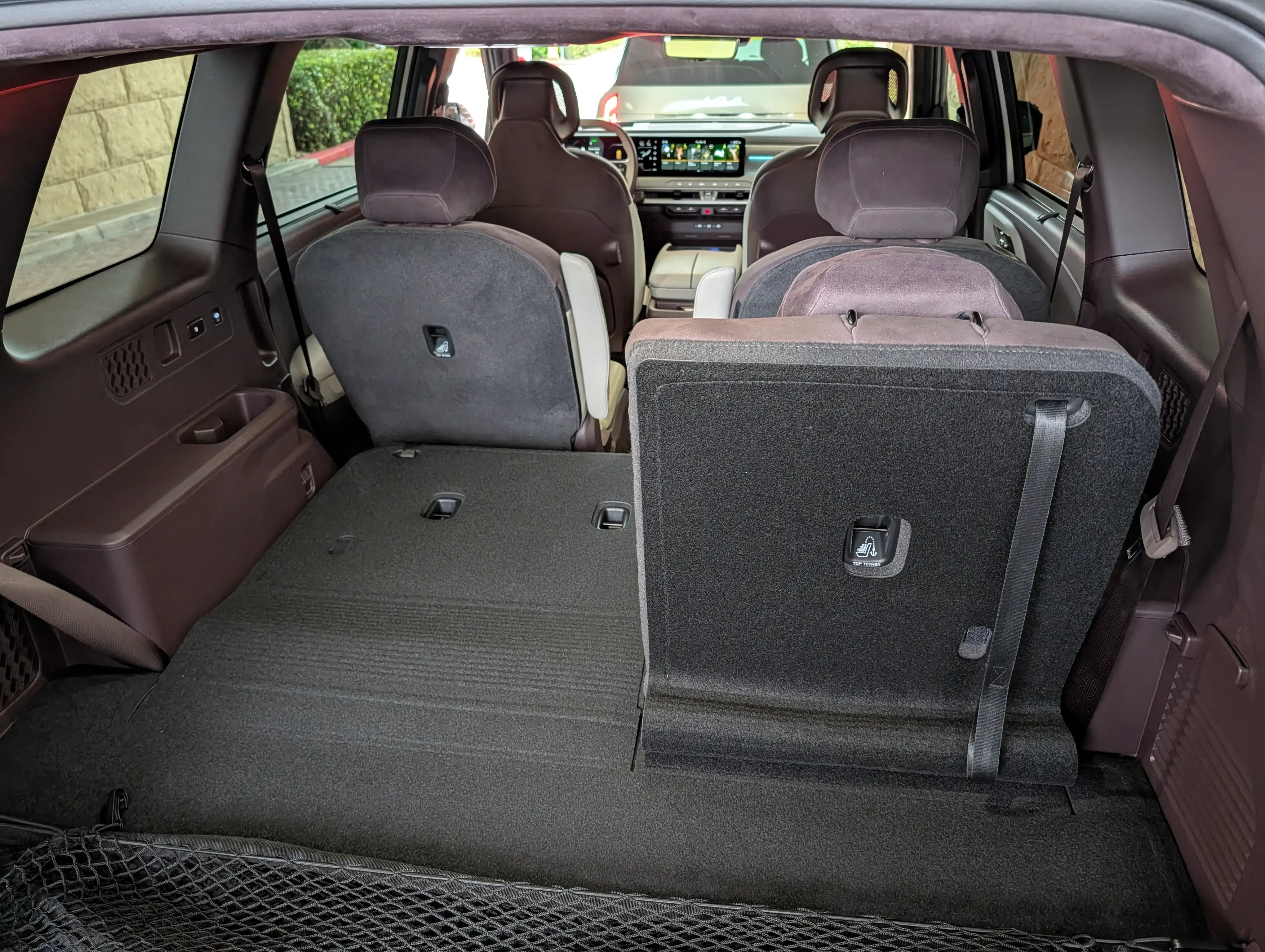
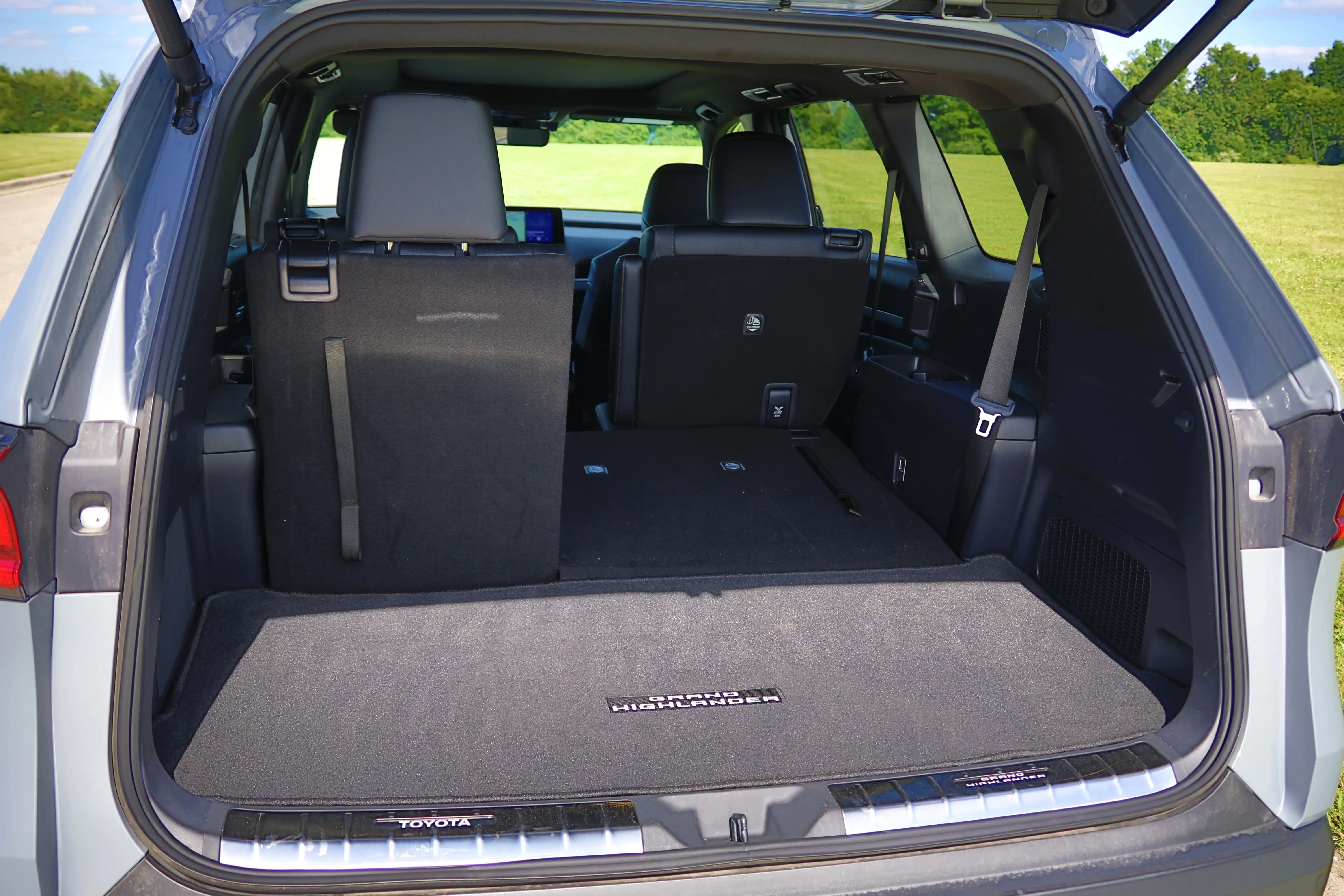
🧳 Cargo: Cargo: The Telluride Hybrid has 10.2 fewer cubic feet of space with the third row folded down and 9.2 fewer with all rows folded down compared to the Grand Highlander Hybrid
💰MSRP: The Telluride Hybrid starts at $48,035 MSRP, while the Grand Highlander Hybrid starts lower at $47,205 MSRP
Two Hybrids, Two Very Different Priorities
The 2026 and 2027 model years are shaping up to be an exciting time for green three-row SUVs, and Toyota and Kia are two of the automakers leading the charge. Kia just launched a hybrid variant of the Telluride for the first time, complete with a full redesign.
Toyota hasn't released 2027 specs for the Grand Highlander yet, but here’s what we know so far: The Highlander EV will be the only short-wheelbase Highlander, and it'll be all-electric. The hybrid variant continues on in the long-wheelbase Grand Highlander, and Toyota is discontinuing all ICE gas-only Highlanders. In short, if you're going with Toyota, you have the option of the Grand Highlander Hybrid or the all-electric Highlander EV.
Toyota’s upcoming electric Highlander introduces a separate three-row option with up to 320 miles of estimated range, so see what Toyota has announced for the 2027 Highlander EV ➜
In this comparison, we’re taking a closer look at Toyota’s long-wheelbase Grand Highlander Hybrid and the 2027 Kia Telluride.
Exterior Design and Dimensions
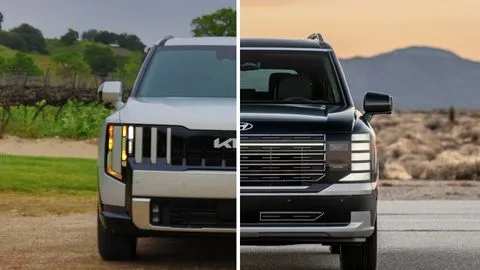
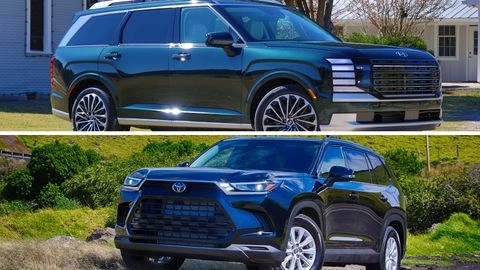
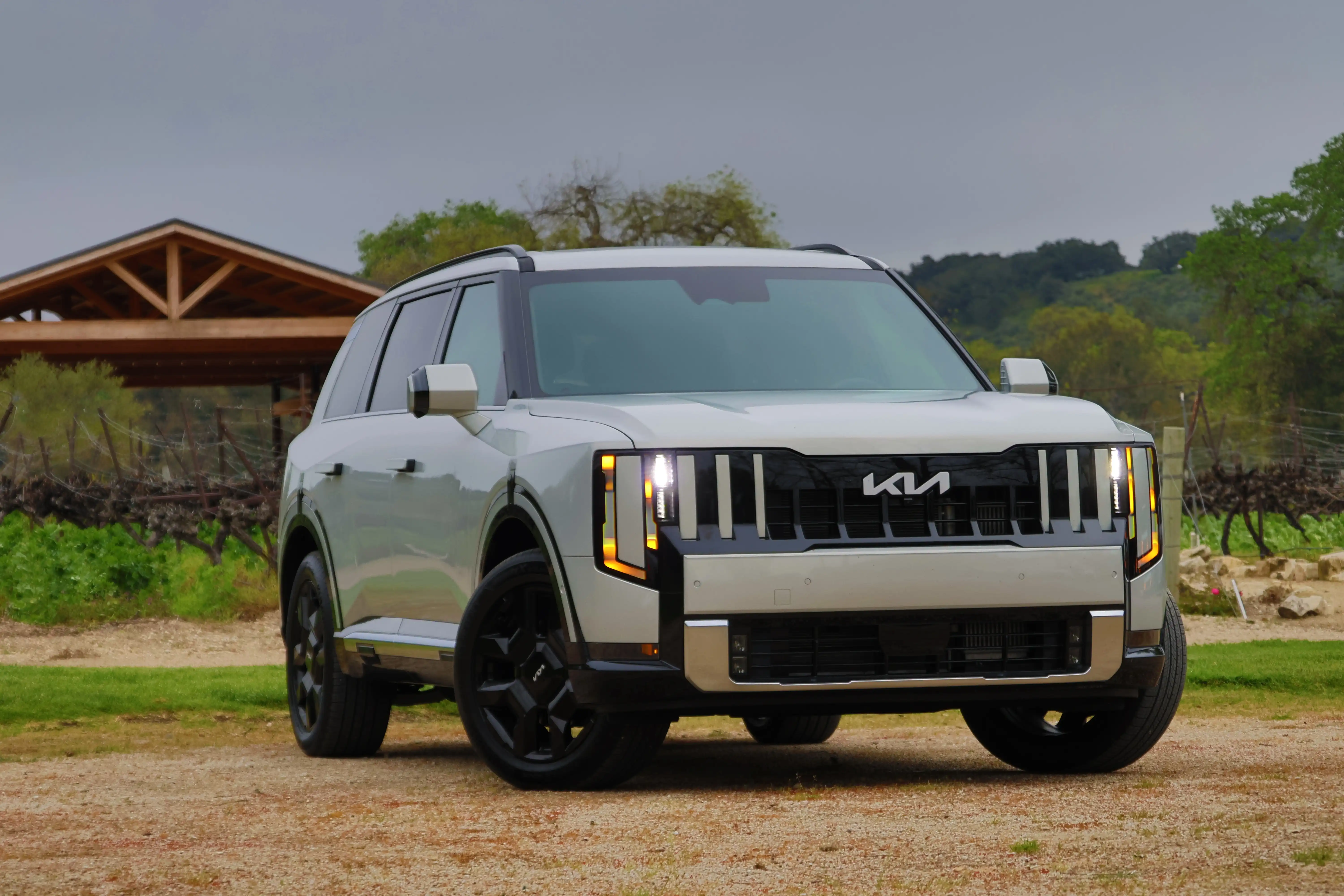
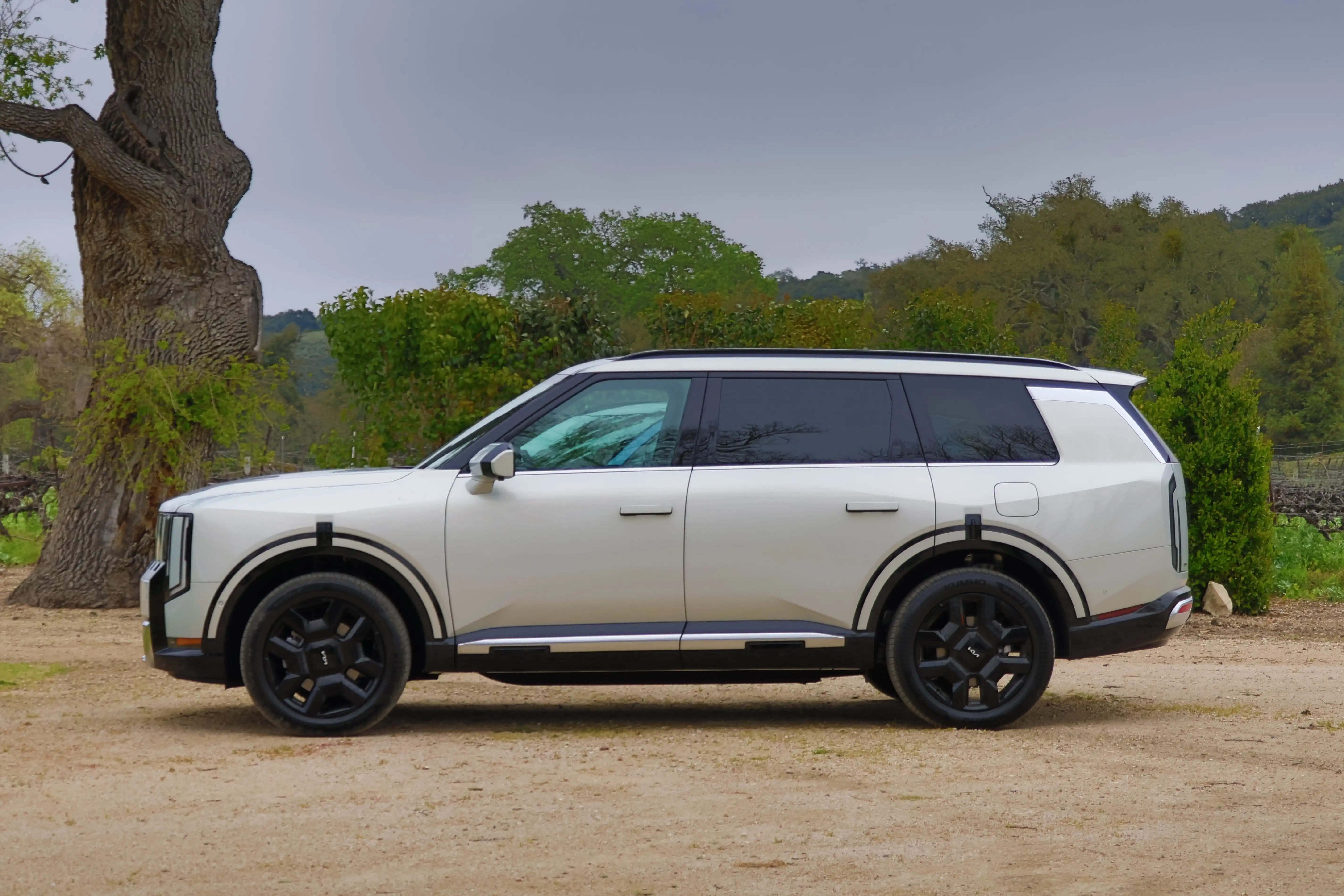
On the outside, these two SUVs couldn’t be more different. The Telluride takes on boxier styling, with vertical headlamps, a flat hood, and a large, high-gloss black grille. Down the side, it features a sloping roofline and flush door handles. Overall, the Telluride draws more styling inspiration from a Land Rover than from, well, a Kia.
The Grand Highlander, on the other hand, is unmistakably Toyota. It has a more rounded body, with a sculpted hood, a hammerhead front grille, and horizontal LED headlamps. The Grand Highlander debuted for the 2024 model year, and the design hasn’t been updated since. It’s a more conservative look than the new Telluride, but that helps it hold up well without feeling dated. The Grand Highlander is about 2 inches longer and taller than the Telluride, and it sits slightly higher off the ground.
.webp)
Interior Space and Tech
On the inside, both vehicles feature a power-adjustable driver’s seat, tri-zone climate controls, a 12.3-inch touchscreen, wireless Apple CarPlay and Android Auto, and seven USB-C ports. The Telluride gets SynTex seat trim, heated and ventilated front seats, a sunroof, a power liftgate, a 5-inch climate display, and a dual wireless phone charger. Unfortunately, that climate display sits between the infotainment and instrument cluster screens, where it's almost entirely blocked by the steering wheel. The Toyota gets fabric upholstery and a 7-inch digital gauge cluster.
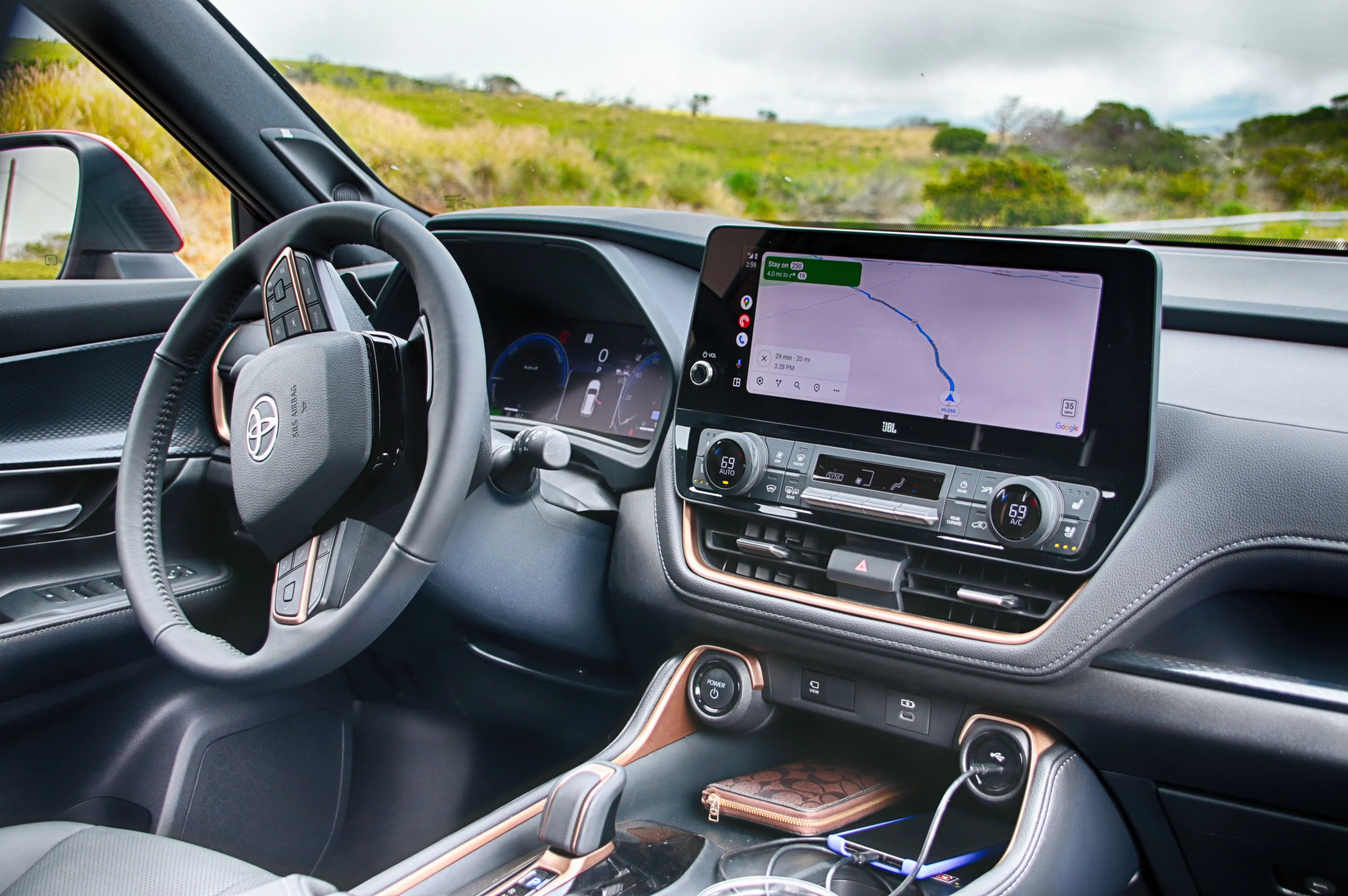
The Telluride can be upgraded with heated and ventilated second-row seats, heated third-row seats, a heated steering wheel, driver’s seat memory, dual sunroofs, Digital Key 2.0, a 29.6-inch panoramic display, and a 14-speaker Meridian audio system. The Toyota’s upgrade list isn't quite as extensive, but it can be had with leather upholstery, heated and ventilated front and second-row seats, driver’s seat memory, a panoramic roof, wireless charging, a 12.3-inch digital gauge cluster, and an 11-speaker JBL audio system.
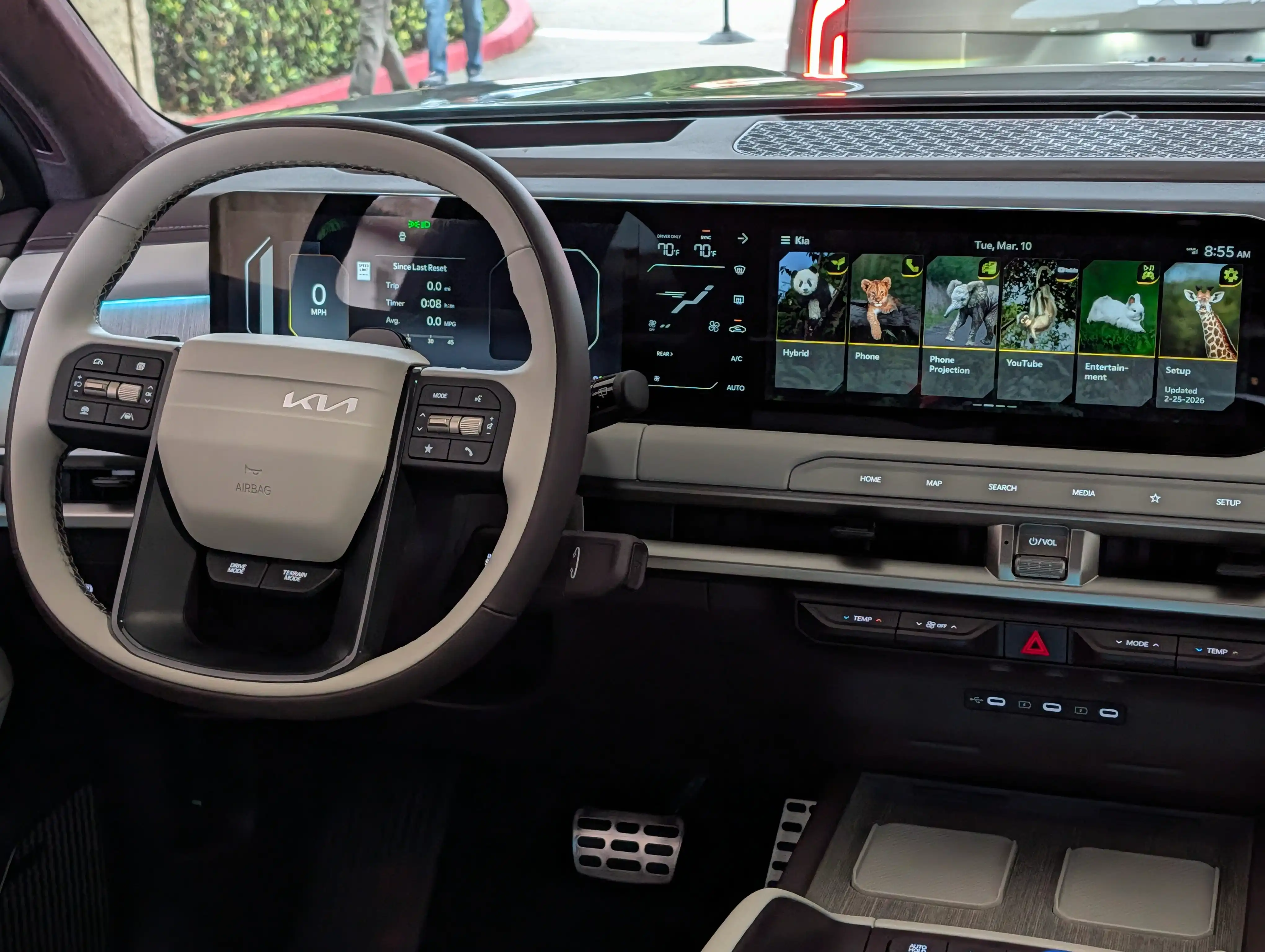
Both vehicles offer plenty of room for drivers and passengers alike. The Telluride has about an inch more legroom in the second row, while the Grand Highlander has an inch more in the third row. When it comes to cargo, both vehicles have more than 20 cubic feet of space behind the third row. The Grand Highlander has roughly 10 more cubic feet of space with both the third row folded and with both rows folded. Both seat seven or eight, depending on whether you opt for captain’s chairs or a bench in the second row.
These two SUVs prioritize space, efficiency, and comfort differently, so compare more family-focused hybrid SUVs before narrowing the field ➜
Both automakers include a well-equipped standard safety suite. Each feature adaptive cruise control, automatic emergency braking, lane-keeping assist and lane departure alerts, rear cross-traffic alert, automatic high beams, and blind-spot monitoring. The Grand Highlander also benefits from a road sign assist, proactive driving assist, and safe exit alert. The Telluride counters with safe exit assist, which locks the left rear door to keep it from opening when a sensor detects a vehicle approaching in the adjacent lane. The Telluride also has front and rear parking sensors, rear occupant alert with radar sensors, and highway driving assist.
On the Kia, upper trims have rear parking collision avoidance assist, side parking sensors, a blind-spot monitor, a 12.0-inch head-up display, a digital rearview mirror, Remote Smart Parking Assist, and a 360-degree surround-view monitor. Upper trims of the Highlander offer a 10-inch head-up display, a digital rearview mirror, traffic jam assist, a panoramic view monitor, and front and rear parking assist with automatic braking.
Powertrain and Fuel Economy
The Kia Telluride Hybrid is powered by a turbocharged 2.5-liter four-cylinder engine and electric motors, with a six-speed automatic transmission sending power to either the front or all four wheels. The Toyota is powered by a naturally aspirated 2.5-liter four-cylinder engine or a turbocharged 2.4-liter four-cylinder engine with electric motors and standard all-wheel drive in both configurations. The standard hybrid gets an electronically-controlled continuously variable transmission (eCVT) Hybrid MAX gets a six-speed automatic.
The Telluride Hybrid delivers up to an EPA-estimated 35 mpg combined. The AWD variant dips to 31 mpg combined. The Toyota’s standard hybrid gets up to 34 mpg combined, while the Hybrid MAX gets 27 mpg combined.
If you plan to tow, the standard Kia offers more towing capacity than the Grand Highlander, with up to 4,500 pounds of capacity to the Toyota’s 3,500. However, step up to the Toyota Grand Highlander Hybrid MAX, and towing capacity climbs to 5,000 pounds.
Price
Pricewise, the Toyota Grand Highlander Hybrid starts lower, at $47,205, with AWD as standard. The Kia’s starting MSRP is $48,035, and once you add AWD, the Kia runs more than $2,800 more than the Toyota. That said, you'd need to step up to a higher trim level on the Grand Highlander to match the Kia's standard features, such as synthetic leather upholstery and heated and ventilated front seats.
What's It Like to Drive?
The Telluride and Grand Highlander are both big, roomy family haulers that are pleasant to drive. The third row in both can easily accommodate average-sized adults, something the regular Highlander or the Kia Sorento can only dream of. There's also enough room behind the third row for bags or all the gear that comes with kids. Ride quality and handling are comparable between the two, though neither is a sports car in that respect.
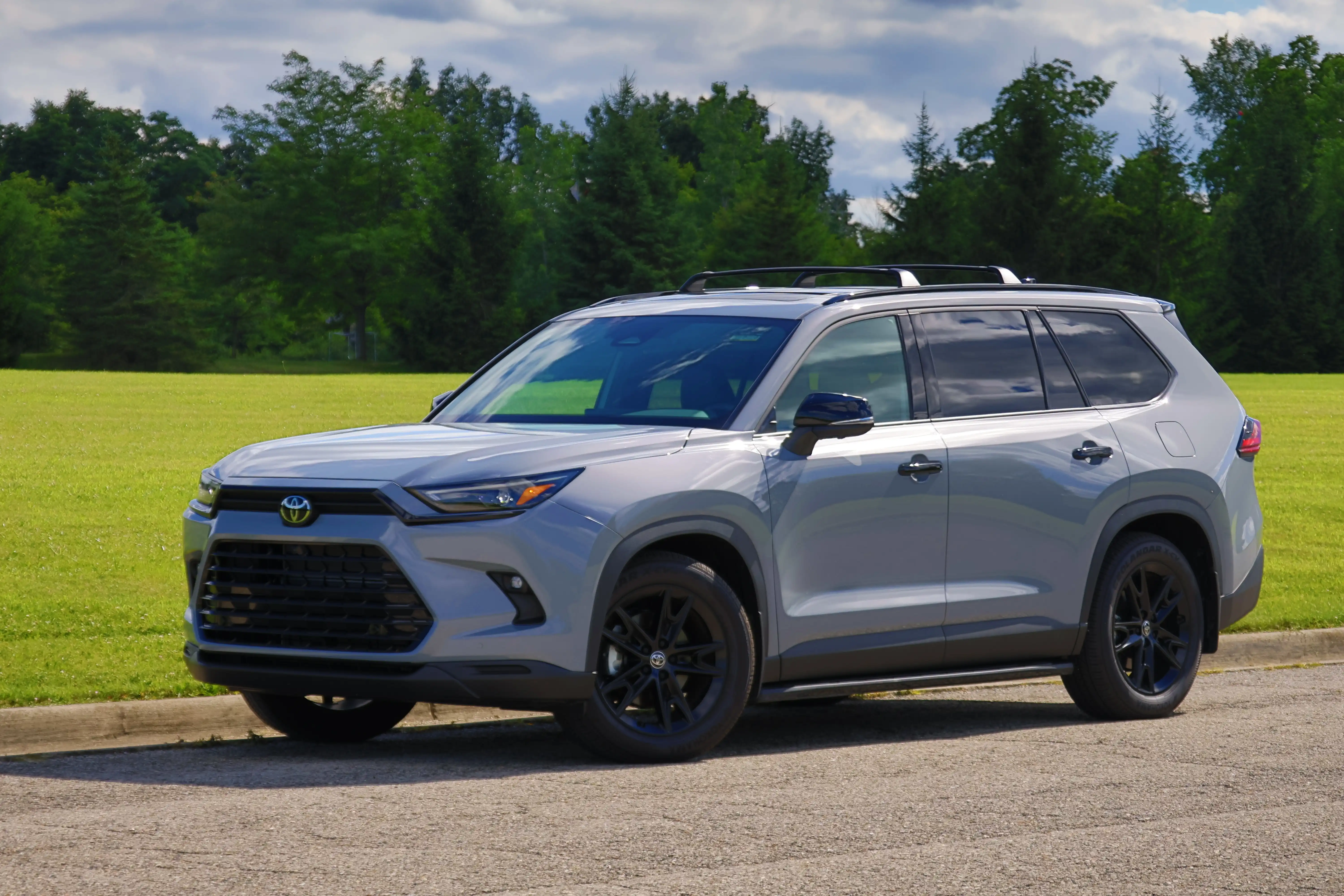
The standard Toyota hybrid system is the most efficient of the bunch, but it's the least pleasing to drive. Performance is adequate for merging onto highways or passing, but you'll hear the engine working hard thanks to the e-CVT setup. The Hybrid MAX version uses a more conventional transmission, so the engine is quieter and acceleration is better, though that comes at a cost in fuel efficiency. The Kia's next-generation hybrid system splits the difference nicely: efficiency close to the standard Toyota hybrid, performance closer to the Hybrid MAX, and a pleasant, quiet driving experience.
For a deeper look at the Kia’s ride, powertrain, cabin, and real-world fuel economy, read the complete 2027 Telluride Hybrid first drive ➜
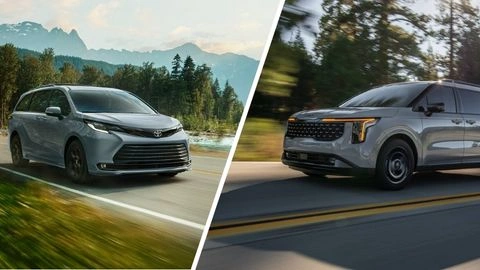
As good as both of these vehicles are, if you're hauling a family, especially one with younger kids, I'd point you toward the corresponding minivans from these two brands instead: the Toyota Sienna and Kia Carnival (Kia prefers you call it a multi-purpose vehicle, or MPV). Both offer hybrid powertrains (the Sienna is hybrid-only), and the minivan shape provides several advantages. The floor is lower, so it’s less of a reach to strap the young ones into an infant, child, or booster seat. Sliding doors mean less risk of a kid opening the door and dinging the car parked next to you. They also have deeper cargo space behind the third row, with seats that fold flat into the floor. Minivans might not be fashionable these days, but for hauling people, they're more functional than any SUV.
Analyst's Perspective (Which One's Right for You)
If you're not taking my minivan advice, which will probably be most readers, you can't really go wrong with either of these SUVs. Shoppers who prefer more conservative styling or a slightly lower starting MSRP will likely lean toward the Toyota.
Personally, I prefer the Kia's more interesting design, and I really appreciate the driving experience of the new-generation hybrid system. It provides an outstanding balance of fuel efficiency, performance, and refinement, albeit at a slightly higher price point.
More Family Hybrids Beyond This Comparison
2026 Hyundai Palisade Hybrid Review
The Telluride’s platform sibling offers a similarly powerful hybrid system with a more restrained design and a premium family-focused cabin.
2026 Kia Carnival Hybrid Review: Minivan Marvel Green
The Carnival trades SUV styling for sliding doors, easier child-seat access, and more practical cargo space while retaining hybrid efficiency and upscale features.
2026 Lexus TX 550h+ PHEV Review
Lexus adds electric-only driving, 5,000-pound towing, and a more luxurious cabin to the three-row electrified formula.