
Fast Facts | 2027 Toyota Highlander EV Reveal
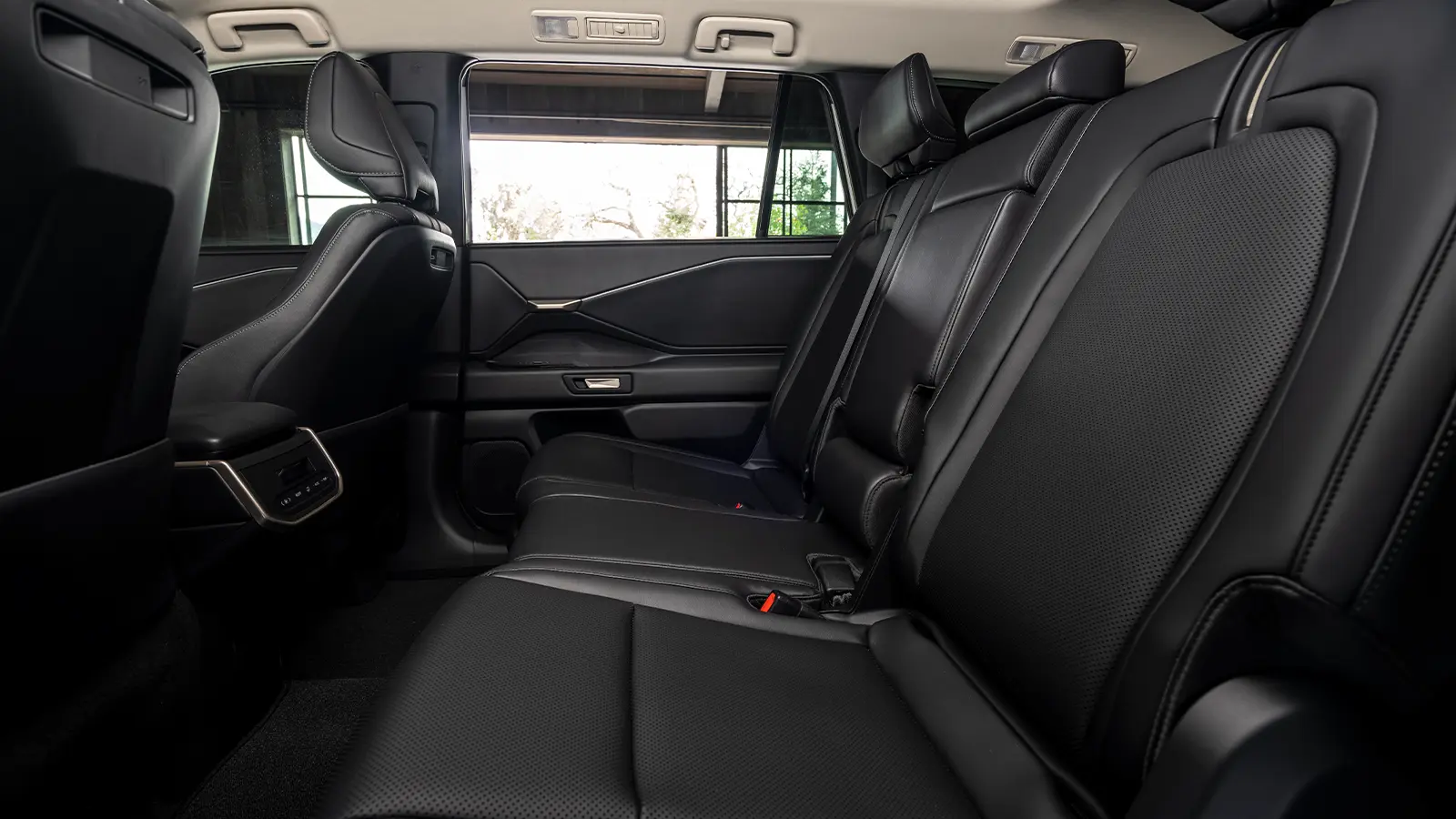
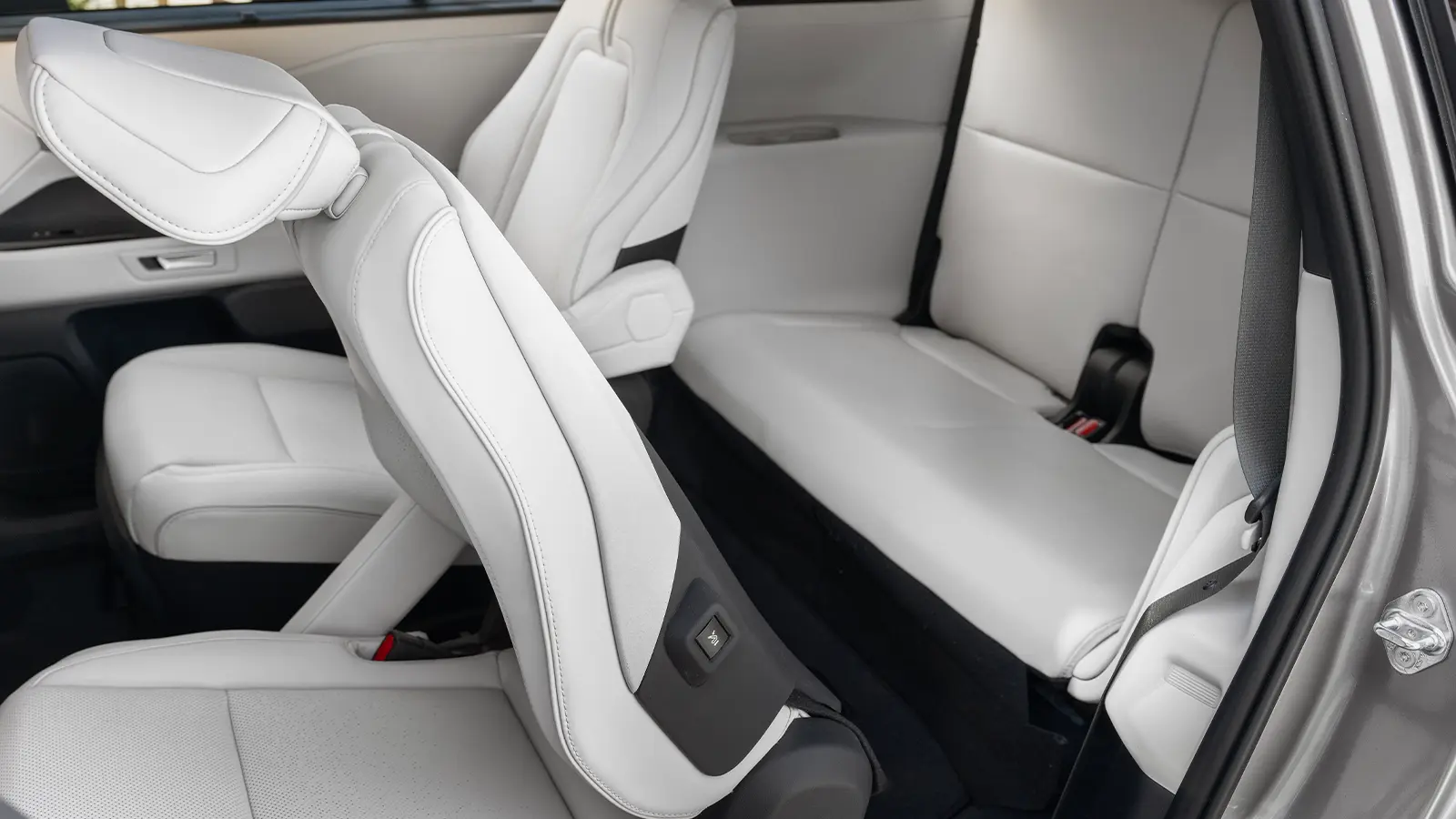
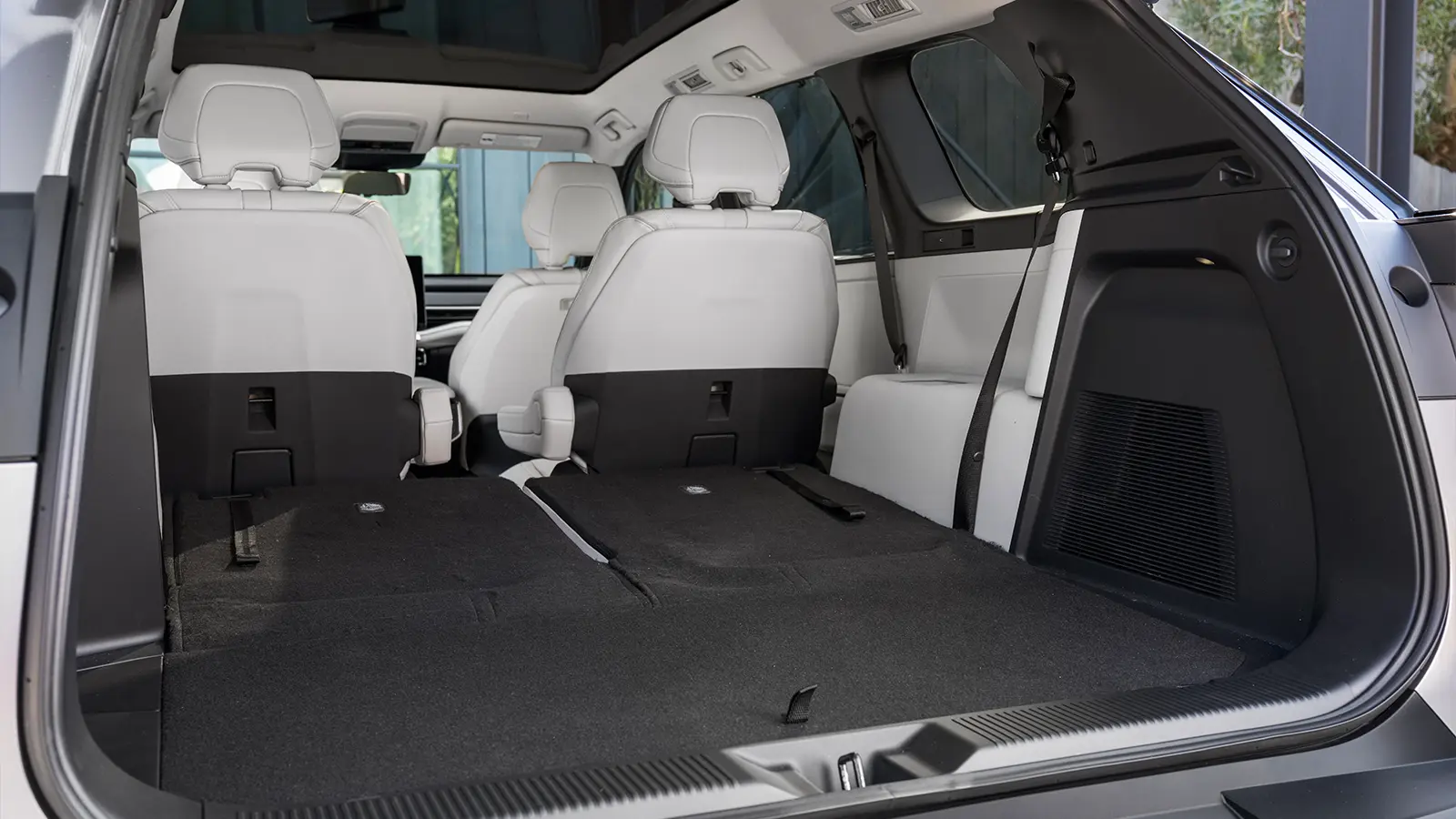
🛋️ Seating: Standard captain’s chairs (6-seat), optional bench for 7 passengers
🧠 Safety: Toyota Safety Sense 4.0 standard, with Traffic Jam Assist on Limited
🧲 Power: 221 hp FWD or 338 hp AWD configurations
🛣️ Range: Estimated 270–320 miles depending on trim and battery
🔌 Charging: NACS/J3400 port with a claimed 10–80% in about 30 minutes
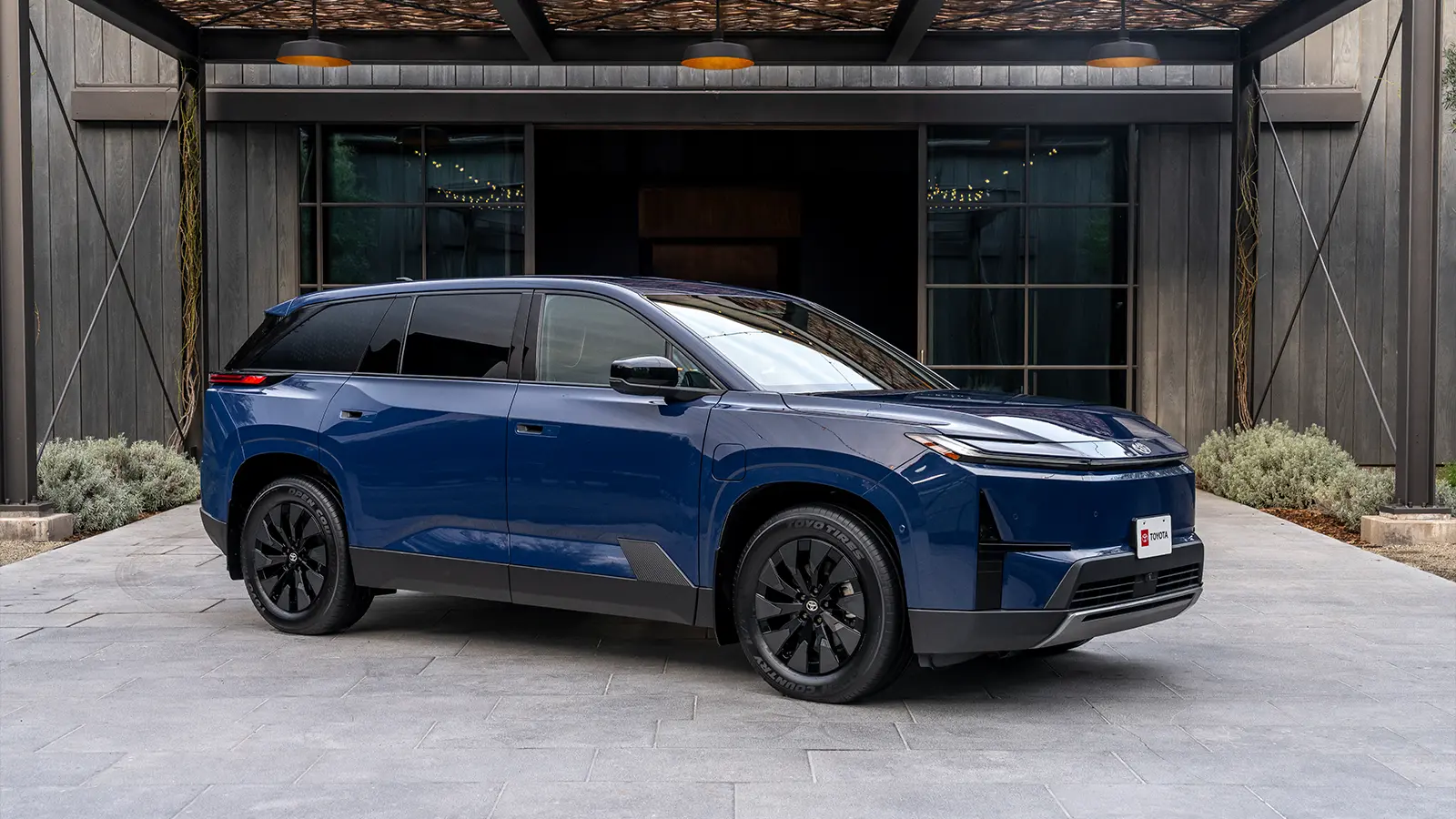
The 3-Row Toyota EV Is Here: 2027 Highlander Reveal
In November 2021, just before the Los Angeles Auto Show, Toyota unveiled its first purpose-built battery electric vehicle (BEV), the bZ4X which went on sale in the spring of 2022. A few weeks later, Toyota held a surprise event in Japan where chairman, Akio Toyoda again showed the bZ4X along with 14 other BEV concepts. Over the past four years, several of those concepts have evolved into full-blown production models that are either on-sale or will be soon including the bZ3 (a China only compact sedan), C-HR and the Lexus RZ. Among those 15 vehicles was the bZ Large SUV concept, a 3-row crossover that has now been transformed into the 2027 Highlander.
It’s no secret that among major automakers, Toyota hasn’t been the biggest fan of battery electric vehicles (BEV). As the pioneer in modern hybrid powertrains, Toyota makes a strong case that hybridizing everything can have a bigger environmental impact than a single digit market share for BEVs. Despite that, Toyota is building BEVs and while the original bZ4X was decidedly underwhelming, the world’s largest automaker listened to the criticism and made major updates just two years into its lifecycle that have made it much more competitive.
In February 2024, Toyota announced plans to invest $1.3 billion in its Georgetown, Kentucky assembly plant in order to produce 3-row electric SUVs and the new Highlander is the first of those vehicles. There is also a Lexus version on the way that we haven’t seen yet, but it will likely be similar in size.
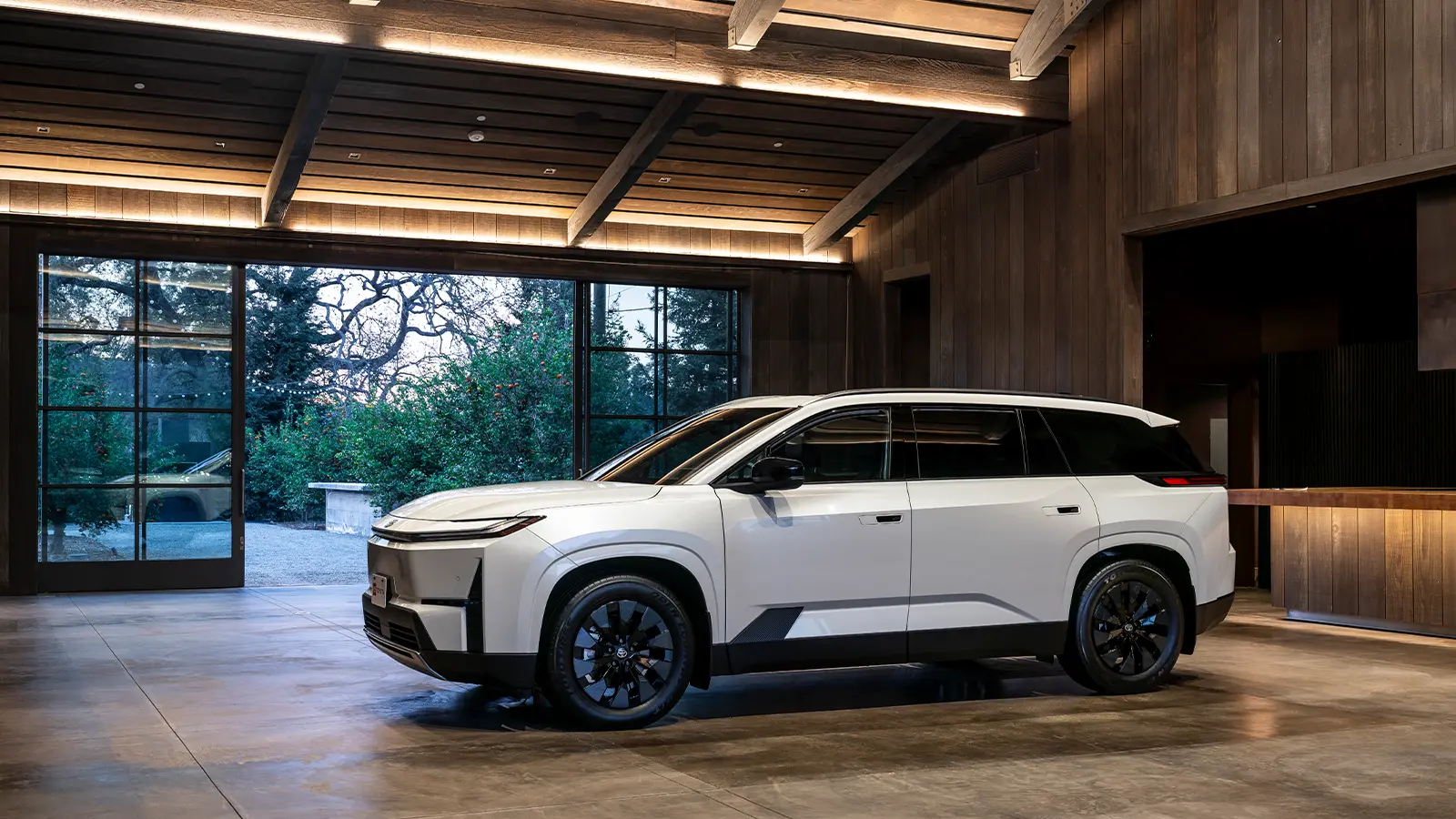
The Highlander has long been one of Toyota’s most popular models in the US market, selling over 284,000 units as recently as 2021. But while the old Highlander had a third-row seat, it could charitably be described as snug. Once the larger Grand Highlander that offered a third-row capable of accommodating adults arrived in 2023, sales of the standard model dropped off significantly, with just 62,616 units sold last year compared to 146,172 examples of the Grand Highlander. Thus, it makes sense to pivot the Highlander nameplate at this point and apply it to a 3-row BEV.
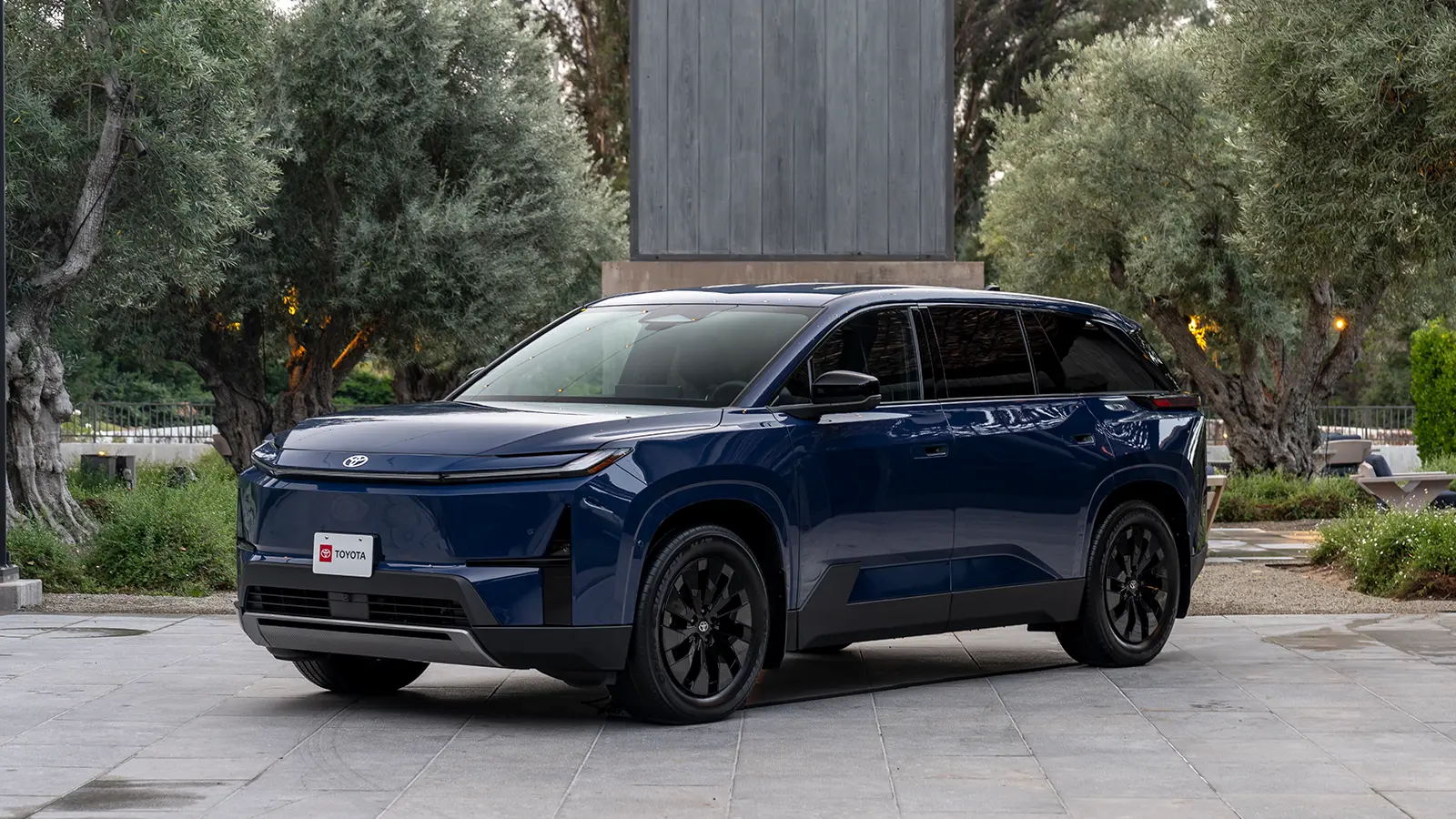
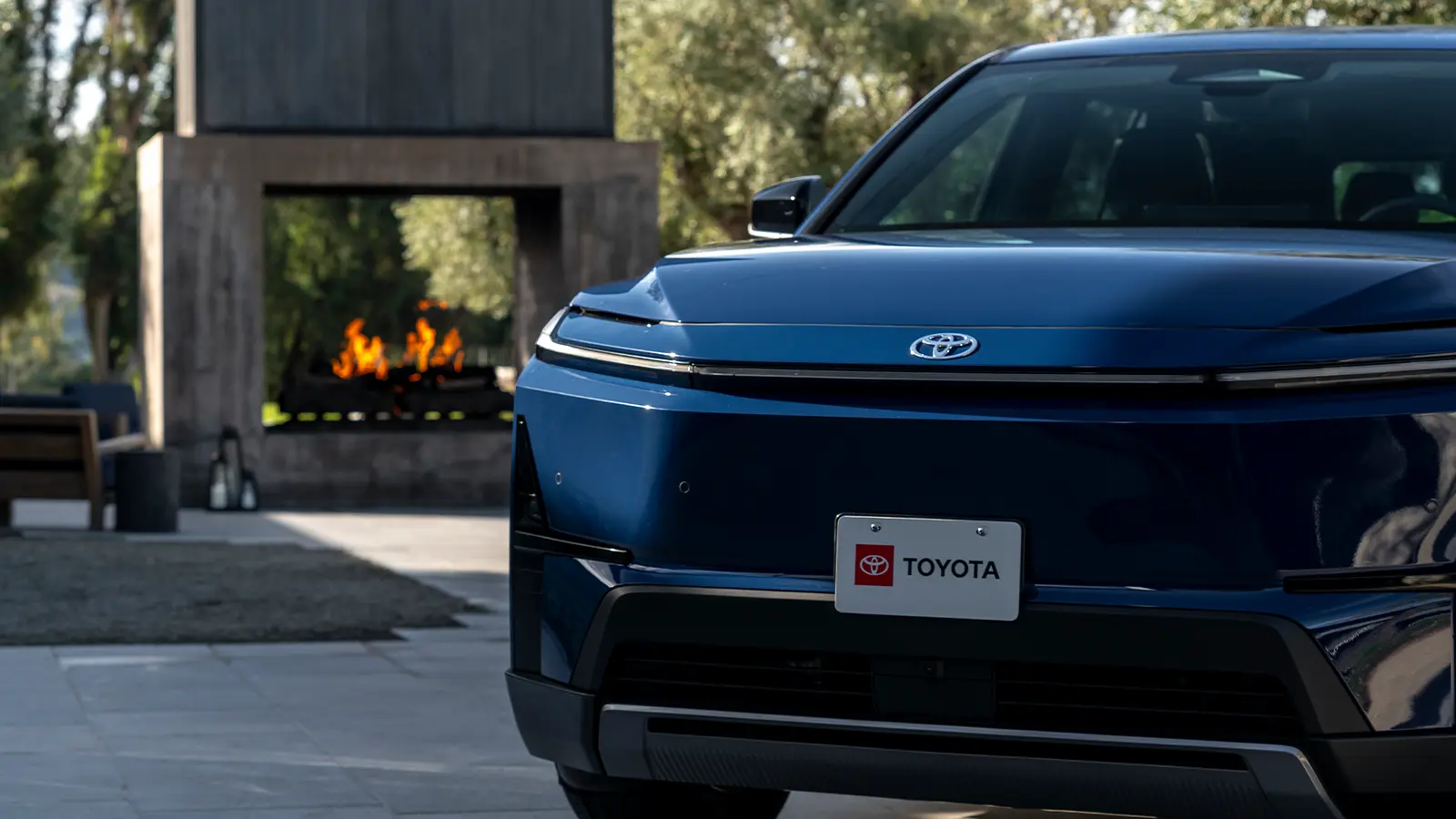
The new Highlander’s design hasn’t deviated much from the concept and abandons the curvy, almost voluptuous look of the last generation. Like other recent Toyota designs, this one has a more modern look with sharp, mostly horizontal creases in the sheetmetal. Unlike the original look of the bZ4X, the Highlander is more restrained and there’s nothing too controversial here.
At 198.8-inches, the 2027 Highlander is almost 5-inches longer than the prior generation, and just 2.6-inches shorter than the Grand Highlander. Toyota hasn’t provided interior passenger dimensions yet, but the third-row should be roomier than the old model albeit still a bit tighter than the Grand Highlander. The electric Highlander is 2.3-inches wider and the roofline is 0.8-inches lower. The biggest change is the wheelbase which is now 7.8-inches longer than before.
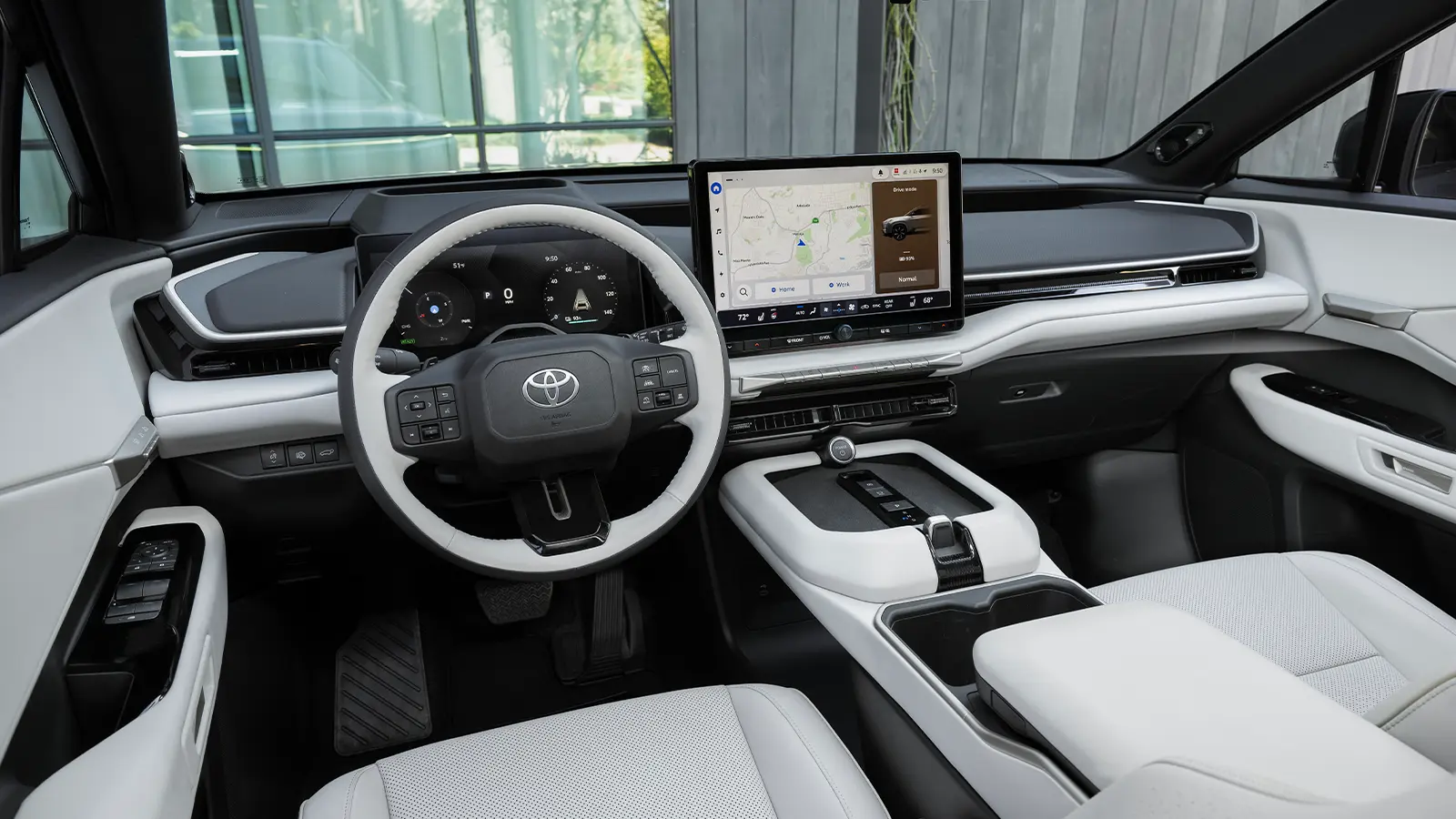
The Living Space
Inside the new Highlander can accommodate up to seven passengers with the optional second-row bench seat while a six-configuration with captain’s chairs is standard. Heated front seats and steering wheel are standard on the XLE while the Limited adds ventilated front seats and heated second row seats. The instrument cluster is a 12.3-inch display while a 14-inch touchscreen supports the infotainment in the center. The infotainment software is the same latest generation Toyota Multimedia that recently launched on the new Rav4 built on Toyota’s Arene software platform. It’s much improved and now offers a multi-pane layout so that navigation and media controls or other information are displayed on the screen at the same time. There is also support for wireless Apple CarPlay and Android Auto.
As it does pretty much whenever Toyota launches a new product, the Highlander has the Toyota Safety Sense 4.0 driver assist suite. That includes a pre-collision system with pedestrian detection, adaptive cruise control, lane keeping assist, road sign assist, auto high beams, blindspot monitoring with cross traffic alert and proactive driving assist. The Limited trim also adds Traffic Jam Assist that enables hands-off, eyes-on operation at up to 25 mph when driving in heavy traffic and front cross traffic alert.
Under the body
The Highlander is using a mix of hardware from the upgraded 2026 bZ and some new bits for propulsion. It will be available in two trims and four configurations with either one or two motors and two battery capacities.
- XLE front-wheel-drive: single front drive motor with 221-hp and 198 lb-ft of torque and a 77-kWh battery pack with an estimated 287-mile range
- XLE all-wheel drive: dual motors for 338-hp and 323 lb-ft of torque and the same 77-kWh battery for an estimated 270-miles of range
- XLE all-wheel drive extended range: the same 338-hp, 323 lb-ft of torque, but a 95.8-kWh battery delivering an estimated 320-miles of range
- Limited all-wheel drive: the same dual motors, 95.8-kWh battery and an estimated 320-mile range
Those power numbers aren’t going to help the Highlander challenge Tesla performance models at a drag strip, but the truth is that’s not what Highlander customers are interested in. The instant response of electric motors should make this Highlander feel quicker off the line than the prior generation, especially the hybrid and the families that are likely to buy one should be more than content.
The battery modules are being assembled at Toyota’s recently opened battery plant in Liberty, North Carolina with new pouch cells supplied by LG Energy Solution using a similar nickel-manganese-cobalt-aluminum cathode chemistry to GM’s Ultium cells.
Like the other new BEVs in the Toyota and Lexus lineup, the Highlander is equipped with a NACS/J3400 charging port that will enable charging at Tesla Superchargers and an increasing number of chargers from other networks without an adapter. Toyota hasn’t yet provided other details on charging power or the electrical voltage, but the Highlander is claimed to charge from 10% to 80% in about 30 minutes which implies a 400V system and peak charging of 150 to 175-kW. Toyota has included a battery heater to pre-condition the battery to the optimal temperature for DC fast charging on road trips.
Toyota as a company may not be the biggest fans of BEVs, but following a shaky start with the original bZ4X, the world’s largest purveyor of hybrids seems to be taking this seriously now. The 2027 Highlander will be the fourth BEV in the lineup with the bZ, bZ Woodland and C-HR and it looks like a serious contender against the Kia EV9, Hyundai Ioniq 9 and VW’s ID Buzz. Production will start this fall with sales starting in late 2026. As usual, Toyota isn’t talking about pricing until closer to the launch date, but we’d expect the XLE FWD to start in the low to mid $50,000 MSRP range with a loaded Limited AWD in the upper 60s, similar to the Hyundai and Kia. It’s unlikely to reach the sales heights of the last generation Highlander any time in the near future, but Grand Highlander has already picked up most of that volume. This vehicle is taking a well loved brand and extending into a new section of the market.
⚡Upcoming EVs and Hybrids to Watch
2026 Kia Sportage Hybrid SX Prestige Review
A look at how Kia continues refining hybrids as buyers weigh EVs, plug-ins, and electrified crossovers
Read More ➜
2027 Volvo EX60 and EX60 Cross Country First Look
Volvo previews its next-generation family EVs with a strong focus on safety, design, and versatility
Read More ➜
2026 Dodge Charger Daytona Muscles Up the EV
Dodge redefines American muscle for the electric era with performance-forward EV engineering
Read More ➜