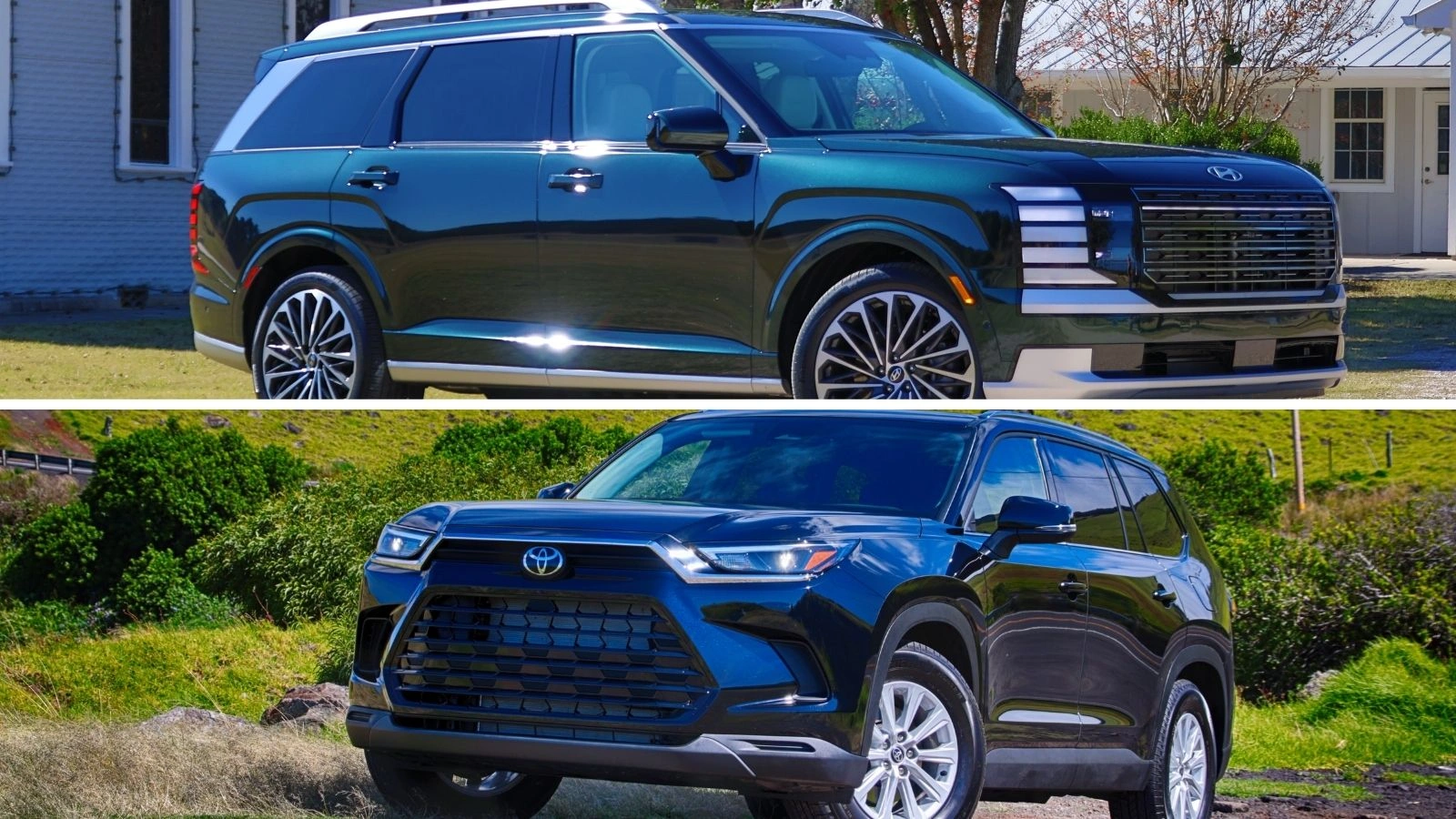

Fast Facts | Hyundai Palisade Hybrid vs. Toyota Grand Highlander Hybrid
Fast Facts | Hyundai Palisade Hybrid vs. Toyota Grand Highlander Hybrid
⚙️Output: The Palisade Hybrid gets 329 horsepower, while the Grand Highlander Hybrid gets 245 horsepower or 362 horsepower in Hybrid MAX form
⛽EPA-Estimated Fuel Economy: The Palisade Hybrid gets up to 34 mpg combined in FWD or 30 mpg in AWD, while the Grand Highlander Hybrid gets 36 mpg combined in standard form or 27 mpg in Hybrid MAX.
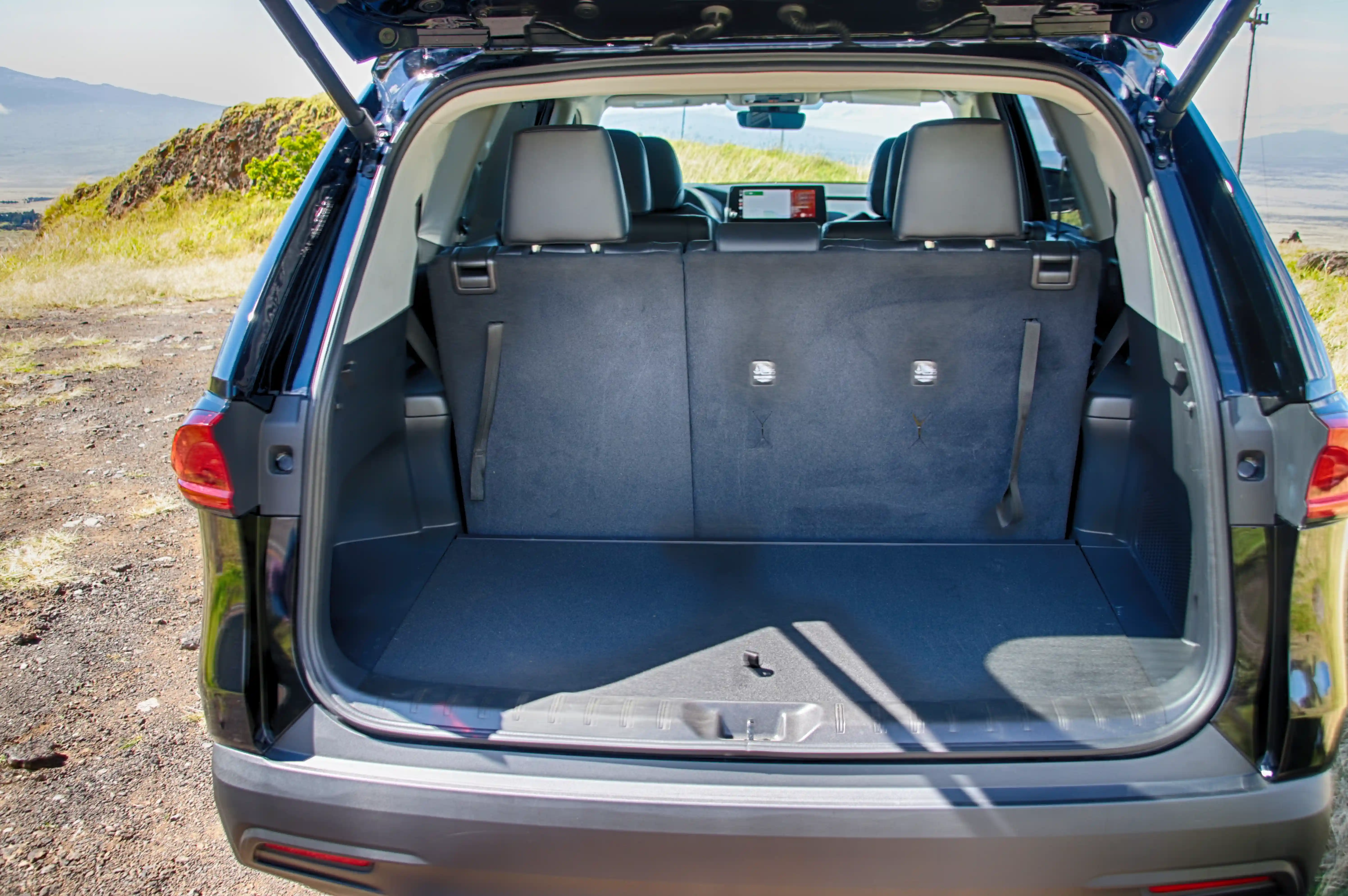
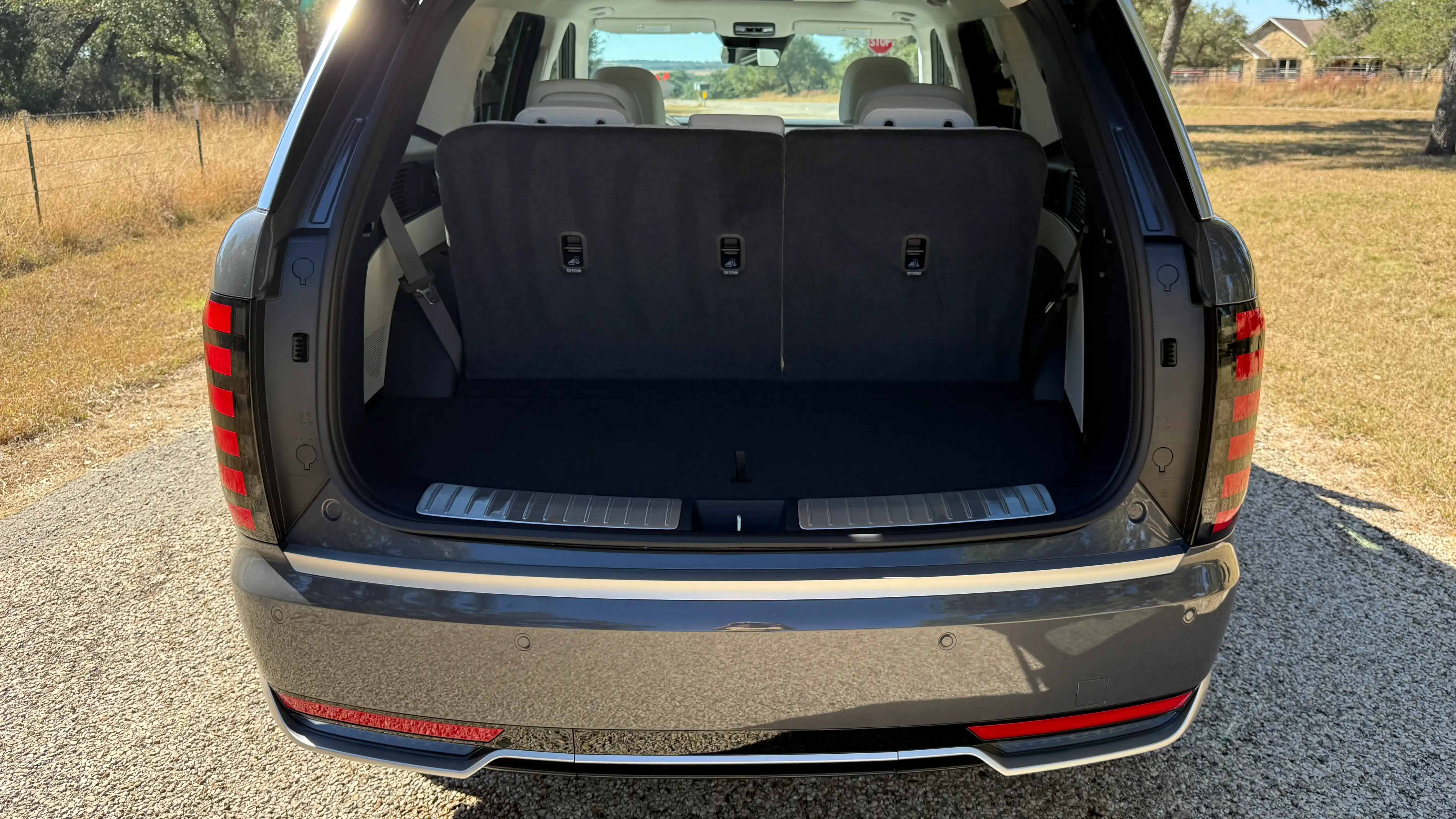
🧳 Cargo: The Palisade Hybrid has 86.7 cu-ft of cargo space behind the front row, while the Grand Highlander Hybrid has 97.5 cu-ft
💰Starting MSRP: The Palisade Hybrid SEL starts at $46,210, while the Grand Highlander Hybrid LE starts at $47,205
Two Family Hybrids With Very Different Strengths
Two of the most popular midsize three-row SUVs are the Toyota Grand Highlander and the Hyundai Palisade. Both are offered with a hybrid powertrain, and both are right-sized, fuel-efficient, and loaded with safety tech. Whether you’re buying your first family hauler, adding a third car seat, or just want more seats for carpooling, these two vehicles are prime targets for your next family vehicle.
Three-row space matters differently when car seats, luggage, and daily family use enter the equation, so compare more efficient vehicles designed around real family needs ➜
Exterior Design and Dimensions
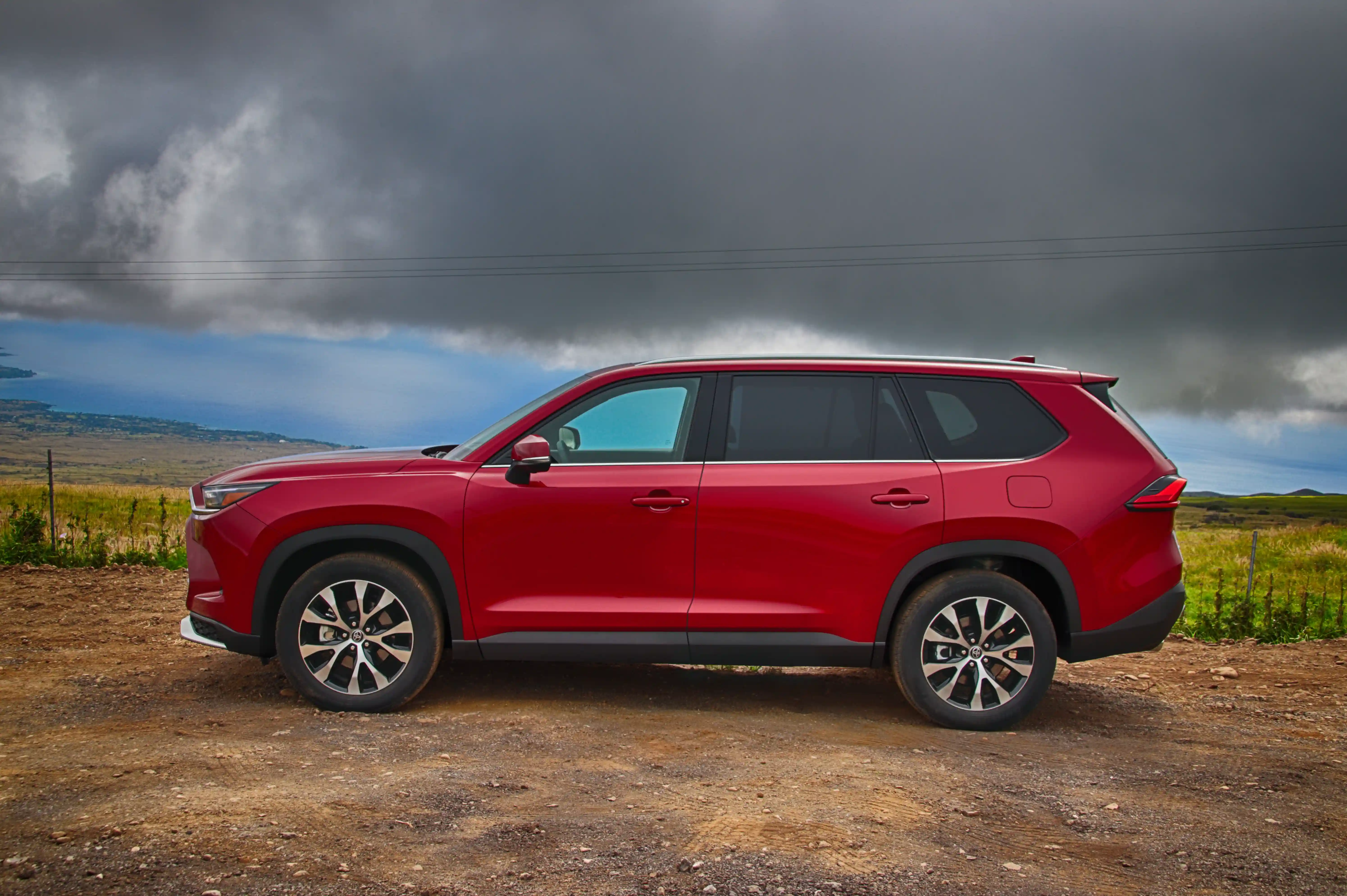
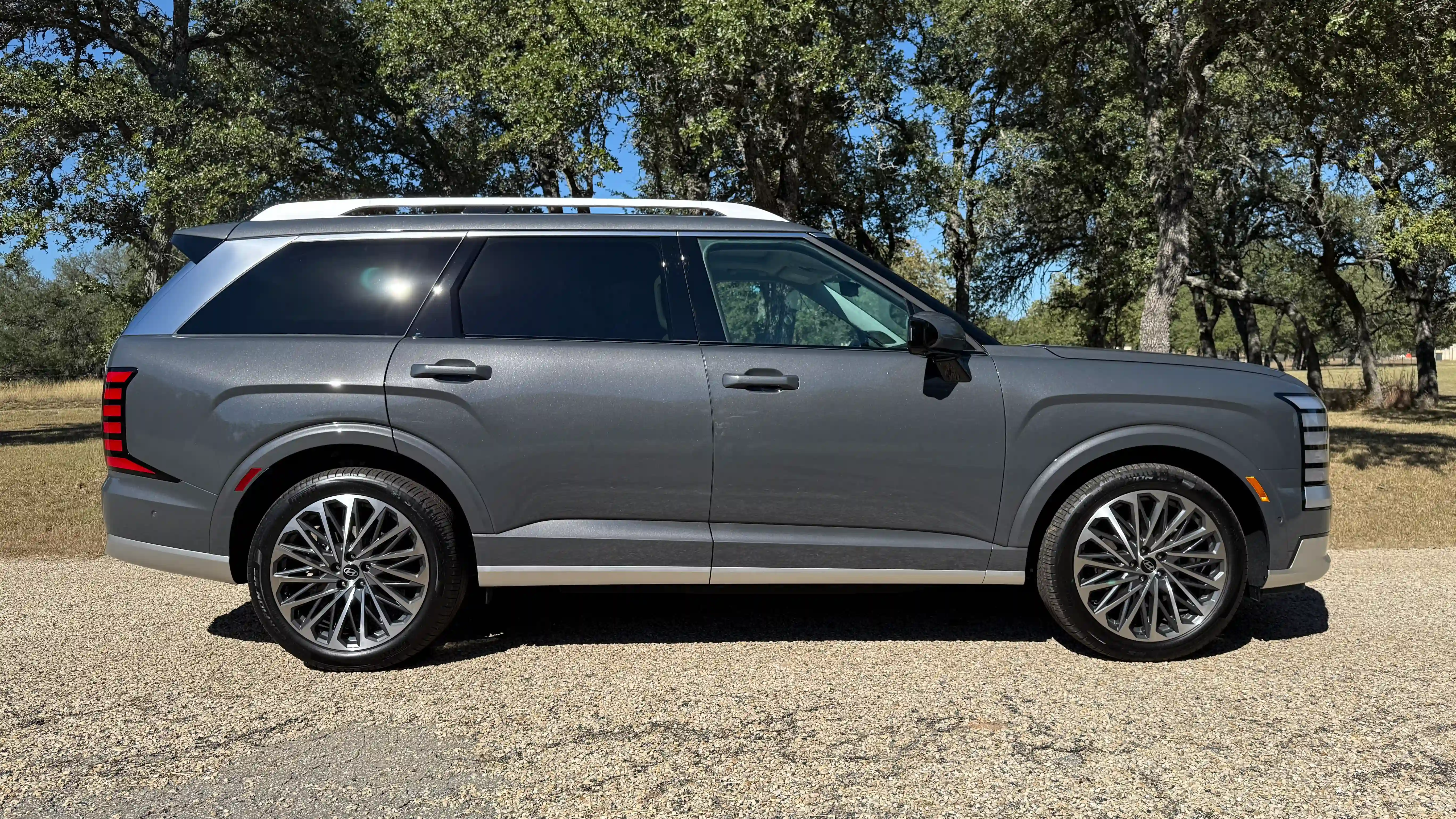
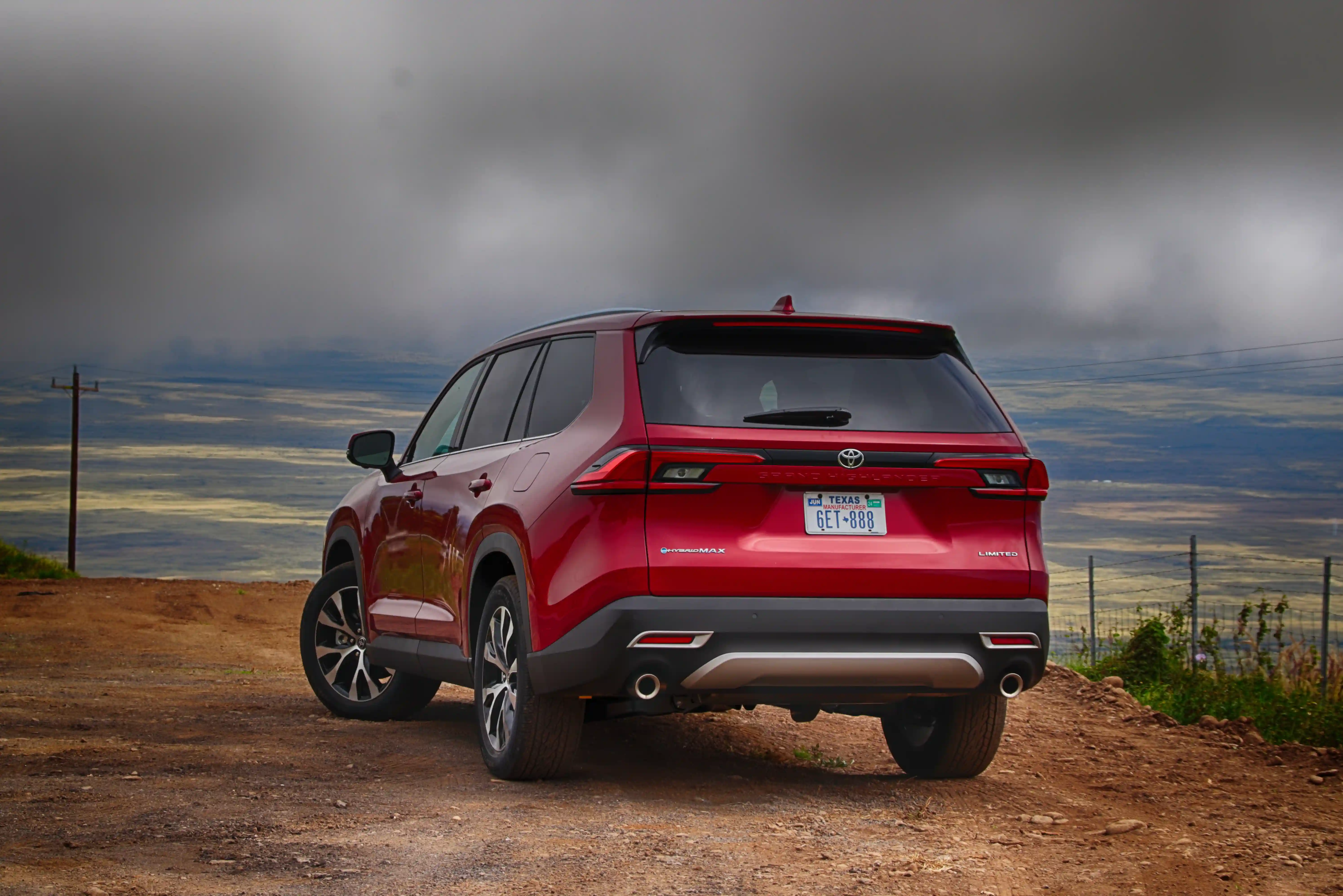
Outside, these two look quite different. Their overall sizes are nearly identical, but their designs sit on opposite ends of the spectrum. The Grand Highlander Hybrid sticks with a more traditional, angular body with a sharply sculpted hood, a broad, open-mouthed grille, and horizontal LED headlamps. The Palisade Hybrid's style goes bolder, with rounded edges on its big-box shape and a unique lighting treatment featuring stacked horizontal bars at the front and rear. The shape of the side glass and the shiny metallic D-pillar give it a distinctly Range Rover-like look, and the total effect feels more upscale.
Interior Space and Tech
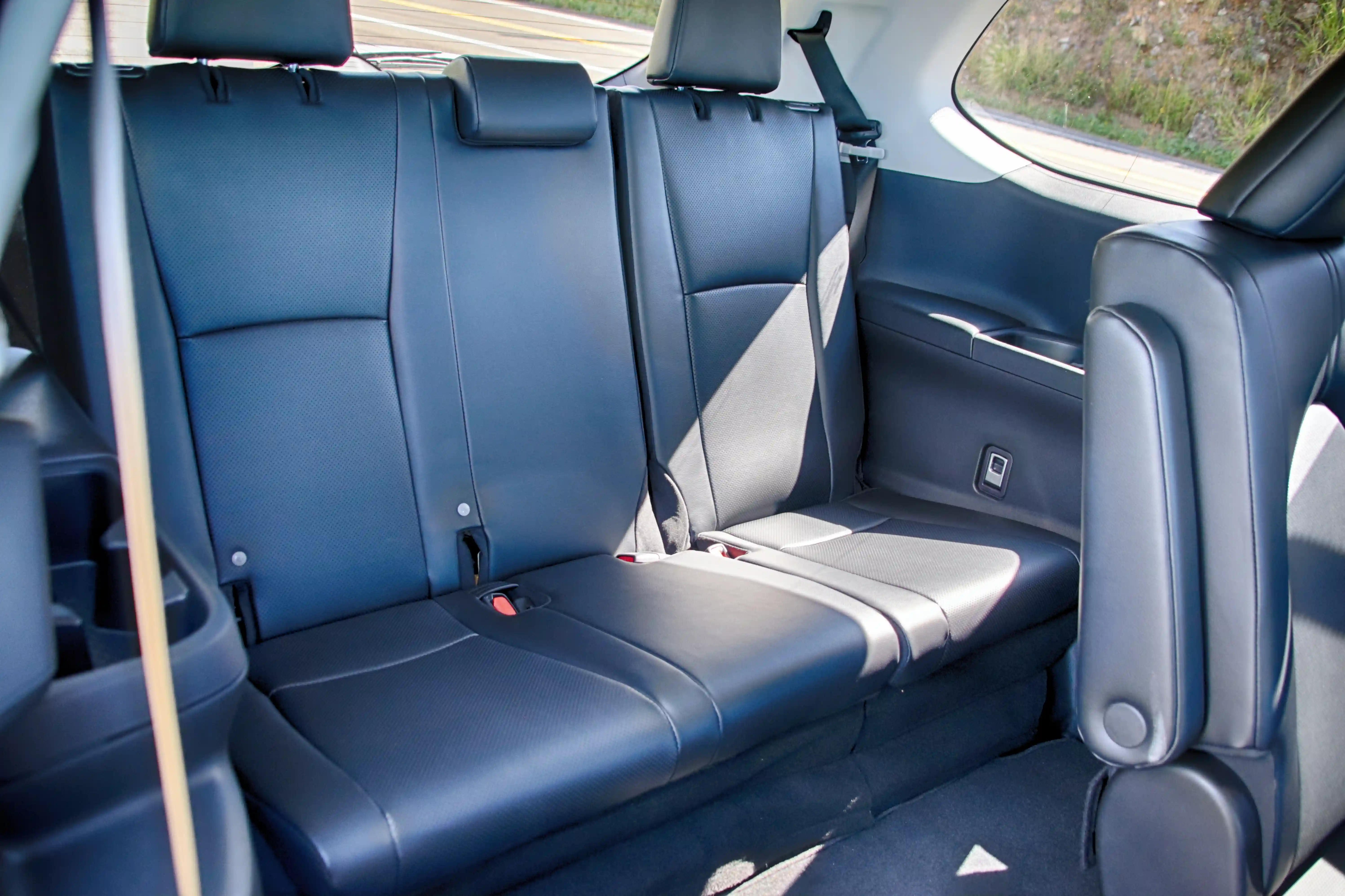
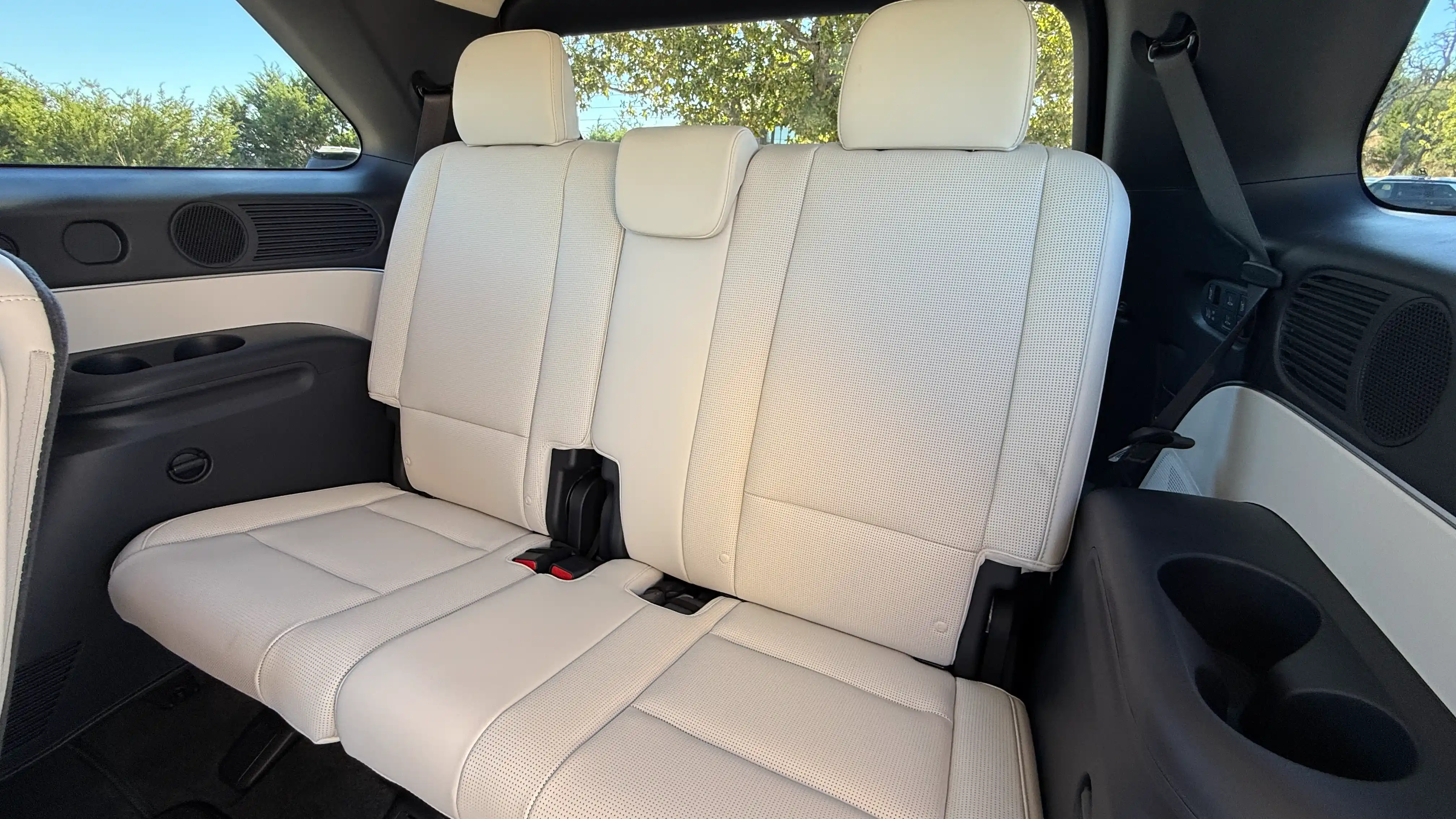
These two hybrid SUVs match on nearly every measurement. The Palisade Hybrid has slightly more second-row legroom, while the Grand Highlander Hybrid has slightly more third-row legroom. The Grand Highlander Hybrid also has a slight edge in cargo space, with a maximum of 97.5 cu-ft compared to the Palisade Hybrid’s 86.7.
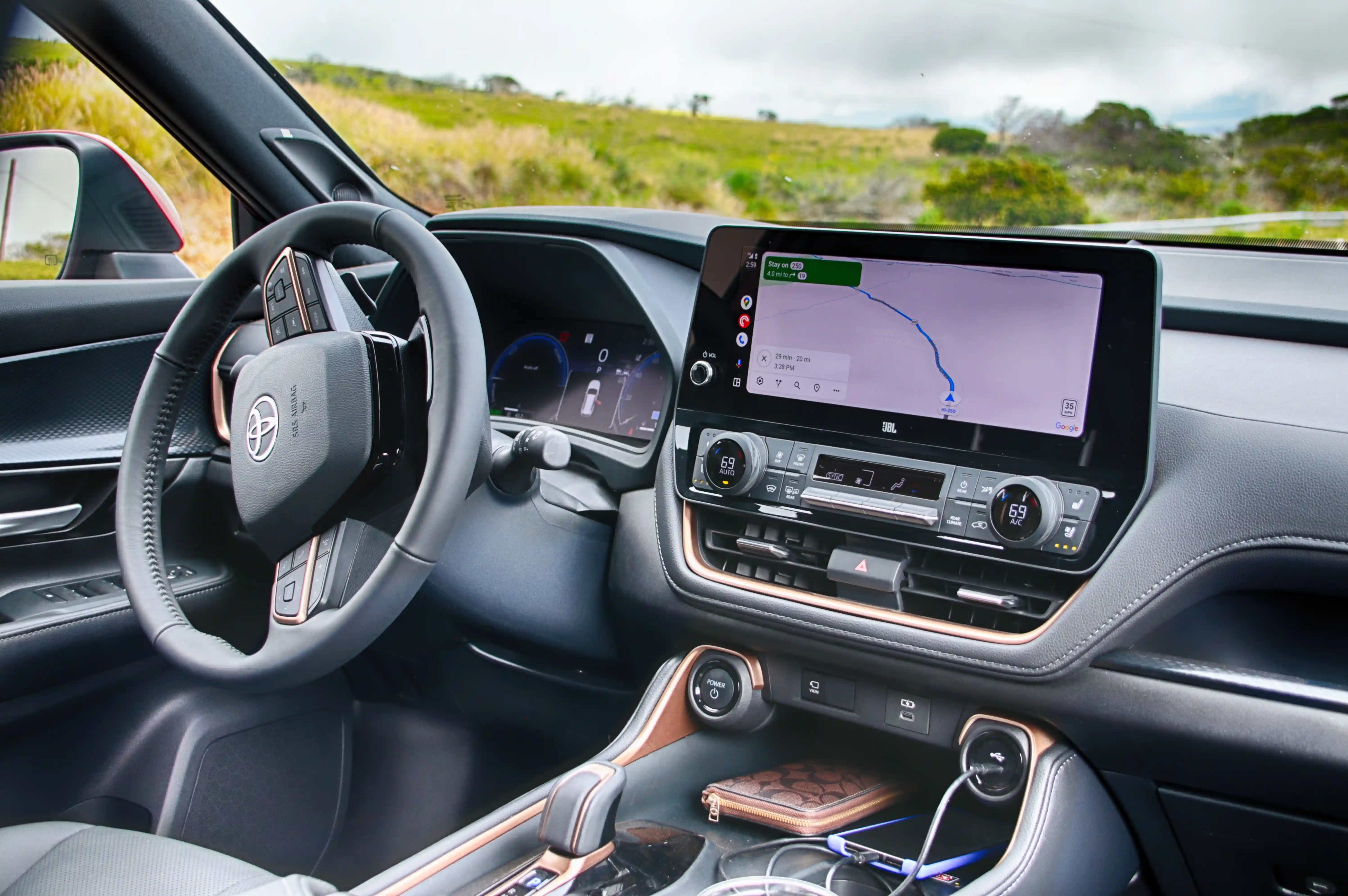
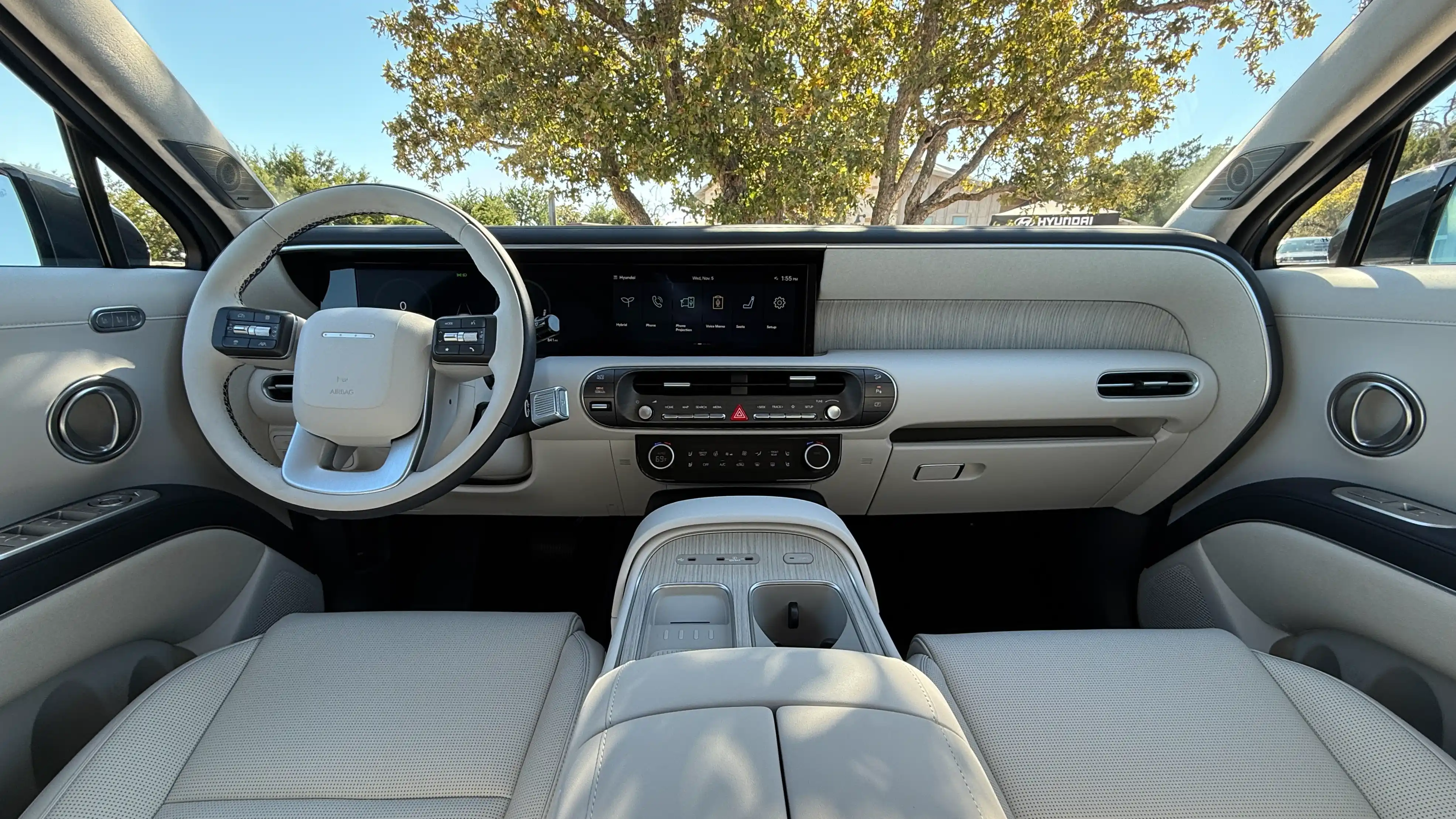
Both vehicles come standard with a 12.3-inch infotainment display, wireless Apple CarPlay and Android Auto, two 12-volt outlets, remote keyless entry, tri-zone climate control, and an eight-way power-adjustable driver's seat. The Toyota gets a second-row bench, cloth upholstery, a 7.0-inch digital gauge cluster, and seven USB-C charging ports. The Hyundai gets a 12.3-inch instrument cluster display, navigation, dynamic voice recognition, proximity key entry, rear-seat quiet mode, a six-way manually adjustable passenger seat, second-row captain's chairs, a leatherette-wrapped steering wheel, heated front seats, H-Tex leatherette upholstery, and six USB-C charging ports. The front charging ports in the Hyundai support up to 100 watts, so it’s easy to charge a laptop on the go.
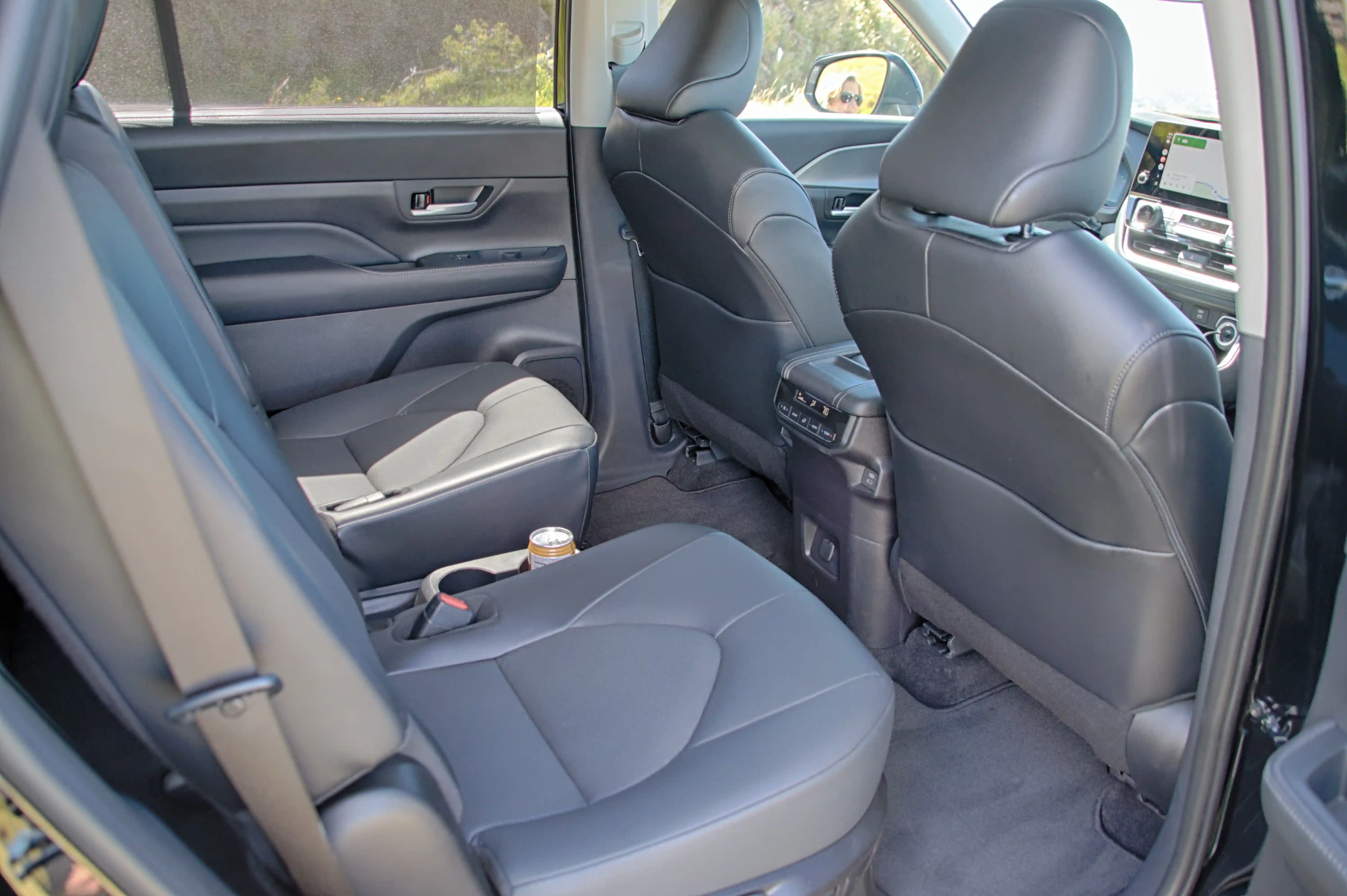
The Grand Highlander Hybrid's options list includes second-row captain's chairs, driver’s seat memory functions, a 10-way power-adjustable driver’s seat and eight-way power-adjustable passenger seat, heated and ventilated front and second-row seats, synthetic or genuine leather upholstery, second-row window sunshades, a leather-wrapped, heated steering wheel, ambient interior lighting, a 10-inch head-up display, a digital rearview mirror, a 12.3-inch digital guage cluster, Digital Key capability, an 11-speaker JBL audio system, wireless device charging, and two 120-volt outlets.
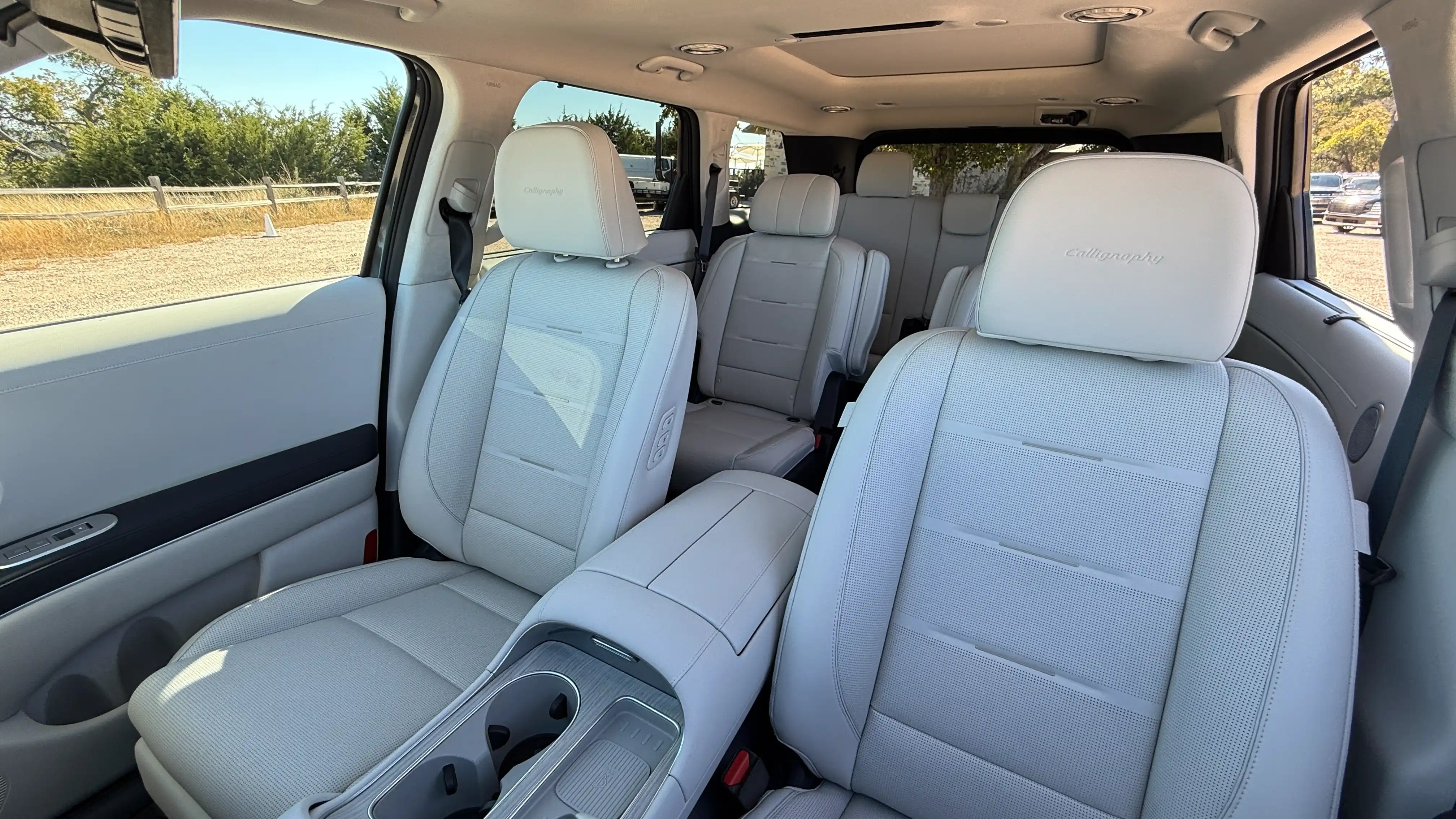
The Palisade Hybrid can be upgraded with driver’s seat memory, a driver relaxation seat, an eight-way power-adjustable passenger seat, ventilated front seats, heated second-row seats, a second-row bench, genuine or Nappa leather upholstery, a heated steering wheel, ambient interior lighting, rain-sensing windshield wipers, a dual-pane sunroof, a 12-inch head-up display, a Bose 14-speaker audio system, wireless device charging, and a 115-volt power outlet.
The Grand Highlander Hybrid comes standard with Toyota Safety Sense 3.0, and the Palisade Hybrid comes standard with Hyundai SmartSense. Both systems cover the basics: forward-collision warning with pedestrian detection, adaptive cruise control, lane-keeping assist, blind-spot monitoring with rear cross-traffic alert, safe-exit alert, automatic high beams, and a rearview camera.
From there, Toyota Safety Sense 3.0 adds lane-tracing assist, road-sign assist, and proactive-driving assist. SmartSense adds front and rear parking distance warnings, advanced rear-occupant alert, cyclist and junction-turning detection, highway-driving assist, forward-attention warning, and driver-attention warning.
Toyota's available safety and convenience upgrades include a panoramic view monitor, traffic-jam assist, and front and rear parking assist with automatic braking. Hyundai’s available safety and convenience upgrades include blind-spot collision-avoidance assist, side parking warning, remote smart parking assist, highway-driving assist 2, a blind-spot view monitor, and a surround view monitor. It also adds lane change and evasive steering assist to its forward collision avoidance assist.
Powertrain and Fuel Economy
The Toyota's standard hybrid pairs a 2.5-liter naturally aspirated four-cylinder engine with an electric motor-generator unit (MGU) and an electronic continuously variable transmission (e-CVT), while the turbocharged 2.4-liter four-cylinder hybrid MAX pairs its engine with an electric motor and a six-speed automatic transmission. The standard configuration is available in front- or all-wheel drive, while the hybrid MAX comes standard with all-wheel drive.
The Hyundai is powered by a turbocharged 2.5-liter four-cylinder engine with two electric MGUs, a clutch, and a six-speed automatic transmission, and is offered with front- or all-wheel drive.
For a deeper look at how Hyundai’s new hybrid system feels from behind the wheel, read our full 2026 Palisade Hybrid road test ➜
The Grand Highlander Hybrid gets up to 36 mpg combined with the standard hybrid and 27 mpg combined with the hybrid MAX, while the Palisade Hybrid gets up to 34 mpg combined with FWD or 30 mpg with AWD.
The difference between city, highway, and combined ratings can matter more than the headline number, so see how EPA fuel-economy ratings translate to real-world driving ➜
Price
Both of these vehicles start in the upper $40,000s. The Palisade's Blue SEL trim offers a better starting MSRP, but by less than $1,500.
What's It Like to Drive?
These two are similar to drive, but their powertrain variations give them distinct personalities. The Grand Highlander with the standard hybrid system feels a lot like every Toyota hybrid since the original Prius 25 years ago. With its e-CVT configuration, the engine spins at speeds largely unrelated to the vehicle speed. Under anything but very mild acceleration, the engine spins up to around 4,000 rpm, where it hits peak torque and efficiency, and stays there as the vehicle's speed climbs. As the mileage numbers show, that's a very efficient solution, although it’s not necessarily the most pleasant driving experience, since Toyota four-cylinder engines tend to be a bit noisy.
The Grand Highlander's Hybrid MAX system uses an electric motor sandwiched between the engine and a more conventional six-speed automatic transmission. The driving feel is more natural as the transmission shifts through its gears, and it's much quieter and quicker, but notably less efficient. Both Toyota hybrids rely on an additional MGU to drive the rear axle when extra grip is needed.
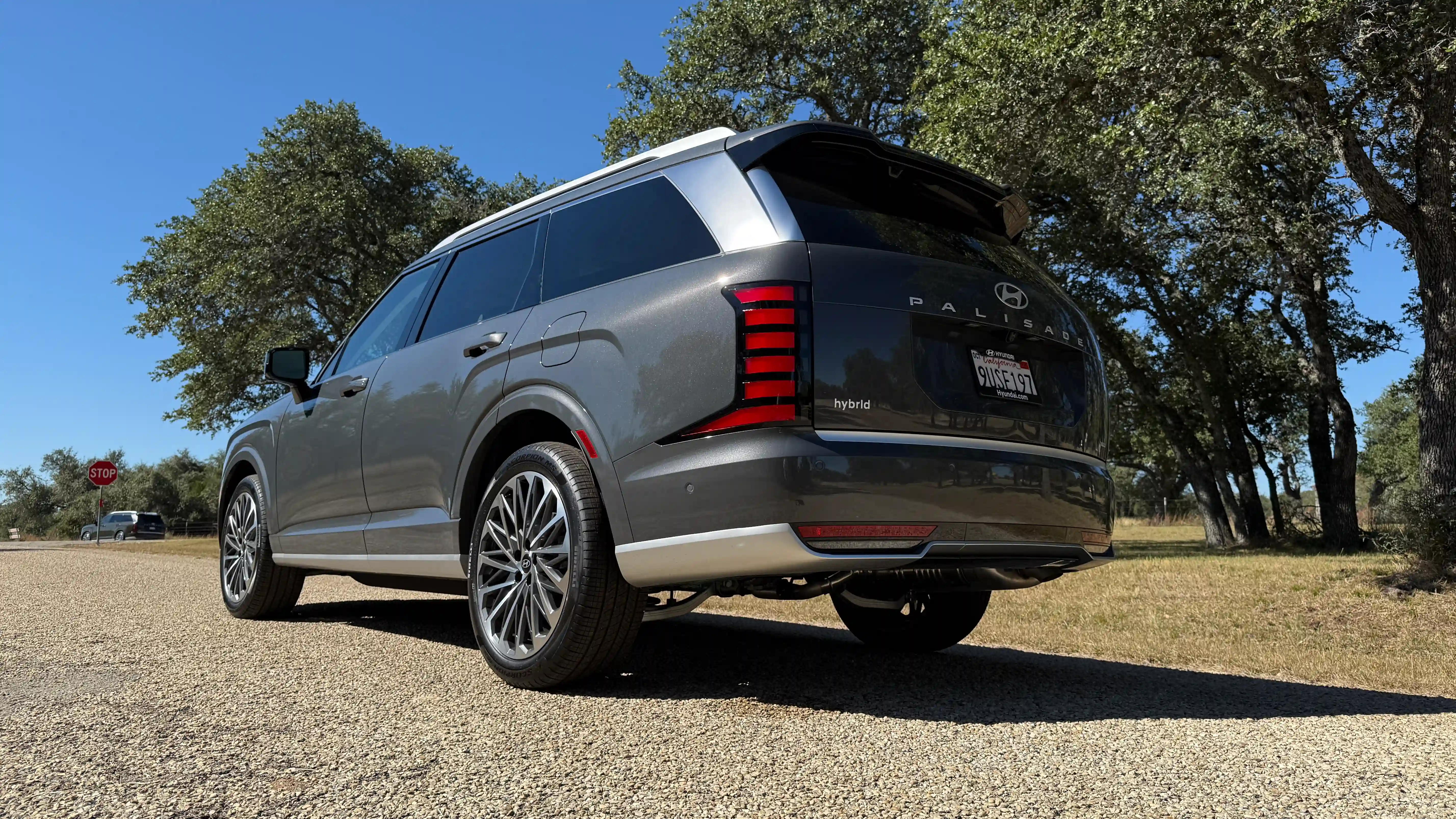
The latest Palisade Hybrid uses one MGU coupled to the engine that acts as both an assist and a generator, providing power to the battery and the main MGU. A dual-plate clutch between the two MGUs can decouple the engine, enabling electric-only drive, with power sent through a six-speed transmission. AWD models get a mechanical drive to the rear axle. The result is slightly less efficient than the standard Grand Highlander Hybrid but a far more pleasant and natural driving experience than that system, while delivering nearly the same performance as the MAX.
Which One's Right for You
Objectively, these two are quite similar, with a comparable overall price range. The Hyundai has a more premium-feeling interior with excellent materials and fit, but feature-wise, they're comparable. In the end, though, it really comes down to your sense of style. The Toyota is a bit more traditional-looking, and five to 10 years from now, it’s unlikely to look dated.
The Palisade has a more out-there look that helps it stand apart from the pack of SUVs we're increasingly surrounded by. Will it still look contemporary later in its lifecycle? Who knows, but that may not matter, especially for a first owner. I prefer the driving experience of the Palisade Hybrid over the standard Grand Highlander Hybrid; it’s similar to the MAX while offering better efficiency than that variant. I’d personally go with the Hyundai, but you’re unlikely to be disappointed by either one.
Keep Shopping the Family Hybrid Field
2027 Kia Telluride Hybrid vs. 2026 Toyota Grand Highlander Hybrid
The new Telluride uses a closely related 329-horsepower hybrid system and provides another direct comparison with Toyota’s spacious three-row hybrid.
Read More ➜
2026 Kia Sorento Hybrid Review: Small Footprint, Three Rows
The Sorento gives shoppers a smaller, less expensive three-row hybrid alternative when maximum cargo room is not the priority.
Read More ➜
2026 Lexus TX 550h+ PHEV Review
The Grand Highlander’s luxury-oriented corporate relative adds plug-in capability and a more upscale cabin for buyers willing to move upmarket.
Read More ➜