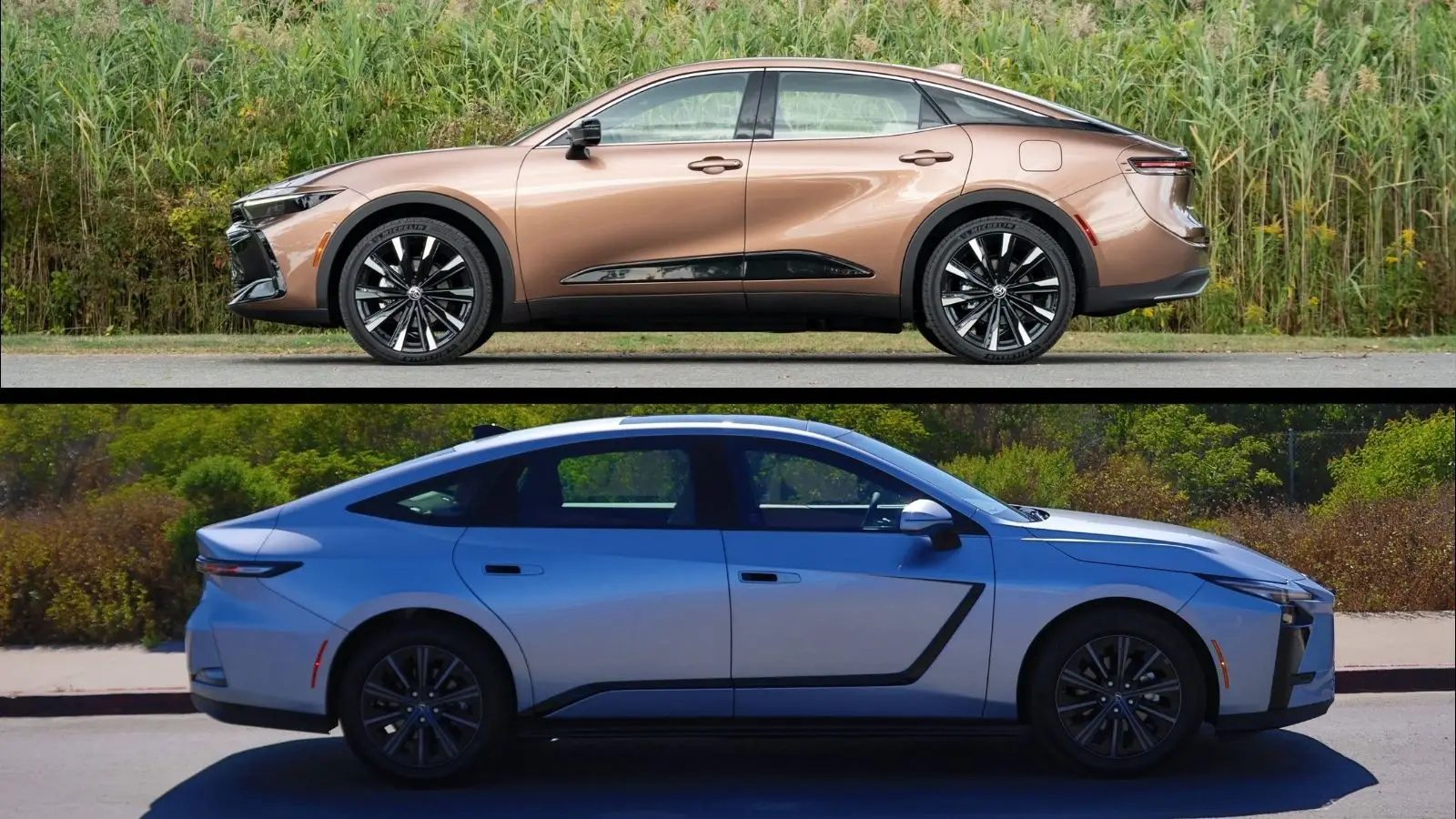

Fast Facts | Toyota Crown Hybrid vs. Lexus ES Hybrid
⚙️ Output: The Crown Hybrid gets 236 in standard form and 340 horsepower in Hybrid MAX, while the ES Hybrid gets up to 244 horsepower
⛽ EPA-Estimated Fuel Efficiency: The Crown Hybrid gets up to 42 mpg combined, while the ES Hybrid gets up to 46 mpg combined
🛞 Drivetrain: The Crown Hybrid is AWD-only, while the ES Hybrid offers FWD or AWD
💰Starting price: The Crown Hybrid starts at $42,935 MSRP, while the ES Hybrid starts at $51,095 MSRP
Spend More for the Lexus, or Get More for Your Money From Toyota?
Sedans aren't as popular in America as they used to be, but some manufacturers, Toyota included, remain committed to the form. If you want a spacious, comfy ride in a four-door with a traditional trunk, you might want the biggest sedan on the lot. In Toyota’s lineup, that's the Crown, a slightly larger sedan than the bestselling Camry (and not to be confused with the Crown Signia crossover). If you're looking to go a bit more upmarket, Lexus offers the redesigned-for-2026 ES.
The Crown comes exclusively with all-wheel drive and a choice of two hybrid powertrains: the standard Toyota Hybrid System or the more powerful Hybrid MAX. The ES, on the other hand, offers either a hybrid or a full battery-electric powertrain, plus a choice of front- or all-wheel drive. This comparison will focus on the two hybrids.
Exterior Design and Dimensions
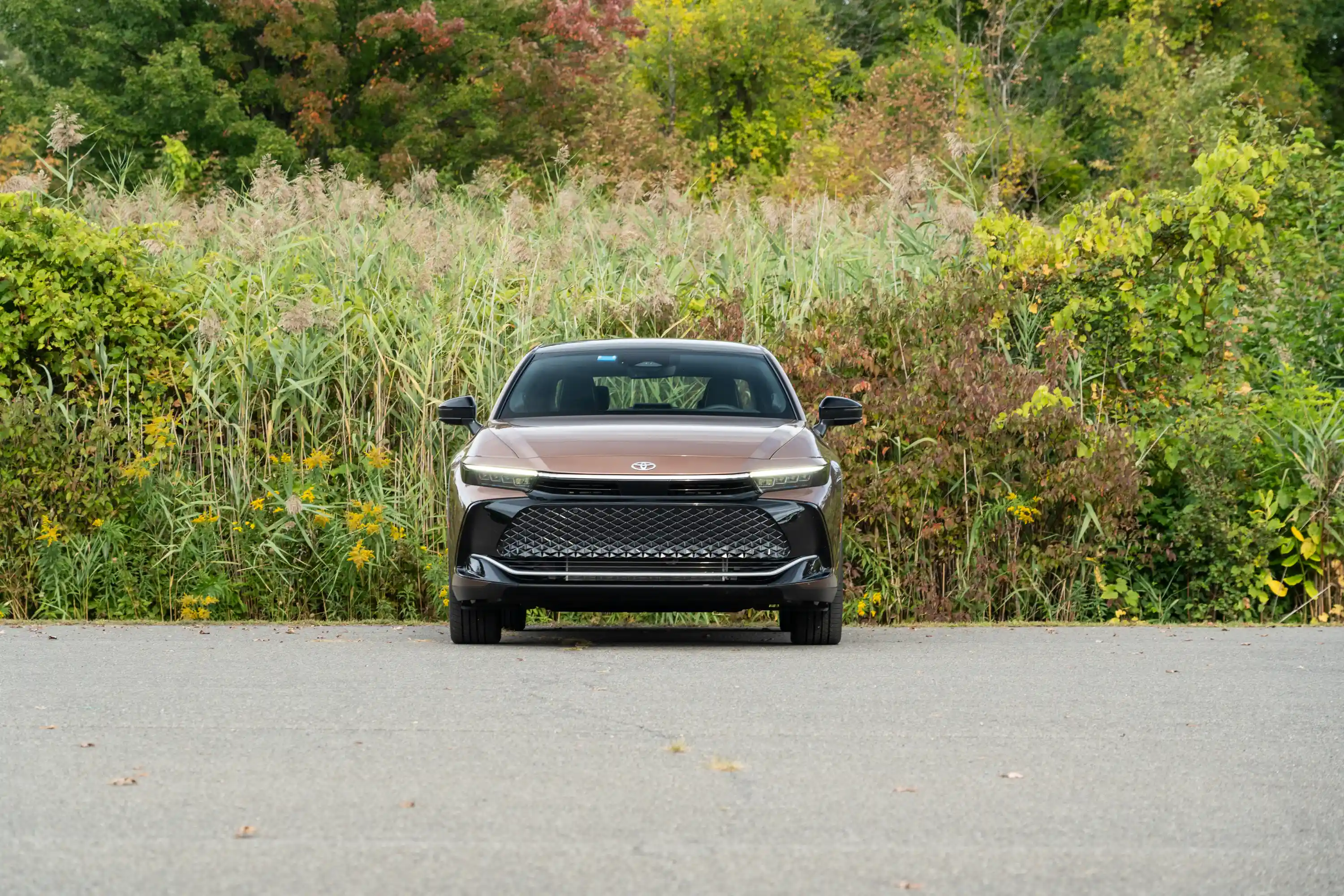
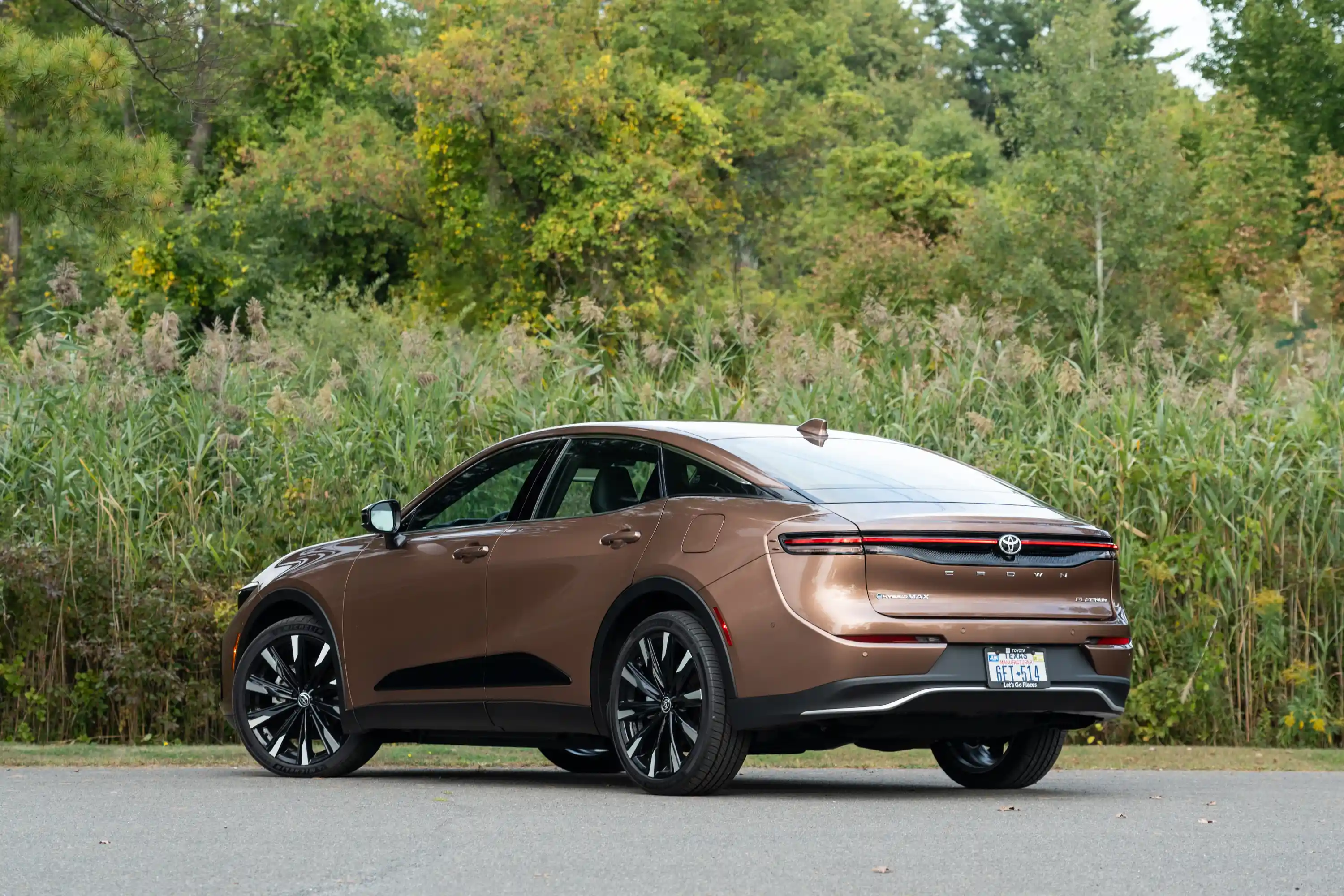
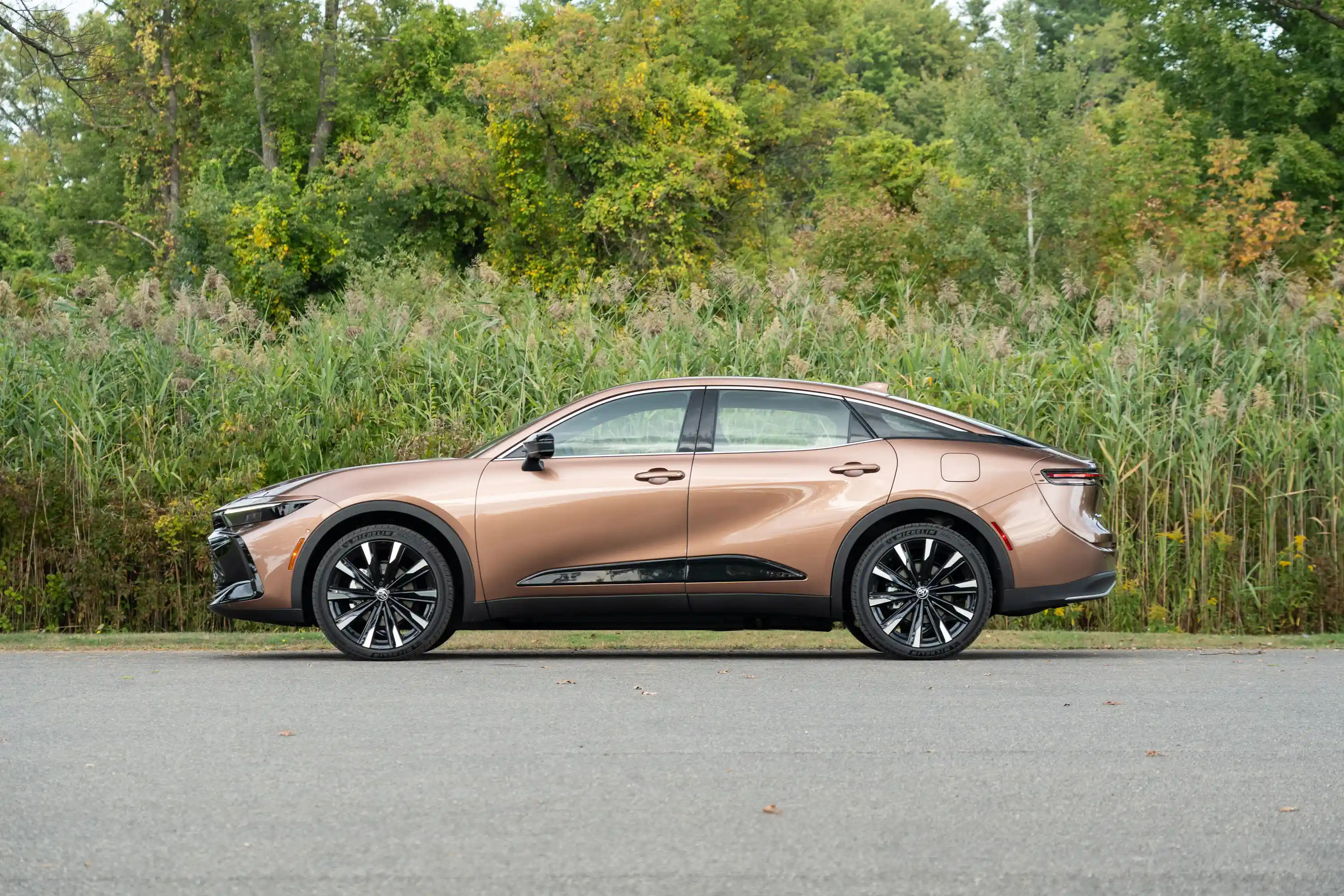
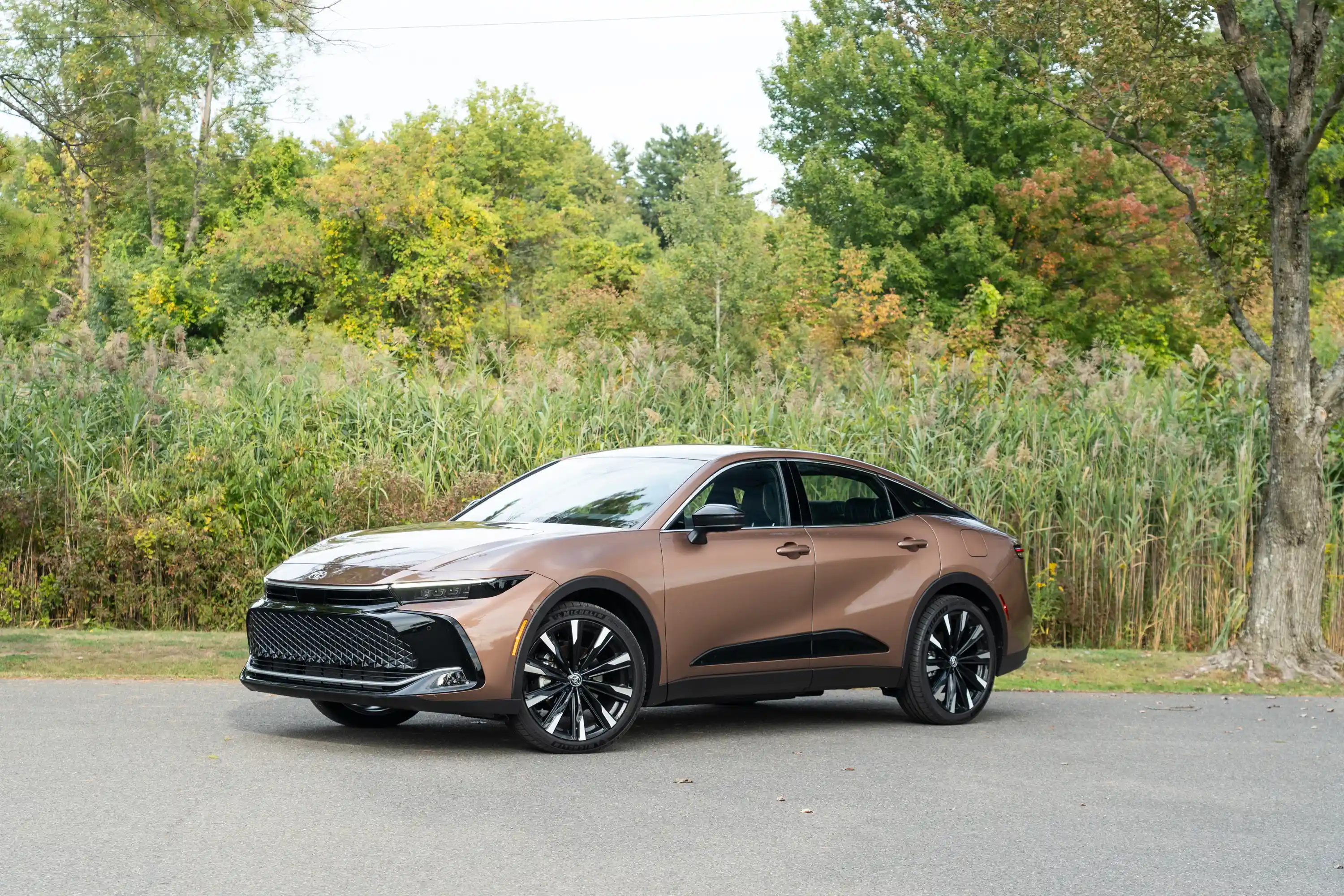
One of the first things you’ll notice about the Toyota Crown is how high it sits off the ground. That gives it a taller, more SUV-like stance for anyone who wants the higher viewpoint but still wants a sedan. Its rounded body is sleek and modern, and it’s available with a unique two-tone paint job. For 2027, that two-tone treatment has been modified a bit, with the formerly black trunk area now matching the main body color, while the roof rails and pillars stay black.
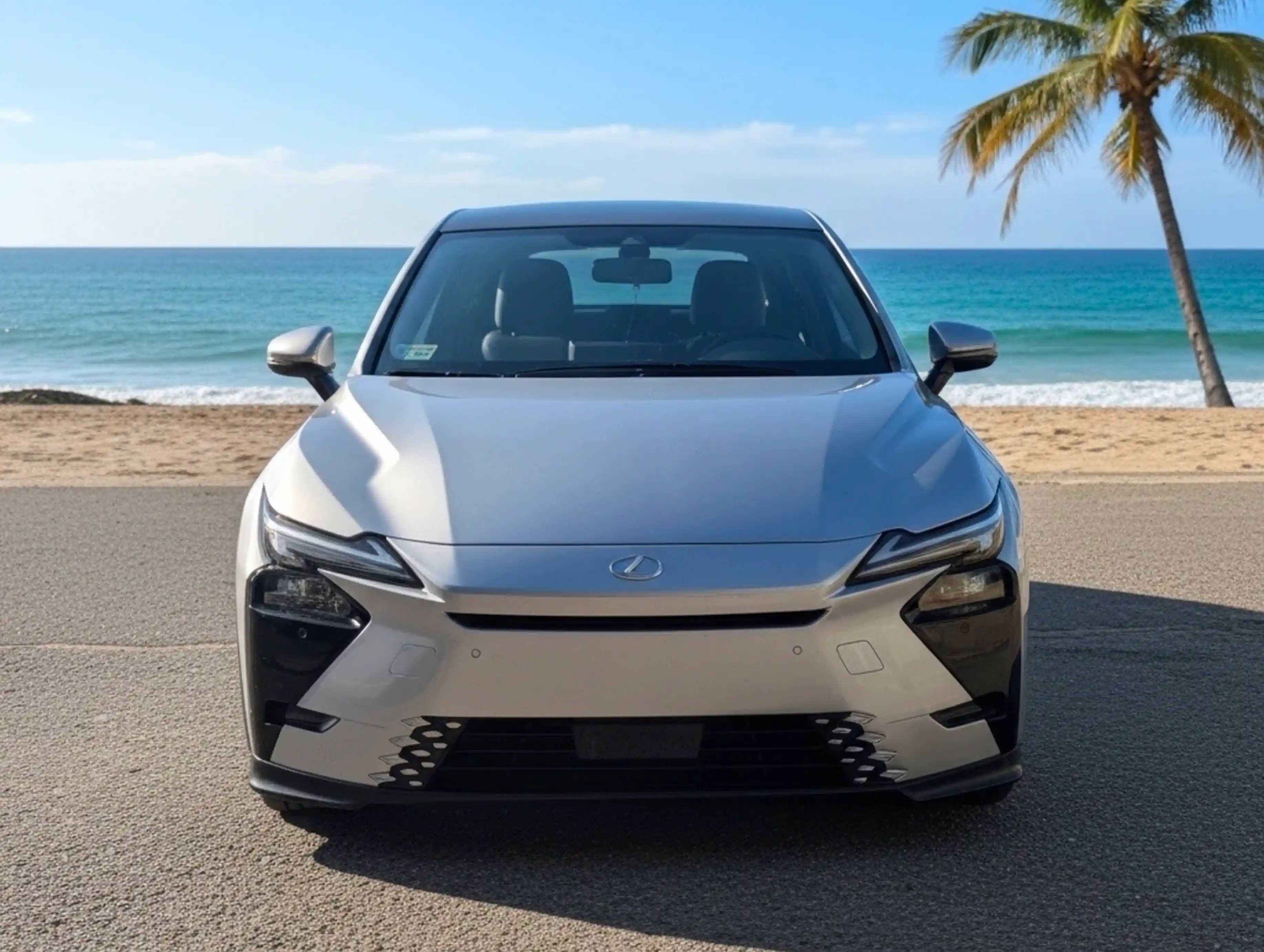
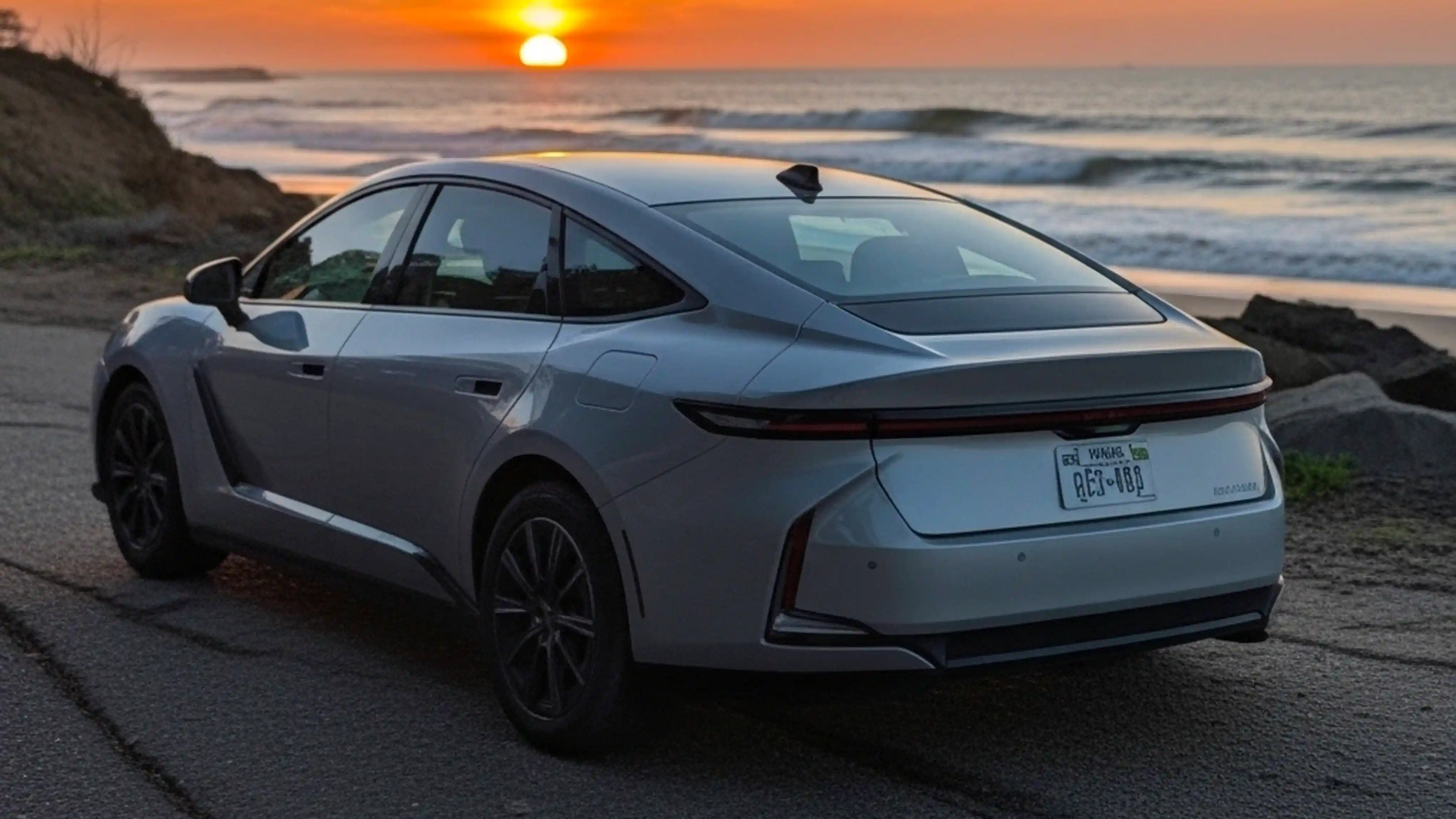
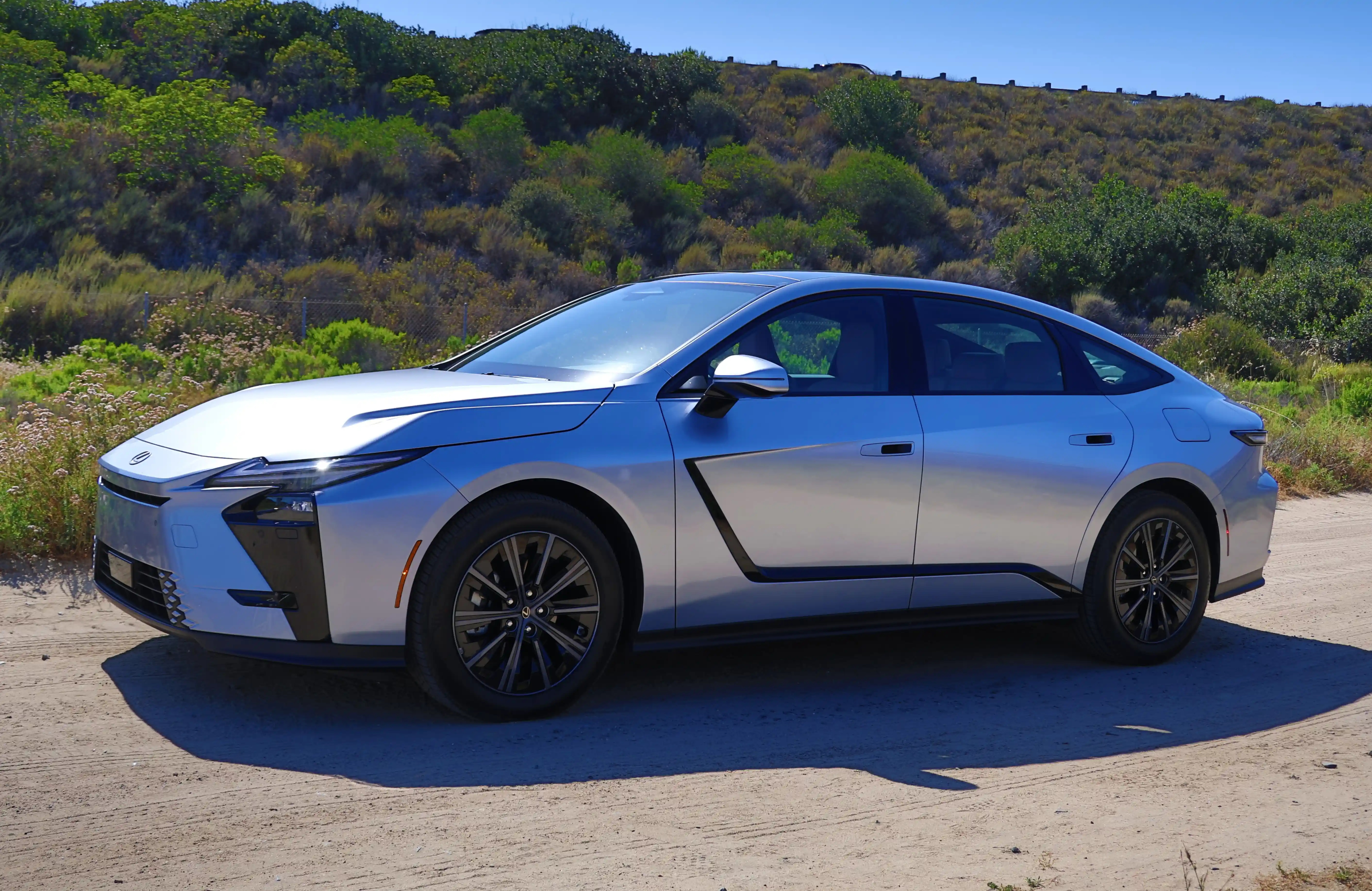
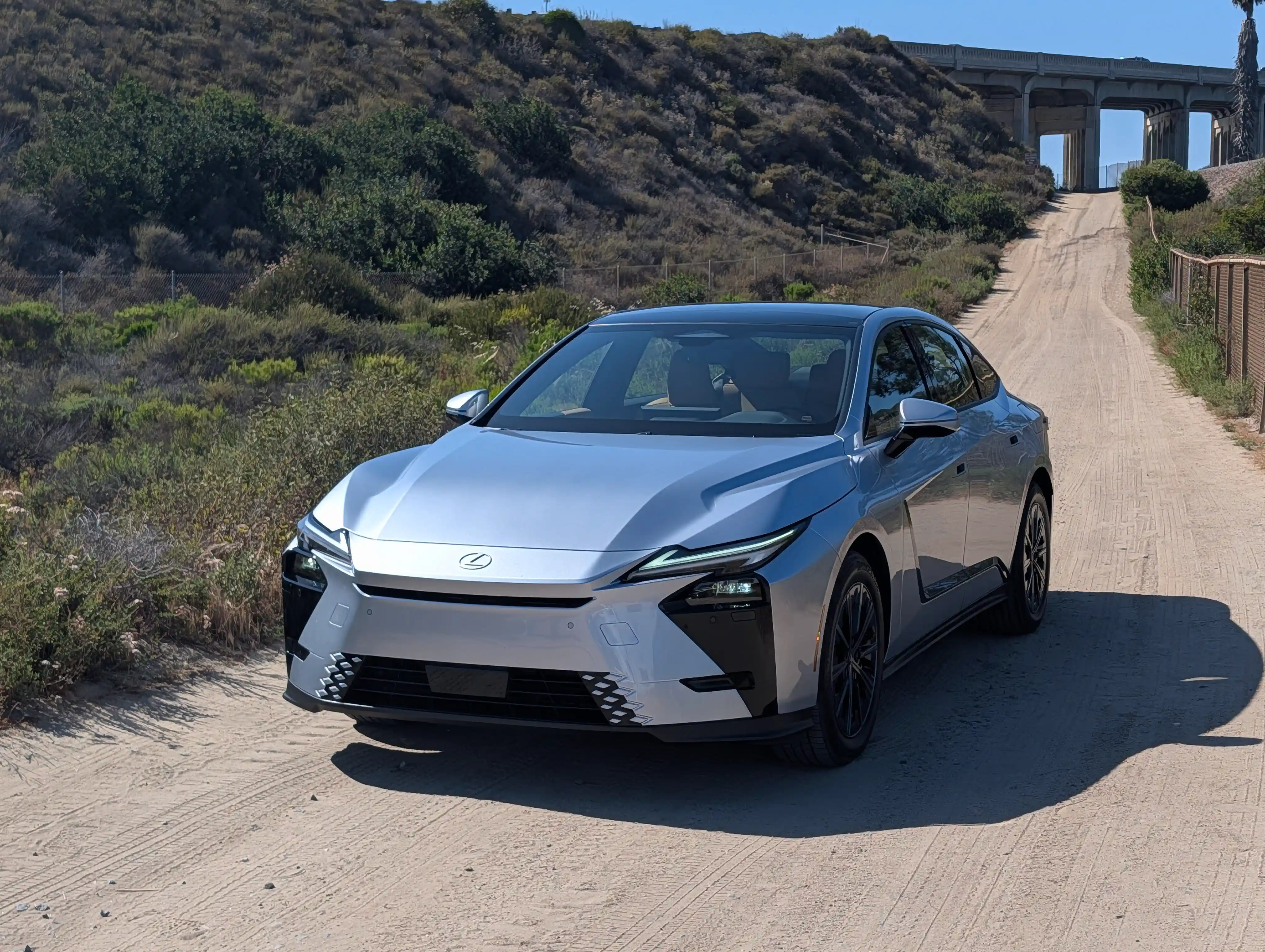
The new ES debuted as a late 2026 model and carries over into the 2027 model year. It brings a distinctive new design language to Lexus, with sharper creases and a more subdued take on the brand’s spindle grille. The formerly massive spindle shape has been trimmed down, leaving just a thin horizontal slot at the front edge and a smaller trapezoidal opening at the bottom. Double-angled accent lines run along the sides, giving it a dynamic appearance. The ES also grew significantly, now stretching 202.4 inches, 6.5 inches longer than in 2025.
Interior Space and Tech
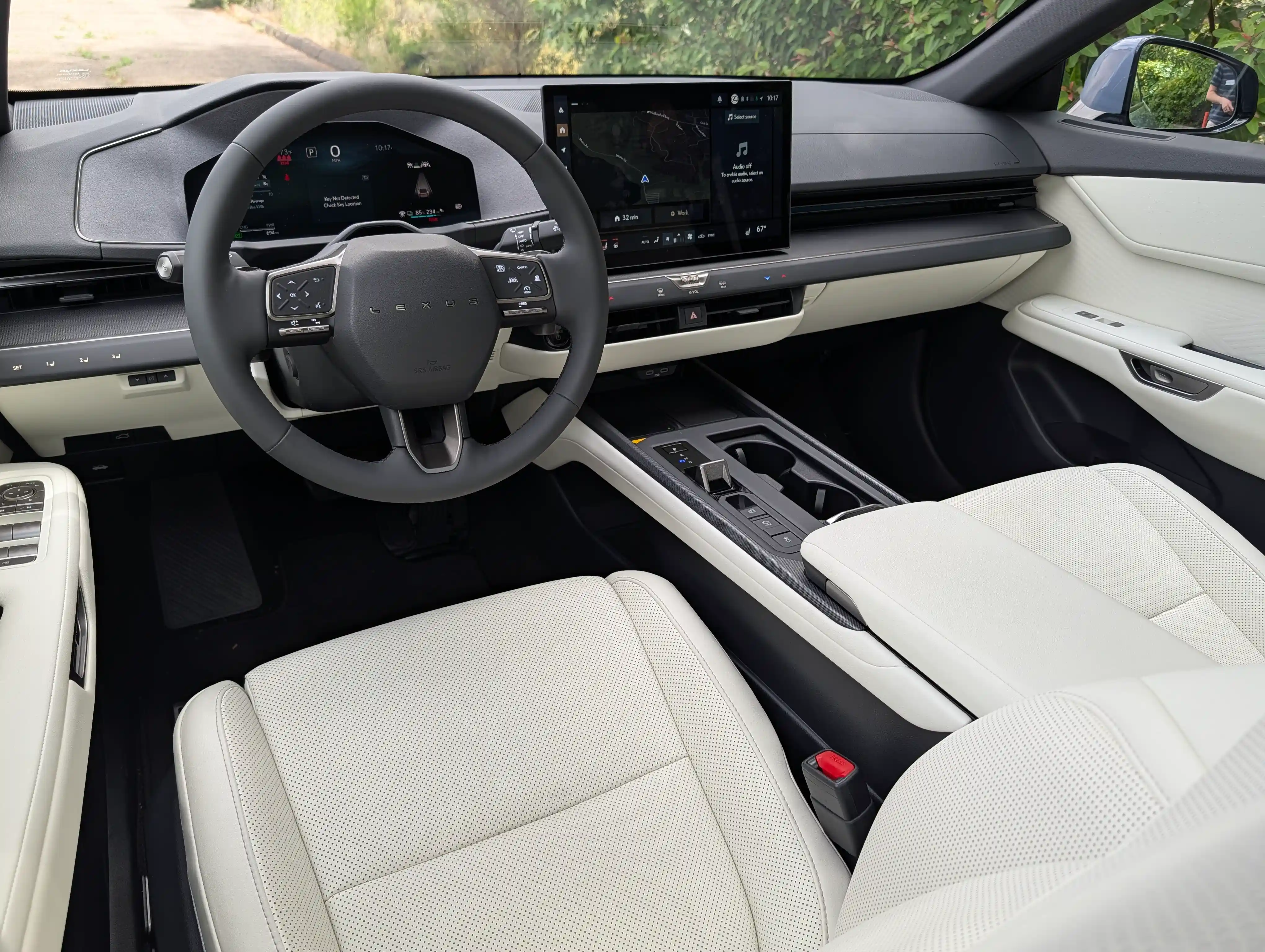
Inside, these two vehicles are nearly identical in size. The ES has about an inch more rear legroom, while the Crown offers slightly more trunk space. The Crown's interior feels surprisingly premium even in its most affordable model, while the ES steps things up a notch with more luxury surfaces and styling cues.
Feature-wise, they're evenly matched too. Both offer wireless Apple CarPlay and Android Auto, wireless phone charging, power-adjustable front seats, heated and ventilated front seats, dual-zone climate controls, USB-C charging ports, and a 12.3-inch digital gauge cluster.
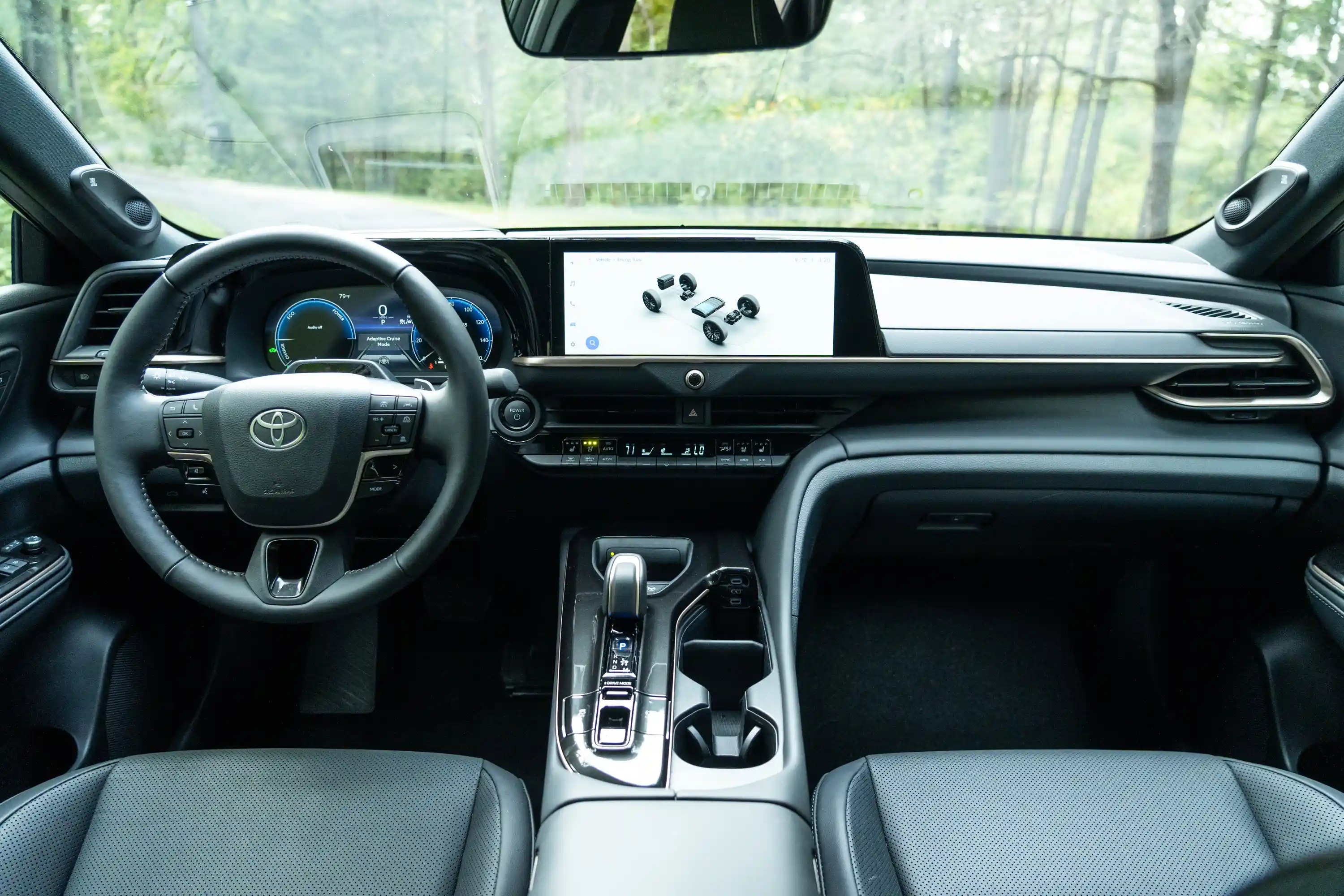
The Crown comes standard with leather seating surfaces, while the ES uses Lexus's NuLuxe upholstery. The Lexus gets a 14-inch touchscreen running the latest Lexus/Toyota infotainment software; the Toyota's 12.3-inch display runs the previous-generation software. The Crown comes standard with heated rear seats, which the ES doesn't offer, though it does have a moonroof, additional front-seat adjustments, and a drive recorder.
The Crown can be had with a digital key and a JBL premium audio system. The ES can be upgraded to include a Mark Levinson 17-speaker premium sound system and radiant knee heaters for added comfort on cold winter days.
Both vehicles come standard with a nearly identical safety package — at least on paper. The Crown features Toyota Safety Sense 3.0, and the ES gets Lexus Safety System 4.0. Both include the same core features: a pre-collision system with pedestrian detection, adaptive cruise control, automatic high beams, lane-tracing assist, road-sign assist, and proactive-drive assist. The 4.0 version runs on Toyota’s new Arene software platform, giving it more compute for smoother, more reliable performance.
Both come standard with a backup camera with dynamic gridlines and blind-spot monitoring with rear cross-traffic alert. The Crown gets a rear-seat reminder, collision sensors, safe-exit alert, and a vehicle proximity notification system.
The Crown can be had with a head-up display, lane change assist, front cross-traffic alert, traffic-jam assist, front and rear parking assist with automatic braking, a panoramic view monitor, and advanced park. The ES can be upgraded to include a panoramic view monitor, a head-up display, a digital rearview mirror, a driver monitor, intuitive parking assist with auto braking, advanced park with remote park, front cross-traffic alert, traffic-jam assist, and lane change assist.
Powertrain and Fuel Economy
Both cars use the same 2.5-liter four-cylinder Atkinson-cycle engine, with the Crown's engine making 184 horsepower and the ES's adding 2 horsepower. Both pair that engine with Toyota's power-split hybrid system, but the Crown still runs the fifth-generation setup, while the ES is the first Lexus to get the latest sixth-generation version. Each system uses two motor-generator units (MGUs), with one handling propulsion and regenerative braking, while the other acts as a starter for the engine and a generator for the battery. Together with a planetary gear set, this combination acts as an electronic continuously variable transmission (eCVT). The Crown’s main MGU produces 118 horsepower, and the ES's sixth-generation system bumps that to 201 horsepower, enabling significantly more electric propulsion.
Standard on the Crown and optional on the ES is a 54-horsepower MGU on the rear axle that enables on-demand AWD. Toyota also offers an optional Hybrid MAX version of the Crown, which uses a turbocharged 2.4-liter four-cylinder engine and a completely different hybrid system based on a six-speed automatic transmission instead of the eCVT.
Hybrid MAX trades a significant amount of efficiency for 340 horsepower and a much stronger performance character, so see what the Crown Platinum is like with Toyota’s high-output hybrid system ➜
The ES has the efficiency advantage on paper, but standardized MPG figures are primarily comparison tools rather than guarantees of what every driver will see, so see how EPA fuel-economy ratings should be interpreted ➜
Price
It’s not surprising that the Crown offers a more affordable starting price. If you’re looking specifically for AWD, the Crown will be about $10,000 less expensive than the ES. However, the ES 350h Premium+ is less than $1,000 more expensive than the top-tier Crown.
Behind the Wheel
The Crown and ES are both impressive to drive, providing surprisingly good fuel efficiency for big, roomy sedans. For those who like the higher seating position of a crossover, either will provide what you're looking for. Both provide smooth, comfortable ride quality, and both offer predictive speed control as part of their adaptive cruise control. When cruise control is on, the system monitors the map ahead, slows automatically for a tight curve, and resumes your set speed once you're through it.
The ES's new sixth-generation hybrid gives it an edge over the Crown, both in fuel efficiency and in how it feels to drive. Because less than half of the Crown's total output comes from its electric motors, the engine spends more time working hard, especially during acceleration. You'll notice it when you step on the accelerator.
The difference is easier to understand from behind the wheel, where Lexus’ stronger electric motor dramatically changes how the hybrid responds, so see our first drive of the redesigned ES 350h ➜
The ES's 201-horsepower main MGU makes for a driving experience that feels much more like an EV — quieter, more refined, with much less engine noise. Some of that's likely due to extra sound dampening, but the updated powertrain's behavior is definitely noticeable from the moment you pull away from a stop. Personally, I find it a much more relaxing experience.
Which One's Right for You
As always, design is an important consideration when purchasing a new vehicle. Most of us see the shape and color of our vehicle as an extension of our personality. The Crown is definitely the more distinctive of the two, especially in one of its two-tone color combinations. The ES, on the other hand, is generally the more relaxing ride, and its new-generation hybrid system is a key differentiator. However, it’s also $8,000 to $10,000 more expensive than the Toyota. If that price difference doesn’t knock it out of contention, the ES would be my recommendation. But affordability is a real consideration, so don't cross the Crown off your list. It's an appealing premium hybrid sedan in its own right.
More Hybrid and Electrified Sedans Worth Comparing
2026 Lexus ES350e/ES500e First Drive Review: Sharp Dressed Sedan
The redesigned ES also comes as an EV, giving shoppers another way to experience Lexus’ new platform, cabin, and technology.
Read More ➜
Comparison: 2026 Honda Accord Hybrid vs. 2026 Toyota Camry Hybrid
Shoppers who do not need the Crown or ES’s premium positioning can get exceptional hybrid efficiency and sedan practicality for considerably less.
Read More ➜
2025 Toyota Crown Signia Hybrid Road Test
The Crown Signia puts Toyota’s premium-hybrid idea into a more conventional crossover body for buyers who like the Crown formula but need greater versatility.
Read More ➜