Fast Facts | Jeep Recon
- Output: 670 horsepower from two 250-kW electric motors, one on each axle
- Battery and Range: 100.5-kWh battery; EPA-estimated 222 miles (2.5 miles/kWh observed in testing)
- Charging: 5 to 80 percent in about 28 minutes
- Drivetrain: All-wheel drive with fully independent suspension and 9.1 inches of ground clearance
- As-Tested MSRP: $73,345, including destination
The Electric Jeep We’ve Been Waiting For Has a Catch
Back in 2021, when Stellantis was still a new company, then-CEO Carlos Tavares unveiled a grand plan to go electric across the board. A year later, Jeep released images of its first two electric vehicles for North America: the Wagoneer S and Recon. To say that things haven’t quite gone according to plan would be one of the bigger understatements of recent years. U.S. EV sales in general haven’t met expectations for a variety of reasons, Stellantis ousted Tavares, and Jeep’s EVs have sold even worse than the market as a whole. Still, about two years after its expected launch, the Recon is finally rolling into dealerships, and I’ve had a few days to try one out.
Classic Jeep Looks
The Recon rides on Stellantis' STLA Large platform, the same foundation under the Wagoneer S, the new Cherokee, and the Dodge Charger. Stellantis designed it to be multi-energy, meaning it can support electric, hybrid, and internal-combustion powertrains. Although the Recon is launching only as an EV, Jeep has said in recent months that it will add a combustion engine at some point, and possibly a hybrid variant.
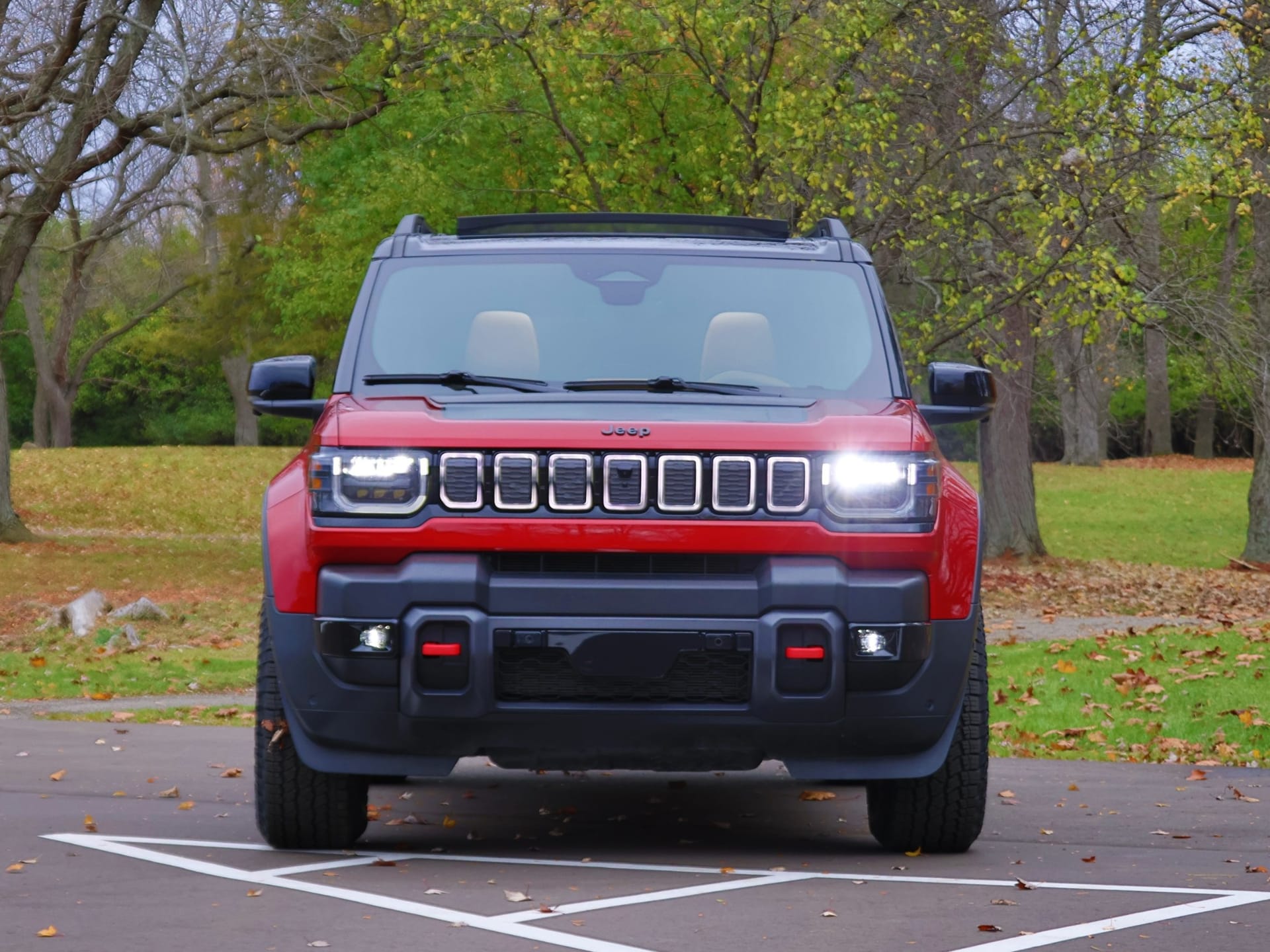
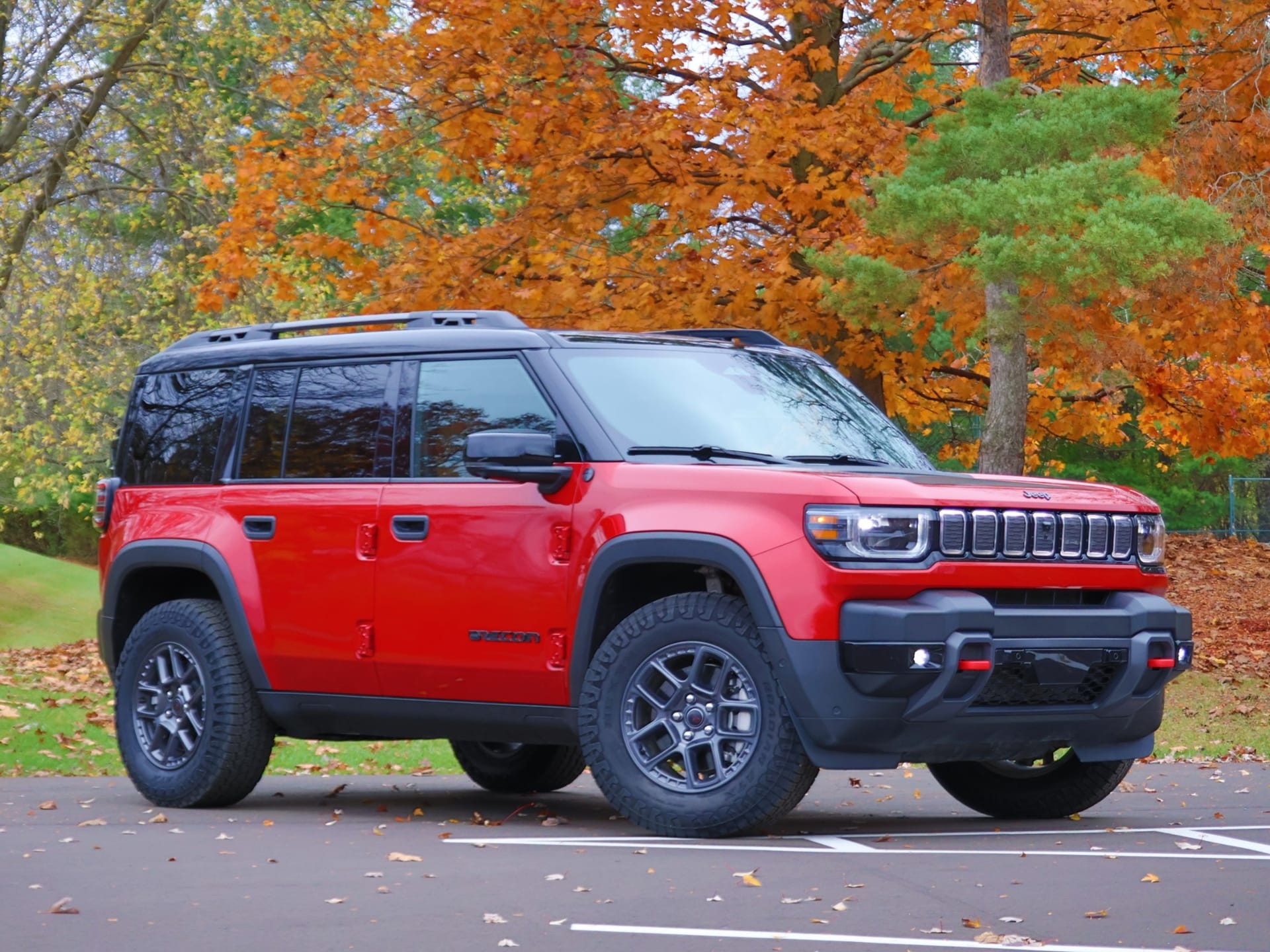
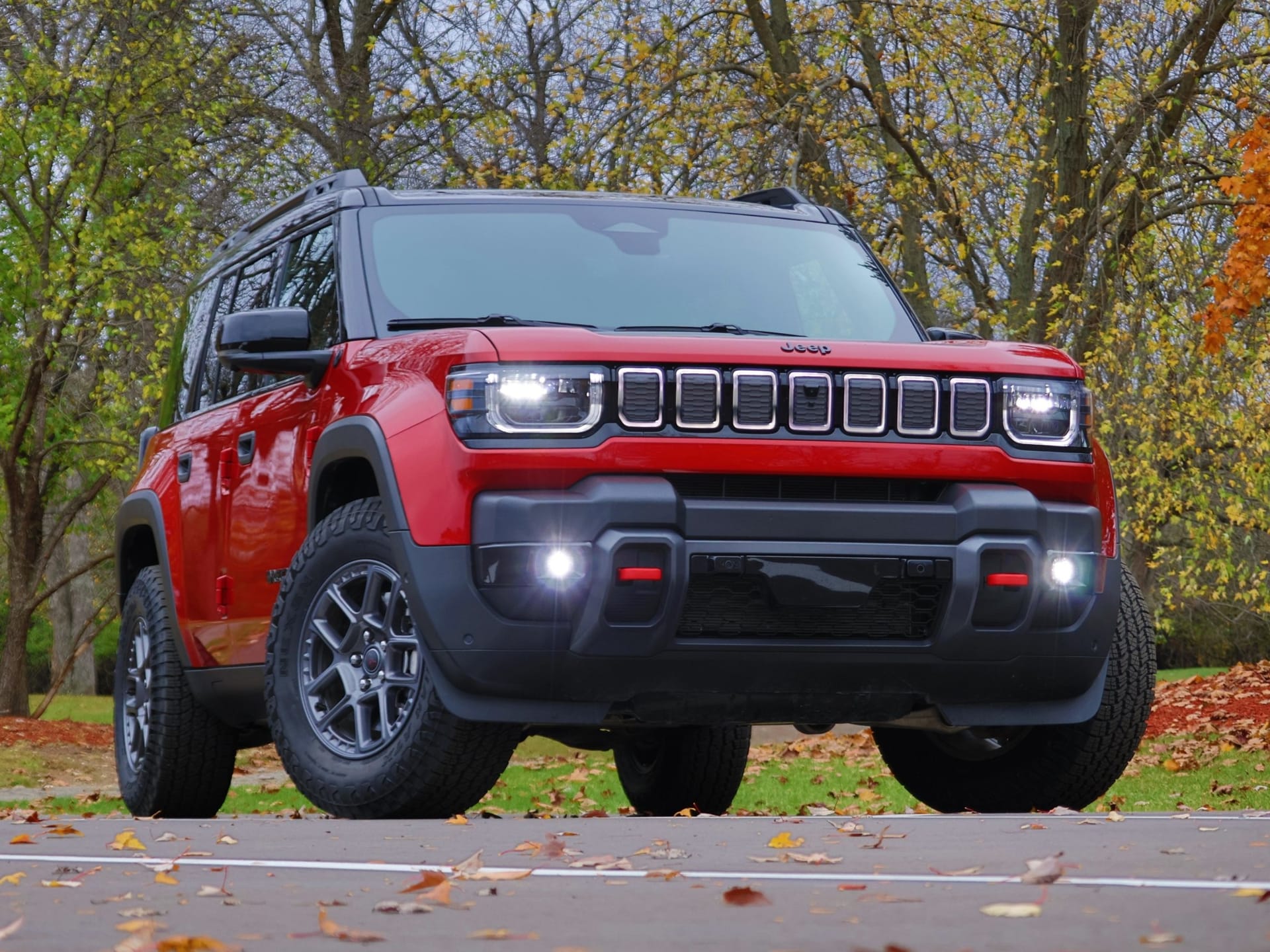
Jeep designed the Wagoneer S as a performance crossover for street use, but the Recon is much more of a traditional Jeep, with at least some semblance of off-road capability. Its boxy design clearly calls back to the old XJ Cherokee of the 1980s, with a few touches of the modern four-door Wrangler. Unlike a Wrangler, the Recon doesn’t have separate fenders that nod to the original World War II Willys MB. It’s actually shaped more like a Ford Bronco.
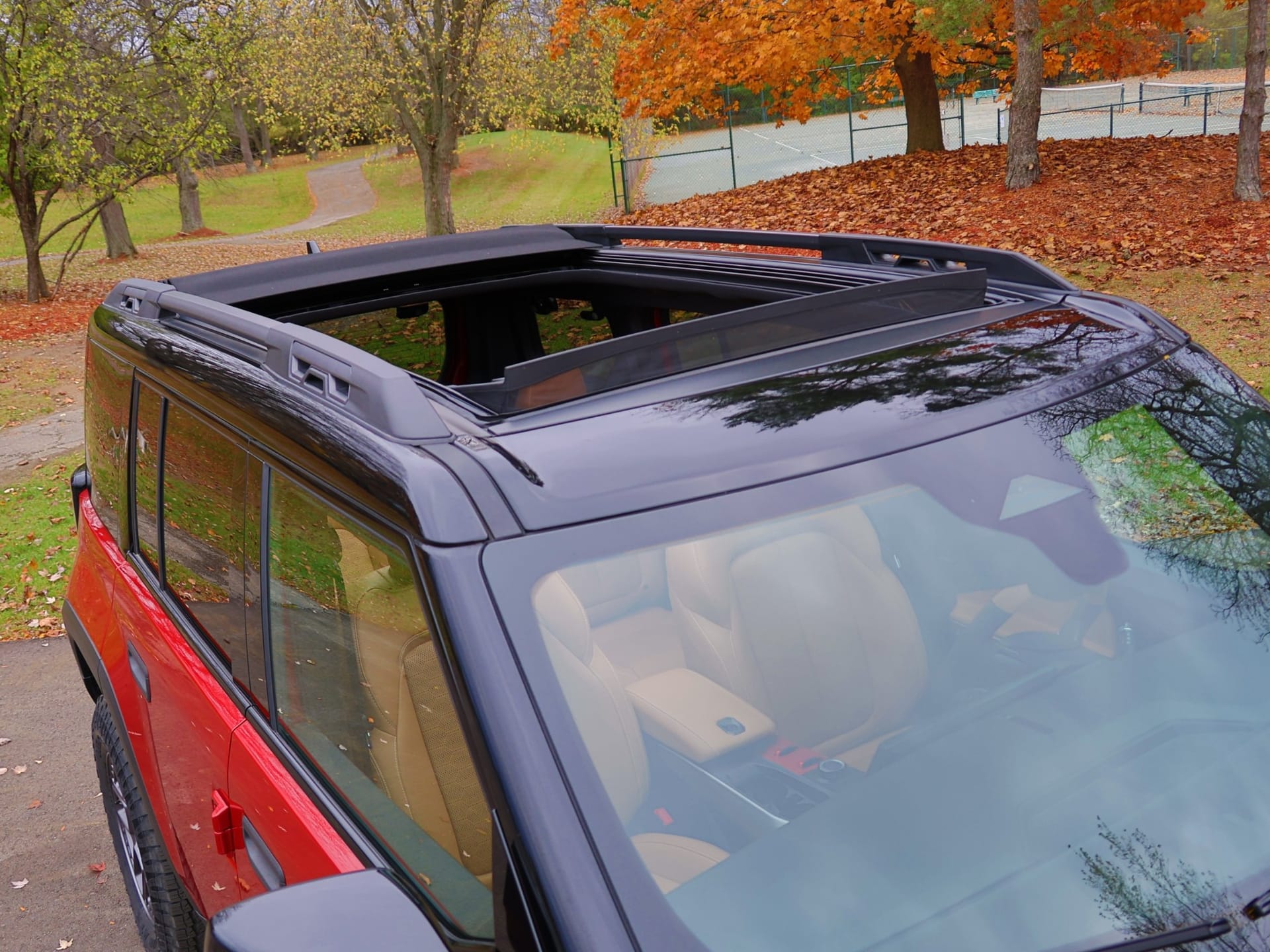
The Recon is 4.9 inches longer than a Wrangler, 2.3 inches wider, and 0.2-inch taller. Like the Wrangler and Bronco, it's capable of open-air motoring, with removable doors, a folding sky-roof, and removable rear quarter windows. A nice upgrade over the Wrangler is that you don’t need any tools to remove the doors or windows. Like the Wrangler, though, the doors have full window frames, so you’ll have to leave them behind rather than stash them in the cargo area like you can in a Bronco.
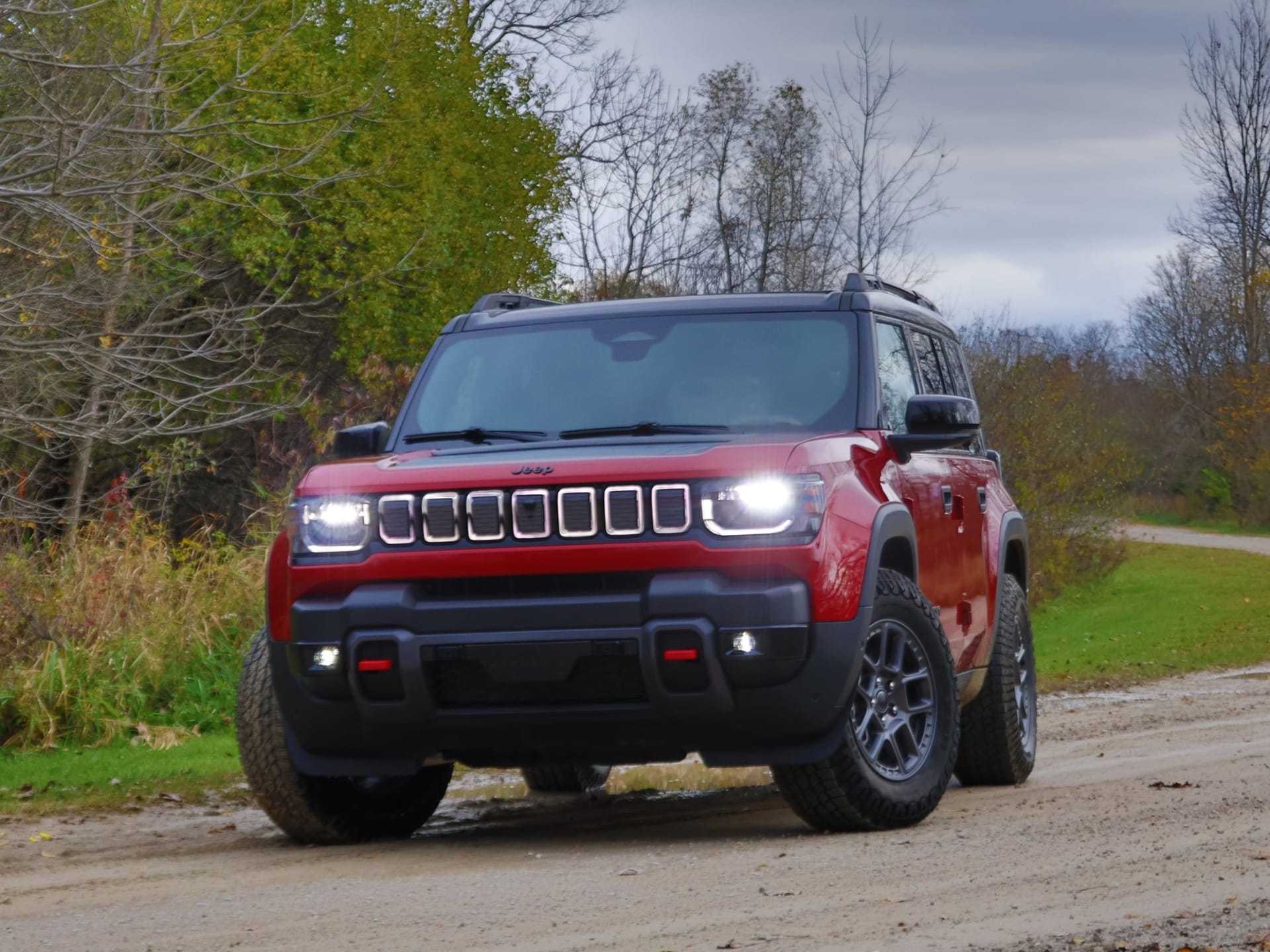
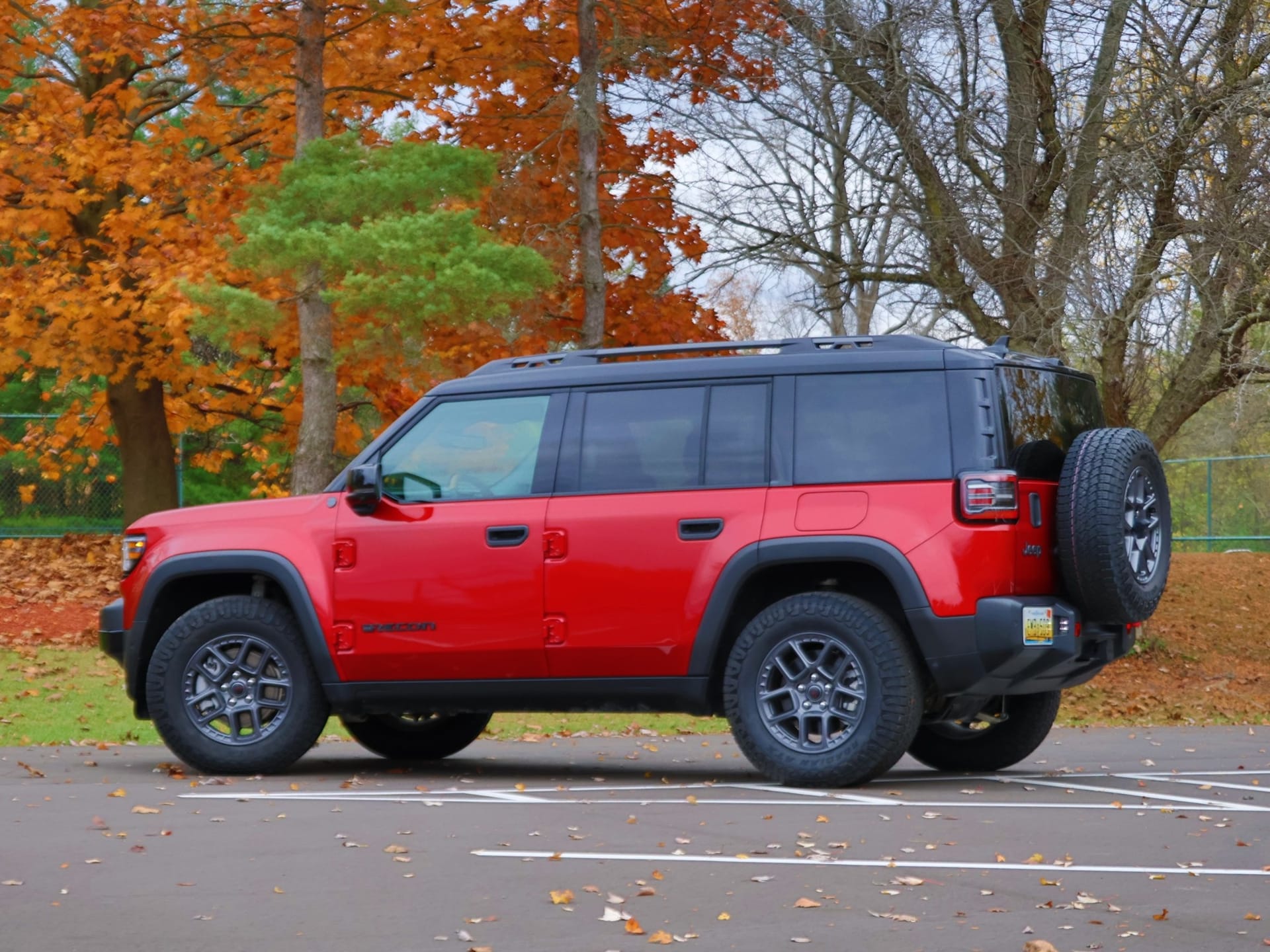
By the time I got the Recon, fall's cooler weather had settled in here in Michigan, so I left the doors on. If you like the classic SUV aesthetic, the Recon is probably the best-looking Jeep in a long time.
A Roomy, Modern Cabin
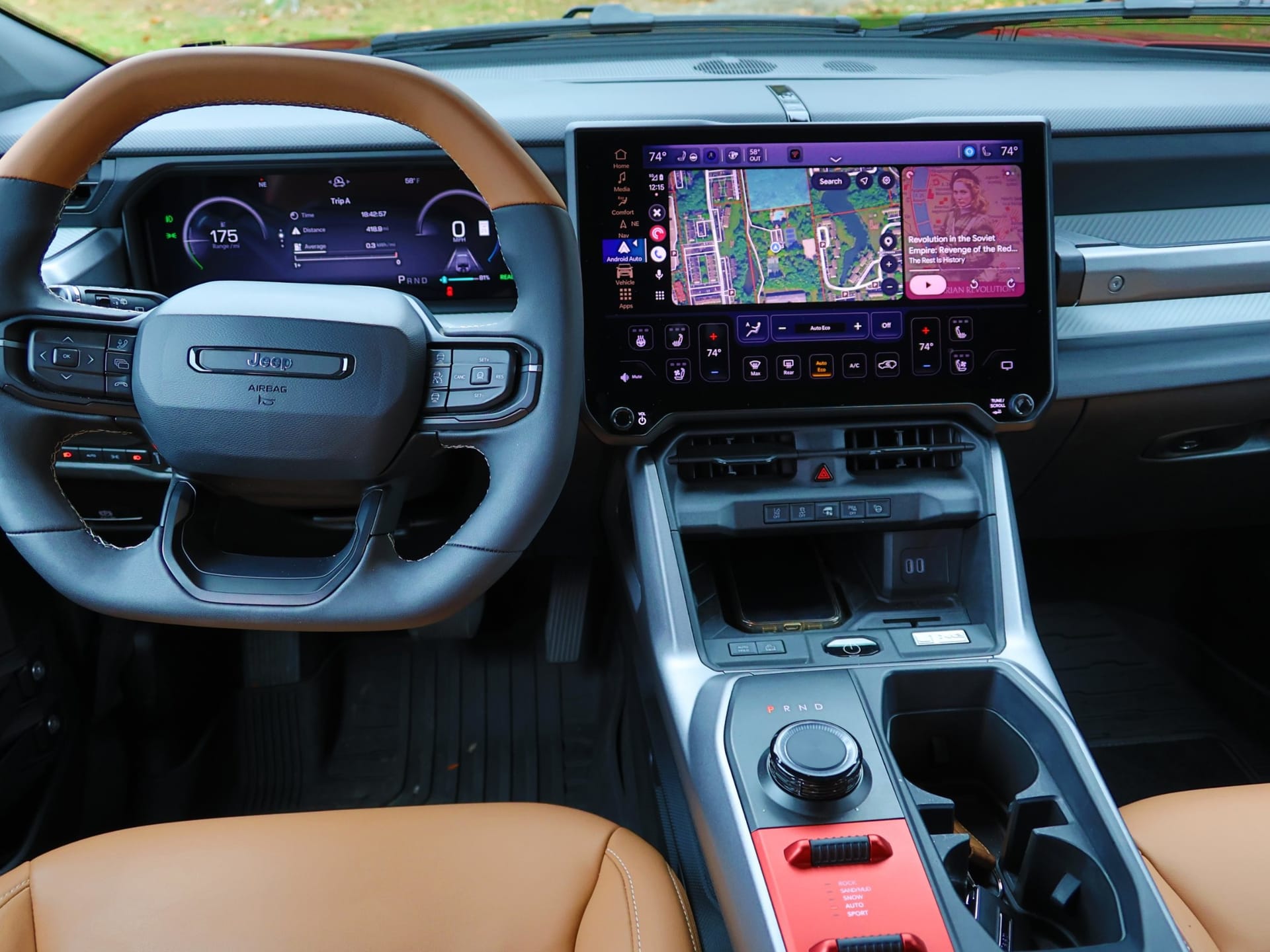
Inside, the Recon is definitely more modern than a Wrangler, with a large center touchscreen and a digital instrument cluster. Fortunately, the vents are all manually controlled. The rest of the climate controls live in the touchscreen, but they're always on display, so there’s at least no digging through menus. You can adjust major climate functions like temperature and fan speed by voice. The Uconnect 5 infotainment system runs essentially the same software you’ll find in every other recent Stellantis product.
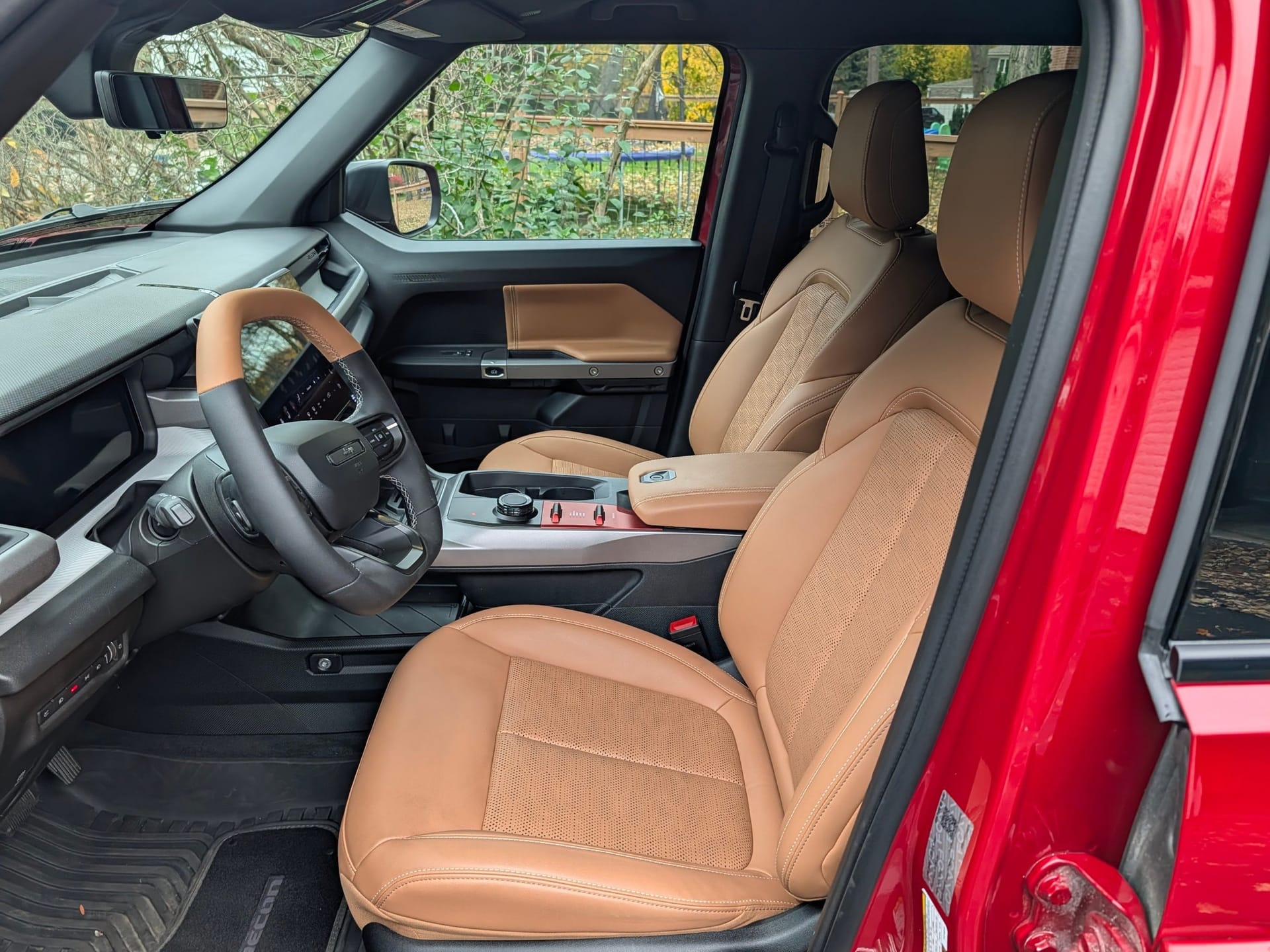
The Recon's slab sides offer more passenger space. Sitting next to a passenger in a Wrangler has always been a bit of a shoulder-to-shoulder experience. The Recon has 2.8 inches more shoulder room and 1.3 inches more hip room in the front, plus 1.8 inches of extra shoulder space in the rear, and the difference is palpable.
You'll find lots of little storage spaces in the cabin, including door pockets with elastic straps, plus a grab handle across the passenger side of the dash. Harder plastics cover most of the dash and doors, but the colors and textures are pleasant, and those materials make it easier to clean off dust and dirt that accumulate when you go off-road or remove the doors.
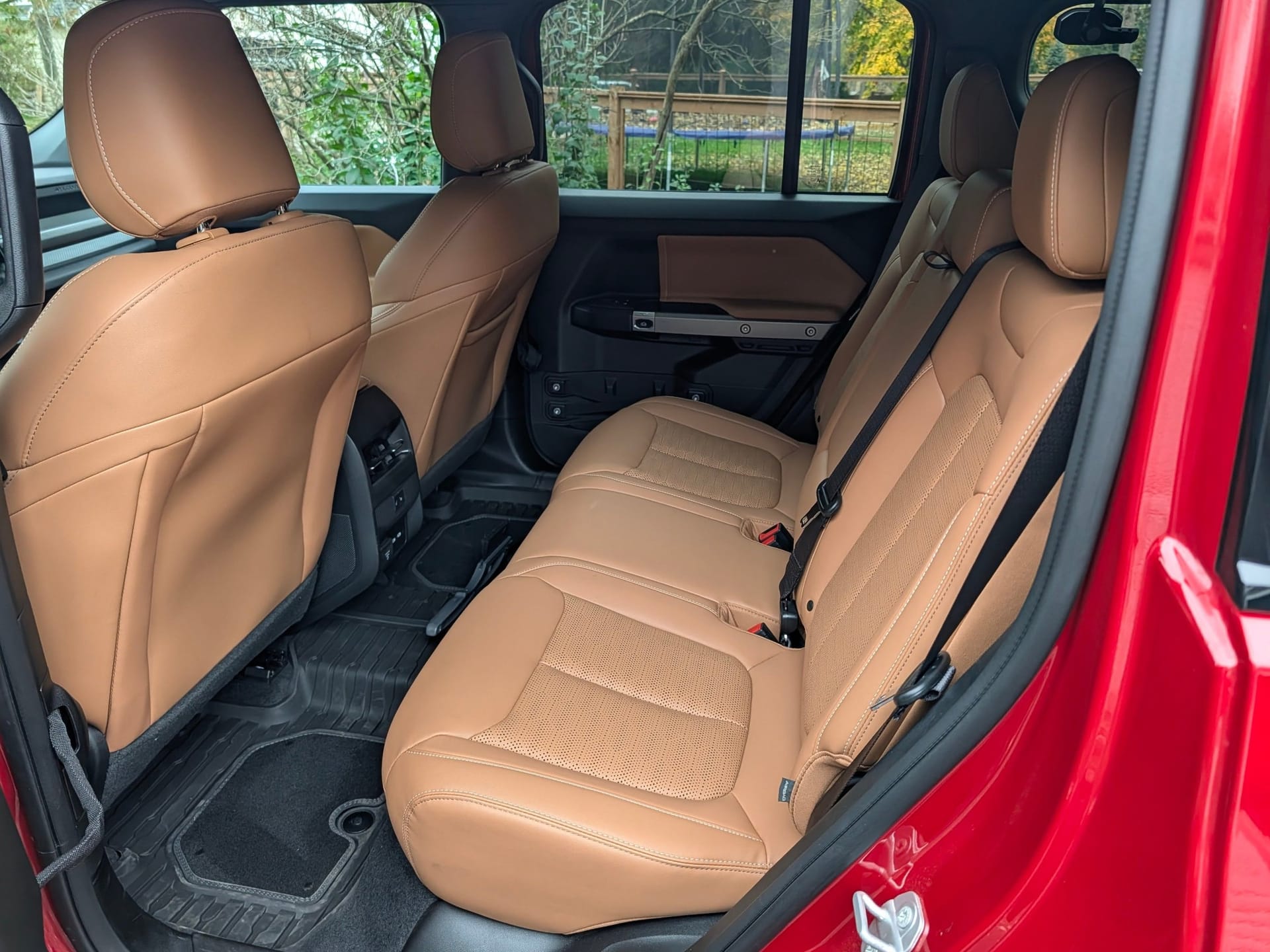
My only real complaints with the cabin are the steering wheel and front seats. Much like in the new Cherokee, I found the driver’s seat a bit lumpy, and it was hard to get comfortable. The Recon also has the Cherokee's octagonal steering wheel, which is challenging to hold comfortably.
Go Power
The Recon has a pair of 250-kilowatt electric motors, one up front and one in the rear, delivering a grand total of 670 horsepower. That makes this one of the most powerful production Jeeps ever. Under the floor is the same 100.5-kilowatt-hour battery pack you’ll find in the Wagoneer S and Charger. That’s notably bigger than the 88-kWh pack in the Rivian R2, but sadly, Stellantis still has plenty of work to do on EV efficiency.
The Recon Moab I drove has an EPA-estimated range rating of just 222 miles. That tall, blocky profile isn’t particularly aerodynamic, and the all-terrain tires add lots of rolling resistance. An Overland trim coming later with more street-oriented tires should boost range to about 240 miles, which is still kind of mediocre.
A boxy body, all-terrain tires, speed, temperature, and terrain can all eat into an EV’s rated range, so see what actually determines how far an electric car can travel in the real world ➜
In my standard efficiency test, which mixes highway, rural, suburban, and urban driving, I averaged 2.5-miles/kWh. That could yield closer to 250 miles on a full charge. It's not the worst I’ve seen. The Rivian R1 typically gets about 2.0 to 2.1 miles/kWh, and other full-size electric trucks do about the same. In straight highway driving at 70 mph, though, the Recon drops to about that level, which realistically puts its range well under 200 miles.
Jeep claims the Recon's 400-volt electrical system can handle DC fast charging at up to 200 kW, but most tests of Stellantis EVs show they rarely hit that number and don’t hold it for long. The Recon also doesn’t have any battery preconditioning, which warms the battery on the way to a charger so it can charge faster. When I pulled up to a charger at 18 percent, the Recon initially popped up to about 140 kW, then climbed to 160 kW for a while as the battery warmed up.
Battery temperature can make the difference between a strong and disappointing fast-charging session, so see why preconditioning and charging curves matter more than the peak kW number alone ➜
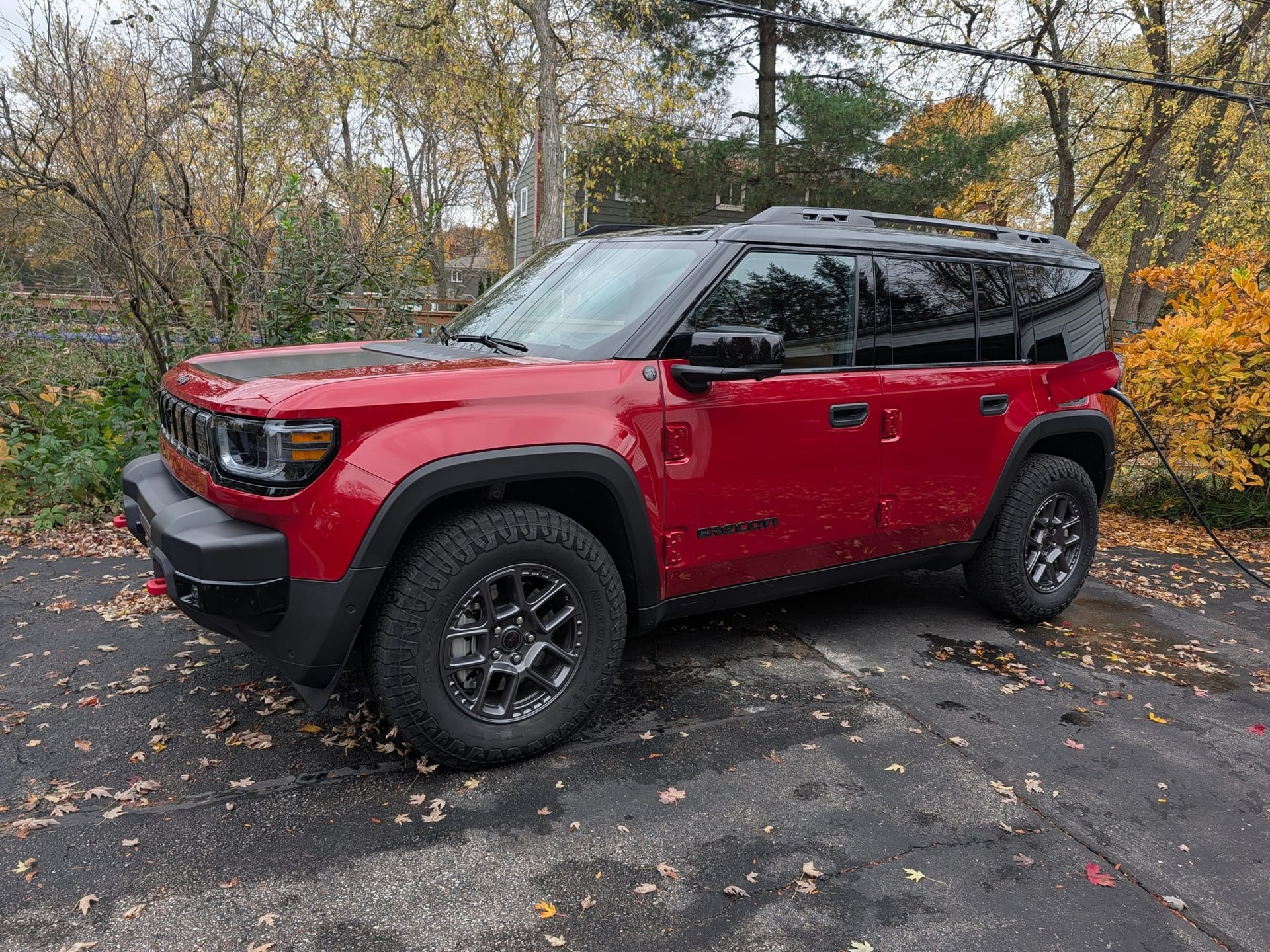
Under optimal conditions, the Recon should charge from 5 to 80 percent in about 28 minutes, but on a road trip, you’ll be stopping to do that about every two and a half hours. The 2026 Recon has a CCS charging port, but 2027 models will switch to an SAE J3400/NACS port.
On and Off the Road
Range aside, the Recon definitely drives a lot better on the road than any Wrangler ever built. Unlike the Wrangler's dual solid axles, the Recon has a fully independent suspension, with dual control arms in the front and a multi-link setup in the rear. The ride quality is quite good, and apart from a bit of whistling over the folding fabric roof, the cabin is surprisingly quiet, even on the all-terrain tires. And with 670 horsepower, the Recon can hit 60 mph in as little as 3.6 seconds.
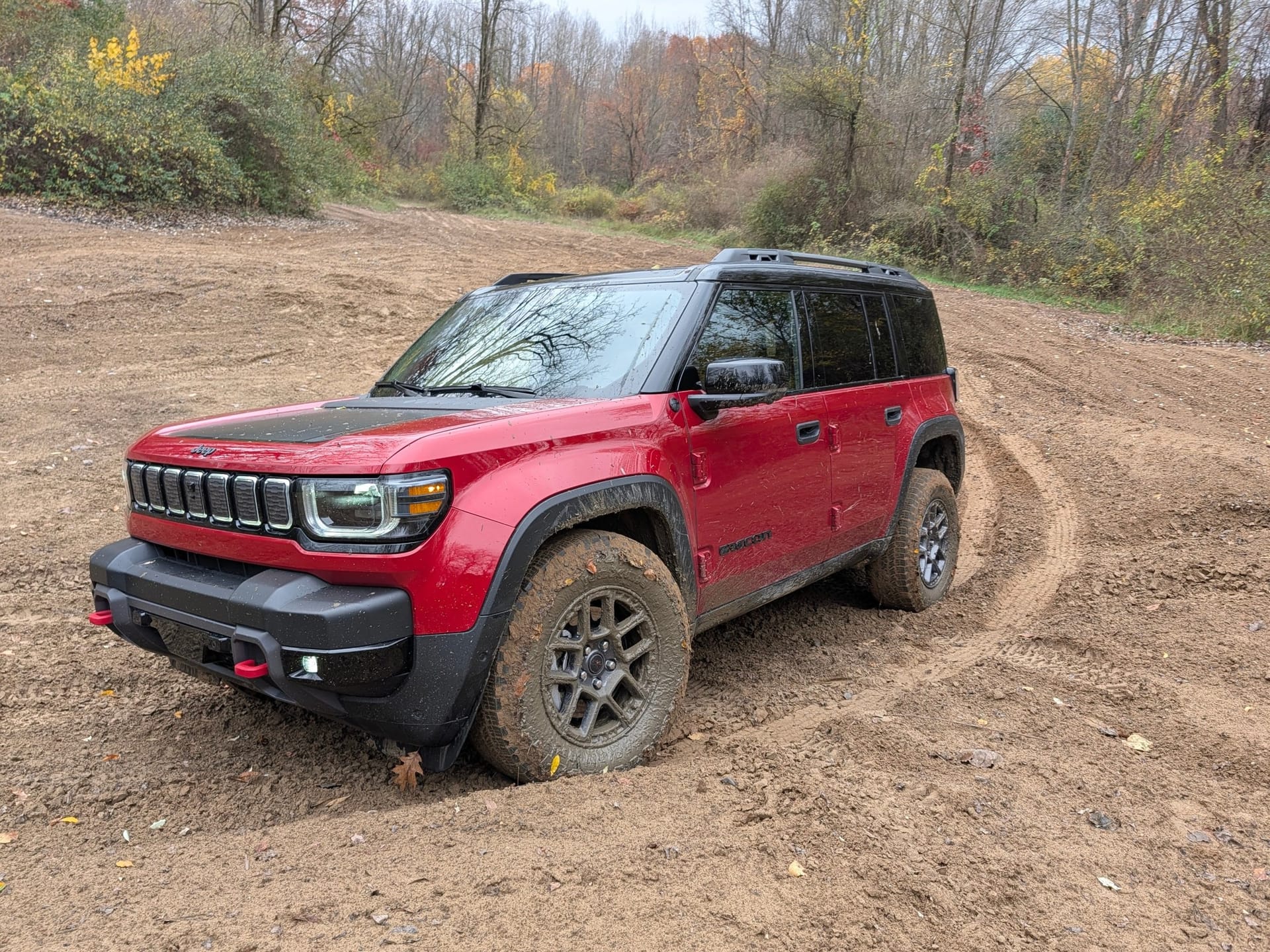
But this is a Jeep, so it shouldn’t be restricted just to roads, right? Well, not so fast. Yes, the Recon Moab can go off-road, so I took it to the Mounds ORV park near Flint, Michigan, to see what it could do. The Moab is currently the most off-roady Recon Jeep has planned, with 9.1 inches of ground clearance. That’s certainly better than the 7 inches from a Hyundai Ioniq 5 XRT or the 5.8 inches of a Ford Mach-E Rally. But the entry-level Wrangler Sport has 9.7 inches, and versions with 35-inch tires get as much as 12.9 inches. Even the 2027 Honda Passport TrailSport has 9.6 inches of clearance.
On the dirt, sand, and moguls, the Recon did reasonably well. But Jeep calls this trim the Moab rather than the Rubicon for a reason. The Rubicon Trail is known for its big rocks and boulders, while trails around Moab, Utah, tend to have smoother slickrock that doesn't need as much clearance. When I got to the park's rock crawl section, I stepped out to check the rocks and my clearance. Since I didn’t have a spotter with me, I decided it just wasn’t worth the risk of damaging the undercarriage or battery. I also avoided the large mud pits where I'd previously gotten stuck in a Bronco Raptor. We’d had a bit of rain lately, so in some of the muddier parts of the trail, I had to rely on some momentum to avoid getting stuck.
So the Recon should have no trouble getting you down a two-track trail to a cabin or fishing spot, and winter driving should be no problem. But if you want to tackle the really tough stuff, the Wrangler is the better choice.
The Bottom Line
There’s a lot to like about the Jeep Recon: its looks, its driving behavior, and even its off-road capability, as far as that goes. But its mediocre range may be a deal breaker.
Then there's the price. The Recon Moab starts at an MSRP of $68,990, including a $1,995 delivery charge. My tester added the $1,995 Sky One-Touch power top and the $1,995 Comfort package, bringing it to an MSRP of $73,345. With this range, I might be able to make a case for the Recon if it cost closer to $50,000. As it stands, it starts about $9,000 more than the Rivian R2 Launch Edition with less range, and cheaper versions of the R2 are coming soon.
Electric SUVs to Drive Before You Buy the Recon
2027 Rivian R2 First Drive Review: A Smaller Rivian, A Better Ride
The R2 Performance nearly matches the Recon’s acceleration, offers 330 miles of EPA range, and currently starts more than $9,000 lower before destination.
Read More ➜
2026 Toyota bZ Woodland First Drive
Toyota’s adventure-oriented EV gives up the Recon’s removable doors and extreme power but brings 281 miles of range, substantially lower pricing, and useful light-trail capability.
Read More ➜
2026 Rivian R1T Quad: The Electric Truck That Does Almost Everything
For shoppers prioritizing serious electric off-road capability, Rivian’s flagship shows what more ground clearance, range, and adjustable suspension can deliver at a much higher price.
Read More ➜



 Previews