
Fast Facts | Rivian R1T Quad
⚙️Output: 1,025 horsepower and nearly 1,200 lb-ft of torque from a quad-motor all-wheel-drive setup
🔋EPA-Rated Range: 374 miles on all-season tires, down to 325 miles on all-terrains
🚗 Tech: Universal Hands-Free driving assist, 12.3-inch instrument cluster, 15.6-inch touchscreen
🪨 Off-Road: Air-spring suspension with up to 14.9 inches of ground clearance
💰As-Tested MSRP: $123,885, including destination and options
The R1T Still Looks the Same. It Isn’t.
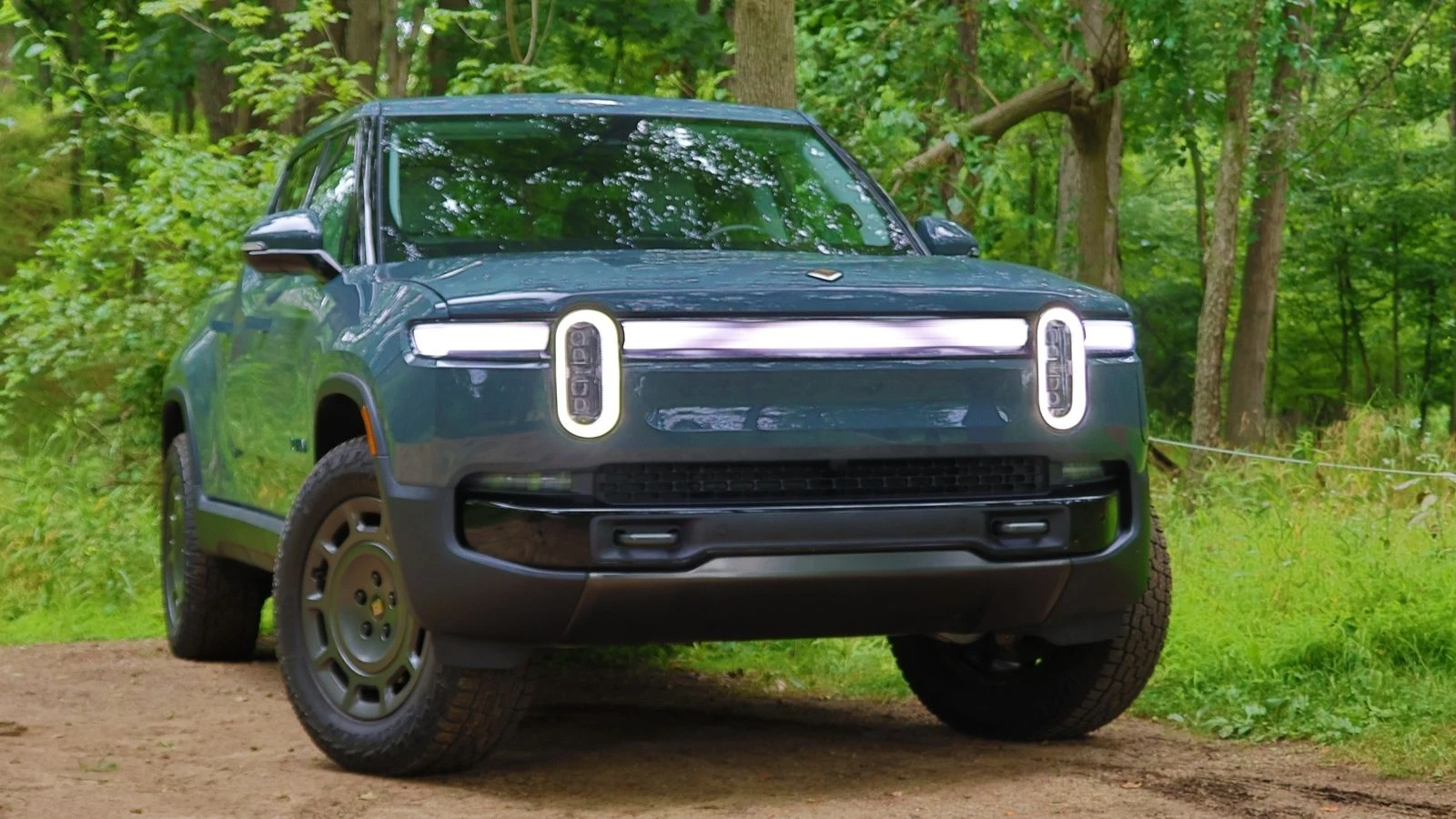
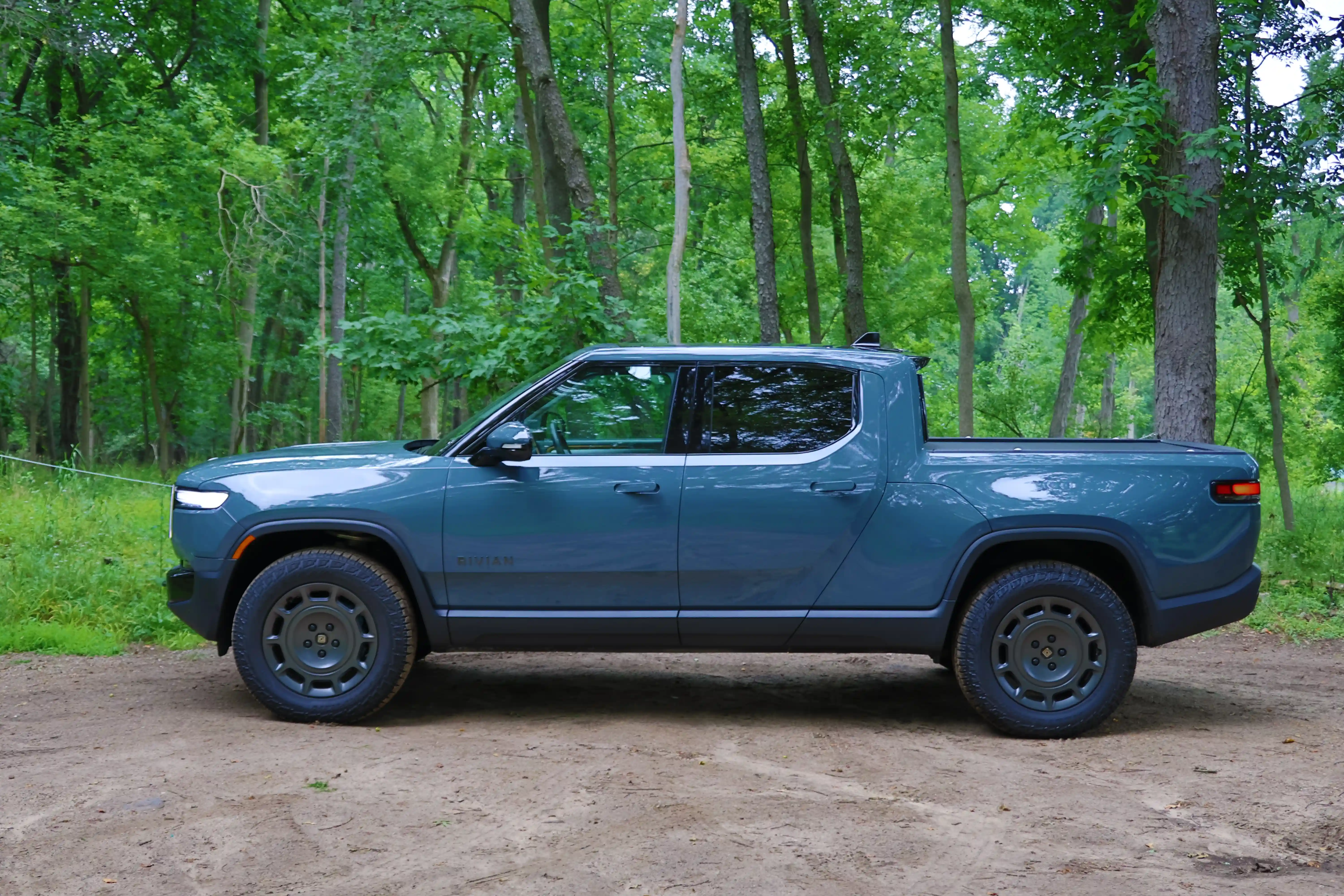
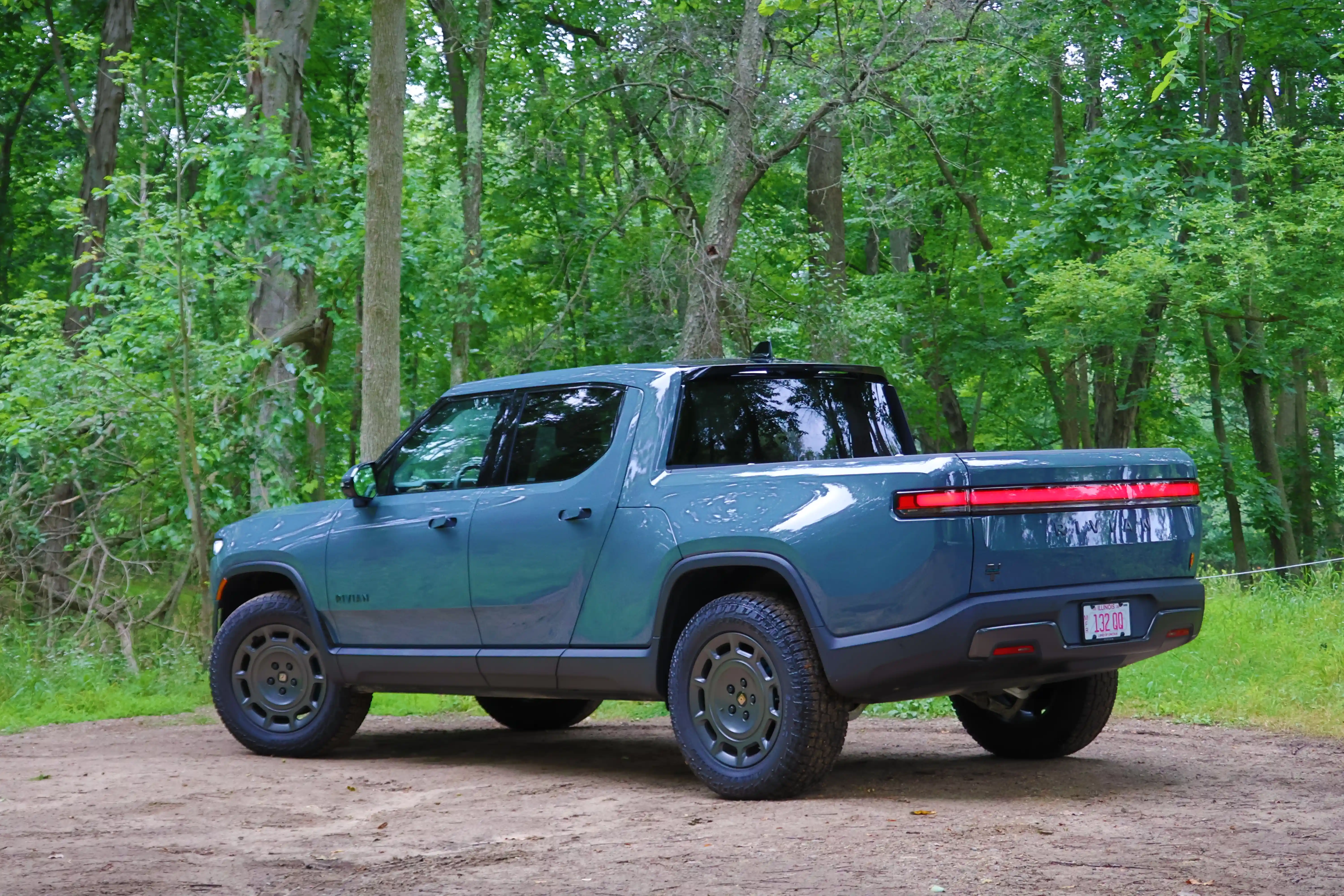
It’s been five years since Rivian started customer deliveries of its first product, the R1T pickup, so I figured it was time to revisit one of the first electric trucks to come to market. The R1T still looks largely the same as it did when we first saw it at the 2018 Los Angeles Auto Show, though it did get a minor refresh a couple of years back. The biggest changes have been under the skin and to the software.
After a full week with the R1T Quad, is it worth the hefty price tag?
The familiar sheetmetal hides a much bigger redesign than the exterior suggests, so see everything Rivian changed when it created the second-generation R1T and R1S ➜
The Living Space
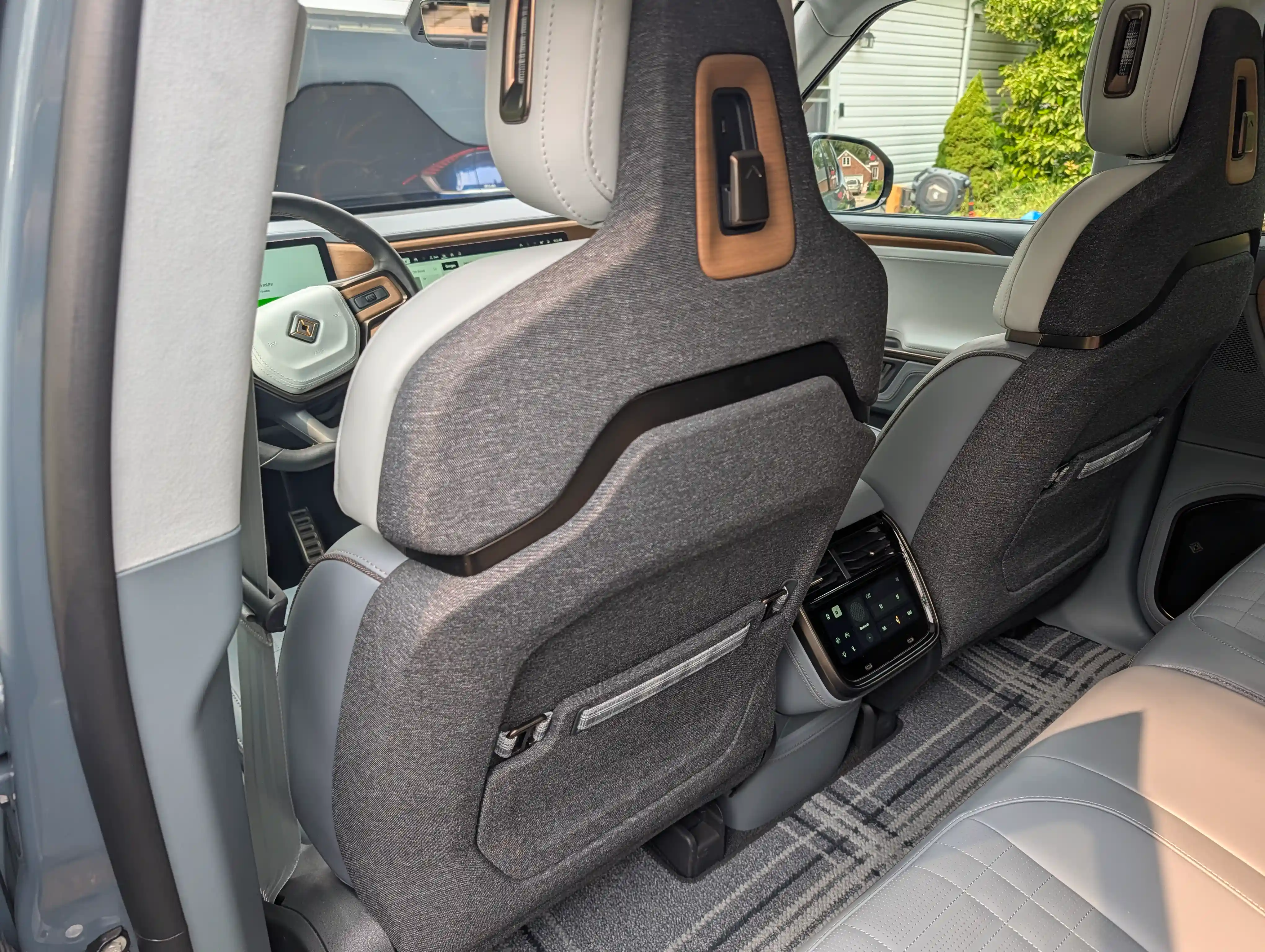
From a color, material, and finish standpoint, the R1T, like all other Rivians I’ve tried so far, is outstanding. Most of the interior is covered in vegan leather, and the Quad comes in two combinations: black and dark grey (Black Mountain) or the light grey and off-white (Slate Sky) of my tester. The black interior is paired with brown ash wood trim on the dashboard, doors, and console, while mine had lighter walnut trim. It looks and feels very premium and in a similar class to a Land Rover.
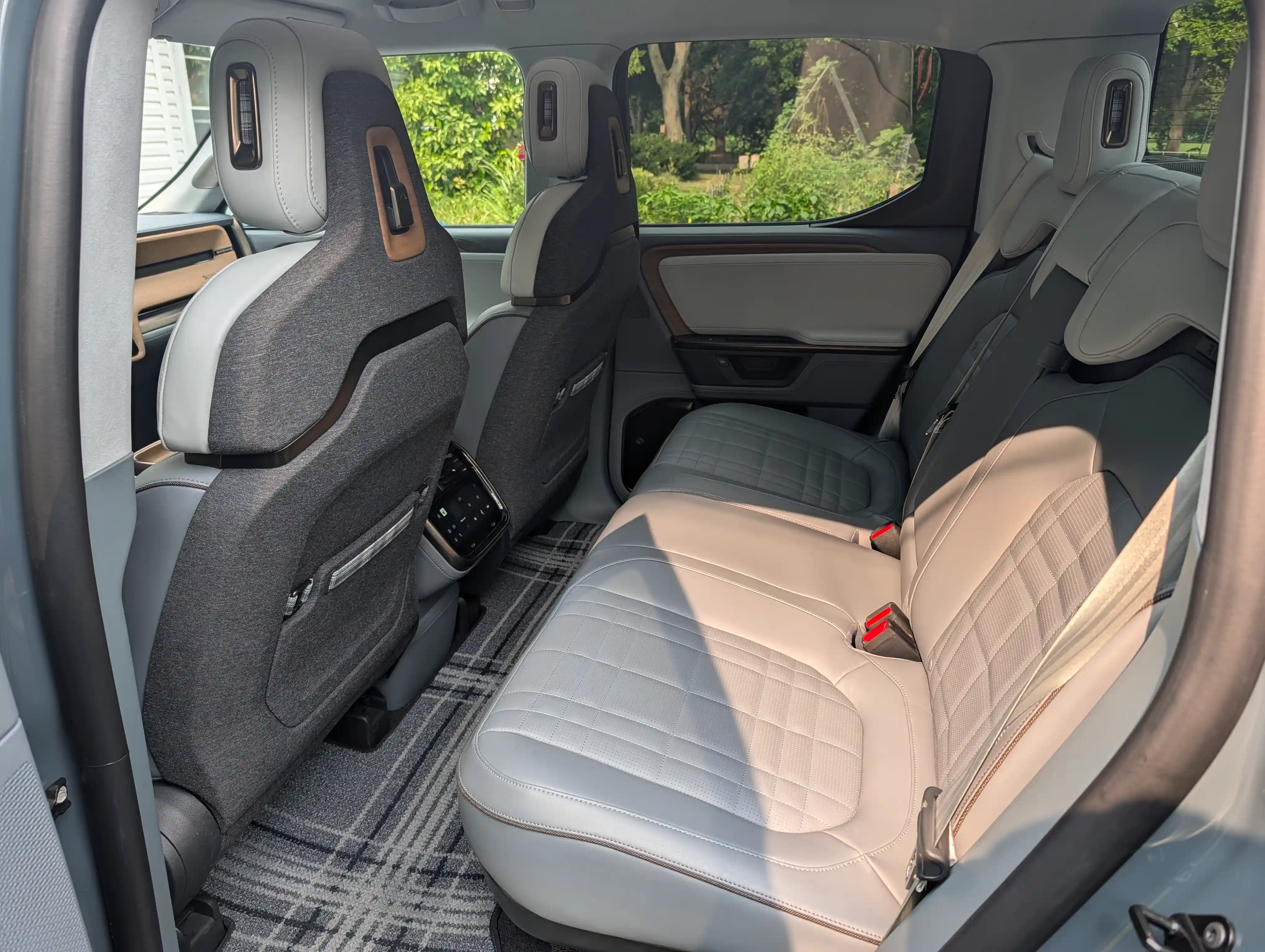
However, both my wife and I found the seats lumpy and uncomfortable. The rear seats fare better. They're flatter and roomier than most midsize trucks like a Ford Ranger or Toyota Tacoma, but not nearly as cavernous as a full-size like the F-150 Lightning.
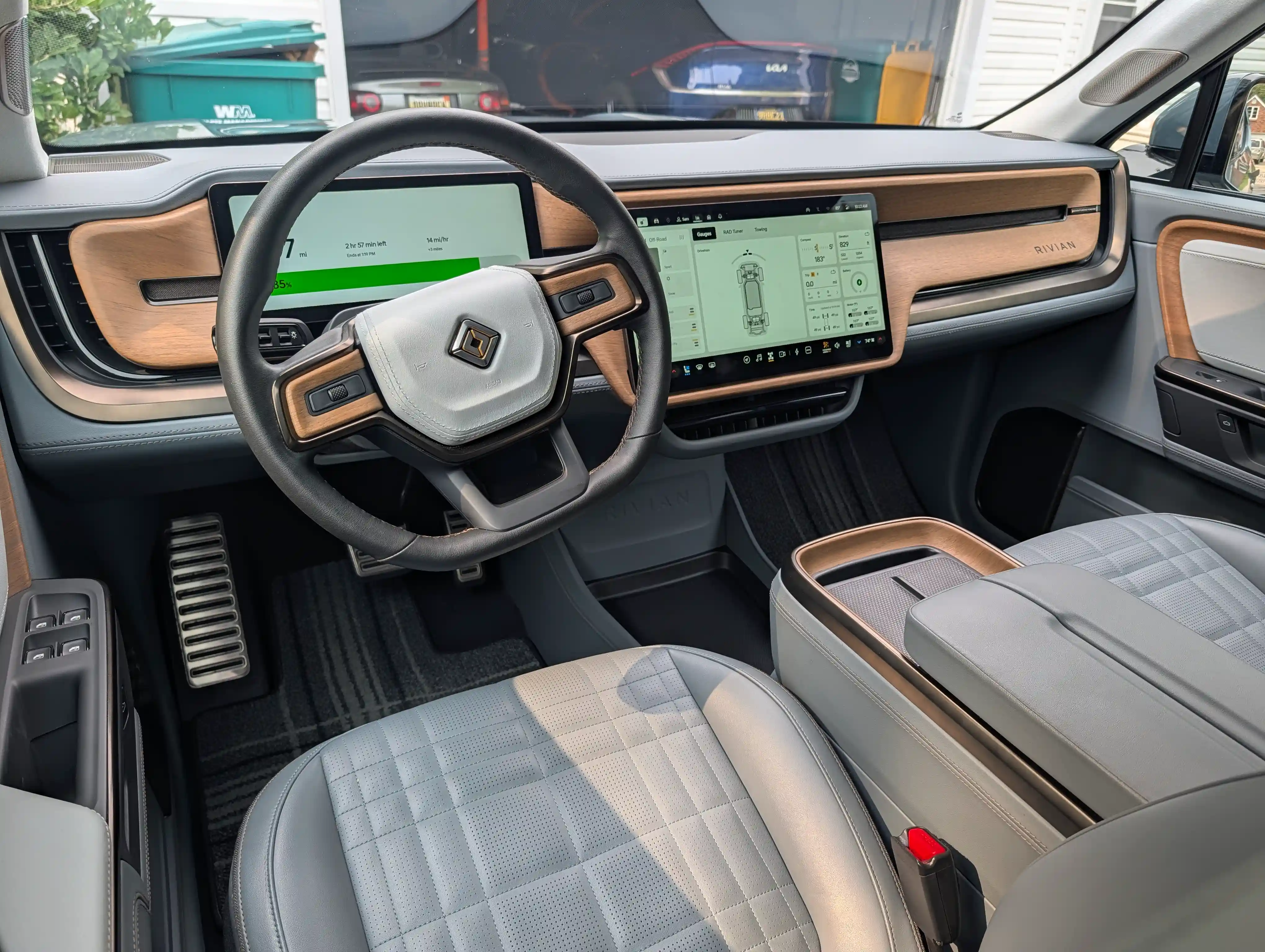
My other major complaint is Rivian's use of software-defined or electronic controls. When we went out to dinner, my wife had to ask me how to open the door because the switch on the inboard side of the armrest wasn’t immediately obvious. And then there are the touchscreen-controlled vents, which I've been ranting about for years now. They’re still a terrible idea.
On the plus side, the 12.3-inch instrument cluster and 15.6-inch infotainment screen are excellent — bright and high-contrast. The overall layout is pretty good. Most of the screen is taken up by the navigation map (powered by Google Maps data), with a permanent strip of climate and mode controls along the bottom. Unlike the R2, which has moved some controls, like door locks, profile selection, and settings, to a vertical bar on the left, these remain up at the top on the R1 when I drove it. As this review was published, Rivian confirmed an over-the-air software update for the R1 will give it the same improved interface as the R2 and add Waze alerts. When using maps, widgets for the media player and search float around the edges, along with a slide-in widget for adjusting the steering wheel, mirrors, and more.
The small rollers and rockers on the steering wheel work okay for volume, track skipping, and some mode selection, but the new haptic wheels on the R2 are better.
Making It Go
The R1T is offered with a choice of two, three, or four motors, and as the "Quad" name implies, my tester had the four-motor setup, which delivers an absurd 1,025 horsepower and nearly 1,200 pound-feet of torque. That’s far more power than anyone actually needs in a truck or in pretty much any vehicle meant for the road.
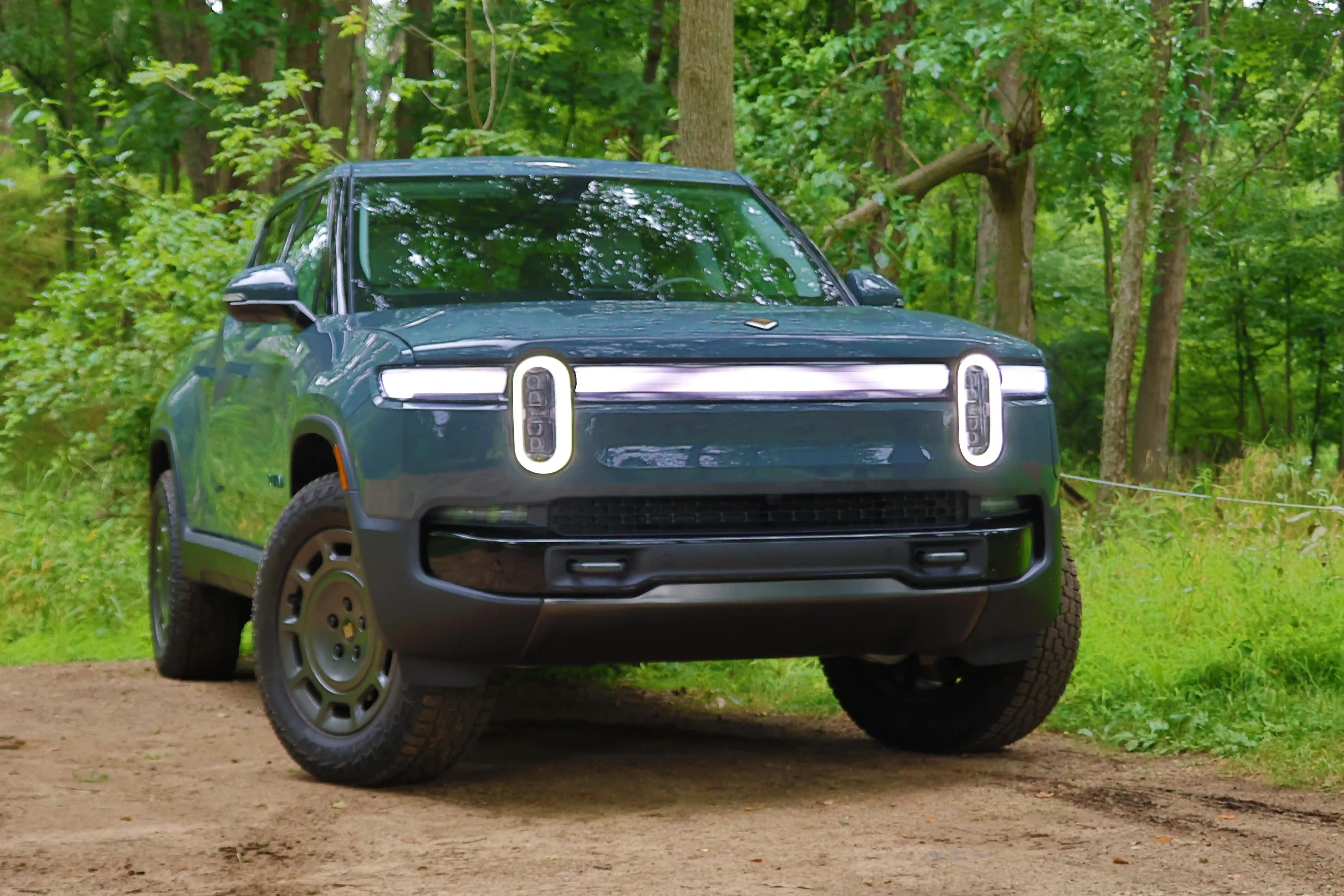
Range and acceleration depend on which tire and wheel setups you choose. On performance tires and a prepared drag strip, the R1T quad can hit zero to 60 in about 2.5 seconds. My tester, riding on all-terrain tires, managed it on a lonely stretch of road in just over 3.7 seconds. Realistically, anything under 6 seconds gives you more than enough oomph to merge onto any highway or make any reasonable pass. One big advantage over the Chevy Silverado EV or GMC Hummer: The R1T has better side-to-side dynamic control under maximum acceleration, with none of the torque steer of GM electric trucks
The R1T is offered with two battery sizes, a 108-kilowatt-hour unit and a 140-kWh "Max" pack, though only the Max is available on the Quad. On the all-season tires, the Quad is EPA-rated at 374 miles on a charge; on the performance tires, 338 miles; and on the all-terrains, 325 miles. When I pulled into a charging station with 49 percent charge, I'd covered 151 miles, which suggests that 300 miles is a reasonable real-world expectation for the Quad.
Wheel choice, speed, weather, terrain, and drive mode can all turn one EPA number into very different real-world results, so see how to compare EV range before relying on the headline estimate ➜
All R1Ts come with an air-spring suspension that can lift the truck up to 14.9 inches off the ground for off-road use. The system did get a bit more compliant after the refresh, but it’s still pretty stiff and definitely less comfortable on rough roads than the R2's new steel-coil spring setup.
Going Hands-Free
The main reason I wanted to spend more time with the R1T was Rivian's Universal Hands-Free (UHF) driving assist, announced last December. Like GM’s Super Cruise, UHF lets you take your hands off the wheel, but you still have to keep your eyes on the road. Unlike most other systems, UHF isn't geo-fenced to specific roads, so you can engage it anywhere with lane markings. It'll work on about 3.5 million miles of paved roads in the U.S. and Canada.
Universal Hands-Free is still driver assistance rather than autonomous driving, so see where hands-free Level 2 systems fit into the rapidly changing self-driving landscape ➜
Unlike Tesla’s Full Self-Driving, UHF doesn’t yet respond to traffic signals like stop signs, yield signs, or red lights, so the driver stays fully responsible for those. It also won't follow your navigation route or automatically change lanes as you approach an exit, as Super Cruise does. It will change lanes on command when you tap the turn signal stalk.
I used UHF across a mix of highway, rural, suburban, and urban routes, and within its scope, it does quite well. The system keeps the vehicle well-centered in its lane and does a good job detecting cut-ins and leaving following room. When requesting a lane change, it’s fairly conservative, waiting out a fast-approaching vehicle in the adjacent lane.
When approaching a lane that's ending, the system waits until the last moment to merge, since it's simply following the lane markers. That works fine with no traffic, but if there's any congestion in the lane you need to move into, you'll want to take control and merge manually, earlier than the system would. And while UHF doesn’t respond to traffic signals, it does flag them in the instrument cluster and warn you to take action.
Rivian developed this system entirely in-house. Overall, it’s been well executed, but it’s critical to stay alert anytime it’s engaged. An infrared driver-monitoring camera, embedded under the glass of the rearview mirror, watches to make sure you're looking at the road. If you look away for more than a few seconds, it'll nag you and eventually bring the vehicle to a stop if you stay unresponsive.
The Bottom Line
The R1T dual-motor MSRP starts at $81,885, including the $1,895 destination fee, and even in base form has 533 horsepower and goes from zero to 60 in well under 5 seconds, which is more than enough for daily driving. The Quad MSRP starts at $115,990, and with the $3,000 in premiums for Storm Blue paint and Slate Sky/walnut interior, plus destination, my tester came to a grand total of $123,885.
Personally, I'd have a hard time justifying that extra $40,000 for a modest bump in acceleration, and you’ll end up with roughly the same range anyway, thanks to the added weight. UHF works surprisingly well, but it's a $2,500 one-time purchase or $49.99 a month as a subscription. I’d probably go the subscription route and sign up just for long road trips. Until Ford’s $30,000 electric truck arrives, the R1T remains the best choice for an electric truck despite some ergonomic quirks.
More Electric Trucks That Push the Limits
2026 GMC Hummer EV Pickup Review: Excess, Electrified
GMC counters the R1T’s four-motor precision with enormous size, three-motor performance, four-wheel steering, and an equally outrageous six-figure price.
Read More ➜
2026 Silverado EV Trail Boss With Max Range: Big Battery, Big Capability
The Silverado takes the opposite approach, prioritizing nearly 500 miles of available range, serious towing capability, and a more conventional full-size truck footprint.
Read More ➜
2027 Rivian R2 First Drive Review: A Smaller Rivian, A Better Ride
Rivian’s newer R2 shows where the company is improving ergonomics, steering-wheel controls, ride quality, and cost without abandoning its software-first philosophy.
Read More ➜