
Fast Facts | What Controls Charging Speed
🔄 Power Types: Level 1 and Level 2 use AC, while DC fast charging sends DC power directly to the battery
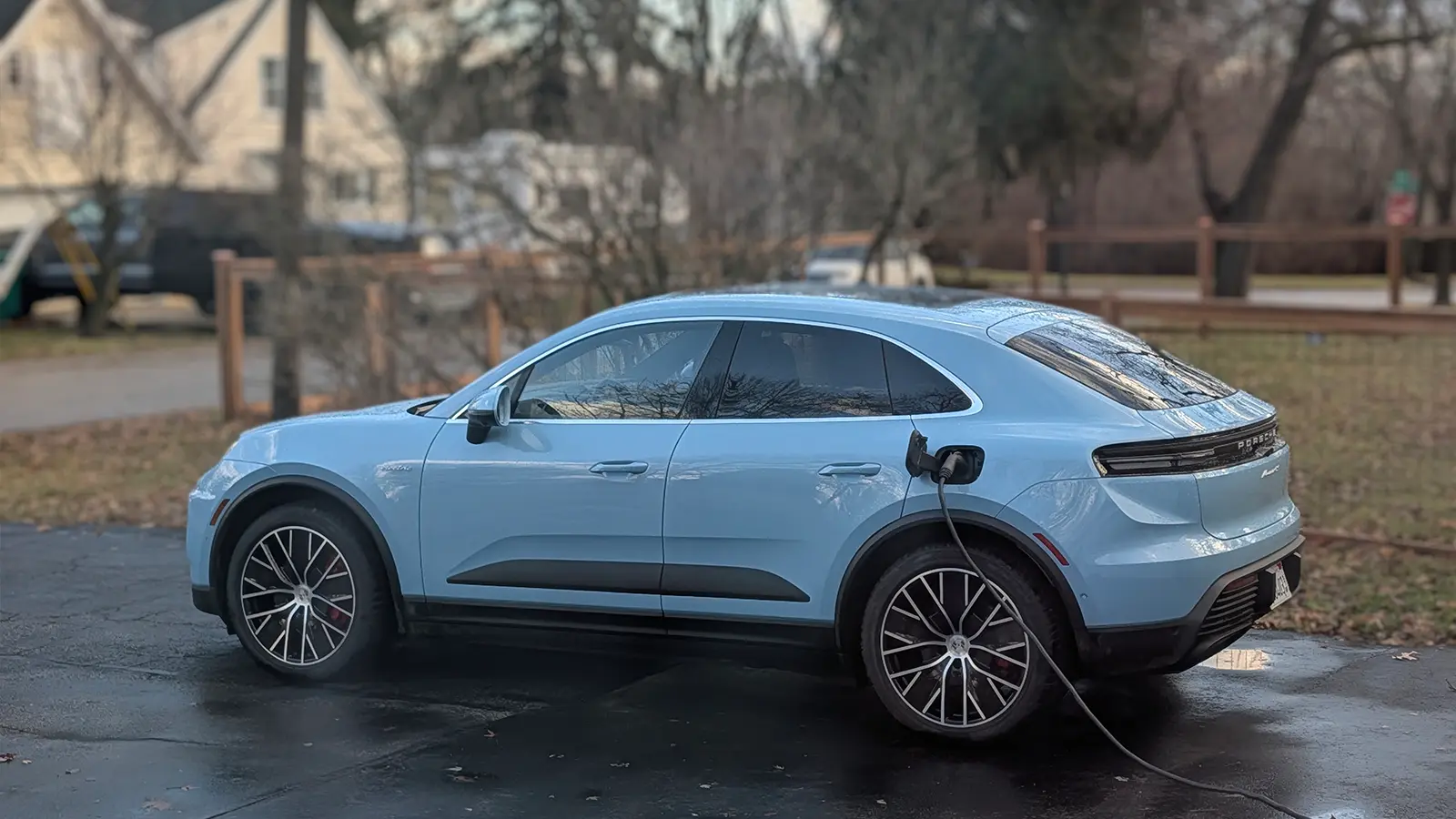
🏠 Level 1 Speed: A standard household outlet usually tops out around 1.3 kW
🔌 Level 2 Speed: A 240-volt, 50-amp setup can deliver up to 12 kW, while a 100-amp circuit can handle 19 kW
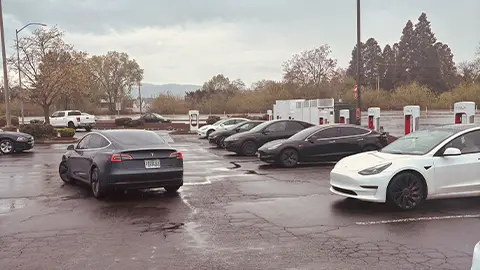
🚀 DC Fast Range: Public DC fast chargers in North America typically deliver 150 to 400 kW
📉 State of Charge: Charging is usually fastest at lower battery percentages and slows down significantly after about 80 percent
🛡️ Battery Protection: Charging curves are designed to protect long-term battery health, not just maximize headline speed
Whenever new technology emerges, there are almost always competing ideas about how it should work. Eventually, things consolidate and standardize. Think about gas stations: when Karl Benz took the first ride in his 1886 Motor Wagen, there were none. The first drive-through station didn't open until 1913 in Pittsburgh. Today, fueling is standardized worldwide. We're still early in the EV evolution, but compared to where gas-powered vehicles were at this same stage, we're actually much further along in standardization.
Let’s take a closer look at how charging works.
Gas Pumps Don't Care What You're Driving
Any gas pump in the world can fill any gas-powered vehicle. The pump doesn’t know or care how big the tank is or how full it is. It just flows fuel at a steady eight to 10 gallons per minute until a mechanical switch in the nozzle cuts it off when the tank's full.
Charging an EV is a much more complicated process. It involves a lot of back-and-forth communication between your vehicle and the charger, and most of it happens behind the scenes while the electrons flow.
So what are they talking about? It's mostly about safety and protecting the battery. Anyone with a smartphone has experienced its battery degrade after a couple of years of use. A smartphone's size makes it hard for manufacturers to install a temperature control system, so batteries overheating from charging too fast is a common problem, and that heat is what leads to degradation over time. Most modern EVs solve for this with liquid cooling systems that keep their batteries at the optimal temperature for both performance and longevity.
When you plug in, the charger and vehicle first handle authentication — either through Plug&Charge (where your car identifies itself and passes payment info to the charger automatically), by using an app, or swiping a credit card. Then, they exchange information about how much power can be delivered and accepted. Whatever's lower becomes the ceiling for your charging speed.
AC vs DC: A Quick Explainer
Electricity can travel in two ways: alternating current (AC) and direct current (DC). With AC, the current polarity switches from positive to negative rapidly, 60 times per second in the U.S. AC is what runs through the grid and comes out of your wall outlets, since it's much more efficient over long distances. Batteries, however, store and release energy in a DC flow, which means the current polarity doesn't switch back and forth. That's why EVs need a converter somewhere in the process to change AC power from the grid into DC power that the battery can use.
If you want the bigger picture before getting into charging limits, How EV Charging Works: A Beginner’s Guide is a smart starting point ➜
EV chargers generally fall into three levels based on voltage. Level 1 is 120-volt AC, which is what comes out of a standard North American household outlet. Level 2 is 240-volt AC, which is what you would get from a typical dryer or electric stove outlet. Level 3 is DC fast charging, typically running at 400 volts and above.
Charging power is measured in kilowatts. A typical household outlet maxes out around 1.3 kW. A 240-volt, 50-amp circuit can deliver up to 12 kW, while a 100-amp circuit can handle 19 kW. Public DC fast chargers in North America typically deliver 150 to 400 kW, and in China, some chargers and vehicles now support an incredible 1,000 kW.
At Level 1 or 2, your car's onboard converter changes AC to DC before it hits the battery. At a DC fast charger, that conversion happens inside the charger, so DC flows directly to the battery. Either way, the slower of the two (the charger or vehicle) sets the pace.
When temperature starts affecting speed, Temperature and Your EV Battery gives useful context on why cold and heat can change charging behavior so much ➜
Think of it this way: plug an older Nissan Leaf, with an onboard converter capped at 6.6 kW, into a Level 2 charger capable of 11 kW, and the Leaf's converter is the limiting factor. You're getting 6.6 kW regardless. Flip the scenario with a Chevrolet Silverado EV, which can accept up to 350 kW, and plug it into a 150-kW DC fast charger. Now the charger is the limiting factor, and the Silverado will only charge at 150 kW.
Factors Affecting Charging Speed
Cold weather slows everything down. A cold battery restricts how fast it can accept a charge, which is why you may have heard horror stories about people having a hard time charging in extremely cold weather. Many newer EVs can precondition the battery before you arrive at a charger to warm things up and maximize speed.
Heat can be an issue, too, for the charger itself. High-powered DC fast chargers typically use liquid-cooled cables, but in extreme heat, they can still overheat and reduce power until the temperature comes down.
The battery's state of charge (SoC) also matters a lot. Charging speed typically peaks when the battery is between 10 and 25 percent, then gradually tapers off. A Tesla at a Supercharger, for example, might hit 250 kW early in a session, slow to around 90 kW at 50 percent, and drop further from there. Hyundai, Kia, and Genesis EVs have particularly strong thermal management and can hold higher speeds for longer. The Ioniq 5 and EV6 can sustain nearly 220 kW all the way to 50 percent before stepping down.
If battery longevity is the concern behind all this, Charging Habits That Protect Your Battery is the natural next read ➜
Engineers determine these charging curves, which are managed by the vehicle based on SoC and battery temps. The EV will constantly remind the charger of the maximum power it can accept, and instruct it when to shut off entirely.
Once a battery hits 80 percent, most EVs dial charging back significantly, sometimes to as low as 10 to 20 kW. This is to prevent the system from charging past 100 percent, which can cause permanent battery damage. Since charging is so slow for that last 15 to 20 percent, it's good etiquette to unplug at a public charger once you hit 80 percent, especially if others are waiting to use the charger.
Just Plug In and Let It Do Its Thing
Under the sheetmetal, EV charging is a bit more involved than pumping gas, but once you understand the basics of what affects charging speeds, you'll get used to it quickly. And if you can charge at home? Even better. Just plug in when you pull into the driveway or garage, and your car will be ready to go every morning. No gas station or thinking required.
⚡ More Charging Guides Worth Reading
How EV Charging Works: A Beginner’s Guide
A broader primer for readers who want the full foundation on how EV charging works at home, at work, and on the road before diving deeper into charging-speed limits.
Read More ➜
Temperature and Your EV Battery
A strong companion piece for readers who want a more focused look at why winter cold, summer heat, and preconditioning can dramatically affect charging speed.
Read More ➜
How Much Does Fast Charging Affect Battery Life?
This is a useful follow-up for anyone who reads this article and immediately starts wondering whether faster charging is quietly hurting the battery over time.
Read More ➜