





 Comparisons
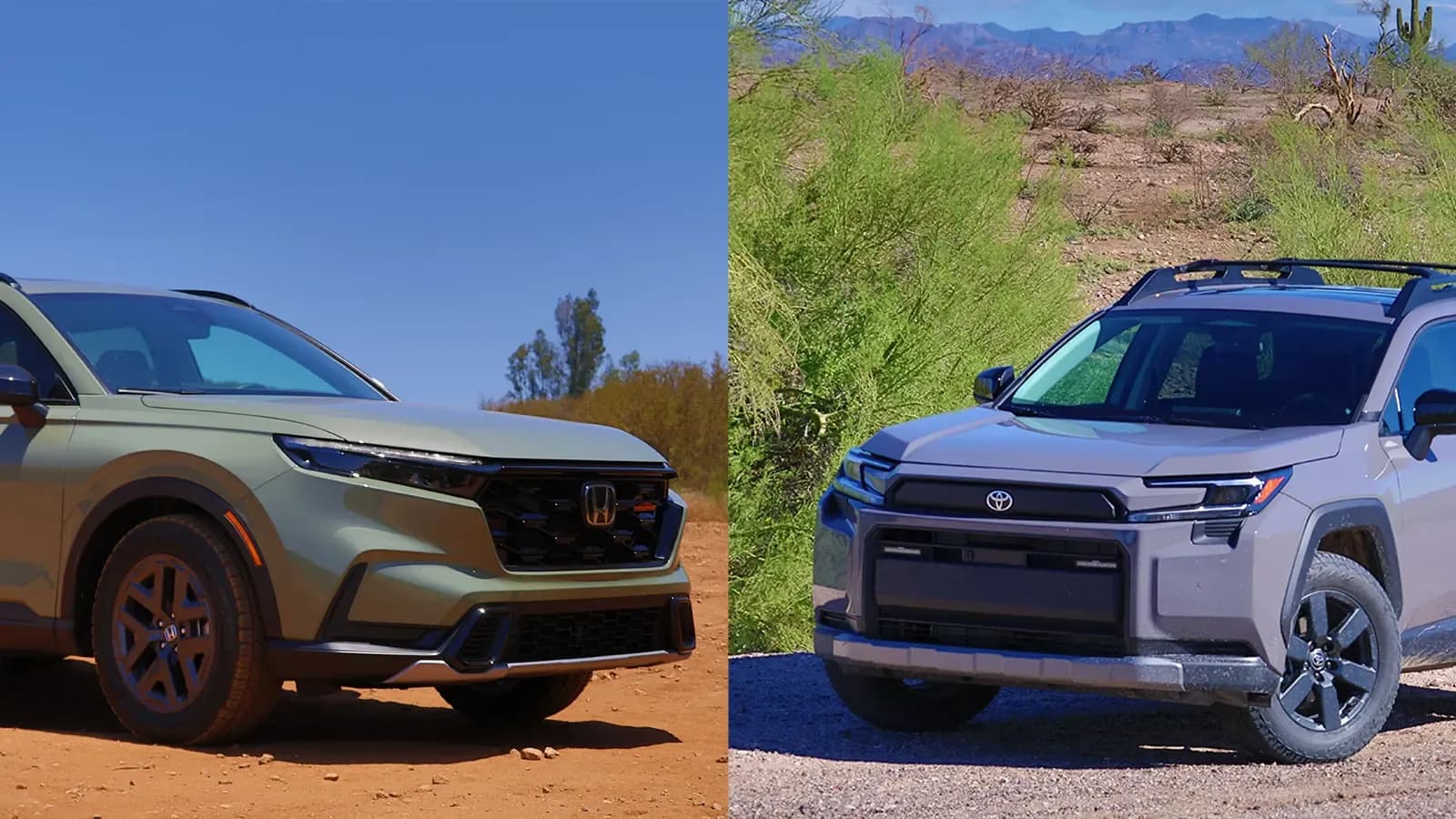
Honda CR-V Hybrid vs. Toyota RAV4 Hybrid
These are two of America's bestselling hybrids, and they're both excellent. So how do you choose between them? We're breaking down what matters most.
Sam Abuelsamid7 min read

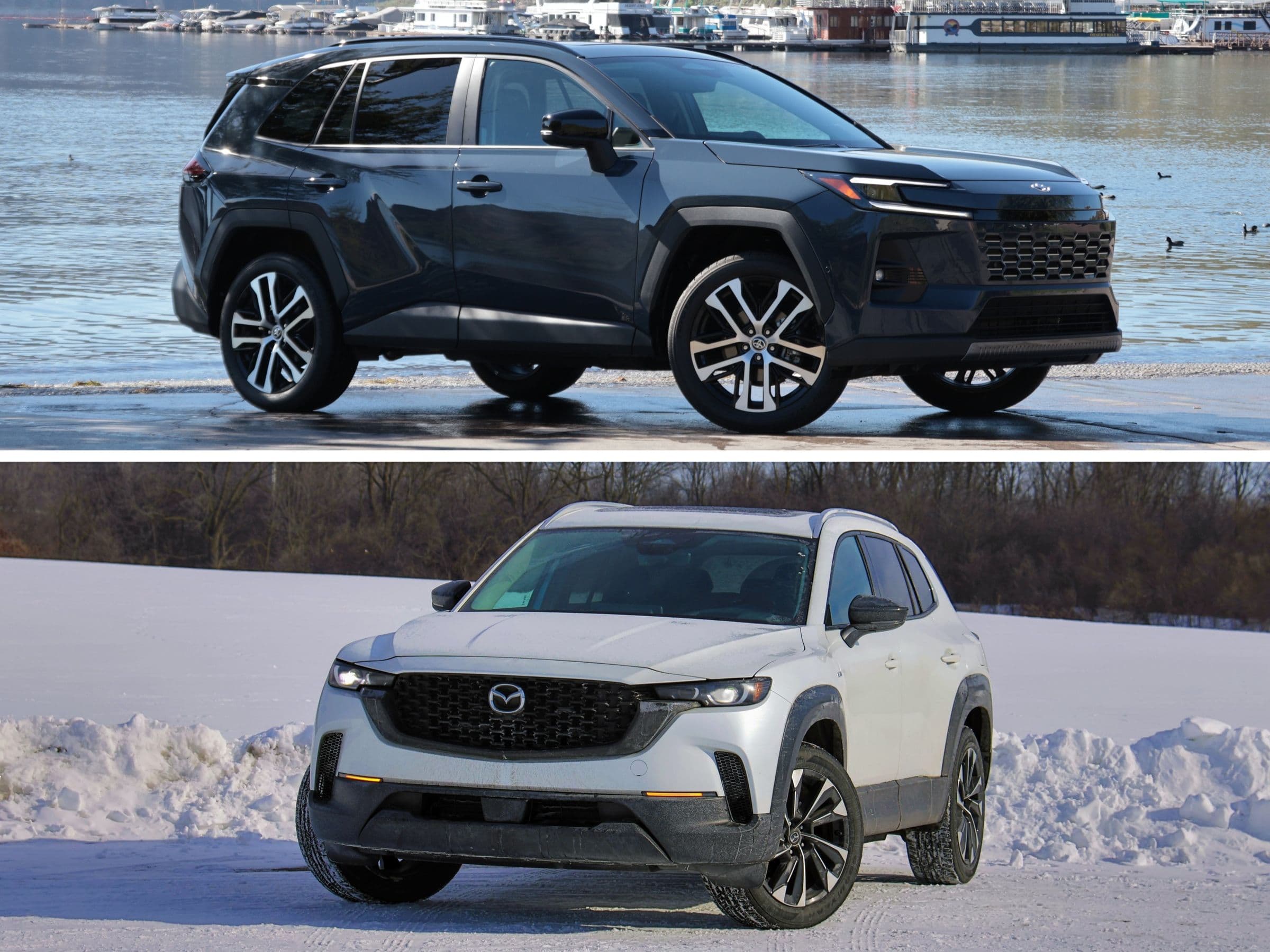
The Mazda CX-50 Hybrid and Toyota RAV4 Hybrid share a lot under the skin, but one leans into style and more standard features while the other wins on efficiency and space. Here's how they compare.
Compact crossovers are one of the most popular segments in America, and few nameplates in it are bigger than the Toyota RAV4. The Mazda CX-50 Hybrid is a natural rival, and the two have more in common than you might expect thanks to a partnership between Toyota and Mazda. Here's where they're alike and where they differ.
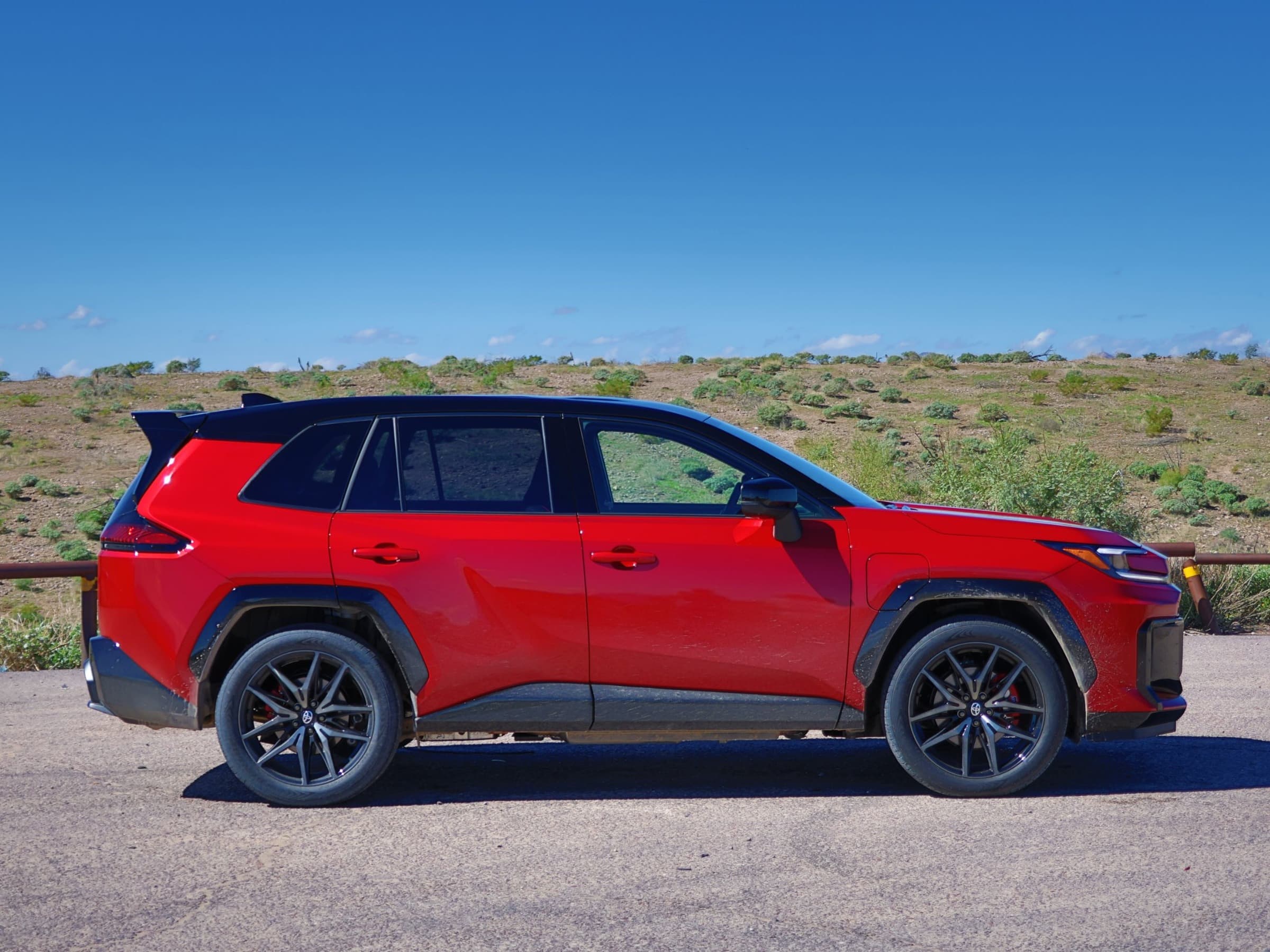
Compact crossovers can blend together on the road, and these two are close in size but easily distinguishable. The CX-50 Hybrid is 4.1 to 5.1 inches longer than the RAV4, while the RAV4 is up to an inch wider. Neither difference is obvious at a glance. Height is a different story. The RAV4 stands taller and more upright, with slightly more ground clearance: 8.1 to 8.5 inches vs. 7.8 to 8.1 inches. The styling diverges, too. The RAV4 has a boxier and more chiseled look, while the CX-50 Hybrid applies a bit of ruggedness to Mazda’s clean and elegant Kodo design language, mainly through more pronounced fender bulges.
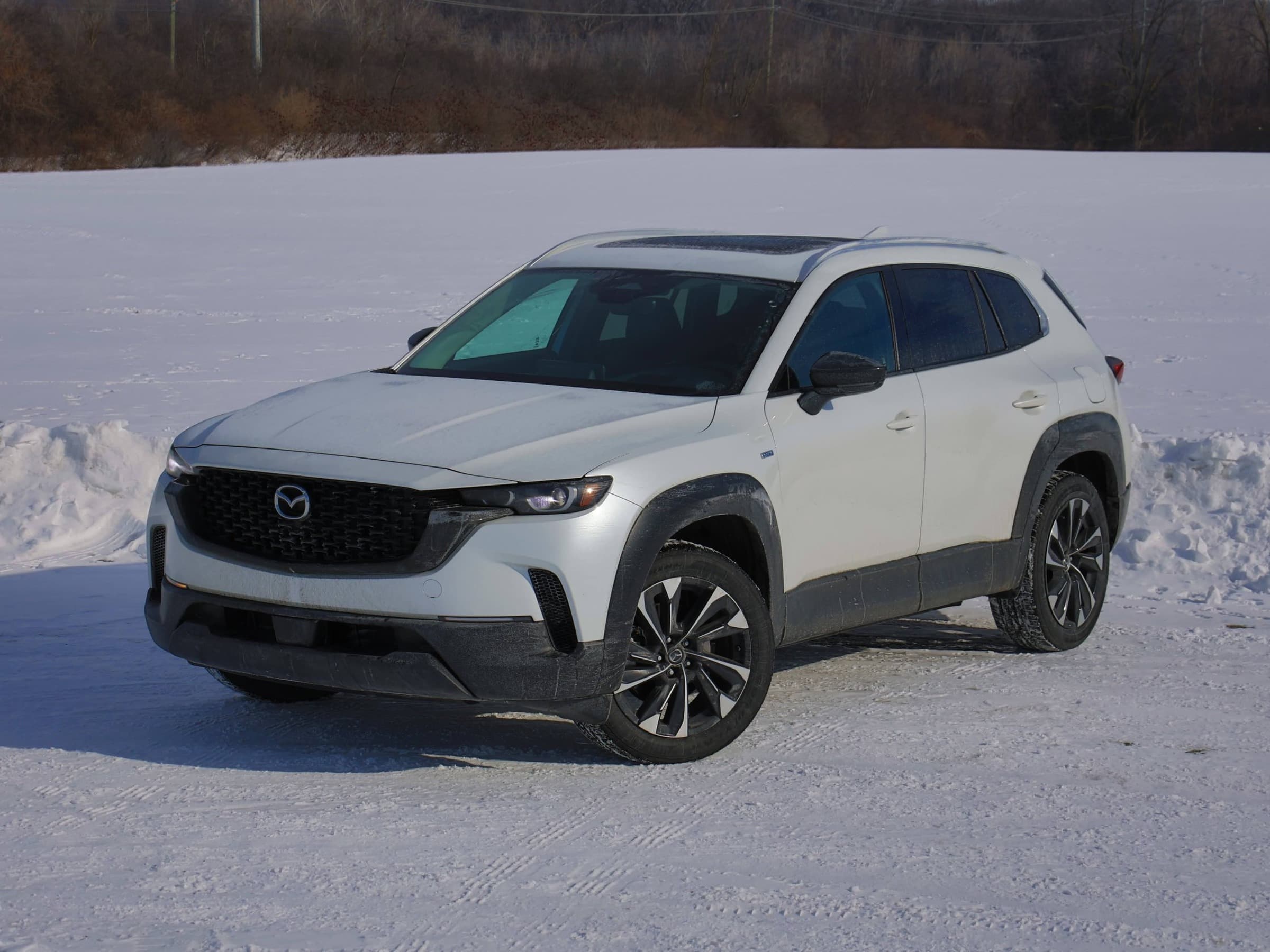
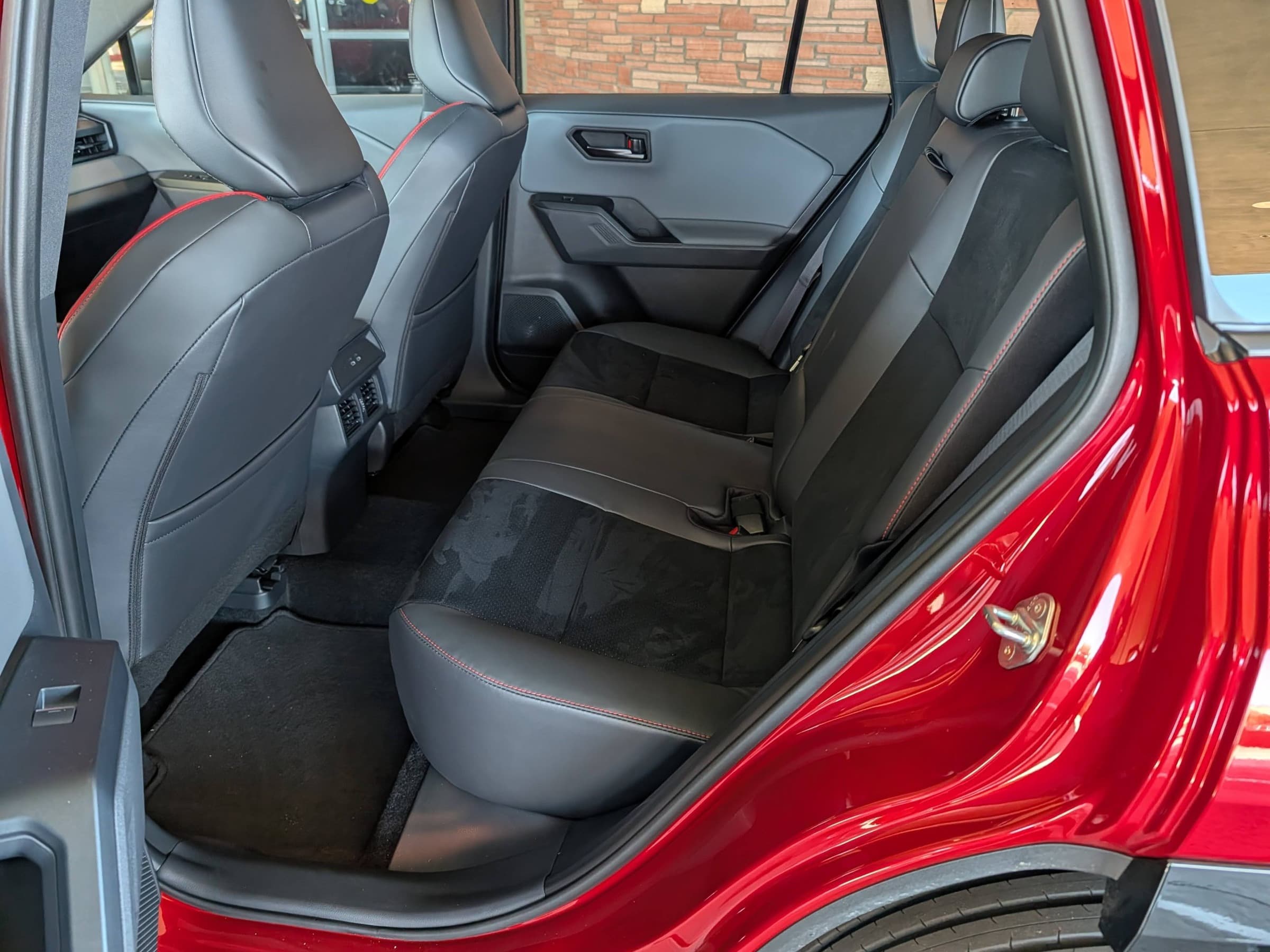
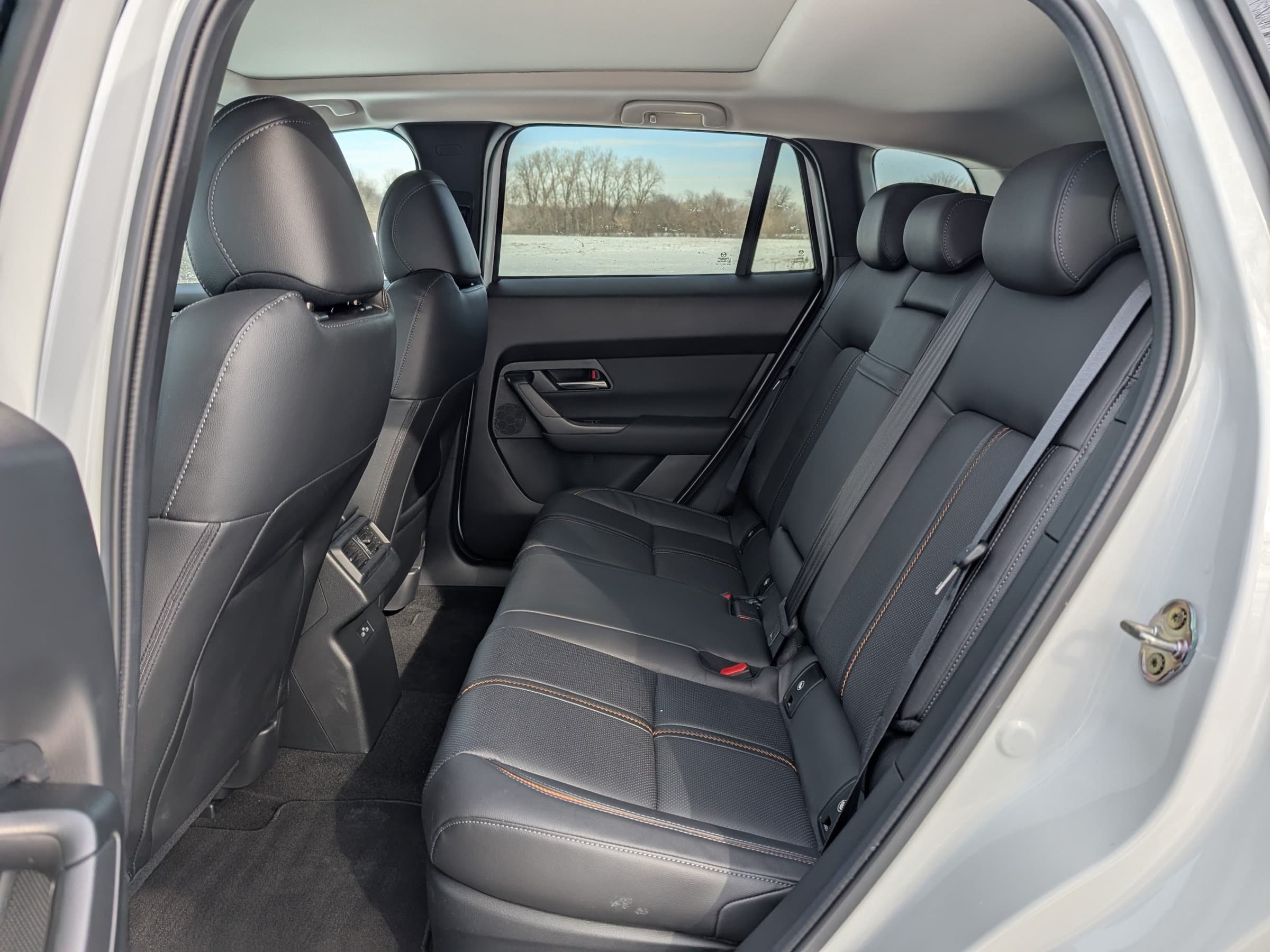
Even though the CX-50 is the longer vehicle, most interior measurements favor the RAV4. The Toyota has 1.1 inches more front shoulder room, 1.7 to 2.8 inches more rear headroom, and 2.8 inches more rear shoulder room. It also wins on cargo space, with 8.6 more cubic feet behind the second row and 14.1 more cubic feet with the rear seats folded. The CX-50 Hybrid only comes out ahead in front headroom, by 0.7 to 1.2 inches, and front legroom, by 0.7 inch. Rear legroom is identical.
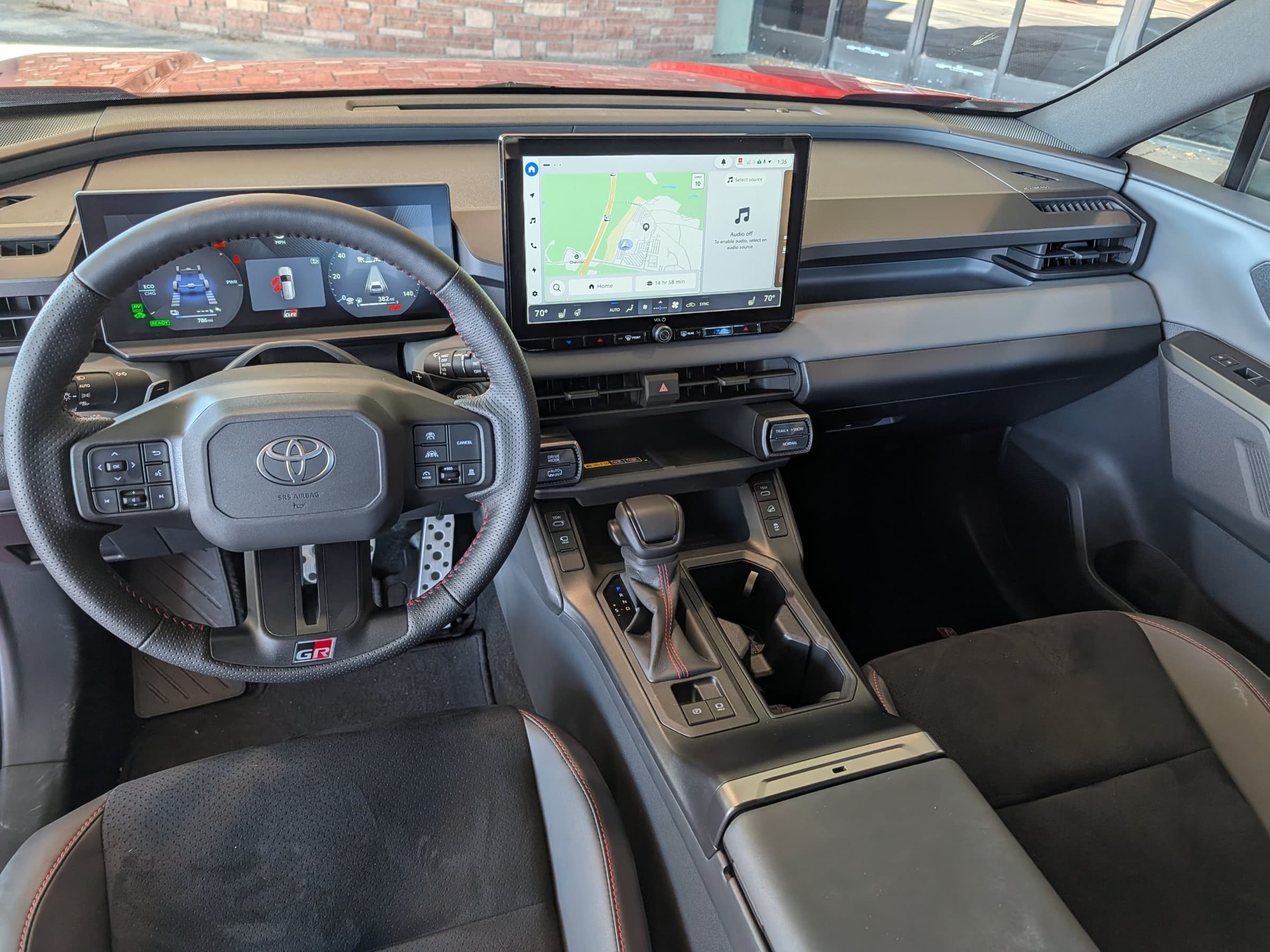
Both come standard with keyless entry, push-button start, a 60/40 split-folding rear seat, dual-zone automatic climate control, wireless Apple CarPlay and Android Auto, and USB-C ports. Standard screen size is close: 10.25 inches in the Mazda and 10.5 inches in the Toyota. The RAV4's screen responds to touch at all times. The CX-50 Hybrid's screen works as a touchscreen only during smartphone mirroring; otherwise, you use a rotary controller on the center console. A 12.9-inch touchscreen is available in the RAV4.
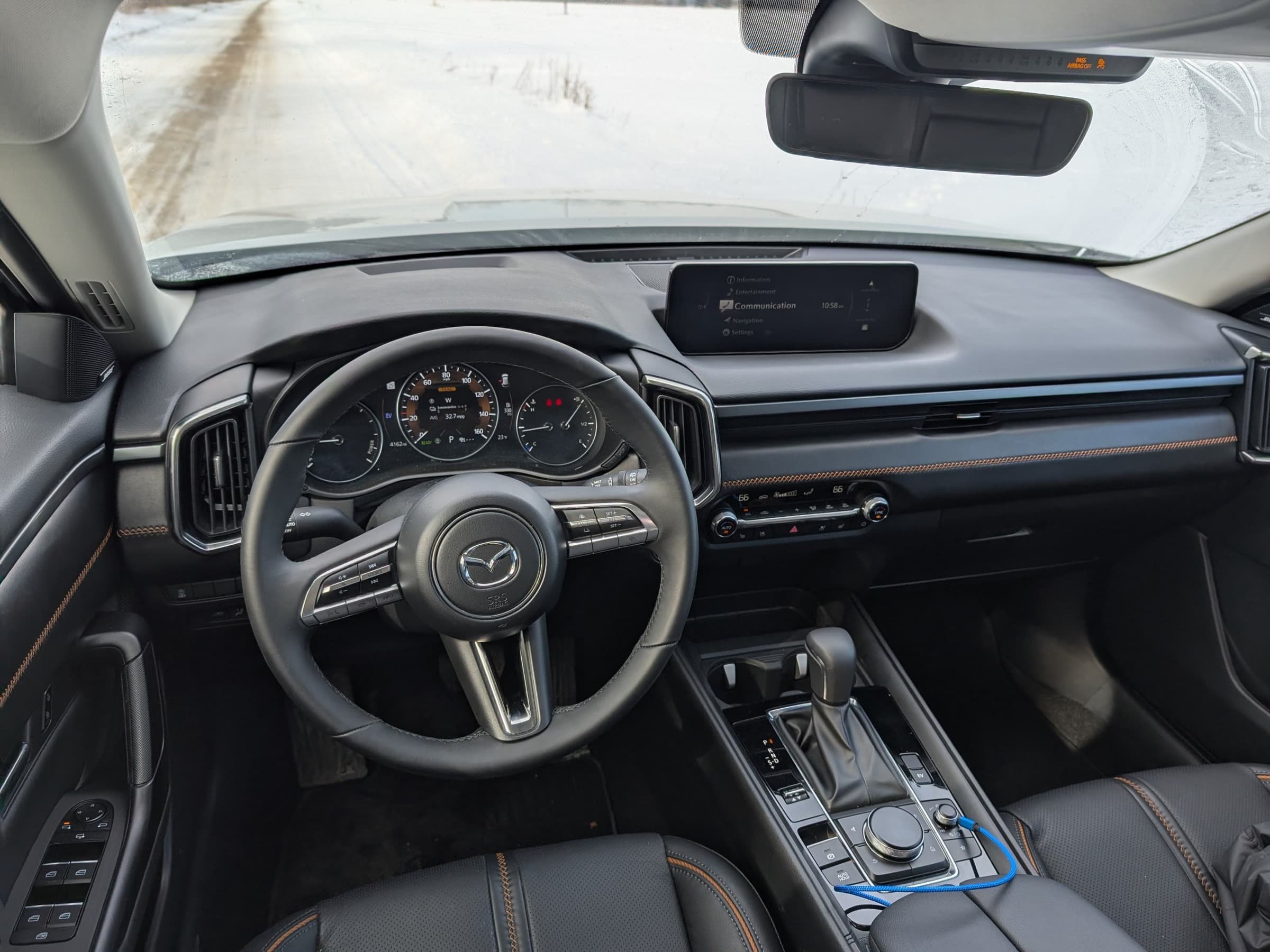
The CX-50 Hybrid comes standard with a panoramic glass roof, wireless device charging, a leather-wrapped steering wheel, heated front seats, an eight-way power-adjustable driver's seat, and synthetic leather upholstery, while those are available on the RAV4.
Both can be upgraded with a head-up display and a heated steering wheel. They both also have an upgraded audio system. The CX-50 has an optional Bose 12-speaker system, and the RAV4 has an optional JBL nine-speaker system. The CX-50 Hybrid has optional driver's seat and side-mirror memory, ventilated front seats, heated rear seats, an auto-dimming rearview mirror, and leather seats, all of which are unavailable on the RAV4. The RAV4, on the other hand, is available with a digital rearview mirror.
Both come standard with automatic emergency braking, adaptive cruise control, blind-spot monitoring, rear cross-traffic alert, lane-departure warning, lane-keeping assist, and automatic high beams.
Front and rear parking sensors are standard on the CX-50 Hybrid and optional on the RAV4. Traffic-sign recognition is standard on the RAV4 and optional on the CX-50 Hybrid. The RAV4 has an available surround-view monitor.
Over the last decade, Mazda and Toyota have developed a close working relationship. The two share a joint-venture assembly plant in Huntsville, Alabama, where the CX-50 and Toyota Corolla Cross are produced. The standard CX-50 is powered by Mazda’s in-house-developed SkyActiv-G gas engine, but the hybrid gets its powertrain from Toyota’s engine plant nearby.
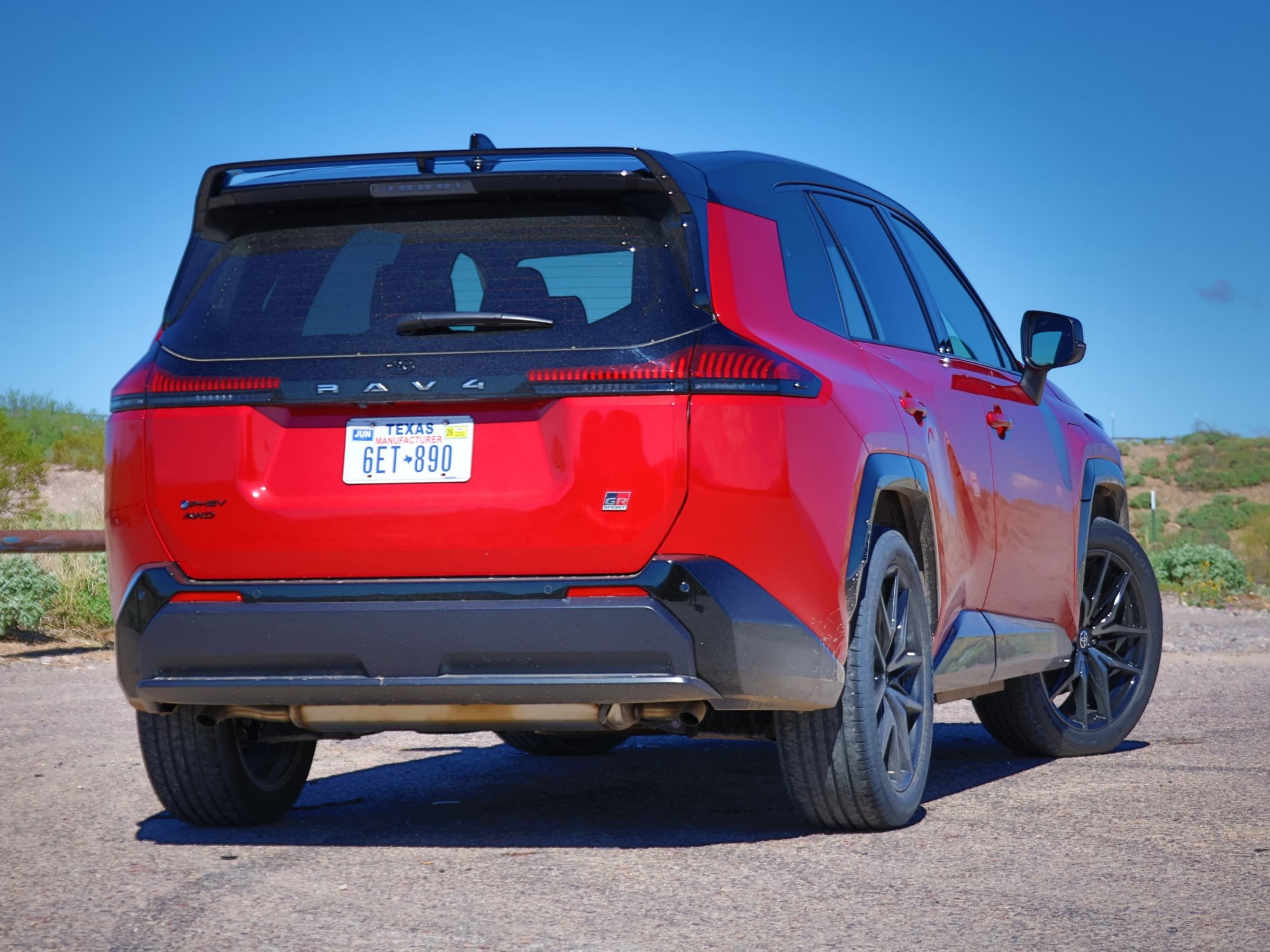
Toyota supplies the CX-50 Hybrid's 2.5-liter four-cylinder engine, battery, and fourth-generation hybrid drive. Those are the same units used in the previous-generation RAV4. The 2026 RAV4 moves to Toyota's updated fifth-generation hybrid system and a newer battery design, which provides a bit more power and efficiency. The RAV4 Hybrid makes 7 more horsepower than the CX-50 Hybrid in FWD and 17 more in AWD. Both of their engines make 163 lb-ft of torque. Both vehicles use a rear e-axle to provide AWD.
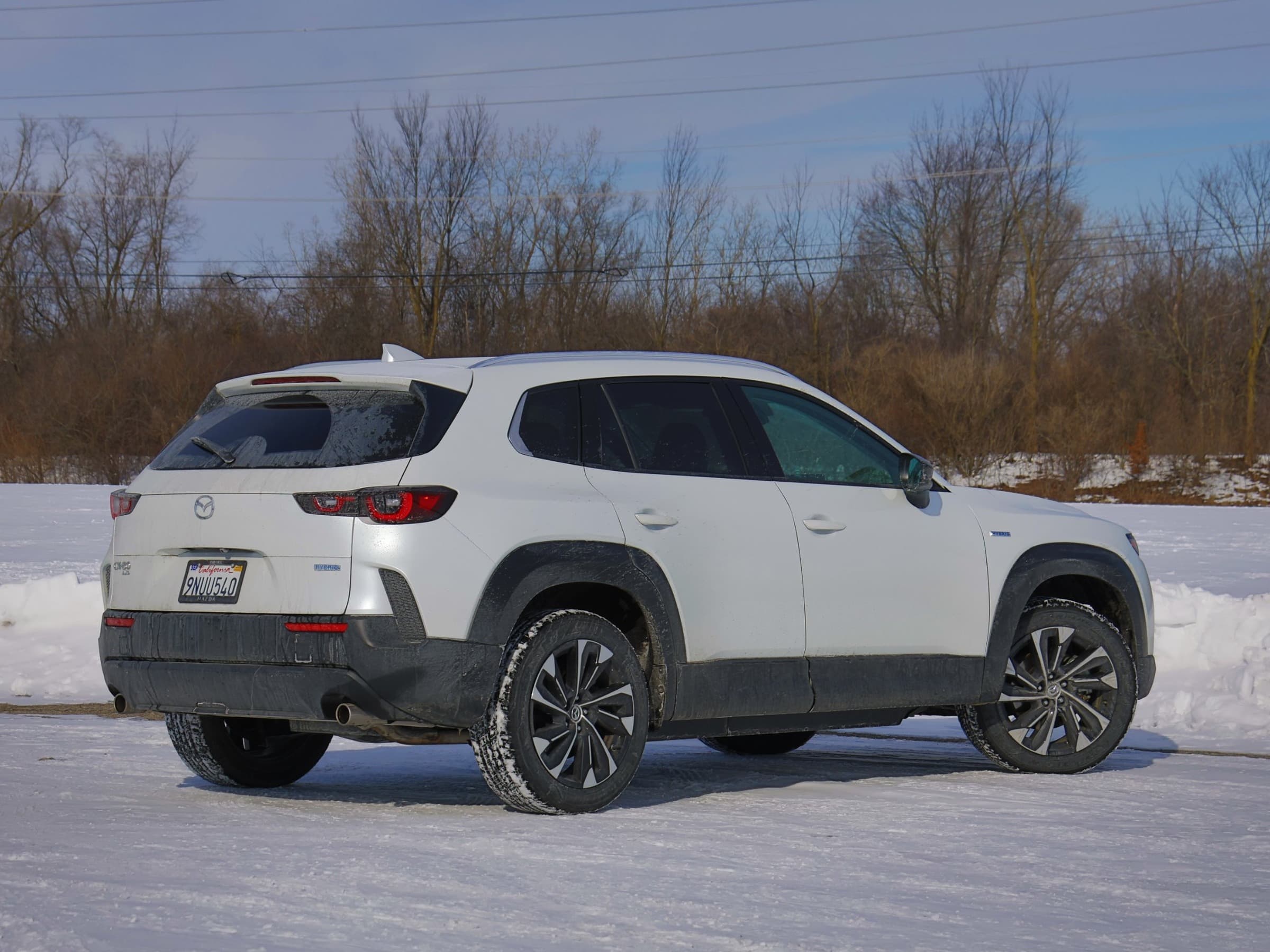
The CX-50 Hybrid comes only with AWD, while the RAV4 offers both FWD and AWD. The FWD RAV4 is the most efficient of the bunch, beating the CX-50 Hybrid by 8 mpg city, 3 mpg highway, and 5 mpg combined. The RAV4 still wins in an AWD-to-AWD matchup, by 7 mpg city, 2 mpg highway, and 4 mpg combined. The two only meet in the trail-focused RAV4 Woodland, which matches the CX-50 Hybrid at 38 mpg combined.
EPA ratings are useful for comparison, but city, highway, drivetrain, and trim all change the math, so see how to read fuel-economy ratings before deciding which MPG number matters most ➜
The base RAV4 Hybrid LE FWD is $2,850 less than the base CX-50 Hybrid Preferred ($33,495 vs. $36,345). Comparing AWD models, the RAV4 Hybrid LE is $1,450 less than the CX-50 Preferred ($34,895 vs. $36,345). At the top, the CX-50 Hybrid Premium Plus is $2,850 less than the RAV4 Limited ($42,045 vs. $44,895) and $1,825 less than the RAV4 XSE.
Park these two side by side, and you’ll easily be able to tell them apart. The RAV4 looks vaguely like something created in Minecraft, while the CX-50 Hybrid has a smoother, cleaner look of a modern Mazda. Their designs diverge even more inside.
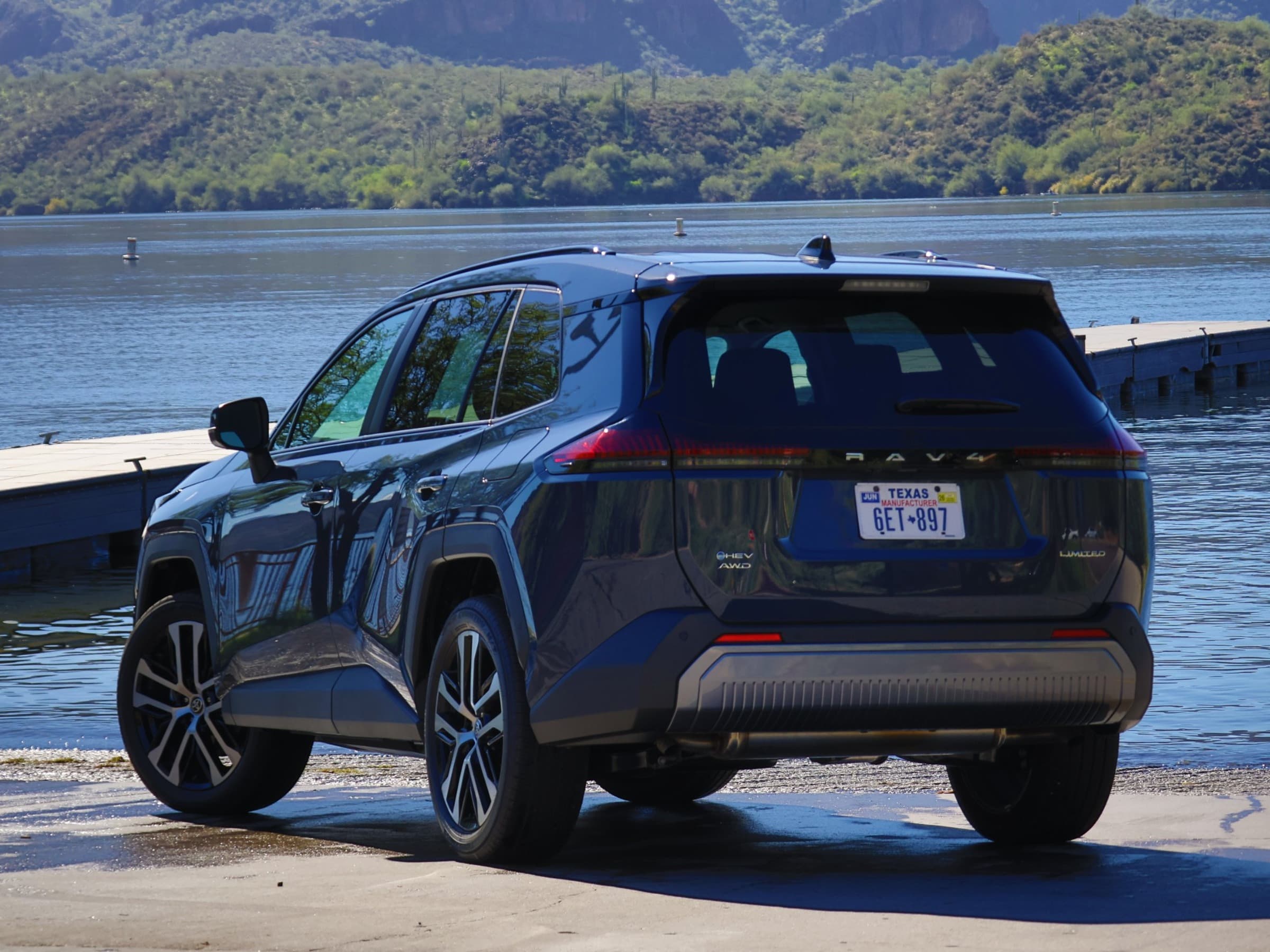
The RAV4's cabin is dominated by horizontal lines and hard plastic. Plastic isn’t necessarily a bad thing. Ford has shown in the Maverick that it works when you add texture and mixed colors. But even in the top-end RAV4 trims, the smooth, hard plastic looks a bit cheap. The CX-50 Hybrid is an entirely different story. Even in the base Preferred trim, the materials look and feel much more premium, and the Premium Plus adds contrasting stripes on the seats and contrast stitching. Given their similar prices, the Mazda feels way more expensive.
One thing some drivers might not be fond of in the Mazda is the rotary dial on the console that controls the built-in infotainment software. That system has no touch control. If you connect your phone with Apple CarPlay or Android Auto, though, you can use either touch or the dial.
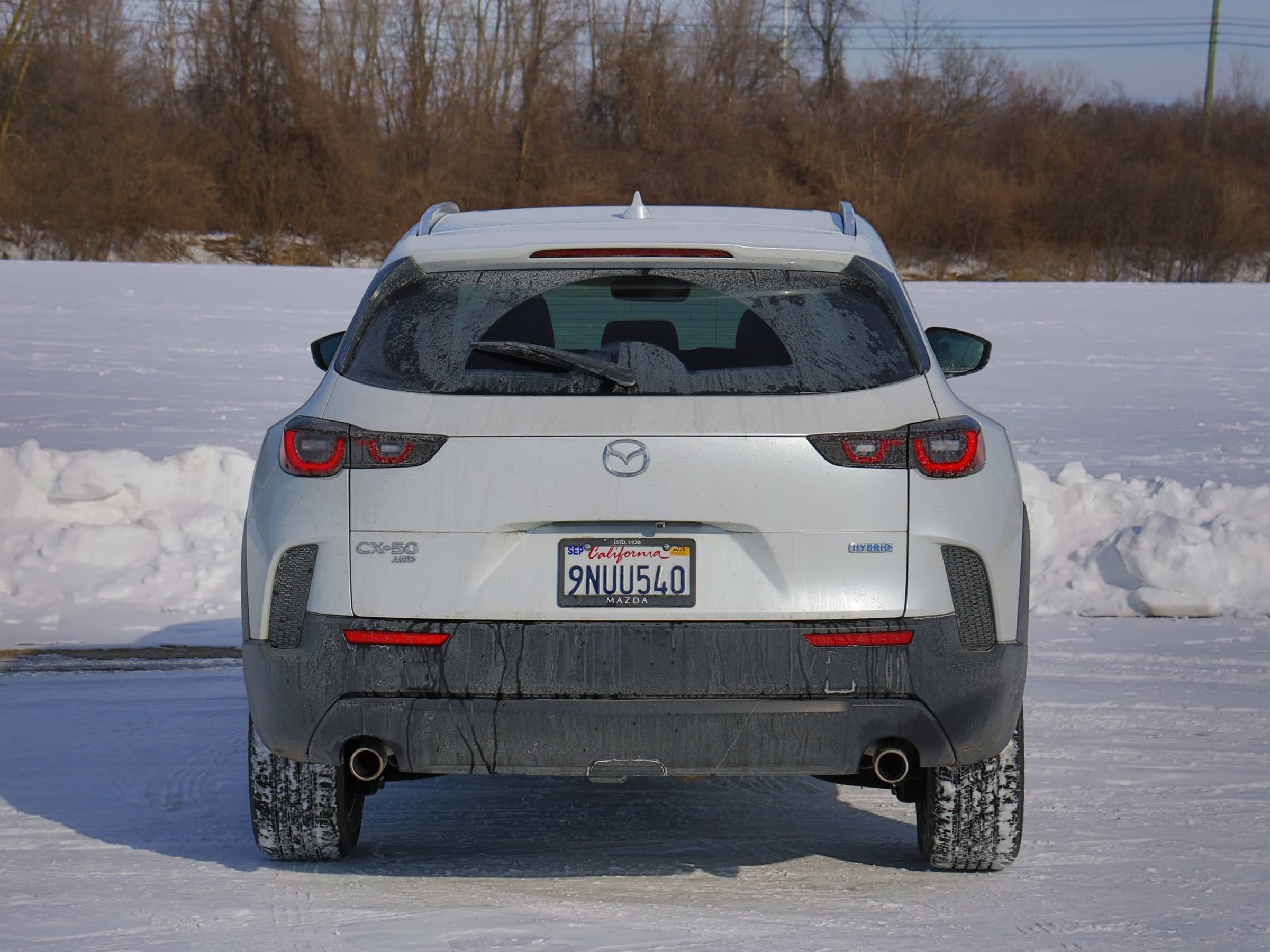
As expected, the driving experience is very similar, and both feel pretty much like any Toyota hybrid. Under hard acceleration, the engine revs up to its peak torque and sits there as the e-CVT adjusts to the climbing speed. This phenomenon is known as “motorboating,” and it's less noticeable at more modest accelerations. The trade-off is excellent fuel efficiency, and the RAV4's newer hybrid system gives it an advantage.
Toyota powertrain or not, this is still a Mazda. The automaker may no longer use its "Zoom-Zoom" tagline, but that flair is in the driving dynamics. The new RAV4 handles better than its predecessor, but the CX-50 Hybrid feels sportier and more precise. Its ride quality is a bit stiffer than the RAV4 without being uncomfortable. If your route home from the office includes a bit of twisty roadway, the CX-50 Hybrid will be the happier of the two.
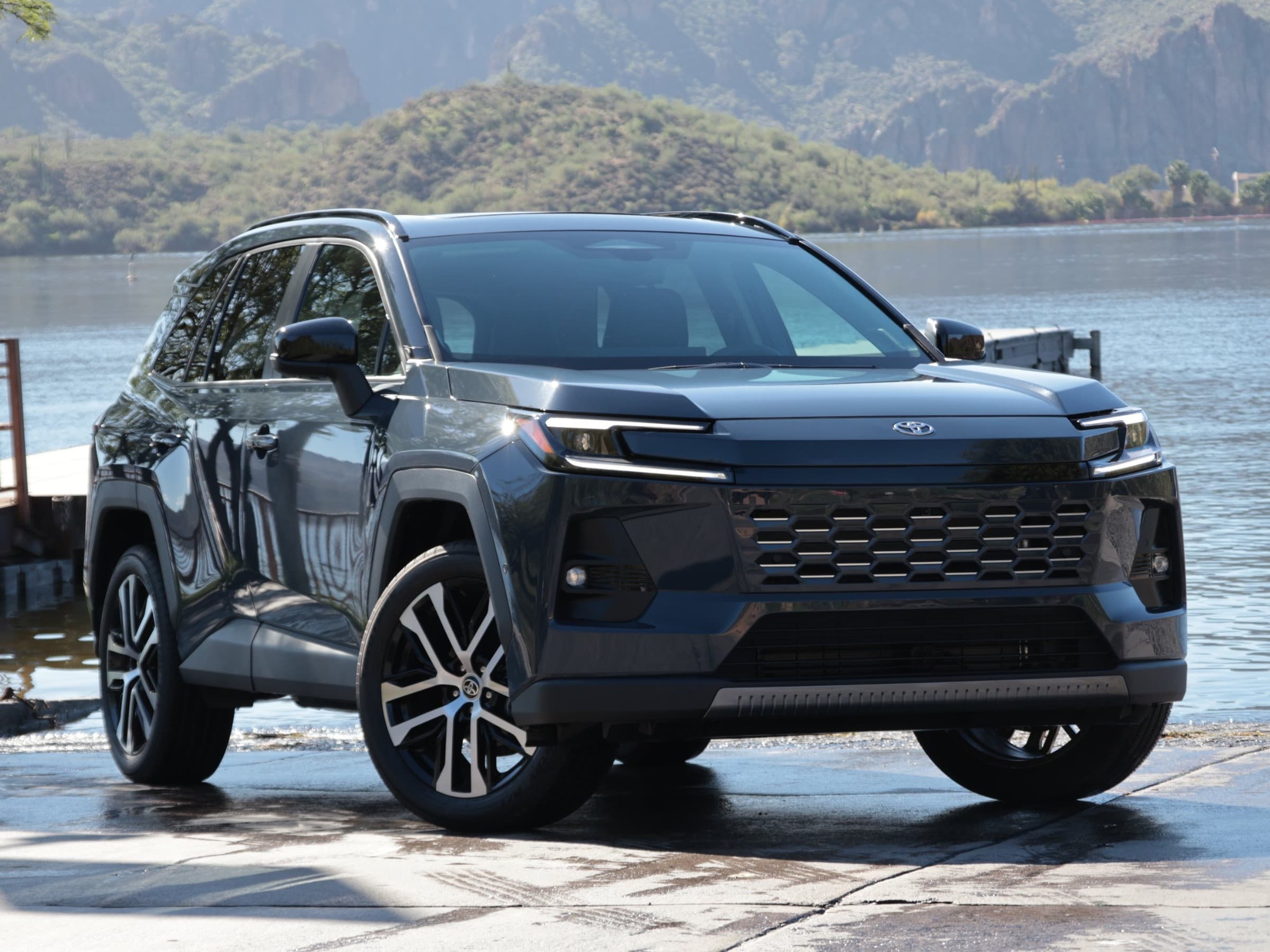
These two crossovers target overlapping but distinct buyers. If you prefer a more truck-like look or an off-roady trim like the Woodland, the RAV4 is for you. The same goes for anyone who wants the best possible fuel economy, thanks to its updated hybrid system.
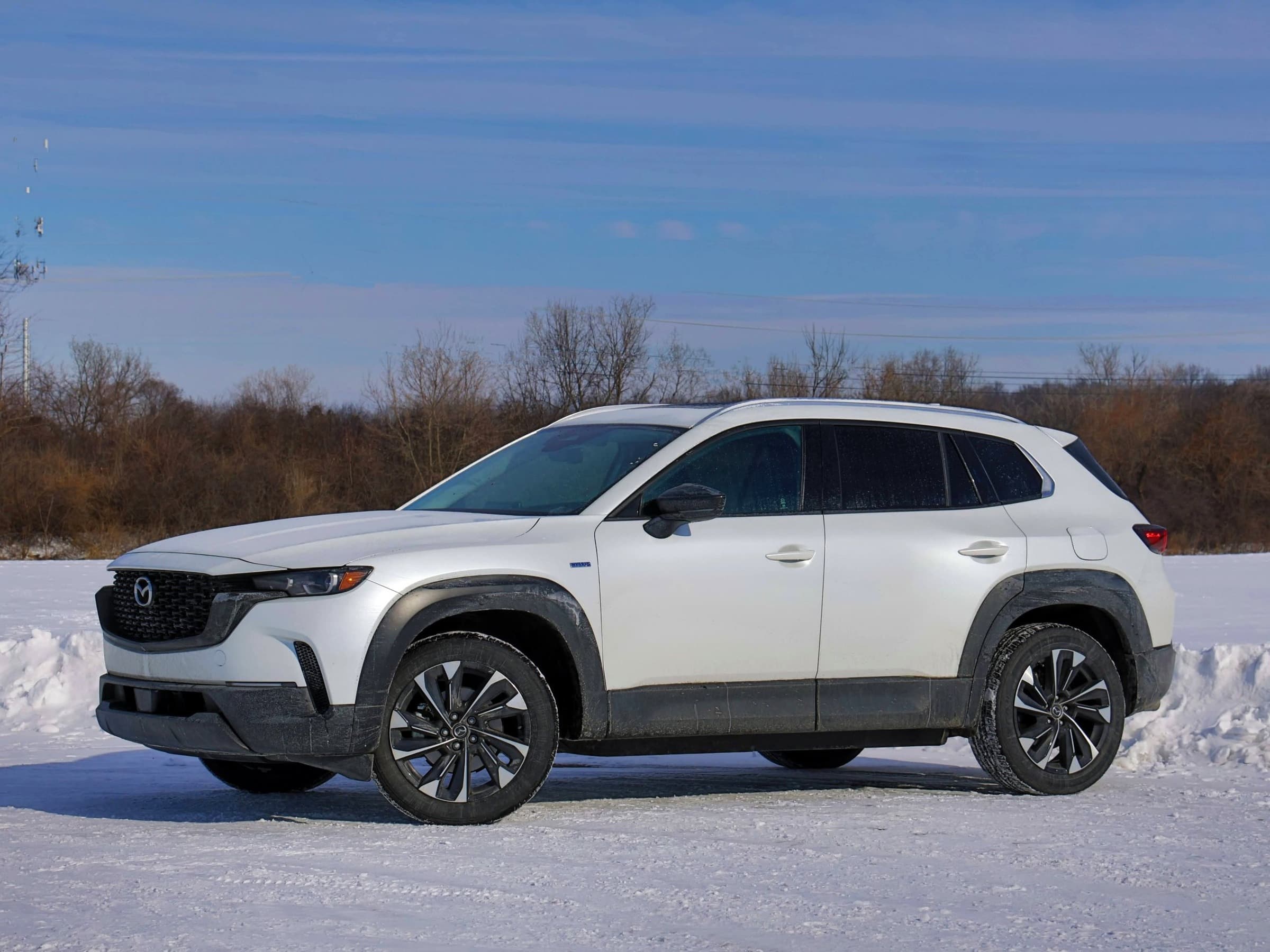
But if you also keep a vintage Miata in the garage and need something practical for winter or hauling the kids to school, the CX-50 Hybrid might be more your vibe. And if you want your friends to think you spent more than you did, the Mazda's cabin clearly blows away the Toyota, as is true of every current Mazda. You'll just spend a bit more at the pump. The CX-50 Hybrid is still very efficient; it just can't match the RAV4.
Ultimately, it's a case of style vs. substance, and you can take your pick.
If this is your first hybrid, MPG is only part of the decision, so see what to consider when comparing hybrid performance, warranties, features, and long-term ownership ➜
Kia Sportage Hybrid vs. Toyota RAV4 Hybrid: Which Is the Better Buy?
The Sportage adds more rear legroom and cargo space while staying close to the RAV4 on efficiency and undercutting it on price.
Read More ➜
2026 Honda CR-V AWD Hybrid Sport Touring Making Things Easy
Honda’s smooth 204-hp hybrid trades some Toyota efficiency for excellent refinement, comfort, and everyday practicality.
Read More ➜
2025 Subaru Forester Touring Hybrid Review: Familiar Capability, Newfound Efficiency
The Forester brings standard mechanical AWD, 8.7 inches of clearance, and 35 mpg combined for shoppers prioritizing all-weather capability.
Read More ➜
GreenCars Contributor
Sam Abuelsamid is vice president of market research and leads Telemetry Insights' Transportation and Mobility research and advisory practice. Focusing on automated driving, mobility services, telematics, connectivity, cybersecurity, and advanced propulsion systems, Abuelsamid works with clients to help them understand emerging technology trends and shape strategies.
Avery Zimmerman is a Senior Editorial Manager at Telemetry, an integrated communications agency at the intersection of mobility and technology.
Get vehicle reviews, practical tips, and the latest GreenCars news.
ComparisonsThese are two of America's bestselling hybrids, and they're both excellent. So how do you choose between them? We're breaking down what matters most.
 Comparisons
The RAV4 is the default pick for many crossover shoppers, but the Kia Sportage makes a strong case with more rear legroom, more cargo space, and a lower starting price.
 Comparisons
Toyota's bestselling RAV4 is now hybrid-only and takes on Subaru's trail-ready Forester Hybrid. Which compact crossover best fits your lifestyle?