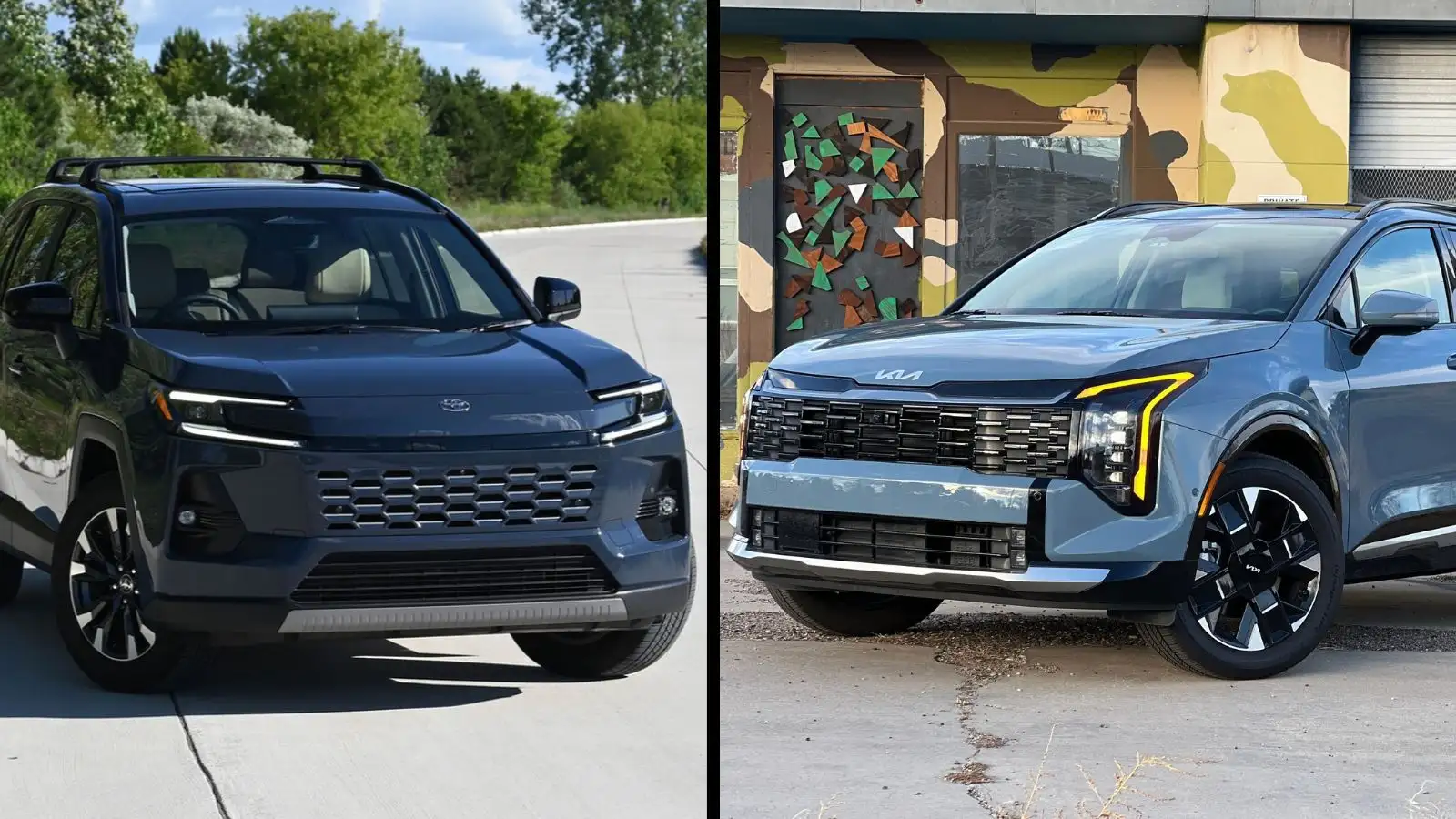

Fast Facts | Kia Sportage Hybrid vs. Toyota RAV4 Hybrid
Output: The Kia Sportage Hybrid has 232 horsepower, while the RAV4 has 226 horsepower in FWD or 236 horsepower in AWD
EPA-Estimated Fuel Economy: The Kia Sportage Hybrid gets up to 42 mpg combined, while the RAV4 gets up to 43 mpg combined
Tech: The Kia Sportage Hybrid has a 12.3-inch touchscreen, while the RAV4 has a 10.5-inch touchscreen; both get wireless Apple CarPlay and Android Auto
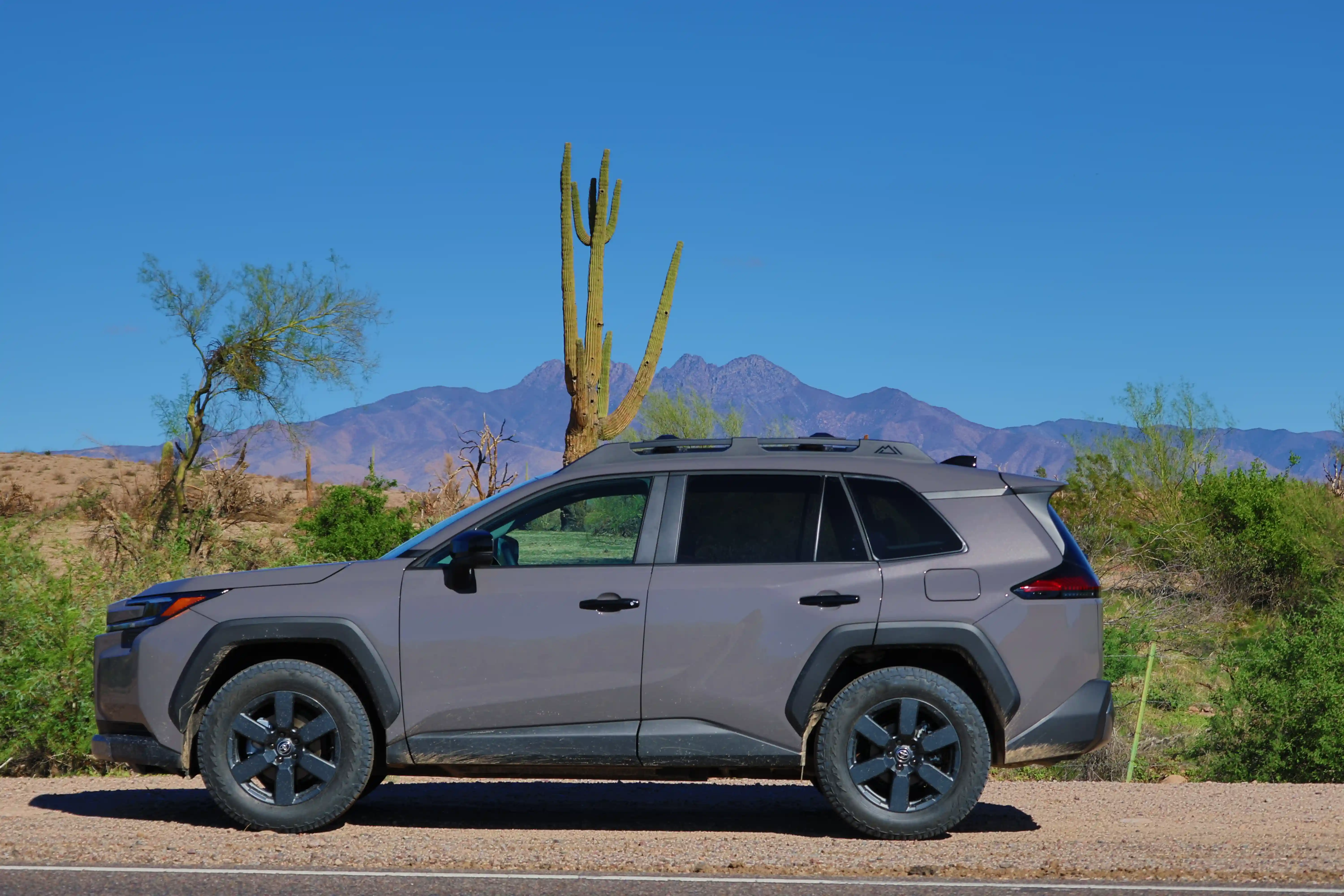
The Kia Sportage Hybrid gets up to 8.3 inches of ground clearance, while the RAV4 gets up to 8.5 inches in Woodland trim
MSRP: The Kia Sportage Hybrid starts at $32,085 in FWD or $34,385 in AWD, while the RAV4 starts at $33,495 in FWD or $34,895 in AWD
Toyota Owns the Reputation. Kia Makes the Math Interesting.
It's nearly impossible to talk about the compact crossovers without mentioning the Toyota RAV4, as it's both the bestseller within that segment and the bestselling SUV in the U.S. But popularity isn't everything, and there are other options, like the Kia Sportage Hybrid. Here's how the two compare, and whether everyone's on to something with the RAV4 or the Sportage Hybrid is the sneaky better choice.
Exterior Design and Dimensions
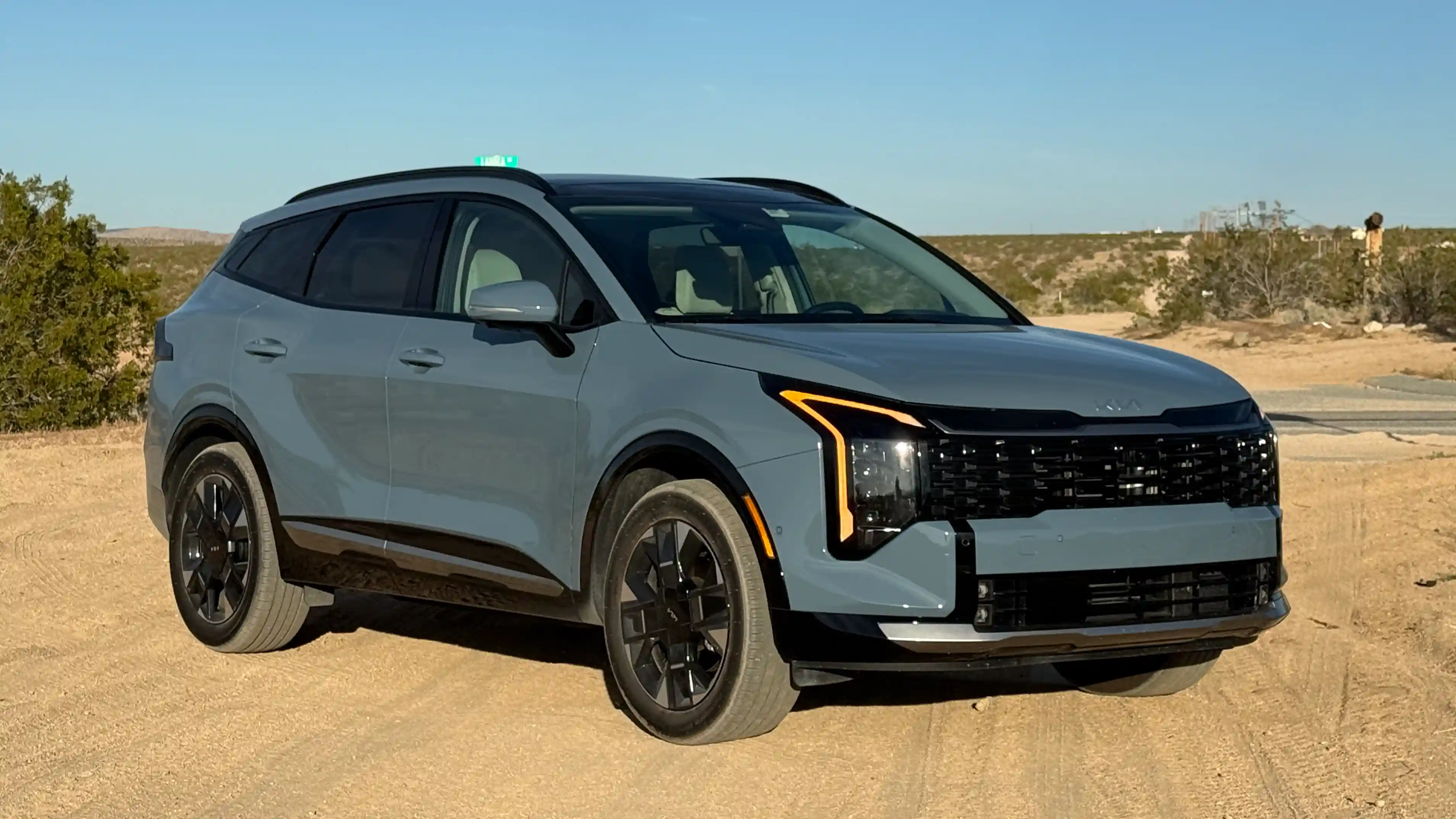
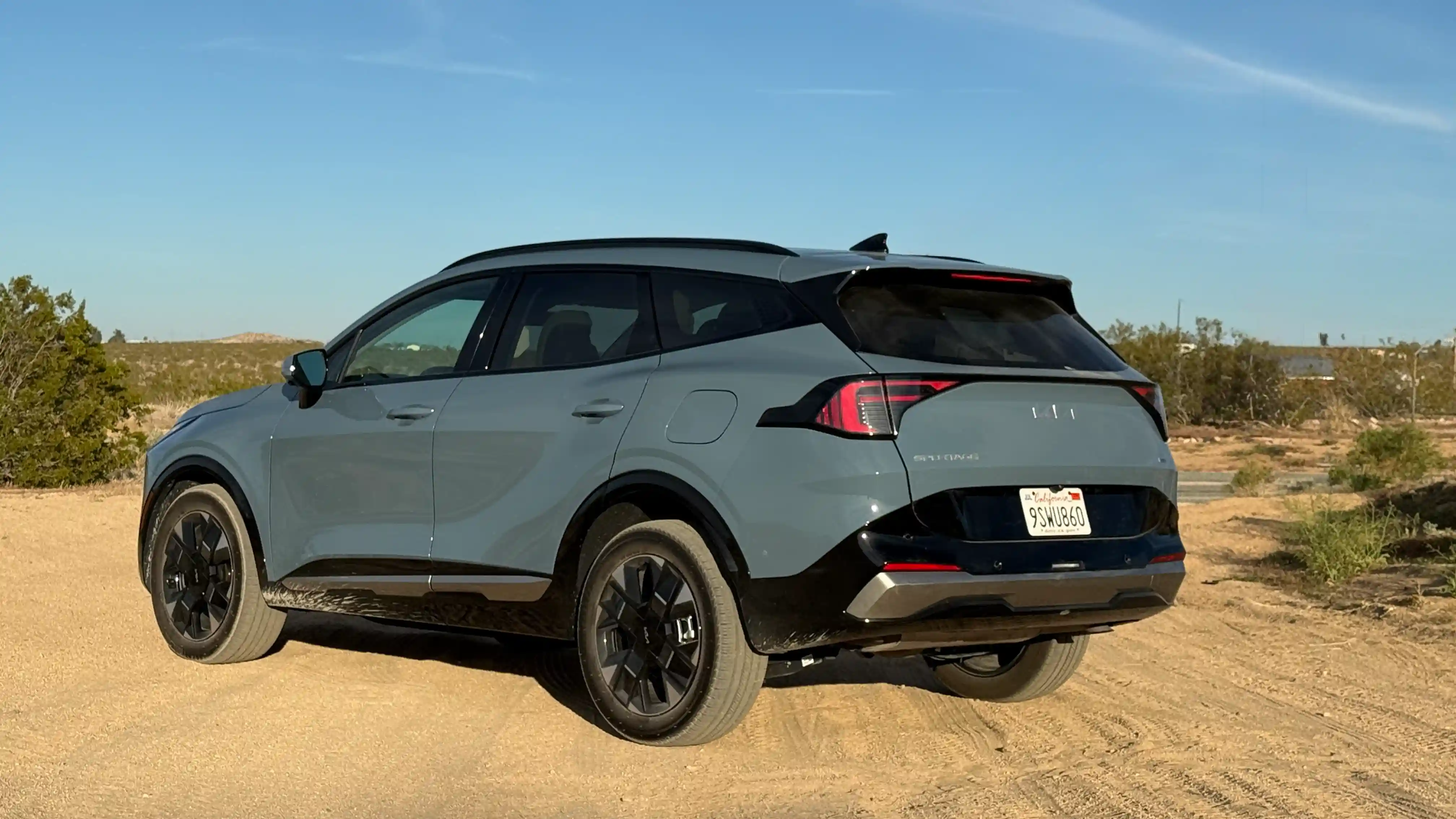
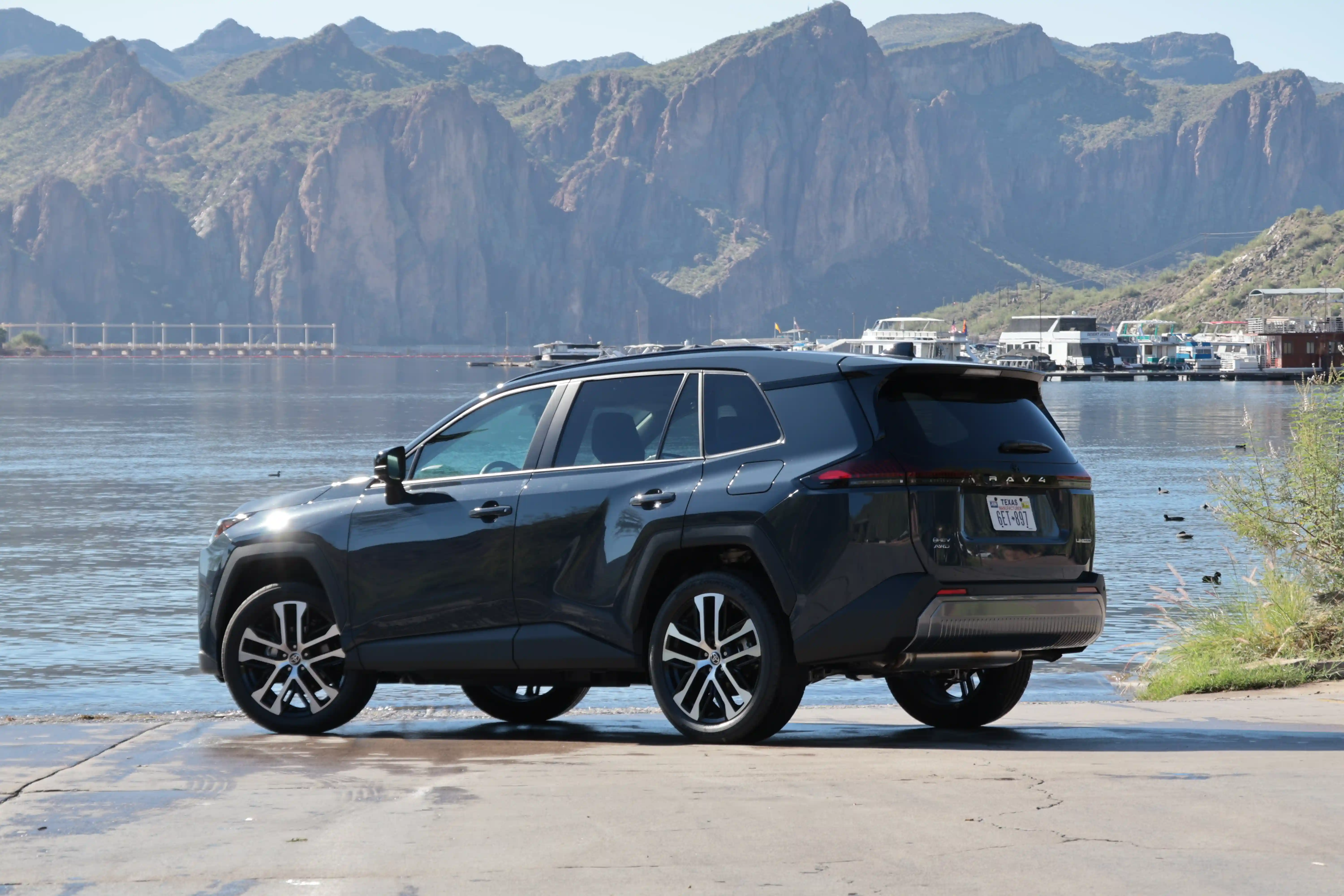
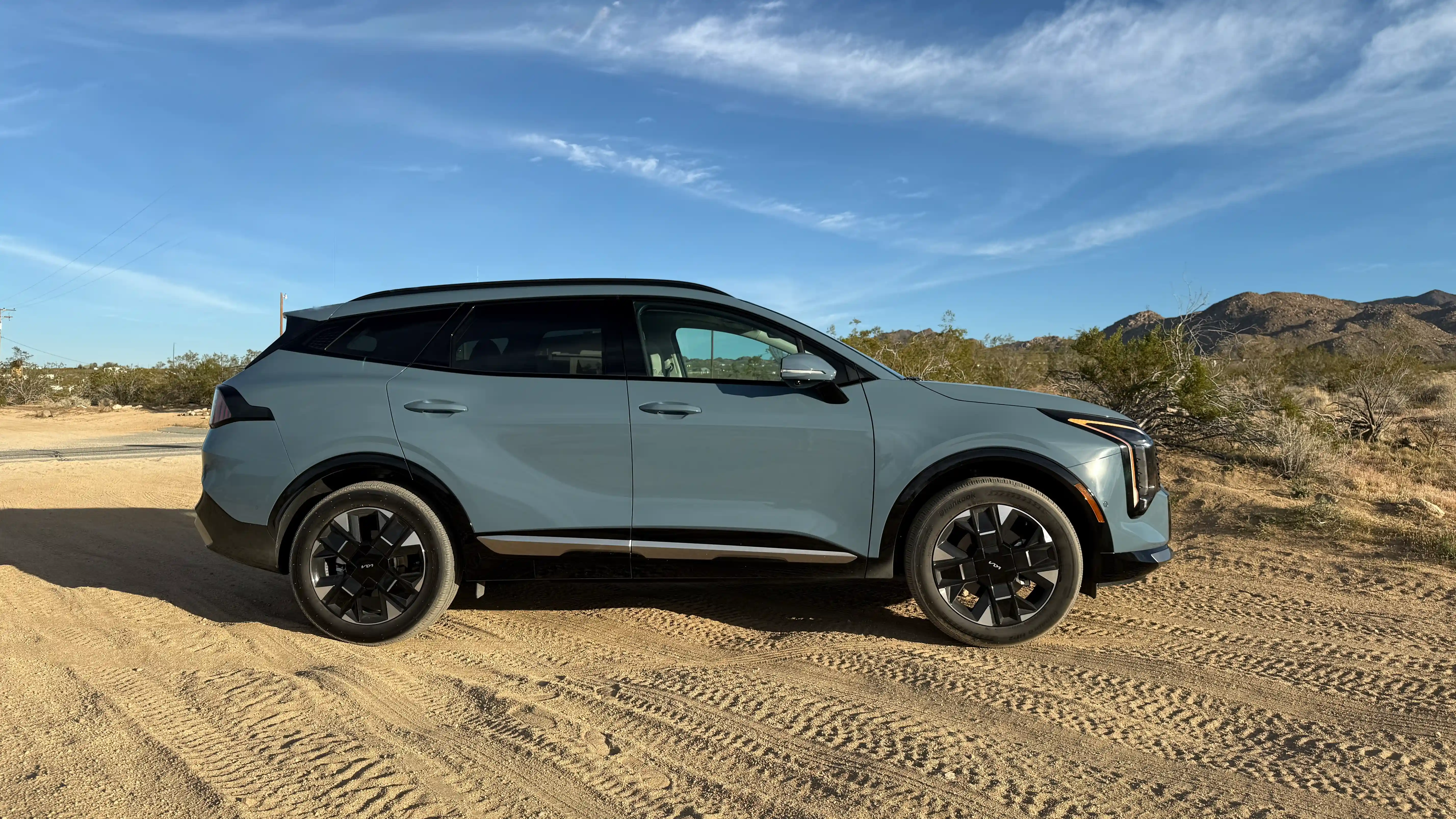
Like most compact crossovers, the Sportage Hybrid and RAV4 have a similar profile, but the design details diverge. The Sportage Hybrid has more vertical headlights and sharper side creases, with a bit more curvature overall. The RAV4 has a distinctly blockier look with Toyota’s current hammerhead lighting signature. Both offer off-road-focused trims: the X-Line for the Sportage Hybrid and the Woodland for the RAV4. Aside from a bit of added ground clearance, both mostly add adventure-inspired styling rather than true off-road hardware.
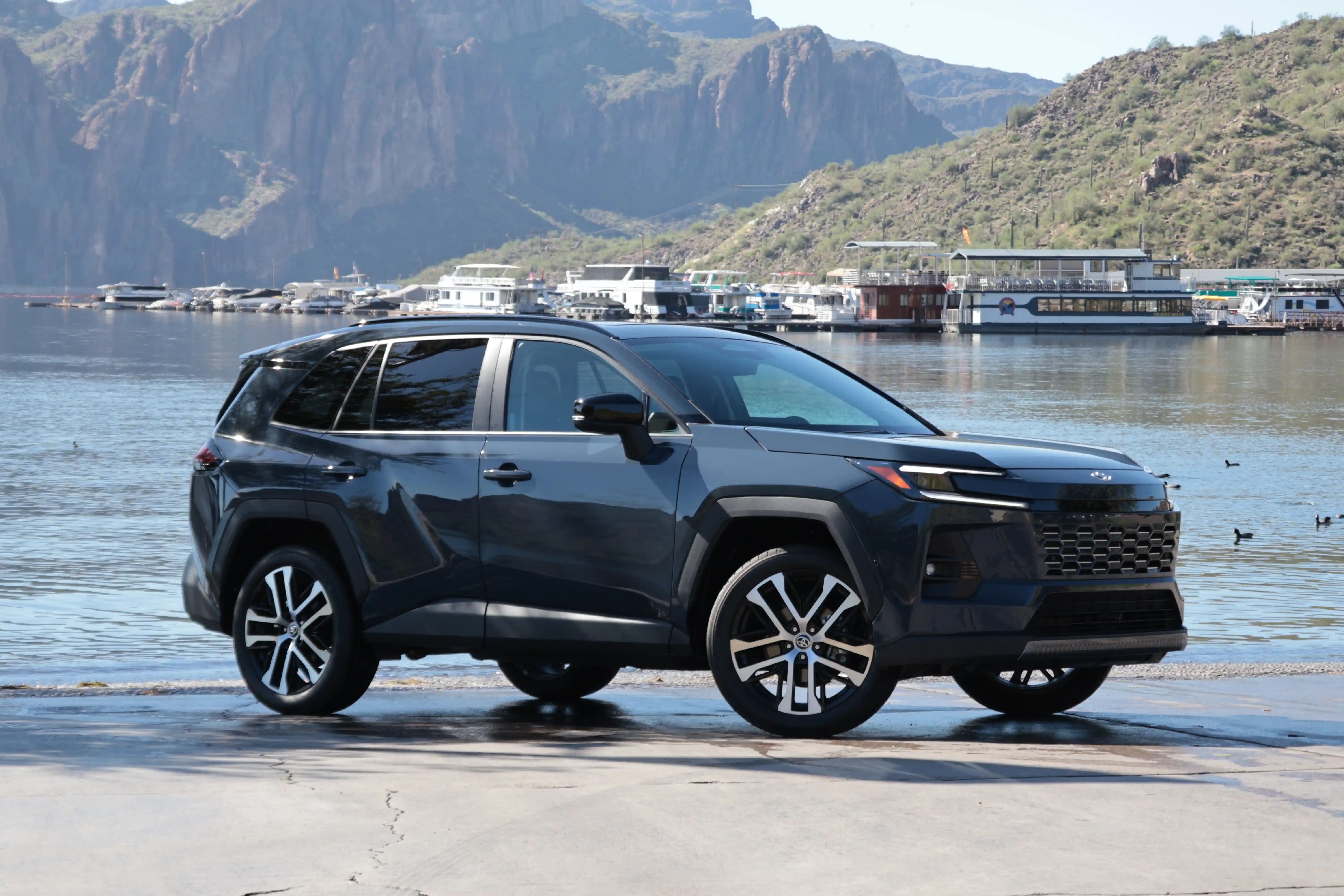
The Sportage Hybrid is up to 3.4 inches longer than the RAV4 and rides on a wheelbase that's 2.6 inches longer. However, width and height are essentially the same. The base RAV4 has 1.0 inch more ground clearance than the base Sportage Hybrid, and at the top end, the RAV4 Woodland has 0.2 inch more than the Sportage Hybrid's maximum.
Both start with 17-inch wheels. The Sportage Hybrid has options for 18- and 19-inchers, while the RAV4 offers 18- and 20-inchers.
Interior Space and Tech
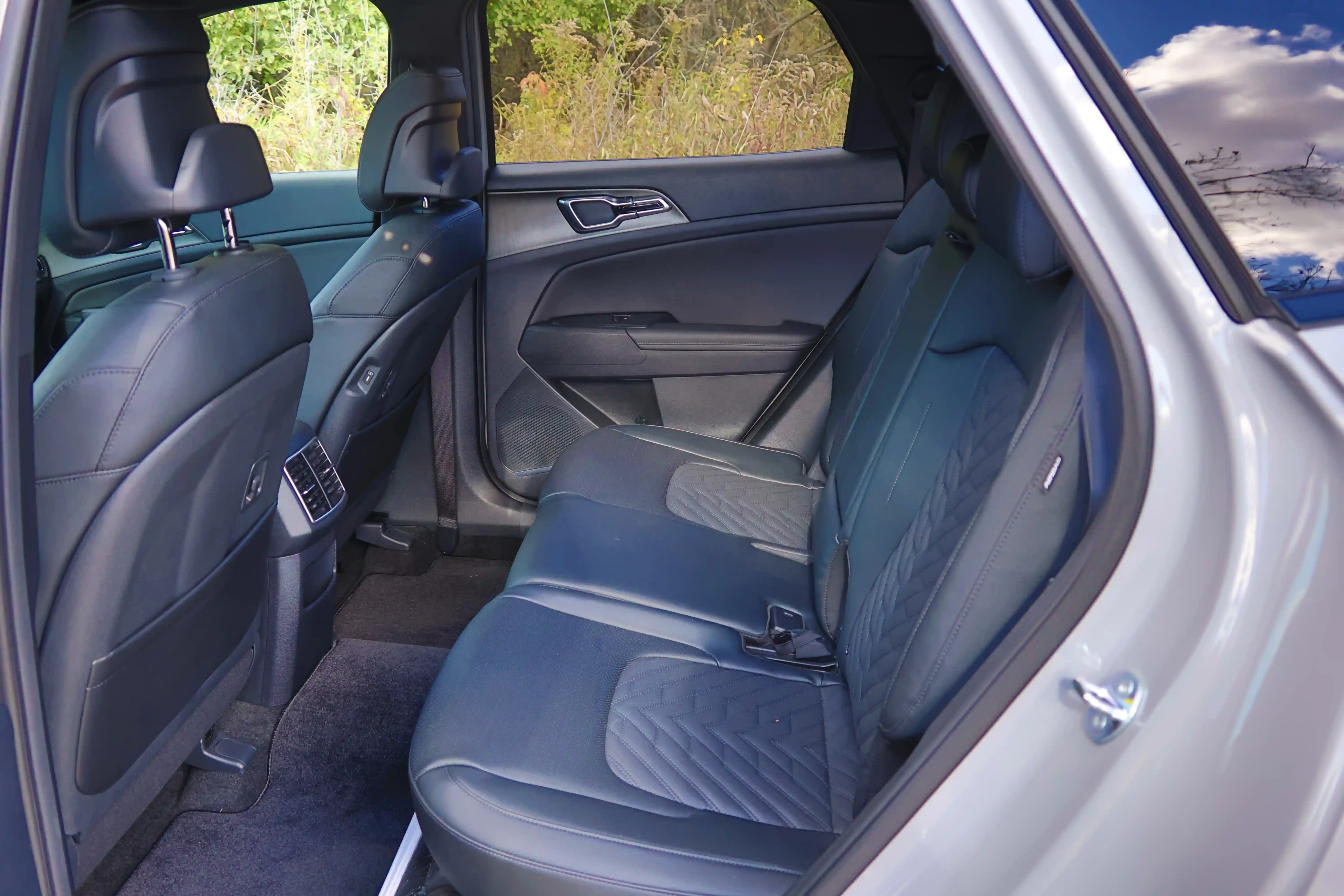
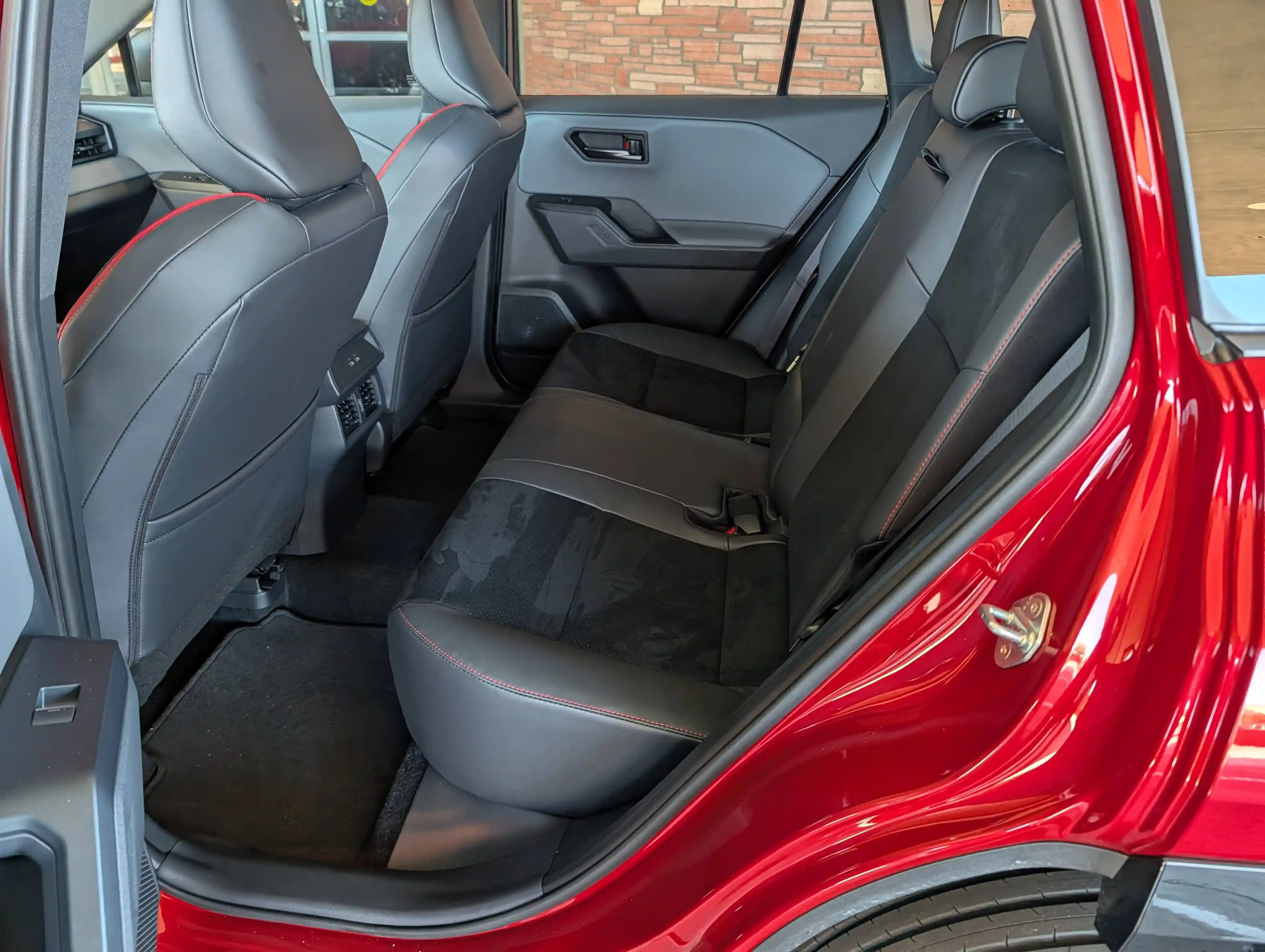
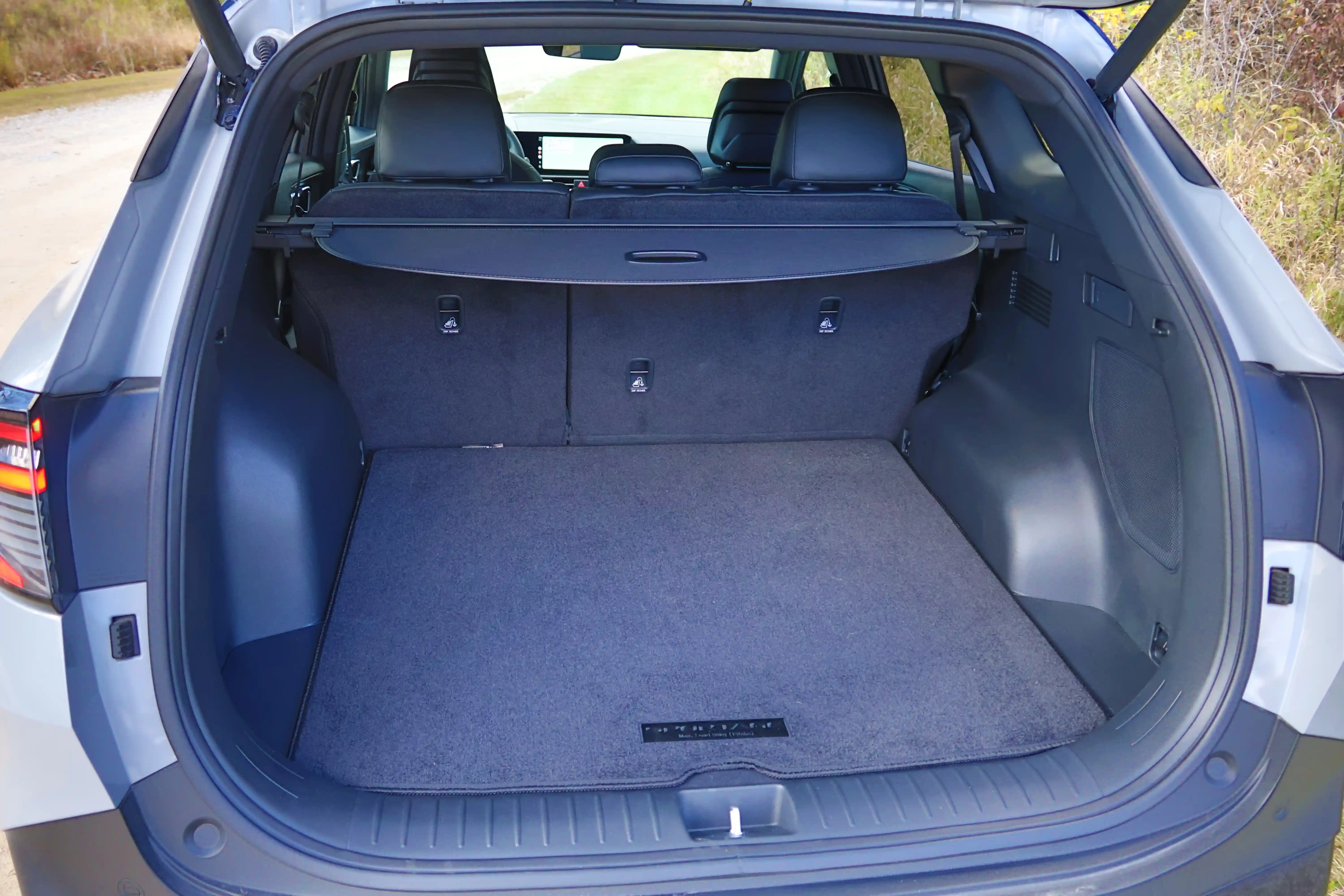
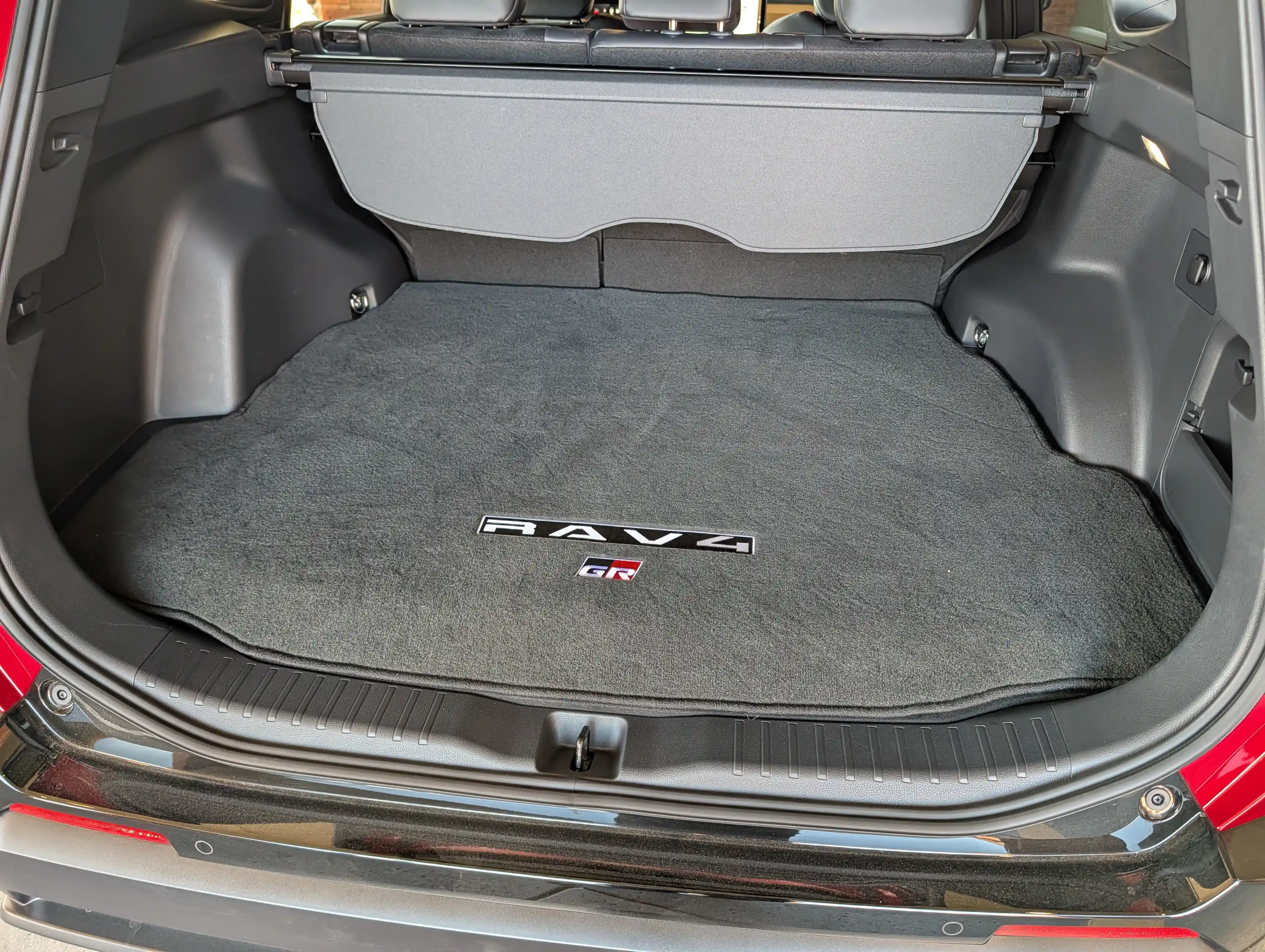
Both SUVs sit five. The Sportage Hybrid has 3.5 inches more rear legroom, up to 1.7 inches more front headroom, 0.4 inch more front legroom, and 0.5 inch more front shoulder room. The RAV4 pulls ahead in only two measurements: rear headroom (up to 1.7 inches more) and rear shoulder room (0.8 inch more). For cargo, the Sportage Hybrid has 1.7 cubic feet more behind the second row and 3.3 cubic feet more behind the first row.
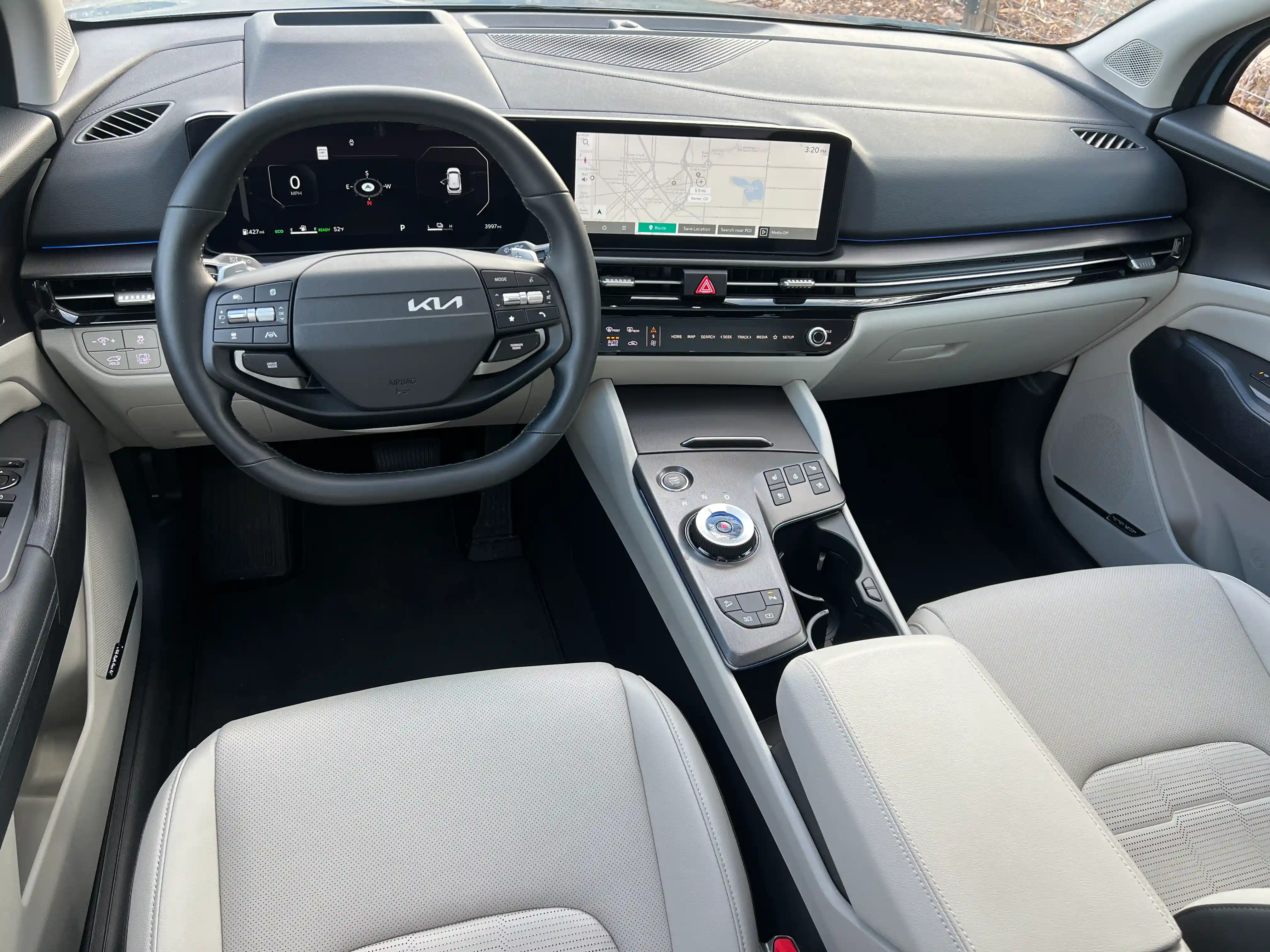
Both come standard with cloth upholstery, dual-zone climate control, 60/40 split-folding rear seats, a 12.3-inch digital instrument cluster, wireless Apple CarPlay and Android Auto, a smart key, push-button start, USB-C ports, and a six-speaker audio system.
The Sportage Hybrid comes standard with a 12.3-inch touchscreen, with available navigation that includes over-the-air map updates. The RAV4 comes standard with a 10.5-inch unit and offers a 12.9-inch touchscreen as an upgrade.
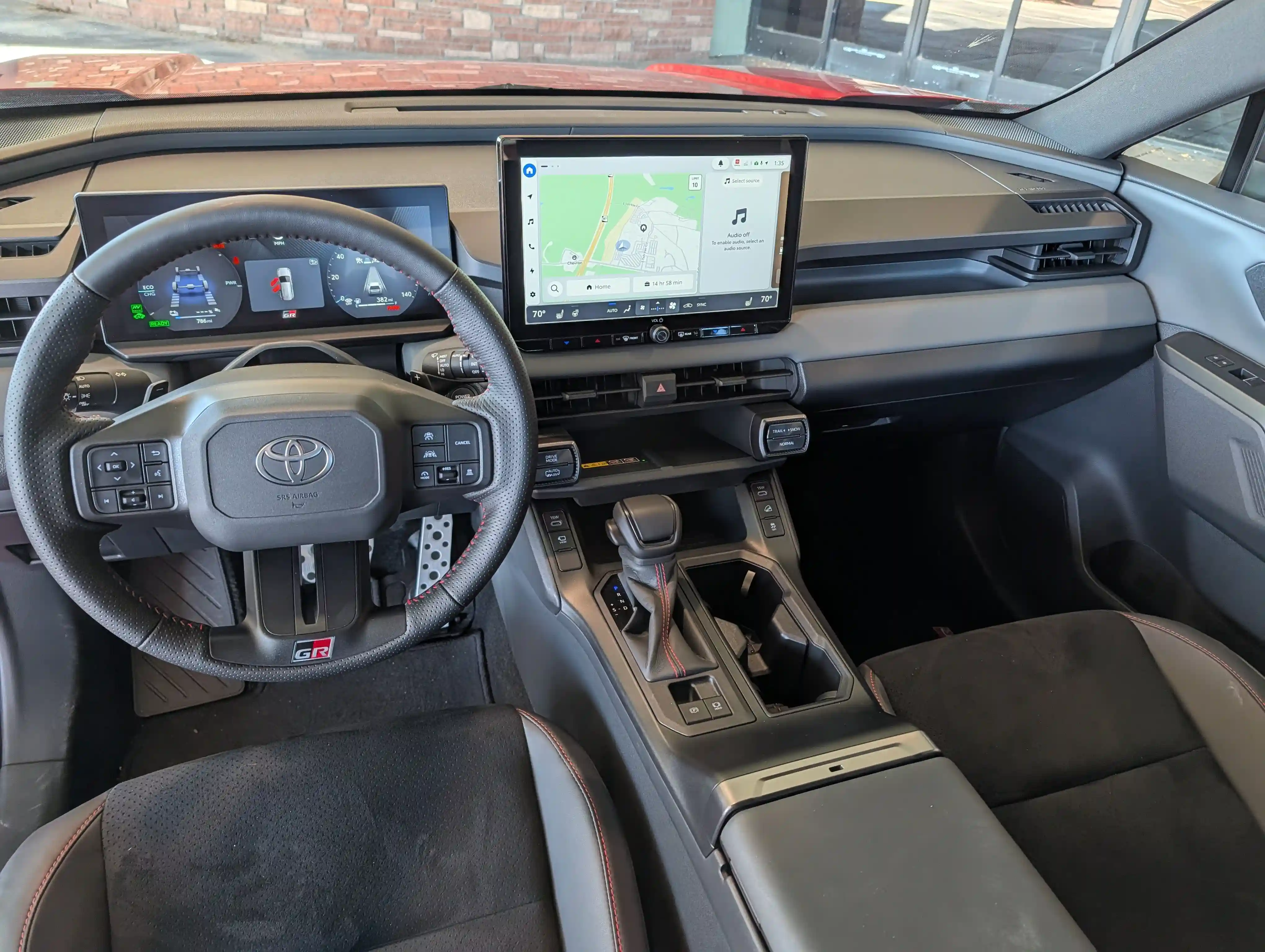
The Sportage Hybrid gets standard rain-sensing windshield wipers and a leather-wrapped steering wheel, both of which are upgrades on the RAV4. The RAV4 gets an integrated dash cam, which isn't available on the Sportage Hybrid.
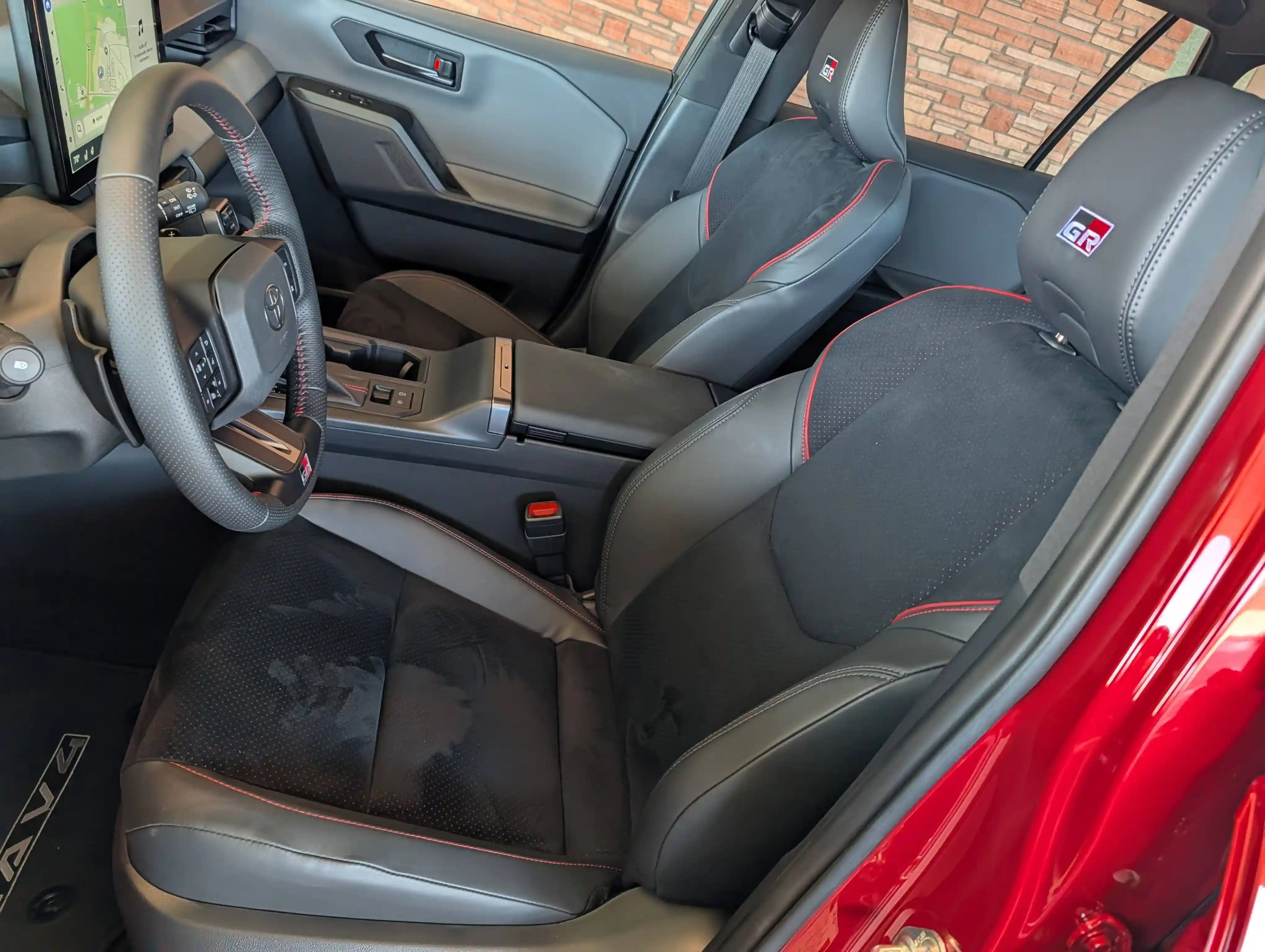
Both are available with heated front seats, synthetic leather upholstery, wireless device charging, a panoramic roof, a heated steering wheel, a head-up display, a power liftgate, and power-adjustable front seats (10-way driver's seat on the Sportage Hybrid, eight-way on the RAV4).
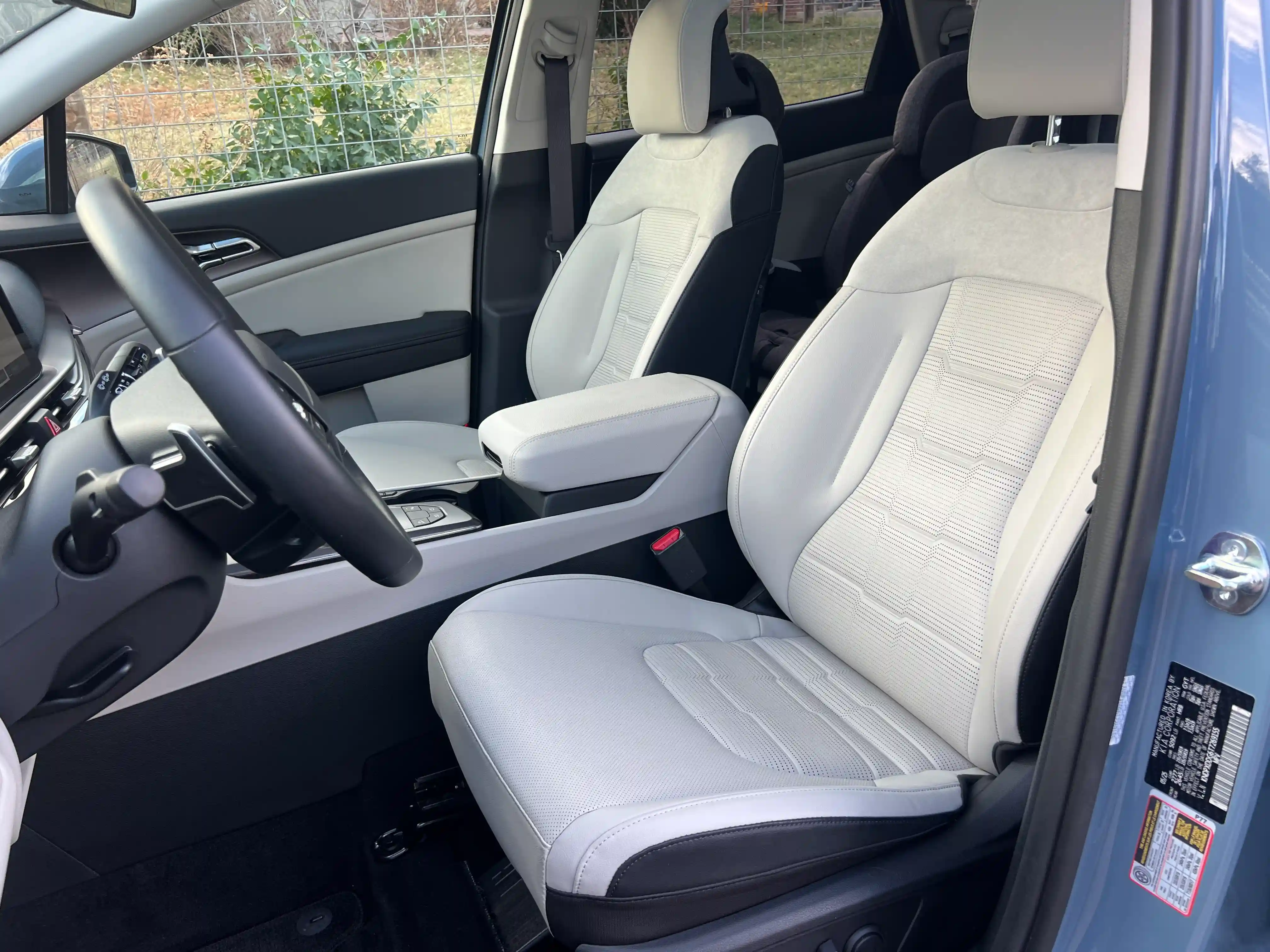
The options list on the Sportage Hybrid continues with LED interior lighting, a memory driver's seat, ventilated front seats, heated second-row outboard seats, a digital key, and a Harman Kardon audio system with eight speakers. The options list on the RAV4 continues with a digital rearview mirror, dual wireless charging pads, and a nine-speaker JBL audio system.
On the safety front, both come standard with automatic emergency braking, adaptive cruise control, lane-departure alert, lane-keeping assist, lane-centering capabilities (Kia calls it lane-following assist; Toyota calls it lane-tracing assist), high-beam assist, and a rearview camera.
The Sportage Hybrid also gets standard junction-turning detection, front and rear parking sensors, driver-attention warning, leading-vehicle departure alert, and rear-occupant alert. The RAV4 comes standard with blind-spot monitoring, rear cross-traffic alert, road-sign assist, and proactive driving assist.
A surround-view monitor is available on both. Blind-spot monitoring and rear cross-traffic alert are available on the Sportage Hybrid, and parking sensors are available on the RAV4. The Sportage Hybrid has additional options, including safe-exit warning, highway driving assist, navigation-based adaptive cruise control with curve control, enhanced automatic emergency braking with crossing detection and evasive steering, rear parking collision-avoidance assist, and side parking sensors.
Powertrain and Fuel Economy
Both SUVs offer front- and all-wheel drive. The base Sportage Hybrid LX is FWD-only, while the base RAV4 LE offers the option for either drivetrain. The Sportage Hybrid X-Line and SX Prestige are AWD-only, while the RAV4 Woodland, XSE, and Limited are AWD-only. However, the two handle AWD differently. The Sportage Hybrid uses a mechanical system with a driveshaft running down the center to the rear axle, while the RAV4 uses an electronic motor to drive the rear axle.
Kia and Toyota take fundamentally different approaches to blending gasoline and electric power, so see how hybrid layouts differ and why those engineering choices matter ➜
In terms of power, these two are close. The Sportage Hybrid has six more horsepower than the FWD RAV4, but the extra rear motor on the AWD RAV4 gives it four more horsepower than the Sportage Hybrid.
The RAV4 is the fuel economy winner all around. However, in FWD form, that lead is just 1 mpg. It's more apparent in AWD form, where the RAV4's electric rear axle helps it get 3 to 7 mpg more combined than the mechanical-AWD Sportage Hybrid.
EPA ratings make the Toyota advantage easy to compare, but real consumption still depends on speed, weather, terrain, and driving style, so see how fuel-economy ratings work and what they can tell you ➜
Price
The RAV4 may pull ahead slightly in fuel economy, but the Sportage Hybrid undercuts it throughout the lineup. The base Sportage Hybrid is $1,410 cheaper than the base RAV4 in FWD form ($32,085 vs. $33,495), and the most affordable AWD Sportage Hybrid is $510 less than the most affordable AWD RAV4 ($34,385 vs. $34,895). The top-trim Sportage Hybrid SX Prestige is $2,710 less than the RAV4 Limited ($42,185 vs. $44,895), and the rugged-looking Sportage Hybrid X-Line is $4,210 less than the RAV4 Woodland ($37,285 vs. $41,495).
Behind the Wheel
These two have very different hybrid systems. The RAV4 uses the latest fifth-generation Toyota Hybrid System, which evolved from the original Prius almost 30 years ago. It has a hybrid drive unit with two motor-generators and a planetary gear electronic continuously variable transmission (eCVT). It remains one of the most efficient hybrid systems available, especially in AWD form with the rear e-axle.
The Sportage Hybrid uses a version of the hybrid system Hyundai debuted on the Sonata in 2010. It uses a more conventional six-speed automatic transmission with a clutch and a motor-generator. That motor-generator can drive the transmission with the engine off, provide electric drive assist, and handle regenerative braking. A belted starter-generator replaces the traditional alternator to provide additional energy recovery, start and stop the engine, and supply low-voltage power.
While overall power is similar, the driving experience is distinct. Like all Toyota hybrids, the RAV4 tends to rev to about 4,000 rpm during anything but the lightest acceleration. It stays there until the vehicle speed catches up, and it can be rather noisy. The Sportage Hybrid, on the other hand, feels much more like driving a conventional gas model, with the engine revving and dropping as the transmission shifts gears, with generally less noise. You’ll save a bit more on gas with the Toyota, but might enjoy the ride more in the Kia.
The other big difference is in the cabin. The RAV4 was fully redesigned last year, and while it’s solidly built, many of the materials on the dash and doors are hard plastics that, frankly, feel a bit cheap for the price. The Sportage Hybrid has more soft-touch surfaces and a more premium feeling all around, especially in one of the two-tone color combinations. Both have comfortable seats, but the Kia feels a bit roomier in the back.
Which One's Right for You
A lot comes down to how much you want to save at the pump, particularly if you want AWD. In FWD form, the RAV4's modest edge will probably save you less than $100 per year on fuel, depending on where you live. But the RAV4's price premium grows as you move up from the base trims, and it would take most of the vehicle's life to earn that back in fuel savings. On AWD models, the RAV4's fuel savings grow to about $300 or more per year, but the price premium remains.
The Sportage Hybrid generally delivers the superior on-road experience, with less noise and vibration and a nicer cabin. My personal choice would probably be the Kia, but there's another important factor to consider: Toyota's well-earned reputation for reliability and durability. Kia has made a lot of progress on reliability over the years, but it still might not match Toyota. RAV4s and other Toyota hybrids have accumulated hundreds of thousands of miles as New York City cabs with few, if any, problems. On the other hand, Kia offers nearly double the basic and powertrain coverage. Kia's powertrain warranty runs 10 years/100,000 miles, and everything else is covered for 5 years/60,000 miles. Either way, you’re probably going to have an excellent piece of transportation for at least a decade.
For a deeper look at the Kia on its own, see how the 2026 Sportage Hybrid performs on comfort, efficiency, interior quality, and everyday usability ➜
More Hybrid SUVs Worth Comparing
2026 Toyota RAV4 Limited Hybrid Review: 41 MPG and Hard to Fault
A full road test of the redesigned RAV4 shows why Toyota’s hybrid compact SUV remains such a difficult benchmark to beat.
Read More ➜
2026 Hyundai Tucson Hybrid vs. 2026 Kia Sportage Hybrid
The Sportage faces its closest corporate cousin in another comparison focused on value, space, efficiency, and everyday usability.
Read More ➜
Honda CR-V Hybrid vs. Toyota RAV4 Hybrid
Toyota’s other major compact-hybrid rival offers a useful second look at how the RAV4 compares on practicality, efficiency, and price.
Read More ➜