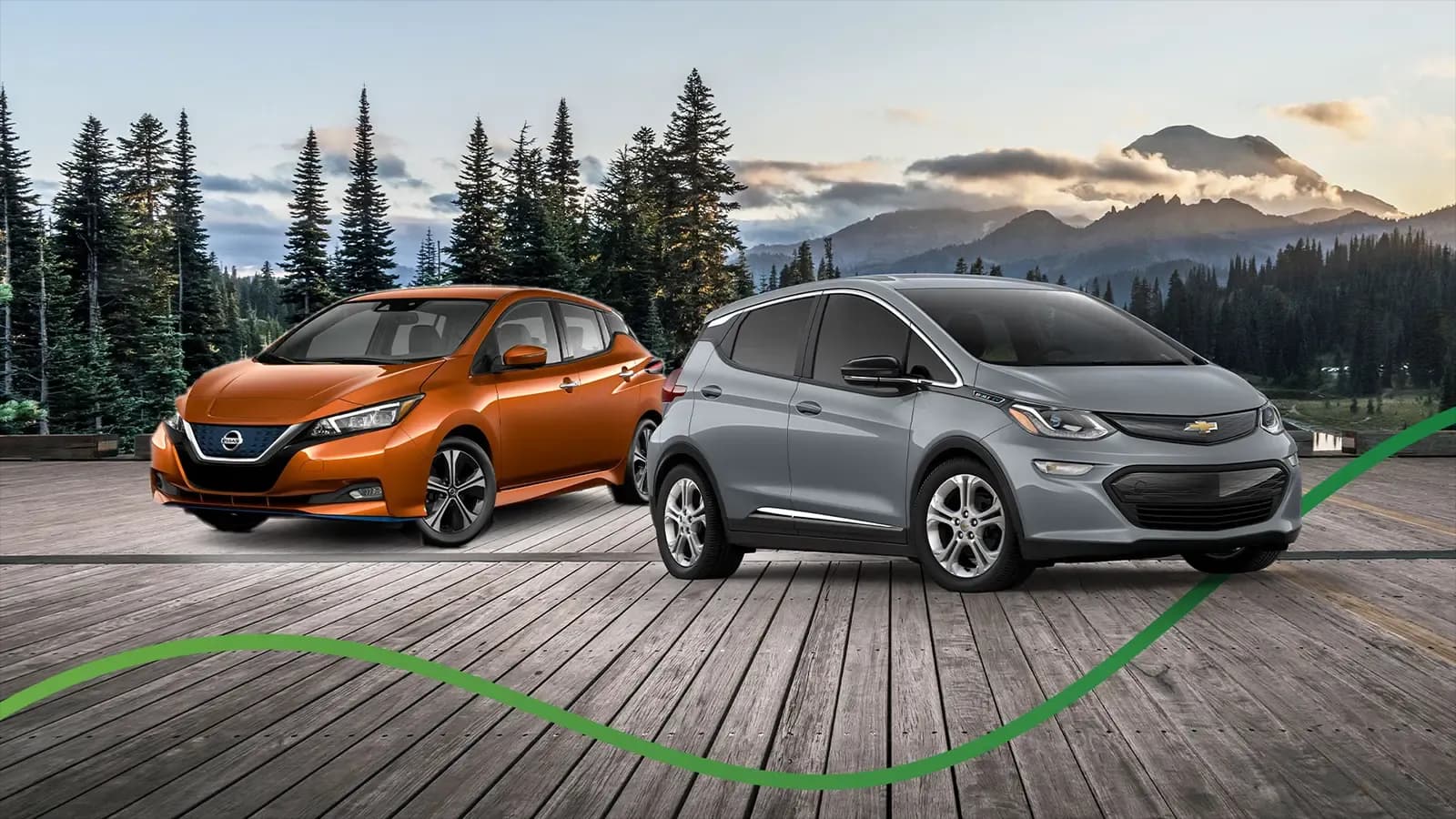
Fast Facts | Nissan Leaf vs. Chevrolet Bolt
- Horsepower: The Nissan Leaf has up to 214 horsepower, while the Chevrolet Bolt has up to 210 horsepower
- EPA-Estimated Range: The Nissan Leaf offers up to 303 miles of EPA-estimated range, while the Chevrolet Bolt offers up to 262 miles of EPA-estimated range
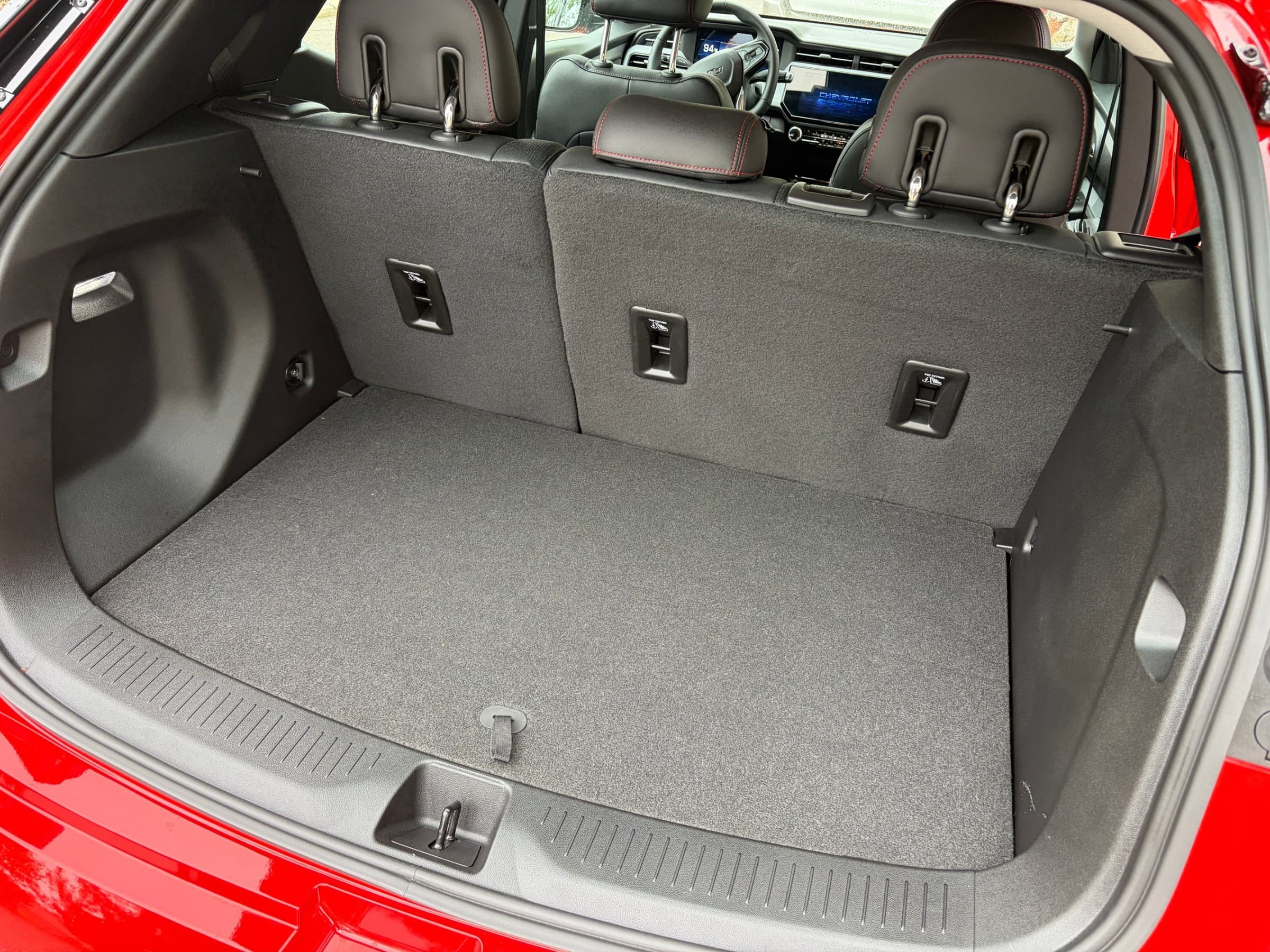
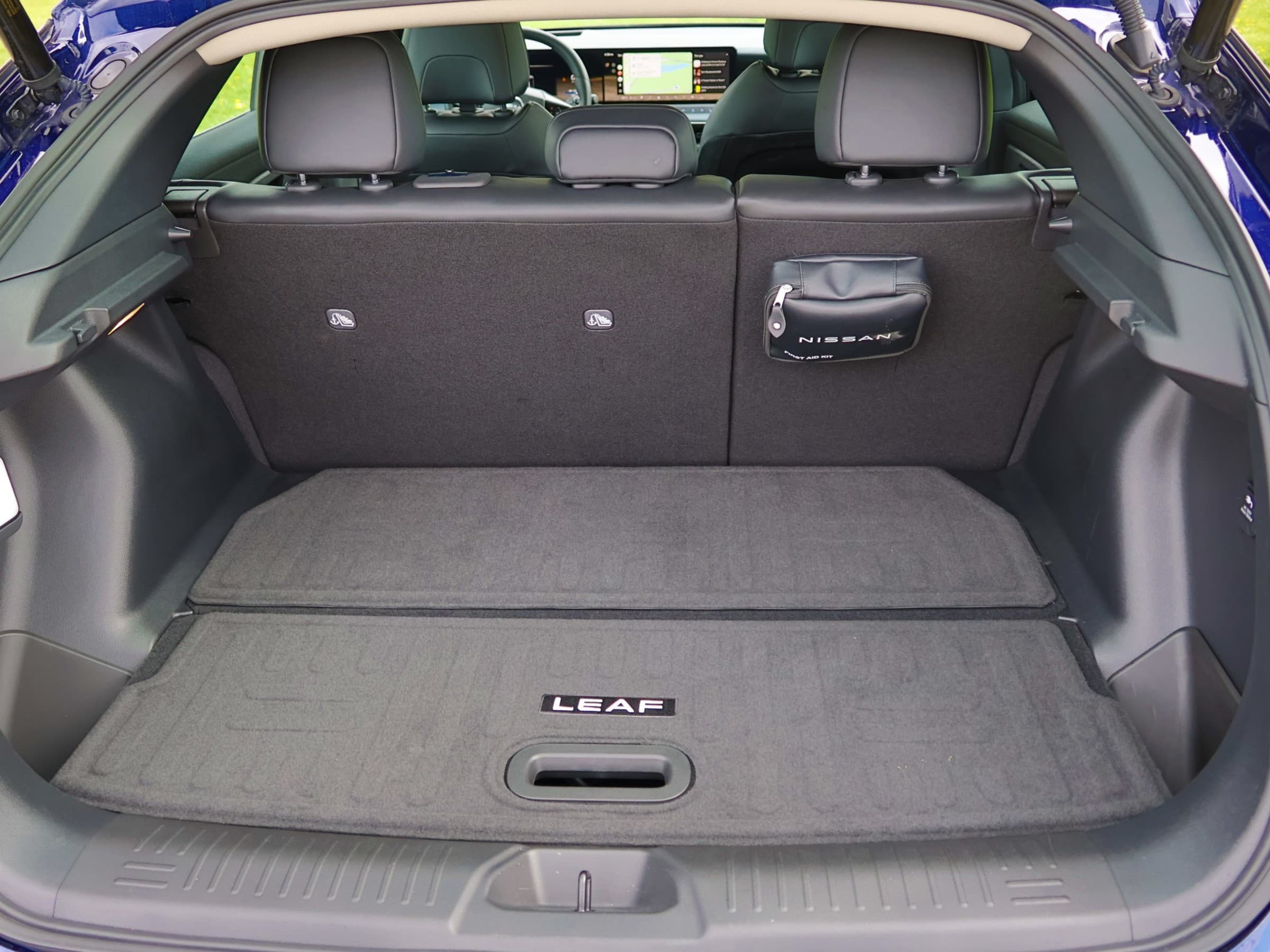
- Cargo Space: The Nissan Leaf has up to 55.5 cubic feet of space with the rear seats folded, while the Chevrolet Bolt has up to 56.3 cubic feet of space
- Tech: The Nissan Leaf has a 12.3-inch touchscreen (14.3-inch available), while the Chevrolet Bolt has an 11.3-inch touchscreen
- MSRP: The Nissan Leaf starts at $31,565, while the Chevrolet Bolt starts at $28,995
Two Familiar EV Names Start Over
These two compact crossovers are among the most affordable ways to get into an EV. Both nameplates have been around for a while: the original Leaf was one of the first mass-market EVs, and the original Bolt was the first affordable EV with a range of over 250 miles. Both had their share of early growing pains, but both have been completely redesigned with big improvements over where they started. Here's how they compare.
Exterior Design and Dimensions
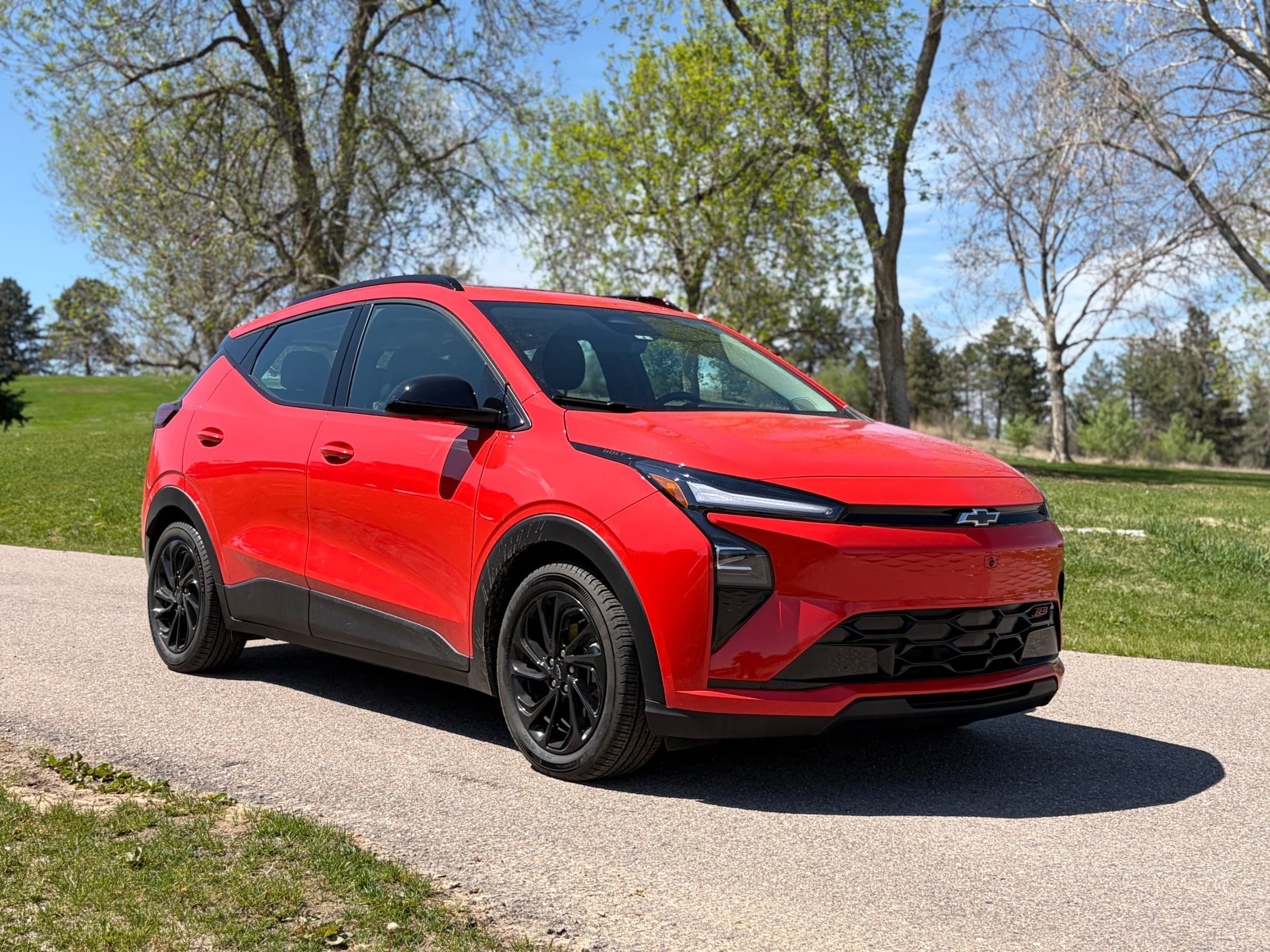
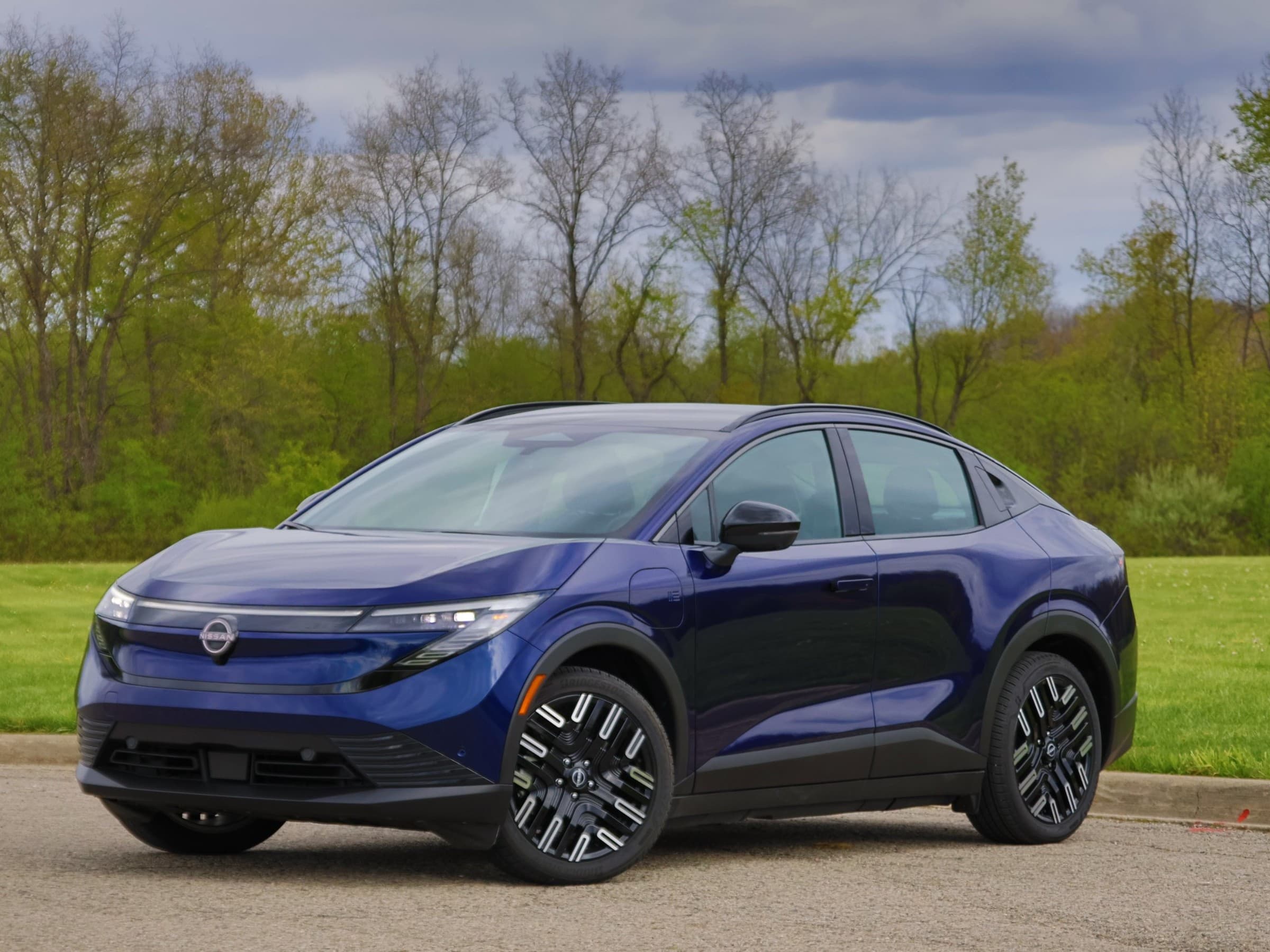
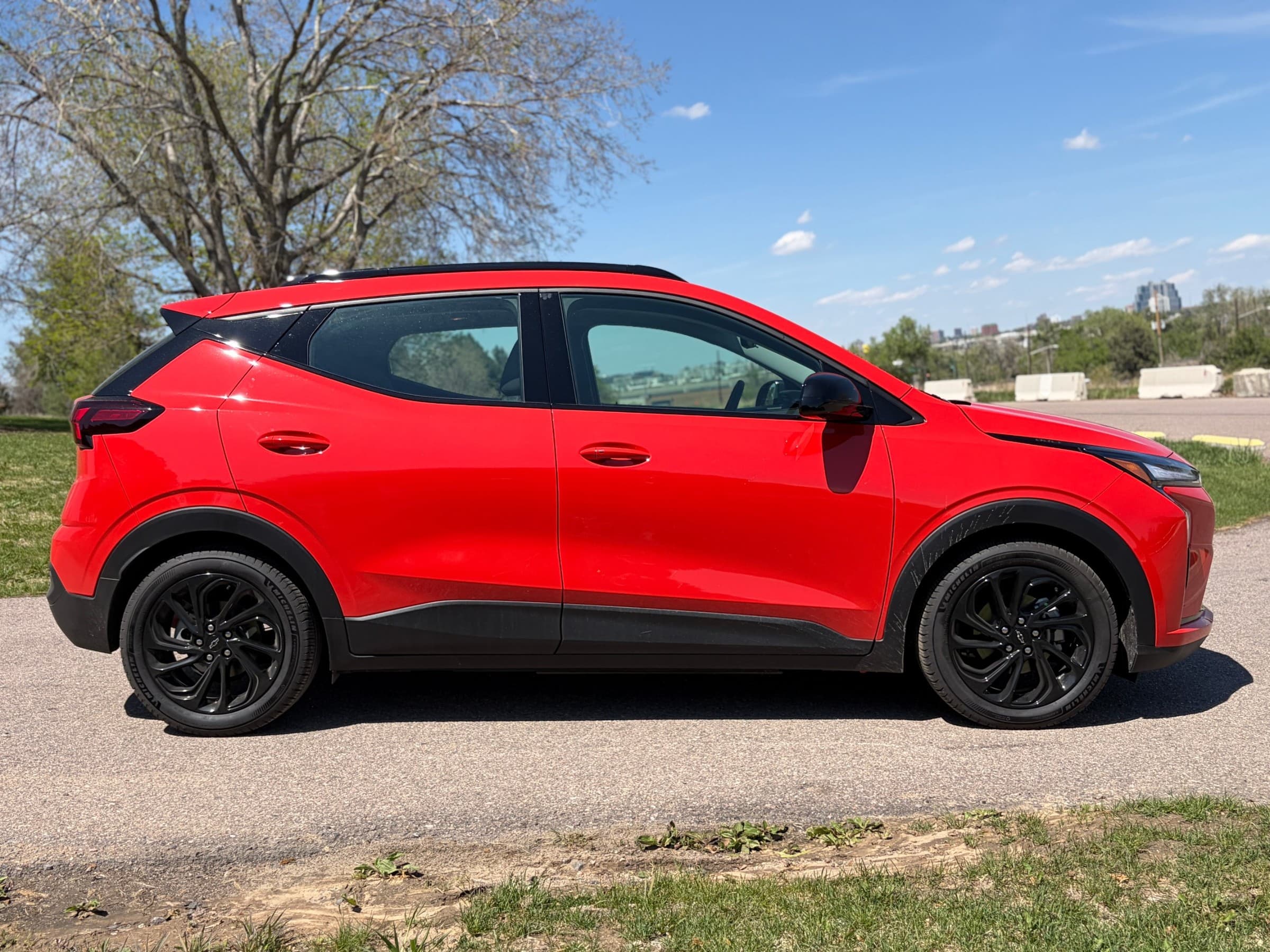
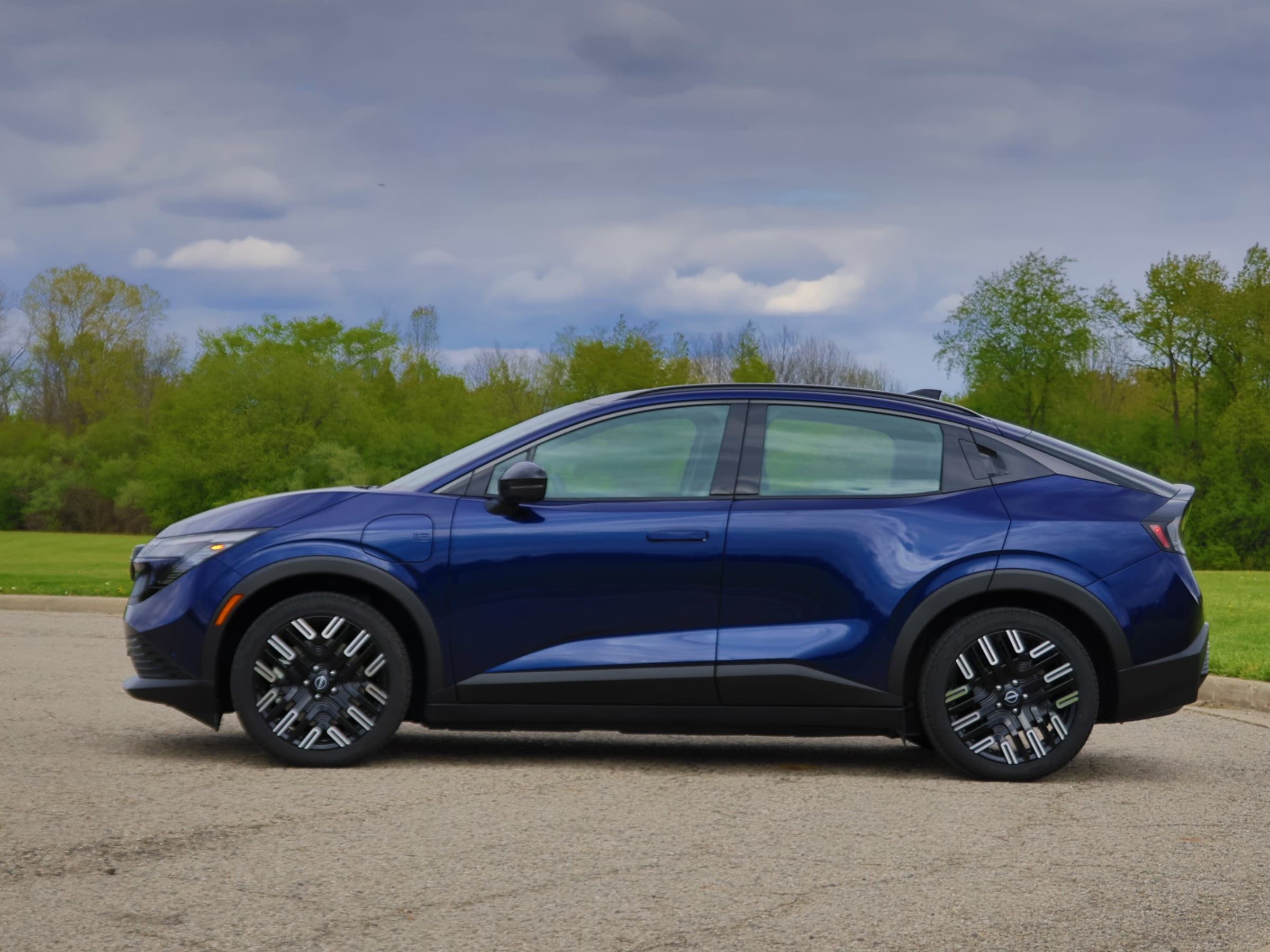
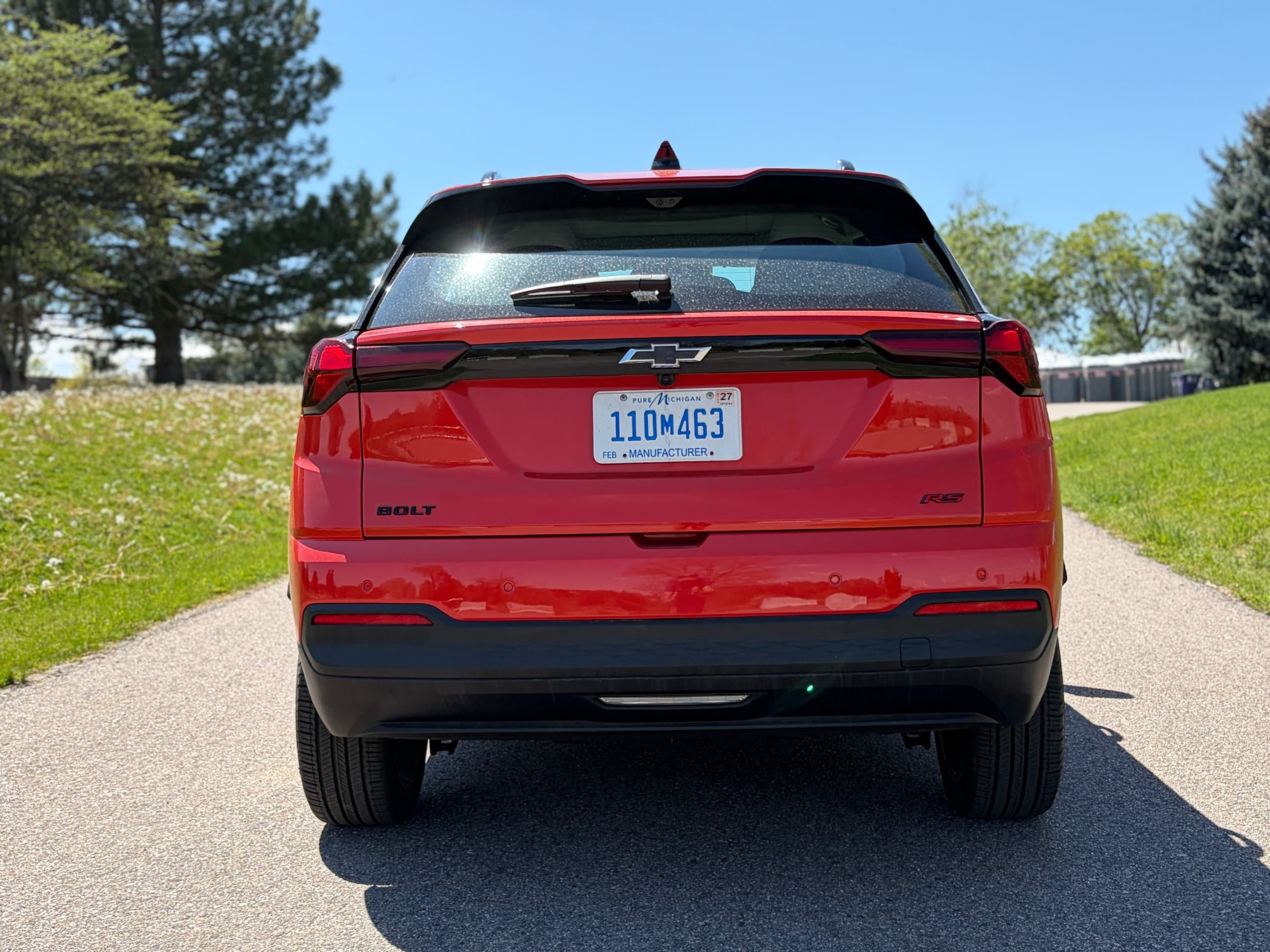
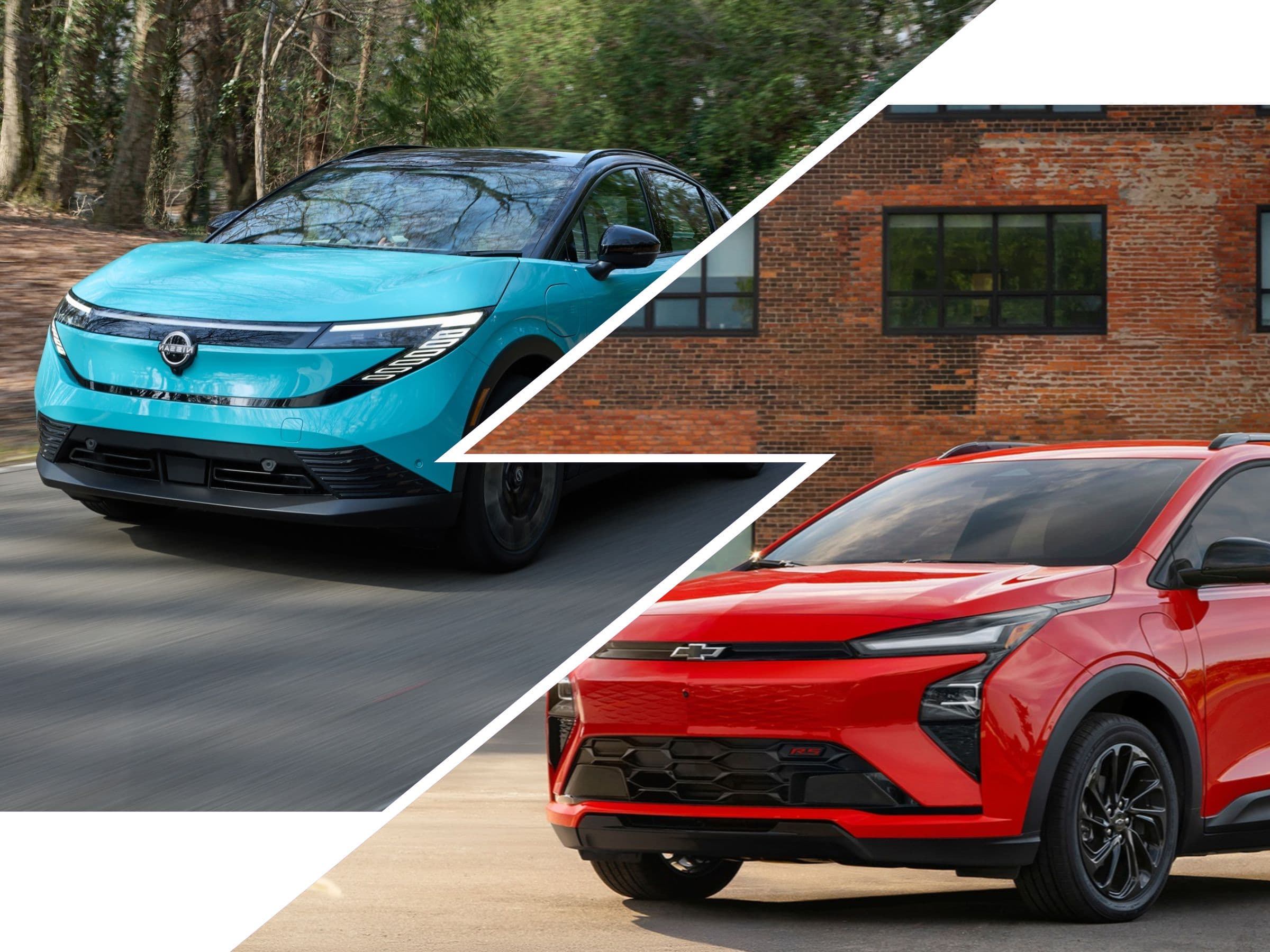
The Leaf is a bit bigger than the Bolt: it's 3.8 inches longer and 1.6 inches wider. However, the Bolt is 2.6 inches taller and has 0.3 inch more ground clearance. Those numbers show in how the two look. The Bolt is tall and boxy, like a conventional SUV shrunk down. The Leaf is longer and lower, which makes it look less like a scaled-down SUV, though it's still clearly a small vehicle.
Interior Space and Tech
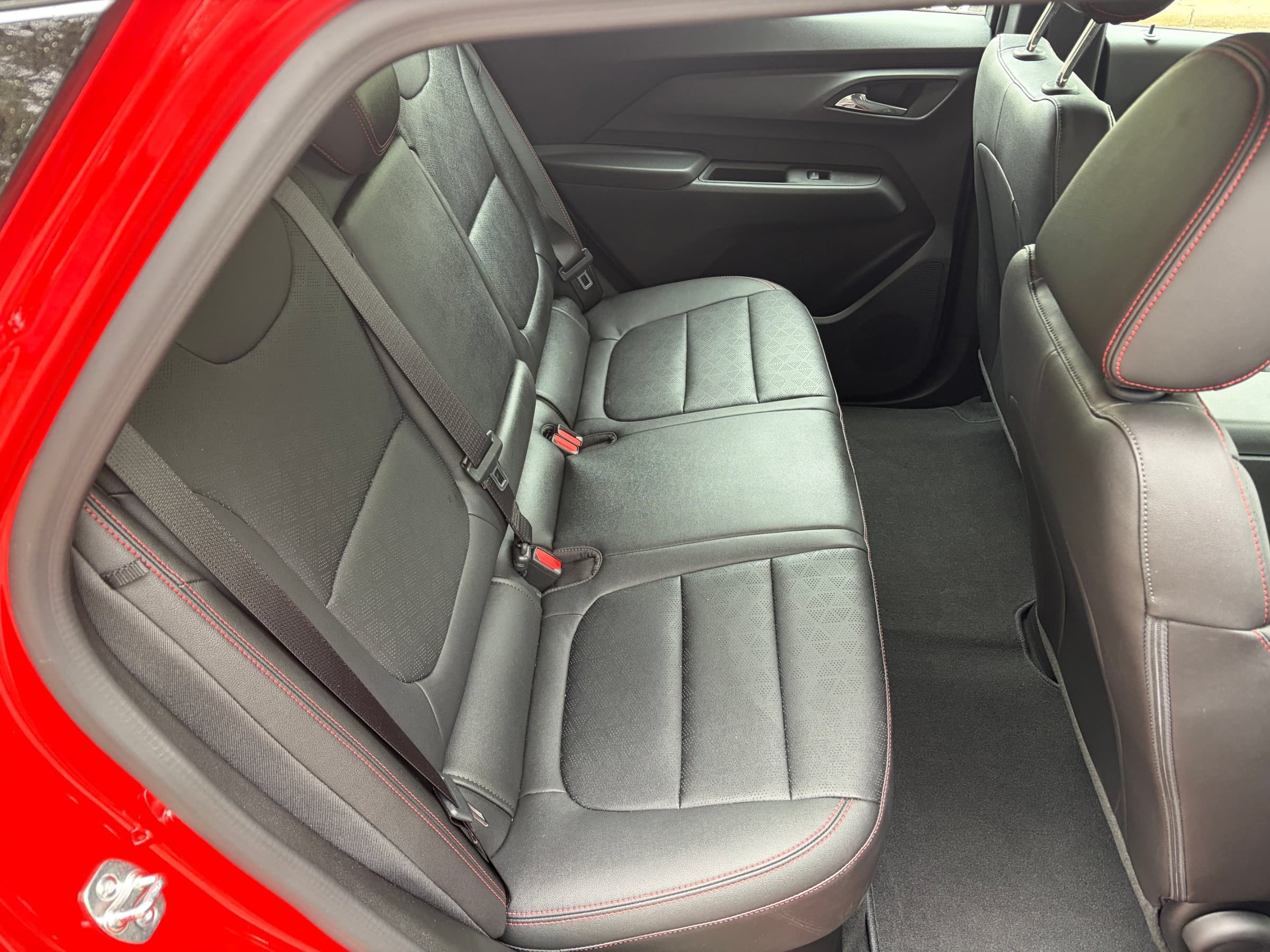
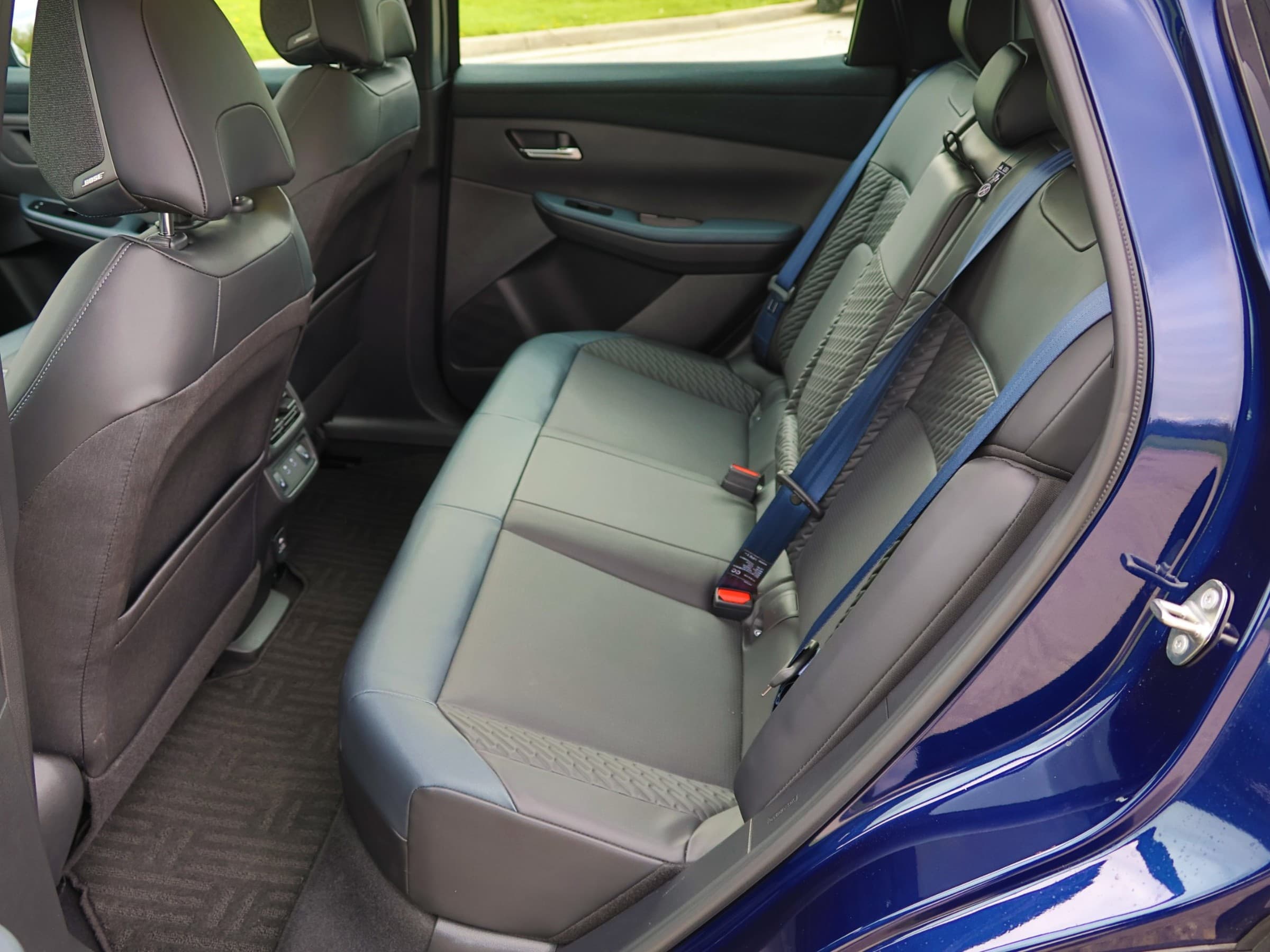
Neither one is clearly roomier. It depends on the seat. The Bolt has 1.9 inches more front legroom, 0.6 to 1.2 inches more rear headroom, and a whopping 7.3 inches more rear legroom. However, the Leaf has 1.4 inches more front shoulder room, 2.6 inches more rear shoulder room, and 3.8 more cubic feet of cargo space behind the second row. Front headroom and maximum cargo space are nearly the same.
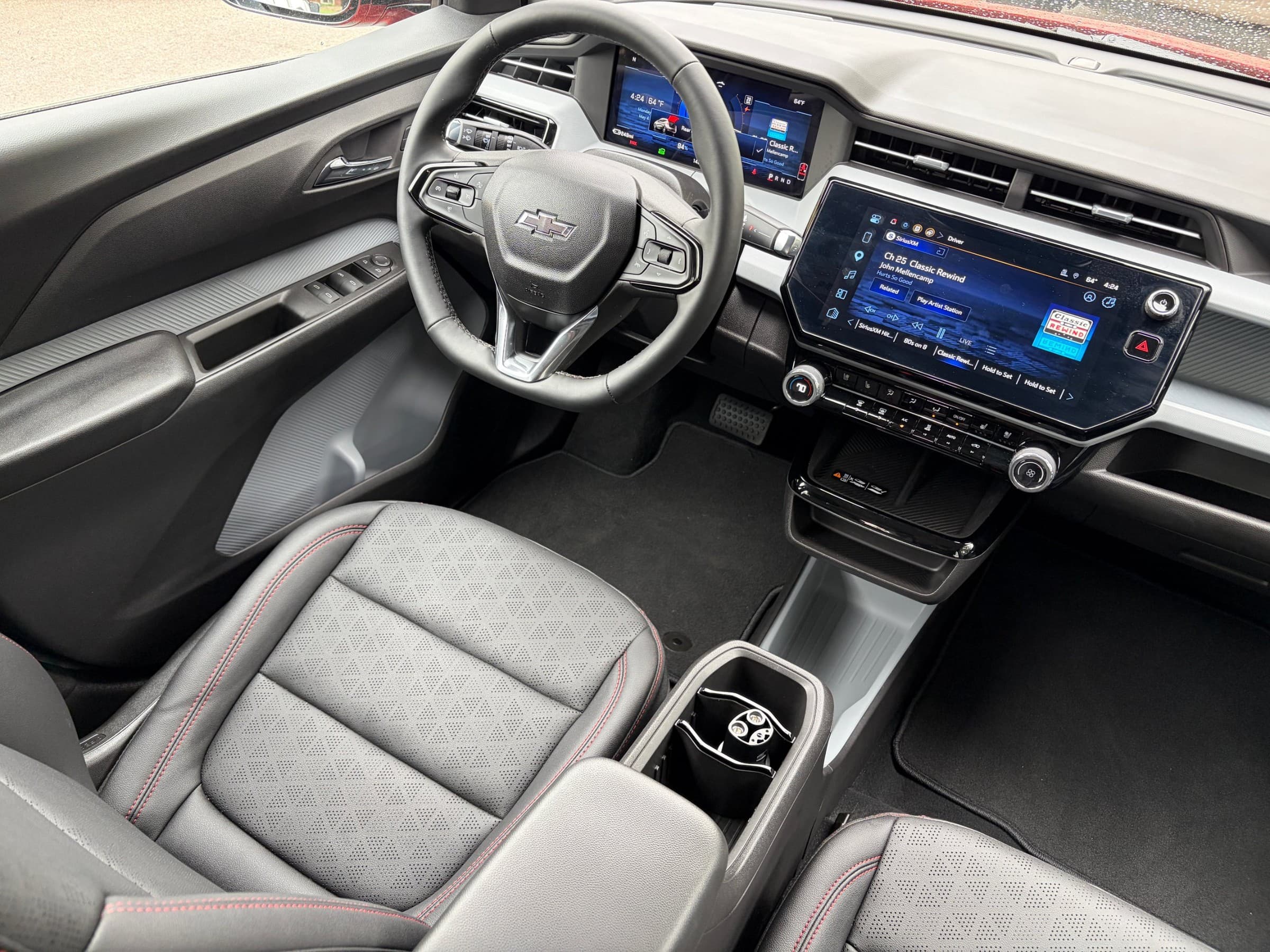
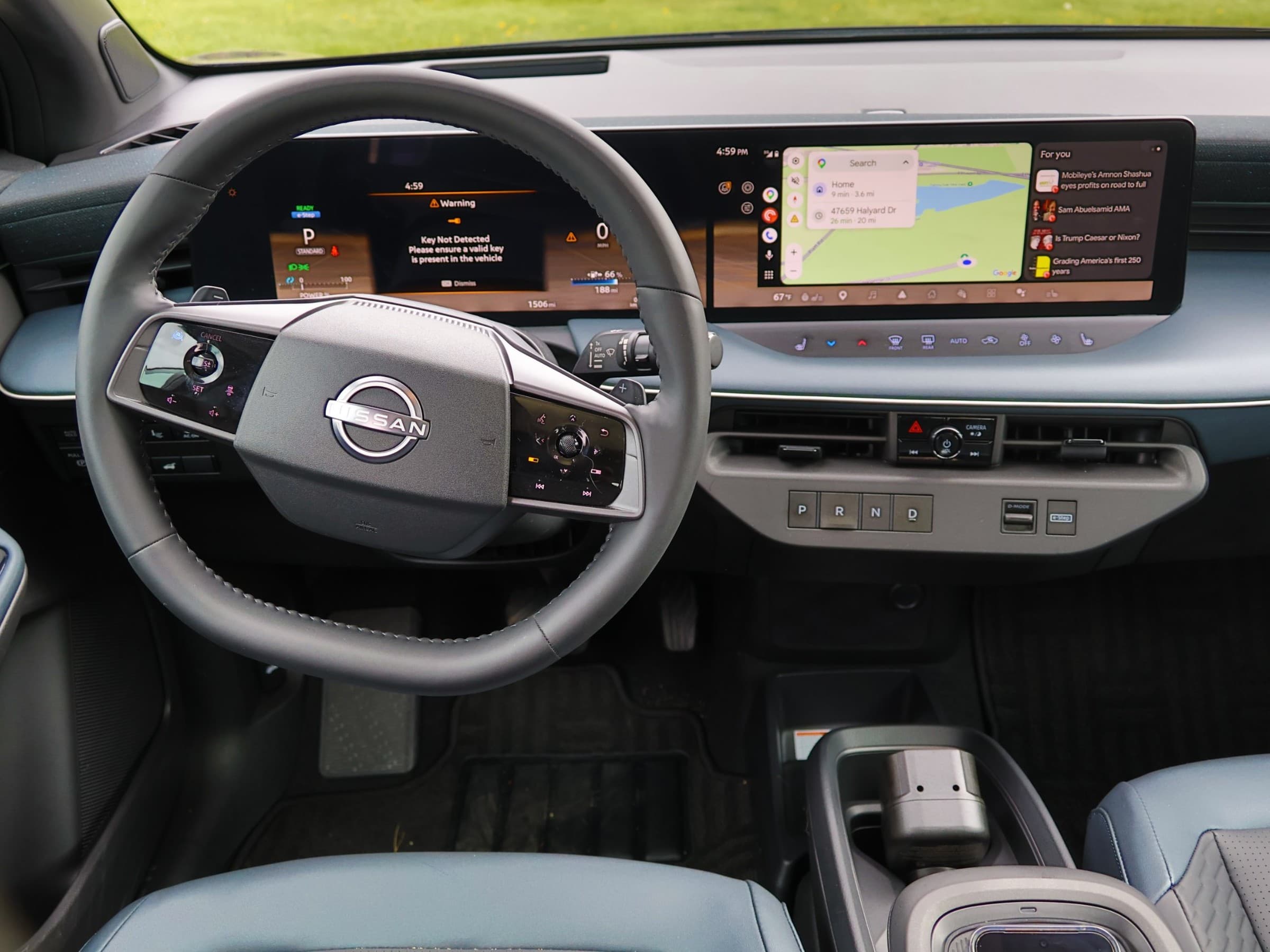
These two share many of the same standard features, including cloth upholstery, manually adjustable front seats, a 60/40 split-folding rear seat, USB ports, keyless entry, push-button start, and automatic climate control. For infotainment, the Bolt gets a standard 11.3-inch touchscreen with Google built in as standard and an 11-inch gauge cluster on all trims. However, like most other GM EVs, the Bolt doesn’t support Apple CarPlay or Android Auto. The base Leaf gets a standard 12.3-inch touchscreen running Nissan’s own infotainment platform, along with wireless Apple CarPlay, Android Auto, and Alexa built-in. The SV+ and Platinum+ get a larger 14.3 digital gauge cluster and a 14.3-inch infotainment touchscreen with Google built-in.
You can upgrade both EVs with an eight-way power-adjustable driver's seat, synthetic leather upholstery, heated front seats, multi-color ambient interior lighting, an auto-dimming rearview mirror, wireless device charging, and a sunroof. The Bolt offers ventilated front seats and a heated steering wheel, which aren't available on the Leaf. However, the Leaf offers heated rear seats, a power liftgate, a head-up display, and a 10-speaker Bose audio system, which aren't available on the Bolt.
For safety, both come standard with automatic high beams, automatic emergency braking, forward-collision warning, pedestrian and cyclist detection, adaptive cruise control, blind-spot assistance, rear cross-traffic alert, lane-departure warning, lane-keeping assist, rear parking assist, and a rearview camera. The Bolt also gets standard intersection automatic emergency braking, reverse automatic braking, side cyclist alert, and Teen Driver. The Leaf also gets standard driver-attention alert, traffic-sign recognition (available on the Bolt), surround-view monitor (available on the Bolt), front-wide view, and intelligent hood view. Front parking sensors are available on both.
The Bolt is available with General Motors' Super Cruise, a hands-free driver-assistance system that works on more than 750,000 miles of mapped roads in the U.S. and Canada.
Powertrain and Fuel Economy
The Leaf and the Bolt are within 4 horsepower of each other, but the Leaf makes 92 lb-ft more torque (261 vs. 169) and has a larger battery (75 vs. 65 kWh). The Leaf's maximum range beats the Bolt by 41 miles (303 vs. 262 miles), but the Leaf's lowest-rated trim gets 3 fewer miles than the Bolt (259 vs. 262).
Maximum range does not tell the whole story because wheel size, trim, weather, and driving conditions can move the real result, so see how to compare EPA range when shopping for an EV ➜
Charging
The Bolt charges from 10 to 80 percent about 10 minutes faster than the Leaf, taking about 25 minutes compared to the Leaf's 35 minutes. The Bolt has a native NACS charging port for both AC and DC charging, but it’s on the left front fender, which makes it awkward to use with Tesla Superchargers without occupying an extra charging bay.
Like the first two generations, the new Leaf has separate ports for AC and DC charging, but they've moved from the nose to the front fenders. On the left fender is a J1772 port for AC charging. On the right, a NACS port replaces the old CHAdeMo port. It handles DC fast charging only, and it's placed where Tesla’s famously short Supercharger cables can reach it.
Price
The Chevy Bolt undercuts the Leaf at every level. It starts $2,570 cheaper than the Leaf ($28,995 vs $31,565), and the top RS trim is $7,570 cheaper than the top Leaf Platinum+ trim ($32,995 vs $40,565). The Bolt's top trim also undercuts the mid-trim Leaf SV+ by $2,810.
What's It Like to Drive?
Despite the Leaf's extra torque, the two perform about the same because the Bolt is about 450 pounds lighter. Each gets to 60 mph in around 7 seconds, which is more than enough for daily driving and merging onto highways. The new Leaf is definitely sportier-looking. Nissan calls it a crossover, but it’s really a fastback hatchback, and it looks much better than earlier versions. The Bolt, on the other hand, is much more utilitarian in its shape.
On the road, both handle the way you'd expect a compact mainstream hatchback to, which is to say that they’re stable, predictable, and unlikely to ever bite you. As front-wheel-drive cars, both tend to understeer at their absolute limits, but the Nissan has surprisingly good steering feel. Faster charging and at least 250 miles of range make both better for road trips than their predecessors, but neither is outstanding at it. The new Bolt's seats are better and more comfortable than earlier models, but the Leaf’s “zero gravity” seats are a definite step up.
The Bolt comes standard with a battery heater for DC fast charging in cold weather. On the Leaf, it's an extra-cost option, and without it, the Leaf's charging speeds can drop dramatically in extreme cold. The Bolt has offered one-pedal driving since the original debuted in 2017, and that continues with the latest edition. Nissan has dropped one-pedal driving for the new Leaf. Even with the e-Step button engaged for more aggressive regenerative braking, you’ll have to press the brake pedal below about 5 mph to come to a complete stop.
Cold weather can affect both range and charging behavior, and GreenCars has already put the redesigned Nissan through an extreme winter test, so see how the Leaf performed below zero ➜
Chevrolet and Nissan take very different approaches to regenerative braking, so see how one-pedal driving works and why some automakers tune it differently ➜
Analyst's Perspective (Which One's Right for You)
Most people will probably favor the Leaf's design over the boxier Bolt's, and if you do, the Leaf is definitely a good, relatively affordable EV. The base S+ trim is the cheapest Leaf, but the mid-level SV+ adds enough features to make it the best value in the lineup, especially compared to the Platinum+.
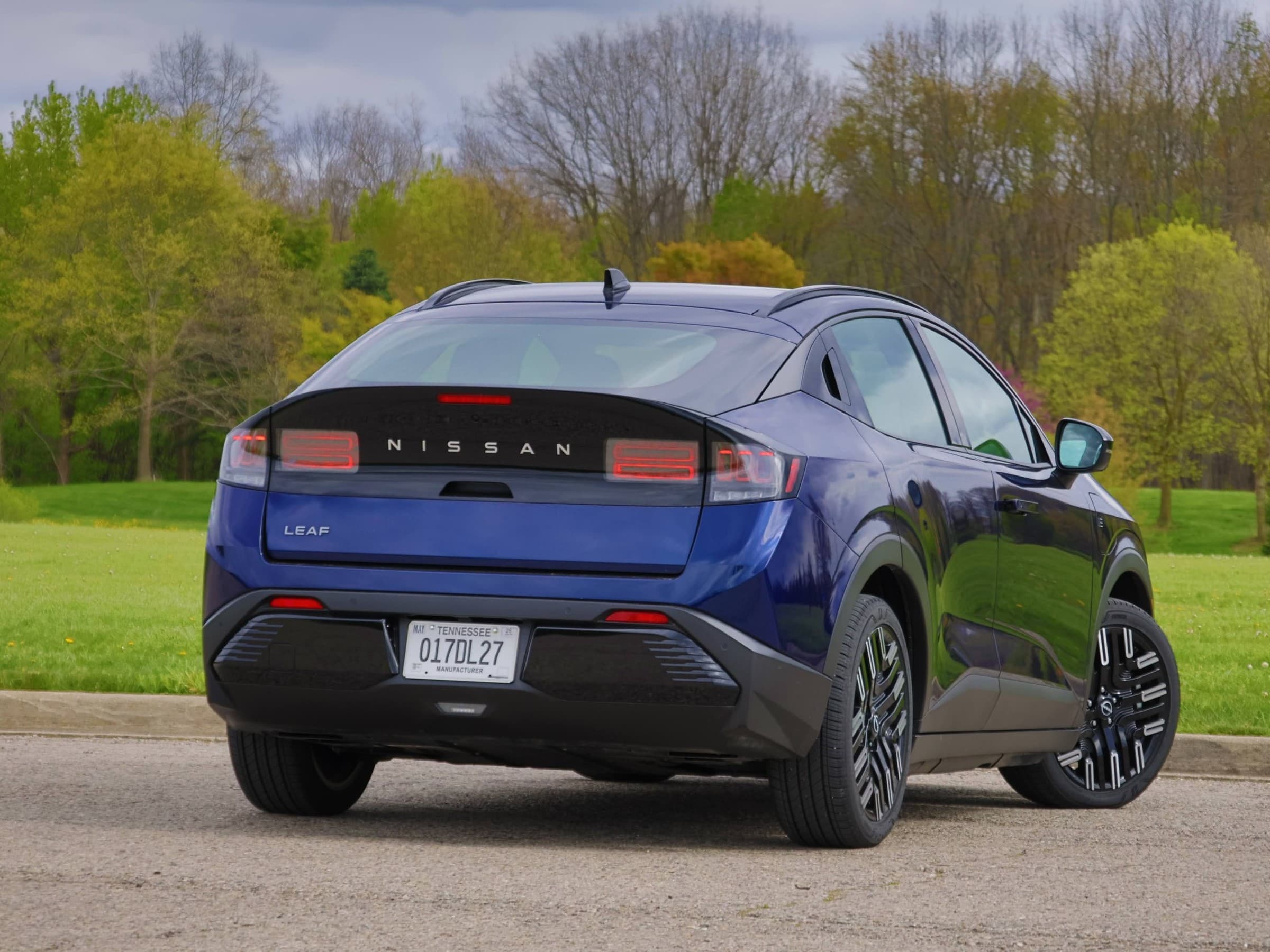
But if the Leaf's looks don’t move you and you’re not dead set on using Apple CarPlay, the Bolt is probably the better overall choice. A single charge port for AC and DC is a bit more convenient, even if it is on the “wrong” side for Superchargers. The Bolt is surprisingly spacious for a small car and charges a bit quicker. It also retains one-pedal driving, which is great for urban stop-and-go. The loaded Bolt RS equipped with the Technology and Super Cruise packages still costs $3,000 less than the starting price of the Leaf Platinum+.
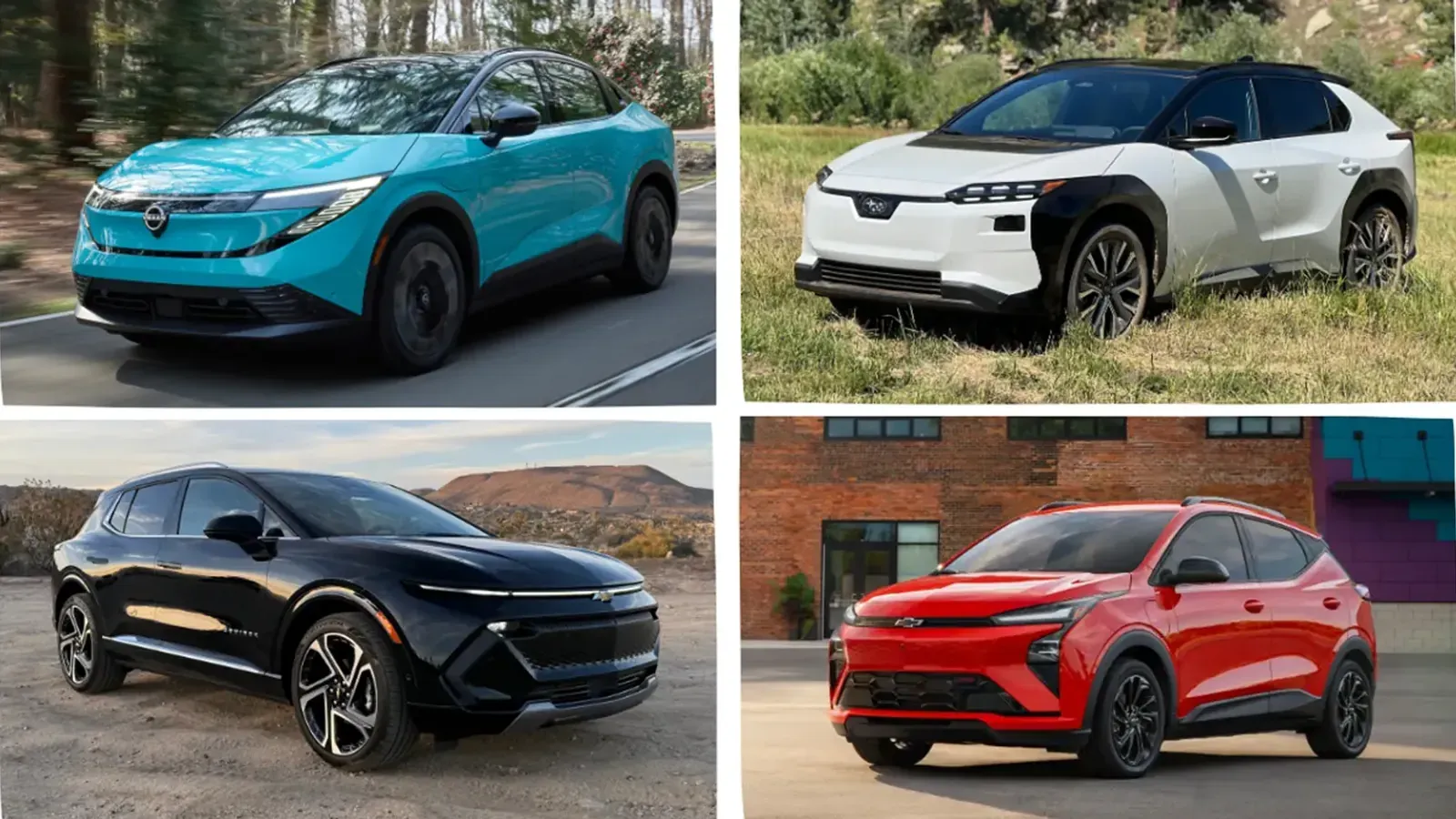
More Affordable EVs Worth Cross-Shopping
The Best EVs Under $40K
See where the Leaf and Bolt fit among today’s most affordable new EVs, including longer-range crossovers and other mainstream alternatives.
Read More ➜
3 Best Compact EVs for City Driving
If size and urban usability matter most, compare the Bolt with other small EVs built around tight parking, public charging, and daily commuting.
Read More ➜
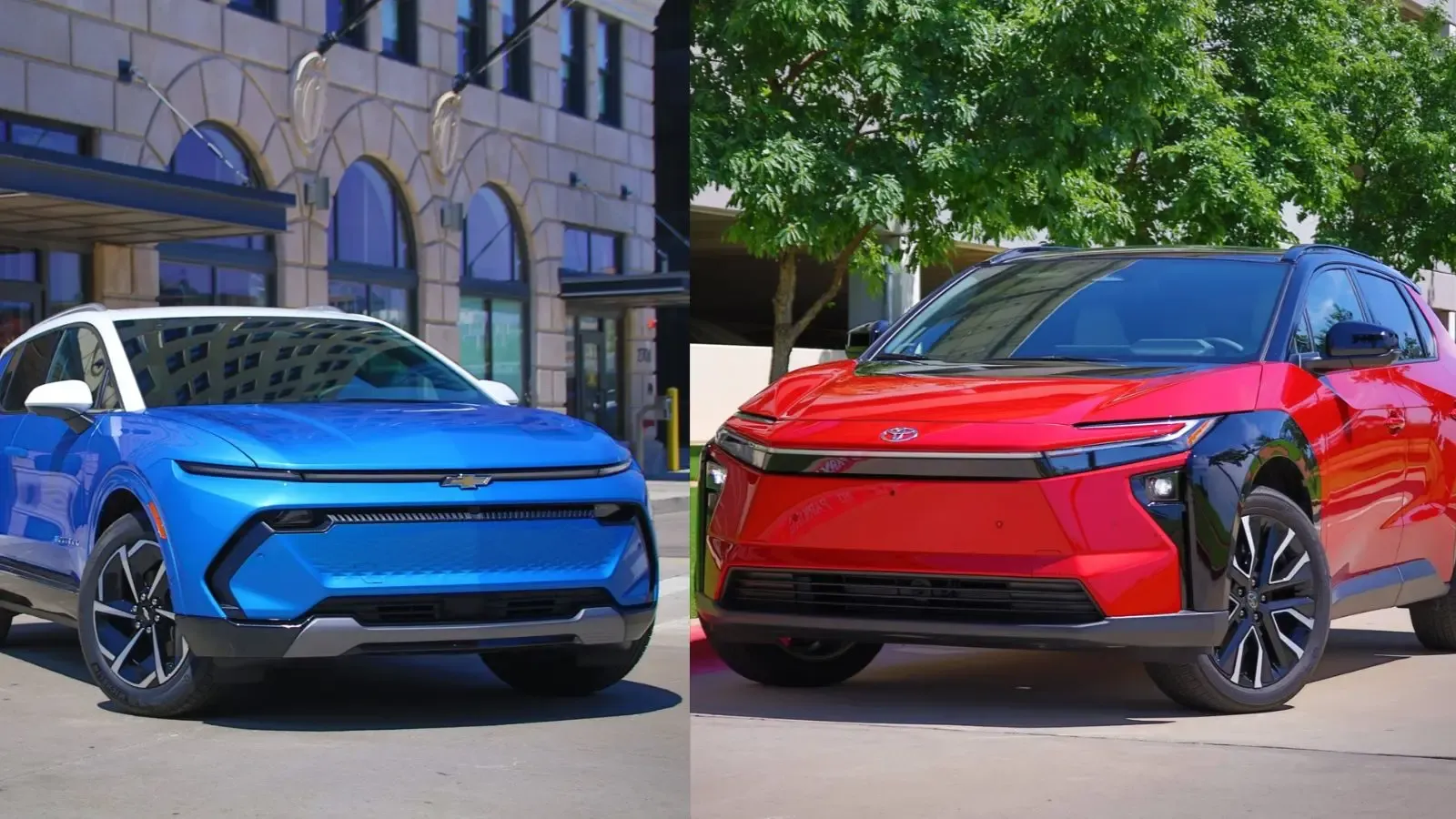
2027 Toyota bZ vs. 2027 Chevrolet Equinox EV: Which Affordable EV Wins?
Moving one size up brings more range and space without leaving the affordable-EV conversation, especially with Chevrolet’s Equinox EV.
Read More ➜







 Comparisons