

Fast Facts | 2026 Nissan Leaf Winter Review
❄️ Cold Test: The Leaf was driven through a week of punishing February winter weather
🛞 Snow Grip: Winter tires made a major difference and helped the front-wheel-drive Leaf stay surprisingly composed
🔋 Range Drop: EPA-estimated 288 miles fell to an observed 180 miles in extreme cold
📉 Efficiency Read: Observed consumption hit about 41.5 kWh per 100 miles during the deepest freeze
🐢 Biggest Quirk: Extremely cold temperatures triggered a low-power turtle mode that sharply dulled acceleration
💵 Price Point: The 2026 Leaf starts at $31,485 including destination
Cold Weather Still Hurts EVs, but the Leaf Holds Its Own
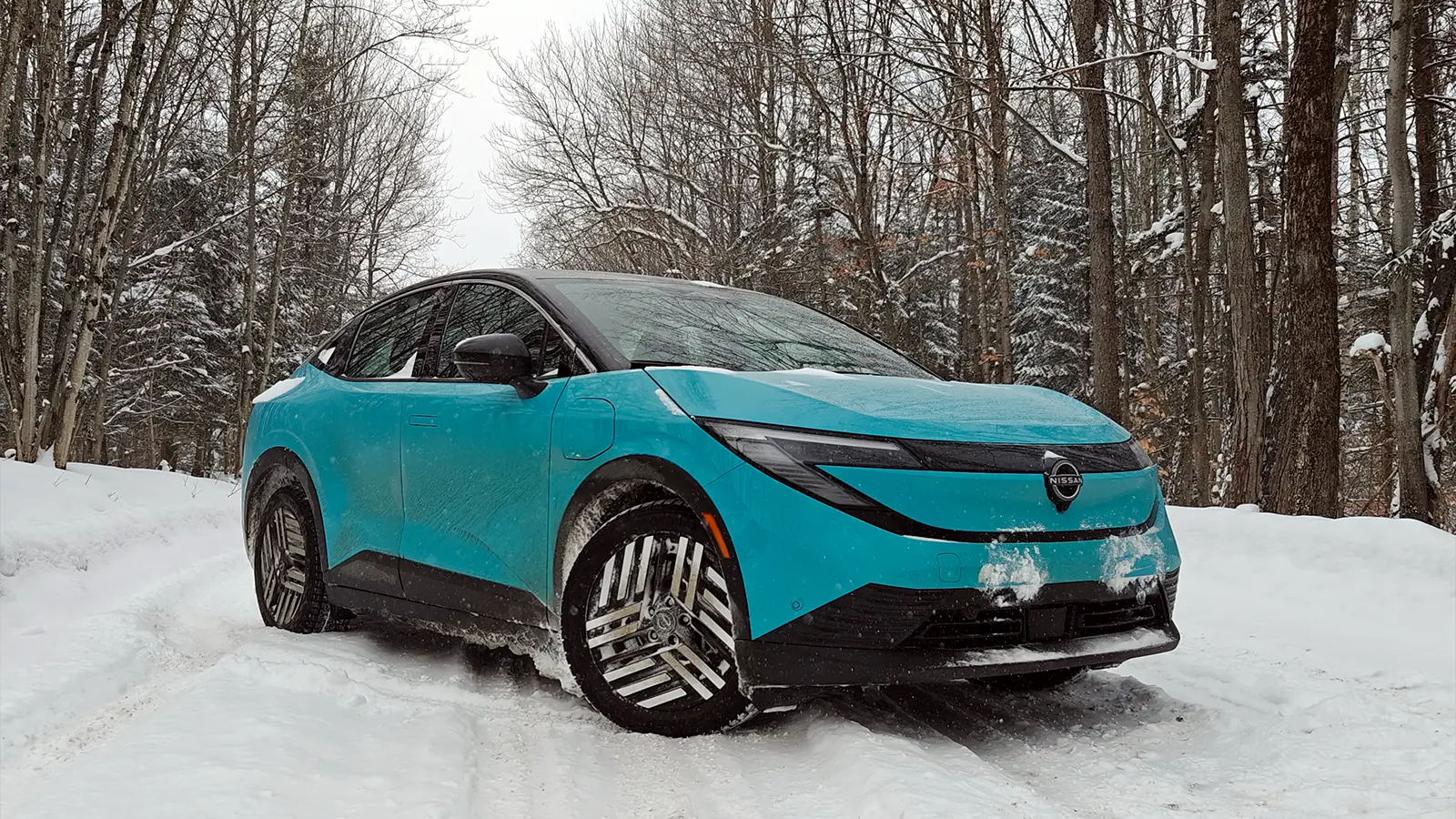
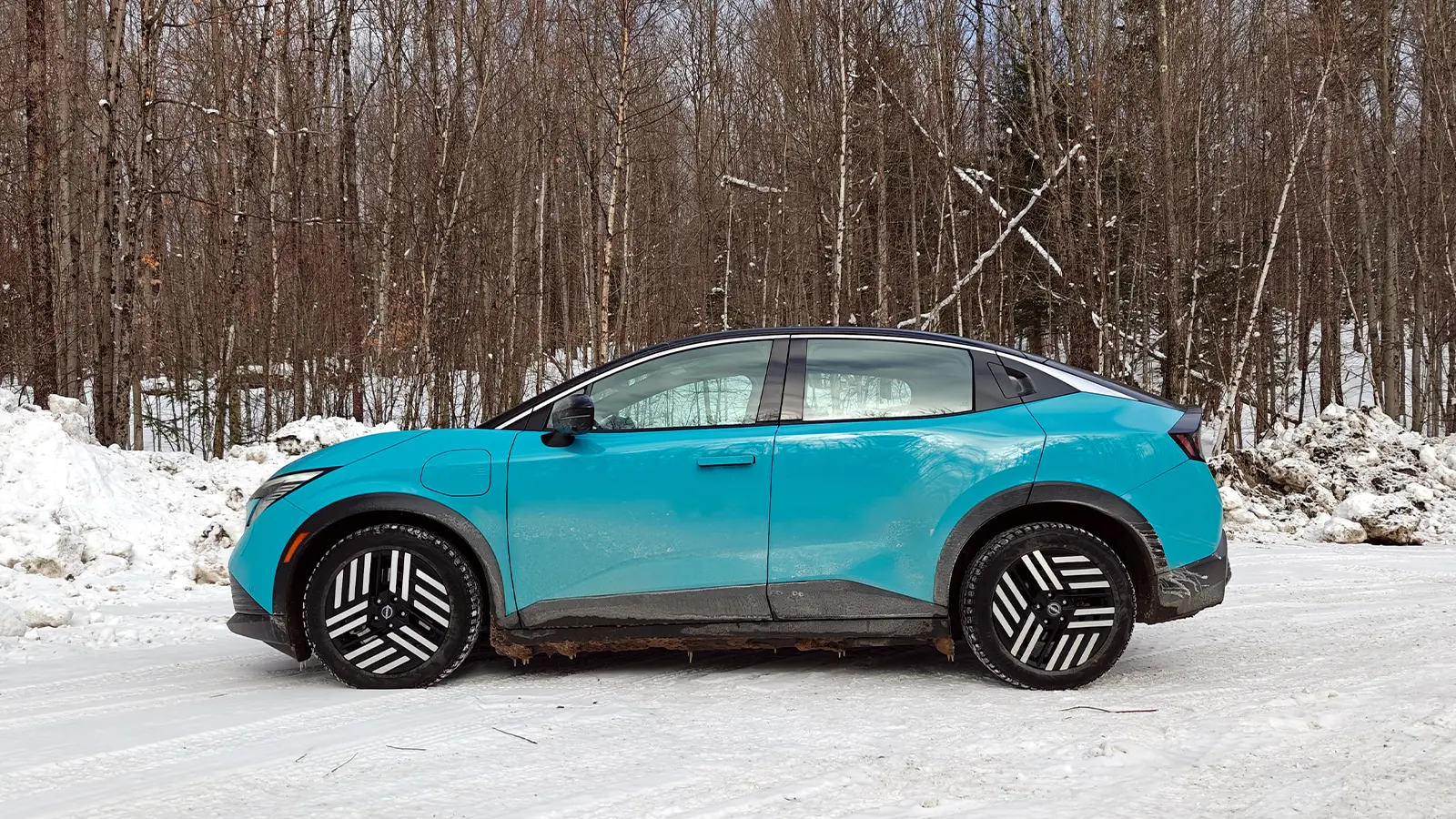
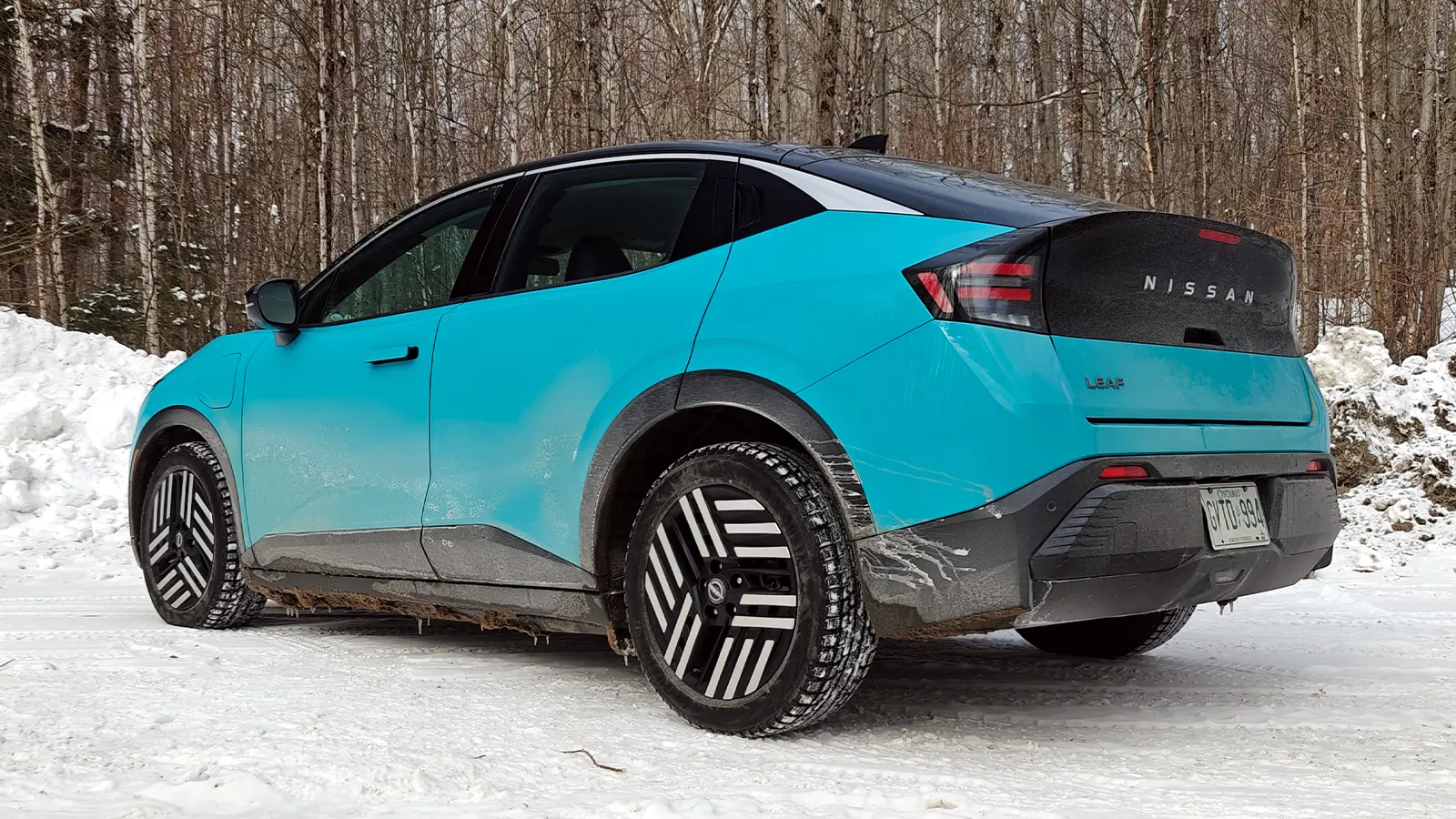
The Nissan Leaf’s glow-up for the 2026 model year pushes it past its traditional hatchback roots and firmly into crossover territory. Featuring beefier creases in its sheetmetal, a raised beltline, and a broad grille in place of its old pointed snout, the all-new Leaf's fresh look should tempt a fresh batch of customers.
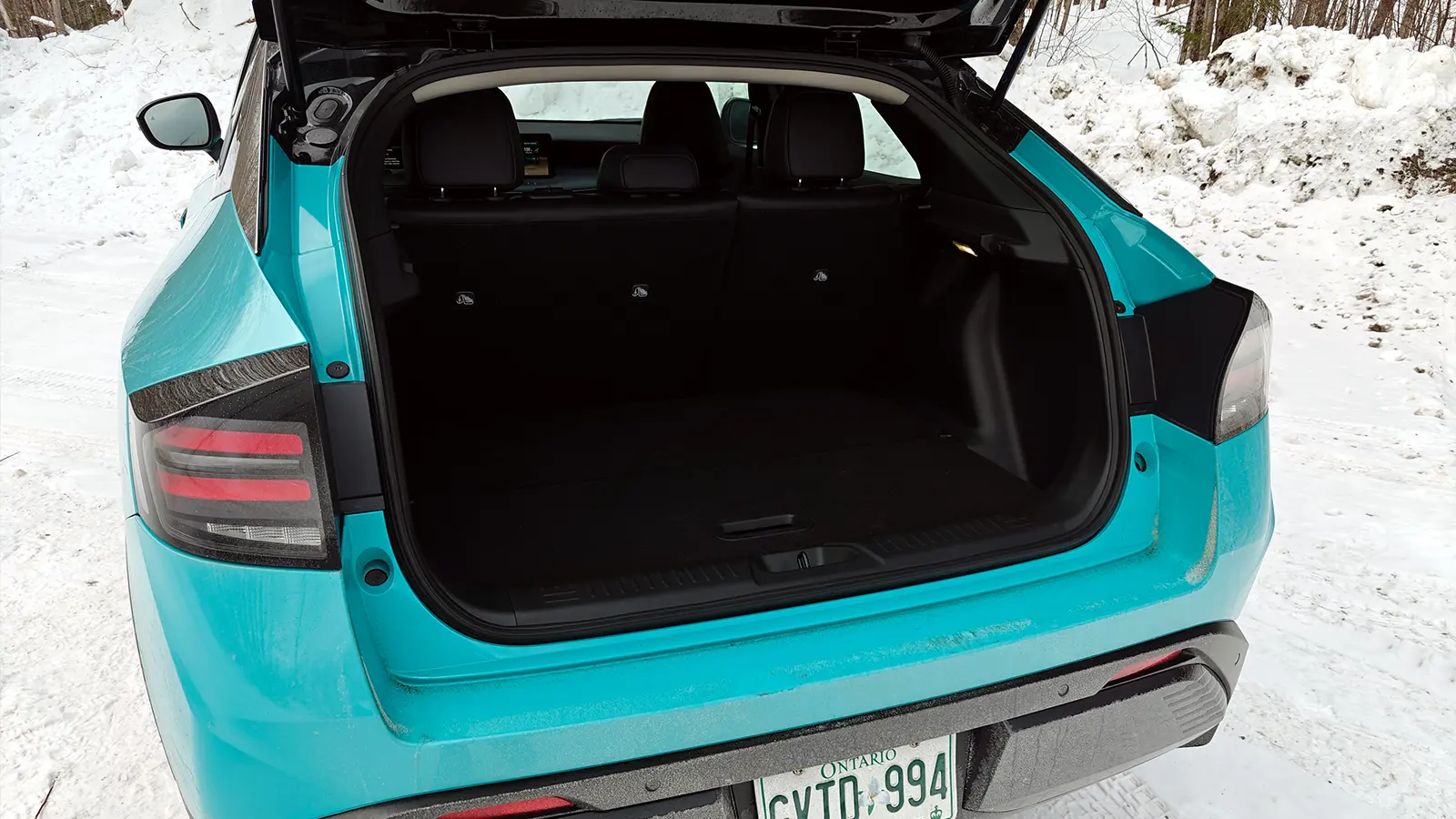
A closer look at the Leaf’s spec sheet, however, reveals this new persona is largely a design trick: despite its buffed-up appearance, it’s actually a tiny bit lower, shorter, and sits closer to the ground than its predecessor. But these tighter dimensions, combined with a mightier drivetrain and bigger battery, boost its range considerably, giving it fresh ammo against similarly-priced rivals like the Chevrolet Bolt and Hyundai Kona EV, both of which had previously surpassed it in nearly every important category.
Still, despite its on-paper performance claims, we were curious to see how the Leaf fared in the harsh realities of winter driving. Cold weather and snowy roads are known range-sappers for EVs, and they can occasionally impact performance as well. With that in mind, we subjected the Leaf to a week of punishing February weather while keeping a close eye on the battery charge gauge.
The Leaf Handles Winter Roads Better Than You'd Expect
Automotive marketing departments have done an exceptional job convincing us that all-wheel drive is the only way to survive the slippery season unscathed. The Nissan Leaf, despite its feint towards crossover styling, is still front-wheel drive only, with all 214 horsepower sent to the front wheels. But don't let that put you off.
Even with three or more inches of fresh snow on the gravel roads that link my woodsy compound to civilization, the Leaf was remarkably capable in low-grip conditions. Time and again, it pulled through the white stuff without much complaint, save for the occasional steering correction when the tires caught a rut or slick patch. Credit goes to the winter tires, which are a must for anyone dealing with persistent foul weather, and often more useful than all-wheel drive when it comes to braking and handling on slippery surfaces.
When winter range starts becoming the big question, Temperature and Your EV Battery gives the clearest explanation of why cold weather changes performance so much ➜
That’s not to say that the Leaf was perfect in the snow. I dealt with considerable slush buildup in the wheel wells that rubbed against the tires when turning. There were also a couple of instances where I made the mistake of stopping on a snow-covered incline, at which point there was no moving forward until I backed down and took a second run at it. All-wheel drive would've been a boon in these situations, but maintaining momentum is really the key to successful front-wheel-drive winter driving.
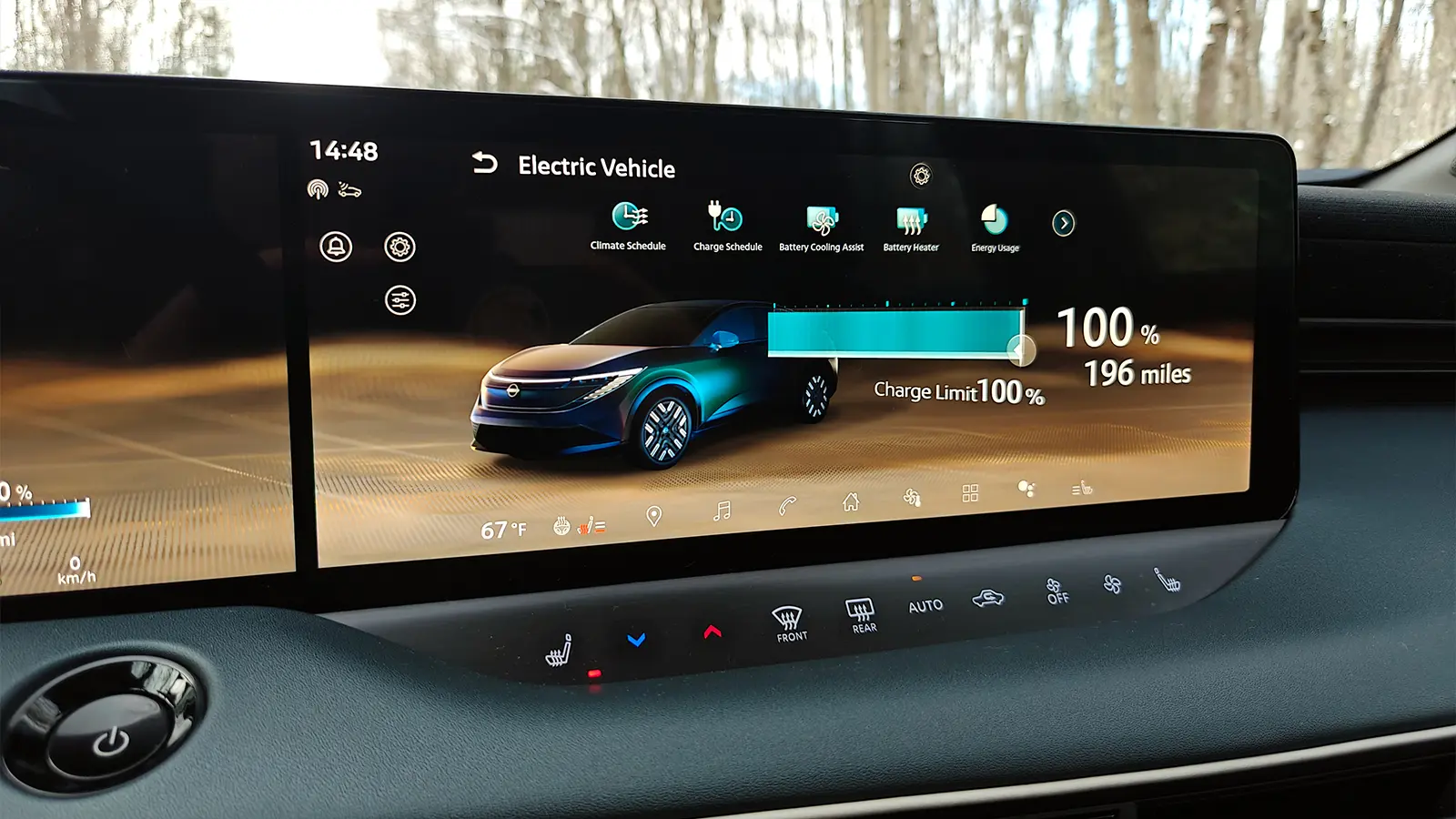
I had the opportunity to stress-test the Leaf’s range during a day of -9 degrees Fahrenheit temperatures. The SV+ trim I drove advertises an EPA-estimated 288 miles of range under ideal conditions, but in the extreme cold, that dropped to an observed 180 miles (or about 41.5 kWh per 100 miles). That might sound drastic, but it’s actually right in line with the 40 percent drop I typically see from most EVs in similar conditions, and it improved as the deep freeze lifted. EV owners just have to stay more vigilant about charging when it’s cold outside.
One bright spot was how the Leaf's ProPilot Assist system handled winter demands. On salt-dusted roads where lane markings were whited out, the lane-centering system appropriately deactivated. During light snowfall on a road where the lines were visible, however, it worked just fine. I also never experienced any problems with the adaptive cruise control, which was able to pick up traffic ahead even during a snap blizzard in the dead of night.
The Leaf’s Low Power Mode Surprised Me
The Nissan Leaf had a few winter downsides, but most are minor, or at least common to other EVs. Like many EVs I’ve driven in the heart of winter, the Leaf had some trouble keeping the cabin consistently warm. It's a known EV struggle, since they don't have a combustion engine to pull heat from.
If the bigger shopping question is whether a small EV still makes sense, GreenCars Buyer’s Guide is the easiest way to compare what fits your budget and climate needs ➜
The battery charge display was a little quirky, too. In very cold temperatures, it lags the actual battery state considerably. One morning, I drove 40 miles before the gauge began to drop from 100 percent.
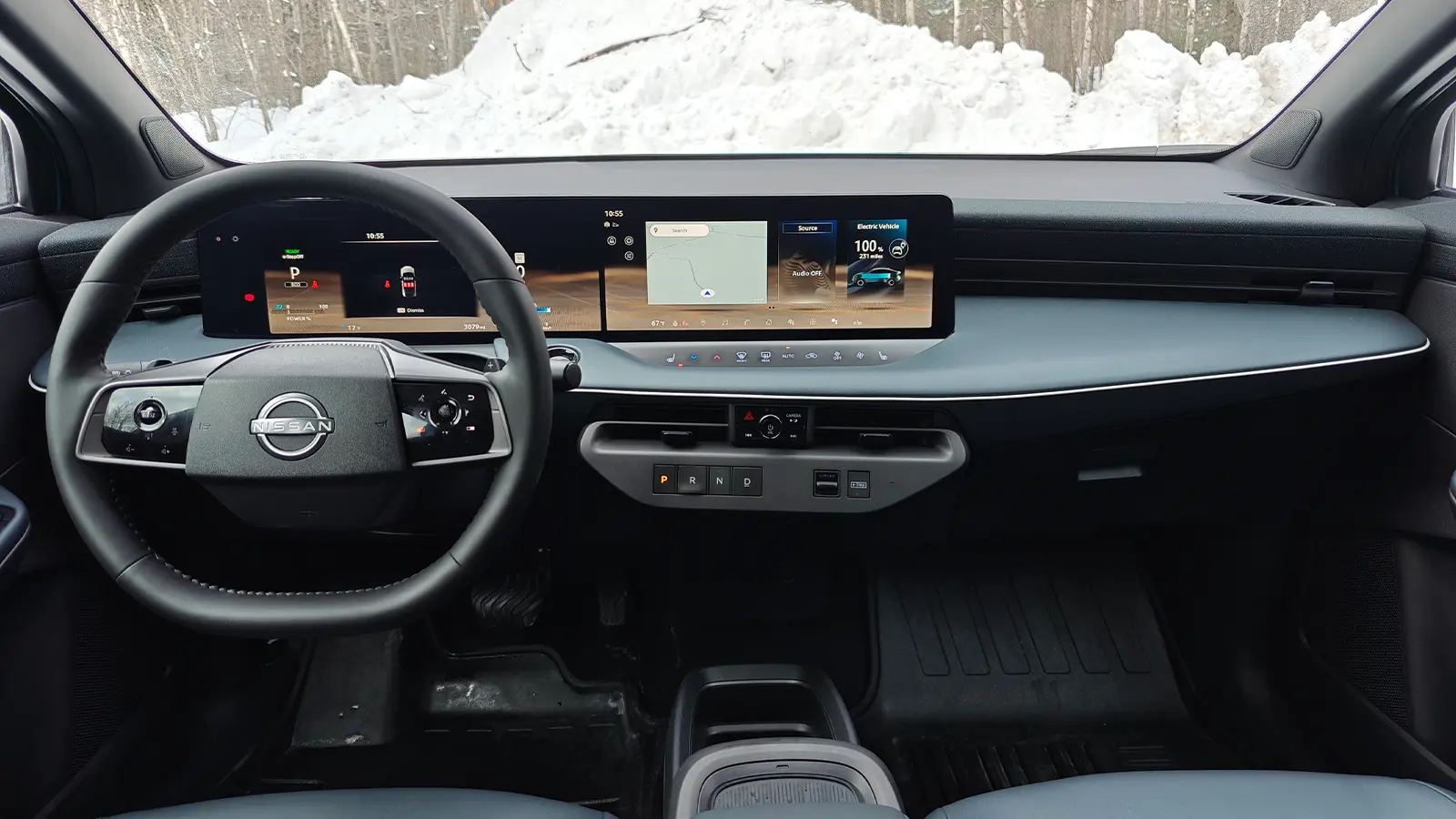
The most serious thing I encountered came on the coldest day I spent with the Leaf. After charging overnight, I left my driveway and could instantly tell acceleration was off. Sure enough, a small orange turtle icon lit up in the gauge cluster, indicating the car had entered a low-power mode to protect the cold battery. For the next 35 miles, the car crawled up to the 55 mph speed limit after every stop and struggled with inclines. I’ve yet to have any other EV protect itself that way in more than a decade of cold-weather testing. The Leaf’s low-power mode is definitely unusual for a modern EV, but it’s not the end of the world from a driving perspective — and it’s unlikely to be encountered except on the most inhospitable of winter days.
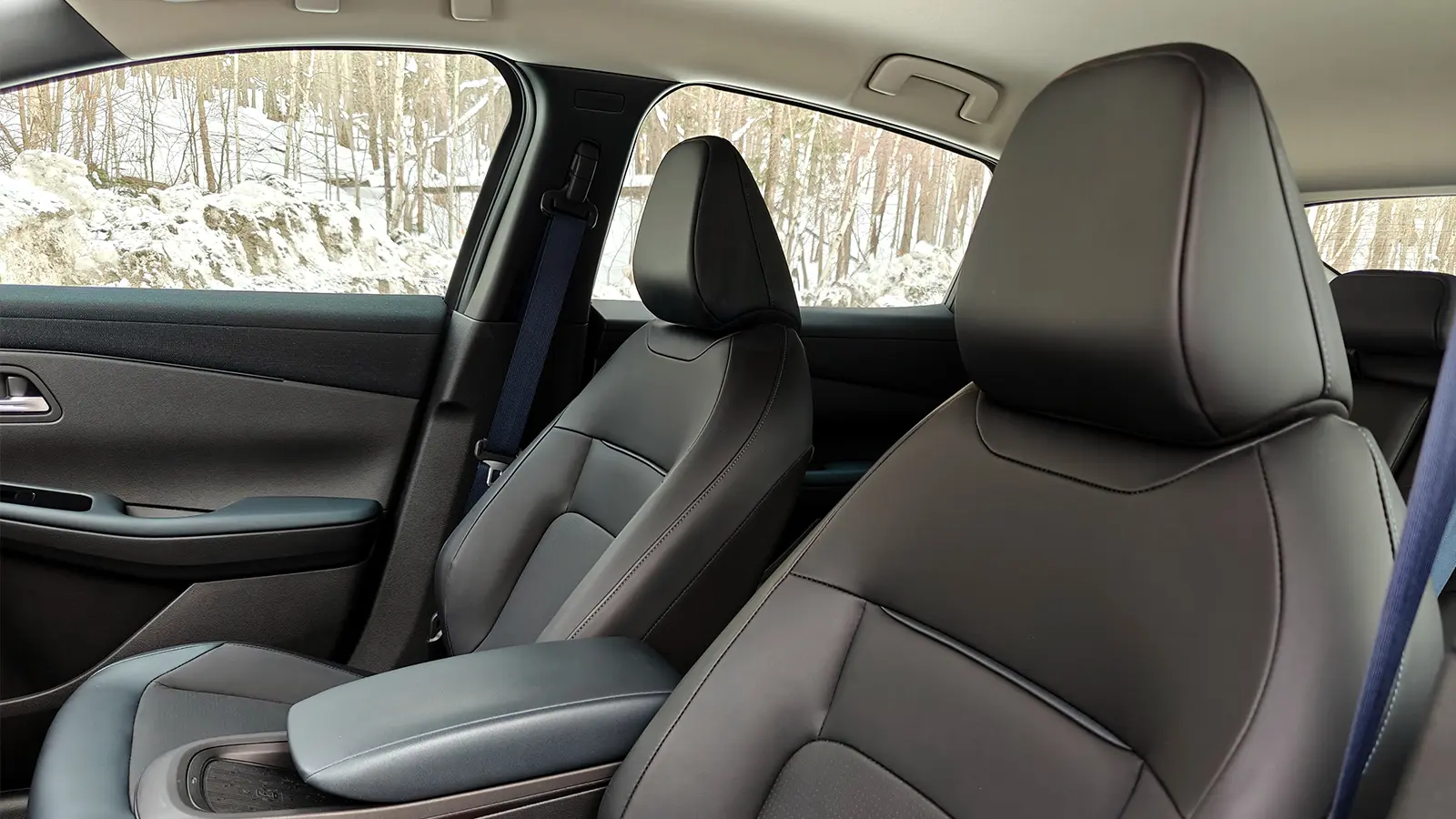
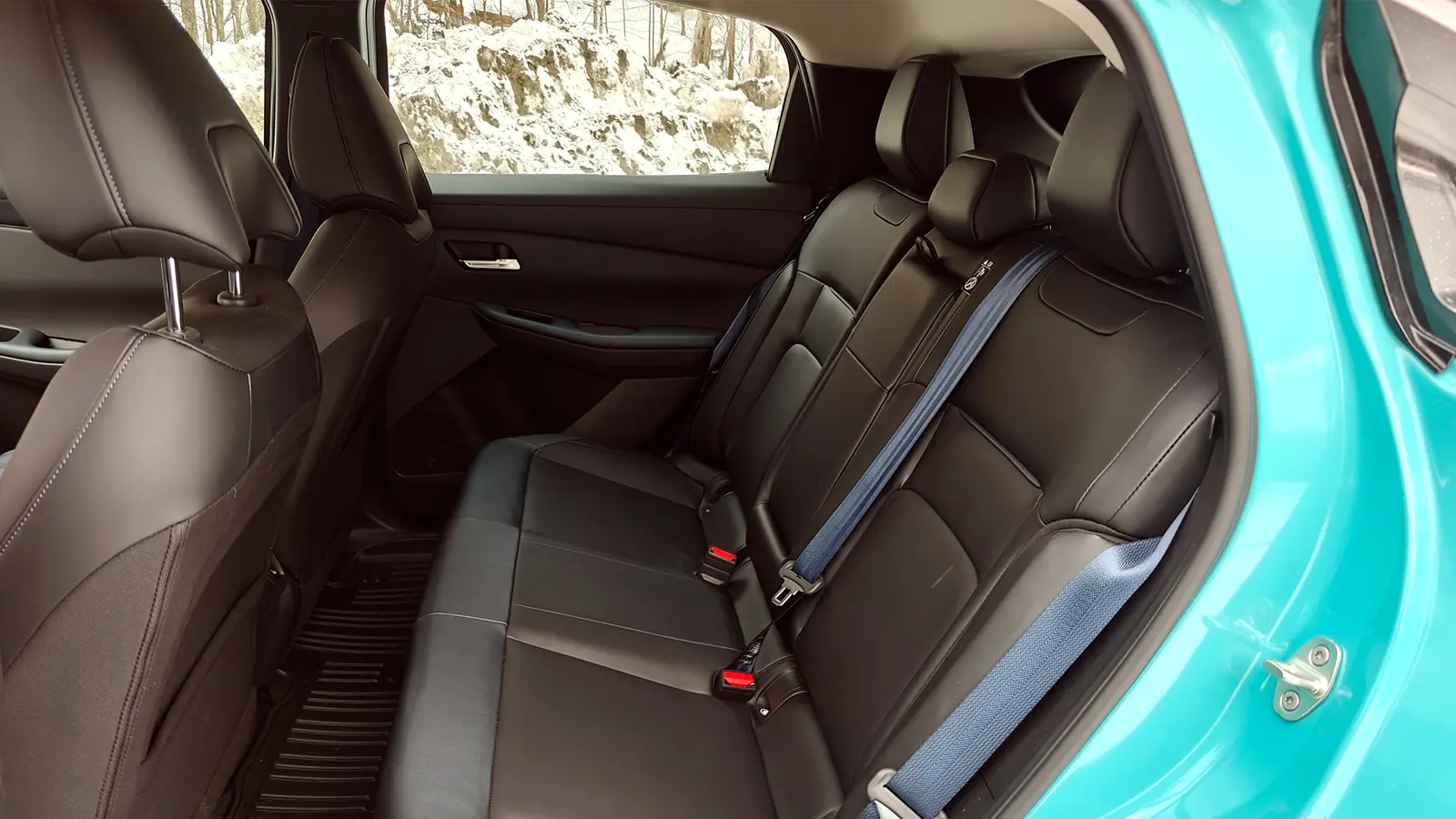
Unless You’re In Alaska, Consider The Leaf A Decent Winter Sled
The rest of the 2026 Nissan Leaf’s package proved to be in step with the state of the art for cold-weather EV driving. Combined with its more extroverted styling and a value-focused $31,485 starting MSRP (including a destination fee), it's an appealing entry-level electric option for most areas.
Keep Exploring Entry-Level EV Options
Temperature and Your EV Battery
Cold weather changes how an EV charges, heats the cabin, and uses energy. This explainer gives the broader battery context behind the Leaf’s winter range drop.
Read More ➜
5 Best Used EVs for Under $25K
Affordable EV shopping is getting more interesting, and this roundup shows how lower-cost electric options are opening up for practical buyers.
Read More ➜
GreenCars Buyer’s Guide
If winter usability, budget, and daily driving needs are all part of the equation, the Buyer’s Guide is a useful next step for narrowing down the right EV.
Read More ➜