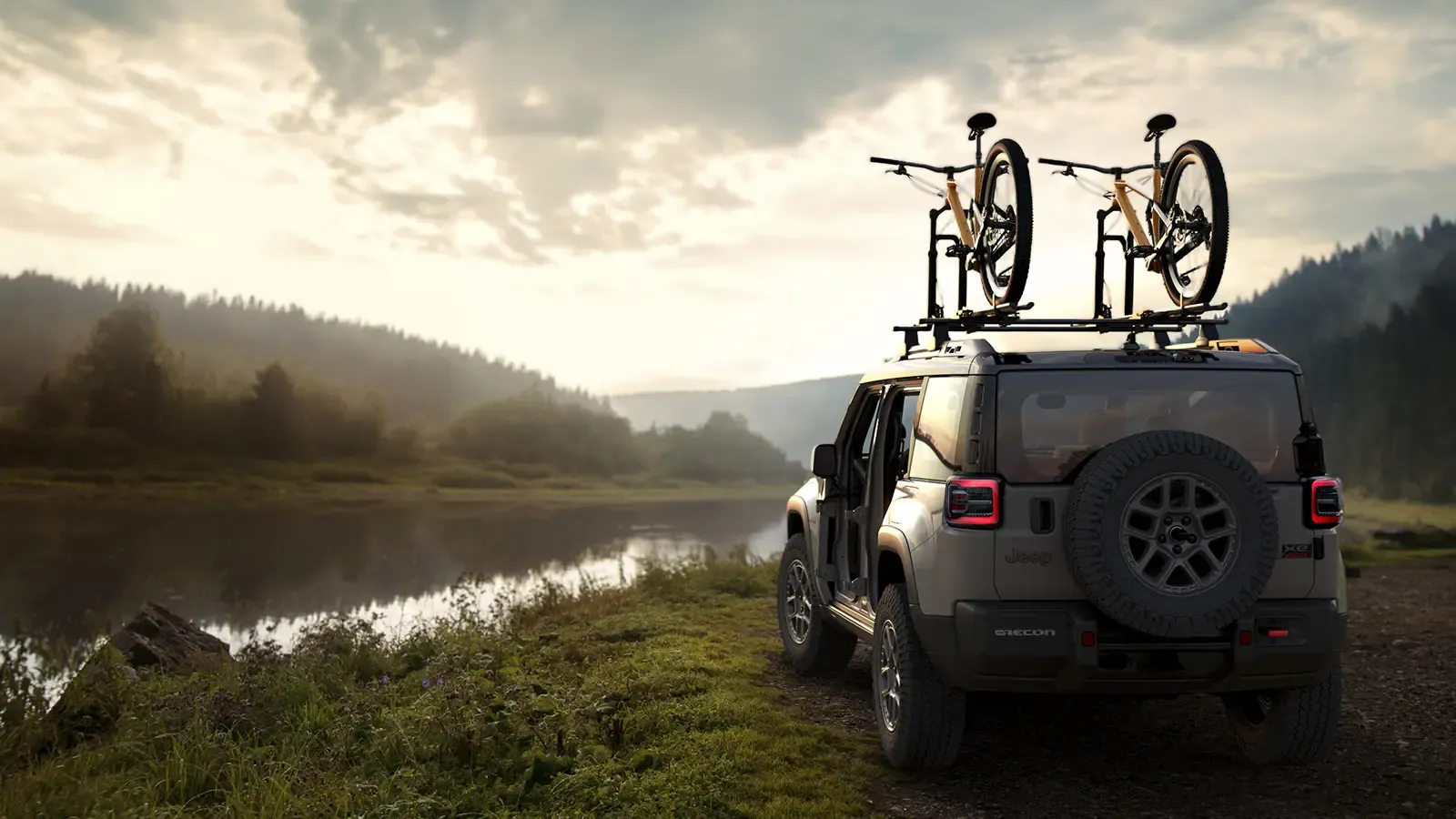
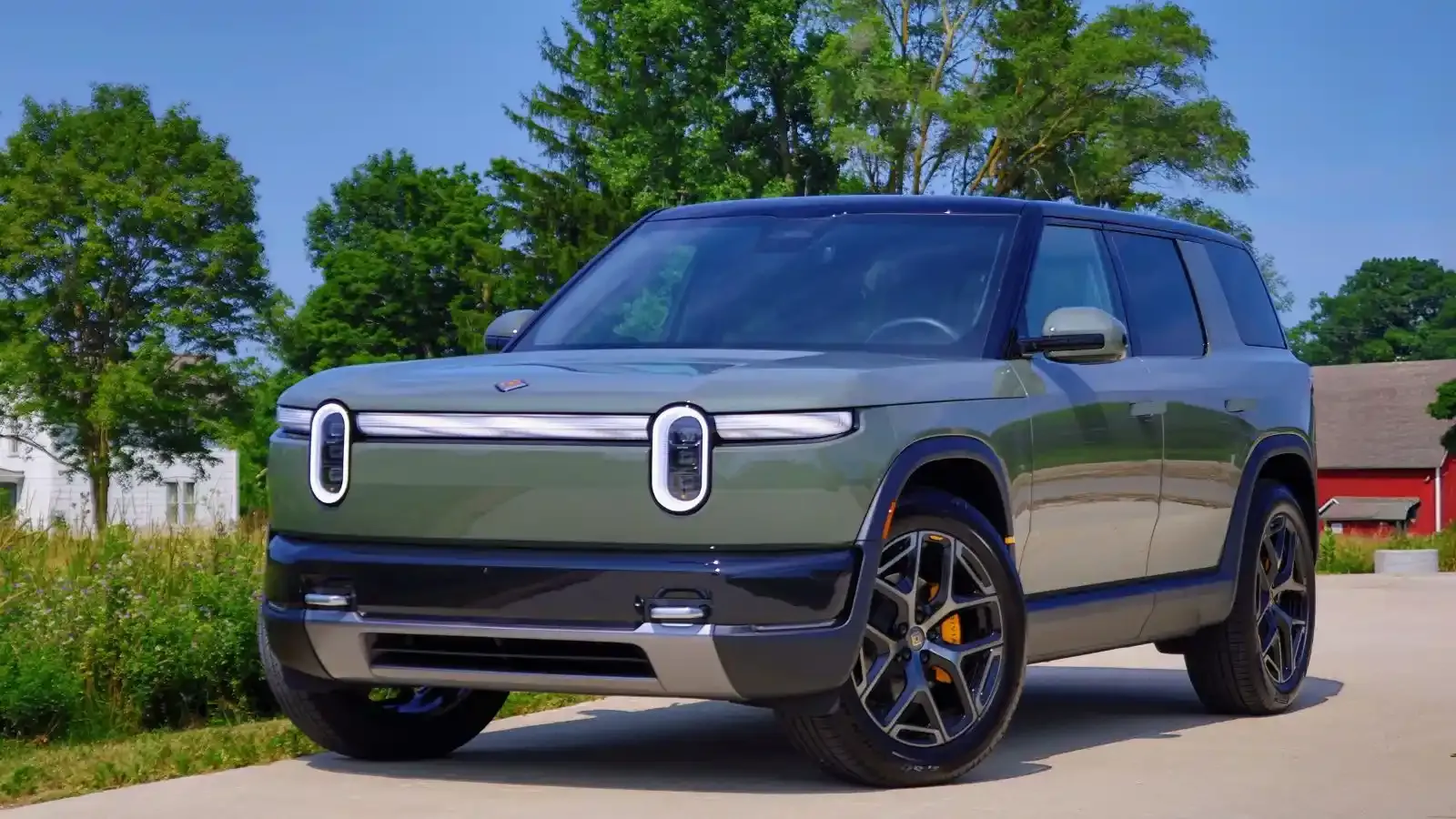
- Horsepower
- The Jeep Recon has a maximum horsepower of 670, while the Rivian R2 has a maximum horsepower of 656
- 0 to 60 mph
- Both SUVs can hit 60 mph in as little as 3.6 seconds
- Range
- The Jeep Recon has an EPA-estimated range of 222 miles, while the Rivian R2 has a manufacturer-estimated range of up to 345 miles
- Cargo Space
- The Jeep Recon has 30.3 cubic feet of space behind the rear seats, while the Rivian R2 has 28.7 cubic feet of space behind the rear seats
- Starting MSRP
- The Jeep Recon has a starting price of $66,995, while the Rivian R2 has a starting price of $46,485
Rivian Wins on Range. Jeep Brings the Trail Hardware.
When you think of off-road capability, it's hard not to think of Jeep, a brand that has built its whole identity on it since World War II. But Rivian, a much newer manufacturer, might be giving Jeep a real run for its money when it comes to electrification. Both the Jeep Recon and the Rivian R2 are aimed at adventurous buyers who want to go off the beaten path, but they take very different approaches to get there. Let's see how these two electric adventure vehicles stack up.
Exterior Design and Dimensions
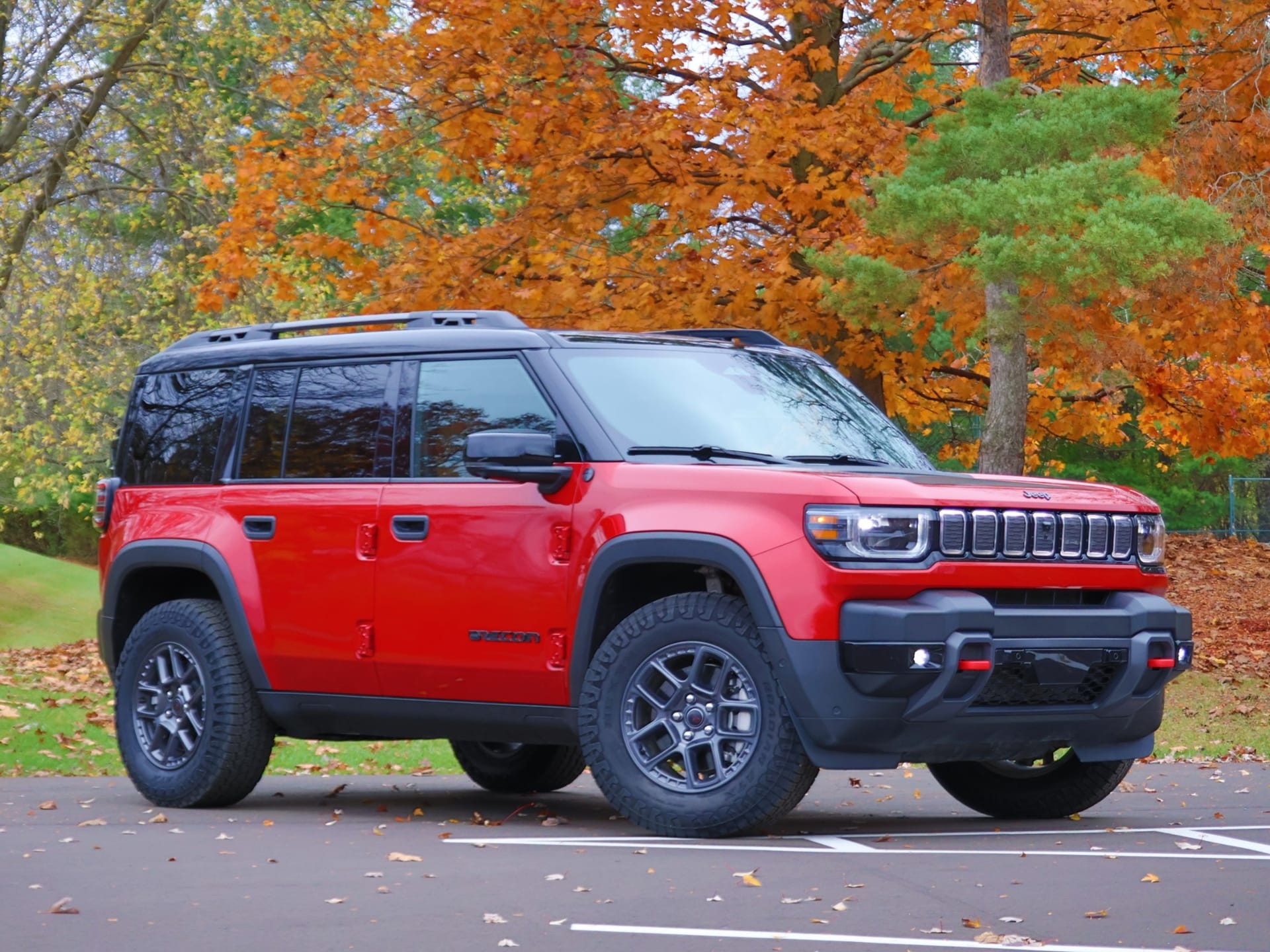
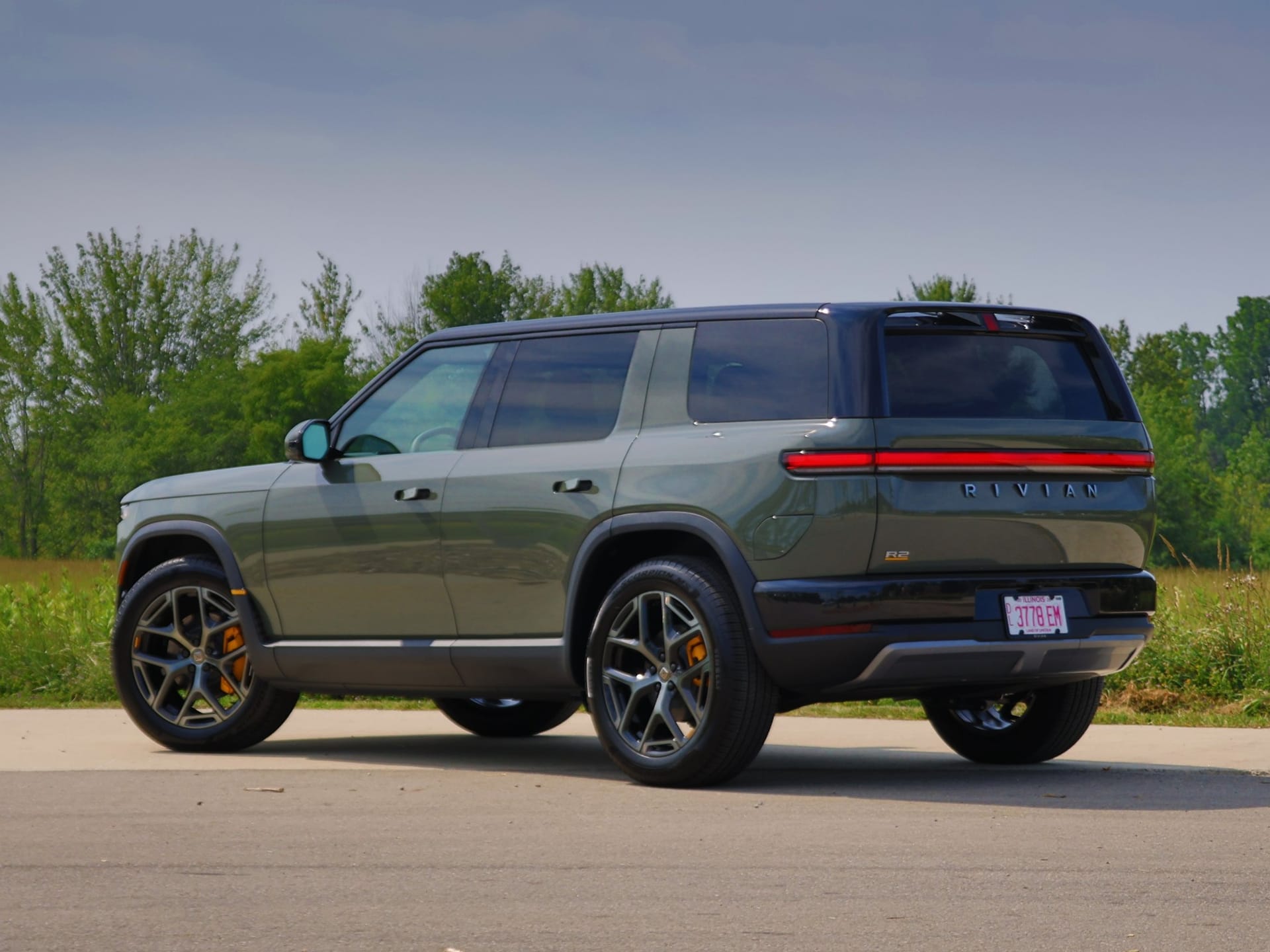
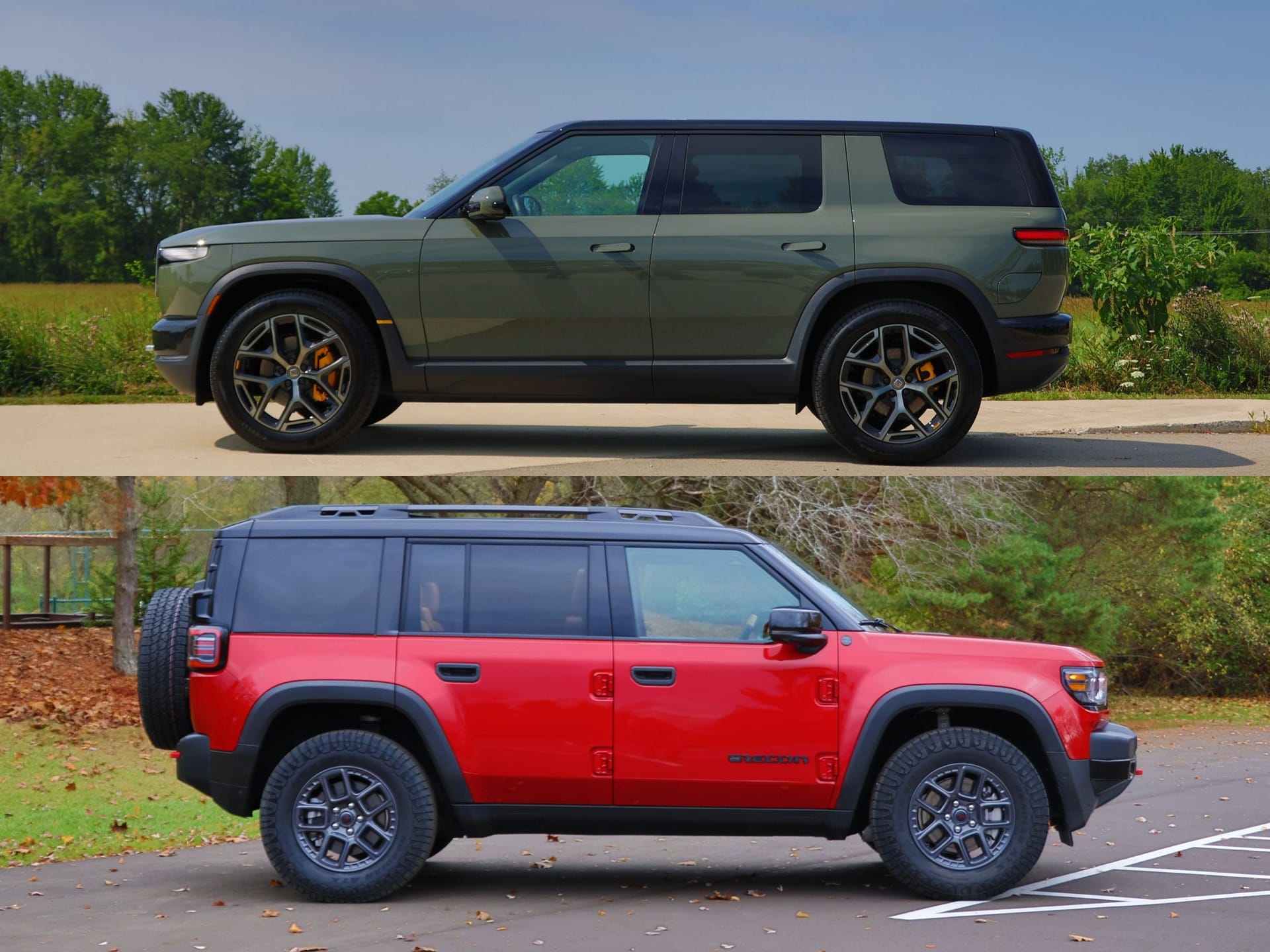
These two are close in overall size, though the Recon is the longer of the pair by over 8 inches, while the R2 is about 2 inches wider. The Recon is also noticeably taller by roughly 7 inches.
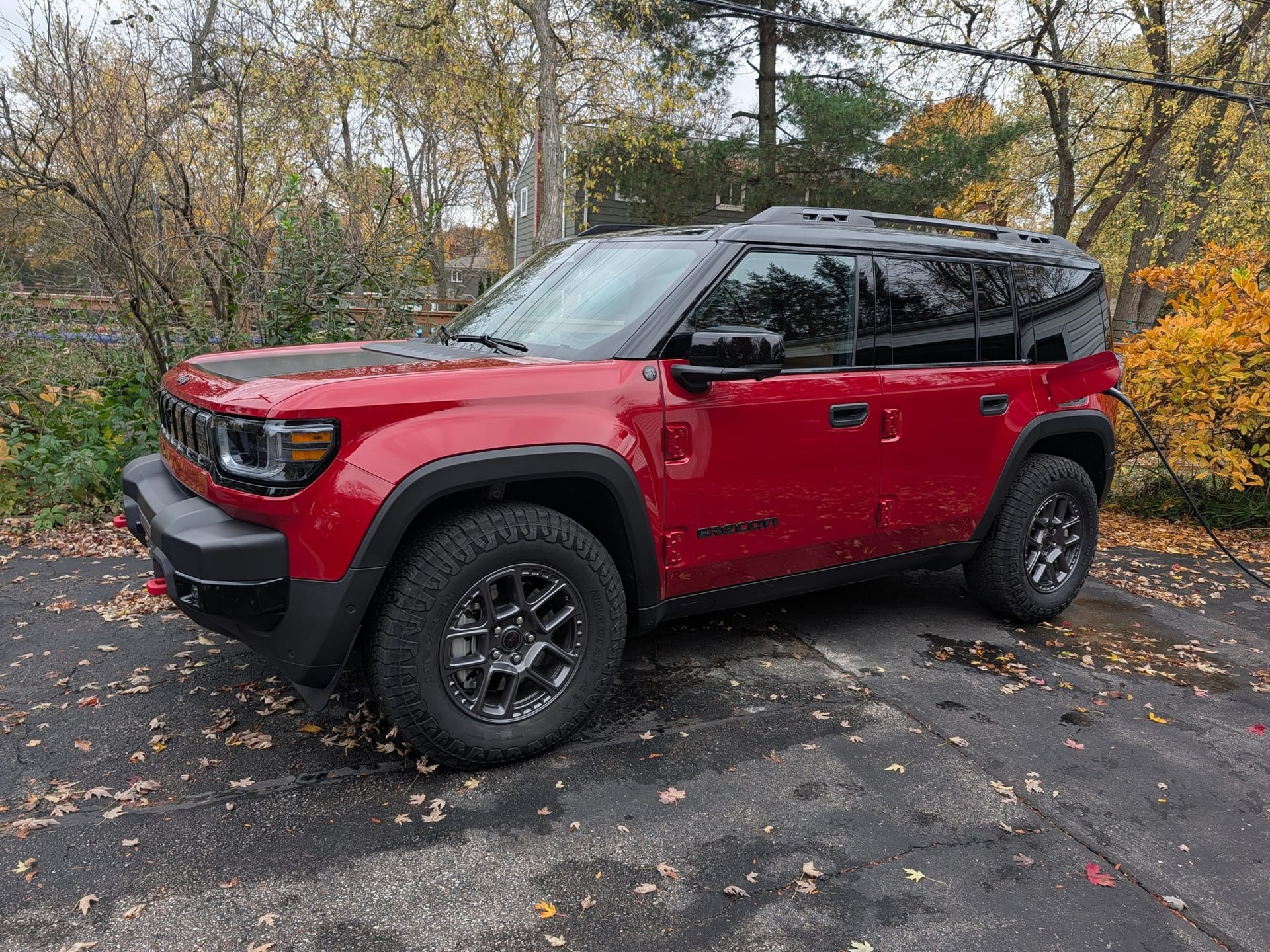
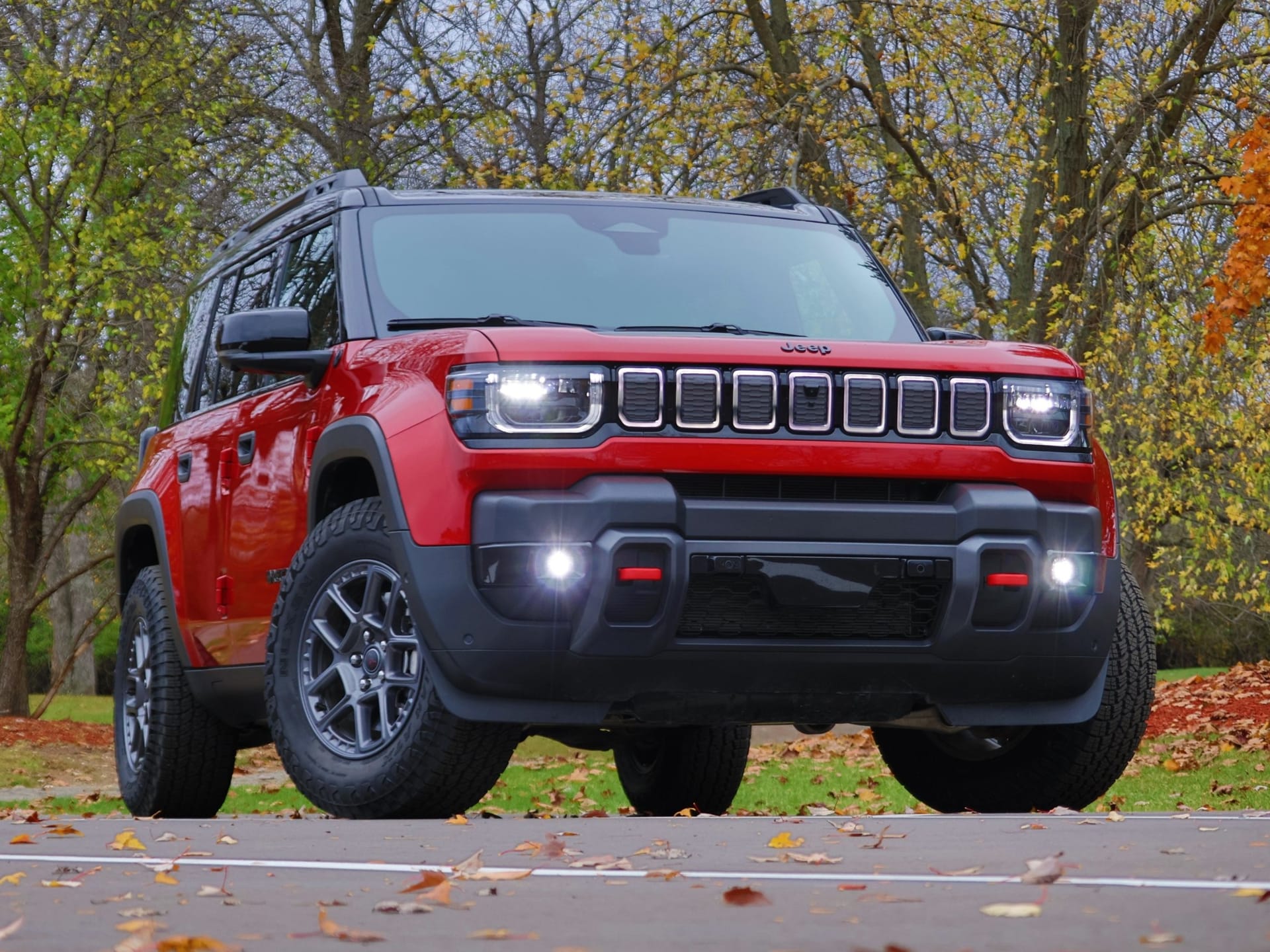
The Recon leans hard into its off-road roots, with standard skid plates and 33-inch all-terrain tires wrapped around 18-inch painted wheels. You can also add a black-painted roof, and an available sky one-touch power top allows for open-air driving, similar in spirit to the Jeep Wrangler. It looks very much like a Jeep, with the traditional boxy shape that looks like a modern cross between the old XJ Cherokee and a Wrangler. It's refreshing to see, in a market where most SUVs, electric or not, have gone rounded and aerodynamic, although that can come at the expense of aerodynamic efficiency.
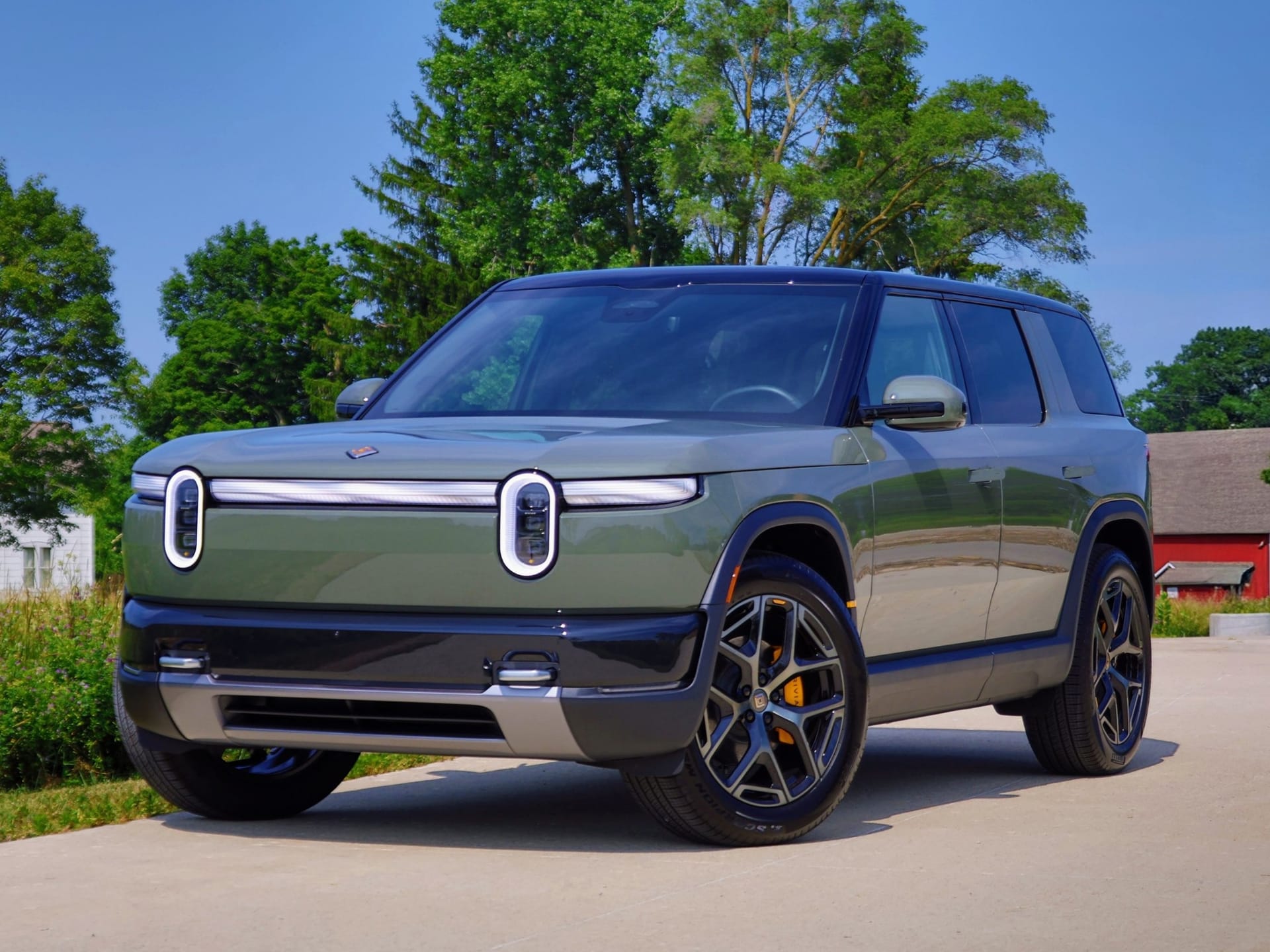
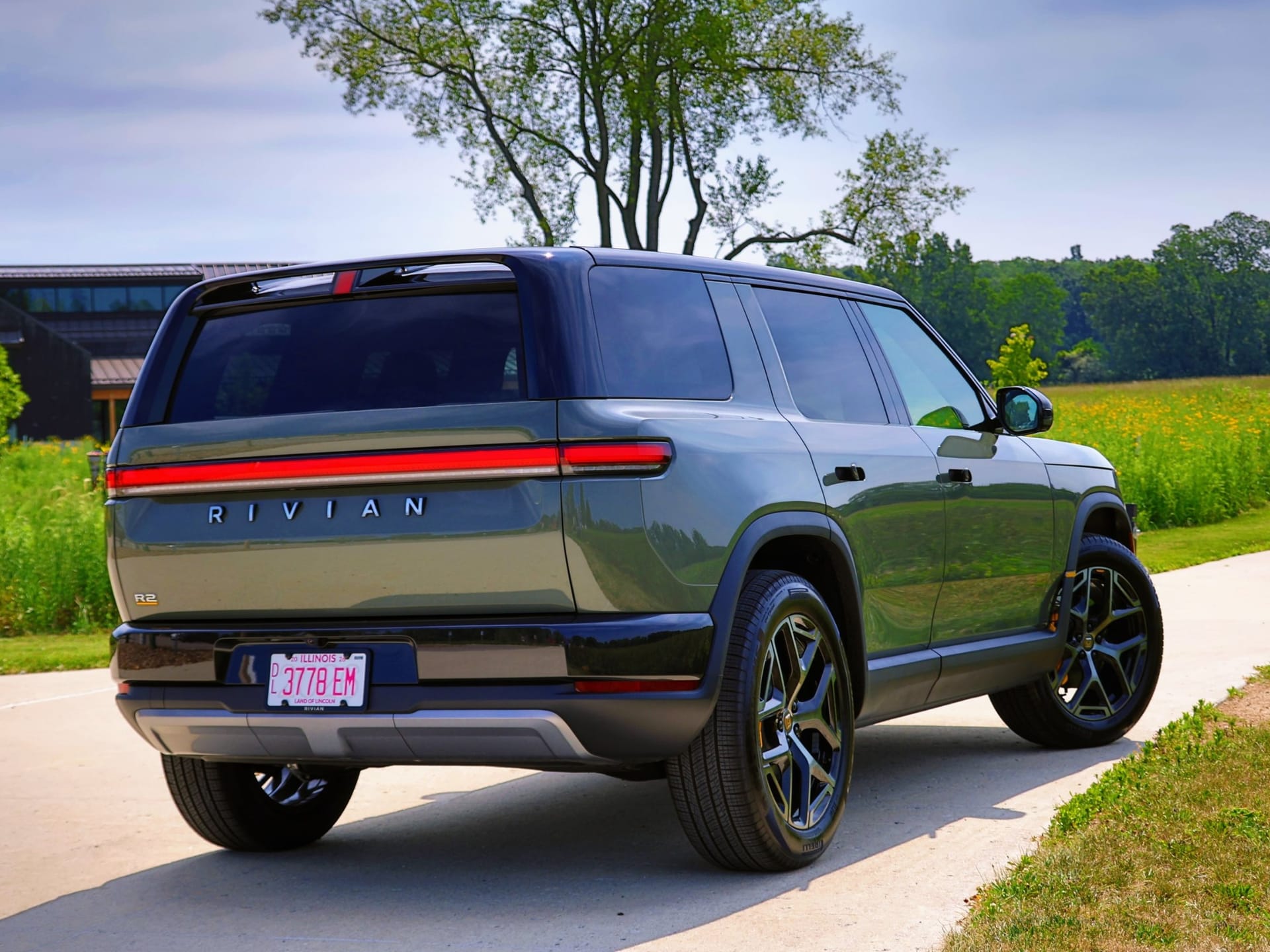
The R2 comes standard with 19-inch all-season wheels and tires, with the option to step up to 20- or 21-inch wheels. It offers some trail-friendly extras, including a semi-active suspension that adapts to road conditions and driving inputs, plus available tow hooks. Shoppers who want to stand out can add Compass Yellow brake calipers and exterior accents on the Performance model. However, it looks unmistakably like a Rivian, sharing a strong family resemblance with the rest of the lineup.
Interior Space and Tech
The Recon has more headroom in the front and rear and a bit more cargo space with the seats up. With the rear seats folded, the R2 offers nearly 30 cubic feet more space than the Recon, and its frunk is bigger, too.
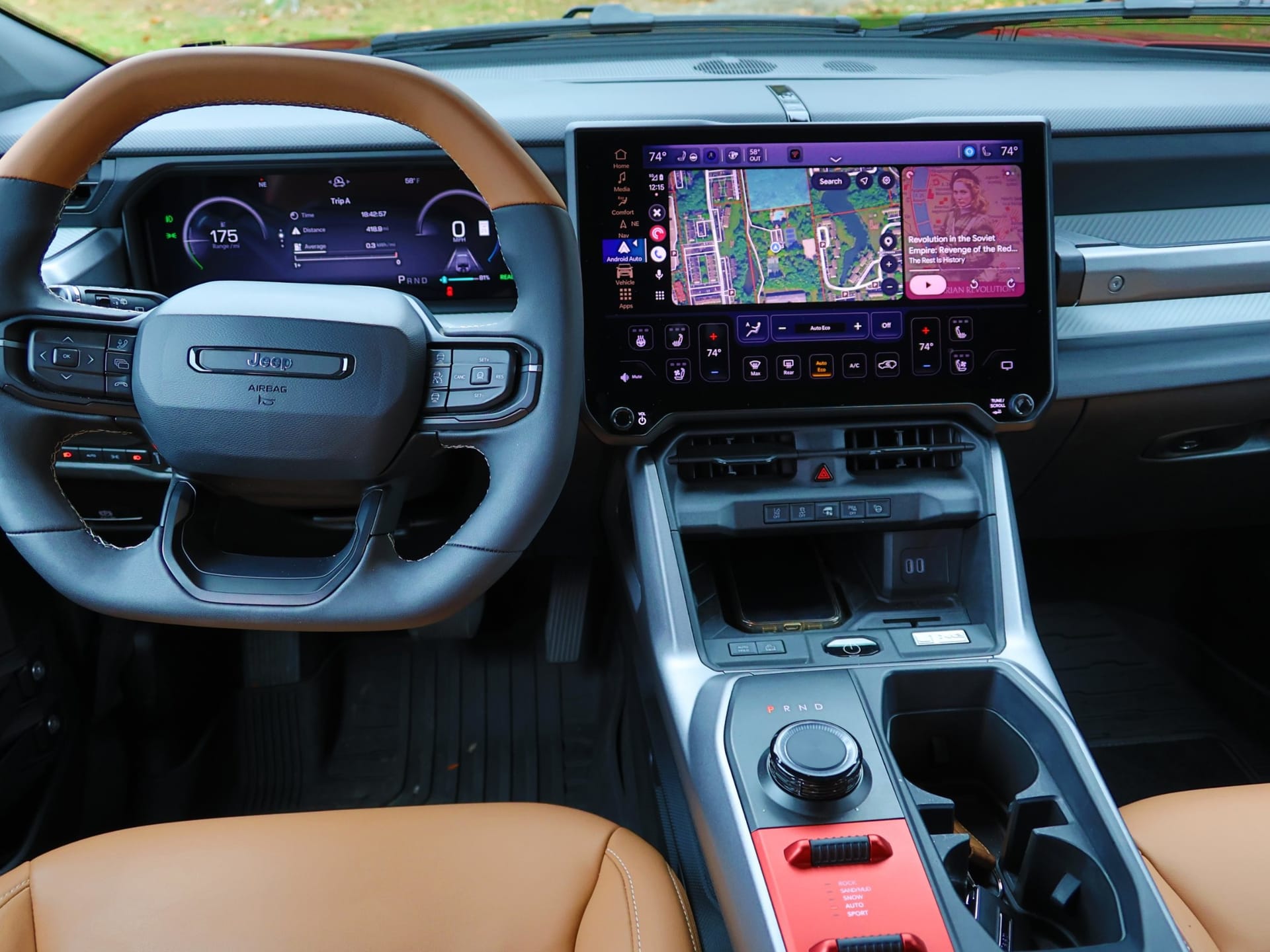
Both come loaded with tech. The Recon has a 12.3-inch digital instrument cluster and a 14.5-inch infotainment display, along with dual-zone automatic climate control, wireless device charging, wireless Apple CarPlay and Android Auto, and an 11-speaker Alpine audio system. It also comes packed with driver-assistance features, including adaptive cruise control, blind-spot monitoring, rear cross-traffic alert, front, rear, parallel, and perpendicular park assist, side-distance warning, traffic-sign recognition, driver-attention monitoring, forward-collision warning, intersection collision assist, and a surround-view camera.
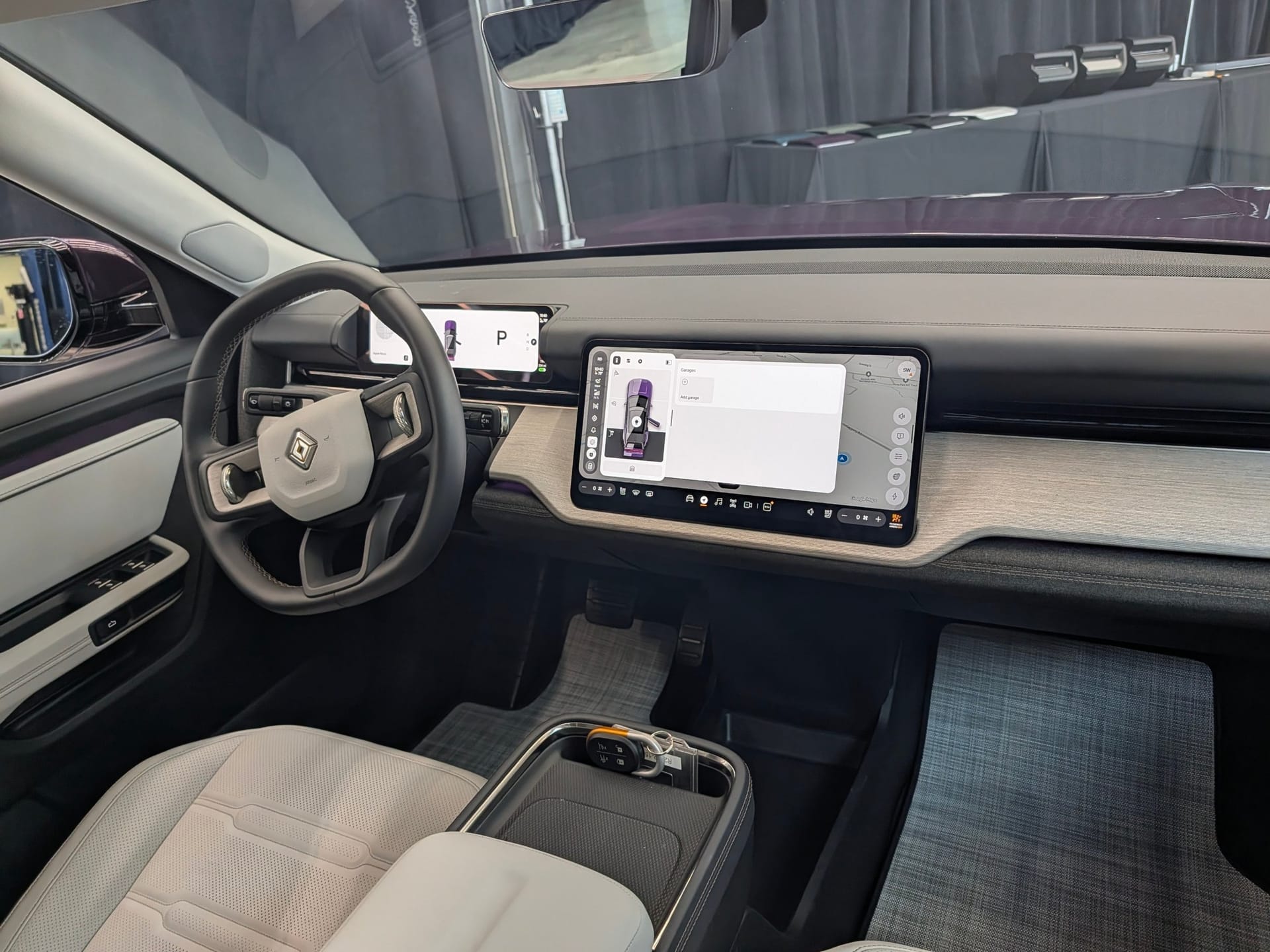
The R2 has an 11.5-inch driver display and a 15.6-inch center touchscreen. Unique to Rivian are the brand's haptic "halo" wheels, which let you control climate, media, and drive modes without taking your hands off the steering wheel. Rivian runs its own infotainment software, so no Apple CarPlay or Android Auto. The Rivian infotainment system is based on Android Automotive and does include a number of streaming apps, including Apple Music, Audible, Spotify and several others. It also comes with wireless charging and a 13-speaker stereo. Standard safety features include emergency braking, lane-keeping assist, and blind-spot monitoring.
Both include some level of driving automation. The Recon includes Level 2 active driving assist, which handles the vehicle's lane centering, acceleration, and deceleration (which requires the driver's hands to be on the wheel), along with autonomous parking assist. The R2 offers an available Autonomy+ package, which enables hands-free driving on more than 3.5 million miles of roads in the U.S. and Canada for a $2,500 upcharge or a $49.99 subscription.
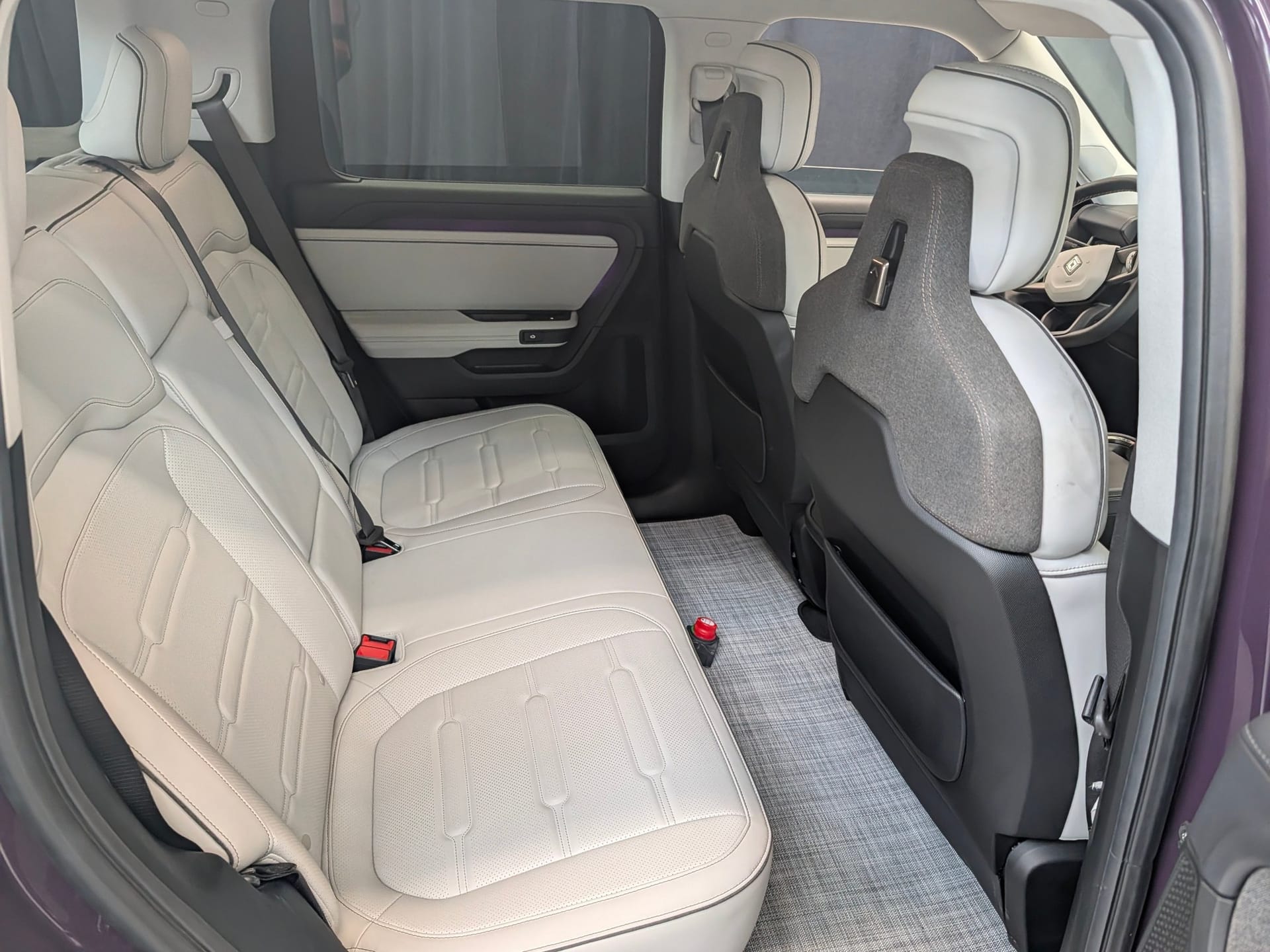
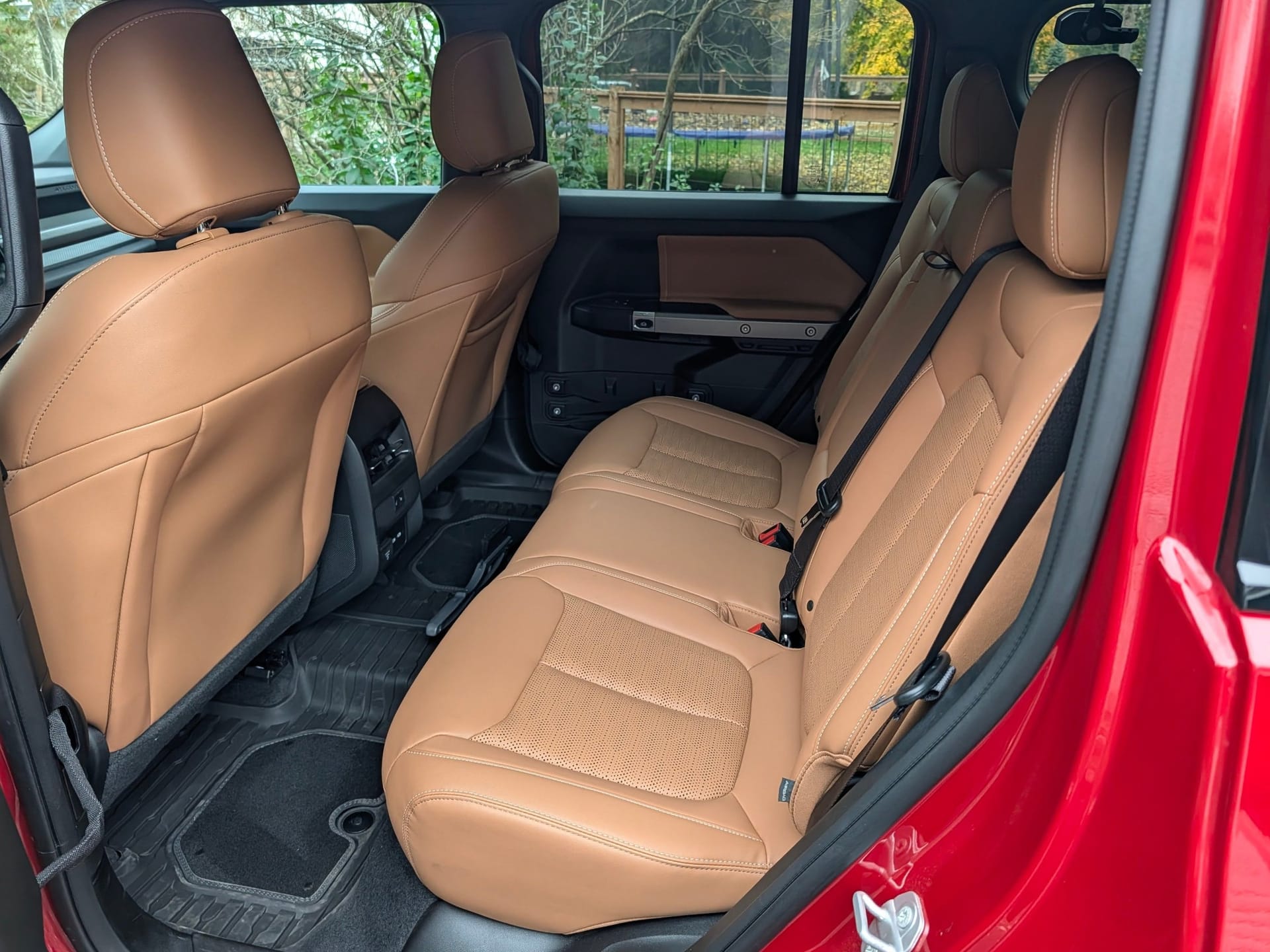
Interior comfort for the Recon includes standard heated front seats, a heated steering wheel, driver's seat memory, an auto-dimming rearview mirror, leatherette upholstery, eight-way power-adjustable front seats, and a power tilt-and-telescoping steering wheel. Options include a digital rearview mirror, ventilated front seats, and heated second-row seats. The R2 comes with leatherette upholstery and a 40/20/40 split-folding second row. Options include heated and ventilated front seats, heated rear seats, and a Rivian Torch flashlight.
Powertrain and Fuel Economy
Both SUVs can hit 60 mph in as little as 3.6 seconds, but their powertrain options are very different. The Recon comes in one configuration: full-time four-wheel drive and a single power output. The R2 offers more choice, with a single-motor rear-wheel-drive setup, a dual-motor all-wheel-drive setup, and a dedicated Performance trim.
reco
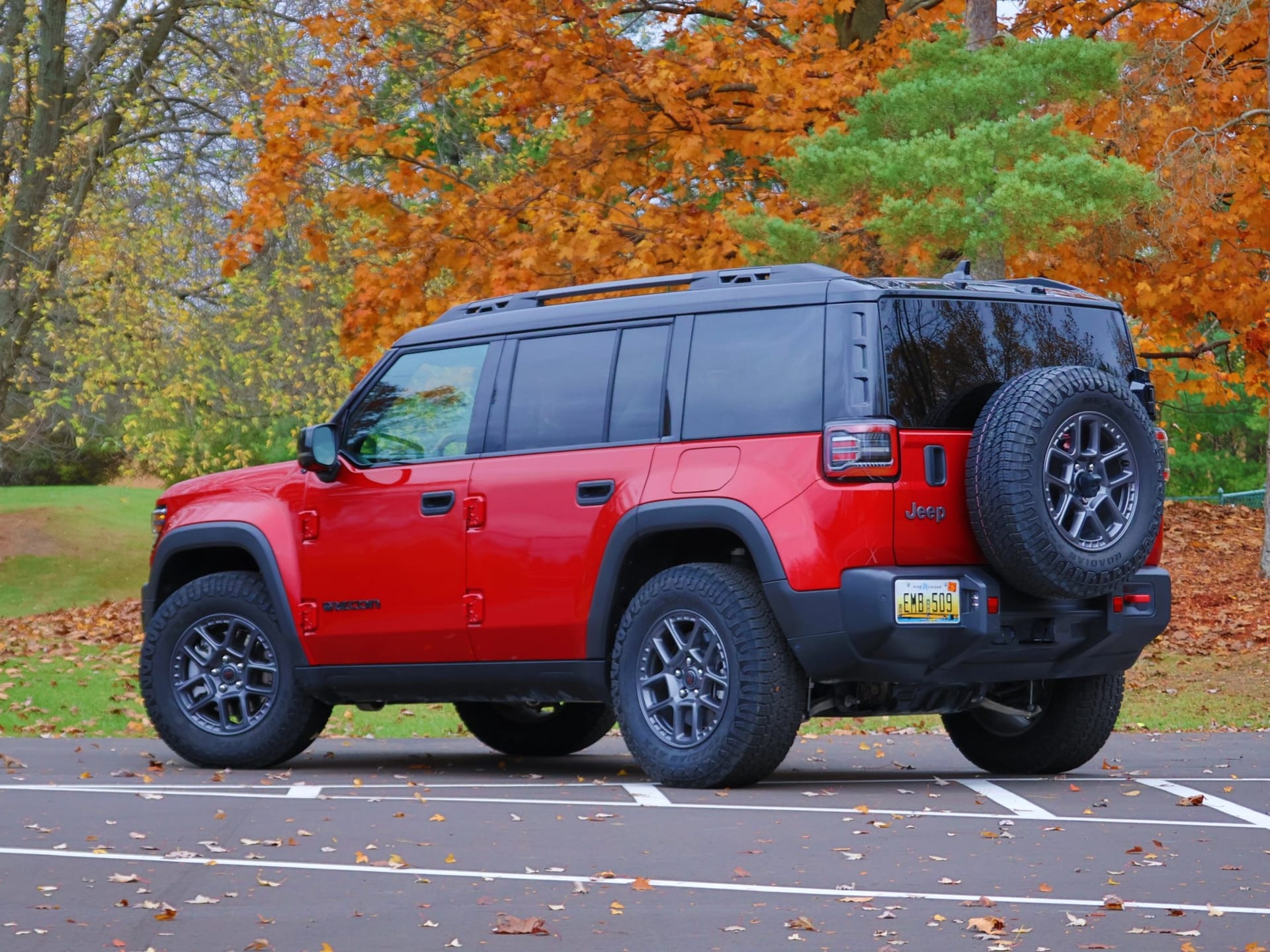
The Recon can tow up to 3,300 pounds, matching the standard R2's rating, and the R2 can tow up to 4,400 pounds in its most capable trim. However, neither is an ideal option if you do a lot of towing.
The R2 offers significantly more rated range than the Recon, even in base form. For now, the Recon comes only in the off-road-oriented Moab trim, which tops out at 222 miles. Jeep promises an Overland trim in the first half of 2027 with more efficient all-season tires that should get at least 240 miles. Jeep has also promised to add a hybrid powertrain, though it hasn't said when. The Moab’s range is probably fine for most daily driving, but it pales in comparison to the R2's maximum of 345 miles. Even the R2's lowest estimate exceeds the Recon's max range by more than 50 miles. However, it should be noted that Rivian vehicles often fall short of official estimates.
A 100-mile-plus gap illustrates why shoppers should compare the exact trim, tire, and EPA status rather than one headline number, so see how to compare EV range before you buy ➜
Charging
They both charge in roughly the same amount of time. The Recon can go from 5 to 80 percent on a DC fast charger in 28 minutes. The R2 goes from 10 to 80 percent in under 30 minutes.
A similar 30-minute charging window can hide major differences in battery size, temperature, and charging curve, so see what actually controls how fast an EV charges ➜
Price
The Rivian R2 undercuts the Jeep Recon by a wide margin at its entry point, but shoppers should keep in mind that the base trims aren't available yet. The only one available today is the Performance variant, which lands within about $7,000 of the Recon. The Premium trim is expected to arrive later this year, with the Standard trim following in spring 2027 and the entry-level version in summer 2027.
What's It Like to Drive?
Although they're marketed as adventure vehicles, SUVs like these generally spend most of their lives on pavement as daily drivers. With that in mind, both offer a surprisingly good on-road driving experience. The R2 uses steel coil springs rather than the air springs on the earlier R1, and its ride quality is significantly better than that of its larger sibling. The trade-off is less maximum ground clearance off-road: 9.6 inches, compared to the R1's 15 inches.
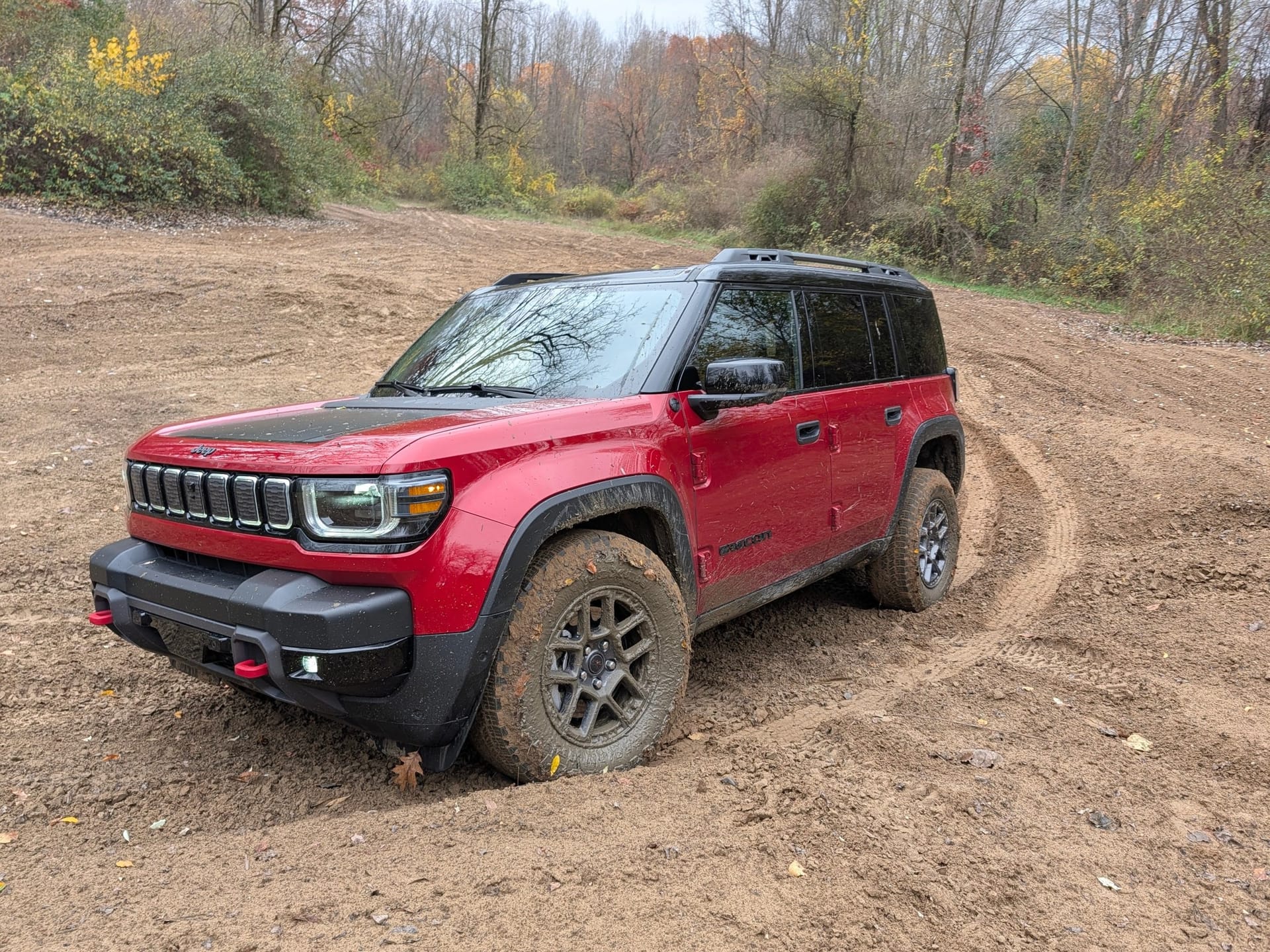
The most direct comparison for the Recon is the Wrangler, which, after 80 years, still uses solid front and rear axles. The Recon rides on fully independent suspension. It's by far the most comfortable off-road Jeep ever, but it falls well short of the Wrangler when rock crawling, which is why Jeep doesn’t offer a Rubicon edition. The Recon is quite good in dirt, sand, ruts, and some mud, but it has half an inch less clearance than the R2. Its extra width makes it much more comfortable than a Wrangler. It’s still a bit narrower than the Rivian, which gives it an advantage on tight trails.
The Jeep’s infotainment software is straightforward to use and supports phone projection, but it feels a bit dated compared to the R2's. I really like the control halos on the R2's steering wheel, but Jeep definitely wins on climate control. It sticks with fully manual vents, while Rivian puts vent control in the touchscreen.
Analyst's Perspective (Which One's Right for You)
In many ways, the Jeep Recon is one of the brand's best daily drivers. It's roomy and comfortable for five, with a decent amount of cargo space. For families considering a four-door Wrangler with no plans to road trip, the Recon is a far better choice. But its mediocre efficiency and so-so charging speeds make it a tough sell for longer trips. It’s also significantly more expensive than the Rivian. It’s also too early to tell if Jeep has addressed some of the reliability issues that cropped up on the Wagoneer S, particularly around charging the 12-volt battery.
The R2 is a major improvement on the R1S in almost every way, and it’s a better choice than the Jeep. It goes further on a charge and has more storage capacity, including a decently sized frunk. Rivian has addressed many of the issues that made body repairs on the R1 difficult and expensive. Its universal hands-free driving assist works really well, and Rivian is already testing more capabilities. It also has more off-road capability. With lower-cost variants coming in the next six months, it will give buyers more affordable options than the Jeep. About the only thing preventing me from a wholehearted recommendation is Rivian’s insistence on putting all the climate controls, including the vents, in the touchscreen interface. If Rivian were to add some more physical controls, it would be no contest.
Drive the Rivals Before You Decide
2027 Rivian R2 First Drive Review: A Smaller Rivian, A Better Ride
Sam’s first drive explores the R2 Performance’s 656 horsepower, 330-mile EPA range, hands-free driving system, efficiency, and much-improved ride quality.
Read More ➜
2026 Jeep Recon Review: Electric and Ready for the Wild
Get a deeper look at the Recon’s removable body panels, Trail Rated hardware, cabin packaging, and Jeep-specific approach to an electric off-roader.
Read More ➜
2026 Toyota bZ Woodland First Drive
Toyota’s adventure-oriented EV offers less extreme trail hardware but 281 miles of EPA range, useful cargo space, and a much lower entry price.
Read More ➜




 Reviews