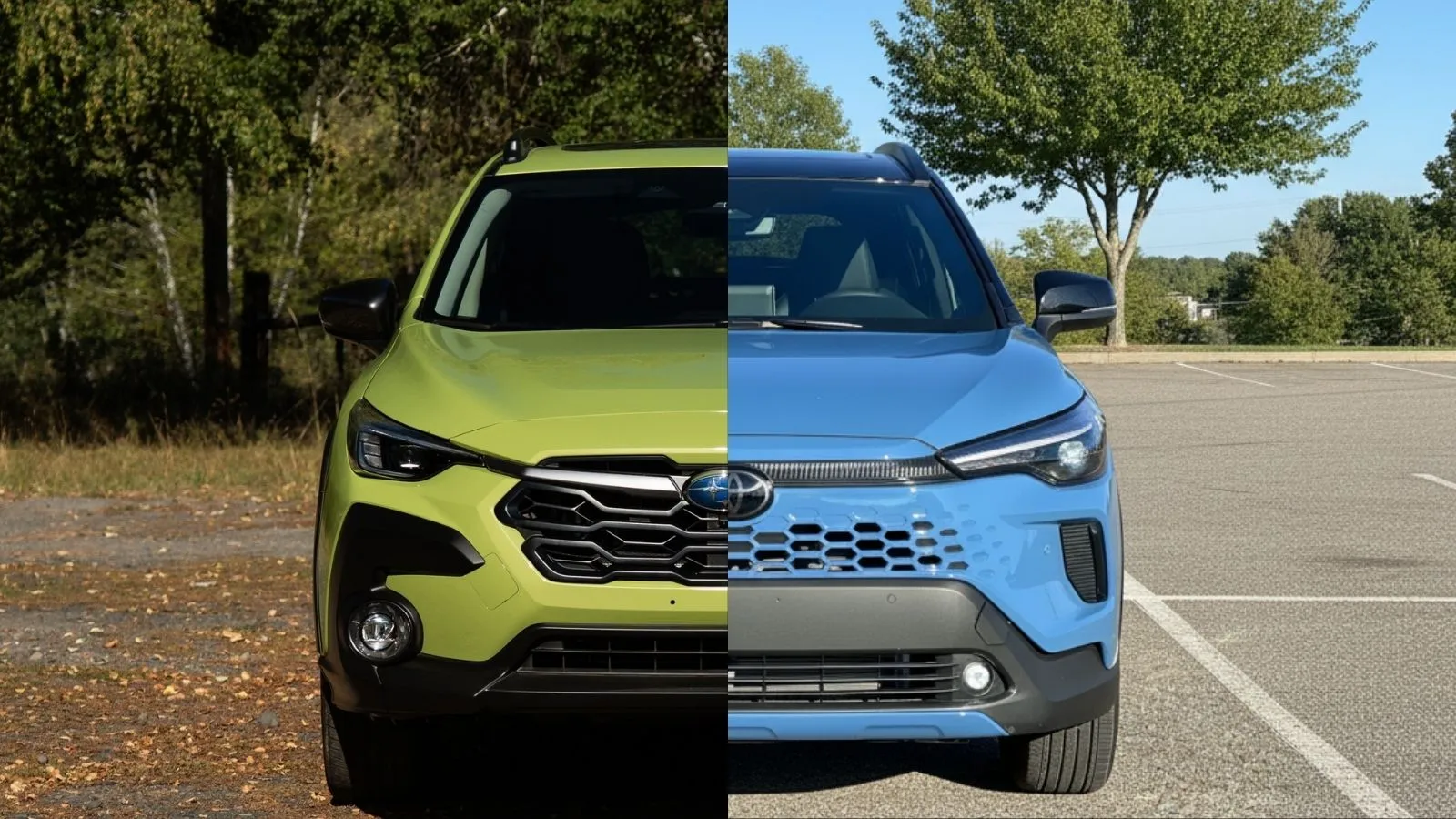

Fast Facts | Subaru Crosstrek Hybrid vs. Toyota Corolla Cross Hybrid
⚙️Horsepower: The Subaru Crosstrek Hybrid has 194 horsepower, while the Toyota Corolla Cross Hybrid has 196 horsepower
⛽EPA-Estimated Fuel Economy: The Subaru Crosstrek Hybrid gets 36 mpg combined, while the Toyota Corolla Cross Hybrid gets 42 mpg combined
🧳Cargo Room: The Subaru Crosstrek Hybrid has 18.6 cubic feet behind the second row, while the Toyota Corolla Cross Hybrid has 21.5 cubic feet behind the second row
⛰️ Ground Clearance: The Subaru Crosstrek Hybrid has 8.7 inches of ground clearance, while the Toyota Corolla Cross Hybrid has 8.0 inches of ground clearance
💰Starting MSRP: The Subaru Crosstrek Hybrid starts at $35,415, while the Toyota Corolla Cross Hybrid starts at $31,390
Two AWD Hybrids With Very Different Priorities
There are a ton of SUVs on the market these days, even hybrids. But maybe you want a taller driving position without the hulking presence (or the parking headaches) that often come with a full-size SUV. So how about a compact crossover? Let's take a look at two of them: the Subaru Crosstrek Hybrid and the Toyota Corolla Cross.
Exterior Design and Dimensions
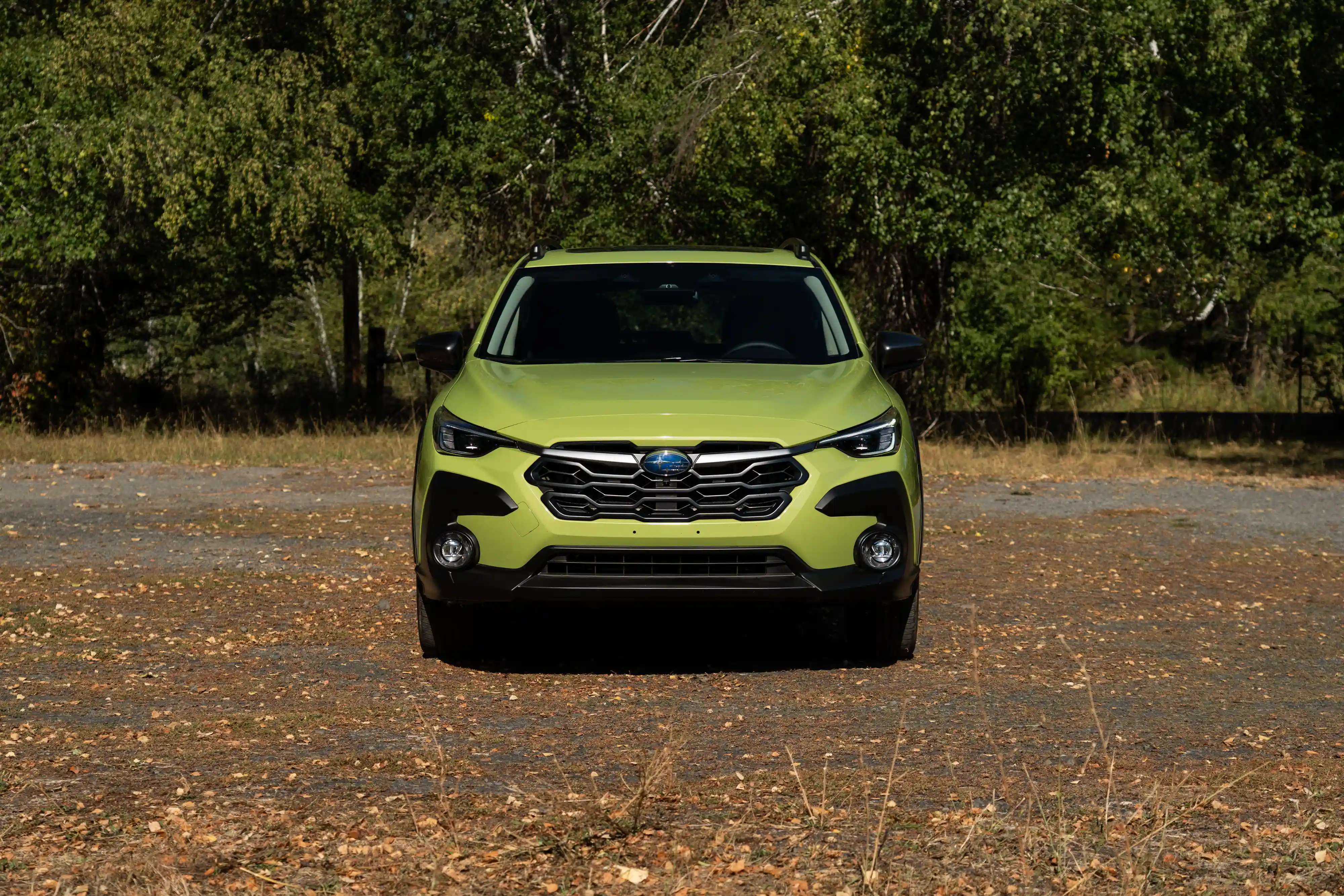
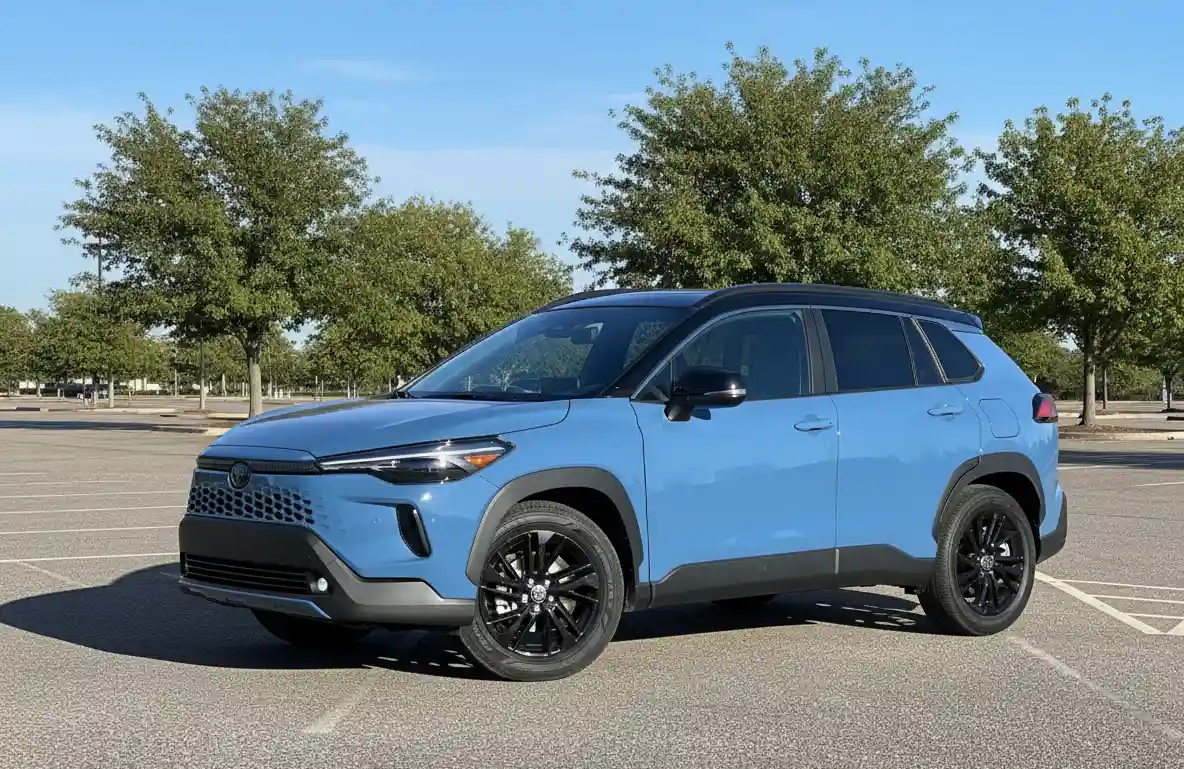
Despite the Corolla Cross Hybrid being only 2 inches taller and 1 inch wider than the Crosstrek Hybrid, it looks bigger. That's likely due to its more upright stance and a big, tall grille, while the Crosstrek Hybrid looks more like a hatchback or wagon with a long nose. The Crosstrek Hybrid still holds nearly an inch more ground clearance, though, despite looking smaller.
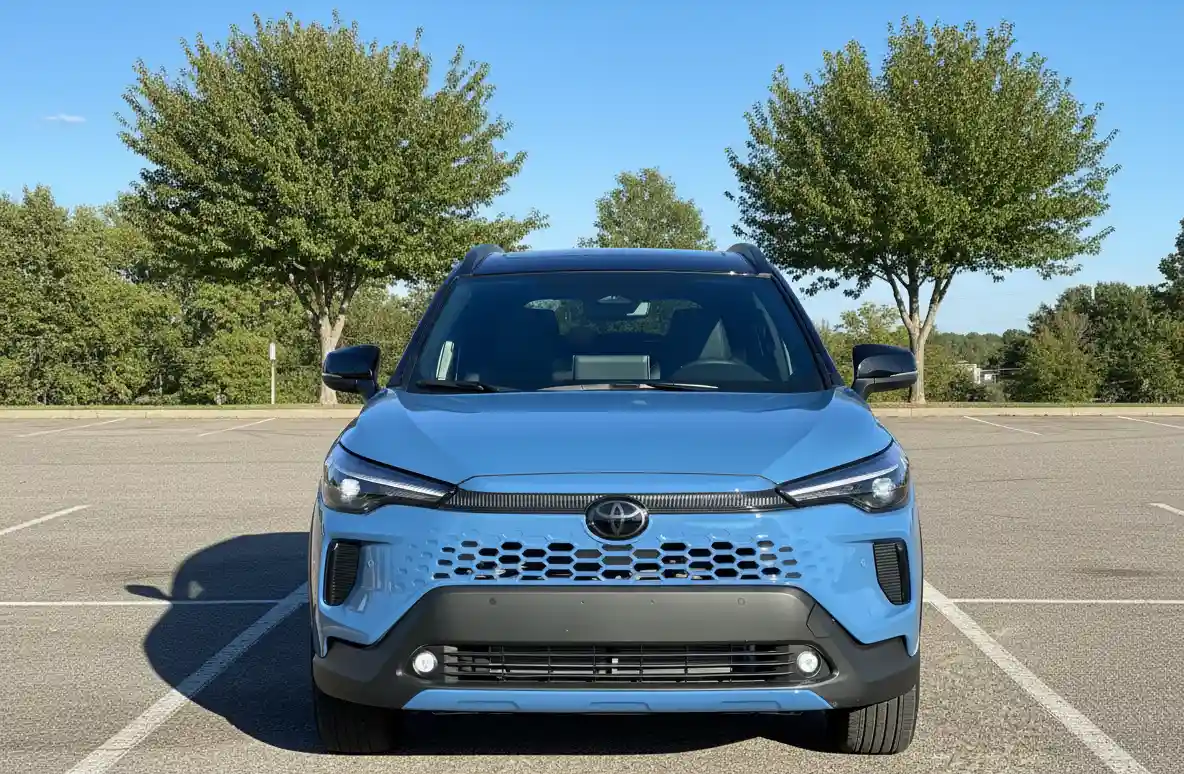
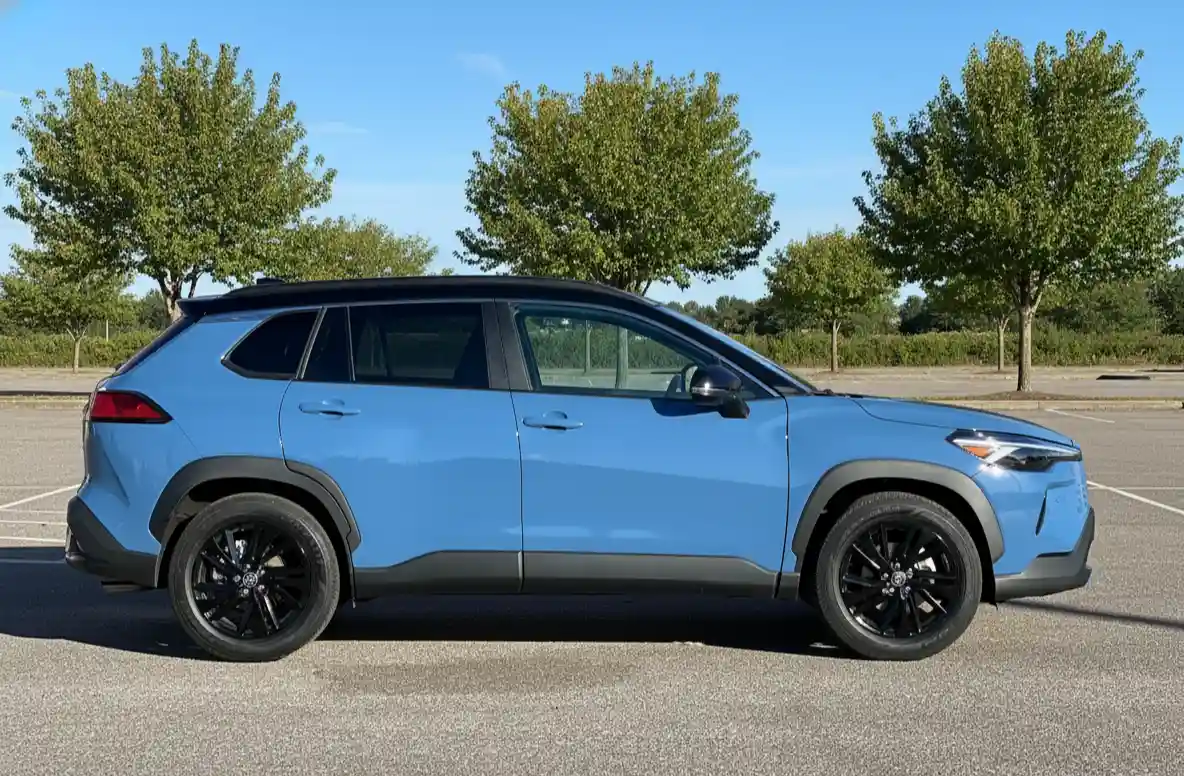
Subaru is known for its outdoorsy reputation, and the Crosstrek Hybrid leans into it with standard crossbar mounting points, ladder-type roof rails, and wheel arch cladding. The Corolla Cross counters with black rocker panels and black overfenders, and shoppers who want a little more personality can opt for a two-tone exterior.
The Crosstrek’s appeal goes beyond its spec sheet, so see how the new hybrid system, mechanical AWD, and 36-mpg rating work together in a full road test ➜
Interior Space and Tech
The Crosstrek Hybrid has superior packaging that gives it a real edge in interior roominess. It has more front and rear shoulder room, nearly 5 more inches of rear legroom, and more overall passenger volume than the Corolla Cross Hybrid. However, the Toyota has more cargo space behind the second row, but if you fold those down, the Subaru wins again, offering 6 more cubic feet of total cargo capacity.
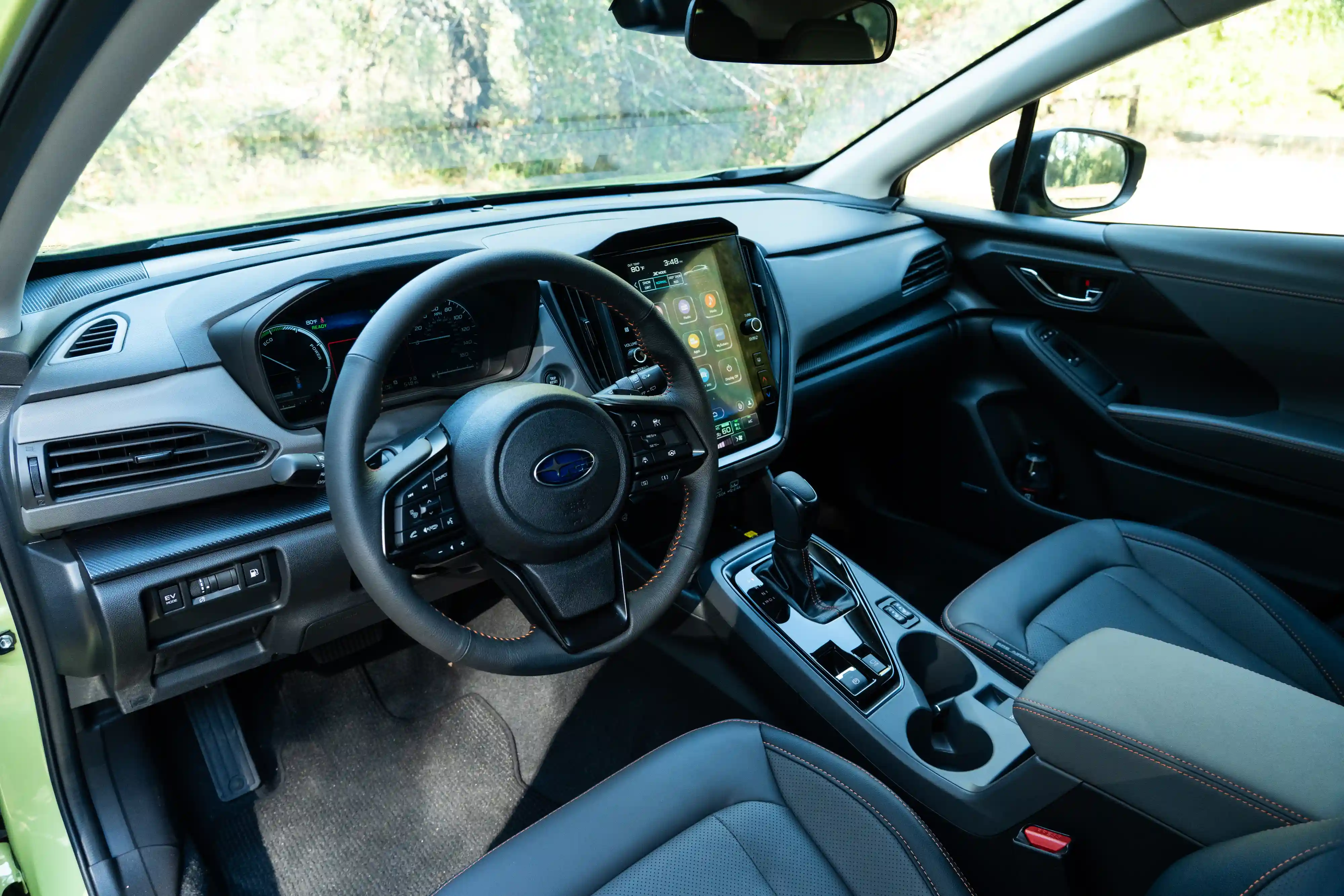
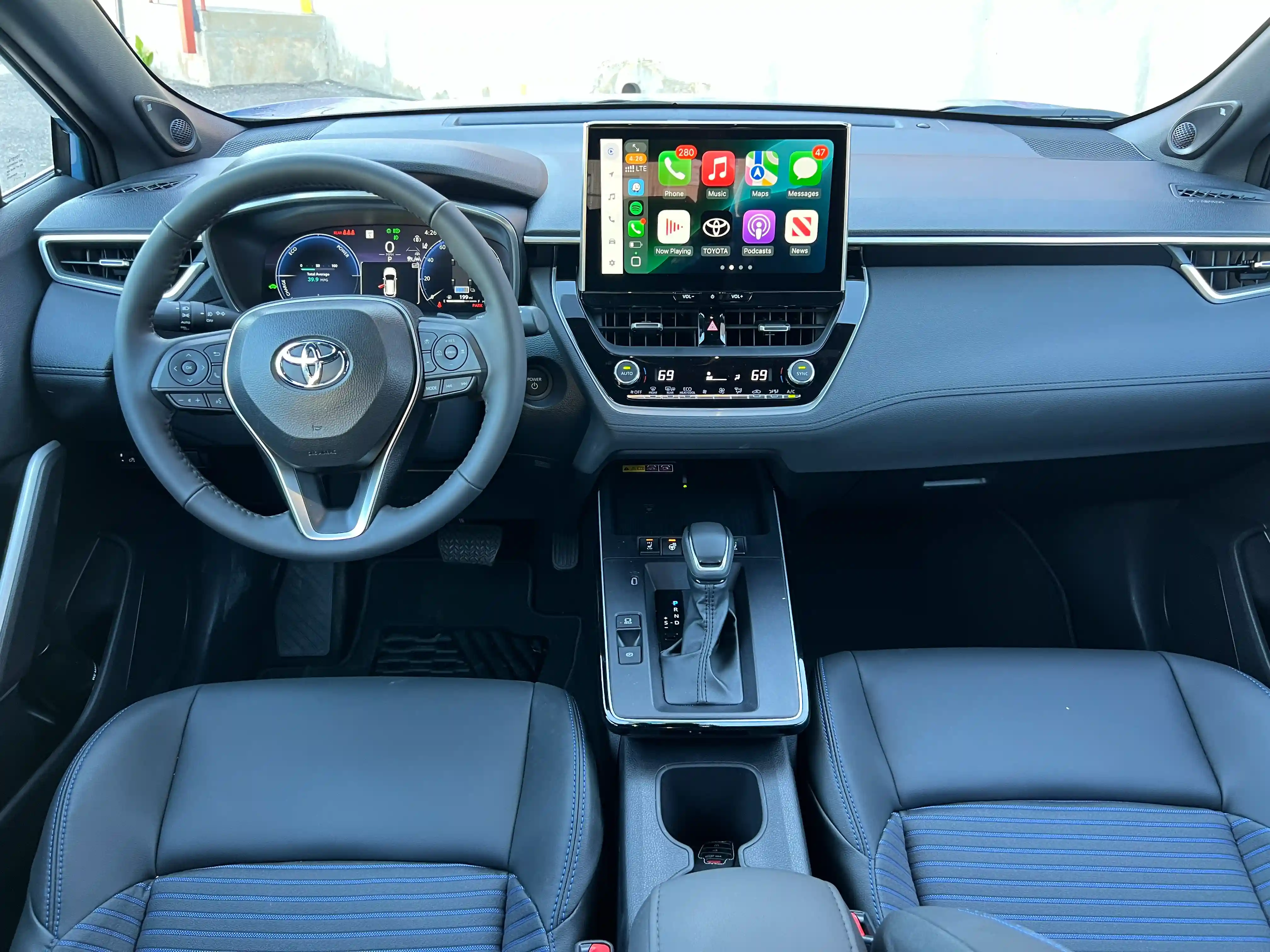
Both come with smart key entry, push-button start, 60/40 split-folding second-row seats, cloth upholstery, a six-speaker audio system, USB-C ports, and wireless Android Auto and Apple CarPlay.
The Corolla Cross Hybrid comes standard with single-zone automatic climate control and a manually adjustable driver's seat, while the Crosstrek Hybrid comes standard with dual-zone automatic climate control and a 10-way power-adjustable driver's seat. The Crosstrek Hybrid also comes standard with LED fog lights, heated front seats, a power moonroof, a leather-wrapped steering wheel, and wireless device charging, all of which require a step up to higher trims of the Corolla Cross Hybrid.
For a closer look at Toyota’s efficiency-focused alternative, see how the Corolla Cross Hybrid performs as an everyday small crossover ➜
The Crosstrek Hybrid pulls ahead in screen sizes, too. The Corolla Cross Hybrid comes standard with a 7.0-inch digital gauge cluster and has an available 12.3-inch digital gauge cluster, while the Crosstrek Hybrid comes standard with a 12.3-inch digital gauge cluster. For infotainment duties, the Corolla Cross Hybrid comes standard with an 8.0-inch touchscreen and offers a 10.5-inch touchscreen as an option, while the Crosstrek Hybrid comes standard with an 11.6-inch touchscreen, which is oriented in portrait rather than Toyota's landscape layout.
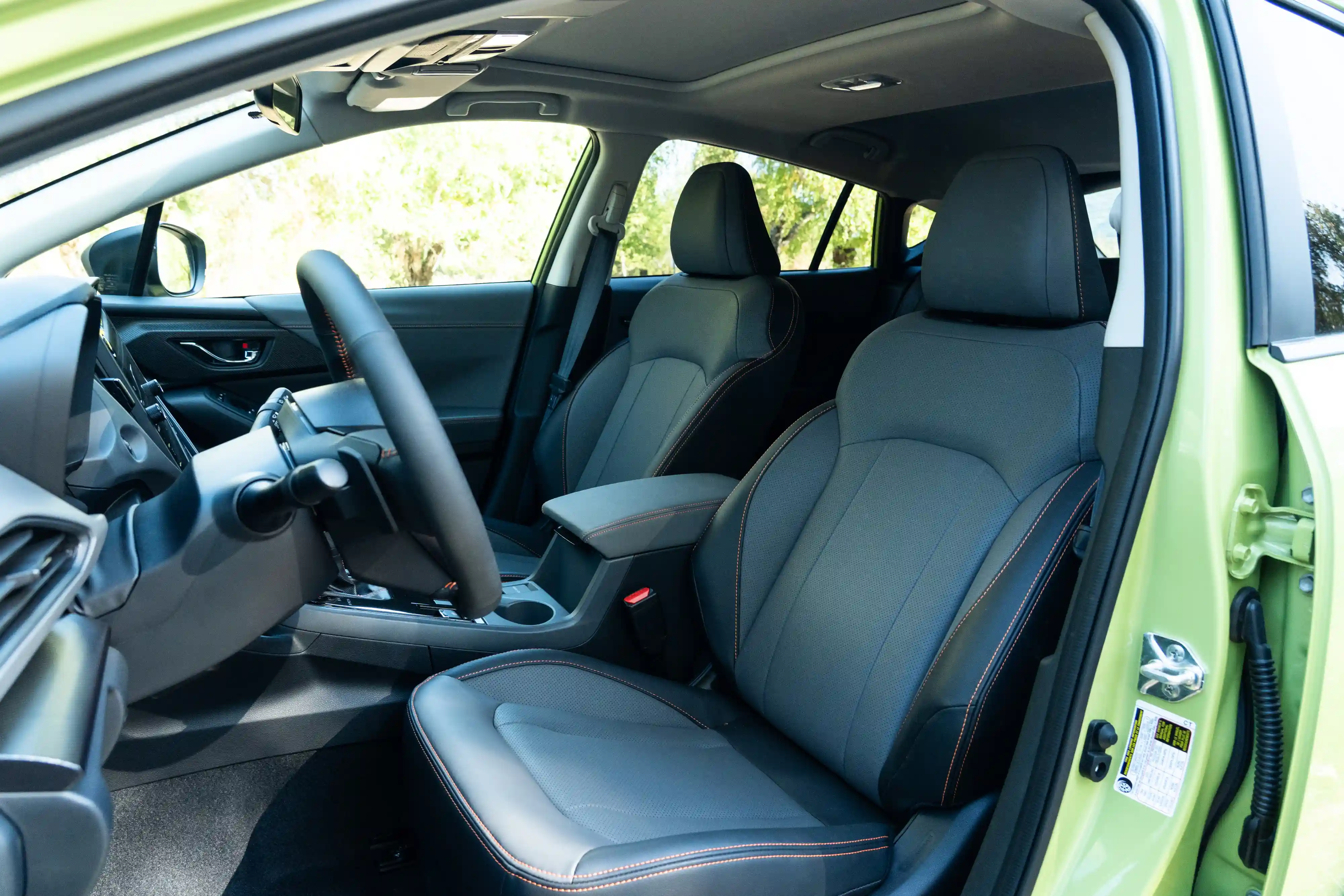
Both have available upgrades to the standard audio system: the Subaru with a 10-speaker Harman Kardon system and the Toyota with a nine-speaker JBL system. Both can also be optioned with a heated steering wheel and leatherette upholstery. Two features are available on the Toyota but not offered anywhere on the Subaru: ambient interior lighting and an auto-dimming rearview mirror.
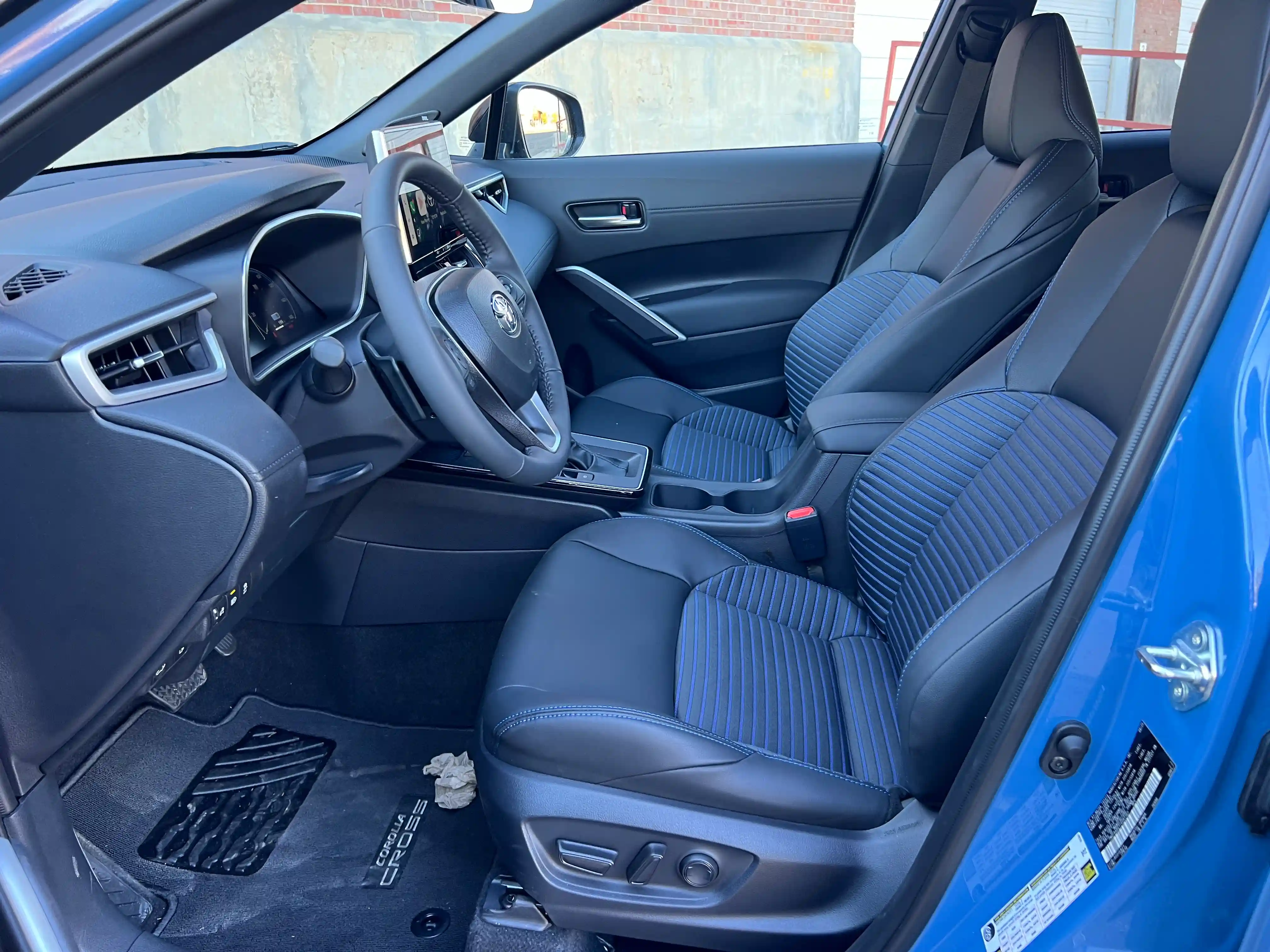
Both have pretty robust standard safety systems. Each comes standard with high-beam assist, pre-collision systems (though the Toyota adds pedestrian detection), adaptive cruise control, lane-departure alert, lane-keeping assist, and a rear-seat reminder. The Corolla Cross Hybrid comes with proactive driving assist and road-sign assist, which aren't available on the Crosstrek Hybrid. However, the Crosstrek Hybrid comes with blind-spot monitoring and rear cross-traffic alert, while those require a step up for the Corolla Cross. You can add safe-exit alert and front and rear parking assist to the Toyota, and driver-attention monitoring to the Subaru.
Powertrain and Fuel Economy
The Crosstrek Hybrid pairs a 2.5-liter four-cylinder boxer engine with electric motors, and the Corolla Cross Hybrid pairs a 2.0-liter inline four-cylinder engine with electric motors. Horsepower is nearly the same, at 194 for the Crosstrek Hybrid and 196 for the Corolla Cross Hybrid. Both use the same electrification technology, with Subaru using a repackaged version of Toyota's hybrid system. Since the Subaru boxer engine sits with the crankshaft lengthwise in the car, the transmission sits behind it rather than beside the transverse-mounted engine in the Toyota. Both come standard with all-wheel drive and an electronic continuously variable automatic transmission (eCVT).
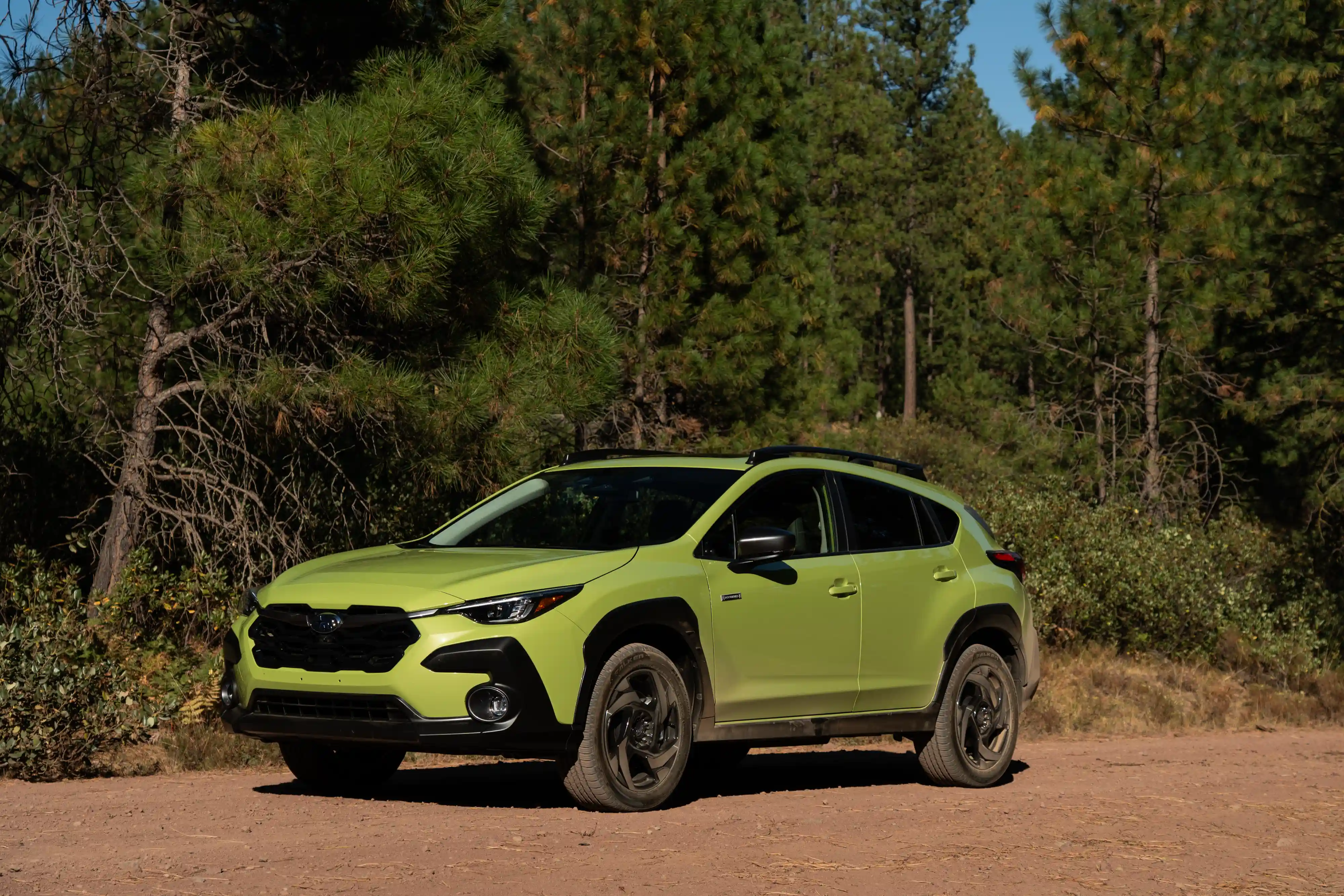
Fuel economy is where the Corolla Cross pulls way ahead, rated at 46/39/42 mpg city/highway/combined. That's 10 mpg better in the city, 3 mpg better on the highway, and 6 mpg better combined than the Crosstrek Hybrid. Toyota uses a rear e-axle layout, so there's no driveshaft running to the rear, while Subaru has a more traditional mechanical AWD system, which hurts efficiency. If lowering your fuel costs is a main reason you're considering a hybrid, those fuel economy numbers are worth a look.
Six mpg combined sounds substantial, but actual savings depend on mileage and fuel prices, so see how EPA city, highway, and combined fuel-economy ratings work ➜
Price
The Corolla Cross Hybrid undercuts the Crosstrek Hybrid by nearly $4,000 at the base trim, though it comes with noticeably fewer standard features. To get all of the base Subaru's standard features on the Corolla Cross Hybrid, you'd need to opt for the highest trim: the $35,425 XSE, which is within $10 of the base Subaru Crosstrek Hybrid. However, the Corolla Cross Hybrid does get better fuel economy. According to the EPA, the Toyota's annual fuel cost would be $200 less than the Subaru's.
Behind the Wheel
While there are many similarities on paper between these two, they have distinctly different characters when driving. Despite its electrified powertrain, the Subaru behaves very much like any other Subaru, on or off the road. It's no competitor for a Jeep Wrangler or Ford Bronco, but the Crosstrek Hybrid is surprisingly capable on trails. At 8.7 inches, it has 0.7 inch more ground clearance than the Corolla Cross Hybrid, and while that doesn’t sound like much, it can make a difference in winter weather or on the way down a trail to a cabin or campsite. That mechanical AWD means more friction for the hybrid system to overcome and a hit to fuel efficiency, but it also distributes torque equally to all four wheels, making it far more useful when things get slippery.
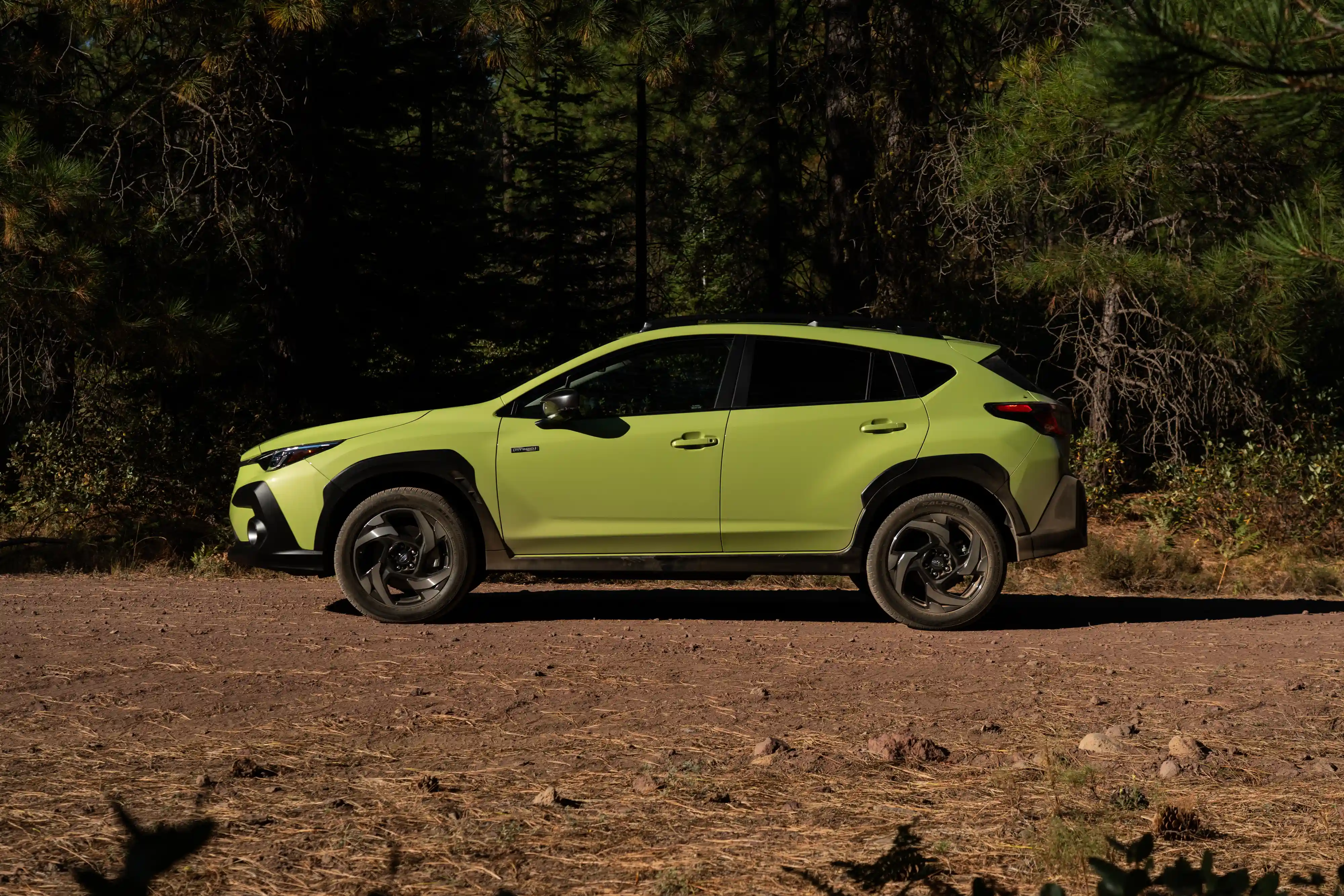
The Corolla Cross Hybrid has on-demand AWD, too, but it's much more of a street machine. The electric motor at the rear axle delivers much less power and torque than the one up front (Toyota doesn’t say exactly how much), and it only kicks in when the front wheels start to slip. In practice, that means the Corolla Cross Hybrid operates as a front-wheel-drive vehicle most of the time, sending power to the rear only when conditions get slick. Toyota’s traction control works surprisingly well, but it’s still not as capable as Subaru's mechanical system.
Toyota has the advantage in the infotainment software. Both cars offer wireless Apple CarPlay and Android Auto, but if you'd rather use the native software, the Subaru's interface feels dated and less smooth to navigate. Toyota's software is much more intuitive.
Which One's Right for You
The choice between these two really comes down to your lifestyle. If maximizing fuel efficiency is your top priority — a very reasonable one in 2026 — and most of your driving stays on pavement, the Corolla Cross Hybrid is likely your better fit. However, if you live somewhere with rough winters or like to enjoy activities in the great outdoors, the Crosstrek Hybrid is more likely to get you there hassle-free. Judging by how many Subarus I see loaded up with bikes, paddleboards, and rooftop carriers, the company has clearly found its audience. And while 36 mpg falls short of what the Corolla Cross Hybrid can achieve, it’s still far better than what you'd get from most larger SUVs. Pick the one that matches how often you plan to leave the pavement, and you probably won’t be disappointed.
Keep Shopping the Small Hybrid SUV Field
2026 Honda CR-V AWD Hybrid Sport Touring: Making Things Easy
Honda offers a larger, more road-focused hybrid alternative with a refined powertrain, generous passenger space, and strong everyday efficiency.
Read More ➜
2026 Kia Sportage Hybrid SX-Prestige Review
The Sportage Hybrid brings more interior space and a technology-heavy cabin while remaining an efficient compact-SUV alternative.
Read More ➜
Best Hybrids Under $35K
Compare more affordable hybrid choices for shoppers who care about fuel economy without moving into plug-in or full-EV territory.
Read More ➜