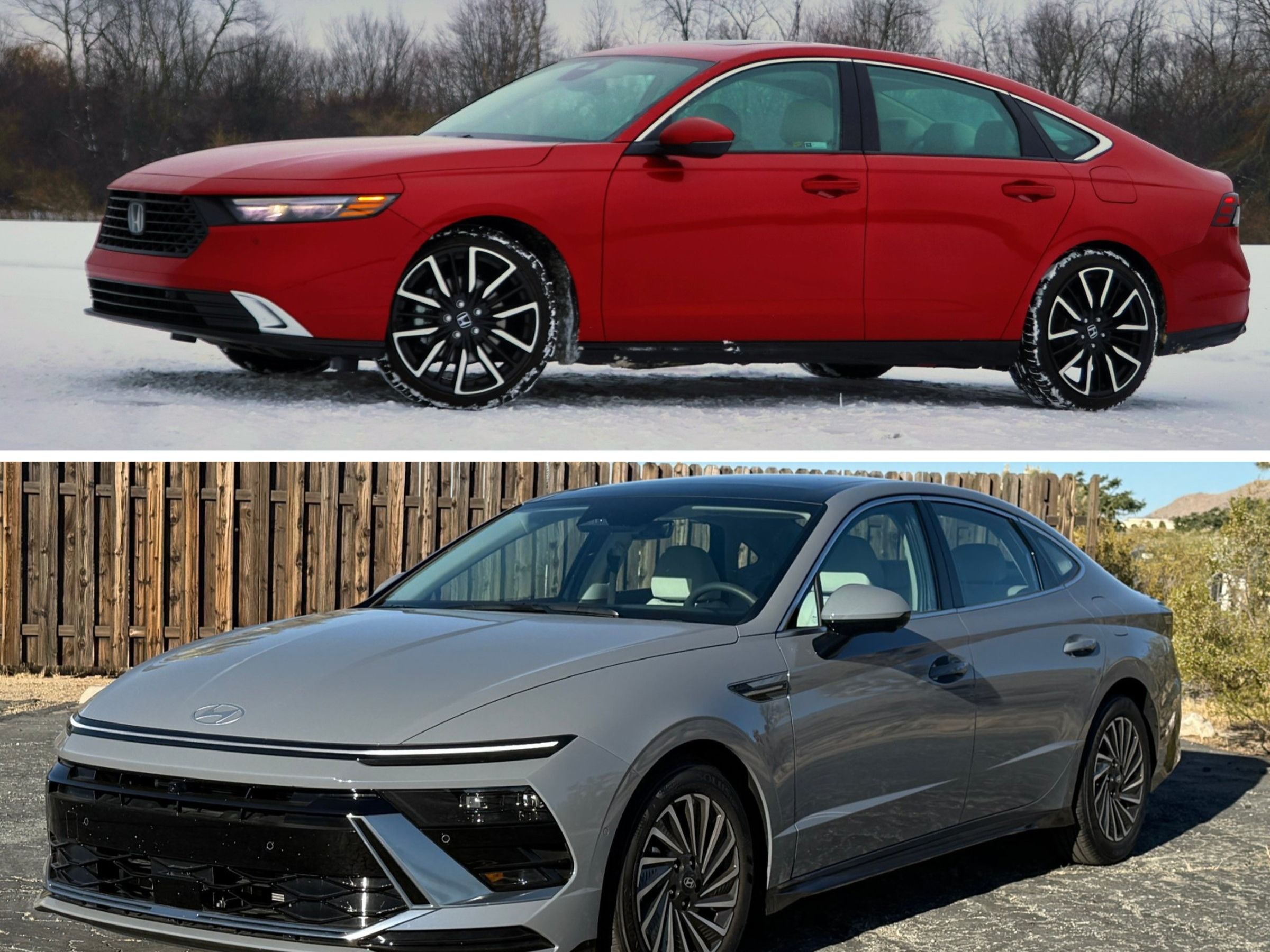
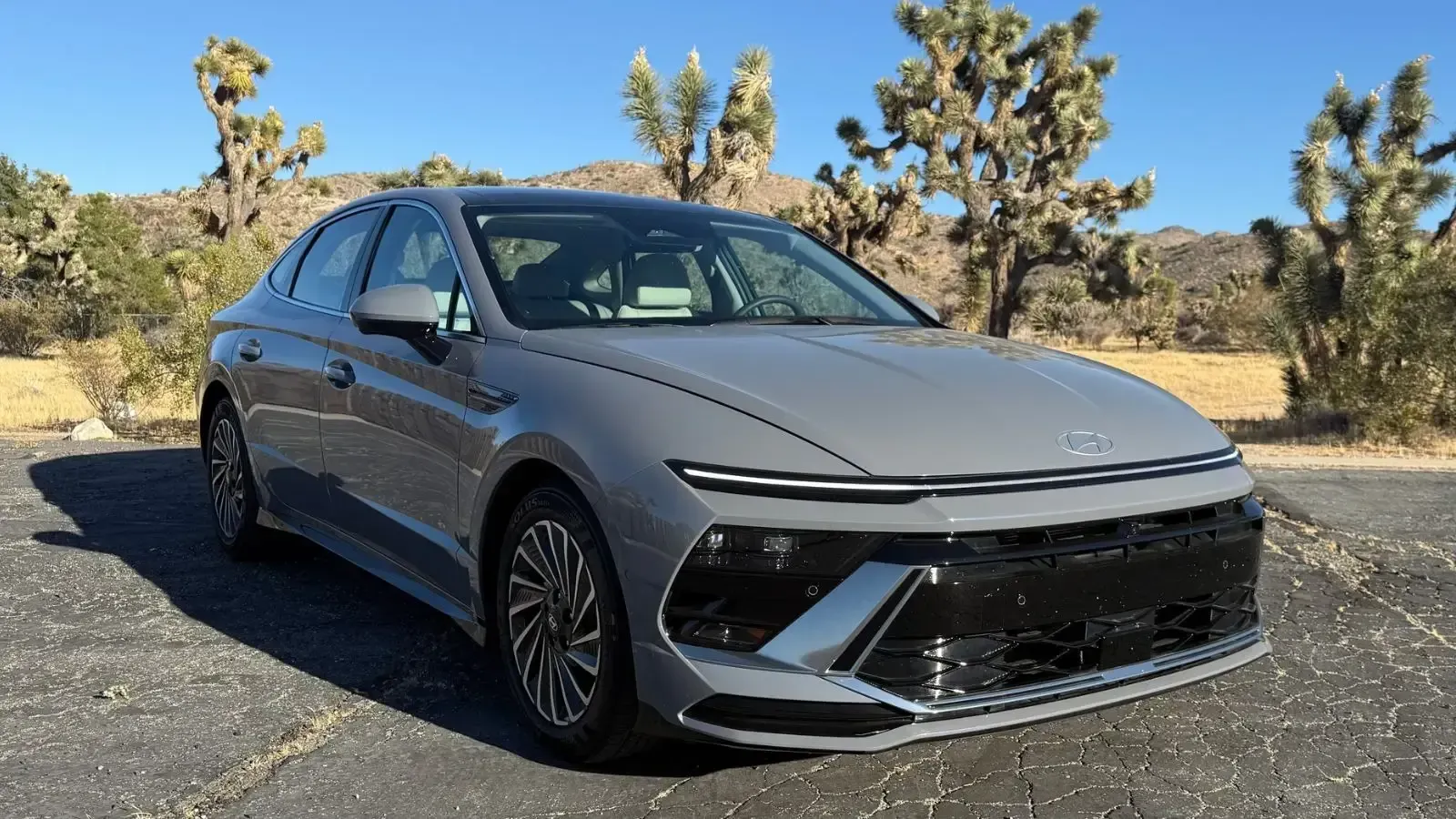
Fast Facts | Toyota Camry vs. Hyundai Sonata Hybrid
- Horsepower: The Toyota Camry has up to 232 horsepower, while the Hyundai Sonata Hybrid has 192 horsepower
- EPA-Estimated Fuel Economy: Both get up to 51 mpg combined
- Cargo Room: The Toyota Camry has 15.1 cubic feet of trunk space, while the Hyundai Sonata Hybrid has 15.6 cubic feet
- Tech: The Toyota Camry comes standard with an 8-inch touchscreen and a 7-inch digital gauge cluster, while the Hyundai Sonata Hybrid comes standard with a 12.3-inch touchscreen and a 4.2-inch cluster
- Starting MSRP: The Toyota Camry starts at $30,995, while the Hyundai Sonata Hybrid starts at $30,495
Two Ways to Build a 50-MPG Family Sedan
If you want the lowest fuel bills possible without plugging in, a hybrid sedan is hard to beat. Their relatively low, more aerodynamic shapes give a distinct advantage over taller crossovers and help many of them top 50 mpg combined. Two midsize sedans, the Toyota Camry and the Hyundai Sonata Hybrid, both reach 51 mpg combined, making them among the most fuel-efficient vehicles on the road. Here's how they compare.
Exterior Design and Dimensions
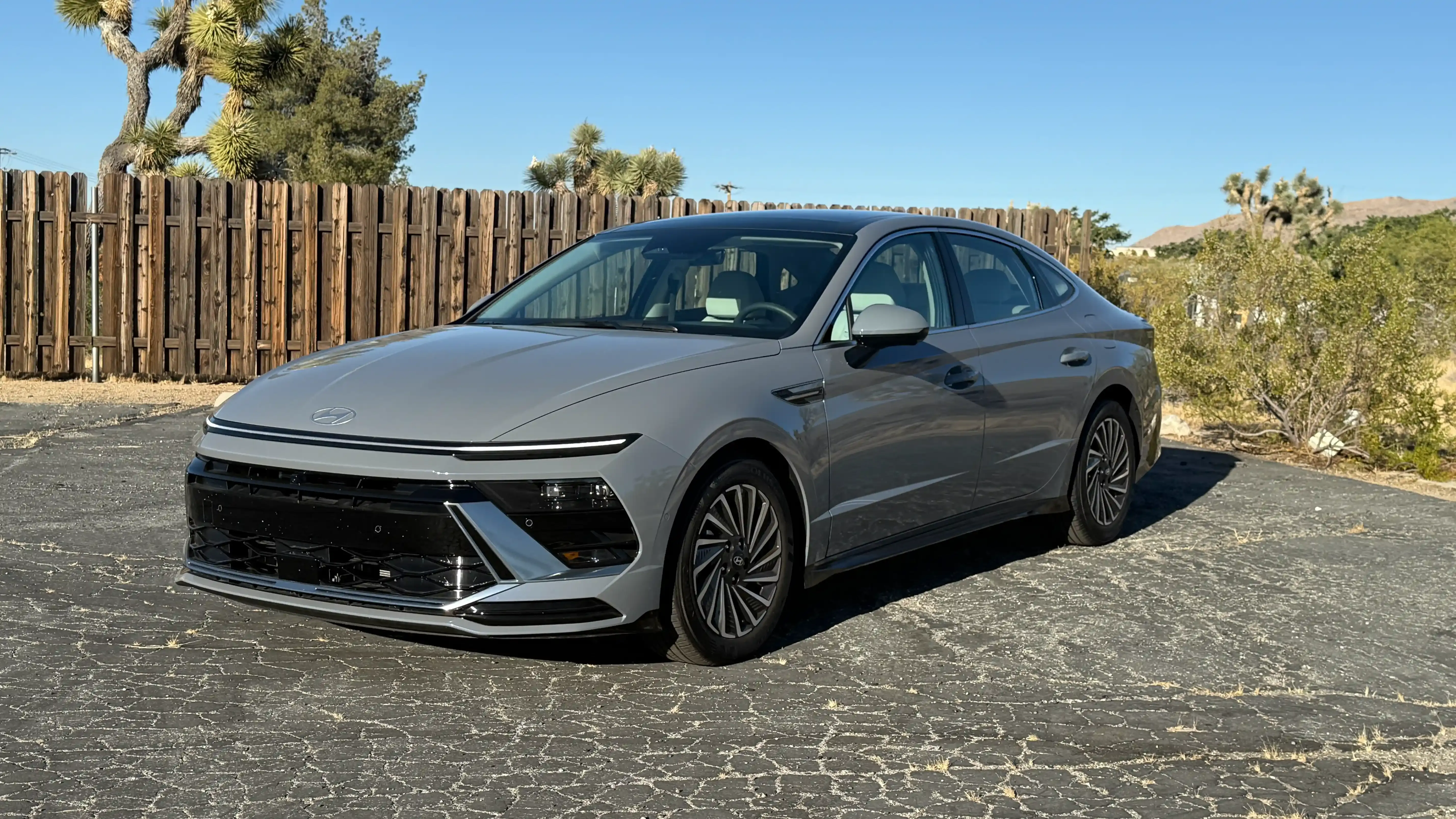
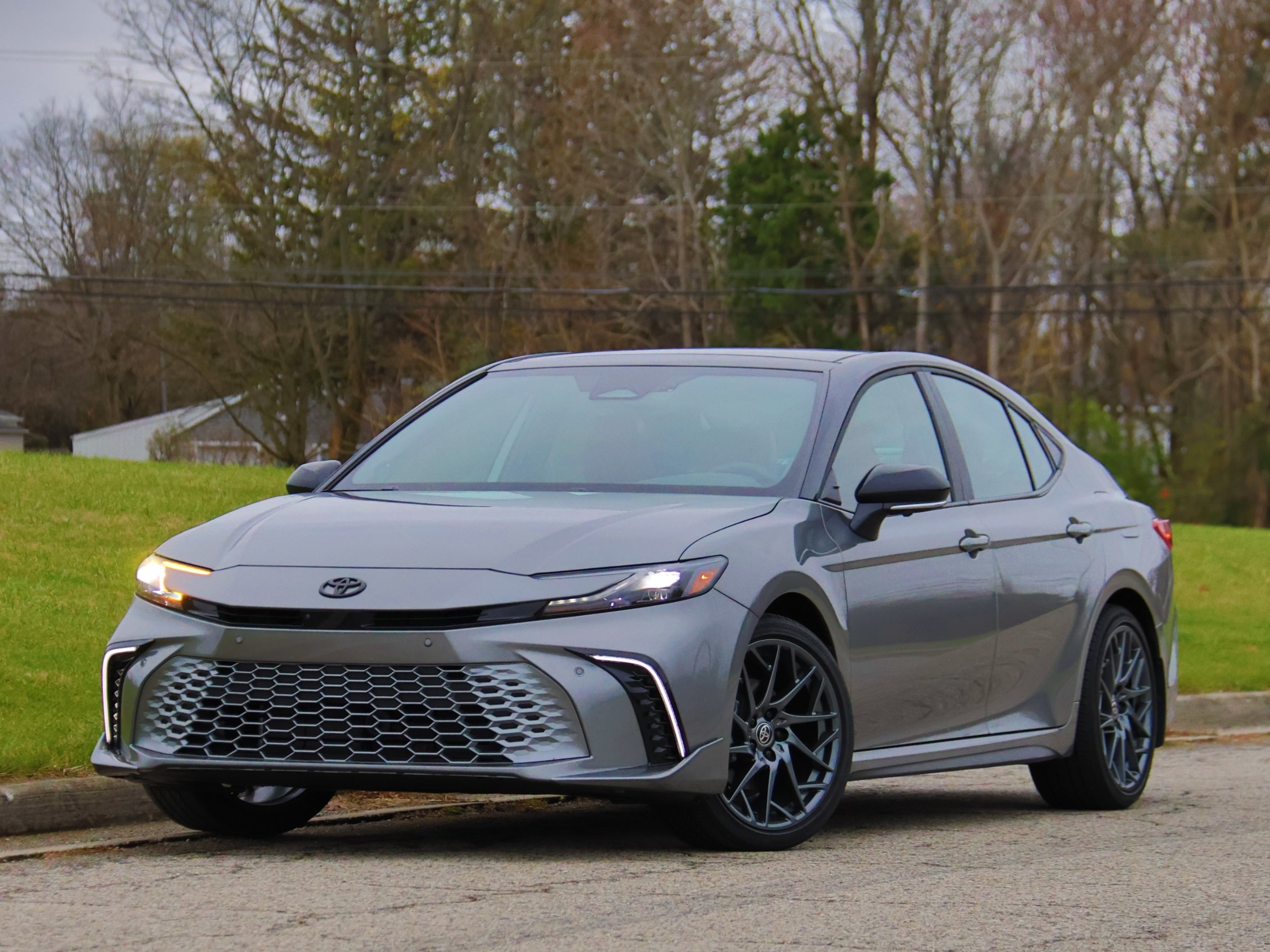
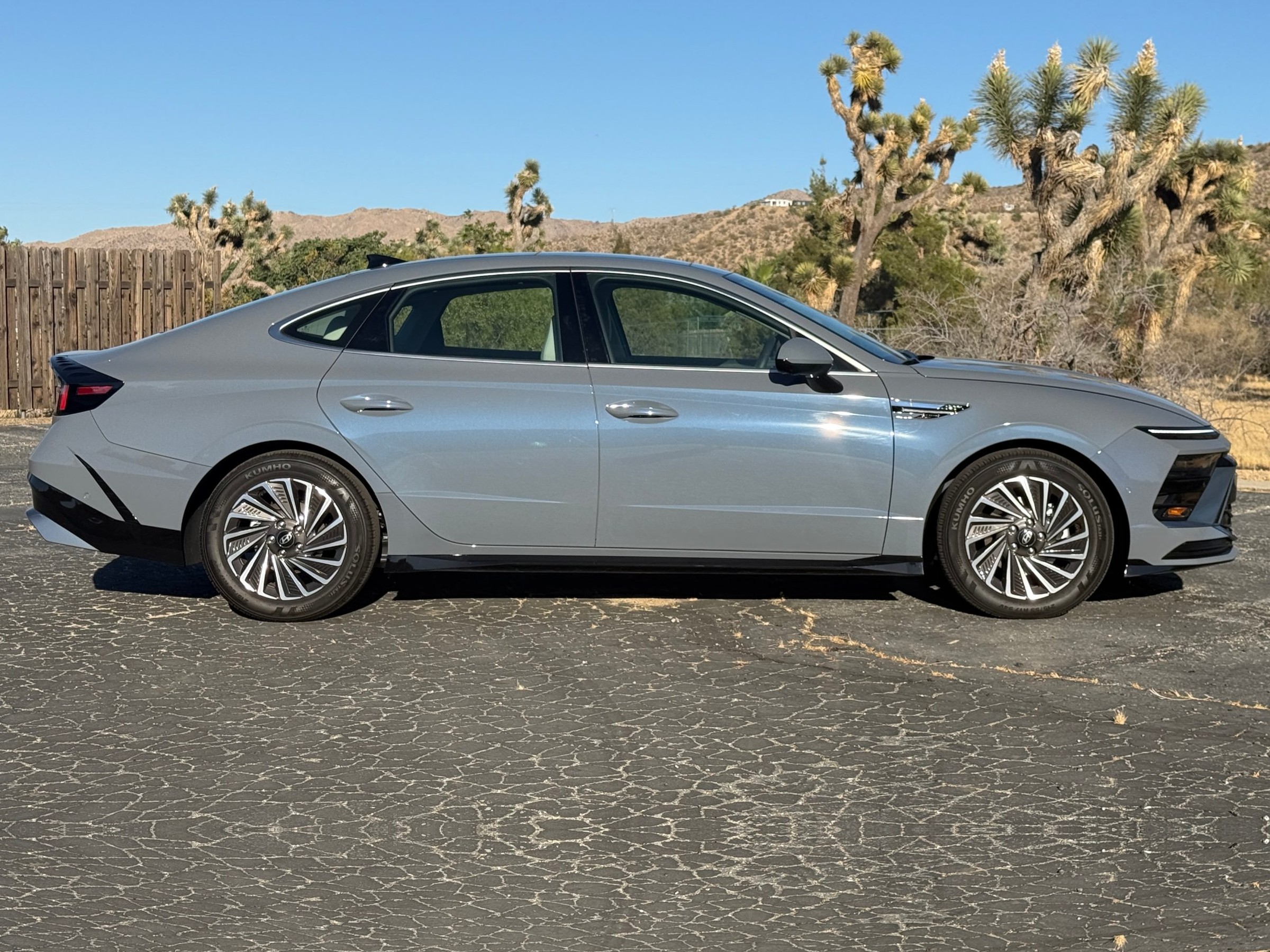
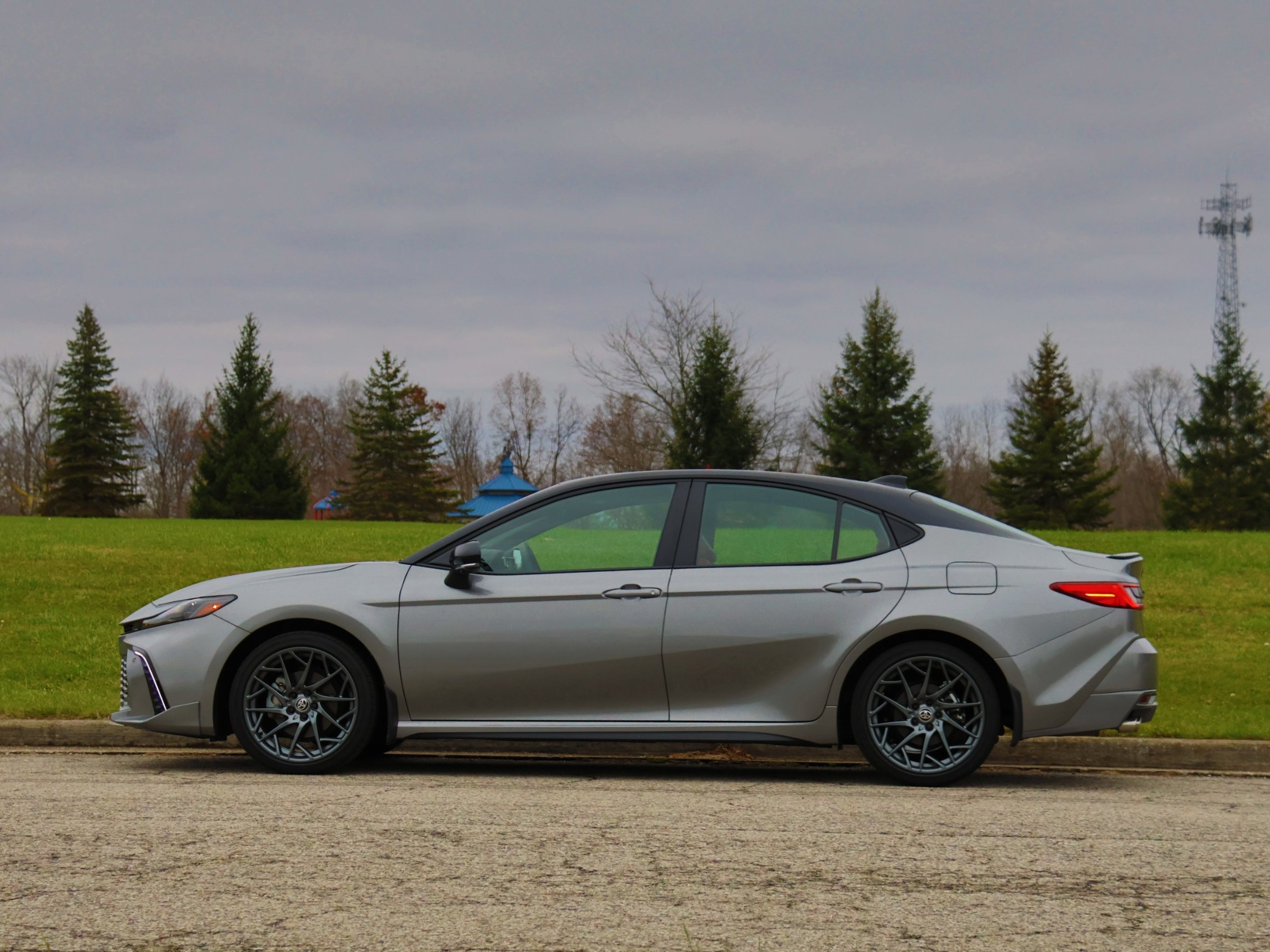
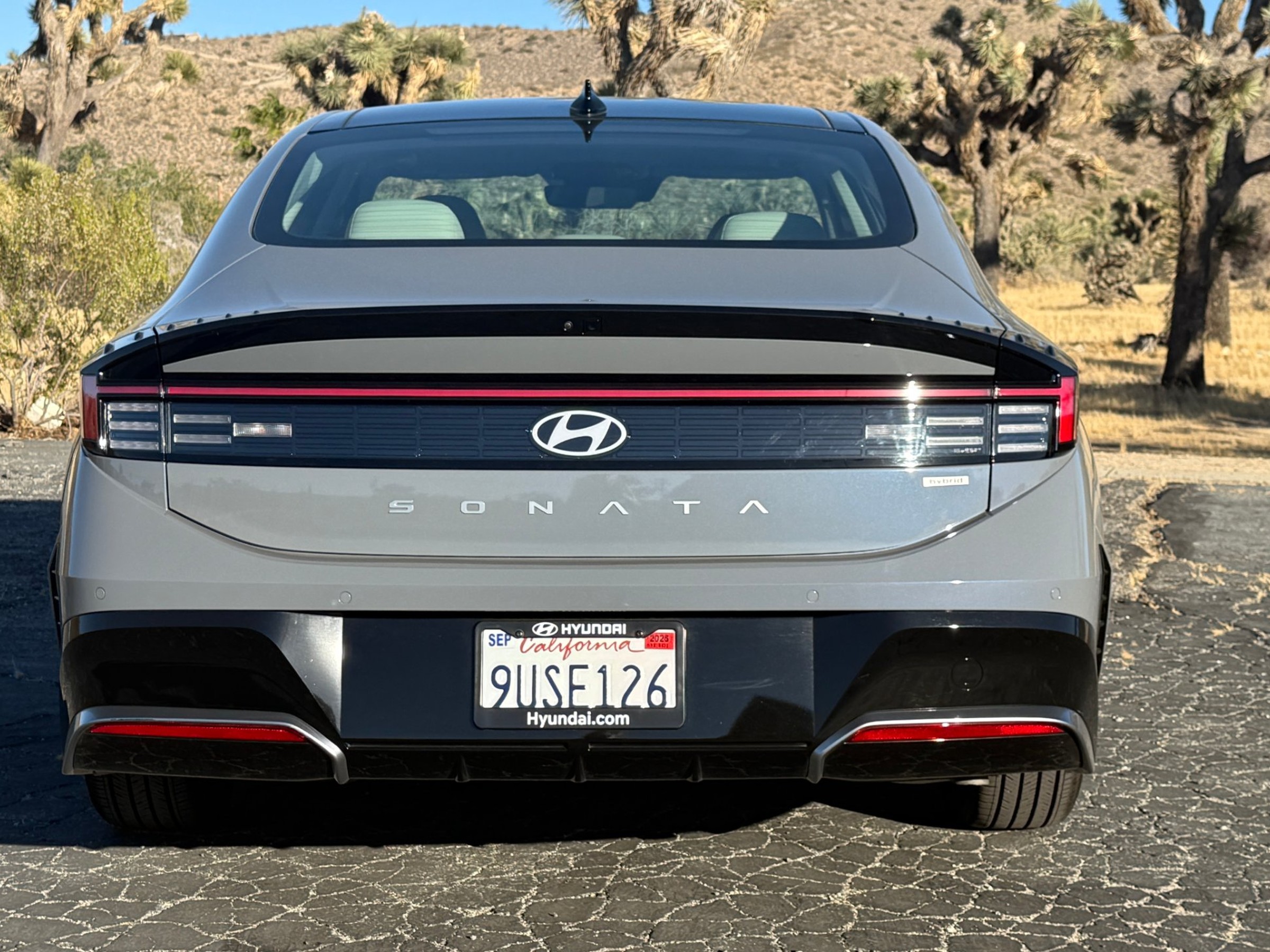
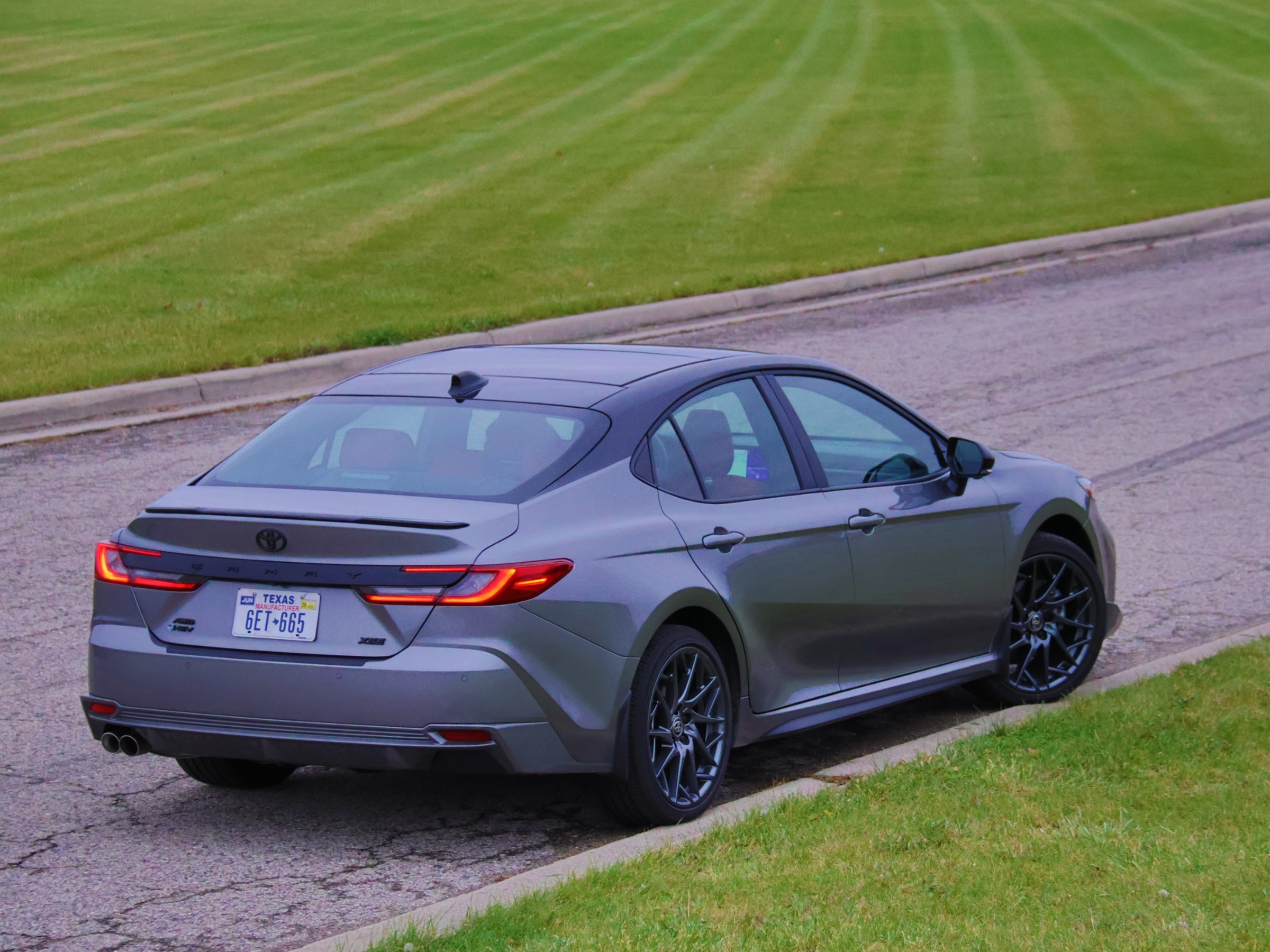
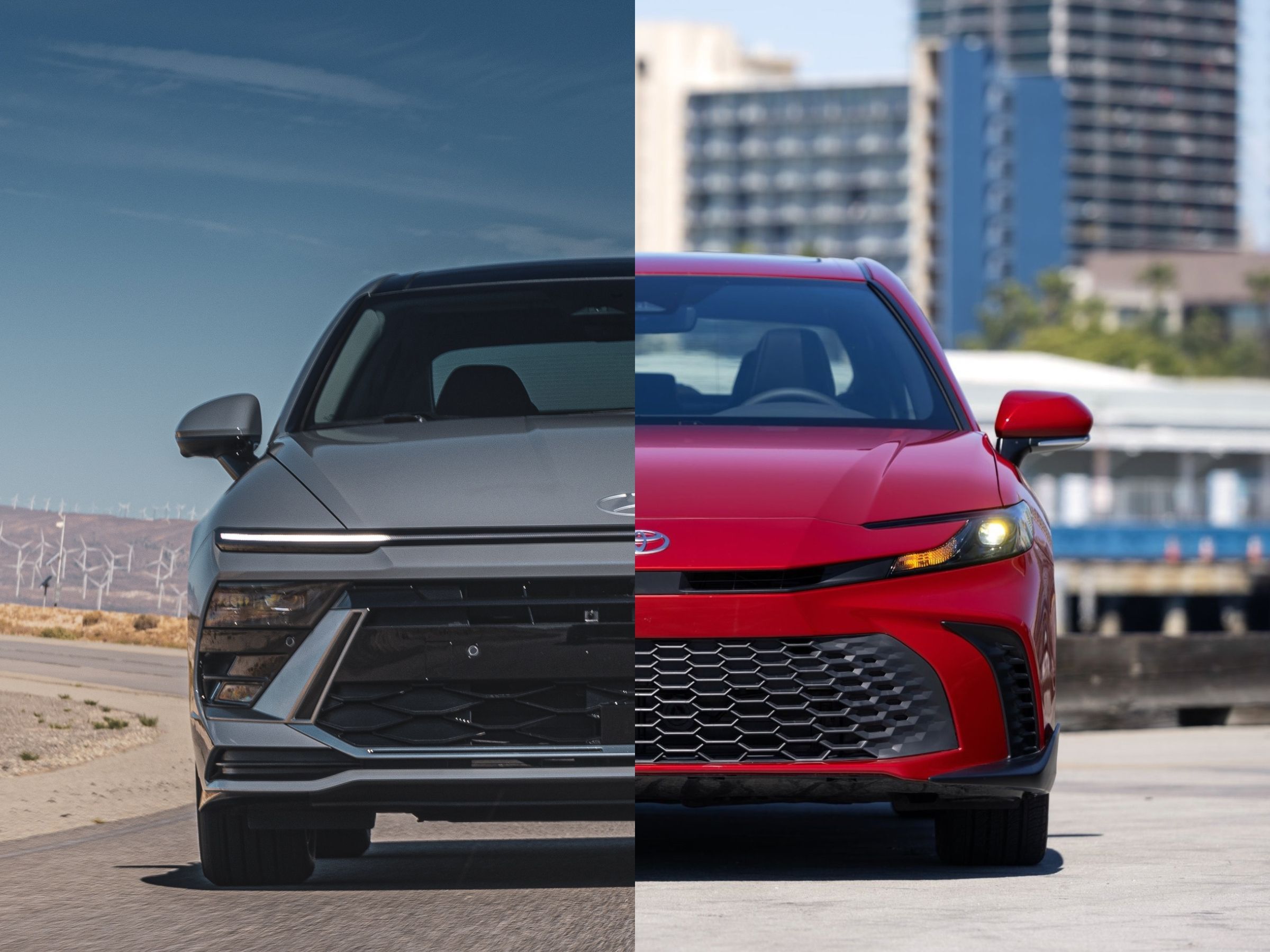
Size-wise, they're nearly identical. The Camry is just 0.2 inch longer, the Sonata Hybrid is 0.8 inch wider and has a 0.6-inch-longer wheelbase, and both are exactly the same height. However, the two take different styling approaches up front. The Sonata Hybrid has a thin light bar that stretches across the full width of the hood, while the Camry uses somewhat more traditional headlights with the brand’s “hammerhead” design that first appeared on the current Prius several years ago. Both have large, distinctive grilles. Overall, both still look like traditional sedans, just a bit sleeker and more aerodynamic than the classic shape. The Camry is also available with a contrasting black roof.
Interior Space and Tech
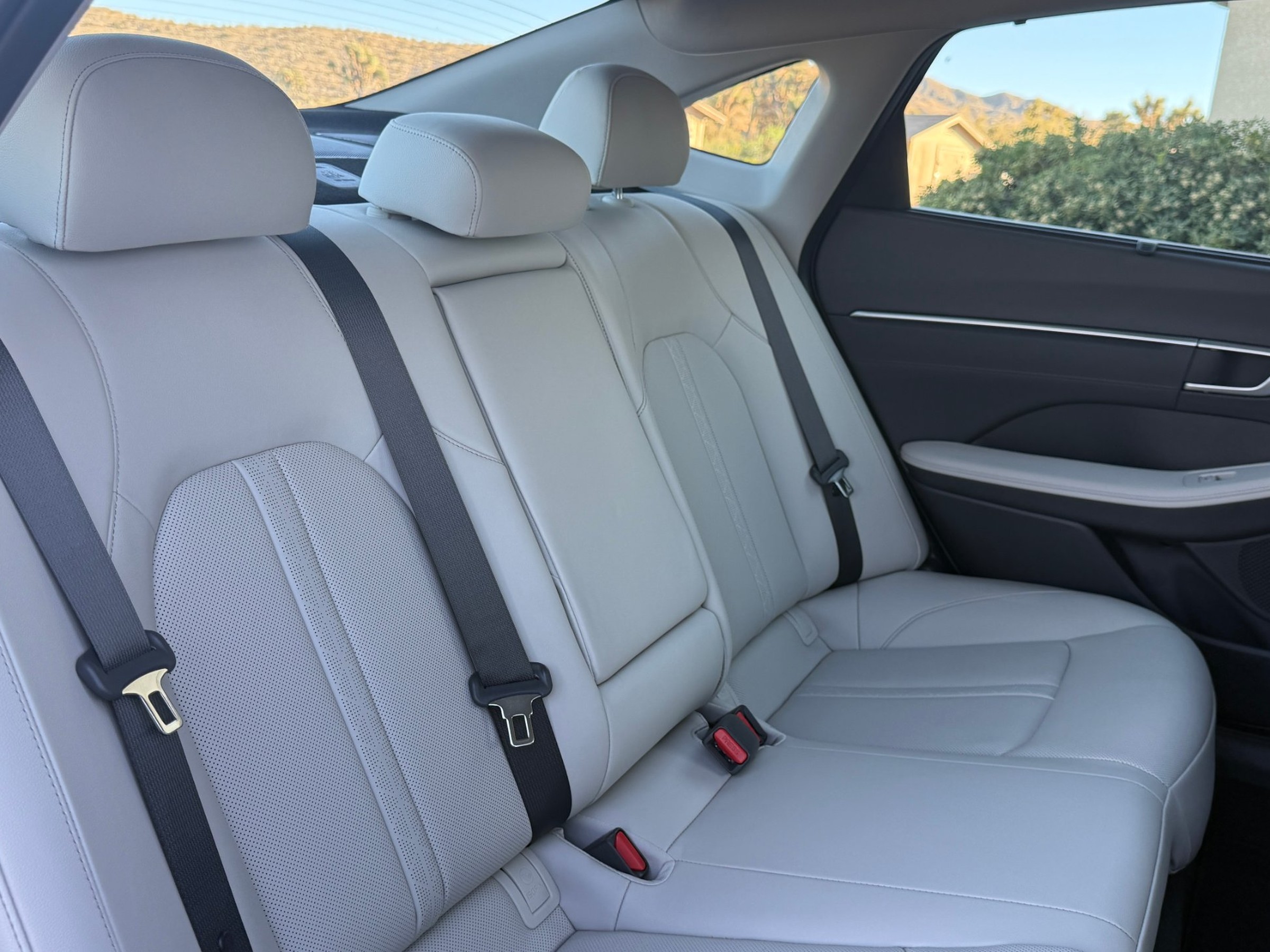
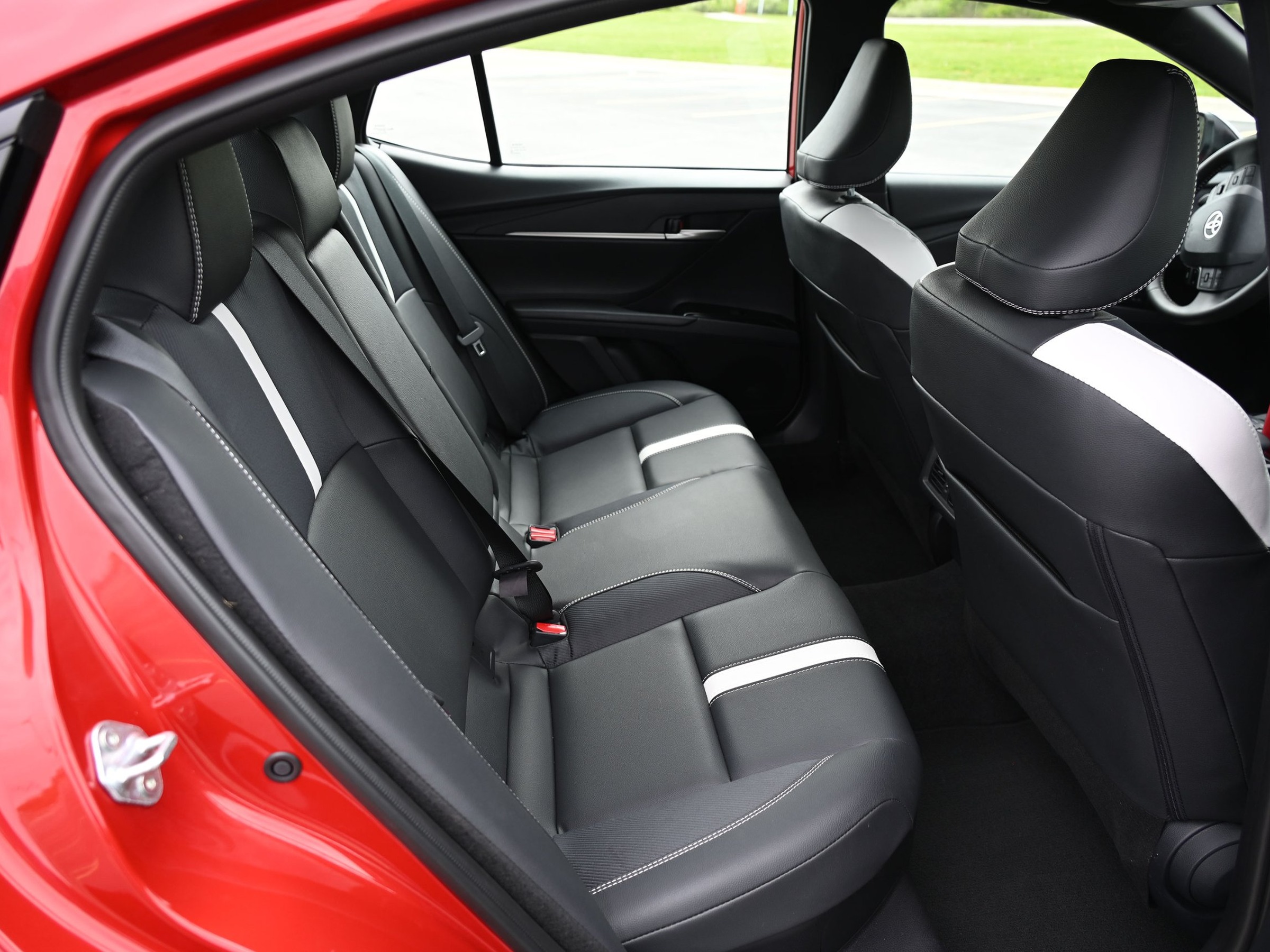
Despite their similar exterior dimensions, the Sonata Hybrid comes out ahead in nearly every interior measurement. It has 0.9 to 1.7 inches more front headroom, 4.0 inches more front legroom, 0.2 inch more front shoulder room, 0.4 inch more rear shoulder room, and up to 5.6 cubic feet more total passenger volume. It also has 0.5 cubic foot more trunk space. Rear headroom is essentially a tie, and the only measurement the Camry wins is rear legroom, where it has 3.2 inches more.
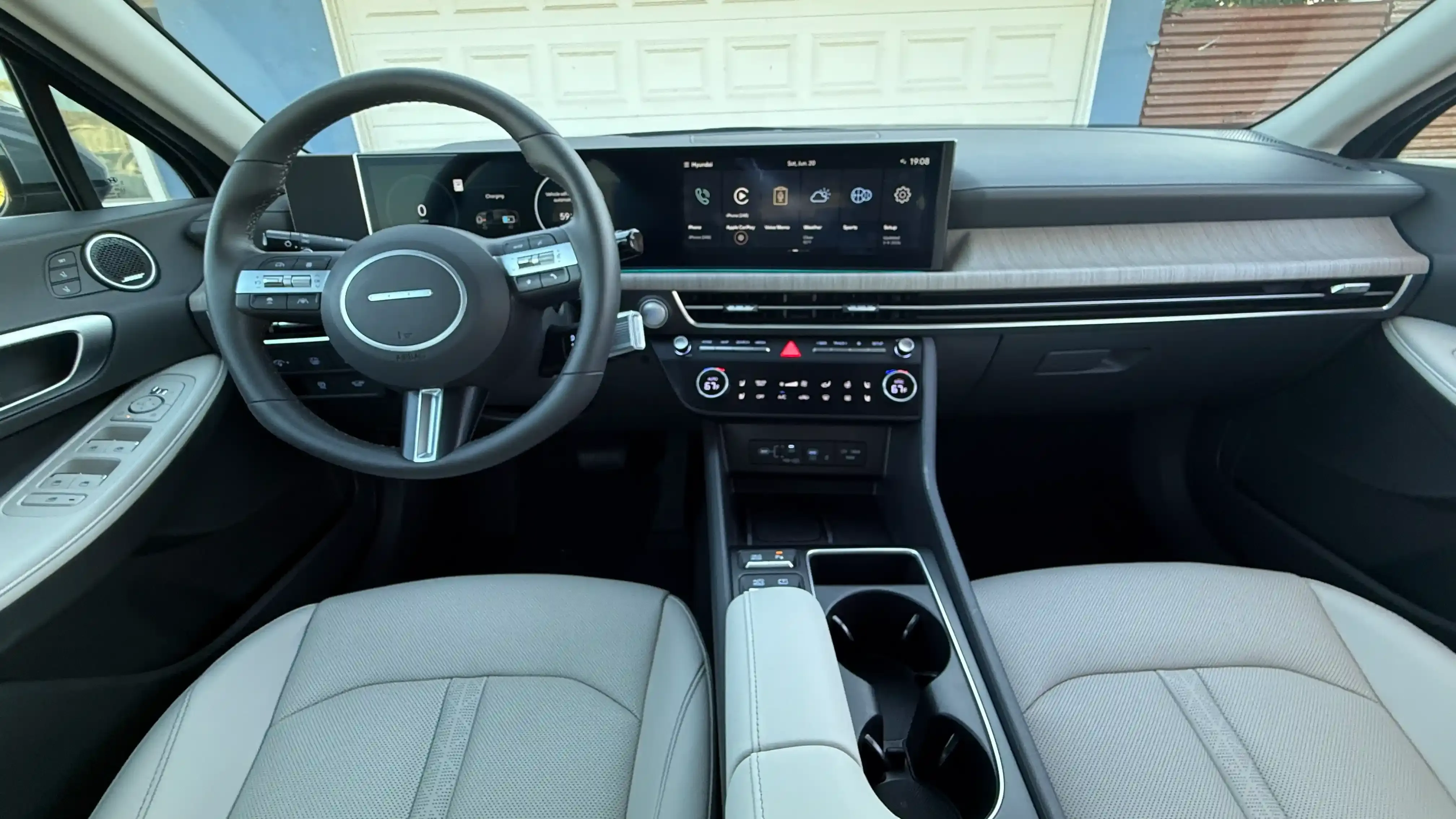
Both come standard with push-button start, dual-zone automatic climate control, cloth upholstery, manually adjustable front seats, USB ports, and wireless Apple CarPlay and Android Auto. The Camry adds standard wireless device charging, which is optional on the Sonata Hybrid. The Sonata Hybrid adds a standard hands-free trunk release and keyless entry, the latter of which is available on the Camry.
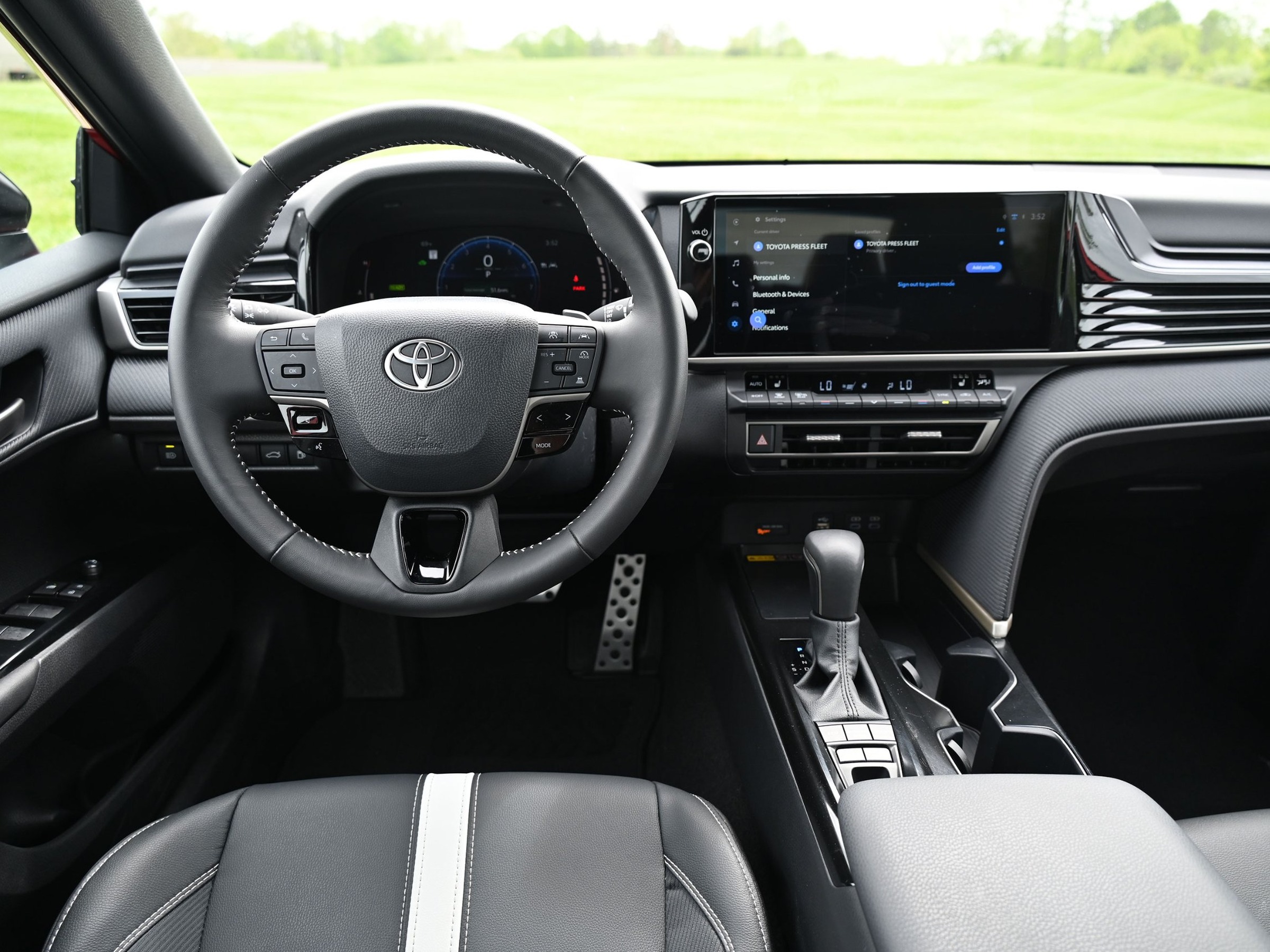
Both are available with leather upholstery, eight-way power-adjustable driver's seat, a power-adjustable front passenger seat (eight-way on the Camry, four-way on the Sonata Hybrid), heated front seats, ventilated front seats, a leather-wrapped steering wheel, a heated steering wheel, an auto-dimming rearview mirror, a digital key, ambient interior lighting, panoramic glass roof, a larger 12.3-inch digital gauge cluster, and a premium audio option (a nine-speaker JBL system on the Camry, a 12-speaker Bose system on the Sonata Hybrid).
Only the Camry offers a moonroof, leatherette upholstery, driver's seat memory, and a 10-inch head-up display. Only the Sonata Hybrid offers navigation.
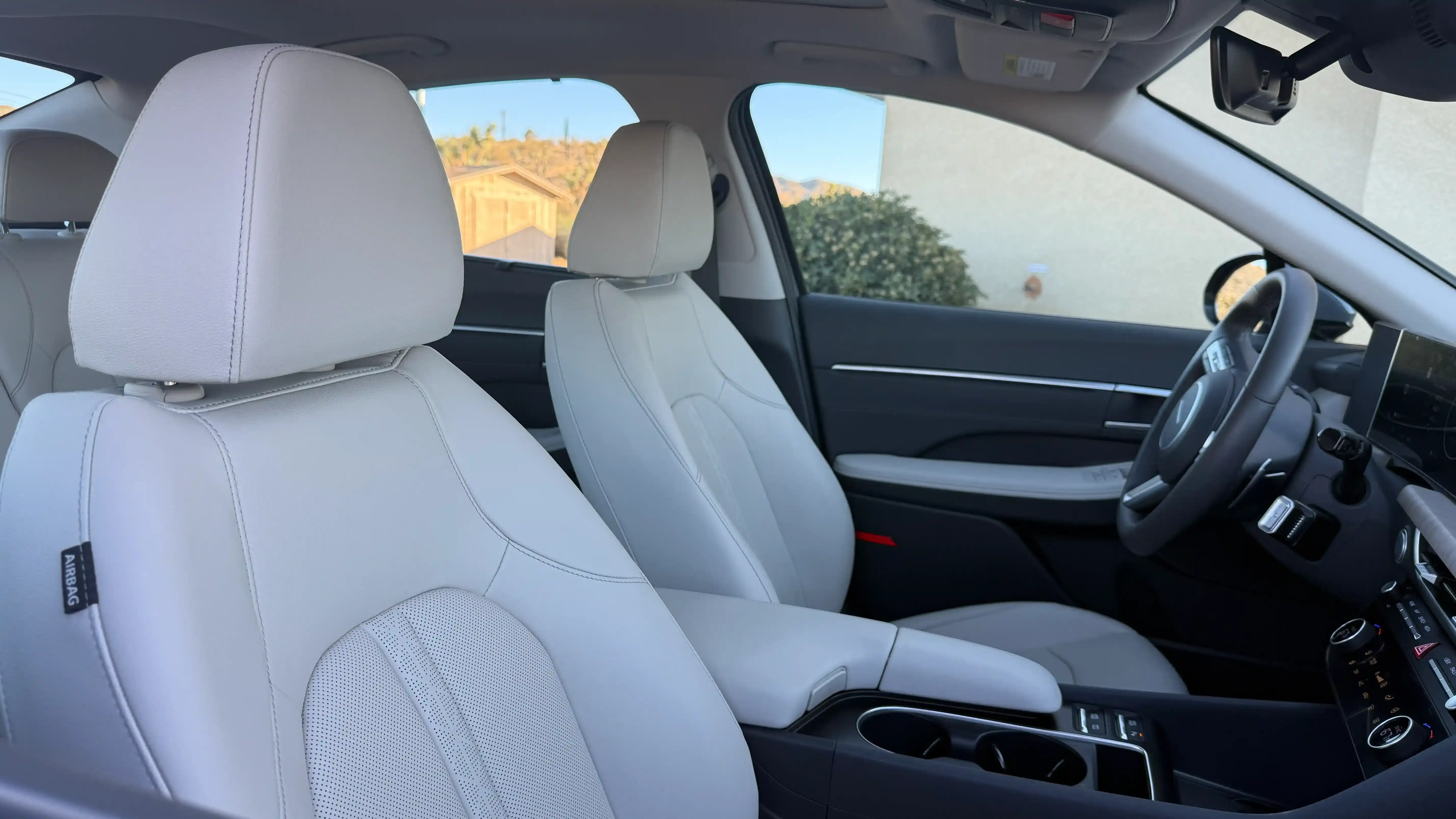
Both have standard automatic high beams, forward-collision avoidance, adaptive cruise control, lane-keeping assist, rear cross-traffic alert, safe-exit alert, and rear-occupant alert. The Camry adds standard blind-spot monitoring, road-sign assist, and proactive driving assist, while the Sonata Hybrid gets cyclist and junction-turning detection and driver-attention warning.
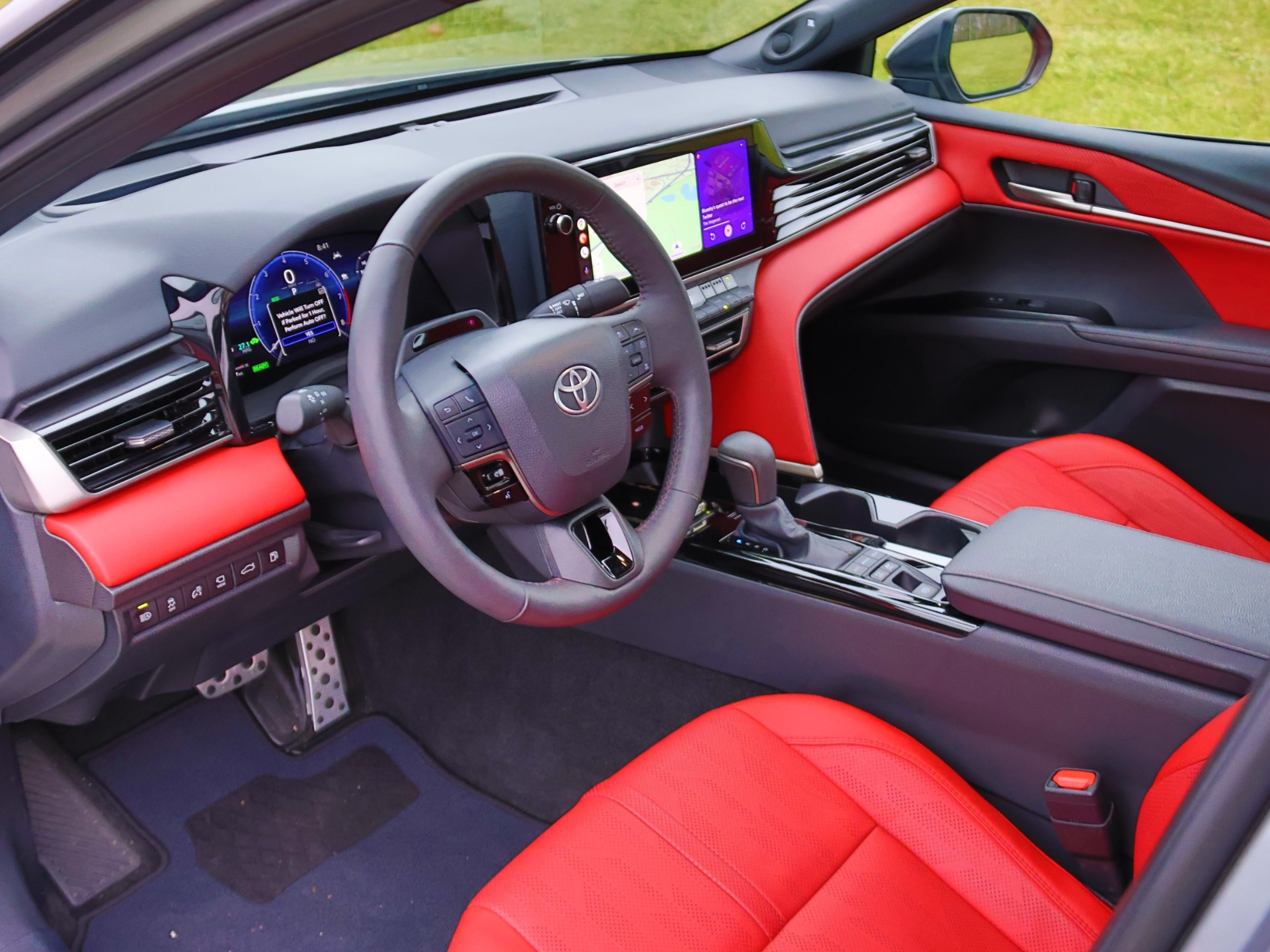
Both are available with a surround-view monitor, front and rear parking sensors, and a highway driver-assistance system (Toyota's traffic-jam assist and Hyundai's highway-driving assist). The Camry can also be equipped with front cross-traffic alert, driver-attention monitoring, lane-change assist, and rear cross-traffic braking. The Sonata Hybrid offers a blind-spot view monitor, remote smart parking assist, and side parking sensors.
Powertrain and Fuel Economy
The Camry offers AWD, while the Sonata Hybrid is FWD-only. The Camry makes 33 more horsepower in FWD and 40 more in AWD form.
The best combined fuel economy is a tie at 51 mpg for the Camry FWD LE and the Sonata Hybrid Blue. The Camry FWD LE gets 5 mpg better in the city, while the Sonata Hybrid Blue gets 7 mpg better on the highway. In other trims, the Sonata Hybrid's 47 mpg combined beats the Camry FWD SE/XLE/XSE by 1 mpg. The Camry AWD ranges from 43 to 50 mpg combined, depending on trim.
A tie in combined MPG hides very different city and highway strengths, so see how EPA city, highway, and combined fuel-economy ratings should actually be compared ➜
Price
The Sonata Hybrid Blue undercuts the base Camry LE FWD by $500 ($30,495 vs. $30,995). At the top of the lineup, the Camry XSE costs $2,150 less than the Sonata Hybrid Limited in FWD form, and even with AWD, it's still $625 less.
Behind the Wheel
Both are handsome midsize sedans with the sleek, fastback profile that has become common on sedans over the past decade. Both offer an ample amount of passenger space, and while the numbers indicate a difference in legroom, that mostly comes down to the length of the seat tracks. If you put the same people in both cars with the seats set appropriately, the difference in space is largely insignificant.
The biggest difference between these two cars is how their powertrains behave. The Camry uses Toyota’s traditional hybrid setup, with two motor-generator units (MGUs) and an e-CVT. During acceleration, the engine tends to rev to about 4,000 rpm and stay there while the e-CVT adjusts and vehicle speed climbs. In the latest Camry, the primary drive MGU has been upgraded to 134 horsepower, so the engine doesn’t have to work as hard. That reduces sound levels and enables more electric-only driving at a broader speed range.
Toyota’s power-split system and Hyundai’s six-speed parallel hybrid achieve similar efficiency in very different ways, so see why hybrid architecture changes how a car sounds, shifts, and responds ➜
The Sonata Hybrid uses Hyundai's original hybrid configuration with a belted starter-generator in place of the alternator to stop and start the engine, along with an MGU paired with a six-speed automatic transmission. The Hyundai's MGU only produces 51 horsepower, but its 151 lb-ft of torque is nearly identical to the Camry's 153 lb-ft. As a result, the overall performance and responsiveness in around-town driving feel pretty similar. The Sonata Hybrid's biggest advantage is that the six-speed transmission makes it feel more like a traditional gas-powered car, which some drivers may prefer.
Ride and handling are similar overall. Both are comfortable and capable of handling rough pavement. For those who live with winter weather, the Camry’s available AWD gives it a notable advantage, since it can send power to whichever wheels have traction. The top XSE trim also feels a bit sportier than any version of the Sonata Hybrid.
Which One's Right for You
The Camry's design has come a long way over the last decade, from inoffensive but bland to quite striking, especially in one of the two-tone color combinations. Supersonic Red with a black roof really stands out in the parking lot.
MPG is only part of the ownership decision, so see what else matters when comparing hybrid warranties, features, driving feel, and long-term costs ➜
Both cars offer similar overall fuel efficiency, and once you get beyond about 40 to 45 mpg, the real-world difference in fuel consumption is minimal. The Sonata Hybrid's powertrain is a bit more pleasant from a noise perspective, but the Camry is the only one available with AWD. If AWD is a must-have, it’s an easy choice, and you probably won’t regret it. If FWD is sufficient, the decision comes down to design, because the two are otherwise so close. Either way, there isn’t a bad choice between these two.
More Hybrid Sedans Worth Comparing
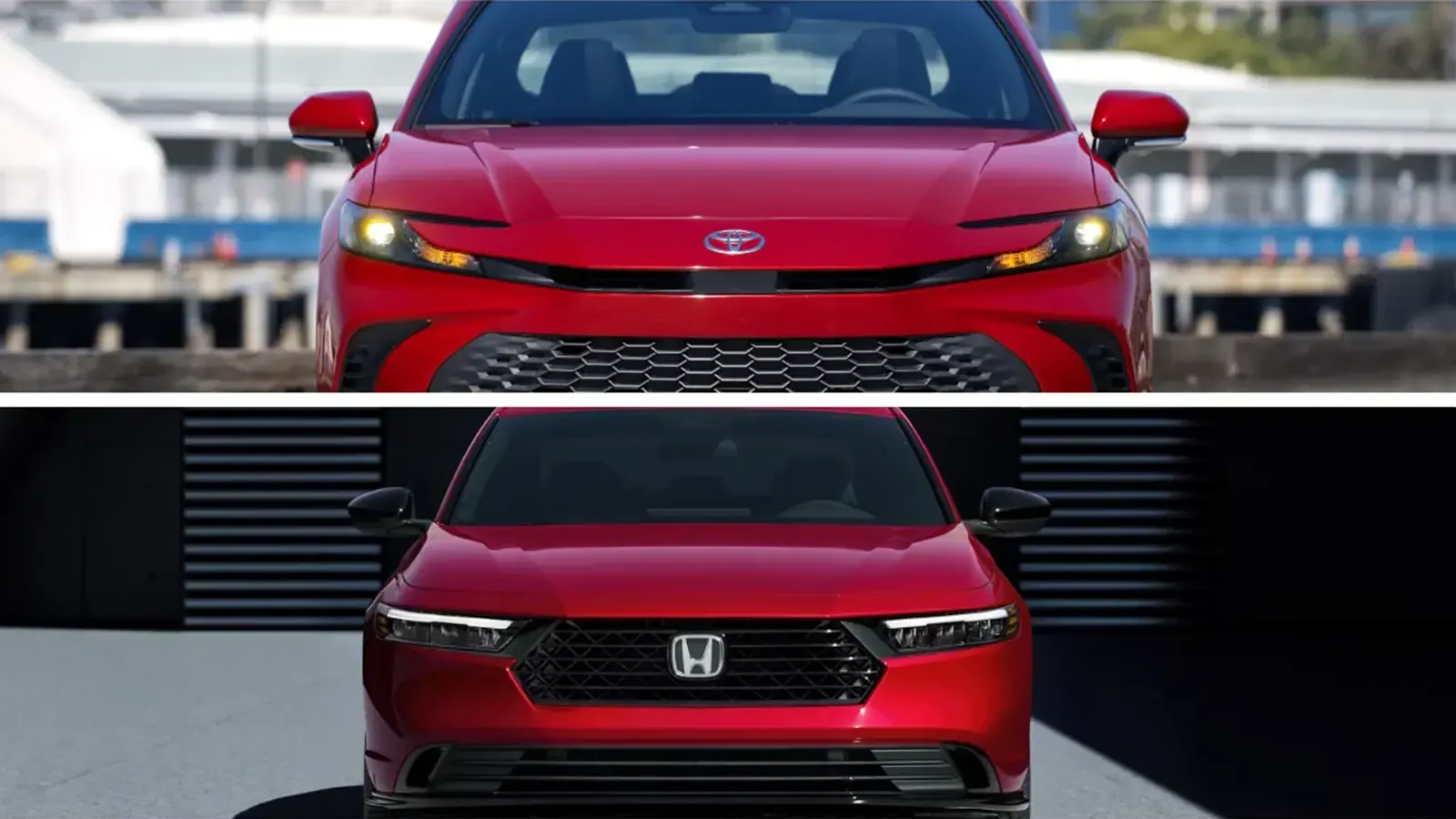
Comparison: 2026 Honda Accord Hybrid vs. 2026 Toyota Camry Hybrid
Honda adds rear-seat room and a smoother hybrid feel, while Toyota counters with lower pricing, stronger maximum MPG, and available AWD.
Read More ➜
Best Hybrids Under $35K
The Camry is one of several high-efficiency hybrids that keep the entry price below $35,000, giving shoppers a wider view of the value field.
Read More ➜
2026 Hyundai Elantra Hybrid Review: High Style, Low Fuel Bills
If the Sonata feels larger or more expensive than you need, Hyundai’s smaller hybrid sedan offers up to 54 mpg combined at a substantially lower price.
Read More ➜





 Comparisons