Fast Facts | GM's Next-Gen EVs
- OnStar AI: A custom-branded version of Google Gemini, debuting on the 2027 Cadillac Lyriq
- One App: Chevrolet, Buick, GMC, and Cadillac apps merge into a single OnStar app for 2027
- Next-Gen Batteries: Lithium manganese-rich (LMR) cells that match lithium iron phosphate on cost and come close ot nick-rich cells on energy density
- Efficiency: GM claims a 20 percent boost in overall energy efficiency for its fourth-generation EVs
- Eyes-Off Driving: A Level 3 highway system is targeted for the 2028 Escalade IQ
GM Is Rebuilding More Than Its EV Platform
This week in New York City, General Motors showcased its latest and upcoming technologies at its second annual GM Forward event. Last year, GM announced its next-generation centralized compute architecture and its plan to launch a Level 3 hands-off/eyes-off automated driving system in 2028. This year, we got a closer look at both, along with GM’s plans for its next-generation EVs and a new in-vehicle assistant called OnStar AI.
OnStar goes Artificial
This year marks the 30th anniversary of OnStar, the first mainstream in-vehicle connectivity system. Virtually every GM vehicle since 1996 has a built-in cellular connection, and the feature set has expanded significantly over time. In the early days, you could call an OnStar help line to get your car remotely unlocked, or have the car automatically call for emergency assistance after a crash. Today, OnStar can help locate and disable a stolen vehicle, monitor teen drivers, and deliver over-the-air software updates.
Ever since the original Chevrolet Volt launched in 2010, branded OnStar apps have enabled owners to manage charging and cabin preconditioning and make service appointments. For 2027, GM is consolidating the separate Chevrolet, Buick, GMC, and Cadillac apps into a single OnStar app. It's also launching OnStar AI. As the name suggests, it's a digital assistant that can answer questions, control vehicle functions like climate control, and manage navigation and media playback.
Sound familiar? Earlier this year, Google's Gemini AI replaced Google Assistant in GM vehicles with Android-based infotainment, and OnStar AI is an updated, custom-branded version of Gemini. It'll replace the Google-branded version starting with the 2027 Cadillac Lyriq. Since OnStar AI doesn’t come with any upgraded compute, it could conceivably roll out to existing vehicles with Google Built-in, but GM isn’t announcing anything yet.
All-New Compute Architecture
A year after announcing its shift to a centralized compute architecture, GM is now actively testing the system in development prototypes. Today's GM vehicles use a domain controller architecture: several large electronic control units (ECUs) that govern features like the powertrain, infotainment, chassis control, and driver-assistance systems. On top of that, dozens of additional ECUs are scattered around the vehicle, handling everything from lighting to massaging seats.
The new system consolidates all of that into one central computer and three aggregator modules. The aggregators handle power and signal distribution between the central computer and all the sensors and actuators spread across the vehicle. The liquid-cooled central computer is primarily powered by an Nvidia Thor system-on-chip, which is based on the same Nvidia Blackwell architecture used in most modern AI data centers.
Putting all of these previously scattered functions in a single box requires an entirely new software platform, one that separates the applications from the underlying hardware so that either can be updated more easily. Many legacy automakers have struggled here, so we’ll have to wait and see whether GM can accomplish it.
The architecture is designed to work with electric, gas, and hybrid powertrains, so GM can reuse it as widely as possible. It’s set to debut in 2028 on the Cadillac Escalade IQ, followed by GM’s full-size trucks and SUVs, its three-row crossovers, and its fourth-generation EVs. Along with a 40-times boost in compute performance from the Nvidia chip, the new architecture cuts system wiring by 30 percent, which simplifies assembly and reduces weight.
Fourth-Generation EV Development
GM is actively working on its next-generation EVs, aiming to make them both more affordable and more efficient. At the core of the fourth-generation architecture is the lithium manganese-rich (LMR) battery chemistry GM announced in spring 2025, just a few weeks after Ford announced a similar chemistry. Ford has remained quiet about its LMR plans since then, but GM has provided regular updates. Most recently, the automaker announced it had started retooling the Ultium Cells plant in Spring Hill, Tennessee, which it runs as a joint venture with LG Energy Solution.
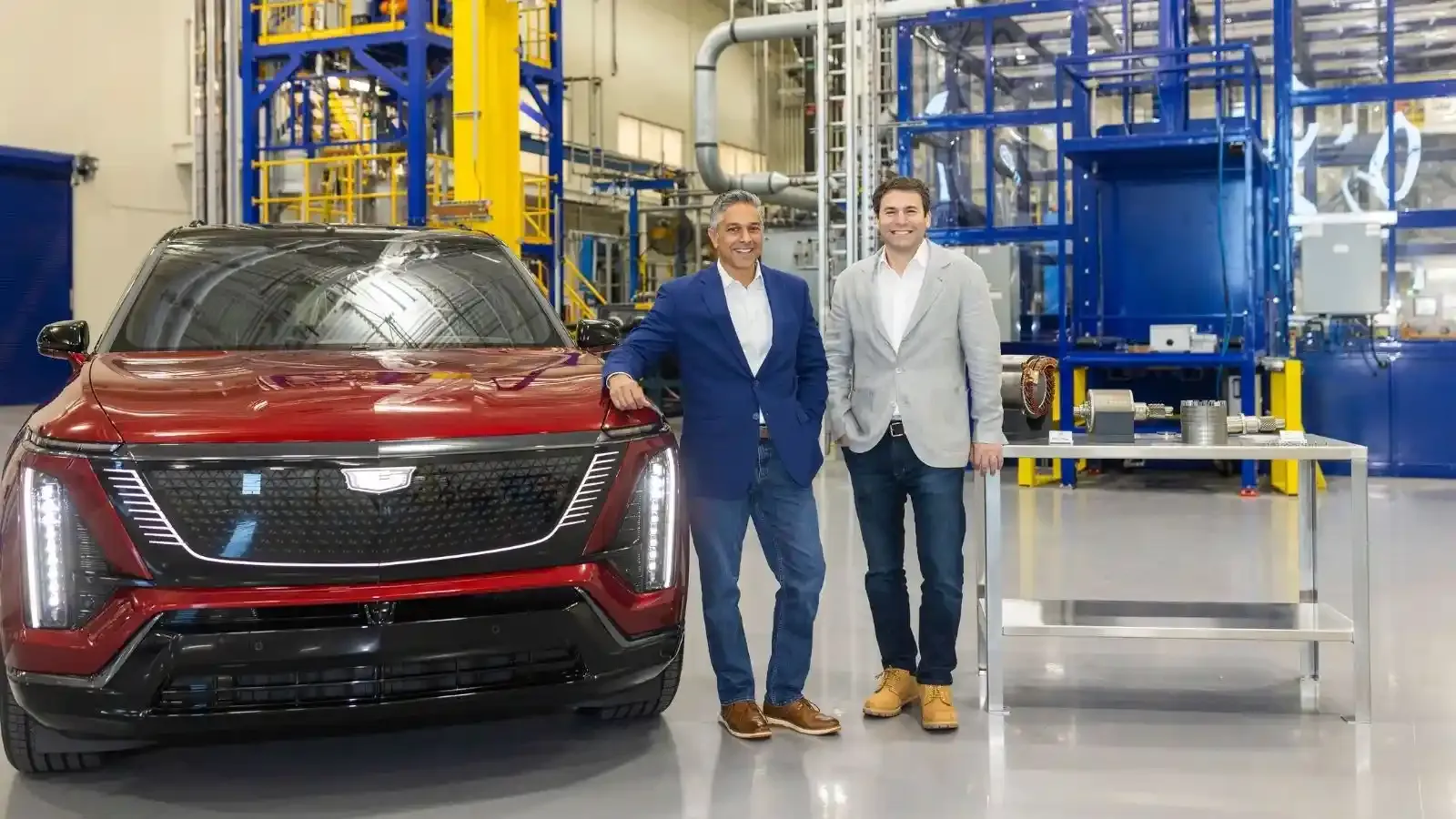
The plant was originally configured to build pouch cells with a nickel-manganese-cobalt-aluminum (NMCA) cathode, which is used in GM’s current-generation EVs. Some lines have since switched to producing lithium iron phosphate (LFP) cells for energy storage systems. But unlike Ford, which is relying heavily on LFP cells for its upcoming Universal Electric Vehicle platform, GM is going all-in on LMR for its next EVs. Because LMR cells use less nickel, they cost about the same as LFP while nearly matching the energy density of the more expensive nickel-rich chemistries.
LMR is one of several battery chemistries automakers are pursuing to reduce cost without giving up too much energy density, so see how the next generation of EV batteries could change range, cost, and charging ➜
To get to its desired LMR chemistry, GM leaned heavily on AI simulation tools, evaluating more than 300,000 cell recipes before producing any physical prototypes. GM claims that enabled it to go from its first LMR pack design to program approval in just one month.
GM has also revamped the rest of the electric propulsion system, with new drive units and power electronics. The new drive units have 40 percent fewer components than the current generation, which simplifies assembly and reduces cost, size, and weight. Like Ford with its UEV, GM is putting a big focus on aerodynamics. Combined with the new battery and propulsion hardware, GM claims a 20 percent improvement in overall energy efficiency.
One thing GM doesn’t seem to be doing is following Ford, Tesla, and many Chinese automakers toward a structure made from large-scale die castings and structural battery packs. So far, the overall structure of the fourth-generation EVs appears to be fairly conventional.
While an efficiency boost is important, GM’s current EVs aren’t class-leading to begin with, and a 20 percent improvement still won’t make them one. The current front-wheel-drive Chevrolet Equinox EV is rated at 31 kilowatt-hours per 100 miles. A 20 percent improvement will only get it roughly on par with the latest Toyota bZ at 26 kWh/100 miles.
For a real-world look at the current platform GM is trying to improve, see how the Equinox EV performs on efficiency, charging, software, and Super Cruise today ➜
Automated Highway Driving
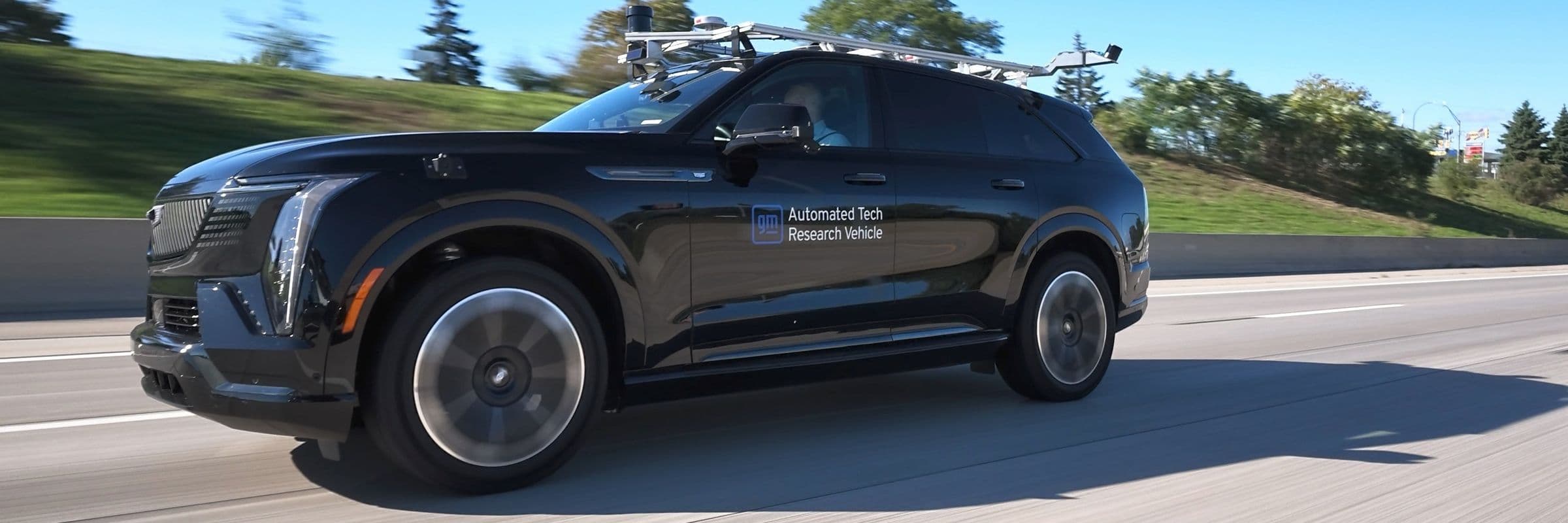
The biggest news from last year’s event was GM’s intention to launch a Level 3 automated highway driving system on the Escalade IQ in 2028. After dissolving its Cruise robotaxi team, GM brought many of those engineers to apply what they'd learned to this new consumer system.
Eyes-off operation is a major step beyond today’s Super Cruise, so see how Level 2 assistance, eyes-off automation, and true driverless systems differ ➜
Ford, Stellantis, Rivian, Lucid, and other automakers are targeting 2028 for similar systems. GM owners have already accumulated more than 1.2 billion miles on Super Cruise, the company's hands-off/eyes-on driver assist, since it launched in 2017. But that’s just the beginning. A system that allows drivers to go eyes-off must be much more robust.
To accomplish this, GM is relying heavily on simulation, with its virtual test fleet running more than 3 billion miles per day. GM is also collecting sensor data from customer vehicles whose owners have opted in, plus a fleet of hundreds of development vehicles equipped with a full sensor stack of cameras, radar, and lidar. That real-world fleet is gathering more than 1 million miles per month.
All of this is going into what GM calls its data flywheel. Real-world data is used for testing, and new scenarios are generated through what GM calls a self-play system, in which AI agents and the software in development challenge each other as part of a reinforcement learning process. Because the system is built on the new central compute architecture, it'll be available on every vehicle that utilizes the new platform, whether it's gas-powered or electric.
While GM engineers continue working on this new automated system, plenty of legal and regulatory questions remain unanswered. GM hopes to launch its hands-off/eyes-off system in all 50 states, but no one has done that yet, and it remains to be seen whether every state will approve it.
GM is working on a lot of new tech for its next generation of vehicles. We’ll have to wait at least a couple more years, if not longer, to see if it can deliver.
More on the Race to Build the Next EV Platform
MP Materials Starts Making Permanent Magnets for GM EVs in Texas
GM’s next-generation EV strategy extends beyond batteries, with domestic permanent-magnet production becoming another piece of its cost and supply-chain plan.
Read More ➜
Toyota Opens Nearly $50M Michigan Battery Lab to Test What Comes Next
Toyota’s latest battery investment shows how another major automaker is attacking the same cost, chemistry, and development problems from a different direction.
Read More ➜
Ford’s Next Model T: Inside the UEV Program
Ford’s Universal Electric Vehicle program is the clearest competitor to GM’s fourth-generation effort, with its own focus on lower cost, fewer parts, new electronics, and simpler manufacturing.
Read More ➜




 Announcements