Fast Facts | Plug-In Hybrid Gas Tanks
- Proposal: Europe's Transport & Environment (T&E) wants to cap plug-in hybrid gas tanks at about 4 U.S. gallons, limiting hybrid range to a little more than 120 miles
- Electric Range: Plugged in every night, a PHEV can handle most daily driving on electricity alone, since most people drive less than 40 miles a day
- Charging Habits: However, many drivers don't charge their PHEVs, which eliminates any of the zero-emission benefits
- Real-World Example: When London waived its congestion toll for low-emission cars, studies found that 90 percent of drivers who bought PHEVs to dodge the toll never charged them
- Consumer Education: Better dealership education for consumers, plus the rise of extended-range EVs (EREVs), may work better than smaller gas tanks
The Problem Is Not the Plug-In Hybrid. It Is How We Use It.
At first glance, the plug-in hybrid electric vehicle (PHEV) seems like a great bridge for people who like the idea of going electric but aren’t quite ready to go all-in. PHEVs offer enough electric-only driving range to cover most people’s daily needs, then keep going as a regular hybrid until the gas tank runs dry. The problem is: What if someone buys a PHEV but doesn’t actually plug it in? The European organization Transport & Environment (T&E) wants to fix that by limiting the gas tank size. Is that a good idea?
Is a PHEV the Best of Both Worlds or the Worst?
Plenty of clean transportation advocates argue that a PHEV is actually the worst of both worlds: electrification and internal combustion engines. Let’s start with a quick explainer of how a PHEV works, starting with its simpler sibling, the hybrid.
A hybrid is primarily driven by an ICE, but it adds one or more electric motor-generator units (MGUs) and a small battery to improve overall fuel efficiency. The MGU helps move the vehicle by taking over some of the ICE's workload, so it doesn’t burn as much fuel. Since there's no plug, the battery (typically about 1 to 1.5 kWh) is mostly charged through regenerative braking. When you slow down, the MGU turns that motion into electricity, which then helps the car accelerate.
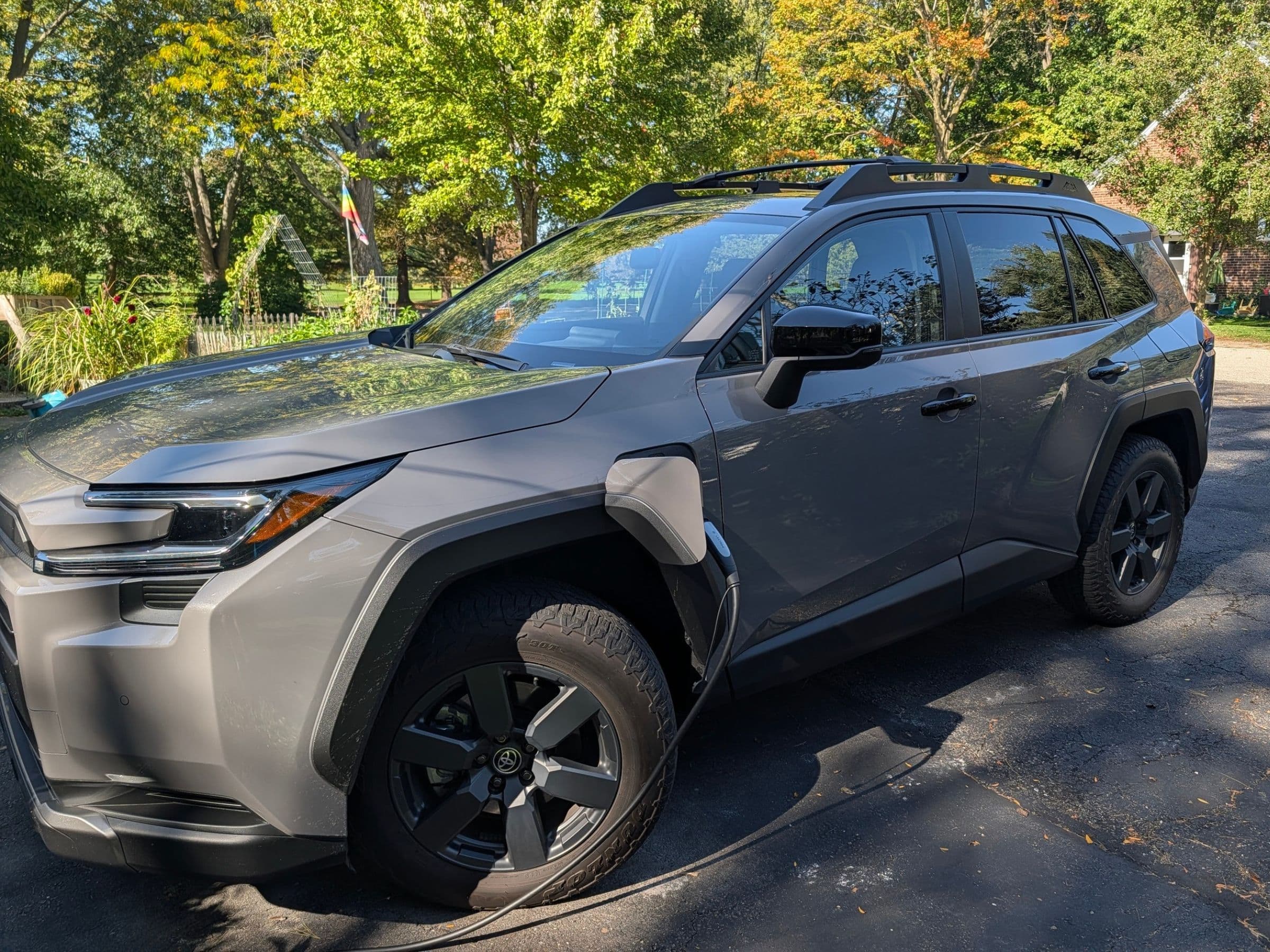
A PHEV takes the same concept and adds a larger battery (typically 15 to 30+ kWh), plus a plug so you can charge it while the car is idle. PHEVs also usually have a more powerful MGU that can drive the car without any help from the ICE. On a full charge, most PHEVs go anywhere from 20 to 50 miles before the engine starts. I recently tested the new Toyota RAV4 PHEV, and it went almost 57 miles on a single charge. Once the battery is depleted, the car keeps going as a conventional hybrid.
A plug-in hybrid only delivers its biggest efficiency advantage when that larger battery is regularly recharged, so see exactly how PHEVs combine electric driving with gasoline backup ➜
Since most people drive less than 40 miles a day, a typical PHEV that's plugged in every night can be driven like an EV and almost never use any gas. When it's time for a longer trip, it runs on electricity first, then as a hybrid until the tank is empty. That's the best-of-both-worlds scenario.
Unfortunately, it turns out that many people bought PHEVs because of incentives that make them more affordable or save them money in other ways. For example, London, England, has long had a congestion zone in the city center, where drivers have to pay an £18 toll each day to enter. From 2013 to 2018, however, the toll was waived for vehicles with greenhouse gas emissions under 75 g/km. Only an EV or a PHEV running on electricity could hit that threshold. Studies found that thousands of drivers purchased PHEVs to avoid the toll, but up to 90 percent never actually charged them. Similar studies elsewhere have found low charging rates among PHEV owners.
The problem with never charging a PHEV is that you end up wasting energy. That larger battery takes more energy to produce than a hybrid battery, and it weighs upwards of 500 pounds more. If it isn’t charged, you’re dragging around 500 or more pounds of dead weight, which can cut fuel economy by several mpg. For example, the Hyundai Tucson Hybrid gets up to 38 mpg, while the PHEV version gets only 35 mpg in hybrid mode. If it's never plugged in, it gets none of the zero-emissions benefit.
Shrink the Gas Tank?
T&E is advocating that regulators cap fuel tanks at about 4 U.S. gallons. That would limit the hybrid range of something like the RAV4 or Tucson to a little more than 120 miles. The organization also recommends that PHEVs have at least 124 miles of electric range.
California has already tried something like this. The California Air Resources Board has a classification called BEVx for EVs with a range extender. To qualify, a vehicle had to have a shorter gas range than its electric range. Vehicles with the BEVx designation earned extra zero-emission vehicle credits, which could save an automaker money if it didn’t sell enough efficient ICE vehicles or EVs. The only vehicle to use the BEVx classification was the BMW i3 REx, which had a 1.9-gallon fuel tank and ultimately didn’t sell well.
This approach would definitely incentivize drivers to plug in, but it’s actually more likely to kill demand for PHEVs entirely. Drivers who don’t plan to plug in should certainly just buy a conventional hybrid, which costs less to purchase and less to fuel. But there are absolutely drivers who can benefit from a PHEV with 50 or more miles of electric range and the ability to drive several hundred more miles in hybrid mode.
A better solution would be additional training for dealership staff, so customers understand they should only buy a PHEV if they have somewhere to plug it in every day. If they don’t, salespeople should steer them toward a hybrid. Longer term, the extended-range EV (EREV) will probably take more of the market from PHEVs.
The right PHEV depends heavily on charging access and daily mileage, so see what shoppers should consider before choosing a plug-in hybrid ➜
Are EREVs Better?
An EREV doesn’t blend gas and electric power. Only the MGUs drive the wheels, and the engine's sole job is to power a generator. That gives you the driveability benefits of an EV, while the ICE can be simplified and optimized for steady-state operation to charge the battery. EREVs will likely be limited mostly to larger vehicles that really need to cover long distances, especially when towing. EREVs are already popular in China and are set to launch in higher volumes in North America soon. Stellantis is launching EREV versions of the Ram 1500 and Jeep Grand Wagoneer with 150 to 160 miles of electric range and 500 to 600 miles with the range extender running. Hyundai is also launching two EREVs in the first half of 2027, including one based on the Santa Fe with more than 600 miles of total range.
PHEVs and EREVs both carry batteries, plugs, and gasoline engines, but the way they move the vehicle is fundamentally different, so see how EREVs compare with plug-in hybrids ➜
Regulating fuel tank size is probably the wrong fix. Better consumer education, on the other hand, could work to help people find the electrification path that's right for them.
More on the Future of Plug-In Driving
2026 Toyota RAV4 Hybrid: Everyday Practicality Meets Smarter Electrification
Toyota’s redesigned RAV4 shows how far modern PHEVs have moved, with a substantially longer electric range and broader plug-in lineup than the generation before it.
Read More ➜
2026 Mitsubishi Outlander PHEV First Drive: More Range, More Power
Mitsubishi’s latest PHEV combines 45 miles of EPA-estimated electric range with conventional gasoline flexibility, making it a useful example of today’s mainstream formula.
Read More ➜
Hyundai Targets 5.55 Million Sales by 2030, Santa Fe EREV Arrives in 2027
Hyundai’s upcoming Santa Fe shows how automakers may move beyond traditional PHEVs toward much longer-range electric-first vehicles with gasoline backup.
Read More ➜




 Announcements