

.webp)

Fast Facts | Hyundai's Plan By 2030
🎯 Goal: 5.5 million global sales and 100 redesigned or refreshed models by 2030
🚘 New Tech: Hyundai's first EREVs, based on the Santa Fe and an unannounced Genesis, will be among the first new models
🔋New Batteries: Hyundai claims the EREV's batteries will double the capacity of its current cells and charge 40 percent faster
🤖Robotaxis: Modified Ioniq 5s headed to Motional and Waymo will now be built at the Savannah, Georgia, Metaplant
🖥️ New Tech: Pleos infotainment system, Gleo AI assistant, and Atria AI driver-assistance system
Hyundai’s 2030 Plan Is Bigger Than Selling More Cars
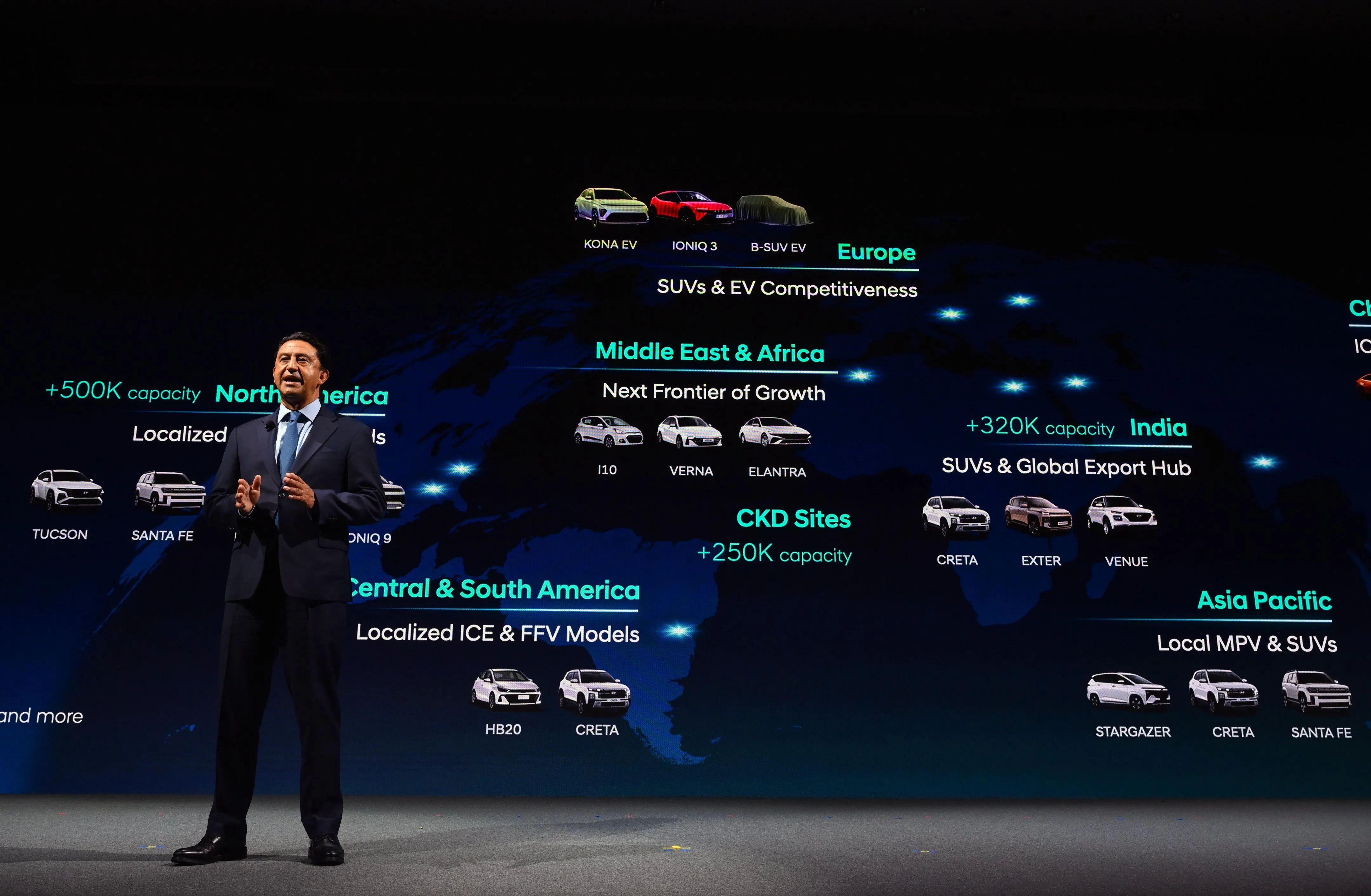
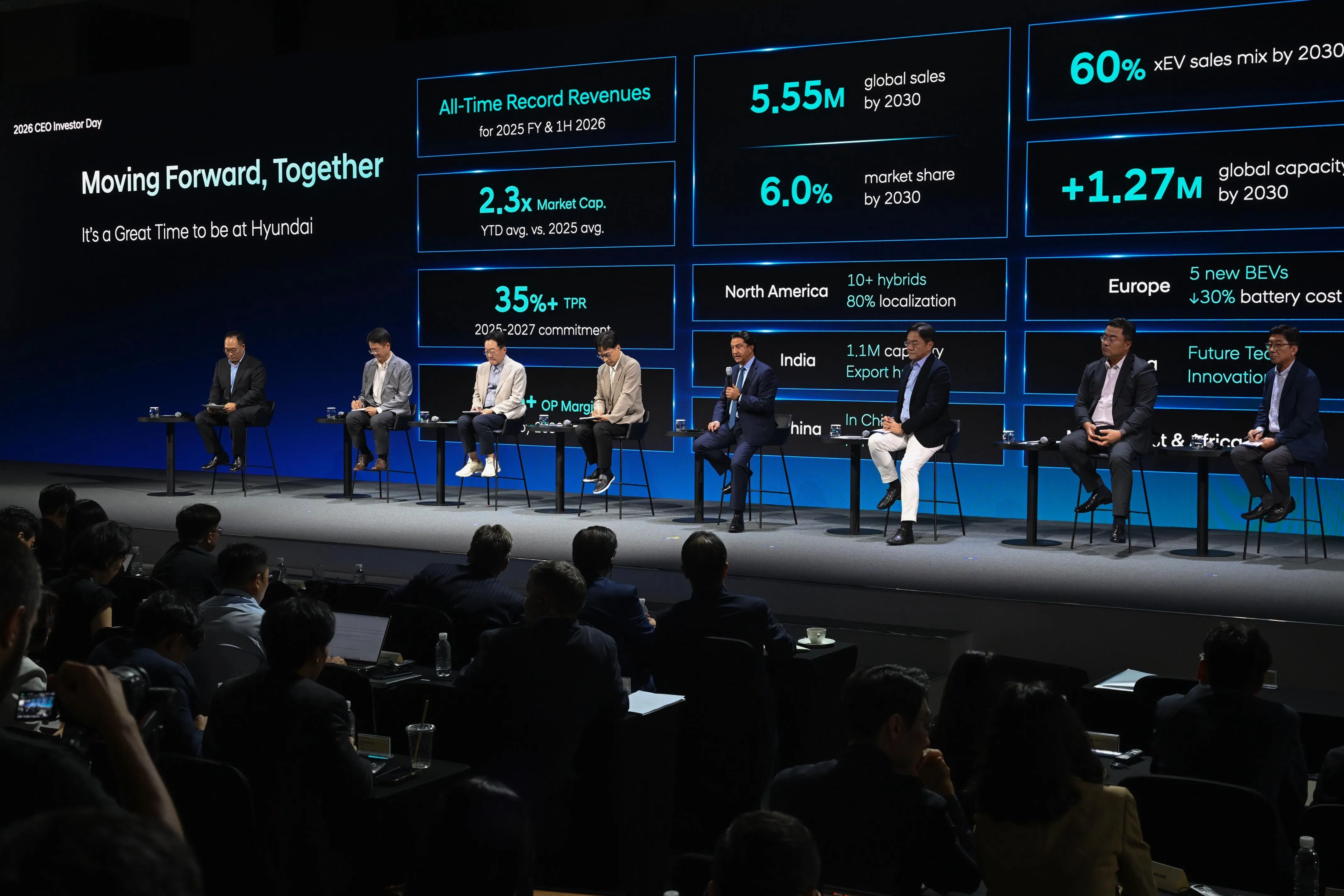
At its 2026 Investor Day in Seoul, South Korea, Hyundai Motor Company CEO Jose Muñoz outlined an ambitious product strategy: 5.5 million global sales by 2030. That strategy includes everything from affordable entry-level models for emerging markets to the ultra-luxury Genesis GV90 SUV, plus robotaxis and robots. By 2030, Hyundai (which here includes the premium Genesis brand, but not Kia, even though Kia is also part of the Hyundai Motor Group) plans to launch 100 redesigned or refreshed models globally. Among them will be Hyundai’s first extended-range electric vehicles (EREVs), based on the Santa Fe and a yet-to-be-announced Genesis.
Hyundai’s plan reflects a broader industry shift toward offering several electrified powertrains instead of betting on EVs alone, so see why hybrids are moving back to the center of automaker product plans ➜
Which Vehicles Are Getting an EREV Powertrain?
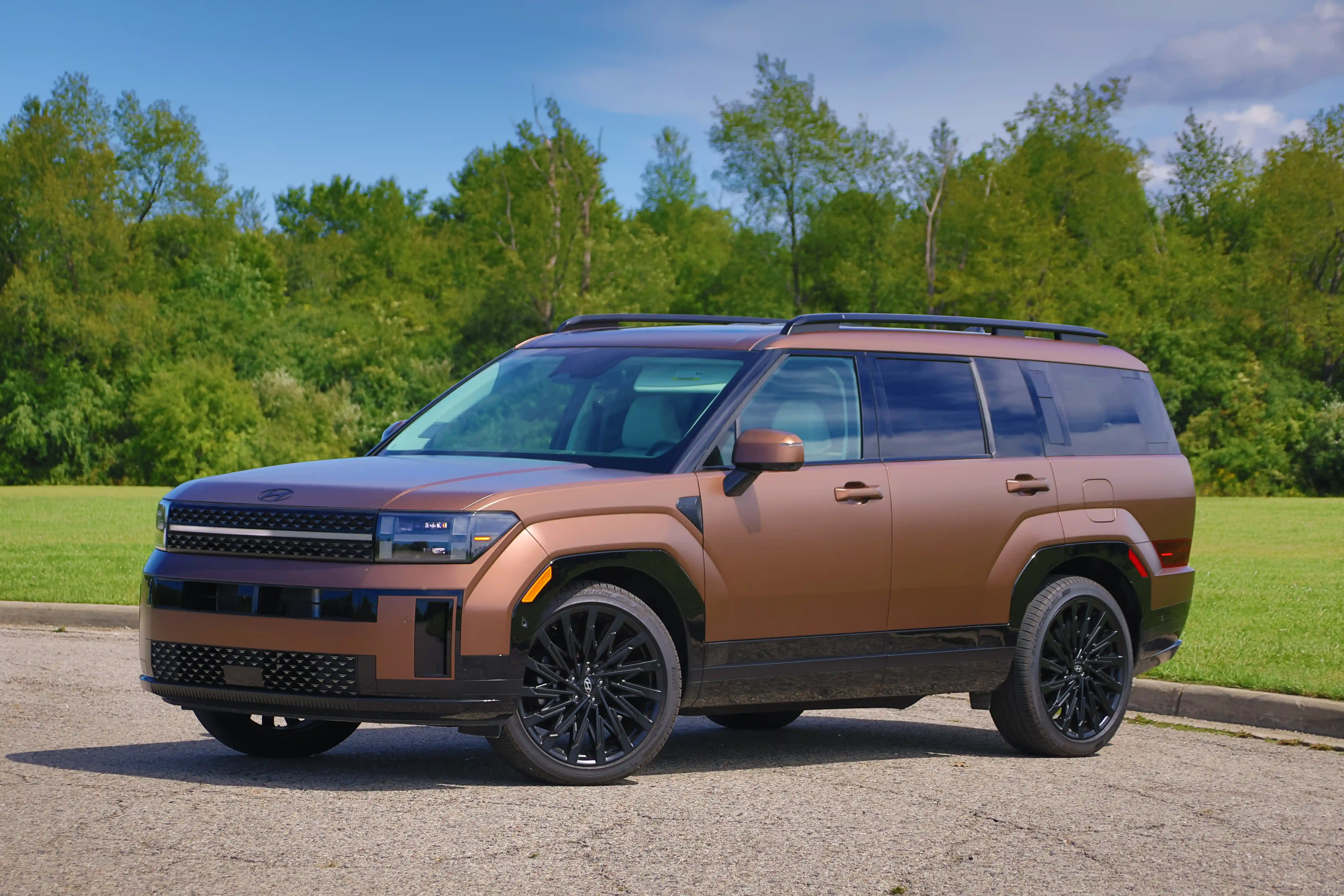
For anyone who needs a refresher, an EREV is propelled exclusively by electric motors, just like an EV. The difference is a smaller battery paired with a gas engine that acts as a generator, sustaining battery charge as it depletes rather than powering the wheels directly. I expect the Santa Fe EREV to deliver somewhere between 130 and 150 miles on a full charge, with the range extender covering the rest for 600 miles.
EREVs can sound similar to plug-in hybrids, but the way the engine and electric motors move the vehicle is fundamentally different, so see how EREVs compare with PHEVs and where each approach makes sense ➜
Hyundai first announced plans to launch EREVs in 2024 but didn’t specify which vehicles would get the technology. Now we know more: a refreshed Santa Fe EREV is set to arrive in the first half of 2027, and a Genesis EREV could come earlier, though Hyundai hasn't confirmed which specific model yet.
My guess is that it'll be either the GV70, GV80, or the recently announced GV90. Genesis just announced a GV80 hybrid, which makes a GV80 EREV seem the least likely of the bunch. A GV70 EREV is possible, but it wouldn't gain as much from the technology as the larger GV90 would. The GV90 is currently announced as an EV-only model with about 300 miles of range. Since the Santa Fe EREV is expected to deliver over 600 miles of total range, a GV90 EREV that tops 500 miles would be a good fit for the segment.
A 600-mile EREV figure combines battery and gasoline-backed range rather than representing EV-only driving, so see how to separate battery range, manufacturer projections, and real-world range when comparing electrified vehicles ➜
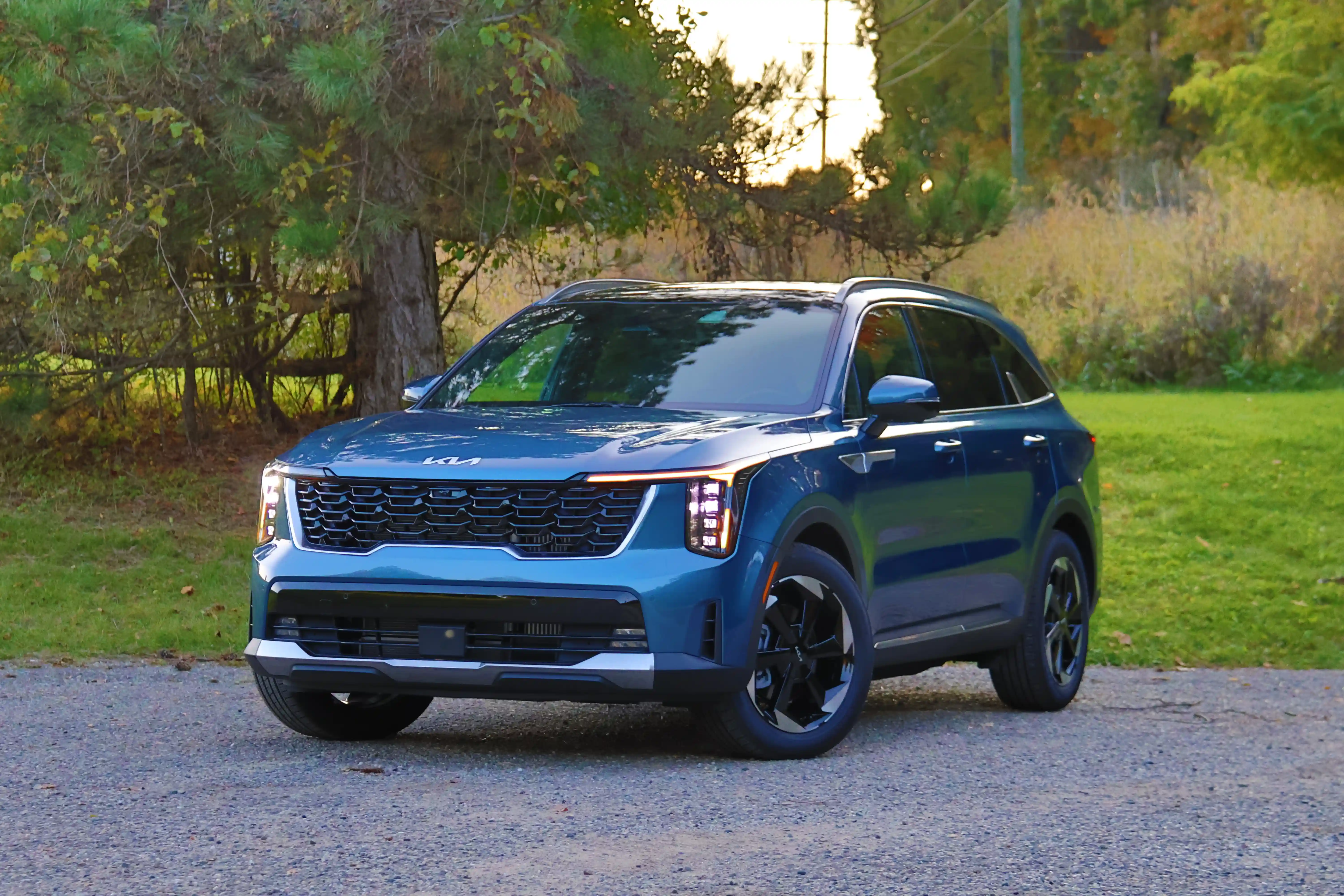
Interestingly, Muñoz didn’t discuss Kia at all during the event, even though HMG holds a controlling interest in Kia and the two brands share all their core technologies and platforms. The Kia Sorento is due for a redesign, and it seems likely the new model will share the Santa Fe EREV's powertrain and other systems.
New Batteries on the Way
These EREVs will use a new high-performance cell Hyundai developed in-house, which the company claims doubles the capacity of its current nickel-manganese-cobalt cells and charges 40 percent faster. Hyundai also plans to launch new mid-nickel cells in 2027 that use less nickel and cost 30 percent less than the current cells. Few details are available, but these are likely similar to the lithium-manganese-rich cells Ford and GM have already announced.
By 2028, Hyundai plans to roll out an updated battery management system that it claims will extend battery life by another 20 percent. This'll work alongside a new thermal runaway protection system debuting in the GV90's battery next year, which helps prevent heat from spreading through the pack if a cell fails.
Robotaxis Are Coming, Too
Since 2020, Hyundai has partnered with its subsidiary Motional to develop automated driving systems for robotaxis. The result is a modified Ioniq 5 equipped with all the necessary redundant systems, so the robotaxi can continue to a safe stopping point even if something fails.
Until now, these vehicles have been built at Hyundai’s Innovation Center in Singapore. That's changing: they'll now come from the Hyundai Motor Group Metaplant near Savannah, Georgia, for Motional’s commercial driverless robotaxi launch later this year. The same factory will build a version of this vehicle for Waymo, which plans to use the Ioniq 5 as it expands internationally in 2027, including Tokyo, London, and the newly announced Munich operation.
Smarter Software: Pleos Infotainment, Gleo AI Assistant, and Atria Hands-Off Driving
Hyundai is rolling out its new infotainment platform, Pleos, which has already appeared in the Ioniq 3 and GV90 and will become standard across HMG over the next few years. Built on the Android Automotive operating system, Pleos comes with Hyundai’s own app store and an agentic AI assistant called Gleo AI.
In addition to the Level 4 automated driving system it's building with Motional, Hyundai has its own in-house driving-assist platform called Atria AI, which begins on-road testing in South Korea later this year. Atria AI is designed to scale from hands-off/eyes-on Level 2+ to hands-off/eyes-off/brains-off Level 4 driving. To train it for all kinds of conditions, HMG will draw on driving data from the more than 7 million vehicles it sells every year.
Atria’s roadmap spans driver assistance and true automated driving, two very different capabilities, so see how Level 2, Level 3, and Level 4 systems differ in 2026 ➜
Moving Into the Top Two?
HMG, including Hyundai, Kia, and Genesis brands, is already the third-largest automaker in the world, trailing only Toyota and Volkswagen Group. With HMG’s steady growth over the past decade and VW’s decline, especially in China, HMG is on track to climb to number two, possibly as early as this year. With the pace of new products and technologies, it’s not out of the realm of possibility that HMG will overtake Toyota sometime in the 2030s.
Hyundai’s Current Electrified Lineup in Context
2026 Hyundai Palisade Hybrid Review
Hyundai’s newest large hybrid shows how the company is already expanding electrification beyond its dedicated Ioniq EV family.
Read More ➜
2026 Hyundai Ioniq 9 Calligraphy Review
The Ioniq 9 provides a current look at Hyundai’s dedicated-EV engineering before the company adds EREVs and another generation of battery technology.
Read More ➜
2027 Genesis GV60 Magma Look
Genesis is expanding beyond traditional luxury with high-performance EVs even as hybrids and an EREV join its powertrain portfolio.
Read More ➜


