
Fast Facts | EREV vs. PHEV
⚡ Core Difference: A PHEV may use its engine and electric motor to propel the vehicle, while a pure-series EREV uses electric motors for propulsion
⛽ Gas Engine Role: PHEV engines can help turn the wheels | EREV engines primarily generate electricity
🔌 External Charging: Both have rechargeable batteries that can be plugged into an external power source
🔋 Electric Range: Current PHEVs generally offer about 15 to 60-plus miles | Emerging EREVs may target 100 miles or more
🛞 Driving Experience: PHEVs transition between electric and hybrid operation | EREVs are designed to retain electric-motor propulsion
🛻 EREV Best Fit: Longer trips, towing, rural driving, or drivers who want substantial electric range with gasoline backup
🏠 PHEV Best Fit: Regular charging, daily trips within the electric range, and occasional longer drives
⛽ HEV Best Fit: Drivers without reliable home or workplace charging who still want improved fuel economy
Two Plug-In Powertrains, One Crucial Difference
One of the more confusing aspects of the transition to vehicle electrification is the ever-growing list of powertrain initialisms. Two in particular, PHEV (plug-in hybrid) and EREV (extended-range electric vehicle), sound similar but work pretty differently. Let’s take a look at what distinguishes the two.
What’s a Hybrid?
Before we dive into PHEVs and EREVs, let's start with the basics of what a hybrid electric vehicle (HEV) is and how it's different from vehicles with an internal-combustion engine (ICE).
For most of the past century, the dominant powertrain was an ICE. An ICE burns liquid fuel like gasoline, diesel, or ethanol to rotate a crankshaft. That crankshaft connects to a transmission, which rotates the wheels and makes the vehicle move. It’s a straightforward process, and it only works in one direction. Burn fuel, turn wheels, make exhaust. You can’t run it in reverse to make exhaust into gasoline.
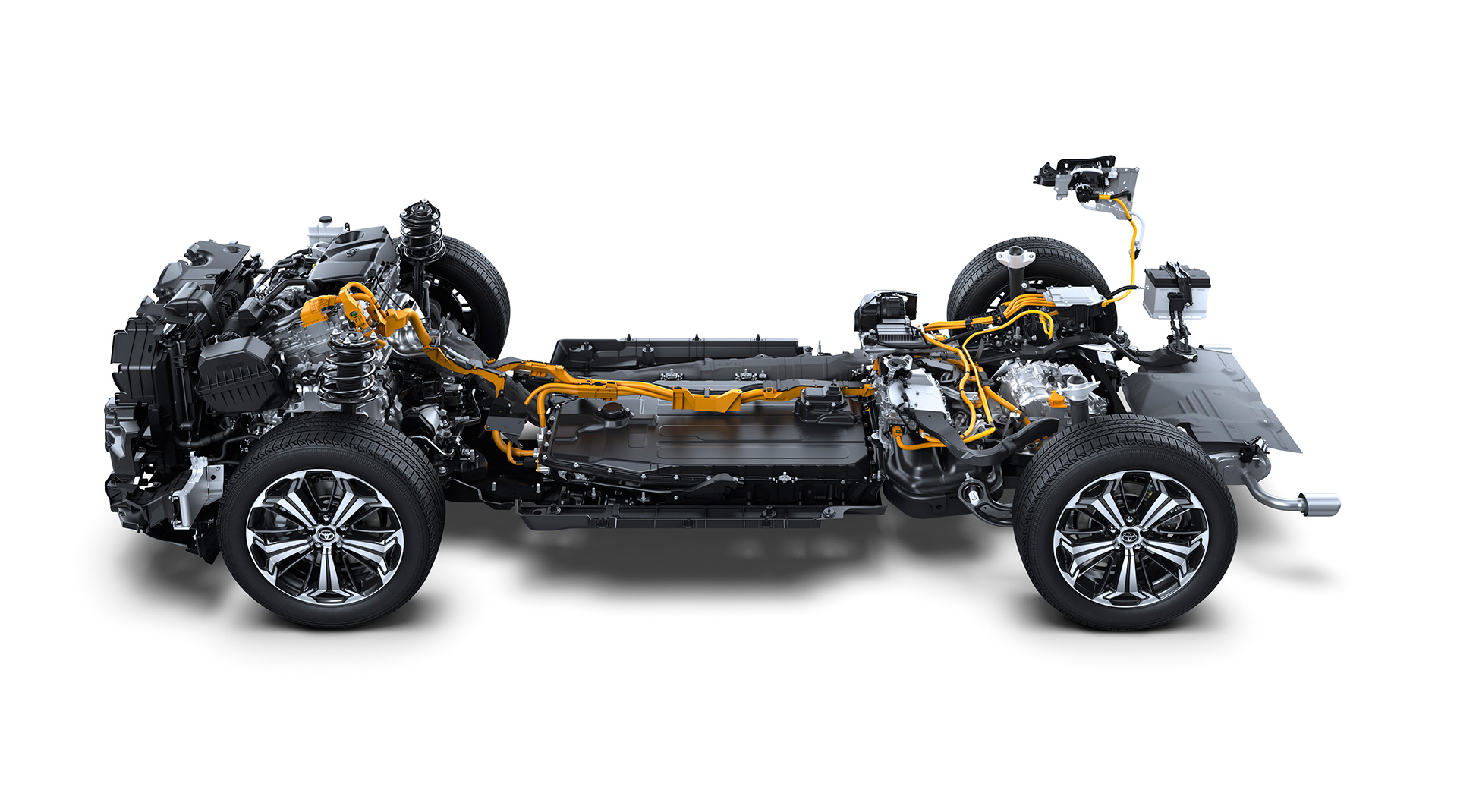
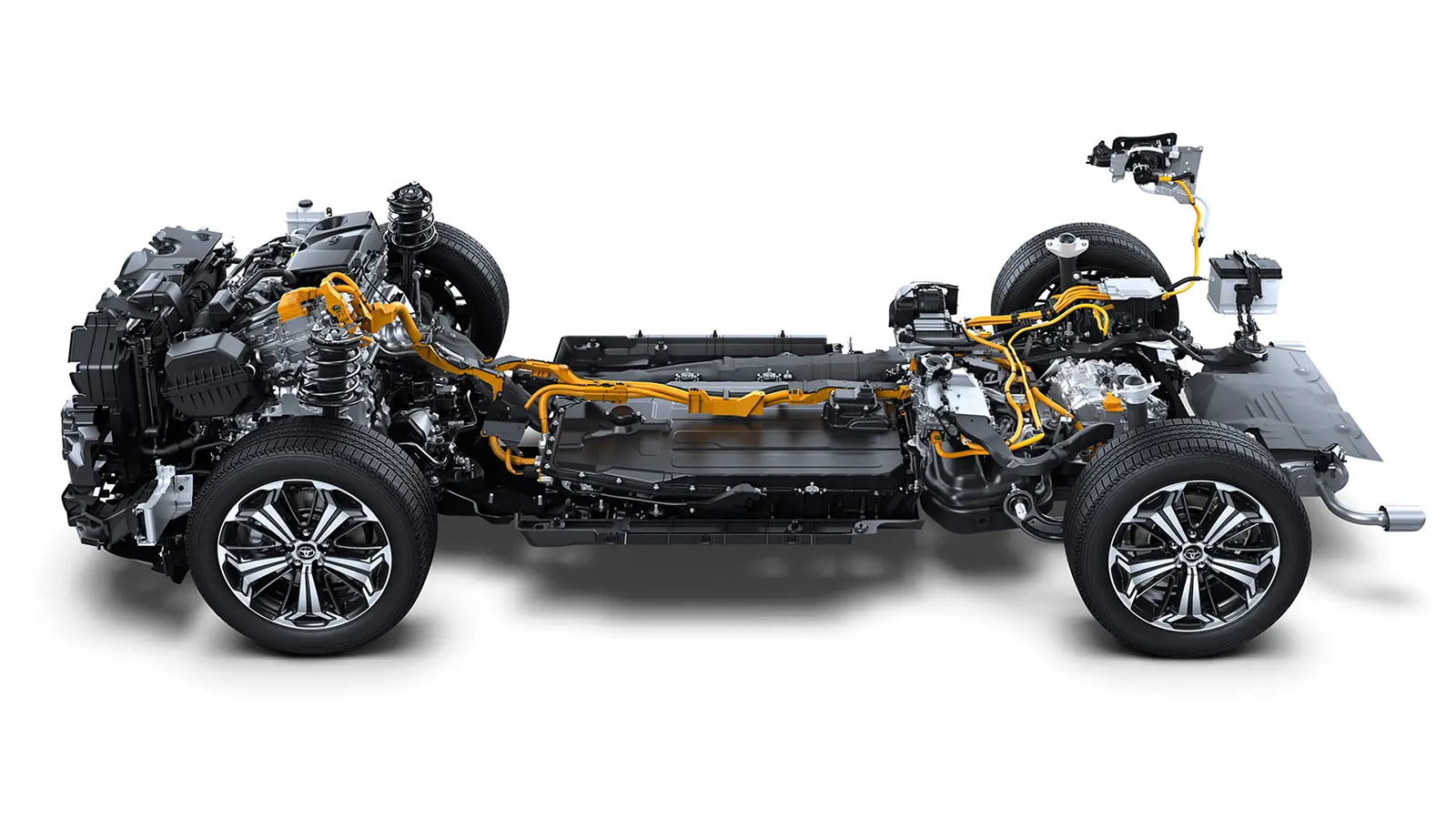
When you're moving, your car has kinetic energy. When you slow down, that energy has to go somewhere. In an ICE vehicle, the friction brakes convert that energy into heat. But unlike an ICE, an electric motor is reversible: feed it electricity, and it spins; spin it, and it generates electricity that can be stored in the battery. That reversibility is the foundation of all hybrid and electric vehicles (EVs).
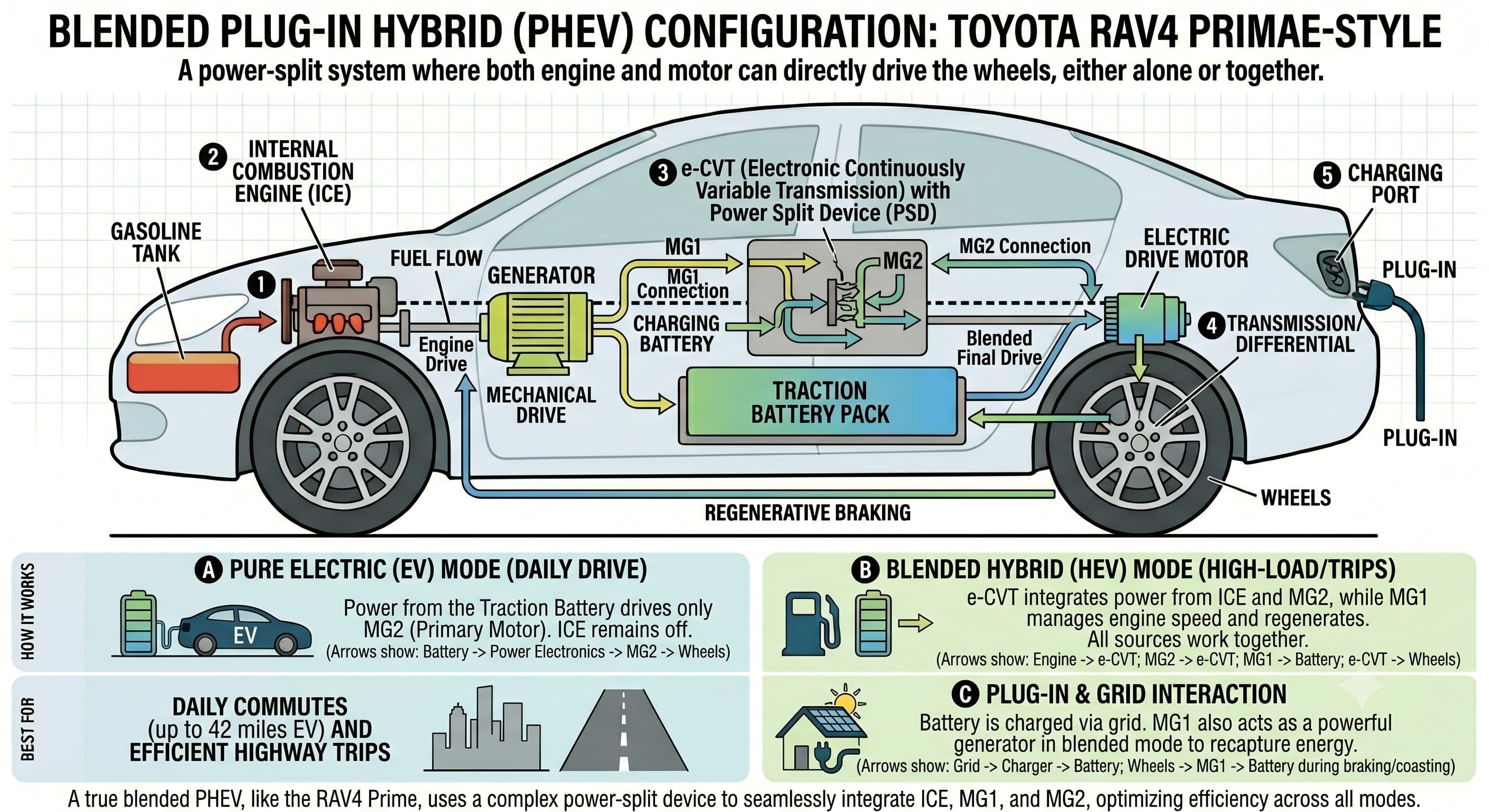
In an HEV, one or more electric motors work alongside the ICE and a battery. In most cases, the ICE and electric motor can each drive the wheels on their own or blended together, depending on your speed or how hard you're accelerating. When the vehicle is slowing down, the kinetic energy spins the electric motor to charge the battery. That's a process called regenerative braking. A mild HEV (MHEV) is an HEV with a smaller motor and a low-voltage battery, while a standard HEV has more electrical power and a high-voltage battery. Neither has a plug.
What's a Plug-In Hybrid?
A PHEV functions similarly to an HEV, but with more powerful electric motors and a larger battery that you can charge from an outlet. That bigger battery enables them to drive a short distance on electricity alone. Early PHEVs could manage 10 to 20 miles on electricity before the gas engine took over. Many newer ones can go 35 to 50 miles on a charge, with some going upwards of 80. In PHEVs, both the ICE and the electric motor can drive the wheels.
How Is an EREV Different?
Technically, an EREV is also a PHEV. It has an ICE, motor, battery, and plug. But it works differently.
In most hybrids, both the ICE and electric motor can drive the wheels, which is called a parallel system. An EREV is a series hybrid: the ICE never drives the wheels directly. Instead, the ICE acts as a generator, charging the battery, which then powers the electric motor(s) that drive the wheels. The ICE and wheels have no mechanical connection. You can rev the engine all you want, but the vehicle will never move unless electricity flows to the motor.
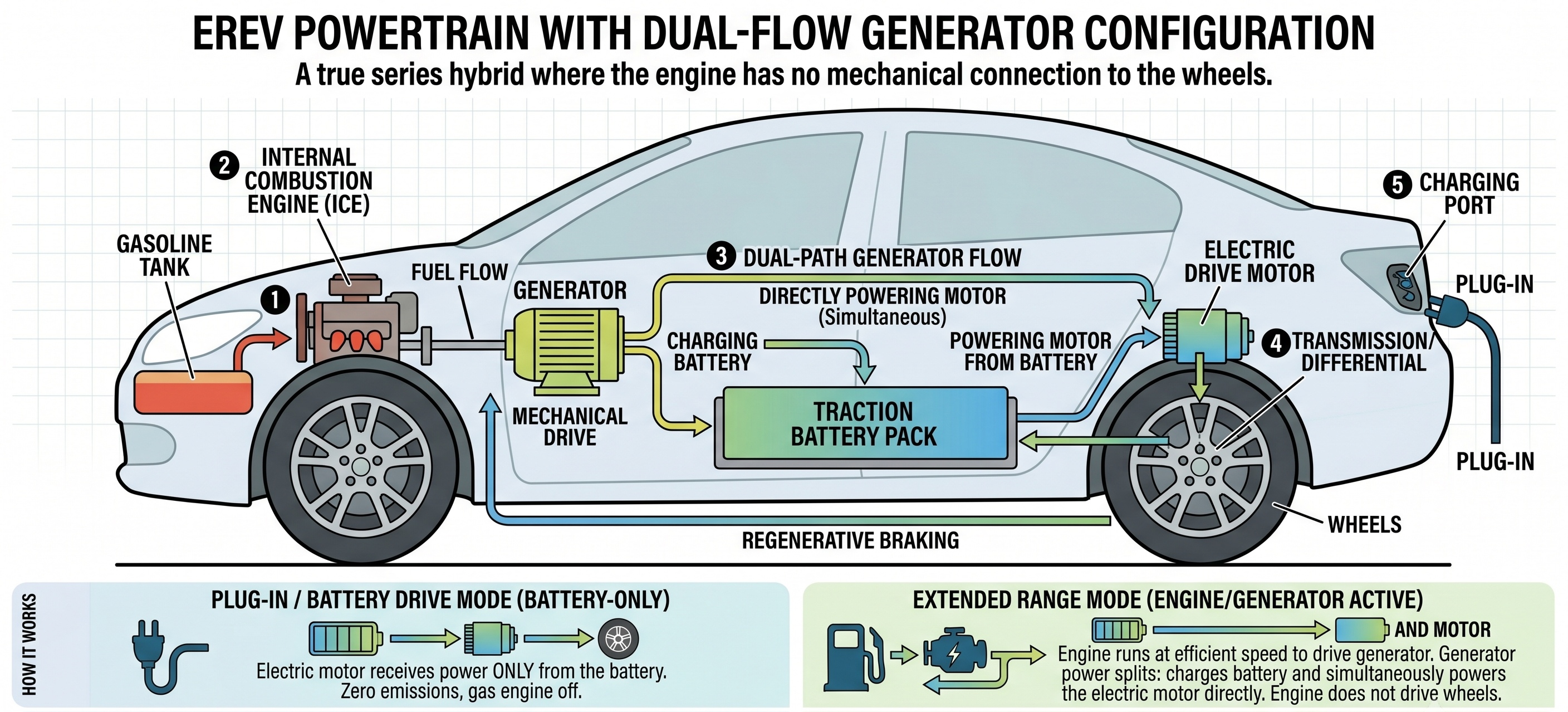
That makes an EREV drive more like an EV, since it's exclusively propelled by electricity and has instant torque. An EREV generally has a larger battery than a PHEV and delivers full performance even if the engine is entirely shut off. Because the ICE only has to run as a generator (not keep up with accelerating and decelerating), it can operate at a constant speed instead of revving up and down, which means better efficiency and fewer emissions.
Why Choose an EREV?
EREVs offer some advantages over PHEVs, but they may not be for everyone. Most modern EVs will deliver at least 250 to 300 miles per charge, which easily meets the daily driving needs of the vast majority of drivers. According to AAA’s 2024 American Driving Survey, the average driver covers 31.1 miles per day, meaning most of us can get by with charging just once a week.
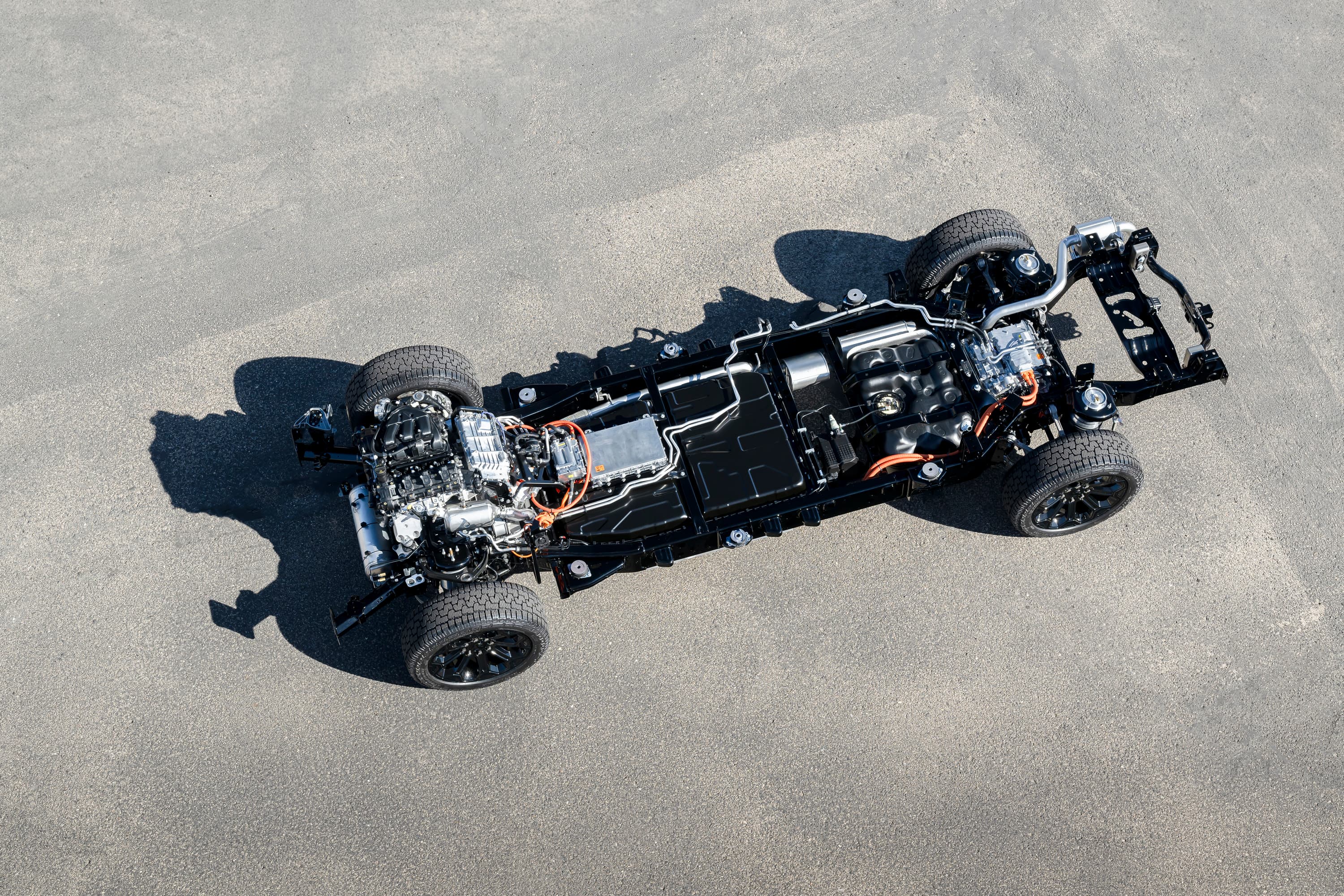
But for people who frequently need to drive longer distances, especially if they're towing a trailer, that may not be enough range. Pulling a large trailer generally doubles fuel consumption, whether the vehicle is ICE or EV, cutting the range in half or more. In this case, an EREV covers your daily driving on electricity, then lets the ICE kick in to extend the battery's range, so you can cover several hundred miles between fuel or charging stops.
The growing number of electrified powertrain labels can be difficult to follow, and our Green Car Acronyms and Terms Explained guide defines HEV, MHEV, PHEV, BEV, and other common terms ➜
Even in mountainous areas, towing performance remains exceptional in an EREV. In fact, the electric drive turns a descent like the eight-mile, seven-percent grade at Colorado's Eisenhower Tunnel into a worry-free experience. Instead of overheating the brakes while trying to control your speed, you're recharging the battery on the way down.
Which One Is Right for You?
An EREV is a great option for those who want the full EV experience every day, plus the confidence to handle long distances or towing. The PHEV is a good solution for those who can charge daily and whose daily driving fits within the electric range, but who still want the option of gas when they need to go farther. The HEV is the best option for those who don’t have reliable access to charging at home but still want better fuel economy.
With so many options, there’s a solution for everyone.
Keep Exploring Electrified Powertrains
HEV vs. EV: Which One Fits Your Driveway and Drive?
Compare charging access, daily mileage, road-trip habits, ownership costs, and the tradeoffs between plug-in hybrids and fully electric vehicles.
Is a Plug-In Hybrid Right for You?
See how your commute, charging access, budget, and long-distance travel determine whether a PHEV fits your routine.
Ford Retools the Lightning Into a 700-Mile Extended-Range Electric Truck
Explore how Ford plans to combine electric-motor propulsion with an onboard gas-powered generator to give its full-size electric truck substantially more total driving range.