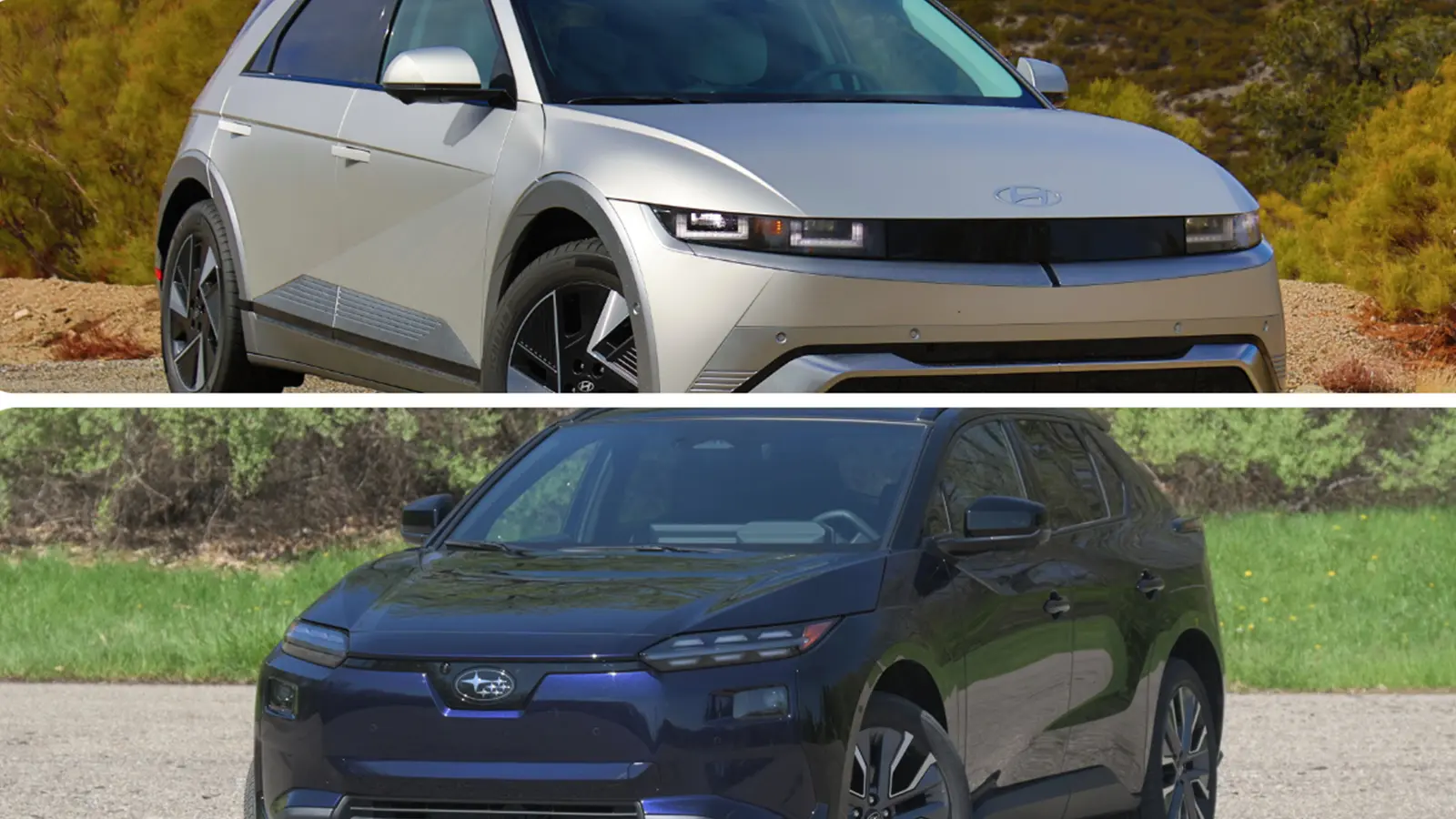

Fast Facts | 2026 Subaru Solterra vs. 2026 Hyundai Ioniq 5
🔋 Range: Solterra offers up to 288 miles, while the Ioniq 5 reaches up to 318 miles in RWD extended-range form
⚡ Charging: Solterra charges at up to about 150 kW, while the Ioniq 5 can reach up to 250 kW
🚘 Drivetrain: Solterra comes standard with AWD, while the Ioniq 5 offers RWD or AWD
🏔️ Capability: Solterra includes standard X-MODE with Snow/Dirt and Deep Snow/Mud modes
🚀 Performance: Solterra XT makes 338 hp, while the Ioniq 5 N produces up to 641 hp in N Grin Boost mode
📏 Space: Ioniq 5 has 4 extra inches of rear legroom and a 5.9-inch-longer wheelbase
📱 Screens: Solterra gets a 14-inch infotainment screen, while the Ioniq 5 uses dual 12.3-inch displays
🔌 Charging Port: Both EVs come standard with a NACS port for 2026
If you’re looking for an electric crossover, the good news is that you have plenty of options right now. Here, we’re comparing the refreshed-for-2026 Subaru Solterra and the Hyundai Ioniq 5. Both offer impressive performance, plenty of personality, spacious interiors, and excellent range. They each bring their own strengths, and either would be a great addition to your garage.
Exterior Design and Dimensions
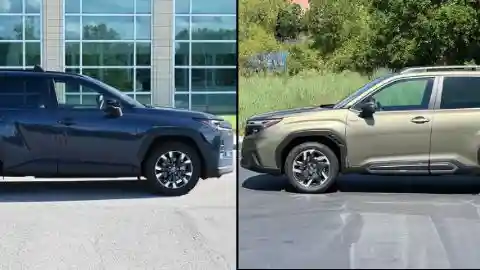
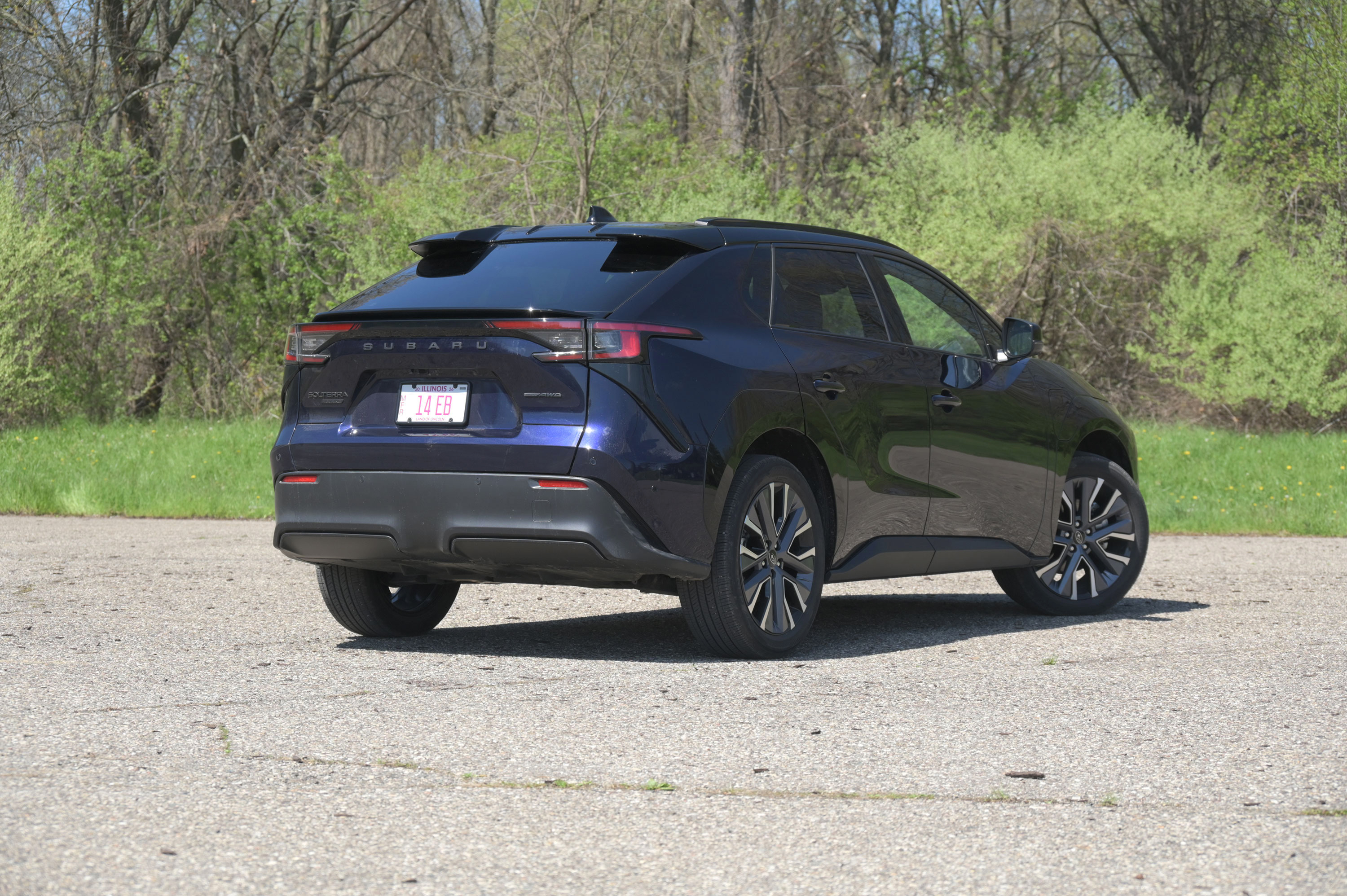
These two look quite different despite sharing a similar shape. Both borrow the classic hatchback profile that's been popular since the original VW Golf debuted in the 1970s, but the details set them apart. The Ioniq 5 takes a bolder, more angular approach, with crisp diagonal lines running down its sides and a pixelated lighting scheme. The trim lineup ranges from mainstream versions to the off-road-oriented XRT and the racy 5 N performance variant, which gets exclusive exterior colors like Performance Blue.
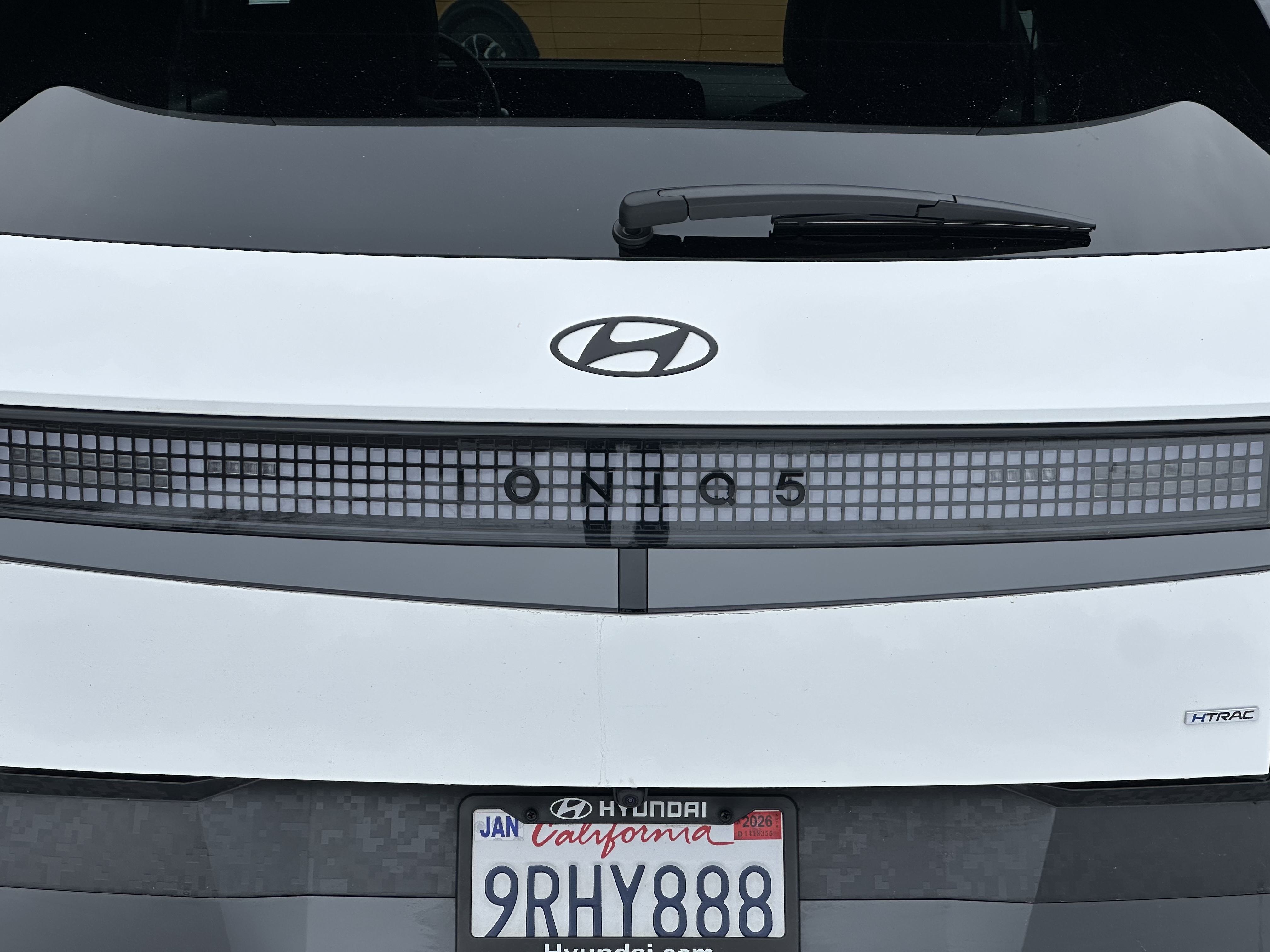
The Solterra takes a more conventional approach, especially after its recent refresh, which adds new color combinations and swaps the grey wheel-arch cladding with body-color panels. It lives up to Subaru's adventure-ready reputation, sitting more than 2 inches higher off the ground than the base Ioniq 5. Styling cues carry over from its corporate cousin, the Toyota bZ, with muscular lines and new-for-2026 six LED running lights that nod to the Subaru logo. Overall, the two are similar in size, with the biggest difference being the Ioniq 5's 5.9-inch-longer wheelbase.
Interior Space and Tech
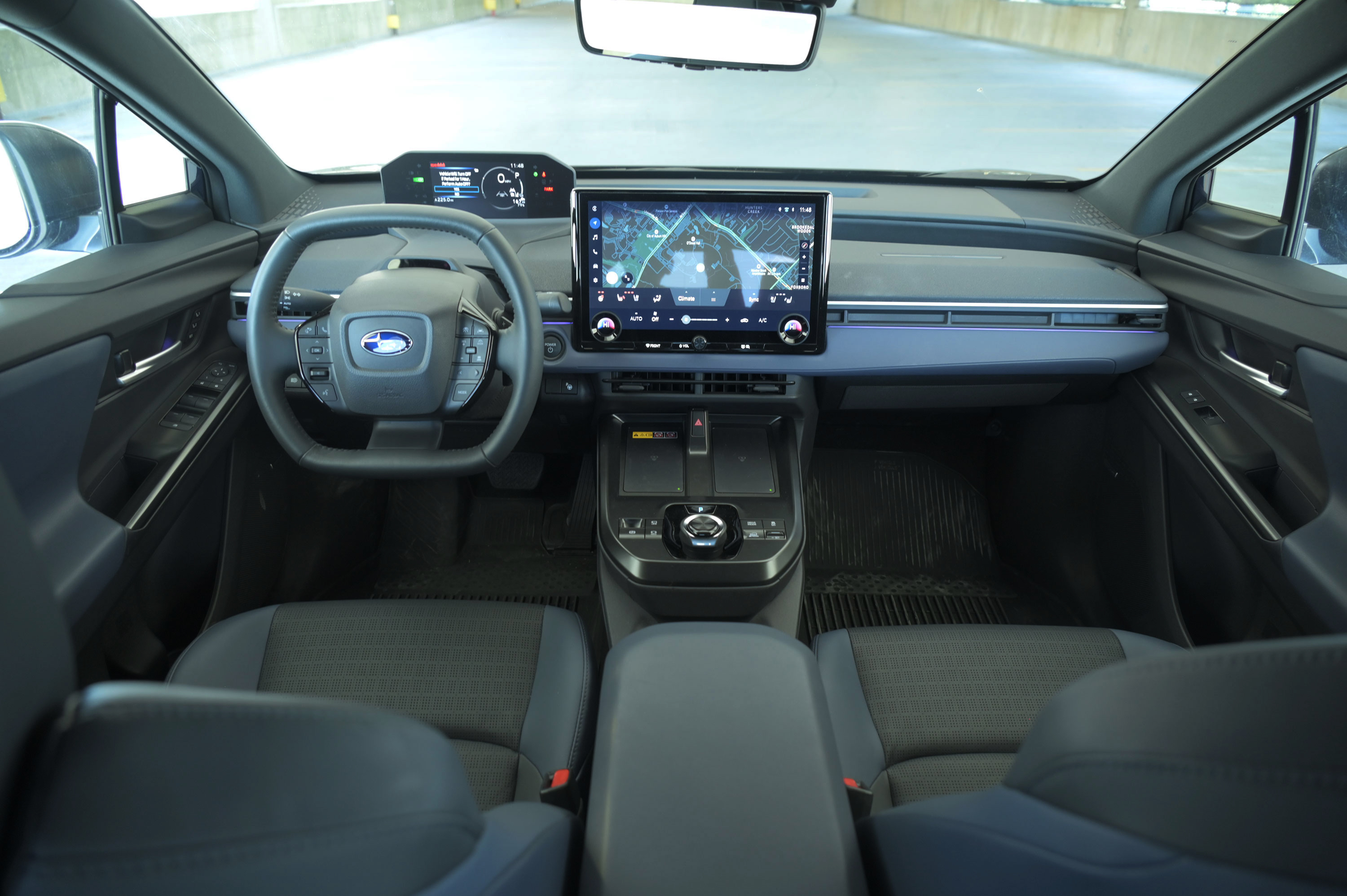
Inside, these two are neck-and-neck on most measurements, but the Ioniq 5 pulls ahead in the rear seat with 4 extra inches of rear legroom, thanks largely to that longer wheelbase. Rear hiproom is an ample 53.6 inches compared to just 44.8 inches in the Subaru, though shoulder room is closer, with the Hyundai holding a 2.7-inch advantage. Both vehicles go without a transmission tunnel, so rear passengers in either one benefit from a completely flat floor. The Ioniq 5 also has a 2.5 cubic-feet edge in cargo space, though the Solterra has a 5 cubic-feet advantage with the seats folded.
Both come well-equipped on the driver-assistance front, with standard collision-avoidance assist, adaptive cruise control, and blind-spot monitoring. The Solterra adds standard front cross-traffic alert, hands-free low-speed driving, pre-collision braking, lane-departure alert, and emergency-stop assist. Hyundai's SmartSense suite on the Ioniq 5 includes rear cross-traffic collision avoidance assist, forward and reverse parking distance warning, lane-keeping assist with haptic feedback, lane-following assist, intelligent speed-limit assist, forward-attention warning, safe-exit assist, highway-driving assist, high-beam assist, and rear-occupant alert.
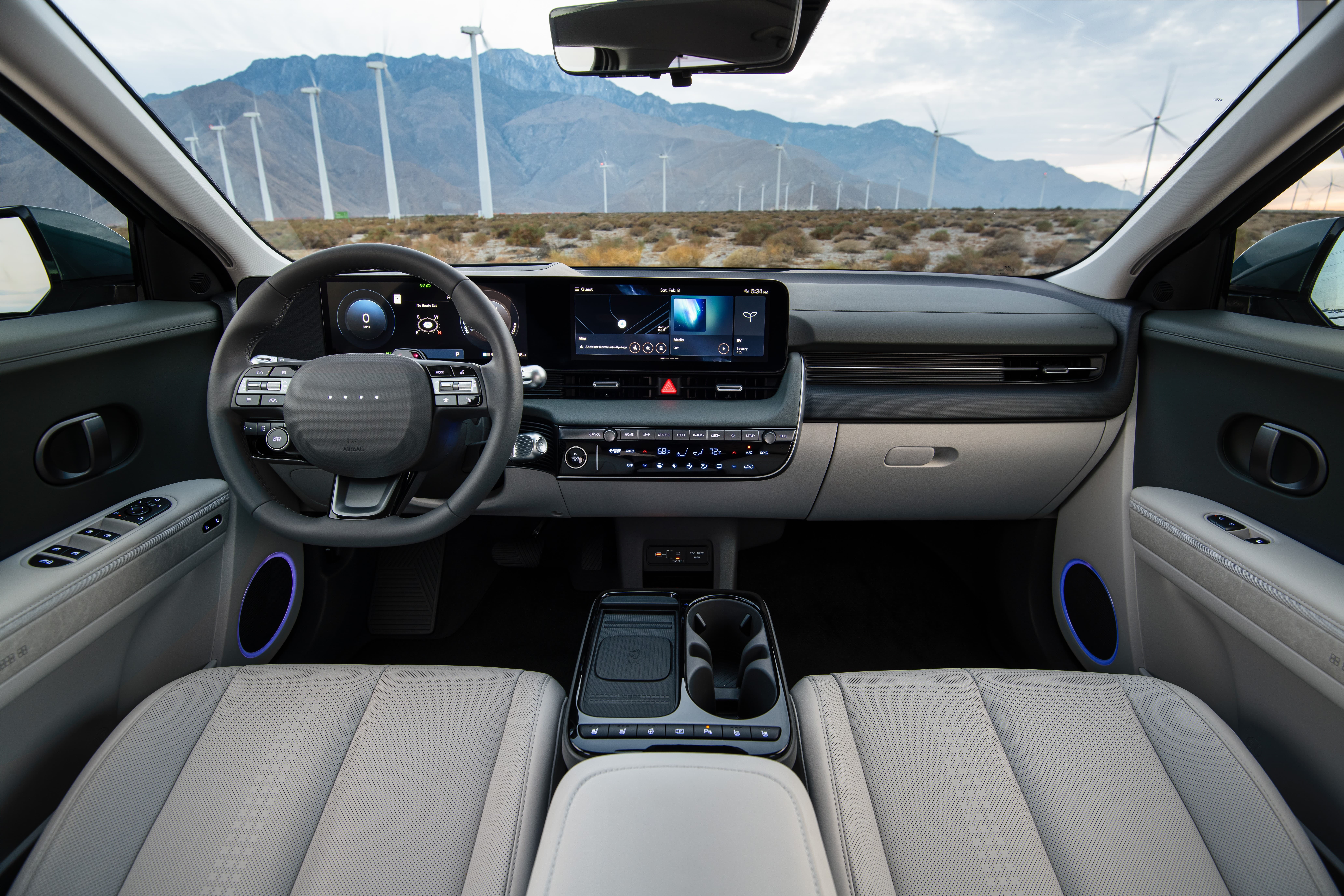
Both vehicles come standard with wireless Apple CarPlay and Android Auto, heated front seats, and keyless entry. The Solterra pairs a large 14-inch infotainment screen with a 7.0-inch instrument cluster display sitting near the base of the windshield, right in the driver’s line of sight. The Ioniq 5 gets dual 12.3-inch landscape displays for both the infotainment and driver instrumentation. The Subie gets a bit more standard luxuries, with dual wireless device chargers, ambient interior lighting, a power liftgate, and standard StarTex upholstery rather than cloth.
Powertrain
The Solterra comes exclusively in all-wheel drive (AWD) with dual motors, while the Ioniq 5 offers a choice of rear-wheel drive (RWD) or AWD. If you’re looking for the most power, both models have upgraded trims with more horsepower. The standard Solterra gets 87-kilowatt motors at each axle, while the Solterra XT bumps the front motor to 167 kW for a combined 338 horsepower, good for a zero-to-60 mph time of less than 5 seconds. The Ioniq 5 N produces up to 641 ponies in N Grin Boost mode — or 601 horsepower in regular mode — and can hit 60 mph in just 3.25 seconds.

Both offer selectable drive modes. The Ioniq 5 comes standard with Eco, Normal, Sport, and Snow modes, along with additional all-terrain modes on the XRT and performance modes on the 5 N. The Solterra gets more standard terrain modes, including the X-MODE Dual-Mode System with Snow/Dirt and Deep Snow/Mud modes, plus grip control and downhill assist control. The Solterra isn’t a hard-core off-roader, but between the additional ground clearance and X-Mode, it's surprisingly capable on rough trails.
Range favors Subaru at the entry level — up to 288 miles versus the Hyundai’s 245 miles. But even in its top configuration, the Solterra's range doesn’t quite reach 300 miles. The Ioniq 5, on the other hand, can be had in an RWD extended-range configuration that reaches 318 miles. If you opt for the more performance-oriented 5 N, expect the range to shrink to 221 miles.
Charging
Charging is where the Hyundai pulls ahead. The Solterra tops out around 150 kW, while the Ioniq 5 can hit 250 kW and maintain charging rates well over 150 kW even past 60 to 70 percent state of charge. That can take it from 10 to 80 percent in about 20 minutes, while the Solterra takes closer to 30 minutes. Both come standard with an NACS port for 2026, so you won’t need adapters to charge at Tesla Superchargers, though both can charge elsewhere with a CCS adapter. While Tesla chargers are plentiful, 800-volt chargers from EVGo, Electrify America, and others will charge the Hyundai faster.

Price
Both vehicles hover around the same price point. The base Ioniq 5 in standard range starts with an MSRP of $36,600, $3,345 less than the base Solterra. But once you add AWD to match the Solterra's standard setup, the Hyundai is $2,655 more expensive. And if you’re opting for the performance-oriented 5 N, the starting MSRP is $68,800.
The Hyundai also offers one of the best warranty packages with a five-year, 60,000-mile new vehicle warranty, five-year, unlimited-mile roadside assistance, and a 10-year, 100,000-mile EV battery warranty.
Subaru’s limited warranty covers the standard three years or 36,000 miles, powertrain warranty of five years or 60,000 miles, electrical component coverage for eight years or 100,000 miles, and complimentary roadside assistance for three years or 36,000 miles.
What's It Like to Drive?
As EVs, both of these are surprisingly fun to drive, no matter which trim or powertrain you pick. Ride quality is pretty comparable between the two, and either makes a great daily driver even on rough roads, especially the Ioniq 5 XRT and the standard Solterra. Both also come with smaller wheels and generous tire sidewalls, which owners in regions with winter-ravaged pavement will appreciate.

The 5 N is in a class of its own when it comes to performance. Beyond the extra output and performance-tuned suspension, N Grin mode will put a huge smile on your face. It transforms the whole personality of the car, and it replicates the sounds of the high-output turbocharged engine from the Elantra N. It also has regenerative braking paddles that turn into simulated shift paddles with a simulated tachometer in the gauge cluster. You’ll feel momentary torque interruptions as you “shift” gears, and there’s even a simulated rev limiter if you forget to shift. Spend a day at the track or on a curving country road, and you'll definitely come home with a grin.

Alternatively, if your idea of fun takes you down a forest trail to a cabin for some fishing, the Solterra is your ride of choice. The extra ground clearance and X-Mode deliver capability comparable to a gas-powered Subaru. It won't handle Rubicon Trail, but on the sort of rugged paths that most people actually drive, it does shockingly well. The Ioniq 5 XRT provides a lot of the same capability, but lacks the clearance for the tougher trails.

Analyst's Perspective (Which One's Right for You)
Drivers looking to go electric in a compact crossover have a plethora of great choices in 2026, and both of these cars should rank near the top of any shopping list. For two cars that are so similar on paper, they're surprisingly distinct once you get into the details.
For anyone who is a fan of Subarus and what they can do, the Solterra is the obvious choice. It delivers the capability any Subaru driver wants, while also having the benefit of being electric. For those who rarely venture beyond a gravel road and appreciate more rear-seat space, the Ioniq 5 (minus the N) is the preferred choice. Those who really enjoy driving and the visceral feel of a traditional combustion engine will want the 5 N. But whichever one you choose, you aren’t likely to be disappointed.
All mileage is EPA estimated.
⚡ More EV Crossovers Worth Comparing
2026 Subaru Solterra Touring XT: Transformed From ‘So-So’ to ‘Let’s Go’
Subaru’s refreshed Solterra gets a deeper review, with more range, stronger performance, faster charging, and better road manners.
2025 Hyundai Ioniq 5 XRT Review: Trail-Ready Without the Trade-Offs
The Ioniq 5 XRT adds rugged upgrades while keeping the comfort, range, and fast-charging strengths that make Hyundai’s EV so appealing.
Best Electric Crossovers and SUVs
Compare more electric crossovers and SUVs if the Solterra and Ioniq 5 are already on your shopping list.