Fast Facts | 2028 Honda CR-V
- Powertrain: Hybrid-only, with a next-generation two-motor system
- Efficiency: About 10 percent better fuel efficiency expected than the current hybrid
- Drivetrain: Electric all-wheel drive, with a rear-axle motor in place of a driveshaft
- Platform: All-new architecture that's lighter and modular
- Built In: Ohio, Indiana, and Ontario, Canada, starting in 2027
Honda’s Bestseller Goes All-In on Hybrids
The Honda CR-V turns 30 in 2027. Honda's bestselling model of recent years is getting a complete redesign for its seventh generation, with a new platform and a new hybrid system. And like its chief rival, the Toyota RAV4, the new CR-V will be hybrid-only.
The CR-V and RAV4 are already two of America’s most important hybrid crossovers, so see how the current versions compare on MPG, space, pricing, and refinement ➜
The CR-V has been Honda’s sales leader since 2023, and it's on pace for its fourth straight year with over 400,000 units sold in North America. Through October 2026, hybrids made up more than 54 percent of all CR-V sales. Due to some earlier supply issues with the 2026 RAV4, the CR-V will likely be the top-selling crossover in the U.S. this year.
Smarter, More Efficient Hybrid System
The current Honda hybrid system consists of two motor-generator units (MGUs). One drives the wheels and handles regenerative braking. The other connects to the gas engine, where it charges the battery and sends electricity to the drive MGU. At higher speeds, a clutch links the engine directly to the final drive gears for better efficiency. The result is a hybrid that drives more like an EV most of the time, with more refinement and less noise than Toyota's hybrid system.
Honda’s system behaves differently from Toyota’s power-split hybrid and Hyundai’s transmission-based layout, so see why hybrid architecture changes efficiency, sound, and driving feel ➜
The next-generation hybrid debuting in the CR-V builds on this foundation. It gets more efficient MGUs, plus a second clutch and gear set that let the engine connect at a wider range of speeds and loads. The expectation is a 10 percent boost in overall fuel efficiency over the current system.
The new CR-V also marks Honda's first use of electric all-wheel drive, which should cut fuel consumption even further. The current CR-V uses a driveshaft to send power to the rear wheels. The new model swaps that for an extra MGU on the rear axle, similar to Toyota's approach.
All-New Foundation
Honda pairs all of this with an entirely new vehicle architecture that balances enhanced rigidity and flexibility. The structure stays rigid where needed for crash protection and to keep the wheels properly aligned. It also allows some flex in selected areas to keep the wheels planted, which improves handling and ride quality. On top of that, the new structure is lighter and modular, so Honda can share more parts across a range of models.
Last October, I got to drive a development mule at Honda’s Tochigi Proving Ground in Japan. It was based on the current Civic but used the new structure and hybrid system, and it was very impressive. The handling was stable and balanced, and the powertrain performance was excellent.
Built in North America
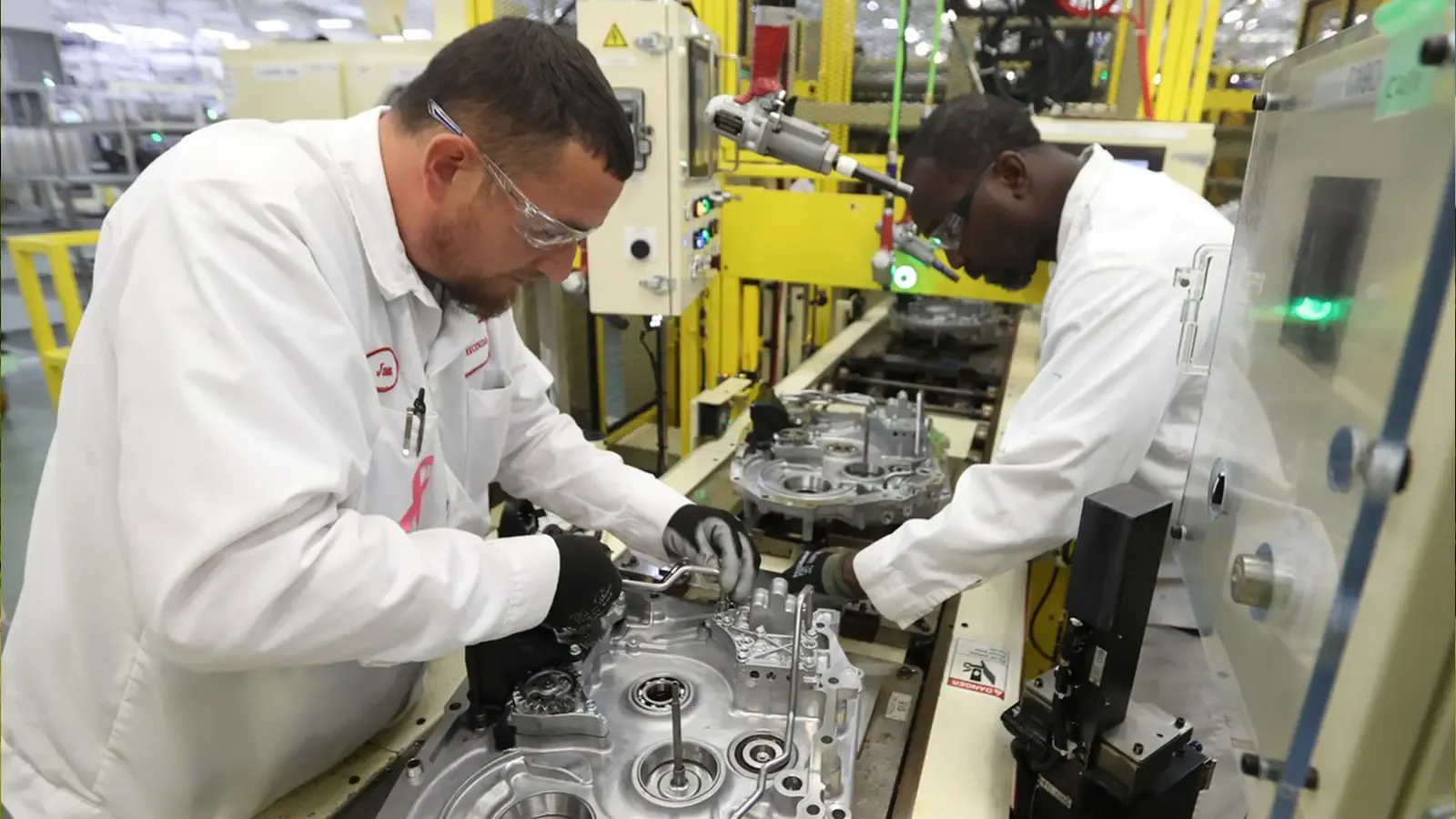
Honda will build the new CR-V at its plants in Ohio, Indiana, and Ontario, Canada, starting in 2027. It's also retooling transmission plants in Ohio and Georgia to boost production capacity for hybrid drive units by 250 percent and building a new $3 billion assembly plant in Ohio for future hybrid models.
The Hybrid SUVs the New CR-V Will Have to Beat
2026 Toyota RAV4 Limited Hybrid Review: 41 MPG and Hard to Fault
Toyota’s redesigned, hybrid-only RAV4 is the clearest preview of the competitive environment Honda’s next CR-V will enter.
Read More ➜
Nissan's All-New Rogue Hybrid Drives Like an EV and Starts at $37,065
Nissan’s e-Power system offers another electric-drive approach to the compact hybrid crossover, with AWD and a gasoline engine used only as a generator.
Read More ➜
2026 Kia Sportage Hybrid Review
Kia combines 232 horsepower, up to 42 mpg combined, and aggressive pricing in another major benchmark for Honda’s redesigned CR-V.
Read More ➜





 Announcements