- Engineering Shift
- Magna Powertrain President Diba Ilunga estimates that roughly 60 percent of the group’s engineering workforce now works on software
- Hidden Scale
- Ilunga says Magna makes the transfer cases used in roughly 60 percent of North American four-wheel-drive vehicles
- eDrive Performance
- Magna says its next-generation 800-volt eDrive weighs 75 kilograms and reaches up to 93 percent efficiency across real-world driving conditions
- Production Impact
- Reduced aluminum and heavy rare-earth material use lowers production-related carbon dioxide emissions by approximately 20 percent compared with Magna’s previous-generation eDrives
- Potential Range Gain
- Magna says eDecoupling can increase EV range by up to 9 percent by reducing drag from an unused motor and gearbox
- Predictive Traction
- The eDecoupling unit can reconnect in less than 100 milliseconds, while Decoupling+ can engage four-wheel drive before the vehicle begins to slip
- Hybrid Development
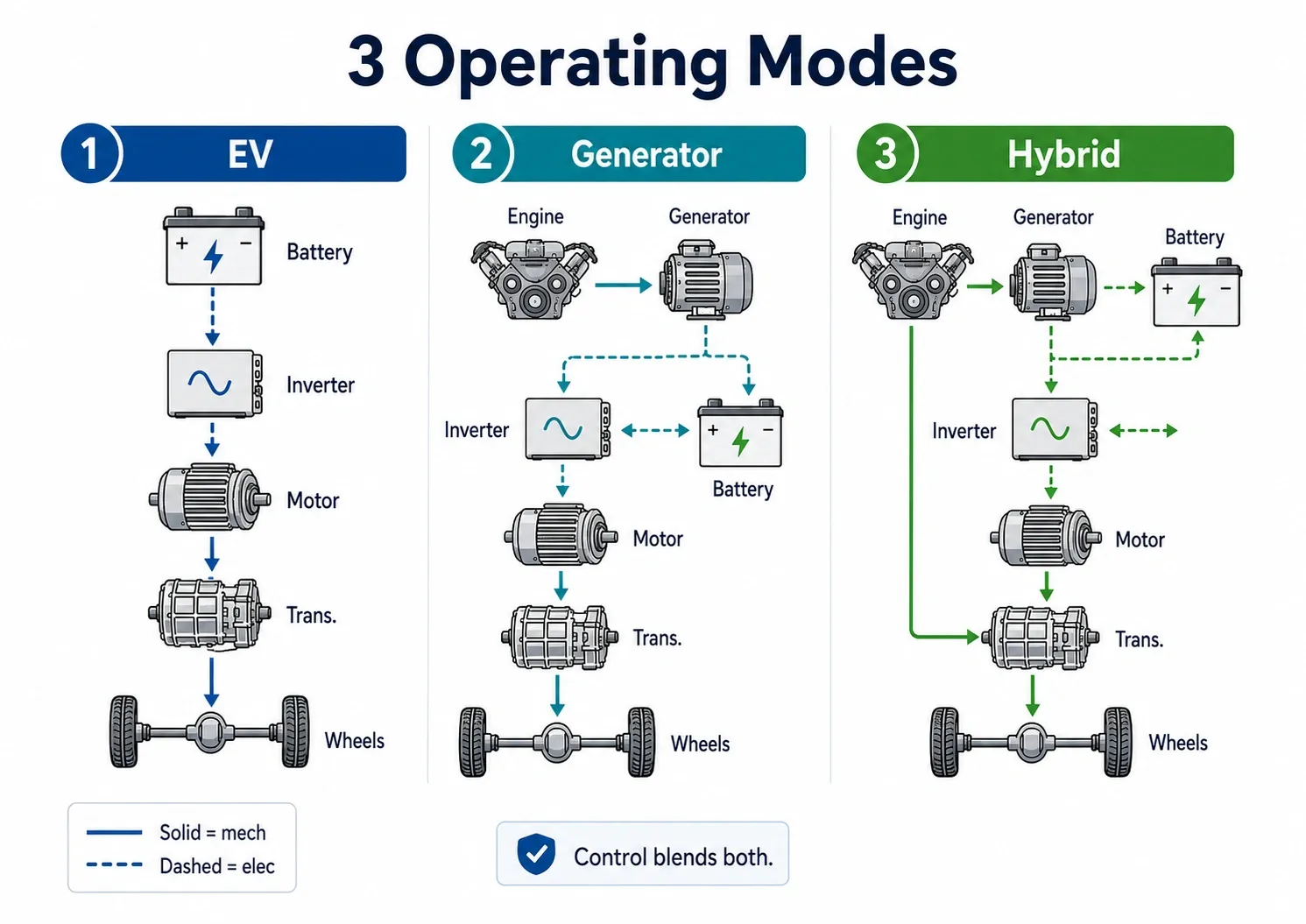
- Introduced in March 2026, DHD REX supports electric driving, generator operation, and an optional parallel-hybrid mode through a modular single-motor architecture
The Supplier You Rarely See Is Rewriting How Cars Work
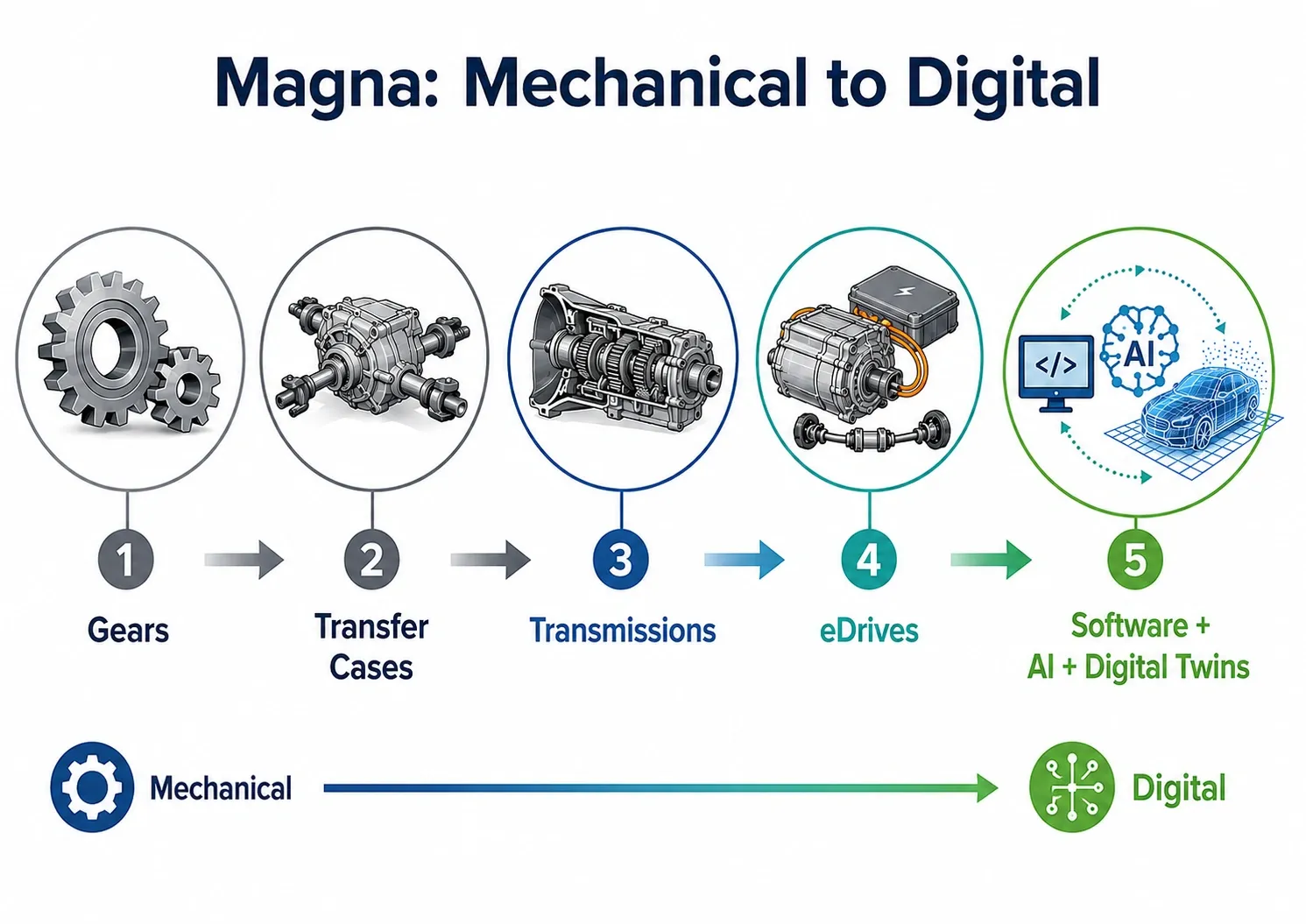
Magna made its name cutting gears, building transmissions, and producing four-wheel-drive hardware. Today, much of the work taking place inside its powertrain engineering organization happens in code.
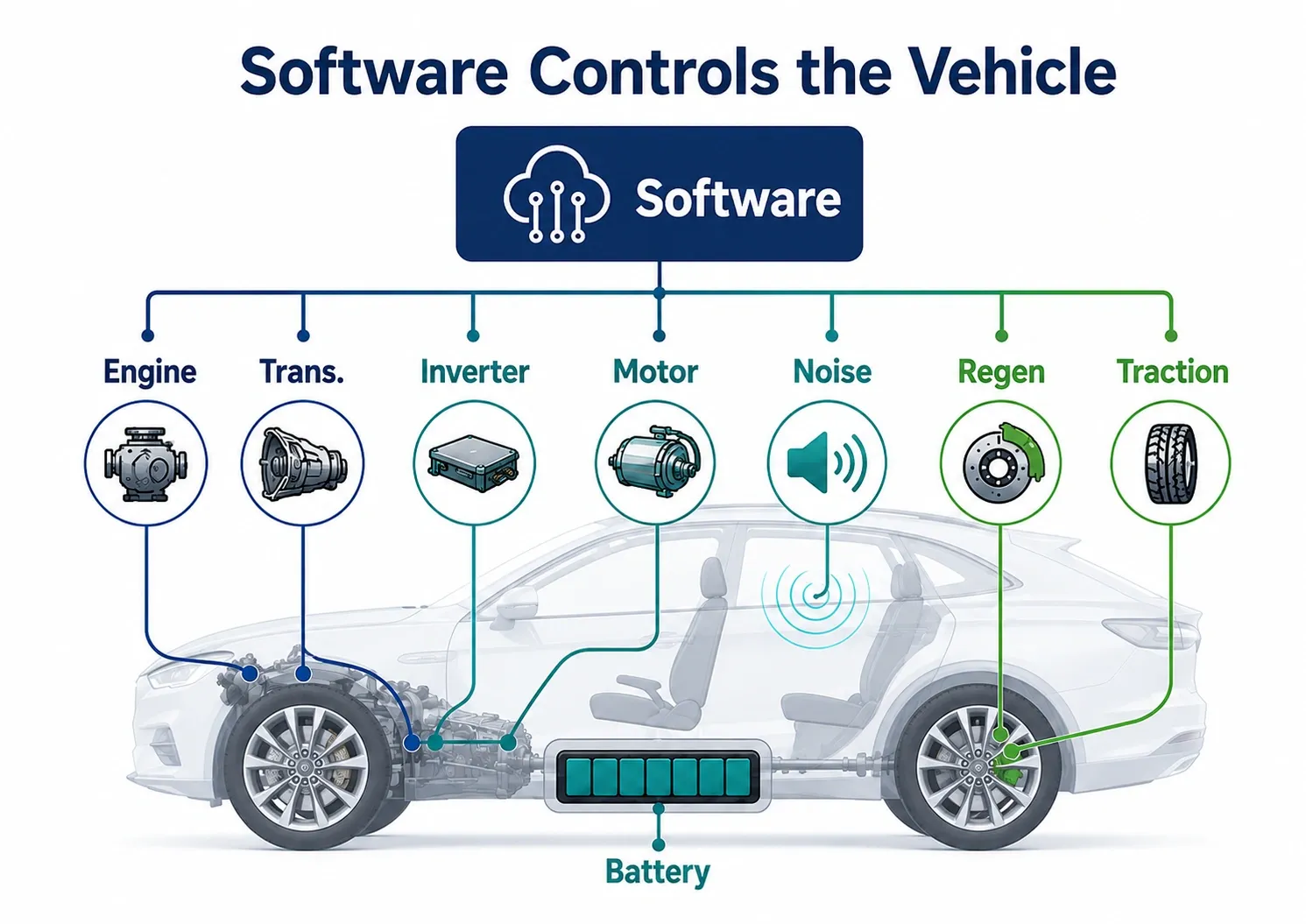
In a recent episode of GreenCars, The Podcast (opens in a new tab), Magna Powertrain President Diba Ilunga said roughly 60 percent of the group’s engineering workforce now works on software. That is a remarkable transformation for a business whose roots are so firmly mechanical. Magna Powertrain President Diba Ilunga says roughly 60 percent of the group’s engineering workforce now works on software. That code does far more than run screens: it manages electric torque, energy use, traction, noise, hybrid operating modes, and the virtual testing used to develop new hardware.
Magna’s staffing shift is a map of where powertrain engineering is headed. Software is no longer limited to the touchscreen, navigation system, or phone app. It increasingly determines how a vehicle accelerates, manages energy, finds traction, controls unwanted noise, and responds when a component begins to wear. While most drivers may never see Magna’s name on their vehicle, they are increasingly likely to feel the results of its software.
From Gears to Code
Magna is one of the world’s largest automotive suppliers, providing automakers with everything from powertrain systems and electronics to complete-vehicle engineering and manufacturing. Ilunga said Magna Powertrain supplies roughly 60 percent of the transfer cases used in North American four-wheel-drive vehicles, yet few owners would know one is working beneath them.
Modern powertrains contain physical components that still demand precision engineering. Electric motors, inverters, batteries, transmissions, clutches, axles, and gears all have to withstand years of heat, vibration, heavy loads, and changing weather. Software determines how those components work together.
In an EV, code manages torque delivery, regenerative braking, battery energy, motor temperature, and traction. In a hybrid, it has to coordinate a gasoline engine, one or more electric motors, a battery, and several possible driving modes without making the experience feel complicated to the driver.
This is the part of the software-defined vehicle story that does not always get the same attention as over-the-air updates and digital dashboards. Increasingly, the vehicle’s underlying efficiency and driving character are also defined by software.
Magna is already using artificial intelligence during requirements analysis, software coding, and testing. Ilunga said the company is also testing future applications that could use predictive models in place of certain physical sensors or warn that a component may be approaching failure. Those onboard applications are still in development.
Where the Code Meets the Road
Forget the codebase for a moment. The useful question is what the driver feels.
Magna’s next-generation 800-volt eDrive weighs 75 kilograms and reaches up to 93 percent efficiency across real-world driving conditions, according to the company. It also uses less aluminum and fewer heavy rare-earth materials than the previous generation, which Magna says reduces production-related carbon dioxide emissions by approximately 20 percent.
Those improvements begin with hardware, but software helps determine how efficiently the system uses that hardware from moment to moment. Software cannot make an inefficient motor or gearbox disappear, but it can keep each component closer to its most efficient operating range and prevent unnecessary losses when that component is not needed.
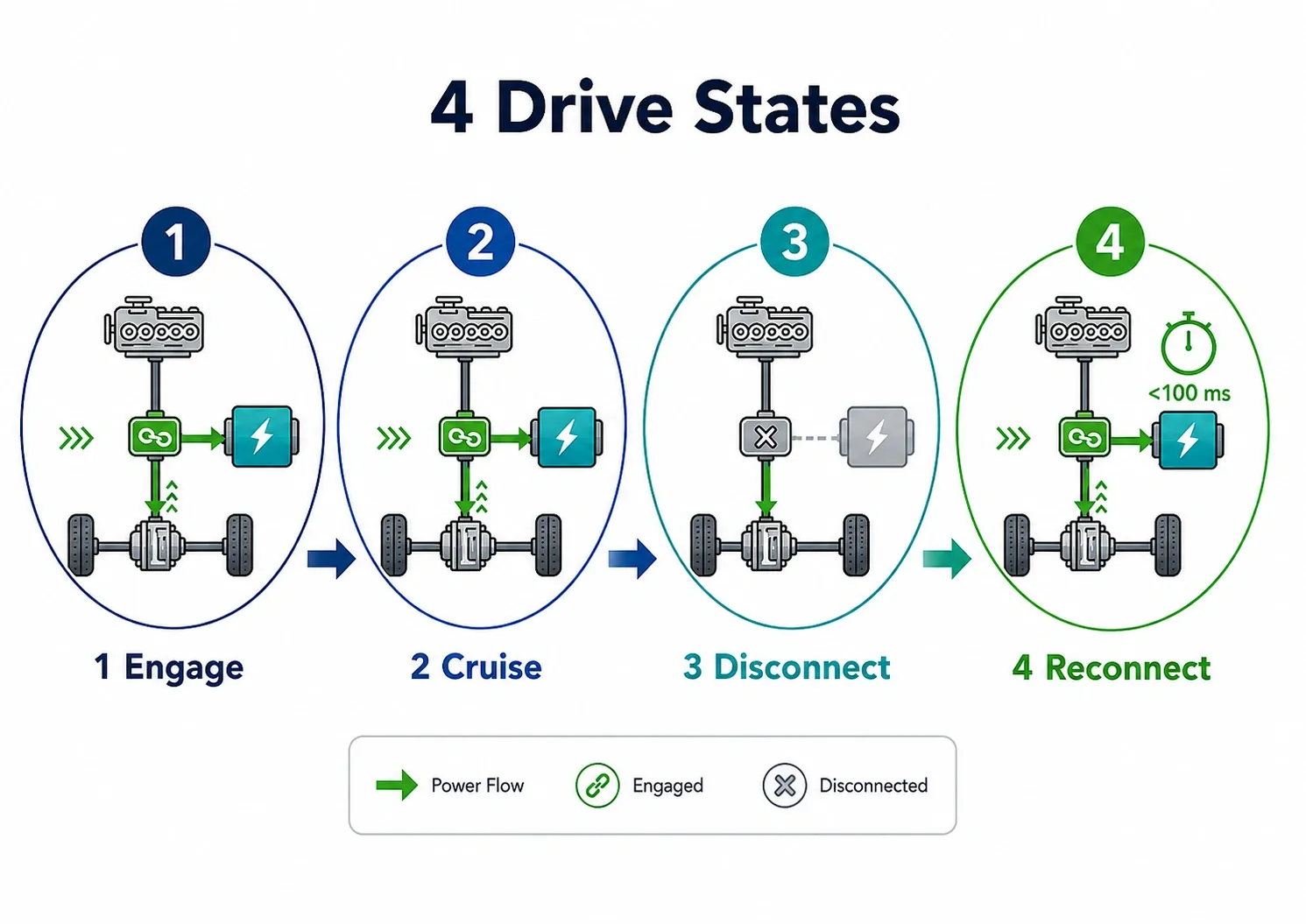
Magna’s eDecoupling system offers a good example. In an EV with more than one motor, the vehicle may not need every motor operating all the time. An unused motor can still create mechanical drag as the wheels turn, wasting energy that could otherwise extend driving range.
The eDecoupling unit physically disconnects the motor from the driveline when it is not needed. Magna says that reducing drag can increase EV range by up to 9 percent. Its control software manages the process and can reconnect the motor in less than 100 milliseconds.
To put a potential 9 percent gain into everyday context, see which factors determine how far an EV travels on a charge ➜
Magna’s predictive Decoupling+ software can go a step further by using vehicle-sensor information to bring all-wheel drive back online when road conditions become unstable. The driver does not have to request the change or wait for substantial wheel slip. The system is designed to respond before the situation becomes obvious from behind the wheel.
Software can also make an electric powertrain feel more refined. Without a gasoline engine masking other sounds, drivers may notice motor whine, gear noise, or unfamiliar tones that would have disappeared into the background of a conventional vehicle.
Ilunga described Magna using software-based active noise control to counter some of those sounds. Rather than adding weight through more insulation or redesigning an otherwise efficient component, the system can produce an opposing sound pattern to reduce what reaches the cabin.
These are not features most drivers will identify by name. They will simply experience a vehicle that travels farther, responds more confidently on a slippery road, or sounds quieter at highway speed.
GreenCars previously took a closer look at how Magna’s eDecoupling technology can add EV range.
Building the Vehicle Before It Exists
Software is also changing how new vehicles and components are developed.
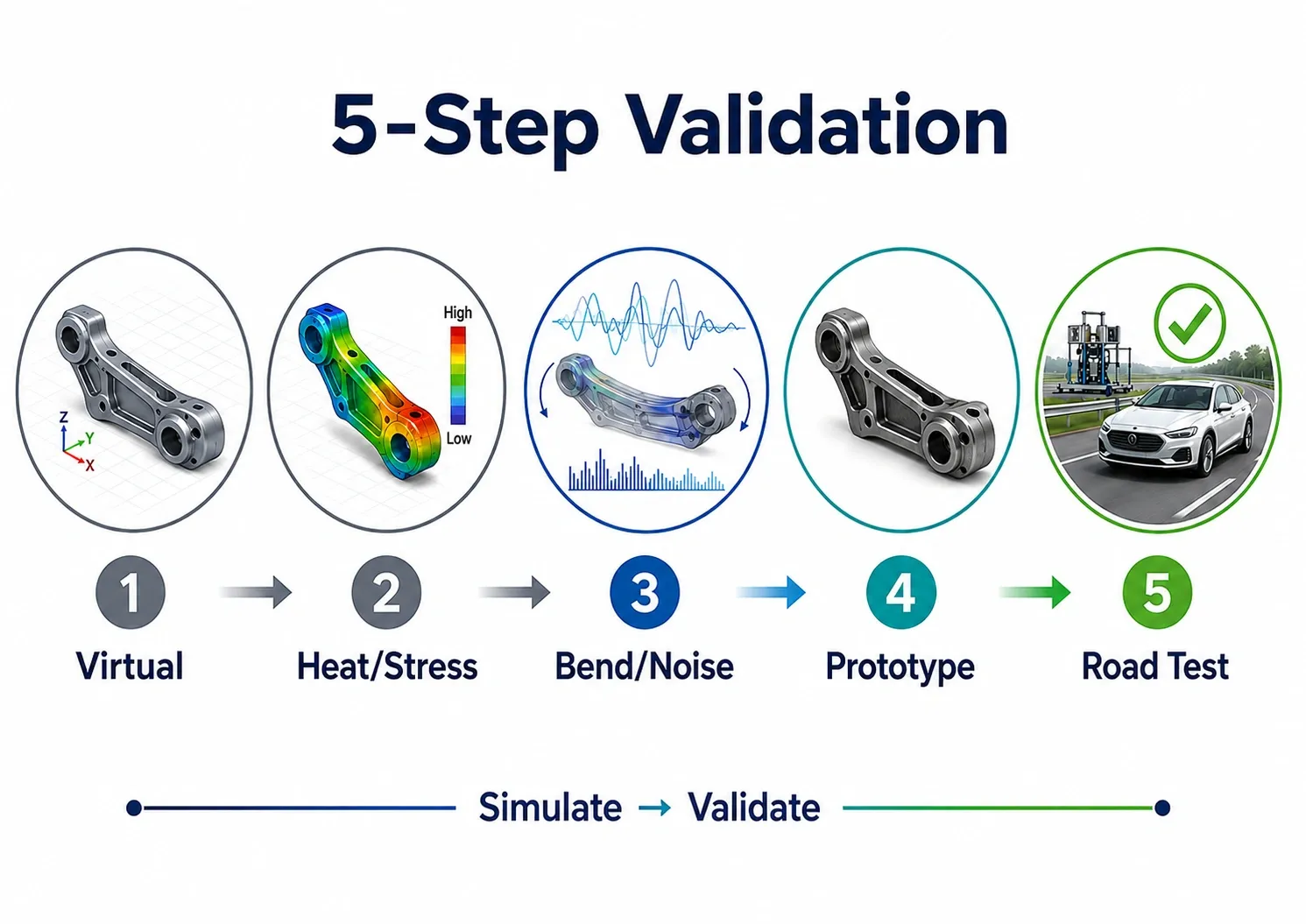
Ilunga discussed Magna’s work with digital twins, which are detailed virtual representations of physical products. Engineers can use these models to simulate heat, stress, vibration, bending, and noise before manufacturing a physical prototype.
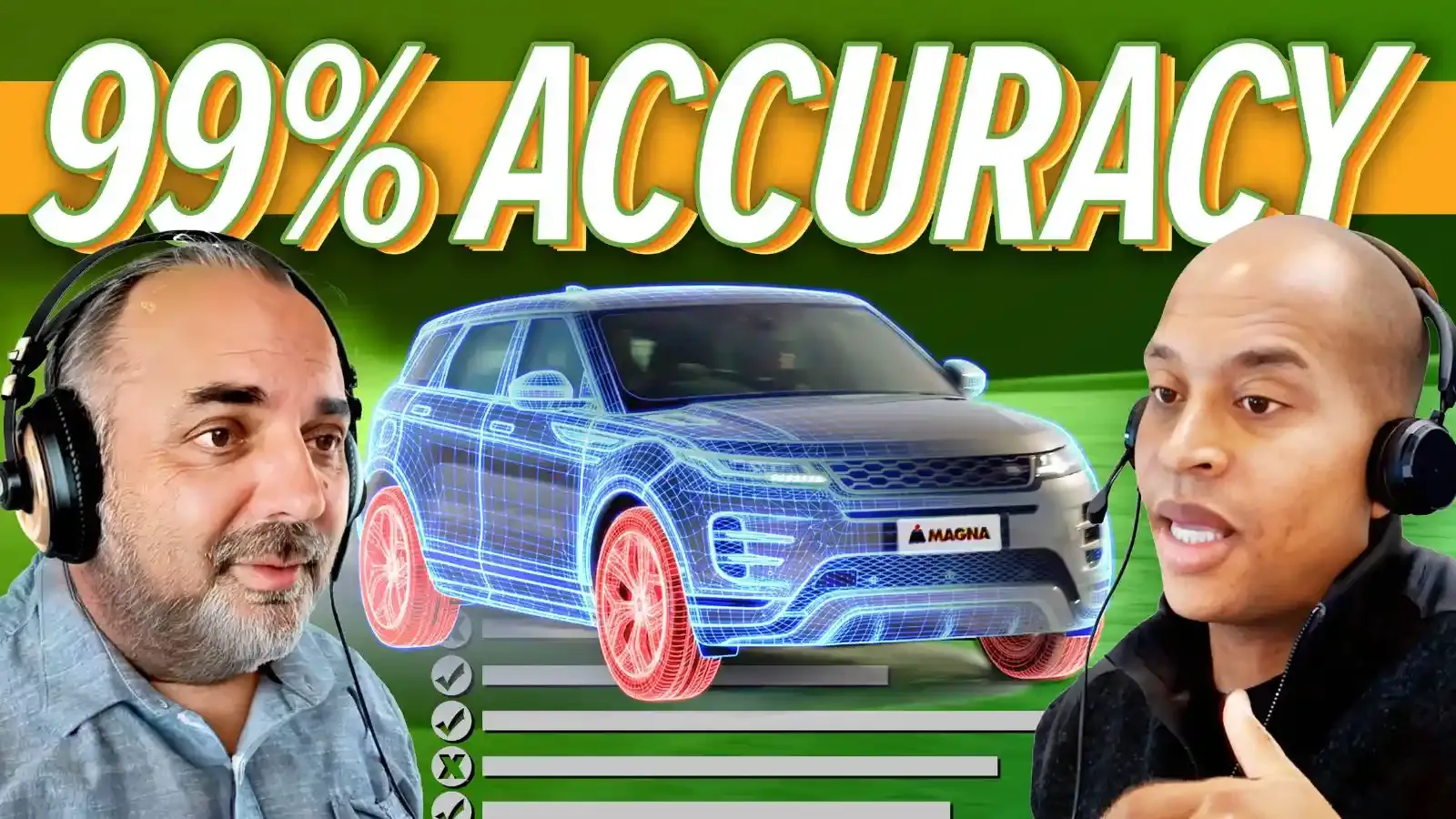
Magna is now working toward a digital twin of an entire electric drive system. For specific predictions involving bending and noise, Ilunga said its virtual models can achieve approximately 99 percent accuracy compared with the eventual physical component.
That figure does not mean every digital simulation is 99 percent accurate under every condition. It applies to the specific types of analysis Ilunga described. It is still a meaningful indication of how capable virtual development has become.
Physical testing is not disappearing. Safety-critical components still need to be built, stressed, measured, and validated in the real world. Digital twins allow engineers to reject weaker ideas earlier and refine stronger ones before committing to expensive tooling and prototypes.
The benefit may eventually appear in faster development, better reliability, lower weight, or fewer late design changes. Much of that work remains invisible to the buyer, which is generally the point.
Why Software Matters for Hybrids, Too
The software shift is not limited to fully electric vehicles.
Ilunga described hybridization as a logical transition path because it can add electric driving and efficiency without requiring every customer or market to move directly to a battery-electric vehicle.
Hybrids may be an even clearer demonstration of software’s importance because the system has more power sources to coordinate. The vehicle has to decide when to run electrically, when to start the gasoline engine, when to generate electricity, when to recover energy through braking, and how to move between those states without distracting the driver.
Magna expanded its hybrid portfolio in March 2026 with the DHD REX, a range-extender drive built around a modular single-motor design. It supports electric driving, a generator mode that extends range, and an optional parallel-hybrid mode intended to improve highway performance. Magna says the system can be adapted for vehicle segments ranging from smaller cars through larger SUVs.
A system like this is mechanical, electrical, and digital at the same time. The motor, engine, battery, and transmission hardware establish what the vehicle can do. Software decides how and when it does it.
For shoppers interested in that middle ground between gasoline and full battery-electric driving, GreenCars’ guide to the most efficient hybrid cars offers a look at how the technology is already reaching the market.
Can Common Hardware Lower the Cost?
The shift toward software may also change how automakers develop and purchase physical parts.
Ilunga said Chinese automakers have generally been more willing to use proven, off-the-shelf components rather than asking suppliers to redesign similar hardware for every vehicle. More recently, he received a comparable request from a Western automaker that wanted Magna to present what was already available before commissioning a customized product.
The potential benefit is scale. Reusing validated hardware can reduce engineering work, tooling costs, testing, and development time. Automakers can then create more of the vehicle’s individual character through software calibration, power delivery, traction programming, and user-facing features.
Whether those savings ultimately reach the sticker price depends on the automaker and the vehicle program. Greater standardization also creates risk because a problem in one widely shared component could affect several models or brands.
Still, the industry’s growing cost pressure makes the approach difficult to ignore. If automakers can spend less money developing parts consumers never see, they may have more room to invest in the range, efficiency, features, and pricing buyers do notice.
The GreenCars Take
The phrase “software-defined vehicle” can make it sound as though the future of the automobile is mainly about screens and downloadable features. Magna’s powertrain work tells a more meaningful story.
The next efficiency gain may not require a larger battery. It could come from disconnecting a motor when it is not needed. Better winter traction may come from software recognizing changing conditions before the tires begin to slip. A hybrid may feel more like an EV because code is quietly coordinating several power sources in the background.
None of this makes mechanical engineering less important. The hardware still has to perform safely and reliably for years. What has changed is how much of that hardware’s potential depends on the software controlling it.
Most drivers will never shop for a Magna. But as EVs and hybrids become more sophisticated, they may experience more of Magna’s work every time they press the accelerator.
To explore which electric or hybrid powertrain may fit your own driving, visit the GreenCars Buyer’s Guide.
More Ways Software Is Rewriting the Powertrain
What the Beijing Auto Show Says About the Future of EVs and Hybrids
China’s latest vehicles show how AI, flexible electrified powertrains, and faster development cycles are reshaping what reaches drivers next.
Read More ➜
Smaller Batteries Could Be the Most Important EV Shift of 2026
A closer look at why the next major EV efficiency and affordability gains may come from using less battery, not simply adding more.
Read More ➜
Ford’s New Hybrid Plan Signals a Major Strategic Shift
Ford’s powertrain pivot shows why automakers are leaning harder on hybrids and flexible architectures while EV economics continue to evolve.
Read More ➜





 Events