


Fast Facts | EV Charging Etiquette
⚡ Core Idea: Public charging comes with habits and expectations that most drivers learn through experience, not instruction
🚗 Spacing Habit: Many drivers still leave empty stalls between cars, a habit that started when paired chargers shared power
🔌 Broken Charger Signal: Some drivers leave the connector slightly out of the holster to quietly suggest a charger may not be working
🧠 Behavior Lag: Some charging etiquette remains even after the technology that created it has improved
🌐 Bigger Theme: EV charging culture is still evolving as more drivers and more infrastructure enter the system
✅ Why It Matters: Knowing these unwritten norms can make first-time charging feel less confusing and less stressful
The Learning Curve Starts at the Charger
The first time you charge an electric vehicle or plug-in hybrid rarely feels intuitive.
Instead of pulling up and fueling in a few minutes, you are often downloading an app, creating an account, and adding a payment method before anything happens. It is a different kind of process, and for many drivers, that initial setup is only the beginning.
Because once you are plugged in, there is another layer to learn. Not through manuals or instructions, but through experience.
Like many parts of EV ownership, public charging comes with its own set of unwritten rules. They are not posted on signs, but over time, they become second nature.
Why Drivers Leave Empty Spaces
If you have ever pulled into a Tesla Supercharger station, you may have noticed something that looks almost intentional. Cars are spaced out, with empty stalls between them.
It can look like simple courtesy, but the habit actually started for a technical reason.
Earlier generations of fast chargers often paired stalls together, meaning two vehicles shared available power. If both were in use, charging speeds could drop significantly. Tesla even recommended skipping a stall when possible to maximize charging performance.
Today, newer stations distribute power more efficiently, and that limitation is largely gone. But the behavior remains. Many drivers still instinctively leave a space when they can, a carryover from the early days of EV infrastructure.
It is a small example of how etiquette often lags behind technology.
The Trailer Dilemma
Charging becomes a little more complicated when towing is involved.
Some stations now include pull-through or head-in spaces designed to make life easier for drivers with trailers. They eliminate the need to back in and feel more like a traditional fuel stop.
Even so, experienced EV drivers tend to follow a common practice. They unhitch first when possible.
It takes a few extra minutes, but it keeps multiple charging stalls accessible and prevents blocking other drivers. As more EVs hit the road and charging stations get busier, that extra consideration goes a long way.
How Drivers Signal a Broken Charger
Not every charging stop goes as planned.
Sometimes a charger simply does not work. You plug in, wait, and nothing happens.
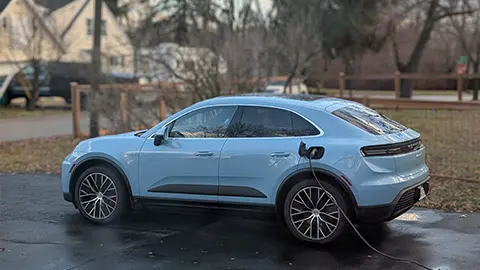
Over time, drivers have developed a quiet way of communicating this to each other. Instead of placing the connector neatly back in its holster, they leave it slightly out or hanging.
It is not official, and it is not universal. But it has become a subtle signal that something may be wrong, saving the next driver time and frustration.
The Bigger Picture
These small behaviors might seem insignificant, but they reflect something larger.
EV drivers are still collectively figuring out what “normal” looks like. Early adopters helped shape these habits out of necessity, navigating limited infrastructure and learning through trial and error.
Now, as charging networks expand, speeds improve, and reliability increases, some of these unwritten rules may fade. Others will stick around, becoming part of the culture of driving electric.
Either way, the experience continues to evolve.
And for new drivers, understanding these small, unspoken norms can make that first charging session feel a little more straightforward and a lot less uncertain.
Visit GreenCars 101 – Charging to learn about different charging options, their ideal use and how to maximize your range with every charge.
⚡ More Charging Basics Worth Knowing
Overview of Electric Car Charging
Before etiquette comes the basic charging framework. This guide walks through the main ways EV charging works at home, at work, and on the road.
Read More ➜
Using Public Charging Stations
Public charging can feel unfamiliar at first, especially when apps, accounts, and station layouts vary. This guide explains what to expect and how to make the process smoother.
Read More ➜
EV Charging Adapters
Charging etiquette is only part of the puzzle. Understanding connectors and adapters also makes public charging feel less uncertain.
Read More ➜