
Fast Facts| NEVI Funding Update
⚖️ Legal Trigger: A federal judge ruled the NEVI funding suspension was unlawful
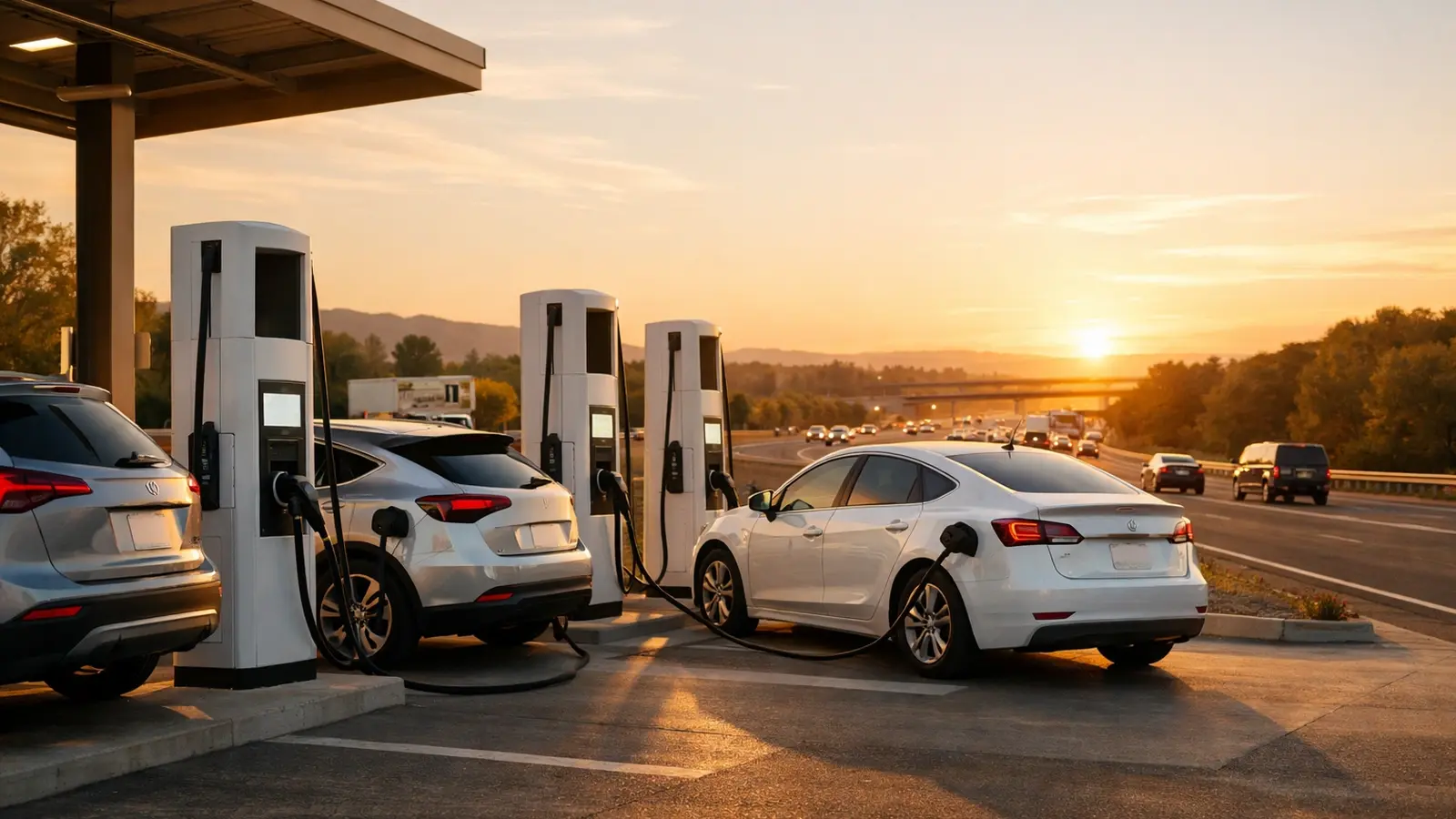
🛣️ Primary Goal: Expand public charging along major highway corridors
🧭 Equity Focus: Improve coverage in rural and underserved areas where ROI is slower
🧱 Real Timeline: Planning, permitting, utilities, and construction can take months or longer
📈 2025 Context: Private fast-charging grew fast, but coverage is still uneven by region
🔁 Network Reality: Public funding builds continuity, private networks build density
🏠 Home Base: Home charging still remains the foundation of EV convenience
What It Could Mean for Drivers
Charging infrastructure rarely develops in a straight line.
In early 2026, a federal judge ruled that the suspension of funding for the National Electric Vehicle Infrastructure program, known as NEVI, was unlawful. The decision allows the program to move forward again after months of uncertainty.
For drivers, the legal back-and-forth is less important than the practical outcome. The real question is whether this changes the charging experience in a meaningful way.
What the NEVI Program Is Meant to Do
The NEVI program was designed to help states expand EV charging along major highway corridors. While private companies have added thousands of fast chargers in recent years, public funding plays a different role.
Private networks tend to focus on high-traffic areas where utilization is predictable. Federal programs can target the stretches of road where commercial returns are less certain but coverage still matters. That often includes rural highways, long-distance travel corridors, and regions that lag behind coastal markets.
In short, NEVI is about filling the gaps rather than building in already dense areas.
Why This Matters Now
Public fast-charging infrastructure expanded significantly over the past year, largely due to private investment. Even so, coverage remains uneven. Some drivers enjoy multiple charging options within a few miles. Others must plan carefully around limited availability.
When federal funding resumes with clarity, states can move forward with corridor plans that were paused or slowed. That stability matters. Infrastructure projects require coordination with utilities, permitting agencies, equipment providers, and site hosts. Uncertainty can stall that process quickly.
Legal clarity does not instantly create new charging stations. Planning and construction still take time. But it removes a layer of hesitation that can slow development.
If you want a clean baseline on how public charging works and what to expect, read Using Public Charging Stations ➜
A Network Built from Multiple Sources
The charging ecosystem in 2026 is not driven by one entity. It is a blend of private charging networks, retail installations, utility-supported initiatives, and federal or state corridor funding.
Each has a distinct role. Private investment builds density in areas where demand is already visible. Public programs help ensure geographic continuity so drivers are not left without options between major cities.
Together, those forces shape the ownership experience.
Charging expansion is rarely defined by a single announcement. It is the accumulation of steady progress over time.
What Drivers Should Take Away
For prospective EV buyers, this development reinforces a broader trend. Infrastructure growth is continuing, and it is supported by multiple layers of investment.
If you primarily drive in well-covered metro areas, you may not notice dramatic changes tied specifically to federal funding. If you rely on highway travel or live in regions where charging feels sparse, continued corridor development could make a more visible difference.
Home charging remains central to convenience for most owners. Public infrastructure supports longer trips and adds confidence. When both improve, ownership feels more predictable.
The Bigger Picture
EV charging in the United States is moving from early buildout to national integration. Programs like NEVI are part of that long-term architecture.
Policy shifts may create short-term uncertainty, but the broader direction has been consistent. Infrastructure continues expanding. Reliability expectations are rising. Investment, both public and private, remains active.
For drivers watching from the sidelines, the signal is steady progress rather than dramatic reversal.
The GreenCars Take
Federal funding returning to the pipeline does not transform the charging network overnight. It does reinforce that expansion remains a national priority.
For drivers evaluating EV ownership, the most important question remains personal. Does charging infrastructure in your region support your daily routine and travel needs?
In many parts of the country, the answer is increasingly yes. In others, the network is still catching up. Either way, the momentum behind charging development continues.
⚡ What’s Next for Public Charging
NEVI Charging Network Reboots in 2026
A clear look at what NEVI is, what changed, and why this funding pathway matters for corridor reliability
Read More ➜
DOT Relaunches NEVI Program to Accelerate U.S. Charging Network
More detail on the federal push to restart NEVI momentum and move projects forward at the state level
Read More ➜
Where to Find EV Charging Stations
A practical guide for drivers who want to translate policy headlines into real-world charging planning
Read More ➜