

 Announcements
Ford Reveals Off-Road Mach-E Trim for 2027
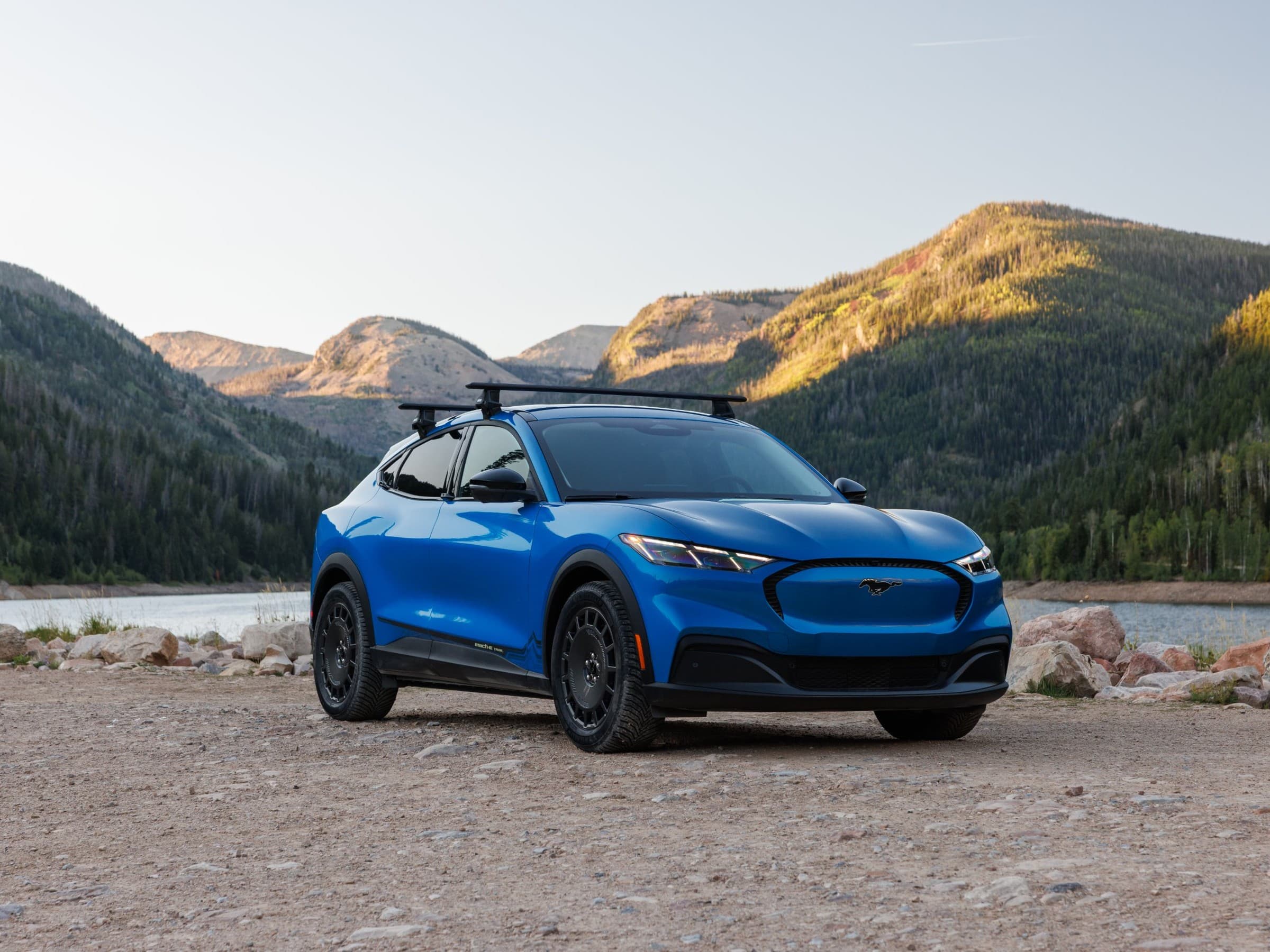
Ford's new 2027 Mustang Mach-E Trail gets extra ride height, a specially tuned suspension, and all-weather tires for added capability in gravel, sand, and snow.
Avery Zimmerman3 min read

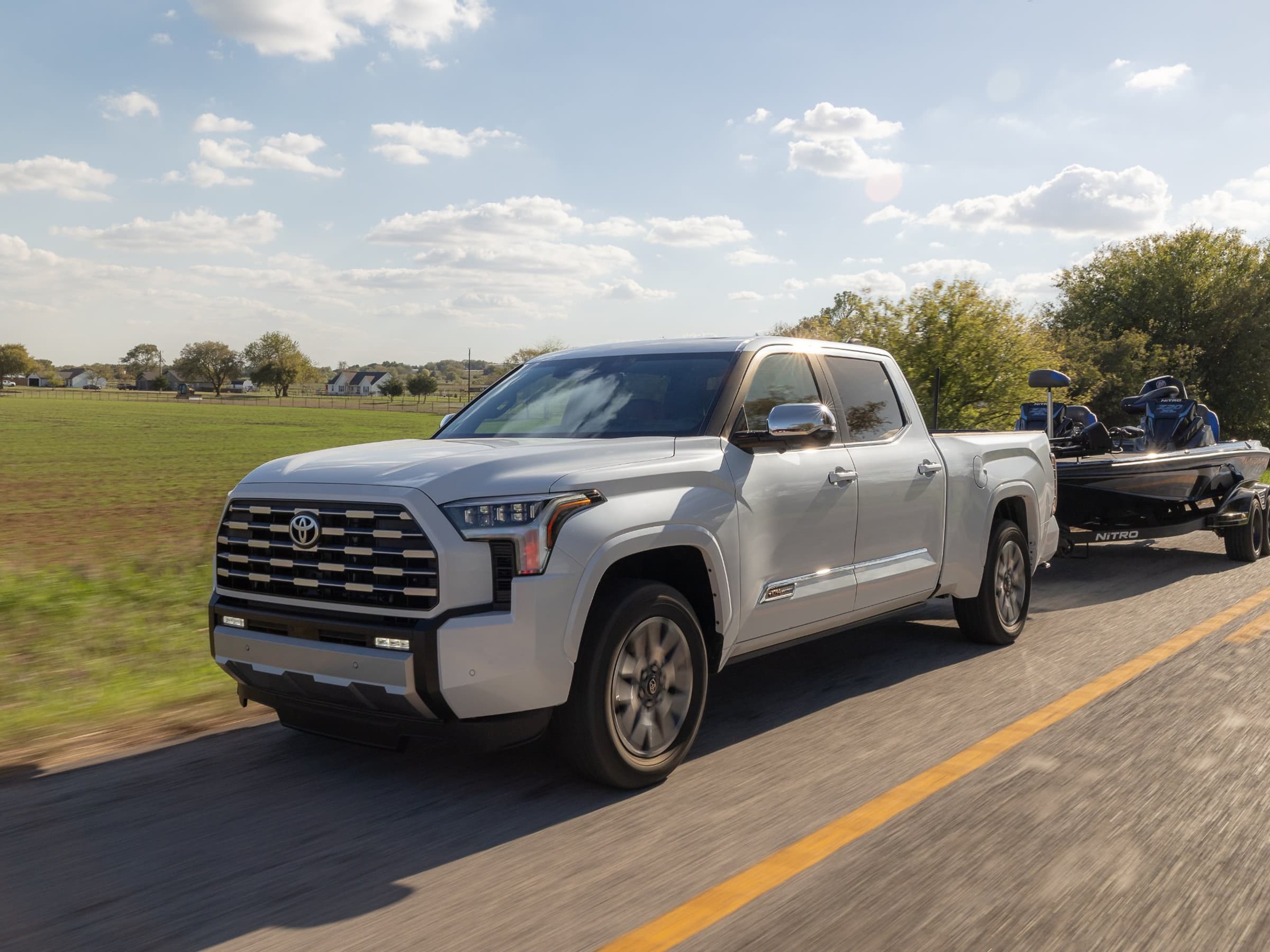
The 2027 Toyota Tundra and Sequoia get smarter towing tech, a standard 14-inch touchscreen, upgraded safety features, and a new Trailhunter off-road package.
When Toyota launched the third generation of its full-size Tundra pickup and Sequoia SUV earlier this decade, both got a dramatic new look and, for the first time, hybrid powertrains. The Sequoia even went exclusively hybrid. It should be noted that, even with electrified propulsion, these Texas-built beasts definitely aren't fuel sippers like a Prius. For 2027, both get a mid-cycle refresh with some design refinements, new trims, and new features.
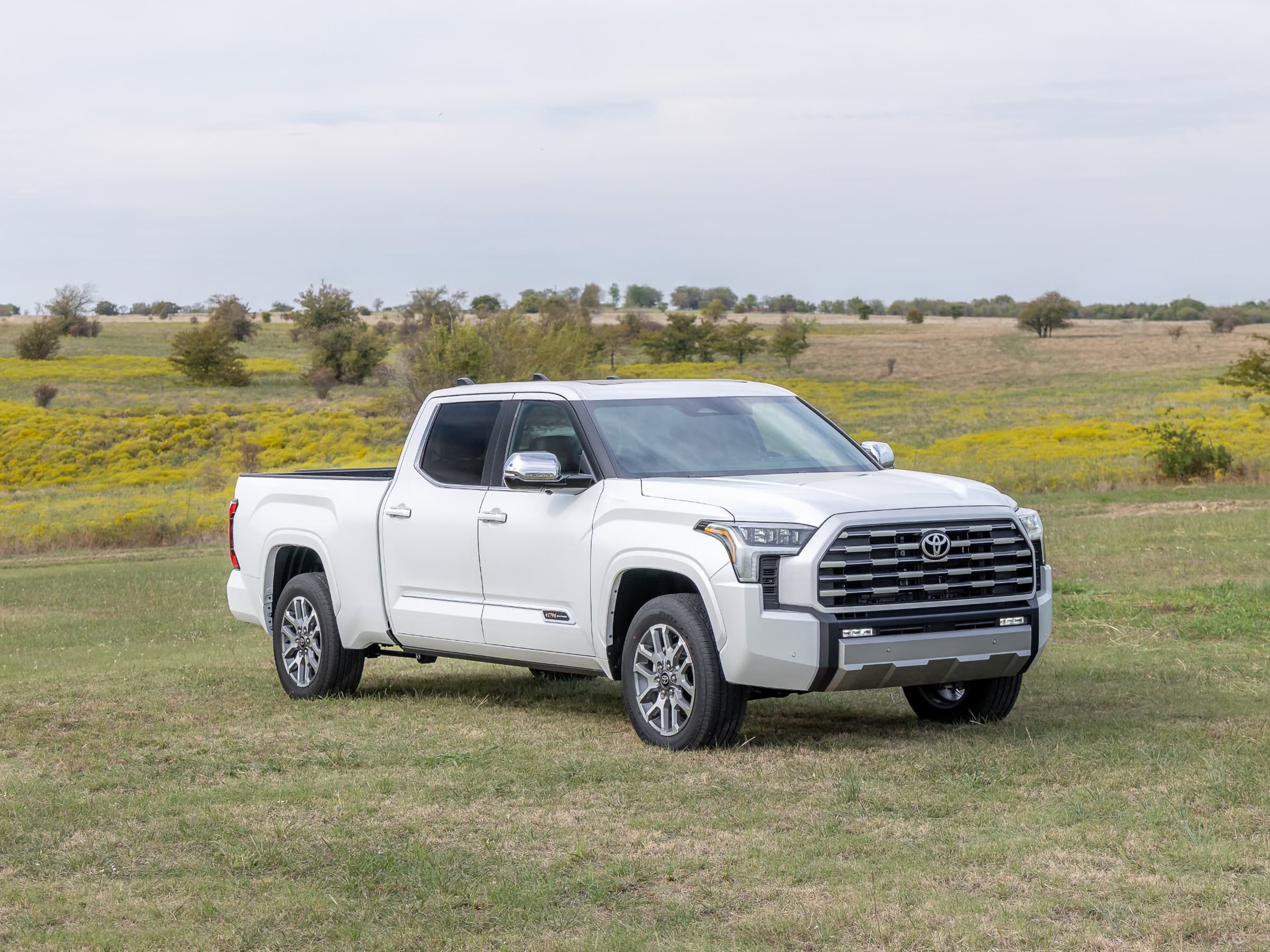
The Tundra launched about a year before the Sequoia, and it marked a major turning point for Toyota’s big body-on-frame trucks and SUVs: For the first time, it didn't offer a V8. Instead, the standard engine was a twin-turbocharged V6 that has since spread to other models, including the Sequoia, Lexus GX, and Lexus LX.
Since Ford’s original 3.5-liter EcoBoost V6 debuted in 2010, most truck buyers (Ram 1500 Hemi fans excepted) have shown they're quite willing to drop two cylinders, as long as they still get the performance they expect. So far it’s worked for Toyota: the Tundra is selling as well as it ever has.
Toyota also added a hybrid version of the Tundra's V6. It puts an electric motor with 48 horsepower and 184 pound-feet of torque between the engine and transmission, along with a 1.87-kilowatt-hour battery. The hybrid boosts the EPA combined fuel economy rating by only 1 to 2 mpg, depending on the trim, but it provides a major performance boost. It's also the only powertrain offering on the Sequoia SUV. The gas and hybrid powertrains carry over unchanged for 2027, but Toyota has made plenty of other updates.
The i-FORCE MAX system is tuned more for torque and capability than Prius-style fuel savings, so see how different hybrid layouts prioritize efficiency, performance, and towing in different ways ➜
Towing is one of the main reasons people buy big body-on-frame pickups and SUVs, so Toyota made some significant improvements to its towing advanced driver-assistance system. Using the backup camera and the rear corner radar sensors that handle blind-spot monitoring, the trailer ADAS now automatically detects a trailer and adds its characteristics, then adds it to the trailer garage in the truck’s settings. Toyota also moved the trailer garage from the instrument cluster to the infotainment system, so it can show more information and it's easier to access when you're setting everything up.
Those rear corner radars also got a longer range. They now extend back behind the full length of the trailer, which makes maneuvering safer while you're towing.
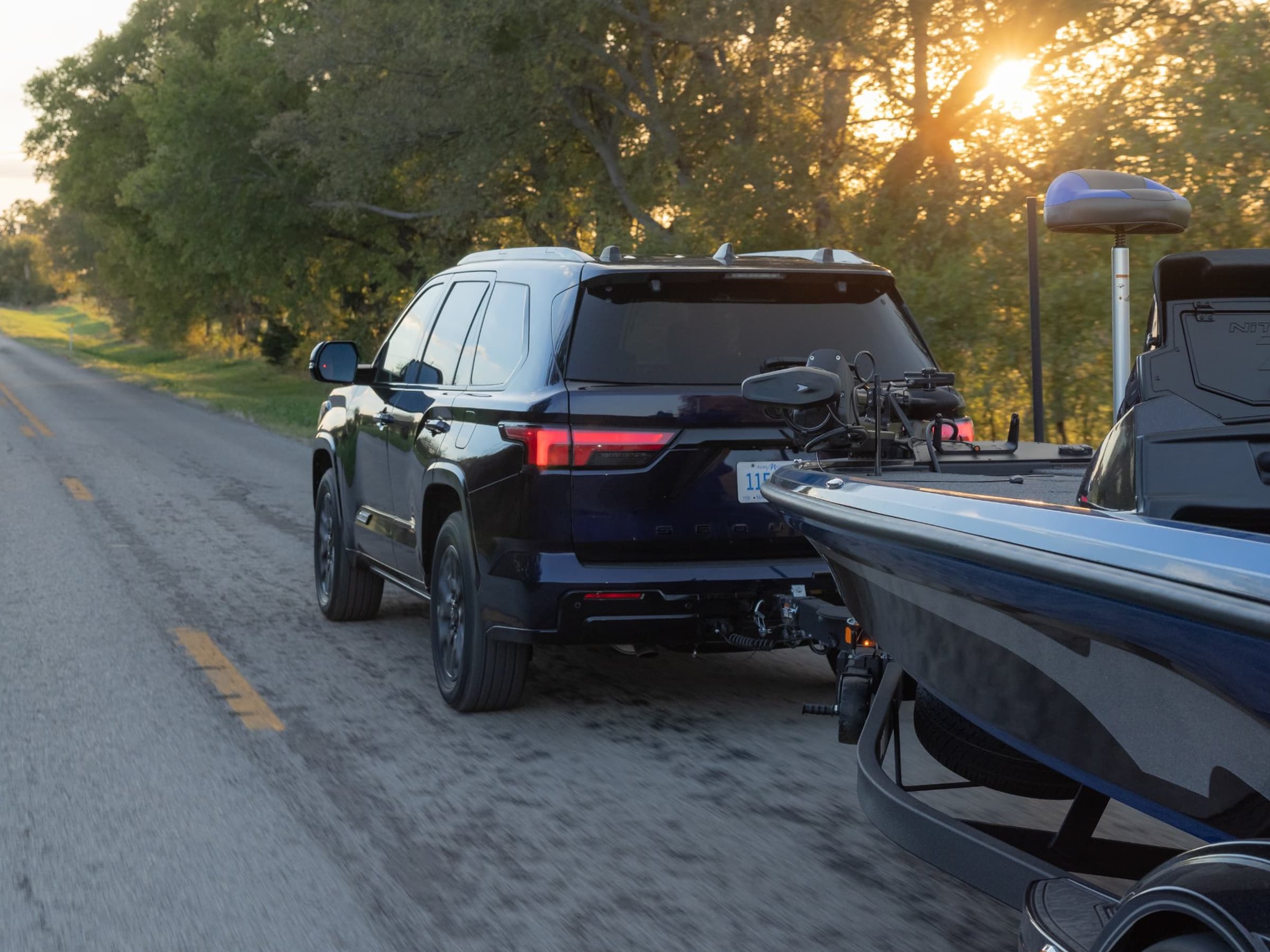
Toyota also added Trailer Lane Trace Assist, a new version of its lane-centering system that's specifically calibrated to help keep the vehicle in its lane while towing.
The Trailer Backup Guide was also upgraded with new dynamic guidelines that move as you steer and reverse, showing you where the trailer's headed. If you have little to no towing experience, features like this make the whole process far easier and safer.
Toyota bumped the maximum towing rating for the hybrid Tundra to 12,000 pounds, while the Sequoia can pull 9,120 pounds.
The current Tundra already shows how useful electric torque can be under a real trailer load, so see how the i-FORCE MAX performs during hands-on towing ➜
Both vehicles also move up to version 4.0 of Toyota Safety Sense (TSS), the automaker's standard driver-assistance package. It includes a pre-collision system with pedestrian detection, a very important feature in a big truck with less-than-ideal visibility.
Proactive Driving Assist uses navigation maps and cameras to look down the road and automatically adjust your speed for curves when you're using adaptive cruise control, which is also part of TSS 4.0.
TSS 4.0 also includes an Emergency Drive Stop System. It monitors the driver when Lane Tracing Assist is on, and it'll automatically bring the vehicle to a stop if the driver becomes inattentive or stops responding to prompts.
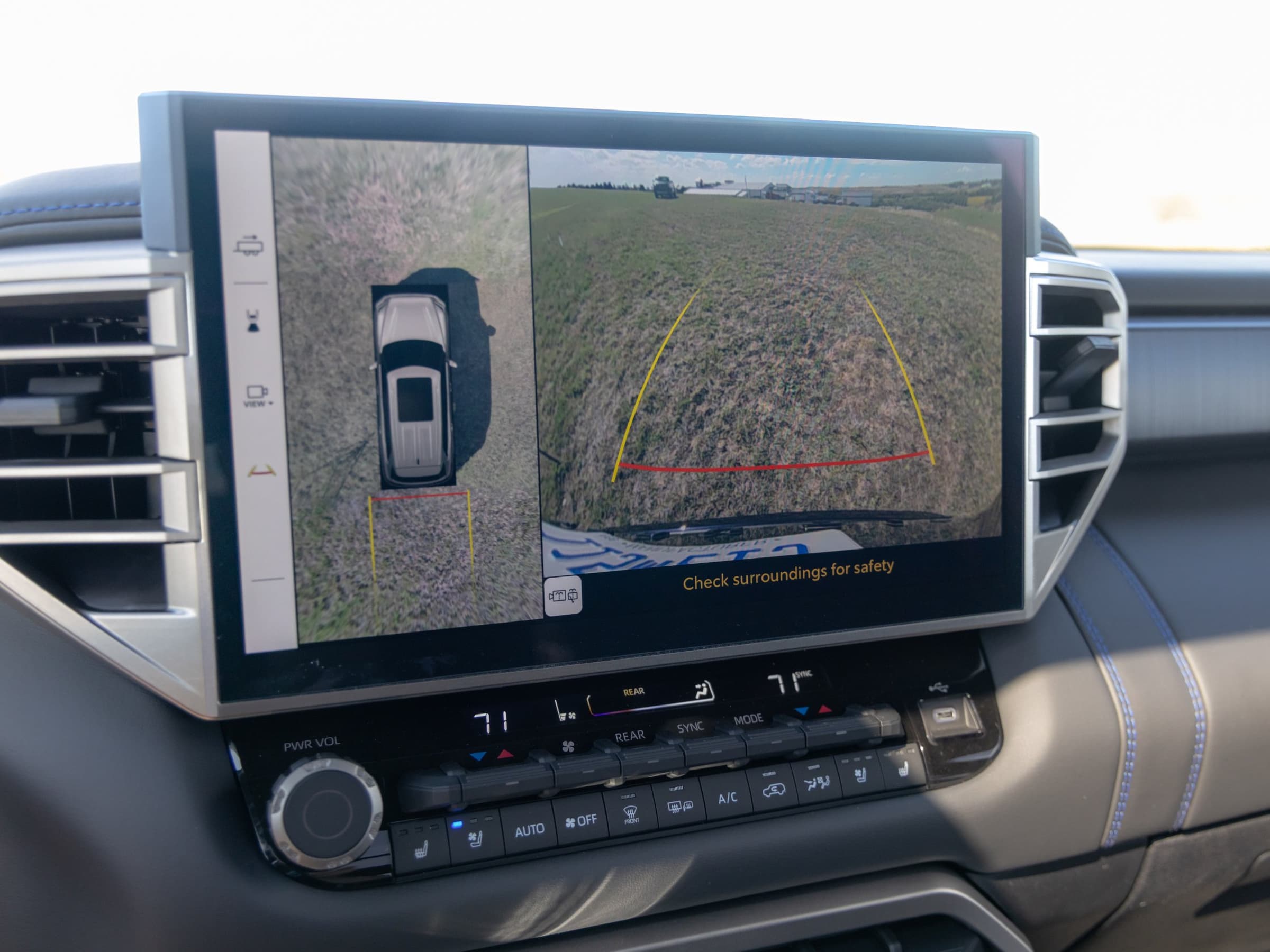
A 14-inch center touchscreen is now standard on all Tundras and Sequoias. Both also get Toyota’s new multimedia software that debuted last year on the new RAV4. The previous generation would only show one pane of information at a time: navigation, settings, or multimedia controls. This one is configurable, so you can choose what to display and keep maps and media controls up side by side.
The new system also has a standard dash cam functionality. It uses the forward-facing ADAS camera to record 20-second clips when you ask it to, and it records automatically in a crash. All trucks and SUVs also include a complimentary five-year trial of Toyota’s Connected Services package. Many automakers now do the same, since features like navigation and voice assistance rely on a cloud connection for updates and some functionality.
Both vehicles get off-road upgrades for 2027. TRD Pro models now have Fox QS3 adjustable dampers, which improve stability during desert running while maintaining better functionality when rock crawling.
Both are also available for the first time with a Trailhunter package built for overlanding adventures. Trailhunters are based on the more affordable SR5 trim and add Michelin LTX Trail all-terrain tires on 18-inch wheels, plus suspension upgrades from off-road specialist Old Man Emu. They also get standard front recovery hooks and underbody skid plates to protect sensitive parts from rock damage. A locking rear differential, Toyota’s Crawl Control, and Multi-Terrain Select software help you go farther and get back safely.
Finally, every trim gets subtle visual refinements, mostly limited to new grilles and reshaped bumpers.
I'll have a full driving review of the Toyota Tundra and Sequoia soon.
2026 Toyota Sequoia Hybrid Capstone Review
See how Toyota’s 437-hp hybrid SUV performs in the real world, including towing, fuel economy, third-row space, and luxury features.
Read More ➜
2026 Toyota Tundra TRD Pro Review
The current TRD Pro shows what Toyota’s hybrid truck can already do off-road before the 2027 model adds adjustable FOX QS3 shocks.
Read More ➜
2026 Toyota Tundra Hybrid vs. 2026 Ford F-150 Hybrid Review
Toyota and Ford take different approaches to full-size hybrid pickups, with major differences in fuel economy, towing, payload, and onboard power.
Read More ➜
Get vehicle reviews, practical tips, and the latest GreenCars news.
AnnouncementsFord's new 2027 Mustang Mach-E Trail gets extra ride height, a specially tuned suspension, and all-weather tires for added capability in gravel, sand, and snow.
 Announcements
Hyundai's North American bestseller gets a bold redesign, all-new infotainment, and a more efficient next-generation hybrid system for its fifth generation.
 Industry Updates
Nissan's 2027 Rogue Hybrid starts at $37,065 and debuts its e-Power system in the U.S., so it drives like an EV but fills up like any other hybrid.