
Fast Facts | Toyota Woven City
🏙️ What It Is: Toyota describes Woven City as a real-world “test course for mobility” in Susono City, Shizuoka Prefecture, Japan.
📅 Launch Timing: Woven City officially launched on September 25, 2025.
👥 Who’s There: Toyota’s model centers on “Inventors,” who create products and services, and “Weavers,” who live with and test them.
🏠 Population Goal: Phase 1 is expected to house about 300 to 360 residents, with the full city projected to grow to roughly 2,000 people over later phases.
🧪 Inventor Garage: Toyota says the Inventor Garage began operating in April 2026 as a product and service development hub.
🤖 AI Layer: Toyota announced its new AI Vision Engine in April 2026 to help interpret conditions across the city in real time.
⚡ Bigger Purpose: The city is testing not just vehicles, but also software, safety systems, energy management, and daily-life infrastructure together.
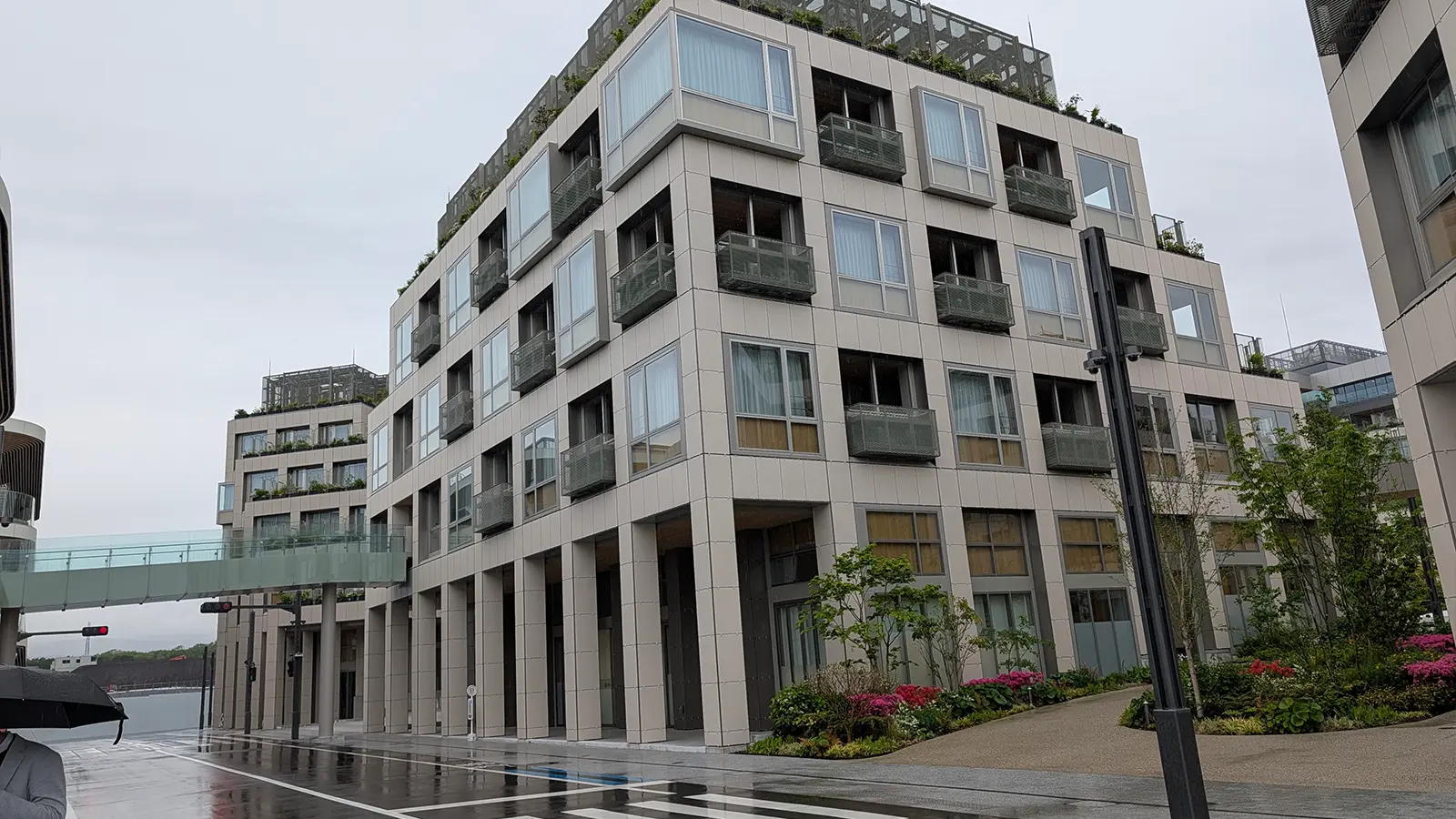
Woven City is Toyota’s living lab for mobility innovation, located in Susono, Shizuoka Prefecture, Japan, about 70 miles southwest of Tokyo, right in the shadow of Mount Fuji. The name is a call-back to the company's roots as the Toyoda Automatic Loom Works. But it also represents something bigger: a community where innovators and inventors are weaving concepts together to create a vision for the future.
Toyota recently invited me to see Woven City firsthand. Here's what I learned.
Inventors and Weavers
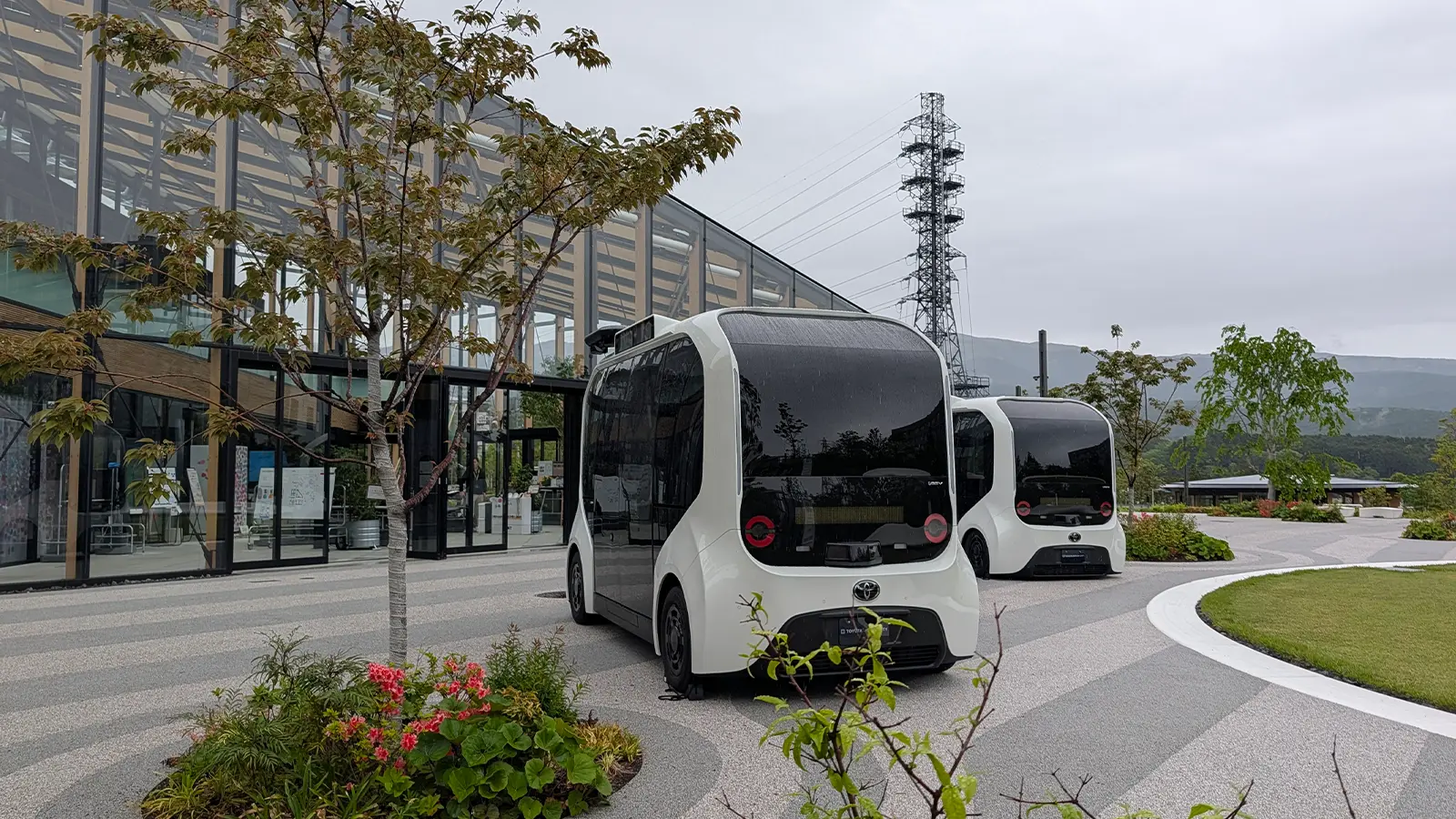
Toyota describes two different participants at Woven City: Inventors and Weavers.
Inventors are the creators - startups, researchers, and other innovators developing products and services. One of the examples of an inventor from Woven by Toyota (the parent organization behind the city and much of Toyota’s advanced development efforts)is the software engineering team developing Arene, the platform for Toyota’s up coming software-defined vehicles. The first products of that effort are the new infotainment and driver assist systems debuting this year on the 2026 RAV4.But inventors can come from outside of the company, too.
Weavers are the residents and visitors to Woven City, those who actually use what the inventors create and share their feedback. As the name implies, they don't just test things in isolation, but in a combined ecosystem. Right now, Weavers are Toyota employees and their families, but other interested parties are also being invited in. The goal is to have about 2,000 Weavers in the city. Right now, there are 55 households and about 100 people.
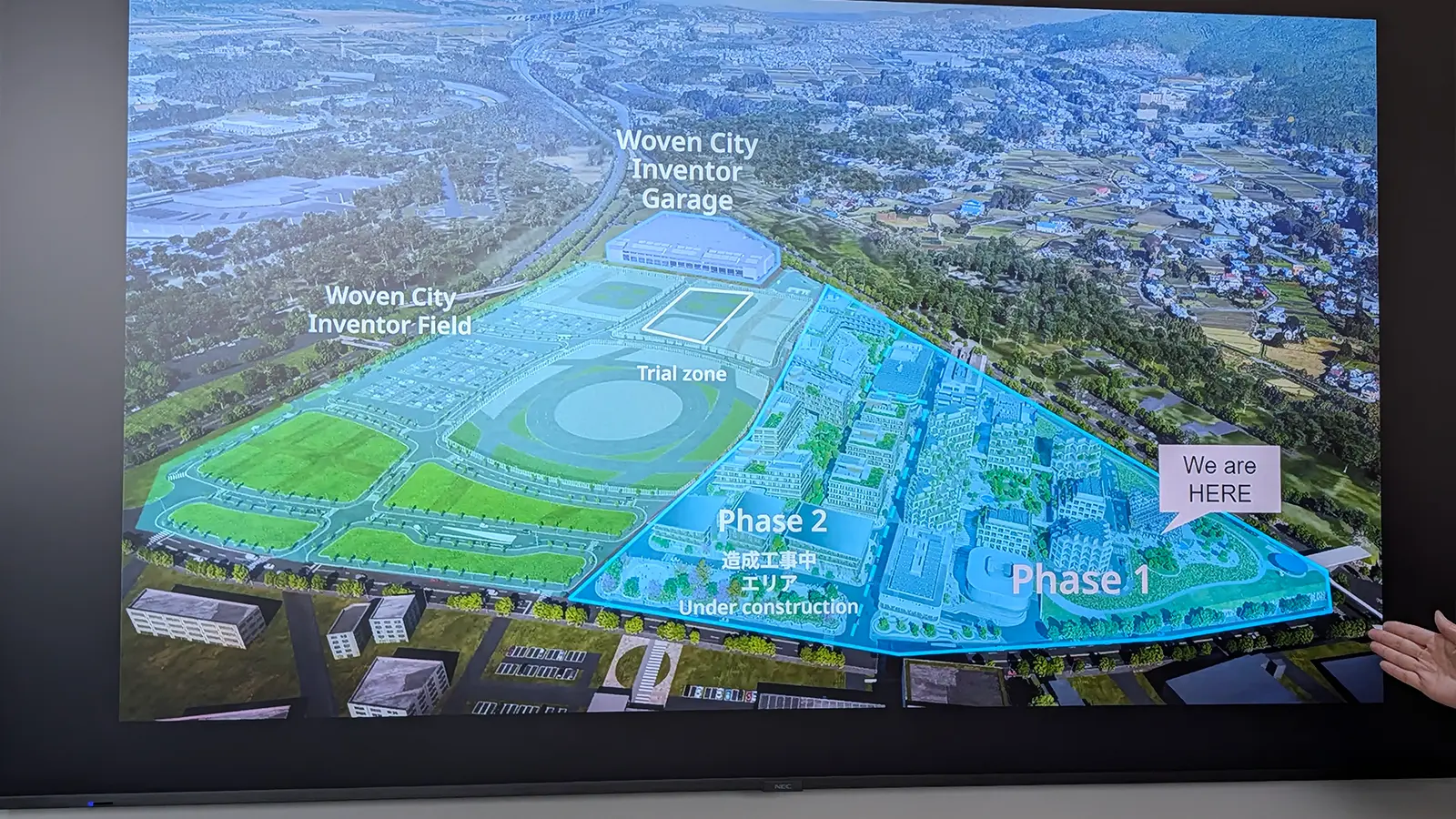
Woven City consists of three main sections: the Inventor's Garage, the Inventor's Field, and the living space. The Field is an open testing area where new technologies are evaluated before being integrated into the living space.
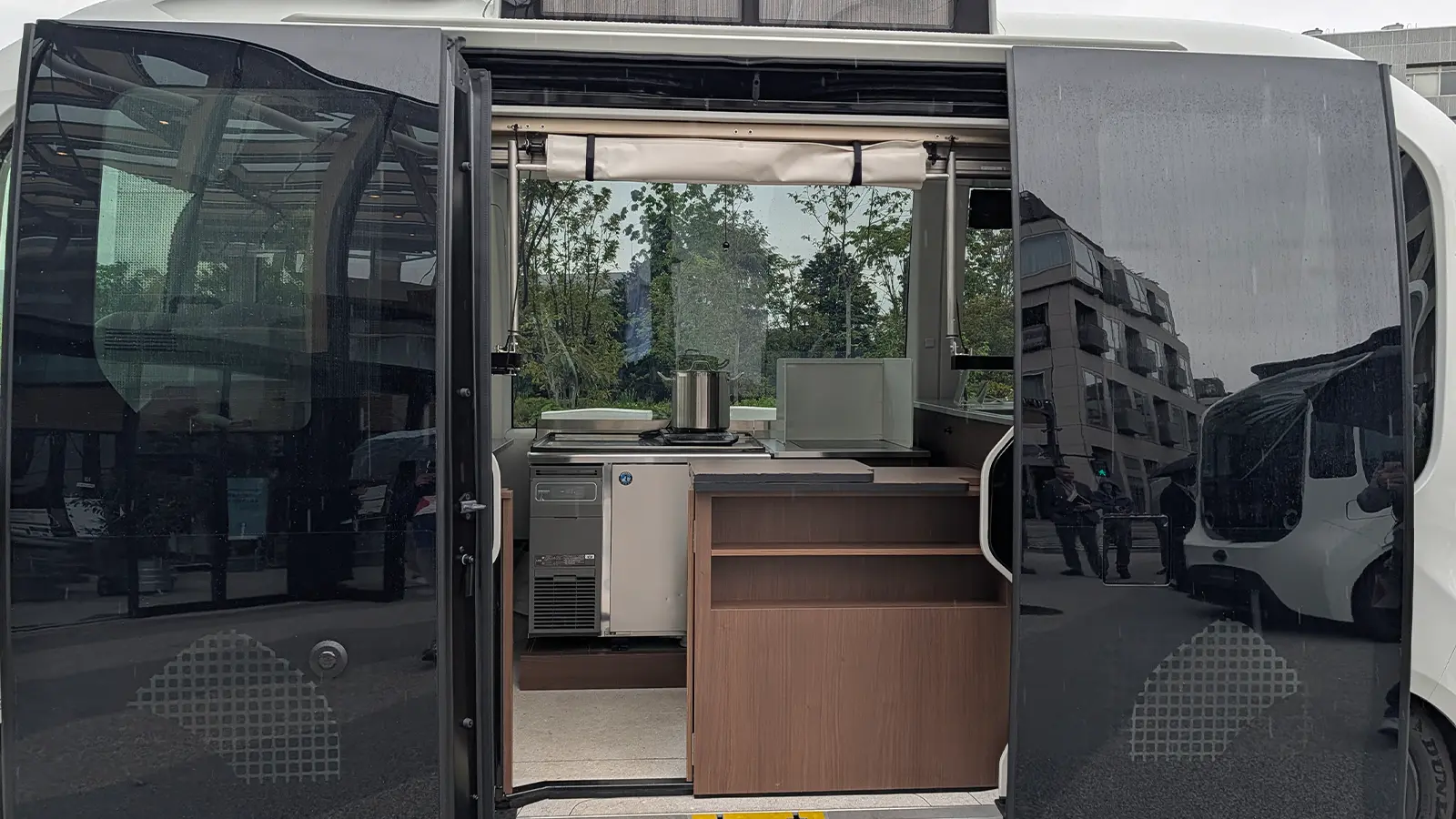
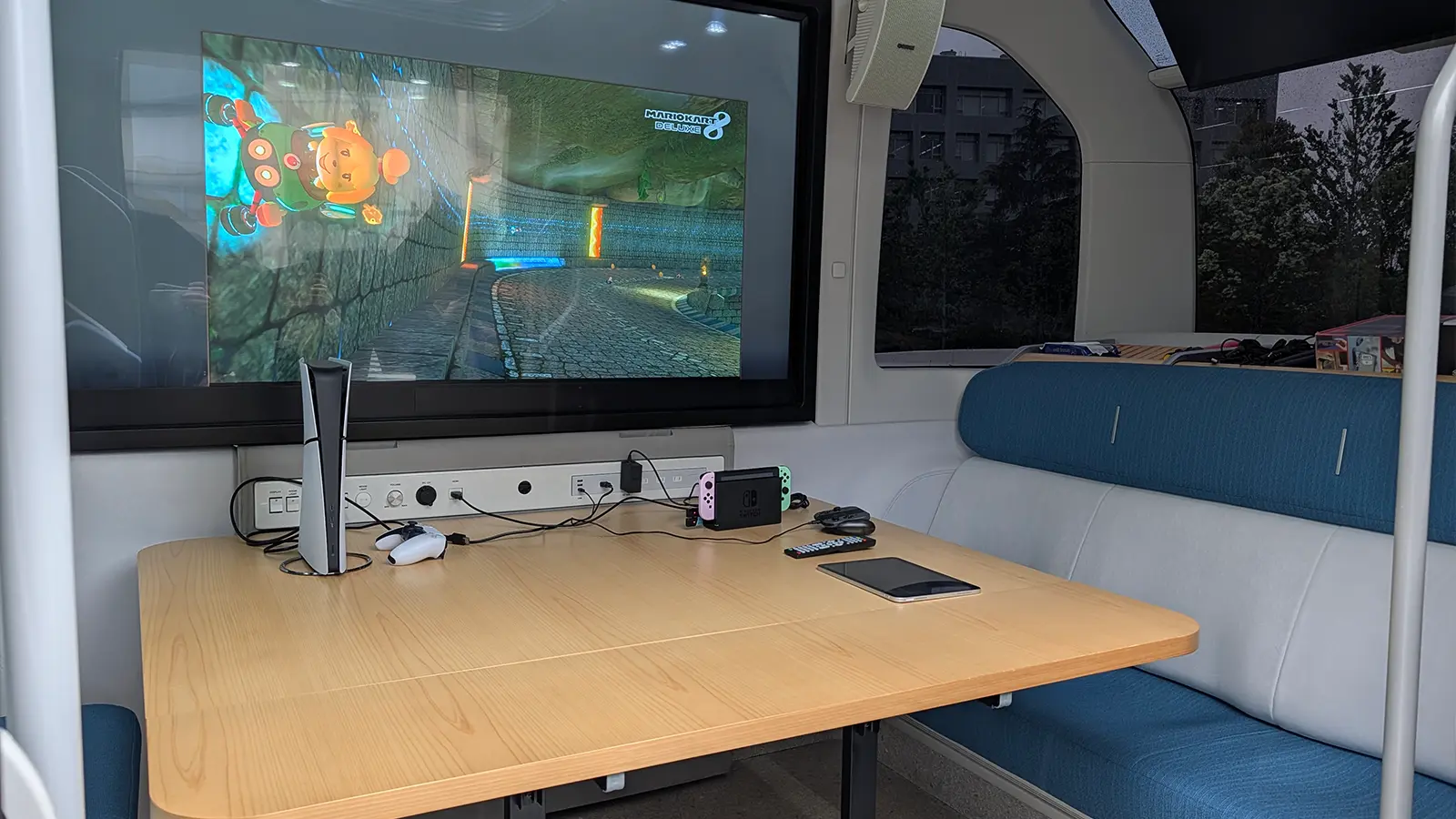
The Inventor's Garage
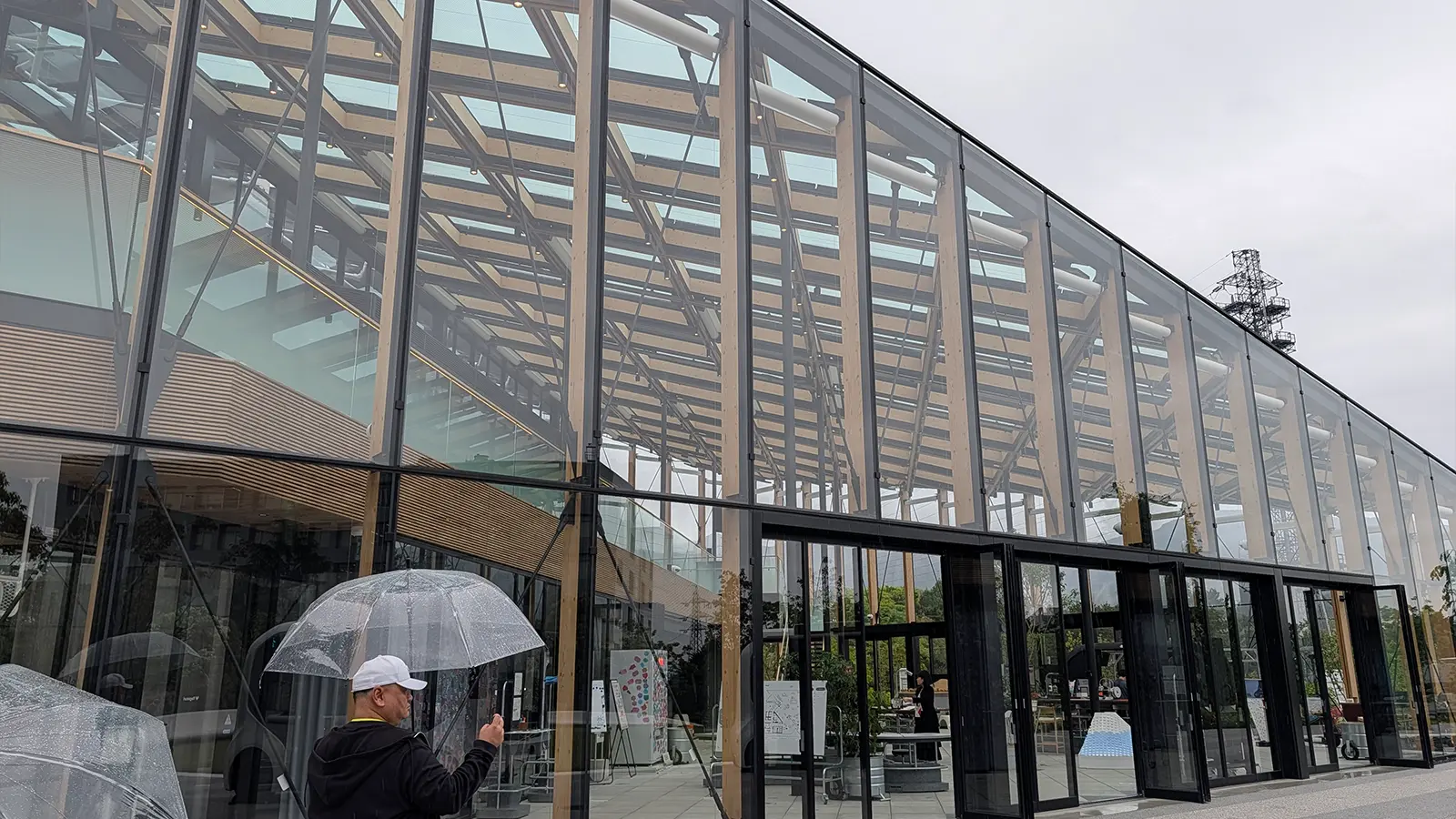
I spent my first day at the Garage. This end-to-end development facility includes co-creation areas, testing labs, and collaboration spaces where Inventors can get feed back from resident Weavers.
During 2025, the garage became home to 20 groups of Inventors. During our visit, four more were announced: AI Robot Association, Dai Ichikosho (a commercial karaoke services supplier), Joby Aviation, and Toyota Financial Services, bringing the total to24 partners. It's a similar concept to what Ford's been doing with New Lab in Detroit, though that's been open for several years and houses over 100startups.
If you want the clearest explanation of how software is reshaping the modern car, this software-defined vehicle guide helps frame why Toyota is investing so heavily here ➜ https://www.greencars.com/greencars-101/what-is-a-software-defined-vehicle
In August 2025,Toyota launched the Woven City Challenge accelerator program around the concept of “hack the mobility.” Applicants could pick from four themes: mobility and city service optimization, safe and secure mobility and cities, sustainable planet/sustainable life, or an open track where they could pitch their own theme. The final pitches for entry into the Inventor’s Garage are being presented on April 23, 2026. The winner will be added to the program.
Woven City AI Vision Engine
My visit to Woven City coincided with the announcement of Toyota's new AI Vision Engine, a vision language model based on a foundation AI model created at Arene. It's designed to oversee the entire facility and, in Toyota's words, “interpret, understand, and respond to real-world contexts.” It will take inputs from user behavior, mobility systems, and sensors to identify patterns and emerging conditions.
Here's an example: No matter what types of sensors you install on a vehicle, they're still limited b y line of sight, just like a human driver’s eyes. They can't see through buildings or around other obstacles. But sensors installed throughout Woven City can track pedestrians who aren't yet visible from the road and send alerts directly to drivers.
This same intelligence can extend to provide smoother and safer mobility and an improvement in well-being for residents. If autonomous shuttles are running behind, the sensors can detect a bottleneck and start rerouting shuttles proactively. Or if there's a flood, it can alert residents and visitors immediately.
The AI Vision Engine will also be integrated into what Toyota calls the Woven City Integrated ANZEN System — anzen is the Japanese word for safety. The platform weaves together connectivity between people, infrastructure, and mobility systems, analyzing video data to see how vehicles, traffic signals, and pedestrians move and optimize for safety and efficiency.
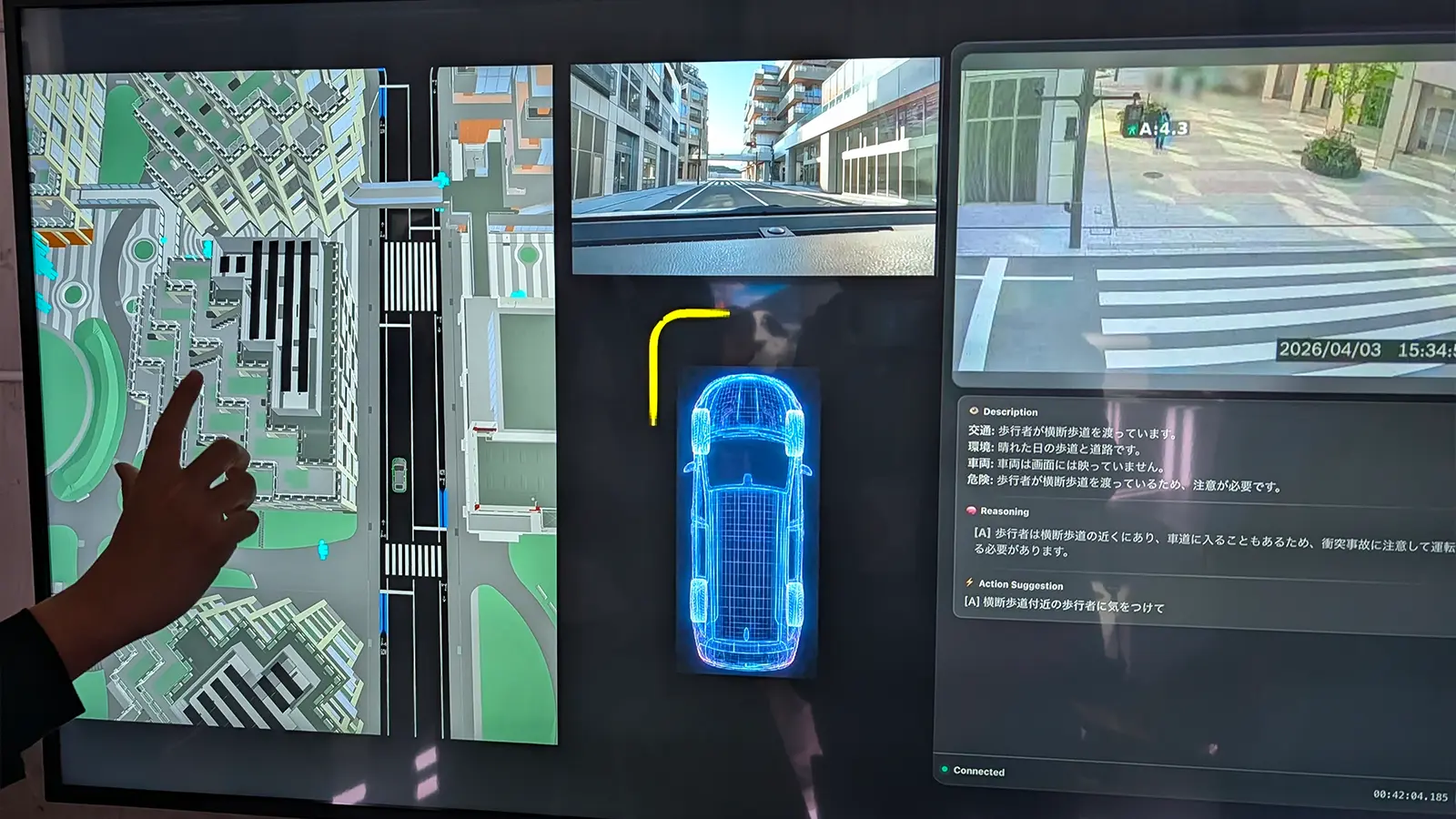
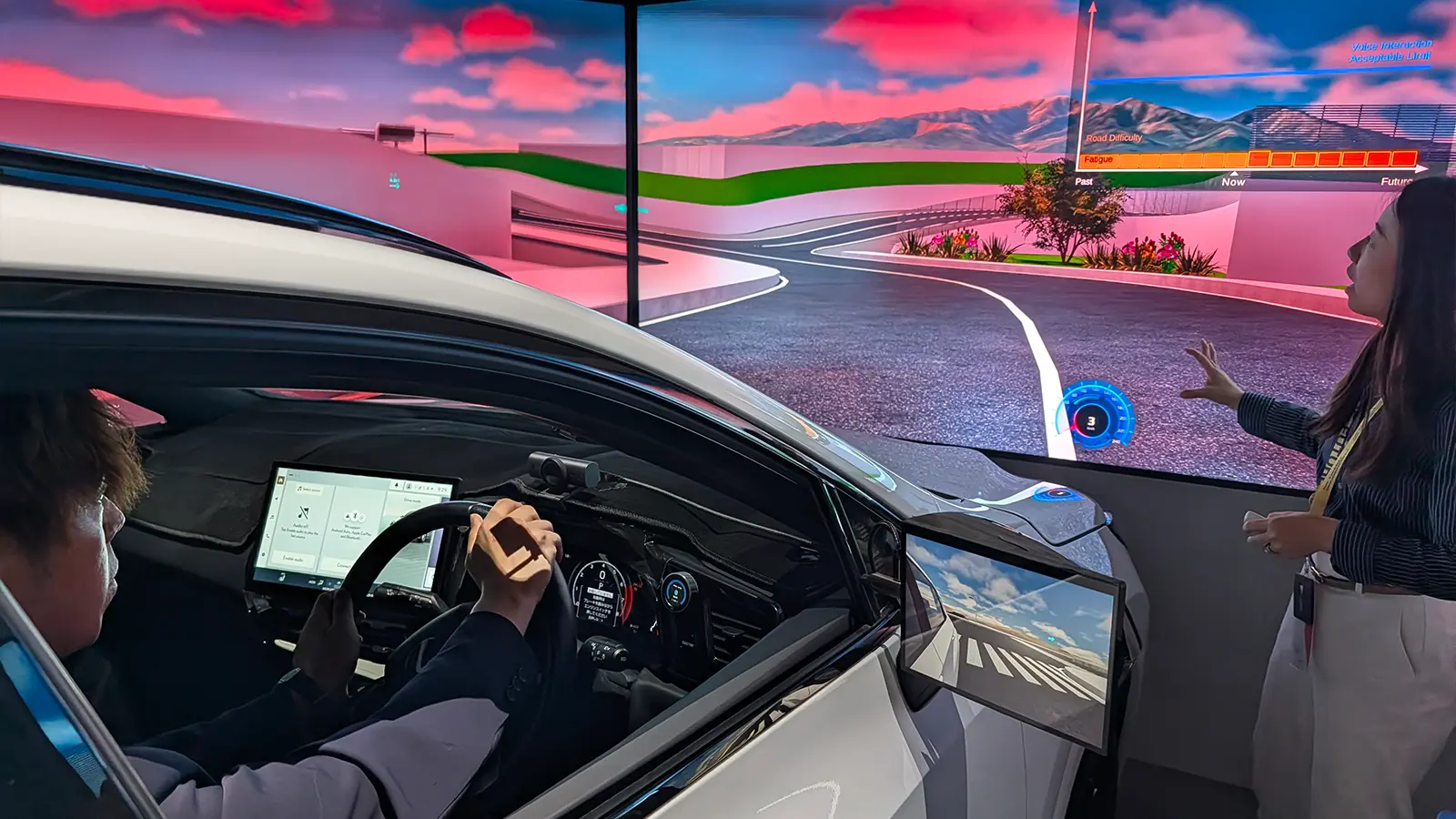
During a demo, I saw a driver being guided by a voice system. Along with signals from external sensors and communications, it was also gauging the driver’s physiological state, using an infrared monitor sensor to track eye gaze and head position, along with inputs from the steering wheel. Over time, the system builds a personality trait model based on the driver's habits, so it knows when it's acceptable to interrupt the driver and when to stay quiet. When a driver is merging on the highway, for example, is when the system may pause until things calm down.
All of this data will be fed into the Woven City Infra Hub, an integrated system that manages the data while trying to balance individual privacy. And that's one of the fundamental challenges with any such system. Collecting this much data can provide many societal benefits, but it can also be misused. It's not a simple problem to overcome. Part of what Toyota wants to learn from Woven City is whether people are open to trading some privacy for those benefits, and, so far, Japanese residents appear to be willing.
Even Toyota Chairman Akio Toyoda is participating as a Master Weaver. He recently helped create the Akio Toyoda AI, a retrieval-augmented generation system trained with more than 10 years of Toyoda’s speeches, writings, and other data. It's designed to answer questions the way Akio-san would, representing his distinct style of leadership and decision-making. The team has been testing it internally and is working on a web app. Whether it ever replaces the chairman when he decides to retire is still an unanswered question, but the hope is that it gets others across the company to adopt AI and purpose-driven collaboration.
A Virtual Power Plant
Toyota provides a fleet of EVs for Inventors and Weavers to use, and has integrated a virtual power plant (VPP) system into the parking garage. Toyota built a power management platform that integrates solar power, the vehicle batteries, and data from the local grid to manage bidirectional charging. The systems have speak loads from the grid by about 5 to 10 percent and determines the best time to charge, or even feed power back to the grid if needed.
There's also adynamic wireless charging system in development by Denso. A prototype is already running at Denso's tech center, and a version will soon be installed in Woven City. It can provide up to 15 kilowatts of charging power as EVs drive over transmitters in the road. For automated e-Palette shuttles operating around the facility, that could mean they never need to be plugged in.
A City Worth Watching
Woven City is a fascinating experiment - a new kind of company town for the 21stcentury. Toyota's stated goal is to drive the future of movement and improve well-being for everyone. Much of what we saw was exciting.
However, the potentially intrusive nature of universal sensing and integrated data raises the potential for a dystopia if the wrong people get control.
So far, it seems that Japanese people are more open to accepting this than U.S. residents would be. We’ll have to watch this carefully in the coming years to see if Toyota can truly multiply the benefits the way kakezan promises.
⚡More Big-Idea Mobility Reads
Intro to Green Car Technology
A useful follow-up for readers who want more context on the systems, software, motors, batteries, and regenerative tech shaping next-generation mobility.
Read More ➜
Introduction to Bidirectional Charging
This is a smart next click for anyone interested in the city’s virtual power plant, EV battery integration, and energy-sharing ambitions.
Read More ➜
How EV Charging Works: A Beginner’s Guide
A broader explainer for readers who want to better understand the charging and energy infrastructure ideas sitting underneath Toyota’s experiment.
Read More ➜