

Fast Facts | BMW i4 M60 xDrive
Output: 593 horsepower and 586 lb-ft of torque from two electric motors
EPA-Estimated Range: Officially rated at 278 miles on 19-inch wheels (311 miles observed in real-world testing at 65 mph, 269 miles at 77 mph)
Charging: Peaked at 150 kW; went from just under 20 to 80 percent in about 20 minutes
Zero to 60 mph: 3.6 seconds, in Sport Boost mode
MSRP: $72,050, including a $1,350 destination fee
Before Neue Klasse, There Is Still the i4
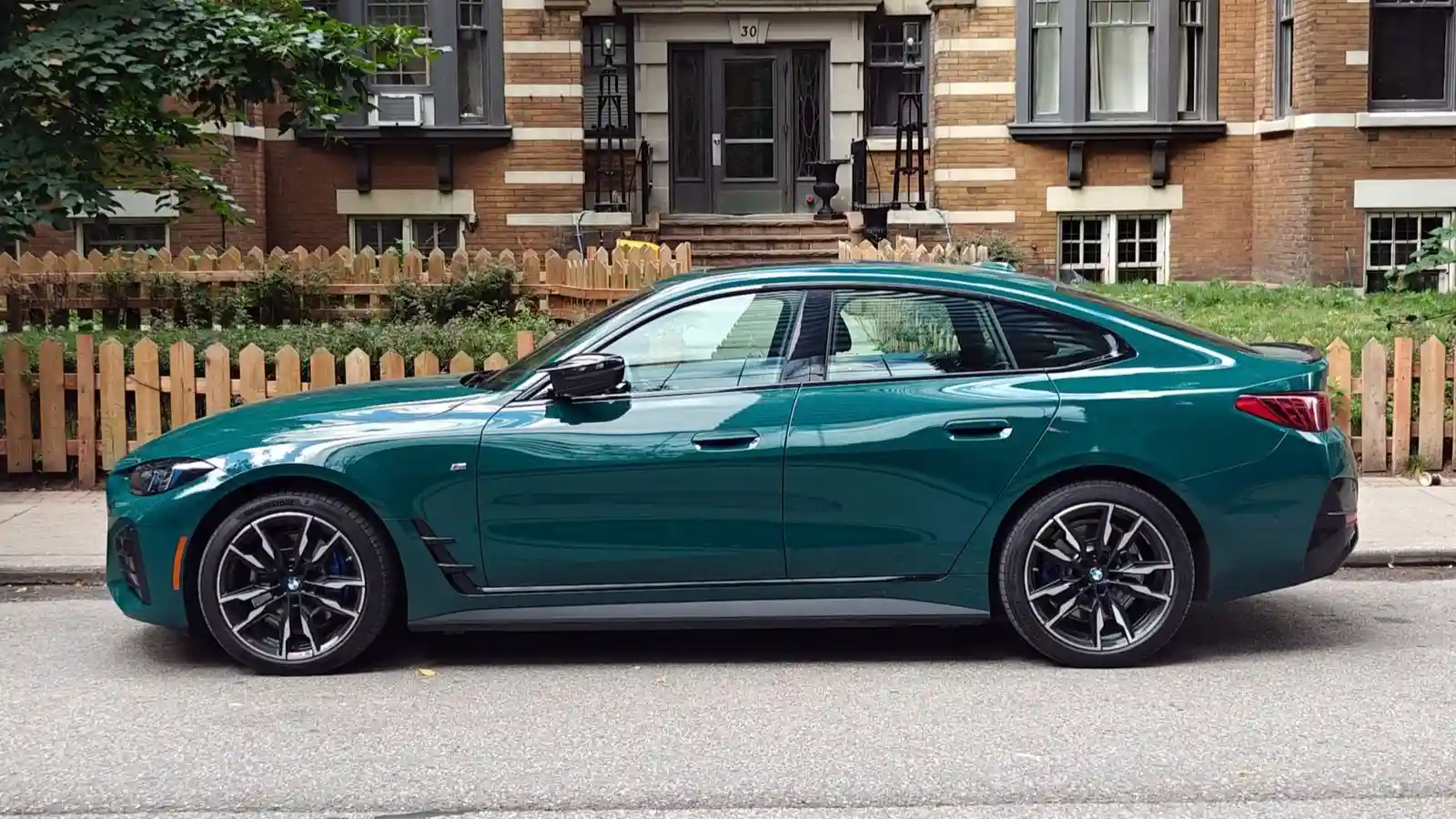
BMW’s next-generation EVs are either already here (the iX3) or on their way (next year’s i3), but one of the more intriguing options in the brand’s showrooms is a link to the past rather than a path to the future. The BMW i4 hatchback is sleekly styled, incredibly quick, and straddles the line between wagon and sedan with its sloping roofline and generous cargo space. It also shares its underpinnings, which BMW calls the CLAR platform, with the gas-powered 4 Series Gran Coupe.
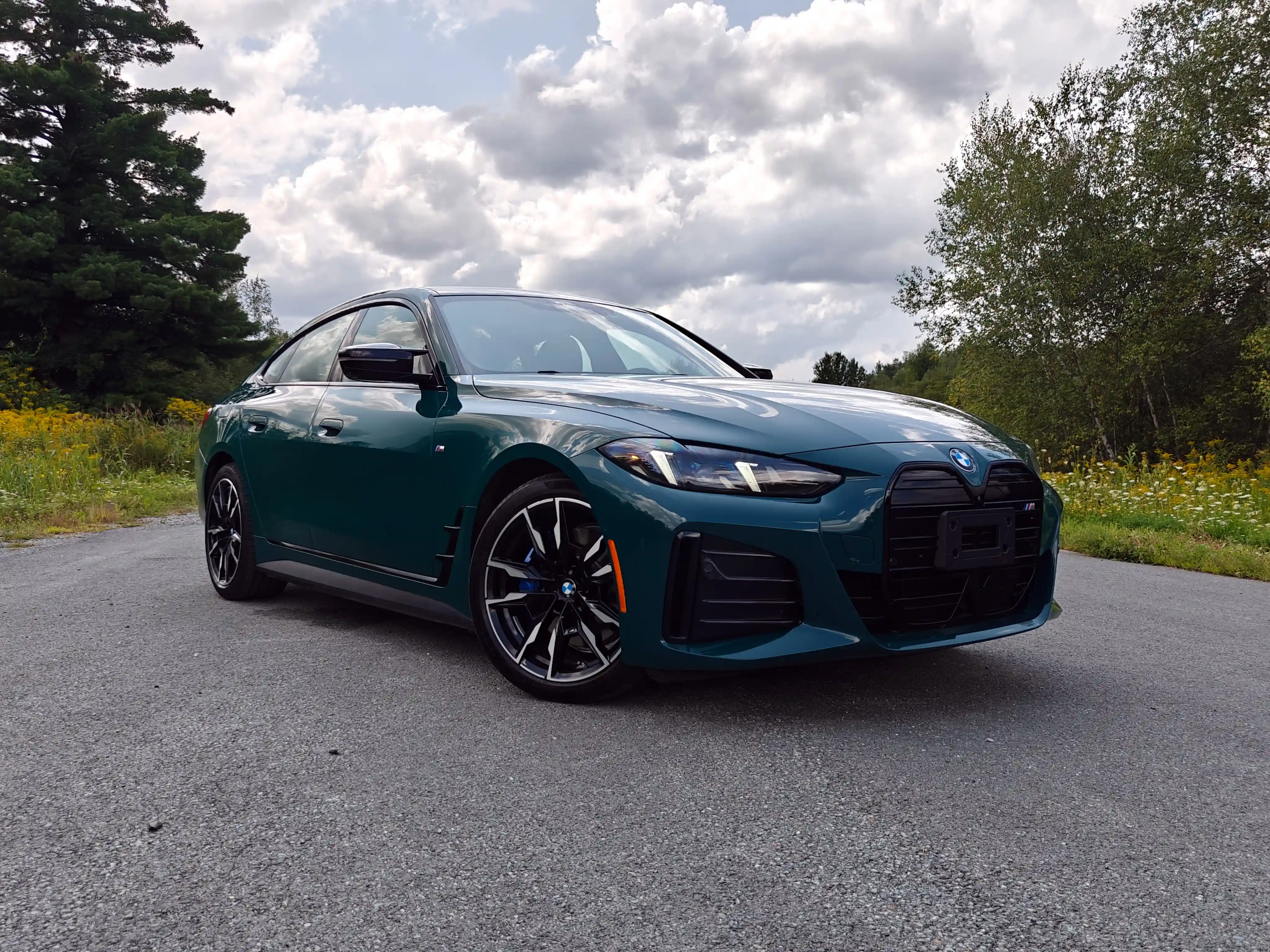
Typically, having a foot in both worlds means more compromise than congratulations when it comes to an EV. The i4 does come with a few caveats tied to its internal-combustion roots, but after nearly 1,000 miles behind the wheel on a recent road trip, I found far more to laud than lament in this BMW as a daily do-everything luxury EV.
M60 Replaces M50, Adds Even More Oomph
The model I chose for my extended highway sojourn was the 2026 BMW i4 M60 xDrive. This range-topper starts just north of $72,000 and features a pair of electric motors that together generate up to 593 horsepower and 586 pound-feet of torque. That’s 57 more horses than last year’s M50. In Sport Boost mode, all that power flows through the all-wheel-drive system with enough aggression to hit 60 mph in a scant 3.6 seconds, which also bests its predecessor.
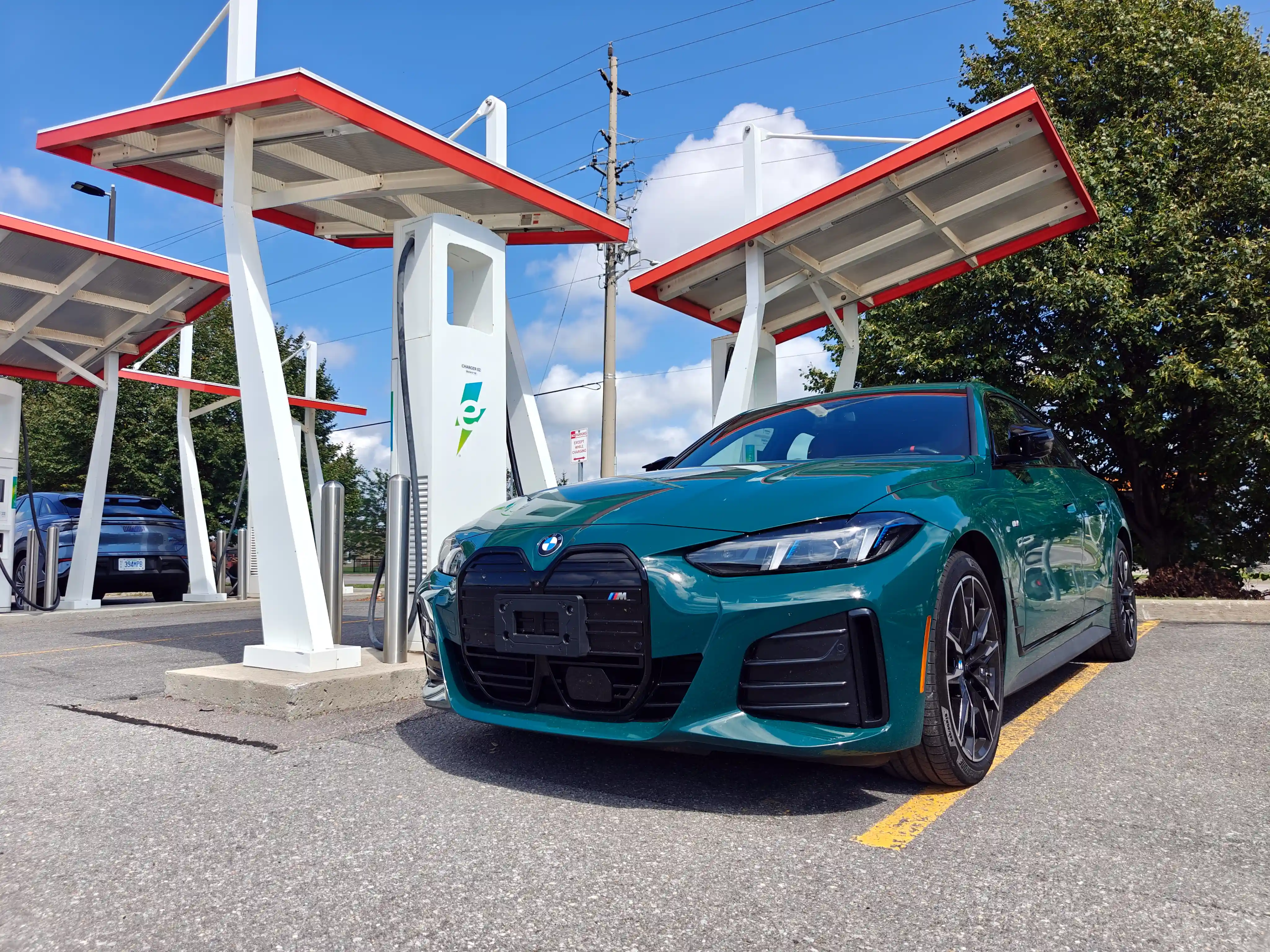
Calling the i4 M60’s launch violent undersells the experience. Pin the pedal, and the hood lifts immediately while the entire chassis twists and squirms as its wide tires find purchase on the asphalt. I enjoyed the M60’s accelerative antics when passing on the narrow roads leading to and from my mountain home, but they were largely a fun sidebar. When evaluating an EV over long distances, comfort, range, and charging speed are much more important.
More Range Than Meets The Eye
Officially, the i4 M60 xDrive is EPA-rated for up to 278 miles of range on the 19-inch wheels outfitted on my tester. That’s a 12-mile bonus over the now-departed M50, thanks to a more efficient inverter. It’s not quite as impressive as the 333 miles you get from the entry-level i4 eDrive40, with its single electric motor and 18-inch wheels.
Still, I’ve found BMW’s EVs tend to outperform their spec sheets in the real world. That's especially true when you drive to stretch your range, which is what I did on the first leg of my journey from Quebec's Eastern Townships to Toronto, Ontario. My goal was to make Kingston, Ontario, my first and only charging stop.
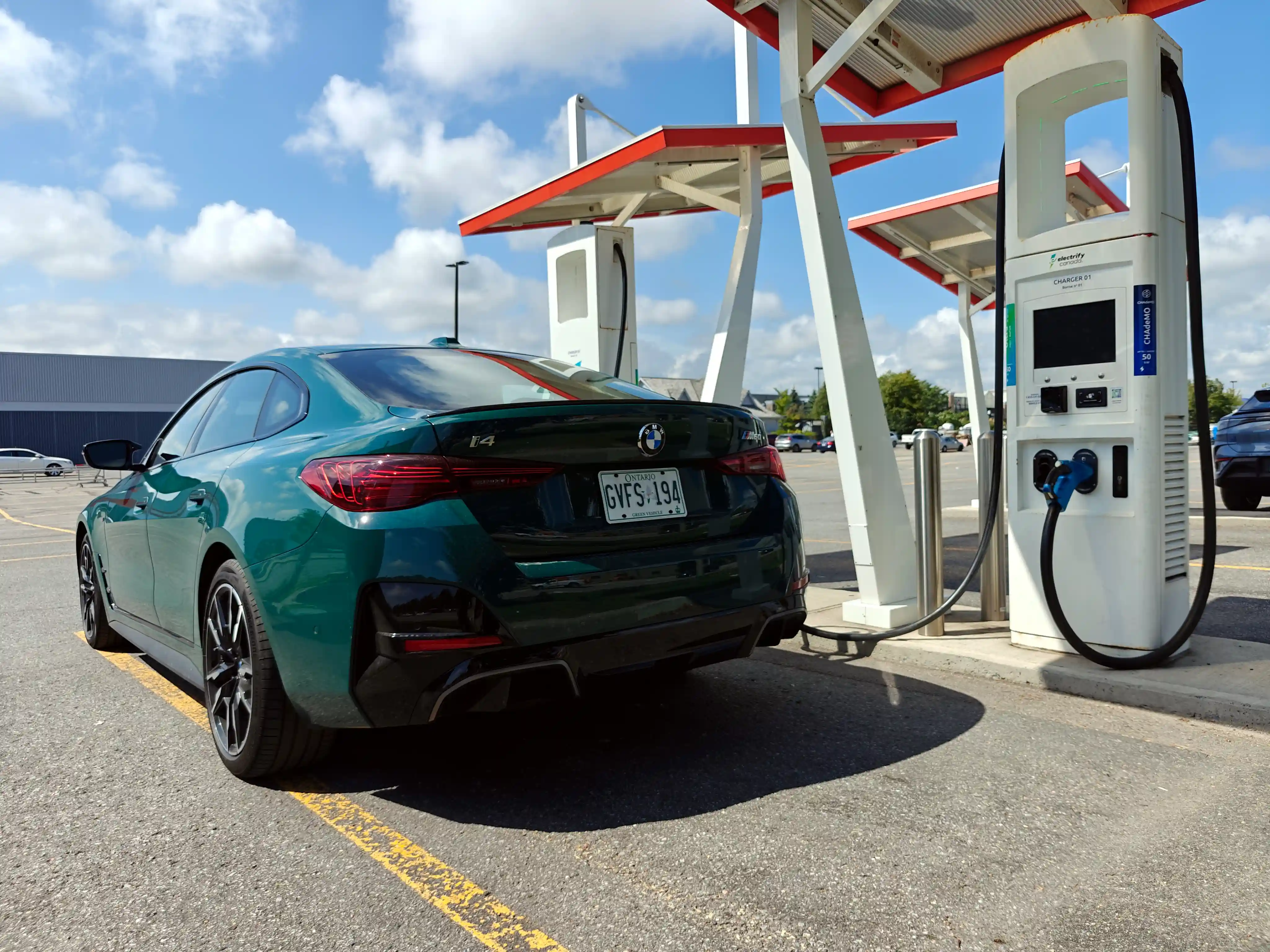
I selected Eco Pro mode, which dulls pedal response and reduces the energy diverted to climate. I also set the adaptive cruise control to a steady 65 mph, and I managed to squeak out 3.7 miles per kilowatt-hour. Do the math with the i4 M60’s 83.9-kWh battery, and that's 311 miles per charge, close to what the base model can do.
Speed plays a huge role in extending or slicing any EV’s range, as evidenced by this BMW’s performance on the return route. I stayed in Eco Pro mode, but bumped my cruising speed to 77 mph, and the i4's efficiency dropped to 3.2 miles per kWh, or about 269 miles on a full charge. That’s very near the official rating.
A standardized range number is only the starting point because highway speed, temperature, wheels, and driving style can move the real result substantially, so see how to compare EPA estimates with real-world EV range ➜
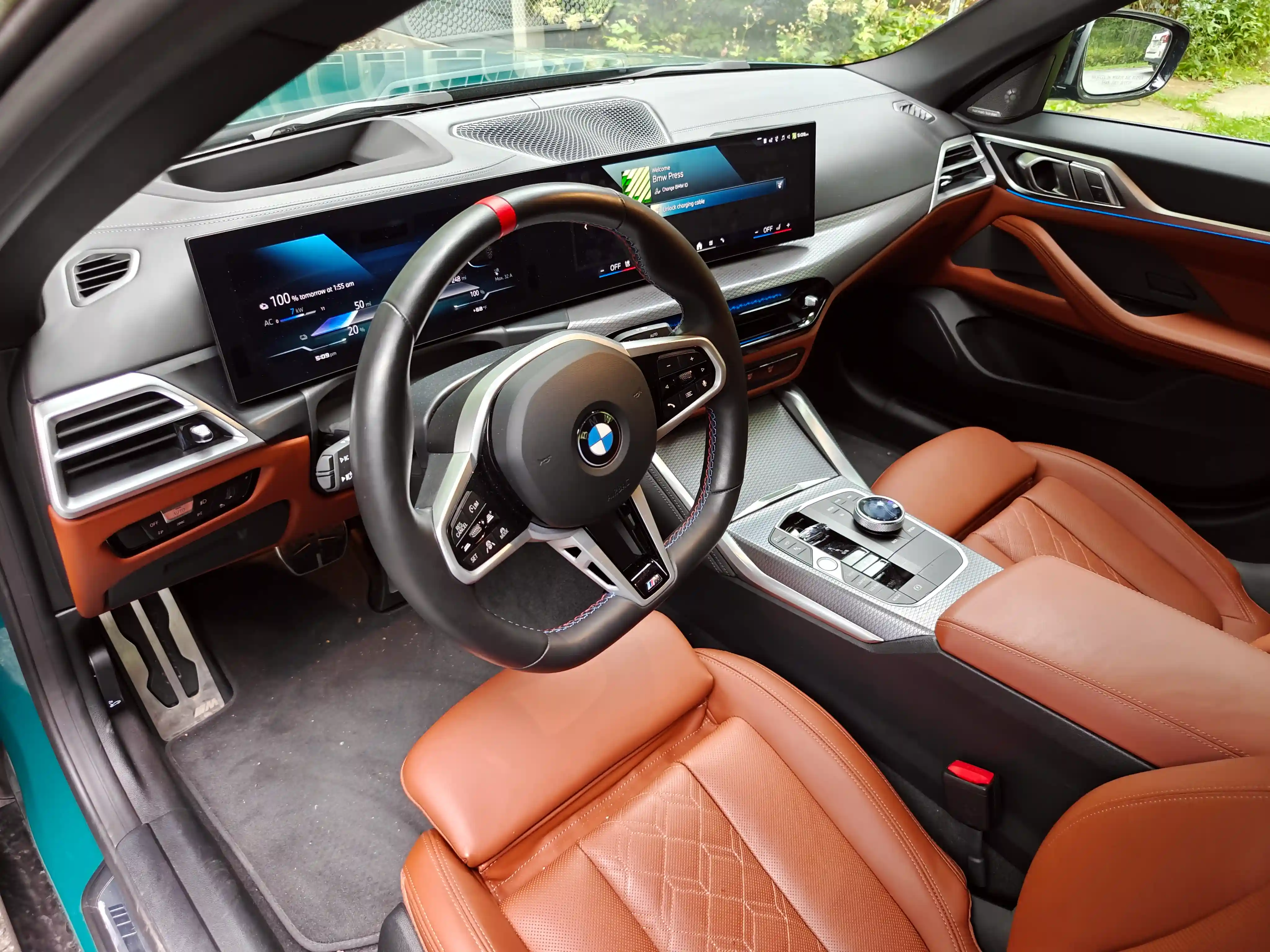
Planning a long-distance journey in an EV means balancing speed with the number of charging stops you'll need, plus how convenient each of those breaks will be. I covered more miles in less time on the way back, but I also had to make a second stop to splash in enough energy to get home to my Level 2 charger. When I drove slower, I didn’t have to worry about that.
Range is only half the road-trip equation, so see how to plan charging stops, buffers, and backup options for a longer EV trip ➜
Average, But Consistent, Charging Speeds
I’m happy to report that no matter how many times I stopped, each charging session in the i4 went smoothly. It did require some advance scouting, as Ontario’s charging infrastructure is nowhere near as extensive as that of my home province. Still, I could rely on an Electrify Canada station in Kingston on both legs, which fed the BMW up to 150 kilowatts at the peak of its charging curve. A similarly speedy Park + Charge location in Toronto did the job too, at half the rate. I only had one dead-on-arrival charger on the entire trip, at a Shell station, which someone had reported on PlugShare just before I attempted to plug in.
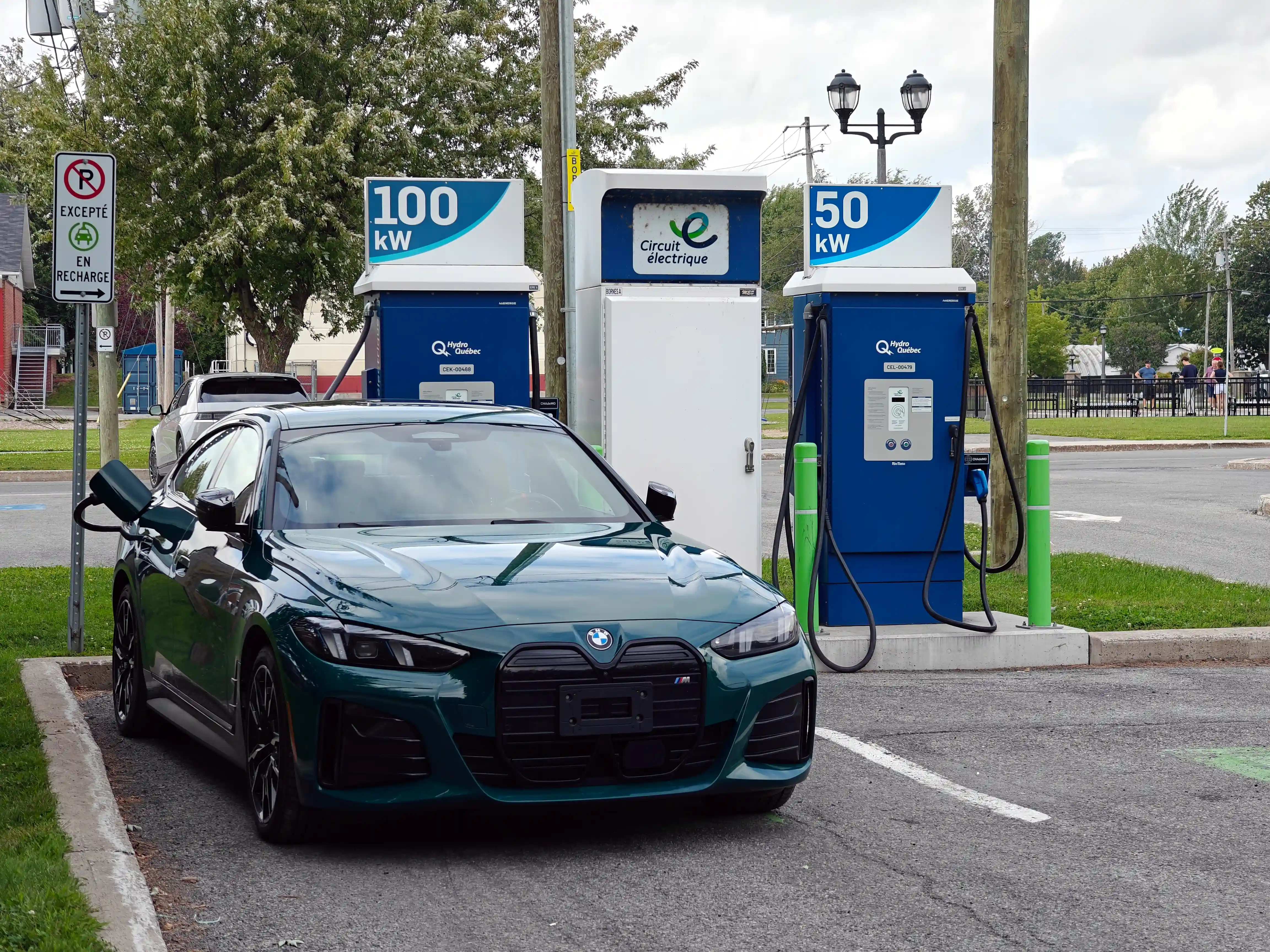
In each session, the i4 went from just under 20 percent battery to 80 percent in about 20 minutes or so. That’s about average for an EV, and it reflects the older technology under the i4's skin.
The i4 can accept up to 205 kW even though this trip peaked at 150 kW, so see why the charger, battery temperature, state of charge, and charging curve all determine the speed you actually get ➜
At my first charging stop in Kingston, I had to wait an extra 30 minutes for a plug to open up, but I didn’t mind. In line behind me was a group of BYD engineers taking a Sealion 6 and a pair of plug-in hybrids on a cruise in the opposite direction. These vehicles are about to go on sale here in Canada, and it was a unique opportunity to speak with members of BYD’s team about the cars and their approach to the market.
Generous Cargo Room, Slightly Cramped Floor
I have very few complaints about how the i4 behaved over 1,000 miles of driving. Despite its sporty character and 5,000-pound curb weight, it handled rough pavement well. The adaptive cruise control was nearly flawless and a boon in the heavy traffic near Toronto. Even in Eco Pro mode, the AC kept us cool in the end-of-summer heat.
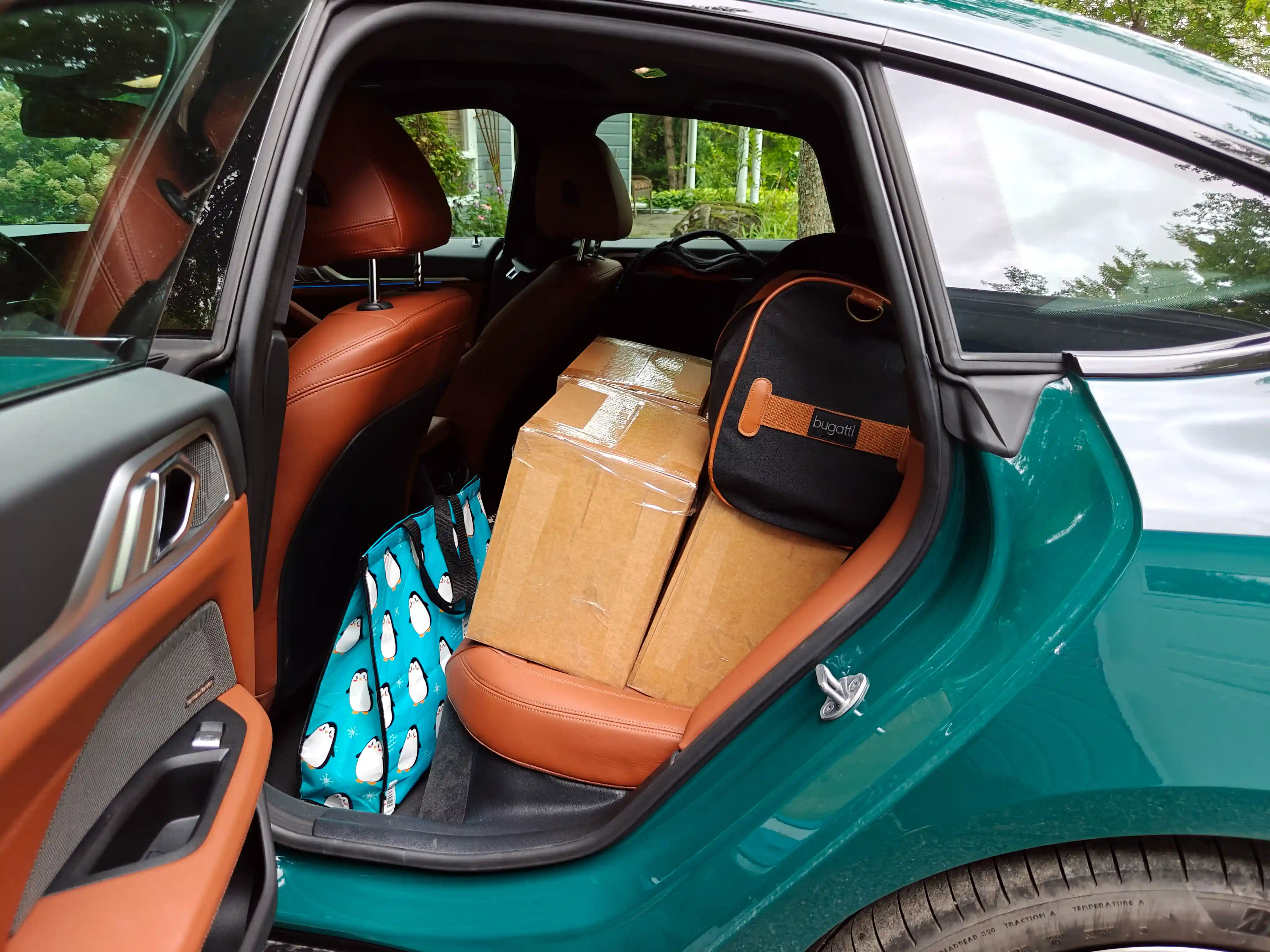
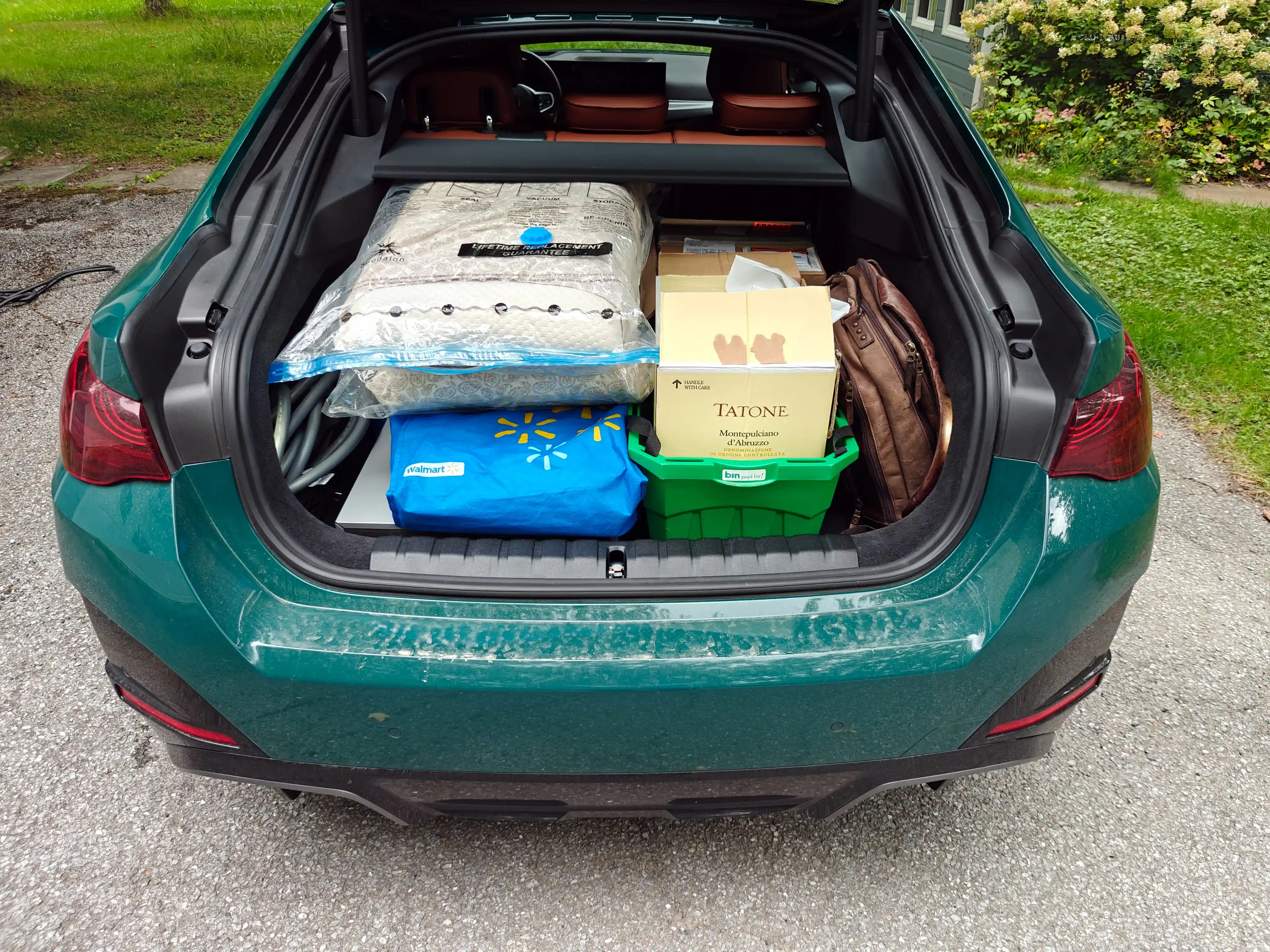
I also picked up 500 copies of the latest issue of my comic book from the printer in Toronto. The i4’s hatch swallowed them all without complaint, on top of a week's worth of luggage and our other media purchases. That said, I can't recommend sitting three across in the back seat, even for a quick family trip to a restaurant, given the car’s four-door coupe-like confines.
If I had to pick my least favorite aspect of the i4, it would be the driver’s seating position. The battery raises the floor just a smidge compared to the gas-powered model, and it puts my legs at just enough of an angle to cause a few aches and pains after an hour or so behind the wheel.
One-Of-One At Its Price Point
There aren't many direct rivals at the BMW i4 M60 xDrive’s price point. Other wagon-like hatches are either considerably more expensive, like the Porsche Taycan Cross Turismo, or a lot less, the crossover-ish Kia EV6, whose similarly quick GT trim just left US dealerships. Unfortunately, the i4 M60 shares the same fate as the EV6 GT, as it's being discontinued after the 2026 model year.
BMW essentially owns this small slice of the performance-meets-cargo-hauler EV space, and it manages to do so with a vehicle that still carries traces of gas-engine design in its DNA. You can find more efficient road trip EVs, and you can certainly find more affordable mile eaters, but outside of a bigger SUV, you’re unlikely to encounter anything that marries the speed, style, and sheer practicality of the i4 M60.
More Electric Road Trip Machines Worth Comparing
Audi A6 e-tron Sportback Review: A Hidden Gem Among EV Sedans
Audi’s similarly shaped Sportback offers a large hatch, up to 392 miles of EPA-estimated range, and a calmer approach to electric luxury.
Read More ➜
Porsche Taycan GTS Sport Turismo: The Ultimate Super Wagon
If the i4 is an almost-wagon, the Taycan GTS Sport Turismo is the real thing, with 690 horsepower, 320-kW charging, and a much steeper price.
Read More ➜
The 2026 BMW iX xDrive60: Road Trip Champion
BMW’s larger electric SUV offers substantially more range and space while providing another real-world look at how the brand performs on a long Canadian road trip.
Read More ➜